Results by title
1668 books match the query 'Popular culture' and 292 start with t
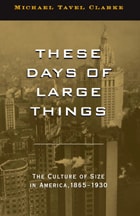
These Days of Large Things
The Culture of Size in America, 1865-1930Michael Tavel Clarke
University of Michigan Press, 2009
The United States at the turn of the twentieth century cultivated a passion for big. It witnessed the emergence of large-scale corporate capitalism; the beginnings of American imperialism on a global stage; record-level immigration; a rapid expansion of cities; and colossal events and structures like world's fairs, amusement parks, department stores, and skyscrapers. Size began to play a key role in American identity. During this period, bigness signaled American progress.
These Days of Large Things explores the centrality of size to American culture and national identity and the preoccupation with physical stature that pervaded American thought. Clarke examines the role that body size played in racial theory and the ways in which economic changes in the nation generated conflicting attitudes toward growth and bigness. Finally, Clarke investigates the relationship between stature and gender.
These Days of Large Things brings together a remarkable range of cultural material including scientific studies, photographs, novels, cartoons, architecture, and film. As a general cultural and intellectual history of the period, this work will be of interest to students and scholars in American studies, U.S. history, American literature, and gender studies.
Michael Tavel Clarke is Assistant Professor of English at the University of Calgary.
Cover photograph: "New York from Its Pinnacles," Alvin Langdon Coburn (1912). Courtesy of the George Eastman House.
"A fascinating study of the American preoccupation with physical size, this book charts new paths in the history of science, culture, and the body. A must-read for anyone puzzling over why Americans today love hulking SUVs, Mcmansions, and outsized masculine bodies."
---Lois Banner, University of Southern California
"From the Gilded Age through the Twenties, Clarke shows a nation-state obsessed with sheer size, ranging from the mammoth labor union to the 'Giant Incorporated Body' of the monopoly trust. These Days of Large Things links the towering Gibson Girl with the skyscraper, the pediatric regimen with stereotypes of the Jew. Spanning anthropology, medicine, architecture, business, and labor history, Clarke provides the full anatomy of imperial America and offers a model of cultural studies at its very best."
---Cecelia Tichi, Vanderbilt University
Thinking While Black
Translating the Politics and Popular Culture of a Rebel GenerationDaniel McNeil
Rutgers University Press, 2023
Listen along with this Spotify playlist inspired by the book!
For copyright reasons, this book is available in the U.S.A only.

This Giving Birth
Pregnancy and Childbirth in American Women's WritingJulie Tharp
University of Wisconsin Press, 2000
Thomas Kinkade
The Artist in the MallAlexis L. Boylan, ed.
Duke University Press, 2011
Contributors. Julia Alderson, Alexis L. Boylan , Anna Brzyski, Seth Feman, Monica Kjellman-Chapin, Micki McElya, Karal Ann Marling, David Morgan, Christopher Pearson, Andrea Wolk Rager, Jeffrey Vallance
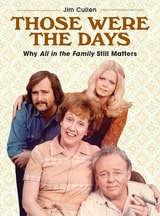
Those Were the Days
Why All in the Family Still MattersJim Cullen
Rutgers University Press, 2020
Between 1971 and 1979, All in the Family was more than just a wildly popular television sitcom that routinely drew 50 million viewers weekly. It was also a touchstone of American life, so much so that the living room chairs of the two main characters have spent the last 40 years on display at the Smithsonian. How did a show this controversial and boundary-breaking manage to become so widely beloved?
Those Were the Days is the first full-length study of this remarkable television program. Created by Norman Lear and produced by Bud Yorkin, All in the Family dared to address such taboo topics as rape, abortion, menopause, homosexuality, and racial prejudice in a way that no other sitcom had before. Through a close analysis of the sitcom’s four main characters—boorish bigot Archie Bunker, his devoted wife Edith, their feminist daughter Gloria, and her outspoken liberal husband Mike—Jim Cullen demonstrates how All in the Family was able to bridge the generation gap and appeal to a broad spectrum of American viewers in an age when a network broadcast model of television created a shared national culture.
Locating All in the Family within the larger history of American television, this book shows how it transformed the medium, not only spawning spinoffs like Maude and The Jeffersons, but also helping to inspire programs like Roseanne, Married... with Children, and The Simpsons. And it raises the question: could a show this edgy ever air on broadcast television today?
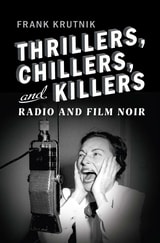
Thrillers, Chillers, and Killers
Radio and Film NoirFrank Krutnik
Rutgers University Press, 2025
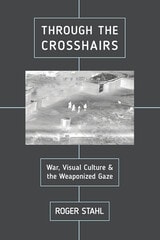
Through the Crosshairs
War, Visual Culture, and the Weaponized GazeStahl, Roger
Rutgers University Press, 2018
Through the Crosshairs traces the genealogy of this weapon’s-eye view across a wide range of genres, including news reports, military public relations images, action movies, video games, and social media posts. As he tracks how gun-camera footage has spilled from the battlefield onto the screens of everyday civilian life, Roger Stahl exposes how this raw video is carefully curated and edited to promote identification with military weaponry, rather than with the targeted victims. He reveals how the weaponized gaze is not only a powerful propagandistic frame, but also a prime site of struggle over the representation of state violence.
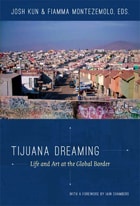
Tijuana Dreaming
Life and Art at the Global BorderJosh Kun and Fiamma Montezemolo, eds.
Duke University Press, 2012
Contributors. Tito Alegría, Humberto Félix Berumen, Roberto Castillo Udiarte, Iain Chambers, Luis Humberto Crosthwaite, Teddy Cruz, Ejival, Tarek Elhaik, Guillermo Fadanelli, Néstor García Canclini, Ingrid Hernández, Jennifer Insley-Pruitt, Kathryn Kopinak, Josh Kun, Jesse Lerner, Fiamma Montezemolo, Rene Peralta, Rafa Saavedra, Lucía Sanromán, Santiago Vaquera-Vásquez, Heriberto Yépez

Tilting Cervantes
Baroque Reflections on Postmodern CultureBruce R. Burningham
Vanderbilt University Press, 2008
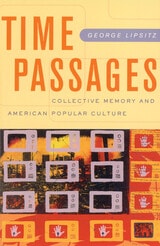
Time Passages
Collective Memory and American Popular CultureGeorge Lipsitz
University of Minnesota Press, 2001
The classic work on collective memory and popular culture in the United States.
Probes the complicated relationship between postwar America between historical memory and commercial culture—popular television, music, and film.
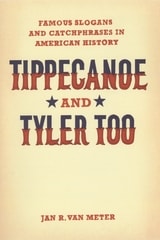
Tippecanoe and Tyler Too
Famous Slogans and Catchphrases in American HistoryJan R. Van Meter
University of Chicago Press, 2008
“By necessity, by proclivity, by delight,” Ralph Waldo Emerson said in 1876, “we all quote.” But often the phrases that fall most readily from our collective lips—like “fire when ready,” “speak softly and carry a big stick,” or “nice guys finish last”—are those whose origins and true meanings we have ceased to consider. Restoring three-dimensionality to more than fifty of these American sayings, Tippecanoe and Tyler Too turns clichés back into history by telling the life stories of the words that have served as our most powerful battle cries, rallying points, laments, and inspirations.
In individual entries on slogans and catchphrases from the early seventeenth to the late twentieth century, Jan Van Meter reveals that each one is a living, malleable entity that has profoundly shaped and continues to influence our public culture. From John Winthrop’s “We shall be as a city upon a hill” and the 1840 Log Cabin Campaign’s “Tippecanoe and Tyler Too” to Martin Luther King Jr.’s “I have a dream” and Ronald Reagan’s “Mr. Gorbachev, tear down this wall,” each of Van Meter’s selections emerges as a memory device for a larger political or cultural story. Taken together in Van Meter’s able hands, these famous slogans and catchphrases give voice to our common history even as we argue about where it should lead us.
“As Van Meter argues, these are important ‘memory devices for a larger story.’ . . . The author has thoroughly researched all the catchphrases . . . . This book would make delightful in-flight reading or a nice gift for a trivia buff. Recommended.”—Choice
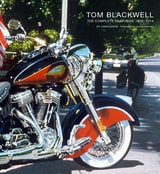
Tom Blackwell
The Complete Paintings, 1970–2014Tom Blackwell
The Artist Book Foundation, 2018
Tom Blackwell (1938–2020) is primarily known for his work in Photorealism, a stylistic movement noted for its ardent embrace of photographic source material. In 1969, he began a series of brashly beautiful motorcycle paintings that established him as one of the founders and foremost artists of the movement. The myriad painterly possibilities of urban store windows became another abiding interest. In his store-window paintings, Blackwell captures the counterpoint between the idealized reality within the store display and the bustling urban life reflected in the glass. As author Linda Chase remarks, "The magic of these paintings resides in the artist's ability to transform the arbitrary photographic information into dynamic and complex artistic compositions, revealing and clarifying the image while preserving its mystery."
In conjunction with his Photorealist paintings, Blackwell has produced a related body of work that is allegorical in its perpective. Combining photo-derived images, he addresses themes such as the passage of time, the fragility of nature, and the continuity that weaves through human history. The paintings, rich in symbolism and interpretive possibilities, fascinate and impress viewers with the breadth of Blackwell's abilities. "As a painter, I have been interested in dealing with the formal issues involved in juxtaposed and overlapping images," he explains. "In my Photorealism work, my goal is to reveal something about the actual world and to explore our photo-mediated perceptions of it."
Blackwell, born in Chicago in 1938, has deftly captured the vibrancy and visual excitement of urban street life for the past four decades and has had solo exhibitions across the United States and abroad. Tom Blackwell: The Complete Paintings, 1970–2014 is a comprehensive study of the artist's work as well as his artistic development and process, and includes a compilation of his early paintings through to his most recent works.
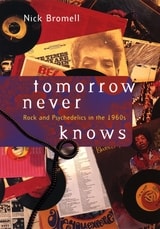
Tomorrow Never Knows
Rock and Psychedelics in the 1960sNick Bromell
University of Chicago Press, 2000
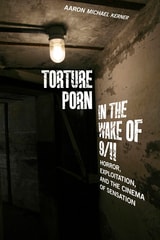
Torture Porn in the Wake of 9/11
Horror, Exploitation, and the Cinema of SensationAaron Michael Kerner
Rutgers University Press, 2015
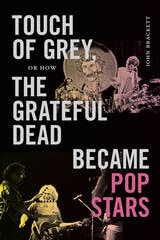
Touch of Grey, or How the Grateful Dead Became Pop Stars
John Brackett
Duke University Press, 2026
Touch of Grey, or How the Grateful Dead Became Pop Stars tells the story of how one song transformed the popular legacy of one of rock’s most iconic musical groups. John Brackett traces the history of the song “Touch of Grey,” beginning with songwriter Robert Hunter’s lyrical sketches and the Grateful Dead’s earliest live arrangements, culminating in the group’s popular renaissance following the release of “Touch of Grey” and the album In the Dark in the summer of 1987. Brackett details how particular recording technologies, notable musical characteristics, modes of attending and listening, and the mechanics of the contemporary music industry shaped this defining moment in the group’s career. Drawing on extensive archival research, Touch of Grey examines how the band and their label worked to produce a hit record, a dynamic music video, and an effective promotional campaign that would propel the Grateful Dead from a group with a devoted cult following to become a pop culture phenomenon.
Tough Ain't Enough
New Perspectives on the Films of Clint EastwoodFriedman, Lester D
Rutgers University Press, 2018
Tourist Distractions
Traveling and Feeling in Transnational Hallyu CinemaYoungmin Choe
Duke University Press, 2016

Tourists of History
Memory, Kitsch, and Consumerism from Oklahoma City to Ground ZeroMarita Sturken
Duke University Press, 2007
Sturken contends that a consumer culture of comfort objects such as World Trade Center snow globes, FDNY teddy bears, and Oklahoma City Memorial t-shirts and branded water, as well as reenactments of traumatic events in memorial and architectural designs, enables a national tendency to see U.S. culture as distant from both history and world politics. A kitsch comfort culture contributes to a “tourist” relationship to history: Americans can feel good about visiting and buying souvenirs at sites of national mourning without having to engage with the economic, social, and political causes of the violent events. While arguing for the importance of remembering tragic losses of life, Sturken is urging attention to a dangerous confluence—of memory, tourism, consumerism, paranoia, security, and kitsch—that promulgates fear to sell safety, offers prepackaged emotion at the expense of critical thought, contains alternative politics, and facilitates public acquiescence in the federal government’s repressive measures at home and its aggressive political and military policies abroad.
Tourists with Typewriters
Critical Reflections on Contemporary Travel WritingPatrick Holland and Graham Huggan
University of Michigan Press, 2000
The book maps new terrain in a growing area of critical study. Although critical of travel writing's complacency and its often unacknowledged ethnocentrism, the book recognizes its importance as both a literary and cultural form. While travel writing at its worst emerges as a crude expression of economic advantage, at its best it becomes a subtle instrument of cultural self-perception, a barometer for changing views of "other" (i.e., foreign, non-Western) cultures, and a trigger for the information circuits that tap us into the wider world.
Tourists with Typewriters gauges both the best and worst in contemporary travel writing, capturing the excitement of this most volatile--and at times infuriating--of literary genres. The book will appeal to general readers interested in a closer examination of travel writing and to academic readers in disciplines such as literary/cultural studies, geography, history, anthropology, and tourism studies.
"An eminently readable and informative study. It breathes tolerance and intelligence. It is critically perceptive and very au courant. It raises issues (coloniality, postmodernity, gender. . . ) and discusses books that readers of many different stripes will want to find out about." --Ross Chambers, University of Michigan
Patrick Holland, Associate Professor of English, University of Guelph, was born in New Zealand and educated in England, Australia, and Canada. Graham Huggan, Professor of English, University of Munich, was born in Hong Kong and educated in England and in British Columbia.
Toward a Theater of the Oppressed
The Dramaturgy of John ArdenJaved Malick
University of Michigan Press, 1995
Malick situates Arden's dramaturgy in the wider context of the radical alternative tradition in Western drama, drawing connections to Brecht, Piscator, the radical playwrights of the 1960s. He then explores the formal structure, ideological implications, and historical significance of Arden's work, treating his stage plays as one dramaturgically coherent opus- from the early Waters of Babylon to his and Margaretta D'Arcy's ambitious trilogy, The Island of the Mighty. Finally, he discusses the last phase of Arden and D'Arcy's political and artistic development, which led them to turn their backs on the professional theater circuit. He argues that Arden's rejection of the institutional stage was the logical outcome of his persistent search for alternative forms of political theater.
Toward a Theater of the Oppressed will be invaluable reading for those interested in modern drama, political theater, and popular performance, as well as students of contemporary British drama.
Javed Malick is Reader in English, Khalsa College, University of Delhi, India.
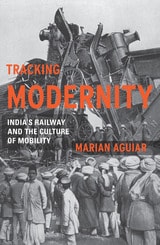
Tracking Modernity
India’s Railway and the Culture of MobilityMarian Aguiar
University of Minnesota Press, 2010
Since the colonial period in India, the railway has been idealized as a rational utopia—a moving box in which racial and class differences might be amalgamated under a civic, secular, and public order. Aguiar charts this powerful image into the postcolonial period, showing how the culture of mobility exposes this symbol of reason as surprisingly dynamic and productive. Looking in turn at the partition of India, labor relations, rituals of travel, works of literature and film, visual culture, and the Mumbai train bombings of 2006, Aguiar finds incongruities she terms “counternarratives of modernity” to signify how they work both with and against the dominant rhetoric. Revealing railways as a microcosm of tensions within Indian culture, Aguiar demonstrates how their representations have challenged prevailing ideas of modernity.
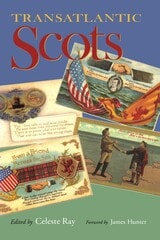
Transatlantic Scots
Edited by Celeste Ray, foreword by James Hunter
University of Alabama Press, 2005
Transatlantic Scots is a multidisciplinary collection that studies the regional organization and varied expressions of the Scottish Heritage movement in the Canadian Maritimes, the Great Lakes, New England, and the American South. From diverse perspectives, authorities in their fields consider the modeling of a Scottish identity that distances heritage celebrants from prevalent visions of whiteness. Considering both hyphenated Scots who celebrate centuries-old transmission of Scottish traditions and those for whom claiming or re-claiming a Scottish identity is recent and voluntary, this book also examines how diaspora themes and Highland imagery repeatedly surface in regional public celebrations and how traditions are continually reinvented through the accumulation of myths. The underlying theoretical message is that ethnicity and heritage survive because of the flexibility of history and tradition.
This work is a lasting contribution to the study of ethnicity and identity, the renegotiation of history and cultural memory into heritage, and the public performance and creation of tradition.

Transformative Justice
Israeli Identity on TrialLeora Bilsky
University of Michigan Press, 2004
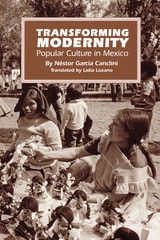
Transforming Modernity
Popular Culture in MexicoBy Néstor García Canclini
University of Texas Press, 1992
Is popular culture merely a process of creating, marketing, and consuming a final product, or is it an expression of the artist's surroundings and an attempt to alter them? Noted Argentine/Mexican anthropologist Néstor García Canclini addresses these questions and more in Transforming Modernity, a translation of Las culturas populares en el capitalismo. Based on fieldwork among the Purépecha of Michoacán, Mexico, some of the most talented artisans of the New World, the book is not so much a work of ethnography as of philosophy—a cultural critique of modernism. García Canclini delineates three interpretations of popular culture: spontaneous creation, which posits that artistic expression is the realization of beauty and knowledge; "memory for sale," which holds that original products are created for sale in the imposed capitalist system; and the tourist outlook, whereby collectibles are created to justify development and to provide insight into what capitalism has achieved.
Transforming Modernity argues strongly for popular culture as an instrument of understanding, reproducing, and transforming the social system in order to elaborate and construct class hegemony and to reflect the unequal appropriation and distribution of cultural capital. With its wide scope, this book should appeal to readers within and well beyond anthropology—those interested in cultural theory, social thought, and Mesoamerican culture.

Transgender Cinema
Rebecca Bell-Metereau
Rutgers University Press, 2019
Transgender Cinema gives readers the big picture of how trans people have been depicted on screen. Beginning with a history of trans tropes in classic Hollywood cinema, from comic drag scenes in Chaplin’s The Masquerader to Garbo’s androgynous Queen Christina, and from psycho killer queers to The Rocky Horror Picture Show’s outrageous queen, it examines a plethora of trans portrayals that subsequently emerged from varied media outlets, including documentary films, television serials, and world cinema. Along the way, it analyzes milestones in trans representation, like The Crying Game, Boys Don’t Cry, Hedwig and the Angry Inch,and A Fantastic Woman.
As it traces the evolution of trans people onscreen, Transgender Cinema also considers the ongoing controversies sparked by these movies and series both within LGBTQ communities and beyond. Ultimately it reveals how film and television have shaped not only how the general public sees trans people, but also how trans people see themselves.
Selected Filmography:
Adventures of Priscilla, Queen of the Desert, All about My Mother, Anak, Austin Unbound, Becoming Chaz, The Blossoming of Maximo Oliveros, Boy I Am, Boy Meets Girl, Boys Don’t Cry, The Brandon Teena Story, A Busy Day, Call Me Malcolm, Carlotta, Change over Time, The Crying Game, Dallas Buyers Club, The Danish Gir, The Devil Is a Woman, Drunktown’s Finest, Facing Mirrors, A Fantastic Woman, 52 Tuesdays, Flesh, Girl Inside, A Girl like Me: The Gwen Araujo Story, Hedwig and the Angry Inch, I Was a Male War Bride,Kate Bornstein Is a Queer and Pleasant Danger, Kumu Hina, La Cage aux Folles, Ma Vie en Rose (My Life in Pink) The Masquerader, Myra Breckinridge, Orlando, Paris Is Burning, Playing with Gender, Psycho, Queen Christina, The Rocky Horror Picture Show, The Saga of Anatahan, She’s a Boy I Knew, Silence of the Lambs, Some Like It Hot, Southern Comfort, Still Black: A Portrait of Black Transmen, Stonewall, The Tenant, Three Generations. Tomboy, Tootsie, Transamerica, Transparent, Trash, Whatever Suits You, A Woman.
Transgender Nation
Gordene Olga MacKenzie
University of Wisconsin Press, 1994
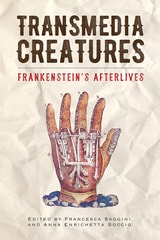
Transmedia Creatures
Frankenstein’s AfterlivesSaggini, Francesca
Bucknell University Press, 2018
Published by Bucknell University Press. Distributed worldwide by Rutgers University Press.
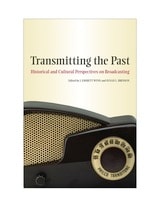
Transmitting the Past
Historical and Cultural Perspectives on BroadcastingEdited by J. Emmett Winn and Susan L. Brinson
University of Alabama Press, 2005
Original essays exploring important developments in radio and television broadcasting
The essays included in this collection represent some of the best cultural and historical research on broadcasting in the U. S. today. Each one concentrates on a particular event in broadcast history—beginning with Marconi’s introduction of wireless technology in 1899.
Michael Brown examines newspaper reporting in America of Marconi's belief in Martians, stories that effectively rendered Marconi inconsequential to the further development of radio. The widespread installation of radios in automobiles in the 1950s, Matthew Killmeier argues, paralleled the development of television and ubiquitous middle-class suburbia in America. Heather Hundley analyzes depictions of male and female promiscuity as presented in the sitcom Cheers at a time concurrent with media coverage of the AIDS crisis. Fritz Messere examines the Federal Radio Act of 1927 and the clash of competing ideas about what role radio should play in American life. Chad Dell recounts the high-brow programming strategy NBC adopted in 1945 to distinguish itself from other networks. And George Plasketes studies the critical reactions to Cop Rock, an ill-fated combination of police drama and musical, as an example of society's resistance to genre-mixing or departures from formulaic programming.
The result is a collection that represents some of the most recent and innovative scholarship, cultural and historical, on the intersections of broadcasting and American cultural, political, and economic life.
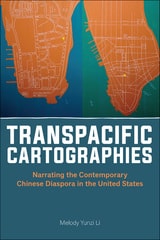
Transpacific Cartographies
Narrating the Contemporary Chinese Diaspora in the United StatesMelody Yunzi Li
Rutgers University Press, 2024
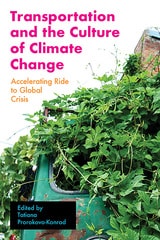
Transportation and the Culture of Climate Change
Accelerating Ride to Global CrisisTatiana Prorokova-Konrad
West Virginia University Press, 2020
The essays in Transportation and the Culture of Climate Change cover an eclectic range of subject matter, from the association of bicycles with childhood to the songs of Bruce Springsteen, but are united in a central conviction: “Transport is a considerable part of our culture that is as hard to transform as it is for us to stop using fossil fuels—but we do not have an alternative.”
Traumatic Realism
The Demands of Holocaust RepresentationMichael Rothberg
University of Minnesota Press, 2000
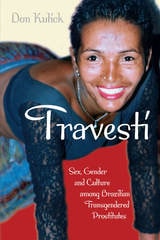
Travesti
Sex, Gender, and Culture among Brazilian Transgendered ProstitutesDon Kulick
University of Chicago Press, 1998
Kulick analyzes the various ways travestis modify their bodies, explores the motivations that lead them to choose this particular gendered identity, and examines the complex relationships that they maintain with one another, their boyfriends, and their families. Kulick also looks at how travestis earn their living through prostitution and discusses the reasons prostitution, for most travestis, is a positive and affirmative experience.
Arguing that transgenderism never occurs in a "natural" or arbitrary form, Kulick shows how it is created in specific social contexts and assumes specific social forms. Furthermore, Kulick suggests that travestis—far from deviating from normative gendered expectations—may in fact distill and perfect the messages that give meaning to gender throughout Brazilian society and possibly throughout much of Latin America.
Through Kulick's engaging voice and sharp analysis, this elegantly rendered account is not only a landmark study in its discipline but also a fascinating read for anyone interested in sexuality and gender.
Trial Films on Trial
Law, Justice, and Popular CultureEdited by Austin Sarat, Jessica Silbey, and Martha Merrill Umphrey
University of Alabama Press, 2019
Historically, the emergence of the trial film genre coincided with the development of motion pictures. In fact, one of the very first feature-length films, Falsely Accused!, released in 1908, was a courtroom drama. Since then, this niche genre has produced such critically acclaimed films as Twelve Angry Men, To Kill a Mockingbird, and Anatomy of a Murder. The popularity and success of these films can be attributed to the fundamental similarities of filmic narratives and trial proceedings. Both seek to construct a “reality” through storytelling and representation and in so doing persuade the audience or jury to believe what they see.
Trial Films on Trial: Law, Justice, and Popular Culture is the first book to focus exclusively on the special significance of trial films for both film and legal studies. The contributors to this volume offer a contemporary approach to the trial film genre. Despite the fact that the medium of film is one of the most pervasive means by which many citizens receive come to know the justice system, these trial films are rarely analyzed and critiqued. The chapters cover a variety of topics, such as how and why film audiences adopt the role of the jury, the narrative and visual conventions employed by directors, and the ways mid-to-late-twentieth-century trial films offered insights into the events of that period.
Tropical Travels
Brazilian Popular Performance, Transnational Encounters, and the Construction of RaceBy Lisa Shaw
University of Texas Press, 2018
Brazilian popular culture, including music, dance, theater, and film, played a key role in transnational performance circuits—inter-American and transatlantic—from the latter nineteenth century to the middle of the twentieth century. Brazilian performers both drew inspiration from and provided models for cultural production in France, Portugal, Argentina, the United States, and elsewhere. These transnational exchanges also helped construct new ideas about, and representations of, “racial” identity in Brazil. Tropical Travels fruitfully examines how perceptions of “race” were negotiated within popular performance in Rio de Janeiro and how these issues engaged with wider transnational trends during the period.
Lisa Shaw analyzes how local cultural forms were shaped by contact with imported performance traditions and transnational vogues in Brazil, as well as by the movement of Brazilian performers overseas. She focuses specifically on samba and the maxixe in Paris between 1910 and 1922, teatro de revista (the Brazilian equivalent of vaudeville) in Rio in the long 1920s, and a popular Brazilian female archetype, the baiana, who moved to and fro across national borders and oceans. Shaw demonstrates that these transnational encounters generated redefinitions of Brazilian identity through the performance of “race” and ethnicity in popular culture. Shifting the traditional focus of Atlantic studies from the northern to the southern hemisphere, Tropical Travels also contributes to a fuller understanding of inter-hemispheric cultural influences within the Americas.
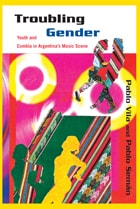
Troubling Gender
Youth and Cumbia in Argentina's Music SceneAuthored by Pablo Vila and Pablo Semán, contributions by Eloísa Martín and María Julia Carozzi
Temple University Press, 2011
Cumbia villera—literally, cumbia from the shantytowns— is a musical genre quite popular with Argentine youth who frequent urban dance halls. Its songs are known for having highly sexualized lyrics— about girls dancing provocatively or experiencing erotic pleasure. The songs exhibit the tensions at play in the different ways people relate to this musical genre.
In Troubling Gender, noted sociologists Pablo Vila and Pablo Semán scrutinize the music's lyrics and the singers' and dancers' performances. At the same time, the authors conduct in-depth interviews to examine the ways males construct and appropriate cumbia's lyrics, and how females identify, appropriate, and playfully and critically manipulate the same misogynistic songs.
Addressing the relationship between this form of music and the wider social, political, and economic changes that influence the lives of urban youth, Troubling Gender argues that the music both reflects and influences the ways in which women's and men's roles are changing in Argentine society.

Tween Pop
Children's Music and Public CultureTyler Bickford
Duke University Press, 2020
Twelve Englishmen of Mystery
Edited by Earl F. Bargainnier
University of Wisconsin Press, 1984
This volume is designed to correct that fault in a dozen of those unjustifiably neglected British authors: Wilkie Collins, A.E.W. Mason, G.K. Chesterton, H.C. Bailey, Anthony Berkeley Cox, Nicholas Blake, Michael Gilbert, Julian Symons, Dick Francis, Edmund Crispin, H.R.F. Keating, and Simon Brett.
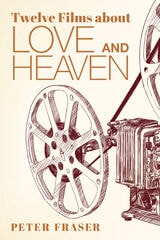
Twelve Films about Love and Heaven
Pete Fraser
St. Augustine's Press, 2023

Twelve-Cent Archie
Beaty, Bart
Rutgers University Press, 2015
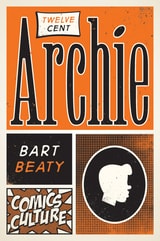
Twelve-Cent Archie
New edition with full color illustrationsBeaty, Bart
Rutgers University Press, 2017
Twelve-Cent Archie is not only the first scholarly study of the Archie comic, it is an innovative creative work in its own right. Inspired by Archie’s own concise storytelling format, renowned comics scholar Bart Beaty divides the book into a hundred short chapters, each devoted to a different aspect of the Archie comics. Fans of the comics will be thrilled to read in-depth examinations of their favorite characters and motifs, including individual chapters devoted to Jughead’s hat and Archie’s sweater-vest. But the book also has plenty to interest newcomers to Riverdale, as it recounts the behind-the-scenes history of the comics and analyzes how Archie helped shape our images of the American teenager.
As he employs a wide range of theoretical and methodological approaches, Beaty reveals that the Archie comics themselves were far more eclectic, creative, and self-aware than most critics recognize. Equally comfortable considering everything from the representation of racial diversity to the semiotics of Veronica’s haircut, Twelve-Cent Archie gives a fresh appreciation for America’s most endearing group of teenagers.
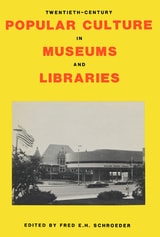
Twentieth-Century Popular Culture in Museums and Libraries
Fred E.H. Schroeder
University of Wisconsin Press, 1981
The essays in this book investigate the reasons for present-day neglect of popular culture materials and chart the various routes by which conscientious and insightful librarians and museum directors can correct this disastrous oversight.
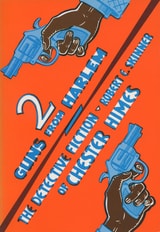
Two Guns From Harlem
The Detective Fiction of Chester HimesRobert E. Skinner
University of Wisconsin Press, 1989
Two Guns from Harlem probes Himes’s early life and career for the roots of this series and for its heroes, Coffin Ed Johnson and Grave Digger Jones. Skinner discusses how Himes’s experience as a black man, combined with his unique outlook on sociology, politics, violence, sex, and race relations, resulted not only in an unusual portrait of black America but also opened the way for the creation of the
ethnic and female hard-boiled detectives who followed.