Results by title
2284 books match the query 'Women' and 370 start with t
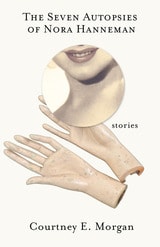
The Seven Autopsies of Nora Hanneman
StoriesCourtney E. Morgan
University of Alabama Press, 2017
In unfamiliar and sometimes bizarre narrative turns, the stories in Courtney E. Morgan’s The Seven Autopsies of Nora Hanneman traverse the gamut of female/human experience, both grounded in reality and in the irreal. Two schoolgirls culminate their sexual exploration in a surreal act of cannibalism. A sister molds her dead brother’s body into a bird. A woman gives birth to balls of twine and fur (among other things). A sex worker engages a version of herself in a brothel of prostituted body parts.
Morgan tears apart a host of archetypes and tropes of femininity—dismembering them, skinning them, and then draping them one by one over her characters like fur coats—revealing them as ill-fitting, sometimes comedic, sometimes monstrous, and always insufficient, masks. Along with these skins of the cultural “feminine,” the collection tries on an array of genres—dissecting, mutating, and breeding them together—from fairy tale to horror, surrealism to confessional (non)fiction, and erotica to (un)creation myth.
The book weaves around questions of sexuality, identity, and subjectivity. Mutability, instability, and liminality are foregrounded, both in content and form, character and language—blurring the lines between birth and death, death and sex, tugging at the transitional spaces of adolescence and gestation. Even as its treatment is essentialized, gender is muddied and obscured. Morgan shows off her linguistic range in this collection, from sharp-as-nails prose to lyrical moments of poetic reach—probing the extremes of the human condition through both narrative line and language itself.
The Sexual Life of English
Languages of Caste and Desire in Colonial IndiaShefali Chandra
Duke University Press, 2012
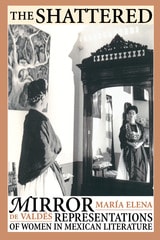
The Shattered Mirror
Representations of Women in Mexican LiteratureBy María Elena de Valdés
University of Texas Press, 1998
Popular images of women in Mexico—conveyed through literature and, more recently, film and television—were long restricted to either the stereotypically submissive wife and mother or the demonized fallen woman. But new representations of women and their roles in Mexican society have shattered the ideological mirrors that reflected these images. This book explores this major change in the literary representation of women in Mexico.
María Elena de Valdés enters into a selective and hard-hitting examination of literary representation in its social context and a contestatory engagement of both the literary text and its place in the social reality of Mexico. Some of the topics she considers are Carlos Fuentes and the subversion of the social codes for women; the poetic ties between Sor Juana Inés de la Cruz and Octavio Paz; questions of female identity in the writings of Rosario Castellanos, Luisa Josefina Hernández, María Luisa Puga, and Elena Poniatowska; the Chicana writing of Sandra Cisneros; and the postmodern celebration—without reprobation—of being a woman in Laura Esquivel's Like Water for Chocolate.
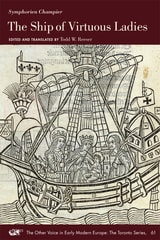
The Ship of Virtuous Ladies
Symphorien Champier
Iter Press, 2018
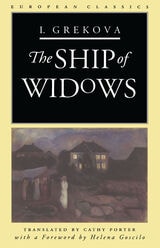
The Ship of Widows
I. Grekova
Northwestern University Press, 1994
The Signs Reader
Women, Gender, and ScholarshipEdited by Elizabeth Abel and Emily K. Abel
University of Chicago Press, 1983
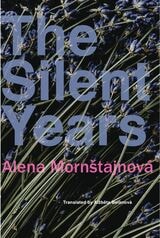
The Silent Years
Alena Mornštajnová
Seagull Books, 2026
Bohdana is an introverted young woman grappling with tensions in her family and a lingering question she can’t quite shake: on her last visit to the hospital, why did her gravely ill grandmother call her “Blanka,” and what potential hidden past is her family keeping from her? As Bohdana struggles to piece together the truth, another story unfolds alongside hers—that of Svatopluk Žák, a devoted builder of socialist society who hopes his beloved family’s future will be as brilliant as the star on the Soviet flag. When their two stories collide, hidden histories come to light.
In The Silent Years, Czech author Alena Mornštajnová weaves a rich, intimate family drama that reveals how easily a carefully constructed world can shatter and transform in an instant. Set in postwar Czechoslovakia, the novel follows a human story against a larger backdrop of a society in upheaval.
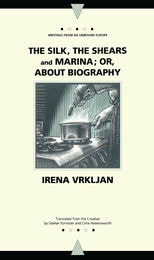
The Silk, the Shears and Marina; or, About Biography
Irena Vrkljan
Northwestern University Press, 1999
These are the first two volumes of the Croatian poet and novelist Irena Vrkljan's lyrical autobiography. Although each novel illuminates the other, they also stand alone as original and independent works of art. In The Silk, the Shears, Vrkljan traces the symbolic and moral significance of her life, and her vision of the fate of women in her mother's time and in her own. Marina continues the intense analysis of the poetic self, using the life of Marina Tsvetaeva to meditate on the processes behind biography.

The Spectacle of Women
Imagery of the Suffrage Campaign 1907-14Lisa Tickner
University of Chicago Press, 1988
The Spectral Wound
Sexual Violence, Public Memories, and the Bangladesh War of 1971Nayanika Mookherjee
Duke University Press, 2015
The State, Ethnicity, and Gender in Africa
Intellectual Legacies of Crawford YoungEdited by Scott Straus and Aili Mari Tripp
University of Wisconsin Press, 2024
Written in honor of Crawford Young, a foundational figure in the study of African politics, the essays reflect the breadth and intellectual legacy of this towering scholar and illustrate the vast impact Young had, and continues to have, on the field. The book’s themes build from his seminal publications, and the essays were written by leading scholars who were trained by Young.
The Stone Angel
Margaret Laurence
University of Chicago Press, 1993
In The Stone Angel, Hagar Shipley, age ninety, tells the story of her life, and in doing so tries to come to terms with how the very qualities which sustained her have deprived her of joy. Mingling past and present, she maintains pride in the face of senility, while recalling the life she led as a rebellious young bride, and later as a grieving mother. Laurence gives us in Hagar a woman who is funny, infuriating, and heartbreakingly poignant.
"This is a revelation, not impersonation. The effect of such skilled use of language is to lead the reader towards the self-recognition that Hagar misses."—Robertson Davies, New York Times
"It is [Laurence's] admirable achievement to strike, with an equally sure touch, the peculiar note and the universal; she gives us a portrait of a remarkable character and at the same time the picture of old age itself, with the pain, the weariness, the terror, the impotent angers and physical mishaps, the realization that others are waiting and wishing for an end."—Honor Tracy, The New Republic
"Miss Laurence is the best fiction writer in the Dominion and one of the best in the hemisphere."—Atlantic
"[Laurence] demonstrates in The Stone Angel that she has a true novelist's gift for catching a character in mid-passion and life at full flood. . . . As [Hagar Shipley] daydreams and chatters and lurches through the novel, she traces one of the most convincing—and the most touching—portraits of an unregenerate sinner declining into senility since Sara Monday went to her reward in Joyce Cary's The Horse's Mouth."—Time
"Laurence's triumph is in her evocation of Hagar at ninety. . . . We sympathize with her in her resistance to being moved to a nursing home, in her preposterous flight, in her impatience in the hospital. Battered, depleted, suffering, she rages with her last breath against the dying of the light. The Stone Angel is a fine novel, admirably written and sustained by unfailing insight."—Granville Hicks, Saturday Review
"The Stone Angel is a good book because Mrs. Laurence avoids sentimentality and condescension; Hagar Shipley is still passionately involved in the puzzle of her own nature. . . . Laurence's imaginative tact is strikingly at work, for surely this is what it feels like to be old."—Paul Pickrel, Harper's
The Story I Tell Myself
A Venture in Existentialist AutobiographyHazel E. Barnes
University of Chicago Press, 1997
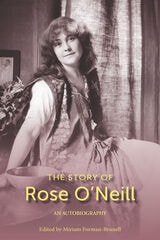
The Story of Rose O'Neill
An AutobiographyEdited by Miriam Forman-Brunell
University of Missouri Press, 2022
To most of us, Rose O'Neill is best known as the creator of the Kewpie doll, perhaps the most widely known character in American culture until Mickey Mouse. Prior to O'Neill's success as a doll designer, however, she already had earned a reputation as one of the best-known female commercial illustrators. Her numerous illustrations appeared in America's leading periodicals, including Life, Harper's Bazaar, and Cosmopolitan. While highly successful in the commercial world, Rose O'Neill was also known among intellectuals and artists for her contributions to the fine arts and humanities. In the early 1920s, her more serious works of art were exhibited in galleries in Paris and New York City. In addition, she published a book of poetry and four novels.
Yet, who was Rose Cecil O'Neill? Over the course of the twentieth century, Rose O'Neill has captured the attention of journalists, collectors, fans, and scholars who have disagreed over whether she was a sentimentalist or a cultural critic. Although biographers of Rose O'Neill have drawn heavily on portions of her previously unpublished autobiography, O'Neill's own voice--richly revealed in her well-written manuscript--has remained largely unheard until now.
In these memoirs, O'Neill reveals herself as a woman who preferred art, activism, and adventure to motherhood and marriage. Featuring photographs from the O'Neill family collection, The Story of Rose O'Neill fully reveals the ways in which she pushed at the boundaries of her generation's definitions of gender in an effort to create new liberating forms.

The Sturdy Oak
A Composite Novel of American PoliticsElizabeth Jordan
Ohio University Press, 1998
In the spring of 1916, as the workers for woman suffrage were laying plans for another attack on the bastions of male supremacy, the idea for The Sturdy Oak was born. Based on the rules of an old parlor game, wherein one person begins a narrative, another continues it, and another follows, this collaborative effort by the leading writers of the day, such as Fannie Hurst, Dorothy Canfield, and Kathleen Norris, is a satiric look at the gender roles of the time.
There is much in The Sturdy Oak that reflects the New York campaign for suffrage of 1916–1917. The setting is the fictional city of Whitewater in upstate New York. Idealistic reformers are pitted against a ruthless political machine, and the traditional picture of man as “the sturdy oak” supporting woman, “the clinging vine,” is ridiculed in the portrayal of an engaging couple, George and Genevieve Remington. Nonetheless, the purpose of the book is not primarily ridicule but reform, and the reader is taken through the steps by which a confirmed anti-suffragist is gradually transformed into a supporter of the suffrage cause.
Beyond its historical interest, The Sturdy Oak is imbued with a political and social currency that makes it applicable even today. And because of the skill of the writers of this composite novel, even eight decades after its initial publication The Sturdy Oak is still, as the New York Times said in 1917, “irresistibly readable.”
The Sámi Problem
A NovelKathrine Nedrejord
University of Minnesota Press, 2027
An incisive novel illuminating a young mother’s reckoning with her own identity and Sámi lineage through the lives and struggles of her ancestors
As a freelance journalist living in France, Marie Engmo has traveled far and wide to write about languages and local cultures threatened with extinction. But when she returns home to Norway for her áhkku’s (grandmother’s) funeral, she recognizes how far she has strayed from her own sense of self and her Sámi identity. Kathrine Nedrejord’s acclaimed novel—winner of Norway’s national book award—is the lucid and compelling story of Marie’s emotional search through her family’s past for a history and legacy that she might bequeath to her own infant daughter.
In spare and elegant prose, Nedrejord illuminates a young woman’s fierce and clear-eyed reckoning with the sacrifice and oppression that has marked the women and men in her family and generations of Indigenous Sámi communities in the northern reaches of Norway. As Marie awakens to the lengths her mother, grandmother, and great-grandmother traversed to survive discrimination and displacement, she uncovers and embodies their strength and dignity that are her—and her daughter’s—inheritance. What emerges is an unflinching examination of belonging to a minority that can never dominate, that will always have to negotiate and compromise its place in the world. As stirring as it is troubling, The Sámi Problem is itself an awakening and a literary triumph.
Retail e-book files for this title are screen-reader friendly.
The Tangled Roots of Feminism, Environmentalism, and Appalachian Literature
Elizabeth S. D. Engelhardt
Ohio University Press, 2003
Contemporaries were shocked when author Mary Noailles Murfree revealed she was a woman, but modern readers may be more surprised by her cogent discussion of community responses to unwanted development. Effie Waller Smith, an African American woman writing of her love for the Appalachian mountains, wove discussions of women's rights, racial tension, and cultural difference into her Appalachian poetry. Grace MacGowan Cooke participated in avant-garde writers' colonies with the era's literary lights and applied their progressive ideals to her fiction about the Appalachia of her youth. Emma Bell Miles, witness to poverty, industrialization, and violence against women, wrote poignant and insightful critiques of her Appalachian home.
In The Tangled Roots of Feminism, Environmentalism, and Appalachian Literature Elizabeth Engelhardt finds in all four women's writings the origins of what we recognize today as ecological feminism—a wide-reaching philosophy that values the connections between humans and nonhumans and works for social and environmental justice.
People and the land in Appalachia were also the subject of women authors with radically different approaches to mountains and their residents. Authors with progressive ideas about women's rights did not always respect the Appalachian places they were writing about or apply their ideas to all of the women in those places—but they did create hundreds of short stories, novels, letters, diaries, photographs, sketches, and poems about the mountains.
While The Tangled Roots of Feminism, Environmentalism, and Appalachian Literature ascribes much that is noble to the beginnings of the ecological feminism movement as it developed in Appalachia, it is also unyielding in its assessment of the literatures of the voyeur, tourist, and social crusader who supported status quo systems of oppression in Appalachia.
The Taste of Nostalgia
Women, Race, and Culinary Longing in PeruAmy Cox Hall
University of Texas Press, 2024
An exploration of gender, race, and food in Peru in the 1950s and 1960s and today.
From the late 1940s to the mid 1960s, Peru’s rapid industrialization and anti-communist authoritarianism coincided with the rise of mass-produced cookbooks, the first televised cooking shows, glossy lifestyle magazines, and imported domestic appliances and foodstuffs. Amy Cox Hall’s The Taste of Nostalgia uses taste as a thematic and analytic thread to examine the ways that women, race, and the kitchen were foundational to Peruvian longings for modernity, both during the Cold War and today.
Drawing on interviews, personal stories, media images, and archival and ethnographic research, Cox Hall considers how elite, European-descended women and the urban home were central to Peru’s modernizing project and finds that all women who labored within the deeply racialized and gendered world of food helped set the stage for a Peruvian food nationalism that is now global in the twenty-first century. Cox Hall skillfully connects how the sometimes-unsavory tastes of the past are served again in today’s profitable and pervasive gastronostalgia that helps sell Peru and its cuisine both at home and abroad.
The Text is Myself
Women's Life Writing and CatastropheMiriam Fuchs
University of Wisconsin Press, 2004
In The Text Is Myself, Miriam Fuchs analyzes the impact of catastrophe on the lives and writings of these five women. She shows that, however much the past may be shaped into a discernible storyline, it is the uncertain present that preoccupies these writers. Using a feminist and comparative approach to the texts, Fuchs links the women in creative and insightful ways and displays their many profound connections, despite the differences in their cultural and geographic backgrounds.
Fuchs argues convincingly for a new genre within life writing—the narrative of catastrophe, defined by the writing process that occurs during catastrophic events. Two narratives are being told, and two levels of representation, literal and figurative, are present.
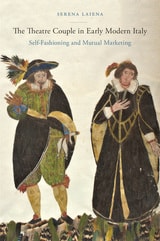
The Theatre Couple in Early Modern Italy
Self-Fashioning and Mutual MarketingSerena Laiena
University of Delaware Press, 2024
Who were the first celebrity couples? How was their success forged? Which forces influenced their self-fashioning and marketing strategies?
These questions are at the core of this study, which looks at the birth of a phenomenon, that of the couple in show business, with a focus on the promotional strategies devised by two professional performers: Giovan Battista Andreini (1576–1654) and Virginia Ramponi (1583–ca.1631). This book examines their artistic path – a deliberately crafted and mutually beneficial joint career – and links it to the historical, social, and cultural context of post-Tridentine Italy. Rooted in a broad research field, encompassing theatre history, Italian studies, celebrity studies, gender studies, and performance studies, The Theatre Couple in Early Modern Italy revises the conventional view of the Italian diva, investigates the deployment of Catholic devotion as a marketing tool, and argues for the importance of the couple system in the history of Commedia dell’Arte, a system that continues to shape celebrity today.
The Thinking Woman
Julienne van Loon
Rutgers University Press, 2021
While women have struggled to gain recognition in the discipline of philosophy, there is no shortage of brilliant female thinkers. What can these women teach us about ethics, politics, and the nature of existence, and how might we relate these big ideas back to the smaller everyday concerns of domestic life, work, play, love, and relationships?
Australian novelist Julienne van Loon goes on a worldwide quest to answer these questions, by engaging with eight world-renowned thinkers who have deep insights on humanity and society: media scholar Laura Kipnis, novelist Siri Hustvedt, political philosopher Nancy Holmstrom, psychoanalytic theorist Julia Kristeva, domestic violence reformer Rosie Batty, peace activist Helen Caldicott, historian Marina Warner, and feminist philosopher Rosi Braidotti. As she speaks to these women, she reflects on her own experiences. Combining the intimacy of a memoir with the intellectual stimulation of a theoretical text, The Thinking Woman draws novel connections between the philosophical, personal, and political. Giving readers a new appreciation for both the ethical complexities and wonder of everyday life, this book is inspiration to all thinking people.
The Third Shore
Women's Fiction from East Central EuropeAgatha Schwartz
Northwestern University Press, 2006
A rich compendium of fiction by twenty-five women from eighteen different nations ranging from Lithuania to Ukraine to Poland, the Czech Republic, Romania, Albania, and Slovenia, The Third Shore brings to light a whole spectrum of women's literary accomplishment and experience virtually unknown in the West. Gracefully translated, and with an introduction that establishes their political, historical, and literary context, these stories written in the decade after the fall of the Iron Curtain are tales of the familiar-of illness and death, love and desire, motherhood and war, feminism, and patriarchy-reconceived and turned into something altogether new by the distinctive experience they reflect.
The Thirty-Foot Elvis
A novelJane F. Hankins
Parkhurst Brothers, Inc., 2013
The Time We Have
Essays on Pandemic LivingMichele Weldon
Northwestern University Press, 2024
At a time when so many are dealing with collective and personal grief, award-winning author and journalist Michele Weldon’s new collection of essays navigates the revelatory and upending nature of this extraordinary pandemic era through a lens of love and connection. Weldon explores pain and pleasure alike with emotional texture, empathy, wisdom, vulnerability, and humor. She interrogates moments of joy, despair, and triumph, offering readers the possibility for a richly cathartic experience. With honesty and agility, Weldon creates poignant intersections of her narrative with popular culture, history, media, news, consumerism, family traditions, and healthcare. Employing honest and daring language, Weldon examines the concepts of safety, importance of beloved objects, power of words, shift to remote relationships, concepts of feminism, betrayal of public lies, and more. Ultimately, with grace and heart, Weldon offers in these essays useful pathways toward framing this swath of time so that we might arrive at a sense of understanding, belonging, and peace with our new realities.
The Traffic in Women's Work
East European Migration and the Making of EuropeAnca Parvulescu
University of Chicago Press, 2014
The Trans Midwest
Trans Feminist Coalition Building Since World War IIJoy Ellison
University of Chicago Press, 2027
A revelatory regional history of trans feminist coalition-building between feminist, queer, and Black communities.
In the face of heightened transphobia and rising fascism in the United States, Joy Ellison’s TheTrans Midwest recounts the history of Midwestern trans women and femmes as a force in the larger feminist movement in the United States. Facing repression and geographic isolation, trans feminine Midwesterners built, and continue to build, vibrant coalitions with feminist, queer, and Black organizations.
Drawing on a vast range of archives and oral histories, Ellison shares a detailed and intersectional description of trans life and politics. These historical figures range from the Black trans women who worked in drag shows to the student coalitions that led to the passage of the country’s first trans-inclusive anti-discrimination ordinance and transsexual lesbian feminist activism in the 1990s. Ellison examines community networks and support groups, newsletters and advertisements, and Midwestern cities from Detroit to Kansas City to elucidate how trans regional groups found common interests across different races, classes, abilities, and sexualities, a marked difference from existing historical accounts of similar movements elsewhere.
Contributing to our understanding of trans history and the impact of intersectional organizing, The Trans Midwest presents new possibilities and critical lessons for trans feminist movements today.
The Transfiguring Sword
The Just War of the Women's Social and Political UnionCheryl R. Jorgensen-Earp
University of Alabama Press, 1997
Provides a new understanding of the recurrent rhetorical need to employ conservative rhetoric in support of a radical cause
The Women’s Social and Political Union, the militant branch of the English women’s suffrage movement, turned to arson, bombing, and widespread property destruction as a strategy to achieve suffrage for women. Because of its comparative rarity, terrorist violence by reform (as opposed to revolutionary) movements is underexplored, as is the discursive rhetoric that accompanies this violence. Largely because of the moral stance that drives such movements, the need to justify violence is greater for the reformist than for the revolutionary terrorist. The burden of rhetorical justification falls even more heavily on women utilizing violence, an option generally perceived as open only to men.The militant suffragettes justified their turn to limited terrorism by arguing that their violence was part of a “just war.” Appropriating the rhetoric of a just war in defense of reformist violence allowed the suffragettes to exercise a traditional rhetorical vision for the sake of radical action. The concept of a just war allowed a spinning out of a fantasy of heroes, of a gallant band fighting against the odds. It challenged the imagination of the public to extend to women a heroic vision usually reserved for men and to accept the new expectations inherent in that vision. By incorporating the concept of a just war into their rhetoric, the WSPU leaders took the most conventional justification that Western tradition provides for the use of violence and adapted it to meet their unique circumstance as women using violence for political reform.
This study challenges the common view that the suffragettes’ use of military metaphors, their vilification of the government, and their violent attacks on property were signs of hysteria and self-destruction. Instead, what emerges is a picture of a deliberate, if controversial, strategy of violence supported by a rhetorical defense of unusual power and consistency.
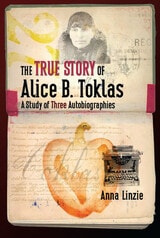
The True Story of Alice B. Toklas
A Study of Three AutobiographiesAnna Linzie
University of Iowa Press, 2006
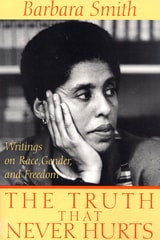
The Truth That Never Hurts
Writings on Race, Gender, and FreedomSmith, Barbara
Rutgers University Press, 2000
Smith’s essay “Toward a Black Feminist Criticism,” is often cited as a major catalyst in opening the field of black women’s literature. Pieces about racism in the women’s movement, black and Jewish relations, and homophobia in the Black community have ignited dialogue about topics that few other writers address. The collection also brings together topical political commentaries on the 1968 Chicago convention demonstrations; attacks on the NEA; the Anita Hill–Clarence Thomas Senate hearings; and police brutality against Rodney King and Abner Louima. It also includes a never-before-published personal essay on racial violence and the bonds between black women that make it possible to survive.
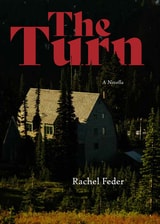
The Turn
A NovellaRachel Feder
Northwestern University Press, 2026
A contemporary gothic delving into the power of unmoored lust and familial bonds
When Baxter, a young writer and recent college graduate, accepts a live-in nanny position for an affluent professor’s family in the foothills of the Rocky Mountains, she rapidly becomes aware of strange happenings orbiting the family and their children, Quinn and Thebes. After the father becomes estranged and the mother disappears into the night with only one child, Baxter is left utterly lost and in charge of the baby, Thebes, as she struggles to make sense of the bizarre occurrences within the family, the house, and even her own body. But the unnatural occurrences are far from over, and as Baxter stumbles in the dark to protect the child, something sinister stalks the night, looking to sink in its teeth.
For fans of gothic classics such as The Turn of the Screw and Carmilla, The Turn is an eerie and magnificent modern gothic tale about the monstrous bond of love between caregiver and child.
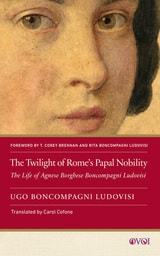
The Twilight of Rome's Papal Nobility
The Life of Agnese Borghese Boncompagni LudovisiUgo Boncompagni Ludovisi (1856–1935)
Rutgers University Press, 2025
First privately published in 1921, The Twilight of Rome's Papal Nobility provides an intimate look at a family who grew up accustomed to almost unimaginable wealth, power, and glamour. A descendant of two popes, Ugo Boncompagni Ludovisi recounts the life story of his mother Agnese, who was raised in a palace full of priceless artwork, including pieces by Caravaggio and Michelangelo. We get a window into Agnese's private life—her girlhood, marriage, and raising of several children—as her public life becomes increasingly tumultuous amid the family’s struggles to retain its property. A tender elegy to a bygone era, Boncompagni Ludovisi's story provides a unique perspective on Italian history and Rome’s urban redevelopment.
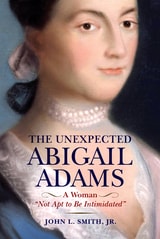
The Unexpected Abigail Adams
A Woman "Not Apt to be Intimidated"John L. Smith, Jr.
Westholme Publishing, 2026
An Extraordinary Portrait of America’s Beloved Female Founder and First Lady
Abigail Adams, wife of John Adams, was an eyewitness to America’s founding, and helped guide the new nation through her observations and advice to her famously prickly husband, who cherished her. She met many important and significant figures of the period: George Washington and his wife Martha, Thomas Jefferson, Sally Hemings, Benjamin Franklin, Henry Knox, Samuel Adams, John Hancock, John Jay, Marquis de Lafayette, John Paul Jones, Alexander Hamilton, James Monroe, artist Patience Wright, and even King George III and Queen Charlotte of England, as well as King Louis XVI and Queen Marie Antoinette of France. In The Unexpected Abigail Adams: A Woman “Not Apt to Be Intimidated”, writer and researcher John L. Smith, Jr., draws on more than two thousand letters of Abigail’s spanning from the 1760s to her death in 1818, interweaving Abigail’s colorful correspondence—some of which has not appeared in print before—with a contextual narrative. In this priceless documentation of one of the most important periods of world history she comments on the varied personalities she encountered and, while her husband was away from home serving in the Continental Congresses and as a diplomatic envoy in Europe, she wrote him frequently about their home in Massachusetts, their family, national and local politics, and, during the early years of the war, crucial information concerning revolutionary activities around Boston. She was an advocate for education for women, a shrewd businesswoman, and had an unrivaled political acumen. Her strength in the face of disease, loss of children, and other hardships, and her poignant, beautiful, and often philosophical commentary, advice, and predictions allow Abigail to demonstrate her fully modern sensibilities. This major biography of Abigail, the first in over ten years, is a riveting, revealing portrait of a remarkable woman that readers will find very relatable—and one that transforms how she is perceived.
The Untold Story
Women and Theory in Golden Age TextsMary S. Gossy
University of Michigan Press, 1990

The Violence of Protection
Policing, Immigration Law, and Asian American WomenLee Ann S. Wang
Duke University Press, 2026
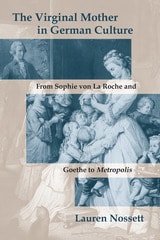
The Virginal Mother in German Culture
From Sophie von La Roche and Goethe to MetropolisLauren Nossett
Northwestern University Press, 2019
Examining the virginal mother in the first novel by a German woman (Sophie von La Roche), canonical texts by Goethe, nineteenth-century popular fiction, autobiographical works, and Thea von Harbou’s novel Metropolis and Fritz Lang’s film by the same name, this book highlights the virginal mother at pivotal moments in German history and cultural development: the entrance of women into the literary market, the Goethezeit, the foundation of the German Empire, and the volatile Weimar Republic. The Virginal Mother in German Culture will be of interest to students and scholars of German literature, history, cultural and social studies, and women’s studies.
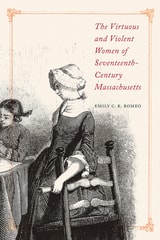
The Virtuous and Violent Women of Seventeenth-Century Massachusetts
Emily C.K. Romeo
University of Massachusetts Press, 2020
Dismantling the image of the peaceful and serene colonial goodwife and countering the assumption that New England was inherently less violent than other regions of colonial America, Emily C. K. Romeo offers a revealing look at acts of violence by Anglo-American women in colonial Massachusetts, from the everyday to the extraordinary. Using Essex County as a case study, Romeo deftly utilizes seventeenth- and eighteenth-century sources to demonstrate that Puritan women, both “virtuous” and otherwise, learned to negotiate the shifting boundaries between acceptable and unacceptable violence in their daily lives and communities.
The Virtuous and Violent Women of Seventeenth-Century Massachusetts shows that more dramatic violence by women—including infanticide, the scalping of captors during the Indian Wars, and even witchcraft accusations—was not necessarily intended to challenge the structures of authority but often sprung from women's desire to protect property, safety, and standing for themselves and their families. The situations in which women chose to flout powerful social conventions and resort to overt violence expose the underlying, often unspoken, priorities and gendered expectations that shaped this society.
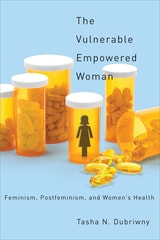
The Vulnerable Empowered Woman
Feminism, Postfeminism, and Women's HealthDubriwny, Tasha N
Rutgers University Press, 2012
Winner of the Organization for the Study of Communication, Language, and Gender 2013 Outstanding Book Award
Winner of the 2013 Bonnie Ritter Book Award from the Feminist and Women's Division of the National Communication Association
The feminist women’s health movement of the 1960s and 1970s is credited with creating significant changes in the healthcare industry and bringing women’s health issues to public attention. Decades later, women’s health issues are more visible than ever before, but that visibility is made possible by a process of depoliticization
The Vulnerable Empowered Woman assesses the state of women’s healthcare today by analyzing popular media representations—television, print newspapers, websites, advertisements, blogs, and memoirs—in order to understand the ways in which breast cancer, postpartum depression, and cervical cancer are discussed in American public life. From narratives about prophylactic mastectomies to young girls receiving a vaccine for sexually transmitted disease, the representations of women’s health today form a single restrictive identity: the vulnerable empowered woman. This identity defuses feminist notions of collective empowerment and social change by drawing from both postfeminist and neoliberal ideologies. The woman is vulnerable because of her very femininity and is empowered not to change the world, but to choose from among a limited set of medical treatments.
The media’s depiction of the vulnerable empowered woman’s relationship with biomedicine promotes traditional gender roles and affirms women’s unquestioning reliance on medical science for empowerment. The book concludes with a call to repoliticize women’s health through narratives that can help us imagine women—and their relationship to medicine—differently.
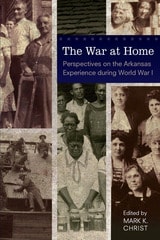
The War at Home
Perspectives on the Arkansas Experience during World War IMark K. Christ
University of Arkansas Press, 2020
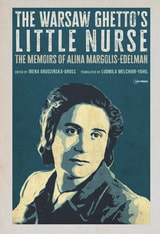
The Warsaw Ghetto's Little Nurse
The Memoirs of Alina Margolis-EdelmanAlina Margolis-Edelman
Central European University Press, 2026
The stories told in her book illuminate issues of anti-Semitism, Holocaust, and Jewish resistance to oppression. She writes about solidarity in times of great danger, resilience in dire situations, dignity of love and care.
The Way It Works with Women
Louis Calaferte
Northwestern University Press, 1998
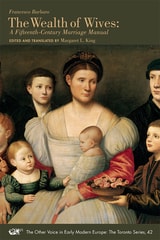
The Wealth of Wives
A Fifteenth-Century Marriage ManualFrancesco Barbaro
Iter Press, 2015
In 1415, Francesco Barbaro produced a marriage manual intended at once for his friend, a scion of the Florentine Medici family, and for the whole set of his peers, the young nobility of Venice. Countering the trends of the day toward dowry chasing and dowry inflation, Barbaro insisted that the real wealth of wives was their capacity to conceive, birth, and rear children worthy of their heritage. The success of the patriciate depended, ironically, on women: for they alone could ensure the biological, cultural, and spiritual reproduction of their marital lineage. The Wealth of Wives circulated in more than 100 manuscript versions, five Latin editions, and translations into German, Italian, French, and English, far outstripping in its influence Leon Battista Alberti’s On the Family (1434).
The Wendys
Allison Benis White
Four Way Books, 2020
The Wild Goose
Mori Ogai; Translated with an Introduction by Burton Watson
University of Michigan Press, 1995
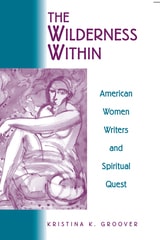
The Wilderness Within
American Women Writers and Spiritual QuestKristina K. Groover
University of Arkansas Press, 1999
Kristina K. Groover, in examining this question, finds that books by American women writers offer alternative patterns for seeking revelation—patterns which emphasize not solitary journeys, but the sacredness of everyday life. Drawing on the work of feminist theorists and theologians, including Carol Gilligan, Naomi Goldenberg, and Rosemary Ruether, Groover explores the spiritual nature and force of domesticity, community, storytelling, and the garden in the works of such writers as Toni Morrison, Katherine Anne Porter, Kaye Gibbons, and Alice Walker. Ordinary, personal experience in these works becomes a source for spiritual revelation. Wisdom is gained, lessons are learned, and lives are healed not in spite of home and communal ties, but because of them.
Thus, American women writers, Groover argues, make alternative literary and spiritual paradigms possible. Similarly, Kristina K. Groover, in this lucid and groundbreaking work, opens up new fields of exploration for any reader interested in women’s spirituality or in the rich, diverse field of American literature.
The Wind
By Dorothy Scarborough
University of Texas Press, 1979
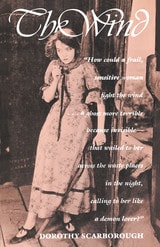
The Wind stirred up a fury among Texas readers when it was first published in 1925.
This is the story of Letty, a delicate girl who is forced to move from lush Virginia to desolate West Texas. The numbing blizzards, the howling sand storms, and the loneliness of the prairie all combine to undo her nerves. But it is the wind itself, a demon personified, that eventually drives her over the brink of madness.
While the West Texas Chamber of Commerce rose up in anger over this slander of their state, Dorothy Scarborough's depiction of the cattle country around Sweetwater during the drought of the late 1880s is essentially accurate. Her blend of realistic description, authentic folklore, and a tragic heroine, bound together by a supernatural theme, is unique in Southwestern literature. As a story by and about a woman, The Wind is a rarity in the early chronicles of the cattle industry. It is also one of the first novels to deal realistically with the more negative aspects of the West.
Sylvia Ann Grider's foreword reports on the life and work of Dorothy Scarborough, a native Texan and a well-respected scholar.
The Woman and the Lyre
Women Writers in Classical Greece and RomeJane McIntosh Snyder
Southern Illinois University Press, 1989
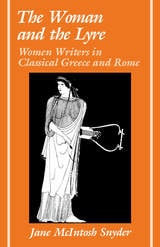
Beginning with Sappho in the seventh century B.C.E and ending with Egeria in the fifth century C.E., Snyder profiles ancient Greek and Roman women writers, including lyric and elegiac poets and philosophers and other prose writers. The writers are allowed to speak for themselves, with as much translation from their extant works provided in text as possible. In addition to giving readers biographical and cultural context for the writers and their works, Snyder refutes arguments representing prejudicial attitudes about women’s writing found in the scholarly literature. Covering writers from a wide historical span, this volume provides an engaging and informative introduction to the origins of the tradition of women’s writing in the West.
The Woman in the Violence
Gender, Poverty, and Resistance in PeruM. Cristina Alcalde
Vanderbilt University Press, 2010
Focusing on the experiences of women who are predominantly poor, nonwhite, rural-to-urban migrants with little or no formal education, The Woman in the Violence addresses a range of serious concerns. What types of violence do women experience at different stages in their lives? Which identities and roles are manifested throughout their lives, and do some of these increase their vulnerability to different forms of violence? What strategies do women employ to gain some power and control in these situations, and how can we conceptualize these strategies?
In examining these questions, The Woman in the Violence contributes to our understanding of violence, gender, race, resistance, and urbanism as it exposes and analyzes systemic violence against women. The everyday forms of resistance these women employ provide significant insight for students, scholars, and health professionals.
The Wombs of Women
Race, Capital, FeminismFrançoise Vergès
Duke University Press, 2020

The Women and Language Debate
A SourcebookEdited by Camille Roman, Suzanne Juhasz, and Cristanne Miller
Rutgers University Press, 1993
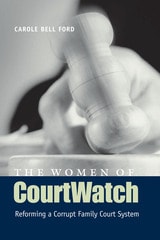
The Women of CourtWatch
Reforming a Corrupt Family Court SystemBy Carole Bell Ford
University of Texas Press, 2005
Houston was a terrible place to divorce or seek child custody in the 1980s and early 1990s. Family court judges routinely rendered verdicts that damaged the interests of women and children. In some especially shocking cases, they even granted custody to fathers who had been accused of molesting their own children. Yet despite persistent allegations of cronyism, incompetence, sexism, racism, bribery, and fraud, the judges wielded such political power and influence that removing them seemed all but impossible. The family court system was clearly broken, but there appeared to be no way to fix it.
This book recounts the inspiring and courageous story of women activists who came together to oppose Houston's family court judges and whose political action committee, CourtWatch, played a crucial role in defeating five of the judges in the 1994 judicial election. Carole Bell Ford draws on extensive interviews with Florence Kusnetz, the attorney who led the reform effort, and other CourtWatch veterans, as well as news accounts, to provide a full history of the formation, struggles, and successes of a women's grassroots organization that overcame powerful political interests to improve Houston's family courts. More than just a local story, however, this history of CourtWatch provides a model that can be used by activists in other communities in which legal and social institutions have gone astray. It also honors the heroism of Florence Kusnetz, whose commitment to the Jewish concept of tikkun olam ("repairing and improving the world") brought her out of a comfortable retirement to fight for justice for women and children.