Results by title
18284 books match the query 'United States' and 3764 start with t
The United States and the Atlantic Community
Issues and ProspectsEdited by James R. Roach
University of Texas Press, 1966
The restiveness among some members of the North Atlantic Treaty Organization as to its structure and functions was an indication not of the failure of NATO, but of a need for a new adjustment to the changes that had developed in world conditions since the organization was established. Such was the consensus underlying the comments of five eminent statesmen and political theorists in a series of lectures delivered at the University of Texas in the spring of 1966 on the general theme of “The United States and the Atlantic Community: Issues and Prospects.”
The grave crisis of confidence in the Atlantic Community resulted, ironically, from the success of NATO in combining the resources of thirteen European states with those of Canada and the United States in a common achievement of peace, economic stability, and security in the face of the postwar threat from the Soviet Union. Now that these objectives are obtained, one argument ran, NATO is no longer needed. The Soviet threat still exists, went another, and seems to be dispelled only because of the presence of NATO; what is needed is revision of policies and functions of the organization to fit new conditions.
The changes in the nature of international relations in the two decades after World War II were of two kinds: those inherent in the world international situation—the economic recovery of Europe (which brought new urgency to the desire for more independence from the United States), the disintegration of European colonial empires, the softened aspect of the Soviet threat, and the great advances in modern technology; and those that depended upon policy decisions—whether Europe should be a confederacy (as advocated by De Gaulle) or a federal union (as advocated by Jean Monnet) and what should be the international policy of a united Europe on such issues as a third force between the United States and Russia, unified or separate approaches to the East and the West, German unity, and military security.
A consideration of what these changes implied for the United States was the purpose of the series of papers collected in this volume. The names of the authors and the titles of their papers indicate the variety of views and interests expressed and the scope of the discussion: Henry A. Kissinger, Professor of Government at Harvard, “NATO: Evolution or Decline” André Philip, Professor of Economics at the Sorbonne, “The Atlantic Economy: Partners and Rivals” Hans Speier, member of the RAND Corporation Council, “Germany: The Continuing Challenge” Fritz Erler, a leader of the German Social Democratic Party, “Western Europe, Eastern Europe, and the Soviet Union” John J. Mccloy, former World Bank president and former U.S. military governor and high commissioner for Germany, “American Interests and Europe’s Future.”
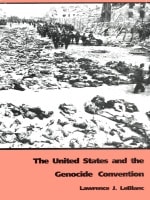
The United States and the Genocide Convention
Lawrence J. LeBlanc
Duke University Press, 1991
Adopted by the United Nations General Assembly in 1948 in response to the atrocities committed by the Nazis before and during World War II, the Genocide Convention was finally made law by the United States Senate in 1988 contingent upon a series of “conditions”—known as the “Lugar-Helms-Hatch Sovereignty Package”—which, LeBlanc suggests, markedly weakened the convention. Through careful analysis of the bitter debates over ratification, LeBlanc demonstrates that much of the opposition to the convention sprang from fears that it would be used domestically as a tool by groups such as blacks and Native Americans who might hold the U.S. accountable for genocide in matters of race relations.

The United States and the Global Struggle for Minerals
By Alfred E. Eckes, Jr.
University of Texas Press, 1979
In 1973–1974 soaring commodity prices and an oil embargo alerted Americans to the twin dangers of resource exhaustion and dependence on unreliable foreign materials suppliers. This period seemed to mark a watershed in history as the United States shifted from the era of relative resource abundance to relative materials scarcity.
Alfred E. Eckes’s comprehensive study shows that resource depletion and supply dislocations are not concerns unique to the 1970s. Since 1914, the quest for secure and stable supplies of industrial materials has been an important underlying theme of international relations and American diplomacy.
Although the United States has been blessed with a diversified materials base, it has pursued a minerals strategy designed to exploit low-cost, high-quality ores abroad. Eckes demonstrates how this policy has led to official protection for overseas private investments, involving a role for the Central Intelligence Agency.
Some modern historians have neglected the importance of resources in shaping diplomacy and history. This book, based on a vast variety of unutilized archival collections and recently declassified government documents, helps to correct that imbalance. In the process it illuminates an important and still timely aspect of America’s global interests.

The United States and the Second Hague Peace Conference
American Diplomacy and International Organization, 1899–1914Calvin DeArmond Davis
Duke University Press, 1975

The United States and the Treaty Law of the Sea
Henry Reiff
University of Minnesota Press, 1959
The United States and the Treaty Law of the Sea was first published in 1959. Minnesota Archive Editions uses digital technology to make long-unavailable books once again accessible, and are published unaltered from the original University of Minnesota Press editions.
The entire period of the Republic is covered in this account of United States participation in treaties which seek to regulate peacetime use of the sea, its resources, and the air space over it. Noting a revival of maritime interest in America, Professor Reiff describes current uses and abuses of the sea with respect to transportation, communications, exploitation of products and energy, waste disposal, and recreation. He relates developments in economies, technology, social science, and the natural sciences to the expanding web of treaty law, and reports some of the discussion and actions which took place at the United Nations Conference on Sea Law in the spring of 1958.
The United States in Central America, 1860–1911
Episodes of Social Imperialism and Imperial Rivalry in the World SystemThomas D. Schoonover
Duke University Press, 0
Schoonover’s archival research in Central America, Europe, and the United States encompasses public, business, organizational, and individual records. In analyzing this material, Schoonover applies a world systems theory approach with that of social imperialism and dependency theory to underscore the broad, multistate dimension of international affairs. In exploring the international history of Central America, Schoonover describes the role of personalities such as John C. Frémont, Otto von Bismarck, Theodore Roosevelt, Manuel Estrada Cabrera, and José Santos Zelaya; the impact of railroad building and canal projects; and the role of pan-Americanism, nationalism, racism, and anti-Americanism.
The United States in the World Economy
Edited by Martin Feldstein
University of Chicago Press, 1988
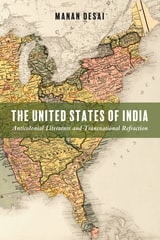
The United States of India
Anticolonial Literature and Transnational RefractionManan Desai
Temple University Press, 2020
The United States of India shows how Indian and American writers in the United States played a key role in the development of anticolonial thought in the years during and immediately following the First World War. For Indians Lajpat Rai and Dhan Gopal Mukerji, and Americans Agnes Smedley, W.E.B. Du Bois, and Katherine Mayo, the social and historical landscape of America and India acted as a reflective surface. Manan Desai considers how their interactions provided a “transnational refraction”—a political optic and discursive strategy that offered ways to imagine how American history could shed light on an anticolonial Indian future.
Desai traces how various expatriate and immigrant Indians formed political movements that rallied for American support for the cause of Indian independence. These intellectuals also developed new forms of writing about subjugation in the U.S. and India. Providing an examination of race, caste, nationhood, and empire, Desai astutely examines this network of Indian and American writers and the genres and social questions that fomented solidarity across borders.
The United States of Ohio
One American State and Its Impact on the Other Forty-NineDavid E. Rohr
The Ohio State University Press, 2019
The United States of Ohio covers little-known facts about Ohio, such as how the state was the birthplace of both the National Football League and Major League Baseball and how it was Ohioans who led efforts toward racial integration in both sports. Readers will learn what makes the state a manufacturing and agricultural powerhouse—with both the largest tire company, Akron’s Goodyear, and the largest consumer products company, Cincinnati’s Proctor & Gamble, based there. The state grows, processes, and builds on a level that far outpaces the size of its population or expanse of its borders. And it is the birthplace of many prominent US figures—from Thomas Edison to John Glenn to Neil Armstrong. From sports to a century’s worth of entertainment superstars to aviation and space exploration, Ohio’s best have made for America’s greatest stories—all captured here in a look at the Buckeye State and its impact on the other forty-nine.
The University Against Itself
The NYU Strike and the Future of the Academic Workplaceedited by Monika Krause, Mary Nolan, Michael Palm and Andrew Ross
Temple University Press, 2008
All of the contributors were either participants in the NYU strike -- graduate students, faculty, and organizers -- or are nationally recognized as writers on academic labor. They are deeply troubled by the ramifications of corporatizing universities. Here they spell out their concerns, offering lessons from one historic strike as well as cautions about the future of all universities.
Contributors include: Stanley Aronowitz, Barbara Bowen, Andrew Cornell, Ashley Dawson, Stephen Duncombe, Steve Fletcher, Greg Grandin, Adam Green, Kitty Krupat, Gordon Lafer, Micki McGee, Sarah Nash, Cary Nelson, Matthew Osypowski, Ed Ott, Ellen Schrecker, Susan Valentine, and the editors.
The University and the People
Envisioning American Higher Education in an Era of Populist ProtestScott M. Gelber
University of Wisconsin Press, 2011
The University and the People chronicles the influence of Populism—a powerful agrarian movement—on public higher education in the late nineteenth century. Revisiting this pivotal era in the history of the American state university, Scott Gelber demonstrates that Populists expressed a surprising degree of enthusiasm for institutions of higher learning. More fundamentally, he argues that the mission of the state university, as we understand it today, evolved from a fractious but productive relationship between public demands and academic authority.
Populists attacked a variety of elites—professionals, executives, scholars—and seemed to confirm academia’s fear of anti-intellectual public oversight. The movement’s vision of the state university highlighted deep tensions in American attitudes toward meritocracy and expertise. Yet Populists also promoted state-supported higher education, with the aims of educating the sons (and sometimes daughters) of ordinary citizens, blurring status distinctions, and promoting civic engagement. Accessibility, utilitarianism, and public service were the bywords of Populist journalists, legislators, trustees, and sympathetic professors. These “academic populists” encouraged state universities to reckon with egalitarian perspectives on admissions, financial aid, curricula, and research. And despite their critiques of college “ivory towers,” Populists supported the humanities and social sciences, tolerated a degree of ideological dissent, and lobbied for record-breaking appropriations for state institutions.
The University of Alabama
A Guide to the Campus and Its ArchitectureRobert Oliver Mellown
University of Alabama Press, 2013
In 1988 the University of Alabama Press published Robert Oliver Mellown’s The University of Alabama: A Guide to the Campus, a culmination of a decade’s worth of research into both the facts and the legends surrounding the architecture, history, and traditions of the Capstone.
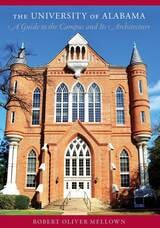
Over twenty years later, this new guide brings to light the numerous additions, expansions, and renovations the university has undergone on its spacious grounds in Tuscaloosa. In addition to updated sections devoted to the university’s historic landmarks—such as Foster Auditorium, where “the stand in the schoolhouse door” occurred; Denny Chimes,where the handprints and footprints of famous Tide athletes are memorialized in concrete; and the Gorgas House, which with stood the destruction of Union troops at the end of the Civil War—new sections account for the acquisition of Bryce Hospital’s campus, the expansions at Bryant-Denny Stadium to accommodate the growing Crimson Tide fan base, and the burgeoning student recreation facilities, playing fields, and residential communities.
Chapters are arranged into various campus tours for walking or driving—Antebellum, Victorian, Early Twentieth-Century, East Quad, West Quad, Science and Engineering Corridor, Student Life, Bryce, Medical, Southeast, Athletics, and Off Campus. Alumni, prospective students and their parents, new faculty, out-of-state visitors, and foreign dignitaries will all welcome this useful, compact, and colorful guide to one of the most beautiful campuses in the country.
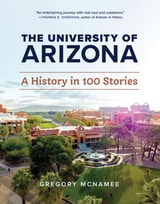
The University of Arizona
A History in 100 StoriesGregory McNamee
University of Arizona Press, 2024
The University of Arizona: A History in 100 Stories is a celebration of the people, ideas, inventions, teaching, and structures that have been part of the school’s evolution from a small land-grant institution to an internationally renowned research institution. Drawing on half a century of connection with the University of Arizona as a student, staff member, and faculty member, Gregory McNamee presents a history through the lens of a hundred subjects.
That story begins in 1885, with the establishment of the school, which quickly proved itself to be a powerhouse in its foundational “four pillars”: agriculture and earth sciences, followed by astronomy and anthropology. In the years following World War II, those four pillars became ever more important to the University, even as countless other fields of study gained prominence: optical sciences, women’s studies, the humanities, mathematics, and more. This phenomenal institution has as its setting the Sonoran Desert, and, closer to home, to a built environment that is widely considered among the most scenic in the country, from the Historic District with its buildings that are more than a century old to the latest steel-and-glass constructions on the edges of the ever-expanding campus.
McNamee relates this history in an entertaining manner, peppering discussion of serious intellectual and institutional themes with lighter moments—the origins of the university's rivalry with Arizona State, the ghosts that are said to lurk about campus, and more. Wildcats everywhere will delight in McNamee’s celebration of the people, places, learning, books, and pastimes that have distinguished our school.
The University of Chicago
A HistoryJohn W. Boyer
University of Chicago Press, 2015
With The University of Chicago: A History, John W. Boyer, Dean of the College since 1992, presents a deeply researched and comprehensive history of the university. Boyer has mined the archives, exploring the school’s complex and sometimes controversial past to set myth and hearsay apart from fact. The result is a fascinating narrative of a legendary academic community, one that brings to light the nature of its academic culture and curricula, the experience of its students, its engagement with Chicago’s civic community, and the conditions that have enabled the university to survive and sustain itself through decades of change.
Boyer’s extensive research shows that the University of Chicago’s identity is profoundly interwoven with its history, and that history is unique in the annals of American higher education. After a little-known false start in the mid-nineteenth century, it achieved remarkable early successes, yet in the 1950s it faced a collapse of undergraduate enrollment, which proved fiscally debilitating for decades. Throughout, the university retained its fierce commitment to a distinctive, intense academic culture marked by intellectual merit and free debate, allowing it to rise to international acclaim. Today it maintains a strong obligation to serve the larger community through its connections to alumni, to the city of Chicago, and increasingly to its global community.
Published to coincide with the 125th anniversary of the university, this must-have reference will appeal to alumni and anyone interested in the history of higher education of the United States.
The University of Chicago
A HistoryJohn W. Boyer
University of Chicago Press, 2024
One of the most influential institutions of higher learning in the world, the University of Chicago has a powerful and distinct identity, and its name is synonymous with intellectual rigor. With nearly 170,000 alumni living and working in more than one hundred and fifty countries, its impact is far-reaching and long-lasting.
With The University of Chicago: A History, John W. Boyer, Dean of the College from 1992 to 2023, thoroughly engages with the history and the lived politics of the university. Boyer presents a history of a complex academic community, focusing on the nature of its academic culture and curricula, the experience of its students, its engagement with Chicago’s civic community, and the resources and conditions that have enabled the university to sustain itself through decades of change. He has mined the archives, exploring the school’s complex and sometimes controversial past to set myth and hearsay apart from fact.
Boyer’s extensive research shows that the University of Chicago’s identity is profoundly interwoven with its history, and that history is unique in the annals of American higher education. After a little-known false start in the mid-nineteenth century, it achieved remarkable early successes, yet in the 1950s it faced a collapse of undergraduate enrollment, which proved fiscally debilitating for decades. Throughout, the university retained its fierce commitment to a distinctive, intense academic culture marked by intellectual merit and free debate, allowing it to rise to international acclaim. Today it maintains a strong obligation to serve the larger community through its connections to alumni, to the city of Chicago, and increasingly to its global community. Boyer’s tale is filled with larger-than-life characters—John D. Rockefeller, Robert Maynard Hutchins, and many other famous figures among them—and episodes that reveal the establishment and rise of today’s institution.
Newly updated, this edition extends through the presidency of Robert Zimmer, whose long tenure was marked by significant developments and controversies over subjects as varied as free speech, medical inequity, and community relations.

The University of Illinois, 1894-1904
THE SHAPING OF THE UNIVERSITYWinton U. Solberg
University of Illinois Press, 2000
The years 1894 to 1904 mark the stormy tenure of Andrew S. Draper as president of the University of Illinois. Draper, a successful superintendent of schools with no college or university experience and no credentials as a post-secondary administrator, presided over many crucial improvements in the university's physical plant, curricula, and other areas. However, he failed to infuse the university with a spirit of cohesion, and his term as president was fraught with conflict.
From his inauguration on, the autocratic Draper collided with deans and faculty who opposed both the substance of his changes and the manner in which he presented and implemented them.
This volume closely examines the Draper years from the perspectives of faculty, students, and administrators. Solberg outlines the administrative, faculty, staff, and physical infrastructure. He also reveals a vibrant and varied student life, including a whirl of social activities, literary societies, intercollegiate debate and athletics, hazing, religion, and increasingly prominent fraternities.
A sharply delineated and detailed picture of a university in transition, The University of Illinois, 1894-1904 traces the school's shift from an institution known primarily as a training ground for engineers to a full-fledged university poised to compete on the national level.
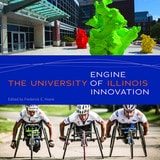
The University of Illinois
Engine of InnovationEdited by Frederick E. Hoxie
University of Illinois Press, 2017
The University of Iowa Guide to Campus Architecture
John Beldon Scott
University of Iowa Press, 2006

The University of Michigan & China, 1845 – 2017
Neal McKenna
Michigan Publishing Services, 2017
Throughout the last two centuries U.S. administrations from President Lincoln to President Clinton have relied on U-M leaders and faculty to engage China and develop political and cultural relationships. The University of Michigan was one of the first universities in the U.S. to enroll Chinese students and has many prominent Chinese graduates, including a Nobel Laureate and the first female college president in China.
As U-M celebrates its own bicentennial, this book recounts the university's considerable history with Chinese governments, people and culture. The book also updates readers on the current and ongoing partnerships between different U-M departments and schools with Chinese institutions, and provides a list of several prominent Chinese graduates of the University of Michigan.
The University of Nevada, 1874-2024
150 Years of Inspiring ExcellenceJohn Trent
University of Nevada Press, 2024
As both the University’s student body and the state’s population grew, the campus was transferred to Reno in 1885-86 as an effort to secure the fledgling institution’s prospects for survival. Many of the initial class of thirty-five students resided in Morrill Hall, the only building on campus, where they also received instruction and ate their meals. As the University enhanced its academic offerings, enrollment grew to more than 1,000 students by the turn of the century. A strong belief that the University must always be changing and evolving to meet the needs of its students and answer the challenges of a particular era became the guiding forces behind the administration’s decision-making. With an increasingly diverse student body and one of the most productive academic faculties in the country, the little school on the hill expanded during its first 100 years to become a leading public university in the western United States.
Today, the University continues to achieve institutional benchmarks, including a record 5,000 graduates during the 2019–20 academic year. It is exactly this kind of student success that has always been at the heart of the Wolf Pack Family’s mission to help students find the path that is right for them, and beckon others to share in their journey.
The 150th anniversary book is published in honor of this milestone and highlights numerous parts of the University’s history, showcasing why the University of Nevada, Reno has truly been a catalyst for success and change throughout the state’s story.
The Unknown Travels and Dubious Pursuits of William Clark
Jo Ann Trogdon
University of Missouri Press, 2023
In this vivid history, Jo Ann Trogdon reveals William Clark’s highly questionable activities during the years before his famous journey west of the Mississippi. Delving into the details of Clark’s diary and ledger entries, Trogdon investigates evidence linking Clark to a series of plots—often called the Spanish Conspiracy—in which corrupt officials sought to line their pockets with Spanish money and to separate Kentucky from the United States. The Unknown Travels and Dubious Pursuits of William Clark gives readers a more complex portrait of the American icon than has been previously written.

The Unlevel Playing Field
A Documentary History of the African American Experience in SportDavid K. Wiggins and Patrick B. Miller
University of Illinois Press, 2003
The Unlevel Playing Field offers a rich compendium of more than 100 primary sources that chart the intertwining history of African Americans and sport. Introductions and head-notes provided by David K. Wiggins and Patrick B. Miller place each document in context, shaping an unrivaled narrative.
Readers will find dozens of accounts by Frederick Douglass, W. E. B. DuBois, Booker T. Washington, Marcus Garvey, James Weldon Johnson, Richard Wright, A. S. “Doc” Young, Eldredge Cleaver, Nikki Giovanni, John Edgar Wideman, bell hooks, James Baldwin, Roy Wilkins, Henry Louis Gates, Gerald Early, and many others.
The documents range from discussions of the color line in organized baseball during the Jim Crow era and portraits of turn-of-the-century figures like the champion sprint cyclist Marshall “Major” Taylor and boxer Jack Johnson. Writers also look at modern-day issues like the participation of black athletes in the 1968 Olympics, the place of African American women in sport, and examine pioneering figures like Jackie Robinson, Muhammad Ali, Althea Gibson, Michael Jordan, Tiger Woods, and Venus and Serena Williams.
The Unpredictability of the Past
Memories of the Asia-Pacific War in U.S.-East Asian RelationsMarc Gallicchio, ed.
Duke University Press, 2007
The contributors interpret mass media sources, museum displays, monuments, film, and literature, as well as the archival sources traditionally used by historians. They explore how American ideas about Japanese history shaped U.S. occupation policy following Japan’s surrender in 1945, and how memories of the Asia-Pacific War influenced Washington and Tokyo policymakers’ reactions to the postwar rise of Soviet power. They investigate topics from the resurgence of Pearl Harbor images in the U.S. media in the decade before September 11, 2001, to the role of Chinese war museums both within China and in Chinese-Japanese relations, and from the controversy over the Smithsonian Institution’s Enola Gay exhibit to Japanese tourists’ reactions to the USS Arizona memorial at Pearl Harbor. One contributor traces how a narrative commemorating African Americans’ military service during World War II eclipsed the history of their significant early-twentieth-century appreciation of Japan as an ally in the fight against white supremacy. Another looks at the growing recognition and acknowledgment in both the United States and Japan of the Chinese dimension of World War II. By focusing on how memories of the Asia-Pacific War have been contested, imposed, resisted, distorted, and revised, The Unpredictability of the Past demonstrates the crucial role that interpretations of the past play in the present.
Contributors. Marc Gallicchio, Waldo Heinrichs, Haruo Iguchi, Xiaohua Ma, Frank Ninkovich, Emily S. Rosenberg, Takuya Sasaki, Yujin Yaguchi, Daqing Yang
The Unruly Facts of Race
The Politics of Knowledge Production in the Early Twentieth-Century Immigration DebateSunmin Kim
University of Chicago Press, 2026
Unfortunately, we’re all too familiar with the US’s legacy of maligning immigrants. Some Americans see immigrants as inherently threatening, a blank screen onto which the nation’s worst fears are projected. But this phenomenon is neither timeless nor static. Instead, it arose and transformed alongside the unprecedented arrival of immigrants in the early twentieth century—and the federal government’s response. In The Unruly Facts of Race, sociologist Sunmin Kim explains how American ideas about race and ethnicity were transformed in the early twentieth century as an unintended consequence of anti-immigrant mobilization.
Kim presents a wealth of archival evidence, including the proceedings of the 1907 Dillingham Commission, to reconstruct how competing racialized visions of nationhood evolved in the early twentieth-century immigration debate. Immigration restrictionist politicians believed that the United States should be a White, Anglo-Saxon, and Protestant nation. However, when they mobilized researchers—some of whom were women and/or immigrants—to gather data at a massive scale to rationalize their aims, they were met with unruly facts that did not support their racial project. Newer European immigrants, as the data showed, were not much different from descendants of earlier immigrants from northern Europe. When facts failed to support the vilification of immigrants, exclusionist politicians instead turned to race as a marker of ineluctable difference to justify their aims. This led to a new principle of national belonging: the United States transitioned to a country that encompassed various European groups, including Catholics and Jews, but excluded non-White immigrants, as they were deemed too different to become a part of the nation.
Kim’s analysis shows that throughout US history, the opportunity for belonging for some immigrants was predicated on the exclusion of others. His focus on the role of facts in the early twentieth century provides a refreshing take on why the so-called “nation of immigrants” has always demonized some immigrants while cherishing others, highlighting the selection and control of immigrants as the core principles of the American nation-building project. Amid a vitriolic explosion of American immigration discourse, Kim offers a needed corrective to and context for debates around who belongs in the United States.
The Unruly Voice
Rediscovering Pauline Elizabeth HopkinsEdited by John Cullen Gruesser
University of Illinois Press, 1996
The work and times of the Black writer, editor, and intellectual
John Cullen Gruesser edits essays that explore the literary and journalistic career of Pauline Elizabeth Hopkins. A Black woman writer at the turn of the twentieth century, Hopkins worked as the unacknowledged editor-in-chief of the Colored American Magazine but also wrote short fiction, novels, nonfiction articles, and a play believed to be the first by a Black woman. Versatile and politically committed, she was fired when her strong editorial stands and non-conciliatory politics offended the new owner of Colored American Magazine.
A rare examination of an overlooked figure in Black letters, The Unruly Voice explores Hopkins’s writing and her significance for contemporary readers.
Contributors: Elizabeth Ammons; Kristina Brooks; Lois Lamphere Brown; C. K. Doreski; John Cullen Gruesser; Jennie A. Kassanoff; Kate McCullough; Nelly Y. McKay; and Cynthia D. Schrager
The Unspoken as Heritage
The Armenian Genocide and Its Unaccounted LivesHarry Harootunian
Duke University Press, 2019
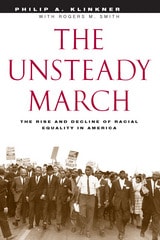
The Unsteady March
The Rise and Decline of Racial Equality in AmericaPhilip A. Klinkner and Rogers M. Smith
University of Chicago Press, 1999
"[An] unflinching portrait of the leviathan of American race relations. . . . This important book should be read by all who aspire to create a more perfect union."—Publishers Weekly, starred review
"Could it be that our unswerving belief in the power of our core values to produce racial equality is nothing but a comforting myth? That is the main argument put forth by Philip Klinkner and Rogers Smith . . . The Unsteady March is disturbing because it calls into question our cherished national belief and does so convincingly. . . . [It] is beautifully written, and the social history it provides is illuminating and penetrating."—Aldon Morris, American Journal of Sociology
Winner of the Horace Mann Bond Award of the W.E.B. Du Bois Institute for Afro-American Research at Harvard University.
The Unteachables
Disability Rights and the Invention of Black Special EducationKeith A. Mayes
University of Minnesota Press, 2023
How special education used disability labels to marginalize Black students in public schools
The Unteachables examines the overrepresentation of Black students in special education over the course of the twentieth century. As African American children integrated predominantly white schools, many were disproportionately labeled educable mentally retarded (EMR), learning disabled (LD), and emotionally behavioral disordered (EBD). Keith A. Mayes charts the evolution of disability categories and how these labels kept Black learners segregated in American classrooms.
The civil rights and the educational disability rights movements, Mayes shows, have both collaborated and worked at cross-purposes since the beginning of school desegregation. Disability rights advocates built upon the opportunity provided by the civil rights movement to make claims about student invisibility at the level of intellectual and cognitive disabilities. Although special education ostensibly included children from all racial groups, educational disability rights advocates focused on the needs of white disabled students, while school systems used disability discourses to malign and marginalize Black students.
From the 1940s to the present, social science researchers, policymakers, school administrators, and teachers have each contributed to the overrepresentation of Black students in special education. Excavating the deep-seated racism embedded in both the public school system and public policy, The Unteachables explores the discriminatory labeling of Black students, and how it indelibly contributed to special education disproportionality, to student discipline and push-out practices, and to the school-to-prison pipeline effect.
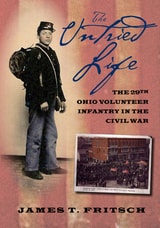
The Untried Life
The Twenty-Ninth Ohio Volunteer Infantry in the Civil WarJames T. Fritsch
Ohio University Press, 2012
Told in unflinching detail, this is the story of the Twenty-Ninth Ohio Volunteer Infantry, also known as the Giddings Regiment or the Abolition Regiment, after its founder, radical abolitionist Congressman J. R. Giddings. The men who enlisted in the Twenty-Ninth OVI were, according to its lore, handpicked to ensure each was as pure in his antislavery beliefs as its founder. Whether these soldiers would fight harder than other soldiers, and whether the people of their hometowns would remain devoted to the ideals of the regiment, were questions that could only be tested by the experiment of war.
The Untried Life is the story of these men from their very first regimental formation in a county fairground to the devastation of Gettysburg and the march to Atlanta and back again, enduring disease and Confederate prisons. It brings to vivid life the comradeship and loneliness that pervaded their days on the march. Dozens of unforgettable characters emerge, animated by their own letters and diaries: Corporal Nathan Parmenter, whose modest upbringing belies the eloquence of his writings; Colonel Lewis Buckley, one of the Twenty-Ninth’s most charismatic officers; and Chaplain Lyman Ames, whose care of the sick and wounded challenged his spiritual beliefs.
The Untried Life shows how the common soldier lived—his entertainments, methods of cooking, medical treatment, and struggle to maintain family connections—and separates the facts from the mythology created in the decades after the war.
The Unvarnished Doctrine
Locke, Liberalism, and the American RevolutionSteven M. Dworetz
Duke University Press, 1990
The Unwritten War
American Writers and the Civil WarDaniel Aaron
University of Alabama Press, 2003
In The Unwritten War, Daniel Aaron examines the literary output of American writers—major and minor—who treated the Civil War in their works. He seeks to understand why this devastating and defining military conflict has failed to produce more literature of a notably high and lasting order, why there is still no "masterpiece" of Civil War fiction.
In his portraits and analyses of 19th- and some 20th-century writers, Aaron distinguishes between those who dealt with the war only marginally—Henry Adams, Henry James, William Dean Howells, Mark Twain-and those few who sounded the war's tragic import—Herman Melville, Walt Whitman, and William Faulkner. He explores the extent to which the war changed the direction of American literature and how deeply it entered the consciousness of American writers. Aaron also considers how writers, especially those from the South, discerned the war's moral and historical implications.
The Unwritten War was originally published by Alfred A. Knopf in 1973. The New Republic declared, [This book's] major contribution will no doubt be to American literary history. In this respect it resembles Edmund Wilson's Patriotic Gore and is certain to become an indispensable guide for anyone who wants to explore the letters, diaries, journals, essays, novels, short stories, poems-but apparently no plays-which constitute Civil War literature. The mass of material is presented in a systematic, luminous, and useful way.
The Urban Crisis
Linking Research to ActionBurton Weisbrod and James C. Worthy
Northwestern University Press, 1997
The Urban Voter
Group Conflict and Mayoral Voting Behavior in American CitiesKaren M. Kaufmann
University of Michigan Press, 2004
The Use of Social Science Data in Supreme Court Decisions
Rosemary J. Erickson and Rita J. Simon
University of Illinois Press, 1998
By offering insights into how data are used by the Supreme Court, the authors hope to show social scientists how to make their research more suitable for courtroom use and to show the legal community how such data can be used more effectively. The volume includes an overview of the kinds of research used, a list of cases in which such research was used, and a discussion of justices and how they voted on cases in which such data were used from 1972 to 1992.
The Valley of Shadows
SANGAMON SKETCHESFrancis Grierson
University of Illinois Press, 1990
undertones. In this her fourth collection she finds Ovid in Provincetown,
a right whale in Iowa, and Cleopatra in the afterworld. Nothing resides
in its proper place, except the place of exile. "Characteristic wit,
irony, and precision." —Publishers Weekly
The Value of Homelessness
Managing Surplus Life in the United StatesCraig Willse
University of Minnesota Press, 2015
It is all too easy to assume that social service programs respond to homelessness, seeking to prevent and understand it. The Value of Homelessness, however, argues that homelessness today is an effect of social services and sciences, which shape not only what counts as such but what will?or ultimately won’t?be done about it.
Through a history of U.S. housing insecurity from the 1930s to the present, Craig Willse traces the emergence and consolidation of a homeless services industry. How to most efficiently allocate resources to control ongoing insecurity has become the goal, he shows, rather than how to eradicate the social, economic, and political bases of housing needs. Drawing on his own years of work in homeless advocacy and activist settings, as well as interviews conducted with program managers, counselors, and staff at homeless services organizations in New York, Los Angeles, San Francisco, and Seattle, Willse provides the first analysis of how housing insecurity becomes organized as a governable social problem.
An unprecedented and powerful historical account of the development of contemporary ideas about homelessness and how to manage homelessness, The Value of Homelessness offers new ways for students and scholars of social work, urban inequality, racial capitalism, and political theory to comprehend the central role of homelessness in governance and economy today.
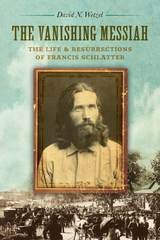
The Vanishing Messiah
The Life and Resurrections of Francis SchlatterDavid N. Wetzel
University of Iowa Press, 2016
Or did it?
Within hours of the announcement of Schlatter’s found remains, a long-haired man emerged in Cleveland to say that he was Francis Schlatter, and the next twenty-five years, several others claimed to be Denver’s great healer. In The Vanishing Messiah, a modern researcher painstakingly pieces together evidence from letters, newspaper reports, hospital records, mug shots, and published reminiscences of the healer to find out what really happened to Francis Schlatter after he left Denver in the middle of the night in November 1895. In doing so, David N. Wetzel uncovers a historical puzzle of lies, deception, and betrayal, and offers a tantalizing look into a nineteenth-century messiah and his twentieth-century reincarnations—one of whom may have been the healer himself.
The Vanishing Newspaper [2nd Ed]
Saving Journalism in the Information AgePhilip Meyer
University of Missouri Press, 2009

The Vanishing Present
Wisconsin's Changing Lands, Waters, and WildlifeEdited by Donald M. Waller and Thomas P. Rooney
University of Chicago Press, 2008
The Vanishing Present brings together a distinguished set of contributors—including scientists, naturalists, and policy experts—to examine how human pressures on Wisconsin’s changing lands, waters, and wildlife have redefined the state’s ecology. Though they focus on just one state, the authors draw conclusions about changes in temperate habitats that can be applied elsewhere, and offer useful insights into future of the ecology, conservation, and sustainability of Wisconsin and beyond.
A fitting tribute to the home state of Aldo Leopold and John Muir, The Vanishing Present is an accessible and timely case study of a significant ecosystem and its response to environmental change.
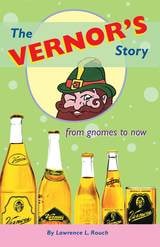
The Vernor's Story
From Gnomes to NowLawrence L. Rouch
University of Michigan Press, 2003
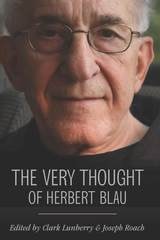
The Very Thought of Herbert Blau
Clark Lunberry and Joseph Roach, Editors
University of Michigan Press, 2018
Herbert Blau (1926–2013) was the most influential theater theorist, practitioner, and educator of his generation. He was the leading American interpreter of the works of Samuel Beckett and as a director was instrumental in introducing works of the European avant-garde to American audiences. He was also one of the most far-reaching and thoughtful American theorists of theater and performance, and author of influential books such as The Dubious Spectacle, The Audience, and Take Up the Bodies: Theater at the Vanishing Point.
In The Very Thought of Herbert Blau, distinguished artists and scholars offer reflections on what made Blau's contributions so visionary, transformative, and unforgettable, and why his ideas endure in both seminar rooms and studios. The contributors, including Lee Breuer, Sue-Ellen Case, Gautam Dasgupta, Elin Diamond, S. E. Gontarski, Linda Gregerson, Martin Harries, Bill Irwin, Julia Jarcho, Anthony Kubiak, Daniel Listoe, Clark Lunberry, Bonnie Marranca, Peggy Phelan, Joseph Roach, Richard Schechner, Morton Subotnick, Julie Taymor, and Gregory Whitehead, respond to Blau's fierce and polymorphous intellect, his relentless drive and determination, and his audacity, his authority, to think, as he frequently insisted, "at the very nerve ends of thought."
The Very Worst Road
Travellers' Accounts of Crossing Alabama's Old Creek Indian Territory, 1820-1847Jeffrey C. Benton
University of Alabama Press, 2009
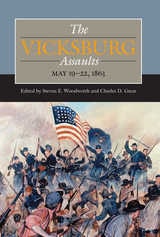
The Vicksburg Assaults, May 19-22, 1863
Edited by Steven E. Woodworth and Charles D. Grear
Southern Illinois University Press, 2019
But due to difficult terrain, strong defenses, and uncoordinated movements, the quick triumph Grant desired was unattainable. On the afternoon of May 19, with little rest, preparation, or reconnaissance, Union forces charged the Confederate lines only to be repulsed. A respite between the assaults allowed both sides to reinforce their positions. Early on May 22 the Union artillery sought to soften the stronghold’s defenses before the general attack, but despite the Union forces’ preparation, the fighting proved even more disorganized and vicious. Again Grant failed to move Pemberton. Not wanting to risk more soldiers in a third attack, Grant conceded to the necessity of laying siege. Confederate morale climbed as the Southerners realized they had held their ground against an overwhelming force.
Editors Steven E. Woodworth and Charles D. Grear have assembled five captivating essays that examine Grant’s unsuccessful assaults against Confederate defensive lines around Vicksburg. Ranging from military to social history, the essays further historical debates on prominent topics, such as the reactions of Midwesterners to the first failures of Grant’s Vicksburg campaign. Two essays from opposing sides analyze the controversial decisions surrounding the Railroad Redoubt, the site of the bloodiest fighting on May 22. Another investigates how the tenacity of Texan reinforcements forced Union soldiers to abandon their gains.
Peppered with first-hand observations and bolstered by an impressive depth of research, this anthology is an invitingly written account and comprehensive assessment. By zeroing in on the two assaults, the contributors offer essential clarity and understanding of these important events within the larger scope of the Civil War’s Vicksburg Campaign.
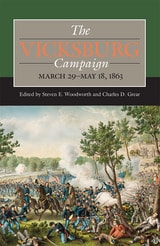
The Vicksburg Campaign, March 29–May 18, 1863
Edited by Steven E. Woodworth and Charles D. Grear
Southern Illinois University Press, 2013
Ulysses S. Grant’s ingenious campaign to capture the last Confederate stronghold on the Mississippi River was one of the most decisive events of the Civil War and one of the most storied military expeditions in American history. The ultimate victory at Vicksburg effectively cut the Confederacy in two, gave control of the river to Union forces, and delivered a devastating blow from which the South never fully recovered. Editors Steven E. Woodworth and Charles D. Grear have assembled essays by prominent and emerging scholars, who contribute astute analysis of this famous campaign’s most crucial elements and colorful personalities.
Encompassed in this first of five planned volumes on the Vicksburg campaign are examinations of the pivotal events that comprised the campaign’s maneuver stage, from March to May of 1863. The collection sheds new light on Grant’s formidable intelligence network of former slaves, Mississippi loyalists, and Union spies; his now legendary operations to deceive and confuse his Confederate counterparts; and his maneuvers from the perspective of classic warfare. Also presented are insightful accounts of Grant’s contentious relationship with John A. McClernand during the campaign; interactions between hostile Confederate civilians and Union army troops; and the planning behind such battles as Grierson’s Raid, Port Gibson, Raymond, Jackson, Champion Hill, and Big Black River Bridge.

The Victory Album
Reflections on the Good Life after the Good WarPhilip D. Beidler
University of Alabama Press, 2010

The Vietnam War in American Memory
Veterans, Memorials, and the Politics of HealingPatrick Hagopian
University of Massachusetts Press, 2009
A study of American attempts to come to terms with the legacy of the Vietnam War, this book highlights the central role played by Vietnam veterans in shaping public memory of the war.
Tracing the evolution of the image of the Vietnam veteran from alienated dissenter to traumatized victim to noble warrior, Patrick Hagopian describes how efforts to commemorate the war increasingly downplayed the political divisions it spawned in favor of a more unifying emphasis on honoring veterans and promoting national “healing.”
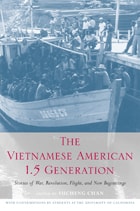
The Vietnamese American 1.5 Generation
Stories of War, Revolution, Flight and New Beginningsedited by Sucheng Chan
Temple University Press, 2006
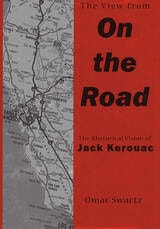
The View From On the Road
The Rhetorical Vision of Jack KerouacOmar Swartz
Southern Illinois University Press, 2000
Through careful analysis of Jack Kerouac’s On the Road, Omar Swartz argues that Kerouac’s influence on American society is largely rhetorical. Kerouac’s significance as a cultural icon can be best understood, Swartz asserts, in terms of traditional rhetorical practices and principles.
To Swartz, Kerouac is a rhetor who symbolically reconstructs his world and offers arguments and encouragements for others to follow. Swartz proposes that On the Road constitutes a “rhetorical vision,” a reality-defining discourse suggesting alternative possibilities for growth and change. Swartz asserts that the reader of Kerouac’s On theRoadbecomes capable of responding to the larger, confusing culture in a strategic manner. Kerouac's rhetorical vision of an alternative social and cultural reality contributes to the identity of localized cultures within the United States.
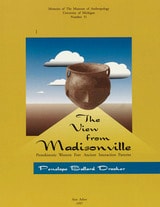
The View from Madisonville
Protohistoric Western Fort Ancient Interaction PatternsPenelope Ballard Drooker
University of Michigan Press, 1997
Madisonville was one of the key settlements of the Ohio Valley Fort Ancient people and was the subject of James Griffin’s 1943 classic, The Fort Ancient Aspect. It is a site rich in burials and artifacts documenting the earliest European influences. Drooker re-explores a century of excavation to explain how Contact Period events affected Madisonville inhabitants and their links to eastern Fort Ancient, northern Ohio, Iroquoian, Oneota, and Mississipian groups.
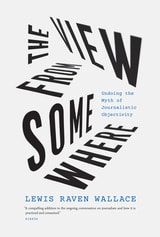
The View from Somewhere
Undoing the Myth of Journalistic ObjectivityLewis Raven Wallace
University of Chicago Press, 2019
In The View from Somewhere, Lewis Raven Wallace dives deep into the history of “objectivity” in journalism and how its been used to gatekeep and silence marginalized writers as far back as Ida B. Wells. At its core, this is a book about fierce journalists who have pursued truth and transparency and sometimes been punished for it—not just by tyrannical governments but by journalistic institutions themselves. He highlights the stories of journalists who question “objectivity” with sensitivity and passion: Desmond Cole of the Toronto Star; New York Times reporter Linda Greenhouse; Pulitzer Prize-winner Rachel Kaadzi Ghansah; Peabody-winning podcaster John Biewen; Guardian correspondent Gary Younge; former Buzzfeed reporter Meredith Talusan; and many others. Wallace also shares his own experiences as a midwestern transgender journalist and activist who was fired from his job as a national reporter for public radio for speaking out against “objectivity” in coverage of Trump and white supremacy.
With insightful steps through history, Wallace stresses that journalists have never been mere passive observers. Using historical and contemporary examples—from lynching in the nineteenth century to transgender issues in the twenty-first—Wallace offers a definitive critique of “objectivity” as a catchall for accurate journalism. He calls for the dismissal of this damaging mythology in order to confront the realities of institutional power, racism, and other forms of oppression and exploitation in the news industry.
The View from Somewhere is a compelling rallying cry against journalist neutrality and for the validity of news told from distinctly subjective voices.