Results by title
18284 books match the query 'United States' and 3764 start with t
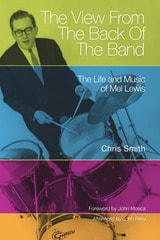
The View from the Back of the Band
Chris Smith
University of North Texas Press, 2014
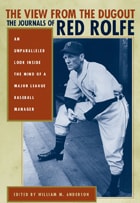
The View from the Dugout
The Journals of Red RolfeEdited by William M. Anderson
University of Michigan Press, 2006
-Bill James, in The New Bill James Historical Baseball Abstract, on the journals of Red Rolfe
"Red Rolfe's journal for his years as manager of the Detroit Tigers is the kind of precious source researchers yearn for. In combination with William M. Anderson's well-done text, The View from the Dugout will be of great interest to general readers and of immense value to students of baseball history."
-Charles C. Alexander, author of Breaking the Slump: Baseball in the Depression Era
"Red Rolfe was one of baseball's most astute observers. This is 'inside' baseball from the inside."
-Donald Honig, author of Baseball America, Baseball When the Grass Was Real, and other books in the Donald Honig Best Players of All Time series
"In his lucid journals Red Rolfe has provided an inside look at how an intelligent baseball manager thinks and prepares."
-Ray Robinson, Yankee historian and author of Iron Horse: Lou Gehrig in His Time
Baseball players as a rule aren't known for documenting their experiences on the diamond. Red Rolfe, however, during his time as manager of the Detroit Tigers from 1949 to 1952, recorded daily accounts of each game, including candid observations about his team's performance. He used these observations to coach his players and to gain an advantage by recording strengths, weaknesses, and tendencies of opposing players and managers. Rolfe's journals carry added value considering his own career as an All-Star Yankee third baseman on numerous world champion teams, where he was a teammate of Lou Gehrig and Joe DiMaggio.
Today, in the era of televised broadcasts, networks often wire a manager so that viewers can listen to his spontaneous comments throughout the game. Red Rolfe's journals offer an opportunity to find out what a manager is thinking when no one is around to hear.
William M. Anderson is Director of the Department of History, Arts and Libraries for the State of Michigan. His books include The Detroit Tigers: A Pictorial Celebration of the Greatest Players and Moments in Tigers' History.
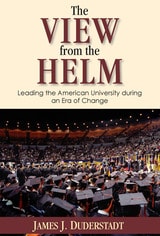
The View from the Helm
Leading the American University during an Era of ChangeJames J. Duderstadt
University of Michigan Press, 2009
Widely regarded as one of the most active and publicly engaged university presidents in modern academia, Duderstadt—who led the University of Michigan from 1988 to 1996—presided over a period of enormous change, not only for his institution, but for universities across the country. His presidency was a time of growth and conflict: of sweeping new affirmative-action and equal-opportunity programs, significant financial expansion, and reenergized student activism on issues from apartheid to codes of student conduct.
Under James Duderstadt’s stewardship, Michigan reaffirmed its reputation as a trailblazer among universities. Part memoir, part history, part commentary, The View from the Helm extracts general lessons from his experiences at the forefront of change in higher education, offering current and future administrators a primer on academic leadership and venturing bold ideas on how higher education should be steered into the twenty-first century.
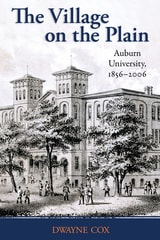
The Village on the Plain
Auburn University, 1856–2006Dwayne Cox
University of Alabama Press, 2016
The Village on the Plain tells the story of the founding of Auburn University as a small private college and the tumultuous history of its growth and transformation into the complex institution it is today.
Auburn University possesses a rich and storied past as well as an esprit de corps that is the envy of its rivals. Dwayne Cox’s The Village on the Plain traces the school’s history in fascinating detail from its origins as a private college through its emergence as a nationally recognized land-grant university.
Founded before the Civil War to provide a classical education, Auburn became the state’s land-grant college after the cessation of hostilities. This infused the school with a vision of the reborn South as a commercial and industrial power. By the 1880s, the applied sciences were at the core of Auburn’s growth and strength. Like most southern universities, Auburn never enjoyed financial abundance, and scarcity intensified internal debates over investments in liberal arts or science. Modest state funding for higher education also complicated Auburn’s rise. It became a source of competition with the University of Alabama. This rivalry was most intense between 1908 and 1948. The two schools did not meet on the gridiron but blocked and tackled one another in the legislature over the division of state funds.
On the idyllic plains of Lee County, Alabama, Auburn developed a unique, sometimes introspective culture, which is true of many universities founded far from urban centers. Long Auburn’s head archivist, Cox describes this culture with an insider’s insights and shows how it shaped the school's history and community.
Auburn University’s history is that of a small private college that rose to the challenges of convulsive state and national events, not only to survive but to emerge more vibrant and thriving. Offering much to students of higher education and Alabama history, as well as readers affiliated with Auburn University, The Village on the Plain tells the story of this complex and fascinating institution.
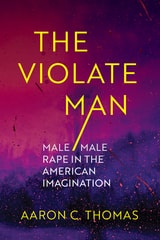
The Violate Man
Male/Male Rape in the American ImaginationAaron C. Thomas
Vanderbilt University Press, 2025
From the punchline of bro comedies to the vengeance arc of prison dramas, Thomas argues that male/male rape narratives are used by writers, filmmakers, and comedians to make sense of the changing landscape of American masculinity, and that these narratives have shifted widely since the 1960s, reflecting masculinity’s varying anxieties and concerns.

The Violence of Protection
Policing, Immigration Law, and Asian American WomenLee Ann S. Wang
Duke University Press, 2026

The Virgin and the Dynamo
Public Murals in American Architecture, 1893–1917Bailey Van Hook
Ohio University Press, 2003
The beaux-arts mural movement in America was fueled by energetic young artists and architects returning from training abroad. They were determined to transform American art and architecture to make them more thematically cosmopolitan and technically fluid and accomplished. The movement slowly coalesced around the decoration of mansions of the Gilded Age elite, mostly in New York, and of public buildings and institutions across the breadth of the country.
The Virgin and the Dynamo: Public Murals in American Architecture, 1893-1917 is the first book in almost a century to concentrate exclusively on the beaux-arts mural movement in the United States. Beginning with a short history of the movement from its inception in Boston during the American Renaissance, Bailey Van Hook focuses on the movement’s public manifestations in the period between the World’s Columbian Exposition in Chicago in 1893 and the First World War.
Professor Van Hook explores different aspects of the mural movement, the concept and meaning of “decoration,” the claim that murals are inherently democratic, the shift in preference from allegory to history, the gendered concept of modernity, the ideologies behind the iconography, and, finally, the decline of the movement when it began to be seen as old fashioned and anachronistic.
The Virgin and the Dynamo raises our understanding of the beaux-arts movement to a new level. For the general reader, this illustrated history will explain many familiar representations of local and national values.

The Virtual Reference Service
From Competencies to Assessment - Neal-Schuman PublishersAmerican Library Association, 2008
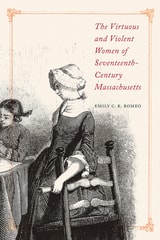
The Virtuous and Violent Women of Seventeenth-Century Massachusetts
Emily C.K. Romeo
University of Massachusetts Press, 2020
Dismantling the image of the peaceful and serene colonial goodwife and countering the assumption that New England was inherently less violent than other regions of colonial America, Emily C. K. Romeo offers a revealing look at acts of violence by Anglo-American women in colonial Massachusetts, from the everyday to the extraordinary. Using Essex County as a case study, Romeo deftly utilizes seventeenth- and eighteenth-century sources to demonstrate that Puritan women, both “virtuous” and otherwise, learned to negotiate the shifting boundaries between acceptable and unacceptable violence in their daily lives and communities.
The Virtuous and Violent Women of Seventeenth-Century Massachusetts shows that more dramatic violence by women—including infanticide, the scalping of captors during the Indian Wars, and even witchcraft accusations—was not necessarily intended to challenge the structures of authority but often sprung from women's desire to protect property, safety, and standing for themselves and their families. The situations in which women chose to flout powerful social conventions and resort to overt violence expose the underlying, often unspoken, priorities and gendered expectations that shaped this society.
The Vocation of a Teacher
Rhetorical Occasions, 1967-1988Wayne C. Booth
University of Chicago Press, 1989
"[Booth] is unusually adept at addressing a wide variety of audiences. From deep in the heart of this academic jungle, he shows a clear eye and a firm step."—Alison Friesinger Hill, New York Times Book Review
"A cause for celebration. . . . What an uncommon man is Wayne Booth. What an uncommon book he has provided for our reflection."—James Squire, Educational Leadership
"This book stands as a vigorous reminder of the traditional virtues of the scholar-teacher."—Brian Cox, Times Literary Supplement
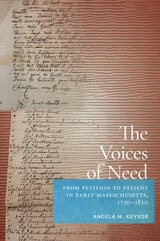
The Voices of Need
From Petition to Patient in Early Massachusetts, 1730–1820Angela M. Keysor
University of Massachusetts Press, 2027
Revealing how people in need advocated for and negotiated their own care until the development of standardized medicine
The Voices of Need uncovers how men and women in Charlestown, Massachusetts, who turned to municipal authorities for aid, actively shaped how their need was understood and addressed. Through a close examination of Charlestown’s care networks, Angela Keysor shows how town selectmen relied on sufferers themselves to articulate what would relieve their distress, while local women—paid by town authorities—provided hands-on care in homes and neighborhoods. These networks flourished in the early and mid-eighteenth century, but their flexibility and responsiveness were increasingly strained by crisis and change. A devastating smallpox epidemic in 1763, followed by racialized debates over belonging after the legal end of enslavement in Massachusetts in 1783, exposed the limits of community-based care.
After the American Revolution, rising numbers of aid requests prompted town officials to reorganize care through a contract system in which paid caregivers attended to multiple dependents at once. As care became centralized and standardized, the space for individuals to define their own needs—and to influence how those needs were met—steadily narrowed. By 1819, with the founding of Massachusetts General Hospital, sufferers were fully redefined as patients, expected to submit to professional authority rather than participate in decisions about their own care.
Tracing this transition from negotiated assistance to institutional medicine, The Voices of Need illuminates a largely forgotten history of agency among the poor and infirm. In doing so, Keysor challenges conventional narratives of early American health care and shows how the rise of standardized medicine fundamentally reshaped the meaning of need, care, and authority.

The Void, The Grid & The Sign
Traversing The Great BasinWilliam L. Fox
University of Nevada Press, 2005
The Voluntary City
Choice, Community, and Civil SocietyDavid T. Beito, Peter Gordon, and Alexander Tabarrok, Editors
University of Michigan Press, 2002
The Vote
Bush, Gore, and the Supreme CourtEdited by Cass R. Sunstein and Richard A. Epstein
University of Chicago Press, 2001
The contributors to this volume were highly visible in the national media while the controversy raged, and here they present fully fleshed-out arguments for the positions they promoted on the airwaves. Readers will find in The Vote equally impassioned defenses for and indictments of the Court's actions, and they will come to understand the practical and theoretical implications of the Court's ruling in the realms of both law and politics. No doubt a spate of books will appear on the 2000 presidential election, but none will claim as distinguished a roster of contributors better qualified to place these recent events in their appropriate historical, legal, and political contexts.
Leading constitutional scholars render their verdicts on the 2000 presidential election controversy
Contributors:
Richard A. Epstein
Elizabeth Garrett
Samuel Issacharoff
Pamela S. Karlan
Michael W. McConnell
Frank I. Michelman
Richard H. Pildes
Richard A. Posner
David A. Strauss
Cass R. Sunstein
John Yoo
An earlier electronic edition of The Vote was available on the University of Chicago Press Web site.
The Votes That Counted
How the Court Decided the 2000 Presidential ElectionHoward Gillman
University of Chicago Press, 2001
Lively and authoritative, the book documents how the participants, the press, the academic community, and the public responded during these tension-filled thirty-six days. Gillman also provides a serious yet accessible overview of the legal strategies and debates-from briefs and oral arguments to final decisions. However, in explaining the behavior of courts, he moves beyond an analysis of law to also take into account the influences of partisanship, judicial ideology, and broader political and historical contexts.
Appropriately, Gillman pays special attention to the judges whose behavior generated the most controversy—the battling justices of the Florida and United States Supreme Courts. After carefully reviewing the arguments for and against their decisions, he concludes that the five justices behind the Bush v. Gore decision acted outside what should be considered the acceptable boundaries of judicial power. Gillman ends with an analysis of why they chose such an unprecedented course of action and an assessment of whether their partisan intervention will have any lasting effect on the Supreme Court's reputation and authority.
The Voyage of the CSS Shenandoah
A Memorable CruiseWilliam C. Whittle
University of Alabama Press, 2005
The only Confederate ship to circumnavigate the globe
The Confederate cruiser Shenandoah was the last of a group of commerce raiders deployed to prey on Union merchant ships. Ordered to the Pacific Ocean to “greatly damage and disperse” the Yankee whaling fleet in those waters, the Shenandoah’s successful pursuit of her quarry compared favorably with the exploits of the more celebrated Alabama and Florida but has never been as well known because it coincided with the war’s end and the Confederacy’s downfall. It was, however, one of the best documented naval expeditions—from England to the Indian Ocean, Australia and the South Pacific, the Bering Sea, San Francisco, and finally to port in Liverpool—during the Civil War.
The ship’s log and Captain James Waddell’s notes are well preserved, and a number of the Shenandoah’s officers kept detailed journals of the entire voyage. One of the most significant journals, by Lieutenant William Whittle, is presented here, with annotations from other journals, the official records and logs, and newspaper accounts of the Shenandoah’s activities, together bringing to life the history of this remarkable voyage.

The Vulnerability of Public Higher Education
Michael Bernard-Donals
The Ohio State University Press, 2023
Reduced state funding to public institutions. The removal of tenure from state statutes. Attempts to silence faculty. Michael Bernard-Donals takes on these issues and other crises in higher education in The Vulnerability of Public Higher Education, exploring how values once used to justify higher education—the democratization of knowledge, the fostering of expertise, the creation of well-informed citizens, and critical engagement with issues—have been called into question.
Bernard-Donals argues that public higher education, especially the work of faculty, has become vulnerable—socially, politically, professionally—and this book takes seriously the idea of vulnerability, suggesting that university faculty see it not as an encumbrance to their work but as an opportunity to form relations of solidarity with one another through mutual recognition and shared, albeit different forms of, precarity. Through a series of case studies on faculty rights and responsibilities, the efficacy of diversity initiatives, and tenure and academic freedom, Bernard-Donals employs a rhetorical perspective to show how vulnerability can reshape faculty work and provide ways to shift the relations of materiality and power while opening up new forms of deliberation, engagement, and knowledge production.
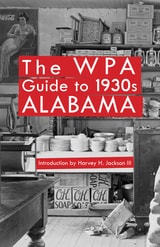
The WPA Guide to 1930s Alabama
Harvey H. Jackson, III
University of Alabama Press, 2000
A fascinating time capsule, this classic guide captures Alabama at a critical moment in its history between the Great Depression and World War II and its aftermath.
The WPA guide to Alabama provides a unique snapshot of 1930s Alabama life and culture. Like the other state guides in the WPA's American Guide Series, it features essays on history, economy, people, folkways, education, and other characteristics of the state, as well as general information about the towns and cities. Fifteen suggested automobile tours encourage visitors and residents to explore every corner of the state, from the Gulf Coast to the Black Belt and the Tennessee Valley, from bayous to farmlands to mountain gorges.
When it was first published in 1941, the guide went far to dispel the myth of an Alabama consisting only of cotton fields, magnolias, and plantation houses by highlighting the vibrant university life in Tuscaloosa, the modern industrial activity in Birmingham, the informality of politics in Montgomery, the cultural diversity in Alabama's port city, Mobile, and the small town life in Huntsville before it became home to the space industry. The book includes a calendar of annual events, census data, and a wealth of information useful to the traveling public of the time and enlightening to readers today. The guide lists radio stations, buses, railroads, and highways as they existed before the advent of television, interstates, and malls.
Harvey Jackson's fascinating introduction assesses the guide as a historical document and recounts the involved and sometimes controversial process by which it was researched and written. Project directors struggled to make the guide palatable to its public while still addressing such issues as poverty and race relations and recognizing the state's diversity and its rich folk culture. The result makes for compelling reading for general readers and historians alike.
The WPA Guide to 1930s Iowa
Joseph Frazier Federal Writers Project
University of Iowa Press, 1938
The WPA Guide to 1930s Montana
Work Projects Work Projects Administration
University of Arizona Press, 1994
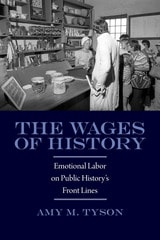
The Wages of History
Emotional Labor on Public History's Front LinesAmy M. Tyson
University of Massachusetts Press, 2013
Although many who are drawn to such work initially see it as a privilege—an opportunity to connect with the public in meaningful ways through the medium of history—the realities of the job almost inevitably alter that view. Not only do interpreters make considerable sacrifices, both emotional and financial, in order to pursue their work, but their sense of special status can lead them to avoid confronting troubling conditions on the job, at times fueling tensions in the workplace.
This case study also offers insights—many drawn from the author's seven years of working as an interpreter at Fort Snelling—into the way gendered roles and behaviors from the past play out among the workers, the importance of creative autonomy to historical interpreters, and the ways those on public history's front lines both resist and embrace the site's more difficult and painful histories relating to slavery and American Indian genocide.

The Wall and the Garden
Selected Massachusetts Election Sermons, 1670-1775A.W. Plumstead, Editor
University of Minnesota Press, 1968
The Wall and the Garden was first published in 1968. Minnesota Archive Editions uses digital technology to make long-unavailable books once again accessible, and are published unaltered from the original University of Minnesota Press editions.
The election day sermon in colonial New England was an annual, formal address by a minister of the gospel to the newly assembled legislature of the colony. The tradition began in the Massachusetts Bay colony in 1634, and it continued, in Boston, for 250 years. In this volume, Professor Plumstead presents a collection of nine of the Massachusetts election sermons, chosen from among the surviving Massachusetts sermons which were printed between 1661 and 1775. They are not chosen as representative but, rather, as the best, judged on a basis of literary excellence and ideas and points of style relevant to later developments in American literature and history. There are changes in style and theme in the 105 years between the first and the last selection, and, in his brief introduction to each of the sermons, the editor discusses these changes and the sermon's relationship to the tradition as a whole.
In a general introduction, Professor Plumstead provides background information about the history and significance of the election sermons. As he makes clear, the election sermon tradition offers a vantage point for seeing both continuity and change in colonial intellectual history. The sermons in this collection will complement colonial studies by bringing the reader close to the spirit of the times.
The title of the volume, The Wall and the Garden, derives from the frequent use by colonial preachers of the metaphors of the garden and the wall to describe the colonies and their spiritual enemies.
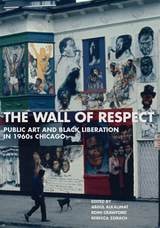
The Wall of Respect
Public Art and Black Liberation in 1960s ChicagoEdited by Abdul Alkalimat, Romi Crawford, and Rebecca Zorach
Northwestern University Press, 2017
The Wall of Respect received national critical acclaim when it was unveiled on the side of a building at Forty-Third and Langley in Chicago’s Bronzeville neighborhood. Painters and photographers worked side by side on the mural's seven themed sections, which featured portraits of Black heroes and sheroes, among them John Coltrane, Nina Simone, Billie Holiday, Malcolm X, Muhammad Ali, and W. E. B. Du Bois. The Wall became a platform for music, poetry, and political rallies. Over time it changed, reflecting painful controversies among the artists as well as broader shifts in the Civil Rights and Black Liberation Movements.
At the intersection of African American culture, politics, and Chicago art history, The Wall of Respect offers, in one keepsake-quality work, an unsurpassed collection of images and essays that illuminate a powerful monument that continues to fascinate artists, scholars, and readers in Chicago and across the United States.

The War Against The Intellect
Episodes Decline Of DiscoursePeter Shaw
University of Iowa Press, 1989
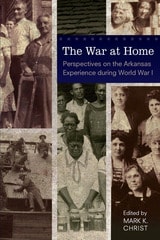
The War at Home
Perspectives on the Arkansas Experience during World War IMark K. Christ
University of Arkansas Press, 2020
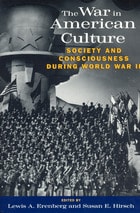
The War in American Culture
Society and Consciousness during World War IIEdited by Lewis A. Erenberg and Susan E. Hirsch
University of Chicago Press, 1996
World War II posed a crisis for American culture: to defeat the enemy, Americans had to unite across the class, racial and ethnic boundaries that had long divided them. Exploring government censorship of war photography, the revision of immigration laws, Hollywood moviemaking, swing music, and popular magazines, these essays reveal the creation of a new national identity that was pluralistic, but also controlled and sanitized. Concentrating on the home front and the impact of the war on the lives of ordinary Americans, the contributors give us a rich portrayal of family life, sexuality, cultural images, and working-class life in addition to detailed consideration of African Americans, Latinos, and women who lived through the unsettling and rapidly altered circumstances of wartime America.
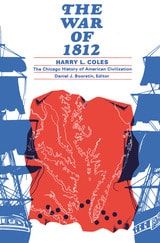
The War of 1812
Harry L. Coles
University of Chicago Press, 1966
"A balanced analysis of tactics and strategy, this book also summarizes succinctly and clearly recent scholarship on causes and describes briefly the war's military, economic, and political consequences. Coles has surveyed thoroughly the existing literature but arrives at a number of independent judgments. It is the best single-volume account of the war in all its aspects. In recounting sea battles, Coles puts aside the patriotic blinders that have for so long prevented a sensible understanding of American capabilities and strategic necessities; thus American naval victories are put in a proper perspective. And in dealing with land engagements, he has shunned the mocking and amused attitude which has so often passed for historical judgment. Undergraduates will be stimulated by the hints of modern parallels and will find useful the excellent annotated bibliography and simple maps."—Choice
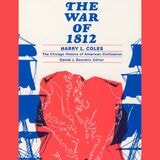
The War of 1812
Harry L. Coles
University of Chicago Press, 1966
"A balanced analysis of tactics and strategy, this book also summarizes succinctly and clearly recent scholarship on causes and describes briefly the war's military, economic, and political consequences. Coles has surveyed thoroughly the existing literature but arrives at a number of independent judgments. It is the best single-volume account of the war in all its aspects. In recounting sea battles, Coles puts aside the patriotic blinders that have for so long prevented a sensible understanding of American capabilities and strategic necessities; thus American naval victories are put in a proper perspective. And in dealing with land engagements, he has shunned the mocking and amused attitude which has so often passed for historical judgment. Undergraduates will be stimulated by the hints of modern parallels and will find useful the excellent annotated bibliography and simple maps."—Choice
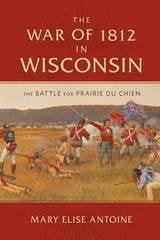
The War of 1812 in Wisconsin
The Battle for Prairie du ChienMary Elise Antoine
Wisconsin Historical Society Press, 2016
In The War of 1812 in Wisconsin, author Mary Elise Antoine brings a little-known corner of Wisconsin’s history to life. Prairie du Chien, located just above mouth of the Wisconsin River, was the key to trade on the upper Mississippi. Whoever controlled the prairie commanded the immense territory inhabited by thousands of American Indians—and the fur they traded. When war broke out between the United States and Great Britain in 1812, British and Americans fought to maintain the ever-shifting alliance of the tribes.
This is the story of the battle for the control of Prairie du Chien and the western country, which began many years before the three-day siege in July of 1814 for which the Battle of Prairie du Chien is named. It is also the tale of the people, Euro-American and Native, who lived in pre-territorial Wisconsin and how the contest for control of the region affected their lives and livelihoods. The outcome of the War of 1812 would determine what "manifest destiny" would mean to all who called these lands home.
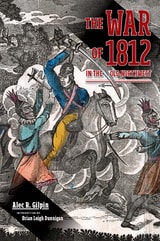
The War of 1812 in the Old Northwest
Alec R. Gilpin
Michigan State University Press, 2012
This engaging narrative history deftly illustrates the War of 1812 as it played out in the Old Northwest — Ohio, Indiana, Illinois, Michigan, and bordering parts of Canada. From the stirrings of conflict in the area beginning as early as the 1760s, through the Battle of Tippecanoe, and to Michigan Territory’s role as a focal point in prewar preparation, the book examines the lead-up to the war before delving into key battles in the region. In this accessible text, Gilpin explores key figures, dates, and wartime developments, shedding considerable light on the strategic and logistical issues raised by the region’s unique geography, culture, economy, and political temperament. Battles covered include the Surrender of Detroit, the Siege of Fort Meigs, and the battles of River Raisin, Lake Erie, the Thames, and Mackinac Island.
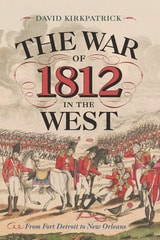
The War of 1812 in the West
From Fort Detroit to New OrleansDavid Kirkpatrick
Westholme Publishing, 2019
The spring of 1812 found the young American republic on edge. The British Navy was impressing American seamen with impunity at an alarming rate while vicious attacks on frontier settlements by American Indians armed with British weapons had left a trail of fear and outrage. As calls for a military response increased, Kentucky, the first state west of the Appalachians, urged that only by defeating the British could the nation achieve security. The very thought conjured up embellished memories of the American Revolution, and once war was declared, many soldiers believed that the “Spirit of 76” would lead them to victory. But the conflict quickly transformed from a patriotic parade to a desperate attempt to survive against a major military power. While the War of 1812 is known mostly for later events, including the burning of Washington and the siege of Fort McHenry, much of the first two years of the war was fought in the west, with the British Army and their Indian allies nearly overrunning the Old Northwest and threatening the borders of the original colonies.
In The War of 1812 in the West: From Fort Detroit to New Orleans, David Kirkpatrick chronicles the near catastrophic loss of the Ohio, Indiana, and Illinois Territories, the bitter fight against both Tecumseh’s Confederation and the Creek Nation, and the slow recovery and ultimate victory of American forces—a large portion of which was supplied by Kentucky—from Canada to the Gulf of Mexico. Battles such as River Raisin, Thames River, Fort Meigs, and New Orleans are placed in context to show how they secured America’s frontier and opened territory to the west to new settlement following the war.
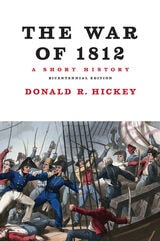
The War of 1812, A Short History
Donald R. Hickey
University of Illinois Press, 2012
This abridged edition of Donald R. Hickey's comprehensive and authoritative The War of 1812: A Forgotten Conflict has been thoroughly revised for the 200th anniversary of the historic conflict. A myth-shattering study that will inform and entertain students and general readers alike, The War of 1812: A Short History explores the military, diplomatic, and domestic history of our second war with Great Britain, bringing the study up to date with recent scholarship on all aspects of the war, from the Gulf of Mexico to Canada.

The War of 1812
A Forgotten Conflict, Bicentennial EditionDonald R. Hickey
University of Illinois Press, 2012
Book-of-the-Month Club and History Book Club selections and received one of the two 1990 "Best Book Awards" from the American Military Institute.
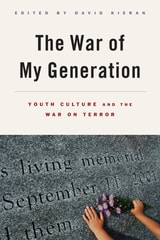
The War of My Generation
Youth Culture and the War on TerrorKieran, David
Rutgers University Press, 2015
The War of My Generation is the first essay collection to focus specifically on how the terrorist attacks and their aftermath have shaped these new generations of Americans. Drawing from a variety of disciplines, including anthropology, sociology, cultural studies, and literary studies, the essays cover a wide range of topics, from graphic war images in the classroom to computer games designed to promote military recruitment to emails from parents in the combat zone. The collection considers what cultural factors and products have shaped young people's experience of the 9/11 attacks, the wars that have followed, and their experiences as emerging citizen-subjects in that moment. Revealing how young people understand the War on Terror—and how adults understand the way young people think—The War of My Generation offers groundbreaking research on catastrophic events still fresh in our minds.
The War on Human Trafficking
U.S. Policy AssessedAnthony M. DeStefano
Rutgers University Press, 2008
The public's understanding of human trafficking is comprised of terrible stories like these, which the media covers in dramatic, but usually short-lived bursts. The more complicated, long-term story of how policy on trafficking has evolved has been largely ignored. In The War on Human Trafficking, Anthony M. DeStefano covers a decade of reporting on the policy battles that have surrounded efforts to abolish such practices, helping readers to understand the forced labor of immigrants as a major global human rights story.
DeStefano details the events leading up to the creation of the Trafficking Victims Protection Act of 2000, the federal law that first addressed the phenomenon of trafficking in persons. He assesses the effectiveness of the 2000 law and its progeny, showing the difficulties encountered by federal prosecutors in building criminal cases against traffickers. The book also describes the tensions created as the Bush Administration tried to use the trafficking laws to attack prostitution and shows how the American response to these criminal activities was impacted by the events of September 11th and the War in Iraq.
Parsing politics from practice, this important book gets beyond sensational stories of sexual servitude to show that human trafficking has a much broader scope and is inextricable from the powerful economic conditions that impel immigrants to put themselves at risk.
The War on Sex
David M. Halperin and Trevor Hoppe, editors
Duke University Press, 2017
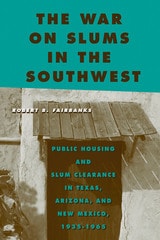
The War on Slums in the Southwest
Public Housing and Slum Clearance in Texas, Arizona, and New Mexico, 1935-1965Robert B Fairbanks
Temple University Press, 2016
In The War on Slums in the Southwest, Robert Fairbanks provides compelling and probing case studies of economic problems and public housing plights in Albuquerque, Dallas, Houston, Phoenix and San Antonio. He provides brief histories of each city--all of which expanded dynamically between 1935 and 1965--and how they responded to slums under the Housing Acts of 1937, 1949, and 1954.
Despite being a region where conservative politics has ruled, these Southwestern cities often handled population growth, urban planning, and economic development in ways that closely followed the national account of efforts to eliminate slums and provide public housing for the needy. The War on Slums in the Southwest therefore corrects some misconceptions about the role of slum clearance and public housing in this region as Fairbanks integrates urban policy into the larger understanding of federal and state-based housing policies.
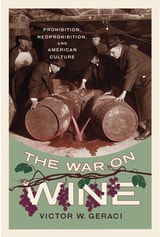
The War on Wine
Prohibition, Neoprohibition, and American CultureVictor W. Geraci
University of Nevada Press, 2023
The development of an American wine ethos.
The history of wine is a tale of capitalist production and consumer experience, and early Americans embraced the idea of having their own wine culture. But many began to believe that excessive alcohol consumption had become a moral, ethical, economic, political, social, and health conundrum. The result was a national on-again, off-again relationship with the concept of an American wine culture.
Citizens struggled to build a wine culture patterned after their diasporic European custom of wine as a moderating beverage that was part of a healthy diet. Yet, as America grew, untold attempts to create a wine culture failed due to climate, pests, diseases, wars, and depressions, resulting in some people considering the nation an alcoholic republic. Thus began an anti-alcohol culture war aimed at restricting or prohibiting alcoholic beverages.
With the passage of the Eighteenth Amendment (Prohibition), a culture war started between wet and dry proponents. After the repeal of Prohibition, the decimated wine industry responded by forming the Wine Institute to rebrand wine’s role in American society, after which neoprohibitionists attempted to restrict alcohol availability and consumption. To confront these aggressive actions, the Wine Institute hired politically trained John A. De Luca to navigate the new attacks and pushed for rebranding wine as a cultural spirit with health benefits.
The War on Words
Slavery, Race, and Free Speech in American LiteratureMichael T. Gilmore
University of Chicago Press, 2010
How did slavery and race impact American literature in the nineteenth century? In this ambitious book, Michael T. Gilmore argues that they were the carriers of linguistic restriction, and writers from Frederick Douglass to Stephen Crane wrestled with the demands for silence and circumspection that accompanied the antebellum fear of disunion and the postwar reconciliation between the North and South.
Proposing a radical new interpretation of nineteenth-century American literature, The War on Words examines struggles over permissible and impermissible utterance in works ranging from Thoreau’s “Civil Disobedience” to Henry James’s The Bostonians. Combining historical knowledge with groundbreaking readings of some of the classic texts of the American past, The War on Words places Lincoln’s Cooper Union address in the same constellation as Margaret Fuller’s feminism and Thomas Dixon’s defense of lynching. Arguing that slavery and race exerted coercive pressure on freedom of expression, Gilmore offers here a transformative study that alters our understanding of nineteenth-century literary culture and its fraught engagement with the right to speak.
The Wardell Buffalo Trap 48 SU 301
Communal Procurement in the Upper Green River Basin, WyomingGeorge C. Frison
University of Michigan Press, 1973
The Wartime President
Executive Influence and the Nationalizing Politics of ThreatWilliam G. Howell, Saul P. Jackman, and Jon C. Rogowski
University of Chicago Press, 2013
For the first time, William G. Howell, Saul P. Jackman, and Jon C. Rogowski systematically analyze the question. Congress, they show, is more likely to defer to the president’s policy preferences when political debates center on national rather than local considerations. Thus, World War II and the post-9/11 wars in Afghanistan and Iraq significantly augmented presidential power, allowing the president to enact foreign and domestic policies that would have been unattainable in times of peace. But, contrary to popular belief, there are also times when war has little effect on a president’s influence in Congress. The Vietnam and Gulf Wars, for instance, did not nationalize our politics nearly so much, and presidential influence expanded only moderately.
Built on groundbreaking research, The Wartime President offers one of the most significant works ever written on the wartime powers presidents wield at home.

The Washington Dissensus
A Privileged Observer's Perspective on US-Brazil RelationsRubens Barbosa
Vanderbilt University Press, 2014
In this memoir, translated from the Portuguese, Barbosa recounts the most significant regional and global issues that arose, alongside the domestic political conflicts within a divided North American society. Barbosa provides sophisticated analysis of economic relations during these changing times, and also explores the many US misconceptions about Brazil and the Latin American region.
From the privileged post of observation that an ambassadorship in the American capital represents, Barbosa had the exceptional opportunity over a considerable length of time to closely follow relations between Brazil and the United States. He witnessed relations evolve under two governments as they developed distinct foreign policies, which at times led to a breakdown in understanding between the two countries.
The Way I Heard It
Tales of the Big BendBy Walter Fulcher
University of Texas Press, 1959
The folklore of Texas' Big Bend region was still in the making during Walter Fulcher's lifetime. Born in Lampasas County in 1887, he worked on the Martin Ranch near Sheffield when a young man. There he witnessed events in the last outlaw activities of the Black Jack Ketchum gang.
He also listened to legends told almost as gossip, and some of the legendary figures were still alive—or said to be alive, usually in hiding. In every village there was sure to be some ancient with a good memory and a better imagination, and Walter Fulcher heard many versions of many tales. He has set them down as he heard them, as simple folk tales that reflect the color of a wild and vivid country in 400 years of its settlement.
The book has been edited, with introduction and notes, by Elton Miles, Professor of English at Sul Ross State College.
The Way We Build
Restoring Dignity to Construction WorkMark Erlich
University of Illinois Press, 2023
Mark Erlich blends long-view history with his personal experience inside the building trades to explain one of our economy’s least understood sectors. Erlich’s multifaceted account includes the dynamics of the industry, the backdrop of union policies, and powerful stories of everyday life inside the trades. He offers a much-needed overview of construction’s past and present while exploring roads to the future.

The Way We Really Were
THE GOLDEN STATE IN THE SECOND GREAT WAREdited by Roger W. Lotchin
University of Illinois Press, 2000
The Way We Really Were substantially enlivens this view, addressing topics that have been neglected or incompletely treated in the past to create a more rounded picture of the wartime situation at home. Exploring the developments brought to fruition by the war and linking them to their roots in earlier decades, contributors address the diversity of the musical scene, which arose from a cross-pollination of styles brought by Okies, blacks, and Mexican migrants. They examine increased political involvement by women, Hollywood's response to the war, and the merging of business and labor interests in the Bay Area Council. They also reveal how wartime dynamics led to substantial environmental damage and lasting economic gains by industry.
The Way We Really Were examines significant wartime changes in the circumstances of immigrant groups that have been largely overlooked by historians. Among these are Italian Americans, heavily insular and pro-Fascist before the war and very pro-American and assimilationist after, and Chinese American men, who achieved new legitimacy and entitlement through military service. Also included is a look at cultural negotiation among multiple ethnic groups in the Golden State. A valuable addition to the literature on California history, The War We Really Were provides an entree into new areas of scholarship and a fresh look at familiar ones.
The Way We Vote
The Local Dimension of American SuffrageAlec C. Ewald
Vanderbilt University Press, 2009
The book shows that local electoral variation has endured through dramatic changes in American political and constitutional structure, and that such variation is the product of a clear, repeated developmental pattern, not simple neglect or public ignorance. Legal materials, statutes and Congressional debates, state constitutional-convention proceedings, and the records of contested Congressional elections illuminate a long record of federal and state intervention in American electoral mechanics. Lawmakers have always understood that a certain level of disorder characterizes U.S. national elections, and have responded by exercising their authority over suffrage practices--but only in limited ways, effectively helping to construct our triply-governed electoral system.
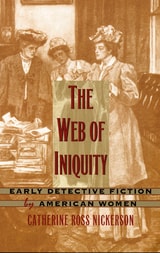
The Web of Iniquity
Early Detective Fiction by American WomenCatherine Ross Nickerson
Duke University Press, 1998
This subgenre allowed women writers to participate in postbellum culture and to critique other aspects of a rapidly changing society. Domestic detective fiction combined elements of sensationalist papers, popular nonfiction crime stories, and the domestic novel. Nickerson shows how it also incorporated the gothic tropes found in the work of Harriet Beecher Stowe, Louisa May Alcott, and Charlotte Brontë and influenced the work of Pauline Hopkins. Mid-nineteenth-century writer Metta Fuller Victor, who represented such important areas of cultural conflict as the role of professions in the formation of class identity and the possibility of women's independence and self-determination, paved the way for the appearance of women detectives in the late-nineteenth-century fiction of Anna Katharine Green. Nickerson credits Mary Roberts Rinehart, in particular, for bringing sophistication to the subgenre by amplifying the humorous, terrifying, and feminist elements inherent in earlier detective novels by women. Throughout the volume, Nickerson focuses on the narrative qualities of the domestic novel tradition and the ways in which it reflected ideologies of domesticity and gender. Also included are a discussion of various rewritings of the Lizzie Borden scandal in this tradition and an afterword on the relation of domestic detective fiction to the hard-boiled style.
The Web of Iniquity places the detective fiction written by women between 1850 and 1940 into ongoing discussions regarding women, culture, and literature and will appeal to scholars and students of women's studies, American studies, and literary history.
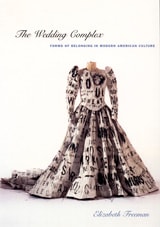
The Wedding Complex
Forms of Belonging in Modern American CultureElizabeth Freeman
Duke University Press, 2002
Freeman draws on queer theory and social history to focus on a range of texts where weddings do not necessarily lead to legal marriage but instead reflect yearnings for intimate arrangements other than long-term, state-sanctioned, domestic couplehood. Beginning with a look at the debates over gay marriage, she proceeds to consider literary works by Nathaniel Hawthorne, William Faulkner, Carson McCullers, Vladimir Nabokov, and Edgar Allan Poe, along with such Hollywood films as Father of the Bride, The Graduate, and The Godfather. She also discusses less well-known texts such as Su Friedrich’s experimental film First Comes Love and the off-Broadway, interactive dinner play Tony ‘n’ Tina’s Wedding.
Offering bold new ways to imagine attachment and belonging, and the public performance and recognition of social intimacy, The Wedding Complex is a major contribution to American studies, queer theory, and cultural studies.

The Weeding Handbook
A Shelf-by-Shelf GuideRebecca Vnuk
American Library Association, 2015
The Weeding Handbook
A Shelf-by-Shelf GuideRebecca Vnuk
American Library Association, 2022
"Manages to be a thorough and informative source on weeding library collections and yet also an easy, engaging read ... Recommended." That rave review from Technicalities sums up the acclaim and appeal of this bestselling resource’s first edition. Now Vnuk has revised and updated her text to keep pace with libraries’ longer-term shifts in collection development and access, such as a growing emphasis on digital collections and managing duplicate physical materials. She demonstrates how weeding helps a library thrive by focusing its resources on those parts of the collection that are the most useful to its users. Walking collections staff through the proverbial stacks shelf by shelf, this book
- includes a new “Tales from the Front” feature, providing real-life case studies of librarians working on weeding projects;
- explains why weeding is important for a healthy library and how it can positively affect library budgets;
- systematically walks readers through a library's shelves, with recommended weeding criteria and call-outs in each area for the different considerations of large collections and smaller collections;
- offers easily adaptable, updated sample development plans which reflect the latest thinking in collection development;
- advises readers on weeding problematic materials, such as those that include racist themes and depictions;
- presents updated and expanded guidance on special considerations for youth collections;
- addresses reference, media, magazines and newspapers, e-books, and other special materials;
- shares guidance for determining how to delegate responsibility for weeding, plus pointers for getting other staff members on board; and
- gives advice for educating the community about the process, how to head off PR disasters, and what to do with weeded materials.