Results by title
28167 books match the query 'History' and 6372 start with t
The Missouri Mormon Experience
Edited by Thomas M. Spencer
University of Missouri Press, 2010

The Missouri State Penitentiary
170 Years inside "The Walls"Jamie Pamela Rasmussen
University of Missouri Press, 2012
In TheMissouri State Penitentiary, Jamie Pamela Rasmussen recounts the long and fascinating history of the place, focusing on the stories of inmates and the struggles by prison officials to provide opportunities for reform while keeping costs down. Tales of prominent prisoners, including Pretty Boy Floyd, Sonny Liston, and James Earl Ray, provide intrigue and insight into the institution’s infamous reputation.
The founding of the penitentiary helped solidify Jefferson City’s position as the state capital. A highlight in the chapter on the Civil War years is the story of George Thompson, who was imprisoned for attempting to help a number of slaves to freedom. The narrative enters the twentieth century with the controversy surrounding the various systems of inmate labor; the effort to make the prison self-supporting eventually caused punishment to be driven by factory needs. The example of Firebug Johnson demonstrates how inmates reacted to the prison labor system while Kate Richards O’Hare’s struggles and efforts to improve conditions in the penitentiary illuminate the role of women in the system at the time. A full chapter is devoted to the riot of 1954, and another concentrates on the reforms made in the wake of that catastrophe. Rasmussen also considers the effect inmate lawsuits during the 1980s and 1990s had on prison life before telling the story of the decision to close the prison.
The Missouri State Penitentiary provides a fitting account of an institution that was part of Missouri’s history for well over a century. Numerous illustrations and a list of recommended reading contribute to the readers’ understanding of the history of the institution.
The Mistakes of Yesterday, the Hopes of Tomorrow
The Story of the PrisonairesJohn Dougan
University of Massachusetts Press, 2012
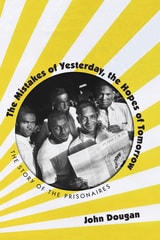
Early in the morning on June 1, 1953, five African American men boarded a van to make the 200-mile trip from Nashville to Memphis for a daylong recording session at the legendary Sun Studios, to be overseen by Sun founder Sam Phillips. One of the two tracks cut that day, “Just Walkin' in the Rain,” would go on to become a regional R&B hit, Sun Records' biggest record of the pre-Elvis era. It would, however, be the group's only hit. They were the Prisonaires, a vocal quintet who had honed their skills while inmates at the Tennessee State Penitentiary in Nashville.
In this book, John Dougan tells the story of the Prisonaires, their hit single, and the afterlife of this one remarkable song. The group and the song itself represent a compelling concept: imprisoned men using music as a means of cultural and personal survival. The song was re-recorded by white singer Johnnie Ray, who made it a huge hit in 1956. Over the years, other singers and groups would move the song further away from its origins, recasting the deep emotions that came from creating music in a hostile, controlled environment.
The story of the Prisonaires, for all of its triumphs, reflects the disappointment of men caught in a paradoxical search for personal independence while fully cognizant of a future consigned to prison. Their brief career and the unusual circumstances under which it flourished sheds light on the harsh realities of race relations in the pre–Civil Rights South. The book also provides a portrait of Nashville just as it was gaining traction as a nationally recognized music center.
The Mistral
A Windswept History of Modern FranceCatherine Tatiana Dunlop
University of Chicago Press, 2024
Every year, the chilly mistral wind blows through the Rhône valley of southern France, across the Camargue wetlands, and into the Mediterranean Sea. Most forceful when winter turns to spring, the wind knocks over trees, sweeps trains off their tracks, and destroys crops. Yet the mistral turns the sky clear and blue, as it often appears in depictions of Provence. The legendary wind is central to the area’s regional identity and has inspired artists and writers near and far for centuries.
This force of nature is the focus of Catherine Dunlop’s The Mistral, a wonderfully written examination of the power of the mistral wind, and in particular, the ways it challenged central tenets of nineteenth-century European society: order, mastery, and predictability. As Dunlop shows, while the modernizing state sought liberation from environmental realities through scientific advances, land modification, and other technological solutions, the wind blew on, literally crushing attempts at control, and becoming increasingly integral to regional feelings of place and community.
The Misunderstood History of Gentrification
People, Planning, Preservation, and Urban Renewal, 1915-2020Dennis E. Gale
Temple University Press, 2021
The origins of gentrification date back to World War I—only it was sometimes known as “remodeling” then. Dennis Gale’s insightful book, TheMisunderstood History of Gentrification, provides a recontextualization of American gentrification, planning, and policymaking. He argues that gentrification must be understood as an urban phenomenon with historical roots in the very early twentieth century.
Gale uses solid empirical evidence to trace the embryonic revitalization of Georgetown, Greenwich Village, Beacon Hill, and elsewhere back to 1915. He shows how reinvestment and restoration reversed urban decline and revitalized neighborhoods. The Misunderstood History of Gentrification also explains how federal policies such as the Urban Redevelopment Program (later named Urban Renewal), which first emerged in 1949, razed urban slums and created an “urban crisis” that persisted in the 1960s and ‘70s. This situation soon prompted city gentrifiers and historic preservationists to reuse and rehabilitate existing structures.
Within a more expansive historical framework, Gale offers a fresh perspective on and debunks misperceptions about gentrification in America.
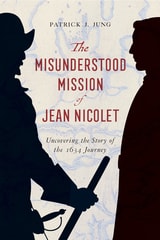
The Misunderstood Mission of Jean Nicolet
Uncovering the Story of the 1634 JourneyPatrick J. Jung
Wisconsin Historical Society Press, 2018
In more recent decades, historians have pieced together a story that is not only more likely but more complicated and interesting. Patrick Jung synthesizes the research about Nicolet and his superior Samuel de Champlain, whose diplomatic goals in the region are crucial to understanding this much misunderstood journey across the Great Lakes. Additionally, historical details about Franco-Indian relations and the search for the Northwest Passage provide a framework for understanding Nicolet’s famed mission.
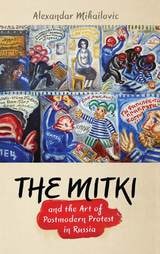
The Mitki and the Art of Postmodern Protest in Russia
Alexandar Mihailovic
University of Wisconsin Press, 2019
More broadly, Alexandar Mihailovic shows, the Mitki pioneered a form of political protest art that has since become a centerpiece of activism in post-Soviet Russia, most visibly today in groups such as Pussy Riot. He draws on extensive interviews with members of the collective and illuminates their critique of the authoritarian state, militarism, and social strictures from the Brezhnev years to the present.
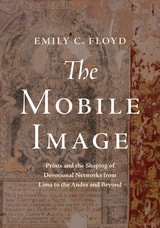
The Mobile Image
Prints and the Shaping of Devotional Networks from Lima to the Andes and BeyondEmily C. Floyd
University of Texas Press, 2025
A study of the production and movement of prints in colonial South America.
Printed images have had a central place in art-historical studies of colonial Spanish America, but scholars have typically focused on imported prints, designed and produced in Europe. The Mobile Image focuses instead on works printed in colonial Lima, generating there a distinctive print culture that served local and regional needs, while also appealing to European print consumers.
Inexpensive, easily transportable, and numerous, Lima’s prints traversed the varied geographies of the Viceroyalty of Peru both as loose sheets and within the protective covers of printed books. In the process, limeño devotional prints encouraged the development of shared regional imaginaries about the sacred Andean landscape, a space marked by miracle-working Virgins, potential saints, and powerful images of Christ. These same prints traveled abroad, where they promoted iconographies developed in Lima and influenced European conceptions of the Andes. Simultaneously, the visual language of limeño prints often challenges conventional approaches to interpreting colonial depictions of race. In analyzing limeño prints, and the identities of their makers, patrons, and consumers, The Mobile Image demonstrates that race is harder to recognize in colonial images than we might think. Unearthing hundreds of forgotten prints, Emily C. Floyd provides a fresh resource for interpreting colonial artworks, troubling established understandings of their aesthetics, and compelling us to reexamine colonial South American material cultures.
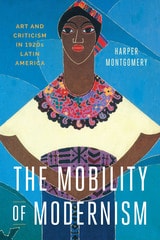
The Mobility of Modernism
Art and Criticism in 1920s Latin AmericaBy Harper Montgomery
University of Texas Press, 2017
Arvey Foundation Book Award, Association for Latin American Art, 2018
Many Latin American artists and critics in the 1920s drew on the values of modernism to question the cultural authority of Europe. Modernism gave them a tool for coping with the mobility of their circumstances, as well as the inspiration for works that questioned the very concepts of the artist and the artwork and opened the realm of art to untrained and self-taught artists, artisans, and women. Writing about the modernist works in newspapers and magazines, critics provided a new vocabulary with which to interpret and assign value to the expanding sets of abstracted forms produced by these artists, whose lives were shaped by mobility.
The Mobility of Modernism examines modernist artworks and criticism that circulated among a network of cities, including Buenos Aires, Mexico City, Havana, and Lima. Harper Montgomery maps the dialogues and relationships among critics who published in avant-gardist magazines such as Amauta and Revista de Avance and artists such as Carlos Mérida, Xul Solar, and Emilio Pettoruti, among others, who championed esoteric forms of abstraction. She makes a convincing case that, for these artists and critics, modernism became an anticolonial stance which raised issues that are still vital today—the tensions between the local and the global, the ability of artists to speak for blighted or unincorporated people, and, above all, how advanced art and its champions can enact a politics of opposition.
The Moccasin Bluff Site and the Woodland Cultures of Southwestern Michigan
Robert Louis Bettarel and Hale Gilliam Smith
University of Michigan Press, 1973
The Mode of Information
Poststructuralism and Social ContextMark Poster
University of Chicago Press, 1990
The difference, Mark Poster argues, is the profound effect electronic mediation exerts on the very way we perceive ourselves and reality. To help decode the linguistic dimensions of our multiple forms of social interaction, he plays upon Marx's theory of the mode of production—the shift to late capitalism has a parallel in the shift from the mode of production to that of information.
Enlisting poststructuralist theory, he links four modes of communication with four poststructuralists: TV ads with Baudrillard, data bases with Foucault, electronic writing with Derrida, and computer science with Lyotard. Mode of Information points the way to a poststructuralist strategy for writing history, a framework well suited to unearthing structures of domination and the means to their disruption.
"An informed, insightful, provocative account of phenomena that have transformed virtually every area of public and private life on our time."—Robert Anchor, American Historical Review
"The importance of Poster's book is unmistakable for he skillfully negotiates between and juxtaposes two wide theoretical domains—electronically mediated communications and poststructuralist theory—about which much has been written, but hardly with the acumen that he brings to bear in a long-awaited critical rapprochement."—Charles J. Stivale, Criticism
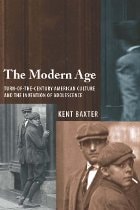
The Modern Age
Turn-of-the-Century American Culture and the Invention of AdolescenceKent Baxter
University of Alabama Press, 2008
The Modern Age examines the discourses that have come to characterize adolescence and argues that commonplace views of adolescents as impulsive, conflicted, and rebellious are constructions inspired by broader cultural anxieties that characterized American society in early-twentieth-century America.
The idea of adolescence, argues Kent Baxter, came into being because it fulfilled specific historical and cultural needs: to define a quickly expanding segment of the population, and to express concerns associated with the movement into a new era. Adolescence—a term that had little currency before 1900 and made a sudden and pronounced appearance in a wide variety of discourses thereafter—is a “modern age” not only because it sprung from changes in American society that are synonymous with modernity, but also because it came to represent all that was threatening about “modern life.”
Baxter provides a preliminary history of adolescence, focusing specifically on changes in the American educational system and the creation of the juvenile justice system that carved out a developmental space between the child and the adult. He looks at the psychological works of G. Stanley Hall and the anthropological works of Margaret Mead and explores what might have inspired their markedly negative descriptions of this new demographic. He examines the rise of the Woodcraft Indian youth movement and its promotion of “red skin” values while also studying the proliferation of off-reservation boarding schools for Native American youth, where educators attempted to eradicate the very “red skin” values promoted by the Woodcraft movement.
Finally Baxter studies reading at the turn of the century, focusing specifically on Horatio Alger (the Ragged Dick series) and Edward Stratemeyer (the Tom Swift, Nancy Drew, and Hardy Boys series) and what those works reveal about the “problem” of adolescence and its solutions in terms of value, both economic and moral.
The Modern Brazilian Stage
By David George
University of Texas Press, 1992
Reading a play and watching it performed onstage are quite different experiences. Likewise, studying a country's theatrical tradition with reference only to playtexts overlooks the vital impact of a play's performance on the audience and on the whole artistic community. In this performance-centered approach to Brazilian theatre since the 1940s, David George explores a total theatrical language—the plays, the companies that produced them, and the performances that set a standard for all future stagings.
George structures the discussion around several important companies. He begins with Os Comediantes, whose revolutionary 1943 staging of Nelson Rodrigues' Vestido de Noiva (Bridal Gown) broke with the outmoded comedy-of-manners formula that had dominated the national stage since the nineteenth century. He considers three companies of the 1950s and 1960s—Teatro Brasileiro de Comédia, Teatro de Arena, and Teatro Oficina—along with the 1967 production of O Rei da Vela (The Candle King) by Teatro Oficina.
The 1970s represented a wasteland for Brazilian theatre, George finds, in which a repressive military dictatorship muzzled artistic expression. The Grupo Macunaíma brought theatre alive again in the 1980s, with its productions of Macunaíma and Nelson 2 Rodrigues.
Common to all theatrical companies, George concludes, was the desire to establish a national aesthetic, free from European and United States models. The creative tension this generated and the successes of modern Brazilian theatre make lively reading for all students of Brazilian and world drama.
The Modern Girl Around the World
Consumption, Modernity, and GlobalizationThe Modern Girl Around the World Research Group
Duke University Press, 2008
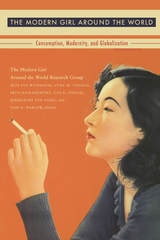
Scholars of history, women’s studies, literature, and cultural studies follow the Modern Girl around the world, analyzing her manifestations in Germany, Australia, China, Japan, France, India, the United States, Russia, South Africa, and Zimbabwe. Along the way, they demonstrate how the economic structures and cultural flows that shaped a particular form of modern femininity crossed national and imperial boundaries. In so doing, they highlight the gendered dynamics of interwar processes of racial formation, showing how images and ideas of the Modern Girl were used to shore up or critique nationalist and imperial agendas. A mix of collaborative and individually authored chapters, the volume concludes with commentaries by Kathy Peiss, Miriam Silverberg, and Timothy Burke.
Contributors: Davarian L. Baldwin, Tani E. Barlow, Timothy Burke, Liz Conor, Madeleine Yue Dong, Anne E. Gorsuch, Ruri Ito, Kathy Peiss, Uta G. Poiger, Priti Ramamurthy, Mary Louise Roberts, Barbara Sato, Miriam Silverberg, Lynn M. Thomas, Alys Eve Weinbaum
The Modern Invention of Information
Discourse, History, and PowerRonald E. Day
Southern Illinois University Press, 2008
In The Modern Invention of Information: Discourse, History, and Power, Ronald E. Day provides a historically informed critical analysis of the concept and politics of information. Analyzing texts in Europe and the United States, his critical reading method goes beyond traditional historiographical readings of communication and information by engaging specific historical texts in terms of their attempts to construct and reshape history.
After laying the groundwork and justifying his method of close reading for this study, Day examines the texts of two pre–World War II documentalists, Paul Otlet and Suzanne Briet. Through the work of Otlet and Briet, Day shows how documentation and information were associated with concepts of cultural progress. Day also discusses the social expansion of the conduit metaphor in the works of Warren Weaver and Norbert Wiener. He then shows how the work of contemporary French multimedia theorist Pierre Lévy refracts the earlier philosophical writings of Gilles Deleuze and Félix Guattari through the prism of the capitalist understanding of the “virtual society.”
Turning back to the pre–World War II period, Day examines two critics of the information society: Martin Heidegger and Walter Benjamin. He explains Heidegger’s philosophical critique of the information culture’s model of language and truth as well as Benjamin’s aesthetic and historical critique of mass information and communication. Day concludes by contemplating the relation of critical theory and information, particularly in regard to the information culture’s transformation of history, historiography, and historicity into positive categories of assumed and represented knowledge.
The Modern Turn
Michael Rohlf
Catholic University of America Press, 2017
This volume approaches the modern turn not as an event that occurred all at once, but rather as a series of shifts in different areas of philosophy at different times. The essays are arranged broadly in chronological order of the topics they treat. Among the themes that recur most often in these essays are, first, that modern philosophy is characteristically preoccupied with questions about foundations and, second, that it ultimately prioritizes practice over theory. But the virtues of this text is in presenting a wide range or perspectives on modern philosophy – what constitutes it as modern, when it arose, and what its shortcomings may be.
The Modern Woman Revisited
Paris Between the WarsChadwick, Whitney
Rutgers University Press, 2003
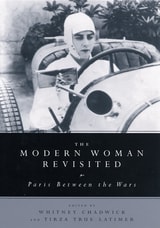
The contributions of female artists to the development of literary and artistic modernism in early twentieth century France remain poorly understood. It was during this period that a so-called “modern woman” began occupying urban spaces associated with the development of modern art and modernism’s struggles to define subjectivities and sexualities. Whereas most studies of modernism’s formal innovations and its encouragement of artistic autonomy neglect or omit necessary discussions of gender, race, class, and sexual orientation, the contributors of The Modern Woman Revisited inject these perspectives into the discussion.
Between the two World Wars, Paris served as the setting for unparalleled freedom for expatriate as well as native-born French women, who enjoyed unprecedented access to education and opportunities to participate in public artistic and intellectual life. Many of these women made lasting contributions in art and literature. Some of the artists discussed include Colette, Tamara de Lempicka, Sonia Delaunay, Djuna Barnes, Augusta Savage, and Lee Miller.
Inthis book, an internationally recognized roster of art historians, literary critics, and other scholars offers a nuanced portrait of what it meant to be a modern woman during this decisive period of modernism’s development. Individual essays explore the challenges faced by women in the early decades of the twentieth century, as well as the strategies these women deployed to create their art and to build meaningful lives and careers. The introduction underscores the importance of the contributors’ efforts to engender larger questions about modernity, sexuality, race, and class.
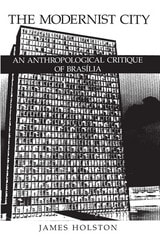
The Modernist City
An Anthropological Critique of BrasiliaJames Holston
University of Chicago Press, 1989
The Modernist Impulse in American Protestantism
William R. Hutchison
Duke University Press, 1992
The Modernist Masquerade
Stylizing Life, Literature, and Costumes in RussiaColleen McQuillen
University of Wisconsin Press, 2013
The Modernist Nation
Generation, Renaissance, and Twentieth-Century American LiteratureMichael Soto
University of Alabama Press, 2007
The Modernist Nation examines why America's modern literary movements have come to be characterized as "generations" and "renaissances," such as the Lost Generation and the Beat Generation or the Harlem, Southern, and San Francisco Renaissances. The metaphor of rebirth, Michael Soto argues, offered and continues to offer American writers a kind of shorthand for imagining American cultural history, especially as a departure from Old World (English) trappings.
Soto highlights the interracial dynamics of American literary movements, touching on authors as varied as James Weldon Johnson, Malcolm Cowley, W. E. B. DuBois, Gertrude Stein, Ernest Hemingway, Zora Neale Hurston, and Jack Kerouac. After assessing the origins of the Lost Generation and the Harlem Renaissance, Soto traces the rise of the "bohemian artist" narrative, and demonstrates how a polyethnic cast of writers and critics constructed American literary production in terms of symbolic rebirth.
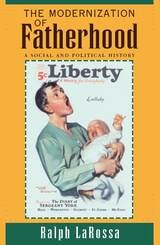
The Modernization of Fatherhood
A Social and Political HistoryRalph LaRossa
University of Chicago Press, 1997
LaRossa explains that during the interwar period the image of the father as economic provider, pal, and male role model, all in one, became institutionalized. Using personal letters and popular magazine and newspaper sources, he explores how the social and economic conditions of the Roaring Twenties and the Great Depression—a period of technical innovation as well as economic hardship—fused these expectations into a cultural ideal. With chapters on the U.S. Children's Bureau, the fathercraft movement, the magazine industry and the development of Parent's Magazine, and the creation of Father's Day, this book is a major addition to the growing literature on masculinity and fatherhood.
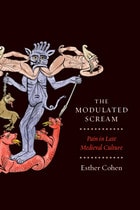
The Modulated Scream
Pain in Late Medieval CultureEsther Cohen
University of Chicago Press, 2010
In the late medieval era, pain could be a symbol of holiness, disease, sin, or truth. It could be encouragement to lead a moral life, a punishment for wrong doing, or a method of healing. Exploring the varied depictions and descriptions of pain—from martyrdom narratives to practices of torture and surgery—The Modulated Scream attempts to decode this culture of suffering in the Middle Ages.
Esther Cohen brings to life the cacophony of howls emerging from the written record of physicians, torturers, theologians, and mystics. In considering how people understood suffering, explained it, and meted it out, Cohen discovers that pain was imbued with multiple meanings. While interpreting pain was the province only of the rarified elite, harnessing pain for religious, moral, legal, and social purposes was a practice that pervaded all classes of Medieval life. In the overlap of these contradicting attitudes about what pain was for—how it was to be understood and who should use it—Cohen reveals the distinct and often conflicting cultural traditions and practices of late medieval Europeans. Ambitious and wide-ranging, The Modulated Scream is intellectual history at its most acute.

The Mogul
Eddie Gottlieb, Philadelphia Sports Legend and Pro Basketball PioneerRich Westcott
Temple University Press, 2008
Drawing upon sixty-plus interviews and many archival sources, well-known Philadelphia sports historian Rich Westcott vividly portrays Gottlieb's role in a pivotal era in city sports, in the process offering histories of the SPHAs, Warriors, and Stars and the role of Jews and African Americans in the city's sporting history.
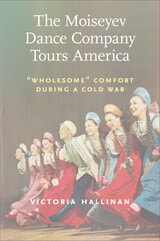
The Moiseyev Dance Company Tours America
"Wholesome" Comfort during a Cold WarVictoria Hallinan
University of Massachusetts Press, 2023
During the Cold War, dancers and musicians from the United States and the USSR were drawn into the battle for hearts and minds, crossing the Iron Curtain to prove their artistic and ideological prowess. After the passage of the Lacy-Zarubin Agreement, direct cultural exchange between the two superpowers opened up, and the Moiseyev Dance Company arrived in the United States in 1958. The first Soviet cultural representatives to tour America, this folk-dance troupe’s repertoire included dances from territories controlled or influenced by the USSR, including Uzbekistan, Crimea, and Poland.
Drawing on contemporary personal and published accounts, Victoria Hallinan explores why the dancers garnered overwhelming acclaim during their multicity tour and Ed Sullivan Show appearance. The “boy-meets-girl” love stories of the dances, and their idealized view of multiple Soviet cultures living together in harmony, presented a comforting image of post–World War II gender norms and race relations for audiences. Americans saw the dancers—their supposed enemies—as humans rather than agents of communist contagion.
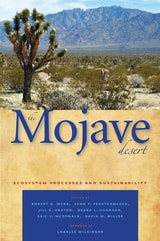
The Mojave Desert
Ecosystem Processes and SustainabilityRobert Webb
University of Nevada Press, 2009
In The Mojave Desert, thirty-eight scientists who are all specialists in desert ecology address the threats to the Mojave, as well as the potential for natural recovery and active restoration. The contributing authors discuss the desert from several perspectives: regional threats such as expanding human populations, climate change, atmospheric nitrogen deposition, and invasive plants; the impact of roads in a desert ecosystem; soils and plant communities; shrinking aquifers; and the monitoring and sustainability of this fragile ecosystem. Finally, they discuss the importance of long-term data and the ways scientists and resource managers can interact to enhance understanding of the processes of change in the Mojave Desert and to advance the preservation and restoration of its precious resources.The Mojave Desert offers the fruits of extensive research in a number of disciplines and a sound assessment of the current state and possible future of one of the world's major deserts. As human intrusion and climate change increasingly threaten the Mojave's ecosystem, studies like this are essential in helping scientists, land managers, and the general public understand what is at risk and what can be done to preserve this austere and hauntingly beautiful region.
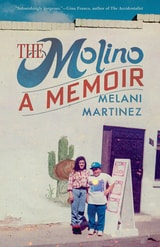
The Molino
A MemoirMelani Martinez
University of Arizona Press, 2024
Set in one of Tucson’s first tamal and tortilla factories, The Molino is a hybrid memoir that reckons with one family’s loss of home, food, and faith.
Weaving together history, culture, and Mexican food traditions, Melani Martinez shares the story of her family’s life and work in the heart of their downtown eatery, El Rapido. Opened by Martinez’s great-grandfather, Aurelio Perez, in 1933, El Rapido served tamales and burritos to residents and visitors to Tucson’s historic Barrio Presidio for nearly seventy years. For the family, the factory that bound them together was known for the giant corn grinder churning behind the scenes—the molino. With clear eyes and warm humor, Martinez documents the work required to prepare food for others, and explores the heartbreaking aftermath of gentrification that forces the multigenerational family business to close its doors.
The Molino is also Martinez’s personal story—that of a young Tucsonense coming of age in the 1980s and ’90s. As a young woman she rejects the work in her father’s popular kitchen, but when the business closes, her world shifts and the family disbands. When she finds her way back home, the tortillería’s iconic mural provides a gateway into history and ruin, ancestry and sacrifice, industrial myth and artistic incarnation—revealing a sacred presence still alive in Tucson.
A must-read for foodies, history lovers, and anyone searching for spiritual truth in the desert, this is a story of belonging and transformation in the borderlands.

The Moment of Racial Sight
A HistoryIrene Tucker
University of Chicago Press, 2012
The Monacan Indian Nation of Virginia
The Drums of LifeRosemary Clark Whitlock, with foreword by J. Anthony Paredes and introduction by Thomas J. Blumer
University of Alabama Press, 2008

The Monastic In Each of Us
Heart, Mind, Body, Soul and SpiritTim Vivian
Catholic University of America Press, 2026
The Monetarists
The Making of the Chicago Monetary Tradition, 1927–1960George S. Tavlas
University of Chicago Press, 2023
The Chicago School of economic thought has been subject to endless generalizations—and mischaracterizations—in contemporary debate. What is often portrayed as a monolithic obsession with markets is, in fact, a nuanced set of economic theories born from decades of research and debate. The Monetarists is a deeply researched history of the monetary policies—and personalities—that codified the Chicago School of monetary thought from the 1930s through the 1960s. These policies can be characterized broadly as monetarism: the belief that prices and interest rates can be kept stable by controlling the amount of money in circulation.
As economist George S. Tavlas makes clear, these ideas were more than just the legacy of Milton Friedman; they were a tradition in theory brought forth by a crucible of minds and debates throughout campus. Through unprecedented mining of archival material, The Monetarists offers the first complete history of one of the twentieth century’s most formative intellectual periods and places. It promises to elevate our understanding of this doctrine and its origins for generations to come.
The Money Doctor in the Andes
U.S. Advisors, Investors, and Economic Reform in Latin America from World War I to the Great DepressionPaul W. Drake
Duke University Press, 1988
Drake links the Kemmerer missions to vital developments in the political economic history of the Andean republics in the interwar period. He analyzes the domestic interest groups and political forces whose convergent strategies gave the Kemmerer missions their remarkable record in achieving local success for the reforms proposed. Second, Drake situates the Kemmerer missions at the center of a process of political modernization that created new institutions and policy agencies in each of the five countries; the missions thereby contributed to the expansion of the central government as an agent of development in ways that later differed sharply from Kemmerer's orthodox policies. Finally, The Money Doctor in the Andes regards developments in the Andean countries in the context of the region's developing economic ties to the United States. Expectations that Kemmerer's plans would simultaneously attract foreign capital and control inflation drew support from sectors as diverse as trade unions and landowners. When the Depression deepened, Kemmerer's policies proved counterproductive and the fragile consensus that had installed them fell apart, but the political and administrative reforms endured—with far-reaching consequences.
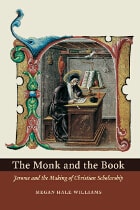
The Monk and the Book
Jerome and the Making of Christian ScholarshipMegan Hale Williams
University of Chicago Press, 2006
In the West, monastic ideals and scholastic pursuits are complementary; monks are popularly imagined copying classics, preserving learning through the Middle Ages, and establishing the first universities. But this dual identity is not without its contradictions. While monasticism emphasizes the virtues of poverty, chastity, and humility, the scholar, by contrast, requires expensive infrastructure—a library, a workplace, and the means of disseminating his work. In The Monk and the Book, Megan Hale Williams argues that Saint Jerome was the first to represent biblical study as a mode of asceticism appropriate for an inhabitant of a Christian monastery, thus pioneering the enduring linkage of monastic identities and institutions with scholarship.
Revisiting Jerome with the analytical tools of recent cultural history—including the work of Bourdieu, Foucault, and Roger Chartier—Williams proposes new interpretations that remove obstacles to understanding the life and legacy of the saint. Examining issues such as the construction of Jerome’s literary persona, the form and contents of his library, and the intellectual framework of his commentaries, Williams shows that Jerome’s textual and exegetical work on the Hebrew scriptures helped to construct a new culture of learning. This fusion of the identities of scholar and monk, Williams shows, continues to reverberate in the culture of the modern university.
"[Williams] has written a fascinating study, which provides a series of striking insights into the career of one of the most colorful and influential figures in Christian antiquity. Jerome's Latin Bible would become the foundational text for the intellectual development of the West, providing words for the deepest aspirations and most intensely held convictions of an entire civilization. Williams's book does much to illumine the circumstances in which that fundamental text was produced, and reminds us that great ideas, like great people, have particular origins, and their own complex settings."—Eamon Duffy, New York Review of Books

The Monkey and The Tiger
Judge Dee MysteriesRobert van Gulik
University of Chicago Press, 1965
The Monkey and The Tiger includes two detective stories, "The Morning of the Monkey" and "The Night of the Tiger." In the first, a gibbon drops an emerald in the open gallery of Dee's official residence, leading the judge to discover a strangely mutilated body in the woods—and how it got there. In the second, Dee is traveling to the imperial capital to assume a new position when he is separated from his escort by a flood. Marooned in a large country house surrounded by fierce bandits, Dee confronts an apparition that helps him solve a mystery.

The Monkey's Paw
New Chronicles from PeruRobin Kirk
University of Massachusetts Press, 1997
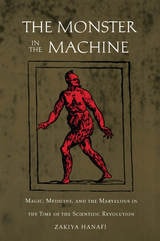
The Monster in the Machine
Magic, Medicine, and the Marvelous in the Time of the Scientific RevolutionZakiya Hanafi
Duke University Press, 2000
Noting that the word “monster” is derived from the Latin for “omen” or “warning,” Hanafi explores the monster’s early identity as a portent or messenger from God. Although monsters have always been considered “whatever we are not,” they gradually were tranformed into mechanical devices when new discoveries in science and medicine revealed the mechanical nature of the human body. In analyzing the historical literature of monstrosity, magic, and museum collections, Hanafi uses contemporary theory and the philosophy of technology to illuminate the timeless significance of the monster theme. She elaborates the association between women and the monstrous in medical literature and sheds new light on the work of Vico—particularly his notion of the conatus—by relating it to Vico’s own health. By explicating obscure and fascinating texts from such disciplines as medicine and poetics, she invites the reader to the piazzas and pulpits of seventeenth-century Naples, where poets, courtiers, and Jesuit preachers used grotesque figures of speech to captivate audiences with their monstrous wit.
Drawing from a variety of texts from medicine, moral philosophy, and poetics, Hanafi’s guided tour through this baroque museum of ideas will interest readers in comparative literature, Italian literature, history of ideas, history of science, art history, poetics, women’s studies, and philosophy.

The Monterrey Elite and the Mexican State, 1880–1940
By Alex M. Saragoza
University of Texas Press, 1988
After the Revolution of 1910, a powerful group of Monterrey businessmen led by the Garza-Sada family emerged as a key voice of the Mexican private sector. The Monterrey Elite and The Mexican State is the first major historical study of the "Grupo Monterrey," the business elite that transformed Monterrey into a premier industrial center, the "Pittsburgh" of Mexico.
Drawing on archival resources in the United States and Mexico and the work of previous scholars, Alex Saragoza examines the origins of the Monterrey elite. He argues that a "pact" between the new state and business interests was reached by the 1940 presidential elections—an accord that paved the way for the "alliance for profits" that has characterized relations between the Mexican state and capitalists since that time.
More than a standard business history, this study delves into both the intimate social world of the Garza-Sadas and their allies and the ideas, beliefs, and vision of the Monterrey elite that set it apart from and often against the Mexican government. In so doing, The Monterrey Elite and the Mexican State reveals the underlying forces that led to the most historic battle between the private sector and the Mexican state: the dramatic showdown in 1936 between the Garza-Sadas and then President Lázaro Cárdenas in Monterrey, Nuevo León.
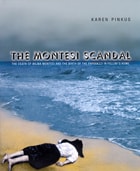
The Montesi Scandal
The Death of Wilma Montesi and the Birth of the Paparazzi in Fellini's RomeKaren Pinkus
University of Chicago Press, 2003
How this news item of everyday life exploded into one of the greatest scandals of a modern democracy is the story Karen Pinkus tells in The Montesi Scandal. Wilma's death brought to the surface every simmering element of Italian culture: bitter aspiring actresses, corrupt politicians, nervous Jesuits in sunglasses, jaded princes. Italians of all types lined up to testify-in court or to journalists of varying legitimacy-about the death of the middle-class carpenter's daughter, in the process creating a media frenzy and the modern culture of celebrity. Witnesses sold their stories to the tabloids, only to retract them. They posed for pictures, pretending to shun the spotlight. And they in turn became celebrities in their own right.
Pinkus takes us through the alleys and entryways of Rome in the 1950s, linking Wilma's death to the beginnings of the dolce vita, now synonymous with modern Roman life. Pinkus follows the first paparazzi on their scooters as they shoot the protagonists and gives us an insider's view of the stories and trials that came to surround this lonely figure that washed up on the shores of Ostia. Full of the magnificent paparazzi photos of the protagonists in the drama and film stills from the era's landmark movies, The Montesi Scandal joins true crime with "high" culture in an original form, one true to both the period and the cinematic conception of life it created. More than a meditation of the intricate ties among movies, paparazzo photography, and Italian culture, The Montesi Scandal narrates Wilma's story and its characters as the notes for an unrealized film, but one that, as the reader discovers, seems impossible to produce.
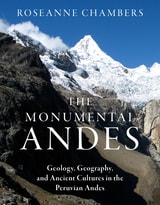
The Monumental Andes
Geology, Geography, and Ancient Cultures in the Peruvian AndesRoseanne Chambers
University of Utah Press, 2024
At once approachable and informative, The Monumental Andes tells the history of the lofty mountains and civilizations that characterize the Central Andes. The book explores many interconnected aspects of ancient Andean life, including climate, topography, agricultural methods, natural hazards, the construction of monumental structures, the creation of sophisticated art objects, and the plant-based hallucinogens and narcotics used in religious rituals. From earthquake-resistant structures to shrines on the tops of active volcanoes, ancient Andeans left behind relics that amaze and inspire today.
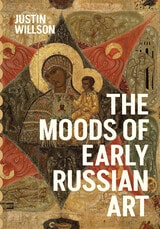
The Moods of Early Russian Art
Justin Willson
University of Chicago Press, 2026
The Moods of Early Russian Art describes an alternative early modernity at the easternmost border of the European cultural sphere, where the Renaissance marked a return not to secular humanism but to the religiosity and art of the Middle Ages. Charting a kind of “Renaissance in reverse,” art historian Justin Willson explores how the value placed on style and virtuosity faded in importance as the Church cultivated miracle-working images during the reigns of Ivan the Great and Ivan the Terrible. Arguing for a broader unity of interests among artistic workshops across the Muscovite landscape—a system of interconnected values that he explains using the language of “moods”—Willson examines icons, illuminated manuscripts, enamelwork, and murals, tracing how the interpretive framework of the age shifted from the “aesthetic” and “literal” moods to the “intoxicated” and “romantic” over the fifteenth and sixteenth centuries.
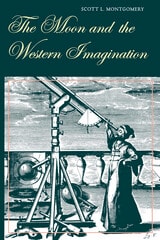
The Moon and the Western Imagination
Scott L. Montgomery
University of Arizona Press, 1999
Scott Montgomery has produced a richly detailed analysis of how the Moon has been visualized in Western culture through the ages, revealing the faces it has presented to philosophers, writers, artists, and scientists for nearly three millennia. To do this, he has drawn on a wide array of sources that illustrate mankind's changing concept of the nature and significance of heavenly bodies from classical antiquity to the dawn of modern science.
Montgomery especially focuses on the seventeenth century, when the Moon was first mapped and its features named. From literary explorations such as Francis Godwin's Man in the Moone and Cyrano de Bergerac's L'autre monde to Michael Van Langren's textual lunar map and Giambattista Riccioli's Almagestum novum, he shows how Renaissance man was moved by the lunar orb, how he battled to claim its surface, and how he in turn elevated the Moon to a new level in human awareness. The effect on human imagination has been cumulative: our idea of the Moon, and therefore the planets, is multilayered and complex, having been enriched by associations played out in increasingly complicated harmonies over time. We have shifted the way we think about the lunar face from a "perfect" body to an earthlike one, with corresponding changes in verbal and visual expression.
Ultimately, Montgomery suggests, our concept of the Moon has never wandered too far from the world we know best—the Earth itself. And when we finally establish lunar bases and take up some form of residence on the Moon's surface, we will not be conquering a New World, fresh and mostly unknown, but a much older one, ripe with history.
The Moral Authority of Nature
Edited by Lorraine Daston and Fernando Vidal
University of Chicago Press, 2003
The Moral Authority of Nature offers a wide-ranging account of how people have used nature to think about what counts as good, beautiful, just, or valuable. The eighteen essays cover a diverse array of topics, including the connection of cosmic and human orders in ancient Greece, medieval notions of sexual disorder, early modern contexts for categorizing individuals and judging acts as "against nature," race and the origin of humans, ecological economics, and radical feminism. The essays also range widely in time and place, from archaic Greece to early twentieth-century China, medieval Europe to contemporary America.
Scholars from a wide variety of fields will welcome The Moral Authority of Nature, which provides the first sustained historical survey of its topic.
Contributors:
Danielle Allen, Joan Cadden, Lorraine Daston, Fa-ti Fan, Eckhardt Fuchs, Valentin Groebner, Abigail J. Lustig, Gregg Mitman, Michelle Murphy, Katharine Park, Matt Price, Robert N. Proctor, Helmut Puff, Robert J. Richards, Londa Schiebinger, Laura Slatkin, Julia Adeney Thomas, Fernando Vidal
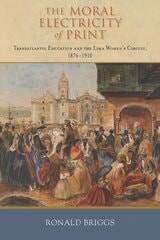
The Moral Electricity of Print
Transatlantic Education and the Lima Women's Circuit, 1876-1910Ronald Briggs
Vanderbilt University Press, 2017
Moral electricity—a term coined by American transcendentalists in the 1850s to describe the force of nature that was literacy and education in shaping a greater society. This concept wasn't strictly an American idea, of course, and Ronald Briggs introduces us to one of the greatest examples of this power: the literary scene in Lima, Peru, in the nineteenth century.
As Briggs notes in the introduction to The Moral Electricity of Print, "the ideological glue that holds the American hemisphere together is a hope for the New World as a grand educational project combined with an anxiety about the baleful influence of a politically and morally decadent Old World that dominated literary output through its powerful publishing interests." The very nature of living as a writer and participating in the literary salons of Lima was, by definition, a revolutionary act that gave voice to the formerly colonized and now liberated people. In the actions of this literary community, as men and women worked toward the same educational goals, we see the birth of a truly independent Latin American literature.
The Moral Meaning of Nature
Nietzsche’s Darwinian Religion and Its CriticsPeter J. Woodford
University of Chicago Press, 2018
We start with Friedrich Nietzsche, whose writings staged one of the first confrontations with the Christian tradition using the resources of Darwinian thought. The lebensphilosophie, or “life-philosophy,” that arose from his engagement with evolutionary ideas drew responses from other influential thinkers, including Franz Overbeck, Georg Simmel, and Heinrich Rickert. These critics all offered cogent challenges to Nietzsche’s appropriation of the newly transforming biological sciences, his negotiation between science and religion, and his interpretation of the implications of Darwinian thought. They also each proposed alternative ways of making sense of Nietzsche’s unique question concerning the meaning of biological evolution “for life.” At the heart of the discussion were debates about the relation of facts and values, the place of divine purpose in the understanding of nonhuman and human agency, the concept of life, and the question of whether the sciences could offer resources to satisfy the human urge to discover sources of value in biological processes. The Moral Meaning of Nature focuses on the historical background of these questions, exposing the complex ways in which they recur in contemporary philosophical debate.
The Moral Neoliberal
Welfare and Citizenship in ItalyAndrea Muehlebach
University of Chicago Press, 2012
The Moral Property of Women
A History of Birth Control Politics in AmericaLinda Gordon
University of Illinois Press, 2002
The Morality of Everyday Life
Rediscovering an Ancient Alternative to the Liberal TraditionThomas Fleming
University of Missouri Press, 2007
In TheMorality of Everyday Life, Thomas Fleming offers an alternative to the enlightened liberalism espoused by thinkers as different as Kant, Mill, Rand, and Rawls. Philosophers in the liberal tradition, although they disagree on many important questions, agree that moral and political problems should be looked at from an objective point of view and a decision made from a rational perspective that is universally applied to all comparable cases.
Fleming instead places importance on the particular, the local, and moral complexity. He advocates a return to premodern traditions, such as those exemplified in the texts of Aristotle, the Talmud, and the folk wisdom in ancient Greek literature, for a solution to ethical predicaments. In his view, liberalism and postmodernism ignore the fact that human beings by their very nature refuse to live in a world of universal abstractions.
While such modern philosophers as Kant and Kohlberg have regarded a mother’s self-sacrificing love for her children as beneath their level of morality, folk wisdom tells us it is nearly the highest morality, taking precedence over the duties of citizenship or the claims of humanity. Fleming believes that a modern type of “casuistry” should be applied to these moral conflicts in which the line between right and wrong is rarely clear.
This volume will appeal to students of ethics and classics, as well as the general educated reader, who will appreciate Fleming’s jargon-free prose. Teachers will find this text useful because each chapter is a self-contained essay that could be used as the basis for classroom discussion.
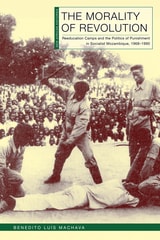
The Morality of Revolution
Reeducation Camps and the Politics of Punishment in Socialist Mozambique, 1968–1990Benedito Luís Machava
Ohio University Press, 2024
The Mormon Church and Blacks
A Documentary HistoryEdited by Matthew L. Harris and Newell G. Bringhurst
University of Illinois Press, 2015
The Mormon Hierarchy
Extensions of PowerD. Michael Quinn
Signature Books, 1997
But by interviewing former church aides, examining hundreds of diaries, and drawing from his own past experience as an insider within the Latter-day Saint historical department, D. Michael Quinn presents a fuller view. His extensive research documents how the governing apostles, seventies, and presiding bishops are likely to be at loggerheads, as much as united. These strong-willed, independent men–like directors of a large corporation or supreme court justices–lobby among their colleagues, forge alliances, out-maneuver opponents, and broker compromises.
There is more: clandestine political activities, investigative and punitive actions by church security forces, personal “loans” from church coffers (later written off as bad debts), and other privileged power-vested activities. Quinn considers the changing role and attitude of the leadership toward visionary experiences, the momentous events which have shaped quorum protocol and doctrine, and day-to-day bureaucratic intrigue from the time of Brigham Young to the dawn of the twenty-first century.
The hierarchy seems at root well-intentioned and even at times aggressive in fulfilling its stated responsibility, which is to expedite the Second Coming. Where they have become convinced that God has spoken, they have set aside personal differences, offered unqualified support, and spoken with a unified voice. This potential for change, when coupled with the tempering effect of competing viewpoints, is something Quinn finds encouraging about Mormonism. But one should not assume that these men are infallible or work in anything approaching uninterrupted unanimity.