Results by title
5550 books match the query 'Biography & Autobiography' and 1006 start with t
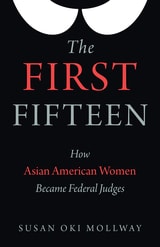
The First Fifteen
How Asian American Women Became Federal JudgesSusan Oki Mollway
Rutgers University Press, 2022
This book tells the stories of the first fifteen. In the process, it recounts remarkable tales of Asian women overcoming adversity and achieving the American dream, despite being the daughters of a Chinese garment worker, Japanese Americans held in internment camps during World War II, Vietnamese refugees, and penniless Indian immigrants. Yet The First Fifteen also explores how far Asian Americans and women still have to go before the federal judiciary reflects America as a whole.
In a candid series of interviews, these judges reflect upon the personal and professional experiences that led them to this distinguished position, as well as the nerve-wracking political process of being nominated and confirmed for an Article III judgeship. By sharing their diverse stories, The First Fifteen paints a nuanced portrait of how Asian American women are beginning to have a voice in determining American justice.
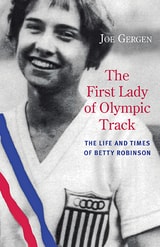
The First Lady of Olympic Track
The Life and Times of Betty RobinsonJoe Gergen
Northwestern University Press, 2014
The 1928 Olympic Games in Amsterdam were the first in which women—over the objections of many, including Pope Pius XI and the founder of the modern Olympics, Baron Pierre de Coubertin—were allowed to run in the marquee track events.
Equally remarkable is the story behind the first female gold medal winner in the 100-meter dash, sixteen-year-old American Betty Robinson. A prodigy running in just her fourth organized meet, Robinson stunned the world, earning special praise from the president of the 1928 American Olympic Committee, General Douglas MacArthur. But Robinson’s triumph soon became tragedy when in 1931 she was involved in a life-threatening plane crash. Unable to assume a sprinter’s crouch, she nevertheless joined fellow pioneer Jesse Owens at the infamous 1936 Berlin Olympics, and achieved further glory on the relay team. Journalist Joe Gergen’s The First Lady of Olympic Track rescues an exceptional figure from obscurity.
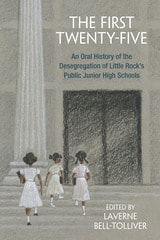
The First Twenty-Five
An Oral History of the Desegregation of Little Rock’s Public Junior High SchoolsLaVerne Bell-Tolliver
University of Arkansas Press, 2018
“It was one of those periods that you got through, as opposed to enjoyed. It wasn’t an environment that . . . was nurturing, so you shut it out. You just got through it. You just took it a day at a time. You excelled if you could. You did your best. You felt as though the eyes of the community were on you.”—Glenda Wilson, East Side Junior High
Much has been written about the historical desegregation of Little Rock Central High School by nine African American students in 1957. History has been silent, however, about the students who desegregated Little Rock’s five public junior high schools—East Side, Forest Heights, Pulaski Heights, Southwest, and West Side—in 1961 and 1962.
The First Twenty-Five gathers the personal stories of these students some fifty years later. They recall what it was like to break down long-standing racial barriers while in their early teens—a developmental stage that often brings emotional vulnerability. In their own words, these individuals share what they saw, heard, and felt as children on the front lines of the civil rights movement, providing insight about this important time in Little Rock, and how these often painful events from their childhoods affected the rest of their lives.
The First Well
A Bethlehem BoyhoodJabra Ibrahim Jabra
University of Arkansas Press, 1995
The First Woman in the Republic
A Cultural Biography of Lydia Maria ChildCarolyn L. Karcher
Duke University Press, 1998
The Flatlanders
Now It's Now AgainBy John T. Davis
University of Texas Press, 2014
A group of three friends who made music in a house in Lubbock, Texas, recorded an album that wasn’t released and went their separate ways into solo careers. That group became a legend and then—twenty years later—a band. The Flatlanders—Joe Ely, Jimmie Dale Gilmore, and Butch Hancock—are icons in American music, with songs blending country, folk, and rock that have influenced a long list of performers, including Robert Earl Keen, the Cowboy Junkies, Ryan Bingham, Terry Allen, John Hiatt, Hayes Carll, Lucinda Williams, Steve Earle, and Lyle Lovett.
In The Flatlanders: Now It’s Now Again, Austin author and music journalist John T. Davis traces the band’s musical journey from the house on 14th Street in Lubbock to their 2013 sold-out concert at Carnegie Hall. He explores why music was, and is, so important in Lubbock and how earlier West Texas musicians such as Buddy Holly and Roy Orbison, as well as a touring Elvis Presley, inspired the young Ely, Gilmore, and Hancock. Davis vividly recreates the Lubbock countercultural scene that brought the Flatlanders together and recounts their first year (1972–1973) as a band, during which they recorded the songs that, decades later, were released as the albums More a Legend Than a Band and The Odessa Tapes. He follows the three musicians through their solo careers and into their first decade as a (re)united band, in which they cowrote songs for the first time on the albums Now Again and Hills and Valleys and recovered their extraordinary original demo tape, lost for forty years. Many roads later, the Flatlanders are finally both a legend and a band.
The Fleeing Season
An American Mother’s Migration Toward Safety and JusticeBrooks, Jamie D.
University of Iowa Press, 2026
For generations, migration stories moved in one direction: toward the American Dream. Now, a seismic reversal is underway. For the first time since the Great Depression, more people are leaving the United States than moving in. Jamie D. Brooks and her family are among the many who have fled.
Blending cultural reporting with memoir, The Fleeing Season shares one mother’s story as she considers how and where to raise her family. Brooks recounts her decision to emigrate to the United Kingdom, while reckoning with issues that so many American families face: school shootings, systemic racism, a broken health care system, rising rates of homelessness, and the lack of a social safety net. Intimate and honest, Brooks’s story is not a political polemic. Rather, it maps a path toward reproductive justice.
The Flowers Along the Way
A MemoirClaudia Castro Luna
Northwestern University Press, 2026
Passionately demonstrating the dormant trauma of political violence and the redemption waiting beyond it
From El Salvador’s lush countryside to the streets of Oakland, California, a young mother wrestles with the intersecting forces of memory, history, and language in order to chart a new path for herself and her growing family. Fleeing political unrest and civil war violence in El Salvador, fourteen-year-old Claudia Castro Luna arrived in the United States with her family in 1981. Two decades later, holding her two-year-old and pregnant with her second child, she survives a public shooting by hiding behind shrubs in front of her house in Oakland. This event unleashes disorienting and traumatic memories, plunging her into a journey of discovery as she grapples with PTSD, recovers family stories, and begins to make sense of all that was torn asunder within her by the experiences of war and emigration. Beauty, longing, fear, and joy entwine in this powerful story of love, self-determination, and the search for home.
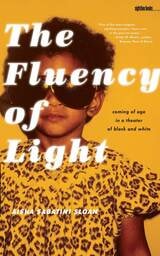
The Fluency of Light
Coming of Age in a Theater of Black and WhiteAisha Sabatini Sloan
University of Iowa Press, 2013
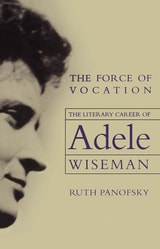
The Force of Vocation
The Literary Career of Adele WisemanRuth Panofsky
University of Manitoba Press, 2006
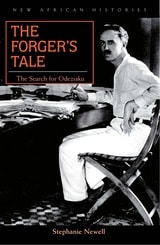
The Forger’s Tale
The Search for OdeziakuStephanie Newell
Ohio University Press, 2006
Between 1905 and 1939 a conspicuously tall white man with a shock of red hair, dressed in a silk shirt and white linen trousers, could be seen on the streets of Onitsha, in Eastern Nigeria. How was it possible for an unconventional, boy-loving Englishman to gain a social status among the local populace enjoyed by few other Europeans in colonial West Africa?
In The Forger’s Tale: The Search for Odeziaku Stephanie Newell charts the story of the English novelist and poet John Moray Stuart-Young (1881–1939) as he traveled from the slums of Manchester to West Africa in order to escape the homophobic prejudices of late-Victorian society. Leaving behind a criminal record for forgery and embezzlement and his notoriety as a “spirit rapper,” Stuart-Young found a new identity as a wealthy palm oil trader and a celebrated author, known to Nigerians as “Odeziaku.”
In this fascinating biographical account, Newell draws on queer theory, African gender debates, and “new imperial history” to open up a wider study of imperialism, (homo)sexuality, and nonelite culture between the 1880s and the late 1930s. The Forger’s Tale pays close attention to different forms of West African cultural production in the colonial period and to public debates about sexuality and ethics, as well as to movements in mainstream English literature.
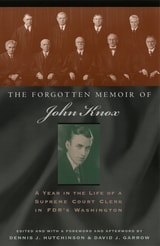
The Forgotten Memoir of John Knox
A Year in the Life of a Supreme Court Clerk in FDR's WashingtonJohn Knox
University of Chicago Press, 2002
When John Frush Knox (1907-1997) wrote these words, he was in the middle of law school, and his attempt at surpassing Pepys—part scrapbook, part social commentary, and part recollection—had already reached 750 pages. His efforts as a chronicler might have landed in a family attic had he not secured an eminent position after graduation as law clerk to Justice James C. McReynolds—arguably one of the most disagreeable justices to sit on the Supreme Court—during the tumultuous year when President Franklin D. Roosevelt tried to "pack" the Court with justices who would approve his New Deal agenda. Knox's memoir instead emerges as a record of one of the most fascinating periods in American history.
The Forgotten Memoir of John Knox—edited by Dennis J. Hutchinson and David J. Garrow—offers a candid, at times naïve, insider's view of the showdown between Roosevelt and the Court that took place in 1937. At the same time, it marvelously portrays a Washington culture now long gone. Although the new Supreme Court building had been open for a year by the time Knox joined McReynolds' staff, most of the justices continued to work from their homes, each supported by a small staff. Knox, the epitome of the overzealous and officious young man, after landing what he believes to be a dream position, continually fears for his job under the notoriously rude (and nakedly racist) justice. But he soon develops close relationships with the justice's two black servants: Harry Parker, the messenger who does "everything but breathe" for the justice, and Mary Diggs, the maid and cook. Together, they plot and sidestep around their employer's idiosyncrasies to keep the household running while history is made in the Court.
A substantial foreword by Dennis Hutchinson and David Garrow sets the stage, and a gallery of period photos of Knox, McReynolds, and other figures of the time gives life to this engaging account, which like no other recaptures life in Washington, D.C., when it was still a genteel southern town.
The Formation of a Modern Rabbi
The Life and Times of the Viennese Scholar and Preacher Adolf JellinekSamuel Joseph Kessler
SBL Press, 2022
An intellectual biography that critically engages Adolf Jellinek’s scholarship and communal activities
Adolf Jellinek (1821–1893), the Czech-born, German-educated, liberal chief rabbi of Vienna, was the most famous Jewish preacher in Central Europe in the second half of the nineteenth century. As an innovative rhetorician, Jellinek helped mold and define the modern synagogue sermon into an instrument for expressing Jewish religious and ethical values for a new era. As a historian, he made groundbreaking contributions to the study of the Zohar and medieval Jewish mysticism. Jellinek was emblematic of rabbi-as-scholar-preacher during the earliest, formative years of communal synagogues as urban religious space. In a world that was rapidly losing the felt and remembered past of premodern Jewish society, the rabbi, with Jellinek as prime exemplar, took hold of the Sabbath sermon as an instrument to define and mold Judaism and Jewish values for a new world.
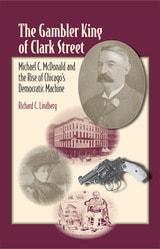
The Gambler King of Clark Street
Michael C. McDonald and the Rise of Chicago's Democratic MachineRichard C. Lindberg with a Foreword by John Miya.
Southern Illinois University Press, 2009
The Gambler King of Clark Street tells the story of a larger-than-life figure who fused Chicago’s criminal underworld with the city’s political and commercial spheres to create an urban machine built on graft, bribery, and intimidation. Lindberg vividly paints the life of the Democratic kingmaker against the wider backdrop of nineteenth-century Chicago crime and politics.
McDonald has long been cited in the published work of city historians, members of academia, and the press as the principal architect of a unified criminal enterprise that reached into the corridors of power in Chicago, Cook County, the state of Illinois, and ultimately the Oval Office. The Gambler King of Clark Street is both a major addition to Chicago’s historical literature and a revealing biography of a powerful and troubled man.
Illinois State Historical Society Scholarly Award, Certificate of Excellence, 2009
Society of Midland Authors Biography Award, 2009
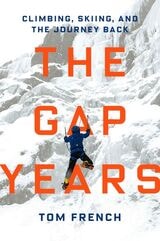
The Gap Years
Climbing, Skiing, and the Journey BackTom French
Brandeis University Press, 2026
At the end of 2019, Tom French retired from a four-decade career in business, determined to return to interests that had defined his youth and see what meaning they still held. One of these interests was mountaineering. Another was adventure travel, with a particular focus on Nepal. A third was cross-country ski racing. Having taken “gap years” between school and university, and again before he started work, he decided to take a gap year before settling into the expectations of retirement. One year turned into three as he rebuilt his athletic strength, competed in cross-country ski marathons, and climbed some of the world’s highest mountains, including two expeditions to Mount Everest. On the first Everest climb, a cyclone forced him to turn around high on the mountain and descend the treacherous Lhotse Face in a blizzard. On the second, he approached the mountain through the remote Makalu Barun region, the first climber ever to do so, and climbed to the summit on a moonlit night.
But this is a book about much more than Everest. It is about beauty and joy found in wild places, about cross-country ski racing and mountaineering more broadly, and—most of all—about a journey to find meaning in life and reconnect with the passions of youth.
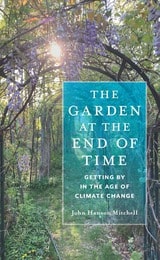
The Garden at the End of Time
Getting By in the Age of Climate ChangeJohn Hanson Mitchell
University of Massachusetts Press, 2025
John Hanson Mitchell has long written about his garden outside of Boston, and about the plants and animals with whom he shares this land. In 2022, the United Nations and others started reporting the true severity of the climate crisis as the Earth passed a point of no return. All across the globe it was the worst year on record for climate-related disasters, including extinctions, deadly floods, massive fires, and dramatic droughts, all of which have worsened since that year. Mitchell, like so many, felt overwhelmed. He looked to the story of Voltaire’s Candide, and settled on the famous aphorism from that book: “We must cultivate our garden.”
The Garden at the End of Time features Mitchell’s trademark blend of science, literature, and anecdote as he processes both the information he is reading from various sources and what it prompts him to do in his own small corner of the world. The story that unfolds is one of Mitchell diversifying his plantings; fighting what he sees as unnecessary local development; walking through and observing changes in the wild lands nearby; continuing to read the news from around the world; and meditating on other moments, real and imagined, when people sought refuge even as they did their part to improve a personally and collectively stressful situation.
Readers discover the impossibility of separating gardening from global warming, while also seeing the solace that exposure to plants can offer, in addition to their contribution to carbon consumption. With gravitas, kindness, and wit, Mitchell offers a model for maintaining a connection to nature even as it reels from manmade threats.
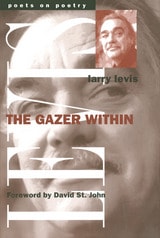
The Gazer Within
Larry Levis
University of Michigan Press, 2001
David St. John's foreword speaks eloquently of Levis's enduring legacy: "Of the poets of his generation, Larry Levis spoke most powerfully of what it means to be a poet at this historical moment. With the same majesty he brought to his poetry, Larry Levis engaged his readers with the most subtle and disturbing questions of the self to be found in the prose--essays, reviews or interviews--of any contemporary American poet. Broadly international in his scope and deeply personal in his reflections, Levis addressed poetic concerns that are both immediate and timeless. For many of us who struggle with these issues, Larry Levis's prose on poetry stands as some of the most capacious to be found since Randell Jarrell's."
The late Larry Levis was the author of six volumes of poetry. He was Director of the Creative Writing Program, University of Utah; Professor of English, Virginia Commonwealth University; and also taught at the Iowa Writers Workshop.
The Gee Years, 1990-1997
HISTORY OF THE OHIO STATE UNIVERSITYMalcolm S. Baroway
The Ohio State University Press, 2003
When Gee lost his beloved wife, Elizabeth, to cancer in 1991 and became a single parent, he not only carried on, he carried the university through some of its most exhilarating but contentious times. By 1996, he was so popular, private polls said he could run for Ohio governor—and win—on either ticket. When he, and his new bride Constance Bumgarner Gee, left instead for Brown University in January 1998, they left behind a stronger Ohio State and a string of stories about power brokers, politicians, and just plain Buckeyes. Populated by such figures as Les Wexner and George Voinovich, Andy Geiger and John Cooper, Bernadine Healy and John Glenn, The Gee Years is “inside baseball,” written by a member of Gee’s inner circle, his communications director. From the board room to the press box, from fundraisers to sit-ins, this is the story of a singular academic leader and more than seven years in the history of the complex university he headed.
The Gee Years, 2007–2013
Herbert B. Asher
The Ohio State University Press, 2022
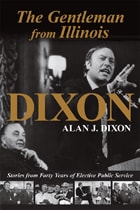
The Gentleman from Illinois
Stories from Forty Years of Elective Public ServiceAlan J. Dixon
Southern Illinois University Press, 2013
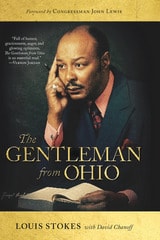
The Gentleman from Ohio
Louis Stokes with David Chanoff with a foreword by Congressman John Lewis
The Ohio State University Press, 2016
Prior to Louis Stokes’s tenure in Congress he served for many years as a criminal defense lawyer and chairman of the Cleveland NAACP Legal Redress Committee. Among the Supreme Court Cases he argued, the Terry “Stop and Frisk” case is regarded as one of the twenty-five most significant cases in the court’s history. The Gentleman from Ohio chronicles this and other momentous events in the life and legacy of Ohio’s first black representative—a man who, whether in law or politics, continually fought for the principles he believed in and helped lead the way for African Americans in the world of mainstream American politics.
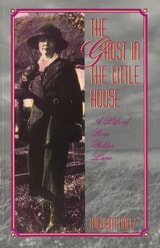
The Ghost in the Little House
A Life of Rose Wilder LaneWilliam Holtz
University of Missouri Press, 1995
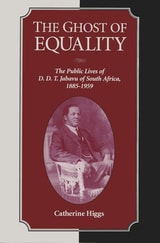
The Ghost of Equality
The Public Lives of D. D. T. Jabavu of South Africa, 1885–1959Catherine Higgs
Ohio University Press, 1996
Davidson Don Tengo Jabavu was born in the Cape Colony in British southern Africa on October 20, 1885, when a few African men could vote and the prospects for black equality with the ruling whites seemed promising. He died on August 3, 1959, in the Cape Province of the Union of South Africa, eleven years after the apartheid state had begun stripping blacks of their rights and exorcising the ‘ghost of equality’ with a completeness unparalleled in the country’s history. The ‘ghost of equality was the last vestige of the Cape liberal tradition — itself best summed up by the dictum ’equal rights for all civilized men‘ — finally erased in 1959 with the passage of legislation that would, the following year, remove from parliament the last elected white representatives of Africans.…
If D.D.T. Jabavu’s life reveals anything about South Africa’s political history, it is that this history was not monolithic. It was not simply a lengthly confrontation between a black elite represented by the African National Congress and the white segregationist state. Rather, there was a range of black political opinion and activity, of which Jabavu, an active participant in virtually every government-sponsored and every major extraparliamentary conference between 1920 and the late 1940s, represented one prominent historical strain.
This book, however, is about more than D.D.T. Javavu’s politics; it is about his public life, or perhaps more accurately, his public lives. The book is arranged thematically, divided according to the parts Jabavu played: student, teacher, Methodist, and politician.
— from the introduction by the author
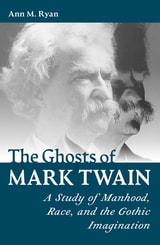
The Ghosts of Mark Twain
A Study of Manhood, Race, and the Gothic ImaginationAnn M Ryan
University of Missouri Press, 2025
Ann M. Ryan maps Twain’s resistance to ideals of white masculinity and his occasional capitulation to them. While Twain reflects upon the history of White men—including the intimate memory of his father’s failures and abuses—he also imagines a future in which Black men will gain an authentic voice and agency. Preferring the messy humanity of Mark Twain, Ryan calls into question the “St. Mark” school of criticism, which glosses—among other themes—Twain’s uneasy relation to Black culture. In unpublished works and excised material, Twain conjures memories and specters of Black men that are far from comforting. No longer “friends and allies” like fictive Ol’ Uncle Dan’l; these Black ghosts will settle for revenge if they can’t get justice.
Some of the works considered in The Ghosts of Mark Twain are not widely known: “Which Was It?,” “The United States of Lyncherdom,” No. 44: The Mysterious Stranger, and the Morgan manuscript of Pudd’nhead Wilson. Written into the record of these fragments is Twain’s desire to be a different kind of White man, just as their incomplete nature demonstrates how often he stumbled in that effort. When Jim describes the White and Black spirits hovering over Pap Finn, Twain reveals his own conflicted position in America’s racial history. And as Jim declares to Huck, “A body can’t tell yit which one gwyne to fetch him at de las.’”

The Girl in the Yellow Poncho
A MemoirKristal Brent Zook
Duke University Press, 2023
The Girl in the Yellow Poncho is Zook’s coming-of-age tale about what it means to be biracial in America. Throughout, she grapples with in-betweenness while also facing childhood sexual assault, economic insecurity, and multigenerational alcoholism and substance abuse on both the Black and white sides of her family. Her story is one of strong Black women—herself, her cousin, her mother, and her grandmother—and the generational cycles of oppression and survival that seemingly defined their lives.
Setting out on an inner journey that takes her across oceans and continents, Zook tells the story of a little girl who never gives up on love, even long after it seems to have been destroyed. In the end she triumphs, reconciling with her father and mother to create the family of her dreams through forgiveness and sheer force of will. A testament to the power of settling into one’s authentic identity, this book tells a story of a daughter’s lifelong yearning, a mother’s rediscovery of lost love, and the profound power of atonement and faith to heal a broken family.
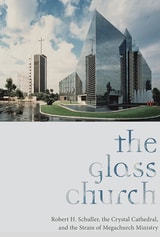
The Glass Church
Robert H. Schuller, the Crystal Cathedral, and the Strain of Megachurch MinistryMark T. Mulder
Rutgers University Press, 2020
Robert H. Schuller’s ministry—including the architectural wonder of the Crystal Cathedral and the polished television broadcast of Hour of Power—cast a broad shadow over American Christianity. Pastors flocked to Southern California to learn Schuller’s techniques. The President of United States invited him sit prominently next to the First Lady at the State of the Union Address. Muhammad Ali asked for the pastor’s autograph. It seemed as if Schuller may have started a second Reformation. And then it all went away. As Schuller’s ministry wrestled with internal turmoil and bankruptcy, his emulators—including Rick Warren, Bill Hybels, and Joel Osteen— nurtured megachurches that seemed to sweep away the Crystal Cathedral as a relic of the twentieth century. How did it come to this?
Certainly, all churches depend on a mix of constituents, charisma, and capital, yet the size and ambition of large churches like Schuller’s Crystal Cathedral exert enormous organizational pressures to continue the flow of people committed to the congregation, to reinforce the spark of charismatic excitement generated by high-profile pastors, and to develop fresh flows of capital funding for maintenance of old projects and launching new initiatives. The constant attention to expand constituencies, boost charisma, and stimulate capital among megachurches produces an especially burdensome strain on their leaders. By orienting an approach to the collapse of the Crystal Cathedral on these three core elements—constituency, charisma, and capital—The Glass Church demonstrates how congregational fragility is greatly accentuated in larger churches, a notion we label megachurch strain, such that the threat of implosion is significantly accentuated by any failures to properly calibrate the inter-relationship among these elements.
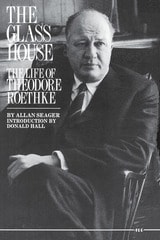
The Glass House
The Life of Theodore RoethkeAllan Seager
University of Michigan Press, 1991
Biographer Allan Seager interviewed a number of Roethke’s friends and fellow writers, and he had access to the voluminous notes the poet left behind. Seager reveals the Theodore Roethke who existed behind the public persona – a complex, self-contradictory, gentle, often disturbed mysterious, and ruthlessly honest man. One of the book’s most moving passages is the defense of the poet’s role within the university, written by a colleague when Roethke was faced with the threat of dismissal. A committed teacher himself, Seager succeeds in doing justice to an often neglected aspect of Roethke’s achievement, his remarkable power as a teacher, and his unusual and committed teaching style.
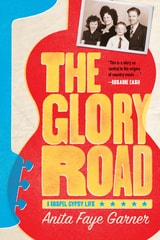
The Glory Road
A Gospel Gypsy LifeAnita Faye Garner
University of Alabama Press, 2021
“This is a story central to the origins of country music: the marriage of Saturday night and Sunday morning, and the literal marriage of two musicians, sometimes at odds with each other creatively and personally.” —Rosanne Cash
An essential memoir of music, memory, and the American South.
Anita Faye Garner grew up in the South—just about every corner of it. She and her musical family lived in Texarkana, Bossier City, Hot Springs, Jackson, Vicksburg, Hattiesburg, Pascagoula, Bogalusa, Biloxi, Gulfport, New Orleans, and points between, picking up sticks every time her father, a Pentecostal preacher known as “Brother Ray,” took over a new congregation.
In between jump-starting churches, Brother Ray took his wife and kids out on the gospel revival circuit as the Jones Family Singers. Ray could sing and play, and “Sister Fern” (Mama) was a celebrated singer and songwriter, possessed of both talent and beauty. Rounding out the band were the young Garner (known as Nita Faye then) and her big brother Leslie Ray. At all-day singings and tent revivals across the South, the Joneses made a joyful noise for the faithful and loaded into the car for the next stage of their tour.
But growing up gospel wasn’t always joyous. The kids practically raised and fended for themselves, bonding over a shared dislike of their rootless life and strict religious upbringing. Sister Fern dreamed of crossing over from gospel to popular music and recording a hit record. An unlikely combination of preacher’s wife and glamorous performer, she had the talent and presence to make a splash, and her remarkable voice brought Saturday night rock and roll to Sunday morning music. Always singing, performing, and recording at the margins of commercial success, Sister Fern shared a backing band with Elvis Presley and wrote songs recorded by Johnny Cash and many other artists.
In her touching memoir The Glory Road, Anita Faye Garner re-creates her remarkable upbringing. The story begins with Ray’s attempts to settle down and the family’s inevitable return to the gospel circuit and concludes with Sister Fern’s brushes with stardom and the family’s journey west to California where they finally landed—with some unexpected detours along the way. The Glory Road carries readers back to the 1950s South and the intersections of faith and family at the very roots of American popular music.
For more information about the book and Anita Garner, visit www.thegloryroad.com or www.anitagarner.com
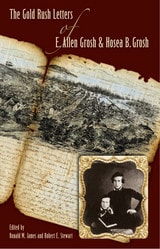
The Gold Rush Letters of E. Allen Grosh and Hosea B. Grosh
Ronald M. James
University of Nevada Press, 2016
The Groshes’ letters are rich in color and important historical details. Generously annotated and with an introduction that provides a context for the brothers’ career and the setting in which they tried to make their fortune, these documents powerfully depict the often harsh realities of Gold Rush life and society.
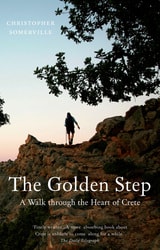
The Golden Step
A Walk Through the Heart of CreteChristopher Somerville
Haus Publishing, 2012
The Good Life
Yi-Fu Tuan
University of Wisconsin Press, 1986
“[Tuan] explores answers to an old and unanswerable question: how should we live? . . . The Good Life is a little anthology of good feeling, touchstones of joy . . . These pleasures make the book a pleasure, not of conviction or belief, but of conversation’s meandering exploration.”—New York Times Book Review
“Tuan, after all, is one of the few geographers who can be read for pleasure, and by the public as well as by the professional. But read not merely for pleasure, nor yet to mark, learn, and inwardly digest. Rather, consider Tuan’s challenge to identify your concept of the good life, and then try to construct that life.”—Environment and Planning D: Society and Space
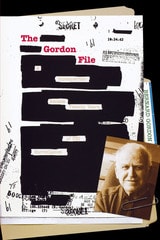
The Gordon File
A Screenwriter Recalls Twenty Years of FBI SurveillanceBy Bernard Gordon
University of Texas Press, 2004
For twenty-six years, the FBI devoted countless hours of staff time and thousands of U.S. taxpayer dollars to the surveillance of an American citizen named Bernard Gordon. Given the lavish use of resources, one might assume this man was a threat to national security or perhaps a kingpin of organized crime—not a Hollywood screenwriter whose most subversive act was joining the Communist Party during the 1940s when we were allied with the USSR in a war against Germany. For this honest act of political dissent, Gordon came to be investigated by the House Committee on Un-American Activities in 1952, blacklisted by the Hollywood film industry, and tailed by the FBI for over two decades.
In The Gordon File, Bernard Gordon tells the compelling, cautionary story of his life under Bureau surveillance. Drawing on his FBI file of over 300 pages, which he obtained under the Freedom of Information Act, he traces how the Bureau followed him from Hollywood to Mexico, Paris, London, Rome, and even aboard a Dutch freighter as he created an unusually successful, albeit uncredited, career as a screenwriter and producer during the blacklist years. Comparing his actual activities during that time to records in the file, he pointedly and often humorously underscores how often the FBI got it wrong, from the smallest details of his life to the main fact of his not being a threat to national security.
Most important, Gordon links his personal experience to the headlines of today, when the FBI is again assuming broad powers to monitor political dissidents it deems a threat to the nation. "Is it possible," he asks, "that books like this will help to move our investigative agencies from the job of blackmailing those who are critical of our imperfect democracy to arresting those who are truly out to destroy us?"
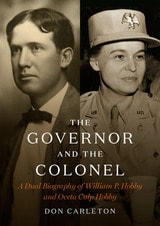
The Governor and the Colonel
A Dual Biography of William P. Hobby and Oveta Culp HobbyBy Don Carleton
University of Texas Press, 2020
William P. “Will” Hobby Sr. and Oveta Culp Hobby were one of the most influential couples in Texas history. Both were major public figures, with Will serving as governor of Texas and Oveta as the first commander of the Women’s Army Corps and later as the second woman to serve in a presidential cabinet. Together, they built a pioneering media empire centered on the Houston Post and their broadcast properties, and they played a significant role in the transformation of Houston into the fourth largest city in the United States. Don Carleton’s dual biography details their personal and professional relationship—defined by a shared dedication to public service—and the important roles they each played in local, state, and national events throughout the twentieth century.
This deeply researched book not only details this historically significant partnership, but also explores the close relationships between the Hobbys and key figures in twentieth-century history, from Texas legends such as LBJ, Sam Rayburn, and Jesse Jones, to national icons, including the Roosevelts, President Eisenhower, and the Rockefellers. Carleton's chronicle reveals the undeniable impact of the Hobbys on journalistic and political history in the United States.
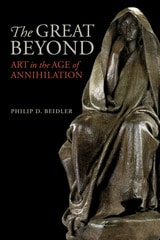
The Great Beyond
Art in the Age of AnnihilationPhilip D. Beidler
University of Alabama Press, 2022
Essays mapping how modern art confronts mortality in an age of war and annihilation.
While much about modernism remains up for debate, there can be no dispute about the connection between modernist art and death. The long modern moment was and is an age of war, genocide, and annihilation. Two world wars killed perhaps as many as 100 million people, through combat, famine, holocaust, and ghastly attacks on civilians. The ongoing COVID-19 pandemic is the fifth global pandemic since 1918, with more than a half-million American deaths and counting.
It can hardly come as a surprise, then, that many of the touchstones of modernism reflect on death and devastation. In Philip D. Beidler’s exploration of the modernist canon, he illuminates how these singular voices looked extinction in the eye and tried to reckon with our finitude—and their own. The Great Beyond: Art in the Age of Annihilation catalogs through lively prose an eclectic selection of artists, writers, and thinkers. In 16 essays, Beidler takes nuanced and surprising approaches to well-studied figures—the haunting sculpture by Saint-Gaudens commissioned by Henry Adams for his late wife; Luchino Visconti’s adaptation of Mann’s Death in Venice; and the author’s own long fascination with Beckett’s Waiting for Godot.
The threads and recurring motifs that emerge through Beidler’s analysis bridge the different media, genres, and timeframes of the works under consideration. Protomodernists Crane and Twain connect with near-contemporary voices like Sebald and Morrison. Robert MacFarlane’s 21st-century nonfiction about what lies underneath the earth echoes the Furerbunker and the poetry of Gertrud Kolmar. Learned but lively, somber but not grim, The Great Beyond is not a comfortable read, but it is in a way comforting. In tracing how his subjects confronted nothingness, be it personal or global, Beidler draws a brilliant map of how we see the end of the road.
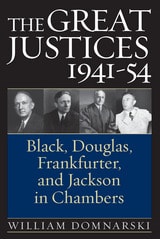
The Great Justices, 1941-54
Black, Douglas, Frankfurter, and Jackson in ChambersWilliam Domnarski
University of Michigan Press, 2006
This is rare and little-examined territory: in the public consciousness the Supreme Court is usually seen as an establishment whose main actors, the justices, remain above emotion, vitriol, and gossip, the better to interpret our nation of laws. Yet the Court's work is always an interchange of ideas and individuals, and the men and women who make up the Court, despite or because of their best intentions, are as human as the rest of us. Appreciating that human dimension helps us to discover some of the Court's secrets, and a new way to understand the Court and its role.
Comparing four brilliant but very different jurists of the Roosevelt Court-Hugo Black, William O. Douglas, Felix Frankfurter, and Robert Jackson-William Domnarski paints a startling picture of the often deeply ambiguous relationship between ideas and reality, between the law and the justices who interpret and create it. By pulling aside the veil of decorous tradition, Domnarski brings to light the personalities that shaped one of the greatest Courts of our time-one whose decisions continue to affect judicial thinking today.
William Domnarski is the author of In the Opinion of the Court (1996), a study of the history and nature of federal court judicial opinions. He holds a J.D. from the University of Connecticut and a Ph.D. in English from the University of California. Domnarski currently practices law in California, where he is also working on a forthcoming biography of legendary Hollywood lawyer Bert Fields.
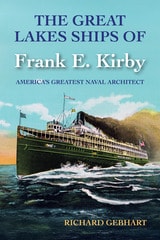
The Great Lakes Ships of Frank E. Kirby
America's Greatest Naval ArchitectRichard Gebhart
Michigan State University Press, 2026
This study of the legendary Michigan shipbuilder Frank E. Kirby examines his life and the accomplishments that earned him national esteem and international fame. Kirby was involved in the design and build of nearly one hundred vessels, many of which sailed the Great Lakes region. He is best known for designing the paddle steamer Tashmoo and two boats that ferried visitors to Boblo Island in the Detroit River for decades, Columbia and Ste. Claire. Though only three of his vessels remain, none of them operational, hundreds of thousands of Michiganders who are still alive today have been carried by Kirby vessels. Told through stories found in the Detroit Free Press, historical archives, family documents, an interview conducted by his daughter-in-law Dorothy Clement Kirby in 1926, and keepsakes, Richard Gebhart brings to life the story of one of the most prolific Great Lakes shipbuilders of the time.
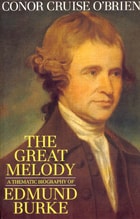
The Great Melody
A Thematic Biography of Edmund BurkeConor Cruise O'Brien
University of Chicago Press, 1992
"In bringing Burke to our attention, Mr. O'Brien has brought back a lost treasure. The Great Melody is a brilliant work of narrative sweep and analytical depth. Conor Cruise O'Brien on Edmund Burke is a literary gift to political thought."—John Patrick Diggins, New York Times Book Review
"Serious readers of history are in for a treat: a book by the greatest living Irishman on the greatest Irishman who ever lived. . . . O'Brien's study is not merely a reconstruction of a fascinating man and period. It is also a tract for the times. . . . I cannot remember another time when I finished a book of more than 600 pages wishing it were longer."—Paul Johnson, The Independent
"The Great Melody combines superb biography and fascinating history with a profound understanding of political philosophy."—Former President Richard Nixon
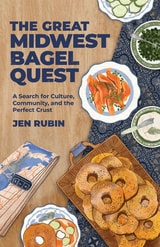
The Great Midwest Bagel Quest
A Search for Culture, Community, and the Perfect CrustJen Rubin
Wisconsin Historical Society Press, 2027
One woman’s quest for a great bagel becomes a poignant pursuit of culture and belonging.
Bagels have always been Jen Rubin’s cultural comfort food. Born and raised in New York City, she grew up on family gatherings anchored by sprawling bagel spreads. But after moving to Wisconsin thirty years ago, she struggled to maintain ties to her Jewish heritage—including a bagel worthy of her New York upbringing. When her mother’s death leads her to revisit her roots, Rubin embarks on a deeply personal mission: to discover whether the Midwest can produce a quality, authentic bagel. What begins as a search for comfort and connection becomes an enlightening exploration of food, identity, and belonging.
In The Great Midwest Bagel Quest, Rubin visits Chicago and St. Louis, Detroit and Ann Arbor, the Twin Cities, and Madison and Milwaukee—with a couple of side trips to New York City—sampling dozens of bagels, meeting artisan bakers, and exploring the histories of Jewish communities across the region. Along the way, she challenges the assumption that the Midwest has never produced truly authentic bagels.
Blending memoir, culinary history, travel narrative, and cultural reporting, Rubin uncovers a rich but overlooked bagel tradition while reflecting on her own complicated relationship with home. As she traces the evolution of the bagel from Jewish immigrant staple to mass-market commodity to the innovative artisanal varieties being produced today, she begins to see an evolution in her own relationship to her Jewish and familial traditions.
Warm, witty, and illuminating, The Great Midwest Bagel Quest is a fresh contribution to food writing that will appeal to readers of culinary history, immigrant history, and memoir. Most of all, it is a celebration of how food creates and sustains community—and how the search for the perfect bagel can lead us back to our true selves.
The Great Orchestrator
Arthur Judson and American Arts ManagementJames M. Doering
University of Illinois Press, 2013
The Great Tales Never End
Essays in Memory of Christopher TolkienEdited by Richard Ovenden and Catherine McIlwaine
Bodleian Library Publishing, 2022
Over more than four decades, J. R. R. Tolkien’s son and literary executor Christopher Tolkien completed some twenty-four volumes of his father’s work, much more than his father had succeeded in publishing during his own lifetime. Thanks to Christopher’s extraordinary publishing efforts and scholarship, readers today can survey and understand the vast landscape of Tolkien’s legendarium.
The Great Tales Never End sheds new light on J. R. R. Tolkien’s work and the debt owed to Christopher by the many Tolkien scholars who were privileged to work with him. Essays by world-renowned scholars and Tolkien family reminiscences offer unique insights into the publication process. What was Tolkien’s intended ending for The Lord of the Rings, and did it leave echoes in the stripped-down version that was actually published? What was the audience’s response to the first-ever adaptation of The Lord of the Rings—a radio dramatization that has now been deleted forever from the BBC’s archives?
The book is illustrated with color reproductions of J. R. R. Tolkien’s manuscripts, maps, drawings, and letters, as well as photographs of Christopher Tolkien and extracts from his works. Many of these documents have never been seen before, making this volume essential reading for Tolkien scholars, readers, and fans.
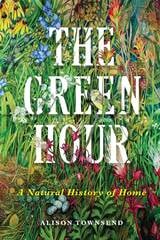
The Green Hour
A Natural History of HomeAlison Townsend
University of Wisconsin Press, 2021
With sparkling, lyrical prose, The Green Hour undulates effortlessly through time like a red-winged blackbird. Inspired by five beloved settings—eastern Pennsylvania, Vermont, California, western Oregon, and the spot atop the Wisconsin hill where she now resides—Townsend considers the role that place plays in shaping the self. She reveals the ways that a fresh perspective or new experience in any environment can incite wonder, build unexpected connections, and provide solace or salvation.
Mesmerizingly attentive to nature—its beauty, its fragility, and its redeeming powers—she asks what it means to live in community with wilderness and to allow our identities to be shaped by our interactions with it: our story as its story.

The Ground Below Zero
9/11 to Burning Man, New Orleans to Darfur, Haiti to Occupy Wall StreetNicholas Powers
UpSet Press, 0
The Ground at My Feet
Sustaining a Family and a ForestAnn Stinson
Oregon State University Press, 2021
The Ground at My Feet is a memoir about loss and grief as well as a portrait of a family, a region, and an industry. Combining personal story and research, Stinson weaves essays, poems, history, and science into a rich and layered account of life in a family forest in the Pacific Northwest. She maps interactions between the land and its people over two centuries: the Cowlitz peoples, homesteaders, and several generations of logging families who have worked the property. She follows her family’s logs as they become lumber for fence boards and suburban homes, touring a local cedar mill and traveling with her father to visit mills in Japan.
Stinson adds a landowner’s voice to conversations about the human tendency to demand more of the land than it can sustain. With its uniquely personal view of the Pacific Northwest’s timber and forestry heritage, The Ground at My Feet is an engaging addition to the literature of the landscape and ecology of the West.
The Guardian Poplar
A Memoir of Deep Roots, Journey, and RediscoveryChase Nebeker Peterson
University of Utah Press, 2012
When Barney Clark received the Jarvik-7 artificial heart in 1983 and Cold Fusion came under fire in 1989, Chase Peterson, as the University of Utah president, was inevitably pulled into these campus events. While these episodes may be the best known in Peterson’s professional history, they are certainly not the only stories that make his autobiography worth reading.
The Guardian Poplar tells of a man who grew up in small-town Utah and carried his pioneer and Mormon heritage to a New England prep school and later to Harvard. He then returned to Utah as a doctor, but unexpectedly found himself back at Harvard as its dean of admissions, handling issues such as the Vietnam War and racial and gender reform. The book explains how Peterson’s home state recruited him back to become an administrator at the University of Utah and how he would eventually become the university president, taking on new issues and challenges. Peterson recounts these years by drawing on anecdotes that recall the people he served and the moments that brought his life meaning.
This autobiography is a compelling account of how Peterson has managed to balance family and career, handle the tensions that have arisen between his faith and his scientific training, and remain solid in the face of his newest challenge—cancer. The book’s engaging prose and honest reflections are sure to intrigue and inspire readers who know the man well, as well as those readers who simply want to know a man who can be described as dedicated, faithful, hardworking, and hopeful about the future.
“When I first met Chase Peterson as a Harvard freshman—along with our joint friend and brother David Evans—something deeply touched me. It was not only his sincere smile and open embrace but also a sense that here was a kind and courageous man comfortable in his own skin, secure in who he was yet eager to encounter new persons, new experiences, and new challenges. . . . He was from Utah but in New England, a Mormon in old Harvard, and a medical doctor in the deanship of admissions. Little did I know that his journey would enhance and enrich my own—owing to his critical allegiance to his family, his faith, his friends, and to his citizenship of country and world. His prophetic witness at Harvard in the turbulent ‘60s and ‘70s, his promotion of black priesthood in the Mormon church, his support of antiapartheid protests in the ‘80s, and his steadfast defense of academic freedom in the Cold Fusion controversy in the early ‘90s all express his quiet and humble effort to be true to himself—a self grounded in, but
not limited by, a rich Mormon tradition.”—from the foreword by Cornel West
The Guild of the Infant Saviour
An Adopted Child's Memory BookMegan Culhane Galbraith
The Ohio State University Press, 2021
Shortly before Roe v. Wade legalized abortion, adoptee Megan Culhane Galbraith was born in a Catholic charity hospital in New York City to a teenaged resident of the Guild of the Infant Saviour, a home for unwed mothers. Decades later, on the eve of becoming a mother herself, she would travel to the former guild site; to her birth mother’s home in Scotland; and to Cornell University, where she discovered the startling history of its Domestic Economics program. There, from 1919 to 1969, coeds applied scientific principles to domesticity as they collectively mothered a rotating cast of babies awaiting adoption. The babies shared the last name Domecon and provided the inspiration for Galbraith’s art project, The Dollhouse.
The Guild of the Infant Saviour is a dizzyingly inventive hybrid memoir of one adoptee’s quest for her past. Galbraith pairs narrative with images from The Dollhouse as she weaves a personal and cultural history of adoption as it relates to guilt, shame, grief, identity, and memory itself. Ultimately, she connects her experiences to those of generations of adoptees, to the larger stories America tells about sex and motherhood, and to the shadows those stories cast on us all.
The Habsburg Garrison Complex in Trebinje
A Lost WorldCathie Carmichael
Central European University Press, 2024
Following the imposition of Habsburg rule on Ottoman Bosnia in 1878, a new garrison was constructed in the old citadel of Trebinje. By using a micro-historical approach, this innovative book tells the story of the garrison in times of peace and war, describing the way in which the Austro-Hungarian administration rapidly transformed Trebinje into a tree-lined city dominated by the army.
Yet, the Habsburg "civilizing mission," marked by the building of hospitals, schools, roads, and railways was accompanied by ruthless violence against those who resisted the new foreign occupiers, especially after 1914. The tragic violence is described in the book alongside accounts of daily life. By personalizing historical events, the narrative reveals the perspective of people who found themselves in Trebinje and its garrison complex: the ordinary soldier, the condemned “insurgent,” the career officer, the cook, the shepherdess, the hotelier, or the journalist—all willing or unwilling participants in an extra-European style colonial project in the heart of Europe.
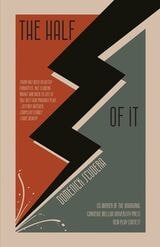
The Half of It
Domenick Scudera
Carnegie Mellon University Press, 2026
A play that explores the influence of pioneer drag artist Bert Savoy.
The Half of It is inspired by the life and work of Bert Savoy, a Vaudeville drag artist who was active in the 1910s and early 1920s. Savoy was at the height of his career when he was tragically killed by lightning in 1923. The play highlights the groundbreaking and inspirational work of this important, yet largely forgotten, pioneer. Characters include some of Savoy’s famous friends, such as Klondike Kate and Mae West (who many believe borrowed her sassy stage persona from Savoy’s drag act). The play explores themes of gender identity, gender expression, celebrity in the modern era, the LGBTQ community of the early twentieth century, and the origins of contemporary drag performance.
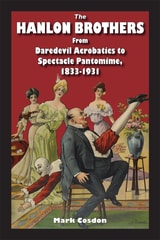
The Hanlon Brothers
From Daredevil Acrobatics to Spectacle Pantomime, 1833-1931Mark Cosdon
Southern Illinois University Press, 2010
The Hanlons—a family of six brothers from Manchester, England—were one of the world’s premiere performing troupes in the mid-nineteenth and early twentieth centuries, yet their legacy has been mostly forgotten. In The Hanlon Brothers: From Daredevil Acrobatics to Spectacle Pantomime, 1833–1931, Mark Cosdon carefully documents the careers of this talented family and enumerates their many contributions to modern popular entertainment.
As young men, the Hanlons stunned audiences all over the world with their daring acrobatic feats. After a tragic accident severely injured one brother (and indirectly led to his suicide in a manner achievable only by someone with considerable acrobatic talents), they moved into the safer arena of spectacle pantomime, where they became the rage of Parisian popular theatre. They achieved fame with their uproariously funny and technically astonishing production of Le Voyage en Suisse. After settling permanently in the northeastern United States, they developed two more full-length pantomimes, Fantasma and Superba. The three shows toured for more than thirty years, a testament to their popularity and to the Hanlons’ impressive business acumen.
The book’s illustrations—including sketches of their performances, studio photographs of the Hanlons, and posters for all three of their major pantomimes—are essential to the understanding of their work. The Hanlon Brothers is painstakingly researched yet accessible and engaging. Cosdon has managed to provide a thorough and engrossing account of the Hanlons’ lives and careers, which will no doubt help to reestablish their legacy in the world of popular entertainment.
The Happy Hsiungs
Performing China and the Struggle for ModernityDiana Yeh
Hong Kong University Press, 2014
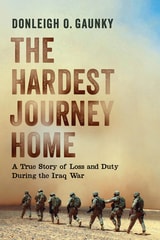
The Hardest Journey Home
A True Story of Loss and Duty during the Iraq WarDonleigh O. Gaunky
Westholme Publishing, 2017
“Sergeant Donleigh Gaunky’s moving memoir speaks to everyone who has lost a loved one in defense of our great nation. It serves as a reminder that freedom is not free, and it is our responsibility to continue to care for our service members, veterans, and their families. I am touched that Fisher House provided a refuge for Sergeant Gaunky during such a difficult journey.”—Ken Fisher, Chairman and CEO, Fisher House Foundation
“Fewer and fewer Americans have any close association with anyone serving in the Armed Forces. Donleigh Gaunky offers a heart-rending glimpse into his family as he, and they, grapple with the loss of Donleigh’s brother on a battlefield in Iraq. Every American should read this and, in so doing, learn what “Thank You for Your Service” really means.”
—Gen. Carter F. Ham, USA, Ret., President and CEO, Association of the United States Army
In November 2005, while analyzing live action reports at his base in Baghdad, Iraq, Donleigh O. Gaunky froze. His younger brother Alex’s unit had been hit by the enemy. Almost immediately, arrangements were made for Donleigh to meet his wounded brother in Germany, but Alex succumbed to his injuries before he arrived. Instead, Donleigh was asked to assume the role of remains escort. Most of the time a remains escort is picked at random from the appropriate branch of service or is someone with a relationship to the deceased, most often from the soldier’s own unit. Rarely—if ever in modern times—is the escort a family member. In The Hardest Journey Home: A True Story of Loss and Duty During the Iraq War, Donleigh O. Gaunky describes the events that unfolded over the course of a few days, from the front line in Iraq to the Landstuhl military hospital in Germany to their small town in Wisconsin, where he arrived with his brother’s body on Thanksgiving Day. In an effort to keep his mind off the tragedy and remain focused on his task, the author describes the protocol for escorting a body home—paperwork, appropriate attire, the proper use of the flag, when and where to salute—as well as how his divorced parents coped with the loss of one of their four sons serving in the military. Relying on commercial flights to bring Alex home, there was no military reception when they first landed in the United States and the author learned how little his brother’s sacrifice meant on a national level. But he was uplifted by his town’s response to his family’s loss when they unexpectedly lined the streets to pay their respects to one of their own. An important and moving story, The Hardest Journey Home reveals the human cost of a long, seemingly invisible war.