Results by title
4531 books match the query 'Cultural & Ethnic Studies' and 804 start with t
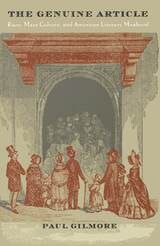
The Genuine Article
Race, Mass Culture, and American Literary ManhoodPaul Gilmore
Duke University Press, 2001
From characters in Indian melodramas and minstrel shows to exhibits in popular museums and daguerrotype galleries, primitive racialized figures circulated as “the genuine article” of manliness in the antebellum United States. Gilmore argues that these figures were manipulated, translated, and adopted not only by canonical authors such as Hawthorne, Thoreau, Cooper, and Melville but also by African American and Native American writers like William Wells Brown and Okah Tubbee. By examining how these cultural notions of race played out in literary texts and helped to construct authorship as a masculine profession, Gilmore makes a unique contribution to theories of class formation in nineteenth-century America.
The Genuine Article will enrich students and scholars of American studies, gender studies, literature, history, sociology, anthropology, popular culture, and race.

The Geography of Hate
The Great Migration through Small-Town AmericaJennifer Sdunzik
University of Illinois Press, 2023
During the Great Migration, Black Americans sought new lives in midwestern small towns only to confront the pervasive efforts of white residents determined to maintain their area’s preferred cultural and racial identity. Jennifer Sdunzik explores this widespread phenomenon by examining how it played out in one midwestern community. Sdunzik merges state and communal histories, interviews and analyses of population data, and spatial and ethnographic materials to create a rich public history that reclaims Black contributions and history. She also explores the conscious and unconscious white actions that all but erased Black Americans--and the terror and exclusion used against them--from the history of many midwestern communities.
An innovative challenge to myth and perceived wisdom, The Geography of Hate reveals the socioeconomic, political, and cultural forces that prevailed in midwestern towns and helps explain the systemic racism and endemic nativism that remain entrenched in American life.
The Georgia of the North
Black Women and the Civil Rights Movement in New JerseyHettie V. Williams
Rutgers University Press, 2024

The German Problem Transformed
Institutions, Politics, and Foreign Policy, 1945-1995Thomas Banchoff
University of Michigan Press, 1999
The Gift of Freedom
War, Debt, and Other Refugee PassagesMimi Thi Nguyen
Duke University Press, 2012

The Gloria Anzaldúa Reader
Gloria E. Anzaldúa
Duke University Press, 2009
This reader—which provides a representative sample of the poetry, prose, fiction, and experimental autobiographical writing that Anzaldúa produced during her thirty-year career—demonstrates the breadth and philosophical depth of her work. While the reader contains much of Anzaldúa’s published writing (including several pieces now out of print), more than half the material has never before been published. This newly available work offers fresh insights into crucial aspects of Anzaldúa’s life and career, including her upbringing, education, teaching experiences, writing practice and aesthetics, lifelong health struggles, and interest in visual art, as well as her theories of disability, multiculturalism, pedagogy, and spiritual activism. The pieces are arranged chronologically; each one is preceded by a brief introduction. The collection includes a glossary of Anzaldúa’s key terms and concepts, a timeline of her life, primary and secondary bibliographies, and a detailed index.
The Goddess in the Mirror
An Anthropology of BeautyTulasi Srinivas
Duke University Press, 2025
The Gold Coast and the Slum
A Sociological Study of Chicago's Near North SideHarvey Warren Zorbaugh
University of Chicago Press, 1983
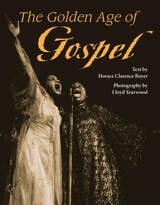
The Golden Age of Gospel
Text by Horace Clarence BoyerPhotography by Lloyd Yearwood
University of Illinois Press, 1995
Skillfully blending music history and social context, Boyer traces the development of gospel from its earliest beginnings through the Golden Age (1945-55) and into the 1960s when gospel entered the concert hall. He introduces dozens of the genre's most gifted contributors, from Thomas A. Dorsey and Mahalia Jackson to the Soul Stirrers and Aretha Franklin, evoking their distinctive styles and distinguishing among the characteristic sounds of gospel music in Chicago, Philadelphia, Detroit, St. Louis, and other locations.
Capturing the essence of a thrilling performance tradition, The Golden Age of Gospel clearly establishes gospel's importance as an authentic American art form and a musical statement of profound belief.

The Good Oak
Martin Etchart
University of Nevada Press, 2005
The Good Road
A K’iche’ Revolutionary TheopoliticsCarlota McAllister
Duke University Press, 2026
The Gospel of Family Planning
An Intimate Global HistoryNicole C. Bourbonnais
University of Chicago Press, 2025
In the twentieth century, the idea that people should consciously plan (and limit) the size of their families became a global cause. Historical accounts of the global family planning movement have largely focused on the most prominent activists and those at the helm of international organizations, philanthropic foundations, and government programs. In The Gospel of Family Planning, however, historian Nicole C. Bourbonnais shifts our attention to frontline workers—doctors, social workers, nurses, fieldworkers, consultants, church groups, and volunteers—who, she compellingly shows, played a central (if complicated) role in preaching contraception around the world.
Through a mix of collective biography and microhistory, Bourbonnais visits clinics, doorsteps, and bedrooms, revealing the everyday, ground-level workings of grassroots family planning campaigns, state population control programs, and the movements for reproductive rights and justice that arose to contest them. Throughout the book, Bourbonnais invites readers to consider how the intertwined histories of missionary work, humanitarianism, feminism, decolonization, and international development shaped intimate interventions into people’s reproductive lives around the world.
The Gospel of John Marrant
Conjuring Christianity in the Black AtlanticAlphonso F. Saville IV
Duke University Press, 2024
The Grand Old Man and the Great Tradition
Essays on Tanizaki Jun’ichiro in Honor of Adriana BoscaroLuisa Bienati and Bonaventura Ruperti, Editors
University of Michigan Press, 2009
The Grasinski Girls
The Choices They Had and the Choices They MadeMary Patrice Erdmans
Ohio University Press, 2004
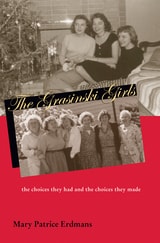
The Grasinski Girls were working-class Americans of Polish descent, born in the 1920s and 1930s, who created lives typical of women in their day. They went to high school, married, and had children. For the most part, they stayed home to raise their children. And they were happy doing that. They took care of their appearance and their husbands, who took care of them. Like most women of their generation, they did not join the women’s movement, and today they either reject or shy away from feminism.
Basing her account on interviews with her mother and aunts, Mary Erdmans explores the private lives of these white, Christian women in the post-World War II generation. She compares them, at times, to her own postfeminist generation. Situating these women within the religious routines that shaped their lives, Professor Erdmans explores how gender, class, ethnicity, and religion shaped the choices the Grasinski sisters were given as well as the choices they made. These women are both acted upon and actors; they are privileged and disadvantaged; they resist and surrender; they petition the Lord and accept His will.
The Grasinski Girls examines the complexity of ordinary lives, exposing privileges taken for granted as well as nuances of oppression often overlooked. Erdmans brings rigorous scholarship and familial insight to bear on the realities of twentieth-century working-class white women in America.
The Great Disappearing Act
Germans in New York City, 1880-1930Christina A. Ziegler-McPherson
Rutgers University Press, 2022
This study examines these questions in relation to the German immigrant community in New York City between 1880-1930, and seeks to understand how German-American New Yorkers assimilated into the larger American society in the early twentieth century.
By the turn of the twentieth century, New York City was one of the largest German-speaking cities in the world and was home to the largest German community in the United States. This community was socio-economically diverse and increasingly geographically dispersed, as upwardly mobile second and third generation German Americans began moving out of the Lower East Side, the location of America’s first Kleindeutschland (Little Germany), uptown to Yorkville and other neighborhoods. New York’s German American community was already in transition, geographically, socio-economically, and culturally, when the anti-German/One Hundred Percent Americanism of World War I erupted in 1917.
This book examines the structure of New York City’s German community in terms of its maturity, geographic dispersal from the Lower East Side to other neighborhoods, and its ultimate assimilation to the point of invisibility in the 1920s. It argues that when confronted with the anti-German feelings of World War I, German immigrants and German Americans hid their culture – especially their language and their institutions – behind closed doors and sought to make themselves invisible while still existing as a German community.
But becoming invisible did not mean being absorbed into an Anglo-American English-speaking culture and society. Instead, German Americans adopted visible behaviors of a new, more pluralistic American culture that they themselves had helped to create, although by no means dominated. Just as the meaning of “German” changed in this period, so did the meaning of “American” change as well, due to nearly 100 years of German immigration.
The Great Migration and the Democratic Party
Black Voters and the Realignment of American Politics in the 20th CenturyKeneshia N. Grant
Temple University Press, 2020
Where Black people live has long been an important determinant of their ability to participate in political processes. The Great Migration significantly changed the way Democratic Party elites interacted with Black communities in northern cities, Detroit, New York, and Chicago. Many white Democratic politicians came to believe the growing pool of Black voters could help them reach their electoral goals—and these politicians often changed their campaign strategies and positions to secure Black support. Furthermore, Black migrants were able to participate in politics because there were fewer barriers to Black political participations outside the South.
The Great Migration and the Democratic Party frames the Great Migration as an important economic and social event that also had serious political consequences. Keneshia Grant created one of the first listings of Black elected officials that classifies them based on their status as participants in the Great Migration. She also describes some of the policy/political concerns of the migrants. The Great Migration and the Democratic Party lays the groundwork for ways of thinking about the contemporary impact of Black migration on American politics.
The Great White Way
Race and the Broadway MusicalWarren Hoffman
Rutgers University Press, 2020
Now in a new second edition, The Great White Way is the first book to reveal the racial politics, content, and subtexts that have haunted musicals for almost one hundred years from Show Boat (1927) to Hamilton (2015). This revised edition includes a new introduction and conclusion, updated chapters, as well as a brand-new chapter that looks at the blockbuster musicals The Book of Mormon and Hamilton.
Musicals mirror their time periods and reflect the political and social issues of their day. Warren Hoffman investigates the thematic content of the Broadway musical and considers how musicals work on a structural level, allowing them to simultaneously present and hide their racial agendas in plain view of their audiences. While the musical is informed by the cultural contributions of African Americans and Jewish immigrants, Hoffman argues that ultimately the history of the American musical is the history of white identity in the United States.
Presented chronologically, The Great White Way shows how perceptions of race altered over time and how musicals dealt with those changes. Hoffman focuses first on shows leading up to and comprising the Golden Age of Broadway (1927–1960s), then turns his attention to the revivals and nostalgic vehicles that defined the final quarter of the twentieth century. He offers entirely new and surprising takes on shows from the American musical canon—Show Boat (1927), Oklahoma! (1943), Annie Get Your Gun (1946), The Music Man (1957), West Side Story (1957), A Chorus Line (1975), and 42nd Street (1980), among others. In addition to a new chapter on Hamilton and The Book of Mormon, this revised edition brings The Great White Way fully into the twenty-first century with an examination of jukebox musicals and the role of off-Broadway and regional theaters in the development of the American musical.
New archival research on the creators who produced and wrote these shows, including Leonard Bernstein, Jerome Robbins, Stephen Sondheim, and Edward Kleban, will have theater fans and scholars rethinking forever how they view this popular American entertainment.
The Grind
Black Women and Survival in the Inner CityMcCurn, Alexis S
Rutgers University Press, 2018
Alexis S. McCurn draws on nearly two years of naturalistic field research among adolescents and adults in Oakland, California to provide an ethnographic account of how black women accomplish the routine tasks necessary for basic survival in poor inner-city neighborhoods and how the intersections of race, gender, and class shape how black women interact with others in public. This book makes the case that the daily consequences of racialized poverty in the lives of African Americans cannot be fully understood without accounting for the personal and collective experiences of poor black women.
The Guise of Exceptionalism
Unmasking the National Narratives of Haiti and the United StatesRobert Fatton
Rutgers University Press, 2021
The Habsburg Garrison Complex in Trebinje
A Lost WorldCathie Carmichael
Central European University Press, 2024
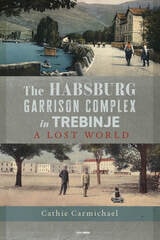
Following the imposition of Habsburg rule on Ottoman Bosnia in 1878, a new garrison was constructed in the old citadel of Trebinje. By using a micro-historical approach, this innovative book tells the story of the garrison in times of peace and war, describing the way in which the Austro-Hungarian administration rapidly transformed Trebinje into a tree-lined city dominated by the army.
Yet, the Habsburg "civilizing mission," marked by the building of hospitals, schools, roads, and railways was accompanied by ruthless violence against those who resisted the new foreign occupiers, especially after 1914. The tragic violence is described in the book alongside accounts of daily life. By personalizing historical events, the narrative reveals the perspective of people who found themselves in Trebinje and its garrison complex: the ordinary soldier, the condemned “insurgent,” the career officer, the cook, the shepherdess, the hotelier, or the journalist—all willing or unwilling participants in an extra-European style colonial project in the heart of Europe.

The Hairdresser of Harare
A NovelTendai Huchu
Ohio University Press, 2015
The Handbook of Research on Black Males
Quantitative, Qualitative, and MultidisciplinaryTheodore S. Ransaw
Michigan State University Press, 2018
The Harlan Renaissance
Stories of Black Life in Appalachian Coal TownsWilliam H. Turner
West Virginia University Press, 2021
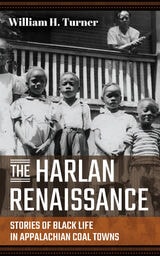
The Harlan Renaissance is an intimate remembrance of kinship and community in eastern Kentucky’s coal towns written by one of the luminaries of Appalachian studies, William Turner. Turner reconstructs Black life in the company towns in and around Harlan County during coal’s final postwar boom years, which built toward an enduring bust as the children of Black miners, like the author, left the region in search of better opportunities.
The Harlan Renaissance invites readers into what might be an unfamiliar Appalachia: one studded by large and vibrant Black communities, where families took the pulse of the nation through magazines like Jet and Ebony and through the news that traveled within Black churches, schools, and restaurants. Difficult choices for the future were made as parents considered the unpredictable nature of Appalachia’s economic realities alongside the unpredictable nature of a national movement toward civil rights.
Unfolding through layers of sociological insight and oral history, The Harlan Renaissance centers the sympathetic perspectives and critical eye of a master narrator of Black life.
The Haygoods of Columbus
A Love StoryWil Haygood
The Ohio State University Press, 2016

The Healing Stage
Black Women, Incarceration, and the Art of TransformationLisa Biggs
The Ohio State University Press, 2022
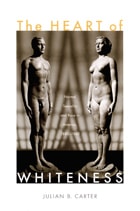
The Heart of Whiteness
Normal Sexuality and Race in America, 1880–1940Julian B. Carter
Duke University Press, 2007
Carter builds her intricate argument from detailed readings of an array of popular texts, focusing on how sex education for children and marital advice for adults provided significant venues for the dissemination of the new ideal of normality. She concludes that because its overt concerns were love, marriage, and babies, normality discourse facilitated white evasiveness about racial inequality. The ostensible focus of “normality” on matters of sexuality provided a superficially race-neutral conceptual structure that whites could and did use to evade engagement with the unequal relations of power that continue to shape American life today.

The Heart of a Woman
The Life and Music of Florence B. PriceRae Linda Brown. Edited and with a Foreword by Guthrie P. Ramsey Jr.
University of Illinois Press, 2020
Book Prize Winner of the International Alliance for Women in Music of the 2022 Pauline Alderman Awards for Outstanding Scholarship on Women in Music
The Heart of a Woman offers the first-ever biography of Florence B. Price, a composer whose career spanned both the Harlem and Chicago Renaissances, and the first African American woman to gain national recognition for her works.
Price's twenty-five years in Chicago formed the core of a working life that saw her create three hundred works in diverse genres, including symphonies and orchestral suites, art songs, vocal and choral music, and arrangements of spirituals. Through interviews and a wealth of material from public and private archives, Rae Linda Brown illuminates Price's major works while exploring the considerable depth of her achievement. Brown also traces the life of the extremely private individual from her childhood in Little Rock through her time at the New England Conservatory, her extensive teaching, and her struggles with racism, poverty, and professional jealousies. In addition, Brown provides musicians and scholars with dozens of musical examples.
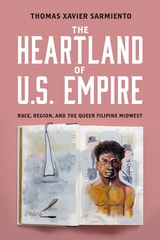
The Heartland of U.S. Empire
Race, Region, and the Queer Filipinx MidwestThomas Xavier Sarmiento
Temple University Press, 2026
Examining Filipinx cultural representations in the Midwest since the early twentieth century, Thomas Sarmiento shrewdly considers the impact of American exceptionalism and U.S. imperialism in a region where white, middle class, heterosexual, and Christian is the norm. The Heartland of U.S. Empire offers a cogent analysis of the 1904 St. Louis World’s Fair and its infamous Philippine Exhibit alongside minor museum displays and archives of Midwesterners in the Philippines. Sarmiento also considers the “exile literature” of Filipino/American writer Bienvenido Santos as well as the TV shows Glee and Superstore, which provide mainstream visibility of the queer Filipinx Midwest.
He employs a queer, decolonial Filipinx methodology that traces how narratives of America’s heartland position Filipinxs in the region as nonnormative due to their racial, gender, sexual, and national statuses. The Heartland of U.S. Empire locates queer Filipinxs in the geographic center of the nation and at the center of cultural narratives, thereby mapping alternative images of diasporic Filipinx identity and experience alongside U.S. regional and national identities, histories, and realities.
In the series Asian American History and Culture
The Hero and the Victim
Narratives of Criminality in Iraq War FictionGregory Brazeal
Lever Press, 2024
The emphasis on soldier criminality in Iraq War fiction can be partly explained by the rise of moral cosmopolitanism and its blurring of the traditional conceptual lines between war and crime. The anti-war literature of the twentieth century often presented fallen soldiers on both sides equally as victims and viewed the distinction between heroes and villains as part of the illusion that battlefield experience strips away. Written in the long shadow of Nuremberg, Iraq War fiction grapples with the possibility that the soldiers on one’s own side may not be the heroes in the story, or even the victims, but participants in a wrong, and perhaps even complicit in crimes. The Hero and the Victim contributes to the ongoing, public reexamination of American traditions by confronting a topic that has, up to now, been largely untouched: the moral celebration of military service.
The Hero and the Victim explores the theme of soldier criminality through close readings of several works by American authors, including Kevin Powers’s The Yellow Birds, Phil Klay’s Redeployment, Helen Benedict’s Sand Queen, Chris Kyle’s American Sniper, and Roy Scranton’s War Porn. This volume will be an essential text for students of American literature, historians of war culture, and any scholar interested in representations of the Iraq War.
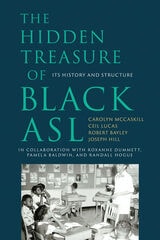
The Hidden Treasure of Black ASL
Its History and StructureCarolyn McCaskill
Gallaudet University Press, 2020
Black ASL has long been recognized as a distinct variety of American Sign Language based on abundant anecdotal evidence. The Hidden Treasure of Black ASL, originally published in 2011, presents the first sociohistorical and linguistic study of this language variety. Based on the findings of the Black ASL Project, which undertook this unprecedented research, Hidden Treasure documents the stories and language of the African American Deaf community. With links to online supplemental video content that includes interviews with Black ASL users (formerly on DVD), this volume is a groundbreaking scholarly contribution and a powerful affirmation for Black Deaf people.
This paperback edition includes an updated foreword by Glenn B. Anderson, a new preface that reflects on the impact of this research, and an expanded list of references and resources on Black ASL.
The supplemental video content is available online at the Gallaudet University Press YouTube Channel. Under Playlists, click “The Hidden Treasure of Black ASL: Companion Video to the Book.” The original Black ASL Project research videos are also available.
Featured in the film Signing Black in America: The Story of Black ASL, produced by The Language and Life Project at North Carolina State University (Dr. Walt Wolfram, Executive Producer). Look for it on PBS.
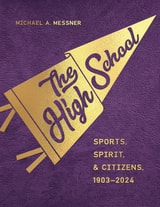
The High School
Sports, Spirit, and Citizens, 1903-2024Michael A. Messner
Rutgers University Press, 2025
In The High School, acclaimed sociologist Michael A. Messner reads through 120 years of El Gabilan, the yearbook from his own alma mater, Salinas High School in California, where his father taught and coached. Treating the yearbooks as a historical archive, Messner makes surprising discoveries about the school he thought he knew so well. For example, over fifty years before Title IX, the earliest yearbooks gave equal spotlights to boys’ and girls’ athletics, while the cheerleaders were all boys.
Tracing American life and culture from 1903 to 2024, Messner illuminates shifts in social practices at his high school that reflect broader changes in American culture across the twentieth century. The High School spotlights how the meanings and iconography of certain activities have changed radically over the decades, even as the “sports spirit complex”—involving athletes, cheerleaders, band members, and community boosters—has remained a central part of the high school experience. By exploring evolving sports cultures, socioeconomic conditions, racial demographics, and gender norms, Messner offers a fresh perspective on a defining feature of American teenage life.
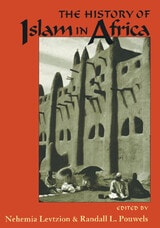
The History Of Islam In Africa
Nehemia Levtzion
Ohio University Press, 2000
A CHOICE Outstanding Academic Title
The history of the Islamic faith on the continent of Africa spans fourteen centuries. For the first time in a single volume, The History of Islam in Africa presents a detailed historic mapping of the cultural, political, geographic, and religious past of this significant presence on a continent-wide scale. Bringing together two dozen leading scholars, this comprehensive work treats the historical development of the religion in each major region and examines its effects.
Without assuming prior knowledge of the subject on the part of its readers, The History of Islam in Africa is broken down into discrete areas, each devoted to a particular place or theme and each written by experts in that particular arena. The introductory chapters examine the principal “gateways” from abroad through which Islam traditionally has influenced Africans. The following two parts present overviews of Islamic history in West Africa and the Sudanic zone, and in subequatorial Africa. In the final section, the authors discuss important themes that have had an impact on Muslim communities in Africa.
Designed as both a reference and a text, The History of Islam in Africa will be an essential tool for libraries, scholars, and students of this growing field.
Contributors: Edward A. Alpers, René A. Bravmann, Abdin Chande, Eric Charry, Allan Christelow, Roberta Ann Dunbar, Kenneth W. Harrow, Lansiné Kaba, Lidwien Kapteijns, Nehemia Levtzion, William F. S. Miles, David Owusu-Ansah, M. N. Pearson, Randall L. Pouwels, Stefan Reichmuth, David Robinson, Peter von Sivers, Robert C.-H. Shell, Jay Spaulding, David C. Sperling with Jose H. Kagabo, Jean-Louis Triaud, Knut S. Vikør, John O. Voll, and Ivor Wilks
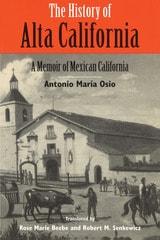
The History of Alta California
A Memoir of Mexican CaliforniaAntonio María Osio, Translated, Edited, and Annotated by Rose Marie Beebe and Robert M. Senkewicz
University of Wisconsin Press, 1996
Osio wrote his History in 1851, conveying with immediacy and detail the years of the U.S.-Mexican War of 1846–1848 and the social upheaval that followed. As he witnesses California’s territorial transition from Mexico to the United States, he recalls with pride the achievements of Mexican California in earlier decades and writes critically of the onset of U.S. influence and imperialism. Unable to endure life as foreigners in their home of twenty-seven years, Osio and his family left Alta California for Mexico in 1852.
Osio’s account predates by a quarter century the better-known reminiscences of Mariano Guadalupe Vallejo and Juan Bautista Alvarado and the memoirs of Californios dictated to Hubert Howe Bancroft’s staff in the 1870s. Editors Rose Marie Beebe and Robert M. Senkewicz have provided an accurate, complete translation of Osio’s original manuscript, and their helpful introduction and notes offer further details of Osio’s life and of society in Alta California.
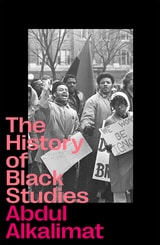
The History of Black Studies
Abdul Alkalimat
Pluto Press, 2021
A surge of African American enrolment and student activism brought Black Studies to many US campuses in the 1960s. Sixty years later, Black Studies programs are taught at more than 1,300 universities worldwide. This book is the first history of how that happened.
Black Studies founder and movement veteran Abdul Alkalimat offers a comprehensive history of the discipline that will become a key reference for generations to come. Structured in three broadly chronological sections - Black Studies as intellectual history; as social movement; and as academic profession - the book demonstrates how Black people themselves established the field long before its institutionalization in university programs.
At its heart, Black Studies is profoundly political. Black Power, the New Communist Movement, the Black women’s and students’ movements – each step in the journey for Black liberation influenced and was influenced by this revolutionary discipline.
The History of Mary Prince, A West Indian Slave, Related by Herself
Revised EditionMoira Ferguson, Editor
University of Michigan Press, 1997
First published in London and Edinburgh in 1831, and well into its third edition that year, The History of Mary Prince inflamed public opinion and created political havoc. Never before had the sufferings and indignities of enslavement been seen through the eyes of a woman--a woman struggling for freedom in the face of great odds.
Moira Ferguson's edition of the book added an introduction, annotations, and appendices. The book has found popularity both in the classroom and with the general public. Recently, an adaptation of the memoirs of Mary Prince appeared as one segment of "A Skirt Through History," a six-part feature film series produced by the BBC. Mary Prince's story has also been the centerpiece of BBC radio broadcasts.
In this revised and expanded edition of The History of Mary Prince, Ferguson has added new material, based on her extensive research in Bermuda and London. The book includes new details of Mary Prince's experiences as a freewoman in England, the transcripts of several libel cases brought against her, and the reactions of British society, as seen in prominent periodicals of the day, against the original publication of The History of Mary Prince. This new material brings greater depth and detail and serves to more fully illustrate and contextualize the life of this remarkable woman.
Moira Ferguson is James E. Ryan Professor of English and Women's Literature, University of Nebraska.

The History of Modern Japanese Education
Constructing the National School System, 1872-1890Duke, Benjamin
Rutgers University Press, 2014
The History of Temple University Japan
An Experiment in International EducationRichard Joslyn and Bruce Stronach
Temple University Press, 2023
The authors recount the development of the academic program, the recruitment of students, and the support from Temple that enabled curricular and pedagogical improvement.
They also address the university’s relationships with three Japanese partners, and the financial threats and crises TUJ faced over the decades.
The History of Temple University Japan is not only an important documentation of TUJ, but also a history of U.S.-Japanese relations. What emerges is the significant impact TUJ has had on the thousands of students, faculty, and staff who have been a part of this international academic institution.
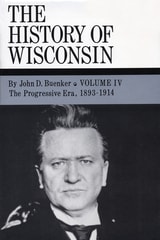
The History of Wisconsin, Volume IV
The Progressive Era, 1893-1914John D. Buenker
Wisconsin Historical Society Press, 1998
Published in Wisconsin's Sesquicentennial year, this fourth volume in The History of Wisconsin series covers the twenty tumultuous years between the World's Columbian Exposition and the First World War when Wisconsin essentially reinvented itself, becoming the nation's "laboratory of democracy."
The period known as the Progressive Era began to emerge in the mid-1890s. A sense of crisis and a widespread clamor for reform arose in reaction to rapid changes in population, technology, work, and society. Wisconsinites responded with action: their advocacy of women's suffrage, labor rights and protections, educational reform, increased social services, and more responsive government led to a veritable flood of reform legislation that established Wisconsin as the most progressive state in the union.
As governor and U.S. Senator from Wisconsin, Robert M. La Follette, Sr., was the most celebrated of the Progressives, but he was surrounded by a host of pragmatic idealists from politics, government, and the state university. Although the Progressives frequently disagreed over priorities and tactics, their values and core beliefs coalesced around broad-based participatory democracy, the application of scientific expertise to governance, and an active concern for the welfare of all members of society-what came to be known as "the Wisconsin Idea."

The Human in Bits
Graphical Computers, Black AbstractionsKris Cohen
Duke University Press, 2025
The Hypersexuality of Race
Performing Asian/American Women on Screen and SceneCeline Parreñas Shimizu
Duke University Press, 2007
Shimizu combines theoretical and textual analysis and interviews with artists involved in various productions. She complicates understandings of the controversial portrayals of Asian female sexuality in the popular Broadway musical Miss Saigon by drawing on ethnographic research and interviews with some of the actresses in it. She looks at how three Hollywood Asian/American femme fatales—Anna May Wong, Nancy Kwan, and Lucy Liu—negotiate representations of their sexuality; analyzes 1920s and 1930s stag films in which white women perform as sexualized Asian characters; and considers Asian/American women’s performances in films ranging from the stag pornography of the 1940s to the Internet and video porn of the 1990s. She also reflects on two documentaries depicting Southeast Asian prostitutes and sex tourism, The Good Woman of Bangkok and 101 Asian Debutantes. In her examination of films and videos made by Asian/American feminists, Shimizu describes how female characters in their works reject normative definitions of race, gender, and sexuality, thereby expanding our definitions of racialized sexualities in representation.
The IQ Mythology
Class, Race, Gender, and InequalityElaine Mensh and Harry Mensh
Southern Illinois University Press, 1991
Ever since Alfred Binet carried out a 1904 commission from France’s minister of public instruction to devise a means for deciding which pupils should be sent to what would now be called special education classes, IQ scores have been used to label and track children. Those same scores have been cited as "proof" that different races, classes, and genders are of superior and inferior intelligence.
The Menshes make clear that from the beginning IQ tests have been fundamentally biased. Offered as a means for seeking solutions to social problems, the actual measurements have been used to maintain the status quo. Often the most telling comments are from the test-makers themselves, whether Binet ("little girls weak in orthography are strong in sewing and capable in the instruction concerning housekeeping; and, all things considered, this is more important for their future") or Wigdor and Garner ("naive use of intelligence tests . . . to place children of linguistic or racial minority status in special education programs will not be defensible in court").
Among the disturbing facts that the authors share is that there is mounting political pressure for more tests and testing despite a court trial in which the judge stated that "defendants’ expert witnesses, even those clearly affiliated with the companies that devise and distribute the standardized intelligence tests, agreed, with one exception, that we cannot truly define, much less measure, intelligence." The testing firms have responded to this carefully orchestrated need with new products that extend even to the IQ testing of three-month-old infants. The authors stress that, if the testers prevail, there is little doubt that these and similar tests would be used "ad infinitum to justify superior and inferior education along class and racial lines."
The Idea of Race in Latin America, 1870-1940
Edited and with an introduction by Richard Graham
University of Texas Press, 1990
From the mid-nineteenth century until the 1930s, many Latin American leaders faced a difficult dilemma regarding the idea of race. On the one hand, they aspired to an ever-closer connection to Europe and North America, where, during much of this period, "scientific" thought condemned nonwhite races to an inferior category. Yet, with the heterogeneous racial makeup of their societies clearly before them and a growing sense of national identity impelling consideration of national futures, Latin American leaders hesitated. What to do? Whom to believe?
Latin American political and intellectual leaders' sometimes anguished responses to these dilemmas form the subject of The Idea of Race in Latin America. Thomas Skidmore, Aline Helg, and Alan Knight have each contributed chapters that succinctly explore various aspects of the story in Brazil, Argentina, Cuba, and Mexico. While keenly alert to the social and economic differences that distinguish one Latin American society from another, each author has also addressed common issues that Richard Graham ably draws together in a brief introduction. Written in a style that will make it accessible to the undergraduate, this book will appeal as well to the sophisticated scholar.
The Illusion of Inclusion
The Untold Political Story of San AntonioBy Rodolfo Rosales
University of Texas Press, 2000
To many observers, the 1981 election of Henry Cisneros as mayor of San Antonio, Texas, represented the culminating victory in the Chicano community's decades-long struggle for inclusion in the city's political life. Yet, nearly twenty years later, inclusion is still largely an illusion for many working-class and poor Chicanas and Chicanos, since business interests continue to set the city's political and economic priorities.
In this book, Rodolfo Rosales offers the first in-depth history of the Chicano community's struggle for inclusion in the political life of San Antonio during the years 1951 to 1991, drawn from interviews with key participants as well as archival research. He focuses on the political and organizational activities of the Chicano middle class in the context of post-World War II municipal reform and how it led ultimately to independent political representation for the Chicano community. Of special interest is his extended discussion of the role of Chicana middle-class women as they gained greater political visibility in the 1980s.
The Imperial Style of Inquiry in Twentieth-Century China
The Emergence of New ApproachesDonald J. Munro
University of Michigan Press, 1996
The Impure Imagination
Toward A Critical Hybridity In Latin American WritingJoshua Lund
University of Minnesota Press, 2006
In this pathbreaking work, Joshua Lund offers a thoughtful critique of hybridity by reading contemporary theories of cultural mixing against their historical precursors. The Impure Imagination is the first book to systematically analyze today’s dominant theories in relation to earlier, narrative manifestations of hybridity in Latin American writing, with a particular focus on Mexico and Brazil.
Generally understood as the impurification of standard or canonized forms, hybridity has historically been embraced as a basic marker of Latin American regional identity and as a strategy of resistance to cultural imperialism. Lund contends that Latin American theories and narratives of hybridity have been, and continue to be, underwritten by a structure of colonial power. Here he provides an informed critique and cogent investigation of this connection, its cultural effects, and its political implications. Using the emergence of hybridity as an analytical frame for thinking about culture in the Americas, Lund examines the contributions of influential thinkers, including Néstor García Canclini, Homi Bhabha, Jacques Derrida, Giorgio Agamben, Jorge Luis Borges, Antonio Candido, and many others.
Distinguished by its philosophical grounding and underpinned with case studies, The Impure Imagination employs postcolonial theory and theories of race as it explores Latin American history and culture. The result is an original and interrogative study of hybridity that exposes surprising—and unsettling—similarities with nationalistic discourses.
Joshua Lund is assistant professor of Spanish at the University of Pittsburgh. His essays have appeared in A Contracorriente, Race & Class, Cultural Critique, and the Journal of Latin American Cultural Studies.

The Indigenous Anti-Colonial
A Palestinian Resistance Tradition and a World Beyond Settler ColonialismLinda Tabar
Duke University Press, 2026
The Inheritance
Elizabeth A. Povinelli
Duke University Press, 2021

The Inner Life of Mestizo Nationalism
Estelle Tarica
University of Minnesota Press, 2008
The only recent English-language work on Spanish-American indigenismo from a literary perspective, Estelle Tarica’s work shows how modern Mexican and Andean discourses about the relationship between Indians and non-Indians create a unique literary aesthetic that is instrumental in defining the experience of mestizo nationalism.
Engaging with narratives by Jesús Lara, José María Arguedas, and Rosario Castellanos, among other thinkers, Tarica explores the rhetorical and ideological aspects of interethnic affinity and connection. In her examination, she demonstrates that these connections posed a challenge to existing racial hierarchies in Spanish America by celebrating a new kind of national self at the same time that they contributed to new forms of subjection and discrimination.
Going beyond debates about the relative merits of indigenismo and mestizaje, Tarica puts forward a new perspective on indigenista literature and modern mestizo identities by revealing how these ideologies are symptomatic of the dilemmas of national subject formation. The Inner Life of Mestizo Nationalism offers insight into the contemporary resurgence and importance of indigenista discourses in Latin America.
Estelle Tarica is associate professor of Latin American literature and culture at the University of California, Berkeley.