Results by title
2728 books match the query 'Education' and 609 start with t
The Idea and Practice of General Education
An Account of the College of the University of ChicagoThe College of the University of Chicago
University of Chicago Press, 1992
The Idea of a Catholic University
George Dennis O'Brien
University of Chicago Press, 2002
Truth is a central concept for both university and church, and O'Brien's book is built on the idea that there are different areas of truth—scientific, artistic, and religious—each with its own proper warrant and "method." In this light, he argues that one can reverse Shaw's comparison and uncover academic dogma and Christian freedom, university "infallibility" and dogmatic "fallibility."
Drawing on theology and the history of philosophy, O'Brien shows how religious truth relates to the work of a Catholic university. He then turns to the current controversies over Pope John Paul II's recent statement, Ex Corde Ecclesiae, which seeks to make Catholic universities conform to the church's official teaching office. O'Brien rejects the conventional "institutional-juridical" model used by the Vatican as improper both to faith and academic freedom. He argues for a "sacramental" model, one that respects the different kinds of "truth"—thus preserving the integrity of both church and university while making their combination in a Catholic university not only possible but desirable. O'Brien concludes with a practical consideration of how the ideal Catholic university might be expressed in the actual life of the contemporary curriculum and extracurriculum.
For anyone concerned about the place of religion in higher education, The Idea of a Catholic University will be essential reading.
The Idea of a Writing Laboratory
Neal Lerner
Southern Illinois University Press, 2009
The Idea of a Writing Laboratory is a book about possibilities, about teaching and learning to write in ways that can transform both teachers and students.
Author Neal Lerner explores higher education’s rich history of writing instruction in classrooms, writing centers and science laboratories. By tracing the roots of writing and science educators’ recognition that the method of the lab––hands-on student activity—is essential to learning, Lerner offers the hope that the idea of a writing laboratory will be fully realized more than a century after both fields began the experiment.
Beginning in the late nineteenth century, writing instructors and science teachers recognized that mass instruction was inadequate for a burgeoning, “non-traditional” student population, and that experimental or laboratory methods could prove to be more effective. Lerner traces the history of writing instruction via laboratory methods and examines its successes and failures through case studies of individual programs and larger reform initatives. Contrasting the University of Minnesota General College Writing Laboratory with the Dartmouth College Writing Clinic, for example, Lerner offers a cautionary tale of the fine line between experimenting with teaching students to write and “curing” the students of the disease of bad writing.
The history of writing within science education also wends its way through Lerner’s engaging work, presenting the pedagogical origins of laboratory methods to offer educators in science in addition to those in writing studies possibilities for long-sought after reform. The Idea of a Writing Laboratory compels readers and writers to “don those white coats and safety glasses and discover what works” and asserts that “teaching writing as an experiment in what is possible, as a way of offering meaning-making opportunities for students no matter the subject matter, is an endeavor worth the struggle.”
The Impact of College Diversity
Struggles and Successes at Age 30Elizabeth Aries
Temple University Press, 2023
The Impact of College Diversity details how exposure to diversity in college helped shape Black and white graduates process issues of economic and racial privilege and inequality at age 30. She investigates how college diversity experiences also facilitate the attainment of upward social mobility in lower-income students and the role that mobility played in their relationships with family and friends in their home communities. Aries further examines how interactions with peers of another race and class influenced development of citizenship skills and civic engagement, as well as Black students’ ability to cope with the challenges they faced in the professional world.
Aries concludes her study with a discussion of why elite colleges have been beneficial in promoting upward mobility in lower-income students, and the importance of achieving equity and inclusion in making diversity initiatives successful.

The Impact of the War on the Schools of Red Wing
Nelson Bossing
University of Minnesota Press, 1945
The Importance of Being Urban
Designing the Progressive School District, 1890-1940David A. Gamson
University of Chicago Press, 2019
The Importance of Being Urban
Designing the Progressive School District, 1890-1940David A. Gamson
University of Chicago Press, 2019
From the 1890s through World War II, the greatest hopes of American progressive reformers lay not in the government, the markets, or other seats of power but in urban school districts and classrooms. The Importance of Being Urban focuses on four western school systems—in Denver, Oakland, Portland, and Seattle—and their efforts to reconfigure public education in the face of rapid industrialization and the perceived perils of the modern city. In an era of accelerated immigration, shifting economic foundations, and widespread municipal shake-ups, reformers argued that the urban school district could provide the broad blend of social, cultural, and educational services needed to prepare students for twentieth-century life. These school districts were a crucial force not only in orchestrating educational change, but in delivering on the promise of democracy. David A. Gamson’s book provides eye-opening views of the histories of American education, urban politics, and the Progressive Era.
The Impracticality of Practical Research
A History of Contemporary Sciences of Change That ConserveThomas S. Popkewitz
University of Michigan Press, 2020
There is an alluring desire that research should lead us to find the practical knowledge that enables people to live a good life in a just and equitable society. This desire haunted the 19th century emergence of the social sciences as a discipline, then became more pronounced in the postwar mobilizations of research. Today that desire lives on in the international assessments of national schools and in the structure of professional education, both of which influence government modernization of schools and also provide for people’s well-being. American policy thus reflects research in which reforms are verified by “scientific, empirical evidences” about “what works” in experiments, and “will work” therefore in society.
The book explores the idea that practical and useful knowledge changes over time, and shows how this knowledge has been (re)visioned in contemporary research on educational reform, instructional improvement, and professionalization. The study of science draws on a range of social and cultural theories and historical studies to understand the politics of science, as well as scientific knowledge that is concerned with social and educational change. Research hopes to change social conditions to create a better life, and to shape people whose conduct embodies these valued characteristics—the good citizen, parent, or worker. Yet this hope continually articulates the dangers that threaten this future. Thomas Popkewitz explores how the research to correct social wrongs is paradoxically entangled with the inscription of differences that ultimately hamper the efforts to include.
The Improviser's Classroom
Pedagogies for Cocreative WorldmakingEdited by Daniel Fischlin and Mark Lomanno
Temple University Press, 2024
Demonstrating how improvisation can inform scenes of teaching and learning, this volume also outlines how improvisatory techniques offer powerful, if not vital, tools for producing connection, creativity, accompaniment, reciprocity, meaningful revelation, and lifelong curiosity.
The Improviser's Classroom champions activist pedagogies and the public work essential for creating communities bound together by reciprocal care and equity.
Contributors: Sibongile Bhebhe, Judit Csobod, Michael Dessen, jashen edwards, Kate Galloway, Tomie Hahn, Petro Janse van Vuuren, Lauren Michelle Levesque, George Lipsitz, Rich Marsella, Tracy McMullen, Hafez Modirzadeh, Ed Sarath, Joe Sorbara, Jesse Stewart, Ellen Waterman, Carey West, and the editors
The Inclusion Illusion
How Children with Special Educational Needs Experience Mainstream SchoolsRob Webster
University College London, 2022
Inclusion conjures images of children with special educational needs and disabilities (SEND) learning in classes alongside peers in a mainstream school. For pupils in the UK with high-level SEND, who have an Education, Health and Care Plan (formerly a Statement), this implies an everyday educational experience similar to that of their typically developing classmates. Yet in vital respects, they are worlds apart.
Based on the UK’s largest observation study of pupils with high-level SEND, this book exposes how attendance at a mainstream school is no guarantee of receiving a mainstream education. Observations of nearly 1,500 lessons in English schools show that these students’ everyday experience of school is characterized by separation and segregation. Furthermore, interviews with nearly five hundred pupils, parents, and school staff reveal the effect of this marginalization on the quality of their education. The book argues that inclusion is an illusion. The way schools are organized and how classrooms are composed creates a form of structural exclusion that preserves mainstream education for typically developing pupils and justifies offering a diluted pedagogy for pupils with high-level SEND. Ultimately, the book suggests why a more authentic form of inclusion is needed, and how it might be achieved.
The Inclusive Work of Global Rhetorics
Moushumi Biswas
Utah State University Press, 2026
Envisioning the next step in the ongoing scholarly movement advocating inclusion of global rhetorics in the composition curriculum, The Inclusive Work of Global Rhetorics demonstrates that the question of why or whether to incorporate tenets of global/non-Western rhetorics into writing is long past. The focus has shifted to how to make this change—and to the best practices of such inclusion.
This book showcases the latest scholarship on rethinking the borders of traditional rhetorical studies, which are typically drawn within Greco-Roman and Euro-American confines, with the objective of incorporating non-Eurocentric rhetorical tenets into rhetoric and composition. This work fosters a spirit of inclusivity in the writing classroom by incorporating the many ways of rhetorical thinking gleaned from global/non-Western communication practices while also reflecting on their situatedness and intersectionalities.
Sitting at the crossroads of theory, methodology, and pedagogy, The Inclusive Work of Global Rhetoric puts in perspective a landmark moment in rhetorical studies, a time when it has become imperative to acknowledge the proliferation of non-Western rhetorical traditions in rhetorical practices and communication. Providing heuristics for creating inclusive composition/rhetoric pedagogy, this book serves students, teachers, scholars, and researchers of rhetoric, writing, and communication as both a classroom guide and a reference at the undergraduate and graduate level
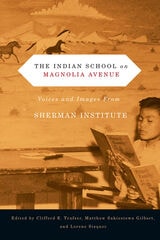
The Indian School on Magnolia Avenue
Voices and Images from Sherman InstituteEdited by Clifford E. Trafzer, Matthew Sakiestewa, and Lorene Sisquoc
Oregon State University Press, 2012
In 1902, the federal government opened Sherman Institute in Riverside, California, to transform American Indian students into productive farmers, carpenters, homemakers, nurses, cooks, and seamstresses. Indian students helped build the school and worked daily at Sherman; teachers provided vocational education and placed them in employment through the Outing Program.
Contributors to The Indian School on Magnolia Avenue have drawn on documents held at the Sherman Indian Museum to explore topics such as the building of Sherman, the school’s Mission architecture, the nursing program, the Special Five-Year Navajo Program, the Sherman cemetery, and a photo essay depicting life at the school.
Despite the fact that Indian boarding schools—with their agenda of cultural genocide— prevented students from speaking their languages, singing their songs, and practicing their religions, most students learned to read, write, and speak English, and most survived to benefit themselves and contribute to the well-being of Indian people.
Scholars and general readers in the fields of Native American studies, history, education, public policy, and historical photography will find
The Indian School on Magnolia Avenue an indispensable volume.
The Individual Education Planning Committee
A Step in the History of Special EducationWilliam M. Cruickshank, Ph.D., William C. Morse, Ph.D., and James O. Grant, Ph.D.
University of Michigan Press, 1990

The Individual, Society, and Education
A HISTORY OF AMERICAN EDUCATIONAL IDEASClarence J. Karier
University of Illinois Press, 1986
and Education, which focuses on the concepts of human nature and community
throughout American educational history. For the new edition, Karier has
added chapters on the major movements in American education from World
War II to the present and on the major Supreme Court cases involving educational
policy during the same period.
"This classic volume remains a remarkable study in the history of
ideas into which the implications for American schooling have been deftly
woven. It is balanced, thorough, and intelligently challenging."
--- Ann M. Keppel, College of Education, University of Hawaii at
Manoa
"This new edition should have great use as a primary text at the
graduate and advanced undergraduate levels."
--- Peter A. Sola, School of Education, Howard University
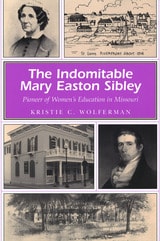
The Indomitable Mary Easton Sibley
Pioneer of Women's Education in MissouriKristie C. Wolferman
University of Missouri Press, 2008
The Instruction Myth
Why Higher Education is Hard to Change, and How to Change ItJohn Tagg
Rutgers University Press, 2019
The Instruction Myth argues that yes, higher education can be reformed and reinvigorated, but it will not be an easy process. In fact, it will require universities to abandon their central operating principle, the belief that education revolves around instruction, easily measurable in course syllabi, credits, and enrollments. Acclaimed education scholar John Tagg presents a powerful case that instruction alone is worthless and that universities should instead be centered upon student learning, which is far harder to quantify and standardize. Yet, as he shows, decades of research have indicated how to best promote student learning, but few universities have systematically implemented these suggestions.
This book demonstrates why higher education must undergo radical change if it hopes to survive. More importantly, it offers specific policy suggestions for how universities can break their harmful dependence on the instruction myth. In this extensively researched book, Tagg offers a compelling diagnosis of what’s ailing American higher education and a prescription for how it might still heal itself.

The Intellect Handbook of Dance Education Research
Edited by Lynnette Young Overby, Billie Lepczyk, and Jill Green
Intellect Books, 2025
The Intellect Handbook of Dance Education Research is a necessary resource for students, educators, and advocates, offering a broad survey of research methodologies alongside real-world applications from across the globe. This volume brings together voices from both seasoned and emerging scholars, highlighting the diversity of dance research in countries including Korea, South Africa, Jamaica, India, Brazil, Slovenia, and beyond.
Divided into four parts, the book first examines foundational research methodologies, spanning mixed-method approaches as well as innovative techniques like portraiture and a/r/tography. The second section presents dance education research in practice, exploring history, choreography, and community-based initiatives. The third part showcases international perspectives, offering snapshots of research traditions from contrasting cultural contexts. Finally, the fourth section elaborates on the role of dance in social justice, illustrating how movement-based research can drive cultural and societal change.
A vital tool for researchers, policymakers, and educators alike, this handbook underscores the significance of dance as a transformative force in education, fostering collaboration and meaningful impact in diverse communities.
The Intellectual Properties of Learning
A Prehistory from Saint Jerome to John LockeJohn Willinsky
University of Chicago Press, 2017
Willinsky begins with Saint Jerome in the fifth century, then traces the evolution of reading, writing, and editing practices in monasteries, schools, universities, and among independent scholars through the medieval period and into the Renaissance. He delves into the influx of Islamic learning and the rediscovery of classical texts, the dissolution of the monasteries, and the founding of the Bodleian Library before finally arriving at John Locke, whose influential lobbying helped bring about the first copyright law, the Statute of Anne of 1710. Willinsky’s bravura tour through this history shows that learning gave rise to our idea of intellectual property while remaining distinct from, if not wholly uncompromised by, the commercial economy that this concept inspired, making it clear that today’s push for marketable intellectual property threatens the very nature of the quest for learning on which it rests.
The Intimate University
Korean American Students and the Problems of SegregationNancy Abelmann
Duke University Press, 2009
Drawing on ten years of ethnographic research with Korean American students at the University of Illinois and closely following multiple generations of a single extended Korean American family in the Chicago metropolitan area, Abelmann investigates the complexity of racial politics at the American university today. Racially hyper-visible and invisible, Korean American students face particular challenges as they try to realize their college dreams against the subtle, day-to-day workings of race. They frequently encounter the accusation of racial self-segregation—a charge accentuated by the fact that many attend the same Evangelical Protestant church—even as they express the desire to distinguish themselves from their families and other Korean Americans. Abelmann concludes by examining the current state of the university, reflecting on how better to achieve the university’s liberal ideals despite its paradoxical celebration of diversity and relative silence on race.
The Journey Before Us
First-Generation Pathways from Middle School to CollegeLaura Nichols
Rutgers University Press, 2020
The Know-Nothing Campaign Against Higher Learning
James Chandler
Prickly Paradigm Press, 2026
Irony and satire in the contemporary American moment.
The second Trump administration has committed itself to upending the knowledge systems and deliberative institutions that have been essential to modern democracy, with the American university—site of scientific research and liberal education—a primary target. In The Know-Nothing Campaign Against Higher Learning, literary and film critic James Chandler spotlights an American tradition of such hostility to intellectual life, especially the nativist movement of the 1850s that persecuted Catholic immigrants from Ireland and Germany. Ironically, Steve Bannon, the self-proclaimed “Know-Nothing vulgarian” who long ago recruited candidate Trump to his anti-intellectual crusade, is himself the great-grandson of an Irish immigrant who would have faced Know-Nothing backlash in that era.
Such dark ironies define our moment, Chandler argues, and they call out not only for intellectual critique but also for satire. Yet in the midst of the MAGA campaign’s calamitous effects on American public discourse, even satire must confront the “kayfabe” practices imported by Trump from professional wrestling, which mix illusion and reality to turn political life into a “spectacle without thought.” Drawing widely on cultural critics from Jonathan Swift and Alexis de Tocqueville to Roland Barthes, Chandler’s pamphlet offers an elegant and bracing account of the MAGA campaign against higher learning and its transformative effects on criticism and democracy itself.
The Knowledge Most Worth Having
Edited by Wayne C. Booth
University of Chicago Press, 1967
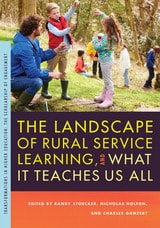
The Landscape of Rural Service Learning, and What It Teaches Us All
Randy Stoecker
Michigan State University Press, 2016
The Later Works of John Dewey, Volume 11, 1925 - 1953
Essays, Reviews, Trotsky Inquiry, Miscellany, and Liberalism and Social ActionJohn Dewey. Edited by Jo Ann Boydston
Southern Illinois University Press, 2008
This volume includes ninety-two items from 1935, 1936, and 1937, including Dewey’s 1935 Page-Barbour Lectures at the University of Virginia, published as Liberalism and Social Action.
In essay after essay Dewey analyzed, criticized, and reevaluated liberalism. When his controversial Liberalism and Social Action appeared, asking whether it was still possible to be a liberal, Horace M. Kallen wrote that Dewey “restates in the language and under the conditions of his times what Jefferson’s Declaration of Independence affirmed in the language and under the conditions of his.”
The diverse nature of the writings belies their underlying unity: some are technical philosophy; other philosophical articles shade into social and political themes; social and political issues permeate the educational articles, which in turn involve Dewey’s philosophical ideas.
The Later Works of John Dewey, Volume 13, 1925 - 1953
1938-1939, Experience and Education, Freedom and Culture, Theory of Valuation, and EssaysJohn Dewey. Edited by Jo Ann Boydston
Southern Illinois University Press, 2008
This volume includes all Dewey’s writings for 1938 except for Logic: The Theory of Inquiry (Volume 12 of The Later Works), as well as his 1939 Freedom and Culture, Theory of Valuation, and two items from Intelligence in the Modern World.
Freedom and Culture presents, as Steven M. Cahn points out, “the essence of his philosophical position: a commitment to a free society, critical intelligence, and the education required for their advance.”
The Later Works of John Dewey, Volume 3, 1925 - 1953
1927-1928, Essays, Reviews, Miscellany, and "Impressions of Soviet Russia"John Dewey. Edited by Jo Ann Boydston
Southern Illinois University Press, 2008
All of Dewey’s writings for 1927 and 1928 with the exception of The Public and Its Problems, which appears in Volume 2, A Modern Language Association’s Committee on Scholarly Editions textual edition.
These essays are, as Sidorsky says in his Introduction, “framed, in great measure, by those two poles of his philosophical interest: looking backward, in a sense, to the defense of naturalistic metaphysics and moving forward to the justification and to the implications for practice of an empirical theory.”
Dewey’s five essays on education are evidence of his continued interest in that field. Among them is the frequently quoted “Why I Am a Member of the Teachers Union,” which is still used by the American Federation of Teachers in its recruiting efforts. Other highlights of this volume include the famous exchange between George Santayana and Dewey on Experience and Nature; an impassioned condemnation of the miscarriage of justice Dewey saw in the Sacco-Vanzetti trial; and a series of six articles on the Soviet Union based on Dewey’s trip to that country in 1928.
The Later Works of John Dewey, Volume 5, 1925 - 1953
1929-1930, Essays, The Sources of a Science of Education, Individualism, Old and New, and Construction and CriticismJohn Dewey. Edited by Jo Ann Boydston
Southern Illinois University Press, 2008
With the exception of The Quest for Certainty (Volume 4) this fifth volume brings together Dewey’s writings for the 1929–1930 period.
During this time Dewey published 4 books and 50 articles on philosophical, educational, political, and social issues. His philosophical essays include “What Humanism Means to Me” and “What I Believe,” both of which express Dewey’s faith in man’s potentialities and intelligence, and a lively Journal of Philosophy exchange with Ernest Nagel, William Ernest Hocking, C. I. Lewis, and F. J. E. Woodbridge. Educational writings include The Sources of a Science of Education. The contents of this volume reflect Dewey’s increasing involvement in social and political problems.
The Later Works of John Dewey, Volume 6, 1925 - 1953
1931-1932, Essays, Reviews, and MiscellanyJohn Dewey. Edited by Jo Ann Boydston
Southern Illinois University Press, 2008
Except for Dewey’s and James H. Tufts’ 1932 Ethics (Volume 7 of The Later Works), this volume brings together Dewey’s writings for 1931–1932.
The Great Depression presented John Dewey and the American people with a series of economic, political, and social crises in 1931 and 1932 that are reflected in most of the 86 items in this volume, even in philosophical essays such as “Human Nature.” As Sidney Ratner points out in his Introduction, Dewey’s interest in international peace is featured in the writings in this volume.
The Later Works of John Dewey, Volume 8, 1925 - 1953
1933, Essays and How We Think, Revised EditionJohn Dewey. Edited by Jo Ann Boydston
Southern Illinois University Press, 2008
The Latinx Guide to Graduate School
Genevieve Negrón-Gonzales and Magdalena L. Barrera
Duke University Press, 2023
The Launching of Duke University, 1924–1949
Robert F. Durden
Duke University Press, 1993
Made possible by a gift from James B. Duke, the wealthiest member of the family that had underwritten Trinity College since 1890, Duke University was organized with Few as president. Few's goal was to turn Duke into a world-class institution of higher education and these early years saw the development of much of what we know as Duke University today. Drawing on extensive archival material culled over a ten-year period, Durden discusses the building of the Medical Center, the rebuilding of the School of Law, the acquisition of the Duke Forest and development of the School of Forestry, the nurturing of the Divinity School, and the enrichment of the Graduate School of Arts and Sciences.
It was also during this period, as Durden details, that such treasures as the Sarah P. Duke Gardens were created, as well as some near treasures, as seen by the failed attempt to start an art museum. Although the story of the birth of this University belongs largely to William Preston Few, other people figure prominently and are discussed at length. Alice Baldwin, who led in the establishment of the Woman's College, emerges as a fascinating figure, as do William H. Wannamaker, James B. Duke, William Hanes Ackland, Robert L. Flowers, Justin Miller, and Wilburt Cornell Davision, among others.
Although impressive growth occurred in Duke's formative years, tensions also arose. The need to strike an institutional balance between the twin demands of teaching and research, of regional versus national status, combined with continual shortages of funds, created occasional obstacles. The problem of two sets of trustees, one for the university and another for the Duke Endowment, loomed largest of all. As Few himself said, during these early years Duke successfully embarked on a long journey, for it was not until after World War II that Duke University consolidated the growth begun in the inter-war years.
An important contribution to the history of Southern higher education as well as to Duke University, this book will be of great interest to historians, alumni, and friends of Duke University alike.
The Lecherous Professor
Sexual Harassment on CampusBillie Wright Dziech and Linda Weiner
University of Illinois Press, 1990
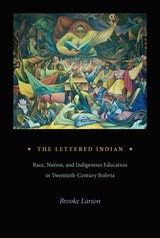
The Lettered Indian
Race, Nation, and Indigenous Education in Twentieth-Century BoliviaBrooke Larson
Duke University Press, 2024
The Liberal Arts Advantage
Measuring the Deeper Value of a College EducationEdited by Richard Arum, Paul Courant, and Allyson Flaster
University of Chicago Press, 2026
Showcases new measurement strategies for assessing the impact of a liberal arts education on students and society.
More than ever before, our society is questioning the meaning and value of higher education, and liberal arts education, in particular, has come under substantial scrutiny. Economic detractors characterize liberal arts education as impractical, claiming that college should prepare students for the workforce. Others object to the curriculum, portraying it as broken or misdirected. According to these critics, the liberal arts education being offered in the United States is marked by its rejection of core intellectual and ideological commitments.
In The Liberal Arts Advantage, a wide range of scholars argue for how and why a liberal arts education uniquely develops skill sets and expertise needed for individuals and society to thrive in the twenty-first century. The contributors address foundational questions about what liberal arts education is, how it has been conceptualized in the past, and what we can learn from its societal and professional impacts. They present compelling, unique research and new methodological tools for assessing the outcomes of liberal arts graduates. Offering grounded and well-founded arguments in favor of our education system, The Liberal Arts Advantage persuasively explains why educational leaders should reinvest in liberal arts education.
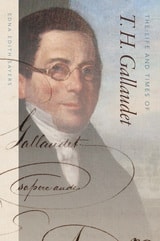
The Life and Times of T. H. Gallaudet
Edna Edith Sayers
University Press of New England, 2017
The Life and Work of Francis Willey Kelsey
Archaeology, Antiquity, and the ArtsJohn Griffiths Pedley
University of Michigan Press, 2011
President of the Archaeological Institute of America, professor at the University of Michigan from 1889 to 1927, and president of the American Philological Association, Francis Kelsey was crucially involved in the founding or growth of major educational institutions. He came to maturity in a period of great technological change in communications, transportation, and manufacturing. Kelsey took full advantage of such innovations in his ceaseless drive to promote education for all, to further the expansion of knowledge, and to champion the benefits of the study of antiquity.
A vigorous traveler around the United States, Europe, and the Mediterranean, Kelsey strongly believed in the value of personally viewing sites ancient and modern and collecting artifacts that could be used by the new museums and universities that were springing up in the United States. This collecting habit put him in touch with major financiers of the day, including Charles Freer, Andrew Carnegie, and J. P. Morgan, as he sought their help for important projects.
Drawing heavily on Kelsey's daily diaries now held at the University of Michigan's Bentley Historical Library, John Griffiths Pedley gives us a biography that records the wide-ranging activities of a gifted and energetic scholar whose achievements mirrored the creative and contributive innovations of his contemporary Americans.
The Long Shadow
Family Background, Disadvantaged Urban Youth, and the Transition to AdulthoodKarl Alexander
Russell Sage Foundation, 2014
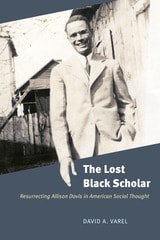
The Lost Black Scholar
Resurrecting Allison Davis in American Social ThoughtDavid A. Varel
University of Chicago Press, 2018
In The Lost Black Scholar, David A. Varel tells Davis’s compelling story, showing how a combination of institutional racism, disciplinary eclecticism, and iconoclastic thinking effectively sidelined him as an intellectual. A close look at Davis’s career sheds light not only on the racial politics of the academy but also the costs of being an innovator outside of the mainstream. Equally important, Varel argues that Davis exemplifies how black scholars led the way in advancing American social thought. Even though he was rarely acknowledged for it, Davis refuted scientific racism and laid bare the environmental roots of human difference more deftly than most of his white peers, by pushing social science in bold new directions. Varel shows how Davis effectively helped to lay the groundwork for the civil rights movement.
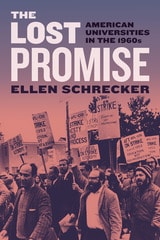
The Lost Promise
American Universities in the 1960sEllen Schrecker
University of Chicago Press, 2021
The 1950s through the early 1970s are widely seen as American academia’s golden age, when universities—well-funded and viewed as essential for national security, economic growth, and social mobility—embraced an egalitarian mission. Swelling in size, schools attracted new types of students and professors, including radicals who challenged their institutions’ calcified traditions. But that halcyon moment soon came to a painful and confusing end, with consequences that still afflict the halls of ivy. In The Lost Promise, Ellen Schrecker—our foremost historian of both the McCarthy era and the modern American university—delivers a far-reaching examination of how and why it happened.
Schrecker illuminates how US universities’ explosive growth intersected with the turmoil of the 1960s, fomenting an unprecedented crisis where dissent over racial inequality and the Vietnam War erupted into direct action. Torn by internal power struggles and demonized by conservative voices, higher education never fully recovered, resulting in decades of underfunding and today’s woefully inequitable system. As Schrecker’s magisterial history makes blazingly clear, the complex blend of troubles that disrupted the university in that pivotal period haunts the ivory tower to this day.
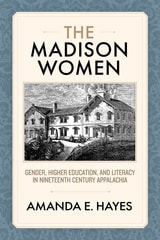
The Madison Women
Gender, Higher Education, and Literacy in Nineteenth-Century AppalachiaAmanda E Hayes
West Virginia University Press, 2024
Incorporating captivating mini-biographies of women who attended Madison College and who went on to change their communities in ways large and small, this book reveals how the lives of its students impart lessons about history, regional culture, and how we can shape the Appalachia's future.
The Magic Key
The Educational Journey of Mexican Americans from K-12 to College and BeyondEdited by Ruth Enid Zambrana and Sylvia Hurtado
University of Texas Press, 2015
Mexican Americans comprise the largest subgroup of Latina/os, and their path to education can be a difficult one. Yet just as this group is often marginalized, so are their stories, and relatively few studies have chronicled the educational trajectory of Mexican American men and women. In this interdisciplinary collection, editors Zambrana and Hurtado have brought together research studies that reveal new ways to understand how and why members of this subgroup have succeeded and how the facilitators of success in higher education have changed or remained the same.
The Magic Key’s four sections explain the context of Mexican American higher education issues, provide conceptual understandings, explore contemporary college experiences, and offer implications for educational policy and future practices. Using historical and contemporary data as well as new conceptual apparatuses, the authors in this collection create a comparative, nuanced approach that brings Mexican Americans’ lived experiences into the dominant discourse of social science and education. This diverse set of studies presents both quantitative and qualitative data by gender to examine trends of generations of Mexican American college students, provides information on perceptions of welcoming university climates, and proffers insights on emergent issues in the field of higher education for this population. Professors and students across disciplines will find this volume indispensable for its insights on the Mexican American educational experience, both past and present.

The Magic Screen
A History of Regent Street CinemaJoost Hunningher, Rikki Morgan-Tamosunas, Guy Osborn and Ro Spankie
University of Westminster Press, 2015
The Making of Chicana/o Studies
In the Trenches of AcademeAcuña, Rodolfo F
Rutgers University Press, 2011
The Making of Chicana/o Studies traces the philosophy and historical development of the field of Chicana/o studies from precursor movements to the Civil Rights era to today, focusing its lens on the political machinations in higher education that sought to destroy the discipline. As a renowned leader, activist, scholar, and founding member of the movement to establish this curriculum in the California State University system, which serves as a model for the rest of the country, Rodolfo F. Acuña has, for more than forty years, battled the trend in academia to deprive this group of its academic presence.
The book assesses the development of Chicana/o studies (an area of studies that has even more value today than at its inception)--myths about its epistemological foundations have remained uncontested. Acuña sets the record straight, challenging those in the academy who would fold the discipline into Latino studies, shadow it under the dubious umbrella of ethnic studies, or eliminate it altogether.
Building the largest Chicana/o studies program in the nation was no easy feat, especially in an atmosphere of academic contention. In this remarkable account, Acuña reveals how California State University, Northridge, was instrumental in developing an area of study that offers more than 166 sections per semester, taught by 26 tenured and 45 part-time instructors. He provides vignettes of successful programs across the country and offers contemporary educators and students a game plan--the mechanics for creating a successful Chicana/o studies discipline--and a comprehensive index of current Chicana/o studies programs nationwide.
Latinas/os, of which Mexican Americans are nearly seventy percent, comprise a complex sector of society projected to be just shy of thirty percent of the nation's population by 2050. The Making of Chicana/o Studies identifies what went wrong in the history of Chicana/o studies and offers tangible solutions for the future.

The Making of The University of Michigan 1817-1992
Howard H. Peckham
University of Michigan Press, 1994
The Making of an Artist
Desire, Courage, and CommitmentKristin G. Congdon
Intellect Books, 2018
Powerfully insightful and fully accessible, The Making of an Artist will be an invaluable resource for practicing artists, those just setting out on artistic careers, and art teachers alike.
The Making of the Modern University
Intellectual Transformation and the Marginalization of MoralityJulie A. Reuben
University of Chicago Press, 1996
Based on extensive research at eight universities—Harvard, Yale, Columbia, Johns Hopkins, Chicago, Stanford, Michigan, and California at Berkeley—Reuben examines the aims of university reformers in the context of nineteenth-century ideas about truth. She argues that these educators tried to apply new scientific standards to moral education, but that their modernization efforts ultimately failed. By exploring the complex interaction between institutional and intellectual change, Reuben enhances our understanding of the modern university, the secularization of intellectual life, and the association of scientific objectivity with value-neutrality.
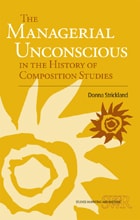
The Managerial Unconscious in the History of Composition Studies
Donna Strickland
Southern Illinois University Press, 2011
The Managerial Unconscious in the History of Composition Studies is the first book to address the history of composition studies as a profession rather than focusing on its pedagogical theories and systems. Strickland questions why writing and the teaching of writing have been the major areas of scholarly inquiry in the field when specialists often work primarily as writing program administrators, not teachers.
Strickland traces the emergence of writing programs in the early twentieth century, the founding of two professional organizations by and for writing program administrators, and the managerial overtones of the “social turn” of the field during the 1990s. She illustrates how these managerial imperatives not only have provided much of the impetus for the growth of composition studies over the past three decades but also have contributed to the stratified workplaces and managed writing practices the field’s pedagogical research often decries.
The Managerial Unconscious in the History of Composition Studies makes the case that administrative work should not be separated from intellectual work, calling attention to the interplay between these two kinds of work in academia at large and to the pronounced hierarchies of contingent faculty and tenure-track administrators endemic to college writing programs. The result is a reasoned plea for an alternative understanding of the very mission of the field itself.
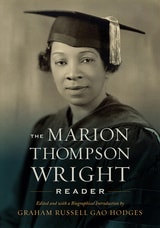
The Marion Thompson Wright Reader
Edited and with a Biographical Introduction by Graham Russell Gao HodgesGraham Russell Gao Hodges
Rutgers University Press, 2022
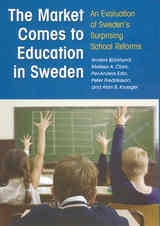
The Market Comes to Education in Sweden
An Evaluation of Sweden's Surprising School ReformsAnders Bjorklund
Russell Sage Foundation, 2005
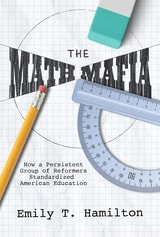
The Math Mafia
How a Persistent Group of Reformers Standardized American EducationEmily T. Hamilton
University of Alabama Press, 2026
How Cold War urgency, academic ambition, and federal power converged to make math the cornerstone of American education policy.
The Math Mafia by Emily T. Hamilton is a historical account of mathematics education reform in twentieth-century America and how that movement played a role in shaping the broader contours of national education policy. Hamilton contends that a cohesive and well-organized community of advocates was instrumental in the rise of standardized testing and curriculum reforms, as well as federal involvement in classrooms, especially during the Cold War. By positioning mathematics as central to national strength and security, these reformers established math education as a key area of federal focus.
The “mafia” at the center of Hamilton’s story includes mathematicians, educators, and researchers from universities, as well as members of government-funded organizations such as the National Science Foundation and various educational psychology circles. Prominent figures such as Edward Begle, who led the School Mathematics Study Group during the “new math” movement, played key roles. Other influential participants include federal education officials, advocates from professional organizations such as the National Council of Teachers of Mathematics, and cognitive scientists, who contributed both research and theoretical frameworks that informed curriculum design and assessment methods.
The Math Mafia offers historians, educators, policymakers, and other interested readers a compelling perspective on the legacy of the math education reforms on federal education policy in the United States and is a welcome contribution to ongoing discourse around “teaching toward the test,” educational equity, school performance, and other hot-button issues in US education today.