Results by title
1787 books match the query 'Literary Collections' and 471 start with t
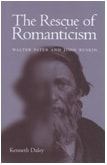
The Rescue of Romanticism
Walter Pater and John RuskinKenneth Daley
Ohio University Press, 2001
Valuable and timely in its long historical and critical perspective on the legacy of romanticism to Victorian art and thought, The Rescue of Romanticism is the first book-length study of the close intellectual relationship between Walter Pater and John Ruskin, the two most important Victorian critics of art. Kenneth Daley explores the work and thought of both writers in context with other Victorian writers, and enlarges the issues at stake between them, connecting these issues to ongoing artistic, cultural, and political concerns of the modern world.
Professor Daley gives a more finely honed picture than ever before of romanticism’s emergence as a literary concept in Victorian England, detailing the political differences that characterize the opposition between John Ruskin and his younger contemporary, Walter Pater, over the nature of romanticism. Individual chapters reassess the Victorian reception of such romantic figures as Wordsworth, Dante Gabriel Rossetti, Leonardo, and Michelangelo.
Daley demonstrates how Pater’s “modern” reading of romanticism emerged from Ruskin’s distrust of romanticism and from Ruskin’s arguments and examples defining pathetic fallacy. His discussion of Ruskin’s Oxford lectures and their timing in Pater’s developing career refresh the intersections of the two bodies of work and the portrait of the Victorian period in general.
The Restless Dead
Necrowriting and DisappropriationCristina Rivera Garza
Vanderbilt University Press, 2020
Disappropriating is a political operation at the core of projects acknowledging, both at ethical and aesthetic levels, that writers always work with materials that are not their own. Writers borrow from the practitioners of a language, entering in a debt relationship that can only be covered by ushering the text back to the communities from which it grew. In a world rife with violence, where the experiences of many are erased by pillage and extraction, writing among and for the dead is a form of necrowriting that may well become a life-affirming act of decolonization and resistance.
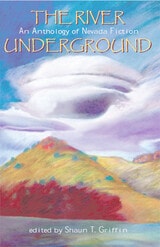
The River Underground
An Anthologyof Nevada FictionShaun T. Griffin
University of Nevada Press, 2001
Here we find a delightful and long-forgotten story by the doyen of Nevada writers, Robert Laxalt; a moving story by Adrian C. Louis, a Native American from Lovelock who has found national acclaim for his powerful fiction and poetry about reservation life; and excerpts from work by best-selling writers Teresa Jordan, Steven Nightingale, Douglas Unger, and Richard Wiley.
Settings range from rural Nevada to rural post-revolutionary China, from the glitz of Las Vegas to a Basque immigrant household in Carson City, from the hills of Appalachia to the Pacific during World War II. Characters include a pair of Mormon teenagers trying to escape the moral rigors of their faith, a fugitive Shoshone Indian trying to preserve the ways of his ancestors against the pressures of history, an immigrant family in Las Vegas coping with the father’s final illness, a trio of escaped prisoners bent on revenge, and an aging African American jazz musician. There is work by writers whose names are known to readers of fine fiction everywhere and work by talented newcomers.
Editor Griffin has provided for each selection a brief biographical sketch of the author and some comments on the qualities of the piece that prompted its inclusion in the anthology. As a collection of fiction, this is exciting reading—provocative, often moving, sometimes startling in its brilliance. It demonstrates unequivocally that writing, and writers, are flourishing in Nevada, and that the state’s literary community is remarkably abundant in talent, creativity, and the range of its voices and concerns.
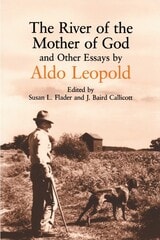
The River of the Mother of God
and other Essays by Aldo LeopoldAldo Leopold; Edited by J. Baird Callicott and Susan L. Flader
University of Wisconsin Press, 1992
His name is inextricably linked with a single work, A Sand County Almanac, a classic of natural history literature and the conservationist's bible. This book brings together the best of Leopold's essays.
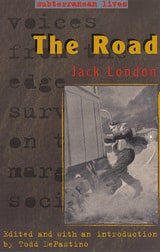
The Road
DePastino, Todd
Rutgers University Press, 2006
In 1894, an eighteen-year-old Jack London quit his job shoveling coal, hopped a freight train, and left California on the first leg of a ten thousand-mile odyssey. His adventure was an exaggerated version of the unemployed migrations made by millions of boys, men, and a few women during the original "great depression of the 1890s. By taking to the road, young wayfarers like London forged a vast hobo subculture that was both a product of the new urban industrial order and a challenge to it. As London's experience suggests, this hobo world was born of equal parts desperation and fascination. "I went on 'The Road,'" he writes, "because I couldn't keep away from it . . . Because I was so made that I couldn't work all my life on 'one same shift'; because-well, just because it was easier to than not to."
The best stories that London told about his hoboing days can be found in The Road, a collection of nine essays with accompanying illustrations, most of which originally appeared in Cosmopolitan magazine between 1907 and 1908. His virile persona spoke to white middle-class readers who vicariously escaped their desk-bound lives and followed London down the hobo trail. The zest and humor of his tales, as Todd DePastino explains in his lucid introduction, often obscure their depth and complexity. The Road is as much a commentary on London's disillusionment with wealth, celebrity, and the literary marketplace as it is a picaresque memoir of his youth.
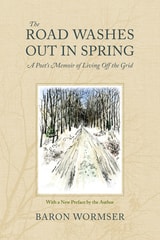
The Road Washes Out in Spring
A Poet’s Memoir of Living Off the GridBaron Wormser
Brandeis University Press, 2023
For nearly twenty-five years, poet Baron Wormser and his family lived in a house in Maine with no electricity or running water. They grew much of their own food, carried water by hand, and read by the light of kerosene lamps. They considered themselves part of the “back to the land” movement, but their choice to live off the grid was neither a statement nor a protest: they simply had built their house too far from the road and could not afford to bring in power lines. Over the years, they settled into a life that centered on what Thoreau would have called “the essential facts.” In this graceful meditation, Wormser similarly spurns ideology in favor of observation, exploration, and reflection. “When we look for one thread of motive,” he writes, “we are, in all likelihood, deceiving ourselves.” His refusal to be satisfied with the obvious explanation, the single thread of motive, makes him a keen and sympathetic observer of his neighbors and community, a perceptive reader of poetry and literature, and an honest and unselfconscious analyst of his own responses to the natural world. The result is a series of candid personal essays on community and isolation, nature, civilization, and poetry. Lovely and rich, The Road Washes Out in Spring is an immersive read. A new preface by the author rounds out this new edition.
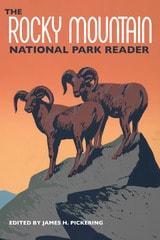
The Rocky Mountain National Park Reader
James H. Pickering
University of Utah Press, 2015
Representative both in subject and approach, the selections reach back to Arapaho and pioneer times before the park was established and move forward to span its entire first century. The voices that speak to us are distinctive: among them are Irish sportsman Windham Thomas Wyndham-Quin, the Fourth Earl of Dunraven; British travel writer Isabella Bird; mountaineer Frederick Chapin; naturalist Enos Mills; iconic ranger Jack Moomaw and his fictional counterpart, Dorr Yeager’s Bob Flame; and contemporary nature writers Anne Zwinger and SueEllen Campbell—to mention but a few. Some tell us about the past, recalling moments of personal triumph and tragedy. Other voices are quieter; some are more polemic. All capture and share a part of the national treasure that is Rocky Mountain National Park.
The first of its kind, this original collection is a rich literary and historical compendium of the best that has been written about Rocky Mountain National Park. As such it provides an indispensable introduction to the nation’s twelfth national park.
Part of the National Park Reader series, edited by Lance Newman and David Stanley
The Roving Shadows
Pascal Quignard
Seagull Books, 2011
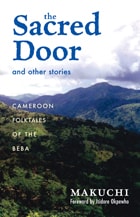
The Sacred Door and Other Stories
Cameroon Folktales of the BebaMakuchi
Ohio University Press, 2007
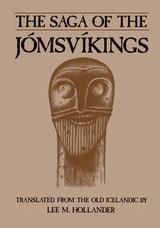
The Saga of the Jomsvikings
Translated from the Old Icelandic by Lee M. Hollander
University of Texas Press, 1955
In A.D. 986, Earl Hákon, ruler of most of Norway, won a triumphant victory over an invading fleet of Danes in the great naval battle of Hjórunga Bay. Sailing under his banner were no fewer than five Icelandic skalds, the poet-historians of the Old Norse world. Two centuries later their accounts of the battle became the basis for one of the liveliest of the Icelandic sagas, with special emphasis on the doings of the Jómsvikings, the famed members of a warrior community that feared no one and dared all. In Lee M. Hollander's faithful translation, all of the unknown twelfth-century author's narrative genius and flair for dramatic situation and pungent characterization is preserved.
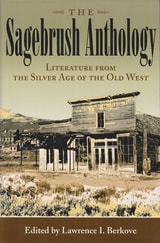
The Sagebrush Anthology
Literature from the Silver Age of the Old WestEdited by Lawrence I. Berkove
University of Missouri Press, 2006
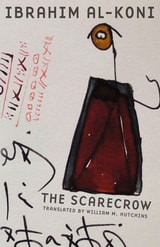
The Scarecrow
By Ibrahim al-Koni, translated by William M. Hutchins
University of Texas Press, 2015
The Scarecrow is the final volume of Ibrahim al-Koni’s Oasis trilogy, which chronicles the founding, flourishing, and decline of a Saharan oasis. Fittingly, this continuation of a tale of greed and corruption opens with a meeting of the conspirators who assassinated the community’s leader at the end of the previous novel, The Puppet. They punished him for opposing the use of gold in business transactions—a symptom of a critical break with their nomadic past—and now they must search for a leader who shares their fetishistic love of gold. A desert retreat inspires the group to select a leader at random, but their “choice,” it appears, is not entirely human. This interloper from the spirit world proves a self-righteous despot, whose intolerance of humanity presages disaster for an oasis besieged by an international alliance. Though al-Koni has repeatedly stressed that he is not a political author, readers may see parallels not only to a former Libyan ruler but to other tyrants—past and present—who appear as hollow as a scarecrow.
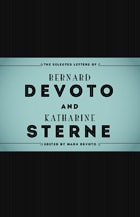
The Selected Letters of Bernard DeVoto and Katharine Sterne
Mark DeVoto
University of Utah Press, 2012
A busy man with a busy life, DeVoto found time to write and answer letters in abundance. In 1933 he received a fan letter from Katharine Sterne, a young woman hospitalized with tuberculosis; his reply touched off an extraordinary eleven-year correspondence. Sterne had graduated with honors from Wellesley College in 1928 and had served as an assistant art critic at the New York Times before her illness. Despite her enforced invalidism she maintained an active intellectual life. Sterne and DeVoto wrote to each other until her death in 1944, sometimes in many pages and as often as twice a week, exchanging opinions about life, literature, art, current events, family news, gossip, and their innermost feelings. DeVoto’s biographer, Wallace Stegner, states that in these letters DeVoto “expressed himself more intimately than in any other writings.” Although their correspondence amounted to more than 868 letters (and is virtually complete on both sides), DeVoto and Sterne never met, both of them doubtless realizing that physical remoteness permitted a psychological proximity that was deeply nourishing.
This volume contains 140 of their letters. They have been selected by DeVoto’s son Mark, who has also provided detailed notes clarifying ambiguities and obscure references. Readers will enjoy these letters for their wit and literary flair, but they will also gain insight into the cultural and historical crosscurrents of the 1930s and ’40s while taking an intimate and engaging look at a friendship forged entirely through words.
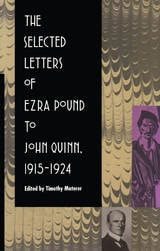
The Selected Letters of Ezra Pound to John Quinn
1915–1924Timothy Materer, ed.
Duke University Press, 1991
Pound wrote to John Quinn—a New York lawyer, an expert in business law, and a collector of unusual taste and discrimination—about these artists and many more, urging him to support their journals, collect their manuscripts, and buy and exhibit their paintings and sculptures. Quinn at one time owned manuscripts of Ulysses and The Waste Land, Brancusi’s sculpture Mlle. Pogany, and Picasso’s painting Three Musicians. Yet he was often skeptical about the value of new schools of art, such as Vorticism, and disturbed by the outspokenness of authors such as Joyce. Pound’s letters are unusually tactful when he counters Quinn’s doubts and explains the premises of experimental art. Pound’s letters to Quinn are touched with his characteristic humor and wordplay and are especially notable for their lucidity of expression, engendered by Pound’s deep respect for Quinn.
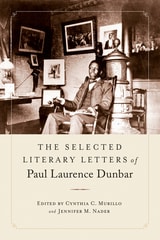
The Selected Literary Letters of Paul Laurence Dunbar
Edited by Cynthia C. Murillo and Jennifer M. Nader
University of Alabama Press, 2021
Discovering Paul Laurence Dunbar's personal and literary life through 250 of his transcribed and annotated letters.
Paul Laurence Dunbar (1873–1906) was arguably the most famous African American poet, novelist, and dramatist at the turn of the twentieth century and one of the earliest African American writers to receive national recognition and appreciation. Scholars have taken a renewed interest in Dunbar but much is still unknown about this once-famous African American author’s life and literary efforts. Dunbar’s letters to various editors, friends, benefactors, scholars, and family members are crucial to any critical or theoretical understanding of his journey as a writer. His literary correspondence, in particular, records the development of an extraordinary figure whose work reached a broad readership in his lifetime, but not without considerable cost.
The Selected Literary Letters of Paul Laurence Dunbar is a collection of 250 letters, transcribed and annotated, that reveal the personal and literary life of one of the most highly regarded African American writers and intellectuals. Editors Cynthia C. Murillo and Jennifer M. Nader highlight Dunbar not just as a determined author and master of rhetoric, but also as a young, sensitive, thoughtful, keenly intelligent, and talented writer who battled depression, alcoholism, and tuberculosis as well as rejection and racism. Despite Dunbar’s personal struggles, his literary letters disclose that he was full of hopes and dreams coupled with the resolve to flourish as a writer—at almost any cost, even when it caused controversy.
Taken together, Dunbar’s letters depict his concerted effort to succeed as an author within an overtly racist literary culture, among sharp divides within the African American intellectual community, and in opposition to the demands of popular public tastes—often dictated by the demands of publishers. This wide-ranging selection of Dunbar’s most relevant literary letters will serve to correct many matters of conjecture about Dunbar’s life, writing, and choices by supplying factual evidence to counter speculation, assumption, and incomplete information.

The Selected Papers of Elizabeth Cady Stanton and Susan B. Anthony
National Protection for National Citizens, 1873 to 1880Gordon, Ann D
Rutgers University Press, 2003
National Protection for National Citizens, 1873 to 1880 is the third of six planned volumes of TheSelected Papers of Elizabeth Cady Stanton and Susan B. Anthony. The entire collection documents the friendship and accomplishments of two of America's most important social and political reformers. Though neither Stanton nor Anthony lived to see passage of the Nineteenth Amendment in 1920, each of them devoted fifty-five years to the cause of woman suffrage.
The third volume of the Selected Papers of Elizabeth Cady Stanton and Susan B. Anthony opens while woman suffragists await the decision of the U.S. Supreme Court in cases testing whether the Constitution recognized women as voters within the terms of the Fourteenth and Fifteenth Amendments. At its close they are pursuing their own amendment to the Constitution and pressing the presidential candidates of 1880 to speak in its favor. Through their letters, speeches, articles, and diaries, the volume recounts the national careers of Elizabeth Cady Stanton and Susan B. Anthony as popular lecturers, their work with members of Congress to expand women's rights, their protests during the Centennial Year of 1876, and the launch that same year of their campaign for a Sixteenth Amendment.

The Selected Poems Of Howard Nemerov
Howard Nemerov
Ohio University Press, 2003
Howard Nemerov—poet laureate of the United States, winner of the Pulitzer Prize and National Book Award, and chancellor of the Academy of American Poets—was one of the most prolific and significant American poets of the twentieth century. By the time of his death in 1991, he had published fourteen collections of poetry.
Judiciously selected and introduced by poet Daniel Anderson, The Selected Poems of Howard Nemerov represents the broad spectrum of Nemerov’s virtues as a poet—his intelligence, his wit, his compassion, and his irreverence. It stands as the retrospective collection of the best of what Nemerov left behind, which is some of the finest poetry that the twentieth century produced.
“To keep his errors down to a minimum,” W. H. Auden wrote, “the internal Censor to whom a poet submits his work in progress should be a Censorate. It should include, for instance, a sensitive only child, a practical housewife, a logician, a monk, an irreverent buffoon a nd even, perhaps, hated by all others and returning their dislike, a brutal, foul-mouthed drill sergeant who considers all poetry rubbish.”
Such are the readers to whom the poetry of Howard Nemerov might appeal. He distinguished himself on the landscape of American letters as a writer of great versatility. More than a decade after his death, that claim still holds true.
In this, the only edition of Nemerov’s work that surveys his entire poetic output, first-time readers of these poems will find an introduction to a truly remarkable creative mind. Longtime admirers of Nemerov will be reminded once again of his significance as a craftsman and philosopher, and as a poetic steward of the many ways in which we experience the world.
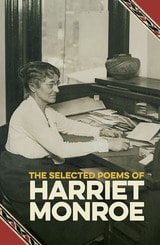
The Selected Poems of Harriet Monroe
Harriet Monroe, edited by Kevin McMullen
Southern Illinois University Press, 2026
Unearthing the overlooked poet behind Poetry magazine
Harriet Monroe, whose work as the visionary founding editor of Poetry magazine profoundly shaped the development of American poetry in the 20th century, was a vital and prolific poet in her own right. This volume showcases the sweeping breadth of Monroe’s poetic talents.
Monroe lived through a period of immense change and global conflict, from the American Civil War, through World War I and the Great Depression, up to the first stirrings of the second Great War. Through her poetry, Monroe confronted major issues, critiquing war, the impact of industrialization on the arts, and inequality, while championing women’s rights and environmental conservation—issues that remain pressingly relevant today. Monroe’s three collections of poetry, as well as her own “selected poems” volume, have all long been out of print. This book, then, represents the first appearance of many of these poems in more than 100 years. This selection includes meditations on modern technology and globalization in the early 20th century, love lyrics, hymns to the deserts of the American West, feminist reflections on gender and motherhood, and more. The volume also includes a number of poems that have never before been published, drawing on manuscripts found in Monroe’s papers at the University of Chicago Library.
Students at the University of Nebraska–Lincoln, under the guidance of Kevin McMullen, project manager of the Walt Whitman Archive, selected these poems to capture the range and breadth of Monroe’s styles and poetic interest. The poems, along with an extensive critical introduction and explanatory notes, establish Monroe’s place as an important and overlooked Modernist poet from the Midwest.

The Shadow Family
George Estreich
University of Iowa Press, 2027
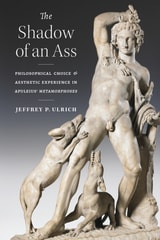
The Shadow of an Ass
Philosophical Choice and Aesthetic Experience in Apuleius' MetamorphosesJeffrey P. Ulrich
University of Michigan Press, 2024
Situating the novel in a long history of philosophical and literary conversations, Ulrich suggests that the Metamorphoses anticipates much of the philosophical burlesque we tend to associate with early modern fiction, from Don Quixote to Lewis Carroll.
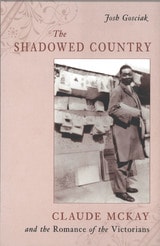
The Shadowed Country
Claude McKay and the Romance of the VictoriansGosciak, Josh
Rutgers University Press, 2006
One of the most important voices of the Harlem Renaissance, Claude McKay is largely recognized for his work during the 1920s, which includes a major collection of poems, Harlem Shadows, as well as a critically acclaimed novel, Home to Harlem. But McKay was never completely comfortable with his literary reputation during this period. Throughout his world travels, he saw himself as an English lyricist.
In this compelling examination of the life and works of this complex poet, novelist, journalist, and short story writer, Josh Gosciak sheds light on McKay’s literary contributions beyond his interactions with Harlem Renaissance artists and writers. Working within English literary traditions, McKay crafted a verse out of hybridity and diaspora. Gosciak shows how he reinvigorated a modern pastoral through his encounters with some of the major aesthetic and political movements of the late Victorian and early modern periods.
Exploring new archival material as well as many of McKay’s lesser known poetic works, TheShadowed Country provides a unique interpretation of the writings of this major author.
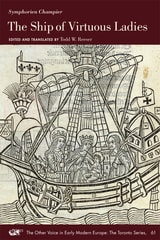
The Ship of Virtuous Ladies
Symphorien Champier
Iter Press, 2018
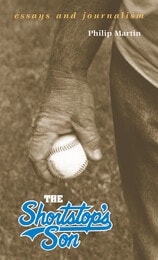
The Shortstop’s Son
Essays and JournalismPhilip Martin
University of Arkansas Press, 1997
Through these varied essays on politics, ethics, music, race, and culture Philip Martin admits “a minor obsession” with what he calls “the American Frolic”—the essential lack of seriousness with which many of us approach the questions inherent in living in a free society. He observes that Americans have been conditioned to react, not to consider; that while we are very good at ripostes and snappy comebacks, at cracking wise and looking smart, we often fail to authentically engage the issues with which we pretend to be most concerned. We inadvertently talk past one another, he says, resorting to cant and partisan boilerplate.
In the essays presented in The Shortstop’s Son, Philip Martin rigorously resists easy labels and rote ideological truths. He pursues more subtle meanings with a commonsense lucidity and a fundamental compassion for humanity. Whether writing about the mythos built upon Bonnie and Clyde’s bullet-ridden Ford or the ignoble death and burial of blues legend Blind Lemon Jefferson, Martin strikes the chord that both moves and informs.
Martin is our critic at large. Deeply engaged in the world of thought and experience, he applies his nimble mind and very human heart to those things which should concern us most. He allows us, through his “obsession” and the clarity of his prose, to experience a new vision, one based in our desire for rich life.
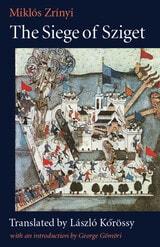
The Siege of Sziget
Miklos Zrinyi
Catholic University of America Press, 2011
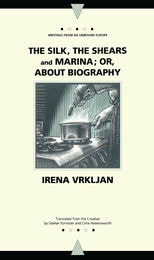
The Silk, the Shears and Marina; or, About Biography
Irena Vrkljan
Northwestern University Press, 1999
These are the first two volumes of the Croatian poet and novelist Irena Vrkljan's lyrical autobiography. Although each novel illuminates the other, they also stand alone as original and independent works of art. In The Silk, the Shears, Vrkljan traces the symbolic and moral significance of her life, and her vision of the fate of women in her mother's time and in her own. Marina continues the intense analysis of the poetic self, using the life of Marina Tsvetaeva to meditate on the processes behind biography.
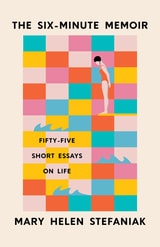
The Six-Minute Memoir
Fifty-Five Short Essays on LifeMary Helen Stefaniak
University of Iowa Press, 2022
What’s more, writing prompts at the end of the book invite readers to search their own lives for such moments—the kind that could be forgotten but instead are turned, by the gift of perspective and perfectly chosen detail, into treasure. The Six-Minute Memoir encourages people to tell their own stories even if they think they don’t have the kind of story that belongs in a memoir.
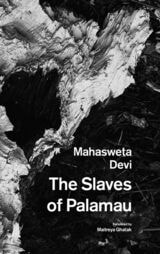
The Slaves of Palamau and Other Writings
Mahasweta Devi
Seagull Books, 2026
A collection of Mahasweta Devi's activist essays, reportage, and editorials on rural development and dispossession.
What do India’s poorest communities reveal about power, land, and survival? In the late 1970s, writer Mahasweta Devi shifted her focus to the lives of Adivasi (Indigenous peoples of the Indian subcontinent) and Dalit communities in eastern India, especially Bihar and West Bengal. Traveling widely and staying with the communities she wrote about, she drew on these firsthand encounters in her writing. She also edited the Bengali quarterly Bortika, making the journal a space for peasants, laborers, workers, and other marginalized groups to speak for themselves.
The Slaves of Palamau and Other Writings brings together a representative selection from her activist prose of the 1980s and early 1990s, drawn from essays, reportage, and editorials. These pieces examine rural development; dispossession and land alienation; environmental damage; and the conditions of landless laborers, sharecroppers, bonded and contract workers, miners, and Indigenous communities, with the steady attention that also informs her fiction.
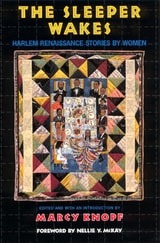
The Sleeper Wakes
Harlem Renaissance Stories by WomenKnopf-Newman, Marcy
Rutgers University Press, 1993
In recent years there has been an explosion of interest in the art and culture of the Harlem Renaissance. Yet this significant collection is the first definitive edition of Harlem Renaissance stories by women. The writers include Gwendolyn Bennett, Jessie Redmon Fauset, Angelina Weld Grimké, Zora Neale Hurston, Nella Larsen, Alice Dunbar-Nelson, and Dorothy West.
Published originally in periodicals such as The Crisis, Fire!!, and Opportunity, these twenty-seven stories have until now been virtually unavailable to readers. These stories are as compelling today as they were in the 1920s and 1930s. In them, we find the themes of black and white racial tension and misunderstanding, economic deprivation, passing, love across and within racial lines, and the attempt to maintain community and uplift the race.
Marcy Knopf's introduction surveys the history of the Harlem Renaissance, the periodicals and books it generated, and describes the rise to prominence of these women writers and their later fall from fame. She also includes a brief biography of each of the writers. Nellie Y. McKay's foreword analyzes the themes and concerns of the stories.
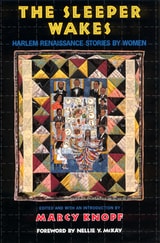
The Sleeper Wakes
Harlem Renaissance Stories by WomenKnopf-Newman, Marcy
Rutgers University Press, 1993
In recent years there has been an explosion of interest in the art and culture of the Harlem Renaissance. Yet this significant collection is the first definitive edition of Harlem Renaissance stories by women. The writers include Gwendolyn Bennett, Jessie Redmon Fauset, Angelina Weld Grimké, Zora Neale Hurston, Nella Larsen, Alice Dunbar-Nelson, and Dorothy West.
Published originally in periodicals such as The Crisis, Fire!!, and Opportunity, these twenty-seven stories have until now been virtually unavailable to readers. These stories are as compelling today as they were in the 1920s and 1930s. In them, we find the themes of black and white racial tension and misunderstanding, economic deprivation, passing, love across and within racial lines, and the attempt to maintain community and uplift the race.
Marcy Knopf's introduction surveys the history of the Harlem Renaissance, the periodicals and books it generated, and describes the rise to prominence of these women writers and their later fall from fame. She also includes a brief biography of each of the writers. Nellie Y. McKay's foreword analyzes the themes and concerns of the stories.
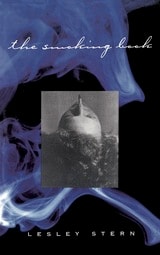
The Smoking Book
Lesley Stern
University of Chicago Press, 1999
Stern writes of addictions and passionate attachments, of the body and bodily pleasure, of autobiography and cultural history. Smoking is Stern's seductive pretext, her way of entering unknown and mysterious regions. The Smoking Book begins with intimate and vivid accounts of growing up on a tobacco farm in colonial Rhodesia, reminiscences that permeate subsequent excursions into precolonial tobacco production and postcolonial life in Zimbabwe, as well as dramatic vignettes set in Australia, the United States, Scotland, Italy, Japan, and South America. Stern has written a book, at once intensely personal and kaleidoscopically international, that weaves the intimate act of a solitary person smoking a cigarette into a broad cultural picture of desire, exchange, fulfillment, and the acts that bind people together, either in lasting ways or through ephemeral encounters.
The Smoking Book is for anyone who has ever smoked or loved a smoker (against their better judgment); it is for those who have never smoked or for those who mourn the loss of cigarettes as they would grieve for a lost friend. But mostly, The Smoking Book is for all those who are smoldering still.
The Snobs of England and Punch's Prize Novelists
William Makepeace Thackeray
University of Michigan Press, 2005
This volume of The Snobs of England and Punch's Prize Novelists is an addition to The Thackeray Edition collection, the first full-scale scholarly edition of William Makepeace Thackeray's works to appear in over seventy years, and the only one ever to be based on an examination of manuscripts and relevant printed texts. It is also a concrete attempt to put into practice a theory of scholarly editing that gives new insight into Thackeray's own compositional process. In The Snobs of England, a series of amusing satirical sketches, Thackeray provides a panoramic awareness of the many varieties of human folly, identifying snobbery not as a social attitude but as the unworthy admiration of foolish things. Punch's Prize Novelists presents a series of illustrated burlesque parodies of Thackeray's contemporary writers, including Edward Bulwer, Benjamin Disraeli, Mrs. Catherine Gore, G.P.R. James, Charles Lever, and James Fenimore Cooper. The works are edited here from a comparative study of all relevant documents: from the first published appearances to the last editions touched by the author.
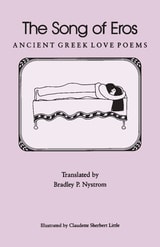
The Song of Eros
Ancient Greek Love PoemsTranslated by Bradley P. Nystrom Illustrated by Claudette Sherbert Little
Southern Illinois University Press, 1991
This collection of new translations of eighty poems provides a pleasant, thought-provoking reminder of love’s vagaries as captured through the wit, charm, and insight of the master poets of antiquity.
All the emotions and experiences associated with love—rejection, infatuation, ecstasy, desperation, loneliness—are rendered accessible to contemporary readers through this lively, modern, yet faithful English translation of works that date from the seventh century B.C.to the sixth century A.D.Illustrations accompany the poetry of Plato, Sappho, Stratto, Meleagros, and others, capturing both the flavor of the age and the theme of the texts.
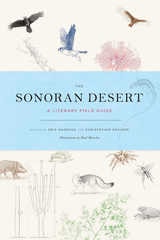
The Sonoran Desert
A Literary Field GuideEdited by Eric Magrane and Christopher Cokinos, Illustrations by Paul Mirocha
University of Arizona Press, 2016
Both literary anthology and hands-on field guide, The Sonoran Desert is a groundbreaking book that melds art and science. It captures the stunning biodiversity of the world’s most verdant desert through words and images. More than fifty poets and writers—including Christopher Cokinos, Alison Hawthorne Deming, Ken Lamberton, Eric Magrane, Jane Miller, Gary Paul Nabhan, Alberto Ríos, Ofelia Zepeda, and many others—have composed responses to key species of this striking desert. Each creative contribution is joined by an illustration by award-winning artist Paul Mirocha and scientific information about the creature or plant authored by the book’s editors.
From the saguaro to the mountain lion, from the black-tailed jackrabbit to the mesquite, the species represented here have evoked compelling and creative responses from each contributor. Just as writers such as Edward Abbey and Ellen Meloy have memorialized the desert, this collection is sure to become a new classic, offering up the next generation of voices of this special and beautiful place, the Sonoran Desert.
The Soul of a Patriot
Evgeny Popov, translated from the Russian by Robert Porter
Northwestern University Press, 1994
Freely parodying conformist Russian writing, this novel takes its lead as much from Sterne and Diderot as from the brilliant Russian satirist Mikhail Zoshchenko. In the offhand witticisms and jaunty humor speaks the spirit that survived the "era of stagnation" of Soviet literature.
The Sound of Memory
Themes from a Violinist’s LifeRebecca Fischer
The Ohio State University Press, 2022
The Sound of Rattles and Clappers
A Collection of New California Indian WritingEdited by Greg Sarris
University of Arizona Press, 1994
The Speaking Stone
Stories Cemeteries TellMichael Griffith
Ohio University Press, 2021
Published by the University of Cincinnati Press
The Speaking Stone: Stories Cemeteries Tell is a literary love letter to the joys of wandering graveyards. While working on a novel, author and longtime Cincinnati resident Michael Griffith starts visiting Spring Grove Cemetery and Arboretum, the nation’s third-largest cemetery. Soon he’s taking almost daily jaunts, following curiosity and accident wherever they lead. The result is this fascinating collection of essays that emerge from chance encounters with an interesting headstone, odd epitaph, unusual name, or quirk of memory. Researching obituaries, newspaper clippings, and family legacies, Griffith uncovers stories of race, feminism, art, and death.
Rather than sticking to the cemetery’s most famous, or infamous, graves, Griffith stays true to the principle of ramble and incidental discovery. The result is an eclectic group of subjects, ranging from well-known figures like the feminist icon and freethinker Fanny Wright to those much less celebrated— a spiritual medium, a temperance advocate, a young heiress who died under mysterious circumstances. Nearly ninety photos add dimension and often an element of playfulness.
The Speaking Stone examines what endures and what does not, reflecting on the vanity and poignancy of our attempt to leave monuments that last. In doing so, it beautifully weaves connections born out of the storyteller’s inquisitive mind.
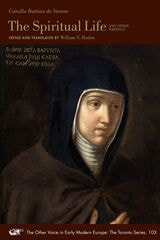
The Spiritual Life and Other Writings
Camilla Battista Da Varano
Iter Press, 2023
Camilla Battista da Varano (1458–1524) was a Franciscan nun and the author of profound spiritual writings in both prose and verse. Raised in the princely household of Camerino in north-central Italy, she put her thorough humanist education to use explaining her own spiritual experience and delivering advice to others. Varano composed ecstatic revelations, prayers, poems, hagiography, spiritual direction, and commentary on convent legislation. She drew on a wide variety of sources, including scripture and Church Fathers, plus popular literature and proverbs. Varano was an erudite woman of considerable complexity, defying many of the commonplace images we associate with religious women of the late fifteenth and early sixteenth centuries.
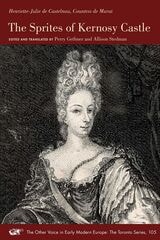
The Sprites of Kernosy Castle
Henriette-Julie de Castelnau, Countess de Murat
Iter Press, 2024
This novel reflects a shift in French values at the turn of the eighteenth century, which saw increased interest in the private lives of the aristocracy and the pre-Enlightenment questioning of political and religious orthodoxies. Novels of fiction and leisure gained popularity, and it was during this time that Henriette-Julie de Castelnau, the Countess de Murat, published her second leisure novel, The Sprites of Kernosy Castle. Combining humor, social satire, and a proto-feminist outlook, Murat crafts a well-constructed plot where the supernatural is debunked. Murat’s career was cut short when a series of “misdemeanors” related to the countess’s homosexual tendencies led to her arrest in 1702. Sprites, which was released during a partial reprieve from prison, is the final published work of this independent-minded early feminist author.
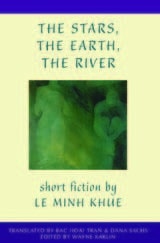
The Stars, The Earth, The River
Short Stories by Le Minh KhueLe Minh Khue
Northwestern University Press, 1997
The Stars, the Earth, the River contains an excellent introduction by the translators, grounding the stories in Le Minh Khue's personal history. You simultaneously feel the rage of the author and the narrator when Khue disparagingly notes that the conversations around her center on luxuries, motor scooters, and business deals. Of what use, these stories ask, is such suffering? How can a culture honor the losses of war?

The Still Point
Laurence Gonzales
University of Arkansas Press, 1996

The Stories Whiteness Tells Itself
Racial Myths and Our American NarrativesDavid Mura
University of Minnesota Press, 2022
Uncovering the pernicious narratives white people create to justify white supremacy and sustain racist oppression
The police murders of two Black men, Philando Castile and George Floyd, frame this searing exploration of the historical and fictional narratives that white America tells itself to justify and maintain white supremacy. From the country’s founding through the summer of Black Lives Matter in 2020, David Mura unmasks how white stories about race attempt to erase the brutality of the past and underpin systemic racism in the present.
Intertwining history, literature, ethics, and the deeply personal, Mura looks back to foundational narratives of white supremacy (Jefferson’s defense of slavery, Lincoln’s frequently minimized racism, and the establishment of Jim Crow) to show how white identity is based on shared belief in the pernicious myths, false histories, and racially segregated fictions that allow whites to deny their culpability in past atrocities and current inequities. White supremacy always insists white knowledge is superior to Black knowledge, Mura argues, and this belief dismisses the truths embodied in Black narratives.
Mura turns to literature, comparing the white savior portrayal of the film Amistad to the novelization of its script by the Black novelist Alexs Pate, which focuses on its African protagonists; depictions of slavery in Faulkner and Morrison; and race’s absence in the fiction of Jonathan Franzen and its inescapable presence in works by ZZ Packer, tracing the construction of Whiteness to willfully distorted portraits of race in America. In James Baldwin’s essays, Mura finds a response to this racial distortion and a way for Blacks and other BIPOC people to heal from the wounds of racism.
Taking readers beyond apology, contrition, or sadness, Mura attends to the persistent trauma racism has exacted and lays bare how deeply we need to change our racial narratives—what white people must do—to dissolve the myth of Whiteness and fully acknowledge the stories and experiences of Black Americans.
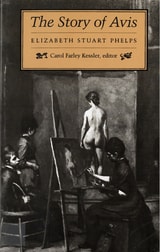
The Story of Avis
Kessler, Carol Farley
Rutgers University Press, 1985
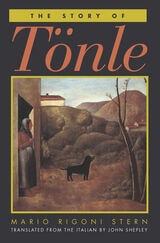
The Story of Tonle
Mario Rigoni Stern
Northwestern University Press, 1998
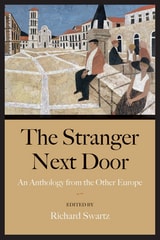
The Stranger Next Door
An Anthology from the Other EuropeRichard Swartz
Northwestern University Press, 2013
The Balkans have been so troubled by violence and misunderstanding that we have the verb “balkanize,” meaning to break up into smaller, warring components. While some of the region’s artists and thinkers have invariably fallen into nationalistic tendencies, the twenty-two prominent authors represented here, from the erstwhile Yugoslavia and its neighbors Albania and Bulgaria, have chosen to attempt to bridge these divides. The essays, biographical sketches, and stories in The Stranger Next Door form a project of understanding that picks up where politics fail. The English-language translation joins editions of the book that appeared concurrently in all of the participating countries.
The Sturdy Oak
A Composite Novel of American PoliticsElizabeth Jordan
Ohio University Press, 1998
In the spring of 1916, as the workers for woman suffrage were laying plans for another attack on the bastions of male supremacy, the idea for The Sturdy Oak was born. Based on the rules of an old parlor game, wherein one person begins a narrative, another continues it, and another follows, this collaborative effort by the leading writers of the day, such as Fannie Hurst, Dorothy Canfield, and Kathleen Norris, is a satiric look at the gender roles of the time.
There is much in The Sturdy Oak that reflects the New York campaign for suffrage of 1916–1917. The setting is the fictional city of Whitewater in upstate New York. Idealistic reformers are pitted against a ruthless political machine, and the traditional picture of man as “the sturdy oak” supporting woman, “the clinging vine,” is ridiculed in the portrayal of an engaging couple, George and Genevieve Remington. Nonetheless, the purpose of the book is not primarily ridicule but reform, and the reader is taken through the steps by which a confirmed anti-suffragist is gradually transformed into a supporter of the suffrage cause.
Beyond its historical interest, The Sturdy Oak is imbued with a political and social currency that makes it applicable even today. And because of the skill of the writers of this composite novel, even eight decades after its initial publication The Sturdy Oak is still, as the New York Times said in 1917, “irresistibly readable.”
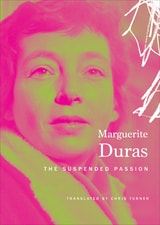
The Suspended Passion
InterviewsMarguerite Duras
Seagull Books, 2016
The interviews that make up the book were conducted in 1987, when Italian journalist Leopoldina Pallotta della Torre met the seventy-three-year-old Duras at her Paris flat and convinced her to sit for a series of conversations. The resulting book was published in Italian in 1989, but it somehow failed to attract a French publisher, and it was quickly forgotten. Nearly a quarter of a century later, however, the book was rediscovered and translated into French, and, it has now become a sensation. In its revealing pages, Duras speaks with extraordinary freedom about her life as a writer, her relationship to cinema, her friendship with Mitterand , her love of Chekhov and football, and, perhaps most significantly, her childhood in pre-war Vietnam, the experiences that propelled her most famous novel, The Lover.
A true literary event, finally available in English, The Suspended Passion is a remarkable document of an extraordinary literary life.
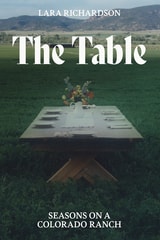
The Table
Seasons on a Colorado RanchLara Richardson
University Press of Colorado, 2024

The Tallgrass Prairie Reader
John T. Price
University of Iowa Press, 2014
The answer to that question is his Tallgrass Prairie Reader, a first-of-its-kind collection of literature from and about the tallgrass bioregion. Focusing on autobiographical nonfiction in a wide variety of forms, voices, and approaches—including adventure narrative, spiritual reflection, childhood memoir, Native American perspectives, literary natural history, humor, travel writing and reportage—he honors the ecological diversity of tallgrass itself and provides a range of models for nature writers and students.
The chronological arrangement allows readers to experience tallgrass through the eyes and imaginations of forty-two authors from the nineteenth to the twenty-first centuries. Writings by very early explorers are followed by works of nineteenth-century authors that reflect the fear, awe, reverence, and thrill of adventure rampant at the time. After 1900, following the destruction of the majority of tallgrass, much of the writing became nostalgic, elegiac, and mythic. A new environmental consciousness asserted itself midcentury, as personal responses to tallgrass were increasingly influenced by larger ecological perspectives. Preservation and restoration—informed by hard science—emerged as major themes. Early twenty-first-century writings demonstrate an awareness of tallgrass environmental history and the need for citizens, including writers, to remember and to help save our once magnificent prairies.
The Tangled Roots of Feminism, Environmentalism, and Appalachian Literature
Elizabeth S. D. Engelhardt
Ohio University Press, 2003
Contemporaries were shocked when author Mary Noailles Murfree revealed she was a woman, but modern readers may be more surprised by her cogent discussion of community responses to unwanted development. Effie Waller Smith, an African American woman writing of her love for the Appalachian mountains, wove discussions of women's rights, racial tension, and cultural difference into her Appalachian poetry. Grace MacGowan Cooke participated in avant-garde writers' colonies with the era's literary lights and applied their progressive ideals to her fiction about the Appalachia of her youth. Emma Bell Miles, witness to poverty, industrialization, and violence against women, wrote poignant and insightful critiques of her Appalachian home.
In The Tangled Roots of Feminism, Environmentalism, and Appalachian Literature Elizabeth Engelhardt finds in all four women's writings the origins of what we recognize today as ecological feminism—a wide-reaching philosophy that values the connections between humans and nonhumans and works for social and environmental justice.
People and the land in Appalachia were also the subject of women authors with radically different approaches to mountains and their residents. Authors with progressive ideas about women's rights did not always respect the Appalachian places they were writing about or apply their ideas to all of the women in those places—but they did create hundreds of short stories, novels, letters, diaries, photographs, sketches, and poems about the mountains.
While The Tangled Roots of Feminism, Environmentalism, and Appalachian Literature ascribes much that is noble to the beginnings of the ecological feminism movement as it developed in Appalachia, it is also unyielding in its assessment of the literatures of the voyeur, tourist, and social crusader who supported status quo systems of oppression in Appalachia.