Results by title
4917 books match the query 'Philosophy' and 1267 start with t
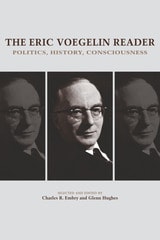
The Eric Voegelin Reader
Politics, History, ConsciousnessCharles R. Embry
University of Missouri Press, 2023
Drawing from the University of Missouri Press’s thirty-four-volume edition of The Collected Works of Eric Voegelin (1990-2009), Charles Embry and Glenn Hughes have assembled a selection of representative works of Voegelin, satisfying a longstanding need for a single volume that can serve as a general introduction to Voegelin’s philosophy. The collection includes writings that demonstrate the range and creativity of Voegelin’s thought as it developed from 1956 until his death in 1985 in his search for the history of order in human society.
The Reader begins with excerpts from Autobiographical Reflections (1973), which include an orienting mixture of biographical information, philosophical motivations, and the scope of Voegelin’s project. It reflects key periods of Voegelin’s philosophical development, pivoting on his flight from the Gestapo.
The next section focuses on Voegelin’s understanding of the contemporary need to re-ground political science in a non-positivistic, post-Weberian outlook and method. It begins with Voegelin’s historical survey of science and scientism, followed by his explanation of what political science now requires in his introduction to The New Science of Politics. Also included are two essays that exemplify the practice of this “new science.” Voegelin started his academic career as a political scientist, and these early essays indicate his wide philosophical vision.
Voegelin recognized that a fully responsible “new science of politics” would require the development of a philosophy of history. This led to the writing of his magnum opus, the five-volume Order and History (1956–1985). This section of the Reader includes his introductions to volumes 1, 2 and 4 and his most essential accounts of the theoretical requirements and historical scope of a philosophy of history adequate to present-day scholarship and historical discoveries.
In the course of his career, Voegelin came to understand that political science, political philosophy, and philosophy of history must have as their theoretical nucleus a sound philosophical anthropology based on an accurate philosophy of human consciousness. The next set of writings consists of one late lecture and four late essays that exemplify how Voegelin recovers the wisdom of classical philosophy and the Western religious tradition while criticizing modern misrepresentations of consciousness. The result is Voegelin’s contemporary accounts of the nature of reason, the challenge of truly rational discussion, and the search for divine origins and the life of the human spirit.
During his philosophical journey, Voegelin addressed the historical situatedness of human existence, explicating the historicity of human consciousness in a manner that gave full due to the challenges of acknowledging both human immersion in the story of history and the ability of consciousness to arrive at philosophically valid truths about existence that are transhistorical. The essays in this final section present the culmination of his philosophical meditation on history, consciousness, and reality.
The Erotic Phenomenon
Jean-Luc Marion
University of Chicago Press, 2006
While humanists have pondered the subject of love to the point of obsessiveness, philosophers have steadfastly ignored it. One might wonder whether the discipline of philosophy even recognizes love. The word philosophy means “love of wisdom,” but the absence of love from philosophical discourse is curiously glaring. So where did the love go? In The Erotic Phenomenon, Jean-Luc Marion asks this fundamental question of philosophy, while reviving inquiry into the concept of love itself.
Marion begins his profound and personal book with a critique of Descartes’ equation of the ego’s ability to doubt with the certainty that one exists—“I think, therefore I am”—arguing that this is worse than vain. We encounter being, he says, when we first experience love: I am loved, therefore I am; and this love is the reason I care whether I exist or not. This philosophical base allows Marion to probe several manifestations of love and its variations, including carnal excitement, self-hate, lying and perversion, fidelity, the generation of children, and the love of God. Throughout, Marion stresses that all erotic phenomena, including sentimentality, pornography, and even boasts about one’s sexual conquests, stem not from the ego as popularly understood but instead from love.
A thoroughly enlightening and captivating philosophical investigation of a strangely neglected subject, The Erotic Phenomenon is certain to initiate feverish new dialogue about the philosophical meanings of that most desirable and mysterious of all concepts—love.
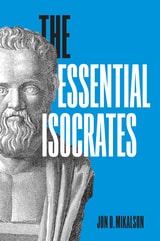
The Essential Isocrates
Jon D. Mikalson
University of Texas Press, 2022
The Essential Isocrates is a comprehensive introduction to Isocrates, one of ancient Greece’s foremost orators. Jon D. Mikalson presents Isocrates largely in his own words, with original English translations of selections of his writings on his life and times and on morality, religion, philosophy, rhetoric, education, political theory, and Greek and Athenian history. In Mikalson’s treatment, Isocrates receives his due not only as a major thinker but as one whose work has resonated across time, influencing even modern education practices and theory.
Isocrates wrote extensively about Athens in the fourth century BCE and before, and his speeches, letters, and essays provide a trove of insights concerning the intellectual, political, and social currents of his time. Mikalson details what we know about Isocrates’s long, eventful, and complicated life, and much can be gleaned on the personal level from his own writings, as Isocrates was one of the most introspective authors of the Classical Period. By collecting the most representative and important passages of Isocrates’s writings, arranging them topically, and placing them in historical context, The Essential Isocrates invites general and expert readers alike to engage with one of antiquity’s most compelling men of ideas.
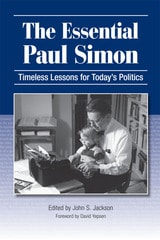
The Essential Paul Simon
Timeless Lessons for Today's PoliticsEdited by John S. Jackson. Foreword by David Yepsen
Southern Illinois University Press, 2012
While Simon covered a broad spectrum of topics in his written works, his mission throughout the years remained the same: to urge his constituents to study and understand issues that affected their daily lives and to make the complexities of politics accessible to the average citizen. An indispensable volume for voters and politicians alike, The Essential Paul Simon compiles some of the most thought-provoking writings from one of the keenest political minds in our nation’s history. Years after their publication, Simon’s eloquent and energetic conversations continue to provide witty, informative guidance through the maze of American politics and inspire the development of spirited public discussion and debate.
Certificate of Excellence from the Illinois State Historical Society, 2013
The Essential Supernatural
A Dialogical Study in Kierkegaard and BlondelMaurice Ashley Agbaw-Ebai
St. Augustine's Press, 2022
Like these philosophers who have preceded him, Agbaw-Ebai exhorts us to never allow the sense of our relation to the supernatural as a settled matter. The philosophy of religion we have inherited does not protect us from having to confront our own subjectivity with autonomy: to be God without God and against God, or to be God with and through God.
The Essential Tension
Selected Studies in Scientific Tradition and ChangeThomas S. Kuhn
University of Chicago Press, 1977
The Ethic of the Upward Gaze
Essays Inspired by Immanuel Kant and Nicolai Hartmannpredrag cicovacki
St. Augustine's Press, 2024
"Kant and Hartmann share a belief that is less common than it once was: that the aim of morality is to guide us toward becoming the best version of ourselves. Morality is not the same as prudence, nor is it a utilitarian calculus about what actions lead to our advantage. Yes, we do need to see what is in front of us, and handle what demands our immediate attention, in accordance with the rules endorsed by our societies. We also need to secure our existence as well as the material flourishing of ourselves and those who depend on us. But focusing exclusively on such issues deflects our consciousness from the high road of morality. […]
These essays explore ideas relating to the suffocating and hope-crushing atmosphere of negativity and disorientation in the contemporary world. The message of this collection is that, if we dare to open our eyes and our hearts, we can find that there is much in ourselves and the world that deserves our reverence and our loving gaze. It is not too late to recall that besides the natural and the social worlds, there is yet another order of being: the spiritual. And without a connection with this spiritual order, we cannot experience our humanity at its best."
The Ethical Case against Animal Experiments
Andrew Linzey, Clair Linzey
University of Illinois Press, 2018
The Ethical Case against Animal Experiments begins with the Oxford Centre for Animal Ethics's groundbreaking and comprehensive ethical critique of the practice of animal experiments. A second section offers original writings that engage with, and elaborate on, aspects of the Oxford Centre report. The essayists explore historical, philosophical, and personal perspectives that range from animal experiments in classical times to the place of necessity in animal research to one researcher's painful journey from researcher to opponent.
A devastating look at a contemporary moral crisis, The Ethical Case against Animal Experiments melds logic and compassion to mount a powerful challenge to human cruelty.
The Ethical Condition
Essays on Action, Person, and ValueMichael Lambek
University of Chicago Press, 2015
Organized chronologically, the essays begin among Malagasy speakers on the island of Mayotte and in northwest Madagascar. Building from ethnographic accounts there, they synthesize Aristotelian notions of practical judgment and virtuous action with Wittgensteinian notions of the ordinariness of ethical life and the importance of language, everyday speech, and ritual in order to understand how ethics are lived. They illustrate the multiple ways in which ethics informs personhood, character, and practice; explore the centrality of judgment, action, and irony to ethical life; and consider the relation of virtue to value. The result is a fully fleshed-out picture of ethics as a deeply rooted aspect of the human experience.
The Ethical Engineer
An "Ethics Construction Kit" Places Engineering in a New LightEugene Schlossberger
Temple University Press, 1993
On occasion, professionals need to use moral reasoning as well as engineering skills to function effectively in their occupation. Eugene Schlossberger has created a practical guide to ethical decision-making for engineers, students, and workers in business and industry.
The Ethical Engineer sets out the tools and materials essential to dealing with whistle-blowing, environmental and safety concerns, bidding, confidentiality, conflict of interest, sales ethics, advertising, employer-employee relations, when to fight a battle, and when to break the rules.
The author offers recommendations and techniques as well as rules, principles, and values that can guide the reader. Lively examples, engaging anecdotes, witty comments, and well-reasoned analysis prove his conviction that "ethics is good business."
The Ethics of Care
A Feminist Approach to Human SecurityFiona Robinson
Temple University Press, 2011
In The Ethics of Care, Fiona Robinson demonstrates how the responsibilities of sustaining life are central to the struggle for basic human security. She takes a unique approach, using a feminist lens to challenge gender biases in rights-based, individualist approaches.Robinson's thorough and impassioned consideration of care in both ethical and practical terms provides a starting point for understanding and addressing the material, emotional and psychological conditions that create insecurity for people. The Ethics of Careexamines “care ethics” and “security” at the theoretical level and explores the practical implications of care relations for security in a variety of contexts: women's labor in the global economy, humanitarian intervention and peace building, healthcare, and childcare.
Theoretically-innovative and policy-relevant, this critical analysis demonstrates the need to understand the obstacles and inequalities that obstruct the equitable and adequate delivery of care around the world.

The Ethics of Earth Art
Amanda Boetzkes
University of Minnesota Press, 2010
The Ethics of History
John McCumber
Northwestern University Press, 2004
The Ethics of Oneness
Emerson, Whitman, and the Bhagavad GitaJeremy David Engels
University of Chicago Press, 2021
In The Ethics of Oneness, Jeremy David Engels reads the Bhagavad Gita alongside the works of American thinkers Ralph Waldo Emerson and Walt Whitman. Drawing on this rich combination of traditions, Engels presents the notion that individuals are fundamentally interconnected in their shared divinity. In other words, everything is one. If the lessons of oneness are taken to heart, particularly as they were expressed and celebrated by Whitman, and the ethical challenges of oneness considered seriously, Engels thinks it is possible to counter the pervasive and problematic American ideals of hierarchy, exclusion, violence, and domination.
The Ethics of Organ Transplantation
Steven J. Jensen
Catholic University of America Press, 2011
The Ethics of Persuasion
Derrida's Rhetorical LegaciesBrooke Rollins
The Ohio State University Press, 2020
Drawing on Derrida’s (non)definition of ethics and his pointed accounts of performativity, Rollins argues that this vital ethical component of many ancient theories, practices, and pedagogies of persuasion has been undertheorized for more than two millennia. Through deconstructive readings of some of these texts, she shows us that we are not simply sovereign beings who both wield and guard against linguistic techniques of rule. Our persuasive endeavors, rather, are made possible by an ethics—an always prior encounter with otherness that interrupts self-presence.
The Ethics of Postmodernity
Current Trends in Continental ThoughtGary B. Madison and Marty Fairbarn
Northwestern University Press, 1997
Contributors include Barry Allen, Caroline Bayard, Robert Bernasconi, Thomas W. Busch, M.C. Dillon, Marty Fairbairn, Paul Fairfield, Morny Joy, Richard Kearney, Gary B. Madison, Joseph Margolis, Tom Rockmore, Charles E. Scott, Evan Simpson, and Mark Williams.
The Ethics of St. Thomas Aquinas
Happiness, Natural Law, and the VirtuesLeo Elders
Catholic University of America Press, 2019
The Ethos of Drama
Rhetorical Theory and Dramatic WorthRobert L. King
Catholic University of America Press, 2010
The Eucharist in Modern Philosophy
Xavier Tilliette
Catholic University of America Press, 2022
The Ever-Present Origin
Part One: Foundations Of The Aperspectival WorldJean Gebser
Ohio University Press, 1986
This English translation of Gebser’s major work, Ursprung und Gegenwart (Stuttgart, Deutsche Verlag, 1966), offers certain fundamental insights which should be beneficial to any sensitive scientist and makes it available to the English-speaking world for the recognition it deserves.
“The path which led Gebser to his new and universal perception of the world is, briefly, as follows. In the wake of materialism and social change, man had been described in the early years of our century as the “dead end” of nature. Freud had redefined culture as illness—a result of drive sublimation; Klages had called the spirit (and he was surely speaking of the hypertrophied intellect) the “adversary of the soul,” propounding a return to a life like that of the Pelasgi, the aboriginal inhabitants of Greece; and Spengler had declared the “Demise of the West” during the years following World War I. The consequences of such pessimism continued to proliferate long after its foundations had been superseded.
It was with these foundations—the natural sciences—that Gebser began. As early as Planck it was known that matter was not at all what materialists had believed it to be, and since 1943 Gebser has repeatedly emphasized that the so-called crisis of Western culture was in fact an essential restructuration.…
Gebser has noted two results that are of particular significance: first, the abandonment of materialistic determinism, of a one-sided mechanistic-causal mode of thought; and second, a manifest “urgency of attempts to discover a universal way of observing things, and to overcome the inner division of contemporary man who, as a result of his one-sided rational orientation, thinks only in dualisms.”
Against this background of recent discoveries and conclusions in the natural sciences Gebser discerned the outlines of a potential human universality. He also sensed the necessity to go beyond the confines of this first treatise so as to include the humanities (such as political economics and sociology) as well as the arts in a discussion along similar lines. This was the point of departure of The Ever-Present Origin.
From In memoriam Jean Gebser by Jean Keckeis
The Evolution of Imagination
Stephen T. Asma
University of Chicago Press, 2017
Guided by neuroscience, animal behavior, evolution, philosophy, and psychology, Asma burrows deep into the human psyche to look right at the enigmatic but powerful engine that is our improvisational creativity—the source, he argues, of our remarkable imaginational capacity. How is it, he asks, that a story can evoke a whole world inside of us? How are we able to rehearse a skill, a speech, or even an entire scenario simply by thinking about it? How does creativity go beyond experience and help us make something completely new? And how does our moral imagination help us sculpt a better society? As he shows, we live in a world that is only partly happening in reality. Huge swaths of our cognitive experiences are made up by “what-ifs,” “almosts,” and “maybes,” an imagined terrain that churns out one of the most overlooked but necessary resources for our flourishing: possibilities. Considering everything from how imagination works in our physical bodies to the ways we make images, from the mechanics of language and our ability to tell stories to the creative composition of self-consciousness, Asma expands our personal and day-to-day forms of imagination into a grand scale: as one of the decisive evolutionary forces that has guided human development from the Paleolithic era to today. The result is an inspiring look at the rich relationships among improvisation, imagination, and culture, and a privileged glimpse into the unique nature of our evolved minds.
The Evolution of Pragmatism in India
Ambedkar, Dewey, and the Rhetoric of ReconstructionScott R. Stroud
University of Chicago Press, 2023
In The Evolution of Pragmatism in India, Scott R. Stroud delivers a comprehensive exploration of the influence of John Dewey’s pragmatism on Bhimrao Ambedkar, architect of the Republic of India’s constitution. Stroud traces Ambedkar’s development in Dewey’s Columbia University classes in 1913–1916 through his final years in 1950s India when he rewrote the story of Buddhism. Stroud examines pragmatism’s influence not only on the philosophical ideas underpinning Ambedkar’s fight against caste oppression but also how his persuasive techniques drew on pragmatism’s commitment to reconstruction and meliorism. At the same time, Stroud is careful to point out the ways that Ambedkar pushed back against Dewey’s paradigm and developed his own approach to challenges in India. The result is a nuanced study of one of the most important figures in Indian history.

The Examined Illness
A Philosopher's Confrontation with Deadly DiseaseDarrel Moellendorf
Intellect Books, 2026
A visceral personal memoir of being seriously unwell—and the consolations of philosophy during sickness.
Being a patient is part of being alive. Disease and serious illness often strike randomly, and when they do, we quickly become subject to the impersonal forces of biochemistry and pharmacology. We rarely think about sickness beforehand and are often totally unprepared for it when it happens. Suddenly, there we are, subject to a standard treatment protocol.
Darrel Noellendorf learned this by experience during a month confined to a solitary and sterile hospital room where he received a life-saving stem cell transplant. His room was somebody’s workspace, his schedule was somebody’s work routine, his immune system was systematically crushed, and his prognosis was out of his hands. There was no assurance that it would all work out.
Having spent thirty years teaching philosophy to college students, He was facing the biggest test of all—perhaps the final exam. These are his reflections before, during, and after his cancer treatment, written in real time. He writes, “My brain was sometimes addled by the chemotherapy that sapped my energy and destroyed my immune system, but I wrote out of the conviction that living well includes living well with disease, and eventually living well facing death.” This memoir expresses the conviction that the virtues of patience, courage, trust, and hope serve us well. A measure of good humor also can’t hurt.
The Experimental Side of Modeling
Isabelle F. Peschard
University of Minnesota Press, 2018
An innovative, multifaceted approach to scientific experiments as designed by and shaped through interaction with the modeling process
The role of scientific modeling in mediation between theories and phenomena is a critical topic within the philosophy of science, touching on issues from climate modeling to synthetic models in biology, high energy particle physics, and cognitive sciences. Offering a radically new conception of the role of data in the scientific modeling process as well as a new awareness of the problematic aspects of data, this cutting-edge volume offers a multifaceted view on experiments as designed and shaped in interaction with the modeling process.
Contributors address such issues as the construction of models in conjunction with scientific experimentation; the status of measurement and the function of experiment in the identification of relevant parameters; how the phenomena under study are reconceived when accounted for by a model; and the interplay between experimenting, modeling, and simulation when results do not mesh. Highlighting the mediating role of models and the model-dependence (as well as theory-dependence) of data measurement, this volume proposes a normative and conceptual innovation in scientific modeling—that the phenomena to be investigated and modeled must not be precisely identified at the start but specified during the course of the interactions arising between experimental and modeling activities.
Contributors: Nancy D. Cartwright, U of California, San Diego; Anthony Chemero, U of Cincinnati; Ronald N. Giere, U of Minnesota; Jenann Ismael, U of Arizona; Tarja Knuuttila, U of South Carolina; Andrea Loettgers, U of Bern, Switzerland; Deborah Mayo, Virginia Tech; Joseph Rouse, Wesleyan U; Paul Teller, U of California, Davis; Michael Weisberg, U of Pennsylvania; Eric Winsberg, U of South Florida.

The Fabrication of Social Order
A Critical Theory of Police PowerMark Neocleous
Pluto Press, 2000
After an initial exploration of the original relationship between police, state power and the question of order, Neocleous focuses on the ways in which eighteenth century liberalism refined and narrowed the concept of the police, a process which masked the power of capital and broader issues of social control. In doing so he challenges the way liberalism came to define policing solely in terms of the question of crime and the rule of law. This liberal definition created a limited and fundamentally misleading understanding of policing which remains in use today.
In contrast, Neocleous argues for an expanded concept of police, adequate to the expansive set of institutions through which policing takes place. These institutions are concerned not just with the maintenance or reproduction of order, but with its fabrication, especially the fabrication of a social order based on wage labour. This project, he argues, should be understood as the project of social security. Grasping this point allows a fuller understanding of the ways in which the state polices and secures civil society, and how order is fabricated through law and administration.
The Fair Trade Revolution
Edited by John Bowes
Pluto Press, 2011
Fair Trade is now mainstream, with large companies like Cadbury's and supermarkets such as Sainsbury's producing and stocking many Fair Trade products. The authors of this collection, many of whom were responsible for the initial success of Fair Trade, emphasise the importance of ensuring that farmers and other producers remain the main beneficiaries. Punchy chapters, illustrated with many real-world examples, cover all the important issues including the tensions between large and small operators, the impact of recession, environmental policy and the danger of large operators embracing Fair Trade more in word than in practice.
Written by the leading lights of the Fair Trade movement, including Harriet Lamb (Executive Director of the Fairtrade Foundation) and Bruce Crowther (Establisher of the world's first Fair Trade Town) this book will inspire activists and consumers to keep making the right choices.
The Family Idiot
Gustave Flaubert, 1821–1857, An Abridged EditionJean-Paul Sartre
University of Chicago Press, 2023
From 1981 to 1994, the University of Chicago Press published a five-volume translation of Jean-Paul Sartre’s The Family Idiot: Gustave Flaubert, 1821-1857, a sprawling masterwork by one of the greatest intellects of the twentieth century. This new volume delivers a compact abridgment of the original by renowned Sartre scholar, Joseph Catalano.
Sartre claimed that his existential approach to psychoanalysis required a new Freud, and in his study of Gustave Flaubert, Sartre becomes that Freud. The work summarizes Sartre’s overarching aim to reveal that human life is a meaningful adventure of freedom. In discussing Flaubert’s work, particularly his classic novel Madame Bovary, Sartre unleashes a fierce critique of modernity as nihilistic and demeaning of human dignity.
The Fantasy of J.R.R. Tolkien
Mythopeia and the Recovery of CreationRobert J. Dobie, Robert J.
Catholic University of America Press, 2024
The Fate of Law
Austin Sarat and Thomas R. Kearns, Editors
University of Michigan Press, 1993
For law and legal theory the end of the twentieth century is a time of contradiction; while the newly emerging politics of Eastern Europe seek to establish a new rule of law, voices in this country proclaim the "death of law." For the former, law provides hope for stability and fairness. For the latter, the fundamental values that provide a grounding for legality seem no longer secure or satisfying. The Fate of Law is a collection of five original essays, each of which discusses the problems and prospects of law in the late twentieth century. The essays pay particular attention to the impact of broad intellectual and political movements, especially feminism and postmodernism, on law and legal theory.
The Fate of Law investigates what happens under the critical scrutiny of those movements and in an era of growing skepticism about law's central claim to objectivity, neutrality, and reason. It describes the struggles that ensue and the responses that are made. Each of the essays that comprise this books is written in its own style and voice; each makes it own judgments and assessments.

The Fate of Rural Hell
Asceticism and Desire in Buddhist Thailand, New EditionBenedict Anderson
Seagull Books, 2016
A new edition of Benedict Anderson's masterpiece of political and social interpretation, which asks what a rural Thai “hell temple” reveals about Buddhism and modern life.
In 1975, political scientist Benedict Anderson encountered Wat Phai Rong Wua, a vast temple complex conceived by the monk Luang Phor Khom. Built as a cautionary museum, it uses striking tableaux, hell scenes, didactic statues, and eclectic displays, to imagine karmic consequence and to draw steady flows of Thai visitors.
Returning to the temple over several decades, Anderson treats the site as a travelogue, an ethnographic puzzle, and a social commentary. He asks what kinds of piety, hierarchy, and desire are staged there, and what local community sustains it. The temple also becomes his lens on how capitalism and rural change reshape religious practice in Thailand.
The Fear of Barbarians
Beyond the Clash of CivilizationsTzvetan Todorov
University of Chicago Press, 2010
The relationship between Western democracies and Islam, rarely entirely comfortable, has in recent years become increasingly tense. A growing immigrant population and worries about cultural and political assimilation—exacerbated by terrorist attacks in the United States, Europe, and around the world—have provoked reams of commentary from all parts of the political spectrum, a frustrating majority of it hyperbolic or even hysterical.
In The Fear of Barbarians, the celebrated intellectual Tzvetan Todorov offers a corrective: a reasoned and often highly personal analysis of the problem, rooted in Enlightenment values yet open to the claims of cultural difference. Drawing on history, anthropology, and politics, and bringing to bear examples ranging from the murder of Theo van Gogh to the French ban on headscarves, Todorov argues that the West must overcome its fear of Islam if it is to avoid betraying the values it claims to protect. True freedom, Todorov explains, requires us to strike a delicate balance between protecting and imposing cultural values, acknowledging the primacy of the law, and yet strenuously protecting minority views that do not interfere with its aims. Adding force to Todorov's arguments is his own experience as a native of communist Bulgaria: his admiration of French civic identity—and Western freedom—is vigorous but non-nativist, an inclusive vision whose very flexibility is its core strength.
The record of a penetrating mind grappling with a complicated, multifaceted problem, The Fear of Barbarians is a powerful, important book—a call, not to arms, but to thought.

The Feast of the Sorcerer
Practices of Consciousness and PowerBruce Kapferer
University of Chicago Press, 1997
Kapferer focuses on sorcery among Sinhalese Buddhists in Sri Lanka to explore how the art of sorcery is in fact deeply connected to social practices and lived experiences such as birth, death, sickness, and war. He describes in great detail the central ritual of exorcism, a study which opens up new avenues of thought that challenge anthropological approaches to such topics as the psychological forces of emotion and the dynamics of power. Overcoming both "orientalist" bias and postmodern permissiveness, Kapferer compellingly reframes sorcery as a pragmatic, conscious practice which, through its dynamic of destruction and creation, makes it possible for humans to reconstruct repeatedly their relation to the world.
The Feeling Intellect
Selected WritingsPhilip Rieff
University of Chicago Press, 1989
The Female in Aristotle's Biology
Reason or RationalizationRobert Mayhew
University of Chicago Press, 2004
Mayhew points out that the tools of modern science and scientific experimentation were not available to the Greeks during Aristotle's time and that, consequently, Aristotle had relied not only on empirical observations when writing about living organisms but also on a fair amount of speculation. Further, he argues that Aristotle's remarks about females in his biological writings did not tend to promote the inferior status of ancient Greek women.
Written with passion and precision, The Female in Aristotle's Biology will be of enormous value to students of philosophy, the history of science, and classical literature.
The Figural Jew
Politics and Identity in Postwar French ThoughtSarah Hammerschlag
University of Chicago Press, 2010
The rootless Jew, wandering disconnected from history, homeland, and nature, was often the target of early twentieth-century nationalist rhetoric aimed against modern culture. But following World War II, a number of prominent French philosophers recast this maligned figure in positive terms, and in so doing transformed postwar conceptions of politics and identity.
Sarah Hammerschlag explores this figure of the Jew from its prewar usage to its resuscitation by Jean-Paul Sartre, Emmanuel Levinas, Maurice Blanchot, and Jacques Derrida. Sartre and Levinas idealized the Jew’s rootlessness in order to rethink the foundations of political identity. Blanchot and Derrida, in turn, used the figure of the Jew to call into question the very nature of group identification. By chronicling this evolution in thinking, Hammerschlag ultimately reveals how the figural Jew can function as a critical mechanism that exposes the political dangers of mythic allegiance, whether couched in universalizing or particularizing terms.
Both an intellectual history and a philosophical argument, The Figural Jew will set the agenda for all further consideration of Jewish identity, modern Jewish thought, and continental philosophy.
The First Moderns
Profiles in the Origins of Twentieth-Century ThoughtWilliam R. Everdell
University of Chicago Press, 1997
"This exceptionally wide-ranging history is chock-a-block with anecdotes, factoids, odd juxtapositions, and useful insights. Most impressive. . . . For anyone interested in learning about late 19th- and early 20th- century imaginative thought, this engagingly written book is a good place to start."—Washington Post Book World
"The First Moderns brilliantly maps the beginning of a path at whose end loom as many diasporas as there are men."—Frederic Morton, The Los Angeles Times Book Review
"In this truly exciting study of the origins of modernist thought, poet and teacher Everdell roams freely across disciplinary lines. . . . A brilliant book that will prove useful to scholars and generalists for years to come; enthusiastically recommended."—Library Journal, starred review
"Everdell has performed a rare service for his readers. Dispelling much of the current nonsense about 'postmodernism,' this book belongs on the very short list of profound works of cultural analysis."—Booklist
"Innovative and impressive . . . [Everdell] has written a marvelous, erudite, and readable study."-Mark Bevir, Spectator
"A richly eclectic history of the dawn of a new era in painting, music, literature, mathematics, physics, genetics, neuroscience, psychiatry and philosophy."—Margaret Wertheim, New Scientist
"[Everdell] has himself recombined the parts of our era's intellectual history in new and startling ways, shedding light for which the reader of The First Moderns will be eternally grateful."—Hugh Kenner, The New York Times Book Review
"Everdell shows how the idea of "modernity" arose before the First World War by telling the stories of heroes such as T. S. Eliot, Max Planck, and Georges Serault with such a lively eye for detail, irony, and ambiance that you feel as if you're reliving those miraculous years."—Jon Spayde, Utne Reader

The First Person Singular
Alphonso Lingis
Northwestern University Press, 2007
The subject Lingis elaborates in detail is the passionate subject of fantasy, of obsessive commitment, of noble actions, the subject enacting itself through an engagement with others, including animals and natural forces. This is not the linguistic or literary subject posited by structuralism and post-structuralism, nor the rational consciousness posited by post-Enlightenment philosophy. It is rather a being embodied in both a passionate, intensifying activity and a cultural collective made up of embodied others as well as the social rituals and practices that comprise this first person singular.
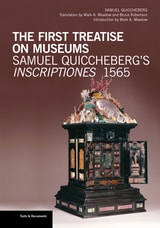
The First Treatise on Museums
Samuel Quiccheberg’s Inscriptiones, 1565Samuel Quiccheberg
J. Paul Getty Trust, The, 2014
Samuel Quiccheberg’s Inscriptiones, first published in Latin in 1565, is an ambitious effort to demonstrate the pragmatic value of curiosity cabinets, or Wunderkammern, to princely collectors in sixteenth-century Europe and, by so doing, inspire them to develop their own such collections. Quiccheberg shows how the assembly and display of physical objects offered nobles a powerful means to expand visual knowledge, allowing them to incorporate empirical and artisanal expertise into the realm of the written word. But in mapping out the collectability of the material world, Quiccheberg did far more than create a taxonomy. Rather, he demonstrated how organizing objects made their knowledge more accessible; how objects, when juxtaposed or grouped, could tell a story; and how such strategies could enhance the value of any single object.
Quiccheberg’s descriptions of early modern collections provide both a point of origin for today’s museums and an implicit critique of their aims, asserting the fundamental research and scholarly value of collections: collections are to be used, not merely viewed. The First Treatise on Museums makes Quiccheberg’s now rare publication available in an English translation. Complementing the translation are a critical introduction by Mark A. Meadow and a preface by Bruce Robertson.
The Fittingness of the Incarnation
Essays in Analytic Thomistic Philosophy and TheologyDavid Braine, David
Catholic University of America Press, 2025
The Flesh of Animation
Bodily Sensations in Film and Digital MediaSandra Annett
University of Minnesota Press, 2024
How animation can reconnect us with bodily experiences
Film and media studies scholarship has often argued that digital cinema and CGI provoke a sense of disembodiment in viewers; they are seen as merely fantastic or unreal. In her in-depth exploration of the phenomenology of animation, Sandra Annett offers a new perspective: that animated films and digital media in fact evoke vivid embodied sensations in viewers and connect them with the lifeworld of experience.
Starting with the emergence of digital technologies in filmmaking in the 1980s, Annett argues that contemporary digital media is indebted to the longer history of animation. She looks at a wide range of animation—from Disney films to anime, electro swing music videos to Vocaloids—to explore how animation, through its material forms and visual styles, can evoke bodily sensations of touch, weight, and orientation in space. Each chapter discusses well-known forms of animation from the United States, France, Japan, South Korea, and China, examining how they provoke different sensations in viewers, such as floating and falling in Howl’s Moving Castle and My Beautiful Girl Mari, and how the body is mediated in films that combine animation and live action, as seen in Who Framed Roger Rabbit and Song of the South. These films set the stage for an exploration of how animation and embodiment manifest in contemporary global media, from CGI and motion capture in Disney’s “live action remakes” to new media installations by artists like Lu Yang.
Leveraging an array of case studies through a new approach to film phenomenology, The Flesh of Animation offers an enlightening discussion of why animation provides a sensational experience for viewers not replicable through other media forms.
The Fold
From Your Body to the CosmosLaura U. Marks
Duke University Press, 2024
The Fold
Leibniz and the BaroqueGilles Deleuze
University of Minnesota Press, 1992
The Force of Truth
Critique, Genealogy, and Truth-Telling in Michel FoucaultDaniele Lorenzini
University of Chicago Press, 2023
Many blame Michel Foucault for our post-truth and conspiracy-laden society. In this provocative work, Daniele Lorenzini argues that such criticism fundamentally misunderstands the philosopher’s project. Foucault did not question truth itself but what Lorenzini calls “the force of truth,” or how some truth claims are given the power to govern our conduct while others are not. This interest, Lorenzini shows, drove Foucault to articulate a new ethics and politics of truth-telling precisely in order to evade the threat of relativism. The Force of Truth explores this neglected dimension of Foucault’s project by putting his writings on regimes of truth and parrhesia in conversation with early analytic philosophy and by drawing out the “possibilizing” elements of Foucault’s genealogies that remain vital for practicing critique today.
The Force of the Virtual
Deleuze, Science, and PhilosophyPeter Gaffney
University of Minnesota Press, 2010
The Forest and the Trees
Sociology as Life, Practice, and PromiseAllan Johnson
Temple University Press, 2008
If sociology could teach everyone just one thing, what would it be? The Forest and the Trees is one sociologist's response to the hypothetical—the core insight with the greatest potential to change how people see the world and themselves in relation to it.
This revised and updated edition features:
• A new chapter that brings together the various aspects of the sociological model described in previous chapters with a detailed application to the origins of racism in the United States
•A discussion of how individuals can participate in social change by stepping off paths of least resistance
•The addition of graphics to illustrate the sociological model of systems and individuals
The Forge and the Crucible
The Origins and Structure of AlchemyMircea Eliade
University of Chicago Press, 1979
The new edition of The Forge and the Crucible contains an updated appendix, in which Eliade lists works on Chinese alchemy published in the past few years. He also discusses the importance of alchemy in Newton's scientific evolution.
The Forgetting of Air in Martin Heidegger
By Luce Irigaray
University of Texas Press, 1999
French philosopher Luce Irigaray has become one of the twentieth century's most influential feminist thinkers. Among her many writings are three books (with a projected fourth) in which she challenges the Western tradition's construals of human beings' relations to the four elements—earth, air, fire, and water—and to nature. In answer to Heidegger's undoing of Western metaphysics as a "forgetting of Being," Irigaray seeks in this work to begin to think out the Being of sexedness and the sexedness of Being.
This volume is the first English translation of L'oubli de l'air chez Martin Heidegger (1983). In this complex, lyrical, meditative engagement with the later work of the eminent German philosopher, Irigaray critiques Heidegger's emphasis on the element of earth as the ground of life and speech and his "oblivion" or forgetting of air.
With the other volumes (Elemental Passions and Marine Lover of Friedrich Nietzsche, published elsewhere) in Irigaray's "elemental" series, The Forgetting of Air offers a fundamental rereading of basic tenets in Western metaphysics. And with its emphasis on dwelling and human habitation, it will be important reading not only in the humanities but also in architecture and the environmental sciences.
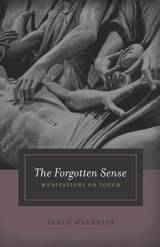
The Forgotten Sense
Meditations on TouchPablo Maurette
University of Chicago Press, 2018
The Forgotten Sense gives touch its due, addressing it in multifarious ways through a series of six essays. Literary in feel, ambitious in conception, admirable in their range of reference and insight, these meditations address questions fundamental to the understanding of touch: What do we mean when we say that an artwork touches us? How does language affect our understanding of touch? Is the skin the deepest part of the human body? Can we philosophize about a kiss? To aid him in answering these questions, Pablo Maurette recruits an impressive roster of cultural figures from throughout history: Homer, Lucretius, Chrétien de Troyes, Melville, Sir Thomas Browne, Knausgaard, Michel Henry and many others help him unfurl the underestimated importance of the sense of touch and tactile experience.
The resulting book is essay writing at its best—exploratory, surprising, dazzling, a reading experience like no other. You will come away from it with a new appreciation of touch, and a new way of understanding our interactions with the world around us.
The Formation of Affectivity
A Christian ApproachFrancisco Insa
St. Augustine's Press, 2023
The present book aims to respond to this need by addressing the consonance and individuality in human nature, and the ways in which ordering in personality and psychology are
not inhibiting, but potentially liberating and influential. Francisco Insa draws from his medical and theological background, which includes both clinical and pastoral experience, to address all those responsible for the formation of others––including parents, teachers, priests, spiritual directors––and enables them to confront their roles as formators with greater insight and confidence. Insa's guidance through the human personality and its various expressions, the education of the character, growth in maturity, the particularity of each stage of the life cycle, sexuality and celibacy, chastity in the context of post-modern life, and mental illnesses is a landmark presentation of scientific rigor matched with practical application. As often as one says, "My situation is unique,"; the author here responds: "Yes, but special even more than you can express"; Insa is forthright about what can never be lost in human beings, but only recovered when the head and heart are aligned and formed properly.
For as much as this book may help the reader understand himself, it will also render him better understood by others. The Christian approach to the formation of affectivity, as Insa shows, is indispensable to deep and enduring human development, and it is often the only way to identify and mediate interior dissonance and confusion.