Results by title
8812 books match the query 'Political Science' and 1911 start with t
The Complete Writings and Selected Correspondence of John Dickinson
Volume 4, 1767-1769John Dickinson
University of Delaware Press, 0
The Complexity of Evil
Perpetration and GenocideTimothy Williams
Rutgers University Press, 2021
Download the open access ebook here.
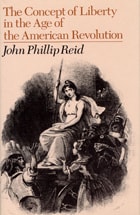
The Concept of Liberty in the Age of the American Revolution
John Phillip Reid
University of Chicago Press, 1988
As John Philip Reid goes on to make clear, "liberty" did not mean to the eighteenth-century mind what it means today. In the twentieth century, we take for granted certain rights—such as freedom of speech and freedom of the press—with which the state is forbidden to interfere. To the revolutionary generation, liberty was preserved by curbing its excesses. The concept of liberty taught not what the individual was free to do but what the rule of law permitted. Ultimately, liberty was law—the rule of law and the legalism of custom. The British constitution was the charter of liberty because it provided for the rule of law.
Drawing on an impressive command of the original materials, Reid traces the eighteenth-century notion of liberty to its source in the English common law. He goes on to show how previously problematic arguments involving the related concepts of licentiousness, slavery, arbitrary power, and property can also be fit into the common-law tradition. Throughout, he focuses on what liberty meant to the people who commented on and attempted to influence public affairs on both sides of the Atlantic. He shows the depth of pride in liberty—English liberty—that pervaded the age, and he also shows the extent—unmatched in any other era or among any other people—to which liberty both guided and motivated political and constitutional action.
The Concept of Political Judgment
Peter J. Steinberger
University of Chicago Press, 1993
Resting his argument on the larger notion of judgment itself, Steinberger develops an original model of how political judgments are made and how we justify calling some of them "good." His systematic analysis of such thinkers as Machiavelli, Kant, Gadamer, Wittgenstein, and Oakeshott introduces an original notion of judgment as "intelligent performance," incorporating both intuition and rational reconstruction.
Steinberger's conclusion—that a coherent political society must also be a judgmental one—flies in the face of much contemporary thinking.
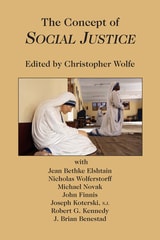
The Concept of Social Justice
Christopher Wolfe
St. Augustine's Press, 2018
The inspiration for this book comes from the fact that current discussions of “social justice” often deal overwhelmingly with programs that aim to advance certain specific and controversial policies to deal with various social problems. In the process, important theoretical questions about social justice are not even confronted, much less resolved. For example, what does the word “social” add to “justice”? Isn't all justice “social”? What is the relation between “social justice” and more classical Aristotelian terms such as “distributive justice,” “commutative justice,” and “legal justice”? With respect to its current usage, is the term “social justice” applicable only to special policies or programs (e.g., government or nonprofit social welfare programs)? Does it apply only to the provision of material goods and services? Does it play a role in the ordinary everyday world of business and work?
The papers in this book aim, not at identifying some particular set of public policies that allegedly constitute the right content of “social justice,” but at reflection on the meaning of social justice. It is not an exhortation to pursue policies that are “understood,” without discussion, to be the right way to pursue social justice. It is not aimed at stimulating activism, mobilizing people to go out and achieve social justice now. Rather, it aims at building the foundation upon which people can identify general principles of justice, and make reasonable prudential judgments about how to pursue social justice. This theoretical orientation means that it is neither “right-wing” nor “left-wing.” The Concept of Social Justice provides a range of insightful essays on the term and on its various uses and abuses. The authors of these papers are committed to something like “social justice” – they don't believe that it is spurious notion that should be rejected. They may very well disagree about exactly how to pursue social justice. But their primary concern here is to ask, simply, “what is social justice?”
Jean Bethke Elshtain and Michael Novak show various ways in which the term has been misunderstood or narrowed or abused for ideological reasons. Nicholas Wolterstorff’s essay makes careful distinctions necessary to identify the implications of adding “social” to “justice” and fleshes out a valuable notion of the concept. John Finnis locates the origins of social justice in an historical misreading of Thomas Aquinas’ discussion of justice, which narrowed his “general justice” in a way that required a new notion of “social justice.” Joseph Koterksi, S.J., Robert Kennedy, and J. Brian Benestad each elaborate some of the ways in which “social justice” has been used in the Catholic social teaching since Rerum Novarum and in international theological and U.S. episcopal documents.
Readers will come away from this book with a deeper understanding of the origins of social justice, a sensitivity to the frequent abuses of the term, and a recognition of the forms in which it can be a valuable part of today’s political discourse.
The Concept of the Political
Carl Schmitt
University of Chicago Press, 1996
The Concept of the Political
Expanded EditionCarl Schmitt
University of Chicago Press, 2007
In this, his most influential work, legal theorist and political philosopher Carl Schmitt argues that liberalism’s basis in individual rights cannot provide a reasonable justification for sacrificing oneself for the state—a critique as cogent today as when it first appeared. George Schwab’s introduction to his translation of the 1932 German edition highlights Schmitt’s intellectual journey through the turbulent period of German history leading to the Hitlerian one-party state. In addition to analysis by Leo Strauss and a foreword by Tracy B. Strong placing Schmitt’s work into contemporary context, this expanded edition also includes a translation of Schmitt’s 1929 lecture “The Age of Neutralizations and Depoliticizations,” which the author himself added to the 1932 edition of the book. An essential update on a modern classic, The Concept of the Political, Expanded Edition belongs on the bookshelf of anyone interested in political theory or philosophy.
The Concept of the Social in Uniting the Humanities and Social Sciences
Michael E. Brown
Temple University Press, 2015
In this book, Michael Brown provides original and critical analysis of the state of the social sciences and the humanities. He examines the different disciplines that address human affairs--from sociology, philosophy, political science, and anthropology to the humanities in general--to understand their common ground. He probes the ways in which we investigate the meaning of individuality in a society for which individuals are not the agents of the activities in which they participate, and he develops a critical method for studying the relations among activities, objects, and situations.
The Concept of the Social in Uniting the Humanities and Social Sciences restores the centrality of sociality to all disciplines that provide for and depend on the social dimension of human life. Ultimately, he establishes a theory of the unity of the human sciences that will surely make readers rethink the current state and future of theory in those fields for years to come.
The Condition of the Working Class in Turkey
Labour under Neoliberal AuthoritarianismÇagatay Edgücan Sahin
Pluto Press, 2021
Decades of neoliberal authoritarianism have propelled Turkey into crisis. Regime change, economic disaster and Erdogan’s ambition to impose ‘one-man rule’ have shaken the foundations of Turkish political life, but what does this mean for workers?
Moving beyond the headlines and personalities, this book uncovers the real condition of the working class in modern Turkey. Combining field research and in-depth interviews, it offers cutting-edge analyses of workplace struggles, trade unionism, the AKP’s relationship with neoliberalism, migration, gender, agrarian change and precarity, as well as the Covid-19 pandemic and its impact on workers.
Bringing together Turkish activists and scholars, this book is an inside look at the dynamics and contradictions of working-class resistance against Turkey’s neoliberal authoritarian regime; from worker self-management to organized labor and rural struggles.
The Conditions of Discretion
Joel Handler
Russell Sage Foundation, 1986
The Confederacy at Flood Tide
The Political and Military Ascension, June to December 1862Philip Leigh
Westholme Publishing, 2016
The first six months of 1862 provided a string of Federal victories in the West at Mill Springs, Fort Donelson, Pea Ridge, Island Number 10, and Shiloh. In May, New Orleans fell, and Union General George McClellan’s army was so close to the Confederate capital of Richmond, Virginia, that the troops could set their watches by the city’s church bells. But then the unexpected happened. In June, Robert E. Lee’s Army of Northern Virginia pushed McClellan’s much larger army back to the James River. In Europe, Confederate diplomats sought international recognition for the Confederate States of America, which was made even more attractive now that a shortage of cotton made the powerful textile interests anxious to end the war. Further tipping the balance, in July, the Confederacy secretly ordered two of the latest ironclad ships from England’s famous Laird Shipyard—the same yard that built the commerce raider Alabama. These steam-powered ironclads would be far superior to anything in the Federal navy.
While the “high tide” of the Confederacy is often identifed as Pickett’s Charge during the Battle of Gettysburg in July 1863, the most opportune time for the Confederacy vanished seven months earlier, coinciding with President Abraham Lincoln’s Emancipation Proclamation on January 1, 1863 and the failure of the secessionist states to be recognized as a sovereign nation. As Philip Leigh explains in his engrossing new book, The Confederacy at Flood Tide: The Political and Military Ascension, June to December 1862, on every battlefront and in the governmental halls of Europe, the Confederate effort reached its furthest extent during the second half of 1862. But with the president’s proclamation, battlefield reverses, Europe's decision to reject Confederate diplomatic overtures, and Britian's decision to halt the sale of the ironclads, the opportunity for Confederate success ended. The Confederacy would recede, and the great battles of 1863 and 1864 only marked the Southerners’ tenacity and stubborn belief in a lost cause.
The Confederate Constitution of 1861
An Inquiry into American ConstitutionalismMarshall L. DeRosa
University of Missouri Press, 1991
In The Confederate Constitution of 1861, Marshall DeRosa argues that the Confederate Constitution was not, as is widely believed, a document designed to perpetuate a Southern "slaveocracy," but rather an attempt by the Southern political leadership to restore the Anti-Federalist standards of limited national government. In this first systematic analysis of the Confederate Constitution, DeRosa sheds new light on the constitutional principles of the CSA within the framework of American politics and constitutionalism. He shows just how little the Confederate Constitution departed from the U.S. Constitution on which it was modeled and examines closely the innovations the delegates brought to the document.

The Confederate Navy in Europe
Warren F. Spencer
University of Alabama Press, 1983
“A major contribution to Civil War and naval history.” —Journal of Southern History
The Civil War was fought not only on American battlefields but also in the shipyards, diplomatic salons, and ports of Europe. In this sweeping history of the Confederate navy’s operations overseas, Warren Spencer traces the South’s ambitious efforts to build, equip, and deploy a naval force across the Atlantic. Drawing on extensive archival research in the United States, Great Britain, and France, the book reveals how Confederate agents, diplomats, and naval officers pursued international support while attempting to challenge Union power on the seas.
More than a military narrative, this study offers a richly detailed examination of the intersection of naval warfare, diplomacy, and international politics. The author synthesizes scattered research and original documentary evidence to provide a comprehensive account of Confederate naval activity in Europe, illuminating the roles of shipbuilders, foreign governments, intelligence networks, and naval leaders. By engaging both published sources and archival records, the book presents fresh interpretations of controversial episodes and demonstrates how events far from American shores shaped the course of the Civil War.
This volume will appeal to readers of Civil War history, naval history, diplomatic history, and international relations. Scholars, students, and history enthusiasts alike will appreciate its careful research, engaging narrative, and global perspective on a conflict too often viewed solely through a domestic lens. Anyone interested in the maritime dimensions of the Civil War or the Confederacy’s quest for recognition abroad will find this book both enlightening and compelling.
The Congressional Black Caucus, Minority Voting Rights, and the U.S. Supreme Court
Christina R. Rivers
University of Michigan Press, 2014
Both the U.S. Supreme Court and the Congressional Black Caucus (CBC) claim to advocate minority political interests, yet they disagree over the intent and scope of the Voting Rights Act (VRA), as well as the interpretation of the equal protection clause of the 14th Amendment. Whereas the Court promotes color-blind policies, the CBC advocates race-based remedies. Setting this debate in the context of the history of black political thought, Rivers examines a series of high-profile districting cases, from Rodgers v. Lodge (1982) through NAMUDNO v. Holder (2009). She evaluates the competing approaches to racial equality and concludes, surprisingly, that an originalist, race-conscious interpretation of the 14th Amendment, along with a revised states' rights position regarding electoral districting, may better serve minority political interests.
The Congressional Endgame
Interchamber Bargaining and CompromiseJosh M. Ryan
University of Chicago Press, 2018
With The Congressional Endgame, Josh M. Ryan offers a coherent explanation of how the bicameral legislative process works in Congress and shows that the types of policy outcomes it produces are in line with those intended by the framers of the Constitution. Although each bargaining outcome may seem idiosyncratic, the product of strong leadership and personality politics, interchamber bargaining outcomes in Congress are actually structured by observable institutional factors. Ryan finds that the characteristics of the winning coalition are critically important to which chamber “wins” after bargaining, with both conference committees and an alternative resolution venue, amendment trading, creating policy that approximates the preferences of the more moderate chamber. Although slow and incremental, interchamber negotiations serve their intended purpose well, The Congressional Endgame shows; they increase the odds of compromise while at the same time offering a powerful constraint on dramatic policy changes.
The Conquistador with His Pants Down
David Ramsay Steele’s Legendary Lost LecturesDavid Ramsay Steele
St. Augustine's Press, 2024
“Why Do We See Lysenko-Type Mass Delusions in Western Democracies?”
We’ve learned enough to know that Global Warming Catastrophism and the mass homicide of the Covid “vaccines” are totalitarian insanities. But can Mattias Desmet’s theory fully account for these recurring outbreaks of mass psychosis?
“Here’s Why There Can Never Be a Marxist Revolution”
There are two irrefutable reasons why genuine Marxism can never succeed. But failed fake Marxism is a real threat to all of us, especially the working class.
“The Five Times George Orwell Changed His Mind”
We can best understand George Orwell’s thinking by looking at the five occasions when he underwent a major change in his political outlook.
“The Most Evil Man in History”
Ayn Rand and her slavish worshipers depict Immanuel Kant as the Fountainhead of Evil. But in point of fact, Kant was a far greater friend of liberty and objective truth than the muddleheaded Miss Rand could ever be.
“Sam Harris and How to Spot Dangerous Ideas”
Sam Harris made his fame and his fortune by claiming that suicide bombings occur because of what the Quran tells Muslims. But the truth is that suicide bombings—by Muslims, atheists, and, yes, Christians—occur because they are the most cost-effective means for militarily weak populations to hit back against oppressive foreign occupation.
“Dexter the Busy Bee”
The serial killer Dexter Morgan confers a huge social benefit by deleting bad guys, illustrating the point made by Dr. Bernard Mandeville, that viciously-motivated behavior may give us a valuable public outcome.
“The Conquistador with His Pants Down”
Dr. Sigmund Freud, who likened himself to a conquistador, marketed a deceptive story about what his patients had told him. This false tale has been thoroughly exposed, and the slippery doctor doesn’t come out smelling like a rose.
“Dr. Peterson! Clean Up Your Theory!”
Jordan Peterson is a teller of stories and of stories about stories. But his stories about stories are provably false, and his interpretations of the stories are no more than Rorschach patterns for his own subjective fantasies.
“Is It a Fact that Facts Don’t Matter?”
Scott Adams denigrates truth, yet he continually appeals to facts. And the fact is that truth is a powerful influence in human affairs.
“An Inconceivably Humble Defense of the Inconceivably Holy Book”
In the year 112,075, humankind has recovered from the latest Ice Age and founded a new religion based on an ancient book. You’ll be surprised what our future descendants make of this charming tale recovered from our time.
“Some Second Thoughts on Atheism”
The author of Atheism Explained comes back to look again at this messy topic and mop up some of the mess.
David Ramsay Steele is the author of The Mystery of Fascism: David Ramsay Steele’s Greatest Hits (2019), Orwell Your Orwell: A Worldview on the Slab (2017), Therapy Breakthrough: Why Some Psychotherapies Work Better than Others (with Michael R. Edelstein and Richard K. Kujoth, 2013), Atheism Explained: From Folly to Philosophy (2008), Three Minute Therapy: Change Your Thinking, Change Your Life (with Michael R. Edelstein, 1997), and From Marx to Mises: Post-Capitalist Society and the Challenge of Economic Calculation (1992).
Rave Reviews of Dr. Steele’s earlier books:
The Mystery of Fascism
“From Mussolini to The Matrix, from vegetarianism to mental illness, Steele’s relentless logic jolts us awake.”
—Thomas E. Woods, author of The Politically Incorrect Guide to American History
Orwell Your Orwell
“an absolutely dazzling book on Orwell, casting a brilliant new light, not just on Orwell himself, but on the entire intellectual history of our time.”
—Yuri Maltsev, editor of Requiem for Marx
Therapy Breakthrough
“Prepare to embark upon a rollicking yet highly informative journey through the intense world of psychotherapy!”
—Debbie Joffe Ellis, author of How to Hug a Porcupine
Atheism Explained
“Covers essentially all the arguments for and against God, in science, philosophy, and theology, with sympathy for the believer’s views even as they are shown to be untenable,”
—Victor J. Stenger, author of God and the Atom
Three Minute Therapy
“Of all the books that explain REBT in simple, clear, and highly usable form, Three Minute Therapy is one of the very best.”
—Albert Ellis, founder of REBT
From Marx to Mises
“a well written and tightly argued defense of Mises’s position that does much to dispel the ‘mystery’ of the socialist calculation debate.”
—Mark Blaug, Economic Journal
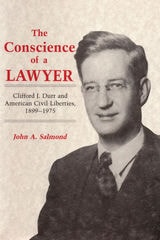
The Conscience of a Lawyer
Clifford J. Durr and American Civil Liberties, 1899–1975John A. Salmond
University of Alabama Press, 1990
A powerful portrait of principle and protest in the life of a Southern lawyer who stood for civil liberties.
Clifford Judkins Durr was an Alabama lawyer who played an important role in defending activists and other accused of disloyalty during the New Deal and McCarthy eras. His uncompromising commitment to civil liberties and civic decency caused him to often take unpopular positions.
In 1933, Durr moved to Washington to work as a lawyer for the Reconstruction Finance Corporation, a creation of Roosevelt’s new Democratic administration, becoming a dedicated New Dealer in the process. He was then appointed by President Franklin D. Roosevelt to the Federal Communications Commission (FCC), a politically sensitive position as FDR sought to counter the increasing power and concentration of broadcasters, many of whom were opponents of the New Deal. Durr resigned from the FCC in 1948 and after brief employment with the National Farmers Union in Colorado, the Durrs eventually returned to Montgomery, Alabama in the hope of returning to a more prosperous, less controversial life.
Durr continued to practice in Montgomery as counsel for black citizens whose rights had been violated and ultimately, in December, 1955, when police arrested Rosa Parks for refusing to give her bus seat to a white man he stepped in and lent his extensive legal prowess to her case and the continuing quest for civil rights. Closing his firm in 1964 Durr began to lecture in the United States and abroad. He died at his grandfather's farm in 1975.

The Consequences of Counterterrorism
Martha Crenshaw
Russell Sage Foundation, 2010

The Conservative Frontier
Texas and the Origins of the New RightJeff Roche
University of Texas Press, 2025
2026 Al Lowman Memorial Prize, Texas State Historical Association (TSHA)
2026 Bonney MacDonald Outstanding Book Award Winner, Center for the Study of the American West at West Texas A&M University (CSAW)
How West Texas business and culture molded the rise of conservatism in the United States.
Much of what we understand as modern American political conservatism was born in West Texas, where today it predominates. How did the people of such a vast region—larger than New England and encompassing big cities like Lubbock and Amarillo, as well as tiny towns from Anson to Dalhart—develop such a uniform political culture? And why and how did it go national?
Jeff Roche finds answers in the history of what he calls cowboy conservatism. Political power players matter in this story, but so do football coaches, newspaper editors, and a breakfast cereal tycoon who founded a capitalist utopia. The Conservative Frontier follows these and other figures as they promoted an ideology grounded in the entrepreneurial and proto-libertarian attitudes of nineteenth-century Texas ranchers, including a fierce devotion to both individualism and small-town notions of community responsibility. This political sensibility was in turn popularized by its association with the mythology and iconography of the cowboy as imagined in twentieth-century mass media. By the 1970s and the rise of Ronald Reagan, Roche shows, it was clear that the cowboy conservatism of West Texas had set the stage for the emergence of the New Right—the more professionalized and tech-savvy operation that dominated national conservative politics for the next quarter century.
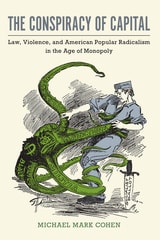
The Conspiracy of Capital
Law, Violence, and American Popular Radicalism in the Age of MonopolyMichael Mark Cohen
University of Massachusetts Press, 2019
In this detailed cultural history, Michael Mark Cohen argues that a legal, ideological, and representational politics of conspiracy contributed to the formation of a genuinely revolutionary mass culture in the United States, starting with the 1886 Haymarket bombing. Drawing on a wealth of primary sources, The Conspiracy of Capital offers a new history of American radicalism and the alliance between the modern business corporation and national security state through a comprehensive reassessment of the role of conspiracy laws and conspiracy theories in American social movements.
The Constitution in Congress
The Federalist Period, 1789-1801David P. Currie
University of Chicago Press, 1997
"A joy to read."—Appellate Practive Journal and Update
"[A] patient and exemplary analysis of the work of the first six Congresses."—Geoffrey Marshall, Times Literary Supplement

The Constitution in Wartime
Beyond Alarmism and ComplacencyMark Tushnet, ed.
Duke University Press, 2005
Some of the essays are broad in scope, reflecting on national character, patriotism, and political theory; exploring whether war and republican government are compatible; and considering in what sense we can be said to be in wartime circumstances today. Others are more specific, examining the roles of Congress, the presidency, the courts, and the international legal community. Throughout the collection, balanced, unbiased analysis leads to some surprising conclusions, one of which is that wartime conditions have sometimes increased, rather than curtailed, civil rights and civil liberties. For instance, during the cold war, government officials regarded measures aimed at expanding African Americans’ freedom at home as crucial to improving America’s image abroad.
Contributors. Sotirios Barber, Mark Brandon, James E. Fleming, Mark Graber, Samuel Issacharoff, David Luban, Richard H. Pildes, Eric Posner, Peter Spiro, William Michael Treanor, Mark Tushnet, Adrian Vermeule
The Constitution in the Supreme Court
The First Hundred Years, 1789-1888David P. Currie
University of Chicago Press, 1985
"A thorough, systematic, and careful assessment. . . . As a reference work for constitutional teachers, it is a gold mine."—Charles A. Lofgren, Constitutional Commentary
The Constitution in the Supreme Court
The Second Century, 1888-1986David P. Currie
University of Chicago Press, 1990
"Elegant and readable. Whether you are in favor of judicial restraint or judicial activism, whatever your feelings about the Warren Court, or the Renquist Court, this is a book that justifies serious study."—Robert Stevens, New York Times Book Review
The Constitution of Liberty
F. A. Hayek
University of Chicago Press, 1978
"A reflective, often biting, commentary on the nature of our society and its dominant thought by one who is passionately opposed to the coercion of human beings by the arbitrary will of others, who puts liberty above welfare and is sanguine that greater welfare will thereby ensue."—Sidney Hook, New York Times Book Review
In this classic work Hayek restates the ideals of freedom that he believes have guided, and must continue to guide, the growth of Western civilization. Hayek's book, first published in 1960, urges us to clarify our beliefs in today's struggle of political ideologies.
The Constitution of Liberty
The Definitive EditionF. A. Hayek
University of Chicago Press, 2011
From the $700 billion bailout of the banking industry to president Barack Obama’s $787 billion stimulus package to the highly controversial passage of federal health-care reform, conservatives and concerned citizens alike have grown increasingly fearful of big government. Enter Nobel Prize–winning economist and political theorist F. A. Hayek, whose passionate warning against empowering states with greater economic control, The Road to Serfdom, became an overnight sensation last summer when it was endorsed by Glenn Beck. The book has since sold over 150,000 copies.
The latest entry in the University of Chicago Press’s series of newly edited editions of Hayek’s works, The Constitution of Liberty is, like Serfdom, just as relevant to our present moment. The book is considered Hayek’s classic statement on the ideals of freedom and liberty, ideals that he believes have guided—and must continue to guide—the growth of Western civilization. Here Hayek defends the principles of a free society, casting a skeptical eye on the growth of the welfare state and examining the challenges to freedom posed by an ever expanding government—as well as its corrosive effect on the creation, preservation, and utilization of knowledge. In opposition to those who call for the state to play a greater role in society, Hayek puts forward a nuanced argument for prudence. Guided by this quality, he elegantly demonstrates that a free market system in a democratic polity—under the rule of law and with strong constitutional protections of individual rights—represents the best chance for the continuing existence of liberty.
Striking a balance between skepticism and hope, Hayek’s profound insights are timelier and more welcome than ever before. This definitive edition of The Constitution of Liberty will give a new generation the opportunity to learn from his enduring wisdom.

The Constitution of the Federal Republic of Germany
David P. Currie
University of Chicago Press, 1994
Beginning with an overview of the essential features of the Basic Law of Germany, Currie then elucidates those features by analyzing a number of decisions of the German Constitutional Court. Contrasting German constitutional law with the American model, Currie further illuminates the German system and provides an invaluable comparative perspective on American institutions, judicial methods, and constitutional principles.
The German constitutional court recently has become the object of international attention as it has grappled with controversies involving abortion, ratification of the Maastricht Treaty, and the reunification of East and West. Currie examines these issues and their impact on the German constitution.
An appendix includes (in English translation) the complete Basic Law for the Federal Republic of Germany of May 23, 1949 as amended to December 1, 1993.
The Constitutional Bind
How Americans Came to Idolize a Document That Fails ThemAziz Rana
University of Chicago Press, 2024
An eye-opening account of how Americans came to revere the Constitution and what this reverence has meant domestically and around the world.
Some Americans today worry that the Federal Constitution is ill-equipped to respond to mounting democratic threats and may even exacerbate the worst features of American politics. Yet for as long as anyone can remember, the Constitution has occupied a quasi-mythical status in American political culture, which ties ideals of liberty and equality to assumptions about the inherent goodness of the text’s design. The Constitutional Bind explores how a flawed document came to be so glorified and how this has impacted American life.
In a pathbreaking retelling of the American experience, Aziz Rana shows that today’s reverential constitutional culture is a distinctively twentieth-century phenomenon. Rana connects this widespread idolization to another relatively recent development: the rise of US global dominance. Ultimately, such veneration has had far-reaching consequences: despite offering a unifying language of reform, it has also unleashed an interventionist national security state abroad while undermining the possibility of deeper change at home.
Revealing how the current constitutional order was forged over the twentieth century, The Constitutional Bind also sheds light on an array of movement activists—in Black, Indigenous, feminist, labor, and immigrant politics—who struggled to imagine different constitutional horizons. As time passed, these voices of opposition were excised from memory. Today, they offer essential insights.
The Constitutional Bind
How Americans Came to Idolize a Document That Fails ThemAziz Rana
University of Chicago Press, 2024
This is an auto-narrated audiobook version of this book.
An eye-opening account of how Americans came to revere the Constitution and what this reverence has meant domestically and around the world.
Some Americans today worry that the Federal Constitution is ill-equipped to respond to mounting democratic threats and may even exacerbate the worst features of American politics. Yet for as long as anyone can remember, the Constitution has occupied a quasi-mythical status in American political culture, which ties ideals of liberty and equality to assumptions about the inherent goodness of the text’s design. The Constitutional Bind explores how a flawed document came to be so glorified and how this has impacted American life.
In a pathbreaking retelling of the American experience, Aziz Rana shows that today’s reverential constitutional culture is a distinctively twentieth-century phenomenon. Rana connects this widespread idolization to another relatively recent development: the rise of US global dominance. Ultimately, such veneration has had far-reaching consequences: despite offering a unifying language of reform, it has also unleashed an interventionist national security state abroad while undermining the possibility of deeper change at home.
Revealing how the current constitutional order was forged over the twentieth century, The Constitutional Bind also sheds light on an array of movement activists—in Black, Indigenous, feminist, labor, and immigrant politics—who struggled to imagine different constitutional horizons. As time passed, these voices of opposition were excised from memory. Today, they offer essential insights.
The Constitutional Logic of Affirmative Action
Ronald J. Fiscus
Duke University Press, 1992
Beginning with a distinction drawn between principles of compensatory and distributive justice, Fiscus argues that the former, although often the basis for judgments made in individual discrimination cases, cannot sufficiently justify broad programs of affirmative action. Only a theory of distributive justice, one that assumes minorities have a right to what they would have gained proportionally in a nonracist society, can persuasively provide that justification. On this basis, the author argues in favor of proportional racial quotas—and challenges the charge of “reverse discrimination” raised in protest in the name of the “innocent victims” of affirmative action—as an action necessary to approach the goals of fairness and equality.
The Constitutional Logic of Affirmative Action focuses on Supreme Court affirmative action rulings from Bakke (1976) to Croson (1989) and includes an epilogue by editor Stephen L. Wasby that considers developments through 1995. General readers concerned with racial justice, affirmative action, and public policy, as well as legal specialists and constitutional scholars will find Fiscus’s argument passionate, balanced, and persuasive.
The Constitutionalism of American States
Edited by George E. Connor & Christopher W. Hammons
University of Missouri Press, 2008
This comparative study of American state constitutions offers insightful overviews of the general and specific problems that have confronted America’s constitution writers since the founding. Each chapter reflects the constitutional history and theory of a single state, encompassing each document’s structure, content, and evolution.
The text is grounded in the model presented by constitutional scholar Donald S. Lutz in The Origins of American Constitutionalism so that even when a state has a relatively stable constitutional history, Lutz’s framework can be used to measure the evolving meaning of the document. With contributors drawn from state governments as well as academia, this is the first work to offer a framework by which state constitutions can be analyzed in relation to one another and to the federal Constitution.
The volume begins with chapters on the New England, Mid-Atlantic, Border, and Southern states. While regional similarities within and between the New England and Mid-Atlantic states are noteworthy, the colonial aspect of their history laid the foundation for national constitution-making. And while North and South moved in distinct directions, the Border states wrestled with conflicting constitutional traditions in the same way that they wrestled with their place in the Union.
Southern states that seceded are shown to have had a common set of problems in their constitutions, and the post–Civil War South emerged from that conflict with a constitutionalism that was defined for it by the war’s victors. These chapters reveal that constitutional self-definition, while not evident in all of the former Confederate states, has redeveloped in the South in the intervening 140 years.
Sections devoted to the Midwest, the Plains, the Mountain West, the Southwest, and the West reflect the special circumstances of states that arose from American expansion. Chapters describe how states of the Midwest, united by common roots in the Northwest Ordinance, wrote constitutions that were defined by that act’s parameters while reflecting the unique cultural and political realities of each state. Meanwhile, the Plains states developed a constitutionalism that was historically rooted in progressivism and populism, sometimes in the clash between these two ideologies.
Perhaps more than any other region, the Mountain West was defined by the physical landscape, and these chapters relate how those states were able to define their individual constitutional identities in spite of geography rather than because of it. And although western states borrowed heavily from those with much older constitutional traditions, the contributors reveal that they borrowed differently—and in different proportions—in order to craft constitutions that were uniquely adapted to their historical situation and peoples.
This work demonstrates the diversity of our governmental arrangements and provides a virtual introduction to the political culture of each—many offering stories of constitutional foundings that are rich with meaning. Although these fifty documents are defined in a federal context, state constitutions are necessary to complete the constitutionalism of the United States.
The Contest for Liberty
Military Leadership in the Continental Army, 1775–1783Seanegan P. Sculley
Westholme Publishing, 2019
How American Colonial Ideals Shaped Command, Discipline, and Honor in the U.S. Armed Forces
In the summer of 1775, a Virginia gentleman-planter was given command of a New England army laying siege to British-occupied Boston. With his appointment, the Continental Army was born. Yet the cultural differences between those serving in the army and their new commander-in-chief led to conflicts from the very beginning that threatened to end the Revolution before it could start. The key challenge for General George Washington was establishing the standards by which the soldiers would be led by their officers. What kind of man deserved to be an officer? Under what conditions would soldiers agree to serve? And how far could the army and its leaders go to discipline soldiers who violated those enlistment conditions? As historian Seanegan P. Sculley reveals in Contest for Liberty: Military Leadership in the Continental Army, 1775–1783, these questions could not be determined by Washington alone. His junior officers and soldiers believed that they too had a part to play in determining how and to what degree their superior officers exercised military authority and how the army would operate during the war. A cultural negotiation concerning the use of and limits to military authority was worked out between the officers and soldiers of the Continental Army; although an unknown concept at the time, it is what we call leadership today. How this army was led and how the interactions between officers and soldiers from the various states of the new nation changed their understandings of the proper exercise of military authority was finally codified in General Friedrich Wilhelm von Steuben’s The Regulations for the Order and Discipline of the Troops of the United States, first published in 1779. The result was a form of military leadership that recognized the autonomy of the individual soldiers, a changing concept of honor, and a new American tradition of military service.
The Contest
The 1968 Election and the War for America's SoulMichael Schumacher
University of Minnesota Press, 2021
A dramatic, deeply informed account of one of the most consequential elections and periods in American history
1968—rife with riots, assassinations, anti–Vietnam War protests, and realpolitik—was one of the most tumultuous years in the twentieth century, culminating in one of the most consequential presidential elections in American history. The Contest tells the story of that contentious election and that remarkable year. Bringing a fresh perspective to events that still resonate half a century later, this book is especially timely, giving us the long view of a turning point in American culture and politics.
Author Michael Schumacher sets the stage with a deep look at the people with important roles in the unfolding drama: Lyndon B. Johnson, Robert F. Kennedy, Eugene McCarthy, George Wallace, Richard Nixon, and especially Hubert H. Humphrey, whose papers and journals afford surprising new insights. Following these politicians in the lead-up to the primaries, through the chaotic conventions, and down the home stretch to the general election, The Contest combines biographical and historical details to create a narrative as intimate in human detail as it is momentous in scope and significance.
An election year when the competing forces of law and order and social justice were on the ballot, the Vietnam War divided the country, and the liberal regime begun with Franklin D. Roosevelt was on the defensive, 1968 marked a profound shift in the nation’s culture and sense of itself. Thorough in its research and spellbinding in the telling, Schumacher’s book brings sharp focus to that year and its lessons for our current critical moment in American politics.
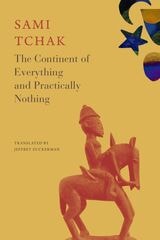
The Continent of Everything and Practically Nothing
Sami Tchak
Seagull Books, 2026
A Togolese novel that delivers a rich, intimate portrait of a scholar whose life is inextricably bound to Africa.
For the French ethnologist Maurice Boyer, Africa isn't just a place; it’s a mirage, an enigma, a mirror reflecting his desires and doubts. The fieldwork he undertook in Tèdi, Togo, where he lived for years among the Tem people and tried to understand their customs and rituals, has left him with questions that have lingered: Who was a friend and who was a foe? Which stories were true and which were illusions? As decades pass and the roles of Aurélie, his wife, and Safi, his former student, begin to shift, Boyer finds himself wrestling not only with his own choices but with the legacy of knowledge itself.
Through the lens of this profound postcolonial quest, Sami Tchak explores Africa’s rich, complex reality through this intimate story of a scholar reconsidering his own understanding of culture, ethnology, and history. The Continent of Everything and Practically Nothing asks whether assembling more data can truly capture the complexity of a continent, and explores how academic ambition, history, and emotion shape how we understand the world, and how we live in it.

The Contours of America’s Cold War
Matthew Farish
University of Minnesota Press, 2010
Geographic knowledge generated for the Cold War was a form of power, Farish argues, and it was given an urgency in the panels, advisory boards, and study groups established to address the challenges of an atomic world. He investigates how the scales of the city, the continent, the region, the globe, and, by extension, outer space, were brought together as strategic spaces, categories that provided a cartographic orientation for the Cold War and influenced military deployments, diplomacy, espionage, and finance.
Farish analyzes the surprising range of knowledge production involved in the project of claiming and classifying American space. Backed by military and intelligence funding, physicists and policy makers, soldiers and social scientists came together to study and shape the United States and its place in a divided world.
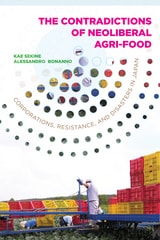
The Contradictions of Neoliberal Agri-Food
Corporations, Resistance, and Disasters in JapanKae Sekine
West Virginia University Press, 2016
Sekine and Bonanno stress the incompatibility of the requirements of neoliberalism with the structural and cultural conditions of Japanese agri-food. Local farmers’ and fishermen’s emphasis on community collective management of natural resources, they argue, clashes with neoliberalism’s focus on individualism and competitiveness. The authors conclude by pointing out the resulting fundamental contradiction: The lack of recognition of this incompatibility allows the continuous implementation of market solutions to problems that originate in these very market mechanisms.

The Conundrum of Russian Capitalism
The Post-Soviet Economy in the World SystemRuslan Dzarasov
Pluto Press, 2013
The Conundrum of Russian Capitalism looks at the nature of Russian capitalism following the fall of the Soviet Union, showing how the system originated in the degenerated Soviet bureaucracy and the pressures of global capital. Ruslan Dzarasov provides a detailed analysis of Russian corporate governance, labour practices and investment strategies.
By comparing the practices of Russian companies to the typical models of corporate governance and investment behaviour of big firms in the West, Dzarasov sheds light on the relationship between the core and periphery of the capitalist world-system.
This groundbreaking study shows that Russia's new capitalism is not a break with the country's Stalinist past, but in fact the continuation of that tradition.
The Convolutions of Historical Politics
Alexei Miller
Central European University Press, 2012
The Corporation That Changed the World
How the East India Company Shaped the Modern MultinationalNick Robins
Pluto Press, 2012
"Elegantly written and sharply argued, Nick Robins' gripping account of the rise and fall of the English East India Company brings to life a crucial episode in the history of globalization."—Sankar Muthu, University of Chicago
The English East India Company was the mother of the modern multinational. Its trading empire encircled the globe, importing Asian luxuries such as spices, textiles, and teas. But it also conquered much of India with its private army and broke open China's markets with opium. The Company's practices shocked its contemporaries and still reverberate today, offering lessons about unfettered capitalism, corporate responsibility, and the legacy of colonialism.
The Corporation That Changed the World is the first book to reveal the Company's enduring legacy as a corporation. This expanded edition explores how the four forces of scale, technology, finance, and regulation drove its spectacular rise and fall. For decades, the Company was simply too big to fail, and stock market bubbles, famines, drug-running, and even duels between rival executives are to be found in this new account.
Table of Contents:
Introduction
Chronology
1 The Hidden Wound
2 The Imperious Company
3 Out of the Shadows
4 The Bengal Revolution
5 The Great East Indian Crash
6 Regulating the Company
7 Justice Will Be Done
8 The Toxic Exchange
10 The Unfettered Business
Epilogue
For Robins, the Company's story provides vital lessons on both the role of corporations in world history and the steps required to make global business accountable today.
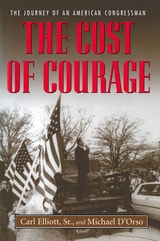
The Cost of Courage
The Journey of an American CongressmanCarl Elliott
University of Alabama Press, 2001
This deeply moving story chronicles the tenacity and vision that carried Carl Elliott from the hills of northwest Alabama to eight distinguished terms in the United States House of Representatives.
Born in a log cabin on a tenant farm in 1913, Carl Elliott worked his way through The University of Alabama during the Great Depression and was elected to Congress in 1948. With a no-nonsense philosophy of fairness and equal opportunity, he established himself as one of the most effective members of the House of Representatives during the 1950s. He was a progressive Democrat and he fought hard for the dirt farmers and coal miners he grew up with and who sent him to Congress.
In an era when racial segregationists dominated southern politics, Elliott worked with many of the important political leaders of the 20th century, including Presidents Truman, Eisenhower, and Kennedy and powerful House Speaker Sam Rayburn. He was instrumental in passing the National Defense Education Act of 1958, which continues to provide college loans to more than 20 million Americans. But his brave stand against racism and George Wallace in the 1966 Alabama gubernatorial race ruined him professionally (he never returned to elected office) and financially (he cashed in his congressional pension to help fund the campaign). Even as a destitute invalid in his old age, however, Elliott kept his dignity and integrity intact.
The life story of Carl Elliott is full of humor and wry wisdom and explains how he made his way across a stage as big as America, influencing its politics and future, and then emerged, belatedly, as an unsung hero of the fight for civil rights and equality.

The Cost of Free Shipping
Amazon in the Global EconomyJake Alimahomed-Wilson
Pluto Press, 2021
Winner of the United Association for Labor Education Book Award 2021, this is essential reading for everyone who wants to understand the role of Amazon in our economy and society. With Amazon, supply-chain, and unionization in the news, it is both timely and incredibly informative.
Amazon is the most powerful corporation on the planet and its CEO, Jeff Bezos, has become one of the richest individuals in history, and one of the few people to profit from a global pandemic. Its dominance has reshaped the global economy itself: we live in the age of “Amazon Capitalism.”
“One-click” instant consumerism and its immense variety of products has made Amazon a worldwide household name, with over 60% of US households subscribing to Amazon Prime. In turn, these subscribers are surveilled by the corporation. Amazon is also one of the world's largest logistics companies, resulting in weakened unions and lowered labor standards.
The company has also become the largest provider of cloud-computing services and home surveillance systems, not to mention the ubiquitous Alexa.
With cutting-edge analyses, this book looks at the many dark facets of the corporation, including automation, surveillance, tech work, workers' struggles, algorithmic challenges, the disruption of local democracy and much more. The Cost of Free Shipping shows how Amazon represents a fundamental shift in global capitalism that we should name, interrogate, and be primed to resist.
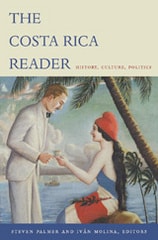
The Costa Rica Reader
History, Culture, PoliticsSteven Palmer and Iván Molina, editors
Duke University Press, 2004
This essential introduction to Costa Rica includes more than fifty texts related to the country’s history, culture, politics, and natural environment. Most of these newspaper accounts, histories, petitions, memoirs, poems, and essays are written by Costa Ricans. Many appear here in English for the first time. The authors are men and women, young and old, scholars, farmers, workers, and activists. The Costa Rica Reader presents a panoply of voices: eloquent working-class raconteurs from San José’s poorest barrios, English-speaking Afro-Antilleans of the Limón province, Nicaraguan immigrants, factory workers, dissident members of the intelligentsia, and indigenous people struggling to preserve their culture. With more than forty images, the collection showcases sculptures, photographs, maps, cartoons, and fliers. From the time before the arrival of the Spanish, through the rise of the coffee plantations and the Civil War of 1948, up to participation in today’s globalized world, Costa Rica’s remarkable history comes alive. The Costa Rica Reader is a necessary resource for scholars, students, and travelers alike.
The Courage to Welcome
Between principles and pragmatism in international affairsCatherine Ashton and Filippo Grandi
Haus Publishing, 2026
A timeless call amid the challenging nature of public service to find the familiar in the foreign.
What does it mean to lead with compassion in a world riven by fear, at a time when the responses to forced displacement hold the power to reshape communities? How can institutions and individuals sustain solidarity amid rising division?
This moving reflection of Filippo Grandi’s ten years as United Nations High Commissioner for Refugees and four decades spent working in humanitarian crises across the world addresses the growing complexity of forced displacement, its repercussions for international relations, and the challenges it poses for governments. Grandi calls for greater cooperation between nations and considers measures—along displacement routes and in host countries—which would provide lifesaving assistance to refugees as well as preserve international cooperation and goodwill. He suggests a universal responsibility not to exacerbate division but to work diligently on the space between pragmatism and principle.
Taking up this challenge, Catherine Ashton’s response to Grandi draws on her own distinguished leadership during some of the most important moments that have shaped contemporary diplomacy and suggests how enduring principles can be retained within the realities of public life.
The Court vs. Congress
Prayer, Busing, and AbortionEdward Keynes and Randall Miller
Duke University Press, 1989
Edward Keynes and Randall Miller argue that Congress lacks the constitutional power to legislate away the powers of the federal courts and to prevent individuals from seeking redress for presumed infringements of their constitutional rights in these areas. They demonstrate that neither the framers nor ratifiers of the Constitution intended the Congress to exercise plenary power over the appellate jurisdiction of the Supreme Court. Throughout its history the Court has never conceded unlimited powers to Congress; and until the late 1950s Congress had not attempted to gerrymander the Court’s jurisdiction in response to specific decisions. But the authors contend this is just what the sponsors of recent legislative attacks on the Court intend, and they see such efforts as threatening the Court’s independence and authority as defined in the separation of powers clauses of the Constitution.
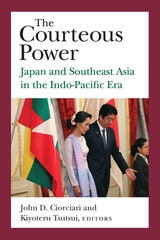
The Courteous Power
Japan and Southeast Asia in the Indo-Pacific EraJohn D. Ciorciari and Kiyoteru Tsutsui, editors
University of Michigan Press, 2021
The Courteous Power seeks to provide a nuanced view of the current relationship between Japan and Southeast Asia. Much of the current scholarship on East–Southeast Asian engagement has focused on the multidimensional chess game playing out between China and Japan, as the dominant post-imperialist powers. Alternatively, there has been renewed attention on ASEAN and other Southeast Asian–centered initiatives, explicitly minimizing the influence of East Asia in the region. Given the urgency of understanding the careful balance in the Indo-Pacific region, this volume brings together scholars to examine the history and current engagement from a variety of perspectives, ranging from economic and political, to the cultural and technological, while also focusing more clearly on the specific relationship between the region and Japan.

The Courts of International Trade
Judicial Specialization, Expertise, and Bureaucratic PolicymakingIsaac Unah
University of Michigan Press, 1998
This book will be of interest to scholars studying the judiciary, bureaucracies, and international trade law and administration.
Isaac Unah is Assistant Professor of Political Science, University of North Carolina.
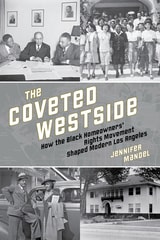
The Coveted Westside
How the Black Homeowners' Rights Movement Shaped Modern Los AngelesJennifer Mandel
University of Nevada Press, 2022
Mandel exposes the enduring struggle between Whites determined to establish their hegemony and create residential heterogeneity in the growing city, and people of color equally determined to obtain full access to the city and the opportunities, including residential, that it offered. Not only does this book document the Black homeowners’ fight against housing discrimination, it shares personal accounts of Blacks’ efforts to settle in the highly desirable Westside of Los Angeles. Mandel explores the White-derived social and legal mechanisms that created this segregated city and the African American-led movement that challenged efforts to block access to fair housing.
The Creative Destruction of Manhattan, 1900-1940
Max Page
University of Chicago Press, 1999
"It'll be a great place if they ever finish it," O. Henry wrote about New York City. This laconic remark captures the relentlessly transitory character of New York, and it points toward Max Page's synthetic perspective. Against the prevailing motif of a naturally expanding metropolis, Page argues that the early-twentieth-century city was dominated by the politics of destruction and rebuilding that became the hallmark of modern urbanism.
The oxymoron "creative destruction" suggests the tensions that are at the heart of urban life: between stability and change, between particular places and undifferentiated spaces, between market forces and planning controls, and between the "natural" and "unnatural" in city growth. Page investigates these cultural counterweights through case studies of Manhattan's development, with depictions ranging from private real estate development along Fifth Avenue to Jacob Riis's slum clearance efforts on the Lower East Side, from the elimination of street trees to the efforts to save City Hall from demolition.
In these examples some New Yorkers celebrate planning by destruction or marvel at the domestication of the natural environment, while others decry the devastation of their homes and lament the passing of the city's architectural heritage. A central question in each case is the role of the past in the shaping of collective memory—which buildings are preserved? which trees are cut down? which fragments are enshrined in museums? Contrary to the popular sense of New York as an ahistorical city, the past—as recalled by powerful citizens—was, in fact, at the heart of defining how the city would be built.
Beautifully illustrated and written in clear, engaging prose, The Creative Destruction of Manhattan offers a new way of viewing the development of the American city.
"An excellent, multifaceted analysis of the process of urban development-not the inevitability of development but the choices individuals, organizations, and developers made that transformed Manhattan. The politics of place was, Max Page convincingly argues, an ongoing battle to define and thereby control the evolving shape of the city."—David Schuyler, author of Apostle of Taste: Andrew Jackson Downing 1815-1852
"Max Page transcends the usual dichotomy between those who glorify destruction for the sake of change and those who would avoid both at all cost. The sizeable borderland between architecture and preservation reveals new dimensions about science and history, innovation and memory, the cities that have been, and those yet to come."—Gwendolyn Wright, author of The Politics of Design in French Colonial Urbanism
"A sober, humane explanation of how and why New York City became a place of continuous rebuilding. . . . For real or armchair New Yorkers, the whole package is a treat."—Kirkus Reviews
The Crimes of Empire
Rogue Superpower and World DominationCarl Boggs
Pluto Press, 2010
Imperial Nations advance their own interests by exploiting other societies. To those on the receiving end this is obvious, while inside the empire, a powerful ideological system of justification tends to hide all but the worst excess.
Carl Boggs argues that that the US began life two centuries ago as a nascent colonialist regime plundering and conquering the Native Tribes. The Indian wars were followed by perpetual militarism and warfare fuelled by a deep sense of national exceptionalism. The Crimes Of Empire examines several trends in this process, and illustrates the new depths plumbed since 9/11.
Violation of international agreements, treaties and laws and the use of prohibited weapons, support for death squads and torture are just some of the practices that Boggs highlights as he shows how technical superiority and media control prolong the American nightmare.
The Crisis of German Ideology
Intellectual Origins of the Third ReichGeorge L. Mosse
University of Wisconsin Press, 2021
George L. Mosse (1918–99) was a legendary scholar, teacher, and mentor. A refugee from Nazi Germany, in 1955 he joined the Department of History at the University of Wisconsin–Madison, where he was both influential and popular. Mosse was an early leader in the study of modern European cultural and intellectual history, fascism, and the history of sexuality and masculinity. Over his career he authored more than two dozen books.