Results by title
3390 books match the query 'Fiction' and 1041 start with t

The Flat Woman
A NovelVanessa Saunders
University of Alabama Press, 2025
Asks who gets the right to call themselves a good person in a morally bankrupt world
In The Flat Woman, women exclusively are blamed for the climate crisis. Seagulls drop dead from the sky, and the government, instead of taking responsibility, scapegoats a group of female ecoterrorists. When a girl’s mother is incarcerated for climate crimes, she is forced to raise herself alone. As a young woman, she begins a romance with an environmental activist whose passion makes her question her own role in the world. By turns hilarious, deadly serious, and completely absurd, The Flat Woman asks who gets the right to call themselves a good person in a world ripe with disaster.
Driven by complex academic and moral questions, The Flat Woman is certain to appeal to fans of feminist and experimental literature, as well as fans of Margaret Atwood, Renee Gladman, Bhanu Kapil, Maggie Nelson, Kelly Link, and Anne Carson.
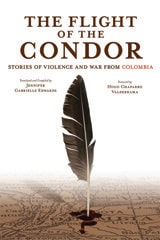
The Flight of the Condor
Stories of Violence and War from ColombiaTranslated and compiled by Jennifer Gabrielle Edwards; Foreword by Hugo Chaparro
University of Wisconsin Press, 2007
This anthology reflects some of Colombia’s finest literary talent, and most of these stories appear here for the first time in English translation. They reveal the contradictions and complexities of the human condition, yet they also offer hope for the future. In their bold revelations of the depths of despair, these writers provide gripping portrayals of humanity’s tenacious resistance to those very depths.
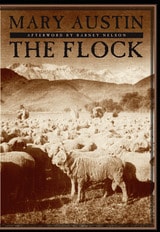
The Flock
Mary Austin
University of Nevada Press, 2001
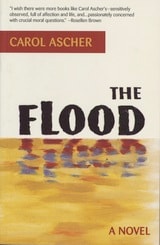
The Flood
A NovelCarol Ascher
Northwestern University Press, 1997
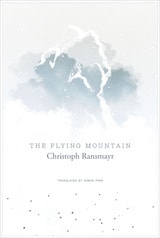
The Flying Mountain
Christoph Ransmayr
Seagull Books, 2019
Only one of the brothers will return. Transformed by his loss, he starts life anew, attempting to understand the mystery of love, yet another quest that may prove impossible. The Flying Mountain is thrilling, surprising, and lyrical by turns; readers looking for something truly new will be rewarded for joining Ransmayr on this journey.
The Folklore Muse
Poetry, Fiction, and Other Reflections by FolkloristsFrank de Caro
Utah State University Press, 2008
Folklore—the inherently creative expression, transmission, and performance of cultural traditions—has always provided a deep well of material for writers, musicians, and artists of all sorts. Folklorists usually employ descriptive and analytical prose, but they, like scholars in other social sciences, have increasingly sought new, creative and reflexive modes of discourse. Many folklorists are also creative writers, some well known as such, and the folk traditions they research often provide shape and substance to their work. This collection of creative writing grounded in folklore and its study brings together some of the best examples of such writing.
Contributors to this collection include Teresa Bergen, John Burrison, Norma E. Cantu, Frank de Caro, Holly Everett, Danusha Goska, Neil R. Grobman, Carrie Hertz, Edward Hirsch, Laurel Horton, Rosan Augusta Jordan, Paul Jordan-Smith, Elaine J. Lawless, Cynthia Levee, Jens Lund, Mary Magoulick, Bernard McCarthy, Joanne B. Mulcahy, Kirin Narayan, Ted Olson, Daniel Peretti, Leslie Prosterman, Jo Radner, Susan Stewart, Jeannie Banks Thomas, Jeff Todd Titon, Libby Tucker, Margaret Yocom, and Steve Zeitlin.
The Folks
Ruth Suckow
University of Iowa Press, 1992
Here is an introspective, poignant portrait of an American family during a time of sweeping changes. Now nearly sixty years after it first appeared, Suckow's finest work still displays a thorough realism in its characters' actions and aspirations; the uneasy compromises they are forced to make still ring true.
Suckow's talent for retrospective analysis comes to life as she examines her own people—Iowans, descendants of early settlers—through the lives of the Ferguson family, living in the fictional small town of Belmond, Iowa. Using her gift of creating three-dimensional, living characters, Suckow focuses on personal differences within the family and each member's separate struggle to make sense of past and present, to confront a pervasive sense of loss as a way of life disappears.
The Forayers
or The Raid of the Dog DaysWilliam Gilmore Simms
University of Arkansas Press, 2003

The Forever Season
Don Keith
University of Alabama Press, 2002
This tale of youth and the immutable forces of society arrayed against its innocence and optimism has been called the best football novel in years.
I died exactly the way I lived.” So begins the astonishing story of C. P. (Corinthians Phillipians) McKay, a star football player and passionate student who loves poetry. C. P. is a young man who appears to have everything going for him. But his downfall begins when he receives a scholarship to a major university. There, he finds his dream blocked from all directions by a ruthless coach, an unethical university president, and a cynical professor as he attempts to play the game he loves, satisfy his desire for knowledge, and guard his integrity.
Said to rival John Grisham’s A Time to Kill among debut novels, The Forever Season was first published by St. Martin’s Press in 1995. Bookpage proclaimed, “It is so much more than a sports story. . . . As understated and as clearly written as the better work of Erskine Caldwell. And as shocking!” The Chattanooga Free Press described it as “a fast-paced, funny and poignant look at coming of age [with] vivid characters [and] well-drawn witty prose [that] will engage readers who don’t know a clip from a couplet.”
In The Forever Season, Don Keith writes with a concise, hard-edged pen about a subject he knows well—the South, its trailer park culture, and its passion for gridiron glory—while exploring universal themes of fumbling youth and innocence lost.
The Forge
Thomas S. Stribling
University of Alabama Press, 1985
The first book in T. S. Stribling's award-winning Vaiden Trilogy about life in north Alabama at the onset, during, and after the Civil War
Originally published in 1931, The Forge introduces the Vaiden family, residents of the rural north Alabama of Stribling’s own youth. The Vaidens are a family of white yeoman farmers who scratch out a living in the social and financial shadow of the Lacefields, masters of an opulent plantation nearby.
The novel opens on Alabama’s secession and the onset of the Civil War. It traces the story of Miltiades Vaiden, who enlists in the Confederate army, and explores the ways the Vaidens, Lacefields, and freed slaves attempt to adapt to the collapse of southern society on the home front.
After The Forge, Stribling continued the Vaiden saga in 1932 with The Store, which earned him the Pulitzer Prize. He completed the trilogy in 1934 with The Unfinished Cathedral. Together, the three books paint a portrait of the agrarian South of the mid-nineteenth century, its destruction, and the beginnings of a mercantile future.
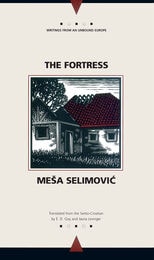
The Fortress
A NovelMesa Selimovic, translated from the Serbian by Edward Dennis Goy and Jasna Levinger-Goy
Northwestern University Press, 1999
Set in Bosnia in the late 1700s, the novel sometimes functions as an artful metaphor for the communist Yugoslavia of Selimovic's day. At other times, the author explores the nuances of Ottoman rule in the Balkans. Muslim Ahmet's sustaining marriage to a young Christian woman provides a multicultural tension that strongly resonates with contemporary readers and sensibilities.
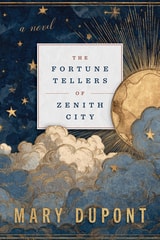
The Fortune Tellers of Zenith City
A NovelMary Dupont
University of Minnesota Press, 2027
A fraudulent fortune teller, a society divorcee, and a spirited prostitute caught up in a story of insanity, ambition, and murder in turn-of-the-century Duluth
Please don’t mistake this story for a murder mystery, May Martin warns us as she settles in to tell her tale. The mystery, she says, is that only one of us ended up dead.
The Fortune Tellers of Zenith City plunges readers into the shadows of Gilded Age Duluth, where the rising walls of Glensheen Mansion mask a city built on industry and rife with sin. May Martin, a dubious clairvoyant haunted by her past, finds her survival tethered to Agnes Petre, a true seer and wealthy divorcee. As May and Agnes forge a partnership in fortune telling to weather the conditions of the gritty port city, their malicious ex-husbands, John and Douglas, start romantic affairs with the carefree Ethelwynne Dean. These tangled relationships clash with brothel owner Madame Gain, a notorious criminal with debts to collect, the ruthless tycoons who rule the iron mines, and the working-class residents struggling beneath them. Beside the icy, foreboding depths of Lake Superior, these denizens must navigate a maze of lies, ambition, and even murder while keeping their own secrets hidden. And the greatest mystery isn’t the spirits they summon—it’s who will escape the impending storm.
With scrupulous attention to historical detail, Mary Dupont recreates the lost world of Duluth at the turn of the twentieth century, delivering chicanery, suspense, drama, and humor through May’s wary, witty perspective—with a thrilling twist at the end.
Retail e-book files for this title are screen-reader friendly with image accompanied by short alt text and/or extended description.
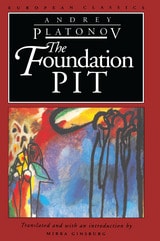
The Foundation Pit
Andrey Platonov
Northwestern University Press, 1994
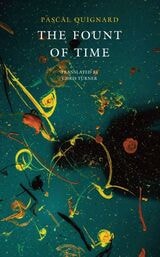
The Fount of Time
The Last Kindom IIPascal Quignard
Seagull Books, 2021
So writes Pascal Quignard of his monumental book series, Last Kingdom. In the latest volume, The Fount of Time, he focuses on the paradoxically immediate presence in our lives of the deepest, most distant past. He explores this subject through a multitude of mediums: fragments of autobiography; curious folktales; literary snippets; historical anecdotes both classical and modern; ruminations on biology, archaeology, and linguistics. Using all of these forms, he confronts dimensions of human experience which, though customarily conveyed in legend, myth, and dreams, run somehow beneath the everyday world and yet are part of our most tangible reality.
To enter Quignard’s horizonless time-space is to embrace a rich vision in which the totality of human history and culture is placed disconcertingly on a single footing. In The Fount of Time we are able to glimpse—whether through obscure cultural detail or unusual anecdote—“another world beneath the world.”

The Four-Chambered Heart
Anaïs Nin
Ohio University Press, 2023
The Four-Chambered Heart, Anaïs Nin’s 1950 novel, recounts the real-life affair she conducted with café guitarist Gonzalo Moré in 1936. Nin and Moré rented a house-boat on the Seine, and under the pervading influence of the boat’s watchman and Moré’s wife Helba, developed a relationship. Moré; named the boat Nanankepichu, meaning "not really a home."
In the novel, which Nin drew from her experiences on the boat, the characters' sources are clear. Djuna is an embodiment of Nin herself. A young dancer in search of fulfillment, she encapsulates all that the author was striving for at that time. The character of Djuna features in other novels, perhaps weaving a directly autobiographical thread into Nin’s fiction. The gypsy musician, Rango, is therefore Moré, and his invalid wife is Zora. The old watchman is present as a force that, along with Zora, works against the lovers in their quest for happiness.
Nin’s main concern throughout the novel is the "exterior," and how it affects the "interior." Water is a cleverly used theme. “I have no great fear of depths,” says Djuna, “and a great fear of shallow living.” Rango and Djuna’s relationship is, in effect, their effort to remain afloat. Often, Nin employs a stream of consciousness, especially in her flowing analyses of love, life and music, which continues the water image.
Anaïs Nin’s writing is typically exquisite in its detail and texture. She describes Paris: its "black lacquered cobblestones" and "silver filigree trees." The "humid scarfs of fog" on the river, and "the sharp incense of roasted chestnuts" reveal their source through their reality: Nin’s personal experience.

The Four-Chambered Heart
V3 in Nin's Continuous NovelAnaïs Nin
Ohio University Press, 1959
In the novel, which Nin drew from her experiences on the boat, the characters are clearly based. Djuna is an embodiment of Nin herself. A young dancer in search of fulfillment, she encapsulates all that the author was striving for at that time. The character of Djuna features in other novels, perhaps weaving a directly autobiographical thread into Nin’s fiction. The gypsy musician, Rango, is therefore Moré, and his invalid wife is Zora. The old watchman is present as a force which, along with Zora, works against the lovers in their quest for happiness.
Nin’s main concern is the "outside," and how it affects the "interior." Water is a cleverly used theme. “I have no great fear of depths,” says Djuna, “and a great fear of shallow living.” Rango and Djuna’s relationship is, in effect, their effort to remain afloat. Often, Nin employs a stream of consciousness, especially in her flowing analyses of love, life and music, which continues the water image.
Anaïs Nin’s writing is typically exquisite in its detail and texture. She describes Paris: its "black lacquered cobblestones" and "silver filigree trees." The "humid scarfs of fog" on the river, and "the sharp incense of roasted chestnuts" reveal their source through their reality: Nin’s personal experience.
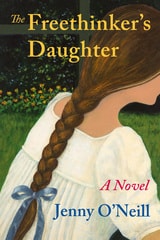
The Freethinker’s Daughter
A NovelJenny O'Neill
Ohio University Press, 2022
This historical and inspiring coming-of-age novel for young readers explores topics of both historical and contemporary relevance as it follows a harrowing year in the life of its intrepid teenaged narrator.
Lexington, Kentucky, 1833: Calendula “Cal” Farmer, a thirteen-year-old white girl, has been raised by her abolitionist, freethinking mother to reason for herself, consult her inner wisdom, and come to her own conclusions. But when a flash flood devastates her family’s home, Cal is unexpectedly thrust into domestic service in a wealthy family’s mansion. There, she encounters firsthand the physical, intellectual, and emotional brutalities of slavery. Later, a cholera outbreak kills a quarter of the population, including Cal’s mother, and Cal enters an orphanage, where she bravely begins another chapter in her young life.
Cal’s story is sure to captivate readers as she confronts the injustices and uncertainties of racism, class consciousness, epidemic disease, and personal loss with independent thinking, perseverance, and love.
The Funerals
A Novel of the Algerian Civil WarRashid Boudjedra
Haus Publishing, 2015
Full of suspense and drama, The Funerals takes readers behind the madness of civil war and shows how in times like these, some might attack their victims to feel a little less alone—perhaps even a little more human.
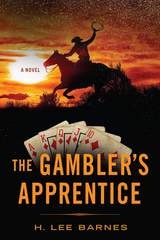
The Gambler's Apprentice
H. Lee Barnes
University of Nevada Press, 2016
Starting with a cattle-rustling scheme involving his father, Willy embarks on a life of crime early, eventually landing in a Laredo jail for shooting a man. During his incarceration he meets Sonny Archer, an itinerant gambler, who teaches Willy how to be a cardsharp. Upon his release, Willy roams the country, honing his new talent and getting into more trouble. During his time in New Orleans, Willy even winds up in a confrontation with an Italian crime ring.
While all these adventures mold Willy into a clever card player and a masterful fortune-hunter, his grand ambition to be a professional gambler is thwarted when the influenza epidemic strikes. Willy is forced to return home to his family’s Texas ranch, where he faces the most challenging test of his young life and begins to prove that he is far more than simply an apprentice.
The Garden in Which I Walk
Karen Brennan
University of Alabama Press, 2004
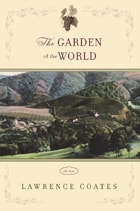
The Garden of the World
Lawrence Coates
University of Nevada Press, 2012
California’s Santa Clara Valley was once home to a vigorous wine industry. The Garden of the World is the tale of a pioneer winemaking family headed by Paul Tourneau, a fiercely ambitious vintner determined to make the finest wines in California. His plans are disrupted by a phylloxera epidemic at the beginning of the twentieth century, the trials of national Prohibition, and the bitter alienation of his older son. Played out against the vividly depicted seasonal rhythms of vineyard life, this is a moving saga of betrayal, loss, and the harsh consequences of unbreakable ambition.

The Gay Place
By Billy Lee Brammer
University of Texas Press, 1995
Set in Texas, The Gay Place consists of three interlocking novels, each with a different protagonist—a member of the state legislature, the state's junior senator, and the governor's press secretary. The governor himself, Arthur Fenstemaker, a master politician, infinitely canny and seductive, remains the dominant figure throughout.
Billy Lee Brammer—who served on Lyndon Johnson's staff—gives us here "the excitement of a political carnival: the sideshows, the freaks, and the ghoulish comedy atmosphere" (Saturday Review).
Originally published in 1961, The Gay Place is at once a cult classic and a major American novel.
The German Officer’s Boy
Harlan Greene
University of Wisconsin Press, 2005
The Ghost Dancers
A NovelAdrian C. Louis
University of Nevada Press, 2021

The Ghost Trio
Clyde Derrick
Omnidawn, 2022
The great love of your life is dead, but that doesn’t stop him from communicating with you—or luring you to join him in the afterlife. To remain safe in this world, you accept the help of a professional medium who develops his own emotional agenda.
The Ghost Trio that emerges takes us to pre- and post-World War II Prague where a poignant and chilling love triangle finds its resolution. There we meet great Czech creators of the past including Leoš Janácek and Karel Capek. Inspired by the ghost stories of Henry James and Daphne du Maurier, Clyde Derrick introduces three characters whose passions defy time and the accepted boundaries between the dead and the living. The author, who has lived in and visited purportedly haunted sites in advance of writing this novella, contends that this story and its characters found him. Meanwhile, his portrayal of two Pragues—one poised to fall to Hitler’s army, the other muted by Communist oppression—offers us insights into the past and reminds us to stay vigilant against dangerous politics. The Ghost Trio is a spiritual excursion in which we ponder the limitations and hazards of romantic love as well as the possibility of other lives in other times.
The Ghost Trio is the winner of the 2020 Omnidawn Fabulist Fiction Chapbook / Novelette Contest, chosen by Molly Gloss.
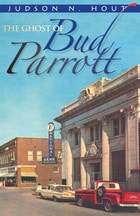
The Ghost of Bud Parrott
a novelJudson N Hout
Parkhurst Brothers, Inc., 2010
A teen’s life is complicated. Add an overworked dad, a distraught mom.
Enter an old man from the wrong side of the tracks.
He knows things. He’s there when you need him.
This happens to someone; it’s not a maybe thing. People get hurt. People die. There’s a dad who loves his kid but works all the time. When he doesn’t work, he drinks. When he drinks he’s out of control.
There’s a mom. She knows dad is overworked, a good man carrying too much responsibility.
The kid turns to the handy man to learn a man’s skills. In the old man from the wrong side of the tracks, the kid finds unusual skills and terrible—but true—lessons. He finds that his own safety comes at a cost to his unfortunate friend. He finds growing up comes at a cost to himself. This is the story of such a kid, told by himself after he has lived much of his life, come to terms with his parents’ weaknesses, and learned that seemingly insignificant people carry more pain than he can imagine, though he has already seen plenty.
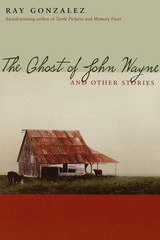
The Ghost of John Wayne
and Other StoriesRay Gonzalez
University of Arizona Press, 2001
The vast Texas borderland is a place divided, a land of legends and lies, sanctification and sinfulness, history and amnesia, haunted by the ghosts of the oppressed and the forgotten, who still stir beneath the parched fields and shimmering blacktops. It is a realm filled with scorpion eaters and mescal drinkers, cowboys and Indians, Anglos and Chicanos, spirit horses and beat-up pickups, brujos and putas, aching passion and seething rage, apparitions of the Virgin and bodies in the Rio Grande.
In his first collection of short fiction, award-winning poet, editor, and anthologist Ray Gonzalez powerfully evokes both the mystery and the reality of the El Paso border country where he came to manhood.
Here, in a riverbed filled with junked cars and old bones, a young boy is given a dark vision of a fiery future. Under the stones of the Alamo, amid the gift shops and tour buses, the wraiths of fallen soldiers cry out to be remembered. By an ancient burial site at the bottom of a hidden canyon, two lovers come face to face with their own dreams and fears.
In these stories, Ray Gonzalez is a literary alchemist, blending contemporary culture with ancient tradition to give a new voice to the peoples of the border.

The Ghost of Monsieur Scarron
Janet Lewis
Ohio University Press, 2013
This historical novel is the third and final book in American poet and fiction writer Janet Lewis’s Cases of Circumstantial Evidence series, based on legal case studies compiled in the nineteenth century. In The Ghost of Monsieur Scarron, Lewis returns to her beloved France, the setting of The Wife of Martin Guerre, her best-known novel and the first in the series. As Swallow Press executive editor Kevin Haworth relates in a new introduction, Monsieur Scarron shifts the reader into the center of Paris in 1694, during the turbulent reign of the Sun King, Louis XIV. The junction of this time and place gives Monsieur Scarron an intriguing political element not apparent in either The Wife of Martin Guerre or The Trial of Sören Qvist.
The Ghost of Monsieur Scarron begins in a small bookbinder’s shop on a modest Paris street, but inexorably expands to encompass a tumultuous affair, growing social unrest, and the conflicts between a legal system based on oppressive order and a society about to undergo harsh changes. With its domestic drama set against a larger political and historical backdrop, Monsieur Scarron is considered by some critics and readers to be the most intricately layered and fully realized book of Lewis’s long career. Originally published in 1959, Monsieur Scarron has remained in print almost continuously ever since.
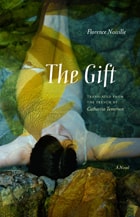
The Gift
A NovelFlorence Noiville
Northwestern University Press, 2012
The narrator’s mother looms large in her psyche. Labeled “eccentric” or “Italian,” her mother in fact suffered from what was later found to be manic depression. Without understanding the disease, the family treated the unpredictable ups and downs of her condition as they struck. During periods of paralyzing depression she was hospitalized, and the family felt abandoned. During periods of manic productivity and overdrive, she was a dedicated pharmacist, an exemplary homemaker, and an unusually knowledgeable gardener.
This sparse novel draws the portrait of a grand and unforgettable lady, loving and unable to love at once. Her bequest is as much a material one as it is an emotional one, and, the author surmises as she glances at her own daughters, a genetic one.
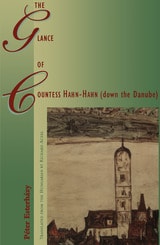
The Glance of Countess Hahn-Hahn (down the Danube)
Peter Esterhazy
Northwestern University Press, 1999
In The Glance of Countess Hahn-Hahn (down the Danube), Péter Esterházy tells the story of a professional traveler, commissioned--like Marco Polo by Kublai Khan--to undertake a voyage of discovery and prepare a travelogue. Communicating the details of his journey through terse and surreal telegrams, the Traveller weaves a rich tapestry of narratives, evoking the ethereal past and the precarious present of a disappearing world.
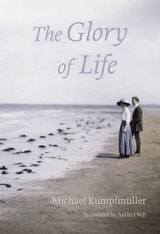
The Glory of Life
Michael Kumpfmüller
Haus Publishing, 2014
In July 1923, Kafka is convalescing by the Baltic Sea when he meets Diamant and they fall in love. He is forty years old and dying of tuberculosis; she is twenty-five and seems to him the essence of life. After a tentative first meeting, the indecisive Kafka moves with Diamant to Berlin, a city in the throes of political upheaval, rising anti-Semitism, and the turmoil of Weimar-era hyperinflation. As his tuberculosis advances, they are forced to leave the city for the Kierling Sanatorium near Vienna, a move that threatens the paradise they have created.
The first of Kumpfmüller’s novels to appear in English after his acclaimed The Adventures of a Bed Salesman, The Glory of Life is a meticulously researched and poignant portrait of one of the most enduring authors in world literature. Beautifully crafted, this book is an evocative rumination on the power of love and friendship.
The Glory of the Pythres
Richard Millet
Northwestern University Press, 2005
Visionary and ambitious, Richard Millet's stunning novel explores whether Pythre and his family, whether any person, can overcome one’s fate and circumstance, to transcend a persistent darkness that pulls one into silence. The translation is no less ambitious than the novel itself. It captures this forgotten world in Millet's musical prose; it contrasts the strange patois of the villagers against "proper" French. Filled with finely observed characters and a breathtaking power of description, The Glory of the Pythres is a unique, powerful work of art.
The Goat Bridge
A NovelT. M. McNally
University of Michigan Press, 2005
As he drifts through the countryside, Stephen struggles to resolve the trauma and sorrow of losing his son, and soon the landscape begins to mirror his own inner battles. After a return trip to America fails to heal the rift between himself and the mother of his child, Stephen returns to Sarajevo, where he begins a project to document images of the Bosnian people—not war images, but personal portraits of an embattled nation. There he finds himself falling in love with a German journalist, who helps to heal his ailing body and to overcome his tragic loss.
The Goat Bridge is an unforgettable tale of memory and oblivion, a probing story of loss and redemption, of letting go and holding on, and of the universal human search for meaning. In the end, it is also a love story about finding the wisdom and courage to surrender to one’s own and another’s heart.

The God Behind the Window
Michael Krüger
Seagull Books, 2018
The thirteen stories of Michael Krüger’s The God behind the Window capture the poignancy and cynicism of late life through tales of misanthropic old men full of the mixture of wisdom and melancholy that so often accompanies old age. In Krüger’s stories, world-weary characters seek—and only temporarily find—solace in nature and culture, rendering their search for a better life simultaneously comedic and heart wrenching. From a solitary hiker in the Swiss Alps to the book’s eponymous shut-in, these aging malcontents are continually surprised by the unexpected interventions of a world that has come to seem predictable. Krüger captures this stage in life masterfully, contrasting the deeply personal emotions of affection, melancholy, and longing with an indifferent world. The resulting stories are lyrical, philosophical, and tender despite their cynicism.
The Gods in Small Doses
StoriesJosh Bell
University of Massachusetts Press, 2026
The magical and mundane twist together in this collection of surreal stories
In this collection of stories set in an uncanny American suburbia and haunted by a lurking unease, the peculiar feeling of ephemeral youth finds its voice. The stories in The Gods in Small Doses depict childhood through a funhouse mirror, as a time of myth and damage, of tenderness and terror. Anything—except what should happen—can happen next.
A retired witch traps a goat-killing feral child, a girl becomes obsessed with the regenerative properties of her younger brother’s body, Armageddon is fought between the forces of good (those who like to go to bed early) and evil (those who prefer to stay up late), a supernatural orphan insinuates his way into an all-American family, the god Poseidon wrecks a high-school house party, and the women of a fabulated island city all mysteriously disappear overnight. In these fast, comic, and troubling tales, sweetness and violence vie to become synonymous.
This is a universe of both realism and surrealism, of magic and the mundane, where strong but deeply flawed characters fight to exert control over things—time, death, themselves—that can’t be controlled. Dreamlike moments of body horror, catastrophe, and absurdity challenge the reader to embrace the taboo and to expect—always—the unexpected. Bell’s stories offer a twisted, unique, and utterly fascinating take on what it means to “grow up,” and all of the questions that the notion inspires.
The Golden Land
Elizabeth Shick
New Issues Poetry and Prose, 2022
When Etta's grandmother dies, she is compelled to travel to Myanmar to explore complicated adolescent memories of her grandmother's family and the violence she witnessed there. Full of rich detail and complex relationships, The Golden Land explores those personal narratives that might lie beneath the surface of historical accounts.
The Good Oak
Martin Etchart
University of Nevada Press, 2005

The Good Pornographer
Brian Bouldrey
University of Wisconsin Press, 2026
While many have come to view Walace as a bad influence on children, literature, and himself, his impact sweeps across worlds both fantastic and real, resulting in the establishment of a new kingdom in his neglected McMansion, Summerheim. The result is a mock-epic in rehabilitation, starring such friends and enemies as Cal, Walace’s dealer and private jester; Dragon, a porn star turned guidance counselor; Epiphany, a lunch lady and stripper in recovery; her son, Tuffy, planning everyone’s funerals at age nine; Jackal, newly sober and in touch with his emotions for the first time; and Wolf, Walace’s socially withdrawn twin brother and reluctant doppelgänger.
Brian Bouldrey piles on the laughs and absurdity alongside dollops of humanity and sobriety. With brilliant recklessness, he praises and pokes fun at genres, conventions, fandoms, and critics, offering a Deadpool-like exploration of an upside-down world filled with epic quests, epic mistakes, and epic characters.
The Good Rainbow Road
Simon J. Ortiz; Illustrations by Michael Lacapa
University of Arizona Press, 2004
Their village is called Haapaahnitse, Oak Place, and it lies at the foot of a mountain. Once there was a lake and a stream nearby, but they have dried up. Once rain and snow came, but no more. Not only did the crops wither and die, even the hardy oak trees have become brittle sticks. The land has become barren and dry.
Two brothers, Tsaiyah-dzehshi, whose name means First One, and Hamahshu-dzehshi, Next One, are chosen for an important mission. They are sent on a westward trek to the home of the Shiwana, the Rain and Snow Spirits, to ask them to bring the gift of water to the village again. The brothers cross deserts and mountains on an arduous journey until they are finally stopped short by a treacherous canyon filled with molten lava.
The Good Rainbow Road tells how the brothers overcome this last challenge and continue on to their destination. Written in the tradition of Native American oral storytelling and accompanied by colorful illustrations from celebrated Native artist Michael Lacapa, it brings the powers of language, memory, and imagery to a tale that will captivate children ages seven and up.
As Simon Ortiz writes, "The Good Rainbow Road is located in the Native American world, but it is not limited to that world. Even considering humankind's many ethnic and racial differences, we are all part of each other as people and the rest of all Creation, and our stories join us together." This is the foundation of The Good Rainbow Road, and on that road young readers will broaden their understanding of humanity's common bonds.
The Good Rainbow Road is presented in Keres, the language of Acoma Pueblo and six other Pueblo communities in New Mexico, and in English, with an additional Spanish translation in the back of the book.
The Goodbye House
Lawrence Coates
University of Nevada Press, 2015
In this multigenerational family story, Katherine, Carter, and Scott all try to navigate an evolving world in the Golden State that doesn’t seem quite so golden any longer. Scott returns and hopes to restore and recreate their past happiness, Katherine contemplates divorce and explores new love along the way, and Carter works to find a place for himself in a new school among classmates who are hostile to him.
The characters fervently chase their dreams across Silicon Valley and beyond, from the gleaming office parks of Cupertino to a self-help seminar on the Las Vegas Strip and an underfunded high school theater production of The Tempest. The one element tying them all together is the house of the title, a 1950s tract home that once represented happiness and now holds the family close in its protective embrace, until, in the end, even this constant changes.
The Gourmet Club
A SextetTanizaki Jun'ichiro; Translated by Anthony H. Chambers and Paul McCarthy
University of Michigan Press, 2017
The Grand Gennaro
Belluscio, Steven
Rutgers University Press, 2009
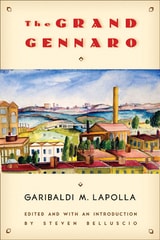
The Grand Gennaro, a riveting saga set at the turn of the last century in Italian American Harlem, reflects on how youthful acts of cruelty and desperation follow many to the grave. A classic in the truest sense, this operatic narrative is alive once again, addressing the question: How does one become an "American"?
The Grand Prize and Other Stories
Daniela Crasnaru
Northwestern University Press, 2005
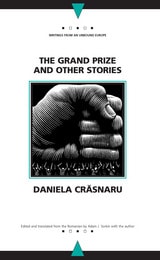
Crasnaru portrays the lives of people so used to hardship that it never occurs to them to surrender. An unhappily married woman waits in vain for a call from a potential lover. A foul-mouthed mother of seven accuses a war hero of conning her out of her life savings. A lawyer is lured to a forest by a dead coworker's stories of a beautiful woman. Those with drab lives use fantasy to endure and those who believe themselves happy are forced to face grim realities. Crasnaru mixes elements of the ridiculous, the fanciful, and the grotesque with vivid realism and her remarkable stories, while taking place in a dark era in her nation's history, are about the human as well as the Romanian condition.
The Great Fall
Peter Handke
Seagull Books, 2018
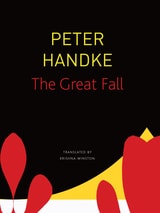
The latest work by Peter Handke, one of our greatest living writers, chronicles a day in life of an aging actor as he makes his way on foot from the outskirts of a great metropolis into its center. He is scheduled to receive a prestigious award that evening from the country’s president, and the following day he is supposed to start shooting for a film—perhaps his last—in which he plays a man who runs amok. While passing through a forest, he encounters the outcasts of the society—homeless people and migrants—but he keeps trudging along, traversing a suburb whose inhabitants are locked in petty but mortal conflicts, crossing a seemingly unbridgeable superhighway, and wandering into an abandoned railyard, where police, unused to pedestrians, detain him briefly on suspicion of terrorism.
Things don’t improve when he reaches the heart of the city. There he can’t help but see the alienation characteristic of its residents and the omnipresent malign influence of electronic technology. What, then, is the “Great Fall”? What is this heart-wrenching, humorous, distinctively attentive narrative trying to tell us? As usual, Peter Handke, deeply introspective and powerfully critical of the world around him, leaves it to the reader to figure out.

The Great Midland
Alexander Saxton
University of Illinois Press, 1997
The book vividly depicts the multiracial and multiethnic alliances that developed as Chicago railroad workers struggled to organize. It presents some of its narrative through the complex consciousness of Stephanie Koviak, a young, first-generation Polish-American.
The Great Prince Died
A Novel about the Assassination of TrotskyBernard Wolfe
University of Chicago Press, 2015
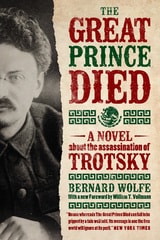
In The Great Prince Died, Bernard Wolfe offers his lyrical, fictionalized account of Trotsky’s assassination as witnessed through the eyes of an array of characters: the young American student helping to translate the exiled Trotsky’s work (and to guard him), the Mexican police chief, a Rumanian revolutionary, the assassin and his handlers, a poor Mexican “peón,” and Trotsky himself. Drawing on his own experiences working as the exiled Trotsky’s secretary and bodyguard and mixing in digressions on Mexican culture, Stalinist tactics, and Bolshevik history, Wolfe interweaves fantasy and fact, delusion and journalistic reporting to create one of the great political novels of the past century.
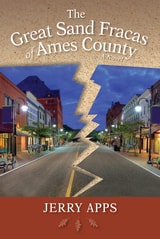
The Great Sand Fracas of Ames County
A NovelJerry Apps
University of Wisconsin Press, 2014
Soon the fracas over frac sand attracts some national attention, including that of Stony Field, the pen name of a nationally syndicated columnist. Will the village board vote to solve their budget problems with a cut of the mining profits? Will the mine create real jobs for local folks? Will Stony Field come to the village to lead protests against the mine? And will defenders of the Trail Marker Oak literally draw a battle line in the sand?
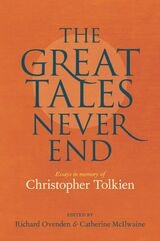
The Great Tales Never End
Essays in Memory of Christopher TolkienEdited by Richard Ovenden and Catherine McIlwaine
Bodleian Library Publishing, 2022
Over more than four decades, J. R. R. Tolkien’s son and literary executor Christopher Tolkien completed some twenty-four volumes of his father’s work, much more than his father had succeeded in publishing during his own lifetime. Thanks to Christopher’s extraordinary publishing efforts and scholarship, readers today can survey and understand the vast landscape of Tolkien’s legendarium.
The Great Tales Never End sheds new light on J. R. R. Tolkien’s work and the debt owed to Christopher by the many Tolkien scholars who were privileged to work with him. Essays by world-renowned scholars and Tolkien family reminiscences offer unique insights into the publication process. What was Tolkien’s intended ending for The Lord of the Rings, and did it leave echoes in the stripped-down version that was actually published? What was the audience’s response to the first-ever adaptation of The Lord of the Rings—a radio dramatization that has now been deleted forever from the BBC’s archives?
The book is illustrated with color reproductions of J. R. R. Tolkien’s manuscripts, maps, drawings, and letters, as well as photographs of Christopher Tolkien and extracts from his works. Many of these documents have never been seen before, making this volume essential reading for Tolkien scholars, readers, and fans.
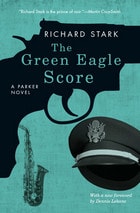
The Green Eagle Score
A Parker NovelRichard Stark
University of Chicago Press, 2010
Richard Stark's Parker novels are the hardest of hard-boiled, classic crime novels where the heists are huge, the body counts are high, and the bad guys usually win.
The Parker novels have been a huge influence on countless writers and filmmakers, including Quentin Tarantino, Stephen King, George Pelecanos, Colson Whitehead, Lucy Sante, John Banville, and many more. Their stripped-down language and hard-as-nails amorality create an unforgettable world where the next score could be the big one, but your next mistake could also be your last. There's nothing else like them.
In The Green Eagle Score, Parker cuts his vacation with Claire short with a new job: stealing the entire payroll of an Air Force base in upstate New York. With help from Marty Fusco, fresh out of the pen, and a smart aleck finance clerk named Devers, Parker tries to shorten the odds on the risky job. But the ice is thinner than Parker likes to think—and a wrench always gets thrown in the works.
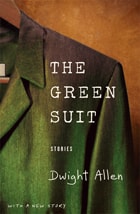
The Green Suit
StoriesDwight Allen
University of Wisconsin Press, 2011
This edition of Dwight Allen’s acclaimed story collection, The Green Suit, ends with a new story, rounding out a dozen interlinked tales about a well-to-do Kentucky family called the Sackriders. The stories cover a period of forty years, from the Vietnam War to the Age of Foreclosure. Chief among the Sackriders is Peter, son of a judge and a vitamin-pill-popping mother, brother to a sister whose troubles with boys take her far from Kentucky. He is a writer perhaps more in love with women (and, intermittently, men) than he is with words, whose eagerness to be loved leads him into alarming circumstances. He is a man with a yearning for transcendence and a penchant for betrayal.
The new story finds Sackrider in his mid-fifties, married for a second time, the father of a small child, and all tangled up with his next-door neighbor, an artist who likes to use the corpses of animals in his collages.