Results by title
28167 books match the query 'History' and 6372 start with t
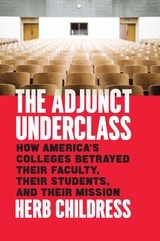
The Adjunct Underclass
How America’s Colleges Betrayed Their Faculty, Their Students, and Their MissionHerb Childress
University of Chicago Press, 2019
Welcome to the life of the mind in the gig economy. Over the past few decades, the job of college professor has been utterly transformed—for the worse. America’s colleges and universities were designed to serve students and create knowledge through the teaching, research, and stability that come with the longevity of tenured faculty, but higher education today is dominated by adjuncts. In 1975, only thirty percent of faculty held temporary or part-time positions. By 2011, as universities faced both a decrease in public support and ballooning administrative costs, that number topped fifty percent. Now, some surveys suggest that as many as seventy percent of American professors are working course-to-course, with few benefits, little to no security, and extremely low pay.
In The Adjunct Underclass, Herb Childress draws on his own firsthand experience and that of other adjuncts to tell the story of how higher education reached this sorry state. Pinpointing numerous forces within and beyond higher ed that have driven this shift, he shows us the damage wrought by contingency, not only on the adjunct faculty themselves, but also on students, the permanent faculty and administration, and the nation. How can we say that we value higher education when we treat educators like desperate day laborers?
Measured but passionate, rooted in facts but sure to shock, The Adjunct Underclass reveals the conflicting values, strangled resources, and competing goals that have fundamentally changed our idea of what college should be. This book is a call to arms for anyone who believes that strong colleges are vital to society.
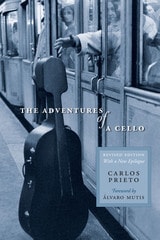
The Adventures of a Cello
Revised Edition, with a New EpilogueBy Carlos Prieto
University of Texas Press, 2011
In 1720, Antonio Stradivari crafted an exquisite work of art—a cello known as the Piatti. Over the next three centuries of its life, the Piatti cello left its birthplace of Cremona, Italy, and resided in Spain, Ireland, England, Italy, Germany, and the United States. In 1978, the Piatti became the musical soul mate of world-renowned cellist Carlos Prieto, with whom it has given concerts around the world.
In this delightful book, Mr. Prieto recounts the adventurous life of his beloved "Cello Prieto," tracing its history through each of its previous owners from Stradivari in 1720 to himself. He then describes his noteworthy experiences of playing the Piatti cello, with which he has premiered some eighty compositions. In this part of their mutual story, Prieto gives a concise summary of his own remarkable career and his relationships with many illustrious personalities, including Igor Stravinsky, Dmitry Shostakovich, Pablo Casals, Mstislav Rostropovich, Yo-Yo Ma, and Gabriel García Márquez. A new epilogue, in which he describes recent concert tours in Moscow, Siberia, and China and briefer visits to South Korea, Taiwan, and Venezuela, as well as recent recitals with Yo-Yo Ma, brings the story up to 2009.
To make the story of his cello complete, Mr. Prieto also provides a brief history of violin making and a succinct review of cello music from Stradivari to the present. He highlights the work of composers from Latin America, Spain, and Portugal, for whose music he has long been an advocate and principal performer.
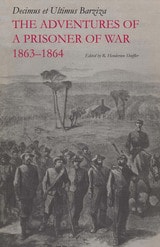
The Adventures of a Prisoner of War, 1863–1864
By Decimus et Ultimus Barziza. Edited by R. Henderson Shuffler
University of Texas Press, 1964
This journal is the exciting personal narrative of a Texan who was a prisoner of the Union Army during the Civil War, escaped to Canada, and finally made his way back into the Confederacy through the blockade. It was written while the war was still in progress.
The journal was issued anonymously in Houston early in 1865. Its author, Decimus et Ultimus Barziza, was a colorful, competent, truly remarkable Texan—well educated, well traveled, and sophisticated as an observer. Barziza came to Texas from Virginia in 1857. He left a growing law practice at Owensville to enter Confederate service as first lieutenant of the “Robertson Five-Shooters,” an infantry company which was one of the original units of the Fourth Texas Infantry, Hood’s Brigade. After fighting in many battles, he was wounded at Gettysburg and left lying on the field. The Yankees picked him up and imprisoned him at Johnson’s Island.
A year later, as Barziza was being shipped to another prison, he escaped by diving through a window of the moving train at midnight. Making his way across Pennsylvania to New York, he took a train for Canada. There he became one of the first beneficiaries of an underground system which eventually returned him to North Carolina. Too ill from his wounds and the hardships of his escape to return to active duty, he spent the next few months writing his memoirs. They cover the period from the drive for Gettysburg to Barziza’s return to the Confederacy.
Before the original publication of this book, only two copies of The Adventures of a Prisoner of War were known to exist. R. Henderson Shuffler, then director of the Texana program of the University of Texas, felt that it was intriguing and important enough to merit editing for republication. The journal has the further attraction of describing the then little-known machinery which was set up in Canada to help Rebel soldiers who had escaped Northern prisons make their way back to the Confederacy by way of Nova Scotia and Bermuda.
Shuffler supplements the narrative with limited yet helpful documentation, providing introductory sections explaining Barziza’s background and his career as a Texas legislator and lawyer, as well as carrying the war story up to the sequence where Barziza’s account begins.

The Advocates of Poetry
A Reader of American Poet-Critics of the Modernist EraR S Gwynn
University of Arkansas Press, 1996

The Aeneid
Virgil
University of Chicago Press, 2017
The paperback and e-book editions include a new introduction by Richard F. Thomas, along with a new glossary of names that makes the book even more accessible for students and for general readers coming to the Aeneid for the first time who may need help acclimating to Virgil’s world.
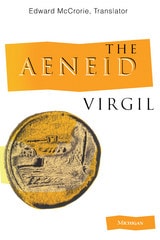
The Aeneid of Virgil
Virgil
University of Michigan Press, 1995
In this new translation Edward McCrorie has performed the difficult task of rendering Virgil's compact, dense Latin into fine, readable, modern English verse. The sometimes complex text is made clear and comprehensible even for first-time readers, and a glossary of names helps identify characters and place-names in the poem. The translation is well suited for students at all levels, and readers already familiar with Virgil will find many fresh images and ideas.
"A brilliant effort."--Robert Bly
"I admire the ambition of the project, and the generosity of many of the lines."--Robert Fagles
Edward McCrorie is Professor of English, Providence College. His poetry and translations of Latin verse have been widely published.
The Aesthetic Character of Blackness
Sounds Like UsJemma DeCristo
Duke University Press, 2025

The Aesthetics of Disengagement
Contemporary Art and DepressionChristine Ross
University of Minnesota Press, 2006
The Aesthetics of Kinship
Form and Family in the Long Eighteenth CenturyHeidi Schlipphacke
Bucknell University Press, 2023
The Aesthetics of Mythmaking in German Postwar Culture
André Fischer
Northwestern University Press, 2024
Myths are a central part of our reality. But merely debunking them lets us forget why they are created in the first place and why we need them. André Fischer draws on key examples from German postwar culture, from novelists Hans Henny Jahnn and Hubert Fichte, to sculptor and performance artist Joseph Beuys, and filmmaker Werner Herzog, to show that mythmaking is an indispensable human practice in times of crisis.
Against the background of mythologies based in nineteenth-century romanticism and their ideological continuation in Nazism, fresh forms of mythmaking in the narrative, visual, and performative arts emerged as an aesthetic paradigm in postwar modernism. Boldly rewriting the cultural history of an era and setting in transition, The Aesthetics of Mythmaking in German Postwar Culture counters the predominant narrative of an exclusively rational Vergangenheitsbewältigung (“coming to terms with the past”). Far from being merely reactionary, the turn toward myth offered a dimension of existential orientation that had been neglected by other influential aesthetic paradigms of the postwar period. Fischer’s wide-ranging, transmedia account offers an inclusive perspective on myth beyond storytelling and instead develops mythopoesis as a formal strategy of modernism at large.
The Aesthetics of Resistance, Volume III
A Novel, Volume 3Peter Weiss
Duke University Press, 2025
Volume III, initially published in 1981, teems with characters, many of whom are based on historical figures. It commences in May of 1940, as the narrator’s parents flee Nazi forces in Eastern Europe and reunite with their son in Sweden. While in Stockholm, the narrator and other Communist activists living in exile struggle to build structures in the German underground. The story then follows Communist resistance fighter Charlotte Bischoff as she is smuggled to Bremen on a freighter. In Berlin, she contacts the narrator’s friends and joins the Red Orchestra resistance group. Soon, the Gestapo cracks the underground group’s code, arrests a number of its members, and takes them to Plötzensee Prison, where most of them are executed. Featuring the narrator’s meditations on paintings, sculpture, and literature throughout, The Aesthetics of Resistance demonstrates the affinity between political resistance and art. Ultimately, Weiss argues that we must look to art for new models of political action and social understanding.

The Aesthetics of Shadow
Lighting and Japanese CinemaDaisuke Miyao
Duke University Press, 2013
The Affect Lab
The History and Limits of Measuring EmotionGrant Bollmer
University of Minnesota Press, 2023
Examines how our understanding of emotion is shaped by the devices we use to measure it
Since the late nineteenth century, psychologists have used technological forms of media to measure and analyze emotion. In The Affect Lab, Grant Bollmer examines the use of measurement tools such as electrical shocks, photography, video, and the electroencephalograph to argue that research on emotions has confused the physiology of emotion with the tools that define its inscription.
Bollmer shows that the psychological definitions of emotion have long been directly shaped by the physical qualities of the devices used in laboratory research. To investigate these devices, The Affect Lab examines four technologies related to the history of psychology in North America: spiritualist toys at Harvard University, serial photography in early American psychological laboratories, experiments on “psychopaths” performed with an instrument called an Offner Dynograph, and the development of the “electropsychometer,” or “E-Meter,” by Volney Mathison and L. Ron Hubbard.
Challenging the large body of humanities research surrounding affect theory, The Affect Lab identifies an understudied problem in formulations of affect: how affect is a construction inseparable from the techniques and devices used to identify and measure it. Ultimately, Bollmer offers a new critique of affect and affect theory, demonstrating how deferrals to psychology and neuroscience in contemporary theory and philosophy neglect the material of experimental, scientific research.
Retail e-book files for this title are screen-reader friendly with images accompanied by short alt text and/or extended descriptions.
The Affinity of the Eye
Writing Nikkei in PeruIgnacio López-Calvo
University of Arizona Press, 2013
In The Affinity of the Eye: Writing Nikkei in Peru, Ignacio López-Calvo rises above the political emergence of the Fujimori phenomenon and uses politics and literature to provide one of the first comprehensive looks at how the Japanese assimilated and inserted themselves into Peruvian culture. Through contemporary writers’ testimonies, essays, fiction, and poetry, López-Calvo constructs an account of the cultural formation of Japanese migrant communities. With deftly sensitive interviews and comments, he portrays the difficulties of being a Japanese Peruvian. Despite a few notable examples, Asian Peruvians have been excluded from a sense of belonging or national identity in Peru, which provides López-Calvo with the opportunity to record what the community says about their own cultural production. In so doing, López-Calvo challenges fixed notions of Japanese Peruvian identity.
The Affinity of the Eye scrutinizes authors such as José Watanabe, Fernando Iwasaki, Augusto Higa, Doris Moromisato, and Carlos Yushimito, discussing their literature and their connections to the past, present, and future. Whether these authors push against or accept what it means to be Japanese Peruvians, they enrich the images and feelings of that experience. Through a close reading of literary and cultural productions, López-Calvo’s analysis challenges and reframes the parameters of being Nikkei in Peru.
Covering both Japanese issues in Peru and Peruvian issues in Japan, the book is more than a compendium of stories, characters, and titles. It proves the fluid, enriching, and ongoing relationship that exists between Peru and Japan.
The Afric-American Picture Gallery
William J. Wilson's Speculative Museum of Black ArtBritt Rusert
Duke University Press, 2026

The African AIDS Epidemic
A HistoryJohn Iliffe
Ohio University Press, 2006
A Choice Significant University Press Titles for Undergraduates, 2005–2006
This history of the African AIDS epidemic is a much-needed, accessibly written historical account of the most serious epidemiological catastrophe of modern times. The African AIDS Epidemic: A History answers President Thabo Mbeki’s provocative question as to why Africa has suffered this terrible epidemic.
While Mbeki attributed the causes to poverty and exploitation, others have looked to distinctive sexual systems practiced in African cultures and communities. John Iliffe stresses historical sequence. He argues that Africa has had the worst epidemic because the disease was established in the general population before anyone knew the disease existed. HIV evolved with extraordinary speed and complexity, and because that evolution took place under the eyes of modern medical research scientists, Iliffe has been able to write a history of the virus itself that is probably unique among accounts of human epidemic diseases. In giving the African experience a historical shape, Iliffe has written one of the most important books of our time.
The African experience of AIDS has taught the world much of what it knows about HIV/AIDS, and this fascinating book brings into focus many aspects of the epidemic in the longer context of massive demographic growth, urbanization, and social change in Africa during the latter half of the twentieth century. The African AIDS Epidemic: A History is a brilliant introduction to the many aspects of the epidemic and the distinctive character of the virus.

The African American Experience in Cyberspace
A Resource Guide to the Best Web Sites on Black Culture and HistoryAbdul Alkalimat
Pluto Press, 2003
Alkalimat provides an easy to use directory to the very best websites that deal with the African American Experience. The first section covers every aspect of African American history, while a second section deals with a diverse set of topics covering society and culture. Each chapter has a brief essay, extensively annotation on the five best sites for each topic, and then a group of good sites and a short bibliography. This book is designed for a course at the high school or college level. This book should be kept near every home computer that people use to surf the web for Black content.
Most people have found out that the major corporations and governments have been the dominant uploaders of information into cyberspace. This volume is different because it is a serious introduction to the full democratic use of the web. These websites will introduce people to the people who are serious about ending the digital divide because they are busy uploading information about the most excluded and marginalized people, the African American community. Many of these sites are being established by Black Studies academic programmes, as well as community based organizations and institutions.
The African American Newspaper
Voice of FreedomPatrick S. Washburn
Northwestern University Press, 2006
In March of 1827 the nation's first black newspaper appeared in New York City—to counter attacks on blacks by the city's other papers. From this signal event, The African American Newspaper traces the evolution of the black newspaper—and its ultimate decline--for more than 160 years until the end of the twentieth century.
The book chronicles the growth of the black press into a powerful and effective national voice for African Americans during the period from 1910 to 1950--a period that proved critical to the formation and gathering strength of the civil rights movement that emerged so forcefully in the following decades. In particular, author Patrick S. Washburn explores how the Pittsburgh Courier and the Chicago Defender led the way as the two most influential black newspapers in U.S. history, effectively setting the stage for the civil rights movement's successes. Washburn also examines the numerous reasons for the enormous decline of black newspapers in influence and circulation in the decades immediately following World War II. His book documents as never before how the press's singular accomplishments provide a unique record of all areas of black history and a significant and shaping affect on the black experience in America.

The African Exchange
Toward a Biological History of Black PeopleKenneth F. Kiple
Duke University Press, 1988
The essays in this volume form the cutting edge of biohistorical research that promises to rewrite the story of humankind's past in significant ways.

The African Experience with Higher Education
J. F. Ade Ajayi
Ohio University Press, 1996
There have been institutions of higher learning for centuries in Africa, but the phenomenal growth has taken place in the last fifty years, first in the later days of colonialism and then in the heady days of independence and commodity boom. Without them, there would have been no development.
The three highly distinguished authors have written the first comprehensive assessment of universities and higher education in Africa south of the Sahara. As can be seen from their biographies, they draw on experience from both francophone and anglophone Africa and from teaching in both the sciences and the arts.
The African Genius
Basil Davidson
Ohio University Press, 2004
The African Genius presents the ideas, social systems, religions, moral values, arts, and metaphysics of a range of African peoples. Basil Davidson points toward the Africa that might emerge from an ancient civilization that was overlaid and battered by colonialism, then torn apart by the upheaval of colonialism’s dismantlement. Davidson disputes the notion that Africa gained under colonialism by entering the modern world. He sees, instead, an ancient order replaced by modern dysfunction. Davidson’s depiction of the sophisticated “native genius” that has carried Africans through centuries of change is vital to an understanding of modern Africa as well.
The African Presence in Santo Domingo
Carlos Andujar
Michigan State University Press, 2012
Throughout its long and often tumultuous history, “La Hispanola” has taken on various cultural identities to meet the expectations—and especially the demands—of those who governed it. The island shared by the Dominican Republic and Haiti saw its first great shift with the arrival of Spanish colonists, who eliminated the indigenous population and established a pattern of indifference or hostility to diversity there. This enlightening book explores the Dominican Republic through the lens of its African descendants, beginning with the rise of the black slave trade in fifteenth- and sixteenth-century West Africa, and continuing on to slavery as it existed on the island. An engaging history that vividly details black life in the Dominican Republic, the book investigates the slave rebellions and evaluates the numerous contributions of black slaves to Dominican culture.
The African Roots of Marijuana
Chris S. Duvall
Duke University Press, 2019
The African Transformation of Western Medicine and the Dynamics of Global Cultural Exchange
David Baronov
Temple University Press, 2010
The book analyzes biomedicine as a complex and dynamic sociocultural form, the conceptual premises of which make it necessarily subject to ongoing change and development as it travels the globe. David Baronov captures the complexities of this cultural exchange by using world-systems analysis in a way that places global cultural processes on equal footing with political and economic processes. In doing so, he both allows the story of Africa’s transformation of “Western” biomedicine to be told and offers new insights into the capitalist world system.
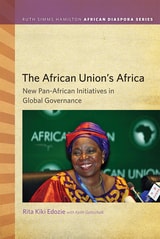
The African Union's Africa
New Pan-African Initiatives in Global GovernanceRita Kiki Edozie
Michigan State University Press, 2014
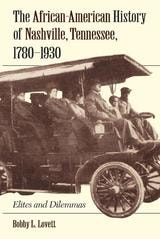
The African-American History of Nashville, Tennessee, 1780-1930
Elites and DilemmasBobby L. Lovett
University of Arkansas Press, 1999
Since its founding, Nashville has been a center of black urban culture in the Upper South. Blacks—slave and free—made up 20 percent of Fort Nashborough’s settlers in 1779. From these early years through the Civil War, a growing black community in Nashville, led by a small group of black elites, quietly built the foundations of a future society, developing schools, churches, and businesses. The Civil War brought new freedoms and challenges as the black population of Nashville increased and as black elites found themselves able—even obliged—to act more openly. To establish a more stable and prosperous African-American community, the elites found that they had to work within a system bound to the interests of whites. But the aims of this elite did not always coincide with those of the black community at large. By 1930, younger blacks, in particular, were moving towards protest and confrontation. As democratization and higher education spread, the lines distinguishing Nashville’s black elite became blurred.
Bobby L. Lovett presents a complex analysis of black experience in Nashville during the years between 1780 and 1930, exploring the impact of civil rights, education, politics, religion, business, and neighborhood development on a particular African-American community. This study of black Nashville examines lives lived within a web of shifting alliances and interests—the choices made, the difficulties overcome.
Fifteen years in the making, illustrated with maps and photographs, this work is the first detailed study of any of Tennessee’s major urban black communities. Lovett here collects, organizes, and interprets a large, rich body of data, making this material newly accessible to all interested in the black urban experience.

The Afro-Asian Century, Volume 11
Andrew F. Jones and Nikhil Pal Singh, eds.
Duke University Press, 0
By bringing instances of Afro-Asian traffic in the realms of politics, economics, and culture to the foreground, this collection maps an alternative global circuit. The issue examines the non-Eurocentric form of cosmopolitanism that emerged from creative encounters of racialized people in Jazz Age Paris, the Harlem Renaissance, and colonial Shanghai. It reconceptualizes the Indian Ocean as a crucial site for Afro-Asian cross-pollination and investigates the cinematic culture of kung fu as a global discourse of Afro-Asian anti-imperialism.
Contributors. Brent Edwards, Andrew F. Jones, Yukiko Koshiro, Bill Mullen, Vijay Prashad, William Schaefer, Nikhil Pal Singh, Françoise Vergès, Daniel Widener

The Afro-Bolivian Spanish Determiner Phrase
A Microparametric AccountSandro Sessarego
The Ohio State University Press, 2014
This dialect presents phenomena that offer a real challenge to current linguistic theory. The Afro-Bolivian Spanish Determiner Phrase elaborates on the importance of enhancing a stronger dialogue between formal generative theory and sociolinguistic methodology, in line with recent work in the field of minimalist syntax. Sessarego’s study combines sociolinguistic techniques of data collection with generative models of data analysis to obtain more fine-grained, empirically testable generalizations.
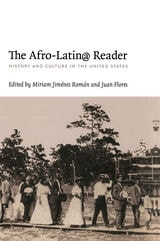
The Afro-Latin@ Reader
History and Culture in the United StatesMiriam Jiménez Román and Juan Flores, eds.
Duke University Press, 2010
While the selections cover centuries of Afro-Latin@ history, since the arrival of Spanish-speaking Africans in North America in the mid-sixteenth-century, most of them focus on the past fifty years. The central question of how Afro-Latin@s relate to and experience U.S. and Latin American racial ideologies is engaged throughout, in first-person accounts of growing up Afro-Latin@, a classic essay by a leader of the Young Lords, and analyses of U.S. census data on race and ethnicity, as well as in pieces on gender and sexuality, major-league baseball, and religion. The contributions that Afro-Latin@s have made to U.S. culture are highlighted in essays on the illustrious Afro-Puerto Rican bibliophile Arturo Alfonso Schomburg and music and dance genres from salsa to mambo, and from boogaloo to hip hop. Taken together, these and many more selections help to bring Afro-Latin@s in the United States into critical view.
Contributors: Afro–Puerto Rican Testimonies Project, Josefina Baéz, Ejima Baker, Luis Barrios, Eduardo Bonilla-Silva, Adrian Burgos Jr., Ginetta E. B. Candelario, Adrián Castro, Jesús Colón, Marta I. Cruz-Janzen, William A. Darity Jr., Milca Esdaille, Sandra María Esteves, María Teresa Fernández (Mariposa), Carlos Flores, Juan Flores, Jack D. Forbes, David F. Garcia, Ruth Glasser, Virginia Meecham Gould, Susan D. Greenbaum, Evelio Grillo, Pablo “Yoruba” Guzmán, Gabriel Haslip-Viera, Tanya K. Hernández, Victor Hernández Cruz, Jesse Hoffnung-Garskof, Lisa Hoppenjans, Vielka Cecilia Hoy, Alan J. Hughes, María Rosario Jackson, James Jennings, Miriam Jiménez Román, Angela Jorge, David Lamb, Aida Lambert, Ana M. Lara, Evelyne Laurent-Perrault, Tato Laviera, John Logan, Antonio López, Felipe Luciano, Louis Pancho McFarland, Ryan Mann-Hamilton, Wayne Marshall, Marianela Medrano, Nancy Raquel Mirabal, Yvette Modestin, Ed Morales, Jairo Moreno, Marta Moreno Vega, Willie Perdomo, Graciela Pérez Gutiérrez, Sofia Quintero, Ted Richardson, Louis Reyes Rivera, Pedro R. Rivera , Raquel Z. Rivera, Yeidy Rivero, Mark Q. Sawyer, Piri Thomas, Silvio Torres-Saillant, Nilaja Sun, Sherezada “Chiqui” Vicioso, Peter H. Wood
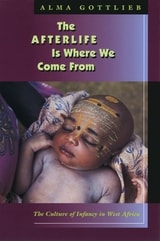
The Afterlife Is Where We Come From
Alma Gottlieb
University of Chicago Press, 2003
In this unique and engaging ethnography of babies, Alma Gottlieb explores how religious ideology affects every aspect of Beng childrearing practices—from bathing infants to protecting them from disease to teaching them how to crawl and walk—and how widespread poverty limits these practices. A mother of two, Gottlieb includes moving discussions of how her experiences among the Beng changed the way she saw her own parenting. Throughout the book she also draws telling comparisons between Beng and Euro-American parenting, bringing home just how deeply culture matters to the way we all rear our children.
All parents and anyone interested in the place of culture in the lives of infants, and vice versa, will enjoy The Afterlife Is Where We Come From.
"This wonderfully reflective text should provide the impetus for formulating research possibilities about infancy and toddlerhood for this century." — Caren J. Frost, Medical Anthropology Quarterly
The Afterlife of Apuleius
Edited by F. Bistagne, C. Boidin, and R. Mouren
University of London Press, 2020
The volume gathers the proceedings of an international conference held in March 2016 at the Warburg Institute in London, in association with the Institute of Classical Studies. It includes both diachronic overviews and specific case-studies. A first series of papers focuses on The Golden Ass and its historical and geographical diffusion, from High Medieval Europe to early modern Mexico. The oriental connections of the book are also taken into account. The second part of the book examines the textual and visual destiny of Psyche’s story from the Apuleian fabula to allegorical retellings, in poetical or philosophical books and on stage. As the third series of essays indicates, the fortunes of the book led many ancient and early modern writers and translators to use it as a canonical model for reflections about the status of fiction. It also became, mostly around the beginning of the fifteenth century, a major linguistic and stylistic reference for lexicographers and neo-Latin writers. The last papers of the book deal with Renaissance polemics about "‘Apuleianism" and the role of editors and commentators.
This is the sixth and last of the volumes in the series of ‘Afterlives’ of the Classics, which is being produced jointly by the Institute of Classical Studies and the Warburg Institute.
The Afterlife of Greek and Roman Sculpture
Late Antique Responses and PracticesTroels Myrup Kristensen and Lea Stirling, editors
University of Michigan Press, 2016
The Afterlife of Herodotus and Thucydides
Edited by John North and Peter Mack
University of London Press, 2019
The Afterlife of Images
Translating the Pathological Body between China and the WestAri Larissa Heinrich
Duke University Press, 2008
Combining literary studies, the history of science, and visual culture studies, Heinrich analyzes the rhetoric and iconography through which medical missionaries transmitted to the West an image of China as “sick” or “diseased.” He also examines the absorption of that image back into China through missionary activity, through the earliest translations of Western medical texts into Chinese, and even through the literature of Chinese nationalism. Heinrich argues that over time “scientific” Western representations of the Chinese body and culture accumulated a host of secondary meanings, taking on an afterlife with lasting consequences for conceptions of Chinese identity in China and beyond its borders.

The Afterlife of Plutarch
Edited by John North and Peter Mack
University of London Press, 2018
The Afterlife of Pope Joan
Deploying the Popess Legend in Early Modern EnglandCraig M. Rustici
University of Michigan Press, 2010
The legend concerning a popess had first taken written form in the thirteenth century and for several hundred years was more or less accepted. The Reformation, however, polarized discussions of the legend, pitting Catholics, who denied the story’s veracity, against Protestants, who suspected a cover-up and instantly cited Joan as evidence of papal depravity. In this heated environment, writers reimagined Joan variously as a sorceress, a hermaphrodite, and even a noteworthy author.
The Afterlife of Pope Joan examines sixteenth- and seventeenth-century debates concerning the popess’s existence, uncovering the disputants’ historiographic methods, rules of evidence, rhetorical devices, and assumptions concerning what is probable and possible for women and transvestites. Author Craig Rustici then investigates the cultural significance of a series of notions advanced in those debates: the claim that Queen Elizabeth I was a popess in her own right, the charge that Joan penned a book of sorcery, and the curious hypothesis that the popess was not a disguised woman at all but rather a man who experienced a sort of spontaneous sex change.
The Afterlife of Pope Joan draws upon the discourses of religion, politics, natural philosophy, and imaginative literature, demonstrating how the popess functioned as a powerful rhetorical instrument and revealing anxieties and ambivalences about gender roles that persist even today.
Craig M. Rustici is Associate Professor of English at Hofstra University.
The Afterlife of Reproductive Slavery
Biocapitalism and Black Feminism’s Philosophy of HistoryAlys Eve Weinbaum
Duke University Press, 2019

The Afterlife of Taste Hierarchies in Contemporary U.S. Art and Literature
Rooney, Monique
University of Iowa Press, 2026
Connecting literary studies, media theory, and cultural criticism, The Afterlife of Taste Hierarchies in Contemporary U.S. Art and Literature offers a fresh vocabulary for understanding how we evaluate art and each other in an age of digital mediation. Drawing on works and artifacts ranging from Beyoncé’s Lemonade and Andrea Long Chu’s “China Brain” to Ottessa Moshfegh’s My Year of Rest and Relaxation and the viral Bernie Sanders mittens meme, Monique Rooney traces how aspirations to refinement and gestures of condescension—once associated with high-, middle-, and lowbrow culture—continue to define aesthetic experience. This book moves between literary and popular forms, attending as closely to the meme’s dispersed creativity as to the novel’s intentional aesthetics.
The Afterlives of Specimens
Science, Mourning, and Whitman's Civil WarLindsay Tuggle
University of Iowa Press, 2017
Grounded in archival discoveries, Afterlives traces the origins of nineteenth-century America’s preservation compulsion, illuminating the influences of botanical, medical, spiritualist, and sentimental discourses on Whitman’s work. Tuggle unveils previously unrecognized connections between Whitman and the leading “medical men” of his era, such as the surgeon John H. Brinton, founding curator of the Army Medical Museum, and Silas Weir Mitchell, the neurologist who discovered phantom limb syndrome. Remains from several amputee soldiers whom Whitman nursed in the Washington hospitals became specimens in the Army Medical Museum.
Tuggle is the first scholar to analyze Whitman’s role in medically memorializing the human cadaver and its abandoned parts.
The Aftermath of War
Jean-Paul Sartre
Seagull Books, 2008
The Age and Stage of George L. Fox, 1825-1877
1825-1877Laurence Senelick
University of Iowa Press, 1999
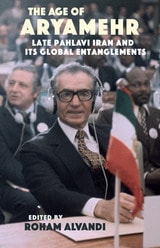
The Age of Aryamehr
Late Pahlavi Iran and Its Global EntanglementsEdited by Roham Alvandi
Gingko, 2025
The reign of the last Shah of Iran, Mohammad Reza Pahlavi (1941–79), marked the high point of Iran’s global interconnectedness. Never before had Iranians felt the impact of global political, social, economic, and cultural forces so intimately in their national and daily lives, nor had Iranian actors played such an important global role – on battlefields, barricades, and in board rooms far beyond Iran’s borders. Iranian intellectuals, technocrats, politicians, workers, artists, and students alike were influenced by the global ideas, movements, markets, and conflicts that they also helped to shape.
From the launch of the Shah’s White Revolution in 1963 to his overthrow in the popular revolution of 1978–79, Iran saw the longest period of sustained economic growth that the country had ever experienced. An entire generation took its cue from the shift from oil consumption to oil production to dream of, and aspire to, a modernized Iran, and the history of Iran in this period has tended to be presented as a prologue to the revolution. Those histories usually locate the political, social, and cultural origins of the revolution firmly within a national context, into which global actors intruded as Iranian actors retreated. While engaging with that national narrative, this volume is concerned with Iran’s place in the global history of the 1960s and ’70s. It examines and highlights the transnational threads that connected Pahlavi Iran to the world, from global traffic in modern art and narcotics to the embrace of American social science by Iranian technocrats and the encounter of European intellectuals with the Iranian Revolution.
The Age of Attila
Fifth-Century Byzantium and the BarbariansC.D. Gordon
University of Michigan Press, 2013
This book describes the tragic and bloody collapse of Roman civilization in the West in the fifth century and the near ruin of the Eastern Roman Empire. The hundred years from the death of Theodosius I to the conquest of Italy by Theodoric the Ostrogoth were years of chaos, havoc, and destruction. In the East we see the confusion of the imperial government, the palace intrigues, and the sinister role of the palace eunuchs—but survival. The events are dramatically described by eyewitnesses to the disasters—the Byzantine historians Priscus, Malchus, Olympiodorus, John of Antioch, and Candidus. The contemporary accounts are translated into English and provided with a running commentary by C. D. Gordon to form a continuous narrative of an age of turmoil—the Age of Attila.
David S. Potter has added translations of significant passages not in the original volume. He has also added extensive new notes to place the book in the contemporary study of the ancient world, as well as a new bibliography and a concordance with modern editions.
“David Potter’s re-edition, really updating, expanding, reshaping, and refreshing Colin Gordon's classic Age of Attila is a very welcome development. The Age of Attila, in Potter's expanded version, provides in English the most important literary sources for the immensely important period of the transition or decline, depending on one's view, of the Roman empire to the post-Roman kingdoms in the West, and for Roman history in the fifth century CE in general. This decisive century has always been hotly debated, but rising interest in economic history and a new wave of Attila books make this an especially fortuitous moment to have Gordon anew: no historian, no student of the later Roman Empire will be able to live without David Potter's edition of Gordon's Age of Attila!”
—Susanna Elm, University of California, Berkeley
“It has been half a century since C. D. Gordon published this valuable introduction to the fifth century, a narrative reconstituted from the fragmentary but tantalizing sources remaining for the period. David Potter has revitalized this classic work, updating it with reference to the latest critical editions and rewriting its notes to take account of recent scholarship. The book provides an excellent entry point into a world that saw the western Roman Empire crumble, Byzantium rise from its remains, and the barbarian peoples of central and western Eurasia reshape human history.”
—Noel Lenski, University of Colorado Boulder
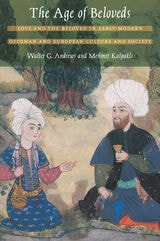
The Age of Beloveds
Love and the Beloved in Early-Modern Ottoman and European Culture and SocietyWalter G. Andrews and Mehmet Kalpakli
Duke University Press, 2005
The authors show that the “age of beloveds” was not just an Ottoman, eastern European, or Islamic phenomenon. It extended into western Europe as well, pervading the cultures of Venice, Florence, Rome, and London during the same period. Andrews and Kalpakli contend that in an age dominated by absolute rulers and troubled by war, cultural change, and religious upheaval, the attachments of dependent courtiers and the longings of anxious commoners aroused an intense interest in love and the beloved. The Age of Beloveds reveals new commonalities in the cultural history of two worlds long seen as radically different.
The Age of Everything
How Science Explores the PastMatthew Hedman
University of Chicago Press, 2007
Hedman details, for example, how interdisciplinary studies of the Great Pyramids of Egypt can determine exactly when and how these incredible structures were built. He shows how the remains of humble trees can illuminate how the surface of the sun has changed over the past ten millennia. And he also explores how the origins of the earth, solar system, and universe are being discerned with help from rocks that fall from the sky, the light from distant stars, and even the static seen on television sets.
Covering a wide range of time scales, from the Big Bang to human history, The Age of Everything is a provocative and far-ranging look at how science has determined the age of everything from modern mammals to the oldest stars, and will be indispensable for all armchair time travelers.
“We are used to being told confidently of an enormous, measurable past: that some collection of dusty bones is tens of thousands of years old, or that astronomical bodies have an age of some billions. But how exactly do scientists come to know these things? That is the subject of this quite fascinating book. . . . As told by Hedman, an astronomer, each story is a marvel of compressed exegesis that takes into account some of the most modern and intriguing hypotheses.”—Steven Poole, Guardian
The Age of Immunology
Conceiving a Future in an Alienating WorldA. David Napier
University of Chicago Press, 2003
To illustrate these destructive consequences, Napier likens the current craze for embracing diversity and the use of politically correct speech to a cultural potluck to which we each bring different dishes, but at which no one can eat unless they abide by the same rules. Similarly, loaning money to developing nations serves as a tool both to make the peoples in those nations more like us and to maintain them in the nonthreatening status of distant dependents. To break free of the resulting downward spiral of homogenization and self-focus, Napier suggests that we instead adopt a new defining concept based on embryology, in which development and self-growth take place through a process of incorporation and transformation. In this effort he suggests that we have much to learn from non-Western peoples, such as the Balinese, whose ritual practices require them to take on the considerable risk of injecting into their selves the potential dangers of otherness—and in so doing ultimately strengthen themselves as well as their society.
The Age of Immunology, with its combination of philosophy, history, and cultural inquiry, will be seen as a manifesto for a new age and a new way of thinking about the world and our place in it.
The Age of Johnson
A Scholarly Annual (Volume 24)Jack Lynch
Bucknell University Press, 2021
The move to a new publisher has given The Age of Johnson: A Scholarly Annual the opportunity to recommit to what it does best: present to a wide readership cant-free scholarly articles and essays and searching book reviews, all featuring a wide variety of approaches, written by both seasoned scholars and relative newcomers. Volume 24 features commentary on a range of Johnsonian topics: his reaction to Milton, his relation to the Allen family, his notes in his edition of Shakespeare, his use of Oliver Goldsmith in his Dictionary, and his always fascinating Nachleben. The volume also includes articles on topics of strong interest to Johnson: penal reform, Charlotte Lennox's professional literary career, and the "conjectural history" of Homer in the eighteenth century.
For more than two decades, The Age of Johnson has presented a vast corpus of Johnsonian studies "in the broadest sense," as founding editor Paul J. Korshin put it in the preface to Volume 1, and it has retained the interest of a wide readership. In thousands of pages of articles, review essays, and reviews, The Age of Johnson has made a permanent contribution to our understanding of the eighteenth century, and particularly of Samuel Johnson, his circle, and his interests, and has also served as an outlet for writers who are not academics but have something important to say about the eighteenth century.
ISSN 0884-5816.
The Age of Johnson
A Scholarly Annual (Volume 25)Jack Lynch
Bucknell University Press, 2025
Published by Bucknell University Press. Distributed worldwide by Rutgers University Press.
ISSN 0884-5816
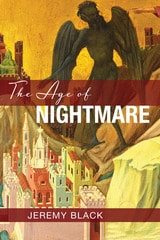
The Age of Nightmare
The Gothic and British Culture, 1750–1900Jeremy Black
St. Augustine's Press, 2022
Black's understanding of the Gothic writer is a remarkable contribution to the legacy of British literature and the novel at large. Once again, in Black thoroughness meets fidelity and the reader is overcome with his own insights into the period on the merit of Black's efforts.
In The Weight of Words Series, Black is devoted to the preservation of the memory of British literary genius, and in so doing he is carving out a niche for himself. As in the Gothic novel where landscapes give quarter to influences that seem to interact with the human fates that freely wander in, reading Black is an experience of suddenly finding oneself in possession of an education, and his allure takes a cue from the horrific Gothic tempt.
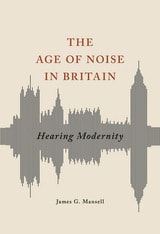
The Age of Noise in Britain
Hearing ModernityJames G Mansell
University of Illinois Press, 2017