Results by title
5448 books match the query 'History and criticism' and 1116 start with t
The Gendering of Men, 1600–1750
Volume 2, Queer ArticulationsThomas A. King
University of Wisconsin Press, 2008

The Genius of Place
The Geographic Imagination in the Early RepublicChristopher C. Apap
University of New Hampshire Press, 2019
The Genius of Place examines how, after the War of 1812, concerns about the scale of the nation resulted in a fundamental reorientation of American identity away from the Atlantic or global ties that held sway in the early republic and toward more localized forms of identification. Instead of addressing the sweep of the nation, American authors, artists, geographers, and politicians shifted from the larger reach of the globe to the more manageable scope of the local and sectional. Paradoxically, that local representation became the primary mode through which early Americans construed their emerging national identity. This newfound cultural obsession with locality impacted the literary consolidation and representation of key American imagined places—New England, the plantation, the West—in the decades between 1816 and 1836.
Apap's examination of the intersections between local and national representations and exploration of the myths of space and place that shaped U.S. identity through the nineteenth century will appeal to a broad, interdisciplinary readership.
The Gentle Art of Murder
The Detective Fiction of Agatha ChristieEarl F. Bargainnier
University of Wisconsin Press, 1980
The Genuine Article
Race, Mass Culture, and American Literary ManhoodPaul Gilmore
Duke University Press, 2001
From characters in Indian melodramas and minstrel shows to exhibits in popular museums and daguerrotype galleries, primitive racialized figures circulated as “the genuine article” of manliness in the antebellum United States. Gilmore argues that these figures were manipulated, translated, and adopted not only by canonical authors such as Hawthorne, Thoreau, Cooper, and Melville but also by African American and Native American writers like William Wells Brown and Okah Tubbee. By examining how these cultural notions of race played out in literary texts and helped to construct authorship as a masculine profession, Gilmore makes a unique contribution to theories of class formation in nineteenth-century America.
The Genuine Article will enrich students and scholars of American studies, gender studies, literature, history, sociology, anthropology, popular culture, and race.
The Geometry of Modernism
The Vorticist Idiom in Lewis, Pound, H.D., and YeatsBy Miranda B. Hickman
University of Texas Press, 2006
Addressing both the literature and the visual arts of Anglo-American modernism, The Geometry of Modernism recovers a crucial development of modernism's early years that until now has received little sustained critical attention: the distinctive idiom composed of geometric forms and metaphors generated within the early modernist movement of Vorticism, formed in London in 1914. Focusing on the work of Wyndham Lewis, leader of the Vorticist movement, as well as Ezra Pound, H.D., and William Butler Yeats, Hickman examines the complex of motives out of which Lewis initially forged the geometric lexicon of Vorticism—and then how Pound, H.D., and Yeats later responded to it and the values that it encoded, enlisting both the geometric vocabulary and its attendant assumptions and ideals, in transmuted form, in their later modernist work.
Placing the genesis and appropriation of the geometric idiom in historical context, Hickman explores how despite its brevity as a movement, Vorticism in fact exerted considerable impact on modernist work of the years between the wars, in that its geometric idiom enabled modernist writers to articulate their responses to both personal and political crises of the 1930s and 1940s. Informed by extensive archival research as well as treatment of several of the least-known texts of the modernist milieu, The Geometry of Modernism clarifies and enriches the legacy of this vital period.
The German Epic in the Cold War
Peter Weiss, Uwe Johnson, and Alexander KlugeMatthew D. Miller
Northwestern University Press, 2018
Matthew Miller’s The German Epic in the Cold War explores the literary evolution of the modern epic in postwar German literature. Examining works by Peter Weiss, Uwe Johnson, and Alexander Kluge, it illustrates imaginative artistic responses in German fiction to the physical and ideological division of post–World War II Germany.
Miller analyzes three ambitious German-language epics from the second half of the twentieth century: Weiss’s Die Ästhetik des Widerstands (The Aesthetics of Resistance), Johnson’s Jahrestage (Anniversaries), and Kluge’s Chronik der Gefühle (Chronicle of Feelings). In them, he traces the epic’s unlikely reemergence after the catastrophes of World War II and the Shoah and its continuity across the historical watershed of 1989–91, defined by German unification and the dissolution of the Soviet Union.
Building on Franco Moretti’s codification of the literary form of the modern epic, Miller demonstrates the epic’s ability to understand the past; to come to terms with ethical, social, and political challenges in the second half of the twentieth century in German-speaking Europe and beyond; and to debate and envision possible futures.
The Ghost of Meter
Culture and Prosody in American Free VerseAnnie Finch
University of Michigan Press, 1993
Population and environment are topics of intense current discussion and international action. Population growth rates have given rise to the metaphor of an exploding bomb, and accounts of oil spills, droughts, and rainforest destruction appear daily in the news. Despite the crowded agenda, observes Gayl Ness, the relationships between population and the environment still defy clear and comprehensive understanding. While they are closely intertwined in real life, they are separate in much of our thought and action. The contributors to this volume explore the basis of this separation and offer ways to integrate these closely interconnected areas, providing a forum for dialogue between those who support the interests of each. Topics covered include population-environment dynamics in historical perspective; constraints on sustainable growth in agricultural production; population as concept and parameter in the modeling of deforestation; powers and limits of the state and technology; resource control, fertility, and migration; and an ecosystem approach to the study of coastal areas.
The Ghosts of the Avant-Garde(s)
Exorcising Experimental Theater and PerformanceJames M. Harding
University of Michigan Press, 2015
James M. Harding revisits iconic sites of early 20th-century performance to examine how European avant-gardists attempted—unsuccessfully—to employ that discourse as a strategy for enforcing uniformity among a politically and culturally diverse group of artists. He then takes aim at historical and aesthetic categories that have promoted a restrictive history and theory of the avant-garde and narrow readings of avant-garde performance. Harding reveals the Eurocentric undercurrents that underlie these categories and urges a consideration of the global political dimensions of avant-garde gestures. His book will interest scholars of theater and performance, art history, and literary studies, as well as those interested in the relation of art to politics in various historical periods and cultures.
The Ghosts of the Past
Latin Literature, the Dead, and Rome’s Transition to A PrincipateBasil Dufallo
The Ohio State University Press, 2007
Calling into question boundaries of genre and literary form, Dufallo’s study will revise current understandings of Latin literature as a cultural and performance practice. Works as diverse as Cicero’s speeches, Propertian elegy, Horace’s epodes and satires, and Vergil’s Aeneid appear in a new light as performed texts interacting with other kinds of cultural performance from which they might otherwise seem isolated.
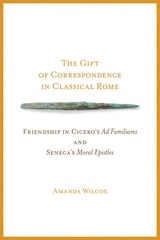
The Gift of Correspondence in Classical Rome
Friendship in Cicero's Ad Familiares and Seneca's Moral EpistlesAmanda Wilcox
University of Wisconsin Press, 2012
Amanda Wilcox offers an innovative approach to two major collections of Roman letters—Cicero’s Ad Familiares and Seneca’s Moral Epistles—informed by modern cross-cultural theories of gift-giving.
By viewing letters and the practice of correspondence as a species of gift exchange, Wilcox provides a nuanced analysis of neglected and misunderstood aspects of Roman epistolary rhetoric and the social dynamics of friendship in Cicero’s correspondence. Turning to Seneca, she shows that he both inherited and reacted against Cicero’s euphemistic rhetoric and social practices, and she analyzes how Seneca transformed the rhetoric of his own letters from an instrument of social negotiation into an idiom for ethical philosophy and self-reflection. Though Cicero and Seneca are often viewed as a study in contrasts, Wilcox extensively compares their letters, underscoring Cicero’s significant influence on Seneca as a prose stylist, philosopher, and public figure.
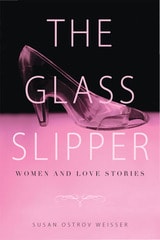
The Glass Slipper
Women and Love StoriesSusan Ostrov Weisser
Rutgers University Press, 2013
Why is the story of romance in books, magazines, and films still aimed at women rather than at men? Even after decades of feminism, traditional ideas and messages about romantic love still hold sway and, in our “postfeminist” age, are more popular than ever. Increasingly, we have become a culture of romance: stories of all kinds shape the terms of love. Women, in particular, love a love story.
The Glass Slipper is about the persistence of a familiar Anglo-American love story into the digital age. Comparing influential classics to their current counterparts, Susan Ostrov Weisser relates in highly amusing prose how these stories are shaped and defined by and for women, the main consumers of romantic texts. Following a trajectory that begins with Jane Austen and concludes with Internet dating sites, Weisser shows the many ways in which nineteenth-century views of women’s nature and the Victorian idea of romance have survived the feminist critique of the 1970s and continue in new and more ambiguous forms in today’s media, with profound implications for women.
More than a book about romance in fiction and media, The Glass Slipper illustrates how traditional stories about women’s sexuality, femininity, and romantic love have survived as seemingly protective elements in a more modern, feminist, sexually open society, confusing the picture for women themselves. Weisser compares diverse narratives—historical and contemporary from high literature and “low” genres—discussing novels by Jane Austen and Charlotte Brontë, Victorian women’s magazines, and D. H. Lawrence’s Lady Chatterley’s Lover; Disney movies; popular Harlequin romance novels; masochistic love in films; pornography and its relationship to romance; and reality TV and Internet ads as romantic stories.
Ultimately, Weisser shows that the narrative versions of the Glass Slipper should be taken as seriously as the Glass Ceiling as we see how these representations of romantic love are meant to inform women’s beliefs and goals. In this book, Weisser’s goal is not to shatter the Glass Slipper, but to see through it.
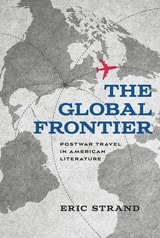
The Global Frontier
Postwar Travel in American LiteratureEric Strand
University of Iowa Press, 2023
After World War II, the Western frontier of self-reinvention and spatial expansion opened up through the explosion of the global travel industry. The Global Frontier shows that a variety of postwar literary travelers sought personal freedom and cultural enrichment outside their nation’s borders, including Black, female, and queer writers. But the price of incorporation into a transnational leisure class was complicity in postwar American imperialism and the rejection of 1930s social commitments. Eric Strand argues that capitalist globalization has enabled creative expression for marginalized identities, and that present-day humanists are the descendants of writers such as William S. Burroughs, Saul Bellow, Richard Wright, and Elizabeth Bishop. Yet this personal liberation has accompanied a vast growth of social inequality, which can only be addressed by reorienting toward progressive nationalism and an activist state.

The Global Road Movie
Alternative Journeys around the WorldEdited by José Duarte and Timothy Corrigan
Intellect Books, 2018
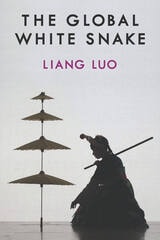
The Global White Snake
Liang Luo
University of Michigan Press, 2021
The Global White Snake uncovers how the White Snake legend often acts as an unsettling narrative of radical tolerance for hybrid sexualities, loving across traditional boundaries, subverting authority, and valuing the strange and the uncanny. A timely mediation and reflection on our contemporary moment of continued struggle for minority rights and social justice, The Global White Snake revives the radical anti-authoritarian spirit slithering under the tales of monsters and demons, love and lust, and reminds us of the power of the fantastic and the fabulous in inspiring and empowering personal and social transformations.
The Golden Age of Gospel
Text by Horace Clarence BoyerPhotography by Lloyd Yearwood
University of Illinois Press, 1995
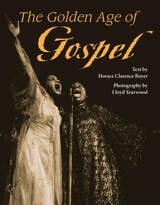
Skillfully blending music history and social context, Boyer traces the development of gospel from its earliest beginnings through the Golden Age (1945-55) and into the 1960s when gospel entered the concert hall. He introduces dozens of the genre's most gifted contributors, from Thomas A. Dorsey and Mahalia Jackson to the Soul Stirrers and Aretha Franklin, evoking their distinctive styles and distinguishing among the characteristic sounds of gospel music in Chicago, Philadelphia, Detroit, St. Louis, and other locations.
Capturing the essence of a thrilling performance tradition, The Golden Age of Gospel clearly establishes gospel's importance as an authentic American art form and a musical statement of profound belief.
The Golden Girls
Tales from the LanaiTaylor Cole Miller
Rutgers University Press, 2025
The Gothic Family Romance
Heterosexuality, Child Sacrifice, and the Anglo-Irish Colonial OrderMargot Gayle Backus
Duke University Press, 1999
Backus uses contemporary theory, including that of Michel Foucault and Eve Kosofsky Sedgwick, to analyze texts by authors ranging from Richardson, Swift, Burke, Edgeworth, Stoker, and Wilde to contemporary Irish novelists and playwrights.
By charting the changing relations between the family and the British state, she shows how these authors dramatized a legacy of violence within the family cell and discusses how disturbing themes of child sacrifice and colonial repression are portrayed through irony, satire, “paranoid” fantasy, and gothic romance. In a reconceptualization of the Freudian family romance, Backus argues that the figures of the Anglo-Irish gothic embody the particular residue of childhood experiences within a settler colonial society in which biological reproduction represented an economic and political imperative.
Backus’s bold positioning of the nuclear family at the center of post-Enlightenment class and colonial power relations in England and Ireland will challenge and provoke scholars in the fields of Irish literature and British and postcolonial studies. The book will also interest students and scholars of women’s studies, and it has important implications for understanding contemporary conflicts in Ireland.
The Gothic World of Anne Rice
Edited by Gary Hoppenstand and Ray B. Browne
University of Wisconsin Press, 1996
This anthology argues for the serious study of the literary oeuvre of Anne Rice, a major figure in today’s popular literature. The essays assert that Rice expands the conventions of the horror genre’s formula to examine important social issues. Like a handful of authors working in this genre, Rice manipulates its otherwise predictable narrative structures so that a larger, more interesting cultural mythology can be developed. Rice searches for philosophical truth, examining themes of good and evil, the influence on people and society of both nature and nurture, and the conflict and dependence of humanism and science.
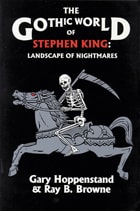
The Gothic World of Stephen King
Landscape of NightmaresEdited by Gary Hoppenstand and Ray B. Browne
University of Wisconsin Press, 1987
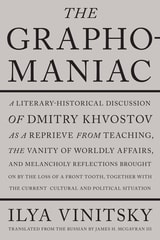
The Graphomaniac
A Literary-Historical Discussion of Dmitry KhvostovIlya Vinitsky and James H. McGavran III
Northwestern University Press, 2025
The only Russian Count of Sardinia, Dmitry Ivanovich Khvostov (1757–1835) didn’t achieve fame in his lifetime—he achieved infamy. Pathologically prolific and delusionally dedicated to a craft for which he had no talent, the count was renowned for his compulsive output, driven by a passion for poetry that was as strong as his abilities were weak. Only the country that gave the world Pushkin, however, could produce Khvostov, in whom we find a distorted yet illuminating reflection of his poetic epoch, with all its numerous cultural manifestations and hidden impulses, its desires and prejudices.
As he leads us on a playful journey across Russia’s Golden Age and beyond, from neoclassical salon to faculty lounge, Ilya Vinitsky reflects on the challenges and necessities of literary critique and on the unexpected rewards of bad art as a subject of study, not just ridicule. Mischievous but erudite, sensitive but never self-serious, The Graphomaniac is an intellectual biography of the anti-hero, a cultural figure whose paradoxes yield new insights into his era.
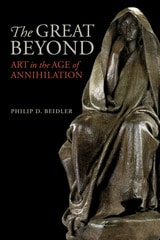
The Great Beyond
Art in the Age of AnnihilationPhilip D. Beidler
University of Alabama Press, 2022
Essays mapping how modern art confronts mortality in an age of war and annihilation.
While much about modernism remains up for debate, there can be no dispute about the connection between modernist art and death. The long modern moment was and is an age of war, genocide, and annihilation. Two world wars killed perhaps as many as 100 million people, through combat, famine, holocaust, and ghastly attacks on civilians. The ongoing COVID-19 pandemic is the fifth global pandemic since 1918, with more than a half-million American deaths and counting.
It can hardly come as a surprise, then, that many of the touchstones of modernism reflect on death and devastation. In Philip D. Beidler’s exploration of the modernist canon, he illuminates how these singular voices looked extinction in the eye and tried to reckon with our finitude—and their own. The Great Beyond: Art in the Age of Annihilation catalogs through lively prose an eclectic selection of artists, writers, and thinkers. In 16 essays, Beidler takes nuanced and surprising approaches to well-studied figures—the haunting sculpture by Saint-Gaudens commissioned by Henry Adams for his late wife; Luchino Visconti’s adaptation of Mann’s Death in Venice; and the author’s own long fascination with Beckett’s Waiting for Godot.
The threads and recurring motifs that emerge through Beidler’s analysis bridge the different media, genres, and timeframes of the works under consideration. Protomodernists Crane and Twain connect with near-contemporary voices like Sebald and Morrison. Robert MacFarlane’s 21st-century nonfiction about what lies underneath the earth echoes the Furerbunker and the poetry of Gertrud Kolmar. Learned but lively, somber but not grim, The Great Beyond is not a comfortable read, but it is in a way comforting. In tracing how his subjects confronted nothingness, be it personal or global, Beidler draws a brilliant map of how we see the end of the road.
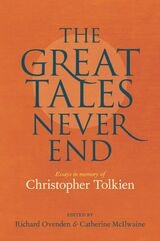
The Great Tales Never End
Essays in Memory of Christopher TolkienEdited by Richard Ovenden and Catherine McIlwaine
Bodleian Library Publishing, 2022
Over more than four decades, J. R. R. Tolkien’s son and literary executor Christopher Tolkien completed some twenty-four volumes of his father’s work, much more than his father had succeeded in publishing during his own lifetime. Thanks to Christopher’s extraordinary publishing efforts and scholarship, readers today can survey and understand the vast landscape of Tolkien’s legendarium.
The Great Tales Never End sheds new light on J. R. R. Tolkien’s work and the debt owed to Christopher by the many Tolkien scholars who were privileged to work with him. Essays by world-renowned scholars and Tolkien family reminiscences offer unique insights into the publication process. What was Tolkien’s intended ending for The Lord of the Rings, and did it leave echoes in the stripped-down version that was actually published? What was the audience’s response to the first-ever adaptation of The Lord of the Rings—a radio dramatization that has now been deleted forever from the BBC’s archives?
The book is illustrated with color reproductions of J. R. R. Tolkien’s manuscripts, maps, drawings, and letters, as well as photographs of Christopher Tolkien and extracts from his works. Many of these documents have never been seen before, making this volume essential reading for Tolkien scholars, readers, and fans.
The Greeks and Us
Essays in Honor of Arthur W. H. AdkinsEdited by Robert B. Louden and Paul Schollmeier
University of Chicago Press, 1996
The timely subjects addressed by the contributors include the relation between literature and moral understanding, moral and nonmoral values, and the contemporary meaning of ancient Greek ethics. The volume also includes an essay from the late Adkins himself illustrating his methodology in an analysis of the "Speech of Lysias" in Plato's Phaedrus.
The Greeks and Us will interest all those concerned with how ancient moral values do or do not differ from our own.
Contributors include Arthur W. H. Adkins, Stephanie Nelson, Martha C. Nussbaum, Paul Schollmeier, James Boyd White, Bernard Williams, and Lee Yearley.
Commentaries by Wendy Doniger, Charles M. Gray, David Grene, Robert B. Louden, Richard Posner, and Candace Vogler.
The Greening Of Literary Scholarship
Literature, Theory, and he EnvironmentSteven Rosendale
University of Iowa Press, 2002
Each essay in this impressive collection challenges the notion that the study of environmental literature is separate from traditional concerns of criticism, and each applies ecocritical scholarship to literature not commonly explored in this context. New historicism, postcolonialism, deconstructionism, and feminist and Marxist theories are all utilized to evaluate and gain new insights into environmental literature; at the same time, Percy Bysshe Shelley, Upton Sinclair, Leslie Marmon Silko, and Susan Howe are studied from an ecocritical perspective.
The Groove of the Poem
Reading Philippe BeckJacques Rancière
University of Minnesota Press, 2016
“Music is the brute that shows.
It is the avowal of materials,
And stutters between its clanging of things.”
How should one think this musical groove of the poem whose back and forth motion shuffles the material of ordinary language and revives the frozen speech of old chants? This question by renowned French thinker Jacques Rancière is the entry point for his earnest and careful reading of one of France’s most singular and important contemporary poets. For Rancière, Philippe Beck sets himself the task of a poetry after poetry whereby Beck re-writes and transforms the poems of the past, reanimating faded genres, poetizing the prose of popular tales and even commentaries regarding poems. To read and follow this groove traced as such cannot simply be done by way of taking the poems as objects of study. It supposes a dialogue regarding what these poems attempt to do as well as an idea of a poetry which serves as their foundation. This book on Philippe Beck is thus also a book made with him.
The Harlem Renaissance and the Idea of a New Negro Reader
Shawn Anthony Christian
University of Massachusetts Press, 2016
Many scholars have written about the white readers and patrons of the Harlem Renaissance, but during the period many black writers, publishers, and editors worked to foster a cadre of African American readers, or in the poet Sterling Brown's words, a “reading folk.” Black newspapers featured columns that reviewed the latest African American fiction. Magazines held writing contests to urge black readers to participate in the literary culture. Through newspapers, journals, and anthologies, writers such as James Weldon Johnson, Jessie Fauset, and Gwendolyn Bennett spoke directly to their fellow African Americans to cultivate interest in literature and the intellectual tools for reading it.
In The Harlem Renaissance and the Idea of a New Negro Reader, Shawn Anthony Christian argues that print-based addresses to African Americans are a defining but understudied component of the Harlem Renaissance. Especially between 1919 and 1930, these writers promoted diverse racial representation as a characteristic of “good literature” both to exhibit black literacy and to foster black readership. Drawing on research from print culture studies, histories of racial uplift, and studies of modernism, Christian demonstrates the importance of this focus on the African American reader in influential periodicals such as The Crisis and celebrated anthologies such as The New Negro. Christian illustrates that the drive to develop and support black readers was central in the poetry, fiction, and drama of the era.
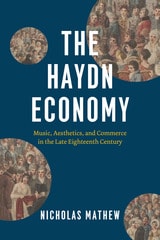
The Haydn Economy
Music, Aesthetics, and Commerce in the Late Eighteenth CenturyNicholas Mathew
University of Chicago Press, 2022
In this far-reaching work of music history and criticism, Nicholas Mathew reimagines the world of Joseph Haydn and his contemporaries, with its catastrophic upheavals and thrilling sense of potential. In the process, Mathew tackles critical questions of particular moment: how we tell the history of the European Enlightenment and Romanticism; the relation of late eighteenth-century culture to incipient capitalism and European colonialism; and how the modern market and modern aesthetic values were—and remain—inextricably entwined.
The Haydn Economy weaves a vibrant material history of Haydn’s career, extending from the sphere of the ancient Esterházy court to his frenetic years as an entrepreneur plying between London and Vienna to his final decade as a venerable musical celebrity, during which he witnessed the transformation of his legacy by a new generation of students and acolytes, Beethoven foremost among them. Ultimately, Mathew asserts, Haydn’s historical trajectory compels us to ask what we might retain from the cultural and political practices of European modernity—whether we can extract and preserve its moral promise from its moral failures. And it demands that we confront the deep histories of capitalism that continue to shape our beliefs about music, sound, and material culture.
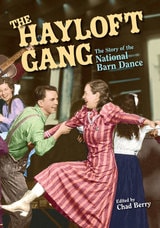
The Hayloft Gang
The Story of the National Barn DanceEdited by Chad Berry
University of Illinois Press, 2007
The Hayloft Gang draws on the colorful commentary of performers and former listeners to analyze the National Barn Dance, its audience, and its impact. Contributors trace the history of barn dance radio, explore the paradox of a foundational country music program broadcast from a major city, investigate notions of authenticity in the presentation of country music and entertainment, and delve into provocative issues raised by the barn dance phenomenon.
Contributors: Chad Berry, Michael T. Bertrand, Lisa Krissoff Boehm, Don Cusic, Wayne W. Daniel, Loyal Jones, Kristine M. McCusker, Stephen Parry, Susan Smulyan, Paul L. Tyler, and Michael Ann Williams.
The Heart as a Drum
Continuance and Resistance in American Indian PoetryRobin Riley Fast
University of Michigan Press, 2000
The Heart of Achilles
Characterization and Personal Ethics in the IliadGraham Zanker
University of Michigan Press, 1996
"[Zanker] investigates altruistic behavior in the epic with professional sophistication but in a way that makes his investigation available to a wide audience from undergraduates to advanced scholars. . . . [A] very useful interpretative study." --Choice
Graham Zanker is Senior Lecturer in Classics, University of Canterbury, New Zealand.
The Hero and the Victim
Narratives of Criminality in Iraq War FictionGregory Brazeal
Lever Press, 2024
The emphasis on soldier criminality in Iraq War fiction can be partly explained by the rise of moral cosmopolitanism and its blurring of the traditional conceptual lines between war and crime. The anti-war literature of the twentieth century often presented fallen soldiers on both sides equally as victims and viewed the distinction between heroes and villains as part of the illusion that battlefield experience strips away. Written in the long shadow of Nuremberg, Iraq War fiction grapples with the possibility that the soldiers on one’s own side may not be the heroes in the story, or even the victims, but participants in a wrong, and perhaps even complicit in crimes. The Hero and the Victim contributes to the ongoing, public reexamination of American traditions by confronting a topic that has, up to now, been largely untouched: the moral celebration of military service.
The Hero and the Victim explores the theme of soldier criminality through close readings of several works by American authors, including Kevin Powers’s The Yellow Birds, Phil Klay’s Redeployment, Helen Benedict’s Sand Queen, Chris Kyle’s American Sniper, and Roy Scranton’s War Porn. This volume will be an essential text for students of American literature, historians of war culture, and any scholar interested in representations of the Iraq War.
The Hero's Place
Medieval Literary Traditions of Space and BelongingMolly Robinson Kelly
Catholic University of America Press, 2009
The Historical Film
History and Memory in MediaLandy, Marcia
Rutgers University Press, 2000
What is history? How do we represent it? How do our notions of history change over time? The essays in The Historical Film: History and Memory in Media probe the roles that cinema and television play in altering and complicating our understanding of historical events.
The book brings together representative examples of how both media critics and historians write about history as it is created and disseminated through film and television. The essays explore what is at stake culturally and politically in media history and how this form of history-making is different from traditional historiography. The volume is divided into four parts--Regarding History; History as Trauma; History, Fiction, and Postcolonial Memory; and History and Television--that progressively deepen our understanding of just how complex the issues are. Essays by top scholars analyze many different kinds of film: historical film, documentary, costume drama, and heritage films. The section on television is equally broad, examining phenomena as diverse as news broadcasts and Ken Burns's documentary The Civil War.
Contributors are Mbye Cham, George F. Custen, Mary Ann Doane, Richard Dienst, Taylor Downing, Gary Edgerton, Naomi Greene, Miriam Bratu Hansen, Sue Harper, Sumiko Higashi, Anton Kaes, Marcia Landy, Shawn Rosenheim, Robert A. Rosenstone, Pierre Sorlin, Maria Wyke, and Ismail Xavier.
The Historical Film
History and Memory in MediaLandy, Marcia
Rutgers University Press, 2000
What is history? How do we represent it? How do our notions of history change over time? The essays in The Historical Film: History and Memory in Media probe the roles that cinema and television play in altering and complicating our understanding of historical events.
The book brings together representative examples of how both media critics and historians write about history as it is created and disseminated through film and television. The essays explore what is at stake culturally and politically in media history and how this form of history-making is different from traditional historiography. The volume is divided into four parts--Regarding History; History as Trauma; History, Fiction, and Postcolonial Memory; and History and Television--that progressively deepen our understanding of just how complex the issues are. Essays by top scholars analyze many different kinds of film: historical film, documentary, costume drama, and heritage films. The section on television is equally broad, examining phenomena as diverse as news broadcasts and Ken Burns's documentary The Civil War.
Contributors are Mbye Cham, George F. Custen, Mary Ann Doane, Richard Dienst, Taylor Downing, Gary Edgerton, Naomi Greene, Miriam Bratu Hansen, Sue Harper, Sumiko Higashi, Anton Kaes, Marcia Landy, Shawn Rosenheim, Robert A. Rosenstone, Pierre Sorlin, Maria Wyke, and Ismail Xavier.
The Historical Renaissance
New Essays on Tudor and Stuart Literature and CultureEdited by Heather Dubrow and Richard Strier
University of Chicago Press, 1988
The volume includes studies of mid-Tudor culture as well as of Elizabethan and Stuart periods.
The Historicity of Experience
Modernity, the Avant-Garde, and the EventKrysztof Ziarek
Northwestern University Press, 2001
The four poets Ziarek considers—Gertrude Stein, Velimir Khlebnikov, Miron Biaoszewski, and Susan Howe—demonstrate the broad reach of and variety of forms taken by the avant-garde revision of experience and aesthetics. Moreover, this quartet illustrates how the main operative concepts and strategies of the avant-garde underpinned the practices of canonical writers. A profound philosophical meditation on language, modernity, and the everyday, The Historicity of Experience offers a fundamental reconceptualization of the avant-garde in relation to experience.
The Hollywood War Film
Critical Observations from World War I to IraqDaniel Binns
Intellect Books, 2017
Looking closely at films such as All Quiet on the Western Front, Full Metal Jacket, and The Hurt Locker, Binns reveals the commonalities in Hollywood films despite the distinct conflicts and eras they represent, and he shows how contemporary war films closely echo earlier films in their nationalistic and idealistic depictions. Offering a trenchant analysis of some of the most important war films from the past century, this book will be of interest to anyone who has been captivated by how film has dealt with one of humanity’s most difficult, but far too common, realities.
The Holocaust & the Exile of Yiddish
A History of the Algemeyne EntsiklopedyeBarry Trachtenberg
Rutgers University Press, 2022
The Holocaust & the Exile of Yiddish untangles the complicated saga of the Algemeyne entsiklopedye and its editors. The editors continued to publish volumes and revise the encyclopedia’s mission while their primary audience, Eastern European Jews, faced persecution and genocide under Nazi rule, and the challenge of reestablishing themselves in the first decades after World War II. Historian Barry Trachtenberg reveals how, over the course of the middle decades of the twentieth century, the project sparked tremendous controversy in Jewish cultural and political circles, which debated what the purpose of a Yiddish encyclopedia should be, as well as what knowledge and perspectives it should contain. Nevertheless, this is not only a story about destruction and trauma, but also one of tenacity and continuity, as the encyclopedia’s compilers strove to preserve the heritage of Yiddish culture, to document its near-total extermination in the Holocaust, and to chart its path into the future.
The Holocaust of Texts
Genocide, Literature, and PersonificationAmy Hungerford
University of Chicago Press, 2002
Hungerford examines the implications of conflating texts with people in a broad range of texts: Art Spiegelman's Maus; Ray Bradbury's Fahrenheit 451; the poetry of Sylvia Plath; Binjamin Wilkomirski's fake Holocaust memoir Fragments; and the fiction of Saul Bellow, Philip Roth, and Don DeLillo. She considers the ethical consequences of this trend in the work of recent and contemporary theorists and literary critics as well, including Cathy Caruth, Jacqueline Rose, Jacques Derrida, and Paul de Man. What she uncovers are fundamentally flawed ideas about representation that underwrite and thus undermine powerful and commonly accepted claims about literature and identity. According to Hungerford, the personification of texts is ethically corrosive and theoretically unsound. When we exalt the literary as personal and construe genocide as less a destruction of human life than of culture, we esteem memory over learning, short-circuit debates about cultural change, lend credence to the illusion or metaphysics of presence, and limit our conception of literature and its purpose.
Ultimately, The Holocaust of Texts asks us to think more deeply about the relationship between reading, experience, and memorialization. Why, for instance, is it more important to remember acts of genocide than simply to learn about them? If literary works are truly the bearers of ontology, then what must be our conduct toward them? Considering difficult questions such as these with fresh logic, Hungerford offers us an invigorating work, one that will not only interest scholars of American and postwar literature, but students of the Holocaust and critical theory as well.
The Home Plot
Women, Writing, and Domestic RitualAnn Romines
University of Massachusetts Press, 1992
By reading domestic ritual as a gendered language, Romines seeks to reclaim one of the oldest female traditions--housekeeping--from trivialization and devaluation. In the process, she brings fresh insight to the work of five important American novelists.
The Honky Tonk on the Left
Progressive Thought in Country MusicMark Allan Jackson
University of Massachusetts Press, 2018
Bringing together a wide spectrum of cultural critics, The Honky Tonk on the Left takes on this conservative stereotype and reveals how progressive thought has permeated country music from its beginnings to the present day. The original essays in this collection analyze how diverse performers, including Fiddlin' John Carson, Webb Pierce, Loretta Lynn, Johnny Cash, O. B. McClinton, Garth Brooks, and Uncle Tupelo, have taken on such issues as government policies, gender roles, civil rights, prison reform, and labor unrest. Taking notice of the wrongs in their eras, these musicians worked to address them in song and action, often with strong support from fans.
In addition to the volume editor, this collection includes work by Gregory N. Reish, Peter La Chapelle, Stephanie Vander Wel, Charles L. Hughes, Ted Olson, Nadine Hubbs, Stephanie Shonekan, Stephen A. King, P. Renee Foster, Tressie McMillan Cottom, Travis D. Stimeling, and Jonathan Silverman.
The Horror Film
Prince, Stephen
Rutgers University Press, 2004
Part One features essays on the silent and classical Hollywood eras. Part Two covers the postWorld War II era and discusses the historical, aesthetic, and psychological characteristics of contemporary horror films. In contrast to horror during the classical Hollywood period, contemporary horror features more graphic and prolonged visualizations of disturbing and horrific imagery, as well as other distinguishing characteristics. Princes introduction provides an overview of the genre, contextualizing the readings that follow.
Stephen Prince is professor of communications at Virginia Tech. He has written many film books, including Classical Film Violence: Designing and Regulating Brutality in Hollywood Cinema, 19301968, and has edited Screening Violence, also in the Depth of Field Series.
The Hours Are Long, But the Pay Is Low
A Curious Life in Independent MusicRob Miller
University of Illinois Press, 2025
Rob Miller arrived in Chicago wanting to escape the music industry. In short order, he co-founded a trailblazing record label revered for its artist-first approach and punk take on country, roots, and so much else. Miller’s gonzo memoir follows a music fan’s odyssey through a singular account of Bloodshot Records, the Chicago scene, and thirty years as part of a community sustaining independent artists and businesses.
Hilarious and hundred-proof, The Hours Are Long, But the Pay Is Low delivers a warm-hearted yet clear-eyed account of loving and living music on the edge, in the trenches, and without apologies.
The Humble Story of Don Quixote
Reflections on the Birth of the Modern NovelCesáreo Bandera
Catholic University of America Press, 2006
The Humblest Sparrow
The Poetry of Venantius FortunatusMichael Roberts
University of Michigan Press, 2010
In The Humblest Sparrow, Michael Roberts illuminates the poetry of the sixth-century bishop and poet Venantius Fortunatus. Often regarded as an important transitional figure, Fortunatus wrote poetry that is seen to bridge the late classical and earlier medieval periods. Written in Latin, his poems combined the influences of classical Latin poets with a medieval tone, giving him a special place in literary history. Yet while interest has been growing in the early Merovingian period, and while the writing of Fortunatus' patron Gregory of Tours has been well studied, Fortunatus himself has often been neglected. This neglect is remedied by this in-depth study, which will appeal to scholars of late antique, early Christian, and medieval Latin poetry. Roberts divides Fortunatus' poetry into three main groups: poetry of praise, hagiographical poetry, and personal poetry. In addition to providing a general survey, Roberts discusses in detail many individual poems and proposes a number of theses on the nature, function, relation to social and linguistic context, and survival of Fortunatus' poetry, as well as the image of the poet created by his work.
The Hybrid Muse
Postcolonial Poetry in EnglishJahan Ramazani
University of Chicago Press, 2001
In The Hybrid Muse, Jahan Ramazani argues that postcolonial poets have also dramatically expanded the atlas of literature in English, infusing modern and contemporary poetry with indigenous metaphors and creoles. A rich and vibrant poetry, he contends, has issued from the hybridization of the English muse with the long resident muses of Africa, India, and the Caribbean. Starting with the complex case of Ireland, Ramazani closely analyzes the work of leading postcolonial poets and explores key questions about the relationship between poetry and postcolonialism. As inheritors of both imperial and native cultures, poets such as W. B. Yeats, Derek Walcott, Louise Bennett, A. K. Ramanujan, and Okot p'Bitek invent compelling new forms to articulate the tensions and ambiguities of their cultural in-betweeness. They forge hybrid figures, vocabularies, and genres that embody the postcolonial condition.
Engaging an array of critical topics, from the aesthetics of irony and metaphor to the politics of nationalism and anthropology, Ramazani reconceptualizes issues central to our understanding of both postcolonial literatures and twentieth-century poetry. The first book of its kind, The Hybrid Muse will help internationalize the study of poetry, and in turn, strengthen the place of poetry in postcolonial studies.
The Hypersexuality of Race
Performing Asian/American Women on Screen and SceneCeline Parreñas Shimizu
Duke University Press, 2007
Shimizu combines theoretical and textual analysis and interviews with artists involved in various productions. She complicates understandings of the controversial portrayals of Asian female sexuality in the popular Broadway musical Miss Saigon by drawing on ethnographic research and interviews with some of the actresses in it. She looks at how three Hollywood Asian/American femme fatales—Anna May Wong, Nancy Kwan, and Lucy Liu—negotiate representations of their sexuality; analyzes 1920s and 1930s stag films in which white women perform as sexualized Asian characters; and considers Asian/American women’s performances in films ranging from the stag pornography of the 1940s to the Internet and video porn of the 1990s. She also reflects on two documentaries depicting Southeast Asian prostitutes and sex tourism, The Good Woman of Bangkok and 101 Asian Debutantes. In her examination of films and videos made by Asian/American feminists, Shimizu describes how female characters in their works reject normative definitions of race, gender, and sexuality, thereby expanding our definitions of racialized sexualities in representation.
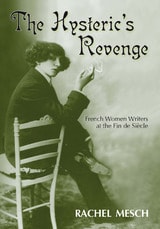
The Hysteric's Revenge
French Women Writers at the Fin de SiecleRachel Mesch
Vanderbilt University Press, 2006
This book argues, however, that the fear of sexual abandon--though real--veiled an even more insidious fear: that women might be capable of intellectual equality with men and thus pose a threat to the most basic structures of French patriarchal society. In demonstrating the pervasiveness of this anxiety through analysis of nineteenth-century medical texts, literary criticism, and fiction, The Hysteric's Revenge brings into relief a critical relationship between the female mind and body that is essential to understanding the discursive position of the turn-of-the-century woman writer.
The novels presented here confront this mind/body problem through a wide variety of styles and genres that challenge conventional fin-de-siecle notions of femininity. From the compelling autobiography of Liane de Pougy--one of Paris's most renowned courtesans--to Colette's frank discussions of female pleasure in one of her early novels, to the violent creativity of Rachilde's androgynous heroine, Mesch demonstrates how both canonical and non-canonical writers promoted women's intellectual authority through the development of a sexual counter-discourse. In engaging the relationship between women's minds and bodies, these novels challenge the conclusions of a century of doctors who sought to prove a physiological basis for female intellectual inferiority. At the same time, they point the way towards later French feminists who sought to subvert patriarchal structures through literary explorations of sexuality.
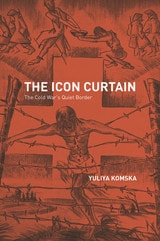
The Icon Curtain
The Cold War's Quiet BorderYuliya Komska
University of Chicago Press, 2015
Yuliya Komska transports readers to the western edge of the Bohemian Forest, one of Europe’s oldest borderlands, where in the 1950s civilians set out to shape the so-called prayer wall. A chain of new and repurposed pilgrimage sites, lookout towers, and monuments, the prayer wall placed two long-standing German obsessions, forest and border, at the heart of the century’s most protracted conflict. Komska illustrates how civilians used the prayer wall to engage with and contribute to the new political and religious landscape. In the process, she relates West Germany’s quiet sylvan periphery to the tragic pitch prevalent along the Iron Curtain’s better-known segments.
Steeped in archival research and rooted in nuanced interpretations of wide-ranging cultural artifacts, from vandalized religious images and tourist snapshots to poems and travelogues, The Icon Curtain pushes disciplinary boundaries and opens new perspectives on the study of borders and the Cold War alike.
The Iconic Page in Manuscript, Print, and Digital Culture
George Bornstein and Theresa Tinkle, Editors
University of Michigan Press, 1998
The material features of texts as physical artifacts--their "bibliographic codes" --have over the last decade excited increasing interest in a variety of disciplines. The Iconic Page in Manuscript, Print, and Digital Culture gathers essays by an extraordinarily distinguished group of scholars to offer the most comprehensive examination of these issues yet, drawing on examples from literature, history, the fine arts, and philosophy.
Fittingly, the volume contains over two dozen illustrations that display the iconic features of the works analyzed--from Alfred the Great's Boethius through medieval manuscripts to the philosophy of C. S. Peirce and the dustjackets on works by F. Scott Fitzgerald and William Styron.
The Iconic Page in Manuscript, Print, and Digital Culture will be groundbreaking reading for scholars in a wide range of fields.
George Bornstein is C. A. Patrides Professor of English, University of Michigan. Theresa Tinkle is Associate Professor of English, University of Michigan.