Results by title
28167 books match the query 'History' and 6372 start with t
The Power of the Steel-tipped Pen
Reconstructing Native Hawaiian Intellectual HistoryNoenoe K. Silva
Duke University Press, 2017
The Power of the Texas Governor
Connally to BushBy Brian McCall
University of Texas Press, 2009
George W. Bush called it "the best job in the world," yet many would argue that the Texas governorship is a weak office. Given few enumerated powers by the Texas Constitution, the governor must build a successful relationship with the state legislature—sometimes led by a powerful lieutenant governor or speaker of the opposing party—to advance his or her policy agenda. Yet despite the limitations on the office and the power of the legislative branch, many governors have had a significant impact on major aspects of Texas's public life—government, economic development, education, and insurance reform among them. How do Texas governors gain the power to govern effectively?
The Power of the Texas Governor takes a fresh look at the state's chief executives, from John Connally to George W. Bush, to discover how various governors have overcome the institutional limitations of the office. Delving into the governors' election campaigns and successes and failures in office, Brian McCall makes a convincing case that the strength of a governor's personality—in particular, his or her highly developed social skills—can translate into real political power. He shows, for example, how governors such as Ann Richards and George W. Bush forged personal relationships with individual legislators to achieve their policy goals. Filled with revealing insights and anecdotes from key players in each administration, The Power of the Texas Governor offers new perspectives on leadership and valuable lessons on the use of power.
The Power to Die
Slavery and Suicide in British North AmericaTerri L. Snyder
University of Chicago Press, 2015
In The Power to Die, Terri L. Snyder excavates the history of slave suicide, returning it to its central place in early American history. How did people—traders, plantation owners, and, most importantly, enslaved men and women themselves—view and understand these deaths, and how did they affect understandings of the institution of slavery then and now? Snyder draws on ships’ logs, surgeons' journals, judicial and legislative records, newspaper accounts, abolitionist propaganda and slave narratives, and many other sources to build a grim picture of slavery’s toll and detail the ways in which suicide exposed the contradictions of slavery, serving as a powerful indictment that resonated throughout the Anglo-Atlantic world and continues to speak to historians today.
The Power to Name
A History of Anonymity in Colonial West AfricaStephanie Newell
Ohio University Press, 2013
Between the 1880s and the 1940s, the region known as British West Africa became a dynamic zone of literary creativity and textual experimentation. African-owned newspapers offered local writers numerous opportunities to contribute material for publication, and editors repeatedly defined the press as a vehicle to host public debates rather than simply as an organ to disseminate news or editorial ideology. Literate locals responded with great zeal, and in increasing numbers as the twentieth century progressed, they sent in letters, articles, fiction, and poetry for publication in English- and African-language newspapers.
The Power to Name offers a rich cultural history of this phenomenon, examining the wide array of anonymous and pseudonymous writing practices to be found in African-owned newspapers between the 1880s and the 1940s, and the rise of celebrity journalism in the period of anticolonial nationalism. Stephanie Newell has produced an account of colonial West Africa that skillfully shows the ways in which colonized subjects used pseudonyms and anonymity to alter and play with colonial power and constructions of African identity.
The Powers of Dignity
The Black Political Philosophy of Frederick DouglassNick Bromell
Duke University Press, 2021
The Powers that Punish
Prison and Politics in the Era of the "Big House", 1920-1955Charles Bright
University of Michigan Press, 1996
In a pathbreaking study of a major state prison, Michigan's Jackson State Penitentiary during the middle years of this century, Charles Bright addresses several aspects of the history and theory of punishment. The study is an institutional history of an American penitentiary, concerned with how a carceral regime was organized and maintained, how prisoners were treated and involved in the creation of a regime of order and how penal practices were explained and defended in public. In addition, it is a meditation upon punishment in modern society and a critical engagement with prevailing theories of punishment coming out of liberal, Marxist and post structuralist traditions. Deploying theory critically in a historic narrative, it applies new, relational theories of power to political institutions and practices. Finally, in studying the history of the Jackson prison, Bright provides a rich account, full of villains and a few heroes, of state politics in Michigan during a period of rapid transition between the 1920s to the 1950s.
The book will be of direct relevance to criminologists and scholars of punishment, and to historians concerned with the history of punishment and prisons in the United States. It will also be useful to political scientists and historians concerned with exploring new approaches to the study of power and with the transformation of state politics in the 1930s and 1940s. Finally Bright tells a story which will fascinate students of modern Michigan history.
Charles Bright is a historian and Lecturer at the Residential College of the University of Michigan.
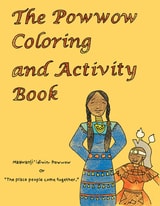
The Powwow Coloring and Activity Book
Ojibwe Traditions Coloring Book SeriesCassie Brown
Wisconsin Historical Society Press, 2018

The Pox of Liberty
How the Constitution Left Americans Rich, Free, and Prone to InfectionWerner Troesken
University of Chicago Press, 2015
Werner Troesken looks at the history of the United States with a focus on three diseases—smallpox, typhoid fever, and yellow fever—to show how constitutional rules and provisions that promoted individual liberty and economic prosperity also influenced, for good and for bad, the country’s ability to eradicate infectious disease. Ranging from federalism under the Commerce Clause to the Contract Clause and the Fourteenth Amendment, Troesken argues persuasively that many institutions intended to promote desirable political or economic outcomes also hindered the provision of public health. We are unhealthy, in other words, at least in part because our political and legal institutions function well. Offering a compelling new perspective, The Pox of Liberty challenges many traditional claims that infectious diseases are inexorable forces in human history, beyond the control of individual actors or the state, revealing them instead to be the result of public and private choices.
The Practical Imagination
The German Sciences of State in the Nineteenth CenturyDavid F. Lindenfeld
University of Chicago Press, 1997
Lindenfeld argues that these sciences of state developed a technique of deliberation on practical issues such as tax policy and welfare, that serves as a model for contemporary administrations.
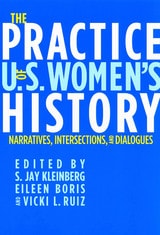
The Practice of U.S. Women's History
Narratives, Intersections, and DialoguesEdited by S. Jay Kleinberg, Eileen Boris, and Vicki L. Ruiz
Rutgers University Press, 2008
In the last several decades, U.S. women’s history has come of age. Not only have historians challenged the national narrative on the basis of their rich explorations of the personal, the social, the economic, and the political, but they have also entered into dialogues with each other over the meaning of women’s history itself.
In this collection of seventeen original essays on women’s lives from the colonial period to the present, contributors take the competing forces of race, gender, class, sexuality, religion, and region into account. Among many other examples, they examine how conceptions of gender shaped government officials’ attitudes towards East Asian immigrants; how race and gender inequality pervaded the welfare state; and how color and class shaped Mexican American women’s mobilization for civil and labor rights.

The Pragmatic Mind
Explorations in the Psychology of BeliefMark Bauerlein
Duke University Press, 1997
Bauerlein extracts from Emerson, James, and Peirce an intellectual focus that can be used to advance the broad social and academic reforms that the new pragmatists hail. He claims that, in an effort to repudiate the phony universalism of much contemporary theory, the new generation of theorists has ignored the fact that its visions of pragmatic action are grounded in this "old" school, not just in a way of doing things but also in a way of thinking about things. In other words, despite its inclination to regard psychological questions as irrelevant, Bauerlein shows that the pragmatic method demands a pragmatic mind—that is, a concept of cognition, judgment, habit, and belief. He shows that, in fact, such a concept of mind does exist, in the work of the "old" pragmatists.

The Prague Spring, 1968
The National Security Archive Navratíl
Central European University Press, 1998
Presented in a highly readable form, the book offers top-level documents from Kremlin Politburo meetings, multi-lateral sessions of the Warsaw Pact leading up to the decision to invade, and even transcriptions of KGB-recorded phone conversations between Leonid Brezhnev and Alexander Dubcek. Once highly classified American documents from the National Security Council, CIA, and other relevant agencies acquired through the U.S. Freedom of Information Act have also been included.
In order to provide a historical and political context, the editors have included an introductory essay for each section of the volume. A chronology, glossary, and bibliography offer further background information for the reader. As members of the commission appointed by Václav Havel to investigate the events of 1967-1970, the editors have a unique Czech-Slovak perspective to offer to foreign audiences.

The Prairie Boys Go to War
The Fifth Illinois Cavalry, 1861-1865Rhonda M. Kohl
Southern Illinois University Press, 2013
The regiment’s history unfolds around major events in the Western Theater from 1861 to September 1865, including campaigns at Helena, Vicksburg, Jackson, and Meridian, as well as numerous little-known skirmishes. Although they were led almost exclusively by Northern-born Republicans, the majority of the soldiers in the Fifth Illinois remained Democrats. As Kohl demonstrates, politics, economics, education, social values, and racism separated the line officers from the common soldiers, and the internal friction caused by these cultural disparities led to poor leadership, low morale, disciplinary problems, and rampant alcoholism.
The narrative pulls the Fifth Illinois out of historical oblivion, elucidating the highs and lows of the soldiers’ service as well as their changing attitudes toward war goals, religion, liberty, commanding generals, Copperheads, and alcoholism. By reconstructing the cultural context of Fifth Illinois soldiers, Prairie Boys Go to War reveals how social and economic traditions can shape the wartime experience.
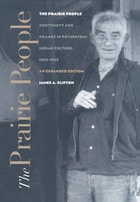
The Prairie People
Continuity and Change in Potawatomi Indian Culture, 1665-1965James A. Clifton
University of Iowa Press, 1998
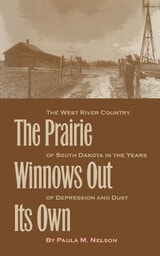
The Prairie Winnows Out Its Own
The West River Country of South Dakota in the Years of Depression and DustNelson, Paula M.
University of Iowa Press, 1996
Between 1900 and 1915, in the last great land rush, over one hundred thousand homesteaders flooded into the west river country of South Dakota, a land noted for its aridity and unpredictable weather, its treelessness, and its endless sky. The settlers of “the last, best west” weathered their first crisis in the severe drought of 1910-1911, which winnowed out many of the speculators and faint of heart; they abandoned their founding hopes of quick success and substituted a new ethos of “next year country”—while this year was hard, next year would be better, an ironic phrase at once optimistic and fatalistic.
“Next year,” however, was in many of those years not better. The collapse of the agricultural economy in the immediate aftermath of the boom years of World War I set in motion a pattern of regional decline amid national prosperity and cultural change: the rise of radio and mass culture increased rural folks' awareness of national trends and tastes, a development which paradoxically increased their own sense of remoteness and isolation. The failure of the farm economy to recover to any substantial degree in the twenties caused a less dramatic but cumulatively greater impact on the west river country's population and prospects—a second great crisis.
The Great Depression and the dustbowl years of the thirties were the greatest test of the west river people. The drought of 1910-1911, heretofore seen as the benchmark of bad times, faded even in the remembrances of the original pioneers in the face of the thirties' relentless drought, grasshoppers, blowing dust, and the accompanying starvation, struggle, and despair. The Depression in the west river country was a blast furnace from which a hardened yet still hopeful people emerged, scathed but undefeated. The Prairie Winnows Out Its Own is the voice of this experience.
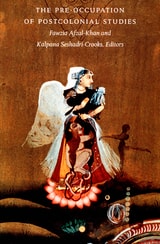
The Pre-occupation of Postcolonial Studies
Fawzia Afzal-Khan and Kalpana Seshadri-Crooks, eds.
Duke University Press, 2000
Since it burst on the academic scene as the “hot” new disciplinary field during the final decade of the twentieth century, postcolonial studies has faced criticism from those who question its “troubling” trajectories, its sometimes suspect epistemological and pedagogical methods, and its relatively narrow focus. With diverse essays that emerge from such disciplines as South Asian, Latin American, Arab, and Jewish studies, this volume responds to skeptics and adherers alike, addressing not only the broad theoretical issues at stake within the field but also the position of the field itself within the academy, as well as its relationship to modern, postmodern, and Marxist discourses. Contributors offer critiques on ahistorical and universalizing tendencies in postcolonial work and confront the need for scholars to attend to issues of class, ideology, and the effects of neocolonial practices. Seeking to broaden the field’s traditionally literary spectrum of methodologies, these essayists take up large thematic issues to examine specific sites of colonial activities with all of their historical, political, and cultural significance. Closing the volume is an insightful interview with Homi Bhabha, in which he discusses postcolonial studies in the context of contemporary cultural politics and theory.
The Pre-Occupation of Postcolonial Studies not only offers an overview of the discipline but also pushes and pulls at the edges of postcolonial studies, offering a comprehensive view of the field’s diversity of thought and envisioning clear pathways for its future.
Contributors. Fawzia Afzal-Khan, Ali Behdad, Homi Bhabha, Daniel Boyarin, Neil Larsen, Saree Makdisi, Joseph Massad, Walter Mignolo, Hamid Naficy, Ngugi Wa Thingo, Timothy B. Powell, R. Radhakrishnan, Bruce Robbins, Kalpana Seshadri-Crooks, Ella Shohat, Rajeswari Sunder Rajan

The Preacher's Demons
Bernardino of Siena and the Social Underworld of Early Renaissance ItalyFranco Mormando
University of Chicago Press, 1999
His story of the Parisian vigilante was a recommendation. Sexual deviants were the objects of relentless, unconditional persecution in Bernardino's sermons. Other targets of the preacher's venom were witches, Jews, and heretics. Mormando takes us into the social underworld of early Renaissance Italy to discover how one enormously influential figure helped to dramatically increase fear, hatred, and intolerance for those on society's margins.
This book is the first on Bernardino to appear in thirty-five years, and the first ever to consider the preacher's inflammatory role in Renaissance social issues.
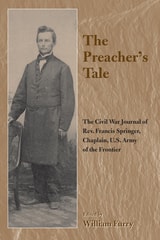
The Preacher's Tale
The Civil War Journal of Rev. Francis Springer, Chaplain, U.S. Army of the FrontierWilliam Furry
University of Arkansas Press, 2001
In the fall of 1861, fifty-one-year-old Rev. Francis Springer enlisted in the Union army. The following spring, Springer, a friend and one-time neighbor to Abraham Lincoln, rode away with the 10th Illinois Cavalry. A witness to the Battle of Prairie Grove (December 1862), Springer was later named post chaplain at Fort Smith, where, in additon to preaching and ministering to the troops, he was placed in charge of refugees—widows, orphans, and contrabands—the displaced victims of virulent guerrilla warfare in Northwest Arkansas. Springer also wrote articles and columns in the Fort Smith New Era under the pseudonym, “Thrifton.” Springer’s honest appraisals of life in the Army of the Frontier make for fascinating reading, and his unique perspective as moralist, educator, and journalist provide new insight into the Civil War and how it was fought in the West. The book includes several never-before published photographs and appendixes which feature accounts of six military executions that Springer participated in as a Union Army chaplain, the hitherto unpublished last letters home of two rebel soldiers condemned and executed at Fort Smith, as well as a eulogy for Abraham Lincoln.
The Preacher’s Tale includes several never before published photographs, and appendixes that contain accounts of six military executions that Springer participated in as a Union Army chaplain, the last letters home of two rebel soldiers condemned and executed at Fort Smith, as well as a eulogy written for Abraham Lincoln.
The Preceramic Horizons of Northeastern Oklahoma
David Albert Baerreis
University of Michigan Press, 1951
The Precious Birthright
Black Leaders and the Fight to Vote in Antebellum Rhode IslandCJ Martin
University of Massachusetts Press, 2024
In 1842, Black Rhode Islanders secured a stunning victory, a success rarely seen in antebellum America: they won the right to vote. Amid heightened public discourse around shifting ideas of race, citizenship, and political rights, they methodically deconstructed the arguments against their enfranchisement, exposing the arbitrariness of the color line in delineating citizenship rights and choosing the perfect moments in which to act forcefully. At the head of this movement, a cohort of prominent business and community members formed an early example of a Black leadership class in the US.
CJ Martin draws upon a wealth of sources—including personal correspondences, government and organizational documents, tax records, and petitions—to argue that Black leaders employed a unique combination of agitation and accommodation to ensure the success of the movement. By investigating their tactics, Martin deepens the story of how race played a crucial role in American citizenship, and by focusing on Black leadership, he relates this history through the people who lived it—who thought, debated, petitioned, and enacted their own liberation. Telling the story of a fight that was as important to the pioneers of interracial democracy as it was for the civil rights activists of the twentieth century, The Precious Birthright provides new insight into the larger story of Black freedom.
The Predestination of Humans
Augustinus, <i>Tome III, Book IX</i>Cornelius Jansen
Catholic University of America Press, 2022
The Predicament of Blackness
Postcolonial Ghana and the Politics of RaceJemima Pierre
University of Chicago Press, 2012
The Prehispanic Ethnobotany of Paquimé and Its Neighbors
Paul E. Minnis and Michael E. Whalen
University of Arizona Press, 2020
This volume is the first large-scale investigation of the prehispanic ethnobotany of this important ancient site and its neighbors. The authors examine ethnobotanical relationships during Medio Period, AD 1200–1450, when Paquimé was at its most influential. Based on two decades of archaeological research, this book examines uses of plants for food, farming strategies, wood use, and anthropogenic ecology. The authors show that the relationships between plants and people are complex, interdependent, and reciprocal. This volume documents ethnobotanical relationships and shows their importance to the development of the Paquimé polity.
How ancient farmers made a living in an arid to semi-arid region and the effects their livelihood had on the local biota, their relations with plants, and their connection with other peoples is worthy of serious study. The story of the Casas Grandes tradition holds valuable lessons for humanity.
The Prehistoric Animal Ecology and Ethnozoology of the Upper Great Lakes Region
Charles Edward Cleland
University of Michigan Press, 1966
The Prehistoric People of the Fort Ancient Culture of the Central Ohio Valley
Louise M. Robbins and Georg K. Neumann
University of Michigan Press, 1972
The Prehistory of the Burnt Bluff Area
Edited by James E. Fitting
University of Michigan Press, 1968

The Premodern Condition
Medievalism and the Making of TheoryBruce Holsinger
University of Chicago Press, 2005
Holsinger shows that the preoccupation with medieval cultures and practices among Bataille, Derrida, Lacan, Barthes, Bourdieu, and their cohorts was so wide ranging that it merits recognition as one of the most significant epiphenomena of postwar French thought. Not simply an object of nostalgic longing or an occasional source of literary exempla, the medieval epoch was continually mined by these thinkers for specific philosophical vocabularies, social formations, and systems of thought.
To supplement its master thesis, The Premodern Condition also contains original essays by Bataille and Bourdieu—translated here for the first time into English—that testify in various ways to the strange persistence of medievalisms in French postwar avant-garde writings. What results is an important and original work that will be a touchstone for specialists in medieval studies and critical theory alike.

The Prendergast Letters
Correspondence from Famine-Era Ireland, 1840–1850Shelley Barber
University of Massachusetts Press, 2006
Most important, the letters offer a rare contemporary, firsthand account of Ireland's an Gorta Mor, the Great Famine that began with the failure of the potato crop in 1845. Letters written in the months and years following the announcement of the first crop failure provide insight into not only the sufferings of one family but also the response of the community and nation as this crisis transformed Ireland.
James and Elizabeth Prendergast were the parents of six children. Their letters from Milltown, County Kerry, dictated to a scrivener, were posted to sons Thomas and Jeffrey and daughter Julia Riordan and her husband Cornelius, all of whom had emigrated in search of employment to Boston, Massachusetts—a city that would itself be transformed by the famine-era influx of Irish immigrants.
In addition to transcriptions of the forty-eight letters in the collection, this volume includes contextual essays by historian Ruth-Ann Harris and genealogist Marie Daly. The evidence of the letters themselves, along with the contributions of Harris and Daly, demonstrate the ways in which the family of James Prendergast was at once exceptional and typical.

The Presence of God and Union with God
Creation, Divine Indwelling Through Grace, Incarnation and the Blessed Vision According to Saint Thomas AquinasGilles Emery, OP
Catholic University of America Press, 2027
The Present Colonizes the Past
The Future Forsaken?Romila Thapar
Seagull Books, 2026
Short, rigorous intervention on history-writing in public life.
How does the present reshape what a society chooses to remember as its past? Recent interpretations of India's history have replaced careful inquiry with narratives that mirror contemporary anxieties and ambitions, sidelining the evidence, debate, and plurality that once characterized India’s long intellectual tradition. At stake is a shift from understanding history as a method to treating it as a tool of identity and authority. In The Present Colonizes the Past, Romila Thapar asks: How have cultural and religious identities evolved through interaction rather than isolation? How have dissent and accommodation shaped social change? How have education and public discourse influenced what is accepted as knowledge? And, most urgently, how might weakened institutions and selective pasts redefine our heritage and citizenship?
The Present of the Future
Edited by Susanne Witzgall and Kerstin Stakemeier
Diaphanes, 2018
The result of a lecture series held at the cx centre for interdisciplinary studies at the Academy of Fine Arts, Munich, The Present of the Future explores our current relationship to the future and considers strategies for artists and scholars to establish effective action for shaping alternative futures. Contributors to the book approach this problem from the perspective of diverse disciplines, including art, design, architecture, and philosophy.
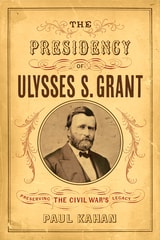
The Presidency of Ulysses S. Grant
Preserving the Civil War's LegacyPaul Kahan
Westholme Publishing, 2025
On December 5, 1876, President Ulysses S. Grant transmitted his eighth and final message to Congress. In reviewing his tenure as president, Grant proclaimed, “Mistakes have been made,” though he assured Congress, his administration’s “failures have been errors of judgment, not of intent.” Until recently, scholars have portrayed Grant as among the country’s worst chief executives. Though the scholarly consensus about Grant’s presidency is changing, the general public knows little, if anything, about his two terms, other than their outsized reputation for corruption. While scandals are undoubtedly part of the story, there is more to Grant’s presidency: Grant faced the Panic of 1873, the severest economic depression in U.S. history, defeated the powerful Senator Charles Sumner on the annexation of Cuba, and deftly avoided war with Spain while laying the groundwork for the “special relationship” between Great Britain and the United States. Grant’s efforts to ensure justice for African Americans and American Indians, however, were undercut by his own decisions and by the contradictory demands of the various constituencies that made up the Republican Party.
In The Presidency of Ulysses S. Grant: Preserving the Civil War’s Legacy, historian Paul Kahan focuses on the unique political, economic, and cultural forces unleashed by the Civil War and how Grant addressed these issues during his tumultuous two terms as chief executive. A timely reassessment, The Presidency of Ulysses S. Grant sheds new light on the business of politics in the decade after the Civil War and portrays an energetic and even progressive executive whose legacy has been overshadowed by both his wartime service and his administration’s many scandals.
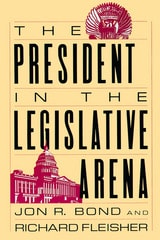
The President in the Legislative Arena
Jon R. Bond and Richard Fleisher
University of Chicago Press, 1990
In The President in the Legislative Arena, Jon R. Bond and Richard Fleisher depart dramatically from the concern with presidential influence that has dominated research on presidential-congressional relations for the past thirty years. Of the many possible factors involved in presidential success, those beyond presidential control have long been deemed unworthy of study. Bond and Fleisher disagree. Turning to democratic theory, they insist that it is vitally important to understand the conditions under which the executive brance prevails, regardless of the source of that success. Accordingly, they provide a thorough and unprecedented analysis of presidential success on congressional roll-call votes from 1953 through 1984. Their research demonstrates that the degree of cooperation between the two branches is much more systematically linked to the partisan and ideological makeup of Congress than to the president's bargaining ability and popularity. Thus the composition of Congress "inherited" by the president is the single most significant determinant of the success or failure of the executive branch.
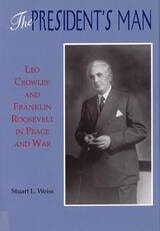
The President's Man
Leo Crowley and Franklin Roosevelt in Peace and WarStuart L. Weiss
Southern Illinois University Press, 1996
Leo Crowley has been known only as the administrator condemned by President Truman for cutting off Soviet lend-lease after V-E Day. Stuart L. Weiss revises this view while exploring Crowley’s long, significant state and federal career, emphasizing his service as Franklin D. Roosevelt’s man for all seasons.
Weiss deals effectively with Crowley’s flaws and virtues as well as those of the administrations he served. Crowley was confirmed as chair of the FDIC in 1934 despite a charge, unknown to President Roosevelt, that Crowley had committed fraud as a banker in Wisconsin. Crowley then served with distinction for more than eleven years as the administration twice buried a 1935 Treasury Department report that, had it been handed to Wisconsin authorities, could have sent him to prison: Roosevelt valued Crowley’s political and administrative talents too highly to allow that to happen.
In 1939, Roosevelt, anxious to have business support for stopping the Axis powers, encouraged Crowley to take the chair of a holding company about to be prosecuted by the SEC. After Pearl Harbor, like priorities prompted the president first to name Crowley alien property custodian, then chair of the Board of Economic Warfare to supplant Roosevelt’s politically troublesome vice president, and, finally, foreign economic administrator, the person responsible for civilian lend-lease activity
In this vibrant biography, Weiss furnishes the reader with detailed portraits of a man faithful to his president even when he disagreed with him and of a president willing to do what he felt was necessary for the good of the country.
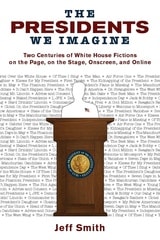
The Presidents We Imagine
Two Centuries of White House Fictions on the Page, on the Stage, Onscreen, and OnlineJeff Smith
University of Wisconsin Press, 2009
In The Presidents We Imagine, Jeff Smith examines the presidency’s ever-changing place in the American imagination. Ranging across different media and analyzing works of many kinds, some familiar and some never before studied, he explores the evolution of presidential fictions, their central themes, the impact on them of new and emerging media, and their largely unexamined role in the nation’s real politics.
Smith traces fictions of the presidency from the plays and polemics of the eighteenth century—when the new office was born in what Alexander Hamilton called “the regions of fiction”—to the digital products of the twenty-first century, with their seemingly limitless user-defined ways of imagining the world’s most important political figure. Students of American culture and politics, as well as readers interested in political fiction and film, will find here a colorful, indispensable guide to the many surprising ways Americans have been “representing” presidents even as those presidents have represented them.
“Especially timely in an era when media image-mongering increasingly shapes presidential politics.”—Paul S. Boyer, series editor
“Smith's understanding of the sociopolitical realities of US history is impressive; likewise his interpretations of works of literature and popular culture. . . .In addition to presenting thoughtful analysis, the book is also fun. Readers will enjoy encounters with, for example, The Beggar's Opera, Duck Soup, Edward Bellamy's Looking Backward, Philip Roth's Plot against America, the comedic campaigns of W. C. Fields for President and Pogo for President, and presidential fictions that continue up to the last President Bush. . . . His writing is fluid and conversational, but every page reveals deep understanding and focus. Summing Up: Highly recommended. All readers.”—CHOICE
The Presidio and Militia on the Northern Frontier of New Spain
A Documentary History, Volume I, 1570-1700Thomas H. Naylor and Charles W. Polzer
University of Arizona Press, 1986
The Presidio and Militia on the Northern Frontier of New Spain
A Documentary History, Volume Two, Part One: The Californias and Sinaloa-Sonora, 1700-1765Edited by Charles W. Polzer and Thomas E. Sheridan
University of Arizona Press, 1997
The Presidio and Militia on the Northern Frontier of New Spain
A Documentary History, Volume Two, Part Two: The Central Corridor and the Texas Corridor, 1700-1765Edited by Diana Hadley, Thomas H. Naylor, and Mardith K. Schuetz-Miller
University of Arizona Press, 1997

The Press and the Constitution, 1931-1947
J. Edward Gerald
University of Minnesota Press, 1948
The Press and the Constitution, 1931–1947 was first published in 1948. Minnesota Archive Editions uses digital technology to make long-unavailable books once again accessible, and are published unaltered from the original University of Minnesota Press editions.
Sixteen dramatic years—from the Minnesota gag law case in 1931 to the Taft-Hartley Act in 1947. Sixteen years in which the American system of freedom developed new strength and conferred new benefits on the common man. In The Press and the Constitution J. Edward Gerald has told the story of these years as they have influenced the development of freedom of the press.
During this turbulent time American newspapers, in spite of their claims to protection under the First and Fourteenth amendments, have found themselves subjected to increasing legal restraints. The guarantee of freedom of the press affects the lives of a wide range of individuals—from publishers to pickets, from Big Business leaders to itinerant evangelists. To show this, Mr. Gerald includes in his discussion the anti-trust laws, newspaper taxes, wage and hour legislation, censorship, picketing, licensing, and the contempt power.
The book analyzes a series of cases decided by the United States Supreme Court from 1931 to 1947. Among the more celebrated are the Chicago Sun-Chicago Tribune antitrust case, the Esquire case, in which the powers of the Postmaster General were limited, and the Jehovah's Witnesses cases, in which the line between religion and commerce was defined.
The author concludes that American law definitely establishes—and carries out—the concept of the common welfare, even to the point of government intervention to increase freedom of the press for some while restricting it for others.
The Prestes Column
An Interior History of Modern BrazilJacob Blanc
Duke University Press, 2024
The Price of Copper
Labor, Race and Suicide in a New Mexico Mining TownRone Tempest
University Press of Colorado, 2027
The Price of Copper is a veteran journalist’s unflinching investigation of a family tragedy and long-standing mystery—the sensational 1938 suicide of powerful New Mexico copper mine boss Rone B. Tempest Sr. on the eve of his scheduled testimony before a federal labor board. From this dramatic opening, the book paints a vivid portrait of open-pit copper mining, labor conflicts, and corporate-sponsored racism in company mining towns across the Mountain West from the early years of the twentieth century to the first successes of the civil rights movement in the 1950s.
The author’s paternal grandfather, Rone Tempest Sr., was the general manager of the Chino Copper Mine in Santa Rita, New Mexico, which was owned by the Kennecott Copper Corporation and under investigation over labor practices. His boss was Salt Lake City copper baron and ruthless anti-union strikebreaker Daniel C. Jackling—the “Prophet of Porphyry,” who pioneered the industrial mining of low-grade copper ores by introducing the use of dynamite, steam shovels, rail, and giant mill works. After detailing the saga around Tempest Sr.’s death, the story follows the trajectory of the Chino mine over time, including the rise of predominantly Hispanic labor unions and the advancement of Hispanic workers to senior management roles—gains in civil rights that would have made the labor environment entirely unrecognizable to those fighting for reform in 1938.
A compelling and dramatic history of the great early twentieth-century advances in western copper mining that provided the essential metal needed to electrify the continent and the world, The Price of Copper is a unique personal story that connects to the broader history of copper mining in the West, as well as a valuable social history offering a new narrative about the dynamics of corporate management and giving additional insight into the formation of the “Copper Age” in the United States.
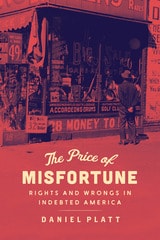
The Price of Misfortune
Rights and Wrongs in Indebted AmericaDaniel Platt
University of Chicago Press, 2023
What can be taken from someone who has borrowed money and cannot repay? What do the victims of misfortune owe to their lenders, and what can they keep for themselves? The answers to those questions, immensely important for debtors, creditors, and society at large, have changed over time. The Price of Misfortune examines the cause of debtors’ rights in the modern United States and the struggles of reformers who fought to establish financial freedoms in law.
Daniel Platt shows how, in the wake of the Civil War, a range of advocates drew potent analogies between slavery, imprisonment for debt, and the experiences of wage garnishment and property foreclosure. He traces the ways those analogies were used to campaign for bold new protections for debtors, keeping them secure in their labor, property, and personhood. Yet, as Platt demonstrates, those reforms tended to assume as their ideal borrower someone who was white, propertied, and male. In subsequent decades, the emancipatory promise of debtors’ rights would be tested as women, wage earners, and African Americans seized on their language to challenge other structural inequalities: the dependency of marriage, the exploitation of industrial capitalism, and the oppression of Jim Crow. By reconstructing these forgotten developments—and recovering the experiences of indebted farmwives, sharecroppers, and wage workers—The Price of Misfortune narrates a new history of inequality, coercion, and law amid the early financialization of American capitalism.
The Price of Misfortune
Rights and Wrongs in Indebted AmericaDaniel Platt
University of Chicago Press, 2023
A history of the struggle for debtors’ rights from the Civil War to the Great Depression
What can be taken from someone who has borrowed money and cannot repay? What do the victims of misfortune owe to their lenders, and what can they keep for themselves? The answers to those questions, immensely important for debtors, creditors, and society at large, have changed over time. The Price of Misfortune examines the cause of debtors’ rights in the modern United States and the struggles of reformers who fought to establish financial freedoms in law.
Daniel Platt shows how, in the wake of the Civil War, a range of advocates drew potent analogies between slavery, imprisonment for debt, and the experiences of wage garnishment and property foreclosure. He traces the ways those analogies were used to campaign for bold new protections for debtors, keeping them secure in their labor, property, and personhood. Yet, as Platt demonstrates, those reforms tended to assume as their ideal borrower someone who was white, propertied, and male. In subsequent decades, the emancipatory promise of debtors’ rights would be tested as women, wage earners, and African Americans seized on their language to challenge other structural inequalities: the dependency of marriage, the exploitation of industrial capitalism, and the oppression of Jim Crow. By reconstructing these forgotten developments—and recovering the experiences of indebted farmwives, sharecroppers, and wage workers—The Price of Misfortune narrates a new history of inequality, coercion, and law amid the early financialization of American capitalism.
The Price of Power
America Since 1945Herbert Agar
University of Chicago Press, 1957
The Price of Racial Reconciliation
Ronald W. Walters
University of Michigan Press, 2008
“In The Price of Racial Reconciliation, Ronald Walters offers an abundance of riches. This book provides an extraordinarily comprehensive and persuasive set of arguments for reparations, and will be the lens through which meaningful opportunities for reconciliation are viewed in the future. If this book does not lead to the success of the reparations movement, nothing will.”
—Charles J. Ogletree, Jesse Climenko Professor of Law, Harvard Law School
“The Price of Racial Reconciliation is a seminal study of comparative histories and race(ism) in the formation of state structures that prefigure(d) socioeconomic positions of Black peoples in South Africa and the United States. The scholarship is meticulous in brilliantly constructed analysis of the politics of memory, reparations as an immutable principle of justice, imperative for nonracial(ist) democracy, and a regime of racial reconciliation.”
—James Turner, Professor of African and African American Studies and Founder, Africana Studies and Research Center, Cornell University
“A fascinating and pathbreaking analysis of the attempt at racial reconciliation in South Africa which asks if that model is relevant to the contemporary American racial dilemma. An engaging multidisciplinary approach relevant to philosophy, sociology, history, and political science.”
—William Strickland, Associate Professor of Political Science, W.E.B. Du Bois Department of Afro-American Studies, University of Massachusetts Amherst
The issue of reparations in America provokes a lot of interest, but the public debate usually occurs at the level of historical accounting: “Who owes what for slavery?” This book attempts to get past that question to address racial restitution within the framework of larger societal interests. For example, the answer to the “why reparations?” question is more than the moral of payment for an injustice done in the past. Ronald Walters suggests that, insofar as the impact of slavery is still very much with us today and has been reinforced by forms of postslavery oppression, the objective of racial harmony will be disrupted unless it is recognized with the solemnity and amelioration it deserves. The author concludes that the grand narrative of black oppression in the United States—which contains the past and present summary of the black experience—prevents racial reconciliation as long as some substantial form of racial restitution is not seriously considered. This is “the price” of reconciliation.
The method for achieving this finding is grounded in comparative politics, where the analyses of institutions and political behaviors are standard approaches. The author presents the conceptual difficulties involved in the project of racial reconciliation by comparing South African Truth and Reconciliation and the demand for reparations in the United States.
Ronald Walters is Distinguished Leadership Scholar and Director, African American Leadership Program and Professor of Government and Politics, University of Maryland.

The Priest Who Put Europe Back Together
The Life of Rev. Fabian Flynn, CPSean Brennan
Catholic University of America Press, 2018
The Primitive, the Aesthetic, and the Savage
An Enlightenment ProblematicTony C. Brown
University of Minnesota Press, 2012
Tony C. Brown examines “the inescapable yet infinitely troubling figure of the not-quite-nothing” in Enlightenment attempts to think about the aesthetic and the savage. The various texts Brown considers—including the writings of Addison, Rousseau, Kant, and Defoe—turn to exotic figures in order to delimit the aesthetic, and to aesthetics in order to comprehend the savage.
In his intriguing exploration Brown discovers that the primitive introduces into the aesthetic and the savage an element that proves necessary yet difficult to conceive. At its most profound, Brown explains, this element engenders a loss of confidence in one’s ability to understand the human’s relation to itself and to the world. That loss of confidence—what Brown refers to as a breach in anthropological security—traces to an inability to maintain a sense of self in the face of the New World. Demonstrating the impact of the primitive on the aesthetic and the savage, he shows how the eighteenth-century writers he focuses on struggle to define the human’s place in the world. As Brown explains, these authors go back again and again to “exotic” examples from the New World—such as Indian burial mounds and Maori tattooing practice—making them so ubiquitous that they come to underwrite, even produce, philosophy and aesthetics.
The Printed Reader
Gender, Quixotism, and Textual Bodies in Eighteenth-Century BritainAmelia Dale
Bucknell University Press, 2019
The Printed Reader explores the transformative power of reading in the eighteenth century, and how this was expressed in the fascination with Don Quixote and in a proliferation of narratives about quixotic readers, readers who attempt to reproduce and embody their readings. Through intersecting readings of quixotic narratives, including work by Charlotte Lennox, Laurence Sterne, George Colman, Richard Graves, and Elizabeth Hamilton, Amelia Dale argues that literature was envisaged as imprinting—most crucially, in gendered terms—the reader’s mind, character, and body. The Printed Reader brings together key debates concerning quixotic narratives, print culture, sensibility, empiricism, book history, and the material text, connecting developments in print technology to gendered conceptualizations of quixotism. Tracing the meanings of quixotic readers’ bodies, The Printed Reader claims the social and political text that is the quixotic reader is structured by the experiential, affective, and sexual resonances of imprinting and impressions.
Published by Bucknell University Press. Distributed worldwide by Rutgers University Press.
The Prisoners of Perote
By William Preston Stapp
University of Texas Press, 1977
In late 1842, Private William Preston Stapp and about three hundred other citizens of the Republic of Texas took it upon themselves to invade Mexico. They intended to retaliate for a recent Mexican attack on San Antonio and to humiliate President Sam Houston, who had been hesitant to seek revenge.
Stapp provides a closely observed, day-by-day narrative of the disastrous adventure later known as the Mier expedition. While his style might be described as "elegantly restrained" in comparison to the literary excesses of that early Victorian age, Stapp's flair for drama and description makes for colorful reading.
In response to the public outrage prompted by the San Antonio incident, Houston issued a presidential proclamation inviting volunteers for a retaliatory expedition across the Rio Grande. After the bloodless "capture" and pillage of two Mexican border towns, he called the volunteers back home. Most were relieved to comply, but some felt compelled to pursue the honor of the Republic further, and the Mier expedition was launched on December 20, 1842. On the day after Christmas, all save a forty-man camp guard were captured outside of Mier, a few miles across the Mexican border.
The prisoners faced a brutal forced march to Mexico City. Stapp was one of a large group that escaped along the way, became lost in the mountains, and suffered badly from hunger and thirst before recapture. He survived the notorious Black Bean Episode in which 17 of the 176 returned escapees were shot after drawing black beans in a lottery. The Texans were delivered to Perote Prison near Mexico City in September 1843, where a few of them tunneled to freedom and many more died in captivity. Mexico released the last of the prisoners in 1844, and Stapp was among them.
First published in 1845 and later issued in pamphlet form in 1933 by the La Grange Journal, The Prisoners of Perote is a fascinating view of a painful episode in Texas history.
The foreword by Joe B. Frantz provides a perspective on the Texas-Mexico relations during this period "when both countries were shaking down and had not yet found their way." He points out that The Prisoners of Perote provides some clues to the reasons behind the inherent tenseness that exists between Texas and Mexico today.

The Privatisation of Israeli Security
Shir Hever
Pluto Press, 2017