Results by title
22279 books match the query 'Social Science' and 4007 start with t
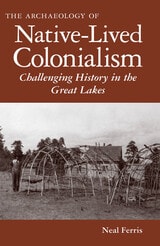
The Archaeology of Native-Lived Colonialism
Challenging History in the Great LakesNeal Ferris
University of Arizona Press, 2009
In reconsidering Native adaptation and resistance to colonial British rule, Ferris reviews five centuries of interaction that are usually read as a single event viewed through the lens of historical bias. He first examines patterns of traditional lifeway continuity among the Ojibwa, demonstrating their ability to maintain seasonal mobility up to the mid-nineteenth century and their adaptive response to its loss. He then looks at the experience of refugee Delawares, who settled among the Ojibwa as a missionary-sponsored community yet managed to maintain an identity distinct from missionary influences. And he shows how the archaeological history of the Six Nations Iroquois reflected patterns of negotiating emergent colonialism when they returned to the region in the 1780s, exploring how families managed tradition and the contemporary colonial world to develop innovative ways of revising and maintaining identity.
The Archaeology of Native-Lived Colonialism convincingly utilizes historical archaeology to link the Native experience of the eighteenth and nineteenth centuries to the deeper history of sixteenth- and seventeenth-century interactions and with pre-European times. It shows how these Native communities succeeded in retaining cohesiveness through centuries of foreign influence and material innovations by maintaining ancient, adaptive social processes that both incorporated European ideas and reinforced historically understood notions of self and community.
The Archaeology of Ocmulgee Old Fields, Macon, Georgia
Carol I. Mason, with a new foreword by Marvin T. Smith
University of Alabama Press, 2005
A 17th-century trading post and Indian town in central Georgia reveal evidence of culture contact and change
Ocmulgee Old Fields near Macon, Georgia, is the site of a Lower Creek village and associated English trading house dating from the late 17th and early 18th centuries. It was excavated in the early 1930s as part of a WPA project directed by A. R. Kelly, which focused primarily on the major Mississippian temple mounds of Macon Plateau. The specific data for the Old Fields was not analyzed until nearly 30 years after the excavation.
Part of the significance of this site lies in its secure identification with a known group of people and the linkage of those people with recognizable archaeological remains. The Old Fields site was among the very first for which this kind of identification was possible and stands at the head of a continuing tradition of historic sites archaeology in the Southeast.
Carol I. Mason's classic study of the Ocmulgee Old Fields site has been a model for contact-period Indian archaeology since the 1960s. The report includes a discussion of the historic setting and an analysis of the archaeological materials with an identification of the Lower Creek town and possibly of the English trader who lived there. Now, for the first time, the original report is widely available in book form. With a new foreword by the author and a new introduction from Southeastern archaeology expert Marvin T. Smith, readers have the benefit of a contemporary view of this very fine piece of careful scholarship.
The Archaeology of Place and Space in the West
Edited by Emily Dale and Carolyn L. White
University of Utah Press, 2021
Contributors tackle questions of how historical archaeologists theoretically and methodologically define the West, conveying the historical, mythological, and physical manifestations of placemaking. They confront issues of community and how diverse ethnic, racial, gendered, labor-based, and other demographic populations expressed their identities on and in the Western landscape. Authors also address the continued creation and re-creation of the West today, exploring the impact of the past on people in the present and its influence on modern conceptions of the American West.
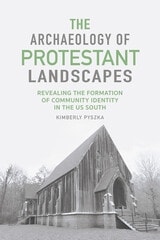
The Archaeology of Protestant Landscapes
Revealing the Formation of Community Identity in the US SouthKimberly Pyszka
University of Alabama Press, 2023
How religious institutions used landscapes and architecture to express their religious and social ideologies
The Archaeology of Protestant Landscapes focuses on three religious institutions in the US South in the eighteenth and nineteenth centuries: St. Paul’s Parish Church in coastal South Carolina, St. Luke’s Episcopal Church in central Alabama, and Cane Hill College in Northwest Arkansas. Drawing from archaeological surveys and excavations, artifact analysis, archival research, geophysical testing, and architectural information on religious structures, Kimberly Pyszka offers case studies of these institutions, which were located in developing communities that varied socially, politically, and economically.
Pyszka uses these case studies to demonstrate that select religious institutions used and modified natural landscape features to create cultural landscapes to express their ideology, identity, goals, and social, religious, and political power. She notes that where those structures were constructed, how they sat on the landscape, their architectural style, and their overall visual appearance were well-considered decisions made by religious leaders to benefit their organizations, communities, and, sometimes, themselves.
Pyszka also uses these case studies to highlight the social roles that religious organizations played in the development of communities. She points to landscape decisions—specifically to how the architectural design of religious structures was used, intentionally or not, to unite people, often those of differing religious backgrounds—as contributing to the creation of a common identity among people living in new and still-growing settlements, aiding in community development. This book contributes to the growing body of work within historical archaeology on churches, churchyards, and cemeteries and to the increasing awareness among archaeologists of how these sites contribute to questions of identity, consumerism, trade, and colonialism.
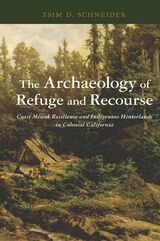
The Archaeology of Refuge and Recourse
Coast Miwok Resilience and Indigenous Hinterlands in Colonial CaliforniaTsim D. Schneider
University of Arizona Press, 2021
Applying theories of place and landscape, social memory, and mobility to the analysis of six archaeological sites, Tsim D. Schneider argues for a new direction in the archaeology of colonialism. This book offers insight about the critical and ongoing relationships Indigenous people maintained to their homelands despite colonization and systematic destruction of their cultural sites.
Schneider is a citizen of the Federated Indians of Graton Rancheria, the sovereign and federally recognized tribe of Coast Miwok and Southern Pomo people whose ancestral homelands and homewaters are the central focus of The Archaeology of Refuge and Recourse. Viewing this colonial narrative from an Indigenous perspective, Schneider focuses on the nearly one quarter of Coast Miwok people who survived the missions and created outlets within and beyond colonial settlements to resist and endure colonialism.
Fleeing these colonial missions and other establishments and taking refuge around the San Francisco Bay Area, Coast Miwok people sought to protect their identities by remaining connected to culturally and historically significant places. Mobility and a sense of place further enabled Coast Miwok people to find recourse and make decisions about their future through selective participation in colonial projects. In this book, Tsim D. Schneider argues that these distancing and familiarizing efforts contribute to the resilience of Coast Miwok communities and a sense of relevance and belonging to stolen lands and waters. Facing death, violence, and the pervading uncertainty of change, Indigenous people of the Marin Peninsula balanced the pull and persistence of place against the unknown possibilities of a dynamic colonial landscape and the forward-thinking required to survive. History, change, and the future can be read in the story of Coast Miwok people.
The Archaeology of Regional Interaction
Religion, Warfare, and Exchange across the American Southwest and BeyondMichelle Hegmon
University Press of Colorado, 2000
The Archaeology of Regional Interaction surpasses most regional studies, which only focus on settlement patterns or exchange, and considers other forms of interaction, such as intermarriage and the spread of religious practices. Contributors focus especially on understanding the social processes that underlie archaeological evidence of interaction.
The essays in this volume examine what regional systems involve, in terms of political and economic relations, and how they can be identified. One essay by Steven LeBlanc provides a sweeping analysis of conflict, a form of regional interaction that has received relatively little attention in the Southwest until recently. A series of chapters devoted to expanding the coverage beyond the borders of the traditional Southwest examines the surrounding areas, including Nevada and Utah, northern Mexico, and the Plains.The volume also provides a unique treatment of religion - including manifestations such as Flower World Iconography, Medicine Societies, and ceremonial textiles - as a form of regional interrelation.
The Archaeology of Slavery
A Comparative Approach to Captivity and CoercionEdited by Lydia Wilson Marshall
Southern Illinois University Press, 2014
Plantation sites, especially those in the southeastern United States, have long dominated the archaeological study of slavery. These antebellum estates, however, are not representative of the range of geographic locations and time periods in which slavery has occurred. As archaeologists have begun to investigate slavery in more diverse settings, the need for a broader interpretive framework is now clear.
The Archaeology of Slavery: A Comparative Approach to Captivity and Coercion, edited by Lydia Wilson Marshall, develops an interregional and cross-temporal framework for the interpretation of slavery. Contributors consider how to define slavery, identify it in the archaeological record, and study it as a diachronic process from enslavement to emancipation and beyond.
Essays cover the potential material representations of slavery, slave owners’ strategies of coercion and enslaved people’s methods of resisting this coercion, and the legacies of slavery as confronted by formerly enslaved people and their descendants. Among the peoples, sites, and periods examined are a late nineteenth-century Chinese laborer population in Carlin, Nevada; a castle slave habitation at San Domingo and a more elite trading center at nearby Juffure in the Gambia; two eighteenth-century plantations in Dominica; Benin’s Hueda Kingdom in the seventeenth and eighteenth centuries; plantations in Zanzibar; and three fugitive slave sites on Mauritius—an underground lava tunnel, a mountain, and a karst cave.
This essay collection seeks to analyze slavery as a process organized by larger economic and social forces with effects that can be both durable and wide-ranging. It presents a comparative approach that significantly enriches our understanding of slavery.
The Archaeology of Summer Island
Changing Settlement Systems in Northern Lake MichiganDavid S. Brose
University of Michigan Press, 1970
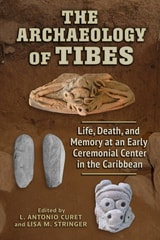
The Archaeology of Tibes
Life, Death, and Memory at an Early Ceremonial Center in the CaribbeanEdited by L. Antonio Curet and Lisa M. Stringer
University of Alabama Press, 2025
A collection of new essays that brings archaeological insights and discoveries at the Tibes Ceremonial Center up to date
The Archaeology of Tibes is a collection of essays offering a fresh analysis of this important ceremonial center. It brings new insights about social structure, illuminating the smaller-scale daily lives of ancient peoples rather than focusing on large-scale chiefdoms.
Tibes is the earliest known (ca. 400 to 1300 CE) ceremonial center in Puerto Rico. It has been the focus of one of the largest and longest-running archaeological programs in the Caribbean. Early researchers interpreted evidence in the area of a shift from dispersed villages to a ceremonial center as suggesting the development of social stratification and accumulation of power. Seen as the seat of an early chiefdom, Tibes served as a model applied broadly across the Greater Antilles.
New discoveries prompted archaeologists to question their original assumptions about ancient Puerto Rico, and later research failed to produce evidence of social stratification at Tibes. The Archaeology of Tibes therefore incorporates updated and wider perspectives on social formation. It considers agency, decisions, and events and the possibility of more than one form of social organization. It also presents a more accurate “humanized” past: the sociological meanings of that space and its significance for the people who created, used, and occupied it and who influenced rituals, social memory, and community.
Summarizing findings from excavations at Tibes after 2010, the collection also reviews the geoarchaeology of the site. Additional essays cover ceramic pastes, lithic production, faunal remains, coral, burials, and rock art. This work will engender discussion and future research by archaeologists across the Caribbean and beyond.

The Archaeology of V. Gordon Childe
Contemporary PerspectivesEdited by David R. Harris
University of Chicago Press, 1994
With contributions from such distinguished prehistorians as Kent V. Flannery, David Harris, Leo S. Klejn, John Mulvaney, Colin Renfrew, Michael Rowlands, and Bruce Trigger, The Archaeology of V. Gordon Childe is an attempt to evaluate Childe's achievement from different "partly national" perspectives and to assess how far, and why, his work remains significant today. The contributors examine such persistent themes in Childe's thought as the nature of culture and the role of diffusion in cultural evolution and debate the question of whether Childe anticipated "processual archaeology" in his famous models of the Neolithic and Urban Revolutions. Also included are evaluations of Childe's early career in Australia, his relations with Soviet archaeology, including a previously unknown letter from Childe to Soviet archaeologists, and his impact on American archaeology.
The Archaeology of the Eastern Nevada Paleoarchaic, Part 1
The Sunshine LocalityCharlotte Beck
University of Utah Press, 2009
The Sunshine Locality in the geographic center of the Great Basin has been the focus of scientific research since the mid-1960s. Authors Charlotte Beck and George T. Jones began studies there in 1992 and carried out excavations between 1993 and 1997 with the assistance of Hamilton College Field School. The area has yielded a rich and varied collection of diagnostic lithic tools, including fluted and unfluted lanceolate projectile points and a crescent, and a variety of gravers, scrapers, notches, and other tools common in Paleoindian toolkits across North America.
This volume provides the first comprehensive treatment that combines historical research with the more recent studies. Analysis and interpretations of the stratigraphic sequence in Sunshine Wash are presented, including analyses of sedimentary textures and structure, depositional processes, and chronology. Faunal remains are used to evaluate local and regional environmental changes. Finally, the authors address the nature of the processes that created the archaeological record at Sunshine Locality, its age, and whether artifacts and remains of extinct mammals also recovered at the site are associated. This work begins to answer unresolved questions about the paleoenvironmental resources of the Sunshine Locality.
The Archaeology of the Sierra Blanca Region of Southeastern New Mexico
Jane Holden Kelley
University of Michigan Press, 1984
The Archaeology, Ethnohistory, and Environment of the Marismas Nacionales
Michael S. Foster
University of Utah Press, 2017
Between 1967 and 1975 archaeologists from SUNY-Buffalo led a multidisciplinary project in the Marismas Nacionales, a vast, resource-rich estuary and mangrove forest of coastal Sinaloa and Nayarit, west Mexico. Michael Foster and fellow archaeologists provide a much-needed synthesis of these investigations, drawing from previously unpublished data and published reports to provide a comprehensive look at the region.
While in the field, the SUNY team recovered a variety of material artifacts and 248 human remains. Their findings, along with the project’s background, history, and analyses, are detailed in this volume’s thirteen chapters and nine appendices. Also included are supporting geomorphic, environmental, and ethnohistoric studies that establish the context for local human settlement and change. Evidence indicates that as the coastal plain grew, ceramic-bearing agriculturalists moved into the area and participated in far-reaching exchanges of goods and resources. This book makes a significant and lasting contribution to our knowledge of what today remains an understudied region of greater Mesoamerica.
Marismas Burial Descriptions, Supplemental Digital Material
The Archaic Southwest
Foragers in an Arid LandEdited by Bradley J. Vierra
University of Utah Press, 2018

The Archeology of New Hampshire
Exploring 10,000 Years in the Granite StateDavid Starbuck
University of New Hampshire Press, 2006
Several states already boast volumes showcasing their archeological history, but not New Hampshire—until now. David R. Starbuck's volume fills that void. Going beyond standard state guides that focus primarily on prehistoric sites, Starbuck also devotes equal time to historic, industrial, and nautical sites. This approach reflects the thinking of most contemporary archeologists who conduct research at a diverse range of sites.
A veteran of thirty years of field research throughout the Granite State, Starbuck revisits some of his own sites, including excavations at the New England Glassworks in Temple, two prehistoric sites on the Merrimack River, the Joseph Hazeltine pottery workshop outside Concord, the Governor Wentworth Estate in Wolfeboro, and his own long-term survey and excavation project at Canterbury Shaker Village. At the same time, though, Starbuck includes the work of other contemporary New Hampshire archeologists, representative sites of “old-timers” whose digs preceded his arrival, and the investigations of avocational diggers.
Starbuck's introduction offers an anecdotal history of archeological research in New Hampshire through the people who shaped it. Part I discusses discoveries that predate white settlement: the Paleo-Indian Period; the Archaic Period; and the Woodland Period. Part II moves from the seventeenth century to the present. Chapters include historical archeology (forts, farms, potters, Shakers); industrial archeology (mills, factories, railroads, dams, and bridges); and nautical archeology (discoveries in the state's lakes and on the seacoast).
In addition to summarizing some of the more interesting finds, Starbuck includes stories about archeologists and the techniques they have used to glean information from the past. Overall, he provides a lively account of what it is like to practice archeology in a small but dynamic New England state.
The Architect of Genocide
Himmler and the Final SolutionRichard Breitman
Brandeis University Press, 1992
The Architectonics of Meaning
Foundations of the New PluralismWalter Watson
University of Chicago Press, 1993
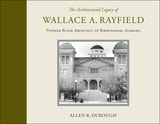
The Architectural Legacy of Wallace A. Rayfield
Pioneer Black Architect of Birmingham, AlabamaAllen R. Durough
University of Alabama Press, 2010
A priceless material legacy documenting Wallace Rayfield’s life and work on two continents.
In the early 1990s, while cleaning out the barn on his property in Bessemer, Alabama, Allen Durough discovered the remnants of the lifework of African American architect Wallace A. Rayfield, including several hundred of Rayfield’s drawings, floor plans, business advertisements, family portraits, and graphic art pieces. This book gathers that priceless material legacy into a cohesive whole, reproducing 159 illustrations that document Rayfield’s life and work on two continents.
Born in Macon, Georgia, in 1873, Rayfield apprenticed as a young man with the noted architectural firm A. B. Mullet and Company in Washington, DC, before attending Howard University, Pratt Polytechnic Institute, and ultimately graduating with a bachelor of architecture degree from Columbia University. He returned south to teach at the Tuskegee Institute and then to establish W. A. Rayfield & Co., Architects, in Birmingham, Alabama. From there he designed buildings for construction across the south (many by mail order) and even in Africa. Rayfield specialized in church architecture, and many of his designs were for black congregations within the state, most notably the Sixteenth Street Baptist Church in Birmingham. But he also designed schools, office buildings, and private homes. After falling into bankruptcy during the Great Depression, he died in obscurity.
Durough includes catalog-style descriptive entries and illustrations of Rayfield’s designs for six types of structures: residences, churches, schools, commercial buildings, fraternal buildings, and barns. These entries contain location, commissioning data, and brief structural notes, providing a useful resource for architectural historians and preservationists. A listing of the 359 known Rayfield structures detail their locations in 19 states, plan date, building type, and name. Also included is a biographical sketch of Rayfield, an overview of his publications, and a survey of his professional artwork and advertisements.
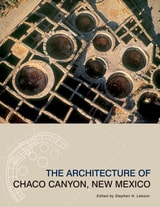
The Architecture of Chaco Canyon, New Mexico
Lekson, Stephen H
University of Utah Press, 2007
The structures of Chaco Canyon, built by native peoples between AD 850 and 1130, are among the most compelling ancient monuments on earth. Recognized as a World Heritage Site, these magnificent ruins are consistently featured in scholarly books and popular media. Yet, like Chaco itself, these buildings are anomalous in Southwestern archaeology and much debated.
In a century of study, our understanding and means of approaching these ruins have grown considerably. Important tree-ring dating, GIS research, and computer imaging point to the need for a new volume on Chaco architecture that unifies older information with the new.
The chapters in this volume focus on Chaco Great Houses and consider three overlapping themes: studies of technology and building types, analyses of architectural change, and readings of the built environment. To aid reconsideration there are over 150 maps, floor plans, elevations, and photos, including a number of color illustrations.
The Architecture of Disability
Buildings, Cities, and Landscapes beyond AccessDavid Gissen
University of Minnesota Press, 2022
A radical critique of architecture that places disability at the heart of the built environment
Disability critiques of architecture usually emphasize the need for modification and increased access, but The Architecture of Disability calls for a radical reorientation of this perspective by situating experiences of impairment as a new foundation for the built environment. With its provocative proposal for “the construction of disability,” this book fundamentally reconsiders how we conceive of and experience disability in our world.
Stressing the connection between architectural form and the capacities of the human body, David Gissen demonstrates how disability haunts the history and practice of architecture. Examining various historic sites, landscape designs, and urban spaces, he deconstructs the prevailing functionalist approach to accommodating disabled people in architecture and instead asserts that physical capacity is essential to the conception of all designed space.
By recontextualizing the history of architecture through the discourse of disability, The Architecture of Disability presents a unique challenge to current modes of architectural practice, theory, and education. Envisioning an architectural design that fully integrates disabled persons into its production, it advocates for looking beyond traditional notions of accessibility and shows how certain incapacities can offer us the means to positively reimagine the roots of architecture.

The Archival Afterlives of Philippine Cinema
Bliss Cua Lim
Duke University Press, 2024
The Archival Turn in Feminism
Outrage in OrderKate Eichhorn
Temple University Press, 2014
A volume in the American Literatures Initiative
The Archive and the Aural City
Sound, Knowledge, and the Politics of ListeningAlejandro L. Madrid
Duke University Press, 2025
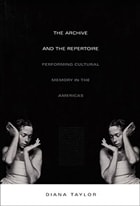
The Archive and the Repertoire
Performing Cultural Memory in the AmericasDiana Taylor
Duke University Press, 2003
Examining various genres of performance including demonstrations by the children of the disappeared in Argentina, the Peruvian theatre group Yuyachkani, and televised astrological readings by Univision personality Walter Mercado, Taylor explores how the archive and the repertoire work together to make political claims, transmit traumatic memory, and forge a new sense of cultural identity. Through her consideration of performances such as Coco Fusco and Guillermo Gómez-Peña’s show Two Undiscovered Amerindians Visit . . . , Taylor illuminates how scenarios of discovery and conquest haunt the Americas, trapping even those who attempt to dismantle them. Meditating on events like those of September 11, 2001 and media representations of them, she examines both the crucial role of performance in contemporary culture and her own role as witness to and participant in hemispheric dramas. The Archive and the Repertoire is a compelling demonstration of the many ways that the study of performance enables a deeper understanding of the past and present, of ourselves and others.
The Archive of Loss
Lively Ruination in Mill Land MumbaiMaura Finkelstein
Duke University Press, 2019
The Argentine Silent Majority
Middle Classes, Politics, Violence, and Memory in the SeventiesSebastián Carassai
Duke University Press, 2014

The Argument about Things in the 1980s
Goods and Garbage in an Age of NeoliberalismTim Jelfs
West Virginia University Press, 2018
Tim Jelfs’s The Argument about Things in the 1980s considers all this and more in a broad study of the literature and culture of the “long 1980s.” It contributes to of-the-moment scholarly debate about material culture, high finance, and ecological degradation, shedding new light on the complex relationship between neoliberalism and cultural life.
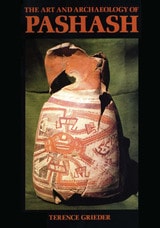
The Art and Archaeology of Pashash
By Terence Grieder
University of Texas Press, 1978
Among the vast treasures discovered in Peru since its conquest by Pizarro, only a small fraction has been excavated scientifically. The Art and Archaeology of Pashash is an account of the discovery and excavation of one of the richest Pre-Columbian burials ever scientifically excavated in Peru. The tomb and its offerings unearthed at Pashash, in the northern Andes, provide new perspectives on the cultural meaning of Andean funerary treasure.
About A.D. 500 the flexed body of an aristocrat was wrapped in cloth and set in a small tomb sealed by a heavy stone. Three separate offerings were put in place during the construction of the funerary temple above the tomb. Near the body were placed about fifty large gold pins with elaborately sculptured heads, the most important set of Peruvian metalwork scientifically recorded in context. Decorated pottery also accompanied the body. Beneath the doorway to the temple chamber above the tomb a second offering was placed, composed of vessels modeled as jaguars, snakes, and dragonlike combinations of the two, with other fine pottery, unfired clay bowls, and stone bowls. The images in this offering represented the theology of a shamanistic religion. A third offering of broken ritual vessels was placed in the earth fill just before the temple floor was built.
This collection of several hundred works of art found together and dated by radiocarbon, related to a stratigraphic sequence for the site as a whole, makes possible a unique history of the art of this highland Andean region. Grieder describes the phases of development and the symbolism of the previously little-known Recuay style of pottery and attributes many works to individuals, illuminating the role of artists and their relations with their patrons. Among the author's discoveries is evidence of the use of potters' wheels and lathes to make ceramic and stone vessels and ritual objects, reversing the long-held contention that these tools were unknown in Pre-Columbian America.
The Art and Archaeology of Pashash will be valuable to specialists in Andean archaeology as well as to those interested in the art and culture of Pre-Columbian America.
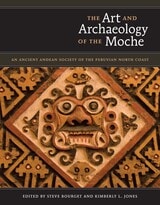
The Art and Archaeology of the Moche
An Ancient Andean Society of the Peruvian North CoastEdited by Steve Bourget and Kimberly L. Jones
University of Texas Press, 2008
Renowned for their monumental architecture and rich visual culture, the Moche inhabited the north coast of Peru during the Early Intermediate Period (AD 100-800). Archaeological discoveries over the past century and the dissemination of Moche artifacts to museums around the world have given rise to a widespread and continually increasing fascination with this complex culture, which expressed its beliefs about the human and supernatural worlds through finely crafted ceramic and metal objects of striking realism and visual sophistication.
In this standard-setting work, an international, multidisciplinary team of scholars who are at the forefront of Moche research present a state-of-the-art overview of Moche culture. The contributors address various issues of Moche society, religion, and material culture based on multiple lines of evidence and methodologies, including iconographic studies, archaeological investigations, and forensic analyses. Some of the articles present the results of long-term studies of major issues in Moche iconography, while others focus on more specifically defined topics such as site studies, the influence of El Niño/Southern Oscillation on Moche society, the nature of Moche warfare and sacrifice, and the role of Moche visual culture in decoding social and political frameworks.
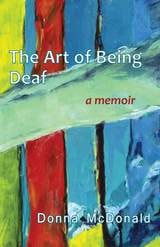
The Art of Being Deaf
A MemoirDonna McDonald
Gallaudet University Press, 2014
Born in 1950s Australia, McDonald was placed in an oral deaf school when she was five. There, she was trained to communicate only in spoken English. Afterwards, she attended mainstream schools where she excelled with speechreading and hard work. Her determination led to achievements that proved her to be “the deaf girl that had made good.” Yet, despite her constant focus on fitting in the hearing world, McDonald soon realized that she missed her deaf schoolmates and desired to explore her closed-off feelings about being deaf.
When she reconnected with her friends, one urged her to write about her experiences to tell all about “the Forgotten Generation, the orally-raised deaf kids that no one wants to talk about.” In writing her memoir, McDonald did learn to reconcile her deaf-self with her “hearing-deaf” persona, and she realized that the art of being deaf is the art of life, the art of love.
The Art of Child Placement
Jean Charnley
University of Minnesota Press, 1955
The Art of Economic Persuasion
Positive Incentives and German Economic DiplomacyPatricia A. Davis
University of Michigan Press, 2000

The Art of Life and Death
Radical Aesthetics and Ethnographic PracticeAndrew Irving
HAU, 2016
Encompassing twenty years of working alongside persons living with HIV/AIDS in New York, Irving documents the radical but often unspoken and unvoiced transformations in perception, knowledge, and understanding that people experience in the face of death. By bringing an “experience-near” ethnographic focus to the streams of inner dialogue, imagination, and aesthetic expression that are central to the experience of illness and everyday life, this monograph offers a theoretical, ethnographic, and methodological contribution to the anthropology of time, finitude, and the human condition. With relevance well-beyond the disciplinary boundaries of anthropology, this book ultimately highlights the challenge of capturing the inner experience of human suffering and hope that affect us all—of the trauma of the threat of death and the surprise of continued life.
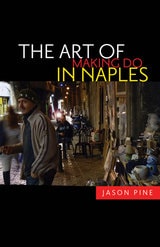
The Art of Making Do in Naples
Jason Pine
University of Minnesota Press, 2012
“In Naples, there are more singers than there are unemployed people.” These words echo through the neomelodica music scene, a vast undocumented economy animated by wedding singers, pirate TV, and tens of thousands of fans throughout southern Italy and beyond. In a city with chronic unemployment, this setting has attracted hundreds of aspiring singers trying to make a living—or even a fortune. In the process, they brush up against affiliates of the region’s violent organized crime networks, the camorra. In The Art of Making Do in Naples, Jason Pine explores the murky neomelodica music scene and finds himself on uncertain ground.
The “art of making do” refers to the informal and sometimes illicit entrepreneurial tactics of some Neapolitans who are pursuing a better life for themselves and their families. In the neomelodica music scene, the art of making do involves operating do-it-yourself recording studios and performing at the private parties of crime bosses. It can also require associating with crime boss-impresarios who guarantee their success by underwriting it with extortion, drug trafficking, and territorial influence. Pine, likewise “making do,” gradually realized that the completion of his ethnographic work also depended on the aid of forbidding figures.
The Art of Making Do in Naples offers a riveting ethnography of the lives of men who seek personal sovereignty in a shadow economy dominated, in incalculable ways, by the camorra. Pine navigates situations suffused with secrecy, moral ambiguity, and fears of ruin that undermine the anthropologist’s sense of autonomy. Making his way through Naples’s spectacular historic center and outer slums, on the trail of charmingly evasive neomelodici singers and unsettlingly elusive camorristi, Pine himself becomes a music video director and falls into the orbit of a shadowy music promoter who may or may not be a camorra affiliate.
Pine’s trenchant observations and his own improvised attempts at “making do” provide a fascinating look into the lives of people in the gray zones where organized crime blends into ordinary life.

The Art of Memes in Feminist Digital Culture
Shana MacDonald
The Ohio State University Press, 2025
In The Art of Memes in Feminist Digital Culture, Shana MacDonald argues that memes are a unique medium of communication that both respond to and reflect the current cultural moment. The book—the first to treat memes as a unique medium of communication distinct from other internet and digital media—examines feminist and queer activist uses of memes as a form of digital resistance, demonstrating through collage, reenactment, and montage that countercultural meme makers intervene in the status quo and offer cultural critiques with potentially broad circulation. In this way, MacDonald situates memes as part of a lineage of aesthetic resistance, exploring the operational logic of bricolage, intertextuality, and intermediality within contemporary internet meme cultures on the left.
MacDonald examines memes from feminist, queer, antiracist, and anticapitalist accounts on Instagram, as well as how meme genres and themes shift when they travel across different platforms and subcultures. By considering memes as a medium, she sheds light on how they operate within contemporary digital culture as a beacon for online public discourse that pushes against dominant norms.
The Art of Military Coercion
Why the West's Military Superiority Scarcely MattersRob de Wijk
Amsterdam University Press, 2014
The Art of Moral Protest
Culture, Biography, and Creativity in Social MovementsJames M. Jasper
University of Chicago Press, 1997
"A provocative perspective on the cultural implications of political and social protest."—Library Journal
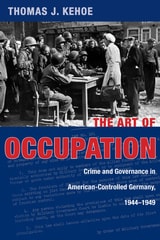
The Art of Occupation
Crime and Governance in American-Controlled Germany, 1944–1949Thomas J. Kehoe
Ohio University Press, 2019
The literature describing social conditions during the post–World War II Allied occupation of Germany has been divided between seemingly irreconcilable assertions of prolonged criminal chaos and narratives of strict martial rule that precluded crime. In The Art of Occupation, Thomas J. Kehoe takes a different view on this history, addressing this divergence through an extensive, interdisciplinary analysis of the interaction between military government and social order.
Focusing on the American Zone and using previously unexamined American and German military reports, court records, and case files, Kehoe assesses crime rates and the psychology surrounding criminality. He thereby offers the first comprehensive exploration of criminality, policing, and both German and American fears around the realities of conquest and potential resistance, social and societal integrity, national futures, and a looming threat from communism in an emergent Cold War. The Art of Occupation is the fullest study of crime and governance during the five years from the first Allied incursions into Germany from the West in September 1944 through the end of the military occupation in 1949. It is an important contribution to American and German social, military, and police histories, as well as historical criminology.
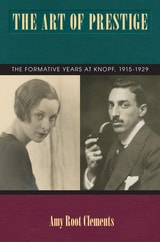
The Art of Prestige
The Formative Years at Knopf, 1915-1929Amy Clements
University of Massachusetts Press, 2014
Capturing the little-known early history of Knopf, The Art of Prestige explores the origins of the company's rise to success during the Jazz Age, when Alfred and Blanche established themselves as literary impresarios on both sides of the Atlantic. Drawing on key archival documents from all phases of the publishing process, Amy Root Clements reconstructs the turning points and rhetorical exchanges that made Knopf's initial books noteworthy, from the acquisitions process to design, consumer marketing, and bookselling.
Lasting cornerstones of the young firm include alliances with pivotal figures in the world of graphic arts and book production and with European publishers who brought numerous Nobel Prize winners to the Borzoi list during the company's first fifteen years. Other featured luminaries include the American authors Willa Cather, Dashiell Hammett, and Langston Hughes. The Art of Prestige also examines Alfred Knopf's ancestry, up-bringing, and formal education at Columbia, as well as his apprenticeships with Frank Nelson Doubleday and Mitchell Kennerley—factors that would influence his business decisions for years to come.
The result is a portrait of innovative branding that seamlessly merged book production with book promotion in a literary landscape that was ripe for transformation.
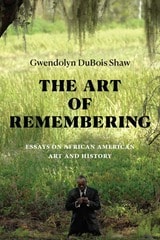
The Art of Remembering
Essays on African American Art and HistoryGwendolyn DuBois Shaw
Duke University Press, 2024
The Art of Return
The Sixties and Contemporary CultureJames Meyer
University of Chicago Press, 2019
In this innovative work, James Meyer turns to art criticism, theory, memoir, and fiction to examine the fascination with the long sixties and contemporary expressions of these cultural memories across the globe. Meyer draws on a diverse range of cultural objects that reimagine this revolutionary era stretching from the 1950s to the 1970s, including reenactments of civil rights, antiwar, and feminist marches, paintings, sculptures, photographs, novels, and films. Many of these works were created by artists and writers born during the long Sixties who were driven to understand a monumental era that they missed. These cases show us that the past becomes significant only in relation to our present, and our remembered history never perfectly replicates time past. This, Meyer argues, is precisely what makes our contemporary attachment to the past so important: it provides us a critical opportunity to examine our own relationship to history, memory, and nostalgia.
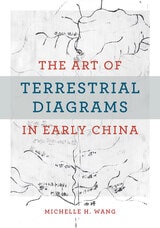
The Art of Terrestrial Diagrams in Early China
Michelle H. Wang
University of Chicago Press, 2023
This is the first English-language monograph on the early history of maps in China, centering on those found in three tombs that date from the fourth to the second century BCE and constitute the entire known corpus of early Chinese maps (ditu). More than a millennium separates them from the next available map in the early twelfth century CE. Unlike extant studies that draw heavily from the history of cartography, this book offers an alternative perspective by mobilizing methods from art history, archaeology, material culture, religion, and philosophy. It examines the diversity of forms and functions in early Chinese ditu to argue that these pictures did not simply represent natural topography and built environments, but rather made and remade worlds for the living and the dead. Wang explores the multifaceted and multifunctional diagrammatic tradition of rendering space in early China.
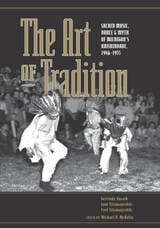
The Art of Tradition
Sacred Music, Dance & Myth of Michigan's Anishinaabe, 1946-1955Michael D. McNally
Michigan State University Press, 2009
The Art of Tradition documents the complexity of Native life and culture at a critical juncture in Native American history, where the rekindling of pride in Native cultures characteristic of the later twentieth century met the generation of elders who spent their early years speaking Native tongues but who came of age in boarding schools and amid strong pressures of assimilation. Because this period was deemed by most ethnographers of the time to be one of "acculturation," marking the end of traditional Native cultures, the authors' appreciation for the integrity of mid-century Native culture stands out markedly from other scholarship of the day. The songs, dance steps, and stories collected here are evidence of the artful work of maintaining and breathing new life into traditions, often in contexts that seem anything but traditional, by indigenous elders and artists. As the editor notes, there are no "Native informants" in this study, only collaborators whose lives are shown to be as resilient as the repertories they performed.
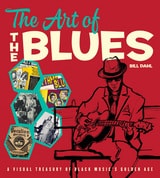
The Art of the Blues
A Visual Treasury of Black Music's Golden AgeBill Dahl
University of Chicago Press, 2016
What will astonish readers who thumb through these pages is the amazing range of ways that the blues have been represented—whether via album covers, posters, flyers, 78 rpm labels, advertising, or other promotional materials. We see the blues as it was first visually captured in the highly colorful sheet music covers of the early twentieth century. We see striking and hard-to-find label designs from labels big (Columbia) and small (Rhumboogie). We see William Alexander’s humorous artwork on postwar Miltone Records; the cherished ephemera of concert and movie posters; and Chess Records’ iconic early albums designed by Don Bronstein, which would set a new standard for modern album cover design.
What these images collectively portray is the evolution of a distinctively American art form. And they do so in the richest way imaginable. The result is a sumptuous book, a visual treasury as alive in spirit as the music it so vibrantly captures.
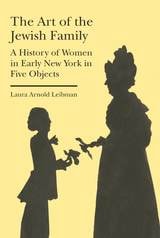
The Art of the Jewish Family
A History of Women in Early New York in Five ObjectsLaura Arnold Leibman
Bard Graduate Center, 2020
Each chapter creates a biography of a single woman through an object, offering a new methodology that looks past texts alone to material culture in order to further understand early Jewish American women’s lives and restore their agency as creators of Jewish identity. While much of the available history was written by men, the objects that Leibman studies were made for and by Jewish women. Speaking to American Jewish life, women’s studies, and American history, The Art of the Jewish Family sheds new light on the lives and values of these women, while also revealing the social and religious structures that led to Jewish women being erased from historical archives.
The Art of the Jewish Family was the winner of three 2020 National Jewish Book Awards: the Celebrate 350 Award for American Jewish Studies, the Gerrard and Ella Berman Memorial Award for History, and the Barbara Dobkin Award for Women's Studies.
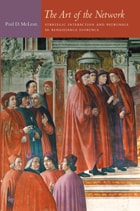
The Art of the Network
Strategic Interaction and Patronage in Renaissance FlorencePaul D. McLean
Duke University Press, 2007
McLean scrutinized thousands of letters to and from Renaissance Florentines. He describes the social protocols the letters reveal, paying particular attention to the means by which Florentines crafted credible presentations of themselves. The letters, McLean contends, testify to the development not only of new forms of self-presentation but also of a new kind of self to be presented: an emergent, “modern” conception of self as an autonomous agent. They also bring to the fore the importance that their writers attached to concepts of honor, and the ways that they perceived themselves in relation to the Florentine state.
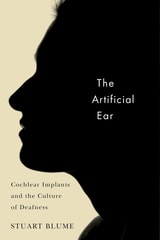
The Artificial Ear
Cochlear Implants and the Culture of DeafnessBlume, Stuart
Rutgers University Press, 2009
Part ethnography and part historical study, The Artificial Ear is based on interviews with researchers who were pivotal in the early development and implementation of the new technology. Through an analysis of the scientific and clinical literature, Stuart Blume reconstructs the history of artificial hearing from its conceptual origins in the 1930s, to the first attempt at cochlear implantation in Paris in the 1950s, and to the widespread clinical application of the "bionic ear" since the 1980s.

The Arzberger Site
Hughes County, South DakotaAlbert C. Spaulding
University of Michigan Press, 1956
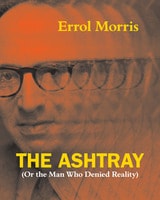
The Ashtray
(Or the Man Who Denied Reality)Errol Morris
University of Chicago Press, 2018
In 1972, philosopher of science Thomas Kuhn threw an ashtray at Errol Morris. This book is the result.
At the time, Morris was a graduate student. Now we know him as one of the most celebrated and restlessly probing filmmakers of our time, the creator of such classics of documentary investigation as The Thin Blue Line and The Fog of War. Kuhn, meanwhile, was—and, posthumously, remains—a star in his field, the author of The Structure of Scientific Revolutions, a landmark book that has sold well over a million copies and introduced the concept of “paradigm shifts” to the larger culture. And Morris thought the idea was bunk.
The Ashtray tells why—and in doing so, it makes a powerful case for Morris’s way of viewing the world, and the centrality to that view of a fundamental conception of the necessity of truth. “For me,” Morris writes, “truth is about the relationship between language and the world: a correspondence idea of truth.” He has no patience for philosophical systems that aim for internal coherence and disdain the world itself. Morris is after bigger game: he wants to establish as clearly as possible what we know and can say about the world, reality, history, our actions and interactions. It’s the fundamental desire that animates his filmmaking, whether he’s probing Robert McNamara about Vietnam or the oddball owner of a pet cemetery. Truth may be slippery, but that doesn’t mean we have to grease its path of escape through philosophical evasions. Rather, Morris argues powerfully, it is our duty to do everything we can to establish and support it.
In a time when truth feels ever more embattled, under siege from political lies and virtual lives alike, The Ashtray is a bracing reminder of its value, delivered by a figure who has, over decades, uniquely earned our trust through his commitment to truth. No Morris fan should miss it.

The Asian American Achievement Paradox
JENIFFER LEE is professor of sociology at the University of California, Irvine. MIN ZHOU is professor of sociology at Nanyang Technological University, Singapore, and the University of California, Los Angeles.
Russell Sage Foundation, 2015