Results by title
4155 books match the query 'State & Local' and 925 start with t

The Krebiozen Hoax
How a Mysterious Cancer Drug Shook Organized MedicineMatthew C. Ehrlich
University of Illinois Press, 2024
The brainchild of an obscure Yugoslav physician, Krebiozen emerged in 1951 as an alleged cancer treatment. Andrew Ivy, a University of Illinois vice president and a famed physiologist dubbed “the conscience of U.S. science,” wholeheartedly embraced Krebiozen. Ivy’s impeccable credentials and reputation made the treatment seem like another midcentury medical miracle. But after years of controversy, the improbable saga ended with Krebiozen proved a sham, its inventor fleeing the country, and Ivy’s reputation and legacy in ruins.
Matthew C. Ehrlich’s history of Krebiozen tells a quintessential story of quackery. Though most experts dismissed the treatment, it found passionate public support not only among cancer patients but also people in good health. The treatment’s rise and fall took place against the backdrop of America’s never-ending suspicion of educational, scientific, and medical expertise. In addition, Ehrlich examines why people readily believe misinformation and struggle to maintain hope in the face of grave threats to well-being.
A dramatic account of fraud and misplaced trust, The Krebiozen Hoax shines a light on a forgotten medical scandal and its all-too-familiar relevance in the twenty-first century.
The Ku Klux Klan in 1920s Arkansas
How Protestant White Nationalism Came to Rule a StateKenneth C. Barnes
University of Arkansas Press, 2021
Winner, 2022 J.G. Ragsdale Book Award, Arkansas Historical Association
The Ku Klux Klan established a significant foothold in Arkansas in the 1920s, boasting more than 150 state chapters and tens of thousands of members at its zenith. Propelled by the prominence of state leaders such as Grand Dragon James Comer and head of Women of the KKK Robbie Gill Comer, the Klan established Little Rock as a seat of power second only to Atlanta. In The Ku Klux Klan in 1920s Arkansas, Kenneth C. Barnes traces this explosion of white nationalism and its impact on the state’s development.
Barnes shows that the Klan seemed to wield power everywhere in 1920s Arkansas. Klansmen led businesses and held elected offices and prominent roles in legal, medical, and religious institutions, while the women of the Klan supported rallies and charitable activities and planned social gatherings where cross burnings were regular occurrences. Inside their organization, Klan members bonded during picnic barbeques and parades and over shared religious traditions. Outside of it, they united to direct armed threats, merciless physical brutality, and torrents of hateful rhetoric against individuals who did not conform to their exclusionary vision.
By the mid-1920s, internal divisions, scandals, and an overzealous attempt to dominate local and state elections caused Arkansas’s Klan to fall apart nearly as quickly as it had risen. Yet as the organization dissolved and the formal trappings of its flamboyant presence receded, the attitudes the Klan embraced never fully disappeared. In documenting this history, Barnes shows how the Klan’s early success still casts a long shadow on the state to this day.
The LS Brand
The Story of a Texas Panhandle RanchBy Dulcie Sullivan; Introduction by Loula Grace Erdman.
University of Texas Press, 1968
In the spring of 1881, W. M. D. Lee and Lucien B. Scott, wealthy businessmen of Leavenworth, Kansas, purchased land in the upper Texas Panhandle to establish the Lee-Scott Cattle Company. Their range sprawled across four Texas counties and extended into eastern New Mexico. About six months later, fifty thousand head of mixed cattle, branded LS, grazed those thousands of acres of free grass.
This book is the story of Lee and Scott’s LS Ranch from the tempestuous years of the open range to the era of “bob wire.” It is also the story of the pioneer men and women whose efforts developed the LS into a cattle empire: W. M. D. and Lena Lee, Lucien and Julia Scott, “Mister Mac” and “Miss Annie” McAllister, and Charles and Pauline Whitman.
Here are accounts of chuck wagons and wagon bosses; prairie fires, blizzards, and bog holes; ranch management problems and cowboys on strike; lobo wolves and romance; wild sprees in Tascosa and its “Hogtown” sector; LS cowboys fighting against a gang of organized rustlers in a feud that ended in tragedy; and those same cowboys on the long trails to Dodge City and Montana.
Drawing upon stories told to her by men and women who were with the LS during the 1880’s and later years, Dulcie Sullivan presents her narrative in a clear, straightforward, but sympathetic manner that gives the reader a vivid sense of how life was really lived there in those times. Especially telling is her occasional use of an almost poetic incident: the steers bedding down around a campfire to listen to the chuck-wagon cook play his fiddle, or the suit of Spanish armor found in a spring, or the hail-battered trees attempting to renew themselves, despite their grotesque shapes.
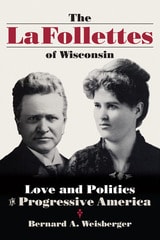
The La Follettes of Wisconsin
Love and Politics in Progressive AmericaBernard A. Weisberger
University of Wisconsin Press, 2013
The Labor Day Ghost
A Murder, Its Cover-Up, and the Long Road to JusticeCarol Dawson
University of Texas Press, 0
In Corsicana, Texas, Shelley Watkins, the charismatic young wife of Jerry Mack Watkins, disappeared on Labor Day, 1993; her body, tied and taped in plastic and chained to concrete blocks, was found in the Trinity River eight days later. Although a wealth of circumstantial evidence pointed toward Jerry Mack, corruption and its legacy have kept the investigation and legal proceedings in limbo for decades. Now, as DNA evidence offers hope for a long-overdue resolution, author Carol Dawson chronicles both one woman’s tragic story and the history of violence in small-town Texas.
Beginning with Shelley’s life before she arrived in Corsicana, Dawson reveals how her death perpetuates a Gothic history of crime within the town—including a devastating number of murdered women. She also delves into the closed culture of financial control and how the Watkins family became one of the town’s wealthiest, and pulls new details from the witnesses, cops, and prosecutors connected with a case that has haunted her for thirty years. Rooted in the complex history of author Carol Dawson’s hometown, and framed by her family connections to the case, The Labor Day Ghost delivers an arresting narrative that traces the way this tragedy has continued to split Corsicana’s citizenry during the long deferral of justice.
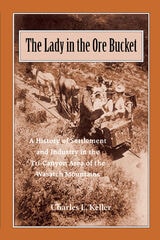
The Lady In The Ore Bucket
A History of Settlement and Industry in the Tri-Canyon Area of the Wasatch MountainsCharles L Keller
University of Utah Press, 2001
These place names, as well as the physcial traces and artifacts that persist in three Wasatch canyons—Mill Creek, Big Cottonwood, and Little Cottonwood—tantalize with what they suggest, but do not tell, about the history of settlement and development in the canyons. Charles Keller has extracted a wealth of information to create The Lady in the Ore Bucket, a faxcinating history of the lumber, mining, and hydropower industries built from the rich natural resources of the canyons. With more than six dozen photographs and maps, the book is alive with details concerning the personalities, politics, pacts, and peregrinations of local leaders from white settlement in 1847 through the early 1900s. It will delight any reader with an interest in the magnificent canyones that open onto the modern Wasatch Front.
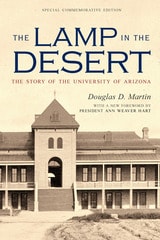
The Lamp in the Desert
The Story of the University of ArizonaDouglas D. Martin, With a New Foreword by President Ann Weaver Hart
University of Arizona Press, 1960
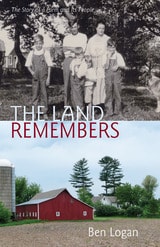
The Land Remembers
The Story of a Farm and Its PeopleBen Logan, with an introduction by Curt Meine
University of Wisconsin Press, 2017

The Land Still Lives
Jerry Apps
Wisconsin Historical Society Press, 2019
Originally published in 1970, The Land Still Lives is the first book by Wisconsin’s greatest rural philosopher, Jerry Apps. Written when he was still a young agriculture professor at the University of Wisconsin, The Land Still Lives was readers’ first introduction to Jerry’s farm in central Wisconsin, called Roshara, and the surrounding community of Skunk’s Hollow. This special 50th-anniversary edition features a new epilogue, in which Jerry revisits his philosophy of caring for the land so it in turn will care for us. This is vintage Apps, essential reading for Jerry’s legions of fans—and for all who, like Jerry, wish “to develop a relationship with nature and all its mystery and wonder.”
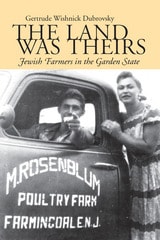
The Land Was Theirs
Jewish Farmers in the Garden StateGertrude W. Dubrovsky
University of Alabama Press, 1992
A historical account of Jewish agricultural colonies in New Jersey that examines how immigrants built farming communities in early America.
The Land Was Theirs is about Farmingdale, New Jersey, a community of Jewish farming communities in the United States established with the help of the Jewish Agricultural Society. The 50 year history of Farmingdale provides a perspective on the pressures, problems, and satisfactions of rural Jewish life as experienced in one community.
Beginning in 1919, the community grew around the small town of Farmingdale, when two Jewish families pooled their resources to establish a farm. The community evolved gradually as unrelated individuals with no previous farm experience settled and then created the institutions and organizations they needed to sustain their Jewish life. By 1945 Farmingdale was one of the leading egg-producing communities in the United States, and contributed in large measure to New Jersey’s reputation as the “egg basket of America.”
The Land Was Theirs draws from life-history interviews with 120 farmers, from the author’s personal experiences, and from a variety of private and community papers and documents. They are the pieces from which a full picture of a single Jewish farm community emerges.
The Land of Milk and Uncle Honey
Memories from the Farm of My YouthAlan Guebert with Mary Grace Foxwell
University of Illinois Press, 2015
Here are Guebert's tireless parents, measuring the year not in months but in seasons for sewing, haying, and doing the books; Jackie the farmhand, needing ninety minutes to do sixty minutes' work and cussing the entire time; Hoard the dairyman, sore fingers wrapped in electrician's tape, sharing wine and the prettiest Christmas tree ever; and the unflappable Uncle Honey, spreading mayhem via mistreated machinery, flipped wagons, and the careless union of diesel fuel and fire.
Guebert's heartfelt and humorous reminiscences depict the hard labor and simple pleasures to be found in ennobling work, and show that in life, as in farming, Uncle Honey had it right with his succinct philosophy for overcoming adversity: "the secret's not to stop."
https://www.youtube.com/watch?v=DooGQqUlXI4&index=1&list=FLPxtuez-lmHxi5zpooYEnBg
The Last Called Mormon Colonization
Polygamy, Kinship, and Wealth in Wyoming's Bighorn BasinJohn Gary Maxwell
University of Utah Press, 2021
The LDS Church officially abandoned polygamy in 1890, but evidence that the practice was still tolerated (if not officially sanctioned) by the church circulated widely, resulting in intense investigations by the U.S. Senate. In 1896 Abraham Owen Woodruff, a rising star in LDS leadership and an ardent believer in polygamy, was appointed to head the LDS Colonization Company. Maxwell explores whether under Woodruff’s leadership the Bighorn Basin colony was intended as a means to insure the secret survival of polygamy and if his untimely death in 1904, together with the excommunication of two equally dedicated proponents of polygamy—Apostles John Whitaker Taylor and Matthias Foss Cowley—led to its collapse.
Maxwell also details how Mormon settlers in Wyoming struggled with finance, irrigation, and farming and how they brought the same violence to indigenous peoples over land and other rights as did non-Mormons.
The 1900 Bighorn Basin colonization provides an early twentieth-century example of a Mormon syndicate operating at the intersection of religious conformity, polygamy, nepotism, kinship, corporate business ventures, wealth, and high priesthood status. Maxwell offers evidence that although in many ways the Bighorn Basin colonization failed, Owen Woodruff’s prophecy remains unbroken: “No year will ever pass, from now until the coming of the Savior, when children will not be born in plural marriage.”
The Last Canyon Voyage
A Filmmaker's Journey Down the Green and Colorado RiversCharles Eggert Foreword by Roy Webb
University of Utah Press, 2020
This book finally brings Eggert’s writings out of the archives and into the public eye. With his keen photographer’s vision and colloquial voice, Eggert describes canyons and towns now deep under water as he tells the story of friendships forged upon the rapids and currents of the rivers. Roy Webb’s foreword provides historical context; river historian Alfred E. Holland Jr. introduces Eggert, the man who transformed into an environmentalist after visiting the West; and Sarah Holcombe’s afterword looks at what transpired in the lives of all eight crew members after the journey. Color and black-and-white illustrations further enliven the text. An engaging read, this is an important piece of river history that also shines light on Eggert’s tremendous influence as a conservation cinematographer.
The Last Generation
Work and Life in the Textile Mills of Lowell, Massachusetts, 1910-1960Mary H. Blewett
University of Massachusetts Press, 1990
Oral histories of many of the last generation of Lowell, MA, textile mill workers preceded by two introductory sections. The first presents the historic setting of economic development and subsequent decline of the textile industry in Lowell. The second is a brief explanation of the production process wherein the last generation of mill workers expended so many of their skills and so much of their energy.

The Last Mixtape
Physical Media and Nostalgic CyclesSeth Long
University of Chicago Press, 2025
Obsolescence makes the heart grow fonder, at least in the case of the mixtape. Not all technologies are so lucky. Some (say, wax cylinders) fade almost completely from cultural memory. A lucky few pass into metaphor: we still “hang up” our smartphones, “cut” film, and “patch” computer code. As digital streaming completes the obsolescence of physical media, what will become of the humble cassette?
In The Last Mixtape, Seth Long offers a microhistory of music curation, anchored by the cassette, from which he explores the meanings of obsolescence, ownership, nostalgia, and the speed of cultural change. A moving meditation on our relationship with music, memory, and curation in the digital century, Long ultimately calls for a return to the media ecology represented by the mixtape: a world in which media is cheap and abundant but tactile and meaningfully engaged.
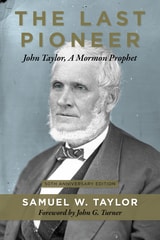
The Last Pioneer
John Taylor, A Mormon ProphetTaylor, Samuel W.
Signature Books, 2026
Mormon prophet John Taylor’s life is usually recounted as a series of anecdotes: singing hymns in Carthage Jail before a mob assassinated Joseph and Hyrum Smith, Taylor’s life spared when, according to myth, his pocketwatch stopped a bullet; his practice of polygamy, including taking a wife fifty years his junior while on the run as a fugitive from federal marshals; and his 1886 revelation that said God would not revoke the law of plural marriage, “for it is everlasting,” a revelation whose authenticity was questioned by the Church of Jesus Christ of Latter-day Saints for over a century but became the foundational text for breakaway sects continuing the practice of polygamy. Yet there was more to Taylor than his role in the martyrdom, his plural wives, his clashes with the federal government, and the legacy of fundamentalist Mormonism.
Taylor spent his first two decades in his home country of England before immigrating to Canada. His first wife, Leonora, was initially more interested when missionaries knocked on their door. But once he committed to the church, John Taylor was unflappable in his faith and zealous in his dedication. The Taylors moved from Toronto to Ohio, then to Missouri, and finally to Illinois as they followed their faith and their prophet Joseph Smith. John became an apostle in 1838 and a publisher thereafter, printing church newspapers. He followed Brigham Young to the Salt Lake Valley, where he became a prominent church and political leader for decades before finally ascending to the head of the faith in 1880.
In this timeless biography, Samuel W. Taylor weaves the threads of his grandfather’s life into a rich tapestry. Drawing on letters, speeches, diaries, and reminiscences, a well-rounded and riveting portrait of the third Mormon prophet comes into focus. A professional writer by trade, Samuel Taylor was uniquely suited to tell this story—and what a story it is.

The Last Pioneer
John Taylor, a Mormon ProphetSamuel W. Taylor
Signature Books, 1999
As half the church fell away in Ohio, the Taylors escaped to Missouri with the faithful, just in time for the 1838 Mormon War. John’s role became that of an advocate with Congress—to convince them that it was the non-Mormons who had sacked the county seat and burned their own homes, for instance. As a literary experience, this was good preparation for later editorships of church newspapers in Illinois, New York, and Liverpool.
From his personal letters and speeches, and from the diaries and reminiscences of associates, vivid images of Taylor’s life appear: his children crossing the Missouri River on the backs of oxen “bulls”; one of his ten plural wives packing a piano instead of a cookstove for the trip and then later regretting it; and Native Americans teaching him how to burn a cricket-infested field, gather the roasted insects, and grind the carcasses into flour.
Taylor’s eventual tenure as church president was spent “on the dodge” from federal marshals, and prior to that he often lived out of a suitcase, rotating from one of his sixteen families to the next. Among his greatest achievements was the settlement of as much territory as was colonized by his more famous predecessor, Brigham Young. Taylor was also a visionary man. His personal spirituality led the church through one of its most turbulent times; his revelations later inspired the Mormon fundamentalist schism, as well. This controversy, mingled with the drama of internecine power struggles and interpersonal conflict, makes The Last Pioneer suspenseful and largely unforgettable.
The Law of the Miner
The Arizona ExperienceJohn C. Lacy
University of Nevada Press, 2026
The first adventurers into the New World faced a fundamental legal challenge: how to secure rights to any mineral claims they discovered. Early conquistadors worked under charters that required them to return a portion of their findings to the Spanish crown, but those without such charters had no formal protection—and the crown was slow to clarify individual rights. This uncertainty only grew as miners pushed into the lands that would become the Western United States.
When gold was discovered in California, miners suddenly found themselves operating without any governing laws during the period between the end of the war with Mexico and the establishment of formal U.S. jurisdiction. In response, and without official sanction, they formed self-governing “mining districts,” best understood as mutual protection societies. These districts marked the first organized attempt to define boundaries and create rules for establishing and maintaining mining claims. As the early rushes in California and Nevada subsided, miners carried these practices with them into Arizona and other western territories.
In Arizona, no comprehensive collection of these early regulations has ever existed. The Law of the Mineraddresses this gap by tracing the development of mineral law in early Arizona and presenting the full text of every mining district regulation that could be found. This work serves both the mining industry and historians seeking to identify the individuals involved in creating the districts and to understand these districts’ historical boundaries.
The Laws of Slavery in Texas
Historical Documents and EssaysEdited by Randolph B. Campbell
University of Texas Press, 2010
The laws that governed the institution of slavery in early Texas were enacted over a fifty-year period in which Texas moved through incarnations as a Spanish colony, a Mexican state, an independent republic, a part of the United States, and a Confederate state. This unusual legal heritage sets Texas apart from the other slave-holding states and provides a unique opportunity to examine how slave laws were enacted and upheld as political and legal structures changed. The Laws of Slavery in Texas makes that examination possible by combining seminal historical essays with excerpts from key legal documents from the slave period and tying them together with interpretive commentary by the foremost scholar on the subject, Randolph B. Campbell.
Campbell's commentary focuses on an aspect of slave law that was particularly evident in the evolving legal system of early Texas: the dilemma that arose when human beings were treated as property. As Campbell points out, defining slaves as moveable property, or chattel, presented a serious difficulty to those who wrote and interpreted the law because, unlike any other form of property, slaves were sentient beings. They were held responsible for their crimes, and in numerous other ways statute and case law dealing with slavery recognized the humanness of the enslaved. Attempts to protect the property rights of slave owners led to increasingly restrictive laws—including laws concerning free blacks—that were difficult to uphold. The documents in this collection reveal both the roots of the dilemma and its inevitable outcome.
The Leavitt Site
A Parkhill Phase Paleo-Indian Occupation in Central MichiganMichael J. Shott, with a foreword by Henry T. Wright
University of Michigan Press, 1993
The Legacy of Fort William Henry
Resurrecting the PastDavid R. Starbuck
University Press of New England, 2014
The Lessening Stream
An Environmental History of the Santa Cruz RiverMichael F. Logan
University of Arizona Press, 2002
The Lies of the Land
Seeing Rural America for What It Is—and Isn’tSteven Conn
University of Chicago Press, 2023
It seems everyone has an opinion about rural America. Is it gripped in a tragic decline? Or is it on the cusp of a glorious revival? Is it the key to understanding America today? Steven Conn argues that we’re missing the real question: Is rural America even a thing? No, says Conn, who believes we see only what we want to see in the lands beyond the suburbs—fantasies about moral (or backward) communities, simpler (or repressive) living, and what it means to be authentically (or wrongheadedly) American. If we want to build a better future, Conn argues, we must accept that these visions don’t exist and never did.
In The Lies of the Land, Conn shows that rural America—so often characterized as in crisis or in danger of being left behind—has actually been at the center of modern American history, shaped by the same forces as everywhere else in the country: militarization, industrialization, corporatization, and suburbanization. Examining each of these forces in turn, Conn invites us to dispense with the lies and half-truths we’ve believed about rural America and to pursue better solutions to the very real challenges shared all across our nation.
The Life and Adventures of an Arkansaw Doctor
David Rattlehead
University of Arkansas Press, 1989
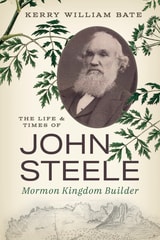
The Life and Times of John Steele
Mormon Kingdom BuilderKerry William Bate
University of Utah Press, 2025
Among the founders of Salt Lake City, Parowan, and Las Vegas, and an explorer of Zion National Park and the Grand Canyon, John Steele's legacy is etched across the American West. The Life and Times of John Steele follows the remarkable journey of this Irish-born convert to Mormonism from his birth into scarcity through his final days in Kanarraville, Utah.
A fervent believer in utopian ideals, Steele sought to build an egalitarian Kingdom of Christ in the last days, becoming a key figure in early Utah history. His multifaceted roles—missionary, city founder, militia major, justice of the peace, and self-taught doctor using folk medicine, charms, and the occult—make his story unique. This meticulously researched biography offers new insights into pivotal events such as the Mountain Meadows Massacre and the communal economics of the Church of Jesus Christ of Latter-day Saints, drawing from Steele’s extensive personal diaries and papers to bring his complex, colorful life and times to light.
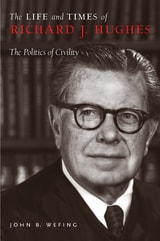
The Life and Times of Richard J. Hughes
The Politics of CivilityWefing, John B
Rutgers University Press, 2009
This biography illuminates the governor's accomplishments between 1962 and 1970, including the creation of the Hackensack Meadowlands Commission, formation of the county college system, establishment of stringent antipollution laws, design of the public defender system, and the adoption of a New Jersey sales tax, as well as his pivotal role during the Newark riots. As chief justice, Hughes faced difficult issuesùschool funding, low and moderate income housing needs, freedom of speech, and his decision in the rightto-die case involving Karen Ann Quinlan. With a career characterized by liberal activism, Hughes also contributed nationally and internationally, from serving as host of the 1964 Democratic National Convention to monitoring elections in South Vietnam.
John B. Wefing's research includes interviews with prominent politicians and leaders who worked with Hughes at various points in his career. The result is a rich story of a public servant who possessed a true ability to work with members of both political parties and played a significant role in shaping modern New Jersey.
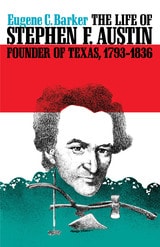
The Life of Stephen F. Austin, Founder of Texas, 1793-1836
A Chapter in the Westward Movement of the Anglo-American PeopleBy Eugene C. Barker
University of Texas Press, 1969
Almost a hundred years after the death of Stephen F. Austin this first full-length biography was published. And for almost a quarter of a century—dividing his time between editing, teaching, textbook writing, and serving in various academic capacities—Eugene C. Barker pursued the study which resulted in The Life of Stephen F. Austin. His accomplishment has long been regarded as a fine example of biography in Texas literature.
The Lithic Industries of the Illinois Valley in the Early and Middle Woodland Period
Anta Montet-White
University of Michigan Press, 1968

The Little Lion of the Southwest
A Life Of Manuel Antonio ChavesMarc Simmons
Ohio University Press, 1974
Manuel Antonio Chaves’ life straddled three eras of New Mexican history: he was born (1818) at the tag end of the Spanish colonial period, he grew to manhood in the rough and heady days of the Santa Fe trade during the quarter century of Mexican rule (1821–1846), and he spent his mature years under the territorial regime established by the United States. Manuel Chaves’ long career (died 1889) was interwoven with almost every major historical event which occurred during his adult life—the Texan-Santa Fe Expedition, the Mexican War, the Civil War, skirmishes with Utes, Navajos, and Apaches. He was called El Leoncito, The Little Lion, having earned the name as an Indian fighter. He lived for two years in St. Louis and was a well-travelled man, doing business in New Orleans, New York, and Cuba.
A hundred years ago when men still gathered around campfires and storytelling was a well-developed art, Chaves’ exploits were known to all New Mexicans. But history has a capricious memory and his name became virtually forgotten. Around the turn of the century, Charles F. Lummis’ flowery pen recalled brief attention to Chaves’ life, and in 1927 he appeared as a minor character in Willa Cather’s Death Comes for the Archbishop—but otherwise was virtually forgotten. Alas. Too few of our Spanish frontiersmen have been studied in depth. Manuel Chaves and his life should not be lost. He was one of the legendary but real men who pioneered and built the 19th century Southwest. Howard R. Lamar laments: “The Spanish-American population of New Mexico still lacks a historian.” Marc Simmons’ biography of Manuel Chaves helps fill that gap.
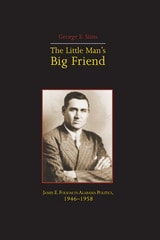
The Little Mans Big Friend
James E. Folsom in Alabama Politics, 1946-1958George E. Sims
University of Alabama Press, 1985
At the end of World War II changing economic and social forces transformed the lives of Alabamians, whose political leaders had built careers on localistic politics shaped by established economic and governmental interests. Into this context strolled “Big Jim”—six feet eight inches tall—with his corn-shuck mop, wooden suds bucket, and a promise to scrub out the Capitol. Ridiculed by his opponents, Folsom advertised his progressive program in every crossroads community.
As governor, Folsom faced a legislature dominated by local politicians whom he had bypassed during the campaign, and although he won approval of some bills, legislative opposition made his administration a four-year filibuster.
Not until 1955, after his election to a second term, did Folsom become an effective leader. Tying programs for expanded services to the local interests of the legislators, he won approval for road construction, “old-age pensions,” industrial development, and reorganization of the state docks. But the lawmakers balked at constitutional reform.
As his reform efforts met defeat during 1956, Folsom was losing his ability to lead. He refused to exploit racial tensions, and the rise of the civil rights movement undermined his popularity among whites. Unwilling to discipline his aides and supporters, his administration became notorious for petty graft. By 1958 aspiring candidates kept their distance from Folsom. “Big Jim” attempted a comeback in the 1962 campaign, but he was never again to hold public office.

The Lofts of SoHo
Gentrification, Art, and Industry in New York, 1950–1980Aaron Shkuda
University of Chicago Press, 2016
American cities entered a new phase when, beginning in the 1950s, artists and developers looked upon a decaying industrial zone in Lower Manhattan and saw, not blight, but opportunity: cheap rents, lax regulation, and wide open spaces. Thus, SoHo was born. From 1960 to 1980, residents transformed the industrial neighborhood into an artist district, creating the conditions under which it evolved into an upper-income, gentrified area. Introducing the idea—still potent in city planning today—that art could be harnessed to drive municipal prosperity, SoHo was the forerunner of gentrified districts in cities nationwide, spawning the notion of the creative class.
In The Lofts of SoHo, Aaron Shkuda studies the transition of the district from industrial space to artists’ enclave to affluent residential area, focusing on the legacy of urban renewal in and around SoHo and the growth of artist-led redevelopment. Shkuda explores conflicts between residents and property owners and analyzes the city’s embrace of the once-illegal loft conversion as an urban development strategy. As Shkuda explains, artists eventually lost control of SoHo’s development, but over several decades they nonetheless forced scholars, policymakers, and the general public to take them seriously as critical actors in the twentieth-century American city.
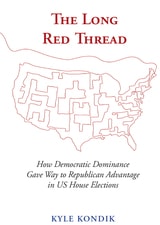
The Long Red Thread
How Democratic Dominance Gave Way to Republican Advantage in US House ElectionsKyle Kondik
Ohio University Press, 2021
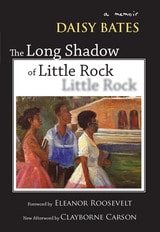
The Long Shadow of Little Rock
A MemoirDaisy Bates
University of Arkansas Press, 2007
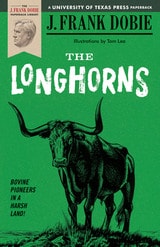
The Longhorns
By J. Frank Dobie
University of Texas Press, 1980
The Texas Longhorn made more history than any other breed of cattle the world has known. These wiry, intractable beasts were themselves pioneers in a harsh land, moving elementally with drouth, grass, Arctic blizzards, and burning winds. Their story is the bedrock on which the history of the cow country of America is founded.
J. Frank Dobie was a tale spinner who appreciated the proper place of legend and folklore in history. In The Longhorns, he tells of the Spanish conquistadors, who brought their cattle with them; of ranching in the turbulent colonial times; of the cowboy, whose abandon, energy, insolence, and pride epitomized the booming West. He writes of terrifying stampedes, titantic bull fights on the range, ghost steers, and encounters with Indians.
A tireless prospector of the history and legends of the Southwest, Dobie spent most of his life preparing to write this book. He was born in the Texas brush country where the Longhorns made their last stand; he back-trailed them into Mexico; he pursued the vivid lore of Texas cowboys and Mexican vaqueros. No historian or naturalist has ever so related an animal to the land, its people, and its history.

The Loop
The “L” Tracks That Shaped and Saved ChicagoPatrick T. Reardon
Southern Illinois University Press, 2021
Every day Chicagoans rely on the loop of elevated train tracks to get to their jobs, classrooms, or homes in the city’s downtown. But how much do they know about the single most important structure in the history of the Windy City? In engagingly brisk prose, Patrick T. Reardon unfolds the fascinating story about how Chicago’s elevated Loop was built, gave its name to the downtown, helped unify the city, saved the city’s economy, and was itself saved from destruction in the 1970s.
This unique volume combines urban history, biography, engineering, architecture, transportation, culture, and politics to explore the elevated Loop’s impact on the city’s development and economy and on the way Chicagoans see themselves. The Loop rooted Chicago’s downtown in a way unknown in other cities, and it protected that area—and the city itself—from the full effects of suburbanization during the second half of the twentieth century. Masses of data underlie new insights into what has made Chicago’s downtown, and the city as a whole, tick.
The Loop features a cast of colorful Chicagoans, such as legendary lawyer Clarence Darrow, poet Edgar Lee Masters, mayor Richard J. Daley, and the notorious Gray Wolves of the Chicago City Council. Charles T. Yerkes, an often-demonized figure, is shown as a visionary urban planner, and engineer John Alexander Low Waddell, a world-renowned bridge creator, is introduced to Chicagoans as the designer of their urban railway.
This fascinating exploration of how one human-built structure reshaped the social and economic landscape of Chicago is the definitive book on Chicago’s elevated Loop.

The Los Angeles Plaza
Sacred and Contested SpaceBy William David Estrada
University of Texas Press, 2008
2008 — Gold Award in Californiana – California Book Awards – Commonwealth Club of California
2010 — NACCS Book Award – National Association for Chicana and Chicano Studies
City plazas worldwide are centers of cultural expression and artistic display. They are settings for everyday urban life where daily interactions, economic exchanges, and informal conversations occur, thereby creating a socially meaningful place at the core of a city.
At the heart of historic Los Angeles, the Plaza represents a quintessential public space where real and imagined narratives overlap and provide as many questions as answers about the development of the city and what it means to be an Angeleno. The author, a social and cultural historian who specializes in nineteenth- and early twentieth-century Los Angeles, is well suited to explore the complex history and modern-day relevance of the Los Angeles Plaza. From its indigenous and colonial origins to the present day, Estrada explores the subject from an interdisciplinary and multiethnic perspective, delving into the pages of local newspapers, diaries and letters, and the personal memories of former and present Plaza residents, in order to examine the spatial and social dimensions of the Plaza over an extended period of time.
The author contributes to the growing historiography of Los Angeles by providing a groundbreaking analysis of the original core of the city that covers a long span of time, space, and social relations. He examines the impact of change on the lives of ordinary people in a specific place, and how this change reflects the larger story of the city.
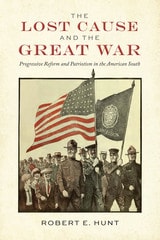
The Lost Cause and the Great War
Progressive Reform and Patriotism in the American SouthRobert E. Hunt
University of Alabama Press, 2025
How Tennessee reformers reconciled Southern heritage with rising nationalism, weaving the Lost Cause into the fabric of American progress and identity.
The Lost Cause and the Great War tells the stories of central Tennessee Progressive-era reformers to illustrate the fascinating broader issue of how Southerners steeped in Lost Cause Civil War mythologies simultaneously developed patriotic American fervor. Focusing on Luke Lea, a prominent politician and American army officer who attempted to capture Kaiser Wilhelm II during World War I, the book reveals the intricate interplay between three competing ideas: attachment to the memory of the Confederacy, intense American nationalism, and advocacy for progressive reforms.
Hunt shows that Lea and his contemporaries sought either to harmonize these competing loyalties or to compartmentalize them to use when needed. Through insightful accounts of Tennessee’s 1928 presidential campaign, the American Legion’s response to cuts to veteran benefits in 1933, and the redefinition of America’s global role post–World War II, Hunt shows how these reformers achieved a balance that held until the Civil Rights movement disrupted this delicate consensus.
Hunt’s rich account reveals how Lea and others like him wove national patriotism and Southern collective memory into a cohesive narrative that supported their broader Progressive goals. The book offers much to readers interested in Southern history, the Gilded Age, Prohibition, World War I, World War II, and the beginnings of the Civil Rights movement. It provides vivid examples of how collective memory and narratives shape social and political movements. General readers will discover how white Southerners who remained devoted to vindicating the Confederacy nonetheless became fervent supporters of America's growing nationalism in the early twentieth century.
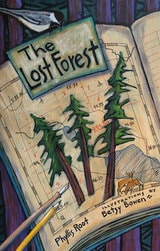
The Lost Forest
Phyllis Root
University of Minnesota Press, 2019
The story of a forest “lost” by a surveying error—and all the flora and fauna to be found there
A forest, of course, doesn’t need a map to know where to grow. But people need a map to find it. And in 1882 when surveyors set out to map a part of Minnesota, they got confused, or tired and cold (it was November), and somehow mapped a great swath of ancient trees as a lake. For more than seventy-five years, the mistake stayed on the map, and the forest remained safe from logging—no lumber baron expects to find timber in a lake, after all.
The Lost Forest tells the story of this lucky error and of the 144 acres of old-growth red and white pine it preserved. With gentle humor, Phyllis Root introduces readers to the men at their daunting task, trekking across Minnesota, measuring and marking the vast land into townships and sections and quarters. She takes us deep into a stand of virgin pine, one of the last and largest in the state, where U.S. history and natural history meet. With the help of Betsy Bowen’s finely observed and beautiful illustrations, she shows us all the life that can be found in the Lost Forest.
Accompanying the story is a wealth of information about the Cadastral Survey and about the plants and animals that inhabit forests—making the book a valuable guide for readers who might want to look even deeper into the history of Minnesota, the flora and fauna of old-growth forests, and the apportioning of land in America.
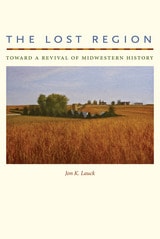
The Lost Region
Toward a Revival of Midwestern HistoryJon K. Lauck
University of Iowa Press, 2013
In addition to outlining the centrality of the Midwest to crucial moments in American history, Jon K. Lauck resurrects the long-forgotten stories of the institutions founded by an earlier generation of midwestern historians, from state historical societies to the Mississippi Valley Historical Association. Their strong commitment to local and regional communities rooted their work in place and gave it an audience outside the academy. He also explores the works of these scholars, showing that they researched a broad range of themes and topics, often pioneering fields that remain vital today.
The Lost Region demonstrates the importance of the Midwest, the depth of historical work once written about the region, the continuing insights that can be gleaned from this body of knowledge, and the lessons that can be learned from some of its prominent historians, all with the intent of once again finding the forgotten center of the nation and developing a robust historiography of the Midwest.
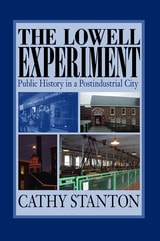
The Lowell Experiment
Public History in a Postindustrial CityCathy Stanton
University of Massachusetts Press, 2006
In the early nineteenth century, Lowell, Massachusetts, was widely studied and emulated as a model for capitalist industrial development. One of the first cities in the United States to experience the ravages of deindustrialization, it was also among the first places in the world to turn to its own industrial and ethnic history as a tool for reinventing itself in the emerging postindustrial economy. The Lowell Experiment explores how history and culture have been used to remake Lowell and how historians have played a crucial yet ambiguous role in that process.
The book focuses on Lowell National Historical Park, the flagship project of Lowell's new cultural economy. When it was created in 1978, the park broke new ground with its sweeping reinterpretations of labor, immigrant, and women's history. It served as a test site for the ideas of practitioners in the new field of public history—a field that links the work of professionally trained historians with many different kinds of projects in the public realm.
The Lowell Experiment takes an anthropological approach to public history in Lowell, showing it as a complex cultural performance shaped by local memory, the imperatives of economic redevelopment, and tourist rituals—all serving to locate the park's audiences and workers more securely within a changing and uncertain new economy characterized by growing inequalities and new exclusions.
The paradoxical dual role of Lowell's public historians as both interpreters of and contributors to that new economy raises important questions about the challenges and limitations facing academically trained scholars in contemporary American culture. As a long-standing and well-known example of “culture-led re-development,” Lowell offers an outstanding site for exploring questions of concern to those in the fields of public and urban history, urban planning, and tourism studies.
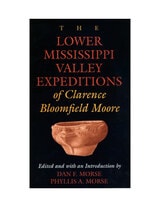
The Lower Mississippi Valley Expeditions of Clarence Bloomfield Moore
Clarence Bloomfield Moore
University of Alabama Press, 1998
A Dan Josselyn Memorial Publication
C. B. Moore's investigations of the Lower Mississippi Valley are here collected in a one-volume facsimile edition.
Like many other natural scientists from the Victorian era, Clarence Bloomfield Moore (1852-1917) lived several lives—adventurer, paper company executive, archaeologist; however, Moore is chiefly remembered for the twenty-five years he spent investigating and documenting archaeological sites along every navigable waterway in the southeastern United States.
Moore's surveys were and are impressive, and he earned lasting respect from archaeological researchers in the South by publishing, mostly at his own expense, all of the data he recovered. This volume includes works that describe data from Moore's expeditions that were key to the early recognition and preservation of major archaeological sites—Toltec, Parkin, Mound City, and Wicklife, among them—in the lower Mississippi River Valley. This and companion volumes stand today as the defining database for every area in which he worked.
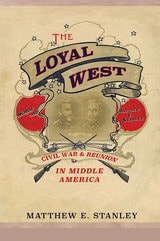
The Loyal West
Civil War and Reunion in Middle AmericaMatthew E. Stanley
University of Illinois Press, 2017
Matthew E. Stanley's intimate study explores the Civil War, Reconstruction, and sectional reunion in this bellwether region. Using the lives of area soldiers and officers as a lens, Stanley reveals a place and a strain of collective memory that was anti-rebel, anti-eastern, and anti-black in its attitudes--one that came to be at the forefront of the northern retreat from Reconstruction and toward white reunion. The Lower Middle West's embrace of black exclusion laws, origination of the Copperhead movement, backlash against liberalizing war measures, and rejection of Reconstruction were all pivotal to broader American politics. And the region's legacies of white supremacy--from racialized labor violence to sundown towns to lynching--found malignant expression nationwide, intersecting with how Loyal Westerners remembered the war.
A daring challenge to traditional narratives of section and commemoration, The Loyal West taps into a powerful and fascinating wellspring of Civil War identity and memory.
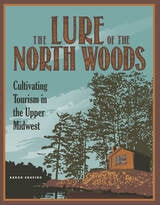
The Lure of the North Woods
Cultivating Tourism in the Upper MidwestAaron Shapiro
University of Minnesota Press, 2013
In the late nineteenth century, the North Woods offered people little in the way of a pleasant escape. Rather, it was a hub of production supplying industrial America with vast quantities of lumber and mineral ore. This book tells the story of how northern Minnesota, northern Wisconsin, and Michigan’s Upper Peninsula became a tourist paradise, turning a scarred countryside into the playground we know today.
Stripped of much of its timber and ore by the early 1900s, the North Woods experienced deindustrialization earlier than the Rust Belt cities that consumed its resources. In The Lure of the North Woods, Aaron Shapiro describes how residents and visitors reshaped the region from a landscape of exploitation to a vacationland. The rejuvenating North Woods profited in new ways by drawing on emerging connections between the urban and the rural, including improved transportation, promotion, recreational land use, and conservation initiatives. Shapiro demonstrates how this transformation helps explain the interwar origins of modern American environmentalism, when both the consumption of nature for pleasure and the work of the Civilian Conservation Corps in the North Woods and elsewhere led many Americans to cultivate a fresh perspective on the outdoors. At a time when travel and recreation are considered major economic forces, The Lure of the North Woods reveals how leisure—and tourism in particular—has shaped modern America.

The Main Event
Boxing in Nevada from the Mining Camps to the Las Vegas StripRichard O. Davies
University of Nevada Press, 2014
As the twentieth century dawned, bare-knuckle prizefighting was transforming into the popular sport of boxing, yet simultaneously it was banned as immoral in many locales. Nevada was the first state to legalize it, in 1897, solely to stage the Corbett-Fitzsimmons world heavyweight championship in Carson City. Davies shows that the history of boxing in Nevada is integral to the growth of the sport in America. Promoters such as Tex Rickard brought in fighters like Jack Dempsey to the mining towns of Goldfield and Tonopah and presented the Johnson-Jeffries “Fight of the Century” in Reno in 1910. Prizefights sold tickets, hotel rooms, drinks, meals, and bets on the outcomes. It was boxing\--before gambling, prostitution, and easy divorce\--that first got Nevada called “America’s Disgrace” and the “Sin State.” The Main Event explores how boxing’s growth in Nevada relates to the state’s role as a social and cultural outlier. Starting in the Rat Pack era, organized gambling’s moguls built arenas outside the Vegas casinos to stage championships\--more than two hundred from 1960 to the present. Tourists and players came to see and bet on historic bouts featuring Sonny Liston, Muhammad Ali, George Foreman, Sugar Ray Leonard, Mike Tyson, and other legends of the ring.
From the celebrated referee Mills Lane to the challenge posed by mixed martial arts in contemporary Las Vegas, the story of boxing in Nevada is a prism for viewing the sport. Davies utilizes primary and secondary sources to analyze how boxing in the Silver State intersects with its tourist economy and libertarian values, paying special attention to issues of race, class, and gender. Written in an engaging style that shifts easily between narrative and analysis, The Main Event will be essential reading for sports fans and historians everywhere.
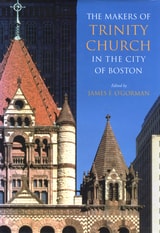
The Makers of Trinity Church in the City of Boston
James F. O'Gorman
University of Massachusetts Press, 2004
While critics often speak of the church as Richardson's creation, this collection of essays, written by leading scholars in the field, recognizes and assesses the individual contributions of the rector, Phillips Brooks; the chairman of the building committee, Robert Treat Paine; the builder, O. W. Norcross; and the decorator, John La Farge, as well as Richardson. The book includes the first study of the furnishings of the interior by the architect's office and features chapters on the stained glass designers Sarah Wyman Whitman and Margaret Redmond, as well as the architect Charles D. Maginnis, whose remodeling of the chancel in the 1930s brought the building to its full glory. These architectural collaborators are rarely given the recognition they receive here, although the absence of any one of them would have produced a very different result. Such omissions would have significantly diminished this towering landmark of America's cultural heritage.
In addition to the editor, contributors to the volume include Keith Bakker, David B. Chesebrough, Kathleen A. Curran, Erica Hirshler, Keith N. Morgan, Thomas M. Paine, Virginia Chieffo Raguin, Milda B. Richardson, Theodore E. Stebbins Jr., and Charles A. Vandersee.
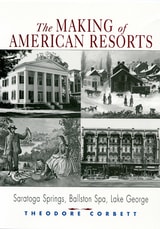
The Making of American Resorts
Saratoga Springs, Ballston Spa, and Lake GeorgeCorbett, Theodore
Rutgers University Press, 2001
The Making of Modern Nevada
Hal Rothman
University of Nevada Press, 2010
The Making of Pioneer Wisconsin
Voices of Early SettlersMichael E. Stevens
Wisconsin Historical Society Press, 2018
The Making of Pioneer Wisconsin provides a unique and intimate glimpse into the lives of these early settlers, as they describe what it felt like to be a teenager in a wagon heading west or an isolated young wife living far from her friends and family. Woven together with context provided by historian Michael E. Stevens, these first-person accounts form a fascinating narrative that deepens our ability to understand and empathize with Wisconsin’s early pioneers.
The Making of The University of Michigan 1817-1992
Howard H. Peckham
University of Michigan Press, 1994
The Making of a Lynching Culture
Violence and Vigilantism in Central Texas, 1836-1916William D. Carrigan
University of Illinois Press, 2006
How a culture of violence legitimized lynching among ordinary people
On May 15, 1916, a crowd of fifteen thousand witnessed the lynching of an eighteen-year-old black farm worker named Jesse Washington. Most central Texans of the time failed to call for the punishment of the mob’s leaders. In The Making of a Lynching Culture, now in paperback, William D. Carrigan seeks to explain not how a fiendish mob could lynch one man but how a culture of violence that nourished this practice could form and endure for so long among ordinary people.
Beginning with the 1836 independence of Texas, The Making of a Lynching Culture reexamines traditional explanations of lynching, including the role of the frontier, economic tensions, and political conflicts. Using a voluminous body of court records, newspaper accounts, oral histories, and other sources, Carrigan shows how notions of justice and historical memory were shaped to glorify violence and foster a culture that legitimized lynching.