Results by title
18284 books match the query 'United States' and 3764 start with t

The Art Museums of Louis I. Kahn
Patricia C. Loud
Duke University Press, 1989
After a brief look at the development of a tradition in museum architecture, this study examines Kahn’s three art museums: the Yale University Art Gallery, the Kimbell Art Museum, and the Yale Center for British Art. It traces the development of each museum through museum through its various stages: the background of the institutions and the commissions, the programs for the buildings, their designs and evolutions, their constructions, and the evaluations of the completed buildings. Material on Kahn’s plans for a museum for the De Menil collection, begun shortly before his death, is also included.
Accompanying the text are illustrations of the buildings, including Kahn’s personal sketches, architectural plans and sections, and presentation perspective drawings. Photographs of the finished buildings present the transformed vision of the architect in tangible form, showing that the museums, while related, are individualized accomplishments. This is the first comprehensive study of Kahn’s museums.
The Art of Authorial Presence
Hawthorne's Provincial TalesG. R. Thompson
Duke University Press, 1993
By focusing on the provincial tales as they were originally conceived--as a narrative cycle--Thompson is able to recover intertextual references that reveal Hawthorne's preoccupation with framing strategies and variations on authorial presence. The author shows how Hawthorne deliberately constructs sentimental narratives, only to deconstruct them. Thompson's analysis provides a new aesthetic context for understanding the whole shape of Hawthorne's career as well as the narrative, ethical, and historical issues within individual works.
Revisionary in its view of one of America's greatest authors, The Art of Authorial Presence also offers invaluable insight into the problems of narratology and historiography, ethics and psychology, romanticism and idealism, and the cultural myths of America.
The Art of Friction
Where (Non)Fictions Come TogetherEdited by Charles Blackstone and Jill Talbot
University of Texas Press, 2008
"We live in an Enquirer, reality television–addled world, a world in which most college students receive their news from the Daily Show and discourse via text message," assert Charles Blackstone and Jill Talbot. "Recently, two nonfiction writers have been criticized for falsifying memoirs. Oprah excoriated James Frey on her show; Nasdijj was impugned by Sherman Alexie in Time. Is our next trend in literature to lock down such boundaries among the literati? Or should we address the fictionalizing of nonfiction, the truth of fiction?"
The Art of Friction surveys the borderlands where fiction and nonfiction intersect, commingle, and challenge genre lines. It anthologizes nineteen creative works by contemporary, award-winning writers including Junot Díaz, Jonathan Safran Foer, Thomas Beller, Bernard Cooper, Wendy McClure, and Terry Tempest Williams, who also provide companion pieces in which they comment on their work. These selections, which place short stories and personal essays (and hybrids of the two) side by side, allow readers to examine the similarities and differences between the genres, as well as explore the trends in genre overlap.
Functioning as both a reader and a discussion of the craft of writing, The Art of Friction is a timely, essential book for all writers and readers who seek the truthfulness of lived experience through (non)fictions.
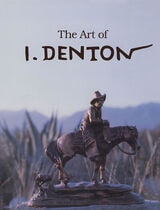
The Art of I. Denton
Ivan Denton
University of Arkansas Press, 1988
The remarkable detail and subtly stylized lines characterizing the artistry of celebrated woodcarver Ivan Denton are in abundant evidence in this beautifully illustrated volume of The Art of I. Denton. Behind each carving presented here, is its story from a piece of wood to a work of art, told in the words of Mr. Denton himself.
This is, in fact, a tour guided by Ivan Denton covering the best of his efforts, his love for the wood, and the process which turns a craftsman into an artist. As he says in describing his work: “Art exists only when you share it. When a tree falls in the woods, in school they said, ‘This tree doesn’t make a noise if someone doesn’t hear it.’ Because, you know, the sound waves don’t bump against the eardrum . . . The idea of not being able to get rid of a piece is basically the concept of an amateur. Not only does a professional need the money, and not only does he need his ego flattered, it’s just that the art doesn’t really exist until it’s shared. That’s an even deeper joy than the ego.”
Chosen from collections across the country, these pieces represent the masterworks from one of a disappearing breed of artisans. But The Art of I. Denton is more than a document of our cultural heritage, it is a tribute to the man and his art.
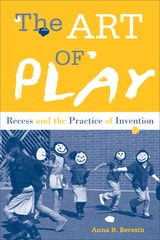
The Art of Play
Recess and the Practice of InventionAnna Beresin
Temple University Press, 2013
What can the art of play teach us about the art of play? Showcasing the paintings of more than one hundred Philadelphia public elementary school children, folklorist Anna Beresin’s innovative book, The Art of Play, presents images and stories that illustrate what children do at recess, and how it makes them feel.
Beresin provides a nuanced, child-centered discussion of the intersections of play, art, and learning. She describes a widespread institutionalized fear of play and expressive art, and the transformative power of simple materials like chalk and paint. Featuring more than 150 paintings and a dozen surreal photographs of masked children enjoying recess, The Art of Play weaves together the diverse voices of kids and working artists with play scholarship.
This book emerged from Recess Access, a service-learning project that donated chalk, ropes, balls, and hoops to nine schools in different sections of Philadelphia. A portion of the proceeds of The Art of Play will support recess advocacy.
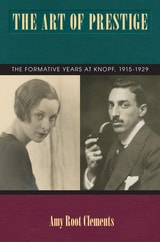
The Art of Prestige
The Formative Years at Knopf, 1915-1929Amy Clements
University of Massachusetts Press, 2014
Capturing the little-known early history of Knopf, The Art of Prestige explores the origins of the company's rise to success during the Jazz Age, when Alfred and Blanche established themselves as literary impresarios on both sides of the Atlantic. Drawing on key archival documents from all phases of the publishing process, Amy Root Clements reconstructs the turning points and rhetorical exchanges that made Knopf's initial books noteworthy, from the acquisitions process to design, consumer marketing, and bookselling.
Lasting cornerstones of the young firm include alliances with pivotal figures in the world of graphic arts and book production and with European publishers who brought numerous Nobel Prize winners to the Borzoi list during the company's first fifteen years. Other featured luminaries include the American authors Willa Cather, Dashiell Hammett, and Langston Hughes. The Art of Prestige also examines Alfred Knopf's ancestry, up-bringing, and formal education at Columbia, as well as his apprenticeships with Frank Nelson Doubleday and Mitchell Kennerley—factors that would influence his business decisions for years to come.
The result is a portrait of innovative branding that seamlessly merged book production with book promotion in a literary landscape that was ripe for transformation.
The Art of Protest
Culture and Activism from the Civil Rights Movement to the PresentT.V. Reed
University of Minnesota Press, 2019
A second edition of the classic introduction to arts in social movements, fully updated and now including Black Lives Matter, Occupy Wall Street, and new digital and social media forms of cultural resistance
The Art of Protest, first published in 2006, was hailed as an “essential” introduction to progressive social movements in the United States and praised for its “fluid writing style” and “well-informed and insightful” contribution (Choice Magazine). Now thoroughly revised and updated, this new edition of T. V. Reed’s acclaimed work offers engaging accounts of ten key progressive movements in postwar America, from the African American struggle for civil rights beginning in the 1950s to Occupy Wall Street and Black Lives Matter in the twenty-first century.
Reed focuses on the artistic activities of these movements as a lively way to frame progressive social change and its cultural legacies: civil rights freedom songs, the street drama of the Black Panthers, revolutionary murals of the Chicano movement, poetry in women’s movements, the American Indian Movement’s use of film and video, anti-apartheid rock music, ACT UP’s visual art, digital arts in #Occupy, Black Lives Matter rap videos, and more.
Through the kaleidoscopic lens of artistic expression, Reed reveals how activism profoundly shapes popular cultural forms. For students and scholars of social change and those seeking to counter reactionary efforts to turn back the clock on social equality and justice, the new edition of The Art of Protest will be both informative and inspiring.
The Art of Protest
Culture and Activism from the Civil Rights Movement to the Streets of SeattleT.V. Reed
University of Minnesota Press, 2005
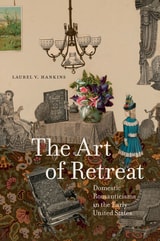
The Art of Retreat
Domestic Romanticisms in the Early United StatesLaurel V. Hankins
Bucknell University Press, 2025
The political and cultural fantasy of home as a retreat from the pressures of the world first emerged in the U.S. alongside two major nineteenth-century literary movements: Romanticism and domestic fiction. Upending accepted gendered narratives from this period, The Art of Retreat posits that these movements originated from a domestic culture already in transition, in which home was frequently a more complicated site of self-interested pleasure, coerced labor, creole social reproduction, homosocial intimacy, bachelor whimsy, petty tyranny, racial abuse, and transgender capacity. The early national periodicals, sketches, and novels examined here lend themselves to this interpretation. Hankins argues that the literary tradition emerging from these decades—one that aligned creative genius with domestic retreat—reminds us that a politics that appeals to private feeling must reckon with new interpretations of labor, kinship, and reform in exchange for the promise of consensual citizenship.
Published by Bucknell University Press. Distributed worldwide by Rutgers University Press.
The Art of Return
The Sixties and Contemporary CultureJames Meyer
University of Chicago Press, 2019
In this innovative work, James Meyer turns to art criticism, theory, memoir, and fiction to examine the fascination with the long sixties and contemporary expressions of these cultural memories across the globe. Meyer draws on a diverse range of cultural objects that reimagine this revolutionary era stretching from the 1950s to the 1970s, including reenactments of civil rights, antiwar, and feminist marches, paintings, sculptures, photographs, novels, and films. Many of these works were created by artists and writers born during the long Sixties who were driven to understand a monumental era that they missed. These cases show us that the past becomes significant only in relation to our present, and our remembered history never perfectly replicates time past. This, Meyer argues, is precisely what makes our contemporary attachment to the past so important: it provides us a critical opportunity to examine our own relationship to history, memory, and nostalgia.
The Art of Surrender
Decomposing Sovereignty at Conflict's EndRobin Wagner-Pacifici
University of Chicago Press, 2005
The Art of Surrender explores these ritual concessions as acts of warfare, performances of submission, demonstrations of power, and representations of shifting, unstable worlds. Wagner-Pacifici analyzes three significant military surrenders in the history of warfare—the Thirty Years' War of the seventeenth century, the American Civil War, and World War II—through the use of period documents and forms, maps, literature, witness accounts, photographs, and paintings that were left as proof of victory and defeat. In her analyses of such archival material and iconic works of art, she considers the limits of sovereignty at conflict's end, showing how the ways we concede loss can be as important as the ways we claim victory.

The Art of Trumpet Teaching
The Legacy of Keith JohnsonLeigh Anne Hunsaker
University of North Texas Press, 2022
The Art of the American Musical
Conversations With the CreatorsBryer, Jackson R
Rutgers University Press, 2019
Musical theater has captivated American audiences from its early roots in burlesque stage productions and minstrel shows to the million-dollar industry it has become on Broadway today. What is it about this truly indigenous American art form that has made it so enduringly popular? How has it survived, even thrived, alongside the technology of film and the glitz and glamour of Hollywood? Will it continue to evolve and leave its mark on the twenty-first century?
Bringing together exclusive and previously unpublished interviews with nineteen leading composers, lyricists, librettists, directors, choreographers, and producers from the mid-1900s to the present, this book details the careers of the individuals who shaped this popular performance art during its most prolific period. The interviewees discuss their roles in productions ranging from On the Town (1944) and Finian's Rainbow (1947) to The Producers (2001) and Bounce (2003).
Readers are taken onto the stage, into the rehearsals, and behind the scenes. The nuts and bolts, the alchemy, and the occasional agonies of the collaborative process are all explored. In their discussions, the artists detail their engagements with other creative forces, including such major talents as Leonard Bernstein, Jerome Robbins, Bob Fosse, Liza Minnelli, Judy Garland, Barbra Streisand, Jule Styne, Richard Rodgers and Oscar Hammerstein, Alan Jay Lerner, Zero Mostel, and Gwen Verdon. They speak candidly about their own work and that of their peers, their successes and failures, the creative process, and how a show progresses from its conception through rehearsals and tryouts to opening night.
Taken together, these interviews give fresh insight into what Oscar Hammerstein called "a nightly miracle"—the creation of the American musical.
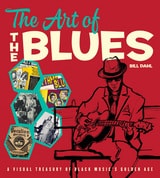
The Art of the Blues
A Visual Treasury of Black Music's Golden AgeBill Dahl
University of Chicago Press, 2016
What will astonish readers who thumb through these pages is the amazing range of ways that the blues have been represented—whether via album covers, posters, flyers, 78 rpm labels, advertising, or other promotional materials. We see the blues as it was first visually captured in the highly colorful sheet music covers of the early twentieth century. We see striking and hard-to-find label designs from labels big (Columbia) and small (Rhumboogie). We see William Alexander’s humorous artwork on postwar Miltone Records; the cherished ephemera of concert and movie posters; and Chess Records’ iconic early albums designed by Don Bronstein, which would set a new standard for modern album cover design.
What these images collectively portray is the evolution of a distinctively American art form. And they do so in the richest way imaginable. The result is a sumptuous book, a visual treasury as alive in spirit as the music it so vibrantly captures.
The Articles of Confederation
An Interpretation of the Social-Constitutional History of the American Revolution, 1774-1781Merrill Jensen
University of Wisconsin Press, 1959
"An admirable analysis. It presents, in succinct form, the results of a generation of study of this chapter of our history and summarizes fairly the conclusions of that study."—Henry Steele Commager, New York Times Book Review
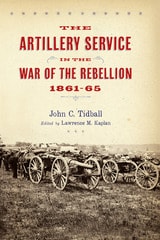
The Artillery Service in the War of the Rebellion, 1861–65
John C. Tidball
Westholme Publishing, 2011
A Rediscovered History That Will Become Essential Reading for Civil War Studies
The Artillery Service in the War of the Rebellion, 1861–65, is a comprehensive overview and analysis of the U.S. Army’s field artillery service in the Civil War’s principal battles, written by John C. Tidball, a distinguished artilleryman of the era. The overview, which appeared in the Journal of the Military Service Institution from 1891 to 1893, and nearly impossible to find today, examines the Army of the Potomac, including the battles of Fair Oaks, Gaines’s Mill, Mechanicsville, Malvern Hill, Antietam, Fredericksburg, Chancellorsville, and Gettysburg; the Army of the Tennessee, including the battles of Stones River and Chickamauga, and the Army of the Ohio’s battle of Shiloh. Tidball, a decorated Civil War veteran and superintendent of artillery instruction for the army, expertly presents the war through an artilleryman’s eyes in explaining the organization, equipping, and manning of the artillery service. His analysis highlights how the improper use of artillery, tying batteries down to relatively small infantry commands that diluted their firepower, seriously undermined the army’s effectiveness until reforms produced independent artillery commands that could properly mass artillery fire in battle.
The Artillery Service in the War of the Rebellion, edited by historian Lawrence M. Kaplan and presented here in one volume for the first time, includes additional material from an unpublished paper Tidball wrote in 1905 which contains further insights into the artillery service, as well as a general overview of the Petersburg campaign. A major new discovery in Civil War scholarship, The Artillery Service in the War of the Rebellion contains essential information that will change earlier historical interpretations of key battles and will be essential reading for all those interested in the war or contemplating writing about it.
The Artist in American Society
The Formative YearsNeil Harris
University of Chicago Press, 1982

The Arzberger Site
Hughes County, South DakotaAlbert C. Spaulding
University of Michigan Press, 1956
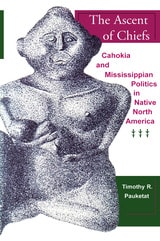
The Ascent of Chiefs
Cahokia and Mississippian Politics in Native North AmericaTimothy R. Pauketat
University of Alabama Press, 1994
Considering Cahokia in terms of class struggle, Pauketat claims that the political consolidation in this region of the Mississippi Valley happened quite suddenly, around A.D. 1000, after which the lords of Cahokia innovated strategies to preserve their power and ultimately emerged as divine chiefs. The new ideas and new data in this volume will invigorate the debate surrounding one of the most important developments in North American prehistory.

The Asian American Achievement Paradox
JENIFFER LEE is professor of sociology at the University of California, Irvine. MIN ZHOU is professor of sociology at Nanyang Technological University, Singapore, and the University of California, Los Angeles.
Russell Sage Foundation, 2015
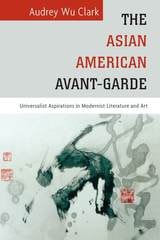
The Asian American Avant-Garde
Universalist Aspirations in Modernist Literature and ArtAudrey Wu Clark
Temple University Press, 2015
The Asian American Avant-Garde is the first book-length study that conceptualizes a long-neglected canon of early Asian American literature and art. Audrey Wu Clark traces a genealogy of counter-universalism in short fiction, poetry, novels, and art produced by writers and artists of Asian descent who were responding to their contemporary period of Asian exclusion in the United States, between the years 1882 and 1945.
Believing in the promise of an inclusive America, these avant-gardists critiqued racism as well as institutionalized art. Clark examines racial outsiders including Isamu Noguchi, Dong Kingman and Yun Gee to show how they engaged with modernist ideas, particularly cubism. She draws comparisons between writers such as Sui Sin Far and Carlos Bulosan with modernist luminaries like Stein, Eliot, Pound, and Proust.
Acknowledging the anachronism of the term “Asian American” with respect to these avant-gardists, Clark attempts to reconstruct it. The Asian American Avant-Garde explores the ways in which these artists and writers responded to their racialization and the Orientalism that took place in modernist writing.
The Assault on American Labor Law
Unions Before the Supreme Court, 1965–2025Roger C. Hartley
University of Massachusetts Press, 2025
Reviewing the dismantling of American labor law in more than 100 Supreme Court cases
The National Labor Relations Act (NLRA), signed into law by Franklin Delano Roosevelt in 1935, guarantees the right of private sector employees to organize into trade unions, engage in collective bargaining, and take collective action such as strikes. Since its passage, the NLRA has functioned as the foundational statute of United States labor law. Opposed by conservatives and members of the Republican Party from the beginning, its provisions were largely upheld by the Supreme Court until the 1960s. In the latter part of the twentieth century and into the twenty-first, however, the Court began to erode the protections of the NLRA. While some cases have received widespread attention from commentators and scholars, such as Starbucks Corp. v. McKinney (2024), there have been numerous detrimental rulings that are little discussed. Taken as a whole, the Supreme Court’s efforts to undermine the NLRA appear sustained and systematic.
In The Assault on American Labor Law, distinguished labor law professor Roger C. Hartley collects and carefully reviews every Supreme Court decision concerning the NLRA over the past sixty years. By examining approximately 100 cases, Hartley demonstrates that the Court has often operated more like a legislature than a judicial body, effectively amending the NLRA’s collectivist policy underpinnings in favor of the interests of individuals and businesses. These judicial decisions create staggering obstacles for American workers to collectively organize and force them to face globalization, deindustrialization, and technological change individually, without the negotiating leverage provided by union representation. While scholars have suggested individual reforms to re-establish the efficacy of the NLRA, Hartley’s thorough study illuminates how the current crisis in US labor law evolved—a comprehensive view that is necessary to help restore the rights of workers to unionize.
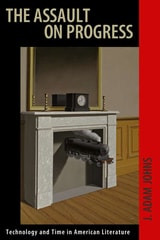
The Assault on Progress
Technology and Time in American LiteratureJ. Adam Johns
University of Alabama Press, 2008
A belief in progress is a fundamental ethos in American history and culture. The Assault on Progress probes American literary works that challenge the prevailing notion of technology as a manifestation of progress. J. Adam Johns argues that the idea of technology-as-destiny has long been explored—and undercut—in American literary works and that literature remains a crucial site for ongoing debates in this area.
Johns studies the phenomenon by which each generation comes to regard itself as the hinge upon which history turns. He explores several works by historians of technology, focusing in detail on the works of literary critic Lewis Mumford, whose examinations of Herman Melville’s novels provide an early example of critical interest in the abandonment of progress as a value.
He goes on to study the works of William Faulkner and Ralph Ellison, focusing on the convergence of technology and race—machines and slavery, and highlights the ways that these writers have portrayed humans as reduced to machines, evidence that technological “progress” is not always progressive, or liberating to humanity.
The conclusion argues for a shift in our understanding of the relationship between technology and time. According to Johns, writers like Melville, Faulkner, and Ellison help us to think of technology separate from notions of progress, and therefore help us to escape from a perilous ideological bind that forever situates humankind at the end of history.
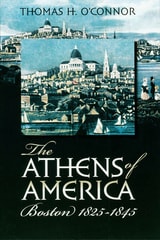
The Athens of America
Boston, 1825-1845Thomas H. O'Connor
University of Massachusetts Press, 2006
Many people are generally familiar with the fact that Boston was once known as “the Athens of America.” Very few, however, are clear about exactly why, except for their recollections of the famous writers and poets who gave the city a reputation for literature and learning.
In this book, historian Thomas H. O'Connor sets the matter straight by showing that Boston's eminence during the first half of the nineteenth century was the result of a much broader community effort. After the nation emerged from its successful struggle for independence, most Bostonians visualized their city not only as the Cradle of Liberty, but also as the new world's Cradle of Civilization.
According to O'Connor, a leadership elite, composed of men of prominent family background, Unitarian beliefs, liberal education, and managerial experience in a variety of enterprises, used their personal talents and substantial financial resources to promote the cultural, intellectual, and humanitarian interests of Boston to the point where it would be the envy of the nation. Not only did writers, scholars, and philosophers see themselves as part of this process, but so did physicians and lawyers, ministers and teachers, merchants and businessmen, mechanics and artisans, all involved in creating a well-ordered city whose citizens would be committed to the ideals of social progress and personal perfectibility.
To accomplish their noble vision, leading members of the Boston community joined in programs designed to cleanse the old town of what they felt were generations of accumulated social stains and human failures, and then to create new programs and more efficient institutions that would raise the cultural and intellectual standards of all its citizens. Like ancient Athens, Boston would be a city of great statesmen, wealthy patrons, inspiring artists, and profound thinkers, headed by members of the “happy and respectable classes” who would assume responsibility for the safety, welfare, and education of the “less prosperous portions of the community.”
Designed for the general reader and the historical enthusiast, The Athens of America is an interpretive synthesis that explores the numerous secondary sources that have concentrated on individual subjects and personalities, and draws their various conclusions into a single comprehensive narrative.
The Atlanta Youth Murders and the Politics of Race
Bernard Headley
Southern Illinois University Press, 1998
At least twenty-nine black children and young adults were murdered by an Atlanta serial killer between the summer of 1979 and the spring of 1981. Drawing national media attention, the “Atlanta tragedy,” as it became known, was immediately labeled a hate crime. However, when a young black man was arrested and convicted for the killings, public attention quickly shifted. Noted criminologist Bernard Headley was in Atlanta as the tragedy unfolded and provides here a thoughtful exploration of the social and political implications of the case both locally and nationally. Focusing on a singular historical event, Headley exposes broader tensions of race and class in contemporary America.

The Atlantic Divide in Antitrust
An Examination of US and EU Competition PolicyDaniel J. Gifford and Robert T. Kudrle
University of Chicago Press, 2015
With The Atlantic Divide in Antitrust, Daniel J. Gifford and Robert T. Kudrle explore many of the main contested areas of contemporary antitrust, including mergers, price discrimination, predatory pricing, and intellectual property. After identifying how prevailing analyses differ across these areas, they then examine the policy ramifications. Several themes run throughout the book, including differences in the amount of discretion firms have in dealing with purchasers, the weight given to the welfare of various market participants, and whether competition tends to be viewed as an efficiency-generating process or as rivalry. The authors conclude with forecasts and suggestions for how greater compatibility might ultimately be attained.
The Atlas of Boston History
Edited by Nancy S. Seasholes
University of Chicago Press, 2019
Edited by historian Nancy S. Seasholes, this landmark volume captures all aspects of Boston’s past in a series of fifty-seven stunning full-color spreads. Each section features newly created thematic maps that focus on moments and topics in that history. These maps are accompanied by hundreds of historical and contemporary illustrations and explanatory text from historians and other expert contributors. They illuminate a wide range of topics including Boston’s physical and economic development, changing demography, and social and cultural life. In lavishly produced detail, The Atlas of Boston History offers a vivid, refreshing perspective on the development of this iconic American city.
Contributors
Robert J. Allison, Robert Charles Anderson, John Avault, Joseph Bagley, Charles Bahne, Laurie Baise, J. L. Bell, Rebekah Bryer, Aubrey Butts, Benjamin L. Carp, Amy D. Finstein, Gerald Gamm, Richard Garver, Katherine Grandjean, Michelle Granshaw, James Green, Dean Grodzins, Karl Haglund, Ruth-Ann M. Harris, Arthur Krim, Stephanie Kruel, Kerima M. Lewis, Noam Maggor, Dane A. Morrison, James C. O’Connell, Mark Peterson, Marshall Pontrelli, Gayle Sawtelle, Nancy S. Seasholes, Reed Ueda, Lawrence J. Vale, Jim Vrabel, Sam Bass Warner, Jay Wickersham, and Susan Wilson
The Attention of a Traveller
Essays on William Bartram's "Travels" and LegacyEdited by Kathryn H. Braund
University of Alabama Press, 2022
An interdisciplinary reevaluation of William Bartram’s Travels, illuminating the natural, cultural, and intellectual landscapes of the eighteenth‑century Southeast through diverse scholarly lenses.
William Bartram, author of Travels through North and South Carolina, Georgia, East and West Florida, the Cherokee Country, the Extensive Territories of the Muscogulees, or Creek Confederacy, and the Country of the Chactaws, was colonial America’s first native born naturalist and artist, and the first author in the modern genre of writers who portrayed nature through personal experience as well as scientific observation. His book, first published in 1791, was based on his journeys through southern Indian nations and Britain’s southern colonies in the years just prior to the American Revolution and provides descriptions of the natural and cultural environments of what would soon become the American South. Scholars and general readers alike have long appreciated Bartram’s lush, vivid prose, his clarity of observation and evident wonder at the landscapes he traversed, and his engagement with the native nations whose lands he traveled through.
The Attention of a Traveller: Essays on William Bartram’s “Travels” and Legacy offers an interdisciplinary assessment of Bartram’s influence and evolving legacy, opening new avenues of research concerning the flora, fauna, and people connected to Bartram and his writings. Featuring 13 essays divided into five sections, contributors to the volume weave together scholarly perspectives from geology, art history, literary criticism, geography, and philosophy, alongside the more traditional Bartram-affiliated disciplines of biology and history. The collection concludes with a comprehensive treatment of the book as a material historical artifact.
The Audacious Ministry of Zilpha Elaw
Race, Religion, and RebellionKimberly D. Blockett
Duke University Press, 2026
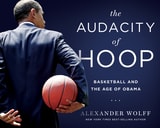
The Audacity of Hoop
Basketball and the Age of ObamaAlexander Wolff
Temple University Press, 2015
While basketball didn’t take up residence in the White House in January 2009, the game nonetheless played an outsized role in forming the man who did. In The Audacity of Hoop, celebrated sportswriter Alexander Wolff examines Barack Obama, the person and president, by the light of basketball. This game helped Obama explore his identity, keep a cool head, impress his future wife, and define himself as a candidate.
Wolff chronicles Obama’s love of the game from age 10, on the campaign trail—where it eventually took on talismanic meaning—and throughout his two terms in office. More than 125 photographs illustrate Obama dribbling, shooting free throws, playing pickup games, cooling off with George Clooney, challenging his special assistant Reggie Love for a rebound, and taking basketball to political meetings. There is also an assessment of Obama’s influence on the NBA, including a dawning political consciousness in the league’s locker rooms.
Sidebars reveal the evolution of the president’s playing style, “Baracketology”—a not-entirely-scientific art of filling out the commander in chief’s NCAA tournament bracket—and a timeline charts Obama’s personal and professional highlights.
Equal parts biographical sketch, political narrative, and cultural history, The Audacity of Hoop shows how the game became a touchstone in Obama’s exercise of the power of the presidency.
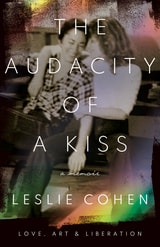
The Audacity of a Kiss
Love, Art, and LiberationLeslie Cohen
Rutgers University Press, 2021
Rendered in bronze, covered in white lacquer, two women sit together on a park bench in Greenwich Village. One of the women touches the thigh of her partner as they gaze into each other’s eyes. The two women are part of George Segal’s iconic sculpture “Gay Liberation,” but these powerful symbols were modeled on real people: Leslie Cohen and her partner (now wife) Beth Suskin.
In this evocative memoir, Cohen tells the story of a love that has lasted for over fifty years. Transporting the reader to the pivotal time when brave gay women and men carved out spaces where they could live and love freely, she recounts both her personal struggles and the accomplishments she achieved as part of New York’s gay and feminist communities. Foremost among these was her 1976 cofounding of the groundbreaking women’s nightclub Sahara, which played host to such luminaries as Betty Friedan, Gloria Steinem, Pat Benatar, Ntozake Shange, Rita Mae Brown, Adrienne Rich, Patti Smith, Bella Abzug, and Jane Fonda. The Audacity of a Kiss is a moving and inspiring tale of how love, art, and solidarity can overcome oppression.
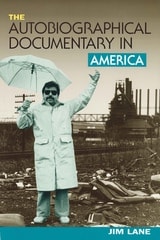
The Autobiographical Documentary in America
Jim Lane
University of Wisconsin Press, 2002
Since the late 1960s, American film and video makers of all genres have been fascinated with themes of self and identity. Though the documentary form is most often used to capture the lives of others, Jim Lane turns his lens on those media makers who document their own lives and identities. He looks at the ways in which autobiographical documentaries—including Roger and Me, Sherman’s March, and Silverlake Life—raise weighty questions about American cultural life. What is the role of women in society? What does it mean to die from AIDS? How do race and class play out in our personal lives? What does it mean to be a member of a family? Examining the history, diversity, and theoretical underpinnings of this increasingly popular documentary form, Lane tracks a fundamental transformation of notions of both autobiography and documentary.
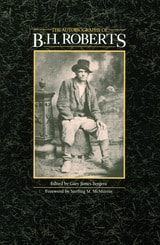
The Autobiography of B. H. Roberts
Gary J. Bergera
Signature Books, 1990
The story-book adventures of Roberts’s life made him a household name during his lifetime. His impassioned speeches incited riots, his reasoned writings defined and codified religious beliefs, and his candid disclosures of Utah history brought him both respect and censure. He is best remembered today as a largely self-educated intellectual. Several of his landmark published works are still in print more than fifty years after his death. His life story, told here in his own words and published for the first time, may well stand as his greatest, most enduring achievement.
For many today, B. H. Roberts is the quintessential Mormon intellectual of the twentieth century. But his theological writings came late in life and his historical views were more subjective than definitive. His autobiography, on the other hand, is a forthright account of the events and acquaintances that contributed to his unique faith and intellectual independence. Troubled by the memory of being abandoned as a child, and of the abusive care of quarrelling and intemperate foster-parents, he survived a stormy youth of poverty and neglect. He describes his nearly ten years as a missionary to the southern United States, his subsequent tenure as an outspoken member of the First Quorum of Seventy, his public opposition to women’s suffrage, and his controversial bid for the U.S. House of Representatives as a Mormon polygamist.
The Autobiography of Citizenship
Assimilation and Resistance in U.S. EducationCooper, Tova
Rutgers University Press, 0
The Autobiography of Daniel Parker, Frontier Universalist
Daniel Parker
Ohio University Press, 2021
A vastly informative and rare early-American pioneer autobiography rescued from obscurity.
In this remarkable memoir, Daniel Parker (1781–1861) recorded both the details of everyday life and the extraordinary historical events he witnessed west of the Appalachian Mountains between 1790 and 1840. Once a humble traveling salesman for a line of newly invented clothes washing machines, he became an outspoken advocate for abolition and education. With his wife and son, he founded Clermont Academy, a racially integrated, coeducational secondary school—the first of its kind in Ohio.
However, Parker’s real vocation was as a self-ordained, itinerant preacher of his own brand of universal salvation. Raised by Presbyterian parents, he experienced a dramatic conversion to the Halcyon Church, an alternative, millenarian religious movement led by the enigmatic prophet Abel Sarjent, in 1803. After parting ways with the Halcyonists, he continued his own biblical and theological studies, arriving at the universalist conclusions that he would eventually preach throughout the Ohio River Valley.
David Torbett has transcribed Parker’s manuscript and publishes it here for the first time, together with an introduction, epilogue, bibliography, and extensive notes that enrich and contextualize this rare pioneer autobiography.
The Autobiography of Harry S. Truman
Edited with a New Introduction by Robert H. Ferrell
University of Missouri Press, 2002
The Autocratic Academy
Reenvisioning Rule within America's UniversitiesTimothy V. Kaufman-Osborn
Duke University Press, 2023
The Avenues of Salt Lake City
Cevan J. LeSieur
University of Utah Press, 2012
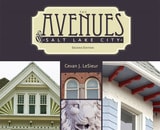
Salt Lake City’s oldest residential historic district is a neighborhood known as the Avenues. During the late nineteenth century this area was home to many of the most influential citizens of Salt Lake City. Built from 1860 until 1930, it contains a mix of middle and upper middle class homes of varying architectural styles. This architectural diversity makes the Avenues unique among Utah's historic districts. For the past thirty years, as citizens have rediscovered the value of living in historic properties near downtown and the University of Utah, preservation efforts have soared in the area.
In 1980, the Avenues was established as a historic district and the Utah Historical Society published The Avenues of Salt Lake City. That book’s authors, Karl T. Haglund and Philip F. Notarianni, gleaned much about the area’s history by using information found on the historic district applications. This newly revised edition of The Avenues of Salt Lake City by Cevan J. LeSieur updates the original with a greatly expanded section on the historic homes in the neighborhood, including more than 600 new photos, and additional material covering the history of the Avenues since 1980.
The book is designed so that readers can take it along as a guide when exploring the neighborhoods. All the pictures of Avenues homes are accompanied with architectural information and brief histories of the properties. This volume makes a valuable resource for those interested in the history of the Avenues and its diverse architecture, and for anyone interested in Utah history, Utah architecture, and historic preservation.
The Awkward State of Utah
Coming of Age in the Nation, 1896-1945Charles Peterson and Brian Cannon
University of Utah Press, 2015
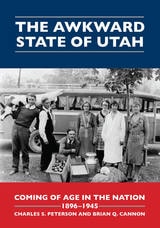
The half century between statehood in 1896 and the end of World War II in 1945 was a period of transformation and transition for Utah. This book interprets those profound changes, revealing sweeping impacts on both institutions and ordinary people. Drawing upon expertise honed over decades of teaching, researching, and writing about Utah’s history, the authors incorporate fresh archival sources, new oral histories, and hundreds of scholarly articles and books as they narrate the little-known story of the crucial formative years when Utah came of age.
During its sometimes awkward years of adolescence and maturation, Utah was gradually incorporated into the American political, social, and economic mainstream. Urban and industrial influences supplanted agrarian traditions, displacing people socially, draining the countryside of population, and galvanizing a critical crisis in values and self-identification. National corporations and mass labor movements took root in the state as commerce expanded. Involvement in world events such as the Spanish-American War, two world wars, and the Great Depression further set the stage for entry into the modern, globalized world as Utahns immersed themselves in national politics and became part of the democratic, corporate culture of twentieth-century America.

The Aztec Love God
Tony Diaz
University of Alabama Press, 1998
Originally, young Tio wanted to perfect the comic role of the Aztec Love God, his ideal persona. Along the way, he meets Jester, an older, Caucasian comedian who makes Tio an offer he’s like to refuse. Jester offers Tio an opportunity to join his act. The only condition is that he, Tio, has to perform Latino stereotypes. Tio has to decide if he is going to take the blank check for easy thoughts or develop the Aztec Love God on his own.
The Aztec Love God combines humor, politics, and street knowledge. Diaz comes at the reader from all angles. His mixture of styles and influences pushes The Aztec Love God to a multi-multiculturalism.
The Aztec Love God is a vato but not too loco.
The Backcountry and the City
Colonization and Conflict in Early AmericaEd White
University of Minnesota Press, 2005
Ed White explores the backcountry-city divide as well as the dynamics of indigenous peoples, bringing together two distinct bodies of scholarship: one stressing the political culture of the Revolutionary era, the other taking an ethnohistorical view of white–Native American contact. White concentrates his study in Pennsylvania, a state in which the majority of the population was rural, and in Philadelphia, a city that was a center of publishing and politics and the national capital for a decade. Against this backdrop, White reads classic political texts such as Crèvecoeur’s Letters from an American Farmer, Franklin’s Autobiography, and Paine’s “Agrarian Justice,” alongside missionary and captivity narratives, farmers’ petitions, and Native American treaties. Using historical and ethnographic sources to enrich familiar texts, White demonstrates the importance of rural areas in the study of U.S. nation formation and finds unexpected continuities between the early colonial period and the federal ascendancy of the 1790s.
Ed White is associate professor of English at the University of Florida.

The Background of Swedish Emigration to the United States
An Economic and Sociological Study in the Dynamics of MigrationJohn Lindberg
University of Minnesota Press, 1930
The Backwards Hand
A MemoirMatt Lee
Northwestern University Press, 2024
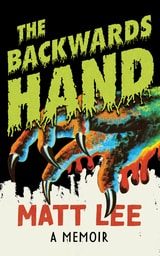
Told in lyric fragments, The Backwards Hand traces Matt Lee’s experience living in the United States for more than thirty years with a rare congenital defect. Weaving in historical research and pop culture references, Lee dissects how the disabled body has been conflated with impurity, worthlessness, and evil. His voice swirls amid those of artists, criminals, activists, and philosophers. With a particular focus on horror films, Lee juxtaposes portrayals of fictitious monsters with the real-life atrocities of the Nazi regime and the American eugenics movement. Through examining his struggles with physical and mental health, Lee confronts his own beliefs about monstrosity and searches for atonement as he awaits the birth of his son.
The Backwards Hand interrogates what it means to be a cripple in a predominantly ableist society, deconstructing how perceptions of disability are—and are not—reflected in art and media.
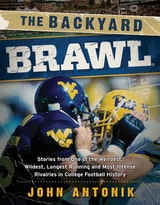
The Backyard Brawl
Stories from One of the Weirdest, Wildest, Longest Running, and Most Instense Rivalries in College Football HistoryJohn Antonik
West Virginia University Press, 2012
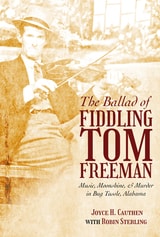
The Ballad of Fiddling Tom Freeman
Music, Moonshine, and Murder in Bug Tussle, AlabamaJoyce H. Cauthen with Robin Sterling
University of Alabama Press, 2026
A raw, firsthand account of feuds, fiddling, moonshining, and survival in a small Alabama town, told by its most colorful chronicler and shaped through careful historical insight.
The Ballad of Fiddling Tom Freeman is a riveting portrait of a forgotten America, drawn from the handwritten memoirs of a bootlegger, fiddler, and chronicler of life in Bug Tussle, Alabama, in the first half of the twentieth century. Today, rural voices are often drowned out by polished narratives, but this book resurrects the unfiltered perspective of a man who lived through—and candidly documented—the chaos and violence in his home place as he shared stories of the large close-knit families who lived there.
Freeman’s storytelling is as wild and tangled as the lives he describes, and author Joyce H. Cauthen, with the assistance of historical researcher Robin Sterling, brings clarity and context to his tales without sanding down their rough edges. The result is a vivid, bottom-up history of a place where lawlessness and loyalty often walked hand in hand.
The Ballad of Fiddling Tom Freeman stands out as a testament to the power of personal narrative. Not just a story about one man, it’s a window into a community shaped by hardship, music, and survival, told in a voice that refuses to be forgotten. This book is essential reading for historians, folklorists, musicians, and anyone drawn to the untamed stories of America’s backroads and backwoods.
The Baltimore Book
New Views of Local HistoryLinda Shopes
Temple University Press, 1993
Baltimore has a long, colorful history that traditionally has been focused on famous men, social elites, and patriotic events. The Baltimore Book is both a history of "the other Baltimore" and a tour guide to places in the city that are important to labor, African American, and women's history. The book grew out of a popular local bus tour conducted by public historians, the People's History Tour of Baltimore, that began in 1982. This book records and adds sites to that tour; provides maps, photographs, and contemporary documents; and includes interviews with some of the uncelebrated people whose experiences as Baltimoreans reflect more about the city than Francis Scott Key ever did.
The tour begins at the B&O Railroad Station at Camden Yards, site of the railroad strike of 1877, moves on to Hampden-Woodbury, the mid-19th century cotton textile industry's company town, and stops on the way to visit Evergreen House and to hear the narratives of ex-slaves. We travel to Old West Baltimore, the late 19th-century center of commerce and culture for the African American community; Fells Point; Sparrows Point; the suburbs; Federal Hill; and Baltimore's "renaissance" at Harborplace. Interviews with community activists, civil rights workers, Catholic Workers, and labor union organizers bring color and passion to this historical tour. Specific labor struggles, class and race relations, and the contributions of women to Baltimore's development are emphasized at each stop.
In the series Critical Perspectives on the Past, edited by Susan Porter Benson, Stephen Brier, and Roy Rosenzweig.
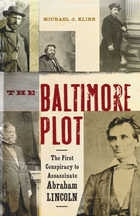
The Baltimore Plot
The First Conspiracy to Assassinate Abraham LincolnMichael J. Kline
Westholme Publishing, 2008
The Complete Story of the First Attempt to Assassinate President Abraham Lincoln
"In a thrilling detective story of conspiracy, treachery and assassination, Michael J. Kline suggests how close the Baltimore plotters came to achieving their goal, and reveals how Lincoln and a few guards outwitted them. Meticulously researched and written with verve, "The Baltimore Plot" takes readers aboard Lincoln's inaugural train for a perilous and unforgettable journey." —James L. Swanson, author of the Edgar Award-winning New York Times bestseller Manhunt: The 12-Day Chase for Lincoln's Killer
On February 11, 1861, the "Lincoln Special" - Abraham Lincoln's private train—began its journey from Springfield, Illinois, to the City of Washington, carrying the president-elect to his inauguration as the sixteenth president of the United States. Considered a "sectional candidate" by the South, and winning the election without the popular vote, Lincoln was so despised that seven states immediately seceded from the Union. Over the next twelve days, Lincoln would speak at numerous stops, including Indianapolis, Columbus, Cleveland, Pittsburgh, Buffalo, Albany, New York, and Philadelphia, expressing his desire to maintain the Union. But as Lincoln made his way east, America's first private detective, Allan Pinkerton, and a separate undercover operation by New York City detectives, uncovered startling evidence of a conspiracy to assassinate Lincoln during his next-to-last stop in Baltimore. Long a site of civil unrest—even Robert E. Lee's father, Henry "Light Horse Harry" Lee, was nearly beaten to death in its streets—Baltimore provided the perfect environment for a strike. The largest city of a border state with secessionist sympathies, Baltimore had been infiltrated by paramilitary groups bent on killing Lincoln, the "Black Republican." The death of the president-elect would, it was supposed, throw the nation into chaos and allow the South to establish a new nation and claim Washington as its capital. Warned in time, Lincoln outfoxed the alleged conspirators by slipping through Baltimore undetected, but at a steep price. Ridiculed by the press for "cowardice" and the fact that no conspirators were charged, Lincoln would never hide from the public again. Four years later, when he sat unprotected in the balcony of Ford's Theatre, the string of conspiracies against his life finally succeeded. One of the great presidential mysteries and long a source of fascination among Lincoln scholars, the Baltimore Plot has never been fully investigated until now. In The Baltimore Plot: The First Conspiracy to Assassinate Abraham Lincoln, Michael J. Kline turns his legal expertise to evaluating primary sources in order to discover the extent of the conspiracy and culpability of the many suspects surrounding the case. Full of memorable characters, including Kate Warne, the first female undercover agent, and intriguing plot twists, the story is written as an unfolding criminal proceeding in which the author allows the reader to determine whether there was a true plot to kill Lincoln and if the perpetrators could have been brought to trial.

The Baneberry Disaster
A Generation of Atomic FalloutLarry C. Johns
University of Nevada Press, 2017
The authors are attorneys from Las Vegas who spent 25 years pursuing a lawsuit for the victims at Baneberry. The story begins in 1971, just after the Baneberry test vented, and takes the reader through the years leading up to the trial, the 41-day trial in 1979, and the multiple appeals following the trial. It discusses the claims and lawsuits filed by others exposed to atomic testing, and the congressional investigations that led to the enactment of the Radiation Exposure Compensation Act in 1990.
The Bank War
Andrew Jackson, Nicholas Biddle, and the Fight for American FinancePaul Kahan
Westholme Publishing, 2022
Late one night in July 1832,Martin Van Buren rushed to the White House where he found an ailing President Andrew Jackson weakened but resolute. Thundering against his political antagonists, Jackson bellowed: “The Bank, Mr. Van Buren, is trying to kill me, but I shall kill it!”With those famous words, Jackson formally declared “war” against the Second Bank of the United States and its president Nicholas Biddle. The Bank of the United States, which held the majority of Federal monies, had been established as a means of centralizing and stabilizing American currency and the economy, particularly during the country’s vulnerable early years. Jackson and his allies viewed the bank as both elitist and a threat to states’ rights. Throughout his first term, Jackson had attacked the bank viciously but failed to take action against the institution. Congress’ decision to recharter the bank forced Jackson to either make good on his rhetoric and veto the recharter or sign the recharter bill and be condemned as a hypocrite.
In The Bank War: Andrew Jackson, Nicholas Biddle, and the Fight for American Finance, historian Paul Kahan explores one of the most important and dramatic events in American political and economic history, from the idea of centralized banking and the First Bank of the United States to Jackson’s triumph, the era of “free banking,” and the creation of the Federal Reserve System. Relying on a range of primary and secondary source material, the book also shows how the Bank War was a manifestation of the debates that were sparked at the Constitutional Convention—the role of the executive branch and the role of the federal government in American society—debates that endure to this day as philosophical differences that often divide the United States.
The Barbaric Counter Revolution
Cause and CureBy W. W. Rostow
University of Texas Press, 1983
In the 1980s, troubled Americans saw interest rates in the United States climb to an alltime high, unemployment grow to over 10 percent, the federal deficit reach near monumental proportions, and the world economy as a whole fall stagnant.
Why did a once booming world economy give way to stagflation? Economist W. W. Rostow finds the roots of the problem in the phenomenon he terms the Barbaric Counter-Revolution—the effort to wring inflation out of the economic system by the rigorous application of a restricted rate of increase in the money supply. This policy was launched by the Carter administration in October 1979, reinforced by President Reagan in mid 1980, and abandoned in August 1982. In the end, it provided the United States with no mechanism for rapid recovery that did not bring with it a return to high interest rates, resumed inflation, and, soon, another recession.
In what he terms a Civilized Synthesis, Rostow sets forth a series of new policies that would permit rapid, sustained growth with inflation under control. He argues that fiscal and monetary policy must be joined by an incomes policy that would gear the rate of increase of wages and salaries to the average rate of increase in productivity. He explores how this could be accomplished within the context of American politics and existing institutions. Finally, Rostow identifies four directions for investment that, together, would yield economic and social benefits.