Results by title
28167 books match the query 'History' and 6372 start with t

The Sloth Lemur's Song
Madagascar from the Deep Past to the Uncertain PresentAlison Richard
University of Chicago Press, 2022
Madagascar is a place of change. A biodiversity hotspot and the fourth largest island on the planet, it has been home to a spectacular parade of animals, from giant flightless birds and giant tortoises on the ground to agile lemurs leaping through the treetops. Some species live on; many have vanished in the distant or recent past. Over vast stretches of time, Madagascar’s forests have expanded and contracted in response to shifting climates, and the hand of people is clear in changes during the last thousand years or so. Today, Madagascar is a microcosm of global trends. What happens there in the decades ahead can, perhaps, suggest ways to help turn the tide on the environmental crisis now sweeping the world.
The Sloth Lemur’s Song is a far-reaching account of Madagascar’s past and present, led by an expert guide who has immersed herself in research and conservation activities with village communities on the island for nearly fifty years. Alison Richard accompanies the reader on a journey through space and time—from Madagascar’s ancient origins as a landlocked region of Gondwana and its emergence as an island to the modern-day developments that make the survival of its array of plants and animals increasingly uncertain. Weaving together scientific evidence with Richard’s own experiences and exploring the power of stories to shape our understanding of events, this book captures the magic as well as the tensions that swirl around this island nation.
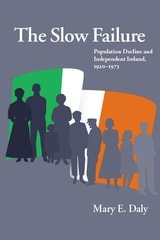
The Slow Failure
Population Decline and Independent Ireland, 1920–1973Mary E. Daly
University of Wisconsin Press, 2006
Today Ireland’s population is rising, immigration outpaces emigration, most families have two or at most three children, and full-time farmers are in steady decline. But the opposite was true for more than a century, from the great famine of the 1840s until the 1960s. Between 1922 and 1966—most of the first fifty years after independence—the population of Ireland was falling, in the 1950s as rapidly as in the 1880s. Mary Daly’s The Slow Failure examines not just the reasons for the decline, but the responses to it by politicians, academics, journalists, churchmen, and others who publicly agonized over their nation’s “slow failure.” Eager to reverse population decline but fearful that economic development would undermine Irish national identity, they fashioned statistical evidence to support ultimately fruitless policies to encourage large, rural farm families. Focusing on both Irish government and society, Daly places Ireland’s population history in the mainstream history of independent Ireland.
Daly’s research reveals how pastoral visions of an ideal Ireland made it virtually impossible to reverse the fall in population. Promoting large families, for example, contributed to late marriages, actually slowing population growth further. The crucial issue of emigration failed to attract serious government attention except during World War II; successive Irish governments refused to provide welfare services for emigrants, leaving that role to the Catholic Church. Daly takes these and other elements of an often-sad story, weaving them into essential reading for understanding modern Irish history

The Slumbering Volcano
American Slave Ship Revolts and the Production of Rebellious MasculinityMaggie Montesinos Sale
Duke University Press, 1997
This comparison of narrative response with written public reaction to the actual revolts allows Sale to investigate the precise manner in which public opinion regarding definitions of liberty evolved over this crucial period of time between the Revolutionary and Civil Wars. Mapping the ways in which unequally empowered groups claimed and transformed statements associated with the discourse of national identity, Sale succeeds in recovering a historically informed sense of the discursive and activist options available to people of another era.
In its demonstration of how the United States has been uniquely shaped by its dual status as both an imperial and a postcolonial power, this study on the discourse of natural rights and national identity in the pre-Civil War United States will interest students and scholars of American studies, African American studies, gender studies, and American history and literature.

The Small Matter of Suing Chevron
Suzana Sawyer
Duke University Press, 2022

The Small Shall Be Strong
A History of Lake Tahoe's Washoe IndiansMatthew S. Makley
University of Massachusetts Press, 2018
Perhaps because the Washoe population has always been small or because it has been more peaceful than other tribal communities, its history has never been published. In The Small Shall Be Strong, Matthew S. Makley demonstrates that, in spite of this lack of scholarly attention, Washoe history is replete with broad significance. The Washoes, for example, gained culturally important lands through the 1887 Dawes Act. And during the 1990s, the tribe sought to ban climbing on one of its most sacred sites, Cave Rock, a singular instance of Native sacred concerns leading to restrictions.
The Small Shall Be Strong illustrates a history and raises a broad question: How might greater scholarly attention to the numerous lesser-studied tribes in the United States compel a rethinking of larger historical narratives?
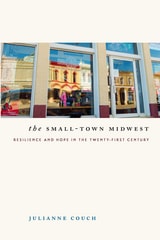
The Small-Town Midwest
Resilience and Hope in the Twenty-First CenturyJulianne Couch
University of Iowa Press, 2016
The people featured live—by choice or circumstances—in one of nine small communities in five states in the Midwest and Great Plains: Iowa, Kansas, Missouri, Nebraska, and Wyoming. Daily they witness people moving out, heading to more urban areas, small businesses closing down, connected infrastructure drying up, entrepreneurs becoming discouraged, and more people thinking about leaving. This is the story we hear in the news, the story told by abandoned farms, consolidated schools, and boarded-up Main Streets.
But it’s not the whole story. As Couch found in her travels throughout the Midwest, many people long to return to these towns, places where they may have deep family roots or where they can enjoy short commutes, familiar neighbors, and proximity to rural and wild places. And many of the residents of small midwestern towns are not just accepting the trend toward urbanization with a sigh. They are betting that the tide of rural population loss can’t go out forever, and they’re backing those bets with creatively repurposed schools, entrepreneurial innovation, and community commitment. From Bellevue, Iowa, to Centennial, Wyoming, the region’s small-town residents remain both hopeful and resilient.

The Smell of Humans
A Memoir of the Holocaust in HungaryErno Szép
Central European University Press, 1994
The Smoke of the Gods
A Social History of TobaccoEric Burns
Temple University Press, 2006

The Snake Fence
Janet Olshewsky
QuakerPress, 2012

The Snodgrass Site of the Powers Phase of Southeast Missouri
James E. Price and James B. Griffin
University of Michigan Press, 1979
The Snyders Mounds and Five Other Mound Groups in Calhoun County, Illinois
David P. Braun, James B. Griffin and Paul F. Titterington
University of Michigan Press, 1982

The Social History of Alcohol and Drugs, volume 35 number 2 (Fall 2021)
The University of Chicago Press
University of Chicago Press Journals, 2021

The Social History of Alcohol and Drugs, volume 36 number 1 (Spring 2022)
The University of Chicago Press
University of Chicago Press Journals, 2022

The Social History of Alcohol and Drugs, volume 36 number 2 (Fall 2022)
The University of Chicago Press
University of Chicago Press Journals, 2022

The Social History of Alcohol and Drugs, volume 37 number 1 (Spring 2023)
The University of Chicago Press
University of Chicago Press Journals, 2023

The Social History of Alcohol and Drugs, volume 37 number 2 (Fall 2023)
The University of Chicago Press
University of Chicago Press Journals, 2023

The Social History of Alcohol and Drugs, volume 38 number 1 (Spring 2024)
The University of Chicago Press
University of Chicago Press Journals, 2024

The Social History of Alcohol and Drugs, volume 38 number 2 (Fall 2024)
The University of Chicago Press
University of Chicago Press Journals, 2024

The Social History of Alcohol and Drugs, volume 39 number 1 (Spring 2025)
The University of Chicago Press
University of Chicago Press Journals, 2025

The Social History of Alcohol and Drugs, volume 39 number 2 (Fall 2025)
The University of Chicago Press
University of Chicago Press Journals, 2025

The Social History of Alcohol and Drugs, volume 40 number 1 (Spring 2026)
The University of Chicago Press
University of Chicago Press Journals, 2026

The Social History of Alcohol and Drugs, volume 40 number 2 (Fall 2026)
The University of Chicago Press
University of Chicago Press Journals, 2026

The Social Life of Biometrics
George C Grinnell
Rutgers University Press, 2020
The Social Life of Criticism
Gender, Critical Writing, and the Politics of BelongingKimberly J. Stern
University of Michigan Press, 2016
This engaging study begins by looking at the eighteenth century, when critical writing started to assume the institutional and generic structures we associate with it today, and examines a series of case studies that illuminate how women writers engaged with the forms of intellectual sociability that defined nineteenth-century criticism—including critical dialogue, the club, the salon, and the publishing firm. In doing so, it clarifies the fascinating rhetorical and political debates surrounding the figure of the female critic and charts how women writers worked both within and against professional communities. Ultimately, Stern contends that gender was a formative influence on critical practice from the very beginning, presenting the history of criticism as a history of gender politics.
While firmly grounded in literary studies, The Social Life of Criticism combines an attention to historical context with a deep investment in feminist scholarship, social theory, and print culture. The book promises to be of interest not only to professional academics and graduate students in nineteenth-century literature but also to scholars in a wide range of disciplines, including literature, intellectual history, cultural studies, gender theory, and sociology.
The Social Life of Indianism
Politics and Indigeneity in Twenty-First-Century BoliviaTathagatan Ravindran
University of Texas Press, 2025
A sophisticated analysis of an influential Indigenous political ideology.
When the political ideology known as “Indianism” developed in Bolivia in the 1960s, it was premised on a rejection of Bolivian nationalism. Over the ensuing decades, however, it underwent several mutations as it moved out of a close circle of intellectuals to grip the urban masses that brought Evo Morales—the first Indigenous president—to power in 2006.
The Social Life of Indianism offers a fresh perspective by examining Bolivian Indigenous politics through the lens of political ideology. Through an ethnographic study of Indianism in the city of El Alto, Tathagatan Ravindran shows how canonical Indianism—the original ideology that rejects Bolivia as enslaver of the Indian nation—provided philosophical ballast for exponents of a more popular folk Indianism that accommodates the Bolivian state and pursues Indigenous empowerment within it. Synthesizing approaches from several disciplines, Ravindran demonstrates how canonical Indianism was not refuted or supplanted; it refracted, in the broader public, into a new common sense. A sophisticated analysis of a complex political landscape, The Social Life of Indianism brings much-needed nuance to one of the most prominent forms of Indigenous ideology and offers a unique framework for analyzing political ideologies across the contemporary world.

The Social Order of a Frontier Community
Jacksonville, Illinois, 1825-70Don Harrison Doyle
University of Illinois Press, 1978
"A well-conceived and well-argued book that is essential reading for those interested in the study of community building." --Journal of American History
"This study is important for both frontier and urban historians. It is well written, thoroughly documented, and illustrated in an informative manner. One may hope that future studies of other nineteenth century American towns will be completed with the competence and style of this excellent volume." --The Old Northwest
"For one who has lived in Jacksonville as I have, reading this book stirred fond memories and answered lingering questions about this town. . . . As a capsule study of an unusual Illinois community renowned for its past, Doyle's book makes for fascinating reading." --Civil War History
The Social Organization of the Western Apache
Grenville Goodwin; Preface by Keith H. Basso
University of Arizona Press, 1969
The Social Organization of the Western Apache is still one of the most comprehensive descriptions of the social life of an American Indian tribe. Grenville Goodwin knew the Western Apache better than any other ethnographer who ever lived. And he wrote about them from the conviction that his knowledge was important—not only for specialists interested in the tribes of the Southwest, but for all anthropologists concerned with the structure and operation of primitive social systems.

The Social Philosophy of Jane Addams
Maurice Hamington
University of Illinois Press, 2009
Although there has been a resurgence of scholarly interest in Jane Addams, much of the recent literature has dwelt more on her extraordinary and pioneering life than on the philosophical contribution of her twelve books and hundreds of published articles. This study is the first book-length work to focus entirely on Addams as a philosopher, a moral and political theorist who was steeped in the classic American Pragmatist tradition but who transcended that tradition to emphasize the significance of gender, race, and class.
Exploring Addams's contribution to epistemology, ethics, and feminist theory, Maurice Hamington sets the intellectual framework for Addams's social philosophy by discussing her influences, her particular brand of feminism, and finally her unique analytical perspective, which she described as "sympathetic knowledge." The book also investigates how Addams applied her social philosophy to issues of politics, women's rights, prostitution, business ethics, education, and religion.
Addams's philosophical work remains relevant to current feminist ethical discourse, and The Social Philosophy of Jane Addams leads to an understanding of a cosmopolitan theorist who eschewed ideological stances in favor of intermediary steps toward social progress.

The Social Politics of Medieval Diplomacy
Anglo-German Relations (1066-1307)Joseph P. Huffman
University of Michigan Press, 2000
The Social Roots Of Basque Nationalism
Alfonso Pérez-Agote
University of Nevada Press, 2006
Translated by Cameron Watson and William A. Douglass. Foreword by William A. Douglass. The Basque people have preserved their ethnic identity and sense of themselves as a separate community despite centuries of repression, diaspora, and economic and social upheaval—one of the most remarkable achievements in the history of the phenomenon we call nationalism. In The Social Roots of Basque Nationalism, sociologist Alfonso Pérez-Agote addresses the social mechanisms that Basques employed to sustain their ethnic identity under the Franco Regime and demonstrates how persecution actually encouraged the extension of Basque nationalist consciousness. He also reveals how state political pressure radicalized one element of the Basque-nationalist movement, resulting in the formation of ETA, an armed terrorist wing that itself became a mechanism for extending nationalist consciousness. Finally, he examines the subsequent changes in Basque nationalism following Franco’s death and the extension of democracy in Spain, which resulted in the institutionalization of the movement into an autonomous political power. This work is based in part on interviews and polls with informants in the Basque Country and abroad, eliciting such data as the role that family, education, social contacts, and religious environment play in the evolution of political attitudes; the place of violence in the Basque world view and contemporary political culture; regional variations in Basque nationalism; and the factors that contributed to the resilience of Basque nationalism in adapting to new historical conditions. The result is a sophisticated discussion of the various ways in which Basque social reality is constituted and how this reality helps to create political culture. Because Pérez-Agote situates his discussion within the broader frameworks of ethnic identity, group dynamics, and the nature of nationalism, the book makes a significant contribution not only to our understanding of the Basques but to the broader study of the evolution of nationalism and the nation-state, political violence, and the complicated transition of any society from dictatorship to democracy.
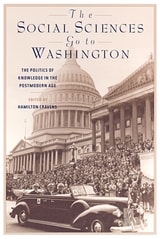
The Social Sciences Go to Washington
The Politics of Knowledge in the Postmodern AgeEdited by Hamilton Cravens
Rutgers University Press, 2003
What happens when the allegedly value-free social sciences enter the national political arena? In The Social Sciences Go to Washington, scholars examine the effects of the massive influx of sociologists, demographers, economists, educators, and others to the federal advisory process in the postwar period. Essays look at how these social scientists sought to change existing policies in welfare, public health, urban policy, national defense, environmental policy, and science and technology policy, and the ways they tried to influence future policies.
Policymakers have been troubled that followers of postmodernism have questioned the legitimacy of scientific and political authority to speak for the desires of social groups. As the social sciences increasingly become expressions of individual preferences, the contributors ask, how can they continue to be used to set public policy for us all?
This collection is a useful resource for anyone studying the relationship between science and the government in the postwar years.

The Social World of Batavia
Europeans and Eurasians in Colonial IndonesiaJean Gelman Taylor
University of Wisconsin Press, 2009
Original in its focus on gender and use of varied sources—travelers’ accounts, newspapers, legal codes, genealogical data, photograph albums, paintings, and ceramics—The Social World of Batavia, first published in 1983, forged new paths in the study of colonial society. In this second edition, Gelman offers a new preface as well as an additional chapter tracing the development of these themes by a new generation of scholars.

The Social Worlds of Nineteenth-Century Chamber Music
Composers, Consumers, CommunitiesMarie Sumner Lott
University of Illinois Press, 2018
Marie Sumner Lott examines the music available to musical consumers in the nineteenth century, and what that music tells us about their tastes, priorities, and activities. Her social history of chamber music performance places the works of canonic composers such as Schubert, Brahms, and Dvoøák in relation to lesser-known but influential peers. The book explores the dynamic relationships among the active agents involved in the creation of Romantic music and shows how each influenced the others' choices in a rich, collaborative environment. In addition to documenting the ways companies acquired and marketed sheet music, Sumner Lott reveals how the publication and performance of chamber music differed from that of ephemeral piano and song genres or more monumental orchestral and operatic works. Several distinct niche markets existed within the audience for chamber music, and composers created new musical works for their use and enjoyment.
Insightful and groundbreaking, The Social Worlds of Nineteenth-Century Chamber Music revises prevailing views of middle-class influence on nineteenth-century musical style and presents new methods for interpreting the meanings of musical works for musicians both past and present.

The Social and Political Life of Latin American Infrastructures
Edited by Jonathan Alderman and Geoff Goodwin
University of London Press, 2022
From roads, railways, statues, and bridges, infrastructure provides a unique lens through which to view our own national histories and societies. Serving as an important conduit between individuals and the state, infrastructure can help mediate citizenship, reshape social relations between people both within and across communities, and has the capacity to underpin—or indeed, undermine—nation-building.
Over the last century, infrastructure has transformed Latin America. Roads, railways, and airports have increased connectivity between spaces, peoples, and markets. Cables, switches, and tunnels have connected households to electricity grids, water systems, and digital technology. Public buildings, parks, and monuments have reshaped towns and cities and emerged as sites to construct and contest citizenship. Infrastructure has been welcomed and celebrated in Latin America, but it has also been resisted and destroyed.
Based on recent, original research, the essays in this collection cover a range of pressing infrastructural considerations, including sustainability, water conflict, extractive mining, and public housing in Brazil, Chile, Cuba, Colombia, Ecuador, and Mexico to better understand how infrastructure has reshaped Latin America over the past century.

The Socialist Party of Argentina, 1890–1930
By Richard J. Walter
University of Texas Press, 1977
In the early part of the twentieth century, Argentina's Socialist Party became the largest and most effective socialist organization in Latin America. Richard J. Walter's interpretive study begins with the party's origins in the 1890s, traces its development through 1912, and then offers a comprehensive analysis of its activities and programs during the almost two decades of civilian, democratic government that ended with the military coup of 1930. His aim has been to provide a detailed case study of a Latin American political party within a specific historical context.
The work gives particular attention to the nature of party leadership, internal party organization, attempts to win the support of the Argentine working class, party activities in national elections and the National Congress, and internal disputes and divisions. In discussing these topics, Walter draws heavily on government documents, including national and municipal censuses, ministerial reports, and the Argentine Congressional Record. He also makes extensive use of national and party newspapers and journals, political memoirs, and collections of essays by party leaders.
Walter concludes that the party enjoyed relative electoral and legislative success because of efficient organization, capable leadership, and specific, well-reasoned programs. On the other hand, it failed to create a firm working-class base or to extend its influence much beyond Buenos Aires, mainly because of its inability to relate adequately to the needs of the proletariat and to the growth of nationalist sentiment. The analysis of these successes and failures also provides an important background for understanding the rise to power of Juan Perón and Peronism.

The Socialist Way of Life in Siberia
Transformation in BuryatiaMelissa Chakars
Central European University Press, 2014
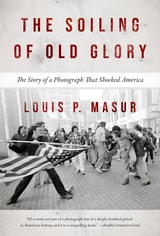
The Soiling of Old Glory
The Story of a Photograph That Shocked AmericaLouis P. Masur
Brandeis University Press, 2024
In 1976, Boston was bitterly divided over a court order to desegregate its public schools. Plans to bus students between predominantly white and Black neighborhoods stoked backlash and heated protests. Photojournalist Stanley Forman was covering one such demonstration at City Hall when he captured an indelible image: a white protester attacking a Black attorney with the American flag. A second white man grabs at the victim, appearing to assist the assailant.
The photo appeared in newspapers across the nation and went on to win the Pulitzer Prize. In The Soiling of Old Glory, esteemed historian Louis P. Masur reveals what happened the day of the assault and the ways these events reverberated long afterward. He interviews the men involved: Forman, who took the photo; Ted Landsmark, a Black, Yale-educated attorney and an activist; Joseph Rakes, the white protester lunging with the flag, a disaffected student; and Jim Kelly, a local politician who opposed busing, but who helped Landsmark to his feet after protesters knocked him to the ground. The photo, Masur discovers, holds more complexities than initially meet the eye. The flag never made contact with the victim, for example, and Kelly was attempting to protect Landsmark, not hurt him.
Masur delves into the history behind Boston’s efforts to desegregate the schools and the anti-busing protests that shook the city. He examines photography’s power to move, inform, and persuade us, as well as the assumptions we each bring to an image as viewers. And he delves into the flag, to explore how other artists and photographers have shaped, bolstered, or challenged its patriotic significance.
Gripping and deeply researched, The Soiling of Old Glory shows how a disturbing event, frozen on a film, impacted Boston and the nation. In an age of renewed calls for visual literacy and disagreements about the flag’s meaning, Masur’s history, now updated with a new foreword by Ted Landsmark and a new preface by the author, is as relevant as ever.
The Sola Valley and the Monte Albán State
A Study of Zapotec Imperial ExpansionAndew K. Balkansky
University of Michigan Press, 2002
The Soldiers Fell Like Autumn Leaves
The Battle of the Wabash, the United States' Greatest Defeat in the Wars Against Indigenous PeoplesRick M. Schoenfield
Westholme Publishing, 2026
The Soldiers Fell Like Autumn Leaves: The Battle of the Wabash, the United States’ Greatest Defeat in the Wars Against Indigenous Peoples by Rick M. Schoenfield places this important war into its cultural, racial, economic, and political context. For the first time, the ecological impact is explored, for at stake in the clash between Woodland Native Americans and white, agrarian settlement, was the fate of a vast forest eco-system. The issue echoes today in the debate over climate change, deforestation, and indigenous control of forest habitats. Based on primary sources, some of which are consulted here for the first time, including a newly discovered muster roll and the recent archaeological study of the battlefield, the author provides the most accurate description of the battle while capturing the drama of what occurred. He also critically examines the information gathering,planning, and tacticsof both the Maumee Confederation and the United States, from the conception of the campaign through the battlefield decisions. By skillfully weaving together the disparate but related parts of the larger history of this battle,The Soldiers Fell Like Autumn Leaves allows the reader to better understand the motivations and long-term consequences of the war against Native peoples in the Americas.

The Soldiers of Fort Mackinac
An Illustrated HistoryPhil Porter
Michigan State University Press, 2018

The Solemn Sentence of Death
Capital Punishment in ConnecticutLawrence B. Goodheart
University of Massachusetts Press, 2011

The Song Is Over
A Jewish Girl in DresdenHenny Brenner
University of Alabama Press, 2010

The Sonic Episteme
Acoustic Resonance, Neoliberalism, and BiopoliticsRobin James
Duke University Press, 2019

The Sonnets of Rainer Maria Rilke
Rainer Maria Rilke
St. Augustine's Press, 2021
In an expanded collection of Rilke’s sonnets, Rick Anthony Furtak not only makes this lyrical masterpiece accessible to the English reader, but he proves himself a master of sorts as well. His introduction that elaborates on Rilke’s marriage of vision and voice, intention and enigma, haunted companionship and abandonment is a stand-alone marvel for the reader. Furtak’s praised translation of Sonnets to Orpheus (University of Chicago Press, 2008) is surpassed in this much broader collection of verse that also includes the original German text. It is Furtak’s great achievement that Rilke resonates with the contemporary reader, who uncertain and searching wants to believe that the vision of existence can mirror much more than his own consciousness. In his feat of rendering Rilke in English, contextualizing the philosophical meanings of verse, and presenting literary romanticism, Furtak provides a formidable contribution to the vindication of true poetic voice.

The Sonoran Desert
Its Geography, Economy, and PeopleRoger Dunbier
University of Arizona Press, 1968
Although the significance of geographic regionalism is implicit throughout this study, no attempt is made to show any overriding unity at work, geographical or otherwise, welding together a "desert region." Instead the desert acts as a stage for social drama in which drought and extreme heat provide the essential backcloth. The scarcity of water and man's inability to grow crops without irrigation have not, indeed, changed with time, and only constant reference to this immutable factor can give meaning to the evolution of human activities within the desert.

The Sons of Gunshooter
A Navajo Resistance StoryDorothy Denetclaw and Matt Fitzsimons
University of Arizona Press, 2026
In 1919, the brother of one of the West’s most famous Indian traders was shot to death in a remote corner of the Navajo Nation.
Part history, part true crime, The Sons of Gunshooter reexamines the killing and subsequent murder trial, while simultaneously embedding the story in a much larger saga of colonization and resistance. The result is a book that’s sweeping in its scope and surgical in its approach. Rewinding the clock to 1868, the authors follow the intertwining paths of two families to offer a riveting, deeply personal account that has been hailed as “a new way of doing historiography.”
One of the authors is a descendant of participants in the case; the other is an investigative journalist. By merging Diné oral traditions with archival evidence, they succeed in upending one false narrative after another.

The Sons of Westwood
John Wooden, UCLA, and the Dynasty That Changed College BasketballJohn Matthew Smith
University of Illinois Press, 2013
The Sons of Westwood tells the story of the most significant college basketball program at a pivotal period in American cultural history. It weaves together a story of sports and politics in an era of social and cultural upheaval, a time when college students and college athletes joined the civil rights movement, demonstrated against the Vietnam War, and rejected the dominant Cold War culture. This is the story of America's culture wars played out on the basketball court by some of college basketball's most famous players and its most memorable coach.

The Sorcerer's Apprentice
Picasso, Provence, and Douglas CooperJohn Richardson
University of Chicago Press, 2001

The Sorcery of Color
Identity, Race, and Gender in BrazilElisa Larkin Nascimento
Temple University Press, 2009
Originally published in 2003 in Portuguese, The Sorcery of Color argues that there are longstanding and deeply-rooted relationships between racial and gender inequalities in Brazil. In this pioneering book, Elisa Larkin Nascimento examines the social and cultural movements that have attempted, since the early twentieth century, to challenge and eradicate these conjoined inequalities.
The book's title describes the social sleight-of-hand that disguises the realities of Brazilian racial inequity. According to Nascimento, anyone who speaks of racism—or merely refers to another person as black—traditionally is seen as racist. The only acceptably non-racist attitude is silence. At the same time, Afro-Brazilian culture and history have been so overshadowed by the idea of a general "Brazilian identity" that to call attention to them is also to risk being labeled racist.
Incorporating leading international scholarship on Pan Africanism and Afrocentric philosophy with the writing of Brazilian scholars, Nascimento presents a compelling feminist argument against the prevailing policy that denies the importance of race in favor of a purposefully vague concept of ethnicity confused with color.
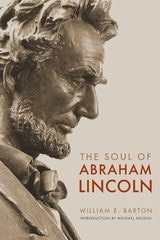
The Soul of Abraham Lincoln
William E. Barton. Introduction by Michael Nelson
University of Illinois Press, 2005
Modern secularists have been reluctant to recognize Abraham Lincoln's deep spirituality, in spite of the fact that he was often known as "Father Abraham" and has been described as one of the most deeply religious presidents the country has ever seen. Yet for all of his familiarity with the Bible, his invocation of Providence, and of the Almighty, he did not actively participate in a church or lend his name and authority to a denomination.
After more than fifty years of hagiographic and contradictory accounts of Abraham Lincoln's life, William Barton stepped boldly into the bedlam of claims and counterclaims about Lincoln's religion. Armed with an enormous collection of Lincoln materials and his own strict evidentiary rules, Barton worked to avoid partisan politicking over Lincoln's legacy and instead to simply "lay bare the facts."
To enable a better examination of the vexed questions surrounding Lincoln's faith and religious principles, Barton gathered Lincoln's most important writing and speeches about religion, and topically and chronologically assembled testimonies by his friends, family, and associates, about the most important and most debated issues. This volume, Barton's first and most important work on Lincoln, is introduced by Michael Nelson who provides a history of the literature on Lincoln's religion, the historical context of Barton's writing, and the details of the method that made Barton's approach to this American icon such a distinctive success.