Results by title
18284 books match the query 'United States' and 234 start with u
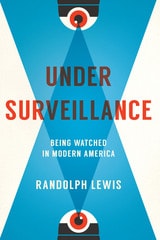
Under Surveillance
Being Watched in Modern AmericaBy Randolph Lewis
University of Texas Press, 2017
Never before has so much been known about so many. CCTV cameras, TSA scanners, NSA databases, big data marketers, predator drones, “stop and frisk” tactics, Facebook algorithms, hidden spyware, and even old-fashioned nosy neighbors—surveillance has become so ubiquitous that we take its presence for granted. While many types of surveillance are pitched as ways to make us safer, almost no one has examined the unintended consequences of living under constant scrutiny and how it changes the way we think and feel about the world. In Under Surveillance, Randolph Lewis offers a highly original look at the emotional, ethical, and aesthetic challenges of living with surveillance in America since 9/11.
Taking a broad and humanistic approach, Lewis explores the growth of surveillance in surprising places, such as childhood and nature. He traces the rise of businesses designed to provide surveillance and security, including those that cater to the Bible Belt’s houses of worship. And he peers into the dark side of playful surveillance, such as eBay’s online guide to “Fun with Surveillance Gadgets.” A worried but ultimately genial guide to this landscape, Lewis helps us see the hidden costs of living in a “control society” in which surveillance is deemed essential to governance and business alike. Written accessibly for a general audience, Under Surveillance prompts us to think deeply about what Lewis calls “the soft tissue damage” inflicted by the culture of surveillance.
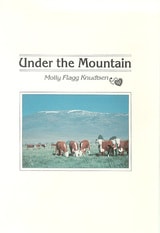
Under The Mountain
Molly Flagg Knudtsen
University of Nevada Press, 1982
This collection of vignettes about life in Central Nevada is much more than a historical document. According to author Molly Knudtsen, “These are the stories neighbors and families tell, where fact grows just a little larger than life. This is the stuff of legend.” The book focuses on a time when splendorous houses decorated the windswept valleys of Central Nevada; where fearless, stouthearted men and women braved the elements to survive and seek their fortune; and when people who loved the land clung to it and gave it a character all its own. These tales capture the spirit and folklore of early-day Central Nevada and illustrate the effect on its present-day inhabitants. Molly Knudtsen shares the experience of riding horseback through some of the great archaeological finds of the valley. She divulges the secret of converting flour, yeast, and potato water into a perfect loaf of bread. And through colorful anecdotes, she passes along the legendary accounts of Colonel Dave Buel.
Under a Bad Sign
Criminal Self-Representation in African American Popular CultureJonathan Munby
University of Chicago Press, 2011
What accounts for the persistence of the figure of the black criminal in popular culture created by African Americans? Unearthing the overlooked history of art that has often seemed at odds with the politics of civil rights and racial advancement, Under a Bad Sign explores the rationale behind this tradition of criminal self-representation from the Harlem Renaissance to contemporary gangsta culture.
In this lively exploration, Jonathan Munby takes a uniquely broad view, laying bare the way the criminal appears within and moves among literary, musical, and visual arts. Munby traces the legacy of badness in Rudolph Fisher and Chester Himes’s detective fiction and in Claude McKay, Julian Mayfield, and Donald Goines’s urban experience writing. Ranging from Peetie Wheatstraw’s gangster blues to gangsta rap, he also examines criminals in popular songs. Turning to the screen, the underworld films of Oscar Micheaux and Ralph Cooper, the 1970s blaxploitation cycle, and the 1990s hood movie come under his microscope as well. Ultimately, Munby concludes that this tradition has been a misunderstood aspect of African American civic life and that, rather than undermining black culture, it forms a rich and enduring response to being outcast in America.
Under the Campus, the Land
Anishinaabe Futuring, Colonial Non-Memory, and the Origin of the University of MichiganAndrew Herscher
University of Michigan Press, 2025
Under the Campus, the Land narrates the University of Michigan’s place in both Anishinaabe and settler history, tracing the university’s participation in the colonization of Anishinaabe homelands, Anishinaabe efforts to claim their right to an education, and the university’s history of disavowing, marginalizing, and minimizing its responsibilities and obligations to Anishinaabe people. Continuing the public conversations of the same name on U-M’s campus in 2023, Under the Campus, the Land provides a new perspective on the relationship between universities and settler colonialism in the US. Members of the U-M community, scholars of Midwest history, and those interested in Indigenous studies will find this book compelling.
Under the Cover of Chaos
Trump and the Battle for the American RightLawrence Grossberg
Pluto Press, 2018
Lawrence Grossberg shows that the truth is bigger and more frightening. Locating Trumpism in the long struggle among traditional conservatism, the new right and the reactionary right, he suggests that the chaos is far more significant and strategic ... and dangerous. Taking the arguments of the reactionary right seriously, he projects a possible, nightmarish future: a cultural nationalism governed by a popular corporatocracy.
He lays bare how contemporary political struggles are being shaped by a changing national landscape of moods and feelings, marked by a growing absolutism of judgement and belief, and new forms of anxiety, alienation and narcissism.s—and lays out a possible nightmare future: a vision of a political system controlled by corporate interests, built on a deliberate dismantling of modern politics.
Under the Knife
Cosmetic Surgery, Boundary Work, and the Pursuit of the Natural FakeSamantha Kwan and Jennifer Graves
Temple University Press, 2020
Samantha Kwan and Jennifer Graves reveal how women negotiate their “unnatural”—but hopefully (in their view) natural-looking—surgically-altered bodies. Based on in-depth interviews with forty-six women who underwent cosmetic surgery to enhance their appearance, the authors investigate motivations for surgery as well as women’s thoughts about looking natural after the procedures. Under the Knife dissects the psychological and physical strategies these women use to manage the expectations, challenges, and disappointments of cosmetic surgery while also addressing issues of agency and empowerment. It shows how different cultural intersections can produce varied goals and values around body improvement.
Under the Knife highlights the role of deep-seated yet contradictory gendered meanings about women’s bodies, passing, and boundary work. The authors also consider traditional notions of femininity and normalcy that trouble women’s struggle to preserve an authentic moral self.
Under the Radar
Cancer and the Cold WarLeopold, Ellen
Rutgers University Press, 2008
In Under the Radar, Ellen Leopold shows how nearly every aspect of our understanding and discussion of cancer bears the imprint of its Cold War entanglement. The current biases toward individual rather than corporate responsibility for rising incidence rates, research that promotes treatment rather than prevention, and therapies that can be patented and marketed all reflect a largely hidden history shaped by the Cold War. Even the language we use to describe the disease, such as the guiding metaphor for treatment, "fight fire with fire," can be traced back to the middle of the twentieth century.
Writing in a lucid style, Leopold documents the military, governmental, industrial, and medical views of radiation and atomic energy to examine the postwar response to cancer through the prism of the Cold War. She explores the role of radiation in cancer therapies today, using case studies and mammogram screening, in particular, to highlight the surprising parallels. Taking into account a wide array of disciplines, this book challenges our understanding of cancer and how we approach its treatment.
- Examines the postwar response to cancer through the prism of the Cold War
- Goes beyond medical science to look at the influence of Cold War policies on the way we think about cancer today
- Links the experience of postwar cancer patients with the broader evolution of what have become cancer industries
- Traces the history of human-made radiation as a state-sponsored environmental toxin

Under the Rug
The (Not So) Hidden History of Men and Their HairpiecesWendy A. Woloson
University of Chicago Press, 0
False hair can reveal honest truths—about the past, gender, identity, and the stories men tell about themselves.
History has seen its share of famous toupees. John Wayne’s. Frank Sinatra’s. Humphrey Bogart’s. Hairpieces can reveal a wearer’s inner motivations, reinforce gender norms, cause embarrassment, and even provoke disgust. Although false, they can create real meaning.
In Wendy A. Woloson’s hands, the toupee helps us see how men have understood themselves and fashioned their identities over time. Starting in the late eighteenth century, when men stopped wearing white powdered wigs, and moving to the 1920s, when toupees could be easily mass-produced, Woloson tells the story of the “Toupee Age.” She investigates why balding was considered such a problem in the first place, how hair became entangled with anxieties about aging, and the ways that looking old posed a threat to manhood. She details the bear’s grease pomades, brush-on dyes, elixirs, false whiskers, and hairpieces that were created to meet shifting notions of masculinity and style. Under the Rug also introduces readers to the people who styled and traded hair, made wigs, and hawked baldness cures. Drawing on business records, advertisements, graphic images, and a host of other primary sources, Woloson incisively explains how such trades seeded fears about thinning hair and sold men solutions. This vanity project continues today, as hair transplants, medications to stimulate hair growth, and Toupee TikTok encourage people to reinvent the way they’re seen—by others and themselves.

Under the Shadow of Napoleon
The US Army’s Doctrine, Education, and Theory of Victory from 1814 to 1941. Second EditionMichael A. Bonura
University of North Texas Press, 2026
Under the Sun
A Black Journalist's JourneyHarold Jackson
University of Alabama Press, 2025
A determined journalist’s account of rising to Pulitzer Prize–winning heights
Under the Sun: A Black Journalist’s Journey is Harold Jackson’s powerful memoir that chronicles his path from a Birmingham, Alabama, housing project in the 1950s and ’60s to becoming a Pulitzer Prize–winning journalist. Growing up in the segregated South, Jackson didn’t see a writing career as feasible, especially with the financial struggles his family faced after his father’s death. However, his freshman English teacher’s encouragement set him on a course that would change his life.
Jackson’s journey began in high school, where he became one of the first Black students in the University of Alabama’s summer journalism workshop. It was there that he discovered his unique voice as a writer, setting the stage for a remarkable forty-five-year career as a newspaper writer and editor. Despite the pervasive racial prejudices of the time, Jackson learned to navigate the complexities of being Black in a predominantly white profession. He reflects on the duality of living as a Black person in America, a concept W. E. B. Du Bois described as “double consciousness,” and the ways journalism allowed Jackson to connect with people from all walks of life.
Through his work at prominent news venues such as the Birmingham Post-Herald, United Press International, the Philadelphia Inquirer, the Birmingham News, the Baltimore Sun, and the Houston Chronicle, Jackson’s story is not just one of professional success but also of personal growth and understanding. Under the Sun is a testament to his resilience, his ability to see past racial barriers, and his unwavering commitment to giving a voice to those who need it most.
Undercover Asian
Multiracial Asian Americans in Visual CultureLeiLani Nishime
University of Illinois Press, 2014

Undercover Reporting
The Truth About DeceptionBrooke Kroeger, Foreword by Pete Hamill
Northwestern University Press, 2012
In her provocative book, Brooke Kroeger argues for a reconsideration of the place of oft-maligned journalistic practices. While it may seem paradoxical, much of the valuable journalism in the past century and a half has emerged from undercover investigations that employed subterfuge or deception to expose wrong. Kroeger asserts that undercover work is not a separate world, but rather it embodies a central discipline of good reporting—the ability to extract significant information or to create indelible, real-time descriptions of hard-to-penetrate institutions or social situations that deserve the public’s attention. Together with a companion website that gathers some of the best investigative work of the past century, Undercover Reporting serves as a rallying call for an endangered aspect of the journalistic endeavor.

Undercurrents
From Oceanographer to University PresidentJohn V. Byrne
Oregon State University Press, 2018
As president of OSU, John Byrne used the lessons learned in industry and government to guide the university through a period of turbulence caused by severe state budget restrictions. During this period of economic contraction, OSU continued under Byrne’s leadership to grow in programs, facilities, and external funding. Byrne was one of the first to introduce Total Quality Management techniques to higher education. He emphasized the importance of international education and was a supporter of significant academic reform in higher education.
While focusing on his professional career, Byrne’s memoir also shares personal stories of a childhood and youth shaped by the Great Depression and World War II. Undercurrents demonstrates on every page the curiosity, intellect, and humanity that made John Byrne successful as a scientist, educator, and administrator. Anyone pursuing a career in science or academia, and anyone interested in the history and legacy of land grant universities will welcome this richly detailed and warmly written account of Byrne’s career.
Undercut
Cut Glass in Working-Class Life During the Long Gilded AgeJoseph Larnerd
University of Delaware Press, 0
How did workers experience cut glass during its cultural heyday? Rather than privilege the stories of factory owners or wealthy consumers, Undercut: Cut Glass in Working-Class Life During the Long Gilded Age refracts the medium’s history through the labors required to make and maintain these dazzling artifacts as well as popular representations of this work, from demonstrations at world's fairs to images of domestic workers with finished pieces in their charge. Cut glass and the many manifestations of public interest in its labors offered working people, too, occasions for self-reflection and, perhaps, self-realization. Foregrounding their lives, Undercut offers a multifaceted social art history of a once-popular genre of decorative art that cuts across class, gender, and race.

Underdogs
Social Deviance and Queer TheoryHeather Love
University of Chicago Press, 2021
The sociology of “social deviants” flourished in the United States at midcentury, studying the lives of outsiders such as homosexuals, Jews, disabled people, drug addicts, and political radicals. But in the following decades, many of these downcast figures would become the architects of new social movements, activists in revolt against institutions, the state, and social constraint. As queer theory gained prominence as a subfield of the humanities in the late 1980s, it seemed to inherit these radical, activist impulses—challenging not only gender and sexual norms, but also the nature of society itself.
With Underdogs, Heather Love shows that queer theorists inherited as much from sociologists as they did from activists. Through theoretical and archival work, Love traces the connection between midcentury studies of deviance and the antinormative, antiessentialist field of queer theory. While sociologists saw deviance as an inevitable fact of social life, queer theorists embraced it as a rallying cry. A robust interdisciplinary history of the field, Underdogs stages a reencounter with the practices and communities that underwrite radical queer thought.
Underground Movements
Modern Culture on the New York City SubwaySunny Stalter-Pace
University of Massachusetts Press, 2013
Writers and artists took up questions that originated in the sphere of urban planning to explore how underground movement changed the ways people understand the city. Modern poets envisioned the subway as a space of literary innovation; playwrights and fiction writers used it to gauge the consequences of migration and immigration; and essayists found that it underscored the fragile relationship between urban development and memory. Even today, the symbolic associations forged by these early texts continue to influence understanding of the cultural significance of the subway and the city it connects.
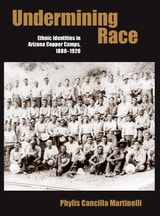
Undermining Race
Ethnic Identities in Arizona Copper Camps, 1880–1920Phylis Cancilla Martinelli
University of Arizona Press, 2009
Phylis Martinelli argues that the case of Italians in Arizona provides insight into “in between” racial and ethnic categories, demonstrating that the categorizing of Italians varied from camp to camp depending on local conditions—such as management practices in structuring labor markets and workers’ housing, and the choices made by immigrants in forging communities of language and mutual support. Italians—even light-skinned northern Italians—were not considered completely “white” in Arizona at this historical moment, yet neither were they consistently racialized as non-white, and tactics used to control them ranged from micro to macro level violence.
To make her argument, Martinelli looks closely at two “white camps” in Globe and Bisbee and at the Mexican camp of Clifton-Morenci. Comparing and contrasting the placement of Italians in these three camps shows how the usual binary system of race relations became complicated, which in turn affected the existing race-based labor hierarchy, especially during strikes. The book provides additional case studies to argue that the biracial stratification system in the United States was in fact triracial at times. According to Martinelli, this system determined the nature of the associations among laborers as well as the way Americans came to construct “whiteness.”
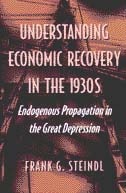
Understanding Economic Recovery in the 1930s
Endogenous Propagation in the Great DepressionFrank G. Steindl
University of Michigan Press, 2003
Providing strong evidence for the role of the quantity of money in the revitalization, the author ultimately concludes that the seemingly robust monetary explanation of the recovery is deficient, as is any that relies principally on aggregate demand impulses. An accurate understanding of this phenomenon must account for the inherent tendency of the economy to revert to its long-run high employment trend.
Frank G. Steindl is Regents Professor of Economics and Ardmore Professor of Business Administration, Oklahoma State University.
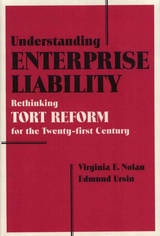
Understanding Enterprise Liability
Rethinking Tort Reform for the Twenty-First CenturyVirginia Nolan and Edmund Ursin
Temple University Press, 1994
In recent years critics have assailed the cost, inefficiency, and unfairness of American tort law, including products liability and medical malpractice. Yet victims of accidental injury who look to the tort system for deserved compensation often find it a formidable obstacle. Those who seek to reform tort law find legislatures, particularly the United States Congress, paralyzed by the clash of powerful special interest groups.
Understanding Enterprise Liability sheds new light on the raging tort reform debate by challenging its fundamental assumptions. Offering historical insights and fresh perspectives on the politics and possibilities for sensible reform, Virginia Nolan and Edmund Ursin pragmatically assess alternative routes to a workable, balanced, and equitable system of compensation for personal injury. They offer a specific proposal, based on the precedent of strict products liability that incorporates the insights of no-fault compensation plan scholarship to create an enterprise liability doctrine that should appeal to courts and to tort reformers.
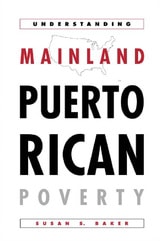
Understanding Mainland Puerto Rican Pov
Susan Baker
Temple University Press, 2002
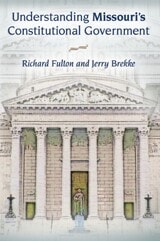
Understanding Missouri's Constitutional Government
Richard Fulton and Jerry Brekke
University of Missouri Press, 2010
Understanding Missouri’s Constitutional Government presents a case study in the foundations of state governments. The book provides a sweeping look at the constitutional foundations of the processes of Missouri government. Authors Richard Fulton and Jerry Brekke place Missouri within the context of our larger federal system while using the state’s constitution as a touchstone for the discussion of each element of state government.
Understanding Missouri’s Constitutional Government has a dual framework specifically designed to enhance the reader’s learning experience. First, the essential elements of government outlined in the constitution are introduced, and then analysis and interpretation of each of the document’s articles is covered. This organization permits readers to build an understanding of a particular element—for example, the legislature—by learning its fundamental organization, processes, and purposes in a straightforward manner. After gaining that primary perspective, the reader can use the formal analysis in the second section to explore interpretations of each article. Not only helpful to the general reader, this two-part structure makes the text especially useful in courses on American government, state and local governments, and particularly Missouri government and constitution.
In short, Understanding Missouri’s Constitutional Government is an approachable, valuable exposition on Missouri government as reflected in the day-to-day operations outlined in the Missouri constitution. It fills a significant gap in the literature on the interpretation, use, and operation of state constitutions. Since Missouri law dictates that all levels of education should teach government and constitution at the national and state levels, this book will be an indispensable resource for educators while serving as a valuable reference for journalists and public officials in the state.
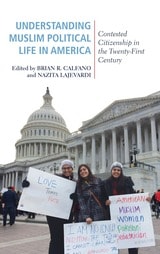
Understanding Muslim Political Life in America
Contested Citizenship in the Twenty-First CenturyBrian R. Calfano
Temple University Press, 2019
“Muslim Americans are at a political crossroads,” write editors Brian Calfano and Nazita Lajevardi. Whereas Muslims are now widely incorporated in American public life, there are increasing social and political pressures that disenfranchise them or prevent them from realizing the American Dream. Understanding Muslim Political Life in America brings clarity to the social, religious, and political dynamics that this diverse religious community faces.
In this timely volume, leading scholars cover a variety of topics assessing the Muslim American experience in the post-9/11 and pre-Trump era, including law enforcement; identity labels used in Muslim surveys; the role of gender relations; recognition; and how discrimination, tolerance, and politics impact American Muslims.
Understanding Muslim Political Life in America offers an update and reappraisal of what we know about Muslims in American political life. The editors and contributors also consider future directions and important methodological questions for research in Muslim American scholarship.
Contributors include Matt A. Barreto, Alejandro Beutel, Tony Carey, Youssef Chouhoud, Karam Dana, Oz Dincer, Rachel Gillum, Kerem Ozan Kalkan, Anwar Manje, Valerie Martinez-Ebers, Dani McLaughlan, Melissa R. Michelson, Yusuf Sarfati, Ahmet Tekelioglu, Marianne Marar Yacobian, and the editors.
Understanding NAFTA
Mexico, Free Trade, and the New North AmericaBy William A. Orme, Jr.
University of Texas Press, 1996
Understanding NAFTA was first published in 1993 as Continental Shift: Free Trade & the New North America. This edition includes a new introduction that brings the NAFTA story up through 1995.
Understanding Torture
Law, Violence, and Political IdentityJohn T. Parry
University of Michigan Press, 2010
"John Parry's Understanding Torture is an important contribution to our understanding of how torture fits within the practices and beliefs of the modern state. His juxtaposition of the often indeterminate nature of the law of torture with the very specific state practices of torture is both startling and revealing."
---Paul W. Kahn is Robert W. Winner Professor of Law and the Humanities at Yale Law School and author of Sacred Violence
"Parry is effective in building, deploying, and supporting his argument . . . that the law does not provide effective protections against torture, but also that the law is in itself constitutive of a political order in which torture is employed to create---and to destroy or re-create---political identities.”
---Margaret Satterthwaite, Faculty Director of the Center for Human Rights and Global Justice and Associate Professor of Clinical Law, NYU School of Law
"A beautifully crafted, convincingly argued book that does not shy away from addressing the legal and ethical complexities of torture in the modern world. In a field that all too often produces simple or superficial responses to what has become an increasingly challenging issue, Understanding Torture stands out as a sophisticated and intellectually responsible work."
---Ruth Miller, Associate Professor of History, University of Massachusetts, Boston
Creating a separate category for an intentionally narrow set of practices labeled and banned as torture, Parry argues, serves to normalize and legitimate the remaining practices that are "not torture." Consequently, we must question the hope that law can play an important role in regulating state violence.
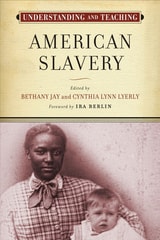
Understanding and Teaching American Slavery
Edited by Bethany Jay and Cynthia Lynn Lyerly, Foreword by Ira Berlin
University of Wisconsin Press, 2016
Opening with Ira Berlin’s reflections on ten elements that are essential to include in any course on this topic, Understanding and Teaching American Slavery offers practical advice for teaching specific content, utilizing sources, and getting students to think critically. Contributors address, among other topics, slavery and the nation’s founders, the diverse experiences of the enslaved, slavery’s role in the Civil War, and the relationship between slavery and the northern economy. Other chapters offer ideas for teaching through slave narratives, runaway ads, spirituals, films, and material culture. Taken together, the essays in the volume help instructors tackle problems, discover opportunities, and guide students in grappling with the ugliest truths of America’s past.
Understanding and Teaching Contemporary US History since Reagan
Kimber M. Quinney Amy L. Sayward
University of Wisconsin Press, 2022
The volume addresses a wide swath of topics, from social movements around identity and representation to the Supreme Court, law enforcement, migration, climate change, and international relations. Emphasizing critical thinking and primary-source analysis, it will aid teachers in creating an invigorating and democratizing classroom experience. Intended for use in both secondary and postsecondary classrooms, the book’s structure allows for a variety of applications and invites a broad audience.
Understanding and Teaching Religion in US History
Edited by Karen J. Johnson and Jonathan M. Yeager
University of Wisconsin Press, 2024
This book offers a breadth of voices and approaches to teaching this crucial part of US history. Religion can be a delicate topic, especially in public education, and many students and teachers bring strongly held views and identities to their understanding of the past. The editors and contributors aim to help the reader see religion in fresh ways, to present sources and perspectives that may be unfamiliar, and to suggest practical interventions in the classroom that teachers can use immediately.
Understanding and Teaching U.S. Lesbian, Gay, Bisexual, and Transgender History
Edited by Leila J. Rupp and Susan K. Freeman
University of Wisconsin Press, 2017
Understanding and Teaching the Age of Revolutions
Edited by Ben Marsh and Mike Rapport
University of Wisconsin Press, 2017
The volume includes chapters on sources and methods for stimulating student debate and learning, including Tom Paine's Common Sense, the Haitian Declaration of Independence, and other key documents; role-playing games; visual arts and culture; and music, including opera and popular songs. Other chapters delve into specific themes, including revolution and riot, revolutionary terror, enlightenment, gender, slavery, nationalism, environment and climate, and the roles of politically excluded groups. Collectively, the contributions ensure a broad Atlantic scope, discussing the revolutions in Britain's North American colonies, Haiti, and Latin America, and European revolutions including France, Belgium, and the Netherlands.
Understanding and Teaching the Civil Rights Movement
Hasan Kwame Jeffries
University of Wisconsin Press, 2019
Books in the popular Harvey Goldberg Series provide high school and introductory college-level instructors with ample resources and strategies for better engaging students in critical, thought-provoking topics. By allowing for the implementation of a more nuanced curriculum, this is history instruction at its best. Understanding and Teaching the Civil Rights Movement will transform how the United States civil rights movement is taught.
Understanding and Teaching the Cold War
Edited by Matthew Masur
University of Wisconsin Press, 2016
Teaching the Cold War is both necessary and challenging. Understanding and Teaching the Cold War is designed to help collegiate and high school teachers navigate the complexity of the topic, integrate up-to-date research and concepts into their classes, and use strategies and tools that make this important history meaningful to students.
The volume opens with Matthew Masur’s overview of models for approaching the subject, whether in survey courses or seminars. Two prominent historians, Carole Fink and Warren Cohen, offer accounts of their experience as longtime scholars and teachers of the Cold War from European and Asian perspectives. Sixteen essays dig into themes including the origins and end of the conflict, nuclear weapons, diplomacy, propaganda, fear, popular culture, and civil rights, as well as the Cold War in Eastern Europe, Western Europe, East Asia, Africa, Latin America, and the nonaligned nations. A final section provides practical advice for using relevant, accessible primary sources to implement the teaching ideas suggested in this book.
Understanding and Teaching the Vietnam War
Edited by John Day Tully, Matthew Masur, and Brad Austin
University of Wisconsin Press, 2013
Honorable Mention, Franklin Buchanan Prize for Curricular Materials, Association for Asian Studies and the Committee for Teaching about Asia
Understanding the Arts and Creative Sector in the United States
Cherbo, Joni Maya
Rutgers University Press, 2008
Illuminating key issues and reflecting the rapid growth of the field of arts and cultural policy, this book will be of interest to students at both the undergraduate and graduate levels, to arts educators and management professionals, government agency and foundation officials, and researchers and academics in the cultural policy field.
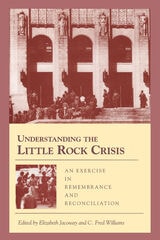
Understanding the Little Rock Crisis
An Exercise in Remembrance and ReconciliationElizabeth Jacoway
University of Arkansas Press, 1999
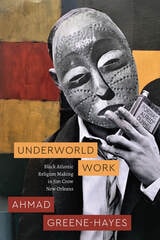
Underworld Work
Black Atlantic Religion Making in Jim Crow New OrleansAhmad Greene-Hayes
University of Chicago Press, 2025
When Zora Neale Hurston traveled to New Orleans, she encountered a religious underworld, a beautiful anarchy of spiritual life. In Underworld Work, Ahmad Greene-Hayes follows Hurston on a journey through the rich tapestry of Black religious expression from emancipation through Jim Crow. He looks within and beyond the church to recover the diverse leadership of migrants, healers, dissidents, and queer people who transformed their marginalized homes, bars, and street corners into sacred space.
Greene-Hayes shows how, while enclosed within an anti-black world, these outcasts embraced Africana esotericisms—ancestral veneration, faith healing, spiritualized sex work, and more—to conjure a connection to freer worlds past and yet to come. In recovering these spiritual innovations, Underworld Work celebrates the resilience and creativity of Africana religions.
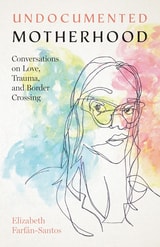
Undocumented Motherhood
Conversations on Love, Trauma, and Border CrossingElizabeth Farfán-Santos
University of Texas Press, 2022
2023 SANA Book Award, Society for the Anthropology of North America
2023 Honorable Mention, Outstanding Book Award NACCS Tejas Foco Award for Non-Fiction, National Association for Chicana and Chicano Studies
2022 Nonfiction Discovery Prize, Writers' League of Texas
An intimate portrayal of the hardships faced by an undocumented family navigating the medical and educational systems in the United States.
Claudia Garcia crossed the border because her toddler, Natalia, could not hear. Leaving behind everything she knew in Mexico, Claudia recounts the terror of migrating alone with her toddler and the incredible challenges she faced advocating for her daughter’s health in the United States. When she arrived in Texas, Claudia discovered that being undocumented would mean more than just an immigration status—it would be a way of living, of mothering, and of being discarded by even those institutions we count on to care.
Elizabeth Farfán-Santos spent five years with Claudia. As she listened to Claudia’s experiences, she recalled her own mother’s story, another life molded by migration, the US-Mexico border, and the quest for a healthy future on either side. Witnessing Claudia’s struggles with doctors and teachers, we see how the education and medical systems enforce undocumented status and perpetuate disability. At one point, in the midst of advocating for her daughter, Claudia suddenly finds herself struck by debilitating pain. Claudia is lifted up by her comadres, sent to the doctor, and reminded why she must care for herself.
A braided narrative that speaks to the power of stories for creating connection, this book reveals what remains undocumented in the motherhood of Mexican women who find themselves making impossible decisions and multiple sacrifices as they build a future for their families.
Undocuments
John-Michael Rivera
University of Arizona Press, 2021
How do you document the undocumented? UNDOCUMENTS both poses and attempts to answer this complex question by remixing the forms and styles of the first encyclopedia of the New World, the Florentine Codex, in order to tell a modern story of Greater Mexico. Employing a broad range of writing genres and scholarly approaches, UNDOCUMENTS catalogs, recovers, and erases documents and images by and about peoples of Greater Mexico from roughly the first colonial moment. This brave and bracing volume organizes and documents ancient New World Mexican peoples from the Florentine Codex (1592) to our current technology-heavy age, wherein modern lawmakers and powerful global figures desire to classify, deport, and erase immigrants and their experiences.
While grappling with anxiety and the physical and mental health consequences of the way the United States treats immigrant bodies, John-Michael Rivera documents and scrutinizes what it means to seek opportunities in America. With a focus on the poetics of Latinx documentality itself, this book is concerned with the complicated and at times contradictory ways peoples of Greater Mexico have been documented and undocumented within systems of colonial knowledges, and how these peoples have been rendered as specters of the bureaucratic state. Rivera takes us through the painful, anxiety-ridden, and complex nature of what it means to be documented or undocumented, and the cruelty married to each of these states of being.
Undoing Motherhood
Collaborative Reproduction and the Deinstitutionalization of U.S. MaternityKatherine M. Johnson
Rutgers University Press, 2023
Unearthing Indian Land
Living with the Legacies of AllotmentKristin T. Ruppel
University of Arizona Press, 2008
Under the General Allotment Act of 1887, also known as the Dawes Act,individual Indians were issued title to land allotments while so-called “surplus”Indian lands were opened to non-Indian settlement. During the forty-seven years that the act remained in effect, American Indians lost an estimated 90 million acres of land—about two-thirds of the land they had held in 1887. Worse, the loss of control over the land left to them has remained an ongoing and insidious result.
Unearthing Indian Land traces the complex legacies of allotment, including numerous instructive examples of a policy gone wrong. Aside from the initial catastrophic land loss, the fractionated land ownership that resulted from the act’s provisions has disrupted native families and their descendants for more than a century. With each new generation, the owners of tribal lands grow in number and therefore own ever smaller interests in parcels of land. It is not uncommon now to find reservation allotments co-owned by hundreds of individuals.Coupled with the federal government’s troubled trusteeship of Indian assets,this means that Indian landowners have very little control over their own lands.
Illuminated by interviews with Native American landholders, this book is essential reading for anyone who is interested in what happened as a result of the federal government’s quasi-privatization of native lands.
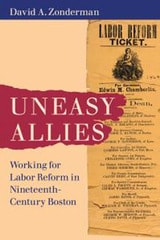
Uneasy Allies
Working for Labor Reform in Nineteenth-Century BostonDavid A. Zonderman
University of Massachusetts Press, 2011
In addition to analyzing what motivated these workers and reformers to create cross-class organizations, David Zonderman examines the internal tactical debates and external political pressures that fractured them, even as new alliances were formed, and shows how these influences changed over time. He describes what workers and reformers learned about politics and social change within these complex and volatile alliances, and speculates as to whether those lessons have relevance for activists and reformers today.
What emerges from this investigation is a narrative of progress and decline that spans nearly three-quarters of a century, as an ever-shifting constellation of associations debated the meaning of labor reform and the best strategy to secure justice for workers. But the quest for ideological consistency and organizational coherence was not easily achieved. By century's end, not only did Boston look dramatically different from its antebellum ancestor, but its labor reform alliances had lost some of their earlier openhearted optimism and stubborn resilience.
Uneasy Virtue
The Politics of Prostitution and the American Reform TraditionBarbara Meil Hobson
University of Chicago Press, 1990
Unequal Higher Education
Wealth, Status, and Student OpportunityBarrett J. Taylor
Rutgers University Press, 2019
Unequal Laws Unto a Savage Race
European Legal Traditions in Arkansas, 1686-1836Morris Arnold
University of Arkansas Press, 1985
Partly because its colonial settlements were tiny, remote, and inconsequential, the early history of Arkansas has been almost entirely neglected. Even Arkansas Post, the principal eighteenth-century settlement, served mainly as a temporary place of residence for trappers and voyageurs. It was also an entrepot for travelers on the Mississippi—a place to be while on the way elsewhere. Only a very few inhabitants, true agricultural settlers, ever established themselves a or around the Post.
For most of the eighteenth century, Arkansas’s non-Indian population was less than one hundred, and never much exceeded five or six hundred. Its European residents of that era, mostly French, have left virtually no physical trace: the oldest buildings and the oldest marked graves in the state date from the 1820s. Drawing on original French and Spanish archival sources, Morris Arnold chronicles for the first time the legal institutions of colonial Arkansas, the attitude of its population towards European legal ideas as were current in Arkansas when Louisiana was transferred to the United States in 1803. Because he views the clash of legal traditions in the upper reaches of the Jefferson’s Louisiana as part of a more general cultural conflict, Arnold closely examines the social and economic characteristics of Arkansas’s early residents in order to explain why, following the American takeover, the common law was introduced into Arkansas with such relative ease.
Unequal Partnerships
The Political Economy of Urban Redevelopment in Postwar AmericaEdited by Gregory Squires
Rutgers University Press, 1989
Unequal Time
Gender, Class, and Family in Employment SchedulesDan Clawson is professor of sociology at the University of Massachusetts, Amherst. Naomi Gerstel is a distinguished university professor of sociology at the University of Massachusetts, Amherst.
Russell Sage Foundation, 2014

Unequal under Law
Race in the War on DrugsDoris Marie Provine
University of Chicago Press, 2007
Doris Marie Provine’s engaging analysis traces the history of race in anti-drug efforts from the temperance movement of the early 1900s to the crack scare of the late twentieth century, showing how campaigns to criminalize drug use have always conjured images of feared minorities. Explaining how alarm over a threatening black drug trade fueled support in the 1980s for a mandatory minimum sentencing scheme of unprecedented severity, Provine contends that while our drug laws may no longer be racist by design, they remain racist in design. Moreover, their racial origins have long been ignored by every branch of government. This dangerous denial threatens our constitutional guarantee of equal protection of law and mutes a much-needed national discussion about institutionalized racism—a discussion that Unequal under Law promises to initiate.
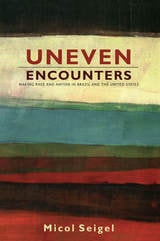
Uneven Encounters
Making Race and Nation in Brazil and the United StatesMicol Seigel
Duke University Press, 2009
Seigel explores the circulation of images of Brazilian coffee and of maxixe in the United States during the period just after the imperial expansions of the early twentieth century. Exoticist interpretations structured North Americans’ paradoxical sense of themselves as productive “consumer citizens.” Some people, however, could not simply assume the privileges of citizenship. In their struggles against racism, Afro-descended citizens living in Rio de Janeiro, São Paulo, New York, and Chicago encountered images and notions of each other, and found them useful. Seigel introduces readers to cosmopolitan Afro-Brazilians and African Americans who rarely traveled far from home but who nonetheless absorbed ideas from abroad. She suggests that studies comparing U.S. and Brazilian racial identities as two distinct constructions are misconceived. Racial formation transcends national borders; attempts to understand it must do the same.
Uneven Tides
Rising Inequality in AmericaSheldon H. Danziger
Russell Sage Foundation, 1993
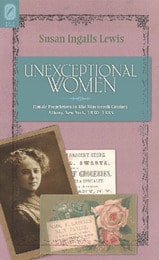
Unexceptional Women
Female Proprietors in Mid-Nineteenth-Century Albany, New York, 1830–1885Susan Ingalls Lewis
The Ohio State University Press, 2009
Although the growing city did produce several remarkable businesswomen in trades as diverse as hotel management, plumbing, and the marketing of pianos on the installment plan, Albany’s female proprietors were most often self-employed artisans, shopkeepers, petty manufacturers, and service providers. These women used business as a method of self-employment and survival, as a means of both individual and family mobility, and as a strategy for immigrant assimilation into an urban economy and middle-class lifestyle.
Intriguingly, among the ranks of Albany’s female proprietors Lewis discovered substantial evidence of such supposedly recent phenomena as self-employment, dual-income marriages, working motherhood, home-based business, and the juggling of domestic and professional priorities. The stories of these businesswomen make fascinating reading while simultaneously providing the basis for a theoretical discussion of how to define and understand enterprise for mid-nineteenth-century women.
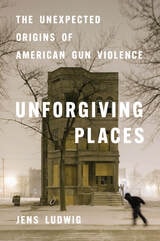
Unforgiving Places
The Unexpected Origins of American Gun ViolenceJens Ludwig
University of Chicago Press, 2025
In 2007, economist Jens Ludwig moved to the South Side of Chicago to research two big questions: Why does gun violence happen, and is there anything we can do about it? Almost two decades later, the answers aren’t what he expected. Unforgiving Places is Ludwig’s revelatory portrait of gun violence in America’s most famously maligned city.
Disproving the popular narrative that shootings are the calculated acts of malicious or desperate people, Ludwig shows how most shootings actually grow out of a more fleeting source: interpersonal conflict, especially arguments. By examining why some arguments turn tragic while others don't, Ludwig shows gun violence to be more circumstantial—and more solvable—than our traditional approaches lead us to believe.
Drawing on decades of research and Ludwig’s immersive fieldwork in Chicago, including “countless hours spent in schools, parks, playgrounds, housing developments, courtrooms, jails, police stations, police cars, and lots and lots of McDonald'ses,” Unforgiving Places is a breakthrough work at the cutting edge of behavioral economics. As Ludwig shows, progress on gun violence doesn’t require America to solve every other social problem first; it only requires that we find ways to intervene in the places and the ten-minute windows where human behaviors predictably go haywire.