Results by title
18284 books match the query 'United States' and 234 start with u
Unfortunate Emigrants
edited by Kristin Johnson
Utah State University Press, 1996
Unfracked
The Struggle to Ban Fracking in New YorkRichard Buttny
University of Massachusetts Press, 2024
Since fracking emerged as a way of extracting natural gas, through intense deep drilling and the use of millions of gallons of water and chemicals to fracture shale, it has been controversial. It is perceived in different ways by different people—by some as an opportunity for increased resources and possibly jobs and other income; by others as a public health and environmental threat; and for many, an unknown. Richard Buttny, a scholar who works on rhetoric and discursive practices, read a story in his local paper in New York about hydrofracking coming to his area and had to research what it was, and what it could mean for his community. Soon he joined neighbors in fighting to have the practice banned state-wide. At the same time, he turned his scholarly eye to the messaging from both sides of the fight, using first-person accounts, interviews, and media coverage.
The activists fighting fracking won. New York is now the only state in the US with sizable deposits of natural gas that has banned hydraulic fracturing, or fracking. Unfracked explains the competing rhetoric and discourses on fracking among New York-based advocates, experts, the grassroots, and political officials. Buttny examines how these positions evolved over time and how eventually the state arrived at a decision to ban this extractive technology. His accessible approach provides both a historical recounting of the key events of this seven-year conflict, along with four in-depth case studies: a grassroots citizen group, a public hearing with medical physicians, a key intergovernmental hearing, and a formal debate among experts. The result is a look at a very recent, important historical moment and a useful examination of environmental activist and fossil fuel advocate rhetoric around an issue that continues to cause debate nationwide.
Unfree Masters
Popular Music and the Politics of WorkMatt Stahl
Duke University Press, 2012
Unfriendly Fire
A Mother's MemoirPeg Mullen
University of Iowa Press, 1995
In 1968 Michael Mullen, a graduate student in biochemistry, was drafted; in 1969 he was sent to Vietnam as a foot soldier in Colonel Norman Schwarzkopf's Charlie Company; and in 1970 he was killed by the same “friendly fire” that destroyed thousands of other lives during the Vietnam War.
Back home on the family farm in Iowa, his parents made his death a crusade to awaken all parents to the insanity of war. C. D. B. Bryan's Friendly Fire and the TV movie of the same name documented these dramatic years, and Peg Mullen became a national symbol of grassroots activism. Now Peg Mullen shifts from symbol to reality as she tells her story in print for the first time.
Outspoken, fearless, and wickedly humorous, Peg Mullen had a duel mission in the years after Michael's death: to penetrate the lies and evasions behind the artillery misfire that killed her oldest son and to publicize the senseless horror of the Vietnam War. Unfriendly Fire draws on the many letters sent to the Mullens after Michael's death; in addition, Michael's own bitter, weary letters home are reprinted. In these the voices of parents, brothers, sisters, comrades, teachers, and Michael himself echo Peg Mullen's call for truth and peace.
Unfriendly Witnesses
Gender, Theater, and Film in the McCarthy EraMilly S. Barranger
Southern Illinois University Press, 2008
Unfriendly Witnesses: Gender, Theater, and Film in the McCarthy Era examines the experiences of seven prominent women of stage and screen whose lives and careers were damaged by the McCarthy-era “witch hunts” for Communists and Communist sympathizers in the entertainment industry: Judy Holliday, Anne Revere, Lillian Hellman, Dorothy Parker, Margaret Webster, Mady Christians, and Kim Hunter.
The effects on women of the anti-Communist crusades that swept the nation between 1947 and 1962 have been largely overlooked by cultural critics and historians, who have instead focused their attention on the men of the period. Author Milly S. Barranger looks at the gender issues inherent in the investigations and at the destructive impact the investigations had on the lives and careers of these seven women—and on American film and theater and culture in general.
Issues of gender and politics surface in the women’s testimony before the committeemen, labeled “unfriendly” because the women refused to name names. Unfriendly Witnesses redresses the absence of women’s histories during this era of modern political history and identifies the enduring strains of McCarthyism in postmillennial America.
Barranger recreates the congressional and state hearings that addressed the alleged Communist influence in the entertainment industry and examines in detail the cases of these seven women, including the appearance of actress Judy Holliday before the committee of Senator Pat McCarran, who aimed to limit the immigration of Eastern Europeans; actress Anne Revere and playwright Lillian Hellman, appearing before the House Un-American Activities Committee, sought the protections of the Fifth Amendment with different outcomes; of writer Dorothy Parker, who testified before a New York state legislative committee investigating contributions to “front” groups; and of director Margaret Webster, before Senator Joseph McCarthy’s subcommittee, whose aim was the indictment of Senator J. William Fulbright and the U.S. State Department. None escaped subsequent blacklisting, denial of employment, and notations in FBI files that they were threats to national security.
Unfriendly Witnesses is enhanced by nine illustrations and extensive excerpts from Red Channels: The Report of Communist Influence in Radio and Television, originally published in 1950 at the height of the Red Scare, and which listed 151 allegedly subversive writers, directors, and performers. Barranger includes the complete entries from Red Channels for the seven women she discusses, which include the “subversive” affiliations that prompted the women’s interrogation by the government.
Unfurl Those Colors!
McClellan, Sumner, and the Second Army Corps in the Antietam CampaignMarion V. Armstrong Jr.
University of Alabama Press, 2008
Traces the engrossing story of the Union Army’s strategies, stratagems, and movements on the bloodiest day in American military history
Unfurl Those Colors! provides an operational study of the Army of the Potomac during the pivotal Battle of Antietam on September 17, 1862, illuminating in details that will fascinate scholars and armchair generals alike US army commander George B. McClellan’s command decisions and how those decisions were carried out in the middle and lower ranks of the Second Army Corps.
Armstrong offers the most comprehensive account yet of the Second Army Corps’s fight at Antietam, including Sedgwick’s division in the West Woods and French’s and Richardson’s divisions at Bloody Land. He offers a fresh reappraisal of the leadership of Bostonian Edwin V. “Bull Head” Sumner as the only federal corps commander who doggedly and accurately carried out McClellan’s battle plan and effectively directed the battle on the Federal right.
Many esteemed Civil War historians consider Antietam a watershed moment in the Civil War, a crucial success after which Abraham Lincoln was emboldened to issue the Emancipation Proclamation. Unfurl Those Colors! offers a vital examination of the operational fabric of the Army of the Potomac’s leadership and command in one of the most important days in American history.
Ungrading
Why Rating Students Undermines Learning (and What to Do Instead)Susan D. Blum
West Virginia University Press, 2020
The moment is right for critical reflection on what has been assumed to be a core part of schooling. In Ungrading, fifteen educators write about their diverse experiences going gradeless. Some contributors are new to the practice and some have been engaging in it for decades. Some are in humanities and social sciences, some in STEM fields. Some are in higher education, but some are the K–12 pioneers who led the way. Based on rigorous and replicated research, this is the first book to show why and how faculty who wish to focus on learning, rather than sorting or judging, might proceed. It includes honest reflection on what makes ungrading challenging, and testimonials about what makes it transformative.
CONTRIBUTORS:
Aaron Blackwelder
Susan D. Blum
Arthur Chiaravalli
Gary Chu
Cathy N. Davidson
Laura Gibbs
Christina Katopodis
Joy Kirr
Alfie Kohn
Christopher Riesbeck
Starr Sackstein
Marcus Schultz-Bergin
Clarissa Sorensen-Unruh
Jesse Stommel
John Warner
Unguarded Border
American Émigrés in Canada during the Vietnam WarDonald W. Maxwell
Rutgers University Press, 2023
Unguarded Border tells their stories and, in the process, describes a migrant experience that does not fit the usual paradigms. Rather than treating these American refugees as unwelcome foreigners, Canada embraced them, refusing to extradite draft resisters or military deserters and not even requiring passports for the border crossing. And instead of forming close-knit migrant communities, most of these émigrés sought to integrate themselves within Canadian society.
Historian Donald W. Maxwell explores how these Americans in exile forged cosmopolitan identities, coming to regard themselves as global citizens, a status complicated by the Canadian government’s attempts to claim them and the U.S. government’s eventual efforts to reclaim them. Unguarded Border offers a new perspective on a movement that permanently changed perceptions of compulsory military service, migration, and national identity.
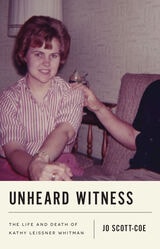
Unheard Witness
The Life and Death of Kathy Leissner WhitmanJo Scott-Coe
University of Texas Press, 2023
2025 San Antonio Conservation Society Publication Award
Unheard Witness foregrounds a young woman’s experience of domestic abuse, resistance, and survival before the mass shooting at the University of Texas at Austin in 1966.
In 1966, Kathy Leissner Whitman was a twenty-three-year-old teacher dreaming of a better future. She was an avid writer of letters, composing hundreds in the years before she was stabbed to death by her husband, Charles Whitman, who went on to commit a mass shooting from the tower at the University of Texas at Austin. Kathy’s writing provides a rare glimpse of how one woman described, and sought to change, her short life with a coercive, controlling, and violent partner.
Unheard Witness provides a portrait of Kathy’s life, doing so at a time when Americans are slowly grasping the link between domestic abuse and mass shootings. Public violence often follows violence in the home, yet such private crimes continue to be treated separately and even erased in the public imagination. Jo Scott-Coe shows how Kathy's letters go against the grain of the official history, which ignored Kathy’s perspective. With its nuanced understanding of abuse and survival, Unheard Witness is an intimate, real-time account of trust and vulnerability—in its own way, a prologue to our age of atrocities.

Unholy Wars
Afghanistan, America and International TerrorismJohn Cooley
Pluto Press, 2002
Cooley marshals a wealth of evidence - from the assassination of Sadat, the destabilisation of Algeria and Chechnya and the emergence of the Taliban, to the bombings of the World Trade Center and the US embassies in Africa. He examines the crucial role of Pakistan’s military intelligence organisation; uncovers China’s involvement and its aftermath; the extent of Saudi financial support; the role of 'America's most wanted man' Osama bin Laden; the BCCI connection; the CIA's cynical promotion of drug traffic in the Golden Crescent; the events in Pakistan since the military coup of October 1999; and, finally, the events of September 11th 2001 and their continuing impact on world affairs.
Uniform Feelings
Scenes from the Psychic Life of PolicingJessi Lee Jackson
University of Michigan Press, 2022
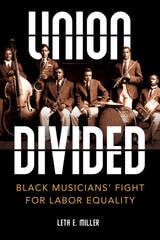
Union Divided
Black Musicians' Fight for Labor EqualityLeta E. Miller
University of Illinois Press, 2024
In the 1910s and 1920s, Black musicians organized more than fifty independent locals within the American Federation of Musicians (AFM) in an attempt to control audition criteria, set competitive wages, and secure a voice in national decision-making. Leta Miller follows the AFM’s history of Black locals, which competed directly with white locals in the same territories, from their origins and successes in the 1920s through Depression-era crises to the fraught process of dismantling segregated AFM organizations in the 1960s and 70s. Like any union, Black AFM locals sought to ensure employment and competitive wages for members with always-evolving solutions to problems. Miller’s account of these efforts includes the voices of the musicians themselves and interviews with former union members who took part in the difficult integration of Black and white locals. She also analyzes the fundamental question of how musicians benefitted from membership in a labor organization.
Broad in scope and rich in detail, Union Divided illuminates the complex working world of unionized Black musicians and the AFM’s journey to racial inclusion.
Union Heartland
The Midwestern Home Front during the Civil WarEdited by Ginette Aley and J. L. Anderson, with a foreword by William C. Davis
Southern Illinois University Press, 2013
Union Jack
JFK's Special Relationship with Great BritainChristopher Sandford
University Press of New England, 2017
Union Power and American Democracy
The UAW and the Democratic Party, 1972-83Dudley W. Buffa
University of Michigan Press, 1984
Union Renegades
Miners, Capitalism, and Organizing in the Gilded AgeDana M. Caldemeyer
University of Illinois Press, 2021
Nuanced and eye-opening, Union Renegades challenges popular notions of workers attitudes during the Gilded Age.
Union Representation Elections
Law and RealityJulius Getman
Russell Sage Foundation, 1976
Union Women
Forging Feminism In The United Steelworkers Of AmericaMary Margaret Fonow
University of Minnesota Press, 2002
How a feminist agenda took hold in a male-dominated union.
For more than a quarter century, steel mills in the United States and Canada have produced more than metal: they have produced a new kind of worker and union activist-"Women of Steel." In an era labeled postfeminist and postindustrial, women have created spaces in this quintessentially male-dominated workforce from which to mobilize for their rights as women and workers. In Union Women, Mary Margaret Fonow captures the stories of the women of the United Steelworkers. She focuses on a tenacious group who used their developing power in the union to challenge sex discrimination and to advocate for women’s rights, and applied their transnational resources to construct a feminist response to globalization and economic restructuring. In the process, they have transformed the organizations, resources, and networks of both the labor and women’s movements, and have in turn transformed themselves into feminists.
In Union Women Fonow uses statistical, archival, and ethnographic research methods to provide a broad historical account of women in the steel industry. Fonow’s sweeping approach allows her to examine several key issues in social movement, feminist, and political theory, and to show that insights from these fields shape each other. She explores how social movements are gendered, how working-class women develop a feminist consciousness, and how this process is informed by intersecting demands of race, class, and gender. As a comparative, cross-national study, Union Women also demonstrates how different political and social cultures affect women’s organizing and strategic decisions. Finally, Fonow emphasizes that economic restructuring and globalization pose immediate challenges for women as laborers and activists, and that, in order to survive, all unions must develop organizing and mobilization strategies informed by feminism and other social movements.
Union by Law
Filipino American Labor Activists, Rights Radicalism, and Racial CapitalismMichael W. McCann with George I. Lovell
University of Chicago Press, 2020
Union by Law analyzes the broader social and legal history of Filipino American workers’ rights-based struggles, culminating in the devastating landmark Supreme Court ruling, Wards Cove Packing Co. v. Atonio (1989). Organized chronologically, the book begins with the US invasion of the Philippines and the imposition of colonial rule at the dawn of the twentieth century. The narrative then follows the migration of Filipino workers to the United States, where they mobilized for many decades within and against the injustices of American racial capitalist empire that the Wards Cove majority willfully ignored in rejecting their longstanding claims. This racial innocence in turn rationalized judicial reconstruction of official civil rights law in ways that significantly increased the obstacles for all workers seeking remedies for institutionalized racism and sexism. A reclamation of a long legacy of racial capitalist domination over Filipinos and other low-wage or unpaid migrant workers, Union by Law also tells a story of noble aspirational struggles for human rights over several generations and of the many ways that law was mobilized both to enforce and to challenge race, class, and gender hierarchy at work.
Union-Free America
Workers and Antiunion CultureLawrence Richards
University of Illinois Press, 2008
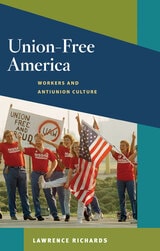
Union-Free America: Workers and Antiunion Culture confronts one of the most vexing questions with which labor activists and labor academics struggle: why is there so much opposition to organized labor in the United States? Scholars often point to powerful obstacles from employers or governmental policies, but Lawrence Richards offers a more complete picture of the causes for union decline in the postwar period by examining the attitudes of the workers themselves. Large numbers of American workers in the 1970s and 1980s told pollsters that they would vote against a union if an election were held at their place of employment, and Richards provides a provocative explanation for this hostility: a pervasive strain of antiunionism in American culture that has made many workers distrustful of organized labor.
Weighing the arguments of previous historians and sociologists, Richards posits that this underlying antiunion culture in America has been remarkably consistent over the course of half a century. Assessing organizing efforts among blue-collar, white-collar, and pink-collar workers, Richards examines the tactics and countertactics of company and union representatives who sought to either exploit or neutralize workers' popular negative stereotypes of organized labor's insidious control over workers' autonomy. The book considers a number of case studies of organizing drives throughout recent history, from the failed attempt by District 65 to organize clerical workers at New York University in 1970, to a similarly fruitless drive by the Textile Workers Union in 1980 at a textile factory in Charlottesville, Virginia. In both of these particular cases and in many more, antiunion culture has operated to hinder unions' efforts to organize the unorganized. By examining the manifestations and motivations of antiunion culture in the United States, Richards helps explain why so many American workers seem to vote against their own self-interest and declare themselves "Union Free and Proud."

Unionizing the Jungles
Labor and Community in the Twentieth-Century Meat-packing IndustryShelton Stromquist
University of Iowa Press, 1997
After Upton Sinclair's powerful novel appeared in 1906, “the jungle” became a compelling metaphor for life and work in the nation's meatpacking industry. Harsh living and working conditions from the killing floor to the hide cellar to the packingtowns, cycles of overwork and underemployment, and the ever-present crowds of new and unskilled laborers characterized an often-violent industry in which the appetite of workers for the protection of unions was exceeded only by the zeal of their employers to prevent workers from organizing. Unionizing the Jungles—which originated in a seminar at the University of Iowa sponsored by the Center for Recent United States History—brings together historians and anthropologists whose studies of various phases of the meatpacking industry, its unions, and its impact on communities in the twentieth century both raise and answer important questions.
The rise and decline of industrial unionism in the packinghouse industry is a unique story that casts into bold relief the conflicts between labor and capital and the tensions based on race and gender in a perpetually changing workforce. The essayists in Unionizing the Jungles discuss the structurally distinctive features of the packinghouse industry—such as the fact that violence and extreme antiunionism were central elements of its culture—the primary actors in the union-building process, the roots of the distinctive interracialism of the United Packinghouse Workers of America and the explosion of industrial unionism in the 1930s, and the community-based militant unionism of the Independent Union of All Workers. Central themes throughout these essays include the role of African American workers, the constant battle for racial equality, and the eruption of gender conflict in the 1950s. Structural and technological changes in the corporate economy, the increased mobility of capital, and a more hostile political economy all contributed to the difficulties the labor movement faced in the 1980s and beyond.
Focusing on the workplace and the community as arenas of conflict and accommodation, the new labor historians in these vigorous essays consider the historical and contemporary problems posed by the development of the packinghouse industry and its unions and reflect on the implications of this dramatic history for the larger story of the changing relations between labor and capital in mass production.
United States District Courts and Judges of Arkansas, 1836–1960
Frances Mitchell Ross
University of Arkansas Press, 2016
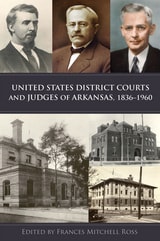
The book begins with statehood and continues with Congress’s decision to expand jurisdiction of the original 1836 District Court of Arkansas to include the vast Indian Territory to the west. The territory’s formidable size and rampant lawlessness brought in an overwhelming number of cases. The situation was only somewhat mitigated in 1851, when Congress split the state into eastern and western districts, which were still served by just one judge who travelled between the two courts.
A new judgeship for the Western District was created in 1871, and new seats for that court were established, but it wasn’t until 1896 that Congress finally ended all jurisdiction of Arkansas’s Western District Court over the Indian Territory.
Contributors to this collection include judges, practicing attorneys, academics, and thoughtful and informed family members who reveal how the judges made decisions on issues involving election laws, taxes, civil rights, railroads, liquor and prohibition, quack medicine, gangsters, bankruptcy, personal injury, the draft and Selective Service, school desegregation, prisons, and more. United States District Courts and Judges of Arkansas, 1836–1960 will be of value to anyone interested in Arkansas history—particularly Arkansas legal and judicial history as it relates to the local and national issues that came before these judges.
This project was supported in part by the United States District Court for the Eastern District of Arkansas and the United States District Court for the Western District of Arkansas.
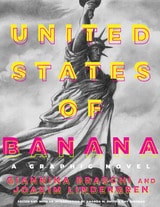
United States of Banana
A Graphic NovelGiannina Braschi and Joakim LindengrenEdited and with an introduction by Amanda M. Smith and Amy Sheeran
The Ohio State University Press, 2021
United States-Latin American Relations, 1800-1850
The Formative GenerationsT. Ray Shurbutt
University of Alabama Press, 1991
Relations between the United States and the countries of Latin America have been characterized by misunderstandings based on language and culture, a lack of sustained commitment on the part of the United States, and, in some cases, incompetent diplomats. During the era when many of the Latin American countries discarded the yoke of colonial status, the young United States attempted to define itself culturally, economically, constitutionally, geographically, and diplomatically. As Latin American emerged from the crucible of revolution and international power politics, it was affected by—and in varying degrees affected—the United States and its desired position of leadership in the Western Hemisphere.
To make sense of these relationships, this volume concentrates on Central America, Peru, Colombia, Argentina, Brazil, Chile, and Mexico. Describing the particular paths taken by each of the formation of relations with the United States, Shurbutt and his colleagues focus on the American diplomatic community and its effectiveness in tense political situations.
Contributors in addition to the editor include Lawrence A. Clayton, Paul B. Goodwin, Eugene R. Huck, Phil Brian Johnson, Edward H. Moseley, Wesley P. Newton, Charles S. Stansifer, and Robert Kim Stevens.
United States–Latin American Relations, 1850–1903
Establishing a RelationshipEdited by Thomas M. Leonard
University of Alabama Press, 1999
United States–Latin American Relations, 1850–1903 is a collection of essays that provide an in-depth analysis of the developing relationship between the Americas during the critical period from the Mexican War to the Panama Canal treaty of 1903.
During the second half of the 19th century several forces in the United States, Latin America, and Europe converged to set the stage for the establishment of a more permanent relationship between the United States and Latin America. The key factors--security, economics, and modernization--created both commonalities and conflicts between and among regions. In this volume, scholars examine not only the domestic but also the geopolitical forces that encouraged and guided development of diplomatic relations in this rapidly changing period.
As the contributors note, by the end of the century, economic interests dominated the relationship that eventually developed. This period saw the building of a string of U.S. naval bases in Latin America and the Caribbean, the rapid industrialization of the United States and the development of a substantial export market, the entrance of many U.S. entrepreneurs into Latin American countries, and the first two inter-American conferences. By the century's end, the United States appeared as the dominant partner in the relationship, a perception that earned it the "imperialist" label.
This volume untangles this complex relationship by examining U.S. relations with Mexico, Cuba, Colombia, Central America, Peru, Argentina, Chile, Brazil, Uruguay, and Paraguay from the perspective of both the United States and the individual Latin American countries.
A companion volume to United States-Latin American Relations, 1800-1850: The Formative Generations, edited by T. Ray Shurbutt, this book establishes a historical perspective crucial to understanding contemporary diplomatic relations.
United Tastes
The Making of the First American CookbookKeith Stavely
University of Massachusetts Press, 2017
Winner of the 2017 Bruce Fraser Award from the Association for the Study of Connecticut History
The Library of Congress has designated American Cookery (1796) by Amelia Simmons one of the eighty-eight “Books That Shaped America.” Its recognition as “the first American cookbook” has attracted an enthusiastic modern audience of historians, food journalists, and general readers, yet until now American Cookery has not received the sustained scholarly attention it deserves. Keith Stavely and Kathleen Fitzgerald's United Tastes fills this gap by providing a detailed examination of the social circumstances and culinary tradition that produced this American classic.
Situating American Cookery within the post-Revolutionary effort to develop a distinct national identity, Stavely and Fitzgerald demonstrate the book's significance in cultural as well as culinary terms. Ultimately the separation between these categories dissolves as the authors show that the formation of “taste,” in matters of food as well as other material expressions, was essential to building a consensus on what it was to be American. United Tastes explores multiple histories—of food, cookbooks, printing, material and literary culture, and region—to illuminate the meaning and affirm the importance of America's first cookbook.
United for Independence
The American Revolution in the Middle Colonies, 1775–1776Michael Cecere
Westholme Publishing, 2027
In the aftermath of the battles of Lexington and Concord in April 1775 and the start of the Revolutionary War, it was not clear whether the colonies outside of New England would participate militarily in the conflict. Troops from the four New England colonies surrounded Boston immediately after the fighting at Lexington and Concord, and two months into the standoff the Continental Congress, meeting in Philadelphia, assumed authority over the New England army, but the middle and southern colonies had yet to see armed conflict or bloodshed with British forces.
In United for Independence: The American Revolution in the Middle Colonies, 1775–1776, historian Michael Cecere examines how the inhabitants of New York, New Jersey, Pennsylvania, Delaware, and Maryland reacted to the outbreak of war in Massachusetts. Leaders in these middle colonies, influenced by strong Loyalist sentiment within their borders and, in some cases, among themselves, fiercely debated whether to support the war in New England. Congress’s decision in the summer to establish the Continental Army, and its authorization for an invasion of Canada, both of which involved troops from the middle colonies, set the stage for their full-scale involvement in the Revolutionary War.
Using primary source extracts and proceeding chronologically from the spring of 1775 to the fall of 1776, the author presents the key events in each of these colonies, from the political struggles between Whigs and Tories, through the failed Canadian expedition, to the loss of Long Island and New York City. Designed for readers to understand the sequence of events that transformed a resistance movement into a war for independence, United for Independence provides an important overview of events in the middle colonies at the start of the Revolutionary War that complements other works that focus on specific military clashes and campaigns.
Unity in Christ and Country
American Presbyterians in the Revolutionary Era, 1758–1801William Harrison Taylor
University of Alabama Press, 2017
In Unity in Christ and Country: American Presbyterians in the Revolutionary Era, 1758–1801, William Harrison Taylor investigates the American Presbyterian Church’s pursuit of Christian unity and demonstrates how, through this effort, the church helped to shape the issues that gripped the American imagination, including evangelism, the conflict with Great Britain, slavery, nationalism, and sectionalism. When the colonial Presbyterian Church reunited in 1758, a nearly twenty-year schism was brought to an end. To aid in reconciling the factions, church leaders called for Presbyterians to work more closely with other Christian denominations. Their ultimate goal was to heal divisions, not just within their own faith but also within colonial North America as a whole.
Taylor contends that a self-imposed interdenominational transformation began in the American Presbyterian Church upon its reunion in 1758. However, this process was altered by the church’s experience during the American Revolution, which resulted in goals of Christian unity that had both spiritual and national objectives. Nonetheless, by the end of the century, even as the leaders in the Presbyterian Church strove for unity in Christ and country, fissures began to develop in the church that would one day divide it and further the sectional rift that would lead to the Civil War.
Taylor engages a variety of sources, including the published and unpublished works of both the Synods of New York and Philadelphia and the General Assembly of the Presbyterian Church in the United States, as well as numerous published and unpublished Presbyterian sermons, lectures, hymnals, poetry, and letters. Scholars of religious history, particularly those interested in the Reformed tradition, and specifically Presbyterianism, should find Unity in Christ and Country useful as a way to consider the importance of the theology’s intellectual and pragmatic implications for members of the faith.
Universal Coverage of Long-Term Care in the United States
Can We Get There from Here?Douglas A. Wolfe
Russell Sage Foundation, 2013
Universal Tonality
The Life and Music of William ParkerCisco Bradley
Duke University Press, 2021
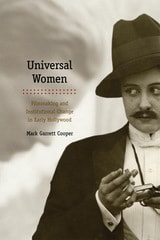
Universal Women
Filmmaking and Institutional Change in Early HollywoodMark Garrett Cooper
University of Illinois Press, 2010
A Choice Outstanding Academic Title, 2011.
Between 1912 and 1919, the Universal Film Manufacturing Company credited eleven women with directing at least 170 films, but by the mid-1920s all of these directors had left Universal and only one still worked in the film industry at all. Two generations of cinema historians have either overlooked or been stymied by the mystery of why Universal first systematically supported and promoted women directors and then abruptly reversed that policy.
In this trailblazing study, Mark Garrett Cooper approaches the phenomenon as a case study in how corporate movie studios interpret and act on institutional culture in deciding what it means to work as a man or woman. In focusing on issues of institutional change, Cooper challenges interpretations that explain women's exile from the film industry as the inevitable result of a transhistorical sexism or as an effect of a broadly cultural revision of gendered work roles. Drawing on a range of historical and sociological approaches to studying corporate institutions, Cooper examines the relationship between institutional organization and aesthetic conventions during the formative years when women filmmakers such as Ruth Ann Baldwin, Cleo Madison, Ruth Stonehouse, Elise Jane Wilson, and Ida May Park directed films for Universal.
Universities and Indian Country
Case Studies in Tribal-Driven ResearchEdited by Dennis K. Norman and Joseph P. Kalt
University of Arizona Press, 2015
Building on the Harvard Project on American Indian Economic Development’s experience with more than 120 nation-building projects over two decades, Universities and Indian Country posits that the tenets of nation building can provide a strategy for expanding and diversifying universities’ perspectives of knowledge in a multicultural world, while also producing results that are requested by and useful to Native communities.
This groundbreaking volume extends the dialogue begun by the Harvard project, providing another venue for the sharing of knowledge and information. The projects presented address a wide range of topics, including the regulation of genetic research, human resource development, tribal fund-raising, development of tribal museums, and freedom of the press in Indian Country.
Universities and Indian Country’s focus on the concerns and questions of Native communities themselves, provides insight not only into how projects came together, but also into what significance they have to the tribal partners. This compilation is a valuable resource for any student, professional, or community member concerned with issues of nation building and self-determination.
Universities and the Future of America
Derek Bok
Duke University Press, 1990
“If universities are so important to society and if ours are so superior, one might have thought that America would be flourishing in comparison to other industrialized countries of the world. Yet this is plainly not the case. . . . Our economic position in the world has deteriorated [and] we have climbed to the top, or near the top, of all advanced countries in the percentage of population who live in poverty, commit crimes, become addicted to drugs, have illegitimate children, or are classified as functionally illiterate.” In light of these results, “it is fair to ask whether our universities are doing all they can and should to help America surmount the obstacles that sap our economic strength and blight the lives of millions of our people.”
Having posed this question, Derek Bok reviews what science can do to bring about greater productivity, what professional schools can do to improve the effectiveness of corporations, government, and public education, and what all parts of the university are doing to help students acquire higher levels of ethical and social responsibility. He concludes that Universities are contributing much less than the should to help the nation address its most urgent social problems. “A century after the death of Cardinal Newman, many university officials and faculty members continue to feel ambivalent about deliberate efforts to address practical problems of society. And though competition drives university leaders and their faculties to unremitting effort, what competition rewards is chiefly success in fields that command academic prestige rather than success in responding to important social needs.”
Bok urges academic leaders, trustees, foundations, and government agencies to work together to help universities realign their priorities “so that they will be ready to make their full contribution when the nation turns its attention again to the broad agenda of reform. . . . Observing our difficulties competing abroad, our millions of people in poverty, our drug-ridden communities, our disintegrating families, our ineffective schools, those who help to shape our universities have reason to ask whether they too have any time to lose.”
Universities in the Age of Corporate Science
The UC Berkeley-Novartis ControversyAlan P. Rudy, Dawn Coppin, Jason Konefal, Bradley T. Shaw, Toby Ten Eyck, Craig Harris and Lawrence Busch
Temple University Press, 2007
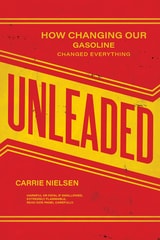
Unleaded
How Changing Our Gasoline Changed EverythingCarrie Nielsen
Rutgers University Press, 2021
Unleaded tells the story of how crusading scientists and activists convinced the U.S. government to ban lead additives in gasoline. It also reveals how, for nearly fifty years, scientific experts paid by the oil and mining industries abused their authority to convince the public that leaded gasoline was perfectly harmless.
Combining environmental history, sociology, and neuroscience, Carrie Nielsen explores how lead exposure affects the developing brains of children and is linked to social problems including academic failure, teen pregnancies, and violent crime. She also shows how, even after the nationwide outrage over Flint’s polluted water, many poor and minority communities and communities of color across the United States still have dangerously high lead levels. Unleaded vividly depicts the importance of sound science and strong environmental regulations to protect our nation’s most vulnerable populations.
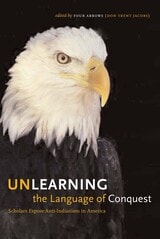
Unlearning the Language of Conquest
Scholars Expose Anti-Indianism in AmericaEdited by Four Arrows (Don Trent Jacobs)
University of Texas Press, 2006
Responding to anti-Indianism in America, the wide-ranging perspectives culled in Unlearning the Language of Conquest present a provocative account of the contemporary hegemony still at work today, whether conscious or unconscious. Four Arrows has gathered a rich collection of voices and topics, including:
- Waziyatawin Angela Cavender Wilson's "Burning Down the House: Laura Ingalls Wilder and American Colonialism," which probes the mentality of hatred woven within the pages of this iconographic children's literature.
- Vine Deloria's "Conquest Masquerading as Law," examining the effect of anti-Indian prejudice on decisions in U.S. federal law.
- David N. Gibb's "The Question of Whitewashing in American History and Social Science," featuring a candid discussion of the spurious relationship between sources of academic funding and the types of research allowed or discouraged.
- Barbara Alice Mann's "Where Are Your Women? Missing in Action," displaying the exclusion of Native American women in curricula that purport to illuminate the history of Indigenous Peoples.
Bringing to light crucial information and perspectives on an aspect of humanity that pervades not only U.S. history but also current sustainability, sociology, and the ability to craft accurate understandings of the population as a whole, Unlearning the Language of Conquest yields a liberating new lexis for realistic dialogues.
Unlikely Heroes
The Southern Judges Who Made Brown WorkJack Bass
University of Alabama Press, 1981

Unloose My Heart
A Personal Reckoning with the Twisted Roots of My Southern Family TreeMarcia Edwina Herman-Giddens
University of Alabama Press, 2023
A deeply personal memoir that unearths a family history of racism, slaveholding, and trauma as well as love and sparks of delight.
Marcia Herman’s family moved to Birmingham in 1946, when she was five years old, and settled in the steel-making city dense with smog and a rigid apartheid system. Marcia, a shy only child, struggled to fit in and understand this world, shadowed as it was by her mother’s proud antebellum heritage. In 1966, weary of Alabama’s toxic culture, Marcia and her young family left Birmingham and built a life in North Carolina.
Later in life, Herman-Giddens resumed a search to find out what she did not know about her family history. Unloose My Heart interweaves the story of her youth and coming of age in Birmingham during the Civil Rights Movement together with this quest to understand exactly who and what her maternal ancestors were and her obligations as a white woman within a broader sense of American family.
More than a memoir set against the backdrop of Jim Crow and the civil rights struggle, this is the work of a woman of conscience writing in the twenty-first century. Haunted by the past, Unloose My Heart is a journey of exploration and discovery, full of angst, sorrow, and yearning. Unearthing her forebears’ centuries-long embrace of plantation slavery, Herman-Giddens dug deeply to parse the arrogance and cruelty necessary to be a slaveholder and the trauma and fear that ripple out in its wake. All this forced her to scrutinize the impact of this legacy in her life, as well as her debt to the enslaved people who suffered and were exploited at her ancestors’ hands. But she also discovers lost connections, new cousins and friends, unexpected joys, and, eventually, a measure of peace in the process. With heartbreak, moments of grace, and an enduring sense of love, Unloose My Heart shines a light in the darkness and provides a model for a heartfelt reckoning with American history.
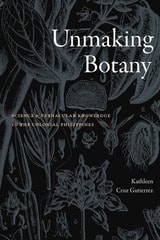
Unmaking Botany
Science and Vernacular Knowledge in the Colonial PhilippinesKathleen Cruz Gutierrez
Duke University Press, 2025
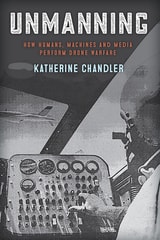
Unmanning
How Humans, Machines and Media Perform Drone WarfareKatherine Fehr Chandler
Rutgers University Press, 2020

Unmarried Couples with Children
Paula England
Russell Sage Foundation, 2007
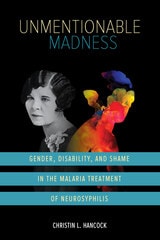
Unmentionable Madness
Gender, Disability, and Shame in the Malaria Treatment of NeurosyphilisChristin L. Hancock
University of Illinois Press, 2025
Christin L. Hancock looks through the lens of feminist disability to examine the popular but ethically suspect treatment and its consequences. As Hancock shows, the treatment’s purported success rate relied on the disabled minds and bodies of people incarcerated in mental hospitals. The backgrounds and identities of these patients reflected and perpetuated attitudes around poverty, gender, race, and disability while betraying authorities’ desire to protect the public from women and men perceived as abnormal, sexually tainted, and unworthy of community life.
Paying special attention to the patients’ voices and experiences, Unmentionable Madness offers a disability history that confronts the ethics of experimentation.

Unnatural Selection
A Memoir of Adoption and WildernessAndrea Ross
CavanKerry Press, 2021
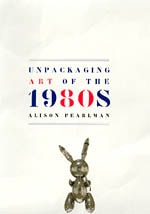
Unpackaging Art of the 1980s
Alison Pearlman
University of Chicago Press, 2003
Pearlman reassesses the works and careers of six artists who became critics' biggest targets. In each of three chapters, she pairs two artists the critics viewed as emblematic of a given trend: Julian Schnabel and David Salle in association with Neo-Expressionism; Jean-Michel Basquiat and Keith Haring vis-à-vis Graffiti Art; and Peter Halley and Jeff Koons in relation to Simulationism. Pearlman shows how all these artists shared important but unrecognized influences and approaches: a crucial and overwhelming inheritance of 1960s and 1970s Conceptualism, a Warholian understanding of public identity, and a deliberate and nuanced use of past styles and media. Through in-depth discussions of works, from Haring's body-paintings of Grace Jones to Schnabel's movie Basquiat, Pearlman demonstrates how these artists' interests exemplified a broader, generational shift unrecognized by critics. She sees this shift as starting not in the 1980s but in the mid-1970s, when key developments in artistic style, art-world structures, and consumer culture converged to radically alter the course of American art.
Unpackaging Art of the 1980s offers an innovative approach to one of the most significant yet least understood episodes in twentieth-century art.
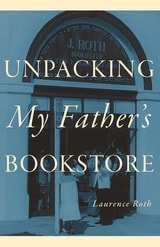
Unpacking My Father's Bookstore
Laurence Roth
Rutgers University Press, 2025
2026 Independent Publisher Book Awards (IPPY) Silver Medal in the West – Pacific Non-Fiction category
Unpacking My Father’s Bookstore brings to life the history of J. Roth / Bookseller of Fine & Scholarly Judaica, which was a microcosm of the Los Angeles Jewish community from 1966 to 1994 and one of the premier Jewish bookstores in the United States. Blending critical analysis with a personal account of growing up in his father’s bookstore, and connecting both to larger forces that helped shape Jewish and American book retailing in the twentieth-century, Laurence Roth crafts a richly felt narrative about his family’s Jewish experience in America. It is a reminder, too, that while most independent bookstores like J. Roth Bookseller disappear from history, these retailers often had outsized effects on their communities. Breaking with conventional modes of scholarship, Unpacking My Father’s Bookstore tells a unique and troubled story that rarely gets told, one that is both personal and analytical, theoretical but rooted in the everyday.
Unquiet Americans
U.S. Catholics, Moral Truth, and the Preservation of Civil LibertiesGerard V. Bradley
St. Augustine's Press, 2013
Before the Second Vatican Council, America’s Catholics operated largely as a coherent voting bloc, usually in connection with the Democratic Party. Their episcopal leaders generally spoke for Catholics in political matters; at least, where America’s bishops asserted themselves in public affairs there was little audible dissent from the faithful.
More than occasionally, the immigrant Church’s eagerness to demonstrate its patriotic bona fides furthered its tendency to speak with one voice about national matters, and in line with the broader societal consensus. And, notwithstanding the considerable conflict which Catholics encountered, and generated, in American political life, there was before the Council broad agreement in American culture about the centrality of Biblical morality to the success of Americans’ experiment with republican government.
In other words: before the Council, American Catholics’ relationship to the political common good was mediated, somewhat uncritical, and insulated from conflict (both within and without the Church) over such fundamental matters as protection of innocent life, marriage and family life, and (to a lesser extent) religious liberty.
This has all changed since the mid-1960s. For the first time in the Church’s pilgrimage on these shores, controversial questions about the basic moral requirements of the political common good are front and center for America’s Catholics. These questions require Catholics to confront matters which heretofore they either took for granted, read off from the background culture, or which they left to the bishops to handle. But the Council Fathers rightly recognized that Jesus calls upon a formed and informed laity to act as leaven in the public realm, to bring Gospel values to the temporal sphere. In this book of essays touching upon Catholic social doctrine, the truth about human equality and political liberty, and religious faith as it bears upon public life and the public engagement of lay Catholics, Gerard Bradley supplies indispensable aid to those seeking to answer Jesus’ call.
Unraveling Threads
Essays on Inheritancebrenda Lin
The Ohio State University Press, 2026
“Tactile memory feels like it is the easiest to lose,” brenda Lin writes in Unraveling Threads. But in these exquisite essays, she demonstrates just how the tactile bolsters personal, familial, and cultural memory. From the remnant of a baby’s umbilical cord to the antique hand-embroidered baby carriers her mother collects, Lin shows us how the tactile and handmade connect parents and children, homeland and diaspora, and give texture to caregiving’s many forms. As Lin writes, the radical for thread forms the basis of Chinese characters for women’s work, for practice through repetition, for inheritance. Threads form the mesh in the stent that keeps her father’s heart working. And yuan, the red thread of fate, is the first word she translated for her future husband. When Lin returns to Taiwan after decades away, this time with her young family, the threads of creativity and caretaking become the warp and weft of the continual process of homecoming. These essays on motherhood, language, art, and diaspora will resonate with anyone who has experienced the process of returning to, or building, a home.
Unruly Immigrants
Rights, Activism, and Transnational South Asian Politics in the United StatesMonisha Das Gupta
Duke University Press, 2006
Das Gupta offers an ethnography of seven South Asian organizations in the northeastern United States, looking at their development and politics as well as the conflicts that have emerged within the groups over questions of sexual, class, and political identities. She examines the ways that women’s organizations have defined and responded to questions of domestic violence as they relate to women’s immigration status; she describes the construction of a transnational South Asian queer identity and culture by people often marginalized by both mainstream South Asian and queer communities in the United States; and she draws attention to the efforts of labor groups who have sought economic justice for taxi drivers and domestic workers by confronting local policies that exploit cheap immigrant labor. Responding to the shortcomings of the state, their communities, and the larger social movements of which they are a part, these groups challenge the assumption that citizenship is the necessary basis of rights claims.
Unsafe Haven
The United States, the IRA and Political PrisonersKaren McElrath
Pluto Press, 2000
Karen McElrath questions US government attempts to portray an impartial role in the Irish conflict, arguing that historical and contemporary evidence reveals otherwise. She shows that, far from being a neutral process, the success of bids for political asylum often depends on the relationship between the US and the government of the applicant’s country of origin. Drawing on exclusive interviews with Irish Republicans who have faced deportation or extradition from the United States, or who have been prosecuted in the US for politically-motivated offences, McElrath explores the links between deportation and extradition outcomes and foreign policy issues. The tools of exclusion are defined in their historical context, and the history of US extradition law is described, with particular focus on the treaties with Britain. McElrath also examines the offences for which Irish and Irish-American Republicans have been charged, discusses the various levels of support for Irish political prisoners in the US, and summarises the findings by international human rights organisations.
Unsafe for Democracy
World War I and the U.S. Justice Department's Covert Campaign to Suppress DissentWilliam H. Thomas Jr.
University of Wisconsin Press, 2009
“Recommended for all libraries.”—Frederic Krome, Library Journal