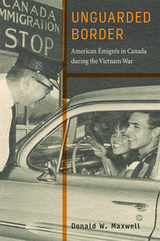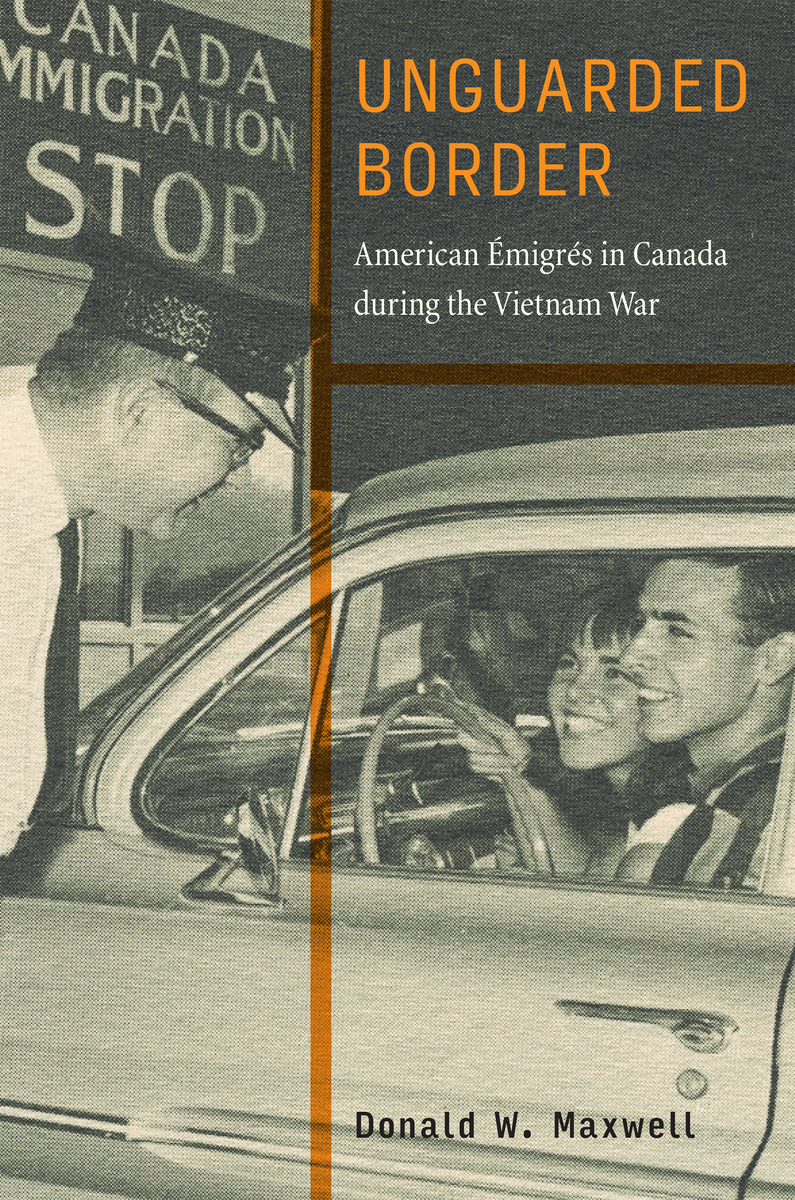
Unguarded Border: American Émigrés in Canada during the Vietnam War
Rutgers University Press, 2023
Cloth: 978-1-9788-3403-3 | Paper: 978-1-9788-3402-6 | eISBN: 978-1-9788-3404-0 (ePub) | eISBN: 978-1-9788-3405-7 (PDF)
Library of Congress Classification DS559.8.D7M39 2023
Dewey Decimal Classification 959.7043373
Cloth: 978-1-9788-3403-3 | Paper: 978-1-9788-3402-6 | eISBN: 978-1-9788-3404-0 (ePub) | eISBN: 978-1-9788-3405-7 (PDF)
Library of Congress Classification DS559.8.D7M39 2023
Dewey Decimal Classification 959.7043373
ABOUT THIS BOOK | AUTHOR BIOGRAPHY | REVIEWS | TOC
ABOUT THIS BOOK
The United States is accustomed to accepting waves of migrants who are fleeing oppressive conditions and political persecution in their home countries. But in the 1960s and 1970s, the flow of migration reversed as over fifty thousand Americans fled across the border to Canada to resist military service during the Vietnam War or to escape their homeland’s hawkish society.
Unguarded Border tells their stories and, in the process, describes a migrant experience that does not fit the usual paradigms. Rather than treating these American refugees as unwelcome foreigners, Canada embraced them, refusing to extradite draft resisters or military deserters and not even requiring passports for the border crossing. And instead of forming close-knit migrant communities, most of these émigrés sought to integrate themselves within Canadian society.
Historian Donald W. Maxwell explores how these Americans in exile forged cosmopolitan identities, coming to regard themselves as global citizens, a status complicated by the Canadian government’s attempts to claim them and the U.S. government’s eventual efforts to reclaim them. Unguarded Border offers a new perspective on a movement that permanently changed perceptions of compulsory military service, migration, and national identity.
See other books on: Americans | Draft resisters | Protest movements | Vietnam War | Vietnam War, 1961-1975
See other titles from Rutgers University Press