Results by title
28164 books match the query 'History' and 339 start with u
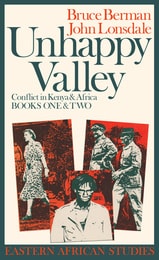
Unhappy Valley
Clan, Class & State In Colonial KenyaBruce Berman
Ohio University Press, 1991
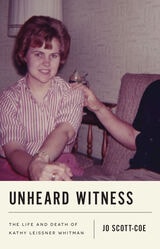
Unheard Witness
The Life and Death of Kathy Leissner WhitmanJo Scott-Coe
University of Texas Press, 2023
2025 San Antonio Conservation Society Publication Award
Unheard Witness foregrounds a young woman’s experience of domestic abuse, resistance, and survival before the mass shooting at the University of Texas at Austin in 1966.
In 1966, Kathy Leissner Whitman was a twenty-three-year-old teacher dreaming of a better future. She was an avid writer of letters, composing hundreds in the years before she was stabbed to death by her husband, Charles Whitman, who went on to commit a mass shooting from the tower at the University of Texas at Austin. Kathy’s writing provides a rare glimpse of how one woman described, and sought to change, her short life with a coercive, controlling, and violent partner.
Unheard Witness provides a portrait of Kathy’s life, doing so at a time when Americans are slowly grasping the link between domestic abuse and mass shootings. Public violence often follows violence in the home, yet such private crimes continue to be treated separately and even erased in the public imagination. Jo Scott-Coe shows how Kathy's letters go against the grain of the official history, which ignored Kathy’s perspective. With its nuanced understanding of abuse and survival, Unheard Witness is an intimate, real-time account of trust and vulnerability—in its own way, a prologue to our age of atrocities.
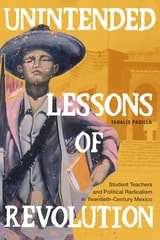
Unintended Lessons of Revolution
Student Teachers and Political Radicalism in Twentieth-Century MexicoTanalís Padilla
Duke University Press, 2021
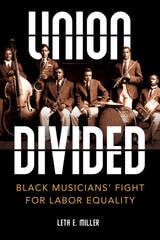
Union Divided
Black Musicians' Fight for Labor EqualityLeta E. Miller
University of Illinois Press, 2024
In the 1910s and 1920s, Black musicians organized more than fifty independent locals within the American Federation of Musicians (AFM) in an attempt to control audition criteria, set competitive wages, and secure a voice in national decision-making. Leta Miller follows the AFM’s history of Black locals, which competed directly with white locals in the same territories, from their origins and successes in the 1920s through Depression-era crises to the fraught process of dismantling segregated AFM organizations in the 1960s and 70s. Like any union, Black AFM locals sought to ensure employment and competitive wages for members with always-evolving solutions to problems. Miller’s account of these efforts includes the voices of the musicians themselves and interviews with former union members who took part in the difficult integration of Black and white locals. She also analyzes the fundamental question of how musicians benefitted from membership in a labor organization.
Broad in scope and rich in detail, Union Divided illuminates the complex working world of unionized Black musicians and the AFM’s journey to racial inclusion.
Union Heartland
The Midwestern Home Front during the Civil WarEdited by Ginette Aley and J. L. Anderson, with a foreword by William C. Davis
Southern Illinois University Press, 2013
Union Pacific
Volume II, 1894-1969Maury Klein
University of Minnesota Press, 2006
Union Power and American Democracy
The UAW and the Democratic Party, 1972-83Dudley W. Buffa
University of Michigan Press, 1984
Union Renegades
Miners, Capitalism, and Organizing in the Gilded AgeDana M. Caldemeyer
University of Illinois Press, 2021
Nuanced and eye-opening, Union Renegades challenges popular notions of workers attitudes during the Gilded Age.
Union Women
Forging Feminism In The United Steelworkers Of AmericaMary Margaret Fonow
University of Minnesota Press, 2002
How a feminist agenda took hold in a male-dominated union.
For more than a quarter century, steel mills in the United States and Canada have produced more than metal: they have produced a new kind of worker and union activist-"Women of Steel." In an era labeled postfeminist and postindustrial, women have created spaces in this quintessentially male-dominated workforce from which to mobilize for their rights as women and workers. In Union Women, Mary Margaret Fonow captures the stories of the women of the United Steelworkers. She focuses on a tenacious group who used their developing power in the union to challenge sex discrimination and to advocate for women’s rights, and applied their transnational resources to construct a feminist response to globalization and economic restructuring. In the process, they have transformed the organizations, resources, and networks of both the labor and women’s movements, and have in turn transformed themselves into feminists.
In Union Women Fonow uses statistical, archival, and ethnographic research methods to provide a broad historical account of women in the steel industry. Fonow’s sweeping approach allows her to examine several key issues in social movement, feminist, and political theory, and to show that insights from these fields shape each other. She explores how social movements are gendered, how working-class women develop a feminist consciousness, and how this process is informed by intersecting demands of race, class, and gender. As a comparative, cross-national study, Union Women also demonstrates how different political and social cultures affect women’s organizing and strategic decisions. Finally, Fonow emphasizes that economic restructuring and globalization pose immediate challenges for women as laborers and activists, and that, in order to survive, all unions must develop organizing and mobilization strategies informed by feminism and other social movements.
Union by Law
Filipino American Labor Activists, Rights Radicalism, and Racial CapitalismMichael W. McCann with George I. Lovell
University of Chicago Press, 2020
Union by Law analyzes the broader social and legal history of Filipino American workers’ rights-based struggles, culminating in the devastating landmark Supreme Court ruling, Wards Cove Packing Co. v. Atonio (1989). Organized chronologically, the book begins with the US invasion of the Philippines and the imposition of colonial rule at the dawn of the twentieth century. The narrative then follows the migration of Filipino workers to the United States, where they mobilized for many decades within and against the injustices of American racial capitalist empire that the Wards Cove majority willfully ignored in rejecting their longstanding claims. This racial innocence in turn rationalized judicial reconstruction of official civil rights law in ways that significantly increased the obstacles for all workers seeking remedies for institutionalized racism and sexism. A reclamation of a long legacy of racial capitalist domination over Filipinos and other low-wage or unpaid migrant workers, Union by Law also tells a story of noble aspirational struggles for human rights over several generations and of the many ways that law was mobilized both to enforce and to challenge race, class, and gender hierarchy at work.
Union-Free America
Workers and Antiunion CultureLawrence Richards
University of Illinois Press, 2008
Union-Free America: Workers and Antiunion Culture confronts one of the most vexing questions with which labor activists and labor academics struggle: why is there so much opposition to organized labor in the United States? Scholars often point to powerful obstacles from employers or governmental policies, but Lawrence Richards offers a more complete picture of the causes for union decline in the postwar period by examining the attitudes of the workers themselves. Large numbers of American workers in the 1970s and 1980s told pollsters that they would vote against a union if an election were held at their place of employment, and Richards provides a provocative explanation for this hostility: a pervasive strain of antiunionism in American culture that has made many workers distrustful of organized labor.
Weighing the arguments of previous historians and sociologists, Richards posits that this underlying antiunion culture in America has been remarkably consistent over the course of half a century. Assessing organizing efforts among blue-collar, white-collar, and pink-collar workers, Richards examines the tactics and countertactics of company and union representatives who sought to either exploit or neutralize workers' popular negative stereotypes of organized labor's insidious control over workers' autonomy. The book considers a number of case studies of organizing drives throughout recent history, from the failed attempt by District 65 to organize clerical workers at New York University in 1970, to a similarly fruitless drive by the Textile Workers Union in 1980 at a textile factory in Charlottesville, Virginia. In both of these particular cases and in many more, antiunion culture has operated to hinder unions' efforts to organize the unorganized. By examining the manifestations and motivations of antiunion culture in the United States, Richards helps explain why so many American workers seem to vote against their own self-interest and declare themselves "Union Free and Proud."

Unionizing the Jungles
Labor and Community in the Twentieth-Century Meat-packing IndustryShelton Stromquist
University of Iowa Press, 1997
After Upton Sinclair's powerful novel appeared in 1906, “the jungle” became a compelling metaphor for life and work in the nation's meatpacking industry. Harsh living and working conditions from the killing floor to the hide cellar to the packingtowns, cycles of overwork and underemployment, and the ever-present crowds of new and unskilled laborers characterized an often-violent industry in which the appetite of workers for the protection of unions was exceeded only by the zeal of their employers to prevent workers from organizing. Unionizing the Jungles—which originated in a seminar at the University of Iowa sponsored by the Center for Recent United States History—brings together historians and anthropologists whose studies of various phases of the meatpacking industry, its unions, and its impact on communities in the twentieth century both raise and answer important questions.
The rise and decline of industrial unionism in the packinghouse industry is a unique story that casts into bold relief the conflicts between labor and capital and the tensions based on race and gender in a perpetually changing workforce. The essayists in Unionizing the Jungles discuss the structurally distinctive features of the packinghouse industry—such as the fact that violence and extreme antiunionism were central elements of its culture—the primary actors in the union-building process, the roots of the distinctive interracialism of the United Packinghouse Workers of America and the explosion of industrial unionism in the 1930s, and the community-based militant unionism of the Independent Union of All Workers. Central themes throughout these essays include the role of African American workers, the constant battle for racial equality, and the eruption of gender conflict in the 1950s. Structural and technological changes in the corporate economy, the increased mobility of capital, and a more hostile political economy all contributed to the difficulties the labor movement faced in the 1980s and beyond.
Focusing on the workplace and the community as arenas of conflict and accommodation, the new labor historians in these vigorous essays consider the historical and contemporary problems posed by the development of the packinghouse industry and its unions and reflect on the implications of this dramatic history for the larger story of the changing relations between labor and capital in mass production.
Unitarianism in the Antebellum South
The Other Invisible InstitutionJohn Allen Macaulay
University of Alabama Press, 2001
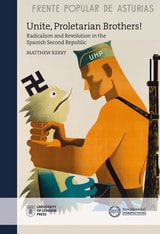
Unite, Proletarian Brothers!
Radicalism and Revolution in the Spanish Second RepublicMatthew Kerry
University of London Press, 2020
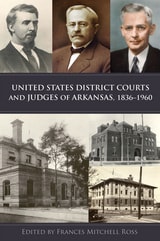
United States District Courts and Judges of Arkansas, 1836–1960
Frances Mitchell Ross
University of Arkansas Press, 2016
The book begins with statehood and continues with Congress’s decision to expand jurisdiction of the original 1836 District Court of Arkansas to include the vast Indian Territory to the west. The territory’s formidable size and rampant lawlessness brought in an overwhelming number of cases. The situation was only somewhat mitigated in 1851, when Congress split the state into eastern and western districts, which were still served by just one judge who travelled between the two courts.
A new judgeship for the Western District was created in 1871, and new seats for that court were established, but it wasn’t until 1896 that Congress finally ended all jurisdiction of Arkansas’s Western District Court over the Indian Territory.
Contributors to this collection include judges, practicing attorneys, academics, and thoughtful and informed family members who reveal how the judges made decisions on issues involving election laws, taxes, civil rights, railroads, liquor and prohibition, quack medicine, gangsters, bankruptcy, personal injury, the draft and Selective Service, school desegregation, prisons, and more. United States District Courts and Judges of Arkansas, 1836–1960 will be of value to anyone interested in Arkansas history—particularly Arkansas legal and judicial history as it relates to the local and national issues that came before these judges.
This project was supported in part by the United States District Court for the Eastern District of Arkansas and the United States District Court for the Western District of Arkansas.
United States–Latin American Relations, 1850–1903
Establishing a RelationshipEdited by Thomas M. Leonard
University of Alabama Press, 1999
United States–Latin American Relations, 1850–1903 is a collection of essays that provide an in-depth analysis of the developing relationship between the Americas during the critical period from the Mexican War to the Panama Canal treaty of 1903.
During the second half of the 19th century several forces in the United States, Latin America, and Europe converged to set the stage for the establishment of a more permanent relationship between the United States and Latin America. The key factors--security, economics, and modernization--created both commonalities and conflicts between and among regions. In this volume, scholars examine not only the domestic but also the geopolitical forces that encouraged and guided development of diplomatic relations in this rapidly changing period.
As the contributors note, by the end of the century, economic interests dominated the relationship that eventually developed. This period saw the building of a string of U.S. naval bases in Latin America and the Caribbean, the rapid industrialization of the United States and the development of a substantial export market, the entrance of many U.S. entrepreneurs into Latin American countries, and the first two inter-American conferences. By the century's end, the United States appeared as the dominant partner in the relationship, a perception that earned it the "imperialist" label.
This volume untangles this complex relationship by examining U.S. relations with Mexico, Cuba, Colombia, Central America, Peru, Argentina, Chile, Brazil, Uruguay, and Paraguay from the perspective of both the United States and the individual Latin American countries.
A companion volume to United States-Latin American Relations, 1800-1850: The Formative Generations, edited by T. Ray Shurbutt, this book establishes a historical perspective crucial to understanding contemporary diplomatic relations.
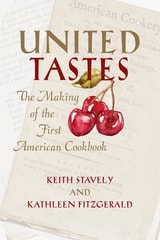
United Tastes
The Making of the First American CookbookKeith Stavely
University of Massachusetts Press, 2017
Winner of the 2017 Bruce Fraser Award from the Association for the Study of Connecticut History
The Library of Congress has designated American Cookery (1796) by Amelia Simmons one of the eighty-eight “Books That Shaped America.” Its recognition as “the first American cookbook” has attracted an enthusiastic modern audience of historians, food journalists, and general readers, yet until now American Cookery has not received the sustained scholarly attention it deserves. Keith Stavely and Kathleen Fitzgerald's United Tastes fills this gap by providing a detailed examination of the social circumstances and culinary tradition that produced this American classic.
Situating American Cookery within the post-Revolutionary effort to develop a distinct national identity, Stavely and Fitzgerald demonstrate the book's significance in cultural as well as culinary terms. Ultimately the separation between these categories dissolves as the authors show that the formation of “taste,” in matters of food as well as other material expressions, was essential to building a consensus on what it was to be American. United Tastes explores multiple histories—of food, cookbooks, printing, material and literary culture, and region—to illuminate the meaning and affirm the importance of America's first cookbook.
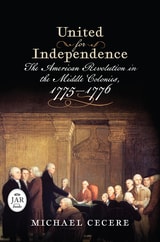
United for Independence
The American Revolution in the Middle Colonies, 1775–1776Michael Cecere
Westholme Publishing, 2027
In the aftermath of the battles of Lexington and Concord in April 1775 and the start of the Revolutionary War, it was not clear whether the colonies outside of New England would participate militarily in the conflict. Troops from the four New England colonies surrounded Boston immediately after the fighting at Lexington and Concord, and two months into the standoff the Continental Congress, meeting in Philadelphia, assumed authority over the New England army, but the middle and southern colonies had yet to see armed conflict or bloodshed with British forces.
In United for Independence: The American Revolution in the Middle Colonies, 1775–1776, historian Michael Cecere examines how the inhabitants of New York, New Jersey, Pennsylvania, Delaware, and Maryland reacted to the outbreak of war in Massachusetts. Leaders in these middle colonies, influenced by strong Loyalist sentiment within their borders and, in some cases, among themselves, fiercely debated whether to support the war in New England. Congress’s decision in the summer to establish the Continental Army, and its authorization for an invasion of Canada, both of which involved troops from the middle colonies, set the stage for their full-scale involvement in the Revolutionary War.
Using primary source extracts and proceeding chronologically from the spring of 1775 to the fall of 1776, the author presents the key events in each of these colonies, from the political struggles between Whigs and Tories, through the failed Canadian expedition, to the loss of Long Island and New York City. Designed for readers to understand the sequence of events that transformed a resistance movement into a war for independence, United for Independence provides an important overview of events in the middle colonies at the start of the Revolutionary War that complements other works that focus on specific military clashes and campaigns.
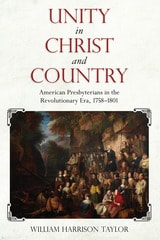
Unity in Christ and Country
American Presbyterians in the Revolutionary Era, 1758–1801William Harrison Taylor
University of Alabama Press, 2017
In Unity in Christ and Country: American Presbyterians in the Revolutionary Era, 1758–1801, William Harrison Taylor investigates the American Presbyterian Church’s pursuit of Christian unity and demonstrates how, through this effort, the church helped to shape the issues that gripped the American imagination, including evangelism, the conflict with Great Britain, slavery, nationalism, and sectionalism. When the colonial Presbyterian Church reunited in 1758, a nearly twenty-year schism was brought to an end. To aid in reconciling the factions, church leaders called for Presbyterians to work more closely with other Christian denominations. Their ultimate goal was to heal divisions, not just within their own faith but also within colonial North America as a whole.
Taylor contends that a self-imposed interdenominational transformation began in the American Presbyterian Church upon its reunion in 1758. However, this process was altered by the church’s experience during the American Revolution, which resulted in goals of Christian unity that had both spiritual and national objectives. Nonetheless, by the end of the century, even as the leaders in the Presbyterian Church strove for unity in Christ and country, fissures began to develop in the church that would one day divide it and further the sectional rift that would lead to the Civil War.
Taylor engages a variety of sources, including the published and unpublished works of both the Synods of New York and Philadelphia and the General Assembly of the Presbyterian Church in the United States, as well as numerous published and unpublished Presbyterian sermons, lectures, hymnals, poetry, and letters. Scholars of religious history, particularly those interested in the Reformed tradition, and specifically Presbyterianism, should find Unity in Christ and Country useful as a way to consider the importance of the theology’s intellectual and pragmatic implications for members of the faith.
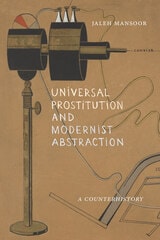
Universal Prostitution and Modernist Abstraction
A CounterhistoryJaleh Mansoor
Duke University Press, 2025
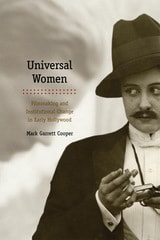
Universal Women
Filmmaking and Institutional Change in Early HollywoodMark Garrett Cooper
University of Illinois Press, 2010
A Choice Outstanding Academic Title, 2011.
Between 1912 and 1919, the Universal Film Manufacturing Company credited eleven women with directing at least 170 films, but by the mid-1920s all of these directors had left Universal and only one still worked in the film industry at all. Two generations of cinema historians have either overlooked or been stymied by the mystery of why Universal first systematically supported and promoted women directors and then abruptly reversed that policy.
In this trailblazing study, Mark Garrett Cooper approaches the phenomenon as a case study in how corporate movie studios interpret and act on institutional culture in deciding what it means to work as a man or woman. In focusing on issues of institutional change, Cooper challenges interpretations that explain women's exile from the film industry as the inevitable result of a transhistorical sexism or as an effect of a broadly cultural revision of gendered work roles. Drawing on a range of historical and sociological approaches to studying corporate institutions, Cooper examines the relationship between institutional organization and aesthetic conventions during the formative years when women filmmakers such as Ruth Ann Baldwin, Cleo Madison, Ruth Stonehouse, Elise Jane Wilson, and Ida May Park directed films for Universal.
University of Chicago Readings in Western Civilization, Volume 1
The Greek PolisEdited by Arthur W. H. Adkins and Peter White
University of Chicago Press, 1986
Individual volumes provide essential background reading for courses covering specific eras and periods. The complete nine-volume series is ideal for general courses in history and Western civilization sequences.
University of Chicago Readings in Western Civilization, Volume 2
Rome: Late Republic and PrincipateEdited by Walter Emil Kaegi Jr. and Peter White
University of Chicago Press, 1986
Individual volumes provide essential background reading for courses covering specific eras and periods. The complete nine-volume series is ideal for general courses in history and Western civilization sequences.
University of Chicago Readings in Western Civilization, Volume 3
The Church in the Roman EmpireEdited by Karl F. Morrison
University of Chicago Press, 1986
Individual volumes provide essential background reading for courses covering specific eras and periods. The complete nine-volume series is ideal for general courses in history and Western civilization sequences.
University of Chicago Readings in Western Civilization, Volume 4
Medieval EuropeEdited by Julius Kirshner and Karl F. Morrison
University of Chicago Press, 1986
Individual volumes provide essential background reading for courses covering specific eras and periods. The complete nine-volume series is ideal for general courses in history and Western civilization sequences.
University of Chicago Readings in Western Civilization, Volume 5
The RenaissanceEdited by Eric Cochrane and Julius Kirshner
University of Chicago Press, 1986
Individual volumes provide essential background reading for courses covering specific eras and periods. The complete nine-volume series is ideal for general courses in history and Western civilization sequences.
University of Chicago Readings in Western Civilization, Volume 6
Early Modern Europe: Crisis of AuthorityEdited by Eric Cochrane, Charles M. Gray, and Mark Kishlansky
University of Chicago Press, 1987
Individual volumes provide essential background reading for courses covering specific eras and periods. The complete nine-volume series is ideal for general courses in history and Western civilization sequences.
University of Chicago Readings in Western Civilization, Volume 7
The Old Regime and the French RevolutionEdited by Keith M. Baker
University of Chicago Press, 1987
The University of Chicago Readings in Western Civilization series makes available to students and teachers a unique selection of primary documents, many in new translations. These readings, prepared for the highly praised Western civilization sequence at the University of Chicago, were chosen by an outstanding group of scholars whose experience teaching that course spans almost four decades. Each volume includes rarely anthologized selections as well as standard, more familiar texts; a bibliography of recommended parallel readings; and introductions providing background for the selections. Beginning with Periclean Athens and concluding with twentieth-century Europe, these source materials enable teachers and students to explore a variety of critical approaches to important events and themes in Western history.
Individual volumes provide essential background reading for courses covering specific eras and periods. The complete nine-volume series is ideal for general courses in history and Western civilization sequences.
University of Chicago Readings in Western Civilization, Volume 8
Nineteenth-Century Europe: Liberalism and its CriticsEdited by Jan E. Goldstein and John W. Boyer
University of Chicago Press, 1987
Individual volumes provide essential background reading for courses covering specific eras and periods. The complete nine-volume series is ideal for general courses in history and Western civilization sequences.
University of Chicago Readings in Western Civilization, Volume 9
Twentieth-Century EuropeEdited by John W. Boyer and Jan E. Goldstein
University of Chicago Press, 1987
Individual volumes provide essential background reading for courses covering specific eras and periods. The complete nine-volume series is ideal for general courses in history and Western civilization sequences.
Unjustly Dishonored
An African American Division in World War IRobert H. Ferrell
University of Missouri Press, 2026
Unknowing and the Everyday
Sufism and Knowledge in IranSeema Golestaneh
Duke University Press, 2023
Unknown Tongues
Black Women's Political Activism in the Antebellum Era, 1830-1860Gayle T. Tate
Michigan State University Press, 2003
Unknown Tongues examines the social and economic factors of northern industrialization, social reform, and black nationalism, all of which undergirded black women’s political consciousness during the decades before the American Civil War. The linkages between black women’s roles in the “culture of resistance” in slave communities and their transformations in the urban market economy fueled the development of black women’s political consciousness. As community activists and then as abolitionists, black urban women organized and protested against slavery, racism, sexism, and its attendant ills. Driven by market forces of nascent capitalism, black women created broad- based protest responses to the white power structure. Unknown Tongues explores the material realities that underpinned black women’s political development as well as the transformative stages of their political consciousness and activity.
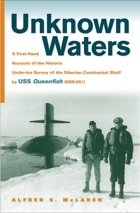
Unknown Waters
A First-Hand Account of the Historic Under-Ice Survey of the Siberian Continental Shelf by USS Queenfish (SSN-651)Alfred S. McLaren
University of Alabama Press, 2008
“A first-person view of submarine under-ice operations that appears in very few other works.” —Gary E. Weir, author of Rising Tide: The Untold Story of the Russian Submarines that Fought the Cold War
Unknown Waters tells the story of the brave officers and men of the nuclear attack submarine USS Queenfish (SSN-651), who made the first survey of an extremely important and remote region of the Arctic Ocean. The unpredictability of deep-draft sea ice, shallow water, and possible Soviet discovery, all played a dramatic part in this engrossing 1970 voyage.
Covering 3,100 miles over a period of some 20 days at a laborious average speed of 6.5 knots or less, the attack submarine carefully threaded its way through innumerable underwater canyons of ice and over irregular seafloors, at one point becoming entrapped in an “ice garage.” Only cool thinking and skillful maneuvering of the nearly 5,000-ton vessel enabled a successful exit.
Unlawful Violence
Mexican Law and Cultural ProductionRebecca Janzen
Vanderbilt University Press, 2022
The abundance of laws and constitutional amendments that have cropped up in response are mirrored in Mexico's fragmented cultural production of the same period. Contemporary Mexican literature grapples with this splintered reality through non-linear stories from multiple perspectives, often told through shifts in time. The novels, such as Jorge Volpi's Una novela criminal [A Novel Crime] (2018) and Julián Herbert's La casa del dolor ajeno [The House of the Pain of Others] (2015) take multiple perspectives and follow non-linear plotlines; other examples, such as the very short stories in ¡Basta! 100 mujeres contra la violencia de género [Enough! 100 Women against Gender-Based Violence] (2013), present perspectives from multiple authors.
Few scholars compare cultural production and legal texts in situations like Mexico, where extreme violence coexists with a high number of human rights laws. Unlawful Violence measures fictional accounts of human rights against new laws that include constitutional amendments to reform legal proceedings, laws that protect children, laws that condemn violence against women, and laws that protect migrants and Indigenous peoples. It also explores debates about these laws in the Mexican house of representatives and senate, as well as interactions between the law and the Mexican public.
Unlearning Eugenics
Sexuality, Reproduction, and Disability in Post-Nazi EuropeDagmar Herzog
University of Wisconsin Press, 2020
Bringing together the latest findings in Holocaust studies, the history of religion, and the history of sexuality in postwar—and now also postcommunist—Europe, Unlearning Eugenics shows how central the controversies over sexuality, reproduction, and disability have been to broader processes of secularization and religious renewal. Herzog also restores to the historical record a revelatory array of activists: from Catholic and Protestant theologians who defended abortion rights in the 1960s–70s to historians in the 1980s–90s who uncovered the long-suppressed connections between the mass murder of the disabled and the Holocaust of European Jewry; from feminists involved in the militant "cripple movement" of the 1980s to lawyers working for right-wing NGOs in the 2000s; and from a handful of pioneers in the 1940s–60s committed to living in intentional community with individuals with cognitive disability to present-day disability self-advocates.
Unlearning the Hush
Oral Histories of Black Female Educators in Mississippi in the Civil Rights EraMarlee S. Bunch Foreword by Christopher M. Span
University of Illinois Press, 2025
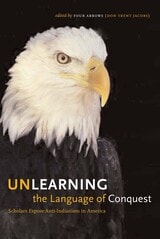
Unlearning the Language of Conquest
Scholars Expose Anti-Indianism in AmericaEdited by Four Arrows (Don Trent Jacobs)
University of Texas Press, 2006
Responding to anti-Indianism in America, the wide-ranging perspectives culled in Unlearning the Language of Conquest present a provocative account of the contemporary hegemony still at work today, whether conscious or unconscious. Four Arrows has gathered a rich collection of voices and topics, including:
- Waziyatawin Angela Cavender Wilson's "Burning Down the House: Laura Ingalls Wilder and American Colonialism," which probes the mentality of hatred woven within the pages of this iconographic children's literature.
- Vine Deloria's "Conquest Masquerading as Law," examining the effect of anti-Indian prejudice on decisions in U.S. federal law.
- David N. Gibb's "The Question of Whitewashing in American History and Social Science," featuring a candid discussion of the spurious relationship between sources of academic funding and the types of research allowed or discouraged.
- Barbara Alice Mann's "Where Are Your Women? Missing in Action," displaying the exclusion of Native American women in curricula that purport to illuminate the history of Indigenous Peoples.
Bringing to light crucial information and perspectives on an aspect of humanity that pervades not only U.S. history but also current sustainability, sociology, and the ability to craft accurate understandings of the population as a whole, Unlearning the Language of Conquest yields a liberating new lexis for realistic dialogues.
Unlearning
Rethinking Poetics, Pandemics, and the Politics of KnowledgeCharles L. Briggs
Utah State University Press, 2021
Eschewing narrow Eurocentric modes of explanation and research foci, Briggs brings together colonialism, health, media, and psychoanalysis to rethink classic work on poetics and performance that revolutionized linguistic anthropology, folkloristics, media studies, communication, and other fields. Beginning with a candid memoir that credits the mentors whose disconcerting insights prompted him to upend existing scholarly approaches, Briggs combines his childhood experiences in New Mexico with his work in graduate school, his ethnography in Venezuela working with Indigenous peoples, and his contemporary work—which is heavily weighted in medical folklore.
Unlearning offers students, emerging scholars, and veteran researchers alike a guide for turning ethnographic objects into provocations for transforming time-worn theories and objects of analysis into sources of scholarly creativity, deep personal engagement, and efforts to confront unconscionable racial inequities. It will be of significant interest to folklorists, anthropologists, and social theorists and will stimulate conversations across these disciplines.
Unlikely Heroes
The Southern Judges Who Made Brown WorkJack Bass
University of Alabama Press, 1981
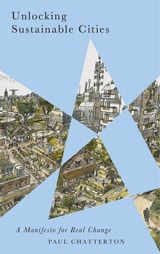
Unlocking Sustainable Cities
A Manifesto for Real ChangePaul Chatterton
Pluto Press, 2018
Across the world, people are implementing promising new practices—from transforming abandoned public spaces and setting up community co-operatives, to rewilding urban nature and powering up civic energy. Paul Chatterton explores how these grassroots experiments harness the creative power of the collective to transform our city systems, from transportation, energy, and economy, to community, democracy, and nature. Imagining radical alternatives—such as car-free, post-carbon, “bio cities”—this is a toolkit for realizing a better urban future.
Unlocking the Treasury
Elementary Learning for Boys in Qing ChinaKatherine Ngo
Lever Press, 2025
Unlocking the Treasury grounds its study of primary education in the intellectual history of the period. Using the concept of interpretive communities, Katherine Ngo explores the impact of socio-political influences and differences in Qing schools of thought, including the school of principle, the school of heart-mind, and practical learning. As such, this volume examines the Treasury through three critical readings of the text: as a handbook for practical learning, a child-oriented reading of the school of heart-mind, and the instrumental perspective of education as examination training.
Ngo reframes the curricular content, skills, learning approaches, and teaching strategies of Chinese pre-modern elementary education with the goal of facilitating a broader transcultural dialogue in contemporary education. Far from the notion of traditional Chinese elementary education being monolithic and “rote learning,” Unlocking the Treasury reveals that elementary learning in the Qing dynasty offered a sophisticated and complex educational agenda with diverse learning goals of examination, preparation, moral development, and textual scholarship training that were shaped by intellectual trends of the time. An engaging text for scholars of Qing China and historians of education alike, Katherine Ngo’s Unlocking the Treasury is essential to understanding the philosophical, historical, literary, and psychological dimensions of education and educational theory in the Qing era.

Unloose My Heart
A Personal Reckoning with the Twisted Roots of My Southern Family TreeMarcia Edwina Herman-Giddens
University of Alabama Press, 2023
A deeply personal memoir that unearths a family history of racism, slaveholding, and trauma as well as love and sparks of delight.
Marcia Herman’s family moved to Birmingham in 1946, when she was five years old, and settled in the steel-making city dense with smog and a rigid apartheid system. Marcia, a shy only child, struggled to fit in and understand this world, shadowed as it was by her mother’s proud antebellum heritage. In 1966, weary of Alabama’s toxic culture, Marcia and her young family left Birmingham and built a life in North Carolina.
Later in life, Herman-Giddens resumed a search to find out what she did not know about her family history. Unloose My Heart interweaves the story of her youth and coming of age in Birmingham during the Civil Rights Movement together with this quest to understand exactly who and what her maternal ancestors were and her obligations as a white woman within a broader sense of American family.
More than a memoir set against the backdrop of Jim Crow and the civil rights struggle, this is the work of a woman of conscience writing in the twenty-first century. Haunted by the past, Unloose My Heart is a journey of exploration and discovery, full of angst, sorrow, and yearning. Unearthing her forebears’ centuries-long embrace of plantation slavery, Herman-Giddens dug deeply to parse the arrogance and cruelty necessary to be a slaveholder and the trauma and fear that ripple out in its wake. All this forced her to scrutinize the impact of this legacy in her life, as well as her debt to the enslaved people who suffered and were exploited at her ancestors’ hands. But she also discovers lost connections, new cousins and friends, unexpected joys, and, eventually, a measure of peace in the process. With heartbreak, moments of grace, and an enduring sense of love, Unloose My Heart shines a light in the darkness and provides a model for a heartfelt reckoning with American history.
Unmaking Botany
Science and Vernacular Knowledge in the Colonial PhilippinesKathleen Cruz Gutierrez
Duke University Press, 2025
Unmaking Waste
New Histories of Old ThingsSarah Newman
University of Chicago Press, 2023
Garbage is often assumed to be an inevitable part and problem of human existence. But when did people actually come to think of things as “trash”—as becoming worthless over time or through use, as having an end?
Unmaking Waste tackles these questions through a long-term, cross-cultural approach. Drawing on archaeological finds, historical documents, and ethnographic observations to examine Europe, the United States, and Central America from prehistory to the present, Sarah Newman traces how different ideas about waste took shape in different times and places. Newman examines what people consider to be “waste” and how they interact with it, as well as what happens when different perceptions of trash come into conflict. Conceptions of waste have shaped forms of reuse and renewal in ancient Mesoamerica, early modern ideas of civility and forced religious conversion in New Spain, and even the modern discipline of archaeology. Newman argues that centuries of assumptions imposed on other places, times, and peoples need to be rethought. This book is not only a broad reconsideration of waste; it is also a call for new forms of archaeology that do not take garbage for granted. Unmaking Waste reveals that waste is not—and never has been—an obvious or universal concept.
Unmaking the West
"What-If?" Scenarios That Rewrite World HistoryPhilip E. Tetlock, Richard Ned Lebow, and Geoffrey Parker, editors
University of Michigan Press, 2006
"If ever there was an argument for the usefulness of counterfactual history, this admirable, and admirably focused, collection has convincingly made it."
—Robert Cowley, editor of the What If?TM series
"With chapters ranging from politics to war to religion to economics and to science and technology, this is the most thematically wide-ranging collection on counterfactuality. An intelligent, cutting-edge study with important things to say."
—Jonathan C. D. Clark, Department of History, University of Kansas
—Aaron Belkin, Associate Professor of Political Science, University of California, Santa Barbara
Philip E. Tetlock is Mitchell Professor, Haas School of Business, University of California, Berkeley, and author of Expert Political Judgment: How Good Is It? How Can We Know?
Unmanning
How Humans, Machines and Media Perform Drone WarfareKatherine Fehr Chandler
Rutgers University Press, 2020
Unmasking the State
Making Guinea ModernMike McGovern
University of Chicago Press, 2012
Unmentionable Madness
Gender, Disability, and Shame in the Malaria Treatment of NeurosyphilisChristin L. Hancock
University of Illinois Press, 2025
Christin L. Hancock looks through the lens of feminist disability to examine the popular but ethically suspect treatment and its consequences. As Hancock shows, the treatment’s purported success rate relied on the disabled minds and bodies of people incarcerated in mental hospitals. The backgrounds and identities of these patients reflected and perpetuated attitudes around poverty, gender, race, and disability while betraying authorities’ desire to protect the public from women and men perceived as abnormal, sexually tainted, and unworthy of community life.
Paying special attention to the patients’ voices and experiences, Unmentionable Madness offers a disability history that confronts the ethics of experimentation.
Unnatural Evidence
Artifice and Expertise in Pre-Reformation PaintingTamara Golan
University of Chicago Press, 2026
A novel account of the rise of pictorial naturalism on the eve of the Reformation.
In the summer of 1507, the town of Bern was abuzz with rumors about a sculpture at the Dominican church that had wept tears of blood. But astonishment soon gave way to doubt when a group of local artisans denounced the authenticity of the miracle, complaining that the tears were too poorly made to be the work of a skilled hand, let alone divine intervention. The resulting trial exposed an elaborate fraud staged by the church’s leaders and, with it, a tension that had been building across the region for nearly a century. In a world where claims of sanctity faced judicial scrutiny, the threshold between artistry and deception had become dangerously thin.
Tamara Golan examines how three generations of painters working in fifteenth- and sixteenth-century Switzerland navigated this fraught terrain. Golan traces how, amid intensifying skepticism over the authenticity of miracles and visions, these artists forged what she calls an “alternative naturalism,” a conspicuously unnatural mode of painting marked by distorted perspective, unusual modeling, and heavily tooled gold ground. Rather than striving for the faithful transcription of appearances, these artists drew on shared premises of artisanal expertise and juridical inquiry to advance bold claims about the capacity of their craft to represent not just the natural but the supernatural. The first study to identify this body of work as a coherent enterprise, Unnatural Evidence recovers an epistemological experiment at once ambitious and inherently unstable.