Results by title
18284 books match the query 'United States' and 234 start with u

Unsecular Media
MAKING NEWS OF RELIGION IN AMERICAMark Silk
University of Illinois Press, 1995
Mark Silk's book is the first to offer a comprehensive description and analysis of how American news media cover religion.
Unseeing Empire
Photography, Representation, South Asian AmericaBakirathi Mani
Duke University Press, 2020
Unsettled History
Making South African Public PastsLeslie Witz, Gary Minkley, and Ciraj Rassool
University of Michigan Press, 2017
Leslie Witz, Gary Minkley, and Ciraj Rassool take the reader to sites of historical production in which complex ideas about pasts are invoked, and navigate a path toward understanding the agencies of image-making and memory production. This volume is the outcome of the authors’ intensive collaborative research and engagement over twenty-five years on questions including the production and performance of apartheid history; the cultural politics of social history; South Africa’s Truth and Reconciliation Commission and practices of orality; tourism as an arena of image-making and historical construction; museums as sites of heritage production for a new South Africa; photographs, archival meanings, and the construction of the social documentary; and the centenary commemorations of the South African War and the making of race. The authors not only witnessed many of these instances of history-making but were also participants in their constitution.
Unsettling 'Sensation'
Arts Policy Lessons from the Brooklyn Museum of Art ControversyRothfield, Lawrence
Rutgers University Press, 2001
Unsettling 'Sensation'
Arts-Policy Lessons from the Brooklyn Museum of Art ControversyRothfield, Lawrence
Rutgers University Press, 2001
In September 1999, Sensation, an exhibition at the Brooklyn Museum, opened its doors, igniting a controversy still burning in the art world. This collection of cutting-edge art from the Saatchi collection in England, and the museum’s arrangements with Charles Saatchi to finance the show, so offended New York City mayor Rudolph Giuliani that he attempted to shut the museum down by withholding city funds that are crucially needed by that institution. Only a legal ruling prevented him from doing so. Like the Robert Mapplethorpe exhibition before it, Sensation once again raises questions about public spending for “controversial” art, but with the added dimension of religious conflict and charges of commercialization.
The contributors to this volume use the Sensation exhibition as a stepping-stone to analyze larger questions such as the authority the government has to withhold funds, various interpretations of the First Amendment, how to respect divergent cultural and religious values; and the economic stake of museums and dealers in art. In their articles—written expressly for this volume, and spanning the disciplines of law, cultural studies, public policy, and art—the contributors consider issues at the center of arts policy. They propose various legal strategies, curatorial practices, and standards of doing business intended to serve the public interest in the arts.
Unsettling India
Affect, Temporality, TransnationalityPurnima Mankekar
Duke University Press, 2015
Unsettling Scripture
Iroquois and the Book of MormonThomas W Murphy
University of Utah Press, 2025
In Unsettling Scripture: Iroquois and the Book of Mormon, anthropologist Thomas W Murphy delves into the visions of Seneca prophet Handsome Lake, the epic narratives of the Iroquois Confederacy, and the origin story of the Book of Mormon, revealing surprising parallels between Indigenous and Mormon traditions.
Through ethnohistorical research and decolonizing methodologies, Murphy reexamines how both communities understand their origins, faith, and prophecy. From Handsome Lake’s revelations to Joseph Smith’s seer stone, from ancient sibling rivalries to the Great Peace, this book unsettles traditional narratives while opening new conversations on scripture, identity, and cultural exchange. Drawing from living Indigenous voices, Unsettling Scripture challenges readers to rethink sacred texts and the histories they tell.
Unsettling Thoreau
Native Americans, Settler Colonialism, and the Power of PlaceJohn J. Kucich
University of Massachusetts Press, 2024
A CHOICE 2025 Outstanding Academic Title
Finalist for the 2025 New England Society Book Awards
Henry David Thoreau’s life-long fascination with Native Americans is widely known and a recurring topic of interest, and it is also a source of modern debate. This is a figure who both had a deep interest in Native American history and culture and was seen by many of his contemporaries, including Ralph Waldo Emerson and Nathaniel Hawthorne, as “more like an Indian” than his white neighbors. At the same time, Thoreau did little to protest the systematic dispossession of Indigenous people across the country in his lifetime. John J. Kucich charges into this contradiction, considering how Thoreau could demonstrate deep respect for Native American beliefs on one hand and remain largely silent about their genocide, actively happening throughout his life, on the other. Thoreau’s long study of Native peoples, as reflected in so much of his writing, allowed him to glimpse an Indigenous worldview, but it never fully freed him from the blind spots of settler colonialism.
Drawing on Indigenous studies and critiques of settler colonialism, as well as new materialist approaches that illustrate Thoreau’s radical reimagining of the relationship between humans and the natural world, Unsettling Thoreau explores the stakes of Thoreau’s effort to live mindfully and ethically in place when living alongside, or replacing marginalized peoples. By examining the whole scope of his writings, including the unpublished Indian Notebooks, and placing them alongside Native writers and communities in and beyond New England, this book gauges Thoreau’s effort to use Indigenous knowledge to reimagine a settler colonial world, without removing him from its trappings.
Unsettling
Jews, Whiteness, and Incest in American Popular CultureEli Bromberg
Rutgers University Press, 2021
Unspeakable Images
ETHNICITY AND THE AMERICAN CINEMAEdited by Lester D. Friedman
University of Illinois Press, 1991
In fourteen chapters on topics ranging from film comedy to reporter movies to Latins in Manhattan, contributors from diverse disciplines explore ethnicity as a broad, complex, multilayered concept. The book's first section scrutinizes ethnicity within the context of traditional modes of film analysis---historical, auteurist, and generic. Essays in the second section relate ethnicity to broader areas of critical thought such as cultural studies, ethnography, postmodernism, psychoanalysis, feminism, and class studies, analyzing how each intersects and amplifies the other.
Unspeakable Violence
Remapping U.S. and Mexican National ImaginariesNicole M. Guidotti-Hernández
Duke University Press, 2011
Unspoiled Beauty
A Personal Guide to Missouri WildernessCharles J. Farmer
University of Missouri Press, 1999
Tucked within Missouri's borders are eight Congressionally designated Wilderness areas. These magnificent forests, scattered across the southern portion of the state, combine a wide variety of unique ecosystems. In Unspoiled Beauty, Charles Farmer captures the essence of the Missouri Wilderness experience, allowing even those who have never set foot in the wilderness to enjoy its wonders and appreciate its importance.
Farmer begins by describing the wilderness region prior to the Congressional Wilderness designation, providing an overview of the numerous battles that were waged to reclaim the state's wilderness and to assure its preservation. Featured are key players who were instrumental in the acquisition and preservation of Missouri wilderness.
Farmer devotes a chapter to each of the eight Wilderness areas, accompanied by numerous engaging photographs, many in color. He provides a brief history of each and shares his own fascinating personal experiences of camping, hiking, backpacking, hunting, and fishing within each. He discusses trails, fauna, flora, and other colorful details along the way. His adventures take place during different seasons of the year; he is sometimes alone, sometimes in company. Through his eyes, each area is brought vividly to life.
"Wilderness Tips" and a guide with rules for the novice camper, hiker, backpacker, hunter, and fisherman enhance the book's usefulness. The final chapter lists the areas in Missouri that qualify for Wilderness designation in the New Forest Plan. Unspoiled Beauty may well play a part in saving Missouri's remaining wilderness candidates. It will also help other states that are preparing campaigns to save their own wilderness areas.
Wilderness advocates, hikers and backpackers, fishermen and hunters, anyone who appreciates the great outdoors will enjoy this important new book.
Unsportsmanlike Conduct
Exploiting College AthletesWalter Byers
University of Michigan Press, 1997
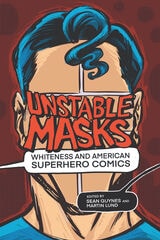
Unstable Masks
Whiteness and American Superhero ComicsEdited by Sean Guynes and Martin Lund
The Ohio State University Press, 2020
In Unstable Masks: Whiteness and American Superhero Comics, Sean Guynes and Martin Lund bring together a series of essays that contextualize the histories and stakes of whiteness studies, superhero comics, and superhero studies for academics, fans, and media-makers alike. The volume illustrates how the American comic book superhero is fundamentally a figure of white power and white supremacy and ultimately calls for diversity in superhero comics as well as a democratized media culture.
Contributors not only examine superhero narratives but also delve into the production, distribution, audience, and reception of those narratives, highlighting the imbrication of forces that have helped to create, normalize, question, and sometimes even subvert American beliefs about whiteness and race. Unstable Masks considers the co-constitutive nature of identity, representation, narrative, production and consumption, and historical and cultural contexts in forging the stereotypes that decide who gets to be a superhero and who gets to be American on the four-color pages of comic books.
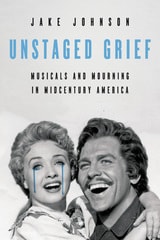
Unstaged Grief
Musicals and Mourning in Midcentury AmericaJake Johnson
University of Illinois Press, 2025
Often dismissed as escapism, screen musicals of the 1960s in fact tapped into unspoken sadness about an America that was slipping away. Jake Johnson delves into film and television musicals of the era to examine their place in networks of grieving in America, for America, and about America.
The Golden Age of musical theater ended just as Elisabeth Kübler-Ross’s On Death and Dying debuted, and Johnson uses Kübler-Ross’s five stages to frame the intertwining of musicals and grief. He analyzes films like Seven Brides for Seven Brothers and State Fair alongside paintings, poetry, and other images and texts to reveal how the musical theater engine built in the first half of the century broke down just as a new language emerged to describe the melancholy felt by people facing the end of the world they had known.
Nuanced and original, Unstaged Grief plumbs the grief, loss, and hope behind the Technicolor spectacle and rousing showstoppers.
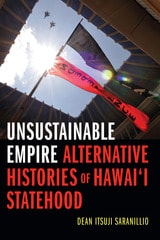
Unsustainable Empire
Alternative Histories of Hawai‘i StatehoodDean Itsuji Saranillio
Duke University Press, 2018
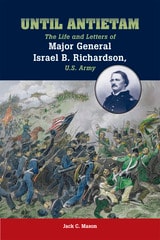
Until Antietam
The Life and Letters of Major General Israel B. Richardson, U.S. ArmyJack C. Mason
Southern Illinois University Press, 2009
While researching this book, Jack C. Mason made the kind of discovery that historians dream of. He found more than one hundred unpublished and unknown letters from Union general Israel B. Richardson to his family, written from his time as a West Point cadet until the day before his fatal wounding at the Battle of Antietam, the bloodiest day in American history. Using these freshly uncovered primary sources as well as extensive research in secondary materials, Mason has written the first-ever biography of Israel Bush Richardson.
Mason traces Richardson’s growth as a soldier through his experiences and the guidance of his superiors, and then as a leader whose style reflected the actions of the former commanders he respected. Though he was a disciplinarian, Richardson took a relaxed attitude toward military rules, earning him the affection of his men. Unfortunately, his military career was cut short just as high-ranking officials began to recognize his aggressive leadership. He was mortally wounded while leading his men at Antietam and died on November 3, 1862.
Until Antietam brings to life a talented and fearless Civil War infantry leader. Richardson’s story, placed within the context of nineteenth-century warfare, exemplifies how one soldier’s life influenced his commanders, his men, and the army as a whole.
Winner of the Army Historical Foundation 2009 Distinguished Book Award
Until Choice Do Us Part
Marriage Reform in the Progressive EraClare Virginia Eby
University of Chicago Press, 2013
For centuries, people have been thinking and writing—and fiercely debating—about the meaning of marriage. Just a hundred years ago, Progressive era reformers embraced marriage not as a time-honored repository for conservative values, but as a tool for social change.
In Until Choice Do Us Part, Clare Virginia Eby offers a new account of marriage as it appeared in fiction, journalism, legal decisions, scholarly work, and private correspondence at the turn into the twentieth century. She begins with reformers like sexologist Havelock Ellis, anthropologist Elsie Clews Parsons, and feminist Charlotte Perkins Gilman, who argued that spouses should be “class equals” joined by private affection, not public sanction. Then Eby guides us through the stories of three literary couples—Upton and Meta Fuller Sinclair, Theodore and Sara White Dreiser, and Neith Boyce and Hutchins Hapgood—who sought to reform marriage in their lives and in their writings, with mixed results. With this focus on the intimate side of married life, Eby views a historical moment that changed the nature of American marriage—and that continues to shape marital norms today.
Until Justice Rolls Down
The Birmingham Church Bombing CaseFrank Sikora
University of Alabama Press, 2005
This book tells the story of one grim Sunday in September 1963 when an intentionally planted cache of dynamite ripped through the walls of the Sixteenth Street Baptist Church and ended the dreams and the lives of four young black girls. Their deaths spurred the Kennedy administration to send an army of FBI agents to Alabama and led directly to the passage of the Civil Rights Act. When the Justice Department was unable to bring anyone to trial for this heinous crime, a young Alabama attorney general named Bill Baxley began his own investigation to find the perpetrators. In 1977, 14 years after the bombing, Baxley brought one Klansman to trial and, in a courtroom only blocks from the bombed church (now a memorial to the victims), persuaded a jury to return a guilty verdict. More than 20 years later two other perpetrators were tried for the bombing, found guilty, and remanded to prison.
Frank Sikora has used the court records, FBI reports, oral interviews, and newspaper accounts to weave a story of spellbinding proportions. A reporter by profession, Sikora tells this story compellingly, explaining why the civil rights movement had to be successful and how Birmingham had to change.
Untimely Ruins
An Archaeology of American Urban Modernity, 1819-1919Nick Yablon
University of Chicago Press, 2009
American ruins have become increasingly prominent, whether in discussions of “urban blight” and home foreclosures, in commemorations of 9/11, or in postapocalyptic movies. In this highly original book, Nick Yablon argues that the association between American cities and ruins dates back to a much earlier period in the nation’s history. Recovering numerous scenes of urban desolation—from failed banks, abandoned towns, and dilapidated tenements to the crumbling skyscrapers and bridges envisioned in science fiction and cartoons—Untimely Ruins challenges the myth that ruins were absent or insignificant objects in nineteenth-century America.
The first book to document an American cult of the ruin, Untimely Ruins traces its deviations as well as derivations from European conventions. Unlike classical and Gothic ruins, which decayed gracefully over centuries and inspired philosophical meditations about the fate of civilizations, America’s ruins were often “untimely,” appearing unpredictably and disappearing before they could accrue an aura of age. As modern ruins of steel and iron, they stimulated critical reflections about contemporary cities, and the unfamiliar kinds of experience they enabled. Unearthing evocative sources everywhere from the archives of amateur photographers to the contents of time-capsules, Untimely Ruins exposes crucial debates about the economic, technological, and cultural transformations known as urban modernity. The result is a fascinating cultural history that uncovers fresh perspectives on the American city.
Untrodden Ground
How Presidents Interpret the ConstitutionHarold H. Bruff
University of Chicago Press, 2015
Reviewing the processes taken by all forty-four presidents to form new legal precedents and the constitutional conventions that have developed as a result, Harold H. Bruff shows that the president is both more and less powerful than many suppose. He explores how presidents have been guided by both their predecessors’ and their own interpretations of constitutional text, as well as how they implement policies in ways that statutes do not clearly authorize or forbid. But while executive power has expanded far beyond its original conception, Bruff argues that the modern presidency is appropriately limited by the national political process—their actions are legitimized by the assent of Congress and the American people or rejected through debilitating public outcry, judicial invalidation, reactive legislation, or impeachment. Synthesizing over two hundred years of presidential activity and conflict, this timely book casts new light on executive behavior and the American constitutional system.
Unvarnished Arkansas
The Naked Truth about Nine Famous ArkansansSteven Teske
Butler Center for Arkansas Studies, 2012
Unveiled Voices, Unvarnished Memories
The Cromwell Family in Slavery and Segregation, 1692-1972Adelaide M. Cromwell
University of Missouri Press, 2006
Unveiling the Color Line
W. E. B. Du Bois on the Problem of WhitenessLisa J. McLeod
University of Massachusetts Press, 2024
In The Souls of Black Folk, W. E. B. Du Bois brilliantly details the African American experience. Yet the renowned sociologist was also an astute chronicler of white people, particularly their racism. As Unveiling the Color Line demonstrates, Du Bois’s trenchant analysis of whiteness and white supremacy began in his earliest work—his 1890 speech on Jefferson Davis—and continued in every major book he published in his more than sixty-year career, up to The Black Flame Trilogy.
Lisa J. McLeod traces the development of Du Bois’s conception of whiteness, and the racism inherent to it, as an all-encompassing problem, whether predicated on ignorance, moral failure, or the inability to recognize the humanity in other people. In clear, elegant prose, McLeod investigates Du Bois’s complex and nuanced thinking, putting his insights into dialogue with contemporary racial theorists to demonstrate his continuing value to present-day critical thought and activism.
Unwanted Claims
The Politics of Participation in the U.S. Welfare SystemJoe Soss
University of Michigan Press, 2002
Unwanted Claims is a work of political sociology that provides an illuminating account of political life in the U.S. welfare system that should be of interest to scholars, students, policy practitioners, and the general public. Written in a style that minimizes technical jargon, avoids complex statistical presentations, and makes extensive use of clients' own descriptions of their experiences, beliefs, and actions, it offers an accessible and humanizing portrait of welfare participation that challenges conventional wisdom and raises important questions about poverty, welfare, and democracy in America.
Joe Soss is Assistant Professor of Government, The American University.
Unwanted Mexican Americans in the Great Depression
Repatriation Pressures, 1929–1939Abraham Hoffman; Foreword by Julian Nava
University of Arizona Press, 1973
Prior to 1931, many Mexican Americans left the United States voluntarily, prompted by homesickness, unemployment, and the Mexican government’s offer of free small land parcels. As the Great Depression deepened, repatriation pressures increased. Anglo groups lobbied for laws that excluded aliens from jobs and welfare benefits. Many businessmen, government officials, and social workers believed that removing Mexican Americans would open up jobs for U.S. citizens and alleviate some of the burden placed on relief agencies.
The Department of Labor’s federal deportation drive, launched in 1931, created an atmosphere of fear and tension in Mexican American communities. Immigration agents conducted surprise searches for people who had entered the country illegally, and Mexicans who had crossed the border before restrictive legislation was passed became prime targets of the deportation campaign.
Welfare agencies throughout the United States organized repatriation programs. The Los Angeles County Welfare Bureau, with the most extensive program, was responsible for the removal of more than thirteen thousand Mexican Americans. A few well-publicized deportations had frightened Mexicans who were unsure of their immigration status. Many chose repatriation over possible deportation.
Using much archival material and many previously unpublished government documents, Hoffman focuses on the repatriation experience in Los Angeles. The city’s large Mexican American population provides an excellent case study of the entire movement. He also surveys the process of Mexican repatriation throughout the entire United States.
Unwanted
A Murder Mystery of the Gilded AgeAndrew Young
Westholme Publishing, 2016
On the foggy, cold morning of February 1, 1896, a boy came upon what he thought was a pile of clothes. It was soon discovered to be the headless body of a young woman, brutally butchered and discarded. She was found just across the river from one of the largest cities in the country, Cincinnati, Ohio. Soon the authorities, the newspapers, and the public were obsessed with finding the poor girl’s identity and killer. Misinformation and rumor spread wildly around the case and led authorities down countless wrong paths. Initially, it appeared the crime would go unsolved. An autopsy, however, revealed that the victim was four months pregnant, presenting a possible motive. It would take the hard work of a sheriff, two detectives, and the unlikely dedication of a shoe dealer to find out who the girl was; and once she had been identified, the case came together. Within a short time the police believed they had her killers—a handsome and charismatic dental student and his roommate—and enough evidence to convict them of first-degree murder. While the suspects seemed to implicate themselves, the police never got a clear answer as to what exactly happened to the girl and they were never able to find her lost head—despite the recovery of a suspicious empty valise.
Centering his riveting new book, Unwanted: A Murder Mystery of the Gilded Age, around this shocking case and how it was solved, historian Andrew Young re-creates late nineteenth- century America, where Coca-Cola in bottles, newfangled movie houses, the Gibson Girl, and ragtime music played alongside prostitution, temperance, racism, homelessness, the rise of corporations, and the women’s rights movement. While the case inspired the sensationalized pulp novel Headless Horror, songs warning girls against falling in love with dangerous men, ghost stories, and the eerie practice of random pennies left heads up on a worn gravestone, the story of an unwanted young woman captures the contradictions of the Gilded Age as America stepped into a new century, and toward a modern age.
Unwelcome Shores
Black Refugees in AmericaBernadette Ludwig
Rutgers University Press, 2026
Unwell Writing Centers
Searching for Wellness in Neoliberal Educational Institutions and Beyondby Genie Nicole Giaim, foreword by Elizabeth Boquet
Utah State University Press, 2022
The book is broken into sections based on journeying: searching for wellness, finding wellness, and imagining a “well” future that includes a sustainable model of writing center work. Each chapter begins with a personal narrative about wellness issues in writing centers, including the author’s experiences in and responses to local emergencies. She shares findings from a longitudinal assessment study on non-institutional interventions in writing centers and provides resources for administrators to create more ethical "well" writing centers. The book also includes an appendix of training documents, emergency planning documents, and several wellness-specific interventions developed from anti-racist, anti-neoliberal, and organizational theories.
Establishing the need for a field-specific response to the austerity-minded eruption of wellness-focused interventions in higher education, Unwell Writing Centers is a critical text for graduate students and new directors that can easily be applied in workplaces in and outside of higher education.
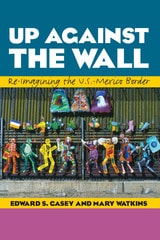
Up Against the Wall
Re-Imagining the U.S.-Mexico BorderBy Edward S. Casey and Mary Watkins
University of Texas Press, 2014
Using the U.S. wall at the border with Mexico as a focal point, two experts examine the global surge of economic and environmental refugees, presenting a new vision of the relationships between citizen and migrant in an era of “Juan Crow,” which systematically creates a perpetual undercaste.
Winner, National Association for Ethnic Studies (NAES) Outstanding Book Award, 2017
As increasing global economic disparities, violence, and climate change provoke a rising tide of forced migration, many countries and local communities are responding by building walls—literal and metaphorical—between citizens and newcomers. Up Against the Wall: Re-imagining the U.S.-Mexico Border examines the temptation to construct such walls through a penetrating analysis of the U.S. wall at the U.S.-Mexico border, as well as investigating the walling out of Mexicans in local communities. Calling into question the building of a wall against a friendly neighboring nation, Up Against the Wall offers an analysis of the differences between borders and boundaries. This analysis opens the way to envisioning alternatives to the stark and policed divisions that are imposed by walls of all kinds. Tracing the consequences of imperialism and colonization as citizens grapple with new migrant neighbors, the book paints compelling examples from key locales affected by the wall—Nogales, Arizona vs. Nogales, Sonora; Tijuana/San Diego; and the lower Rio Grande Valley of Texas. An extended case study of Santa Barbara describes the creation of an internal colony in the aftermath of the U.S. conquest of Mexican land, a history that is relevant to many U.S. cities and towns.
Ranging from human rights issues in the wake of massive global migration to the role of national restorative shame in the United States for the treatment of Mexicans since 1848, the authors delve into the broad repercussions of the unjust and often tragic consequences of excluding others through walled structures along with the withholding of citizenship and full societal inclusion. Through the lens of a detailed examination of forced migration from Mexico to the United States, this transdisciplinary text, drawing on philosophy, psychology, and political theory, opens up multiple insights into how nations and communities can coexist with more justice and more compassion.
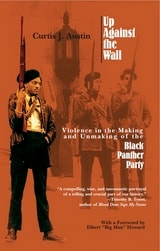
Up Against the Wall
Violence in the Making and Unmaking of the Black Panther PartyCurtis J. Austin
University of Arkansas Press, 2008
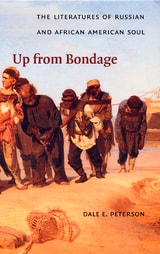
Up from Bondage
The Literatures of Russian and African American SoulDale E. Peterson
Duke University Press, 2000
Illuminating a remarkably widespread cross-pollination between the two cultural and intellectual traditions, Dale E. Peterson frames much of his argument around W. E. B. DuBois’s concept of “double-consciousness,” wherein members of an oppressed section of society view themselves simultaneously through their own self-awareness and through the internalized standards of the dominant culture. He shows how the writings of Dostoevsky, Hurston, Chesnutt, Turgenev, Ellison, Wright, Gorky, and Naylor—texts that enacted and described this sense of double awareness—were used both to perform and to contest the established genres of Western literacy. Woven through Peterson’s textual analyses is his consideration of cultural hybridism and its effects: The writers he examines find multiple ways to testify to and challenge the symptoms of postcolonial trauma. After discussing the strong and significant affinity expressed by contemporary African American cultural theorists for the dialogic thought of Russian linguist Mikhail Bakhtin, Peterson argues that a fuller appreciation of the historic connection between the two cultures will enrich the complicated meanings of being black or Russian in a world that has traditionally avoided acknowledging pluralistic standards of civilization and cultural excellence.
This investigation of comparable moments in the development of Russian and African American ethnic self-consciousness will be valuable to students and scholars of comparative literature, philosophy, cultural theory, ethnicity, linguistics, and postcolonialism, in addition to Slavic and African American studies.
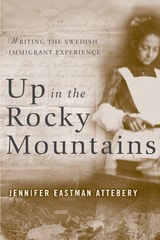
Up in the Rocky Mountains
Writing the Swedish Immigrant ExperienceJennifer Eastman Attebery
University of Minnesota Press, 2007
Before the turn of the twentieth century, many Swedish men emigrated to the American Rockies as itinerant laborers, drawn by the region’s developing industries. Single Swedish women ventured west, too, and whole families migrated, settling into farm communities. By 1920, one-fifth of all Swedish immigrants were living in the West.
In Up in the Rocky Mountains, Jennifer Eastman Attebery offers a new perspective on Swedish immigrants’ experiences in Idaho, Montana, Utah, Wyoming, Colorado, and New Mexico from 1880 to 1917 by interpreting their letters home. Considering more than three hundred letters, Attebery analyzes their storytelling, repetitive language, traditional phrasing, and metaphoric images. Recognizing the letters’ power as a folk form, Attebery sees in them the writers’ relationships back in Sweden as well as their encounters with religious and labor movements, regionalism, and nationalism in their new country.
By defining personal letters as a vernacular genre, Attebery provides a model for discerning immigrants’ shared culture in correspondence collections. By studying their words, she brings to life small Swedish communities throughout the Rocky Mountain region.
Jennifer Eastman Attebery is professor of English and director of American studies at Idaho State University.
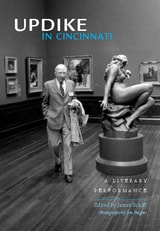
Updike in Cincinnati
A Literary PerformanceJames Schiff
Ohio University Press, 2007
For two spring days in 2001, John Updike visited Cincinnati, Ohio, engaging and charming his audiences, reading from his fiction, fielding questions, sitting for an interview, participating in a panel discussion, and touring the Queen City.
Successful writers typically spend a portion of their lives traveling the country to give readings and lectures. While a significant experience for author and audience alike, this public spectacle, once covered in detailed newspaper accounts, now is barely noticed by the media. Updike in Cincinnati—composed of a wealth of materials, including session transcripts, short stories discussed and read by the author, photographs, and anecdotal observations about Updike's performance and personal interactions--is unique in its comprehensive coverage of a literary visit by a major American author.
Updike's eloquence, intelligence, improvisational skills, and gift for comedy are all on display. With natural grace, he discusses a range of topics, including his novels and short stories, his mother and oldest son as writers, Pete Rose and Shoeless Joe Jackson, the Nobel Prize, his appearance on The Simpsons, the Cold War, and Hamlet.
Augmented with commentary by critics W. H. Pritchard and Donald Greiner, and an introduction and interview by James Schiff, Updike in Cincinnati provides an engaging and detailed portrait of one of America's contemporary literary giants.
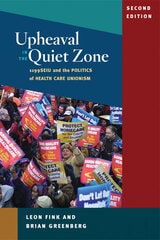
Upheaval in the Quiet Zone
1199/SEIU and the Politics of Healthcare UnionismLeon Fink and Brian Greenberg
University of Illinois Press, 2008
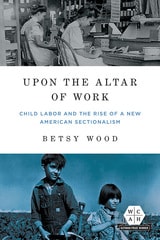
Upon the Altar of Work
Child Labor and the Rise of a New American SectionalismBetsy Wood
University of Illinois Press, 2020
Betsy Wood examines the evolution of ideas about child labor and the on-the-ground politics of the issue against the backdrop of broad developments related to slavery and emancipation, industrial capitalism, moral and social reform, and American politics and religion. Wood explains how the decades-long battle over child labor created enduring political and ideological divisions within capitalist society that divided the gatekeepers of modernity from the cultural warriors who opposed them. Tracing the ideological origins and the politics of the child labor battle over the course of eighty years, this book tells the story of how child labor debates bequeathed an enduring legacy of sectionalist conflict to modern American capitalist society.
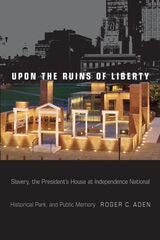
Upon the Ruins of Liberty
Slavery, the President's House at Independence National Historical Park, and Public MemoryRoger C. Aden
Temple University Press, 2014
In Upon the Ruins of Liberty, Roger Aden offers a compelling account that explores the development of this important historic site and how history, space, and public memory intersected with contemporary racial politics. Aden constructs this engrossing tale by drawing on archival material and interviews with principal figures in the controversy-including historian Ed Lawler, site activist Michael Coard, and site designer Emanuel Kelly.
Upon the Ruins of Liberty chronicles the politically-charged efforts to create a fitting tribute to the place where George Washington (and later, John Adams) shaped the presidency while denying freedom to the nine enslaved Africans in his household. From design to execution, the plans prompted advocates to embrace stories informed by race, and address difficulties that included how to handle the results of the site excavation. As such, this landmark project raised concerns and provided lessons about the role of public memory and how places are made to shape the nation's identity.
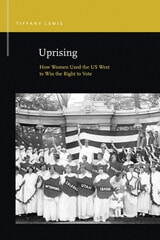
Uprising
How Women Used the US West to Win the Right to VoteTiffany Lewis
Michigan State University Press, 2021
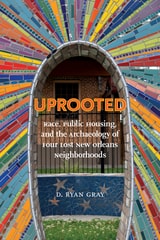
Uprooted
Race, Public Housing, and the Archaeology of Four Lost New Orleans NeighborhoodsD. Ryan Gray
University of Alabama Press, 2020
The archaeology of four New Orleans neighborhoods that were replaced by public housing projects
Uprooted: Race, Public Housing, and the Archaeology of Four Lost New Orleans Neighborhoods uses archaeological research on four neighborhoods that were razed during the construction of public housing in World War II–era New Orleans. Although each of these neighborhoods was identified as a “slum” historically, the material record challenges the simplicity of this designation. D. Ryan Gray provides evidence of the inventiveness of former residents who were marginalized by class, color, or gender and whose everyday strategies of survival, subsistence, and spirituality challenged the city’s developing racial and social hierarchies.
These neighborhoods initially appear to have been quite distinct, ranging from the working-class Irish Channel, to the relatively affluent Creole of Color–dominated Lafitte area, to the former location of Storyville, the city’s experiment in semilegal prostitution. Archaeological and historical investigations suggest that race was the crucial factor in the areas’ selection for clearance. Each neighborhood manifested a particular perceived racial disorder, where race intersected with ethnicity, class, or gender in ways that defied the norms of Jim Crow segregation.
Gray’s research makes use of both primary documents—including census records, city directories, and even the brothel advertising guides called “Blue Books”—and archaeological data to examine what this entailed at a variety of scales, reconstructing narratives of the households and communities affected by clearance. Public housing, both in New Orleans and elsewhere, imposed a new kind of control on urban life that had the effect of making cities both more segregated and less equal. The story of the neighborhoods that were destroyed provides a reminder that their erasure was not an inevitable outcome, and that a more equitable and just city is still possible today. A critical examination of the rise of public housing helps inform the ongoing debates over its demise, especially in light of the changing face of post-Katrina New Orleans.
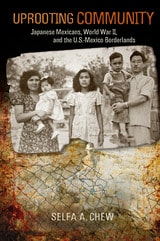
Uprooting Community
Japanese Mexicans, World War II, and the U.S.-Mexico BorderlandsSelfa A. Chew
University of Arizona Press, 2015
In Uprooting Community, Selfa A. Chew examines the lived experience of Japanese Mexicans in the U.S.-Mexico borderlands during World War II. Studying the collaboration of Latin American nation-states with the U.S. government, Chew illuminates the efforts to detain, deport, and confine Japanese residents and Japanese-descent citizens of Latin American countries during World War II. These narratives challenge the notion that Japanese Mexicans enjoyed the protection of the Mexican government during the war and refute the mistaken idea that Japanese immigrants and their descendants were not subjected to internment in Mexico during this period. Through her research, Chew provides evidence that, despite the principles of racial democracy espoused by the Mexican elite, Japanese Mexicans were in fact victims of racial prejudice bolstered by the political alliances between the United States and Mexico.
The treatment of the ethnic Japanese in Mexico was even harsher than what Japanese immigrants and their children in the United States endured during the war, according to Chew. She argues that the number of persons affected during World War II extended beyond the first-generation Japanese immigrants “handled” by the Mexican government during this period, noting instead that the entire multiethnic social fabric of the borderlands was reconfigured by the absence of Japanese Mexicans.
Uprooting Racism and Racists in the United States
James Boggs and Grace Lee Boggs
Disobedience Press, 2027
“Uprooting Racism and Racists in the United States” has become even more timely and instructive today than when James and Grace Lee Boggs first sounded the alarm in 1970. In this essay, the Boggses diagnose the “essential contradiction” of economic overdevelopment and political underdevelopment, tracing its path through key stages: how racism has been interwoven into U.S. economic development; a destructive national drive for economic growth at all costs; and how subsequent generations of Americans prioritize economics over principles—breeding a collective social irresponsibility that leaves us unable to act ethically in the face of pressing social challenges.
Today, the contradiction the Boggses identified has grown more entrenched—and its consequences more destructive. “Uprooting” helps explain why millions voted for Trump in 2024 despite his demonstrated corruption, why society fails to regulate the expansion of AI and data centers, why we are unable to forestall the climate changes that scientists have long warned against, why immigrants face racist vilification, and why the federal government is intent on erasing the centrality of race to the making of the country. Ultimately, “Uprooting” offers a crucial assessment of where this contradiction began, how it shapes the nation, and where we need to go.
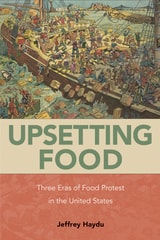
Upsetting Food
Three Eras of Food Protests in the United StatesJeffrey Haydu
Temple University Press, 2021
Battle lines have long been drawn over how food is produced, what food is made available to whom, and how best to protect consumers from risky or unhealthy food. Jeffrey Haydu resurrects the history of food reform and protest in Upsetting Food, showing how activists defined food problems, articulated solutions, and mobilized for change in the United States.
Haydu’s sociological history starts in the 1830s with diet reformer Sylvester Graham, who blamed alcohol and store-bought bread—signs of a commercializing urban society—for poor health and moral decline. His successors at the turn of the twentieth century rallied against impure food and pushed for women to be schooled in scientific food preparation and nutrition. Decades later, in the 1960s and ’70s, a grassroots movement for organic food battled commercial food production in favor of food grown ecologically, by small farmers, and without artificial chemicals.
Each campaign raised doubts about food safety, health, and transparency, reflecting how a capitalist system can undermine trust in food. But Haydu also considers how each movement reflects the politics, inequalities, and gender relations of its time. And he traces how outcomes of each campaign laid the groundwork for the next. The three eras thus come together as parts of a single, recurring food movement.
Upsetting Food offers readers a historical background to better understand contemporary and contentious food politics.
Upstaging Big Daddy
Directing Theater as if Gender and Race MatterEllen Donkin and Susan Clement, Editors
University of Michigan Press, 1993
What happens, then, when a feminist who directs for the theater decides that there is something called a feminist director, someone who sees her job as protesting and intervening in the existing system of representation? The contributors to this volume provide a wide range of answers, in original essays that disrupt traditional approaches of directing by showing how feminist theory might be applied in practice.
Essays and interviews by a wide variety of directors, scholars, and other theater specialists offer fresh new models for thinking about directing. The collection includes essays on African-American theater, feminist “classics,” and male directors working on feminist plays, as well as concrete suggestions for directing a variety of plays, from works by Shakespeare and Euripides to those by Caryl Churchill, Aishah Rahman, and Helene Cixous. The theoretical material, drawing from a wide range of contemporary critics and theorists, has been written with the director in mind, partly for the purpose of analyzing texts but also for inspiring creative directorial and design solutions.
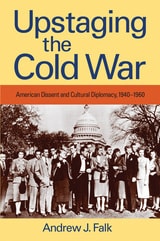
Upstaging the Cold War
American Dissent and Cultural Diplomacy, 1940-1960Andrew J. Falk
University of Massachusetts Press, 2010
Traditional interpretations of the 1950s have emphasized how American anti-communists deployed censorship and the blacklist to silence dissent, particularly in the realm of foreign policy. Yet those efforts at repression did not always succeed. Throughout the early years of the Cold War, a significant number of writers and performers continued to express controversial views about international relations in Hollywood films, through the new medium of television, on the Broadway stage, and from behind the scenes.
By promoting superpower cooperation, decolonization, nuclear disarmament, and other taboo causes, dissident artists such as Lillian Hellman, Arthur Miller, Rod Serling, Dalton Trumbo, Reginald Rose, and Paddy Chayefsky managed both to stretch the boundaries of Cold War ideology and to undermine some of its basic assumptions. Working at times under assumed names and in some cases outside the United States, they took on the role of informal diplomats who competed with Washington in representing America to the world.
Ironically, the dissidents' international appeal eventually persuaded the U.S. foreign policy establishment that their unconventional views could be an asset in the Cold War contest for “hearts and minds,” and their artistic work an effective means to sell American values and culture abroad. By the end of the 1950s, the Eisenhower administration not only appropriated the work of these talented artists but enlisted some of them to serve as official voices of Cold War cultural diplomacy.
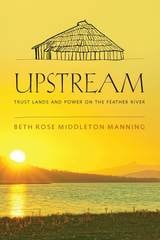
Upstream
Trust Lands and Power on the Feather RiverBeth Rose Middleton Manning
University of Arizona Press, 2018
Upstream documents the significance of the Allotment Era to a long and ongoing history of cultural and community disruption. It also details Indigenous resistance to both hydropower and disruptive conservation efforts. With a focus on northeastern California, this book highlights points of intervention to increase justice for Indigenous peoples in contemporary natural resource policy making.
Author Beth Rose Middleton Manning relates the history behind the nation’s largest state-built water and power conveyance system, California’s State Water Project, with a focus on Indigenous resistance and activism. She illustrates how Indigenous history should inform contemporary conservation measures and reveals institutionalized injustices in natural resource planning and the persistent need for advocacy for Indigenous restitution and recognition.
Upstream uses a multidisciplinary and multitemporal approach, weaving together compelling stories with a study of placemaking and land development. It offers a vision of policy reform that will lead to improved Indigenous futures at sites of Indigenous land and water divestiture around the nation.

Uranium Frenzy
Saga of the Nuclear WestRaye C. Ringholz
Utah State University Press, 2002
The uranium boom is only part of the larger story of atomic weapons testing and its impact in the western United States. Nuclear explosions at the Nevada Test Site not only spurred uranium mining, they also had a disastrous impact on many Americans: downwinders in the eastward path of radiation clouds, military observers and guinea pigs in exposed positions, and Navajo and other uranium mill workers all became victims, as deaths from cancer and other radiation-caused diseases reached much higher than normal rates among them. Tons of radioactive waste left by mines, mills, and the nuclear industry and how to dispose of them are other nagging legacies of the nuclear era. Recent decades have brought multiple attempts by victims to obtain compensation from the federal government and other legal battles over disposal of nuclear waste. When courts refused to grant relief to downwinders and others, Congress eventually interceded and legislated compensation for a limited number of victims able to meet strict criteria, but did not adequately fund the program. Recently, Congress attempted to fix this shortfall, but in the meantime many downwinders and others holding compensation IOUs had died. Congressional and other efforts to dispose of waste have lately focused on Nevada and Utah, two states all too familiar with nuclear issues and reluctant to take on further radioactive burdens.
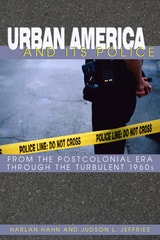
Urban America And Its Police
H Hahn
University Press of Colorado, 2003
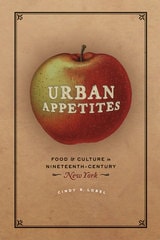
Urban Appetites
Food and Culture in Nineteenth-Century New YorkCindy R. Lobel
University of Chicago Press, 2014
Historians, sociologists, and foodies alike will devour the story of the origins of New York City’s food industry in Urban Appetites. Cindy R. Lobel focuses on the rise of New York as both a metropolis and a food capital, opening a new window onto the intersection of the cultural, social, political, and economic transformations of the nineteenth century. She offers wonderfully detailed accounts of public markets and private food shops; basement restaurants and immigrant diners serving favorites from the old country; cake and coffee shops; and high-end, French-inspired eating houses made for being seen in society as much as for dining. But as the food and the population became increasingly cosmopolitan, corruption, contamination, and undeniably inequitable conditions escalated. Urban Appetites serves up a complete picture of the evolution of the city, its politics, and its foodways.
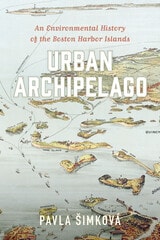
Urban Archipelago
An Environmental History of the Boston Harbor IslandsPavla Šimková
University of Massachusetts Press, 2021
In this book, Pavla Šimková reinterprets the Boston Harbor Islands as an urban archipelago, arguing that they have been an integral part of Boston since colonial days, transformed by the city's changing values and catering to its current needs. Drawing on archival sources, historic maps and photographs, and diaries from island residents, this absorbing study attests that the harbor islands' story is central to understanding the ways in which Boston has both shaped and been shaped by its environment over time.
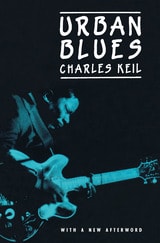
Urban Blues
Charles Keil
University of Chicago Press, 1968
"Enlightening. . . . [Keil] has given a provocative indication of the role of the blues singer as a focal point of ghetto community expression."—John S. Wilson, New York Times Book Review
"[Urban Blues] expresses authentic concern for people who are coming to realize that their past was . . . the source of meaningful cultural values."—Atlantic
"An achievement of the first magnitude. . . . He opens our eyes and introduces a world of amazingly complex musical happening."—Robert Farris Thompson, Ethnomusicology
"[Keil's] vigorous, aggressive scholarship, lucid style and sparkling analysis stimulate the challenge. Valuable insights come from treating urban blues as artistic communication."—James A. Bonar, Boston Herald