Results by title
3258 books match the query 'Art' and 55 start with v
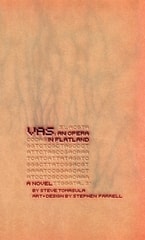
VAS
An Opera in Flatland: A Novel. By Steve Tomasula. Art and Design by Stephen Farrell.Steve Tomasula and Stephen Farrell
University of Chicago Press, 2004
A constantly surprising, VAS combines a variety of voices, from journalism and libretto to poem and comic book. Often these voices meet in counterpoint, and the meaning of the narrative emerges from their juxtapositions, harmonies, or discords. Utilizing a wide and historical sweep of representations of the body—from pedigree charts to genetic sequences—VAS is, finally, the story of finding one's identity within the double helix of language and lineage.
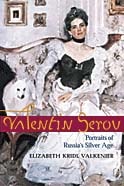
Valentin Serov
Portraits of Russia's Silver AgeElizabeth Valkenier
Northwestern University Press, 2001
Elizabeth Kridl Valkenier weds art criticism to social history in her study of Serov. She casts the artist's work against the Gilden Age of turn-of-the-century Russia, an era when money and consumption abounded and revolutionary change was taking place at all levels of society. Painting prominent people of the day in business, government, the nobility, and the arts, Serov created a gallery of Russia's important figures--figures seen with a sharp eye and painted with subtle irony.
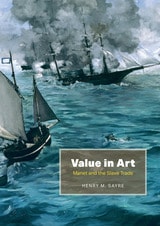
Value in Art
Manet and the Slave TradeHenry M. Sayre
University of Chicago Press, 2022
How did art critics come to speak of light and dark as, respectively, “high in value” and “low in value”? Henry M. Sayre traces the origin of this usage to one of art history’s most famous and racially charged paintings, Édouard Manet’s Olympia.
Art critics once described light and dark in painting in terms of musical metaphor—higher and lower tones, notes, and scales. Sayre shows that it was Émile Zola who introduced the new “law of values” in an 1867 essay on Manet. Unpacking the intricate contexts of Zola’s essay and of several related paintings by Manet, Sayre argues that Zola’s usage of value was intentionally double coded—an economic metaphor for the political economy of slavery. In Manet’s painting, Olympia and her maid represent objects of exchange, a commentary on the French Empire’s complicity in the ongoing slave trade in the Americas.
Expertly researched and argued, this bold study reveals the extraordinary weight of history and politics that Manet’s painting bears. Locating the presence of slavery at modernism’s roots, Value in Art is a surprising and necessary intervention in our understanding of art history.
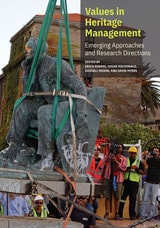
Values in Heritage Management
Emerging Approaches and Research DirectionsErica Avrami
J. Paul Getty Trust, The, 2019
Over the last fifty years, conservation professionals have confronted increasingly complex political, economic, and cultural dynamics. This volume, with contributions by leading international practitioners and scholars, reviews how values-based methods have come to influence conservation, takes stock of emerging approaches to values in heritage practice and policy, identifies common challenges and related spheres of knowledge, and proposes specific areas in which the development of new approaches and future research may help advance the field.
The free online edition of this open-access book is available at www.getty.edu/publications/heritagemanagement/ and includes zoomable illustrations. Also available are free PDF, EPUB, and Kindle/MOBI downloads of the book.
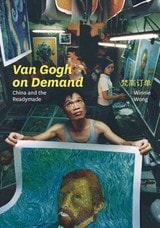
Van Gogh on Demand
China and the ReadymadeWinnie Won Yin Wong
University of Chicago Press, 2014
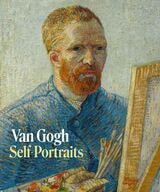
Van Gogh. Self-Portraits
Edited by Karen Serres
Paul Holberton Publishing, 2022
This volume accompanies an exhibition at London’s Courtauld Gallery, the first to explore the full chronological range of Vincent van Gogh’s self-portraits.
The myth of Van Gogh today is linked as much to his extraordinary life as it is to his world-famous paintings. His biography has often shaped the way his self-portraits have been (mis)understood. Spanning his entire career, this volume explores these highly personal paintings, analyzing the artist’s self-representation in context to reveal the role it plays in his oeuvre. Of particular interest is the striking way the evolution of Van Gogh’s self-representation can be seen as a microcosm of his development as a painter.
In addition to the celebrated Self-Portrait with Bandaged Ear, the exhibition showcases a group of major masterpieces brought together from international collections, including the Van Gogh Museum in Amsterdam, the Musee d’Orsay in Paris, the Art Institute of Chicago, and the National Gallery of Art in Washington, DC, among others. Beautifully illustrated, this exhibition companion includes detailed entries on each work, an appendix illustrating all of Van Gogh’s self-portraits, and three insightful essays on the theme.

Vanishing Points
Articulations of Death, Fragmentation, and the Unexperienced Experience of Created ObjectsNatasha Chuk
Intellect Books, 2015
Vector Media
Leonardo Impett
University of Minnesota Press, 2026
Dispelling the notion of “generative” AI
Neural networks are designed to dissolve all media into the vector space—a universal space of commensurability. In Vector Media, Leonardo Impett and Fabian Offert parse theories of automatic vision to trace contemporary artificial intelligence’s technical ideology of epistemic reduction, where sensory data is turned into abstracted forms of meaning. Under this regime, bias is not just a question of what is represented but of the logic of representation itself. Drawing on Phil Agre’s notion of a critical technical practice, Vector Media reveals how artificial intelligence systems embed new epistemologies of media beneath the surface of their architectures.
Analyzing the techniques underpinning large multimodal artificial intelligence models like DALL-E, Midjourney, Flux, or Stable Diffusion, Impett and Offert offer the concept of neural exchange value: the value cultural artifacts acquire not through meaning or context but through their capacity to function as vectors. In such a system, commensurability becomes a condition of existence: what matters is not what something is but that it can be embedded. Rather than focusing solely on datasets, Vector Media proposes a critical study of vector spaces—and the machine cultures they produce—as a necessary complement to prevailing approaches in AI critique.
Retail e-book files for this title are screen-reader friendly with images accompanied by short alt text and/or extended descriptions.
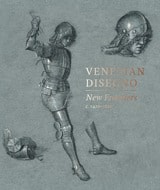
Venetian Disegno
New FrontiersEdited by Maria Aresin and Thomas Dalla Costa
Paul Holberton Publishing, 2023
A volume that offers a fresh perspective on the art of Venice and the Veneto region of Italy by focusing on the artistic idea of disegno.
Disengo (Italian for drawing or design) refers to the philosophical relationship between the conceptual role of design and the physical act of drawing. Venetian Disegno explores this theme and its history in the Veneto artistic landscape with contributions on myriad artists and art forms including drawing, painting, printmaking, sculpture, and architecture.
Divided into five thematic sections and sumptuously illustrated with over one hundred images, Venetian Disegno represents a significant contribution to scholarship on the art of Venice, Renaissance workshops, and drawing studies.
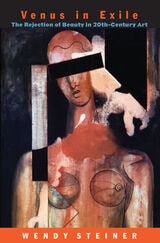
Venus in Exile
The Rejection of Beauty in Twentieth-Century ArtWendy Steiner
University of Chicago Press, 2002
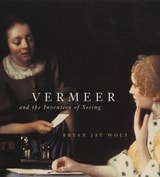
Vermeer and the Invention of Seeing
Bryan Jay Wolf
University of Chicago Press, 2001
The result is a Vermeer we have not seen before: a painter whose serene spaces and calm subjects incorporate within themselves, however obliquely, the world's troubles. Vermeer abandons what his predecessors had labored so carefully to achieve: legible spaces, a world of moral clarity defined by the pressure of a hand against a table, or the scatter of light across a bare wall. Instead Vermeer complicated Dutch domestic art and invented what has puzzled and captivated his admirers ever since: the odd daubs of white pigment, scattered across the plane of the canvas; patches of blurred surface, contradicting the painting's illusionism without explanation; and the querulous silence that endows his women with secrets they dare not reveal.
This beautifully illustrated book situates Vermeer in relation to his predecessors and contemporaries, and it demonstrates how powerfully he wrestled with questions of gender, class, and representation. By rethinking Vermeer's achievement in relation to the early modern world that gave him birth, Wolf takes northern Renaissance and early modern studies in new directions.
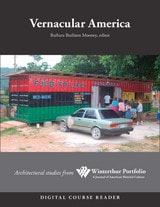
Vernacular America
Architectural Studies from Winterthur PortfolioEdited by Barbara Burlison Mooney
University of Chicago Press, 2014
Many instructors of New World architectural history seek to bring broad social, ethnic, political, and technical perspectives to the study of the built environment. While they await a survey book that fully integrates academic and vernacular narratives, the articles in this course reader are intended to encourage instructors and students to incorporate a diverse and inclusive approach into the curriculum, one that continues to understand the past, but also one that pays attention to the future. The aim of this publication is to offer both instructors and students the opportunity to create and nurture a more comprehensive picture of the history of the built environment of the United States.
Barbara Burlison Mooney is associate professor of art history at the University of Iowa. Professor Mooney’s area of specialization encompasses both American architecture and African American art.
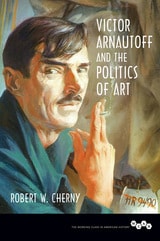
Victor Arnautoff and the Politics of Art
Robert W. Cherny
University of Illinois Press, 2017
Victorian Art Criticism and the Woman Writer
John Paul M. Kanwit
The Ohio State University Press, 2013
Victorian Domesticity
Families in the Life and Art of Louisa May AlcottCharles Strickland
University of Alabama Press, 1985
The subject of Victorian Domesticity is family life in America. The life and works of Louisa May Alcott served as the vehicle for exploring and analyzing this subject. Although Alcott was deeply influenced by popular currents of sentimentality, her own experience exposed her to the confusions and contradictions generated when sentiment confronted the reality of life in 19th-century America.
In the first chapter Strickland outlines the ways in which sentimentality colored the perception of 19th-century Americans about such issues as courtship, marriage, the relationship between the sexes, generational relationships, and the relationship between the nuclear family and the community outside the family. Chapters two and three trace Alcott’s childhood and adolescent experiences, exploring the tensions that developed between Louisa and her father, and detailing the ways in which she carried the double burden of being both poor and female as she sought her identity as a writer.
The following six chapters treat the varieties of family life that appear in Alcott’s stories, the impact of feminism on her life, and her emphasis on the importance of child nurture. In the final two chapters the author treats the relationships that Alcott perceived between the family and the world around it and assesses the legacy of the Victorian family idea.
Victorian Jamaica
Timothy Barringer and Wayne Modest, editors
Duke University Press, 2018
Contributors. Anna Arabindan-Kesson, Tim Barringer, Anthony Bogues, David Boxer, Patrick Bryan, Steeve O. Buckridge, Julian Cresser, John M. Cross, Petrina Dacres, Belinda Edmondson, Nadia Ellis, Gillian Forrester, Catherine Hall, Gad Heuman, Rivke Jaffe, O'Neil Lawrence, Erica Moiah James, Jan Marsh, Wayne Modest, Daniel T. Neely, Mark Nesbitt, Diana Paton, Elizabeth Pigou-Dennis, Veerle Poupeye, Jennifer Raab, James Robertson, Shani Roper, Faith Smith, Nicole Smythe-Johnson, Dianne M. Stewart, Krista A. Thompson
Video Game Art Reader
Volume 1Tiffany Funk
Amherst College Press, 2017
Contributions by Jesse de Vos, Jacob Euteneuer, Monica Evans, Tiffany Funk, René Glas, Eddie Lohmeyer, Evan Meaney, Kieran Nolan, Josuhe Pagliery, Sercan Şengün, Teresa Silva, Christopher W. Totten, and Jasper van Vught.
Video Game Art Reader
Volume 2Tiffany Funk
Amherst College Press, 2018
Contributions by Anna Anthropy , Andrew Bailey, Michael Anthony DeAnda, Luisa Salvador Dias, Tiffany Funk, Elizabeth LaPensée, Treva Michelle Legassie, Michael Paramo, and Martin Zeilinger.
Video Game Art Reader
Volume 3Tiffany Funk
Amherst College Press, 2019
Contributions by Christopher Barney, Enrica Lovaglio Costello, Ross De Vito, Chanelle Mosquera, Zack Ragozzino, Gabriella Santiago, Bobby Schweizer, Christopher W. Totten, Dr. Zöe J. Wood, and Robert Yang.
Video Game Art Reader
Volume 4Tiffany Funk
Amherst College Press, 2022
Contributions by Uche Anomnachi, Andrew Bailey, Chaz Evans, Tiffany Funk, D’An Knowles Ball, Alexandre Paquet, Chris Reeves, and Regina Siewald.
Video Game Art Reader
Volume 5: The Game Art Curators KitTiffany Funk
Amherst College Press, 2024
Videogames and Art
Second EditionEdited by Andy Clarke and Grethe Mitchell
Intellect Books, 2013
Together, the contributions position videogame art as an interdisciplinary mix of digital technologies and the traditional art forms. Of particular interest in this volume are machinima, game console artwork, politically oriented videogame art, and the production of digital art. This new and revised edition features an extended critical introduction from the editors and updated interviews with the foremost artists in the field. Rounding out the book is a critique of the commercial videogame industry comprising essays on the current quality and originality of videogames.

Vietnam Zippos
American Soldiers' Engravings and Stories (1965-1973)Edited by Sherry Buchanan
University of Chicago Press, 2007
—from an engraving on a Vietnam-era Zippo lighter
In 1965, journalist Morley Safer followed the United States Marines on a search and destroy mission into Cam Ne. When the Marines he accompanied reached the village, they ordered the civilians there to evacuate their homes—grass huts whose thatched roofs they set ablaze with Zippo lighters. Safer’s report on the event soon aired on CBS and was among the first to paint a harrowing portrait of the War in Vietnam. LBJ responded to the segment furiously, accusing Safer of having “shat on the American flag.” For the first time since World War II, American boys in uniform had been portrayed as murderers instead of liberators. Our perception of the war—and the Zippo lighter—would never be the same.
But as this stunning book attests, the Zippo was far more than an instrument of death and destruction. For the American soldiers who wielded them, they were a vital form of social protest as well. Vietnam Zippos showcases the engravings made by U.S. soldiers on their lighters during the height of the conflict, from 1965 to 1973. In a real-life version of the psychedelic war portrayed in Francis Ford Coppola’s Apocalypse Now, Sherry Buchanan tells the fascinating story of how the humble Zippo became a talisman and companion for American GIs during their tours of duty. Through a dazzling array of images, we see how Zippo lighters were used during the war, and we discover how they served as a canvas for both personal and political expression during the Age of Aquarius, engraved with etchings of peace signs and marijuana leaves and slogans steeped in all the rock lyrics, sound bites, combat slang, and antiwar mottos of the time.
Death from Above. Napalm Sticks to Kids. I Love You Mom, From a Lonely Paratrooper. The engravings gathered in this copiously illustrated volume are at once searing, caustic, and moving, running the full emotional spectrum with both sardonic reflections—I Love the Fucking Army and the Army Loves Fucking Me—and poignant maxims—When the Power of Love Overcomes the Love of Power, the World Will Know Peace. Part pop art and part military artifact, they collectively capture the large moods of the sixties and the darkest days of Vietnam—all through the world of the tiny Zippo.
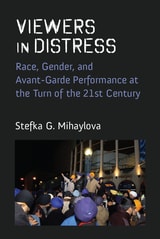
Viewers in Distress
Race, Gender, Religion, and Avant-Garde Performance at the Turn of the Twenty-First CenturyStefka G. Mihaylova
University of Michigan Press, 2023
Honorable Mention: American Society for Theatre Research Barnard Hewitt Award | November 8, 2024
Conventional notions of avant-garde art suggest innovative artists rebelling against artistic convention and social propriety, shocking unwilling audiences into new ways of seeing and living. Viewers in Distress tells a different story. Beginning in the tumultuous 1990s, after the fall of the Berlin Wall and in the wake of the Los Angeles riots, rebellious spectators in American and British theaters broke with theater decorum and voiced their radical interpretations of shows that were not meant to be radical. In doing so, audiences tried to understand the complex racial, gender, and religious politics of their times, while insisting that liberal societies fulfill their promise of dignity for all. Stefka Mihaylova argues that such non-conforming viewing amounts to an avant-garde of its own: a bold reimagining of how we live together and tell stories of our lives together, aimed to achieve liberalism’s promise. In telling this story, she analyzes the production and reception politics of works by Susan-Lori Parks, Sarah Kane, Forced Entertainment, Gurpreet Kaur Bhatti, and Young Jean Lee, as well as non-theatrical controversies such as the conflict over Halloween costumes at Yale in 2015. At the core of spectators’ discontent, this book suggests, is an effort to figure out how to get along with people different from ourselves in the diverse U.S. and British societies in which we live.
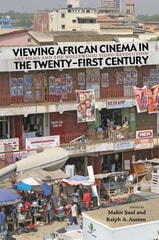
Viewing African Cinema in the Twenty-First Century
Art Films and the Nollywood Video RevolutionMahir Saul
Ohio University Press, 2010
African cinema in the 1960s originated mainly from Francophone countries. It resembled the art cinema of contemporary Europe and relied on support from the French film industry and the French state. Beginning in 1969 the biennial Festival panafricain du cinéma et de la télévision de Ouagadougou (FESPACO), held in Burkina Faso, became the major showcase for these films. But since the early 1990s, a new phenomenon has come to dominate the African cinema world: mass-marketed films shot on less expensive video cameras. These “Nollywood” films, so named because many originate in southern Nigeria, are a thriving industry dominating the world of African cinema.
Viewing African Cinema in the Twenty-first Century is the first book to bring together a set of essays offering a comparison of these two main African cinema modes.
Contributors: Ralph A. Austen and Mahir Şaul, Jonathan Haynes, Onookome Okome, Birgit Meyer, Abdalla Uba Adamu, Matthias Krings, Vincent Bouchard, Laura Fair, Jane Bryce, Peter Rist, Stefan Sereda, Lindsey Green-Simms, and Cornelius Moore
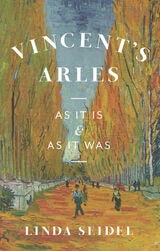
Vincent's Arles
As It Is and as It WasLinda Seidel
University of Chicago Press, 2023
Once admired as “a little Rome” on the banks of the Rhône, the town of Arles in the south of France had been a place of significance long before the painter Vincent van Gogh arrived in February of 1888. Aware of Arles’s history as a haven for poets, van Gogh spent an intense fifteen months there, scouring the city’s streets and surroundings in search of subjects to paint when he wasn’t thinking about other places or lamenting his woeful circumstances.
In Vincent’s Arles, Linda Seidel serves as a guide to the mysterious and culturally rich town of Arles, taking us to the places immortalized by van Gogh and cherished by innumerable visitors and pilgrims. Drawing on her extensive expertise on the region and the medieval world, Seidel presents Arles then and now as seen by a walker, visiting sites old and new. Roman, Romanesque, and contemporary structures come alive with the help of the letters the artist wrote while in Arles. The result is the perfect blend of history, art, and travel, a chance to visit a lost past and its lingering, often beautiful, traces in the present.
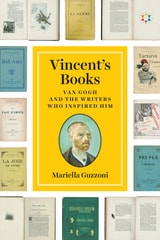
Vincent's Books
Van Gogh and the Writers Who Inspired HimMariella Guzzoni
University of Chicago Press, 2020
One of the most famous artists in history, Vincent van Gogh (1853–1890) was also a man with another powerful passion—for books. An insatiable reader, Van Gogh spent his life hungrily consuming as many books as he could. He read, reread, and copied out books in Dutch, English, and French. He knew many passages by heart from works by Dickens, Zola, Shakespeare, and Maupassant, among many others. As he wrote to his brother, Theo, in one of their hundreds of letters: “I have a more or less irresistible passion for books.”
In Vincent’s Books, Mariella Guzzoni explores Van Gogh’s life as a voracious bookworm, noting what he read, what he wrote about, and how his love of reading influenced his art. She walks us through his life, chapter by chapter: from the religious aspirations of his early adulthood, to his decision to be a painter, to the end of his tragically short life. He moved from Holland to Paris to Provence; at each moment, ideas he encountered in books defined and guided his thoughts and his worldview. Van Gogh wrote with eloquence and insight about what he was reading in his letters to Theo, referring to at least two hundred authors. Books and readers are frequent subjects of his paintings, and Guzzoni highlights over one hundred of these works, such as Still Life with Bible in the Van Gogh Museum and his vivid paintings of l’Arlesienne.
A gorgeously illustrated biography that will appeal to any booklover, Vincent’s Books takes us on a fresh, fascinating journey through the pages of a beloved artist’s life.
Explore Van Gogh’s musings on his favorite writers, including
Thomas à Kempis, Charles Blanc, Honoré de Balzac, Edmond and Jules de Goncourt, Guy de Maupassant, Charles Dickens, Erckmann-Chatrian, Homer, Victor Hugo, Pierre Loti, Jules Michelet, William Shakespeare, Harriet Beecher Stowe, Émile Zola

Violence in the Films of Alfred Hitchcock
A Study in MimesisDavid Humbert
Michigan State University Press, 2017
Viral Cultures
Activist Archiving in the Age of AIDSMarika Cifor
University of Minnesota Press, 2022
Delves deep into the archives that keep the history and work of AIDS activism alive
Serving as a vital supplement to the existing scholarship on AIDS activism of the 1980s and 1990s, ViralCultures is the first book to critically examine the archives that have helped preserve and create the legacy of those radical activities. Marika Cifor charts the efforts activists, archivists, and curators have made to document the work of AIDS activism in the United States and the infrastructure developed to maintain it, safeguarding the material for future generations to remember these social movements and to revitalize the epidemic’s past in order to remake the present and future of AIDS.
Drawing on large institutional archives such as the New York Public Library, as well as those developed by small, community-based organizations, this work of archival ethnography details how contemporary activists, artists, and curators use these records to build on the cultural legacy of AIDS activism to challenge the conditions of injustice that continue to undergird current AIDS crises. Cifor analyzes the various power structures through which these archives are mediated, demonstrating how ideology shapes the nature of archival material and how it is accessed and used. Positioning vital nostalgia as both a critical faculty and a generative practice, this book explores the act of saving this activist past and reanimating it in the digital age.
While many books, popular films, and major exhibitions have contributed to a necessary awareness of HIV and AIDS activism, Viral Cultures provides a crucial missing link by highlighting the powerful role of archives in making those cultural moments possible.

Virgin Microbe
Essays on DadaMichael White
Northwestern University Press, 2013
Virtual Memory
Time-Based Art and the Dream of DigitalityHomay King
Duke University Press, 2015
Virtuality and the Art of Exhibition
Curatorial Design for the Multimedial MuseumVince Dziekan
Intellect Books, 2012
Digital technologies are playing an increasingly instrumental role in guiding the curatorial and institutional strategies of contemporary art museums today. Designed around contextual studies of virtuality and the art of exhibition, this interdisciplinary volume applies practice-based research to a broad range of topics, including digital mediation, spatial practice, the multimedia museum, and curatorial design. Rounding out the volume are case studies with accompanying illustrations.
Visible Empire
Botanical Expeditions and Visual Culture in the Hispanic EnlightenmentDaniela Bleichmar
University of Chicago Press, 2012
Between 1777 and 1816, botanical expeditions crisscrossed the vast Spanish empire in an ambitious project to survey the flora of much of the Americas, the Caribbean, and the Philippines. While these voyages produced written texts and compiled collections of specimens, they dedicated an overwhelming proportion of their resources and energy to the creation of visual materials. European and American naturalists and artists collaborated to manufacture a staggering total of more than 12,000 botanical illustrations. Yet these images have remained largely overlooked—until now.
In this lavishly illustrated volume, Daniela Bleichmar gives this archive its due, finding in these botanical images a window into the worlds of Enlightenment science, visual culture, and empire. Through innovative interdisciplinary scholarship that bridges the histories of science, visual culture, and the Hispanic world, Bleichmar uses these images to trace two related histories: the little-known history of scientific expeditions in the Hispanic Enlightenment and the history of visual evidence in both science and administration in the early modern Spanish empire. As Bleichmar shows, in the Spanish empire visual epistemology operated not only in scientific contexts but also as part of an imperial apparatus that had a long-established tradition of deploying visual evidence for administrative purposes.
Visible Writings
Cultures, Forms, ReadingsDalbello, Marija
Rutgers University Press, 2011
Multicultural in character and historical in range, essays discuss pre-Colombian Mesoamerican scripts, inscriptions on ancient Greek vases, medieval illuminations, Renaissance prints, Enlightenment concepts of the legible, and the Western "reading" of Chinese ideograms. A rich array of modern forms, including comics, poster art, typographic signs, scribblings in writers' manuscripts, anthropomorphic statistical pictograms, the street writings of 9/11, intersections between poetry and painting, the use of color in literary texts, and the use of writing in visual art are also addressed.
Visible Writings reaches outside the traditional venues of literature and art history into topics that consider design, history of writing, philosophy of language, and the emerging area of visual studies. Marija Dalbello, Mary Shaw, and the other contributors offer both scholars and those with a more casual interest in literature and art the opportunity, simply stated, to see the writing on the wall.
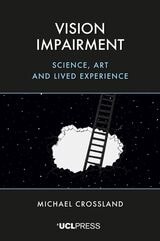
Vision Impairment
Science, Art and Lived ExperienceMichael Crossland
University College London, 2024
What is it like to go blind? Three hundred and fifty million people around the world live with severe vision impairment, ranging from those who can see a couple of letters on a sight chart to those who perceive no light at all. Vision Impairment introduces the readers to some of them, including artists, poets, scientists, architects, politicians, broadcasters, and musicians. Through their stories, this book discusses life with vision impairment–from childhood and education to dating, employment, and aging–as well as the portrayal of blind people in literature and film, the use of technology by people with vision impairment, and the psychological effects of losing vision.
Based on Michael Crossland’s extensive work in children’s and adults’ low vision clinics, and his twenty years of research into vision impairment, the book blends individual stories, key research findings, and the most recent scientific discoveries to present an informative yet optimistic overview of living with sight loss.

Vision and Textuality
Stephen Melville and Bill Readings, eds.
Duke University Press, 1995
With essays by Rosalind Krauss, Hal Foster, Norman Bryson, Victor Burgin, Martin Jay, Louis Marin, Thomas Crow, Griselda Pollock, and others, the volume is organized into sections devoted to the discipline of art history, the implications of semiotics, the new cultural history of art, and the impact of psychoanalysis. The works discussed in these essays range from Rembrandt’s Danae to Jorge Immendorf’s Café Deutschland, from Vauxhall Gardens to Max Ernst, and from the Imagines of Philostratus to William Godwin’s novel Caleb Williams. Each section is preceded by a short introduction that offers further contexts for considering the essays that follow, while the editors’ general introduction presents an overall exploration of the relation between vision and textuality in a variety of both institutional and theoretical contexts. Among other issues, it examines the relevance of aesthetics, the current concern with modernism and postmodernism, and the possible development of new disciplinary formations in the humanities.
Contributors. Mieke Bal, John Bender, Norman Bryson, Victor Burgin, Thomas Crow, Peter de Bolla, Hal Foster, Michael Holly, Martin Jay, Rosalind Krauss, Françoise Lucbert, Louis Martin, Stephen Melville, Griselda Pollock, Bill Readings, Irit Rogoff, Bennet Schaber, John Tagg
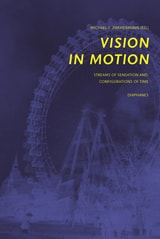
Vision in Motion
Streams of Sensation and Configurations of TimeEdited by Michael F. Zimmermann
Diaphanes, 2015
Bringing together a renowned international group of contributors, Vision in Motion explores one of the most vexing problems in the study of vision and cognition: To make sense of the sensations we experience when we see something, we must configure many moments into a synchronous image. This volume offers a critical reexamination of seeing that restores a concept of “vision in motion” that avoids reducing the sensations we experience to narrative chronological sequencing. The contributors draw on Hume, Bergson, and Deleuze, among others, to establish a nuanced idea of how we perceive.
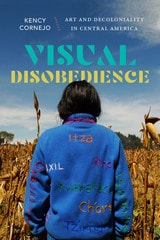
Visual Disobedience
Art and Decoloniality in Central AmericaKency Cornejo
Duke University Press, 2024
Visual Futures
Exploring the Past, Present, and Divergent Possibilities of Visual PracticeEdited by Tracey Bowen and Brett Caraway
Intellect Books, 2021
In our everyday lives, we navigate a vast sea of visual imagery. Yet we rarely consider systematically how or why we derive meaning from this sea of the visual. Nor do we typically contemplate the effect it has on our motivations and actions as individuals and collectives. Visual Futures provides a new lens through which to analyze and challenge established perspectives, norms, and practices surrounding the visual.
This edited collection ruminates on how visuality and the visual provoke a new kind of cultural exchange and explores the relationships, intersections, and collisions between visuality and visual practices and one (or a combination) of the following: embodiment, spatial literacy, emerging languages, historical reflection, educative practices, civic development, and social development.
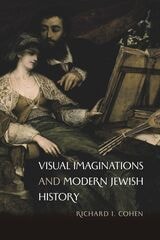
Visual Imaginations and Modern Jewish History
Richard I. Cohen
Brandeis University Press, 2026
Establishes the centrality of visual culture within Judaism and Jewish history.
Visual Imaginations and Modern Jewish History traces how visual experience reflected and shaped Jewish life from the late seventeenth century onward. Richard I. Cohen shows how images, spaces, and objects were central to the making of modern Jewish identities and how the act of seeing itself became a site of cultural negotiation. Cohen claims that the prominence of visual art in modern Jewish life cannot be overlooked. Visual expression has become such a significant factor in Jewish life that it serves as both a mirror and an agent of Jewish modernity.
Cohen engages with a range of artists, figures like Moses Mendelssohn, Uriel Da Costa, and Baruch Spinoza, and such topics as the visual imaginings of the Mishnah, Jews in the military, and the motif of the Wandering Jew. Taken as a whole, the studies in this book argue that approaching modern Jewish history through images is not to replace the written word, but to restore to it the world of sight that Jews inhabited, created, and transformed.
Visual Time
The Image in HistoryKeith Moxey
Duke University Press, 2013
Visualities 2
More Perspectives on Contemporary American Indian Film and ArtDenise K. Cummings
Michigan State University Press, 2019
Visualities
Perspectives on Contemporary American Indian Film and ArtDenise K. Cummings
Michigan State University Press, 2011
Visualizing Disease
The Art and History of Pathological IllustrationsDomenico Bertoloni Meli
University of Chicago Press, 2018
Starting in the Renaissance, Bertoloni Meli delves into the wide range of figures involved in the early study and representation of disease, including not just men of medicine, like anatomists, physicians, surgeons, and pathologists, but also draftsmen and engravers. Pathological preparations proved difficult to preserve and represent, and as Bertoloni Meli takes us through a number of different cases from the Renaissance to the mid-nineteenth century, we gain a new understanding of how knowledge of disease, interactions among medical men and artists, and changes in the technologies of preservation and representation of specimens interacted to slowly bring illustration into the medical world.
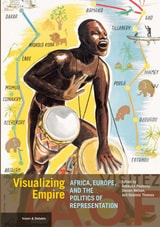
Visualizing Empire
Africa, Europe, and the Politics of RepresentationRebecca Peabody
J. Paul Getty Trust, The, 2021
An exploration of how an official French visual culture normalized France’s colonial project and exposed citizens and subjects to racialized ideas of life in the empire.
By the end of World War I, having fortified its colonial holdings in the Caribbean, Latin America, Africa, the Indian Ocean, and Asia, France had expanded its dominion to the four corners of the earth. This volume examines how an official French visual culture normalized the country’s colonial project and exposed citizens and subjects alike to racialized ideas of life in the empire. Essays analyze aspects of colonialism through investigations into the art, popular literature, material culture, film, and exhibitions that represented, celebrated, or were created for France’s colonies across the seas.
These studies draw from the rich documents and media—photographs, albums, postcards, maps, posters, advertisements, and children’s games—related to the nineteenth- and twentieth-century French empire that are held in the Getty Research Institute’s Association Connaissance de l’histoire de l’Afrique contemporaine (ACHAC) collections. ACHAC is a consortium of scholars and researchers devoted to exploring and promoting discussions of race, iconography, and the colonial and postcolonial periods of Africa and Europe.
Visualizing Genocide
Indigenous Interventions in Art, Archives, and MuseumsEdited by Yve Chavez and Nancy Marie Mithlo; Foreword by Charlene Villaseñor Black
University of Arizona Press, 2022
Rather than dwelling simply in celebratory appraisals of Indigenous survival, this unprecedented volume tracks how massacres, disease, removals, abrogated treaties, religious intolerance, theft of land, and relocation are conceived by contemporary academics and artists. Contributors address indigeneity in the United States, Norway, Canada, Australia, and the Caribbean in scholarly essays, poems, and artist narratives. Missions, cemeteries, archives, exhibitions, photography, printmaking, painting, installations, performance, music, and museums are documented by fourteen authors from a variety of disciplines and illustrated with forty-three original artworks.
The authors offer honest critique, but in so doing they give hopeful and concrete strategies for the future. This powerful collection of voices employs Indigenous epistemologies and decolonial strategies, providing essential perspectives on art and visual culture.
Contributors
T. Christopher Aplin
Emily Arthur
Marwin Begaye
Charlene Villaseñor Black
Yve Chavez
Iris Colburn
Ellen Fernandez-Sacco
Stephen Gilchrist
John Hitchcock
Michelle J. Lanteri
Jérémie McGowan
Nancy Marie Mithlo
Anne May Olli
Emily Voelker
Richard Ray Whitman
Visualizing Latinx
Creative Practices in Fashion, Film, and BeyondArlene Dávila
Duke University Press, 2026
Visualizing Portuguese Power
The Political Use of Images in Portugal and its Overseas Empire (16th-18th Century)Edited by Urte Krass
Diaphanes, 2015
With Visualizing Portuguese Power, Urte Krass and a group of contributors examine the visual arts within the Portuguese empire between the sixteenth and eighteenth centuries. With a focus on the political appropriation of Portuguese-Christian art within the colonies, the book looks at how these and other objects could be staged to generate new layers of meaning. Beyond religious images, the book shows that the appropriation of the visual arts to reinforce important political concepts also took place in the outside the religious sphere, including adaptations of local artistic customs to reinforce Portuguese power.
Visualizing the Carceral State
Art, Power, and AbolitionKeri Watson
University of Arkansas Press, 2027
Visualizing the Carceral State: Art, Power, and Abolition explores how visual culture has shaped, justified, and contested systems of incarceration. Bringing together leading scholars in art history and related fields, this interdisciplinary volume examines the images, objects, and spaces that have made the carceral state visible—in everything from prison architecture and colonial exhibitions to photography, print culture, and contemporary art. Across thirteen essays, contributors investigate how visual forms have helped construct public understandings of punishment, race, empire, and state authority. Thoughtfully edited by Keri Watson, Visualizing the Carceral State highlights cultural producers who have challenged these systems, offering alternative ways of seeing incarceration and imagining its abolition. Moving from the nineteenth century to the present and across multiple geopolitical contexts, this volume traces the visual languages through which carceral power operates and the creative practices that resist it. By situating art and visual culture at the center of debates about mass incarceration, Visualizing the Carceral State opens new avenues for thinking about the relationship between aesthetics, politics, and justice.
Visualizing the Sacred
Cosmic Visions, Regionalism, and the Art of the Mississippian WorldEdited by George E. Lankford, F. Kent Reilly III, and James F. Garber
University of Texas Press, 2011
The prehistoric native peoples of the Mississippi River Valley and other areas of the Eastern Woodlands of the United States shared a complex set of symbols and motifs that constituted one of the greatest artistic traditions of the pre-Columbian Americas. Traditionally known as the Southeastern Ceremonial Complex, these artifacts of copper, shell, stone, clay, and wood were the subject of the groundbreaking 2007 book Ancient Objects and Sacred Realms: Interpretations of Mississippian Iconography, which presented a major reconstruction of the rituals, cosmology, ideology, and political structures of the Mississippian peoples.
Visualizing the Sacred advances the study of Mississippian iconography by delving into the regional variations within what is now known as the Mississippian Iconographic Interaction Sphere (MIIS). Bringing archaeological, ethnographic, ethnohistoric, and iconographic perspectives to the analysis of Mississippian art, contributors from several disciplines discuss variations in symbols and motifs among major sites and regions across a wide span of time and also consider what visual symbols reveal about elite status in diverse political environments. These findings represent the first formal identification of style regions within the Mississippian Iconographic Interaction Sphere and call for a new understanding of the MIIS as a network of localized, yet interrelated religious systems that experienced both continuity and change over time.