Results by title
2284 books match the query 'Women' and 29 start with v
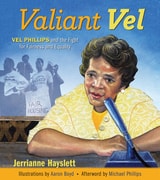
Valiant Vel
Vel Phillips and the Fight for Fairness and EqualityJerrianne Hayslett
Wisconsin Historical Society Press, 2025
An illustrated biography of groundbreaking civil rights activist Vel Phillips for young readers
Fair housing advocate, civil rights champion, and civic leader Vel Phillips spent her life breaking barriers and fighting for justice for all people. As the first Black woman on the Milwaukee Common Council, Wisconsin’s first Black judge, and the first Black woman to win statewide office when she was elected secretary of state of Wisconsin, Phillips left a lasting legacy that has inspired generations to continue the fight for justice and equality.
Valiant Vel depicts Phillips’s captivating story for young readers in middle and high school—from her childhood experiences facing racial discrimination, to achieving her dream of becoming a lawyer, to her long career in politics and civil rights. In the 1960s, Phillips spearheaded a campaign to advocate for fair housing in Milwaukee, joining forces with the NAACP Youth Council and marching alongside other activists in the face of violent opposition. In 1968, Phillips’s persistence paid off when the Milwaukee Common Council passed a fair housing ordinance.
Beautifully illustrated with historic photographs and original artwork by Milwaukee artist Aaron Boyd, Valiant Vel makes an excellent addition to young readers’ bookshelves at school and at home. With an afterword by Phillips’s son, Michael, a glossary of terms, and sources for further research, this book provides a thorough look at an inspirational activist who dedicated her life to making the world a better place.
Veiled Leadership
Katharine Drexel, The Sisters of the Blessed Sacrament, and Race RelationsAmanda Bresie
Catholic University of America Press, 2023
Vernacular Religion in the Iranian Diaspora
Women and Islam in TehrangelesAfsane Rezaei
University of Wisconsin Press, 2026
With nearly half a million Iranian Americans living in and around Los Angeles, Southern California is home to more Iranians than anywhere outside Iran itself. Although many community members identify as secular, stereotypes characterize Iranian Americans, like other populations from Muslim-majority countries, as pejoratively religious and culturally suspect. For Iranian American women who do practice Islam, navigating their religious, ethnic, and political identities, on both personal and communal levels, is complex and fraught, influenced not only by racialized discourses but also by intra-community narratives that equate Islamic practice with the authoritarian state in Iran.
Folklorist Afsane Rezaei applies theories of vernacular religion to explore how these women shape their religious identities in this particularly delicate diasporic context, how they engage with external imaginaries in their practices and narratives, and how they develop a sense of agency over their religious identification. For many, Islamic religiosity in the diaspora is an integrated and embodied aspect of folklife, closely tied to the sense of self, social networks, and communal identity, and is negotiated and reimagined in everyday, improvised, and sometimes contradictory ways. Rezaei’s detailed, respectful ethnography reaches beyond the binary of piety and resistance and offers new and nuanced understandings of Iranian American lived religion.
Vernon Lee
Aesthetics, History, and the Victorian Female IntellectualChrista Zorn
Ohio University Press, 2003
The subject of renewed interest among literary and cultural scholars, Vernon Lee wrote more than forty books, in a broad range of genres, including fiction, history, aesthetics, and travel literature. Early on, Lee established her reputation as a public critic whose unconventional viewpoints stood out among those of her contemporaries.
To feminist and cultural critics, she is a fascinating model of the independent female intellectual who, as Desmond MacCarthy once put it, provides a rare combination of intellectual curiosity and imaginative sensibility.
A startlingly original critical study, Vernon Lee adds new dimensions to the legacy of this woman of letters whose career spans the transition from the late Victorian to the modernist period. Zorn draws on archival materials to discuss Lee’s work in terms of British aestheticism and in the context of the Western European history of ideas.
Zorn contends that Lee’s fiction and nonfiction represent a literary position that bridges and surpasses both the Victorian sage and the modernist aesthetic critic.
Through Professor Zorn’s approach, which combines theoretical framings of texts in terms of recent feminist and cultural criticism with passages of close reading, Vernon Lee emerges as an influential figure in late-nineteenth-century British and continental European thinking on history, art, culture, and gender.
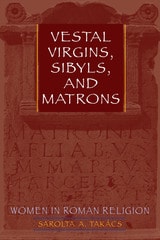
Vestal Virgins, Sibyls, and Matrons
Women in Roman ReligionBy Sarolta A. Takács
University of Texas Press, 2007
Roman women were the procreators and nurturers of life, both in the domestic world of the family and in the larger sphere of the state. Although deterred from participating in most aspects of public life, women played an essential role in public religious ceremonies, taking part in rituals designed to ensure the fecundity and success of the agricultural cycle on which Roman society depended. Thus religion is a key area for understanding the contributions of women to Roman society and their importance beyond their homes and families.
In this book, Sarolta A. Takács offers a sweeping overview of Roman women's roles and functions in religion and, by extension, in Rome's history and culture from the republic through the empire. She begins with the religious calendar and the various festivals in which women played a significant role. She then examines major female deities and cults, including the Sibyl, Mater Magna, Isis, and the Vestal Virgins, to show how conservative Roman society adopted and integrated Greek culture into its mythic history, artistic expressions, and religion. Takács's discussion of the Bona Dea Festival of 62 BCE and of the Bacchantes, female worshippers of the god Bacchus or Dionysus, reveals how women could also jeopardize Rome's existence by stepping out of their assigned roles. Takács's examination of the provincial female flaminate and the Matres/Matronae demonstrates how women served to bind imperial Rome and its provinces into a cohesive society.
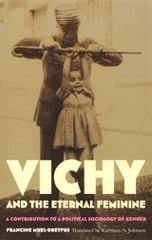
Vichy and the Eternal Feminine
A Contribution to a Political Sociology of GenderFrancine Muel-Dreyfus
Duke University Press, 2001
Drawing on an extensive body of legislative, religious, educational, medical, and literary texts, Muel-Dreyfus examines how the Vichy regime brutally resurrected the gender politics that had been rejected during France’s social struggles in the 1930s. Strikingly, she reveals how this resurrection in turn fed into racial politics: childless women, for instance, and those who had abortions were construed—like Jews—as threats to France’s racial “purity.” With its atendant patterns of social inclusion and exclusion that were deeply rooted in the political and cultural history of the Third Republic, Muel-Dreyfus claims, a pervasive range of gendered metaphors helped to structure the very laws and policies of the Vichy regime.
The French language edition of this book was published in 1996 to wide acclaim. Contributing to theories about the role of gender in political philosophy, to the cultural anthropology of symbolic representation, and to our understanding of the history of fascism, Vichy and the Eternal Feminine will appeal to French, European, and twentieth-century historians; students and scholars of gender and racial studies; political scientists; and anthropologists.
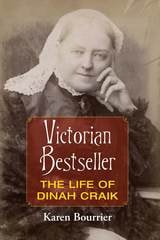
Victorian Bestseller
The Life of Dinah CraikKaren Bourrier
University of Michigan Press, 2019
Victorian Bestseller is the first book to relate the story of Dinah Craik’s remarkable life. Combining extensive archival work with theoretical work in disability studies and the professionalization of women’s authorship, Karen Bourrier engagingly traces the contours of this author’s life. Craik, who wrote extensively about disability in her work, was no stranger to it in her personal and professional life, marked by experiences of mental and physical disability, and the ebb and flow of health. Following scholarship in the ethics of care and disability studies, the book posits Craik as an interdependent subject, placing her within a network of writers, publishers, editors and artists, friends, and family members. Victorian Bestseller also traces the conditions in the material history of the book that allowed Victorian women writers’ careers to flourish. In doing so, the biography connects corporeality, gender, and the material history of the book to the professionalization of Victorian women’s authorship.
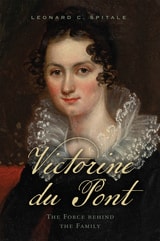
Victorine du Pont
The Force behind the FamilyLeonard C. Spitale
University of Delaware Press, 2023

Vigil
Alan Shapiro
University of Chicago Press, 1997
In Vigil, Shapiro chronicles with heart-wrenching lyricism the final four weeks of Beth's life in a hospice, attended by her parents, brothers, husband, daughter and friends. One by one, as loved ones arrive to visit Beth, Shapiro reveals fragments of their personal history, bringing to life a troubled and poignant past. A visit from their brother David triggers the memory of a searing betrayal—the parents disowned Beth after learning from David that she was secretly dating a black man; a visit from the parents recalls their bitter quarrels over Beth's radical politics; a visit from Beth's black husband brings the painful memory of their wedding and her parents' refusal to attend. These recollections and feelings that surface with each visit evoke the unresolved, deeply disturbing issues that kept the Shapiro family estranged for so long, making the reconciliation that Beth's death brings to her family all the more extraordinary.
Shapiro gives an unconventionally honest account of our responses—horror, relief, impatience, exhaustion, exhilaration, projection, fear, self-criticism, and a sense of fulfillment—in the presence of the dying. Concluding with a selection of moving poems, Shapiro affirms the astonishing link between creativity and healing, and provides a coda to the whole experience. The price of human connection may be great, but human connection, in the end, has the power to redeem even the most painful of human experiences.
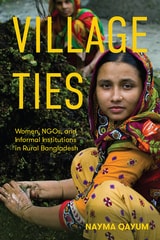
Village Ties
Women, NGOs, and Informal Institutions in Rural BangladeshNayma Qayum
Rutgers University Press, 2022
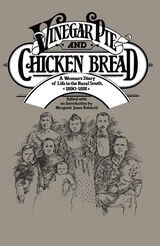
Vinegar Pie and Chicken Bread
A Woman's Diary of Life in the Rural South, 1890–1891Margeret Bolsterli
University of Arkansas Press, 1982
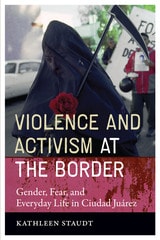
Violence and Activism at the Border
Gender, Fear, and Everyday Life in Ciudad JuarezBy Kathleen Staudt
University of Texas Press, 2008
Between 1993 and 2003, more than 370 girls and women were murdered and their often-mutilated bodies dumped outside Ciudad Juárez in Chihuahua, Mexico. The murders have continued at a rate of approximately thirty per year, yet law enforcement officials have made no breakthroughs in finding the perpetrator(s). Drawing on in-depth surveys, workshops, and interviews of Juárez women and border activists, Violence and Activism at the Border provides crucial links between these disturbing crimes and a broader history of violence against women in Mexico. In addition, the ways in which local feminist activists used the Juárez murders to create international publicity and expose police impunity provides a unique case study of social movements in the borderlands, especially as statistics reveal that the rates of femicide in Juárez are actually similar to other regions of Mexico.
Also examining how non-governmental organizations have responded in the face of Mexican law enforcement's "normalization" of domestic violence, Staudt's study is a landmark development in the realm of global human rights.
Violence and Naming
On Mexico and the Promise of LiteratureBy David E. Johnson
University of Texas Press, 2019
Reclaiming the notion of literature as an institution essential for reflecting on the violence of culture, history, and politics, Violence and Naming exposes the tension between the irreducible, constitutive violence of language and the reducible, empirical violation of others. Focusing on an array of literary artifacts, from works by journalists such as Elena Poniatowska and Sergio González Rodríguez to the Zapatista communiqués to Roberto Bolaño's The Savage Detectives and 2666, this examination demonstrates that Mexican culture takes place as a struggle over naming—with severe implications for the rights and lives of women and indigenous persons.
Through rereadings of the Conquest of Mexico, the northern Mexican feminicide, the Zapatista uprising in Chiapas, the disappearance of the forty-three students at Iguala in 2014, and the 1999 abortion-rights scandal centering on “Paulina,” which revealed the tenuousness of women’s constitutionally protected reproductive rights in Mexico, Violence and Naming asks how societies can respond to violence without violating the other. This essential question is relevant not only to contemporary Mexico but to all struggles for democracy that promise equality but instead perpetuate incessant cycles of repression.
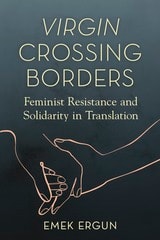
Virgin Crossing Borders
Feminist Resistance and Solidarity in TranslationEmek Ergun
University of Illinois Press, 2023
Ergun’s comparative framework reveals translation’s potential to facilitate cross-border flows of feminist theories, empower feminist interventions, connect feminist activists across differences and divides, and forge transnational feminist solidarities. As she considers hopeful and woeful pictures of border crossings, Ergun invites readers to revise their views of translation’s role in transnational feminism and examine their own potential as ethically and politically responsible agents willing to search for new meanings.
Sophisticated and compelling, Virgin Crossing Borders reveals translation’s vital role in exchanges of feminist theories, stories, and knowledge.
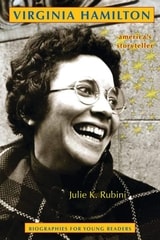
Virginia Hamilton
America’s StorytellerJulie K. Rubini
Ohio University Press, 2017
A Bank Street College of Education Best Children’s Book of 2018 (Outstanding Merit selection) • Finalist, 2018 Ohioana Book Award
Long before she wrote The House of Dies Drear, M. C. Higgins, the Great, and many other children’s classics, Virginia Hamilton grew up among her extended family near Yellow Springs, Ohio, where her grandfather had been brought as a baby through the Underground Railroad. The family stories she heard as a child fueled her imagination, and the freedom to roam the farms and woods nearby trained her to be a great observer. In all, Hamilton wrote forty-one books, each driven by a focus on “the known, the remembered, and the imagined”—particularly within the lives of African Americans.
Over her thirty-five-year career, Hamilton received every major award for children’s literature. This new biography gives us the whole story of Virginia’s creative genius, her passion for nurturing young readers, and her clever way of crafting stories they’d love.
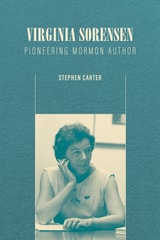
Virginia Sorensen
Pioneering Mormon AuthorStephen Carter
Signature Books, 2023
Who is Virginia Sorensen? How did a girl who grew up in a tiny Utah town in the 1920s become a globetrotting, award-winning author? And why has she been forgotten?
Though she wrote them four generations ago, Sorensen’s novels are more urgent today than ever, addressing issues both Mormons and former Mormons grapple with. Her body of work is a treasure trove of insight, compassion, and storytelling waiting to be rediscovered.
Virginia Woolf’s Mythic Method
Amy C. Smith
The Ohio State University Press, 2022
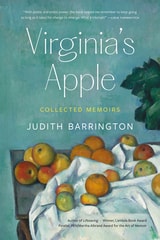
Virginia's Apple
Collected MemoirsJudith Barrington
Oregon State University Press, 2024
Virginia’s Apple is a collection of fourteen literary memoirs that explore pivotal episodes across poet and writer Judith Barrington’s life. Artfully crafted, each one stands alone yet they are linked—characters reappear and, taken together, they create a larger narrative.
The content is wide-ranging: the early days of the Second Wave of feminism—the exhilaration, the wildness, the love affairs, the surprises, and the self-invention, as well as the confusion and conflicts of those heady times; navigating a sometimes precarious existence as an out lesbian long before it was commonplace; leaving England and becoming an American citizen; finding a life partner; and growing old with an inherited disability. The author’s friendship with the distinguished poet Adrienne Rich is the subject of one story. In another, there’s an appearance by the notorious murderer, Lord Lucan, whose wife was a chance acquaintance.
These stories are laced with humor and joy, while pulsing below the surface is the slow unfolding of delayed grief over her parents’ drowning when she was nineteen, revealing how such a loss can shape a life.
Virtue and Venom
Catalogs of Women from Antiquity to the RenaissanceGlenda McLeod
University of Michigan Press, 1991
Virtue and Venom
Catalogs of Women from Antiquity to the RenaissanceGlenda McLeod
University of Michigan Press, 1991
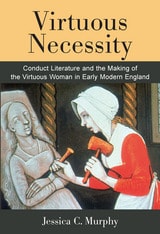
Virtuous Necessity
Conduct Literature and the Making of the Virtuous Woman in Early Modern EnglandJessica C. Murphy
University of Michigan Press, 2015
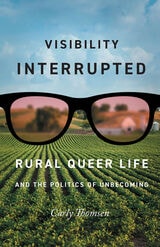
Visibility Interrupted
Rural Queer Life and the Politics of UnbecomingCarly Thomsen
University of Minnesota Press, 2021
A questioning of the belief in the power of LGBTQ visibility through the lives of queer women in the rural Midwest
Today most LGBTQ rights supporters take for granted the virtue of being “out, loud, and proud.” Most also assume that it would be terrible to be LGBTQ in a rural place. By considering moments in which queerness and rurality come into contact, Visibility Interrupted argues that both positions are wrong. In the first monograph on LGBTQ women in the rural Midwest, Carly Thomsen deconstructs the image of the rural as a flat, homogenous, and anachronistic place where LGBTQ people necessarily suffer. And she suggests that visibility is not liberation and will not lead to liberation.
Far from being an unambiguous good, argues Thomsen, visibility politics can, in fact, preclude collective action. They also advance metronormativity, postraciality, and capitalism. To make these interventions, Thomsen develops the theory of unbecoming: interrogating the relationship between that which we celebrate and that which we find disdainful—the past, the rural, politics—is crucial for developing alternative subjectivities and politics. Unbecoming precedes becoming. Drawing from critical race studies, disability studies, and queer Marxism, in addition to feminist and queer studies, the insights of this book will be useful to scholars theorizing issues far beyond sexuality and place and to social justice activists who want to move beyond visibility.
Visible Women
New Essays on American ActivismEdited by Nancy A. Hewitt and Suzanne Lebsock
University of Illinois Press, 1993
In this collection, fifteen leading historians of women and American history explore women's political action from 1830 to the present. Together, their contributions illustrate the tremendous scope and racial, ethnic, and class diversity of women's public activism while also clarifying various conceptual issues. Essays include an analysis of ideologies and strategies; suffrage militance in 1870s; ideas for a feminist approach to public life; labor feminism in the urban South; women's activism in Tampa, Florida; black women and economic nationalism; black women's clubs; the YMCA's place in the community; the role of Southern churchwomen in racial reform and transformation; and other topics.
"Establishes important links between citizenship, race, and gender following the Reconstruction amendments and the Dawes Act of 1887."--Sharon Hartmann Strom, American Historical Review
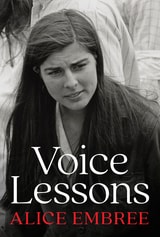
Voice Lessons
By Alice Embree
University of Texas Press, 2021
Voice Lessons explores the rich personal and political terrain of Alice Embree, a 1960s activist and convert to the women’s liberation movement of the 1970s, bringing a woman’s perspective to a transformational time in US history. This riveting memoir traces the author’s roots in segregated Austin and her participation in efforts to integrate the University of Texas. It follows her antiwar activism from a vigil in front of President Lyndon Johnson’s ranch in 1965 to a massive protest after the shootings at Kent State in 1970. Embree’s activism brought her and the Students for a Democratic Society into conflict with Frank Erwin, the powerful chairman of the UT Board of Regents, and inspired a campus free speech movement. She recounts her experiences living in New York during the tumultuous years of 1968 and 1969, including the Columbia University strike and the Woodstock music festival. She also tells about protesting at the Chicago Democratic Convention, her interactions with Yippies and poets, and her travels to Chile, Cuba, and Mexico. Embree highlights the radical roots of the women’s liberation movement in Austin and the audacious women’s community that challenged gender roles, fought for reproductive justice, and inspired a lifetime of activism.

Voices Made Flesh
Performing Women'S AutobiographyLynn C. Miller
University of Wisconsin Press, 2003
Fourteen bold, dynamic, and daring women take the stage in this collection of women's lives and stories. Individually and collectively, these writers and performers speak the unspoken and perform the heretofore unperformed.
The first section includes scripts and essays about performances of the lives of Gertrude Stein, Georgia O'Keeffe, Mary Church Terrell, Charlotte Cushman, Anaïs Nin, Calamity Jane, and Mary Martin. The essays consider intriguing interpretive issues that arise when a woman performer represents another woman's life. In the second section, seven performers—Tami Spry, Jacqueline Taylor, Linda Park-Fuller, Joni Jones, Terri Galloway, Linda M. Montano, and Laila Farah—tell their own stories. Ranging from narrrative lectures (sometimes aided by slides and props) to theatrical performances, their works wrest comic and dramatic meaning from a world too often chaotic and painful. Their performances engage issues of sexual orientation, ethnicity, race, loss of parent, disability, life and death, and war and peace. The volume as a whole highlights issues of representation, identity, and staging in autobiographical performance. It examines the links among theory and criticism of women's autobiography, feminist performance theory, and performance practice.
Voices in the Shadows
Women and Verbal Art in Serbia and BosniaCelia Hawkesworth
Central European University Press, 2000
Women are conspicuously absent from traditional cultural histories of south-east Europe. This book addresses that imbalance by describing the contribution of women to literary culture in the Orthodox/ Ottoman areas of Serbia and Bosnia.
The first complete literary history in relation to women's writing in south-east Europe. The author provides a broad chronological account of this contribution, dividing the book into two main parts; the earlier period up until the eighteenth century concentrates on the projections of gender through the medium of oral tradition and the lives of a handful of educated women in medieval Serbia and the few works of literature they left. Hawkesworth also looks at the written literature produced by women, first in the mid-nineteenth century and then at the turn of the century. The second part focuses on the trials and tribulations that affected feminism and women's literature throughout the twentieth century. The author finishes by highlighting the new women's movement, 1975-1990, a great period for women in Yugoslavia which created a stimulating atmosphere for outstanding pieces of women's journalism, prose and verse, culminating in the creation of new women's studies courses in many universities.
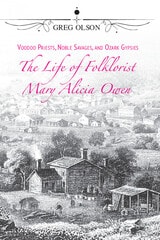
Voodoo Priests, Noble Savages, and Ozark Gypsies
The Life of Folklorist Mary Alicia OwenGreg Olson
University of Missouri Press, 2025
Folklorist Wayland Hand once called Mary Alicia Owen “the most famous American Woman Folklorist of her time.” Drawing on primary sources, such as maps, census records, court documents, personal letters and periodicals, and the scholarship of others who have analyzed various components of Owen’s multifaceted career, historian Greg Olson offers the most complete account of her life and work to date. He also offers a critical look at some of the short stories Owen penned, sometimes under the name Julia Scott, and discusses how the experience she gained as a fiction writer helped lead her to a successful career in folklore.
Olson analyzes many of the nineteenth-century theories, stereotypes, and popular beliefs that influenced the work of Owen and many of her peers. By taking a cross-disciplinary look at her works of fiction, poetry, folklore, history, and anthropology, this volume sheds new light on elements of Owen’s career that have not previously been discussed in print. Examples of the romance stories that Owen wrote for popular magazines in the 1880’s are identified and examined in the context of the time in which Owen wrote them.
This groundbreaking biography shows that Owen was more than just a folklorist—she was a nineteenth-century woman of many contradictions. She was an independent woman of many interests who possessed a keen intellect and a genuine interest in people and their stories. Specialists in folklore, anthropology, women’s studies, local and regional history, and Missouriana will find much to like in this thoroughly researched study.
Votes for Delaware Women
Anne M. Boylan
University of Delaware Press, 2021
Voting the Gender Gap
Edited by Lois Duke Whitaker
University of Illinois Press, 2007
This book concentrates on the gender gap in voting--the difference in the proportion of women and men voting for the same candidate. Evident in every presidential election since 1980, this polling phenomenon reached a high of 11 percentage points in the 1996 election. The contributors discuss the history, complexity, and ways of analyzing the gender gap; the gender gap in relation to partisanship; motherhood, ethnicity, and the impact of parental status on the gender gap; and the gender gap in races involving female candidates. Voting the Gender Gap analyzes trends in voting while probing how women's political empowerment and gender affect American politics and the electoral process.
Contributors are Susan J. Carroll, Erin Cassese, Cal Clark, Janet M. Clark, M. Margaret Conway, Kathleen A. Dolan, Laurel Elder, Kathleen A. Frankovic, Steven Greene, Leonie Huddy, Mary-Kate Lizotte, Barbara Norrander, Margie Omero, and Lois Duke Whitaker.