Results by title
8812 books match the query 'Political Science' and 76 start with v

Virtual Migration
The Programming of GlobalizationA. Aneesh
Duke University Press, 2006
Aneesh draws on the sociology of science, social theory, and research on migration to illuminate the practical and theoretical ramifications of virtual migration. He combines these insights with his extensive ethnographic research in offices in three locations in India—in Delhi, Gurgaon, and Noida—and one in New Jersey. Aneesh contrasts virtual migration with “body shopping,” the more familiar practice of physically bringing programmers from other countries to work on site, in this case, bringing them from India to New Jersey. A significant contribution to the social theory of globalization, Virtual Migration maps the expanding transnational space where globalization is enacted via computer programming code.

Virtue Hoarders
The Case against the Professional Managerial ClassCatherine Liu
University of Minnesota Press, 2021
A denunciation of the credentialed elite class that serves capitalism while insisting on its own progressive heroism
Professional Managerial Class (PMC) elite workers labor in a world of performative identity and virtue signaling, publicizing an ability to do ordinary things in fundamentally superior ways. Author Catherine Liu shows how the PMC stands in the way of social justice and economic redistribution by promoting meritocracy, philanthropy, and other self-serving operations to abet an individualist path to a better world. Virtue Hoarders is an unapologetically polemical call to reject making a virtue out of taste and consumption habits.
Forerunners: Ideas First is a thought-in-process series of breakthrough digital publications. Written between fresh ideas and finished books, Forerunners draws on scholarly work initiated in notable blogs, social media, conference plenaries, journal articles, and the synergy of academic exchange. This is gray literature publishing: where intense thinking, change, and speculation take place in scholarship.

Virtue Is Knowledge
The Moral Foundations of Socratic Political PhilosophyLorraine Smith Pangle
University of Chicago Press, 2014
Lorraine Smith Pangle traces the argument for the primacy of virtue and the power of knowledge throughout the five dialogues that feature them most prominently—the Apology, Gorgias, Protagoras, Meno, and Laws—and reveals the truth at the core of these seemingly strange claims. She argues that Socrates was more aware of the complex causes of human action and of the power of irrational passions than a cursory reading might suggest. Pangle’s perceptive analyses reveal that many of Socrates’s teachings in fact explore the factors that make it difficult for humans to be the rational creatures that he at first seems to claim. Also critical to Pangle’s reading is her emphasis on the political dimensions of the dialogues. Underlying many of the paradoxes, she shows, is a distinction between philosophic and civic virtue that is critical to understanding them.
Ultimately, Pangle offers a radically unconventional way of reading Socrates’s views of human excellence: Virtue is not knowledge in any ordinary sense, but true virtue is nothing other than wisdom.
Virtuous Citizens
Counterpublics and Sociopolitical Agency in Transatlantic LiteratureKendall McClellan
University of Alabama Press, 2021
Transatlantic Perspectives on Civic Identity and Political Participation.
The rise of the bourgeois public sphere and the contemporaneous appearance of counterpublics in the eighteenth century deeply influenced not only how politicians and philosophers understood the relationships among citizens, disenfranchised subjects, and the state but also how members of the polity understood themselves. In Virtuous Citizens: Counterpublics and Sociopolitical Agency in Transatlantic Literature, Kendall McClellan uncovers a fundamental and still redolent transformation in conceptions of civic identity that occurred over the course of the eighteenth and nineteenth centuries. Literature of this period exposes an emotional investment in questions of civic selfhood born out of concern for national stability and power, which were considered products of both economic strength and a nation’s moral fiber. McClellan shows how these debates traversed the Atlantic to become a prominent component of early American literature, evident in works by James Fenimore Cooper, Catharine Maria Sedgwick, Sarah Josepha Hale, and Harriet Beecher Stowe, among others.
Underlying popular opinion about who could participate in the political public, McClellan argues, was an impassioned rhetorical wrestling match over the right and wrong ways to demonstrate civic virtue. Relying on long-established tropes of republican virtue that lauded self-sacrifice and disregard for personal safety, abolitionist writers represented loyalty to an ideals-based community as the surest safeguard of both private and public virtue. This evolution in civic virtue sanctioned acts of protest against the state, offered disenfranchised citizens a role in politics, and helped usher in the modern transnational public sphere.
Virtuous Citizens shows that the modern public sphere has always constituted a vital and powerful space for those invested in addressing injustice and expanding democracy. To illuminate some of the fundamental issues underlying today’s sociopolitical unrest, McClellan traces the transatlantic origins of questions still central to the representation of movements like Black Lives Matter, the Women’s March, and the Alt-Right: What is the primary loyalty of a virtuous citizen? Are patriots those who defend the current government against attacks, external and internal, or those who challenge the government to fulfill sociopolitical ideals?

Viscous Performances
The Persistence of Creative Resistances in Neoliberal ChileMaría José Contreras Lorenzini
Duke University Press, 2026
Visionary Pragmatism
Radical and Ecological Democracy in Neoliberal TimesRomand Coles
Duke University Press, 2016
Visions of Transformation
Hegemony, Plurinationality, and Revolution in BoliviaAaron Augsburger
University of Arizona Press, 2025
On a wave of revolutionary upheaval in the early twenty-first century, Evo Morales was swept into state power as Bolivia’s first Indigenous president with a mandate to radically transform the country. The ensuing period, known simply as “el proceso de cambio” (the process of change), has been a tension-filled and contradictory process involving progressive transformations, ambiguous continuities, and outright revolutionary failures. Importantly, the contradictions have been just as much ideological as they are material.
By examining and illuminating the contrasting logics underlying opposing theories of revolutionary change, Visions of Transformation provides an analytical framework through which to understand and interpret the central conflicts and contradictions of Bolivia under Evo Morales and the Movimiento al Socialismo.
Based on nearly two years of immersive fieldwork, Visions of Transformation explores the relation between theoretical production and political practice. Through the contrasting perspectives of hegemony and plurinationality, the book analyzes three specific conjunctural moments—a proposed highway through the TIPNIS, a conflict over representation of the highland Indigenous movement organization CONAMAQ, and the struggle for Indigenous autonomy—to shed light on the primary economic, social, political, and theoretical tensions at the heart of Bolivia’s proceso de cambio.
Visual Disobedience
Art and Decoloniality in Central AmericaKency Cornejo
Duke University Press, 2024
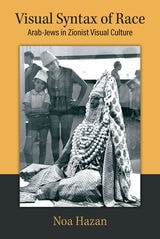
Visual Syntax of Race
Arab-Jews in Zionist Visual CultureNoa Hazan
University of Michigan Press, 2022
Analyzing the visual syntax and display rhetoric applied in newspaper photos, national historical albums, and museum exhibitions, Noa Hazan shows that although racial thought was and still is verbally suppressed in Israel, it is vividly present in its nonverbal official and public visual sphere. The racist perspective of newspaper editors, book publishers, photographers, and museum curators were morally justified in its time by such patronizing ideals as realistic news coverage or the salvation of Jewish heritage assets. Although their perspectives played a dominant role in establishing a visual syntax of race in Israel, they were not seen as racially discriminating at the time. The racist motifs and actions are revealed here by colligating multiple cases into a coherent narrative in retrospect.
This book points to a direct influence of the anti-Semitic discourse in Europe toward Mizrahim in Israel, highlighting the shared visual stereotypes used in both Europe and the fledgling state of Israel. Engraved in their body, these cultural traits were depicted and understood as racial-biological qualities and were visually manipulated to silo Ashkenazim and Mizrahim in Israel as distinct racial types.
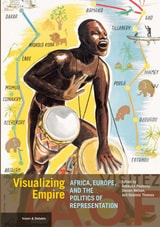
Visualizing Empire
Africa, Europe, and the Politics of RepresentationRebecca Peabody
J. Paul Getty Trust, The, 2021
An exploration of how an official French visual culture normalized France’s colonial project and exposed citizens and subjects to racialized ideas of life in the empire.
By the end of World War I, having fortified its colonial holdings in the Caribbean, Latin America, Africa, the Indian Ocean, and Asia, France had expanded its dominion to the four corners of the earth. This volume examines how an official French visual culture normalized the country’s colonial project and exposed citizens and subjects alike to racialized ideas of life in the empire. Essays analyze aspects of colonialism through investigations into the art, popular literature, material culture, film, and exhibitions that represented, celebrated, or were created for France’s colonies across the seas.
These studies draw from the rich documents and media—photographs, albums, postcards, maps, posters, advertisements, and children’s games—related to the nineteenth- and twentieth-century French empire that are held in the Getty Research Institute’s Association Connaissance de l’histoire de l’Afrique contemporaine (ACHAC) collections. ACHAC is a consortium of scholars and researchers devoted to exploring and promoting discussions of race, iconography, and the colonial and postcolonial periods of Africa and Europe.
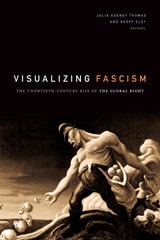
Visualizing Fascism
The Twentieth-Century Rise of the Global RightJulia Adeney Thomas and Geoff Eley, editors
Duke University Press, 2020
Contributors. Nadya Bair, Paul D. Barclay, Ruth Ben-Ghiat, Maggie Clinton, Geoff Eley, Lutz Koepnick, Ethan Mark, Bertrand Metton, Lorena Rizzo, Julia Adeney Thomas, Claire Zimmerman
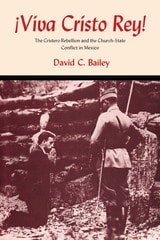
Viva Cristo Rey!
The Cristero Rebellion and the Church-State Conflict in MexicoBy David C. Bailey
University of Texas Press, 1974
Between 1926 and 1929, thousands of Mexicans fought and died in an attempt to overthrow the government of their country. They were the Cristeros, so called because of their battle cry, ¡Viva Cristo Rey!—Long Live Christ the King! The Cristero rebellion and the church-state conflict remain one of the most controversial subjects in Mexican history, and much of the writing on it is emotional polemic. David C. Bailey, basing his study on the most important published and unpublished sources available, strikes a balance between objective reporting and analysis. This book depicts a national calamity in which sincere people followed their convictions to often tragic ends.
The Cristero rebellion climaxed a century of animosity between the Catholic church and the Mexican state, and this background is briefly summarized here. With the coming of the 1910 revolution the hostility intensified. The revolutionists sought to impose severe limitations on the Church, and Catholic anti-revolutionary militancy grew apace. When the government in 1926 decreed strict enforcement of anticlerical legislation, matters reached a crisis. Church authorities suspended public worship throughout Mexico, and Catholics in various parts of the country rose up in arms. There followed almost three years of indecisive guerrilla warfare marked by brutal excesses on both sides. Bailey describes the armed struggle in broad outline but concentrates on the political and diplomatic maneuvering that ultimately decided the issue.
A de facto settlement was brought about in 1929, based on the government’s pledge to allow the Church to perform its spiritual offices under its own internal discipline. The pact was arranged mainly through the intercession of U.S. Ambassador Dwight Morrow. His role in the conflict, as well as that of other Americans who decisively influenced the course of events, receives detailed attention in the study. The position of the Vatican during the conflict and its role in the settlement are also examined in detail.
With the 1929 settlement the clergy returned to the churches, whereupon the Cristeros lost public support and the rebellion collapsed. The spirit of the settlement soon evaporated, more strife followed, and only after another decade did permanent religious peace come to Mexico.
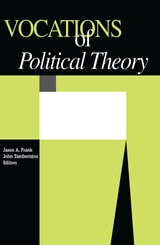
Vocations Of Political Theory
Jason A. Frank
University of Minnesota Press, 2000
Eminent and emerging thinkers seek to bridge the gap between political thought and political action.
Political Science
Eminent and emerging thinkers seek to bridge the gap between political thought and political action. Written by scholars with a rare sense of the historical and conceptual breadth of politics and theory, the essays in this volume explore possibilities for political theory in a world marked by disorienting political transformations. In doing so, they document and address the character and status of contemporary political theory, its changing place in the academy, and its role in public life. Whether challenging the settlement between political theory and political science, whereby theorists stuck to the "old texts" and left the "real world" to their empirical colleagues, or interrogating the relationship between political theory and political action, these essays expand and elaborate the parameters of political discourse-making their timeliness, relevance, and reach powerfully apparent.Contributors: Mark B. Brown; Wendy Brown, UC Santa Cruz; William E. Connolly, Johns Hopkins U; Thomas L. Dumm, Amherst College; J. Peter Euben, UC Santa Cruz; Russell Arben Fox; Samantha Frost, UC Santa Cruz; Shane Gunster; Jill Locke, Gustavus Adolphus College; David Paul Mandell, Reed College; Lon Troyer; Sheldon S. Wolin; Linda M. B. Zerilli, Northwestern U.Translation Inquiries: University of Minnesota Press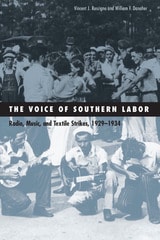
Voice Of Southern Labor
Radio, Music, And Textile Strikes, 1929-1934Vincent J. Roscigno
University of Minnesota Press, 2004
Vividly shows how music united striking workers
The 1934 strike of southern textile workers, involving nearly 400,000 mill hands, remains perhaps the largest collective mobilization of workers in U.S. history. How these workers came together in the face of the powerful and coercive opposition of management and the state is the remarkable story at the center of this book.
The Voice of Southern Labor chronicles the lives and experiences of southern textile workers and provides a unique perspective on the social, cultural, and historical forces that came into play when the group struck, first in 1929, and then on a massive scale in 1934. The workers’s grievances, solidarity, and native radicalism of the time were often reflected in the music they listened to and sang, and Vincent J. Roscigno and William F. Danaher offer an in-depth context for understanding this intersection of labor, politics, and culture. The authors show how the message of the southern mill hands spread throughout the region with the advent of radio and the rise of ex–mill worker musicians, and how their sense of opportunity was further bolstered by Franklin D. Roosevelt’s radio speeches and policies.
Voices From the Other Side
An Oral History of Terrorism Against CubaKeith Bolender
Pluto Press, 2010
Keith Bolender brings to bear the enormous impact that terrorism has had on Cuba’s civilian population, with over 1,000 documented incidents resulting in more than 3,000 deaths and 2,000 injuries. Bolender allows the victims to articulate the atrocities the Cuban people have suffered - which largely originate from Cuban counter-revolutionaries based in the US, often with the active help of the CIA.
Voices From The Other Side includes first-person interviews with more than 75 Cuban citizens who have been victims of these terrorist acts, or have had family members or close friends die from the attacks. It is a unique resource for activists, journalists and students interested in Cuba's torrid relationship with the US.
Voices and Votes Teacher's Guide
How Democracy Works in Wisconsin TGJon Kasparek and Bobbie Malone
Wisconsin Historical Society Press, 2006
Voices and Votes: How Democracy Works in Wisconsin; Teacher's Guide and Student Materials features several activities for each chapter to engage students in a more in-depth exploration of the book. These activities, designed for both individual and small groups, demand the use of higher-level thinking skills while integrating a wide range of learning styles, and all have culminating components that can be used for assessment. The guide also features easily reproducible student pages, including maps, charts, and interesting illustrations.
Voices and Votes
How Democracy Works in WisconsinJon Kasparek
Wisconsin Historical Society Press, 2006
Voices & Votes: How Democracy Works in Wisconsin invites upper elementary school students to explore the intersection of American civics and Wisconsin history. This sixth and final book in the New Badger History series introduces students to the basic structures of American democracy, state government, and Wisconsin's road to statehood. The first seven chapters help students grasp how the three branches of government function at the federal, state, local, and tribal levels, while tying these structural notions to Wisconsin history. Students will learn that citizens' voices and votes help government evolve to meet ever-changing societal needs. The last chapter emphasizes how young people can actively engage in their communities to bring about positive change.

Voices from the "Jungle"
Stories from the Calais Refugee CampCalais Writers
Pluto Press, 2017
In this moving collection of individual testimonies, Calais refugees speak directly in powerful and vivid stories, offering their memories up with stunning honesty. They tell of their childhood dreams and struggles for education; the genocides, wars, and persecution that drove them from home; the simultaneous terror and strength that filled their extraordinary journeys; the realities of living in the Calais refugee camp; and their deepest hopes for the future.
Through their stories, these refugees paint a picture of a different kind of Jungle—a powerful sense of community that has grown despite evictions and attacks and a solidarity that crosses national and religious boundaries. Interspersed with photos taken by the camp's inhabitants, taught by award-winning photographers Gideon Mendel and Crispin Hughes, original artwork by inhabitants, and powerful poems, Voices from the “Jungle” must be read by anyone seeking to understand the human consequences of our current world crisis.
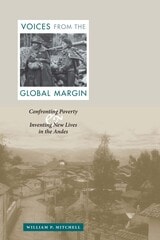
Voices from the Global Margin
Confronting Poverty and Inventing New Lives in the AndesBy William P. Mitchell
University of Texas Press, 2006
2007 — LASA Peru Flora Tristán Book Prize from the Peru Section – Latin American Studies Association
Voices from the Global Margin looks behind the generalities of debates about globalization to explore the personal impact of global forces on the Peruvian poor. In this highly readable ethnography, William Mitchell draws on the narratives of people he has known for forty years, offering deep insight into how they have coped with extreme poverty and rapid population growth—and their creation of new lives and customs in the process. In their own passionate words they describe their struggles to make ends meet, many abandoning rural homes for marginal wages in Lima and the United States. They chronicle their terror during the Shining Path guerrilla war and the government's violent military response. Mitchell's long experience as an anthropologist living with the people he writes about allows him to put the stories in context, helping readers understand the impact of the larger world on individuals and their communities. His book reckons up the human costs of the global economy, urging us to work toward a more just world.

Voices from the Plain of Jars
Life under an Air WarEdited by Fred Branfman with essays and drawings by Laotian villagers; Foreword by Alfred W. McCoy
University of Wisconsin Press, 2013
When first published in 1972, this book was instrumental in exposing the bombing. In this expanded edition, Branfman follows the story forward in time, describing the hardships that Laotians faced after the war when they returned to find their farm fields littered with cluster munitions—explosives that continue to maim and kill today.
Voices of Dissent
An EssayRomila Thapar
Seagull Books, 2020
People have argued since time immemorial. Disagreement is a part of life, of human experience. But we now live in times when any form of protest in India is marked as anti-Indian and met with arguments that the very concept of dissent was imported into India from the West. As Romila Thapar explores in her timely historical essay, however, dissent has a long history in the subcontinent, even if its forms have evolved through the centuries.
In Voices of Dissent: An Essay, Thapar looks at the articulation of nonviolent dissent and relates it to various pivotal moments throughout India’s history. Beginning with Vedic times, she takes us from the second to the first millennium BCE, to the emergence of groups that were jointly called the Shramanas—the Jainas, Buddhists, and Ajivikas. Going forward in time, she also explores the views of the Bhakti sants and others of the fifteenth and sixteenth centuries and brings us to a major moment of dissent that helped to establish a free and democratic India: Mahatma Gandhi’s satyagraha. Then Thapar places in context the recent peaceful protests against India’s new, controversial citizenship law, maintaining that dissent in our time must be opposed to injustice and supportive of democratic rights so that society may change for the better.
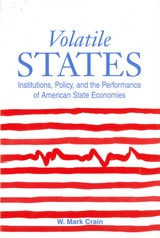
Volatile States
Institutions, Policy, and the Performance of American State EconomiesW. Mark Crain
University of Michigan Press, 2003

Voluminous States
Sovereignty, Materiality, and the Territorial ImaginationFranck Billé
Duke University Press, 2020
Contributors. Debbora Battaglia, Franck Billé, Wayne Chambliss, Jason Cons, Hilary Cunningham (Scharper), Klaus Dodds, Elizabeth Cullen Dunn, Gastón Gordillo, Sarah Green, Tina Harris, Caroline Humphrey, Marcel LaFlamme, Lisa Sang Mi Min, Aihwa Ong, Clancy Wilmott, Jerry Zee
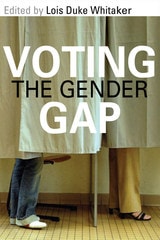
Voting the Gender Gap
Edited by Lois Duke Whitaker
University of Illinois Press, 2007
This book concentrates on the gender gap in voting--the difference in the proportion of women and men voting for the same candidate. Evident in every presidential election since 1980, this polling phenomenon reached a high of 11 percentage points in the 1996 election. The contributors discuss the history, complexity, and ways of analyzing the gender gap; the gender gap in relation to partisanship; motherhood, ethnicity, and the impact of parental status on the gender gap; and the gender gap in races involving female candidates. Voting the Gender Gap analyzes trends in voting while probing how women's political empowerment and gender affect American politics and the electoral process.
Contributors are Susan J. Carroll, Erin Cassese, Cal Clark, Janet M. Clark, M. Margaret Conway, Kathleen A. Dolan, Laurel Elder, Kathleen A. Frankovic, Steven Greene, Leonie Huddy, Mary-Kate Lizotte, Barbara Norrander, Margie Omero, and Lois Duke Whitaker.
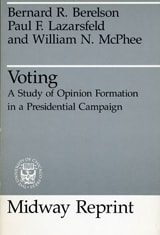
Voting
A Study of Opinion Formation in a Presidential CampaignBernard R. Berelson, Paul F. Lazarsfeld, and William N. McPhee
University of Chicago Press, 1986
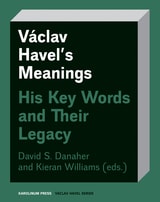
Václav Havel’s Meanings
His Key Words and Their LegacyEdited by David Danaher and Kieran Williams
Karolinum Press, 2022
No one in Czech politics or culture could match the international stature of Václav Havel at the time of his death in 2011. In the years since his passing, his legacy has only grown, as developments in the Czech Republic and elsewhere around the world continue to show the importance of his work and writing against a range of political and social ills, from autocratic brutality to messianic populism.
This book looks squarely at the heart of Havel’s legacy: the rich corpus of texts he left behind. It analyzes the meanings of key concepts in Havel’s core vocabulary: truth, power, civilsociety, home, appeal, indifference, hotspot, theatre, prison, and responsibility. Where do these concepts appear in Havel’s oeuvre? What part do they play in his larger intellectual project? How might we understand Havel’s focus on these concepts as a centerpiece of his contribution to contemporary thought? How does Havel’s particular perspective on the meaning of these concepts speak to us in the here and now? The ten contributors use a variety of methodological tools to examine the meaning of these concepts, drawing on a diversity of disciplines: political science and political philosophy, historical and cultural analysis, discourse/textual analysis, and linguistic-corpus analysis.