Results by title
18284 books match the query 'United States' and 122 start with v

Vigil
Alan Shapiro
University of Chicago Press, 1997
In Vigil, Shapiro chronicles with heart-wrenching lyricism the final four weeks of Beth's life in a hospice, attended by her parents, brothers, husband, daughter and friends. One by one, as loved ones arrive to visit Beth, Shapiro reveals fragments of their personal history, bringing to life a troubled and poignant past. A visit from their brother David triggers the memory of a searing betrayal—the parents disowned Beth after learning from David that she was secretly dating a black man; a visit from the parents recalls their bitter quarrels over Beth's radical politics; a visit from Beth's black husband brings the painful memory of their wedding and her parents' refusal to attend. These recollections and feelings that surface with each visit evoke the unresolved, deeply disturbing issues that kept the Shapiro family estranged for so long, making the reconciliation that Beth's death brings to her family all the more extraordinary.
Shapiro gives an unconventionally honest account of our responses—horror, relief, impatience, exhaustion, exhilaration, projection, fear, self-criticism, and a sense of fulfillment—in the presence of the dying. Concluding with a selection of moving poems, Shapiro affirms the astonishing link between creativity and healing, and provides a coda to the whole experience. The price of human connection may be great, but human connection, in the end, has the power to redeem even the most painful of human experiences.
Vigilantes and Lynch Mobs
Narratives of Community and NationLisa Arellano
Temple University Press, 2012
Looking at the narrative accounts of mob violence produced by vigilantes and their advocates as “official” histories, Lisa Arellano shows how these nonfiction narratives conformed to a common formula whose purpose was to legitimate frontier justice and lynching.
In Vigilantes and Lynch Mobs, Arellano closely examines such narratives as well as the work of Western historian and archivist Hubert Howe Bancroft, who was sympathetic to them, and that of Ida B. Wells, who wrote in fierce opposition to lynching. Tracing the creation, maintenance, and circulation of dominant, alternative, and oppositional vigilante stories from the nineteenth-century frontier through the Jim Crow South, she casts new light on the role of narrative in creating a knowable past.
Demonstrating how these histories ennobled the actions of mobs and rendered their leaders and members as heroes, Arellano presents a persuasive account of lynching’s power to create the conditions favorable to its own existence.

Vikings across the Atlantic
Emigration and the Building of a Greater Norway, 1860-1945Daron W. Olson
University of Minnesota Press, 2013
Around the year 1000 a Viking ship landed on the Atlantic coast of what would one day be North America. Nearly a millennium later, on June 7, 1945, Norway’s King Haakon VII returned from exile under guard of the American Ninety-ninth—or “Viking”—Battalion. In Vikings across the Atlantic, Daron W. Olson reveals how these two moments form narrative poles for the vision of a Greater Norway that expanded the boundaries of the Norwegian nation.
Looking at matters of religion, literature, media, and ethnicity, Olson explores how Norwegian Americans’ myths about themselves changed over time in relation to a broader Anglo-American culture, while at the same time influencing and being influenced by the burgeoning national culture of their homeland. Beginning in the 1920s, homeland Norwegian identity-makers framed the concept of the Greater Norway, which viewed the Norwegian nation as having two halves: Norwegians who resided in the homeland and those who had emigrated from Norway, especially those in America. Far from being merely symbolic, this idea, Olson shows, was actually tested by the ordeal of World War II, when Norwegians the world over demonstrated their willingness to sacrifice and even die for the Greater Norway.
In its transnational approach, Olson’s book brings a new perspective to immigrant studies and theories of nationalism; Vikings across the Atlantic depicts the nation as a larger community in which membership is constructed or imagined, a status of belonging defined not by physical proximity but through qualities such as culture and shared traditions.
Village of Immigrants
Latinos in an Emerging AmericaGordon, Diana R
Rutgers University Press, 2015
Greenport today boasts a population that is one-third Hispanic. Gordon contends that these immigrants have effectively saved the town’s economy by taking low-skill jobs, increasing the tax base, filling local schools, and patronizing local businesses. Greenport’s seaside beauty still attracts summer tourists, but it is only with the support of the local Latino workforce that elegant restaurants and bed-and-breakfasts are able to serve these visitors. For Gordon the picture is complex, because the wave of immigrants also presents the town with challenges to its services and institutions. Gordon’s portraits of local immigrants capture the positive and the negative, with a cast of characters ranging from a Guatemalan mother of three, including one child who is profoundly disabled, to a Colombian house painter with a successful business who cannot become licensed because he remains undocumented. Village of Immigrants weaves together these people’s stories, fears, and dreams to reveal an environment plagued by threats of deportation, debts owed to coyotes, low wages, and the other bleak realities that shape the immigrant experience—even in the charming seaport town of Greenport.
A timely contribution to the national dialogue on immigration, Gordon’s book shows the pivotal role the American small town plays in the ongoing American immigrant story—as well as how this booming population is shaping and reviving rural communities.

Village of the Dammed
The Fight for Open Space and the Flooding of a Connecticut TownJames Lomuscio
Brandeis University Press, 2025
In the early 1940s, the Bridgeport Hydraulic Company flooded Connecticut’s Saugatuck River Valley to create a reservoir that would meet the region’s growing population. Under twelve billion gallons of water lay Valley Forge, once a thriving iron and steel manufacturing town, which was seized by eminent domain to create the reservoir and dam. In Village of the Dammed, journalist James Lomuscio tells the story of the rise and fall of Valley Forge, drawing on Civil War-era photographs of the town and other sources to show what the town was like, document the futile battle to save it, and reveal the flooding’s life-altering repercussions. He also recounts a grassroots movement to prevent the development of nearby Trout Brook Valley in the 1990s, a heated fight with a different outcome. As the population of the American northeast continues to swell and spread, placing new demands on existing resources, communities are frequently confronted with forces and choices not unlike those faced by Valley Forge and Trout Brook Valley. Village of the Dammed reminds us to be ever vigilant in the protection of our irreplaceable environmental heritage.
Villainous Compounds
Chemical Weapons and the American Civil WarGuy R. Hasegawa
Southern Illinois University Press, 2015
In chilling detail, Hasegawa describes the weapons proposed and prepared for use during the war and introduces the people behind the concepts. Although many of the ideas for chemical weapons had a historical precedent, most of the suggested agents were used in industry or medicine, and their toxicity was common knowledge. Proponents, including a surprisingly high number of civilian physicians, suggested a wide variety of potential chemical weapons—from liquid chlorine in artillery shells to cayenne pepper solution sprayed from fire engines. Some weapons advocates expressed ethical qualms, while others were silent on the matter or justified their suggestions as necessary under current circumstances.
As Hasegawa explains, bureaucrats in the war departments of both armies either delayed or rejected outright most of these unusual weapons, viewing them as unneeded or unworkable. Nevertheless, many of the proposed armaments presaged the widespread use of chemical weapons in the twentieth and twenty-first centuries. For example, while Civil War munitions technology was not advanced enough to deliver poison gas in artillery shells as some advocates suggested, the same idea saw extensive use during World War I. Similarly, forms of an ancient incendiary weapon, Greek fire, were used sparingly during the Civil War and appeared in later conflicts as napalm bombs and flamethrowers.
Especially timely with today’s increased chemical threats from terrorists and the alleged use of chemical agents in the Syrian Civil War, Villainous Compounds: Chemical Weapons and the American Civil War reveals the seldom-explored chemical side of Civil War armaments and illuminates an underappreciated stage in the origins of modern chemical warfare.

Vintage Wisconsin Gardens
A History of Home GardeningLee Somerville
Wisconsin Historical Society Press, 2011
The Wisconsin State Horticultural Society, established during the mid-nineteenth century, was the primary source of advice for home gardeners. Through carefully selected excerpts from WSHS articles, Somerville shares the excitement of these gardeners as they traded cultivation and design knowledge and explored the possibilities of their avocation. Women were frequent presenters at the WSHS annual meetings, and their voices resonate. Their writings, and those of their male colleagues, are a remarkable legacy we can draw on today—learning how Wisconsinites past created and enjoyed their gardens helps us appreciate our own. Filled with period and contemporary images, recommended plant lists, and garden layouts, Vintage Wisconsin Gardens will interest those curious about the history of the state’s cultural landscape and inspire readers to restore or reconstruct period gardens.

Vinyl Freak
Love Letters to a Dying MediumJohn Corbett
Duke University Press, 2017
Violence As Obscenity
Limiting the Media's First Amendment ProtectionKevin W. Saunders
Duke University Press, 1996
Saunders examines the public debate on media violence, the arguments of professional and public interest groups urging governmental action, and the media and the ACLU’s desire for self-regulation. Citing research that links violence in the media to actual violence, Saunders argues that a present danger to public safety may be reduced by invoking the existing law on obscenity. Reviewing the justifications of that law, he finds that not only is the legal history relied on by the Supreme Court inadequate to distinguish violence from sex, but also many of the justifications apply more forcefully to instances of violence than to sexually explicit material that has been ruled obscene. Saunders also examines the actions that Congress, states, and municipalities have taken to regulate media violence as well as the legal limitations imposed on such regulations by the First Amendment protections given to speech and the press. In discussing the current operation of the obscenity exception and confronting the issue of censorship, he advocates adapting to the regulation of violent material the doctrine of variable obscenity, which applies a different standard for material aimed at youth, and the doctrine of indecency, which allows for federal regulation of broadcast material.
Cogently and passionately argued, Violence as Obscenity will attract scholars of American constitutional law and mass communication, and general readers moved by current debates about media violence, regulation, and censorship.
Violence Work
State Power and the Limits of PoliceMicol Seigel
Duke University Press, 2018
Violence against Queer People
Race, Class, Gender, and the Persistence of Anti-LGBT DiscriminationMeyer, Doug
Rutgers University Press, 2015
Selected as one of “The Best of the Best from the University Presses: Books You Should Know About” at the 2016 ALA Annual Conference
Violence against lesbians and gay men has increasingly captured media and scholarly attention. But these reports tend to focus on one segment of the LGBT community—white, middle class men—and largely ignore that part of the community that arguably suffers a larger share of the violence—racial minorities, the poor, and women. In Violence against Queer People, sociologist Doug Meyer offers the first investigation of anti-queer violence that focuses on the role played by race, class, and gender.
Drawing on interviews with forty-seven victims of violence, Meyer shows that LGBT people encounter significantly different forms of violence—and perceive that violence quite differently—based on their race, class, and gender. His research highlights the extent to which other forms of discrimination—including racism and sexism—shape LGBT people’s experience of abuse. He reports, for instance, that lesbian and transgender women often described violent incidents in which a sexual or a misogynistic component was introduced, and that LGBT people of color sometimes weren’t sure if anti-queer violence was based solely on their sexuality or whether racism or sexism had also played a role. Meyer observes that given the many differences in how anti-queer violence is experienced, the present media focus on white, middle-class victims greatly oversimplifies and distorts the nature of anti-queer violence. In fact, attempts to reduce anti-queer violence that ignore race, class, and gender run the risk of helping only the most privileged gay subjects.
Many feel that the struggle for gay rights has largely been accomplished and the tide of history has swung in favor of LGBT equality. Violence against Queer People, on the contrary, argues that the lives of many LGBT people—particularly the most vulnerable—have improved very little, if at all, over the past thirty years.

Violence and Culture in the Antebellum South
By Dickson D. Bruce, Jr.
University of Texas Press, 1979
This provocative book draws from a variety of sources—literature, politics, folklore, social history—to attempt to set Southern beliefs about violence in a cultural context. According to Dickson D. Bruce, the control of violence was a central concern of antebellum Southerners.
Using contemporary sources, Bruce describes Southerners’ attitudes as illustrated in their duels, hunting, and the rhetoric of their politicians. He views antebellum Southerners as pessimistic and deeply distrustful of social relationships and demonstrates how this world view impelled their reliance on formal controls to regularize human interaction.
The attitudes toward violence of masters, slaves, and “plain-folk”—the three major social groups of the period—are differentiated, and letters and family papers are used to illustrate how Southern child-rearing practices contributed to attitudes toward violence in the region. The final chapter treats Edgar Allan Poe as a writer who epitomized the attitudes of many Southerners before the Civil War.
Violence in the Hill Country
The Texas Frontier in the Civil War EraBy Nicholas Keefauver Roland
University of Texas Press, 2021
2022 Ramirez Family Award for Most Significant Scholarly Book, Texas Institute of Letters
An in-depth history of the Civil War in the Texas Hill Country, this book examines patterns of violence on the Texas frontier to illuminate white Americans’ cultural and political priorities in the nineteenth century.
In the nineteenth century, Texas’s advancing western frontier was the site of one of America’s longest conflicts between white settlers and native peoples. The Texas Hill Country functioned as a kind of borderland within the larger borderland of Texas itself, a vast and fluid area where, during the Civil War, the slaveholding South and the nominally free-labor West collided. As in many borderlands, Nicholas Roland argues, the Hill Country was marked by violence, as one set of peoples, states, and systems eventually displaced others.
In this painstakingly researched book, Roland analyzes patterns of violence in the Texas Hill Country to examine the cultural and political priorities of white settlers and their interaction with the century-defining process of national integration and state-building in the Civil War era. He traces the role of violence in the region from the eve of the Civil War, through secession and the Indian wars, and into Reconstruction. Revealing a bitter history of warfare, criminality, divided communities, political violence, vengeance killings, and economic struggle, Roland positions the Texas Hill Country as emblematic of the Southwest of its time.

Violence in the Model City
The Cavanagh Administration, Race Relations, and the Detroit Riot of 1967Sidney Fine
Michigan State University Press, 2007
On July 23, 1967, the Detroit police raided a blind pig (after-hours drinking establishment), touching off the most destructive urban riot of the 1960s. It took the U.S. Army, the Michigan National Guard, the Michigan State Police, and the Detroit police department—17,000 men—more than a week to restore order. When all was done, the riot had claimed 43 lives (mostly Black) and resulted in nearly 700 injuries. Over 7,000 individuals were arrested, with property damage estimates over $75 million. Yet, Detroit had been lauded nationally as a "model city" in the governance of a large industrial metropolis. On the 40th anniversary of this nation-changing event, we are pleased to reissue Sidney Fine's seminal work—a detailed study of what happened, why, and with what consequences.

Violence, the Body, and the South, Volume 73
Houston A. Baker Jr. and Dana D. Nelson, eds.
Duke University Press, 0
This collection represents first-rate examples of gender, critical race, genre, and material culture studies. Topics ranging from epistemological and authorial rebellions marking Frederick Douglass’s Narrative and Charles Chesnutt’s The Marrow of Tradition to the twentieth-century labors of writers, such as Francisco Goldman and Helena María Viramontes, who work to make visible the complexities of “North” and “South” with respect to subordinated Latino/a bodies. William Faulkner is revisited in an essay on the internalization of “race” in Light in August. Guess Who’s Coming to Dinner and In the Heat of the Night are analyzed in a framework of homopolitical desire. Genre and regional studies combine in an energetic essay resituating Harriet Jacobs’s Incidents in the Life of a Slave Girl with respect to “Northern” fiction.
Contributors. Houston A. Baker Jr., Jeannine DeLombard, Laura Doyle, Jennifer Rae Greeson, Andrea Levine, Dana D. Nelson, Ana Patricia Rodríguez, Bryan Wagner

Virginia Woolf Icon
Brenda R. Silver
University of Chicago Press, 1999
From Virginia Woolf's 1937 appearance on the cover of Time magazine to her current roles in theater, film, and television, Silver traces the often contradictory representations and the responses they provoke, highlighting the recurring motifs that associate Virginia Woolf with fear. By looking more closely at who is afraid and the contexts in which she is perceived to be frightening, Silver illustrates how Virginia Woolf has become the site of conflicts about cultural boundaries and legitimacy that continue to rage today.
Virtual Americas
Transnational Fictions and the Transatlantic ImaginaryPaul Giles
Duke University Press, 2002
Throughout Virtual Americas Giles focuses on specific examples of transatlantic cultural interactions such as Frederick Douglass’s experiences and reputation in England; Herman Melville’s satirizing fictions of U.S. and British nationalism; and Vladimir Nabokov’s critique of European high culture and American popular culture in Lolita. He also reverses his perspective, looking at the representation of San Francisco in the work of British-born poet Thom Gunn and Sylvia Plath’s poetic responses to England. Giles develops his theory about the need to defamiliarize the study of American literature by considering the cultural legacy of Surrealism as an alternative genealogy for American Studies and by examining the transatlantic dimensions of writers such as Henry James and Robert Frost in the context of Surrealism.
Virtual Homelands
Indian Immigrants and Online Cultures in the United StatesMadhavi Mallapragada
University of Illinois Press, 2014
As Mallapragada shows, ideologies around family and citizenship shift to fit the transnational contexts of the online world and immigration. At the same time, the tactical use of the home page to make gender, racial, and class struggles visible and create new modes for belonging implicates the web within complex political and cultural terrain. On e-commerce, community, and activist sites, the recasting of home and homeland online points to intrusion by public agents such as the state, the law, and immigration systems in the domestic, the private, and the familial. Mallapragada reveals that the home page may mobilize to reproduce conservative narratives of Indian immigrants' familial and citizenship cultures, but the reach of a website extends beyond the textual and discursive to encompass the institutions shaping it, as the web unmakes and remakes ideas of "India" and "America."
Virtual Modernism
Writing and Technology in the Progressive EraKatherine Biers
University of Minnesota Press, 2013
In Virtual Modernism, Katherine Biers offers a fresh view of the emergence of American literary modernism from the eruption of popular culture in the early twentieth century. Employing dynamic readings of the works of Stephen Crane, Henry James, James Weldon Johnson, Djuna Barnes, and Gertrude Stein, she argues that American modernist writers developed a “poetics of the virtual” in response to the rise of mass communications technologies before World War I. These authors’ modernist formal experimentation was provoked by the immediate, individualistic pleasures and thrills of mass culture. But they also retained a faith in the representational power of language—and the worth of common experience—more characteristic of realism and naturalism. In competition with new media experiences such as movies and recorded music, they simultaneously rejected and embraced modernity.
Biers establishes the virtual poetics of these five writers as part of a larger “virtual turn” in the United States, when a fascination with the writings of Henri Bergson, William James, and vitalist philosophy—and the idea of virtual experience—swept the nation. Virtual Modernism contends that a turn to the virtual experience of language was a way for each of these authors to carve out a value for the literary, both with and against the growth of mass entertainments. This technologically inspired reengagement with experience was formative for American modernism.
Situated at the crossing points of literary criticism, philosophy, media studies, and history, Virtual Modernism provides an examination of Progressive Era preoccupations with the cognitive and corporeal effects of new media technologies that traces an important genealogy of present-day concerns with virtuality.

Virtual Pedophilia
Sex Offender Profiling and U.S. Security CultureGillian Harkins
Duke University Press, 2020
Virtuous Citizens
Counterpublics and Sociopolitical Agency in Transatlantic LiteratureKendall McClellan
University of Alabama Press, 2021
Transatlantic Perspectives on Civic Identity and Political Participation.
The rise of the bourgeois public sphere and the contemporaneous appearance of counterpublics in the eighteenth century deeply influenced not only how politicians and philosophers understood the relationships among citizens, disenfranchised subjects, and the state but also how members of the polity understood themselves. In Virtuous Citizens: Counterpublics and Sociopolitical Agency in Transatlantic Literature, Kendall McClellan uncovers a fundamental and still redolent transformation in conceptions of civic identity that occurred over the course of the eighteenth and nineteenth centuries. Literature of this period exposes an emotional investment in questions of civic selfhood born out of concern for national stability and power, which were considered products of both economic strength and a nation’s moral fiber. McClellan shows how these debates traversed the Atlantic to become a prominent component of early American literature, evident in works by James Fenimore Cooper, Catharine Maria Sedgwick, Sarah Josepha Hale, and Harriet Beecher Stowe, among others.
Underlying popular opinion about who could participate in the political public, McClellan argues, was an impassioned rhetorical wrestling match over the right and wrong ways to demonstrate civic virtue. Relying on long-established tropes of republican virtue that lauded self-sacrifice and disregard for personal safety, abolitionist writers represented loyalty to an ideals-based community as the surest safeguard of both private and public virtue. This evolution in civic virtue sanctioned acts of protest against the state, offered disenfranchised citizens a role in politics, and helped usher in the modern transnational public sphere.
Virtuous Citizens shows that the modern public sphere has always constituted a vital and powerful space for those invested in addressing injustice and expanding democracy. To illuminate some of the fundamental issues underlying today’s sociopolitical unrest, McClellan traces the transatlantic origins of questions still central to the representation of movements like Black Lives Matter, the Women’s March, and the Alt-Right: What is the primary loyalty of a virtuous citizen? Are patriots those who defend the current government against attacks, external and internal, or those who challenge the government to fulfill sociopolitical ideals?
Visible Borders, Invisible Economies
Living Death in Latinx NarrativesKristy L. Ulibarri
University of Texas Press, 2022
2023 Outstanding Book Award, National Association for Ethnic Studies
A thorough examination of the political and economic exploitation of Latinx subjects, migrants, and workers through the lens of Latinx literature, photography, and film.
Globalization in the United States can seem paradoxical: free trade coincides with fortification of the southern border, while immigration is reimagined as a national-security threat. US politics turn aggressively against Latinx migrants and subjects even as post-NAFTA markets become thoroughly reliant on migrant and racialized workers. But in fact, there is no incongruity here. Rather, anti-immigrant politics reflect a strategy whereby capital uses specialized forms of violence to create a reserve army of the living, laboring dead.
Visible Borders, Invisible Economies turns to Latinx literature, photography, and films that render this unseen scheme shockingly vivid. Works such as Valeria Luiselli’s Tell Me How It Ends and Alex Rivera’s Sleep Dealer crystallize the experience of Latinx subjects and migrants subjugated to social death, their political existence erased by disenfranchisement and racist violence while their bodies still toil in behalf of corporate profits. In Kristy L. Ulibarri’s telling, art clarifies what power obscures: the national-security state performs anti-immigrant and xenophobic politics that substitute cathartic nationalism for protections from the free market while ensuring maximal corporate profits through the manufacture of disposable migrant labor.
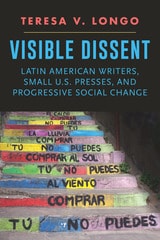
Visible Dissent
Latin American Writers, Small U.S. Presses, and Progressive Social ChangeTeresa V. Longo
University of Iowa Press, 2018
As Teresa Longo’s groundbreaking examination reveals, North America’s dissident literature has its roots in the Latin American literary tradition. From Pablo Neruda’s Canto General to Eduardo Galeano’s Open Veins of Latin America to Gabriel García Márquez’s One Hundred Years of Solitude—among others—contemporary writers throughout the Americas have forced us to reconsider the United States’s relationship with Latin America, and more broadly with the Global South. Highlighting the importance of reading and re-reading the Latin American canon in the United States, Longo finds that literature can be an instrument of progressive social change, and argues that small literary presses—City Lights, Curbstone, and Seven Stories—have made that dissent visible in the United States. In the book’s final two chapters on the Robert F. Kennedy Center’s Speak Truth to Power initiative and the publication of Marc Falkoff’s Poems from Guantánamo, the author turns our attention further outward, probing the role poetry, theater, and photography play in global human rights work.
Locating the work of artists and writers alongside that of scholars and legal advocates, Visible Dissent not only unveils the staying-power of committed writing, it honors the cross-currents and the on-the-ground implications of humane political engagement.
Visible Women
New Essays on American ActivismEdited by Nancy A. Hewitt and Suzanne Lebsock
University of Illinois Press, 1993
In this collection, fifteen leading historians of women and American history explore women's political action from 1830 to the present. Together, their contributions illustrate the tremendous scope and racial, ethnic, and class diversity of women's public activism while also clarifying various conceptual issues. Essays include an analysis of ideologies and strategies; suffrage militance in 1870s; ideas for a feminist approach to public life; labor feminism in the urban South; women's activism in Tampa, Florida; black women and economic nationalism; black women's clubs; the YMCA's place in the community; the role of Southern churchwomen in racial reform and transformation; and other topics.
"Establishes important links between citizenship, race, and gender following the Reconstruction amendments and the Dawes Act of 1887."--Sharon Hartmann Strom, American Historical Review
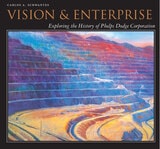
Vision and Enterprise
Exploring the History of Phelps Dodge CorporationCarlos A. Schwantes
University of Arizona Press, 2000
Phelps Dodge Corporation has shaped the landscape of America from the industrial revolution to the information technology revolution. A name synonymous with copper, Phelps Dodge has grown from a cotton and metal trading firm founded in 1834 to its present position as the world's largest publicly traded copper company.
Carlos Schwantes has written a sweeping corporate history of Phelps Dodge. Using landscape as an organizing concept to underscore the company's impact and accomplishments, he offers a close look at this corporate giant within the context of American technological and social history. In tracing the progress of Phelps Dodge through its 165-year history, Schwantes takes readers from the streets of Bisbee, Arizona, to the boardrooms of New York and Phoenix in order to examine the impact the company has had on the many landscapes in which it figures so prominently. Considering factors ranging from the environment to labor, he examines how Phelps Dodge has influenced, and has been influenced by, such forces as the global economy, technological innovation, urban growth, and social change.
Exhaustively researched and profusely illustrated with over 200 photographs, Vision and Enterprise makes a unique contribution to the history of the United States and the evolution of industry by considering the changing face of labor, the environment, and technology from one dynamic company's point of view.

Vision/Re-Vision
Adapting Contemporary American Fiction To FilmBarbara Tepa Lupack
University of Wisconsin Press, 1996
The essays in Vision/Re-Vision analyze in detail ten popular and important films adapted from contemporary American fiction by women, addressing the ways in which the writers' latent or overt feminist messages are reinterpreted by the filmmakers who bring them to the screen, demonstrating that there is much to praise as well as much to fault in the adaptations and that the process of adaptation itself is instructive rather than destructive, since it enriches understanding about both media.
Visionary Pragmatism
Radical and Ecological Democracy in Neoliberal TimesRomand Coles
Duke University Press, 2016
Visions and Divisions
American Immigration Literature, 1870-1930Prchal, Timothy
Rutgers University Press, 2008
From these debates came such novels as Willa Cather’s My Ántonia and Upton Sinclair’s The Jungle. Henry James, Charlotte Perkins Gilman, and Carl Sandburg added to the diversity of viewpoints of native born Americans while equally divergent immigrant perspectives were represented by writers such as Anzia Yezierska, Kahlil Gibran, and Claude McKay. This anthology presents the writing of these authors, among others less well known, to show the many ways literature participated in shaping the face of immigration. The volume also includes an introduction, annotations, a timeline, and historical documents that contextualize the literature.
Visions of Global America and the Future of Critical Reading
Daniel T. O’Hara
The Ohio State University Press, 2009

Visions of Loveliness
Great Flower Breeders of the PastJudith M. Taylor
Ohio University Press, 2014
Gardeners of today take for granted the many varieties of geraniums, narcissi, marigolds, roses, and other beloved flowers for their gardens. Few give any thought at all to how this incredible abundance came to be or to the people who spent a good part of their lives creating it. These breeders once had prosperous businesses and were important figures in their communities but are only memories now. They also could be cranky and quirky.
In the eighteenth and nineteenth centuries, new and exotic species were arriving in Europe and the United States from all over the world, and these plants often captured the imaginations of the unlikeliest of men, from aristocratic collectors to gruff gardeners who hardly thought of themselves as artists. But whatever their backgrounds, they all shared a quality of mind that led them to ask “What if?” and to use their imagination and skills to answer that question themselves. The newest rose from China was small and light pink, but what if it were larger and came in more colors? Lilac was very nice in its way, but what if its blossoms were double and frilly?
While there are many books about plant collectors and explorers, there are none about plant breeders. Drawing from libraries, archives, and the recollections of family members, horticultural historian Judith M. Taylor traces the lives of prominent cultivators in the context of the scientific discoveries and changing tastes of their times. Visions of Loveliness is international in scope, profiling plant breeders from many countries—for example, China and the former East Germany—whose work may be unknown to the Anglophone reader.
In addition to chronicling the lives of breeders, the author also includes chapters on the history behind the plants by genus, from shrubs and flowering trees to herbaceous plants.
Visions of Poverty
Welfare Policy and Political ImaginationRobert Asen
Michigan State University Press, 2002
Visions of War
World War II in Popular Literature and CultureM. Paul Holsinger
University of Wisconsin Press, 1992
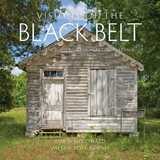
Visions of the Black Belt
A Cultural Survey of the Heart of AlabamaRobin McDonald and Valerie Pope Burnes
University of Alabama Press, 2015
Capturing the soul of the South’s Black Belt.
In Visions of the Black Belt, Robin McDonald and Valerie Pope Burnes offer a richly illustrated tour of the Black Belt, the fertile arc that represents the cultural efflorescence of Alabama’s heartland. Like knowledgeable friends, McDonald and Burnes guide readers through the Black Belt’s towns and architecture and introduce the region’s great panoply of citizens, farmers, craftspeople, cooks, writers, and musicians.
A constellation of Black Belt towns arose during Alabama’s territorial decades, communities like Selma, Camden, Eutaw, Tuskegee, Greenville, and many more. Visions of the Black Belt recounts their stories and others, such as Demopolis’s founding by exiles from Napoleon’s France. As an escarpment of clouds scuds across an indigo sky, the ruins of Alabama’s lost capital of Cahaba reveal the secrets of its lost squares. Also on this picturesque tour are the Black Belt’s homes, from artless cabins wreathed in fern to ozymandian manses wrapped by stately columns, such as Kirkwood and Reverie.
Among the emblematic houses of worship lovingly photographed in Visions of the Black Belt is Prairieville’s St. Andrew’s Episcopal Church, noted for its “carpenter gothic” style. Also reflecting the region’s history of faith are poignant graveyards such as Greenville’s Pioneer Cemetery with its homespun memorials of seashell-and-concrete and the elegant marbles clad in ebon lichen of Selma's Live Oak Cemetery.
In photos and text, McDonald and Burnes bring to life the layers of history that shaped the Black Belt’s tastes, sounds, and colors. Their gastronomic discoveries include the picant crawfish of the Faunsdale Bar & Grill and GainesRidge Dining Club’s famed Black Bottom pie. They bring the sounds of the Black Belt to life by presenting a wide range of musicians and musical events, from bona fide blues and soul masters to Eutaw’s Black Belt Roots Festival.
Including two maps and more than 370 full-color photographs, Visions of the Black Belt offers a timeless message of faith, determination, and the rich simplicity of living in harmony with the rhythms of the land and nature.
Published in Cooperation with the Black Belt Treasures Cultural Arts Center, Camden, Alabama.
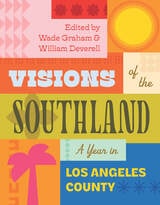
Visions of the Southland
A Year in Los Angeles CountyEdited by Wade Graham and William Deverell
University of Chicago Press, 2026
Experience a year in Los Angeles County, in all its glitter and grit, through a unique anthology that pairs essays by acclaimed writers and historians with custom maps.
When many of us picture Los Angeles, we’re actually thinking of LA County. Home to roughly ten million people, the county alone is more populous than forty-two US states. Its eighty-eight cities include places made famous by Hollywood glamor and California dreaming—Beverly Hills, Malibu, and Santa Monica—but also working-class municipalities and the self-explanatory City of Industry. With a territory that includes the Pacific coastline, mountain ranges, and the high Mojave Desert, the county’s landscapes have been touched by earthquakes, droughts, and, of course, devastating fires. LA County is a place of extremes: progress and injustice, innovation and stagnation.
Visions of the Southland collects essays by writers, journalists, and historians to create a nuanced portrait of LA that’s grounded in the county itself—its sites, structures, and stories. Contributors—including Gustavo Arellano, Keri Blakinger, Lynell George, Christopher Hawthorne, Michael Hiltzik, Greg Hise, Carolina Miranda, Becky Nicolaides, Susan Straight, and David L. Ulin—delve into LA’s infamous air pollution, movie ranches, prisons, aqueducts, urban forests, SoCal Bohemianism, and more. A custom map by Ezra Rawitsch enriches each piece and grounds the reader in specific locations throughout the county. Unfolding over the course of a year, the book traces the rhythms of politics, sports, weather, and wildlife across this sprawling and enigmatic place.
Sweeping in its scope and gorgeous in its design, Visions of the Southland will delight Angelenos, history buffs, urbanists, and map enthusiasts alike.
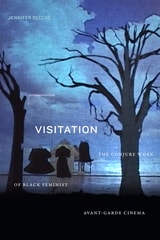
Visitation
The Conjure Work of Black Feminist Avant-Garde CinemaJennifer DeClue
Duke University Press, 2022
Duke University Press Scholars of Color First Book Award recipient

Visiting Mackinac
150 Years of Tourism at Michigan's Fabled StraitsFrank Boles
Michigan State University Press, 2025
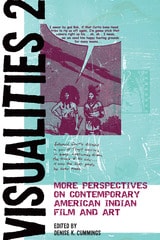
Visualities 2
More Perspectives on Contemporary American Indian Film and ArtDenise K. Cummings
Michigan State University Press, 2019
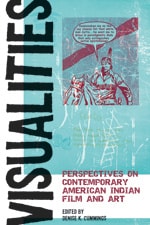
Visualities
Perspectives on Contemporary American Indian Film and ArtDenise K. Cummings
Michigan State University Press, 2011
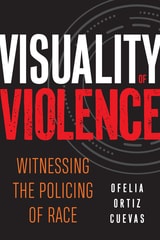
Visuality of Violence
Witnessing the Policing of RaceOfelia Ortiz Cuevas
Temple University Press, 2025
Addressing the frequently ignored experiences of Asian and Native Americans, among others, in its comparative undertaking, Visuality of Violence exceeds intersectional mapping to uniquely charge the spectacle of racial violence as a foundational practice in its continued presence in contemporary society. Cuevas argues that the visual presentations of the racial body throughout history requires a reckoning and acknowledgement of the material and legal effects of the images, narratives, and practices used to maintain hegemonic racial order and inequality.
In holding a theoretical mirror to history, Visuality of Violence reveals liberal mythical reliance on the ideals of western law and its rationalities as the location of justice and freedom, thereby presenting its readers with a new understanding in the quest for peace and liberation.
In the series Critical Race, Indigeneity, and Relationality
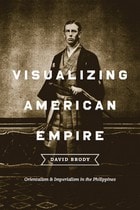
Visualizing American Empire
Orientalism and Imperialism in the PhilippinesDavid Brody
University of Chicago Press, 2010
In 1899 an American could open a newspaper and find outrageous images, such as an American soldier being injected with leprosy by Filipino insurgents. These kinds of hyperbolic accounts, David Brody argues in this illuminating book, were just one element of the visual and material culture that played an integral role in debates about empire in late nineteenth- and early twentieth-century America.
Visualizing American Empire explores the ways visual imagery and design shaped the political and cultural landscape. Drawing on a myriad of sources—including photographs, tattoos, the decorative arts, the popular press, maps, parades, and material from world’s fairs and urban planners—Brody offers a distinctive perspective on American imperialism. Exploring the period leading up to the Spanish-American War, as well as beyond it, Brody argues that the way Americans visualized the Orient greatly influenced the fantasies of colonial domestication that would play out in the Philippines. Throughout, Brody insightfully examines visual culture’s integral role in the machinery that runs the colonial engine. The result is essential reading for anyone interested in the history of the United States, art, design, or empire.
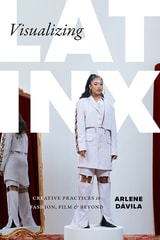
Visualizing Latinx
Creative Practices in Fashion, Film, and BeyondArlene Dávila
Duke University Press, 2026
Vital signs
contemporary American poetry from the university pressesRonald Wallace
University of Wisconsin Press, 1989
The selections in this anthology represent the full range and vitality of contemporary American poetry--from minimalism to epic, from free verse to traditional form, from plain conversation to richly embroidered tapestry, form passionate political utterance to intense personal drama, from light verse to tough lyricism. Since 1950 university presses have published more than 900 volumes of original poetry , opening the canon to a wide range of rich and exciting voices. Nearly 200 of the those volumes are represented here.
Vital Signs features poems by such well established poets as John Ashbery, Marge Piercy, Adrienne Rich, and James Wright. Because the presses have also played a role in discovering and promoting the work of new poets, the reader will find here poems by many younger writers as well.
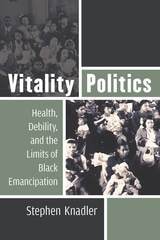
Vitality Politics
Health, Debility, and the Limits of Black EmancipationStephen Knadler
University of Michigan Press, 2019

Vitamania
Vitamins in American CultureRima Apple
Rutgers University Press, 1996
"Have you taken your vitamins today?" That question echoes daily through American households. Thanks to intensive research in nutrition and medicine, the importance of vitamins to health is undisputed. But millions of Americans believe that the vitamins they get in their food are not enough. Vitamin supplements have become a multibillion-dollar industry. At the same time, many scientists, consumer advocacy groups, and the federal Food and Drug Administration doubt that most people need to take vitamin pills.
Vitamania tells how and why vitamins have become so important to so many Americans. Rima Apple examines the claims and counterclaims of scientists, manufacturers, retailers, politicians, and consumers from the discovery of vitamins in the early twentieth century to the present. She reveals the complicated interests--scientific, professional, financial--that have propelled the vitamin industry and its would-be regulators. From early advertisements linking motherhood and vitamin D, to Linus Pauling's claims for vitamin C, to recent congressional debates about restricting vitamin products, Apple's insightful history shows the ambivalence of Americans toward the authority of science. She also documents how consumers have insisted on their right to make their own decisions about their health and their vitamins.
Vitamania makes fascinating reading for anyone who takes--or refuses to take--vitamins. It will be of special interest to students, scholars, and professionals in public health, the biomedical sciences, history of medicine and science, twentieth-century history, nutrition, marketing, and consumer studies.

Vivian Maier
A Photographer’s Life and AfterlifePamela Bannos
University of Chicago Press, 2017
But, as Pamela Bannos reveals in this meticulous and passionate biography, this story of the nanny savant has blinded us to Maier’s true achievements, as well as her intentions. Most important, Bannos argues, Maier was not a nanny who moonlighted as a photographer; she was a photographer who supported herself as a nanny. In Vivian Maier: A Photographer’s Life and Afterlife, Bannos contrasts Maier’s life with the mythology that strangers—mostly the men who have profited from her work—have created around her absence. Bannos shows that Maier was extremely conscientious about how her work was developed, printed, and cropped, even though she also made a clear choice never to display it. She places Maier’s fierce passion for privacy alongside the recent spread of her work around the world, and she explains Maier’s careful adjustments of photographic technique, while explaining how the photographs have been misconstrued or misidentified. As well, Bannos uncovers new information about Maier’s immediate family, including her difficult brother, Karl—relatives that once had been thought not to exist.
This authoritative and engrossing biography shows that the real story of Vivian Maier, a true visionary artist, is even more compelling than the myth.
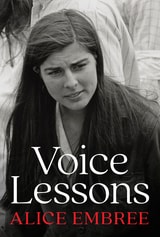
Voice Lessons
By Alice Embree
University of Texas Press, 2021
Voice Lessons explores the rich personal and political terrain of Alice Embree, a 1960s activist and convert to the women’s liberation movement of the 1970s, bringing a woman’s perspective to a transformational time in US history. This riveting memoir traces the author’s roots in segregated Austin and her participation in efforts to integrate the University of Texas. It follows her antiwar activism from a vigil in front of President Lyndon Johnson’s ranch in 1965 to a massive protest after the shootings at Kent State in 1970. Embree’s activism brought her and the Students for a Democratic Society into conflict with Frank Erwin, the powerful chairman of the UT Board of Regents, and inspired a campus free speech movement. She recounts her experiences living in New York during the tumultuous years of 1968 and 1969, including the Columbia University strike and the Woodstock music festival. She also tells about protesting at the Chicago Democratic Convention, her interactions with Yippies and poets, and her travels to Chile, Cuba, and Mexico. Embree highlights the radical roots of the women’s liberation movement in Austin and the audacious women’s community that challenged gender roles, fought for reproductive justice, and inspired a lifetime of activism.
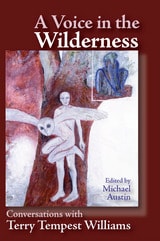
Voice in the Wilderness
Conversations with Terry Tempest Williamsedited by Michael Austin
Utah State University Press, 2006
In her writings, Terry Tempest Williams repeatedly invites us as readers into engagement and conversation with both her and her subject matter, whether it is nature or society, environment or art. From her evocation, in Desert Quartet: An Erotic Landscape, of an eroticism of place that defines erotic as "in relation," to the spiritual connectivity and familial bonds she explores in Refuge: An Unnatural History of Family and Place and the political engagement she urges in The Open Space of Democracy, much of her work is about relationship, connection, and community. Like much good writing, her books invite readers into thoughtful dialogue with the text. Frequently in demand for workshops, lectures, and other speaking venues and well known as an environmental activist, Williams has a public persona and voice almost indistinguishable from her written ones.
Thus, the interviews she has often granted--in print, on the radio, on the Web--seamlessly elaborate the ideas and extend the explorations of her written texts. They also tell us much about the genesis, context, and intent of her books. With her distinctive, impassioned voice and familiar felicity of language, she talks about wilderness and wildlife, place and eroticism, art and literature, democracy and politics, family and heritage, Mormonism and religion, writing and creativity, and other subjects that engage her agile mind. The set of interviews gathered and introduced by Michael Austin in A Voice in the Wilderness represent the span of Terry Tempest Williams's career as a naturalist, author, and activist.

Voices From the Other Side
An Oral History of Terrorism Against CubaKeith Bolender
Pluto Press, 2010
Keith Bolender brings to bear the enormous impact that terrorism has had on Cuba’s civilian population, with over 1,000 documented incidents resulting in more than 3,000 deaths and 2,000 injuries. Bolender allows the victims to articulate the atrocities the Cuban people have suffered - which largely originate from Cuban counter-revolutionaries based in the US, often with the active help of the CIA.
Voices From The Other Side includes first-person interviews with more than 75 Cuban citizens who have been victims of these terrorist acts, or have had family members or close friends die from the attacks. It is a unique resource for activists, journalists and students interested in Cuba's torrid relationship with the US.

Voices Made Flesh
Performing Women'S AutobiographyLynn C. Miller
University of Wisconsin Press, 2003
Fourteen bold, dynamic, and daring women take the stage in this collection of women's lives and stories. Individually and collectively, these writers and performers speak the unspoken and perform the heretofore unperformed.
The first section includes scripts and essays about performances of the lives of Gertrude Stein, Georgia O'Keeffe, Mary Church Terrell, Charlotte Cushman, Anaïs Nin, Calamity Jane, and Mary Martin. The essays consider intriguing interpretive issues that arise when a woman performer represents another woman's life. In the second section, seven performers—Tami Spry, Jacqueline Taylor, Linda Park-Fuller, Joni Jones, Terri Galloway, Linda M. Montano, and Laila Farah—tell their own stories. Ranging from narrrative lectures (sometimes aided by slides and props) to theatrical performances, their works wrest comic and dramatic meaning from a world too often chaotic and painful. Their performances engage issues of sexual orientation, ethnicity, race, loss of parent, disability, life and death, and war and peace. The volume as a whole highlights issues of representation, identity, and staging in autobiographical performance. It examines the links among theory and criticism of women's autobiography, feminist performance theory, and performance practice.

Voices Of The Religious Left
Rebecca Alpert
Temple University Press, 2000
The academics and activists who write this rich volume, edited by Rebecca Alpert, argue passionately on topics that concern all of us. Quoting from the Bible, the Torah, the Qur'an, the teachings of Buddha, as well as Native American folklore, they make the voices of the religious left heard -- teaching lessons of peace and liberation.
As this invaluable sourcebook shows, the religious left is committed to issues of human rights and dignity. Answering questions of identity and ideology, the essays included here stem from the "culture wars" that have divided orthodox and liberal believers. Responding to the needs of and raised by marginalized social groups, the writers discuss economic issues and religious politics as they champion equal rights, and promote the teaching of progressive vision.
Containing insightful perspectives of adherents to many faiths, Voices of the Religious Left makes it clear that there is a group dedicated to instilling the values of justice and freedom. They are far from silent.
All of the essays in this collection "...represent the power of the written word as a vehicle for advocacy and social change....It is my hope that the readers of these essays will themselves feel compelled to think more about the importance of taking a stand on issues from religious perspectives, and to act on something that compels them." --Rabbi Rebecca Alpert