Results by title
22279 books match the query 'Social Science' and 211 start with v

Violent Affections
Queer Sexuality, Techniques of Power, and Law in RussiaAlexander Sasha Kondakov
University College London, 2022
Passed in 2013, Russia’s “gay propaganda” law cemented the nation’s anti-LGBTQ sentiment into legal rhetoric that has since emboldened countless instances of violence against queer people. Based on an analysis of over three hundred criminal cases of anti-queer violence in Russia before and after the introduction of the law, Violent Affections shows how violent acts are framed in emotional language by perpetrators during their criminal trials, thus uncovering the techniques of power that work to translate emotions into violence against queer people. Utilizing an original methodology of studying legal memes, this book argues that individual affective states are directly connected to the political and legislative violence aimed at policing queer lives. Alexander Sasha Kondakov expands upon two sets of interdisciplinary literature–queer theory and affect theory–in order to conceptualize what is referred to as neo-disciplinary power. The book traces how affections circulate from body to body as a kind of virus, eventually enabling the turn from a memetic response to violent action.
Violent Belongings
Partition, Gender, and National Culture in Postcolonial IndiaKavita Daiya
Temple University Press, 2008
In addition to challenging the official narratives of independence and Partition, these narratives challenge our contemporary understanding of gender and ethnicity in history and politics. Violent Belongings argues that both male and female bodies, and heterosexual coupledom, became symbols of the nation in public life. In the newly independent Indian nation both men and women were transformed into ideal citizens or troubling bodies, immigrants or refugees, depending on whether they were ethnically Hindu, Muslim, Jewish or Sikh. The divisions set in motion during Partition continue into our own time and account for ethnic violence in South Asia.

Violent Criminal Acts and Actors Revisited
Lonnie Athens
University of Illinois Press, 1997
as "the most far-reaching, provocative, and profound analysis of violent conduct" available in criminological literature. In Violent Criminal Acts and Actors Revisited, Athens returns to his pioneering work and finds that his premises are just as relevant and original as in their earlier version--and that they have been curiously, and to society's detriment, overlooked.
Rather than finding the causes of criminal behavior in external forces
or personality disorders, as conventional wisdom often does, Athens renews his fundamental argument that a violent situation comes into being when defined by an individual as a situation that calls for violence--that an actor responds to the circumstance as he or she defines it. Based on the author's many firsthand interviews with offenders and on his personal experience, Violent Criminal Acts and Actors Revisited augments Athens’s call to reexamine the source and locus of violent criminal behavior.
Violent Democracies in Latin America
Enrique Desmond Arias and Daniel M. Goldstein, eds.
Duke University Press, 2010
The contributors—anthropologists, political scientists, sociologists, and historians—explore how individuals and institutions in Latin American democracies, from the rural regions of Colombia and the Dominican Republic to the urban centers of Brazil and Mexico, use violence to impose and contest notions of order, rights, citizenship, and justice. They describe the lived realities of citizens and reveal the historical foundations of the violence that Latin America suffers today. One contributor examines the tightly woven relationship between violent individuals and state officials in Colombia, while another contextualizes violence in Rio de Janeiro within the transnational political economy of drug trafficking. By advancing the discussion of democratic Latin American regimes beyond the usual binary of success and failure, this collection suggests more sophisticated ways of understanding the challenges posed by violence, and of developing new frameworks for guaranteeing human rights in Latin America.
Contributors: Enrique Desmond Arias, Javier Auyero, Lilian Bobea, Diane E. Davis, Robert Gay, Daniel M. Goldstein, Mary Roldán, Todd Landman, Ruth Stanley, María Clemencia Ramírez
Violent Encounters
Gender, Colonialism, and the First World War in Cameroon, 1884–1916George N. Njung
Ohio University Press, 2027
Violent Encounters offers a powerful and original gendered history of colonial rule and warfare in Cameroon from the advent of German imperialism to the end of the First World War. Centering German Cameroon as an understudied but pivotal site of empire and global conflict, George N. Njung demonstrates that violence was a calculated instrument of colonial governance, which was systematically organized along racial and gendered lines to conquer territory, discipline African communities, and suppress resistance.
Drawing on extensive archival research in Africa and Europe, oral traditions, and interdisciplinary gender analysis, Njung reconstructs how empire and war were lived differently by African men and women. He shows that gender-based violence—especially sexual abuse—functioned as a deliberate political strategy embedded in military campaigns, forced labor regimes, and systems of punishment. African women bore disproportionate burdens at the intersection of gender, race, and militarization, even as they acted as resisters, mobilizers, and negotiators. African men, meanwhile, experienced forced recruitment, battlefield violence, and profound challenges to social authority under colonial rule.
Reinterpreting the First World War in Africa as an escalation rather than a rupture, Violent Encounters situates wartime atrocities, mass displacement, and one of the twentieth century’s earliest refugee crises within a longer continuum of imperial violence. By foregrounding gender, the book repositions Cameroon—and Africa more broadly—as central to understanding the global dynamics of empire, militarization, and resistance in the early twentieth century.
Violent Exceptions
Children's Human Rights and Humanitarian RhetoricsWendy S. Hesford
The Ohio State University Press, 2021

Violent Exceptions
Children's Human Rights and Humanitarian RhetoricsWendy S. Hesford
The Ohio State University Press, 2021

Violent Extremism
A Handbook of Risk Assessment and ManagementEdited by Caroline Logan, Randy Borum, and Paul Gill
University College London, 2023
Violent extremism has galvanized public fear and attention. Driven by their concerns, the public has pushed for law enforcement and mental health systems to prevent attacks rather than just respond to them after they occur. The prevention process requires guidance for practitioners and policymakers on how best to identify people who may be at risk, to understand and assess the nature and function of the harm they may cause, and to manage them to mitigate or prevent harm. Violent Extremism provides such guidance.
Over ten chapters, prepared by leading experts, this handbook illuminates the nature of violent extremism and the evolution of prevention-driven practice. Authors draw on the literature and their experience to explain which factors might increase (risk factors) or decrease (protective factors) risk, how those factors might operate, and how practitioners can prepare risk formulations and scenario plans that inform risk management strategies to prevent violent extremist harm.
Each chapter is crafted to support thoughtful, evidence-based practice that is transparent, accountable, and ultimately defensible. Written for an international audience, the volume will be of interest to law enforcement and mental health professionals, criminal justice and security personnel, as well as criminologists, policymakers, and researchers.

Violent Intimacies
The Trans Everyday and the Making of an Urban WorldAsli Zengin
Duke University Press, 2024

Violent Sensations
Sex, Crime, and Utopia in Vienna and Berlin, 1860-1914Scott Spector
University of Chicago Press, 2016
In Violent Sensations, Scott Spector explores how the protagonists of these stories—people at society’s margins—were given new identities defined by the groundbreaking sciences of psychiatry, sexology, and criminology, and how this expert knowledge was then transmitted to an eager public by journalists covering court cases and police investigations. The book analyzes these sexual and criminal subjects on three levels: first, the expertise of scientists, doctors, lawyers, and scholars; second, the sensationalism of newspaper scandal and pulp fiction; and, third, the subjective ways that the figures themselves came to understand who they were. Throughout, Spector answers important questions about how fantasies of extreme depravity and bestiality figure into the central European self-image of cities as centers of progressive civilization, as well as the ways in which the sciences of social control emerged alongside the burgeoning emancipation of women and homosexuals.
Violent Utopia
Dispossession and Black Restoration in TulsaJovan Scott Lewis
Duke University Press, 2022
Viral Cultures
Activist Archiving in the Age of AIDSMarika Cifor
University of Minnesota Press, 2022
Delves deep into the archives that keep the history and work of AIDS activism alive
Serving as a vital supplement to the existing scholarship on AIDS activism of the 1980s and 1990s, ViralCultures is the first book to critically examine the archives that have helped preserve and create the legacy of those radical activities. Marika Cifor charts the efforts activists, archivists, and curators have made to document the work of AIDS activism in the United States and the infrastructure developed to maintain it, safeguarding the material for future generations to remember these social movements and to revitalize the epidemic’s past in order to remake the present and future of AIDS.
Drawing on large institutional archives such as the New York Public Library, as well as those developed by small, community-based organizations, this work of archival ethnography details how contemporary activists, artists, and curators use these records to build on the cultural legacy of AIDS activism to challenge the conditions of injustice that continue to undergird current AIDS crises. Cifor analyzes the various power structures through which these archives are mediated, demonstrating how ideology shapes the nature of archival material and how it is accessed and used. Positioning vital nostalgia as both a critical faculty and a generative practice, this book explores the act of saving this activist past and reanimating it in the digital age.
While many books, popular films, and major exhibitions have contributed to a necessary awareness of HIV and AIDS activism, Viral Cultures provides a crucial missing link by highlighting the powerful role of archives in making those cultural moments possible.
Viral Economies
Bird Flu Experiments in VietnamNatalie Porter
University of Chicago Press, 2019
In Viral Economies, Natalie Porter draws from long-term research on bird flu in Vietnam to chart the pathways of scientists, NGO workers, state veterinarians, and poultry farmers as they define and address pandemic risks. Porter argues that as global health programs expand their purview to include life and livestock, they weigh the interests of public health against those of commercial agriculture, rural tradition, and scientific innovation. Porter challenges human-centered analyses of pandemics and shows how dynamic and often dangerous human-animal relations take on global significance as poultry and their pathogens travel through global livestock economies and transnational health networks. Viral Economies urges readers to think critically about the ideas, relationships, and practices that produce our everyday commodities, and that shape how we determine the value of life—both human and nonhuman.
Viral Frictions
Global Health and the Persistence of HIV Stigma in KenyaElizabeth J. Pfeiffer
Rutgers University Press, 2022
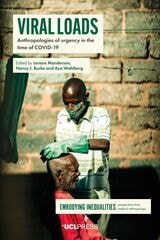
Viral Loads
Anthropologies of Urgency in the Time of COVID-19Edited by Lenore Manderson, Nancy J. Burke, and Ayo Wahlberg
University College London, 2021
The COVID-19 pandemic disrupted some lives more than others. While more than half the world’s population experienced physical restrictions in the wake of the virus, Viral Loads reveals how the international response placed disparate burdens on exploited communities across the globe. Contributors from six continents situate the pandemic within a highly connected yet exceedingly unequal world marked by fragmented communities, austere economies, and unstable governments. Ambitious in its scope, Viral Loads insists that medical anthropology must be part of any future efforts to build a new post-pandemic world.
Viral Mothers
Breastfeeding in the Age of HIV/AIDSBernice L. Hausman
University of Michigan Press, 2010

Virgin Crossing Borders
Feminist Resistance and Solidarity in TranslationEmek Ergun
University of Illinois Press, 2023
Ergun’s comparative framework reveals translation’s potential to facilitate cross-border flows of feminist theories, empower feminist interventions, connect feminist activists across differences and divides, and forge transnational feminist solidarities. As she considers hopeful and woeful pictures of border crossings, Ergun invites readers to revise their views of translation’s role in transnational feminism and examine their own potential as ethically and politically responsible agents willing to search for new meanings.
Sophisticated and compelling, Virgin Crossing Borders reveals translation’s vital role in exchanges of feminist theories, stories, and knowledge.
Virgin Mary and the Neutrino
Reality in TroubleIsabelle Stengers
Duke University Press, 2023
Virgin-Kayenta Cultural Relationships
UUAP 79C. Melvin Aikens
University of Utah Press, 1966

Virginia Woolf Icon
Brenda R. Silver
University of Chicago Press, 1999
From Virginia Woolf's 1937 appearance on the cover of Time magazine to her current roles in theater, film, and television, Silver traces the often contradictory representations and the responses they provoke, highlighting the recurring motifs that associate Virginia Woolf with fear. By looking more closely at who is afraid and the contexts in which she is perceived to be frightening, Silver illustrates how Virginia Woolf has become the site of conflicts about cultural boundaries and legitimacy that continue to rage today.
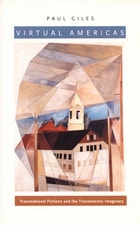
Virtual Americas
Transnational Fictions and the Transatlantic ImaginaryPaul Giles
Duke University Press, 2002
Throughout Virtual Americas Giles focuses on specific examples of transatlantic cultural interactions such as Frederick Douglass’s experiences and reputation in England; Herman Melville’s satirizing fictions of U.S. and British nationalism; and Vladimir Nabokov’s critique of European high culture and American popular culture in Lolita. He also reverses his perspective, looking at the representation of San Francisco in the work of British-born poet Thom Gunn and Sylvia Plath’s poetic responses to England. Giles develops his theory about the need to defamiliarize the study of American literature by considering the cultural legacy of Surrealism as an alternative genealogy for American Studies and by examining the transatlantic dimensions of writers such as Henry James and Robert Frost in the context of Surrealism.
Virtual Gender
Fantasies of Subjectivity and EmbodimentMary Ann O'Farrell and Lynne Vallone, Editors
University of Michigan Press, 1999
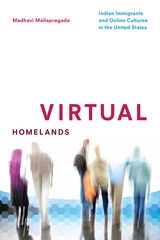
Virtual Homelands
Indian Immigrants and Online Cultures in the United StatesMadhavi Mallapragada
University of Illinois Press, 2014
As Mallapragada shows, ideologies around family and citizenship shift to fit the transnational contexts of the online world and immigration. At the same time, the tactical use of the home page to make gender, racial, and class struggles visible and create new modes for belonging implicates the web within complex political and cultural terrain. On e-commerce, community, and activist sites, the recasting of home and homeland online points to intrusion by public agents such as the state, the law, and immigration systems in the domestic, the private, and the familial. Mallapragada reveals that the home page may mobilize to reproduce conservative narratives of Indian immigrants' familial and citizenship cultures, but the reach of a website extends beyond the textual and discursive to encompass the institutions shaping it, as the web unmakes and remakes ideas of "India" and "America."

Virtual Lotus
Modern Fiction of Southeast AsiaTeri Shaffer Yamada, Editor
University of Michigan Press, 2002
Short introductions to each story provide a sketch of the country's literary history, revealing the interaction between individual writers and their sociopolitical situations. Many of the stories are ethnographic and provide snapshots of cultures at a specific historical moment. The stories also reflect gender balance, diversity of style, and quality of literary expression. Exploring everything from the realities of being a middle-aged woman in Burma in the witty drama "An Umbrella" to the difficult choice between appeasing a troubled Vietnamese community or tending to an ailing father in "Tu Ben the Actor," this collection is sure to appeal to a variety of readers the world over.
This anthology will be useful in courses in comparative translation and culture, postcolonial studies, political science, Asian history, and gender studies. It is also appropriate for a literary reading public interested in comparative world literature.
Teri Shaffer Yamada is Associate Professor, California State University, Long Beach.

Virtual Pedophilia
Sex Offender Profiling and U.S. Security CultureGillian Harkins
Duke University Press, 2020
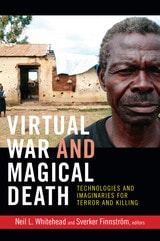
Virtual War and Magical Death
Technologies and Imaginaries for Terror and KillingNeil L. Whitehead and Sverker Finnström, eds.
Duke University Press, 2013
Another significant focus of the collection is the U.S. military's exploitation of ethnographic research, particularly through its controversial Human Terrain Systems (HTS) Program, which embeds anthropologists as cultural experts in military units. Several pieces address the ethical dilemmas that HTS and other counterinsurgency projects pose for anthropologists. Other essays reveal the relatively small scale of those programs in relation to the military's broader use of, and ambitions for, social scientific data.
Contributors. Robertson Allen, Brian Ferguson, Sverker Finnström, Roberto J. González, David H. Price, Antonius Robben, Victoria Sanford, Jeffrey Sluka, Koen Stroeken, Matthew Sumera, Neil L. Whitehead
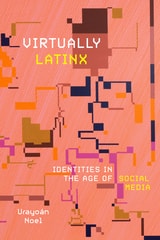
Virtually Latinx
Identities in the Age of Social MediaUrayoán Noel
University of Texas Press, 2026
Examining how Latinx identity reimagines and connects communities through social media.
The very idea of Latinidad flattens identities, subsuming diverse peoples under a single racialized framework useful for corporate and political marketing. But it is not only ethnic identity that Latinidad tends to erase. In the first-ever study of Latinx social media, Urayoán Noel shows how historically marginalized Latinxs—including Black, Trans, undocumented, and disabled people—have used digital platforms to challenge hegemonic Latinidad and to build alternatives communities.
Incorporating elements of history, ethnography, and performance studies, Virtually Latinx traces the evolution of Latinx social media and blogging since the early 1990s, focusing on creative movements and vocabularies emerging and consolidating online. From Chicano/LatinoNet, Latina Lista, and Remezcla, to activists and performers on TikTok, online creators and platforms have spurred modes of art and activism that counter both Latinidad’s essentialized body politics and Big Tech’s domination of the information sphere. In dialogue with scholars of media, virtuality, and identity, Noel theorizes how hashtags like #Afrolatina, #Latinx, and #Latine have not only facilitated online exchange but also nurtured new knowledge formations surrounding Black, feminist, undocuqueer, Trans, and disability poetics and politics.

Virtue Hoarders
The Case against the Professional Managerial ClassCatherine Liu
University of Minnesota Press, 2021
A denunciation of the credentialed elite class that serves capitalism while insisting on its own progressive heroism
Professional Managerial Class (PMC) elite workers labor in a world of performative identity and virtue signaling, publicizing an ability to do ordinary things in fundamentally superior ways. Author Catherine Liu shows how the PMC stands in the way of social justice and economic redistribution by promoting meritocracy, philanthropy, and other self-serving operations to abet an individualist path to a better world. Virtue Hoarders is an unapologetically polemical call to reject making a virtue out of taste and consumption habits.
Forerunners: Ideas First is a thought-in-process series of breakthrough digital publications. Written between fresh ideas and finished books, Forerunners draws on scholarly work initiated in notable blogs, social media, conference plenaries, journal articles, and the synergy of academic exchange. This is gray literature publishing: where intense thinking, change, and speculation take place in scholarship.
Virtue and Venom
Catalogs of Women from Antiquity to the RenaissanceGlenda McLeod
University of Michigan Press, 1991
Virtue and Venom
Catalogs of Women from Antiquity to the RenaissanceGlenda McLeod
University of Michigan Press, 1991
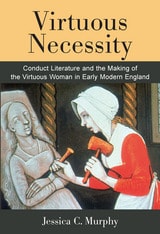
Virtuous Necessity
Conduct Literature and the Making of the Virtuous Woman in Early Modern EnglandJessica C. Murphy
University of Michigan Press, 2015
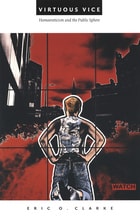
Virtuous Vice
Homoeroticism and the Public SphereEric O. Clarke
Duke University Press, 2000
Examining the role of eroticism in citizenship and why only normalizing
constructions of homosexuality enable inclusion, Clarke reconsiders the work of Habermas and Foucault in relation to contemporary visibility politics, Kant’s moral and political theory, Marx’s analysis of value, and the sexualized dynamics of the Victorian cultural public sphere. The juxtaposition of Habermas with Foucault reveals the surprising value of reading the former in the context of queer politics and the usefulness of the theory of the public sphere for understanding contemporary identity politics and the visibility politics of the 1990s. Examining how a host of nonsexual factors impinge historically upon the constitution of sexual identities and practices, Clarke negotiates the relation between questions of publicity and categories of value. Discussions of television sitcoms (such as Ellen), marketing techniques, authenticity, and literary culture add to this daring analysis of visibility politics.
As a critique of the claim that equal representation of gays and lesbians necessarily constitutes progress, this significant intervention into social theory will find enthusiastic readers in the fields of Victorian, cultural, literary, and gay and lesbian studies, as well as other fields engaged with categories of identity.
Virulent Zones
Animal Disease and Global Health at China's Pandemic EpicenterLyle Fearnley
Duke University Press, 2020
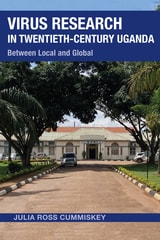
Virus Research in Twentieth-Century Uganda
Between Local and GlobalJulia Ross Cummiskey
Ohio University Press, 2024
Virus Research in Twentieth-Century Uganda presents the stories of scientists at the Uganda Virus Research Institute (UVRI), a biomedical center founded in 1936. The book analyzes the strategies and conditions that allowed the institute to endure and thrive through successive political and scientific regimes of the interwar period, the postwar period, the transition to independence, the conflicts of the 1970s and 1980s, and the Museveni presidency. Julia Ross Cummiskey combines methods and themes from the history of medicine and public health, science and technology studies, and African studies to show that the story of the UVRI and the people who worked there transforms our understanding of the nature of local and international expertise and the evolution of global health research over the course of the twentieth century.
Global health is one of the chief areas in which African and foreign institutions interact today. Billions of dollars are invested in global health projects on the continent, many involving strategically selected “local partners.” In the discourse of these projects, local and global are often framed as complementary but distinct categories of people, institutions, traditions, and practices. But the history of biomedical research at the UVRI shows that these distinctions are unstable and mutable and that people and institutions have mobilized both categories to attract funding, professional prestige, and research opportunities. The book complicates the local/global binary that is implicit (and sometimes explicit) in many studies of colonial, international, and global health and medical research, especially in Africa. Moreover, it challenges assumptions about global health as an enterprise dominated by researchers based in the Global North and recenters the history of biomedicine in Africa.
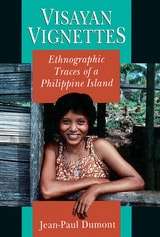
Visayan Vignettes
Ethnographic Traces of a Philippine IslandJean-Paul Dumont
University of Chicago Press, 1992
"This book is an interestingly complex ethnography that approaches the self-critical dialectical ethnography called for two decades ago....It is a welcome contribution to postmodernist theory and to the ethnography of the Visayas."—Ronald Provencher, Journal of Asian Studies

Viscous Performances
The Persistence of Creative Resistances in Neoliberal ChileMaría José Contreras Lorenzini
Duke University Press, 2026
Visibility Interrupted
Rural Queer Life and the Politics of UnbecomingCarly Thomsen
University of Minnesota Press, 2021
A questioning of the belief in the power of LGBTQ visibility through the lives of queer women in the rural Midwest
Today most LGBTQ rights supporters take for granted the virtue of being “out, loud, and proud.” Most also assume that it would be terrible to be LGBTQ in a rural place. By considering moments in which queerness and rurality come into contact, Visibility Interrupted argues that both positions are wrong. In the first monograph on LGBTQ women in the rural Midwest, Carly Thomsen deconstructs the image of the rural as a flat, homogenous, and anachronistic place where LGBTQ people necessarily suffer. And she suggests that visibility is not liberation and will not lead to liberation.
Far from being an unambiguous good, argues Thomsen, visibility politics can, in fact, preclude collective action. They also advance metronormativity, postraciality, and capitalism. To make these interventions, Thomsen develops the theory of unbecoming: interrogating the relationship between that which we celebrate and that which we find disdainful—the past, the rural, politics—is crucial for developing alternative subjectivities and politics. Unbecoming precedes becoming. Drawing from critical race studies, disability studies, and queer Marxism, in addition to feminist and queer studies, the insights of this book will be useful to scholars theorizing issues far beyond sexuality and place and to social justice activists who want to move beyond visibility.
Visible Borders, Invisible Economies
Living Death in Latinx NarrativesKristy L. Ulibarri
University of Texas Press, 2022
2023 Outstanding Book Award, National Association for Ethnic Studies
A thorough examination of the political and economic exploitation of Latinx subjects, migrants, and workers through the lens of Latinx literature, photography, and film.
Globalization in the United States can seem paradoxical: free trade coincides with fortification of the southern border, while immigration is reimagined as a national-security threat. US politics turn aggressively against Latinx migrants and subjects even as post-NAFTA markets become thoroughly reliant on migrant and racialized workers. But in fact, there is no incongruity here. Rather, anti-immigrant politics reflect a strategy whereby capital uses specialized forms of violence to create a reserve army of the living, laboring dead.
Visible Borders, Invisible Economies turns to Latinx literature, photography, and films that render this unseen scheme shockingly vivid. Works such as Valeria Luiselli’s Tell Me How It Ends and Alex Rivera’s Sleep Dealer crystallize the experience of Latinx subjects and migrants subjugated to social death, their political existence erased by disenfranchisement and racist violence while their bodies still toil in behalf of corporate profits. In Kristy L. Ulibarri’s telling, art clarifies what power obscures: the national-security state performs anti-immigrant and xenophobic politics that substitute cathartic nationalism for protections from the free market while ensuring maximal corporate profits through the manufacture of disposable migrant labor.
Visible Histories, Disappearing Women
Producing Muslim Womanhood in Late Colonial BengalMahua Sarkar
Duke University Press, 2008
Drawing on extensive archival research and oral histories of Muslim women who lived in Calcutta and Dhaka in the first half of the twentieth century, Sarkar traces Muslim women as they surface and disappear in colonial, Hindu nationalist, and liberal Muslim writings, as well as in the memories of Muslim women themselves. The oral accounts provide both a rich source of information about the social fabric of urban Bengal during the final years of colonial rule and a glimpse of the kind of negotiations with stereotypes that even relatively privileged, middle-class Muslim women are still frequently obliged to make in India today. Sarkar concludes with some reflections on the complex links between past constructions of Muslim women, current representations, and the violence against them in contemporary India.
Visible Women
New Essays on American ActivismEdited by Nancy A. Hewitt and Suzanne Lebsock
University of Illinois Press, 1993
In this collection, fifteen leading historians of women and American history explore women's political action from 1830 to the present. Together, their contributions illustrate the tremendous scope and racial, ethnic, and class diversity of women's public activism while also clarifying various conceptual issues. Essays include an analysis of ideologies and strategies; suffrage militance in 1870s; ideas for a feminist approach to public life; labor feminism in the urban South; women's activism in Tampa, Florida; black women and economic nationalism; black women's clubs; the YMCA's place in the community; the role of Southern churchwomen in racial reform and transformation; and other topics.
"Establishes important links between citizenship, race, and gender following the Reconstruction amendments and the Dawes Act of 1887."--Sharon Hartmann Strom, American Historical Review
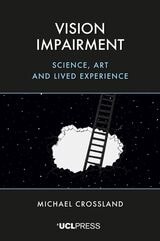
Vision Impairment
Science, Art and Lived ExperienceMichael Crossland
University College London, 2024
What is it like to go blind? Three hundred and fifty million people around the world live with severe vision impairment, ranging from those who can see a couple of letters on a sight chart to those who perceive no light at all. Vision Impairment introduces the readers to some of them, including artists, poets, scientists, architects, politicians, broadcasters, and musicians. Through their stories, this book discusses life with vision impairment–from childhood and education to dating, employment, and aging–as well as the portrayal of blind people in literature and film, the use of technology by people with vision impairment, and the psychological effects of losing vision.
Based on Michael Crossland’s extensive work in children’s and adults’ low vision clinics, and his twenty years of research into vision impairment, the book blends individual stories, key research findings, and the most recent scientific discoveries to present an informative yet optimistic overview of living with sight loss.

Vision/Re-Vision
Adapting Contemporary American Fiction To FilmBarbara Tepa Lupack
University of Wisconsin Press, 1996
The essays in Vision/Re-Vision analyze in detail ten popular and important films adapted from contemporary American fiction by women, addressing the ways in which the writers' latent or overt feminist messages are reinterpreted by the filmmakers who bring them to the screen, demonstrating that there is much to praise as well as much to fault in the adaptations and that the process of adaptation itself is instructive rather than destructive, since it enriches understanding about both media.
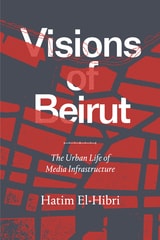
Visions of Beirut
The Urban Life of Media InfrastructureHatim El-Hibri
Duke University Press, 2021
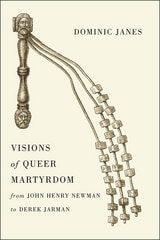
Visions of Queer Martyrdom from John Henry Newman to Derek Jarman
Dominic Janes
University of Chicago Press, 2015
Janes finds the beginnings of queer martyrdom in the nineteenth-century Church of England and the controversies over Cardinal John Henry Newman’s sexuality. He then considers how liturgical expression of queer desire in the Victorian Eucharist provided inspiration for artists looking to communicate their own feelings of sexual deviance. After looking at Victorian monasteries as queer families, he analyzes how the Biblical story of David and Jonathan could be used to create forms of same-sex partnerships. Finally, he delves into how artists and writers employed ecclesiastical material culture to further queer self-expression, concluding with studies of Oscar Wilde and Derek Jarman that illustrate both the limitations and ongoing significance of Christianity as an inspiration for expressions of homoerotic desire.
Providing historical context to help us reevaluate the current furor over homosexuality in the Church, this fascinating book brings to light the myriad ways that modern churches and openly gay men and women can learn from the wealth of each other’s cultural and spiritual experience.
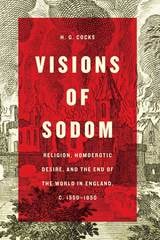
Visions of Sodom
Religion, Homoerotic Desire, and the End of the World in England, c. 1550-1850H. G. Cocks
University of Chicago Press, 2017
In Visions of Sodom, H. G. Cocks examines the many different ways in which the story of Sodom’s destruction provided a template for understanding homoerotic desire and behaviour in Britain between the Reformation and the nineteenth century. Sodom was not only a marker of sexual sins, but also the epitome of false—usually Catholic—religion, an exemplar of the iniquitous city, a foreshadowing of the world’s fiery end, an epitome of divine and earthly punishment, and an actual place that could be searched for and discovered. Visions of Sodom investigates each of these ways of reading Sodom’s annihilation in the three hundred years after the Reformation. The centrality of scripture to Protestant faith meant that Sodom’s demise provided a powerful origin myth of homoerotic desire and sexual excess, one that persisted across centuries, and retains an apocalyptic echo in the religious fundamentalism of our own time.
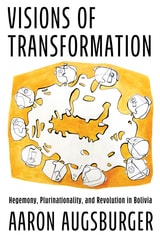
Visions of Transformation
Hegemony, Plurinationality, and Revolution in BoliviaAaron Augsburger
University of Arizona Press, 2025
On a wave of revolutionary upheaval in the early twenty-first century, Evo Morales was swept into state power as Bolivia’s first Indigenous president with a mandate to radically transform the country. The ensuing period, known simply as “el proceso de cambio” (the process of change), has been a tension-filled and contradictory process involving progressive transformations, ambiguous continuities, and outright revolutionary failures. Importantly, the contradictions have been just as much ideological as they are material.
By examining and illuminating the contrasting logics underlying opposing theories of revolutionary change, Visions of Transformation provides an analytical framework through which to understand and interpret the central conflicts and contradictions of Bolivia under Evo Morales and the Movimiento al Socialismo.
Based on nearly two years of immersive fieldwork, Visions of Transformation explores the relation between theoretical production and political practice. Through the contrasting perspectives of hegemony and plurinationality, the book analyzes three specific conjunctural moments—a proposed highway through the TIPNIS, a conflict over representation of the highland Indigenous movement organization CONAMAQ, and the struggle for Indigenous autonomy—to shed light on the primary economic, social, political, and theoretical tensions at the heart of Bolivia’s proceso de cambio.
Visions of War
World War II in Popular Literature and CultureM. Paul Holsinger
University of Wisconsin Press, 1992
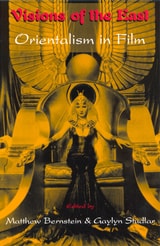
Visions of the East
Orientalism in FilmBernstein, Matthew
Rutgers University Press, 1997
The Sheik. Pépé le Moko. Casablanca. Aladdin. Some of the most popular and frequently discussed titles in movie history are imbued with orientalism, the politically-charged way in which western artists have represented gender, race, and ethnicity in the cultures of North Africa and Asia. This is the first anthology to address and highlight orientalism in film from pre-cinema fascinations with Egyptian culture through the "Whole New World" of Aladdin. Eleven illuminating and well-illustrated essays utilize the insights of interdisciplinary cultural studies, psychoanalysis, feminism, and genre criticism. Other films discussed includeThe Letter, Caesar and Cleopatra, Lawrence of Arabia, Indochine, and several films of France's cinéma colonial.
Visions of the Sociological Tradition
Donald N. Levine
University of Chicago Press, 1995
"Visions" has three meanings, each of which corresponds to a part of the book. In Part 1, Levine presents the ways previous sociologists have rendered accounts of their discipline, as a series of narratives—or "life stories"—that build upon each other, generation to generation, a succession of efforts to envisage a coherent past for the sake of a purposive present.
In Part 2, the heart of the book, Levine offers his own narrative, reconnecting centuries of voices into a richly textured dialogue among the varied strands of the sociological tradition: Hellenic, British, French, German, Marxian, Italian, and American. Here, in a tour de force of clarity and conciseness, he tracks the formation of the sociological imagination through a series of conversations across generations. From classic philosophy to pragmatism, Aristotle to W. I. Thomas, Levine maps the web of visionary statements—confrontations and oppositions—from which social science has grown.
At the same time, this is much more than an expert synthesis of social theory. Throughout each stage, Levine demonstrates social knowledge has grown in response to three recurring questions: How shall we live? What makes humans moral creatures? How do we understand the world? He anchors the creation of social knowledge to ethical foundations, and shows for the first time how differences in those foundations disposed the shapers of modern social science—among them, Marshall and Spencer, Comte and Durkheim, Simmel and Weber, Marx and Mosca, Dewey and Park—to proceed in vastly different ways.
In Part 3, Levine offers a vision of the contemporary scene, setting the crisis of fragmentation in social sciences against the fragmentation of experience and community. By reconstructing the history of social thought as a series of fundamentally moral engagements with common themes, he suggests new uses for sociology's intellectual resources: not only as insight about the nature of modernity, but also as a model of mutually respectful communication in an increasingly fractious world.
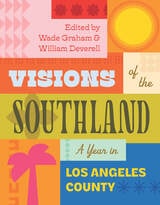
Visions of the Southland
A Year in Los Angeles CountyEdited by Wade Graham and William Deverell
University of Chicago Press, 2026
Experience a year in Los Angeles County, in all its glitter and grit, through a unique anthology that pairs essays by acclaimed writers and historians with custom maps.
When many of us picture Los Angeles, we’re actually thinking of LA County. Home to roughly ten million people, the county alone is more populous than forty-two US states. Its eighty-eight cities include places made famous by Hollywood glamor and California dreaming—Beverly Hills, Malibu, and Santa Monica—but also working-class municipalities and the self-explanatory City of Industry. With a territory that includes the Pacific coastline, mountain ranges, and the high Mojave Desert, the county’s landscapes have been touched by earthquakes, droughts, and, of course, devastating fires. LA County is a place of extremes: progress and injustice, innovation and stagnation.
Visions of the Southland collects essays by writers, journalists, and historians to create a nuanced portrait of LA that’s grounded in the county itself—its sites, structures, and stories. Contributors—including Gustavo Arellano, Keri Blakinger, Lynell George, Christopher Hawthorne, Michael Hiltzik, Greg Hise, Carolina Miranda, Becky Nicolaides, Susan Straight, and David L. Ulin—delve into LA’s infamous air pollution, movie ranches, prisons, aqueducts, urban forests, SoCal Bohemianism, and more. A custom map by Ezra Rawitsch enriches each piece and grounds the reader in specific locations throughout the county. Unfolding over the course of a year, the book traces the rhythms of politics, sports, weather, and wildlife across this sprawling and enigmatic place.
Sweeping in its scope and gorgeous in its design, Visions of the Southland will delight Angelenos, history buffs, urbanists, and map enthusiasts alike.