Results by title
28164 books match the query 'History' and 259 start with v
Vitality Politics
Health, Debility, and the Limits of Black EmancipationStephen Knadler
University of Michigan Press, 2019

Vitamania
Vitamins in American CultureRima Apple
Rutgers University Press, 1996
"Have you taken your vitamins today?" That question echoes daily through American households. Thanks to intensive research in nutrition and medicine, the importance of vitamins to health is undisputed. But millions of Americans believe that the vitamins they get in their food are not enough. Vitamin supplements have become a multibillion-dollar industry. At the same time, many scientists, consumer advocacy groups, and the federal Food and Drug Administration doubt that most people need to take vitamin pills.
Vitamania tells how and why vitamins have become so important to so many Americans. Rima Apple examines the claims and counterclaims of scientists, manufacturers, retailers, politicians, and consumers from the discovery of vitamins in the early twentieth century to the present. She reveals the complicated interests--scientific, professional, financial--that have propelled the vitamin industry and its would-be regulators. From early advertisements linking motherhood and vitamin D, to Linus Pauling's claims for vitamin C, to recent congressional debates about restricting vitamin products, Apple's insightful history shows the ambivalence of Americans toward the authority of science. She also documents how consumers have insisted on their right to make their own decisions about their health and their vitamins.
Vitamania makes fascinating reading for anyone who takes--or refuses to take--vitamins. It will be of special interest to students, scholars, and professionals in public health, the biomedical sciences, history of medicine and science, twentieth-century history, nutrition, marketing, and consumer studies.

Vittorio Orlando
ItalySpencer Di Scala
Haus Publishing, 2009

Viva Baseball!
Latin Major Leaguers and Their Special HungerSamuel O. Regalado
University of Illinois Press, 2007
Lively and filled with vivid anecdotes, Viva Baseball! chronicles the struggles of Latin American professional baseball players in the United States from the late 1800s to the present.
As Latino players, managers, and owners continue to blossom into baseball's biggest stars, they have benefited from a growing Spanish-language media, a group identity, an increase in financial leverage and attention, and a burgeoning Latino culture in the United States. Although there have been several positive developments in the treatment of Latin American players, many, such as Albert Pujols, Pedro Martinez, Alex Rodriguez, and Ozzie Guillen, still face shocking racism. Samuel O. Regalado draws upon archives and rich interviews with Latin baseball stars like Felipe Alou, Orlando Cepeda, and Minnie Minoso to show the changing tenor of discrimination in the twenty-first-century game.
Viva Cristo Rey!
The Cristero Rebellion and the Church-State Conflict in MexicoBy David C. Bailey
University of Texas Press, 1974
Between 1926 and 1929, thousands of Mexicans fought and died in an attempt to overthrow the government of their country. They were the Cristeros, so called because of their battle cry, ¡Viva Cristo Rey!—Long Live Christ the King! The Cristero rebellion and the church-state conflict remain one of the most controversial subjects in Mexican history, and much of the writing on it is emotional polemic. David C. Bailey, basing his study on the most important published and unpublished sources available, strikes a balance between objective reporting and analysis. This book depicts a national calamity in which sincere people followed their convictions to often tragic ends.
The Cristero rebellion climaxed a century of animosity between the Catholic church and the Mexican state, and this background is briefly summarized here. With the coming of the 1910 revolution the hostility intensified. The revolutionists sought to impose severe limitations on the Church, and Catholic anti-revolutionary militancy grew apace. When the government in 1926 decreed strict enforcement of anticlerical legislation, matters reached a crisis. Church authorities suspended public worship throughout Mexico, and Catholics in various parts of the country rose up in arms. There followed almost three years of indecisive guerrilla warfare marked by brutal excesses on both sides. Bailey describes the armed struggle in broad outline but concentrates on the political and diplomatic maneuvering that ultimately decided the issue.
A de facto settlement was brought about in 1929, based on the government’s pledge to allow the Church to perform its spiritual offices under its own internal discipline. The pact was arranged mainly through the intercession of U.S. Ambassador Dwight Morrow. His role in the conflict, as well as that of other Americans who decisively influenced the course of events, receives detailed attention in the study. The position of the Vatican during the conflict and its role in the settlement are also examined in detail.
With the 1929 settlement the clergy returned to the churches, whereupon the Cristeros lost public support and the rebellion collapsed. The spirit of the settlement soon evaporated, more strife followed, and only after another decade did permanent religious peace come to Mexico.
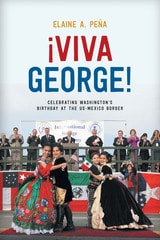
Viva George!
Celebrating Washington's Birthday at the US-Mexico BorderBy Elaine A. Peña
University of Texas Press, 2020
For 120 years, residents of the cross-border community of Laredo/Nuevo Laredo have celebrated George Washington's birthday together, and this account reveals the essential political work of a time-honored civic tradition.
Since 1898, residents of Laredo, Texas, and Nuevo Laredo, Tamaulipas, have reached across the US-Mexico border to celebrate George Washington's birthday. The celebration can last a whole month, with parade goers reveling in American and Mexican symbols; George Washington saluting; and “Pocahontas” riding on horseback. An international bridge ceremony, the heart and soul of the festivities, features children from both sides of the border marching toward each other to link the cities with an embrace. ¡Viva George! offers an ethnography and a history of this celebration, which emerges as both symbol and substance of cross-border community life. Anthropologist and Laredo native Elaine A. Peña shows how generations of border officials, civil society organizers, and everyday people have used the bridge ritual to protect shared economic and security interests as well as negotiate tensions amid natural disasters, drug-war violence, and immigration debates. Drawing on previously unknown sources and extensive fieldwork, Peña finds that border enactments like Washington's birthday are more than goodwill gestures. From the Rio Grande to the 38th Parallel, they do the meaningful political work that partisan polemics cannot.

Vivian Maier
A Photographer’s Life and AfterlifePamela Bannos
University of Chicago Press, 2017
But, as Pamela Bannos reveals in this meticulous and passionate biography, this story of the nanny savant has blinded us to Maier’s true achievements, as well as her intentions. Most important, Bannos argues, Maier was not a nanny who moonlighted as a photographer; she was a photographer who supported herself as a nanny. In Vivian Maier: A Photographer’s Life and Afterlife, Bannos contrasts Maier’s life with the mythology that strangers—mostly the men who have profited from her work—have created around her absence. Bannos shows that Maier was extremely conscientious about how her work was developed, printed, and cropped, even though she also made a clear choice never to display it. She places Maier’s fierce passion for privacy alongside the recent spread of her work around the world, and she explains Maier’s careful adjustments of photographic technique, while explaining how the photographs have been misconstrued or misidentified. As well, Bannos uncovers new information about Maier’s immediate family, including her difficult brother, Karl—relatives that once had been thought not to exist.
This authoritative and engrossing biography shows that the real story of Vivian Maier, a true visionary artist, is even more compelling than the myth.

Vodou Nation
Haitian Art Music and Cultural NationalismMichael Largey
University of Chicago Press, 2006
Around the time of the United States’s occupation of Haiti in 1915, African American composers began to incorporate Vodou-inspired musical idioms to showcase black artistry and protest white oppression. Together with Haitian musicians, these composers helped create what Michael Largey calls the “Vodou Nation,” an ideal vision of Haiti that championed its African-based culture as a bulwark against America’s imperialism. Highlighting the contributions of many Haitian and African American composers who wrote music that brought rhythms and melodies of the Vodou ceremony to local and international audiences, Vodou Nation sheds light on a black cosmopolitan musical tradition that was deeply rooted in Haitian culture and politics.
Vodou Songs in Haitian Creole and English
Benjamin Hebblethwaite
Temple University Press, 2011
Vodou songs constitute the living memory of Haitian Vodou communities, and song texts are key elements to understanding Haitian culture. Vodou songs form a profound religious and cultural heritage that traverses the past and refreshes the present. Offering a one-of-a-kind research tool on Vodou and its cultural roots in Haiti and pre-Haitian regions, Vodou Songs in Haitian Creole and English provides a substantial selection of hard to find or unpublished sacred Vodou songs in a side-by-side bilingual format.
Esteemed scholar Benjamin Hebblethwaite introduces the language, mythology, philosophy, origins, and culture of Vodou through several chapters of source songs plus separate analytical chapters. He guides readers through songs, chants, poems, magical formulae, invocations, prayers, historical texts and interviews, as well as Haitian Creole grammar and original sacred literature. An in-depth dictionary of key Vodou terms and concepts is also provided.
This corpus of songs and the research about them provide a crucial understanding of the meaning of Vodou religion, language, and culture.
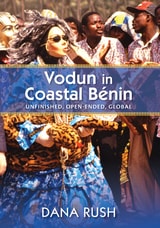
Vodun in Coastal Benin
Unfinished, Open-Ended, GlobalDana Rush
Vanderbilt University Press, 2013
The book is richly illustrated with color photographs of Vodun shrines, temple wall paintings, masquerades, and Hindu chromolithographs.
This book is the first publication in a new series called "Critical Investigations of the African Diaspora." The series grows out of Issues in Critical Investigation, a Vanderbilt initiative to assist junior scholars through critical feedback from senior faculty, annual symposia, and prize competitions in the humanities and social sciences. Dana Rush's Vodun in Coastal Benin is the winner of the inaugural Anna Julia Cooper Prize in the Humanities.

Voegelin, Schelling, and the Philosophy of Historical Existence
Jerry Day
University of Missouri Press, 2003
Voice Lessons
By Alice Embree
University of Texas Press, 2021
Voice Lessons explores the rich personal and political terrain of Alice Embree, a 1960s activist and convert to the women’s liberation movement of the 1970s, bringing a woman’s perspective to a transformational time in US history. This riveting memoir traces the author’s roots in segregated Austin and her participation in efforts to integrate the University of Texas. It follows her antiwar activism from a vigil in front of President Lyndon Johnson’s ranch in 1965 to a massive protest after the shootings at Kent State in 1970. Embree’s activism brought her and the Students for a Democratic Society into conflict with Frank Erwin, the powerful chairman of the UT Board of Regents, and inspired a campus free speech movement. She recounts her experiences living in New York during the tumultuous years of 1968 and 1969, including the Columbia University strike and the Woodstock music festival. She also tells about protesting at the Chicago Democratic Convention, her interactions with Yippies and poets, and her travels to Chile, Cuba, and Mexico. Embree highlights the radical roots of the women’s liberation movement in Austin and the audacious women’s community that challenged gender roles, fought for reproductive justice, and inspired a lifetime of activism.

Voice Machines
The Castrato, the Cat Piano, and Other Strange SoundsBonnie Gordon
University of Chicago Press, 2023
Italian courts and churches began employing castrato singers in the late sixteenth century. By the eighteenth century, the singers occupied a celebrity status on the operatic stage. Constructed through surgical alteration and further modified by rigorous training, castrati inhabited human bodies that had been “mechanized” to produce sounds in ways that unmechanized bodies could not. The voices of these technologically enhanced singers, with their unique timbre, range, and strength, contributed to a dramatic expansion of musical vocabulary and prompted new ways of imagining sound, the body, and personhood.
Connecting sometimes bizarre snippets of history, this multi-disciplinary book moves backward and forward in time, deliberately troubling the meaning of concepts like “technology” and “human.” Voice Machines attends to the ways that early modern encounters and inventions—including settler colonialism, emergent racialized worldviews, the printing press, gunpowder, and the telescope—participated in making castrati. In Bonnie Gordon’s revealing study, castrati serve as a critical provocation to ask questions about the voice, the limits of the body, and the stories historians tell.
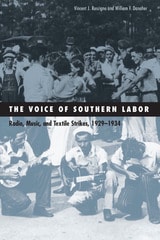
Voice Of Southern Labor
Radio, Music, And Textile Strikes, 1929-1934Vincent J. Roscigno
University of Minnesota Press, 2004
Vividly shows how music united striking workers
The 1934 strike of southern textile workers, involving nearly 400,000 mill hands, remains perhaps the largest collective mobilization of workers in U.S. history. How these workers came together in the face of the powerful and coercive opposition of management and the state is the remarkable story at the center of this book.
The Voice of Southern Labor chronicles the lives and experiences of southern textile workers and provides a unique perspective on the social, cultural, and historical forces that came into play when the group struck, first in 1929, and then on a massive scale in 1934. The workers’s grievances, solidarity, and native radicalism of the time were often reflected in the music they listened to and sang, and Vincent J. Roscigno and William F. Danaher offer an in-depth context for understanding this intersection of labor, politics, and culture. The authors show how the message of the southern mill hands spread throughout the region with the advent of radio and the rise of ex–mill worker musicians, and how their sense of opportunity was further bolstered by Franklin D. Roosevelt’s radio speeches and policies.
Voice in the Drum
Music, Language, and Emotion in Islamicate South AsiaRichard Wolf
University of Illinois Press, 2017

Voice, Silence and Gender in South Africa's Anti-Apartheid Struggle
The Shadow of a Young WomanRachel E. Johnson
University of London Press, 2025
Who spoke about the liberation struggle whilst it was ongoing? When did they speak and how? And what effects do the gendered history of speech and silence within anti-apartheid politics continue to have upon our knowledge of the past? Arguing that she is emblematic of the way gendered narratives of the struggle have been made, this book listens for the voice and silence of Masabata Loate and her contemporaries within political trials; newspapers; photography; human rights reportage; creative fiction, drama, poetry and song; autobiography and memoir; and oral histories. The result is an unconventional biography that sees this young woman as a shadow within the story of South Africa’s anti-apartheid liberation struggle.

Voiceless Vanguard
The Infantilist Aesthetic of the Russian Avant-GardeSara Pankenier Weld
Northwestern University Press, 2014
Voiceless Vanguard: The Infantilist Aesthetic of the Russian Avant-Garde offers a new approach to the Russian avant-garde. It argues that central writers, artists, and theorists of the avant-garde self-consciously used an infantile aesthetic, as inspired by children’s art, language, perspective, and logic, to accomplish the artistic renewal they were seeking in literature, theory, and art. It treats the influence of children’s drawings on the Neo-Primitivist art of Mikhail Larionov, the role of children’s language in the Cubo-Futurist poetics of Aleksei Kruchenykh, the role of the naive perspective in the Formalist theory of Viktor Shklovsky, and the place of children’s logic and lore in Daniil Kharms’s absurdist writings for children and adults. This interdisciplinary and cultural study not only illuminates a rich period in Russian culture but also offers implications for modernism in a wider Western context, where similar principles apply.

Voices From an Empire
A History of Afro-Portuguese LiteratureRussell G. Hamilton
University of Minnesota Press, 1975
Voices From an Empire was first published in 1975. Minnesota Archive Editions uses digital technology to make long-unavailable books once again accessible, and are published unaltered from the original University of Minnesota Press editions.
The literature of the various regions of Lusophone Africa has received relatively little critical attention compared with that which has been focused on the work of writers in the English- and French- speaking countries of Africa. With the profound changes which are occurring in the social and political structures of Lusophone Africa, there is particular need for the comprehensive look at Afro-Protuguese literature which this account provides.
Professor Hamilton traces the development of this literature in the broad perspective of it social, cultural, and aesthetic context. He discusses the whole of the Afro-Portuguese literary phenomenon, as it occurs on the Cape Verde archipelago, in Guinea-Bissau, on the Guinea Gulf islands of Sao Tome and Principe, in Angola, and in Mozambique.
In an introduction he discusses some basic questions about Afro-Protuguese literature, among them, the matter of a definition of this body of writing, the implications of the concept of negritude, the role of Portugal and Brazil in Afro-Portuguese literature, and the social and cultural significance of the dominant literary themes found in the various regions of Lusophone Africa. Because he sees the regionalist movement in Angola as the most significant in terms of a neo-African orientation, he begins the book with an extensive study of the literature of that country. Many examples of afro-Portuguese poetry are given, both in the original language and in the English translation. There is a bibliography, and a map shows the African regions of study.

Voices From the Other Side
An Oral History of Terrorism Against CubaKeith Bolender
Pluto Press, 2010
Keith Bolender brings to bear the enormous impact that terrorism has had on Cuba’s civilian population, with over 1,000 documented incidents resulting in more than 3,000 deaths and 2,000 injuries. Bolender allows the victims to articulate the atrocities the Cuban people have suffered - which largely originate from Cuban counter-revolutionaries based in the US, often with the active help of the CIA.
Voices From The Other Side includes first-person interviews with more than 75 Cuban citizens who have been victims of these terrorist acts, or have had family members or close friends die from the attacks. It is a unique resource for activists, journalists and students interested in Cuba's torrid relationship with the US.
Voices and Votes Teacher's Guide
How Democracy Works in Wisconsin TGJon Kasparek and Bobbie Malone
Wisconsin Historical Society Press, 2006
Voices and Votes: How Democracy Works in Wisconsin; Teacher's Guide and Student Materials features several activities for each chapter to engage students in a more in-depth exploration of the book. These activities, designed for both individual and small groups, demand the use of higher-level thinking skills while integrating a wide range of learning styles, and all have culminating components that can be used for assessment. The guide also features easily reproducible student pages, including maps, charts, and interesting illustrations.
Voices and Votes
How Democracy Works in WisconsinJon Kasparek
Wisconsin Historical Society Press, 2006
Voices & Votes: How Democracy Works in Wisconsin invites upper elementary school students to explore the intersection of American civics and Wisconsin history. This sixth and final book in the New Badger History series introduces students to the basic structures of American democracy, state government, and Wisconsin's road to statehood. The first seven chapters help students grasp how the three branches of government function at the federal, state, local, and tribal levels, while tying these structural notions to Wisconsin history. Students will learn that citizens' voices and votes help government evolve to meet ever-changing societal needs. The last chapter emphasizes how young people can actively engage in their communities to bring about positive change.

Voices and Votes
How Government Works in WisconsinWisconsin Historical Society Press, 2025
What are the different levels of government in Wisconsin? How are laws made? What is a political party? Who is allowed to vote in elections? How can citizens get involved in their communities?
These questions and many more are answered in this revised and updated edition of Voices and Votes, aimed at students in grades 3–5. Filled with color photos and illustrations—as well as diagrams, maps, and vocabulary words that make the material easy to absorb—this book explores:
- The fundamentals of federal, state, local, and Tribal government
- How Wisconsin’s constitution was created and how it has changed
- The way elections work and why voting matters
Readers will also find compelling examples of citizens from our state’s past who spoke up and worked to change laws and policies in order to improve their communities, including:
- Gaylord Nelson, who advocated for the environment as a state senator, member of Congress, and governor
- Vel Phillips, who helped expand housing opportunities as a member of Milwaukee’s city council
- Jesus Salas, who worked with state agencies to improve the lives of migrant farmworkers in Wisconsin
The book also offers contemporary stories of young people engaging with their communities, working to solve problems, and sharing their voices. This brilliantly updated edition of Voices and Votes will inspire a new generation of readers to understand and participate in our democracy.
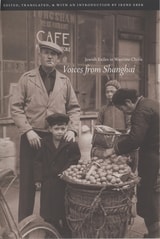
Voices from Shanghai
Jewish Exiles in Wartime ChinaEdited by Irene Eber
University of Chicago Press, 2008
When Hitler came to power and the German army began to sweep through Europe, almost 20,000 Jewish refugees fled to Shanghai. A remarkable collection of the letters, diary entries, poems, and short stories composed by these refugees in the years after they landed in China, Voices from Shanghai fills a gap in our historical understanding of what happened to so many Jews who were forced to board the first ship bound for anywhere.
Once they arrived, the refugees learned to navigate the various languages, belief systems, and ethnic traditions they encountered in an already booming international city, and faced challenges within their own community based on disparities in socioeconomic status, levels of religious observance, urban or rural origin, and philosophical differences. Recovered from archives, private collections, and now-defunct newspapers, these fascinating accounts make their English-languge debut in this volume. A rich new take on Holocaust literature, Voices from Shanghai reveals how refugees attempted to pursue a life of creativity despite the hardships of exile.
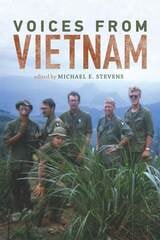
Voices from Vietnam
Michael E. Stevens
Wisconsin Historical Society Press, 1996
An unforgettable collection of 174 letters and diary entries written by 92 wisconsin men and women who served in Vietnam. Includes a journal kept by Menasha native Frederic Flom on cigarette wrappers during his final 16 days of captivity — the only known diary smuggled out by a Vietnam prisoner of war.
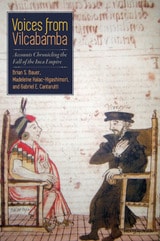
Voices from Vilcabamba
Accounts Chronicling the Fall of the Inca EmpireBrian S. Bauer
University Press of Colorado, 2016
A rich new source of important archival information, Voices from Vilcabamba examines the fall of the Inca Empire in unprecedented detail. Containing English translations of seven major documents from the Vilcabamba era (1536–1572), this volume presents an overview of the major events that occurred in the Vilcabamba region of Peru during the final decades of Inca rule.
Brian S. Bauer, Madeleine Halac-Higashimori, and Gabriel E. Cantarutti have translated and analyzed seven documents, most notably Description of Vilcabamba by Baltasar de Ocampo Conejeros and a selection from Martín de Murúa’s General History of Peru, which focuses on the fall of Vilcabamba. Additional documents from a range of sources that include Augustinian investigations, battlefield reports, and critical eyewitness accounts are translated into English for the first time.
With a critical introduction on the history of the region during the Spanish Conquest and introductions to each of the translated documents, the volume provides an enhanced narrative on the nature of European-American relations during this time of important cultural transformation.

Voices from the "Jungle"
Stories from the Calais Refugee CampCalais Writers
Pluto Press, 2017
In this moving collection of individual testimonies, Calais refugees speak directly in powerful and vivid stories, offering their memories up with stunning honesty. They tell of their childhood dreams and struggles for education; the genocides, wars, and persecution that drove them from home; the simultaneous terror and strength that filled their extraordinary journeys; the realities of living in the Calais refugee camp; and their deepest hopes for the future.
Through their stories, these refugees paint a picture of a different kind of Jungle—a powerful sense of community that has grown despite evictions and attacks and a solidarity that crosses national and religious boundaries. Interspersed with photos taken by the camp's inhabitants, taught by award-winning photographers Gideon Mendel and Crispin Hughes, original artwork by inhabitants, and powerful poems, Voices from the “Jungle” must be read by anyone seeking to understand the human consequences of our current world crisis.

Voices from the Gulag
Aleksandr Solzhenitsyn
Northwestern University Press, 2010
After the publication in 1962 of One Day in the Life of Ivan Denisovich, Aleksandr Solzhenitsyn began receiving, and would continue to receive throughout his life, testimonies from fellow survivors of the gulag. Originally selected by Solzhenitsyn, the memoirs in this volume are an important addition to the literature of the Soviet gulag. Written by men from a wide variety of occupations and social classes, the writing in Voices from the Gulag lends a voice to the many ordinary people—including a circus performer, a teenage boy, and a Red Army soldier—whom a brutal system attempted to erase from memory.
Voices from the Heart of the Land
Rural Stories that Inspire CommunityRichard L. Cates Jr.
University of Wisconsin Press, 2008

Voices from the Plain of Jars
Life under an Air WarEdited by Fred Branfman with essays and drawings by Laotian villagers; Foreword by Alfred W. McCoy
University of Wisconsin Press, 2013
When first published in 1972, this book was instrumental in exposing the bombing. In this expanded edition, Branfman follows the story forward in time, describing the hardships that Laotians faced after the war when they returned to find their farm fields littered with cluster munitions—explosives that continue to maim and kill today.
Voices from the Silence
Guatemalan Literature of ResistanceMarc Zimmerman
Ohio University Press, 1998
Voices from the Thai Countryside
Samruam Singh
University of Wisconsin Press, 2008
Set in northern Thailand during the mid-1970s, the stories in this collection capture a period of dramatic social and economic change. Amidst a setting of marketplaces and paddyfields, lemon trees and leaf-roofed houses, these vignettes offer revealing insights into the daily lives of ordinary villagers and hillspeople struggling to survive.
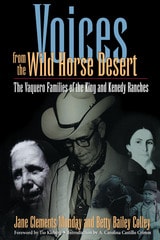
Voices from the Wild Horse Desert
The Vaquero Families of the King and Kenedy RanchesBy Jane Clements Monday and Betty Bailey Colley
University of Texas Press, 1997
Founded before the Civil War, the King and Kenedy Ranches have become legendary for their size, their wealth, and their endless herds of cattle. A major factor in the longevity of these ranches has always been the loyal workforce of vaqueros (Mexican and Mexican American cowboys) and their families. Some of the vaquero families have worked on the ranches through five or six generations.
In this book, Jane Clements Monday and Betty Bailey Colley bring together the voices of these men and women who make ranching possible in the Wild Horse Desert. From 1989 to 1995, the authors interviewed more than sixty members of vaquero families, ranging in age from 20 to 93. Their words provide a panoramic view of ranch work and life that spans most of the twentieth century.
The vaqueros and their families describe all aspects of life on the ranches, from working cattle and doing many kinds of ranch maintenance to the home chores of raising children, cooking, and cleaning. The elders recall a life of endless manual labor that nonetheless afforded the satisfaction of jobs done with skill and pride. The younger people describe how modernization has affected the ranches and changed the lifeways of the people who work there.
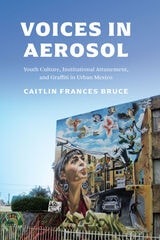
Voices in Aerosol
Youth Culture, Institutional Attunement, and Graffiti in Urban MexicoCaitlin Frances Bruce
University of Texas Press, 2024
2024 Visual Communication Division Award, National Communication Association
2025 Philosophy of Communication, Theory, and Critique Division Distinguished Book Award, National Communication Association
2025 Winans-Wichelns Memorial Award for Distinguished Scholarship in Rhetoric and Public Address, National Communication Association
How a city government in central Mexico evolved from waging war on graffiti in the early 2000s to sanctioning its creation a decade later, and how youth navigated these changing conditions for producing art.
The local government, residents, and media outlets in León, Mexico, treated graffiti as a disease until the state began sponsoring artistic graffiti through a program of its own. In Voices in Aerosol, the first book-length study of state-sponsored graffiti, Caitlin Frances Bruce considers the changing perceptions and recognition of graffiti artists, their right to the city, and the use of public space over the span of eighteen years (2000–2018). Focusing on the midsized city of León, Bruce offers readers a look at the way negotiations with the neoliberal state unfolded at different levels and across decades.
Issues brought to light in this case study, such as graffiti as a threat and graffiti as a sign of gentrification, resonate powerfully with those germane to other urban landscapes throughout the Western Hemisphere and beyond. Combining archival work, interviews, considerations of urban planning, local politics in Mexico, and insights gained by observing graffiti events and other informal artistic encounters, Bruce offers a new lens through which to understand the interplay between sanctioned and unsanctioned forms of cultural expression. Ultimately, Voices in Aerosol builds a strong case for graffiti as a contested tool for "voicing" public demands.
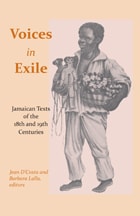
Voices in Exile
Jamaican Texts of the 18th and 19th CenturiesJean D'Costa
University of Alabama Press, 2009
Recovering the voices that shaped Jamaica's language, literature, and identity.
Voices in Exile: Jamaican Texts of the 18th and 19th Centuries is a landmark anthology that brings together a rich collection of historical documents illuminating the origins and development of Jamaican language, culture, and identity. Edited by renowned scholars Jean D'Costa and Barbara Lalla, the volume gathers songs, sermons, folk narratives, eyewitness accounts, personal testimonies, and other primary materials that reveal the complex social and cultural world of Jamaica during the colonial and post-emancipation eras.
Spanning the eighteenth and nineteenth centuries, the collection traces the emergence of a distinctive Jamaican society forged through the interaction of African, European, and Caribbean peoples. The selected texts capture the realities of plantation life, slavery, resistance, religious expression, language development, and everyday experience while showcasing the creativity and resilience of communities whose voices have often been marginalized in traditional historical narratives.
Particularly valuable for its documentation of Jamaican Creole and evolving linguistic practices, the anthology provides readers with direct access to the words and perspectives of individuals living through profound social transformation. Materials from the periods before emancipation, during apprenticeship, and after emancipation illustrate how language and culture adapted to changing political and economic conditions.
More than a collection of historical texts, Voices in Exile serves as a window into the formation of Jamaican identity and the broader cultural history of the Caribbean. By preserving and contextualizing these remarkable documents, D'Costa and Lalla offer an indispensable resource for students and scholars of Caribbean studies, literature, linguistics, history, postcolonial studies, and the African diaspora. The result is a compelling archive of voices that continue to resonate across centuries and enrich our understanding of Jamaica's cultural heritage.
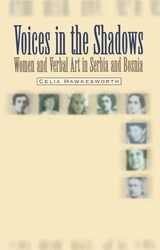
Voices in the Shadows
Women and Verbal Art in Serbia and BosniaCelia Hawkesworth
Central European University Press, 2000
Women are conspicuously absent from traditional cultural histories of south-east Europe. This book addresses that imbalance by describing the contribution of women to literary culture in the Orthodox/ Ottoman areas of Serbia and Bosnia.
The first complete literary history in relation to women's writing in south-east Europe. The author provides a broad chronological account of this contribution, dividing the book into two main parts; the earlier period up until the eighteenth century concentrates on the projections of gender through the medium of oral tradition and the lives of a handful of educated women in medieval Serbia and the few works of literature they left. Hawkesworth also looks at the written literature produced by women, first in the mid-nineteenth century and then at the turn of the century. The second part focuses on the trials and tribulations that affected feminism and women's literature throughout the twentieth century. The author finishes by highlighting the new women's movement, 1975-1990, a great period for women in Yugoslavia which created a stimulating atmosphere for outstanding pieces of women's journalism, prose and verse, culminating in the creation of new women's studies courses in many universities.
Voices in the Wilderness
Public Discourse and the Paradox of Puritan RhetoricPatricia Roberts-Miller
University of Alabama Press, 1999
Both Jürgen Habermas and Wayne Booth—two of the most influential theorists in the domain of public discourse and good citizenry—argue for an inclusive public deliberation that involves people who are willing to listen to one another, to identify points of agreement and disagreement, and to make good faith attempts to validate any disputed claims. The Puritan voice crying in the wilderness, Roberts-Miller shows, does none of these things. To this individual of conscience engaged in a ceaseless battle of right and wrong against greedy philistines, all inclusion, mediation, and reciprocity are seen as evil, corrupting, and unnecessary. Hence, the voice in the wilderness does not in any real sense participate in public deliberation, only in public pronouncement.
Arguing that our culture’s continuing affection for the ethos of the voice crying in the wilderness is one of our more troubling inheritances from the early American ambivalence to public discourse—including the Puritan denigration of rhetoric—Roberts-Miller contends that the monologic discourse of the Puritans in fact contains within it arguments for dialogism. Thus, the history of rhetoric can provide much richer fields for reimagining discourse than heretofore credited. Roberts-Miller concludes by extending her findings into their practical applications for argumentation in the public sphere and in the composition classroom.
Voices of 1968
Documents from the Global NorthEdited by Laurence Cox, Salar Mohandesi and Bjarke Skaerlund Risager
Pluto Press, 2018
Voices of 1968 is a vivid collection of key texts from the movements and uprisings of “the long 1968.” Emphasizing the transnational linkages between these struggles, the primary documents of this collection delve into events that took place as far afield as Italy, France, West Germany, the United States, Mexico, Canada, Britain, Northern Ireland, Denmark, Czechoslavakia, Yugoslavia, and Japan. This wealth of material is supported by framing essays helping readers to find their way around the era’s revolutionary ideas and to understand their legacy in politics, culture, and society today. Featuring many texts that have never been seen in English before, this remarkable collection is published to coincide with the fiftieth anniversary of the events of 1968.
Voices of Crime
Constructing and Contesting Social Control in Modern Latin AmericaEdited by Luz E. Huertas, Bonnie A. Lucero, and Gregory J. Swedberg
University of Arizona Press, 2016
Voices of Crime examines these official and unofficial perceptions of deviancy, justice, and social control in modern Latin America. As a collection of essays exploring histories of crime and justice, the book focuses on both cultural and social history and the interactions among state institutions, the press, and a variety of elite and non-elite social groups. Arguing that crime in Latin America is best understood as a product of ongoing negotiation between “top-down” and “bottom up” ideas (not just as the exercise of power from the state), the authors seek to document and illustrate the everyday experiences of crime in particular settings, emphasizing underresearched historical actors such as criminals, victims, and police officers.
The book examines how these social groups constructed, contested, navigated, and negotiated notions of crime, criminality, and justice. This reorientation—in contrast to much of the existing historical literature that focuses on elite and state actors—prompts the authors to critically examine the very definition of crime and its perpetrators, suggesting that “not only the actions of the poor and racial others but also the state can be termed as criminal.”
Voices of Dissent
An EssayRomila Thapar
Seagull Books, 2020
People have argued since time immemorial. Disagreement is a part of life, of human experience. But we now live in times when any form of protest in India is marked as anti-Indian and met with arguments that the very concept of dissent was imported into India from the West. As Romila Thapar explores in her timely historical essay, however, dissent has a long history in the subcontinent, even if its forms have evolved through the centuries.
In Voices of Dissent: An Essay, Thapar looks at the articulation of nonviolent dissent and relates it to various pivotal moments throughout India’s history. Beginning with Vedic times, she takes us from the second to the first millennium BCE, to the emergence of groups that were jointly called the Shramanas—the Jainas, Buddhists, and Ajivikas. Going forward in time, she also explores the views of the Bhakti sants and others of the fifteenth and sixteenth centuries and brings us to a major moment of dissent that helped to establish a free and democratic India: Mahatma Gandhi’s satyagraha. Then Thapar places in context the recent peaceful protests against India’s new, controversial citizenship law, maintaining that dissent in our time must be opposed to injustice and supportive of democratic rights so that society may change for the better.
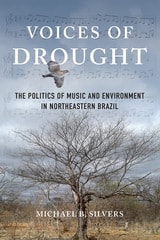
Voices of Drought
The Politics of Music and Environment in Northeastern BrazilMichael B. Silvers
University of Illinois Press, 2018
Silvers offers case studies focused on the sertão that range from the Brazilian wax harvested in Ceará for use in early wax cylinder sound recordings to the drought- and austerity-related cancellation of Carnival celebrations in 2014-16. Unearthing links between music and the environmental and social costs of drought, his daring synthesis explores ecological exile, poverty, and unequal access to water resources alongside issues like corruption, prejudice, unbridled capitalism, and expanding neoliberalism.
Voices of Fire
Reweaving the Literary Lei of Pele and Hi'iakaku'ualoha ho'omanawanui
University of Minnesota Press, 2014
Stories of the volcano goddess Pele and her youngest sister Hi‘iaka, patron of hula, are most familiar as a form of literary colonialism—first translated by missionary descendants and others, then co-opted by Hollywood and the tourist industry. But far from quaint tales for amusement, the Pele and Hi‘iaka literature published between the 1860s and 1930 carried coded political meaning for the Hawaiian people at a time of great upheaval. Voices of Fire recovers the lost and often-suppressed significance of this literature, restoring it to its primary place in Hawaiian culture.
Ku‘ualoha ho‘omanawanui takes up mo‘olelo (histories, stories, narratives), mele (poetry, songs), oli (chants), and hula (dances) as they were conveyed by dozens of authors over a tumultuous sixty-eight-year period characterized by population collapse, land alienation, economic exploitation, and military occupation. Her examination shows how the Pele and Hi‘iaka legends acted as a framework for a Native sense of community. Freeing the mo‘olelo and mele from colonial stereotypes and misappropriations, Voices of Fire establishes a literary mo‘okū‘auhau, or genealogy, that provides a view of the ancestral literature in its indigenous contexts.
The first book-length analysis of Pele and Hi‘iaka literature written by a Native Hawaiian scholar, Voices of Fire compellingly lays the groundwork for a larger conversation of Native American literary nationalism.

Voices of Mental Health
Medicine, Politics, and American Culture, 1970-2000Halliwell, Martin
Rutgers University Press, 2017
Together, these three dimensions bring into conversation a diverse cast of late-century writers, filmmakers, actors, physicians, politicians, policy-makers, and social critics. In doing so, Martin Halliwell’s Voices of Mental Health breaks new ground in deepening our understanding of the place, politics, and trajectory of mental health from the moon landing to the millennium.
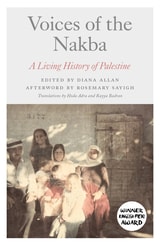
Voices of the Nakba
A Living History of PalestineDiana Allan
Pluto Press, 2021
***Winner of an English PEN Award 2021***
During the 1948 war more than 750,000 Palestinian Arabs fled or were violently expelled from their homes by Zionist militias. The legacy of the Nakba - which translates to ‘disaster’ or ‘catastrophe’ - lays bare the violence of the ongoing Palestinian plight.
Voices of the Nakba collects the stories of first-generation Palestinian refugees in Lebanon, documenting a watershed moment in the history of the modern Middle East through the voices of the people who lived through it.
The interviews, with commentary from leading scholars of Palestine and the Middle East, offer a vivid journey into the history, politics and culture of Palestine, defining Palestinian popular memory on its own terms in all its plurality and complexity.

Voices of the Razorbacks
A History of Arkansas's Iconic Sports BroadcastersHoyt Purvis
Butler Center for Arkansas Studies, 2013
Voiceworks
Sarah Hayden
University of Minnesota Press, 2026
An acute theorization of the human voice in contemporary art
Voiceworks is a perceptive exploration of contemporary artworks in which the primary medium of activation is the human voice. Engaging in close readings of video and installations primarily from the 2010s and 2020s, Sarah Hayden reveals how voiceworks intervene politically through their handling of writing and voicing.
Surveying works from eighteen established and emerging artists including Hito Steyerl, John Akomfrah, Alban Muja, Emma Wolukau-Wanambwa, and Cally Spooner, Voiceworks attends to the sensuous potentiality of voiced language in composition and physical space. The book elucidates how these works operate relationally, conscripting embodied involvement in the service of collective critical and resistant aims.
Augmented by Hayden’s experience as a curator of exhibitions and public programs around audiovisual work, Voiceworks skillfully traverses scholarship in critical theory, sound studies, film and video theory, poetics, and feminist criticism to analyze this prominent but underexplored strand of contemporary art practice.
Retail e-book files for this title are screen-reader friendly with images accompanied by short alt text and/or extended descriptions.
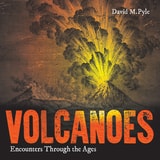
Volcanoes
Encounters through the AgesDavid M. Pyle
Bodleian Library Publishing, 2017
That’s Pliny the Younger, writing to Tacitus about the eruption of Vesuvius in 79 CE, one of many volcanic eruptions that have become part of the story of human history. We have always, it seems, been simultaneously fascinated and terrified by volcanoes, and this book brings together an unforgettable selection of firsthand accounts from around the world and through the centuries.
In these pages, anonymous seventeenth-century seafarers tell of exploding islands, Alexander Von Humboldt and Charles Darwin show us volcanoes through the eyes of developing science, and artists sketch the spectacular London sunsets created by the eruption of Krakatoa, half the world away. As the years pass, words and paintings give way to the first photograph of an eruption, and eventually to detailed satellite imagery, but the awesome force of volcanoes still comes through, sublime and spectacular.
As we were reminded in 2010 when the eruption of Iceland’s Eyjafjallajökull snarled travel throughout Europe, volcanoes remain powerful and unpredictable even today. In the pages of this book, we can appreciate their majesty from a safe distance.
Volksgeist as Method and Ethic
Essays on Boasian Ethnography and the German Anthropological TraditionEdited by George W. Stocking, Jr.
University of Wisconsin Press, 1998
Volunteer Forty-Niners
Tennesseans and the California Gold RushWalter T. Durham
Vanderbilt University Press, 1997
In Volunteer Forty-Niners, Walter T. Durham provides the first comprehensive examination of the role Tennessee and Tennesseans played in creating a new state and a new society on the West Coast. Drawing from such archival sources and personal narratives in letters and diaries, public records, and newspaper reports, Durham has woven a wealth of information into his recounting of their adventures. He follows many of the emigrants into the mines and details the activities of others in commerce and government. In the process, he shows that Tennesseans made an enormous contribution to the beginnings of government in California. Among the many offices they held were governor, assemblyman, sheriff, state senator, secretary of state, state treasurer, controller, U.S. senator, U.S. marshal, U.S. surveyor general and Indian commissioner.
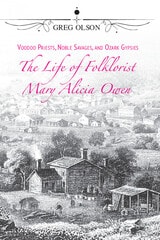
Voodoo Priests, Noble Savages, and Ozark Gypsies
The Life of Folklorist Mary Alicia OwenGreg Olson
University of Missouri Press, 2025
Folklorist Wayland Hand once called Mary Alicia Owen “the most famous American Woman Folklorist of her time.” Drawing on primary sources, such as maps, census records, court documents, personal letters and periodicals, and the scholarship of others who have analyzed various components of Owen’s multifaceted career, historian Greg Olson offers the most complete account of her life and work to date. He also offers a critical look at some of the short stories Owen penned, sometimes under the name Julia Scott, and discusses how the experience she gained as a fiction writer helped lead her to a successful career in folklore.
Olson analyzes many of the nineteenth-century theories, stereotypes, and popular beliefs that influenced the work of Owen and many of her peers. By taking a cross-disciplinary look at her works of fiction, poetry, folklore, history, and anthropology, this volume sheds new light on elements of Owen’s career that have not previously been discussed in print. Examples of the romance stories that Owen wrote for popular magazines in the 1880’s are identified and examined in the context of the time in which Owen wrote them.
This groundbreaking biography shows that Owen was more than just a folklorist—she was a nineteenth-century woman of many contradictions. She was an independent woman of many interests who possessed a keen intellect and a genuine interest in people and their stories. Specialists in folklore, anthropology, women’s studies, local and regional history, and Missouriana will find much to like in this thoroughly researched study.

Voracious Science and Vulnerable Animals
A Primate Scientist's Ethical JourneyJohn P. Gluck
University of Chicago Press, 2016
Gluck begins by taking us inside the laboratory of Harry F. Harlow at the University of Wisconsin, where Gluck worked as a graduate student in the 1960s. Harlow’s primate lab became famous for his behavioral experiments in maternal deprivation and social isolation of rhesus macaques. Though trained as a behavioral scientist, Gluck finds himself unable to overlook the intense psychological and physical damage these experiments wrought on the macaques. Gluck’s sobering and moving account reveals how in this and other labs, including his own, he came to grapple with the uncomfortable justifications that many researchers were offering for their work. As his sense of conflict grows, we’re right alongside him, developing a deep empathy for the often smart and always vulnerable animals used for these experiments.
At a time of unprecedented recognition of the intellectual cognition and emotional intelligence of animals, Voracious Science and Vulnerable Animals is a powerful appeal for our respect and compassion for those creatures who have unwillingly dedicated their lives to science. Through the words of someone who has inflicted pain in the name of science and come to abhor it, it’s important to know what has led this far to progress and where further inroads in animal research ethics are needed.