Results by title
244 books match the query 'Arkansas' and 10 start with w

Waiting for the Cemetery Vote
The Fight to Stop Election Fraud in ArkansasTom Glaze
University of Arkansas Press, 2011

War and Wartime Changes
The Transformation of Arkansas, 1940–1945C. Calvin Smith
University of Arkansas Press, 1986
This is a lively history of specific social, political, ad economic changes that all-out war brought to the home front in mid-America. Drawing from letters to the editor in local and state papers, from editorials, from personal interviews, and from the manuscript collections left by state political leaders, Calvin Smith brings into focus the impact of wartime not only upon agricultural and business economics but also upon particular social groups and the lives of individuals.
The war generated the beginnings of a rights revolution in black communities throughout the nation. The author takes a careful look at the resulting strain on relations between the state’s black and white citizens. No less important is the consideration of Japanese Americans from the West Coast who were relocated to camps in Arkansas, and of the Jehovah’s Witnesses who would not take part in the war effort either on the battlefield or at home.
War and Wartime Changes illuminates a fascinating and sometimes embarrassing segment of history which until now has not been presented in a single, cohesive work. The author details the unique experiences Arkansas had at this time as well as the patriotism its citizens felt for their country.
Here is the story for the historian, for every student of society and its ways, and for anyone who wants to understand or remember the patriotic fervor of Americans during World War II. Calvin Smith has created, with persistent and imaginative research, a rare admixture of nostalgia and solid scholarship.

We Wanna Boogie
The Rockabilly Roots of Sonny Burgess and the PacersMarvin Schwartz
Butler Center for Arkansas Studies, 2014

Widows by the Thousand
The Civil War Correspondence of Theophilus and Harriet Perry, 1862–1864M. Jane Johansson
University of Arkansas Press, 2000
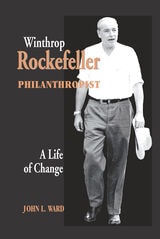
Winthrop Rockefeller, Philanthropist
A Life of ChangeJohn Ward
University of Arkansas Press, 2004
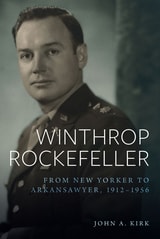
Winthrop Rockefeller
From New Yorker to Arkansawyer, 1912-1956John A. Kirk
University of Arkansas Press, 2022
Winner, 2024 J. G. Ragsdale Book Award, Arkansas Historical Association
Winner, 2024 Booker Worthen Literary Prize
Why did Winthrop Rockefeller, scion of one of the most powerful families in American history, leave New York for an Arkansas mountaintop in the 1950s? In this richly detailed biography of the former Arkansas governor, John A. Kirk delves into the historical record to fully unravel that mystery for the first time. Kirk pursues clues threaded throughout Rockefeller’s life, tracing his family background, childhood, and education; his rise in the oil industry from roustabout to junior executive; his military service in the Pacific during World War II, including his involvement in the battles of Guam, Leyte, and Okinawa; his postwar work in race relations, health, education, and philanthropy; his marriage to and divorce from Barbara “Bobo” Sears; and the birth of his only child, future Arkansas lieutenant governor Win Paul Rockefeller. This careful examination of Winthrop Rockefeller’s first forty-four years casts a powerful new light on his relationship with his adopted state, where his legacy continues to be felt more than half a century after his governorship.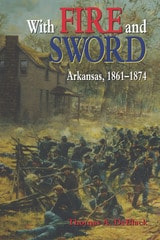
With Fire and Sword
Arkansas, 1861-1874Thomas A. Deblack
University of Arkansas Press, 2003
When Arkansas seceded from the Union in 1861, it was a thriving state. But the Civil War and Reconstruction left it reeling, impoverished, and so deeply divided that it never regained the level of prosperity it had previously enjoyed. Although most of the major battles of the war occurred elsewhere, Arkansas was critical to the Confederate war effort in the vast Trans-Mississippi region, and Arkansas soldiers served—some for the Union and more for the Confederacy—in every major theater of the war. And the war within the state was devastating. Union troops occupied various areas, citizens suffered greatly from the war’s economic disruption, and guerilla conflict and factional tensions left a bitter legacy. Reconstruction was in many ways a continuation of the war as the prewar elite fought to regain economic and political power.
In this, the fourth volume in the Histories of Arkansas series, Thomas DeBlack not only describes the major players and events in this dramatic and painful story, but also explores the experiences of ordinary people. Although the historical evidence is complex—and much of the secondary literature is extraordinarily partisan—DeBlack offers a balanced, vivid overview of the state’s most tumultuous period.
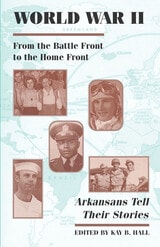
World War II
From the Battle Front to the Home Front, Thirty-Five Arkansans Tell their StoriesKay B. Hall
University of Arkansas Press, 1995
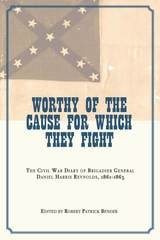
Worthy of the Cause for Which They Fight
The Civil War Diary of Brigadier General Harris Reynolds, 1861-1865Robert Patrick Bender
University of Arkansas Press, 2011
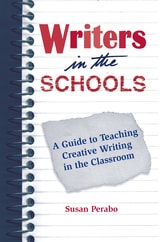
Writers in the Schools
A Guide to Teaching Creative Writing in the ClassroomSusan Perabo
University of Arkansas Press, 1997
The lesson in this valuable text is that the imagination is the greatest tool a student possesses. Instead of lectures, the book relies on hands-on exercises and time tested activity plans that start students writing within minutes of discussing the basics of the writing process. Included are dozens of ideas to spark student creativity and hone rough drafts into finished poems and short stories.
The chapters proceed from a beginning level through intermediate and advanced levels and are useful to students in any grade from elementary through high school. Written and compiled by Susan Perabo, a former Writers in the Schools director, this volume is both a wonderful aid to teachers wishing to expand their classroom strategies in language arts and a perfect guide for writing program participants as they work with children to encourage powerful written expression in every discipline.