Results by title
715 books match the query 'Ethnic relations' and 18 start with w
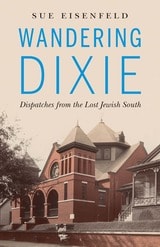
Wandering Dixie
Dispatches from the Lost Jewish SouthSue Eisenfeld
The Ohio State University Press, 2020
From South Carolina to Arkansas, she explores the small towns where Jewish people once lived and thrived. She visits the site of her distant cousin and civil rights activist Andrew Goodman’s murder during 1964’s Freedom Summer. She also talks with the only Jews remaining in some of the “lost” places, from Selma to the Mississippi Delta to Natchitoches, and visits areas with no Jewish community left—except for an old temple or overgrown cemetery. Eisenfeld follows her curiosity about Jewish Confederates and casts an unflinching eye on early southern Jews’ participation in slavery. Her travels become a journey of revelation about our nation’s fraught history and a personal reckoning with the true nature of America.
Wandering Peoples
Colonialism, Ethnic Spaces, and Ecological Frontiers in Northwestern Mexico, 1700–1850Cynthia Radding
Duke University Press, 1997
Radding describes this colonial mission not merely as an instance of Iberian expansion but as a site of cultural and political confrontation. This alternative vision of colonialism emphasizes the economic links between mission communities and Spanish mercantilist policies, the biological consequences of the Spanish policy of forced congregación, and the cultural and ecological displacements set in motion by the practices of discipline and surveillance established by the religious orders. Addressing wider issues pertaining to ethnic identities and to ecological and cultural borders, Radding’s analysis also underscores the parallel production of colonial and subaltern texts during the course of a 150-year struggle for power and survival.
War on Error
Real Stories of American MuslimsMelody Moezzi
University of Arkansas Press, 2007
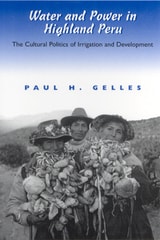
Water and Power in Highland Peru
The Cultural Politics of Irrigation and DevelopmentPaul H Gelles
Rutgers University Press, 2000
Cabanaconde, a town of 5,000 people, is located in the arid Andean highlands. It is dominated by the foreboding Hualca Hualca mountain peak that is the source of this town’s much-needed water. How the villagers obtain this water, Paul Gelles writes, is not a simple process: the politics of irrigation in this area reflect a struggle for control of vital resources, deeply rooted in the clash between local, ritualized models of water distribution and the secular model put forth by the Peruvian state. Water and Power in Highland Peru provides an insightful case study on the intense conflicts over water rights, and a framework for studying ethnic conflict and the effects of “development,” not only in Peru, but in other areas as well.
Most of the inhabitants of Cabanaconde do not identify themselves with the dominant Spanish-speaking culture found in Peru. And the Peruvian state, grounded in a racist, post-Colonial ethos, challenges the village’s long-standing, non-Western framework for organizing water management.
Gelles demonstrates that Andean culture is dynamic and adaptive, and it is a powerful source of ethnic identity, even for those who leave the village to live elsewhere. Indigenous rituals developed in this part of the world, he states, have become powerful tools of resistance against interference by local elites and the present-day Peruvian state. Most importantly, the micropolitics of Cabanaconde provide a window into a struggle that is taking place around the world.
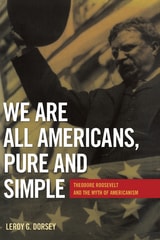
We Are All Americans, Pure and Simple
Theodore Roosevelt and the Myth of AmericanismLeroy G. Dorsey
University of Alabama Press, 2008
Redefining American identity through Roosevelt’s words.
The turn of the 20th century represented one of the most chaotic periods in the nation's history, as immigrants, Native Americans, and African Americans struggled with their roles as Americans while white America feared their encroachments on national identity. This book examines Theodore Roosevelt’s public rhetoric—speeches, essays, and narrative histories—as he attempted to craft one people out of many. Leroy G. Dorsey observes that Roosevelt's solution to the problem appeared straightforward: everyone could become "Americans, pure and simple" if they embraced his notion of "Americanism." Roosevelt grounded his idea of Americanism in myth, particularly the frontier myth—a heroic combination of individual strength and character. When nonwhites and immigrants demonstrated these traits, they would become true Americans, earning an exalted status that they had heretofore been denied.
Dorsey’s analysis illuminates how Roosevelt's rhetoric achieved a number of delicate, if problematic, balancing acts. Roosevelt gave his audiences the opportunity to accept a national identity that allowed "some" room for immigrants and nonwhites, while reinforcing their status as others, thereby reassuring white Americans of their superior place in the nation. Roosevelt’s belief in an ordered and unified nation did not overwhelm his private racist attitudes, Dorsey argues, but certainly competed with them. Despite his private sentiments, he recognized that racist beliefs and rhetoric were divisive and bad for the nation’s progress. The resulting message he chose to propagate was thus one of a rhetorical, if not literal, melting pot.
By focusing on Roosevelt’s rhetorical constructions of national identity, as opposed to his personal exploits or his role as a policy maker, We Are All Americans offers new insights into Roosevelt’s use of public discourse to bind the nation together during one of the most polarized periods in its history.
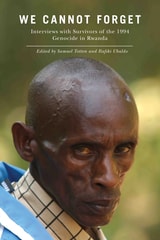
We Cannot Forget
Interviews with Survivors of the 1994 Genocide in RwandaTotten, Samuel
Rutgers University Press, 2011
During a one-hundred-day period in 1994, Hutus murdered between half a million and a million Tutsi in Rwanda. The numbers are staggering; the methods of killing were unspeakable. Utilizing personal interviews with trauma survivors living in Rwandan cities, towns, and dusty villages, We Cannot Forget relates what happened during this period and what their lives were like both prior to and following the genocide.
Through powerful stories that are at once memorable, disturbing, and informative, readers gain a critical sense of the tensions and violence that preceded the genocide, how it erupted and was carried out, and what these people faced in the first sixteen years following the genocide.
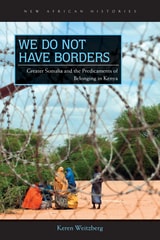
We Do Not Have Borders
Greater Somalia and the Predicaments of Belonging in KenyaKeren Weitzberg
Ohio University Press, 2017
Though often associated with foreigners and refugees, many Somalis have lived in Kenya for generations, in many cases since long before the founding of the country. Despite their long residency, foreign and state officials and Kenyan citizens often perceive the Somali population to be a dangerous and alien presence in the country, and charges of civil and human rights abuses have mounted against them in recent years.
In We Do Not Have Borders, Keren Weitzberg examines the historical factors that led to this state of affairs. In the process, she challenges many of the most fundamental analytical categories, such as “tribe,” “race,” and “nation,” that have traditionally shaped African historiography. Her interest in the ways in which Somali representations of the past and the present inform one another places her research at the intersection of the disciplines of history, political science, and anthropology.
Given tragic events in Kenya and the controversy surrounding al-Shabaab, We Do Not Have Borders has enormous historical and contemporary significance, and provides unique inroads into debates over globalization, African sovereignty, the resurgence of religion, and the multiple meanings of being African.
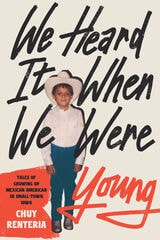
We Heard It When We Were Young
Renteria, Chuy
University of Iowa Press, 2021
Renteria looks past the public celebrations of diversity to dive into the private tensions of a community reflecting the changing American landscape. There are culture clashes, breakdancing battles, fistfights, quinceañeras, vandalism, adventures on bicycles, and souped-up lowriders, all set to an early 2000s soundtrack. Renteria and his friends struggle to find their identities and reckon with intergenerational trauma and racism in a town trying to do the same. A humorous and poignant reflection on coming of age, We Heard It When We Were Young puts its finger on a particular cultural moment at the turn of the millennium.
White Enclosures
Racial Capitalism and Coloniality along the Balkan RoutePiro Rexhepi
Duke University Press, 2022
White Men Challenging Racism
35 Personal StoriesCooper Thompson, Emmett Schaefer, and Harry Brod
Duke University Press, 2003
Ranging in age from twenty-six to eighty-six, the men whose stories are presented here include some of the elder statesmen of antiracism work as well as members of the newest generation of activists. They come from across the United States—from Denver, Nashville, and San Jose; rural North Carolina, Detroit, and Seattle. Some are straight; some are gay. A few—such as historian Herbert Aptheker, singer/songwriter Si Kahn, Stetson Kennedy (a Klan infiltrator in the 1940s), and Richard Lapchick (active in organizing the sports community against apartheid)—are relatively well known; most are not. Among them are academics, ministers, police officers, firefighters, teachers, journalists, union leaders, and full-time community organizers. They work with Latinos and African-, Asian-, and Native-Americans. Many ground their work in spiritual commitments. Their inspiring personal narratives—whether about researching right-wing groups, organizing Central American immigrants, or serving as pastor of an interracial congregation—connect these men with one another and with their allies in the fight against racism in the United States.
All authors’ royalties go directly to fund antiracist work. To read excerpts from the book, please visit http://www.whitemenchallengingracism.com/
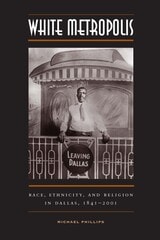
White Metropolis
Race, Ethnicity, and Religion in Dallas, 1841-2001By Michael Phillips
University of Texas Press, 2006
Winner, T. R. Fehrenbach Award, Texas Historical Commission, 2007
From the nineteenth century until today, the power brokers of Dallas have always portrayed their city as a progressive, pro-business, racially harmonious community that has avoided the racial, ethnic, and class strife that roiled other Southern cities. But does this image of Dallas match the historical reality? In this book, Michael Phillips delves deeply into Dallas's racial and religious past and uncovers a complicated history of resistance, collaboration, and assimilation between the city's African American, Mexican American, and Jewish communities and its white power elite.
Exploring more than 150 years of Dallas history, Phillips reveals how white business leaders created both a white racial identity and a Southwestern regional identity that excluded African Americans from power and required Mexican Americans and Jews to adopt Anglo-Saxon norms to achieve what limited positions of power they held. He also demonstrates how the concept of whiteness kept these groups from allying with each other, and with working- and middle-class whites, to build a greater power base and end elite control of the city. Comparing the Dallas racial experience with that of Houston and Atlanta, Phillips identifies how Dallas fits into regional patterns of race relations and illuminates the unique forces that have kept its racial history hidden until the publication of this book.
Who Defines Indigenous?
Identities, Development, Intellectuals, and the State in Northern MexicoMartinez Novo, Carmen
Rutgers University Press, 2006
For years, conventional scholarship has argued that minority groups are better served when the majority groups that absorb them are willing to recognize and allow for the preservation of indigenous identities. But is the reinforcement of ethnic identity among migrant groups always a process of self-liberation? In this surprising study, Carmen Martínez Novo draws on her ethnographic research of the Mixtec Indians’ migration from the southwest of Mexico to Baja California to show that sometimes the push for indigenous labels is more a process of external oppression than it is of minority empowerment.
In Baja California, many Mixtec Indians have not made efforts to align themselves as a coherent demographic. Instead, Martínez Novo finds that the push for indigenous identity in this region has come from local government agencies, economic elites, intellectuals, and other external agents. Their concern has not only been over the loss of rich culture. Rather, the pressure to maintain an indigenous identity has stemmed from the desire to secure a reproducible abundance of cheap “Indian” labor. Meanwhile, many Mixtecs reject their ethnic label precisely because being “Indian” means being a commercial agriculture low-wage worker or an urban informal street vendor—an identity that interferes with their goals of social mobility and economic integration.
Bringing a critical new perspective to the complex intersection among government and scholarly agendas, economic development, global identity politics, and the aspirations of local migrants, this provocative book is essential reading for scholars working in the fields of sociology, anthropology, and ethnic studies.
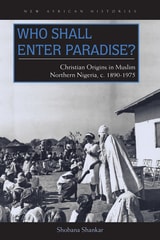
Who Shall Enter Paradise?
Christian Origins in Muslim Northern Nigeria, c. 1890–1975Shobana Shankar
Ohio University Press, 2014

Whose Art Is It?
Jane Kramer
Duke University Press, 1994
This compelling narrative raises questions about community and public art policies, about stereotypes and multiculturalism. With wit, drama, sympathy, and circumspection, Kramer draws the reader into the multicultural debate, challenging our assumptions about art, image, and their relation to community. Her portrait of the South Bronx takes the argument to its grass roots—provocative, surprising in its contradictions and complexities and not at all easy to resolve.
Accompanied by an introduction by Catharine R. Stimpson exploring the issues of artistic freedom, "political correctness," and multiculturalism, Whose Art Is It? is a lively and accessible introduction to the ongoing debate on representation and private expression in the public sphere.
With Their Backs to the Mountains
A History of Carpathian Rus' and Carpatho-RusynsPaul Robert Magocsi
Central European University Press, 2016
This is a history of a stateless people, the Carpatho-Rusyns, and their historic homeland, Carpathian Rus’, located in the heart of central Europe. A little over 100,000 Carpatho-Rusyns are registered in official censuses but their population is estimated at around 1,000,000, the greater part in Ukraine and Slovakia. The majority of the diaspora—nearly 600,000—lives in the US.
At the present, when it is fashionable to speak of nationalities as “imagined communities” created by intellectuals or elites who may live in the historic homeland, Carpatho-Rusyns provide an ideal example of a people made—or some would say still being made—before our very eyes. The book traces the evolution of Carpathian Rus’ from earliest prehistoric times to the present, and the complex manner in which a distinct Carpatho-Rusyn people, since the mid-nineteenth century, came into being, disappeared, and then re-appeared in the wake of the revolutions of 1989 and the collapse of communist rule in central and eastern Europe.
To help guide the reader further there are 34 detailed maps plus an annotated discussion of relevant books, chapters, and journal articles.
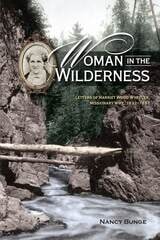
Woman in the Wilderness
Letters of Harriet Wood Wheeler, Missonary Wife, 1832-1892Nancy Bunge
Michigan State University Press, 2010
Harriet's letters reveal her experiences with actors and institutions that played pivotal roles in the history of American women: the nascent literate female work force at the mills in Lowell, Massachusetts; the Ipswich Female Seminary, which was one of the first schools for women teachers; women's associations, especially in churches; and the close and enduring ties that characterized women's relationships in the late nineteenth century.
Harriet's letters also provide an intimate view of the relationships between American Indians and Euro-Americans in the Great Lakes region, where she settled with her Christian missionary husband.
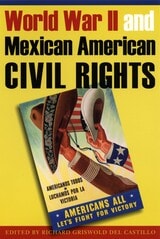
World War II and Mexican American Civil Rights
Edited by Richard Griswold del Castillo
University of Texas Press, 2008
World War II marked a turning point for Mexican Americans that fundamentally changed their expectations about how they should be treated by the greater U.S. society. The experiences of fighting alongside white Americans in the military, as well as of working in factory jobs for wages equal to those of Anglo workers, made Mexican Americans less willing to tolerate the second-class citizenship that had been their lot before the war. Having proven their loyalty and "Americanness" during World War II, Mexican Americans in the postwar years wanted to have the civil rights they knew they had earned.
In this book, Richard Griswold del Castillo and Richard Steele investigate how the World War II experiences of Mexican Americans galvanized their struggle for civil rights and how the U.S. government responded to the needs and aspirations of Mexican Americans. The authors demonstrate, for example, that the U.S. government "discovered" Mexican Americans during World War II and set about addressing some of their problems as a way of forestalling a sense of grievance and disaffection that might have made the Mexican American community unwilling to support the war effort. The authors also show that, as much or more than governmental programs, the personal wartime experiences of Mexican Americans formed their civil rights consciousness. The book concludes with a selection of key essays and historical documents from the World War II period that collectively gives a first-person understanding of the civil rights struggles of Mexican Americans.
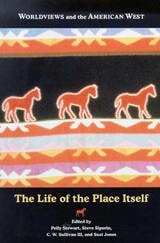
Worldviews And The American West
The Life of the Place ItselfPolly Stewart, Steve Siporin, C. W. Sullivan III, and Suzi Jones
Utah State University Press, 2003
A diverse group of writers and scholars follow the lead of noted folklorist Barre Toelken and consider, from the inside, the ways in which varied cultures in the American West understand and express their relations to the world around them. As Barre Toelken puts it in The Dynamics of Folklore, "'Worldview' refers to the manner in which a culture sees and expresses its relation to the world around it." In Worldviews and the American West, seventeen notable authors and scholars, employing diverse approaches and styles, apply Toelken's ideas about worldview to the American West. While the contributors represent a range of voices, methods, and visions, they are integrated through their focus on the theme of worldview in one region. Worldviews and the American West includes essays by Margaret K. Brady, Hal Cannon, Nora Marks Dauenhauer and Richard Dauenhauer, James S. Griffith, Barry Lopez, Robert McCarl, Elliott Oring, Twilo Scofield, Steve Siporin, Kim Stafford, C. W. Sullivan III, Jeannie B. Thomas, George Venn, George B. Wasson, and William A. Wilson. Each of the authors in this collection attempts to get inside one or more of the worldviews of the many cultures that have come to share and interpret the American West. The result is a lively mix of styles and voices as the authors' own worldviews interact with the multiple perspectives of the diverse peoples (and, in Barry Lopez's "The Language of Animals," other species) of the West. This diversity matches the geography of the region they all call home and gives varied life and meaning to its physical and cultural landscape.