Results by title
944 books match the query 'Indians of North America' and 30 start with w
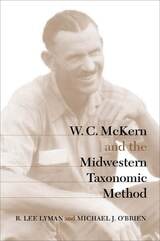
W. C. McKern and the Midwestern Taxonomic Method
Written by R. Lee Lyman and Michael J. O'Brien
University of Alabama Press, 2002
Explores W. C. McKern's use of Linnaean taxonomy as the model for development of a pottery classification system
By the early 20th century, North American archaeologists had found evidence of a plethora of prehistoric cultures displaying disparate geographic and chronological distributions. But there were no standards or algorithms for specifying when a culture was distinct or identical to another in a nearby or distant region.
Will Carleton McKern of the Milwaukee Public Museum addressed this fundamental problem of cultural classification beginning in 1929. He modeled his solution—known as the Midwestern Taxonomic Method—on the Linnaean biological taxonomy because he wanted the ability to draw historical and cultural "relationships" among cultures. McKern was assisted during development of the method by Carl E. Guthe, Thorne Deuel, James B. Griffin, and William Ritchie.
This book studies the 1930s correspondence between McKern and his contemporaries as they hashed out the method's nuances. It compares the several different versions of the method and examines the Linnaean biological taxonomy as it was understood and used at the time McKern adapted it to archaeological problems. Finally, this volume reveals how and why the method failed to provide the analytical solution envisioned by McKern and his colleagues and how it influenced the later development of Americanist archaeology.

Wake of the Unseen Object
Travels through Alaska's Native LandscapesTom Kizzia
University of Alaska Press, 2020
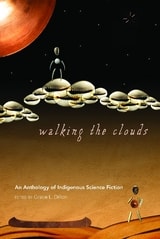
Walking the Clouds
An Anthology of Indigenous Science FictionEdited by Grace L. Dillon
University of Arizona Press, 2012
In this first-ever anthology of Indigenous science fiction Grace Dillon collects some of the finest examples of the craft with contributions by Native American, First Nations, Aboriginal Australian, and New Zealand Maori authors. The collection includes seminal authors such as Gerald Vizenor, historically important contributions often categorized as "magical realism" by authors like Leslie Marmon Silko and Sherman Alexie, and authors more recognizable to science fiction fans like William Sanders and Stephen Graham Jones. Dillon's engaging introduction situates the pieces in the larger context of science fiction and its conventions.
Organized by sub-genre, the book starts with Native slipstream, stories infused with time travel, alternate realities and alternative history like Vizenor's "Custer on the Slipstream." Next up are stories about contact with other beings featuring, among others, an excerpt from Gerry William's The Black Ship. Dillon includes stories that highlight Indigenous science like a piece from Archie Weller's Land of the Golden Clouds, asserting that one of the roles of Native science fiction is to disentangle that science from notions of "primitive" knowledge and myth. The fourth section calls out stories of apocalypse like William Sanders' "When This World Is All on Fire" and a piece from Zainab Amadahy's The Moons of Palmares. The anthology closes with examples of biskaabiiyang, or "returning to ourselves," bringing together stories like Eden Robinson's "Terminal Avenue" and a piece from Robert Sullivan's Star Waka.
An essential book for readers and students of both Native literature and science fiction, Walking the Clouds is an invaluable collection. It brings together not only great examples of Native science fiction from an internationally-known cast of authors, but Dillon's insightful scholarship sheds new light on the traditions of imagining an Indigenous future.
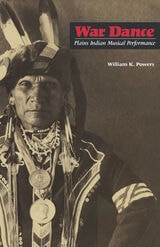
War Dance
Plains Indian Musical PerformanceWilliam K. Powers
University of Arizona Press, 1990
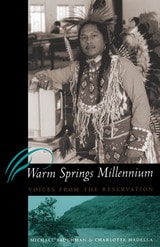
Warm Springs Millennium
Voices from the ReservationBy Michael Baughman and Charlotte Hadella
University of Texas Press, 2000
Established in 1855 on an area one-fifteenth the size of the lands relinquished in return for it, the Warm Springs Reservation in north central Oregon is home to some 3,600 Warm Springs, Wasco, and Paiute Indians, half of whom are under twenty. This book seeks to understand the reservation's inhabitants as a "viable people" who are both visible and vocal as they reflect on their daily lives, their struggles and successes, and their hopes for the future.
Michael Baughman and Charlotte Hadella present extended interviews with seven Indian and two non-Indian members of the community. They discuss issues such as the difficulty of maintaining traditional lifeways centered around hunting, fishing, and gathering; the disruptions caused by alcoholism and diseases such as diabetes; and the need for culturally appropriate education for the young. The authors frame the interviews with explanatory material that covers the reservation's history and relations with white society and its efforts to transmit native languages and cultural traditions to its children.
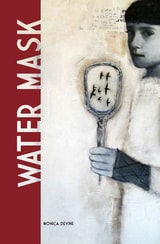
Water Mask
Monica Devine
University of Alaska Press, 2019
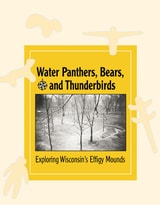
Water Panthers, Bears, and Thunderbirds
Exploring Wisconsin's Effigy MoundsBobbie Malone and Amy Rosebrough
Wisconsin Historical Society Press, 2003
Based on recent archaeological interpretation, this standards-based resource enriches material covered in Native People of Wisconsin. Water Panthers, Bears, and Thunderbirds introduces young readers to effigy mound sites in five southern Wisconsin counties. Suggested activities encourage students to graph, compare, contrast, and analyze the ways these mound groups vary from county to county.

We Are All Americans, Pure and Simple
Theodore Roosevelt and the Myth of AmericanismLeroy G. Dorsey
University of Alabama Press, 2008
Redefining American identity through Roosevelt’s words.
The turn of the 20th century represented one of the most chaotic periods in the nation's history, as immigrants, Native Americans, and African Americans struggled with their roles as Americans while white America feared their encroachments on national identity. This book examines Theodore Roosevelt’s public rhetoric—speeches, essays, and narrative histories—as he attempted to craft one people out of many. Leroy G. Dorsey observes that Roosevelt's solution to the problem appeared straightforward: everyone could become "Americans, pure and simple" if they embraced his notion of "Americanism." Roosevelt grounded his idea of Americanism in myth, particularly the frontier myth—a heroic combination of individual strength and character. When nonwhites and immigrants demonstrated these traits, they would become true Americans, earning an exalted status that they had heretofore been denied.
Dorsey’s analysis illuminates how Roosevelt's rhetoric achieved a number of delicate, if problematic, balancing acts. Roosevelt gave his audiences the opportunity to accept a national identity that allowed "some" room for immigrants and nonwhites, while reinforcing their status as others, thereby reassuring white Americans of their superior place in the nation. Roosevelt’s belief in an ordered and unified nation did not overwhelm his private racist attitudes, Dorsey argues, but certainly competed with them. Despite his private sentiments, he recognized that racist beliefs and rhetoric were divisive and bad for the nation’s progress. The resulting message he chose to propagate was thus one of a rhetorical, if not literal, melting pot.
By focusing on Roosevelt’s rhetorical constructions of national identity, as opposed to his personal exploits or his role as a policy maker, We Are All Americans offers new insights into Roosevelt’s use of public discourse to bind the nation together during one of the most polarized periods in its history.
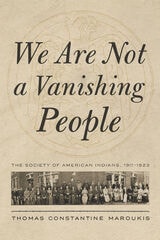
We Are Not a Vanishing People
The Society of American Indians, 1911–1923Thomas Constantine Maroukis
University of Arizona Press, 2021
Historian Thomas Constantine Maroukis discusses the goals, strategies, successes, and failures of the Indigenous intellectuals who came together to form the SAI. They engaged in lobbying, producing publications, informing the media, hundreds of speaking engagements, and annual conferences to argue for reform. Unfortunately, the forces of this era were against reforming federal policies: The group faced racism, a steady stream of negative stereotyping as a so-called vanishing race, and an indifferent federal bureaucracy. They were also beset by internal struggles, which weakened the organization.
This work sheds new light on the origins of modern protest in the twentieth century, and it shows how the intellectuals and activists associated with the SAI were able to bring Indian issues before the American public, challenging stereotypes and the “vanishing people” trope. Maroukis argues that that the SAI was not an assimilationist organization; they were political activists trying to free Indians from government wardship while maintaining their cultural heritage.

We Came Naked and Barefoot
The Journey of Cabeza de Vaca across North AmericaBy Alex D. Krieger
University of Texas Press, 2002
Second place, Presidio La Bahia Award, Sons of the Republic of Texas, 2003
Perhaps no one has ever been such a survivor as álvar Núñez Cabeza de Vaca. Member of a 600-man expedition sent out from Spain to colonize "La Florida" in 1527, he survived a failed exploration of the west coast of Florida, an open-boat crossing of the Gulf of Mexico, shipwreck on the Texas coast, six years of captivity among native peoples, and an arduous, overland journey in which he and the three other remaining survivors of the original expedition walked some 1,500 miles from the central Texas coast to the Gulf of California, then another 1,300 miles to Mexico City.
The story of Cabeza de Vaca has been told many times, beginning with his own account, Relación de los naufragios, which was included and amplified in Gonzalo Fernando de Oviedo y Váldez's Historia general de las Indias. Yet the route taken by Cabeza de Vaca and his companions remains the subject of enduring controversy. In this book, Alex D. Krieger correlates the accounts in these two primary sources with his own extensive knowledge of the geography, archaeology, and anthropology of southern Texas and northern Mexico to plot out stage by stage the most probable route of the 2,800-mile journey of Cabeza de Vaca.
This book consists of several parts, foremost of which is the original English version of Alex Krieger's dissertation (edited by Margery Krieger), in which he traces the route of Cabeza de Vaca and his companions from the coast of Texas to Spanish settlements in western Mexico. This document is rich in information about the native groups, vegetation, geography, and material culture that the companions encountered. Thomas R. Hester's foreword and afterword set the 1955 dissertation in the context of more recent scholarship and archaeological discoveries, some of which have supported Krieger's plot of the journey. Margery Krieger's preface explains how she prepared her late husband's work for publication. Alex Krieger's original translations of the Cabeza de Vaca and Oviedo accounts round out the volume.
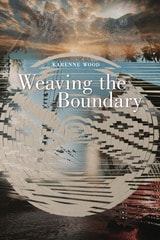
Weaving the Boundary
Karenne Wood
University of Arizona Press, 2016
This focused, accessible collection carries readers into a deep and intimate understanding of the natural world, the power of language, and the interconnectedness of life. Untold stories are revealed through documented events in various tribal histories, and indictments of destructive encounters between Western colonialism and Native peoples are juxtaposed with a lyric voice that gently insists on reweaving the past, honoring women and all life, creating a sovereign space for indigenous experience. Wood writes, “Nothing was discovered. Everything was already loved.”
Political yet universal, Weaving the Boundary tells of love and betrayal, loss and forgiveness. Wood intertwines important and otherwise untold stories and histories with a heightened sense of awareness of Native peoples’ issues and present realities.
Moving from elegy to evocations of hope and desire, the poems call for respect toward Mother Earth and feminine sensibility. One hears in this collection a longing to be carried deeper into the world, to return to tradition, to nature, to truth, to an innate belonging in the “weaving” of all life.
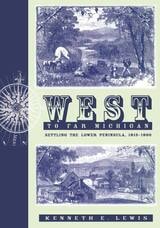
West to Far Michigan
Settling the Lower Peninsula, 1815-1860Kenneth E. Lewis
Michigan State University Press, 2001
Employing numerous primary sources, West to Far Michigan traces changes and patterns of settlement crucial to documenting the large-scale development of southern Michigan as a region. Diaries, letters, memoirs, gazetteers, and legal documents serve to transform the more abstract elements of economic and social change into more human terms. Through the experiences of the early Agriculturists process, we can gain insight into how their triumphs played out in communities within the region to produce small-scale elements that comprise the fabric of the larger cultural landscape.
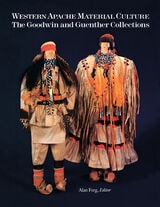
Western Apache Material Culture
The Goodwin and Guenther CollectionsAlan Ferg
University of Arizona Press, 1987
"This book will surely appeal not only to those who are interested in the Apache, material culture studies, or the potential of Native American museum resources as cultural and historical documents, but also to those who are concerned with the way humans adapted to the environment and thus 'utilized their world so well.'" —African Arts
"It is a remarkably beautiful and detailed catalog of the Goodwin and Guenther collections of Wester Apache artiffacts in the Arizona State Musuem—and a lot more! . . . A section of thirty-two color photographs by award-winning photographer Helga Teiwes is the delectable frosting on this rich and satisfying cake." —Journal of Arizona History
Western Ceramic Traditions
Prehistoric and Historic Native American Ceramics of the Western U.S.Edited by Suzanne Griset
University of Utah Press, 2021
This volume is dedicated to studies of plainwares—the undecorated ceramics that make up the majority of prehistoric ceramic assemblages worldwide. Early analyses of ceramics focused on changes in decorative design elements to establish chronologies and cultural associations. With the development of archaeometric techniques that allow direct dating of potsherds and identification of their elemental composition and residues, plainwares now provide a new source of information about the timing, manufacture, distribution, and use of ceramics.
This book investigates plainwares from the far west, stretching into the Great Basin and the northwestern and southwestern edges of Arizona. Contributors use and explain recent analytical methods, including neutron activation, electron microprobe analysis, and thin-section optical mineralogy. They examine native ceramic traditions and how they were influenced by the Spanish mission system, and they consider the pros and cons of past approaches to ware typology, presenting a vision of how plainware analysis can be improved by ignoring the traditional “typological” approach of early ceramicists working with decorated wares.
This work provides a much-needed update to plainware studies, with new hypotheses and data that will help set the stage for future research.
What Kind of Ancestor Do You Want to Be?
Edited by John Hausdoerffer, Brooke Parry Hecht, Melissa K. Nelson, and Katherine Kassouf Cummings
University of Chicago Press, 2021
What Mean These Bones?
Studies in Southeastern BioarchaeologyEdited by Mary Lucas Powell, Patricia S. Bridges, and Ann Marie Wagner Mires
University of Alabama Press, 1991
A Dan Josselyn Memorial Publication
Until recently, archaeological projects that included analysis of human remains had often lacked active collaboration between archaeologists and physical anthropologists from the planning stages onward. During the 1980s, a conjunctive approach developed; known as "bioarchaeology," it draws on the methodological and theoretical strengths of the two subdisciplines to bridge a perceived communications gap and promote a more comprehensive understanding of prehistoric and historic cultures.
This volume addresses questions of human adaptation in a variety of cultural contexts, with a breadth not found in studies utilizing solely biological or artifactual data. These nine case studies from eight Southeastern states cover more than 4,000 years of human habitation, from Archaic hunter-gatherers in Louisiana and Alabama to Colonial planters and slaves in South Carolina. Several studies focus upon variations in health between or within late prehistoric agricultural societies. For example, the discovery that reliance upon maize as a dietary staple did not result invariably in poor health, as claimed by earlier studies, either for entire populations or, in ranked societies, for the non-elite majority, has fostered a new appreciation for the managerial wisdom of the Mississippian peoples, as well as for their agricultural skills.
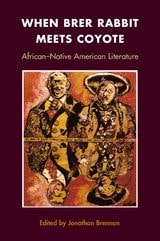
When Brer Rabbit Meets Coyote
AFRICAN-NATIVE AMERICAN LITERATUREEdited by Jonathan Brennan
University of Illinois Press, 2003
Jonathan Brennan, in a sweeping historical and analytical introduction to this collection of essays, surveys several centuries of literature in the context of the historical and cultural exchange and development of distinct African-Native American traditions. Positing a new African-Native American literary theory, he illuminates the roles subjectivity, situational identities, and strategic discourse play in defining African-Native American literatures.
Brennan provides a thorough background to the literary tradition and a valuable overview to topics discussed in the essays. He examines African-Native American political and historical texts, travel narratives, and the Mardi Gras Indian tradition, suggesting that this evolving oral tradition parallels the development of numerous Black Indian literary traditions in the United States and Latin America.
When Our Words Return
Writing, Hearing, and Remembering Oral Traditions from Alasak and the Yukonedited by Phyllis Morrow & William Schneider
Utah State University Press, 1995
The title to this interdisciplinary collection draws on the Yupik Eskimo belief that seals, fish, and other game are precious gifts that, when treated with respect and care, will return to be hunted again. Just so, if oral traditions are told faithfully and respectfully, they will return to benefit future generations. The contributors to this volume are concerned with the interpretation and representation of oral narrative and how it is shaped by its audience and the time, place, and cultural context of the narration. Thus, oral traditions are understood as a series of dialogues between tradition bearers and their listeners, including those who record, write, and interpret.
When the Wolf Came
The Civil War and the Indian TerritoryMary Jane Warde
University of Arkansas Press, 2013
Winner of the 2014 Pate Award from the Fort Worth Civil War Round Table.
When the peoples of the Indian Territory found themselves in the midst of the American Civil War, squeezed between Union Kansas and Confederate Texas and Arkansas, they had no way to escape a conflict not of their choosing--and no alternative but to suffer its consequences. When the Wolf Came explores how the war in the Indian Territory involved almost every resident, killed many civilians as well as soldiers, left the country stripped and devastated, and cost Indian nations millions of acres of land. Using a solid foundation of both published and unpublished sources, including the records of Cherokee, Choctaw, and Creek nations, Mary Jane Warde details how the coming of the war set off a wave of migration into neighboring Kansas, the Red River Valley, and Texas. She describes how Indian Territory troops in Unionist regiments or as Confederate allies battled enemies--some from their own nations--in the territory and in neighboring Kansas, Missouri, and Arkansas. And she shows how post-war land cessions forced by the federal government on Indian nations formerly allied with the Confederacy allowed the removal of still more tribes to the Indian Territory, leaving millions of acres open for homesteads, railroads, and development in at least ten states. Enhanced by maps and photographs from the Oklahoma Historical Society's photographic archives, When the Wolf Came will be welcomed by both general readers and scholars interested in the signal public events that marked that tumultuous era and the consequences for the territory's tens of thousands of native peoples.

Where Clouds Are Formed
Ofelia Zepeda
University of Arizona Press, 2008
Zepeda is as clear-eyed about the past as she is about the present. She recalls waiting for the school bus on a cold morning inside her father’s truck, listening to the sounds of the engine, the windshield wipers, and the “soft rain on the hood.” She remembers celebrating Mass on the “cold dirt floor of the Winter Solstice.” In the present, she sees both the frustration and the humor in a woman she observes trying to eat pancakes with one hand while her other resides in a cast: “Watching her, I realize eating pancakes is a two-handed job.”
Whatever she sees, she filters through her second set of eyes, which keep the past always present. She tells of traveling to Waw Giwulig, the most sacred mountain of the Tohono O’odham, to ask for blessings—and forgiveness. She writes that one should always bring music to the mountains, “so they are generous with the summer rains.” And, still, “the scent of burning wood / holds the strongest memory. / Mesquite, cedar, piñon, juniper, . . . / we catch the scent of burning wood; / we are brought home.” It is a joy to see the world afresh through her eyes.
White Man's Paper Trail
Grand Councils and Treaty-Making on the Central PlainsStan Hoig
University Press of Colorado, 2006
Stan Hoig shows how treaty-making - once considered a viable method of peaceably resolving conflicts - degenerated into a deeply flawed system sullied by political deceptions and broken promises.
White Man's Paper Trail illuminates the pivotal role of treaty negotiations in the buildup to the Plains Indian wars, in American Indians' loss of land and self-determination, and in Euro-American westward expansion.
Why I Can't Read Wallace Stegner and Other Essays
A Tribal VoiceElizabeth Cook-Lynn
University of Wisconsin Press, 1996
This provocative collection of essays reveals the passionate voice of a Native American feminist intellectual. Elizabeth Cook-Lynn, a poet and literary scholar, grapples with issues she encountered as a Native American in academia. She asks questions of critical importance to tribal people: who is telling their stories, where does cultural authority lie, and most important, how is it possible to develop an authentic tribal literary voice within the academic community?
In the title essay, “Why I Can’t Read Wallace Stegner,” Cook-Lynn objects to Stegner’s portrayal of the American West in his fiction, contending that no other author has been more successful in serving the interests of the nation’s fantasy about itself. When Stegner writes that “Western history sort of stopped at 1890,” and when he claims the American West as his native land, Cook-Lynn argues, he negates the whole past, present, and future of the native peoples of the continent. Her other essays include discussion of such Native American writers as Michael Dorris, Ray Young Bear, and N. Scott Momaday; the importance of a tribal voice in academia, the risks to American Indian women in current law practices, the future of Indian Nationalism, and the defense of the land.
Cook-Lynn emphasizes that her essays move beyond the narrowly autobiographical, not just about gender and power, not just focused on multiculturalism and diversity, but are about intellectual and political issues that engage readers and writers in Native American studies. Studying the “Indian,” Cook-Lynn reminds us, is not just an academic exercise but a matter of survival for the lifeways of tribal peoples. Her goal in these essays is to open conversations that can make tribal life and academic life more responsive to one another.

Wiijiwaaganag
More Than BrothersPeter Razor
Michigan State University Press, 2022
Winning the Dust Bowl
Carter Revard
University of Arizona Press, 2001
Wisconsin Indian Literature
Anthology of Native VoicesEdited by Kathleen Tigerman; Foreward by Jim Ottery
University of Wisconsin Press, 2006
Literature of the Indian Nations of Wisconsin is a unique anthology that presents the oral traditions, legends, speeches, myths, histories, literature, and historically significant documents of the current twelve independent bands and Indian Nations of Wisconsin. Kathleen Tigerman sought input from tribe elders and educators to provide an accurate chronological portrait of each nation, including the Siouan Ho-Chunk; the Algonquian Menominee, Ojibwe, and Potawatomi; and three groups originally from what is now New York State: the Iroquoian Oneida, the Stockbridge-Munsee band of the Mohican Nations, and the Brothertown Nation.
Some of these works feature a cultural hero or refer to very ancient times—more than six thousand years ago—and others are contemporary. These pieces focus on issues of Wisconsin Native communities by sharing Native knowledge and dialogue about sovereignty, decolonization, cultural genocide, forced removals, assimilation, and other concerns.
This anthology introduces us to a vivid and unforgettable group of voices, enhanced by many maps, photographs, and chronologies. Literature of the Indian Nations of Wisconsin fosters cross-cultural understanding among non-Native readers and the people of the First Nations.
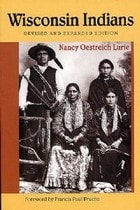
Wisconsin Indians
Nancy Oestreich Lurie
Wisconsin Historical Society Press, 2002
This best-selling short history of Wisconsin's native peoples is now updated and expanded to include events through the end of the twentieth century. From the treaty-making era to the reawakening of tribal consciousness in the 1960s to the profound changes brought about by Indian gaming, Lurie’s classic account remains the best concise treatment of the subject.

With Good Heart
Yaqui Beliefs and Ceremonies in Pascua VillageMuriel Thayer Painter
University of Arizona Press, 1986
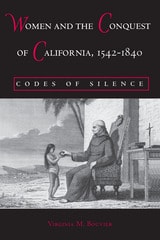
Women and the Conquest of California, 1542-1840
Codes of SilenceVirginia M. Bouvier
University of Arizona Press, 2001
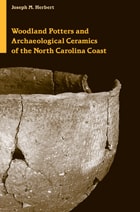
Woodland Potters and Archaeological Ceramics of the North Carolina Coast
Joseph M. Herbert
University of Alabama Press, 2009
The first comprehensive study of the meaning of pottery as a social activity in coastal North Carolina.
Pottery types, composed of specific sets of attributes, have long been defined for various periods and areas of the Atlantic coast, but their relationships and meanings have not been explicitly examined. In exploring these relationships for the North Carolina coast, this work examines the manner in which pottery traits cross-cut taxonomic types, tests the proposition that communities of practice existed at several scales, and questions the fundamental notion of ceramic types as ethnic markers.
Ethnoarchaeological case studies provide a means of assessing the mechanics of how social structure and gender roles may have affected the transmission of pottery-making techniques and how socio-cultural boundaries are reflected in the distribution of ceramic traditions. Another very valuable source of information about past practices is replication experimentation, which provides a means of understanding the practical techniques that lie behind the observable traits, thereby improving our understanding of how certain techniques may have influenced the transmission of traits from one potter to another. Both methods are employed in this study to interpret the meaning of pottery as an indicator of social activity on the North Carolina coast.
Writing Their Bodies
Restoring Rhetorical Relations at the Carlisle Indian SchoolSarah Klotz
Utah State University Press, 2020
This approach tracks the relationship between curriculum and resistance and enumerates an anti-assimilationist methodology for teachers and scholars of writing in contemporary classrooms. From the Carlisle archive emerges the concept of a rhetoric of relations, a set of Native American communicative practices that circulates in processes of intercultural interpretation and world-making. Klotz explores how embodied and material practices allowed Indigenous rhetors to maintain their cultural identities in the off-reservation boarding school system and critiques the settler fantasy of benevolence that propels assimilationist models of English education.
Writing Their Bodies moves beyond language and literacy education where educators standardize and limit their students’ means of communication and describes the extraordinary expressive repositories that Indigenous rhetors draw upon to survive, persist, and build futures in colonial institutions of education.