Results by title
171 books match the query 'Labor unions' and 22 start with w

Walter Reuther
THE MOST DANGEROUS MAN IN DETROITNelson Lichtenstein
University of Illinois Press, 1995
Previously published by Basic Books as The Most Dangerous Man in Detroit: Walter Reuther and the Fate of American Labor
Waterfront Workers
New Perspectives on Race and ClassEdited by Calvin Winslow
University of Illinois Press, 1998

Waves of Opposition
Labor and the Struggle for Democratic RadioElizabeth Fones-Wolf
University of Illinois Press, 2006
Radio sparked the massive upsurge of organized labor during the Great Depression. The powerful new medium became an important weapon in the ideological war between labor and business. Corporations used radio to sing the praises of individualism and consumerism, while unions emphasized equal rights, industrial democracy, and social justice.
Elizabeth Fones-Wolf analyzes the battle to utilize, and control, the airwaves in radio's early era. Working chronologically, she explores the advent of local labor radio stations such as WCFL and WEVD, labor's campaigns against corporate censorship, and union experiments with early FM broadcasting. Using union archives and broadcast industry records, Fones-Wolf demonstrates radio's key role in organized labor's efforts to fight business's domination of political discourse throughout the 1930s, 1940s, and 1950s. She concludes with a look at how labor's virtual disappearance from today's media helps explain why unions have become so marginalized, and offers important historical lessons for revitalizing organized labor.
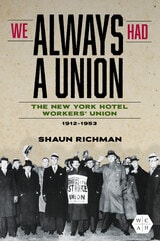
We Always Had a Union
The New York Hotel Workers' Union, 1912-1953Shaun Richman
University of Illinois Press, 2025
From the start, New York’s organized hotel workers experimented with and adapted how they organized and governed members and related to other labor unions. Richman follows union fortunes from early IWW activity through the Communist-led affiliates of the American Federation of Labor in the 1920s and 1930s, the shaping of breakthrough negotiating strategies, and the postwar era. As Richman shows, workers adopted a radicalism and militancy seldom associated with an AFL organization while openly negotiating the Communist Party’s power and influence within the union, until the Party’s eclipse in the 1950s.
An inspiring story of action and perseverance, We Always Had a Union profiles a foundational American labor union and offers lessons for today’s workers and organizers.
We Are in This Dance Together
Gender, Power, and Globalization at a Mexican Garment FirmPlankey-Videla, Nancy
Rutgers University Press, 2012
Changes in the global economy have real and contradictory outcomes for the everyday lives of women workers. In 2001, Nancy Plankey-Videla had a rare opportunity to witness these effects firsthand. Having secured access to one of Latin America's top producers of high-end men's suits in Mexico for participant-observer research, she labored as a machine operator for nine months on a shop floor made up, mostly, of women. The firm had recently transformed itself from traditional assembly techniques, to lean, cutting-edge, Japanese-style production methods. Lured initially into the firm by way of increased wages and benefits, workers had helped shoulder the company's increasing debts. When the company's plan for successful expansion went awry and it reneged on promises it had made to the workforce, women workers responded by walking out on strike.
Building upon in-depth interviews with over sixty workers, managers, and policy makers, Plankey-Videla documents and analyzes events leading up to the female-led factory strike and its aftermath—including harassment from managers, corrupt union officials and labor authorities, and violent governor-sanctioned police actions. We Are in This Dance Together illustrates how the women's shared identity as workers and mothers—deserving of dignity, respect, and a living wage—became the basis for radicalization and led to further civic organizing against the state, the company, and the corrupt union to demand justice.
We Are the Union
Democratic Unionism and Dissent at BoeingDana L. Cloud
University of Illinois Press, 2011
We Are the Union is grounded in on-site research and interviews and focuses on the efforts by Unionists for Democratic Change to reform unions from within. Incorporating theory and methods from the fields of organizational communication as well as labor studies, Cloud methodically uncovers and analyzes the goals, strategies, and dilemmas of the dissidents who, while wanting to uphold the ideas and ideals of the union, took up the gauntlet to make it more responsive to workers and less conciliatory toward management, especially in times of economic stress or crisis. Cloud calls for a revival of militant unionism as a response to union leaders' embracing of management and training programs that put workers in the same camp as management, arguing that reform groups should look to the emergence of powerful industrial unions in the United States for guidance on revolutionizing existing institutions and building new ones that truly accommodate workers' needs.
Weavers of Dreams, Unite!
Actors' Unionism in Early Twentieth-Century AmericaSean P. Holmes
University of Illinois Press, 2013
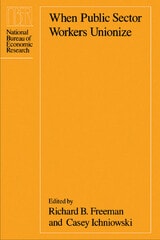
When Public Sector Workers Unionize
Edited by Richard B. Freeman and Casey Ichniowski
University of Chicago Press, 1988
Contributors to When Public Sector Workers Unionize—which was developed from the NBER's program on labor studies—examine these and other questions using newly collected data on public sector labor laws, labor relations practices of state and local governments, and labor market outcomes. Topics considered include the role, effect, and evolution of public sector labor law and the effects that public sector bargaining has on both wage and nonwage issues.
Several themes emerge from the studies in this volume. Most important, public sector labor law has a strong and pervasive effect on bargaining and on wage and employment outcomes in public sector labor markets. Also, public sector unionism affects the economy in ways that are different from, and in many cases opposite to, the ways private sector unionism does, appearing to stimulate rather than reduce employment, reducing rather than increasing layoff rates, and developing innovate ways to settle labor disputes such as compulsory interest arbitration instead of strikes and lockouts found in the private sector.
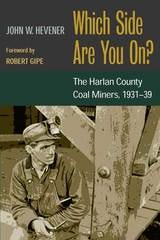
Which Side Are You On?
The Harlan County Coal Miners, 1931-39John W. Hevener. Foreword by Robert Gipe
University of Illinois Press, 1978
Depression-era Harlan County, Kentucky, was the site of one of the most bitter and protracted labor disputes in American history. The decade-long conflict between miners and the coal operators who adamantly resisted unionization has been immortalized in folksong by Florence Reece and Aunt Molly Jackson, contemplated in prose by Theodore Dreiser and Sherwood Anderson, and long been obscured by popular myths and legends.
John W. Hevener separates the fact from the legend in his Weatherford Award-winning investigation of Harlan's civil strife, now available for the first time in paperback. In Which Side Are You On? Hevener attributes the violence–-including the deaths of thirteen union miners–-to more than just labor conflict, viewing Harlan's troubles as sectional economic conflict stemming from the county's rapid industrialization and social disorganization in the preceding decade.
Detailing the dimensions of unionization and the balance of power spawned by New Deal labor policy after government intervention, Which Side Are You On? is the definitive analysis of Harlan's bloody decade and a seminal contribution to American labor history.
William Z. Foster and the Tragedy of American Radicalism
James R. Barrett
University of Illinois Press, 1999
A self-educated wage earner raised in the slums of a large industrial city, William Z. Foster became a brilliant union organizer who helped build the American Federation of Labor and, later, radical Trade Union Educational League. Embracing socialism, syndicalism, and communism in turn, Foster rose through the ranks of the American Communist Party to stand at the forefront of labor politics throughout the 1920s. Yet by the time he died in 1961, in a Moscow hospital far from the meat-packing plants and steel mills where he had built his reputation, Foster's political marginalism stood as a symbol for the isolation of American labor radicalism in the postwar era.
Integrating both the indigenous and the international factors that determined the fate of American communism, William Z. Foster and the Tragedy of American Radicalism provides a new understanding of the basis for radicalism among twentieth-century American workers.
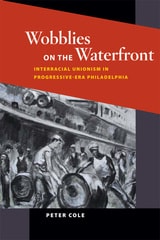
Wobblies on the Waterfront
Interracial Unionism in Progressive-Era PhiladelphiaPeter Cole
University of Illinois Press, 2007
Work and Community in the Jungle
Chicago's Packinghouse Workers, 1894-1922James R. Barrett
University of Illinois Press, 1987
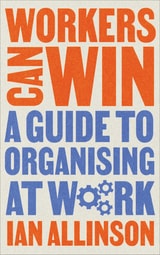
Workers Can Win
A Guide to Organising at WorkIan Allinson
Pluto Press, 2022
Drawing on more than 20 years of organizing experience, Allinson combines practical techniques with an analysis of the theory and politics of organizing and unions.
The Covid, climate, and cost of living crises all hang heavy in the air. It's more obvious than ever that we need radical social and political change. But in the vacuum left by defeated labor movements, where should we begin? For longtime workplace activist Ian Allinson, the answer is clear: organizing at work is essential to rebuild working-class power.
The premise is simple: organizing builds confidence, capacity, and collective power - and with power, we can win change. Workers Can Win is an essential, practical guide for rank-and-file workers and union activists.
The book offers insight into tried and tested methods for effective organizing. It deals with tactics and strategies and addresses some of the roots of conflict, common problems with unions, and the resistance of management to worker organizing. As a 101 guide to workplace organizing with politically radical horizons, Workers Can Win is destined to become an essential tool for workplace struggles in the years to come.
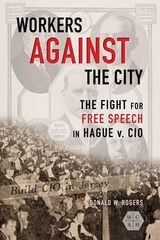
Workers against the City
The Fight for Free Speech in Hague v. CIODonald W. Rogers
University of Illinois Press, 2020
Clear-eyed and comprehensive, Workers against the City revises the view of a milestone case that continues to impact Americans' constitutional rights today.
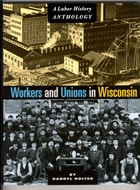
Workers and Unions in Wisconsin
A Labor History AnthologyDarryl Holter
Wisconsin Historical Society Press, 1999
Wisconsin accounts for about two percent of the nation's total population, but its contribution to the history of working people and social reform extends far beyond these numbers. In the early years of the twentieth century, Wisconsin became a veritable laboratory for social and political reform, producing such landmark legislation as workers' compensation, unemployment insurance, and other laws that became models for several states and helped shape federal labor policies. The study of the history of labor also began in Wisconsin when University of Wisconsin economics professor John R. Commons started to document the history of work and labor in America.
Workers and Unions in Wisconsin includes nearly one hundred selections covering the period from 1850 to 1990, illustrated by scores of historic photos, most of which have never before been reprinted. Editor Darryl Holter has included accounts of episodes that took place in more than twenty-five cities and towns in Wisconsin, including labor activities at such nationally known companies as Oscar Mayer, Kohler, Case, Allis-Chalmers, and Ray-O-Vac and workers as diverse as dairy farmers and university teaching assistants, lumberjacks and hosiery makers, municipal employees and paper mill workers. The result is a book that will fascinate and inform anyone interested in American labor history and economics, as well as in the personal stories that are part of any great societal change.
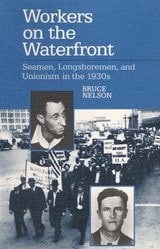
Workers on the Waterfront
Seamen, Longshoremen, and Unionism in the 1930sBruce Nelson
University of Illinois Press, 1988
Workers' Inquiry and Global Class Struggle
Strategies, Tactics, ObjectivesRobert Ovetz
Pluto Press, 2020
By engaging in what Karl Marx called a workers' inquiry, workers and militant co-researchers are studying their working conditions, the technical composition of capital, and how to recompose their own power in order to devise new tactics, strategies, organisational forms and objectives. These workers' inquiries, from call centre workers to teachers, and adjunct professors, are re-energising unions, bypassing unions altogether or innovating new forms of workers' organisations.
In one of the first major studies to critically assess this new cycle of global working class struggle, Robert Ovetz collects together case studies from over a dozen contributors, looking at workers' movements in China, Mexico, the US, South Africa, Turkey, Argentina, Italy, India and the UK. The book reveals how these new forms of struggle are no longer limited to single sectors of the economy or contained by state borders, but are circulating internationally and disrupting the global capitalist system as they do.
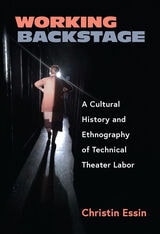
Working Backstage
A Cultural History and Ethnography of Technical Theater LaborChristin Essin
University of Michigan Press, 2021
Working Backstage illuminates the work of New York City’s theater technicians, shining a light on the essential contributions of unionized stagehands, carpenters, electricians, sound engineers, properties artisans, wardrobe crews, makeup artists, and child guardians. Too-often dismissed or misunderstood as mere functionaries, these technicians are deeply engaged in creative problem-solving and perform collaborative, intricate choreographed work that parallels the performances of actors, singers, and dancers onstage. Although their contributions have fueled the Broadway machine, their contributions have been left out of most theater histories.
Theater historian Christin Essin offers clear and evocative descriptions of this invaluable labor, based on her archival research and interviews with more than 100 backstage technicians, members of the New York local of the International Alliance of Theatrical Stage Employees. A former theater technician herself, Essin provides readers with an insider’s view of the Broadway stage, from the suspended lighting bridge of electricians operating followspots for A Chorus Line; the automation deck where carpenters move the massive scenic towers for Newsies; the makeup process in the dressing room for The Lion King; the offstage wings of Matilda the Musical, where guardians guide child actors to entrances and exits. Working Backstage makes an significant contribution to theater studies and also to labor studies, exploring the politics of the unions that serve backstage professionals, protecting their rights and insuring safe working conditions. Illuminating the history of this typically hidden workforce, the book provides uncommon insights into the business of Broadway and its backstage working relationships among cast and crew members.
Working for Democracy
American Workers from the Revolution to the PresentEdited by Paul Buhle and Alan Dawley
University of Illinois Press, 1985
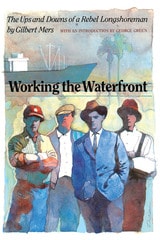
Working the Waterfront
The Ups and Downs of a Rebel LongshoremanBy Gilbert Mers
University of Texas Press, 1988
"Somebody said, 'History is written by the winners. The losers have nothing to say.' This book is by one of the losers, a bit player, not the star of the drama." So begins Gilbert Mers in these personal recollections of forty-two years on the Texas waterfront as longshoreman and radical union activist. But far from having "nothing to say," Mers reveals himself as a thoughtful philosopher of democratic ideals and eloquent agitator for union reform. He challenges the conventional wisdom that the leader is more valuable than the led. He contends that long tenure in positions of power dulls the union officer's working-class instincts. Always one to row against the current, Mers believes the union exists for the benefit of its members!
This is primary material of the best kind, vivid and evocative, and Mers, in his eighties at the time of writing the book, is an unusually vigorous and articulate spokesman for a democratic and humane unionism.
Whether he is describing the sweaty, dangerous and back-breaking work of loading cotton bales into the hold of an outbound ship or the gut-gripping tension of a face-to-face encounter with Texas Rangers bent on "law and order," Mers writes with the voice and conscience of the rank-and-file worker. He paints the waterfront world as it was, and perhaps still is—full of danger, humor, dignity in demoralizing circumstances, frustration, struggle, and sometimes hope—and tells his story with such wry humanity that even those who disagree with his destination will enjoy the ride.
Working-Class America
Essays on Labor, Community, and American SocietyEdited by Michael H. Frisch and Daniel J. Walkowitz
University of Illinois Press, 1983
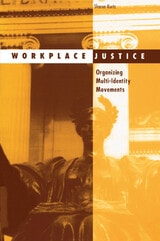
Workplace Justice
Organizing Multi-Identity MovementsSharon Kurtz
University of Minnesota Press, 2002
An unheralded union battle offers new insight into identity politics.
In 1991, Columbia University’s one thousand clerical workers launched a successful campaign for justice in their workplace. This diverse union-two-thirds black and Latina, three-fourths women-was committed to creating an inclusive movement organization and to fighting for all kinds of justice. How could they address the many race and gender injustices members faced, avoid schism, and maintain the unity needed to win? Sharon Kurtz, an experienced union activist and former clerical worker herself, was welcomed into the union and pursued these questions. Using this case study and secondary studies of sister clerical unions at Yale and Harvard, she examines the challenges and potential of identity politics in labor movements.
With the Columbia strike as a point of departure, Kurtz argues that identity politics are valuable for mobilizing groups, but often exclude members and their experiences of oppression. However, Kurtz believes that identity politics should not be abandoned as a component in building movements, but should be reframed-as multi-identity politics. In the end she shows an approach to organizing with great potential impact not only for labor unions but for any social movement.