Results by title
8812 books match the query 'Political Science' and 354 start with w
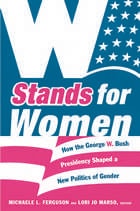
W Stands for Women
How the George W. Bush Presidency Shaped a New Politics of GenderMichaele L. Ferguson and Lori J. Marso, eds.
Duke University Press, 2007
In W Stands for Women ten feminist scholars analyze various aspects of Bush’s persona, language, and policy to show how his administration has shaped a new politics of gender. One contributor points out the shortcomings of “compassionate conservatism,” a political philosophy that requires a weaker class to be the subject of compassion. Another examines Lynndie England’s participation in the abuse of prisoners at Abu Ghraib in relation to the interrogation practices elaborated in the Army Field Manual, practices that often entail “feminizing” detainees by stripping them of their masculine gender identities. Whether investigating the ways that Bush himself performs masculinity or the problems with discourse that positions non-Western women as supplicants in need of saving, these essays highlight the far-reaching consequences of the Bush administration’s conflation of feminist rhetoric, conservative gender ideology, and neoconservative national security policy.
Contributors. Andrew Feffer, Michaele L. Ferguson, David S. Gutterman, Mary Hawkesworth, Timothy Kaufman-Osborn, Lori Jo Marso, Danielle Regan, R. Claire Snyder, Iris Marion Young, Karen Zivi
Michaela Ferguson and Karen Zivi appeared on KPFA’s Against the Grain on September 11, 2007. Listen to the audio.
Michaela Ferguson and Lori Jo Marso appeared on WUNC’s The State of Things on August 30, 2007. Listen to the audio.

W. E. B. Du Bois
Revolutionary Across the Color LineBill V. Mullen
Pluto Press, 2016
Du Bois was born in Massachusetts in 1868, just three years after formal emancipation of America’s slaves. In his extraordinarily long and active political life, he would emerge as the first black man to earn a PhD from Harvard; surpass Booker T. Washington as the leading advocate for African American rights; co-found the NAACP, and involve himself in anti-imperialist and anti-colonial struggles across Asia and Africa. Beyond his Civil Rights work, Mullen also examines Du Bois's attitudes towards socialism, the USSR, China’s Communist Revolution, and the intersectional relationship between capitalism, poverty and racism.
An accessible introduction to a towering figure of American Civil Rights, perfect for anyone wanting to engage with Du Bois’s life and work.
WARRING FACTIONS
INTEREST GROUPS, MONEY, SENATE CONFIRMATIONLAUREN COHEN BELL
The Ohio State University Press, 2002
Warring Factions focuses on the United States Senate’s confirmation process, the constitutional process the Senate uses to approve or reject the president’s choices to fill federal government positions. It is a book about history, the evolution, and, arguably, the decline of the process. Most significantly, it is a book that demonstrates the extent to which interest groups and money have transformed the Senate’s confirmation process into a virtual circus.
Based on in-depth research, including two dozen original interviews with United States senators, former senators and Senate staff members and interest group leaders, this volume demonstrates that today’s confirmation process is nothing more than an extension of the Senate’s legislative work. Changes to internal Senate norms in the 1960s and 1970s, coupled with changes to the external political environment, have allowed interest groups to dominate the Senate confirmation process.
WHO INTERVENES?
ETHNIC CONFLICT AND INTERSTATE CRISISDavid Carment, Patrick James, and Zeynep Taydas
The Ohio State University Press, 2006
The book includes a comparative analysis of five case studies: India and Sri Lanka, Somalia and Ethiopia, Malaysia and the Thai Malay (a non-intervention), the immediate aftermath of the breakup of Yugoslavia, and Greece and Turkey with Cyprus. The case histories produce strong support for the relevance of the typology and catalysts. Ethnic composition, institutional constraint, and ethnic affinity and cleavage are very useful factors in distinguishing both the likelihood and form of intervention.
Policies that encourage institutional reform and support ethnic diversity can be expected to reduce the likelihood and even the perceived need for intervention.
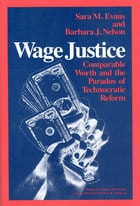
Wage Justice
Comparable Worth and the Paradox of Technocratic ReformSara M. Evans and Barbara N. Nelson
University of Chicago Press, 1991
"A perceptive and judicious analysis of comparable worth."—Wendy Kaminer, New York Times Book Review
"Very well-crafted. . . . Wage Justice has admirably launched the scholarly evaluation of pay equity, revealing the unforeseen complexities of this key feminist public policy innovation."—Maurine Weiner Greenwald, Journal of American History
"An insightful glimpse of the policy process."—Marian Lief Palley, American Political Science Review
Wageless Life
A Manifesto for a Future beyond CapitalismIan G. R. Shaw
University of Minnesota Press, 2019
Drawing up alternate ways to “make a living” beyond capitalism
To live in this world is to be conditioned by capital. Once paired with Western democracy, unfettered capitalism has led to a shrinking economic system that squeezes out billions of people—creating a planet of surplus populations. Wageless Life is a manifesto for building a future beyond the toxic failures of late-stage capitalism. Daring to imagine new social relations, new modes of economic existence, and new collective worlds, the authors provide skills and tools for perceiving—and living in— a post-capitalist future.
Forerunners: Ideas First
Short books of thought-in-process scholarship, where intense analysis, questioning, and speculation take the lead
Wages and Labor Markets in the United States, 1820-1860
Robert A. Margo
University of Chicago Press, 1999
This volume makes a significant contribution to economic history by presenting a vast amount of previously unexamined data to advance the understanding of the history of wages and labor markets in the antebellum economy.
Waging War on War
Peacefighting in American LiteratureGiorgio Mariana
University of Illinois Press, 2015
Giorgio Mariani rigorously engages with the essential question of what makes a text explicitly anti-war. Ranging from Emerson and Joel Barlow to Maxine Hong Kingston and Tim O'Brien, Waging War on War explores why sustained attempts at identifying the anti-war text's formal and philosophical features seem to always end at an impasse. Mariani moves a step beyond to construct a theoretical model that invites new inquiries into America's nonviolent, nonconformist tradition even as it challenges the ways we study U.S. warmaking and the cultural reactions to it. In the process, he shows how the ideal of nonviolence and a dislike of war have been significant, if nonhegemonic, features of American culture since the nation's early days.
Ambitious and nuanced, Waging War on War at last defines anti-war literature while exploring the genre's role in an assertive peacefighting project that offered--and still offers--alternatives to violence.

Waiting For The Revolution To End
Syrian Displacement, Time and SubjectivityCharlotte Al-Khalili
University College London, 2023
Based on more than three years of embedded fieldwork with Syrians displaced in the border city of Gaziantep (southern Turkey), this book places the Syrian revolution and its tragic aftermath under ethnographic scrutiny. It charts the evolution from peaceful uprising (2011) to armed confrontation (2012), descent into fully fledged conflict (2013) and finally to proxy war (2015), to propose an understanding of revolution beyond success and failure.
While the Assad regime remains in place, the Syrian revolution (al-thawra) still holds a transformational power that can be located on intimate and world-making scales. Charlotte Al-Khalili traces the unintended consequences of revolution to reveal the reshaping of Syrian life-worlds and exiles’ evolving theorizations, experiences, and imaginations of al-thawra. She describes the in-between spatio-temporal realm inhabited by Syrians displaced to Turkey as they await the revolution’s outcomes and maps the revolution’s multidimensional and multi-scalar effects on their everyday life. By following the chronology of events inside Syria and Syrians’ geography of displacement, Waiting for the Revolution to End makes the relation between revolution and displacement its centerpiece, both as an ethnographic object and an analytical device.
Waiting for Gautreaux
A Story of Segregation, Housing, and the Black GhettoAlexander Polikoff
Northwestern University Press, 2007
On his thirty-ninth birthday in 1966, Alexander Polikoff, a volunteer ACLU attorney and partner in a Chicago law firm, met some friends to discuss a pro bono case. Over lunch, the four talked about the Chicago Housing Authority construction program. All the new public housing, it seemed, was going into black neighborhoods. If discrimination was prohibited in public schools, wasn't it also prohibited in public housing?
And so began Gautreaux v. CHA and HUD, a case that from its rocky beginnings would roll on year after year, decade after decade, carrying Polikoff and his colleagues to the nation's Supreme Court (to face then-solicitor general Robert Bork); establishing precedents for suits against the discriminatory policies of local housing authorities, often abetted by HUD; and setting the stage for a nationwide experiment aimed at ending the concentration--and racialization--of poverty through public housing. Sometimes Kafkaesque, sometimes simply inspiring, and never less than absorbing, the story of Gautreaux, told by its principal lawyer, moves with ease through local and national civil rights history, legal details, political matters, and the personal costs--and rewards--of a commitment to fairness, equality, and justice. Both the memoir of a dedicated lawyer, and the narrative of a tenacious pursuit of equality, this story--itself a critical, still-unfolding chapter in recent American history--urges us to take an essential step in ending the racial inequality that Alexis de Toqueville prophetically named America's "most formidable evil."

Waiting for the Cool Moon
Anti-imperialist Struggles in the Heart of Japan's EmpireWendy Matsumura
Duke University Press, 2024
Wake
Why the Battle over Diverse Public Schools Still MattersKarey Alison Harwood
Rutgers University Press, 2024
Waking from the Dream
The Struggle for Civil Rights in the Shadow of Martin Luther King, Jr.David L. Chappell
Duke University Press, 2016
Walking Away from Nuremberg
Just War and the Doctrine of Command ResponsibilityLawrence P. Rockwood
University of Massachusetts Press, 2007
In September 1994, Lawrence P. Rockwood, then a counterintelligence officer with the U.S. Army's Tenth Mountain Division, was deployed to Haiti as part of Operation Restore Democracy, the American-led mission to oust the regime of Raoul Cedras and reinstall President Jean-Bertrand Aristide. Shortly after arriving in-country, Captain Rockwood began receiving reports of human rights abuses at the local jails, including the murder of political prisoners. He appealed to his superiors for permission to take action but was repeatedly turned down. Eventually, after filing a formal complaint with an army inspector general, he set off to inspect the jails on his own. The next day, Captain Rockwood found himself on a plane headed back to the United States, where he was tried by court-martial, convicted on several counts, and discharged from military service.
In this book, Rockwood places his own experience within the broader context of the American military doctrine of “command responsibility”—the set of rules that holds individual officers directly responsible for the commission of war crimes under their authority. He traces the evolution of this doctrine from the Civil War, where its principles were first articulated as the “Lieber Code,” through the Nuremberg trials following World War II, where they were reaffirmed and applied, to the present. Rockwood shows how in the past half-century the United States has gradually abandoned its commitment to these standards, culminating in recent Bush administration initiatives that in effect would shield American commanders and officials from prosecution for many war crimes. The Abu Ghraib and Guantánamo prison abuse scandals, the recently disclosed illegal CIA detention centers, the unprecedented policy of tolerating acts considered as torture by both international standards and U.S. military doctrine, and the recent cover-ups of such combat-related war crimes as the Haditha massacre of November 2005, all reflect an “official anti-humanitarian” trend, Rockwood argues, that is at odds with our nation's traditions and principles.
Walking the Gendered Tightrope
Theresa May and Nancy Pelosi as Legislative LeadersMelissa Haussman and Karen M. Kedrowski
University of Michigan Press, 2023
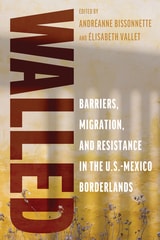
Walled
Barriers, Migration, and Resistance in the U.S.-Mexico BorderlandsEdited by Andréanne Bissonnette and Élisabeth Vallet
University of Arizona Press, 2025
From the bustling San Diego–Tijuana region to the borderlands of Brownsville-Matamoros, the U.S.-Mexico border is marked by extensive stretches of walls. Over the past thirty years, these walls have evolved from purely physical barriers into multifaceted systems encompassing administrative, legal, legislative, and biometric components. This volume invites readers to reflect on the transformations of the border since the construction of the initial fourteen miles of wall, and the subsequent addition of 1,940 miles. It provides a comprehensive exploration of the border’s evolution, and its profound and lasting impacts.
Bringing together recognized scholars in border studies, Walled delves into the varied manifestations and lived experiences associated with U.S.-Mexico border walls. The introduction by Andréanne Bissonnette and Élisabeth Vallet offers a thorough review of the border walls’ thirty-year history, placing it within a global context. Contributions offer diverse perspectives of the border experience, from state policies and migrant experiences to the daily lives of border residents. Topics such as militarization, migration, artistic resistance, and humanitarian aid are carefully examined. This volume is an essential resource for policymakers, activists, scholars, and anyone seeking to understand the intricate realities of border communities and the far-reaching consequences of border policies.
Contributors
Susana Báez-Ayala
Andréanne Bissonnette
Mathilde Bourgeon
Silvia M. Chávez-Baray
Irasema Coronado
Thalia D’Aragon-Giguère
Erin Hoekstra
Anthony Jimenez
T. Mark Montoya
Eva M. Moya
Scott Nicol
Héctor Antonio Padilla Delgado
Lisa Sun-Hee Park
Tony Payan
Patricia Ravelo-Blancas
David A. Shirk
Allyson Teague
Élisabeth Vallet
Walter Benjamin
Overpowering ConformismEsther Leslie
Pluto Press, 2000
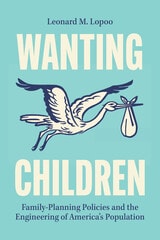
Wanting Children
Family-Planning Policies and the Engineering of America’s PopulationLeonard M. Lopoo
University of Chicago Press, 2026
On the eugenic origins of US reproductive laws—and the surprising policy changes needed to remedy it.
The US government spends hundreds of millions of dollars every year to promote and facilitate contraception. Whereas other wealthy countries support broader fertility interventions under the banner of “family planning,” the United States remains committed only to helping Americans—and especially poorer Americans—plan not to have a family.
In an unflinching treatise on one of the century’s defining social issues, Leonard M. Lopoo shows how the US’s asymmetric reproductive approach is a vestige of the country’s earlier sins: America’s first reproductive policies were authored by some of the twentieth century’s most prominent eugenicists, a group whose primary goal was birth prevention among lower economic classes and racial minorities. These origins have consequently created a contradictory position for the country today, in which contraception for the lowest-income Americans is subsidized, while many upper-class Americans employ technologies to have children with preferable traits.
Lopoo recasts this personal and politicized topic in elegant, stark terms. If the United States is to legislate reproduction, the only defensible approach is equity: helping people who want children to have children. Wanting Children posits a new and elevating criterion for how we think about fertility in the twenty-first century.
War Against the People
Israel, the Palestinians and Global PacificationJeff Halper
Pluto Press, 2015
Modern warfare has a new form. The days of international combat are fading. So how do major world powers maintain control over their people today?
This book is a disturbing insight into the new ways world powers such as the US, Israel, Britain and China forge war today. It is a subliminal war of surveillance and whitewashed terror, conducted through new, high-tech military apparatuses, designed and first used in Israel against the Palestinian population. Including nano-technology, hidden camera systems, information databases on civilian activity, automated targeting systems and unmanned drones, it is used to control the very people the nation's leaders profess to serve.
Jeff Halper reveals that this practice is much more insidious than was previously thought. As Western governments claw back individual liberties, War Against the People is a reminder that fundamental human rights are being compromised for vast sections of the world, and that this is a subject that should concern everyone.
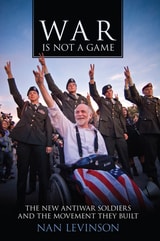
War Is Not a Game
The New Antiwar Soldiers and the Movement They BuiltLevinson, Nan
Rutgers University Press, 2016
War No More
Eliminating Conflict in the Nuclear AgeRobert Hinde and Joseph Rotblat
Pluto Press, 2003
Written by Nobel Peace prize winner and former nuclear physicist Joseph Rotblat, who was involved in the creation of the first atom bomb, and biologist/ psychologist Robert Hinde, War No More provides expert insight into the nature of modern warfare - including weapons of mass destruction. Examining the key factors that contribute to conflict, the authors explain how best to approach a peaceful future.
If war is ever to be eliminated, we must address key issues such as the gap between rich and poor; have fully effective arms controls, and above all we must have better education. The authors emphasise the United Nations - as well as NGOs, religious groups, and grassroots movements - also have important parts to play.
War and Peace in Asia
International Law and Politics in Armed ConflictsKriangsak Kittichaisaree
National University of Singapore Press, 2026
How do Asian states navigate the complex terrain between international legal obligations and strategic national interests in matters of war and peace? What justifications are invoked to wage war, and what are the legal frameworks used to restore peace? Do bilateral settlements comply with and support the development of international law, or do they undermine it? This comprehensive study examines conflict and peace-building across Asia since 1945, providing a distinctly Asian perspective on international law and relations.
War and Peace in Asia considers how Asian history, including the region's experience of colonialism, shapes ideas of international order. Kriangsak Kittichaisaree considers rules against the threat or use of force; management of sovereignty disputes over borders and territories; insurgencies or conflicts arising from groups seeking self-determination; annexations of one State’s territory by another State; conflicts under the guise of “humanitarian intervention” and the Responsibility to Protect (R2P) doctrine; self-defense against terrorists and non-state actors who are driven by ideology; and armed intervention by invitation. The book offers scholars, policymakers, and practitioners crucial insights into conflict dynamics in this geopolitically volatile region.
War and Peace in International Rivalry
Paul F. Diehl and Gary Goertz
University of Michigan Press, 2001
War and Rights
The Impact of War on Political and Civil RightsDavid L. Rousseau
University of Michigan Press, 2021
Warfare in Europe contributed to the development of the modern state. In response to external conflict, state leaders raised armies and defended borders. The centralization of power, the development of bureaucracies, and the integration of economies all maximized revenue to support war. But how does a persistent external threat affect the development of a strong state? The “Garrison State” hypothesis argues that states that face a severe security threat will become autocracies. Conversely, the “Extraction School,” argues that warfare indirectly promotes the development of democratic institutions.
Execution of large-scale war requires the mobilization of resource and usually reluctant populations. In most cases, leaders must extend economic or political rights in exchange for resolving the crisis. Large-scale warfare thus expands political participation in the long run. The authors use empirical statistical modeling to show that war decreases rights in the short term, but the longer and bigger a war gets, the rights of the citizenry expand with the conflict. The authors test this argument through historical case studies—Imperial Russia, Austro-Hungarian Dual Monarchy, African Americans in World War I and II, and the Tirailleurs Senegalese in World War I—through the use of large-N statistical studies—Europe 1900–50 and Global 1893–2011—and survey data. The results identify when, where, and how war can lead to the expansion of political rights.
War and Society in Colonial Zambia, 1939–1953
Alfred Tembo
Ohio University Press, 2021
Written from a Zambian perspective, this leading study shows how the British colony of Northern Rhodesia (later Zambia) organized and deployed human, military, and natural resources during and after the Second World War.
The Second World War brought unprecedented pressures to bear on Britain’s empire, which then included colonial Northern Rhodesia. Through new archival materials and oral histories, War and Society in Colonial Zambia tells—from an African perspective—the story of how the colony organized its human and natural resources on behalf of the imperial government.
Alfred Tembo first examines government propaganda and recruitment of personnel for the Northern Rhodesia Regiment, which served in East Africa, Palestine, Ceylon, Burma, and India. Later, Zambia’s economic contribution to the Allied war effort would foreground the central importance of the colony’s mining industry as well as its role as supplier of rubber and beeswax following the fall of the Southeast Asian colonies to the Japanese in early 1942. Finally, Tembo presents archival and oral evidence about life on the home front, including the social impact of wartime commodity shortages, difficulties posed by incoming Polish refugees, and the more interventionist forms of colonial governance that these circumstances engendered.
War and an Irish Town
Eamonn McCann
Pluto Press, 1993
He witnessed the gradual transformation of the civil rights movement from a mild campaign for 'British Democracy' to an all-out military assault on the British state. This new edition updates the last edition (1980) with an additional introduction covering the last thirteen years.
War and an Irish Town is a trenchant, powerful narrative which reaches an unequivocal conclusion: 'There can be no internal solution to the Northern Ireland problem. The existence of the northern state is the problem'.
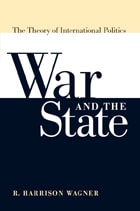
War and the State
The Theory of International PoliticsR. Harrison Wagner
University of Michigan Press, 2010
War and the State exposes the invalid arguments employed in the unproductive debate about Realism among international relations scholars, as well as the common fallacy of sharply distinguishing between conflict among states and conflict within them. As R. Harrison Wagner demonstrates, any understanding of international politics must be part of a more general study of the relationship between political order and organized violence everywhere--as it was in the intellectual tradition from which modern-day Realism was derived. War and the State draws on the insights from Wagner's distinguished career to create an elegantly crafted essay accessible to both students and scholars.
"Possibly the most important book on international relations theory since Kenneth Waltz's Theory of International Politics."
---James Fearon, Stanford University
"This is one of the best books on international relations theory I have read in a very long time. It is required reading for any student of modern IR theory. Once again, Wagner has shown himself to be one of the clearest thinkers in the field today."
---Robert Powell, Robson Professor of Political Science, University of California, Berkeley
"Painting on a vast canvas, and tackling and integrating topics such as state formation, domestic politics, and international conflict, R. Harrison Wagner's War and the State offers many brilliant insights into the nature of international relations and international conflict. War and the State compellingly highlights the importance of constructing rigorous and valid theorizing and sets a high standard for all students of international relations. The field has much to gain if scholars follow the trail blazed by Wagner in this book."
---Hein Goemans, University of Rochester
R. Harrison Wagner is Professor of Government at the University of Texas.
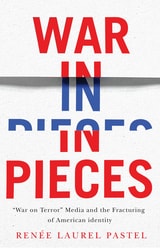
War in Pieces
"War on Terror" Media and the Fracturing of American IdentityRenée Laurel Pastel
Rutgers University Press, 2027
War in Pieces considers media representations of the first phase of the “War on Terror,” set between 2001 and 2013. The book argues that the central figures around which narratives of the conflicts cohered—the war journalist, the active-duty service member, the veteran, and the military family—served to mask the loss of the myth of a unified American national identity and embodied the negotiation of cultural anxieties. Offering a theory of narrative figuration that draws into conversation repetitions and differences across media forms (fiction and nonfiction films, television shows, and online videos), this book breaks down how these figures contributed to a continued sense of unified national identity even as different audiences came away with divergent understandings. This book frames these questions in terms of how US media packaged the “War on Terror” for future cultural memory even as the conflicts continued.
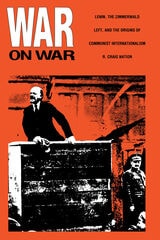
War on War
Lenin, the Zimmerwald Left, and the Origins of Communist InternationalismR. Craig Nation
Duke University Press, 1989
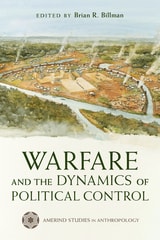
Warfare and the Dynamics of Political Control
Edited by Brian R. Billman
University of Arizona Press, 2025
Warfare and the Dynamics of Political Control draws on a wealth of interdisciplinary perspectives to explore how conflict shapes the establishment and maintenance of political institutions, from small-scale societies to expansive empires. The book examines the material and ideological factors that drive warfare, the organization of combatants, the ways leaders use violence to consolidate power, and how groups resist political domination in times of conflict. By posing critical questions about the efficacy of strategies and the varied outcomes of conflict-driven power struggles, this volume offers profound insights into the dynamics of political control throughout history.
Bringing together case studies from diverse regions and time periods, Warfare and the Dynamics of Political Controlilluminates the multifaceted nature of political violence. The volume includes discussions of human sacrifice, slave-taking, ideological signaling, and military strategy and tactics. The case studies reveal how different forms of political violence influence societal structures. From the fortifications of the Māori in New Zealand to the city walls of early historic India, each contribution provides a detailed analysis of how warfare has been used to both to challenge and to establish political hierarchies. Featuring examples from small foraging communities to large empires across various regions and time periods, the book offers a wide-ranging exploration of how different groups have used and resisted political violence.
This essential work contributes to our understanding of the intersections between conflict and political power, making it a vital resource for scholars of anthropology, archaeology, political science, and history.
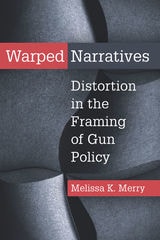
Warped Narratives
Distortion in the Framing of Gun PolicyMelissa K. Merry
University of Michigan Press, 2020
The politics of gun policy in the United States are dramatic. Against the backdrop of daily gun violence—which claims more than 33,000 lives per year—gun control groups push for stronger regulations, while gun rights groups resist infringements upon their Second Amendment rights. To illuminate the dynamics of this polarized debate, Warped Narratives examines how and why interest groups frame the gun violence problem in particular ways, exploring the implication of groups’ framing choices for policymaking and politics. Melissa K. Merry argues that the gun policy arena is warped, and that both gun control and gun rights organizations contribute to the distortion of the issue by focusing on atypical characters and settings in their policy narratives. Gun control groups emphasize white victims, child victims, and mass shootings in suburban locales, while gun rights groups focus on self-defense shootings, highlighting threats to “law-abiding” gun owners. In reality, most gun deaths are the result of suicide. Homicides occur disproportionately in urban areas, mainly affecting racial minorities. While warping makes political sense in the short term, it may lead to negative, long-term consequences, including constraints on groups’ ability to build broad-based coalitions and to reduce prospects for compromise. To demonstrate warping, Merry analyzes nearly 67,000 communications by 15 national gun policy groups between 2000 and 2017 collected from blogs, emails, Facebook posts, and press releases. This book is the first to systematically assess the role of race in gun policy groups’ framing and offers the most comprehensive examination to date of interest groups’ presentation of this issue.
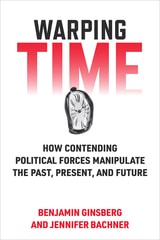
Warping Time
How Contending Political Forces Manipulate the Past, Present, and FutureBenjamin Ginsberg and Jennifer Bachner
University of Michigan Press, 2023
Warping Time shows how narratives of the past influence what people believe about the present and future state of the world. In Benjamin Ginsberg and Jennifer Bachner’s simple experiments, in which the authors measured the impact of different stories their subjects heard about the past, these “history lessons” moved contemporary policy preferences by an average of 16 percentage points; forecasts of the future moved contemporary policy preferences by an average of 12 percentage points; the two together moved preferences an average of 21 percentage points. And, in an Orwellian twist, the authors estimate that the “history lessons” had an average “erasure effect” of 8.5 percentage points—the difference between those with long-held preferences and those who did not recall that they previously held other opinions before participating in the experiment. The fact that the past, present, and future are subject to human manipulation suggests that history is not simply the product of impersonal forces, material conditions, or past choices. Humans are the architects of history, not its captives. Political reality is tenuous. Changes in our understanding of the past or future can substantially alter perceptions of and action in the present. Finally, the manipulation of time, especially the relationship between past and future, is a powerful political tool.
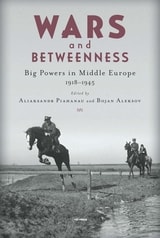
Wars and Betweenness
Big Powers and Middle Europe, 1918-1945Aliaksandr Piahanau
Central European University Press, 2020
The region between the Baltic and the Black Sea was marked by a set of crises and conflicts in the 1920s and 1930s, demonstrating the diplomatic, military, economic or cultural engagement of France, Germany, Russia, Britain, Italy and Japan in this highly volatile region, and critically damaging the fragile post-Versailles political arrangement. The editors, in naming this region as "Middle Europe" seek to revive the symbolic geography of the time and accentuate its position, situated between Big Powers and two World Wars.
The ten case studies in this book combine traditional diplomatic history with a broader emphasis on the geopolitical aspects of Big-Power rivalry to understand the interwar period. The essays claim that the European Big Powers played a key role in regional affairs by keeping the local conflicts and national movements under control and by exploiting the region's natural resources and military dependencies, while at the same time strengthening their prestige through cultural penetration and the cultivation of client networks.
The authors, however, want to avoid the simplistic view that the Big Powers fully dominated the lesser players on the European stage. The relationship was indeed hierarchical, but the essays also reveal how the "small states" manipulated Big-Power disagreements, highlighting the limits of the latters' leverage throughout the 1920s and the 1930s.

Wars, Parties and Nationalism
Essays on the Politics and Society of Nineteenth-century Latin AmericaEdited by Eduardo Posada-Carbo
University of London Press, 1995
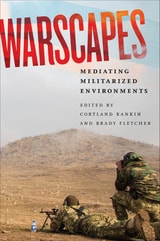
Warscapes
Mediating Militarized EnvironmentsCortland Rankin
Rutgers University Press, 2026
What do we see when we look at a battlefield? How do we come to understand environments as battlefields in the first place? What happens to our perception of war when we focus on the physical spaces of conflict? Warscapes is the first collection to pursue answers to such questions by considering the relationship between war, environment, and media along three lines: imagined geographies of control that prefigure environments as spaces of war; representations of resistance to occupation and ecocidal violence; and elemental reframings of archives and cultural memories of war. This book offers novel perspectives on historical conflict environments while also examining how hypothetical spaces of conflict are imagined. Deploying theoretical perspectives gleaned from film and media studies, ecocriticism, environmental history, urban studies, and postcolonial/decolonial studies, among others, authors highlight an international spectrum of 21st-century fiction films and television series, documentaries, and video installations that challenge how we look at war.
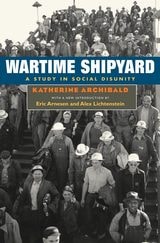
Wartime Shipyard
A STUDY IN SOCIAL DISUNITYKatherine Archibald
University of Illinois Press, 2006
An eye-opening first-hand account of life in a WWII shipyard from a woman's perspective
In 1942, Katherine Archibald, a graduate student at Berkeley, left the halls of academe to spend two years working in a nearby Oakland shipyard. She arrived with a host of preconceptions about the American working class, race relations and the prospect for their improvement, and wartime unity. Her experience working in a shipyard where women were seen as intruders, where "Okies" and black migrants from the South were regarded with barely-disguised hatred, and where trade unions preferred protecting their turf to defending workers' rights, threw much of her liberal faith into doubt.
Archibald's 1947 book about her experiences, Wartime Shipyard: A Study in Social Disunity, remains a classic account of life and labor on the home front. This new edition includes an introduction written by historians Eric Arnesen and Alex Lichtenstein, who explore Archibald's work in light of recent scholarship on women and African Americans in the wartime workplace.

Wartime Washington
The Civil War Letters of Elizabeth Blair LeeEdited by Virginia Jeans Laas
University of Illinois Press, 1991
Waste is a Terrible Thing to Mind
Risk, Radiation, and Distrust of GovernmentWeingart, John
Rutgers University Press, 2007
It is an unenviable task, but one that all state governments face: finding a final “resting place” for low-level nuclear waste from power plants, hospitals, university laboratories, and other industries. John Weingart was the official in New Jersey who for many years led this onerous charge. This book is the story of how he and a commission appointed by the governor, instead of imposing a top-down solution, designed an approach that would confront public fears by seeking a community that would volunteer to host a disposal facility. Initially, this novel approach was surprisingly successful, as leaders in a dozen municipalities stepped forward to say they might be interested. Once their interest became known, however, the process in each town derailed. Residents demanded assurances of zero-percent risk and expressed profound distrust of government assertions and promises.
Waste Is a Terrible Thing to Mind is a compelling, suspenseful, and amusing insider’s account of New Jersey policy and politics, but it is also a larger saga of the challenges facing society in the post–9/11 era when the public’s distrust of government is increasing at the same time that its sensitivity to health and safety threats is heightened.
For more information, see: http://wasteisaterriblethingtomind.com/
"Written with a wry sense of humor, it is a pleasure to read and could provide the blueprint for future efforts to find locations for controversial land uses."
- Marie Curtis, Executive Director, New Jersey Environmental Lobby
"A penetrating look at one state's struggle with radioactive waste ... offering some tantalizing reflections on the public understanding of science and how we, in a democratic society, deal with complexity and uncertainty."
- Jay Kaufman, State Senator, Massachusetts State Legislature
"A provocative story, laced with humor, demonstrates how public distrust of government can make it impotent. It should be read by anyone working on public policy issues, especially planning, growth, and the environment."
- Harriet Keyserling, Former Energy Committee Chair, South Carolina State Legislature
"Readers interested in environmental policy, land use and how governments make decisions will learn much from this fine reflective insider's account. It's also a primer on how to survive and thrive in state government."
- David N. Kinsey, Visiting Professor, Woodrow Wilson School Princeton University
"... a fascinating case study of how a government agency creatively tried to solve an intractable public issue. Although the agency failed in its quest to recruit a town to host a low-level radioactive waste site, Weingart's detailed and often humorous narrative of the agency's efforts is a clear winner."
- Jack Sabatino, Judge, New Jersey Superior Court
"... a very engaging and sometimes discouraging case study about the pitfalls and perils of trying to site a controversial facility the right way."
- Gregg Larson, Administrator, Center for Biometric Research, University of Minnesota
Wasted Wombs
Navigating Reproductive Interruptions in CameroonErica van der Sijpt
Vanderbilt University Press, 2017
Providing an intimate look into these processes, Wasted Wombs shows how Gbigbil women constantly shift their interpretations of when a pregnancy starts, what it contains, and what is lost in case of a reproductive interruption, in contrast to Western conceptions of fertility and loss. Depending on the context and on their life aspirations—be it marriage and motherhood, or an educational trajectory and employment, or profitable sexual affairs with so-called "big fish"—women negotiate and manipulate the meanings and effects of reproductive interruptions. Paradoxically, they often do so while portraying themselves as powerless. Wasted Wombs carefully analyzes such tactics in relation to the various social predicaments that emerge around reproductive interruptions, as well as the capricious workings of women's physical bodies.
Watching Jim Crow
The Struggles over Mississippi TV, 1955–1969Steven D. Classen
Duke University Press, 2004
During the 1990s, Classen conducted extensive interviews with more than two dozen African Americans living in Jackson, several of whom, decades earlier, had fought to integrate television programming. He draws on these interviews not only to illuminate their perceptions—of the civil rights movement, what they accomplished, and the present as compared with the past—but also to reveal the inadequate representation of their viewpoints in the legal proceedings surrounding WLBT’s licensing. The story told in Watching Jim Crow has significant implications today, not least because the Telecommunications Act of 1996 effectively undid many of the hard-won reforms achieved by activists—including those whose stories Classen relates here.
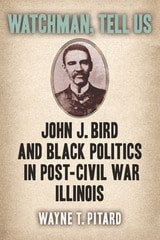
Watchman, Tell Us
John J. Bird and Black Politics in Post-Civil War IllinoisWayne T. Pitard
Southern Illinois University Press, 2024
The most influential Black leader in 19th century southern Illinois
This key biography of John J. Bird unveils the forgotten story of a remarkable Black political figure in post-Civil War Illinois. Emerging as a leader in Cairo, the city with Illinois’ second-largest Black community, Bird played a pivotal role in advancing civil rights within the state, also becoming Illinois’ first Black elected judge and first Black trustee of the University of Illinois. Watchman, Tell Us deftly examines Bird’s lifetime of service and advocacy for a vulnerable community and the ways in which he successfully advocated for and protected voting rights, educational opportunity, and public access for the Black residents of southern Illinois.
Bird arrived in Cairo at age twenty during the Civil War to aid the 2,000 Black refugees from the South living there. By 1870, he had established the city’s substantial Black Republican wing, providing the Black community with unprecedented political influence in this hostile, majority white, Democratic town. Under Bird’s leadership, the Black Republicans pressed for policies that improved the well-being of the African American population, including the early establishment of a Black public school, the rise of an integrated judicial system, and the ability to access public and private businesses. Bird became influential across Illinois as a judge and university trustee, a leader in the Black convention movement, and a significant newspaper editor in Cairo and Springfield. When Bird died in 1912, the nation he loved had once again betrayed its Black citizens, and it appeared that most of the achievements he had fought for had collapsed. But the work of Bird and the other civil rights workers of the nineteenth century created the foundation upon which the movements of the twentieth century could stand.
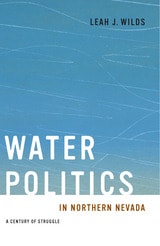
Water Politics in Northern Nevada
A Century of StruggleLeah J. Wilds
University of Nevada Press, 2010
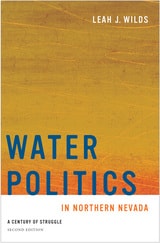
Water Politics in Northern Nevada
A Century of Struggle, Second EditionLeah J. Wilds
University of Nevada Press, 2014
Water Politics in Northern Nevada examines the Newlands Project, its unintended consequences, and decades of litigation over the abatement of these problems and fair allocation of water. Negotiations and federal legislation brought about the Truckee River Operating Agreement in 2008. This revised edition brings the reader up to date on the implementation of the agreement, including ongoing efforts to preserve and enhance Pyramid Lake. The second edition now also includes a discussion of the Walker River basin, following a major project undertaken to address concerns about the health and viability of Walker Lake. The approaches taken to save these two desert treasures, Pyramid Lake and Walker Lake, are offered as models for resolving similar water-resource conflicts in the West.
Leah J. Wilds’s study is crucial reading for students and scholars of water politics and environmental issues, not just in Nevada but throughout the western United States.
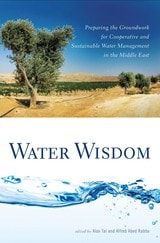
Water Wisdom
Preparing the Groundwork for Cooperative and Sustainable Water Management in the Middle EastAbed Rabbo, Alfred
Rutgers University Press, 2010

Water and Agriculture in Colorado and the American West
First in Line for the Rio GrandeDavid Stiller
University of Nevada Press, 2021
David Stiller’s thoughtful study focuses on the history of agricultural water use of the Rio Grande in Colorado’s San Luis Valley. After surveying the practices of early farmers in the region, he focuses on the impacts of Euro-American settlement and the ways these new agrarians endeavored to control the river. Using the Rio Grande as a case study, Stiller offers an informed and accessible history of the development of practices and technologies to store, distribute, and exploit water in Colorado and other western states, as well as an account of the creation of water rights and laws that govern this essential commodity throughout the West to this day. Stiller’s work ranges from meticulously monitored fields of irrigated alfalfa and potatoes to the local and state water agencies and halls of Congress. He also includes perceptive comments on the future of western water as these arid states become increasingly urbanized during a period of worsening drought and climate change.
An excellent read for anyone curious about important issues in the West, Water and Agriculture in Colorado and the American West offers a succinct summary and analysis of Colorado’s use of water by agricultural interests, in addition to a valuable discussion of the past, present, and future of struggles over this necessary and endangered resource.
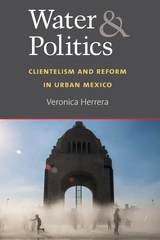
Water and Politics
Clientelism and Reform in Urban MexicoVeronica Herrera
University of Michigan Press, 2017
Most of the world’s population lives in cities in developing countries, where access to basic public services, such as water, electricity, and health clinics, is either inadequate or sorely missing. Water and Politics shows how politicians benefit politically from manipulating public service provision for electoral gain. In many young democracies, politicians exchange water service for votes or political support, rewarding allies or punishing political enemies. Surprisingly, the political problem of water provision has become more pronounced, as water service represents a valuable political currency in resource-scarce environments.
Water and Politics finds that middle-class and industrial elites play an important role in generating pressure for public service reforms.
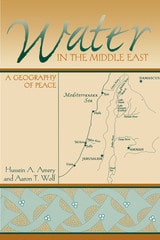
Water in the Middle East
A Geography of PeaceEdited by Hussein A. Amery and Aaron Wolf
University of Texas Press, 2000
Finding "streams in the desert" has never been more urgent for the peoples of the Middle East. Rapid population growth and a rising standard of living are driving water demand inexorably upward, while the natural supply has not increased since Biblical times. Ensuring a fair and adequate distribution of water in the region is vitally important for building a lasting peace among the nations of the Middle East.
Addressing water needs from a geographical perspective, the contributors to this book analyze and assess the impact of scarce water resources in the Jordan River basin countries and territories (Israel, Jordan, Lebanon, Palestine, and Syria) as these long-time antagonists work toward peace. After geographical and historical overviews, the authors envision the future-what the water issues may be when Israel and Syria begin negotiating, the "hydro-security" needs of each nation, and the difficulties of planning for uncertainty. Without proposing any one ideal scheme, they discuss the possibilities for cooperative sharing of water resources, while honestly acknowledging the political constraints that may limit such projects. The final essay speaks to the needs of the one party so rarely represented at the negotiating table—the Jordan River itself.
Waves of Decolonization
Discourses of Race and Hemispheric Citizenship in Cuba, Mexico, and the United StatesDavid Luis-Brown
Duke University Press, 2008
Luis-Brown traces unfolding narratives of decolonization across a broad range of texts. He explores how Martí and Du Bois, known as the founders of Cuban and black nationalisms, came to develop anticolonial discourses that cut across racial and national divides. He illuminates how cross-fertilizations among the Harlem Renaissance, Mexican indigenismo, and Cuban negrismo in the 1920s contributed to broader efforts to keep pace with transformations unleashed by ongoing conflicts over imperialism, and he considers how those transformations were explored in novels by McKay of Jamaica, Jesús Masdeu of Cuba, and Miguel Ángel Menéndez of Mexico. Focusing on ethnography’s uneven contributions to decolonization, he investigates how Manuel Gamio, a Mexican anthropologist, and Zora Neale Hurston each adapted metropolitan social science for use by writers from the racialized periphery.
Waves of Discontent
Electoral Volatility, Public Policymaking, and the Health of American DemocracyJacob F.H. Smith
University of Michigan Press, 2025
Conducting statistical analyses of a wide array of surveys, Smith found that these feelings of displeasure translate to lower turnout among voters from the president’s party and a higher percentage of independents voting for the other party. Subsequently, he conducted a content analysis of New York Times articles to look at the connection between unrest in American society and seat swings in congressional elections, even before the existence of polling. Examining the consequences of volatility in congressional elections reveals that political amateurs are more likely to win in wave years than in normal years. Based on this data, Smith presents a new theory about the policy process—the policy doom loop—in which frustration among voters at both the inability of Congress to pass policy and anger at policies that actually do pass results in even more churn in congressional elections. Waves of Discontent offers some suggestions to promote constructive policymaking efforts in Washington to reduce frustration in the electorate.
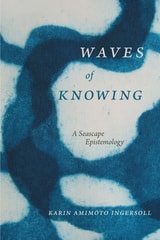
Waves of Knowing
A Seascape EpistemologyKarin Amimoto Ingersoll
Duke University Press, 2016