Results by title
2018 books match the query 'Political aspects' and 78 start with w
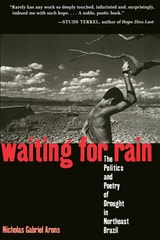
Waiting for Rain
The Politics and Poetry of Drought in Northeast BrazilNicholas Gabriel Arons
University of Arizona Press, 2004
In order to understand the impact of drought and the phenomenon of drought politics, Nicholas Gabriel Arons goes beyond traditional social-science scholarship to sources such as novels, poetry, popular art, and oral history. For many people in the region, these artistic renditions of life are, ironically, a better reflection of reality than political rhetoric, government archives, and newspaper accounts—even though they are infused with myth or hyperbole.
Drawing on interviews with artists and poets and on his own experiences in the Brazilian Northeast, Arons has written a poignant account of how drought has impacted the region’s culture. He intertwines ecological, social, and political issues with the words of some of Brazil’s most prominent authors and folk poets to show how themes surrounding drought—hunger, migration, endurance, nostalgia for the land—have become deeply embedded in Nordeste identity. Through this tapestry of sources, Arons shows that what is often thought of as a natural phenomenon is actually the result of centuries of social inequality, political corruption, and unsustainable land use.
Waiting for Rain dramatically depicts a region still suffering from austere social and political realities, where drought—even during rainy seasons—is ubiquitous in the hearts and minds of its residents. A book of hope and resistance, myth and reality, and suffering and salvation, it is also a personal narrative of self-discovery, tracing a young man’s struggle to understand how human tragedy on a grand scale can exist alongside natural beauty.
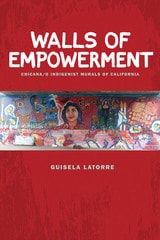
Walls of Empowerment
Chicana/o Indigenist Murals of CaliforniaBy Guisela Latorre
University of Texas Press, 2008
Exploring three major hubs of muralist activity in California, where indigenist imagery is prevalent, Walls of Empowerment celebrates an aesthetic that seeks to firmly establish Chicana/o sociopolitical identity in U.S. territory. Providing readers with a history and genealogy of key muralists' productions, Guisela Latorre also showcases new material and original research on works and artists never before examined in print.
An art form often associated with male creative endeavors, muralism in fact reflects significant contributions by Chicana artists. Encompassing these and other aspects of contemporary dialogues, including the often tense relationship between graffiti and muralism, Walls of Empowerment is a comprehensive study that, unlike many previous endeavors, does not privilege non-public Latina/o art. In addition, Latorre introduces readers to the role of new media, including performance, sculpture, and digital technology, in shaping the muralist's "canvas."
Drawing on nearly a decade of fieldwork, this timely endeavor highlights the ways in which California's Mexican American communities have used images of indigenous peoples to raise awareness of the region's original citizens. Latorre also casts murals as a radical force for decolonization and liberation, and she provides a stirring description of the decades, particularly the late 1960s through 1980s, that saw California's rise as the epicenter of mural production. Blending the perspectives of art history and sociology with firsthand accounts drawn from artists' interviews, Walls of Empowerment represents a crucial turning point in the study of these iconographic artifacts.
War Against the People
Israel, the Palestinians and Global PacificationJeff Halper
Pluto Press, 2015
Modern warfare has a new form. The days of international combat are fading. So how do major world powers maintain control over their people today?
This book is a disturbing insight into the new ways world powers such as the US, Israel, Britain and China forge war today. It is a subliminal war of surveillance and whitewashed terror, conducted through new, high-tech military apparatuses, designed and first used in Israel against the Palestinian population. Including nano-technology, hidden camera systems, information databases on civilian activity, automated targeting systems and unmanned drones, it is used to control the very people the nation's leaders profess to serve.
Jeff Halper reveals that this practice is much more insidious than was previously thought. As Western governments claw back individual liberties, War Against the People is a reminder that fundamental human rights are being compromised for vast sections of the world, and that this is a subject that should concern everyone.
War in Syria and the Middle East
A Political and Economic HistoryFederico Manfredi Firmian
University of Texas Press, 2025
A wide-ranging examination of the causes of war in Syria and the Middle East.
In War in Syria and the Middle East, Federico Manfredi Firmian uses historical, political, and economic lenses to examine how Syria’s civil war is part of a broad pattern of social breakdown increasingly prevalent across the Arab and Islamic worlds. This expansive book argues that many conflicts across the Middle East today are rooted in fundamental ideological divides that originated with European imperialism. In Syria, the iniquities of French rule gave way to the radicalism of the Arab Socialist Baʿth Party, which promised to dismantle imperial legacies and capitalist logics through nationalizations, land redistribution, and central planning.
Baʿthist Syria, however, ultimately failed to provide a viable alternative to capitalism. In fact, its failures, and the failures of other revolutionary regimes of socialist inspiration, provided an opening for armed Islamist movements to challenge both secular authoritarian rule and US foreign policies—ultimately leading to civil war. Combining a multidisciplinary approach with fieldwork, War in Syria and the Middle East argues for a global perspective on a pressing, ongoing conflict.
Warping Time
How Contending Political Forces Manipulate the Past, Present, and FutureBenjamin Ginsberg and Jennifer Bachner
University of Michigan Press, 2023
Warping Time shows how narratives of the past influence what people believe about the present and future state of the world. In Benjamin Ginsberg and Jennifer Bachner’s simple experiments, in which the authors measured the impact of different stories their subjects heard about the past, these “history lessons” moved contemporary policy preferences by an average of 16 percentage points; forecasts of the future moved contemporary policy preferences by an average of 12 percentage points; the two together moved preferences an average of 21 percentage points. And, in an Orwellian twist, the authors estimate that the “history lessons” had an average “erasure effect” of 8.5 percentage points—the difference between those with long-held preferences and those who did not recall that they previously held other opinions before participating in the experiment. The fact that the past, present, and future are subject to human manipulation suggests that history is not simply the product of impersonal forces, material conditions, or past choices. Humans are the architects of history, not its captives. Political reality is tenuous. Changes in our understanding of the past or future can substantially alter perceptions of and action in the present. Finally, the manipulation of time, especially the relationship between past and future, is a powerful political tool.
Warring Souls
Youth, Media, and Martyrdom in Post-Revolution IranRoxanne Varzi
Duke University Press, 2006
Highlighting trends that belie the government’s claim that Islamic values have taken hold—including rising rates of suicide, drug use, and sex outside of marriage—Varzi argues that by concentrating on images and the performance of proper behavior, the government’s campaign to produce model Islamic citizens has affected only the appearance of religious orthodoxy, and that the strictly religious public sphere is partly a mirage masking a profound crisis of faith among many Iranians. Warring Souls is a powerful account of contemporary Iran made more vivid by Varzi’s inclusion of excerpts from the diaries she maintained during her research and from journal entries written by Iranian university students with whom she formed a study group.

Waste Works
Vital Politics in Urban GhanaBrenda Chalfin
Duke University Press, 2023
Waste is a Terrible Thing to Mind
Risk, Radiation, and Distrust of GovernmentWeingart, John
Rutgers University Press, 2007
It is an unenviable task, but one that all state governments face: finding a final “resting place” for low-level nuclear waste from power plants, hospitals, university laboratories, and other industries. John Weingart was the official in New Jersey who for many years led this onerous charge. This book is the story of how he and a commission appointed by the governor, instead of imposing a top-down solution, designed an approach that would confront public fears by seeking a community that would volunteer to host a disposal facility. Initially, this novel approach was surprisingly successful, as leaders in a dozen municipalities stepped forward to say they might be interested. Once their interest became known, however, the process in each town derailed. Residents demanded assurances of zero-percent risk and expressed profound distrust of government assertions and promises.
Waste Is a Terrible Thing to Mind is a compelling, suspenseful, and amusing insider’s account of New Jersey policy and politics, but it is also a larger saga of the challenges facing society in the post–9/11 era when the public’s distrust of government is increasing at the same time that its sensitivity to health and safety threats is heightened.
For more information, see: http://wasteisaterriblethingtomind.com/
"Written with a wry sense of humor, it is a pleasure to read and could provide the blueprint for future efforts to find locations for controversial land uses."
- Marie Curtis, Executive Director, New Jersey Environmental Lobby
"A penetrating look at one state's struggle with radioactive waste ... offering some tantalizing reflections on the public understanding of science and how we, in a democratic society, deal with complexity and uncertainty."
- Jay Kaufman, State Senator, Massachusetts State Legislature
"A provocative story, laced with humor, demonstrates how public distrust of government can make it impotent. It should be read by anyone working on public policy issues, especially planning, growth, and the environment."
- Harriet Keyserling, Former Energy Committee Chair, South Carolina State Legislature
"Readers interested in environmental policy, land use and how governments make decisions will learn much from this fine reflective insider's account. It's also a primer on how to survive and thrive in state government."
- David N. Kinsey, Visiting Professor, Woodrow Wilson School Princeton University
"... a fascinating case study of how a government agency creatively tried to solve an intractable public issue. Although the agency failed in its quest to recruit a town to host a low-level radioactive waste site, Weingart's detailed and often humorous narrative of the agency's efforts is a clear winner."
- Jack Sabatino, Judge, New Jersey Superior Court
"... a very engaging and sometimes discouraging case study about the pitfalls and perils of trying to site a controversial facility the right way."
- Gregg Larson, Administrator, Center for Biometric Research, University of Minnesota
Wastelanding
Legacies of Uranium Mining in Navajo CountryTraci Brynne Voyles
University of Minnesota Press, 2015
Wastelanding tells the history of the uranium industry on Navajo land in the U.S. Southwest, asking why certain landscapes and the peoples who inhabit them come to be targeted for disproportionate exposure to environmental harm. Uranium mines and mills on the Navajo Nation land have long supplied U.S. nuclear weapons and energy programs. By 1942, mines on the reservation were the main source of uranium for the top-secret Manhattan Project. Today, the Navajo Nation is home to more than a thousand abandoned uranium sites. Radiation-related diseases are endemic, claiming the health and lives of former miners and nonminers alike.
Traci Brynne Voyles argues that the presence of uranium mining on Diné (Navajo) land constitutes a clear case of environmental racism. Looking at discursive constructions of landscapes, she explores how environmental racism develops over time. For Voyles, the “wasteland,” where toxic materials are excavated, exploited, and dumped, is both a racial and a spatial signifier that renders an environment and the bodies that inhabit it pollutable. Because environmental inequality is inherent in the way industrialism operates, the wasteland is the “other” through which modern industrialism is established.
In examining the history of wastelanding in Navajo country, Voyles provides “an environmental justice history” of uranium mining, revealing how just as “civilization” has been defined on and through “savagery,” environmental privilege is produced by portraying other landscapes as marginal, worthless, and pollutable.
Water Politics in Northern Nevada
A Century of StruggleLeah J. Wilds
University of Nevada Press, 2010
Water Politics in Northern Nevada
A Century of Struggle, Second EditionLeah J. Wilds
University of Nevada Press, 2014
Water Politics in Northern Nevada examines the Newlands Project, its unintended consequences, and decades of litigation over the abatement of these problems and fair allocation of water. Negotiations and federal legislation brought about the Truckee River Operating Agreement in 2008. This revised edition brings the reader up to date on the implementation of the agreement, including ongoing efforts to preserve and enhance Pyramid Lake. The second edition now also includes a discussion of the Walker River basin, following a major project undertaken to address concerns about the health and viability of Walker Lake. The approaches taken to save these two desert treasures, Pyramid Lake and Walker Lake, are offered as models for resolving similar water-resource conflicts in the West.
Leah J. Wilds’s study is crucial reading for students and scholars of water politics and environmental issues, not just in Nevada but throughout the western United States.
Water and Politics
Clientelism and Reform in Urban MexicoVeronica Herrera
University of Michigan Press, 2017
Most of the world’s population lives in cities in developing countries, where access to basic public services, such as water, electricity, and health clinics, is either inadequate or sorely missing. Water and Politics shows how politicians benefit politically from manipulating public service provision for electoral gain. In many young democracies, politicians exchange water service for votes or political support, rewarding allies or punishing political enemies. Surprisingly, the political problem of water provision has become more pronounced, as water service represents a valuable political currency in resource-scarce environments.
Water and Politics finds that middle-class and industrial elites play an important role in generating pressure for public service reforms.

Water in the Middle East
A Geography of PeaceEdited by Hussein A. Amery and Aaron Wolf
University of Texas Press, 2000
Finding "streams in the desert" has never been more urgent for the peoples of the Middle East. Rapid population growth and a rising standard of living are driving water demand inexorably upward, while the natural supply has not increased since Biblical times. Ensuring a fair and adequate distribution of water in the region is vitally important for building a lasting peace among the nations of the Middle East.
Addressing water needs from a geographical perspective, the contributors to this book analyze and assess the impact of scarce water resources in the Jordan River basin countries and territories (Israel, Jordan, Lebanon, Palestine, and Syria) as these long-time antagonists work toward peace. After geographical and historical overviews, the authors envision the future-what the water issues may be when Israel and Syria begin negotiating, the "hydro-security" needs of each nation, and the difficulties of planning for uncertainty. Without proposing any one ideal scheme, they discuss the possibilities for cooperative sharing of water resources, while honestly acknowledging the political constraints that may limit such projects. The final essay speaks to the needs of the one party so rarely represented at the negotiating table—the Jordan River itself.

Waves of Opposition
Labor and the Struggle for Democratic RadioElizabeth Fones-Wolf
University of Illinois Press, 2006
Radio sparked the massive upsurge of organized labor during the Great Depression. The powerful new medium became an important weapon in the ideological war between labor and business. Corporations used radio to sing the praises of individualism and consumerism, while unions emphasized equal rights, industrial democracy, and social justice.
Elizabeth Fones-Wolf analyzes the battle to utilize, and control, the airwaves in radio's early era. Working chronologically, she explores the advent of local labor radio stations such as WCFL and WEVD, labor's campaigns against corporate censorship, and union experiments with early FM broadcasting. Using union archives and broadcast industry records, Fones-Wolf demonstrates radio's key role in organized labor's efforts to fight business's domination of political discourse throughout the 1930s, 1940s, and 1950s. She concludes with a look at how labor's virtual disappearance from today's media helps explain why unions have become so marginalized, and offers important historical lessons for revitalizing organized labor.
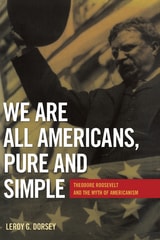
We Are All Americans, Pure and Simple
Theodore Roosevelt and the Myth of AmericanismLeroy G. Dorsey
University of Alabama Press, 2008
Redefining American identity through Roosevelt’s words.
The turn of the 20th century represented one of the most chaotic periods in the nation's history, as immigrants, Native Americans, and African Americans struggled with their roles as Americans while white America feared their encroachments on national identity. This book examines Theodore Roosevelt’s public rhetoric—speeches, essays, and narrative histories—as he attempted to craft one people out of many. Leroy G. Dorsey observes that Roosevelt's solution to the problem appeared straightforward: everyone could become "Americans, pure and simple" if they embraced his notion of "Americanism." Roosevelt grounded his idea of Americanism in myth, particularly the frontier myth—a heroic combination of individual strength and character. When nonwhites and immigrants demonstrated these traits, they would become true Americans, earning an exalted status that they had heretofore been denied.
Dorsey’s analysis illuminates how Roosevelt's rhetoric achieved a number of delicate, if problematic, balancing acts. Roosevelt gave his audiences the opportunity to accept a national identity that allowed "some" room for immigrants and nonwhites, while reinforcing their status as others, thereby reassuring white Americans of their superior place in the nation. Roosevelt’s belief in an ordered and unified nation did not overwhelm his private racist attitudes, Dorsey argues, but certainly competed with them. Despite his private sentiments, he recognized that racist beliefs and rhetoric were divisive and bad for the nation’s progress. The resulting message he chose to propagate was thus one of a rhetorical, if not literal, melting pot.
By focusing on Roosevelt’s rhetorical constructions of national identity, as opposed to his personal exploits or his role as a policy maker, We Are All Americans offers new insights into Roosevelt’s use of public discourse to bind the nation together during one of the most polarized periods in its history.
We Are Having This Conversation Now
The Times of AIDS Cultural ProductionAlexandra Juhasz and Theodore Kerr
Duke University Press, 2022
Weathering the Storm
Independent Writing Programs in the Age of Fiscal AusterityRichard N. Matzen Jr.
Utah State University Press, 2019
Leading writing specialists at the University of Texas at Austin, Syracuse University, the University of Minnesota, and many other institutions document and think carefully about the on-the-ground obstacles that have made the creation of IWPs unique. From institutional naysayers in English departments to skeptical administrators, IWPs and the faculty within them have surmounted not only negative economics but also negative rhetorics. This collection charts the story of this journey as writing faculty continually make the case for the importance of writing in the university curriculum.
Independence has, for the most part, allowed IWPs to better respond to the Great Recession, but to do so they have had to define writing studies in relation to other disciplines and departments. Weathering the Storm will be of great interest to faculty and graduate students in rhetoric and composition, writing program administrators, and writing studies and English department faculty.
Contributors: Linda Adler-Kassner, Lois Agnew, Alice Batt, David Beard, Davida Charney, Amy Clements, Diane Davis, Frank Gaughan, Heidi Skurat Harris, George H. Jensen, Rodger LeGrand, Drew M. Loewe, Mark Garrett Longaker, Cindy Moore, Peggy O’Neill, Chongwon Park, Louise Wetherbee Phelps, Mary Rist, Valerie Ross, John J Ruszkiewicz, Eileen E. Schell, Madeleine Sorapure, Chris Thaiss, Patrick Wehner, Jamie White-Farnham, Carl Whithaus, Traci A. Zimmerman
Welfare Reform and Political Theory
Lawrence M. Mead
Russell Sage Foundation, 2005
What Comes after Entanglement?
Activism, Anthropocentrism, and an Ethics of ExclusionEva Haifa Giraud
Duke University Press, 2019
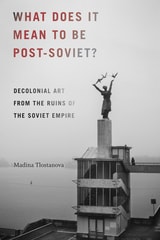
What Does It Mean to Be Post-Soviet?
Decolonial Art from the Ruins of the Soviet EmpireMadina Tiostanova
Duke University Press, 2018
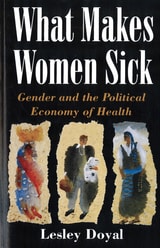
What Makes Women Sick
Gender and the Political Economy of HealthLesley Doyal
Rutgers University Press, 1995
What makes women sick? To an Ecuadorean woman, it’s nervios from constant worry about her children’s illnesses. To a woman working in a New Mexico electronics factory, it’s the solvents that leave her with a form of dementia. To a Ugandan woman, it’s HIV from her husband's sleeping with the widow of an AIDS patient. To a Bangladeshi woman, it’s a fatal infection following an IUD insertion. What they all share is a recognition that their sickness is somehow caused by situations they face every day at home and at work.
In this clearly written and compelling book, Lesley Doyal investigates the effects of social, economic, and cultural conditions on women’s health. The “fault line” of gender that continues to divide all societies has, Doyal demonstrates, profound and pervasive consequences for the health of women throughout the world. Her broad synthesis highlights variations between men and women in patterns of health and illness, and it identifies inequalities in medical care that separate groups of women from each other. Doyal’s wide-ranging arguments, her wealth of data, her use of women’s voices from many cultures—and her examples of women mobilizing to find their own solutions—make this book required reading for everyone concerned with women’s health.
What Makes Women Sick
Gender and the Political Economy of HealthLesley Doyal
Rutgers University Press, 1995
What makes women sick? To an Ecuadorean woman, it’s nervios from constant worry about her children’s illnesses. To a woman working in a New Mexico electronics factory, it’s the solvents that leave her with a form of dementia. To a Ugandan woman, it’s HIV from her husband's sleeping with the widow of an AIDS patient. To a Bangladeshi woman, it’s a fatal infection following an IUD insertion. What they all share is a recognition that their sickness is somehow caused by situations they face every day at home and at work.
In this clearly written and compelling book, Lesley Doyal investigates the effects of social, economic, and cultural conditions on women’s health. The “fault line” of gender that continues to divide all societies has, Doyal demonstrates, profound and pervasive consequences for the health of women throughout the world. Her broad synthesis highlights variations between men and women in patterns of health and illness, and it identifies inequalities in medical care that separate groups of women from each other. Doyal’s wide-ranging arguments, her wealth of data, her use of women’s voices from many cultures—and her examples of women mobilizing to find their own solutions—make this book required reading for everyone concerned with women’s health.
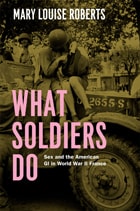
What Soldiers Do
Sex and the American GI in World War II FranceMary Louise Roberts
University of Chicago Press, 2013
That’s not the picture of the Greatest Generation that we’ve been given, but it’s the one Mary Louise Roberts paints to devastating effect in What Soldiers Do. Drawing on an incredible range of sources, including news reports, propaganda and training materials, official planning documents, wartime diaries, and memoirs, Roberts tells the fascinating and troubling story of how the US military command systematically spread—and then exploited—the myth of French women as sexually experienced and available. The resulting chaos—ranging from flagrant public sex with prostitutes to outright rape and rampant venereal disease—horrified the war-weary and demoralized French population. The sexual predation, and the blithe response of the American military leadership, also caused serious friction between the two nations just as they were attempting to settle questions of long-term control over the liberated territories and the restoration of French sovereignty.
While never denying the achievement of D-Day, or the bravery of the soldiers who took part, What Soldiers Do reminds us that history is always more useful—and more interesting—when it is most honest, and when it goes beyond the burnished beauty of nostalgia to grapple with the real lives and real mistakes of the people who lived it.
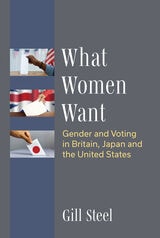
What Women Want
Gender and Voting in Britain, Japan and the United StatesGill Steel
University of Michigan Press, 2022
What Women Want analyzes decades of voting preferences, values, and policy preferences to debunk some of the media and academic myths about gender gaps in voting and policy preferences. Findings show that no single theory explains when differences in women’s and men’s voting preferences emerge, when they do not, or when changes—or the lack thereof—occur over time. Steel extends existing theories to create a broader framework for thinking about gender and voting behavior to provide more analytical purchase in understanding gender and its varying effects on individual voters’ preferences. She incorporates the long-term effects of party identification and class politics on political decision-making, particularly in how they influence preferences on social provision and on expectations of the state. She also points to the importance of symbolic politics
What's Left of the Left
Democrats and Social Democrats in Challenging TimesJames Cronin, George Ross, and James Shoch, eds.
Duke University Press, 2011
Contributors. Sheri Berman, James Cronin, Jean-Michel de Waele, Arthur Goldhammer, Christopher Howard, Jane Jenson, Gerassimos Moschonas, Sofia Pérez, Jonas Pontusson, George Ross, James Shoch, Sorina Soare, Ruy Teixeira

What's My Name
Black Vernacular IntellectualsGrant Farred
University of Minnesota Press, 2003
Whom does society consider an intellectual and on what grounds? Antonio Gramsci’s democratic vision of intelligence famously suggested that “all men are intellectuals,” yet within academic circles and among the general public, intellectuals continue to be defined by narrow, elite criteria.
In this study of four celebrated citizens of the African diaspora—American boxer Muhammad Ali, West Indian Marxist critic C. L. R. James, British cultural theorist Stuart Hall, and Jamaican musician Bob Marley—Grant Farred develops a new category of engaged thinker: the vernacular intellectual. Extending Gramsci’s concept of the organic intellectual, Farred conceives of vernacular intellectuals as individuals who challenge social injustice from inside and outside traditional academic or political spheres. Muhammad Ali, for example, is celebrated as much for his dazzling verbal skills and courageous political stands as for his pugilistic talents; Bob Marley’s messages of liberation are as central to his popularity as his lyrical and melodic sophistication. Neither man is described as an intellectual, yet both perform crucial intellectual functions: shaping how people see the world, oppose hegemony, and understand their own history. In contrast, the careers of C. L. R. James and Stuart Hall reflect a dynamic blend of the traditional and the vernacular. Conventionally trained and situated, James and Hall examine racism, history, and the lasting impact of colonialism in ways that draw on both established scholarship and more popular cultural experiences.
Challenging existing paradigms, What’s My Name offers an expansive and inclusive vision of intellectual activity that is as valid and meaningful in the boxing ring, the press conference, and the concert hall as in academia.
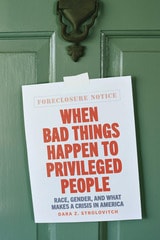
When Bad Things Happen to Privileged People
Race, Gender, and What Makes a Crisis in AmericaDara Z. Strolovitch
University of Chicago Press, 2023
A deep and thought-provoking examination of crisis politics and their implications for power and marginalization in the United States.
From the climate crisis to the opioid crisis to the Coronavirus crisis, the language of crisis is everywhere around us and ubiquitous in contemporary American politics and policymaking. But for every problem that political actors describe as a crisis, there are myriad other equally serious ones that are not described in this way. Why has the term crisis been associated with some problems but not others? What has crisis come to mean, and what work does it do?
In When Bad Things Happen to Privileged People, Dara Z. Strolovitch brings a critical eye to the taken-for-granted political vernacular of crisis. Using systematic analyses to trace the evolution of the use of the term crisis by both political elites and outsiders, Strolovitch unpacks the idea of “crisis” in contemporary politics and demonstrates that crisis is itself an operation of politics. She shows that racial justice activists innovated the language of crisis in an effort to transform racism from something understood as natural and intractable and to cast it instead as a policy problem that could be remedied. Dominant political actors later seized on the language of crisis to compel the use of state power, but often in ways that compounded rather than alleviated inequality and injustice. In this eye-opening and important book, Strolovitch demonstrates that understanding crisis politics is key to understanding the politics of racial, gender, and class inequalities in the early twenty-first century.

When Biometrics Fail
Gender, Race, and the Technology of IdentityShoshana Amielle Magnet
Duke University Press, 2011

When Home Is a Photograph
Blackness and Belonging in the WorldLeigh Raiford
Duke University Press, 2026

When Monsters Speak
A Susan Stryker ReaderSusan Stryker. Edited by McKenzie Wark
Duke University Press, 2024
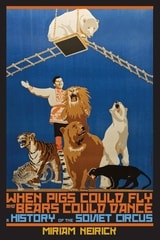
When Pigs Could Fly and Bears Could Dance
A History of the Soviet CircusMiriam Neirick
University of Wisconsin Press, 2012
For more than seven decades the circuses enjoyed tremendous popularity in the Soviet Union. How did the circus—an institution that dethroned figures of authority and refused any orderly narrative structure—become such a cultural mainstay in a state known for blunt and didactic messages? Miriam Neirick argues that the variety, flexibility, and indeterminacy of the modern circus accounted for its appeal not only to diverse viewers but also to the Soviet state. In a society where government-legitimating myths underwent periodic revision, the circus proved a supple medium of communication.
Between 1919 and 1991, it variously displayed the triumph of the Bolshevik revolution, the beauty of the new Soviet man and woman, the vulnerability of the enemy during World War II, the prosperity of the postwar Soviet household, and the Soviet mission of international peace—all while entertaining the public with the acrobats, elephants, and clowns. With its unique ability to meet and reconcile the demands of both state and society, the Soviet circus became the unlikely darling of Soviet culture and an entertainment whose usefulness and popularity stemmed from its ambiguity.
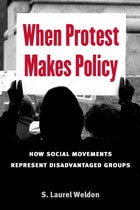
When Protest Makes Policy
How Social Movements Represent Disadvantaged GroupsS. Laurel Weldon
University of Michigan Press, 2012
"A must-read for scholars across a broad sweep of disciplines. Laurel Weldon weaves together skillfully the theoretical strands of gender equality policy, intersectionality, social movements, and representation in a multimethod/level comparative study that unequivocally places women's movements at the center of our understanding of democracy and social change."
---Amy G. Mazur, Washington State University
"Laurel Weldon's When Protest Makes Policy expands and enriches our understanding of representation by stressing social movements as a primary avenue for the representation of marginalized groups. With powerful theory backed by persuasive analysis, it is a must-read for anyone interested in democracy and the representation of marginalized groups."
---Pamela Paxton, University of Texas at Austin
"This is a bold and exciting book. There are many fine scholars who look at women's movements, political theorists who make claims about democracy, and policy analysts who do longitudinal treatments or cross-sectional evaluations of various policies. I know of no one, aside from Weldon, who is comfortable with all three of these roles."
---David Meyer, University of California, Irvine
What role do social movements play in a democracy? Political theorist S. Laurel Weldon demonstrates that social movements provide a hitherto unrecognized form of democratic representation, and thus offer a significant potential for deepening democracy and overcoming social conflict.
Through a series of case studies of movements conducted by women, women of color, and workers in the United States and other member nations of the Organisation for Economic Co-operation and Development (OECD), Weldon examines processes of representation at the local, state, and national levels. She concludes that, for systematically disadvantaged groups, social movements can be as important---sometimes more important---for the effective articulation of a group perspective as political parties, interest groups, or the physical presence of group members in legislatures.
When Protest Makes Policy contributes to the emerging scholarship on civil society as well as the traditional scholarship on representation. It will be of interest to anyone concerned with advancing social cohesion and deepening democracy and inclusion as well as those concerned with advancing equality for women, ethnic and racial minorities, the working class, and poor people.
S. Laurel Weldon is Professor of Political Science at Purdue University.
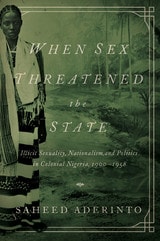
When Sex Threatened the State
Illicit Sexuality, Nationalism, and Politics in Colonial Nigeria, 1900-1958Saheed Aderinto
University of Illinois Press, 2015
As Saheed Aderinto shows, British colonizers saw prostitution as an African form of sexual primitivity and a problem to be solved as part of imperialism's "civilizing mission". He details the Nigerian response to imported sexuality laws and the contradictory ways both African and British reformers advocated for prohibition or regulation of prostitution. Tracing the tensions within diverse groups of colonizers and the colonized, he reveals how wrangling over prostitution camouflaged the negotiating of separate issues that threatened the social, political, and sexual ideologies of Africans and Europeans alike.
The first book-length project on sexuality in early twentieth century Nigeria, When Sex Threatened the State combines the study of a colonial demimonde with an urban history of Lagos and a look at government policy to reappraise the history of Nigerian public life.
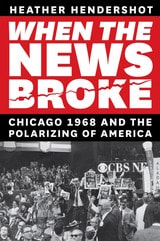
When the News Broke
Chicago 1968 and the Polarizing of AmericaHeather Hendershot
University of Chicago Press, 2022
“The whole world is watching!” cried protestors at the 1968 Democratic convention as Chicago police beat them in the streets. When some of that violence was then aired on network television, another kind of hell broke loose. Some viewers were stunned and outraged; others thought the protestors deserved what they got. No one—least of all Chicago mayor Richard J. Daley—was happy with how the networks handled it.
In When the News Broke, Heather Hendershot revisits TV coverage of those four chaotic days in 1968—not only the violence in the streets but also the tumultuous convention itself, where Black citizens and others forcefully challenged southern delegations that had excluded them, anti-Vietnam delegates sought to change the party’s policy on the war, and journalists and delegates alike were bullied by both Daley’s security forces and party leaders. Ultimately, Hendershot reveals the convention as a pivotal moment in American political history, when a distorted notion of “liberal media bias” became mainstreamed and nationalized.
At the same time, she celebrates the values of the network news professionals who strived for fairness and accuracy. Despite their efforts, however, Chicago proved to be a turning point in the public’s trust in national news sources. Since those critical days, the political Right in the United States has amplified distrust of TV news, to the point where even the truest and most clearly documented stories can be deemed “fake.” As Hendershot demonstrates, it doesn’t matter whether the “whole world is watching” if people don’t believe what they see.

Where Rivers Meet the Sea
The Political Ecology of WaterStephanie Kane
Temple University Press, 2012
Where fresh water appears to be abundant and generally accessible, chronic pollution may be relatively ignored as a public issue. Yet there are those whose lives, livelihoods, and traditions are touched directly by the destructive albeit essential relationship between humans and water.
In her passionate and persuasively argued Where Rivers Meet the Sea, Stephanie Kane compares two cities and nations—Salvador, Brazil and Buenos Aires, Argentina—as she tells the stories of those who organize in the streets, petition the courts, and challenge their governments to implement and enforce existing laws designed to protect springs, lakes, harbors, and rivers.
Illuminating the complex and distinctive cultural forces in the South Atlantic that shape conflicts and collaborations pertaining to particular waterfront settings, Kane shows the dilemmas, inventiveness, and persistence that provide the foundation for environmental and social justice movements writ large.
White Enclosures
Racial Capitalism and Coloniality along the Balkan RoutePiro Rexhepi
Duke University Press, 2022
White Man's Paper Trail
Grand Councils and Treaty-Making on the Central PlainsStan Hoig
University Press of Colorado, 2006
Stan Hoig shows how treaty-making - once considered a viable method of peaceably resolving conflicts - degenerated into a deeply flawed system sullied by political deceptions and broken promises.
White Man's Paper Trail illuminates the pivotal role of treaty negotiations in the buildup to the Plains Indian wars, in American Indians' loss of land and self-determination, and in Euro-American westward expansion.

White Scholars/African American Texts
Edited by Lisa A. Long
Rutgers University Press, 2005
What makes someone an authority? What makes one person's knowledge more credible than another's? In the ongoing debates over racial authenticity, some attest that we can know each other's experiences simply because we are all "human," while others assume a more skeptical stance, insisting that racial differences create unbridgeable gaps in knowledge.
Bringing new perspectives to these perennial debates, the essays in this collection explore the many difficulties created by the fact that white scholars greatly outnumber black scholars in the study and teaching of African American literature. Contributors, including some of the most prominent theorists in the field as well as younger scholars, examine who is speaking, what is being spoken and what is not, and why framing African American literature in terms of an exclusive black/white racial divide is problematic and limiting.
In highlighting the "whiteness" of some African Americanists, the collection does not imply that the teaching or understanding of black literature by white scholars is definitively impossible. Indeed such work is not only possible, but imperative. Instead, the essays aim to open a much needed public conversation about the real and pressing challenges that white scholars face in this type of work, as well as the implications of how these challenges are met.
White-Collar Government
The Hidden Role of Class in Economic Policy MakingNicholas Carnes
University of Chicago Press, 2013
With White-Collar Government, Nicholas Carnes answers this question with a resounding—and disturbing—yes. Legislators’ socioeconomic backgrounds, he shows, have a profound impact on both how they view the issues and the choices they make in office. Scant representation from among the working class almost guarantees that the policymaking process will be skewed toward outcomes that favor the upper class. It matters that the wealthiest Americans set the tax rates for the wealthy, that white-collar professionals choose the minimum wage for blue-collar workers, and that people who have always had health insurance decide whether or not to help those without. And while there is no one cause for this crisis of representation, Carnes shows that the problem does not stem from a lack of qualified candidates from among the working class. The solution, he argues, must involve a variety of changes, from the equalization of campaign funding to a shift in the types of candidates the parties support.
If we want a government for the people, we have to start working toward a government that is truly by the people. White-Collar Government challenges long-held notions about the causes of political inequality in the United States and speaks to enduring questions about representation and political accountability.
Who Deliberates?
Mass Media in Modern DemocracyBenjamin I. Page
University of Chicago Press, 1996
Page shows how the New York Times presented a restricted set of opinions on whether to go to war with Iraq, shutting out discussion of compromises favored by many Americans. He then examines the media's negative reaction to the Bush administration's claim that riots in Los Angeles were caused by welfare programs. Finally, he shows how talk shows overcame the elite media's indifference to widespread concern about Zoe Baird's hiring of illegal aliens. Page's provocative conclusion identifies the conditions under which media outlets become political actors and actively shape and limit the ideas and information available to the public.
Arguing persuasively that a diversity of viewpoints is essential to true public deliberation, this book will interest students of American politics, communications, and media studies.
Who Gets Represented?
Peter K. Enns
Russell Sage Foundation, 2011
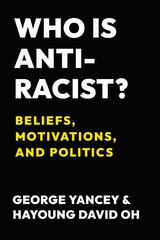
Who Is Antiracist?
Beliefs, Motivations, and PoliticsGeorge Yancey and Hayoung Oh
Temple University Press, 2025
Who Is Antiracist? provides a systematic approach to understanding the motivations and intentions of racial progressives as well as the impact of political ideology on antiracism. The authors discuss the theoretical origins of contemporary antiracism and review key works of antiracism to piece together the characteristics that define it. They also create the Antiracism Attitude Scale to explore the demographic makeup and social views of those who support the type of antiracism popularized in the United States.
Acknowledging that antiracism faces powerful challenges in fully obtaining the goals articulated by its proponents, Who Is Antiracist? enlightens us about the continuing racial conflict in our society and warns against the risk of antiracism becoming just a proxy for ordinary party politics.
Who Killed John Clayton?
Political Violence and the Emergence of the New South, 1861-1893Kenneth C. Barnes
Duke University Press, 1998
More than a description of this particular event, however, Who Killed John Clayton? traces patterns of political violence in this section of the South over a three-decade period. Using vivid courtroom-type detail, Barnes describes how violence was used to define and control the political system in the post-Reconstruction South and how this system in turn produced Jim Crow. Although white Unionists and freed blacks had joined under the banner of the Republican Party and gained the upper hand during Reconstruction, during these last decades of the nineteenth century conservative elites, first organized as the Ku Klux Klan and then as the revived Democratic Party, regained power—via such tactics as murdering political opponents, lynching blacks, and defrauding elections.
This important recounting of the struggle over political power will engage those interested in Southern and American history.
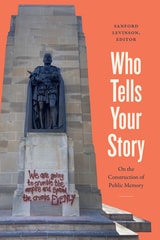
Who Tells Your Story
On the Construction of Public MemorySanford Levinson, editor
Duke University Press, 2026
Contributors: Zachary Bray, Deborah R. Gerhardt, Emily Bradley Greenfield, Randall Kennedy, Aleksandra Kuczyńska-Zonik, Larysa Kurylas, Sanford Levinson, Kimberly Probolus, Kermit Roosevelt III, Anna Saunders, Bruce Scates, Richard C. Schragger, and Agata Tatarenko

Why War?
The Cultural Logic of Iraq, the Gulf War, and SuezPhilip Smith
University of Chicago Press, 2005
Comprised of case studies of the War in Iraq, the Gulf War, and the Suez Crisis, Why War? decodes the cultural logic of the narratives that justify military action. Each nation, Smith argues, makes use of binary codes—good and evil, sacred and profane, rational and irrational, to name a few. These codes, in the hands of political leaders, activists, and the media, are deployed within four different types of narratives—mundane, tragic, romantic, or apocalyptic. With this cultural system, Smith is able to radically recast our "war stories" and show how nations can have vastly different understandings of crises as each identifies the relevant protagonists and antagonists, objects of struggle, and threats and dangers.
The large-scale sacrifice of human lives necessary in modern war, according to Smith, requires an apocalyptic vision of world events. In the case of the War in Iraq, for example, he argues that the United States and Britain replicated a narrative of impending global doom from the Gulf War. But in their apocalyptic account they mistakenly made the now seemingly toothless Saddam Hussein once again a symbol of evil by writing him into the story alongside al Qaeda, resulting in the war's contestation in the United States, Britain, and abroad.
Offering an innovative approach to understanding how major wars are packaged, sold, and understood, Why War? will be applauded by anyone with an interest in military history, political science, cultural studies, and communication.
Why Washington Won't Work
Polarization, Political Trust, and the Governing CrisisMarc J. Hetherington and Thomas J. Rudolph
University of Chicago Press, 2015
In Why Washington Won’t Work, Marc J. Hetherington and Thomas J. Rudolph argue that a contemporary crisis of trust—people whose party is out of power have almost no trust in a government run by the other side—has deadlocked Congress. On most issues, party leaders can convince their own party to support their positions. In order to pass legislation, however, they must also create consensus by persuading some portion of the opposing party to trust in their vision for the future. Without trust, consensus fails to develop and compromise does not occur. Up until recently, such trust could still usually be found among the opposition, but not anymore. Political trust, the authors show, is far from a stable characteristic. It’s actually highly variable and contingent on a variety of factors, including whether one’s party is in control, which part of the government one is dealing with, and which policies or events are most salient at the moment.
Political trust increases, for example, when the public is concerned with foreign policy—as in times of war—and it decreases in periods of weak economic performance. Hetherington and Rudolph do offer some suggestions about steps politicians and the public might take to increase political trust. Ultimately, however, they conclude that it is unlikely levels of political trust will significantly increase unless foreign concerns come to dominate and the economy is consistently strong.

Why We Lost the Sex Wars
Sexual Freedom in the #MeToo EraLorna N. Bracewell
University of Minnesota Press, 2021
Reexamining feminist sexual politics since the 1970s—the rivalries and the remarkable alliances
Since the historic #MeToo movement materialized in 2017, innumerable survivors of sexual assault and misconduct have broken their silence and called out their abusers publicly—from well-known celebrities to politicians and high-profile business leaders. Not surprisingly, conservatives quickly opposed this new movement, but the fact that “sex positive” progressives joined in the opposition was unexpected and seldom discussed. Why We Lost the Sex Wars explores how a narrow set of political prospects for resisting the use of sex as a tool of domination came to be embraced across this broad swath of the political spectrum in the contemporary United States.
To better understand today’s multilayered sexual politics, Lorna N. Bracewell offers a revisionist history of the “sex wars” of the 1970s, ’80s, and ’90s. Rather than focusing on what divided antipornography and sex-radical feminists, Bracewell highlights significant points of contact and overlap between these rivals, particularly the trenchant challenges they offered to the narrow and ambivalent sexual politics of postwar liberalism. Bracewell leverages this recovered history to illuminate in fresh and provocative ways a range of current phenomena, including recent controversies over trigger warnings, the unimaginative politics of “sex-positive” feminism, and the rise of carceral feminism. By foregrounding the role played by liberal concepts such as expressive freedom and the public/private divide as well as the long-neglected contributions of Black and “Third World” feminists, Bracewell upends much of what we think we know about the sex wars and makes a strong case for the continued relevance of these debates today.
Why We Lost the Sex Wars provides a history of feminist thinking on topics such as pornography, commercial sex work, LGBTQ+ identities, and BDSM, as well as discussions of such notable figures as Patrick Califia, Alan Dershowitz, Andrea Dworkin, Elena Kagan, Audre Lorde, Catharine MacKinnon, Cherríe Moraga, Robin Morgan, Gayle Rubin, Nadine Strossen, Cass Sunstein, and Alice Walker.
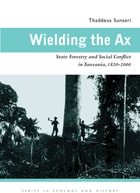
Wielding the Ax
State Forestry and Social Conflict in Tanzania, 1820–2000Thaddeus Sunseri
Ohio University Press, 2009
Forests have been at the fault lines of contact between African peasant communities in the Tanzanian coastal hinterland and outsiders for almost two centuries. In recent decades, a global call for biodiversity preservation has been the main challenge to Tanzanians and their forests.
Thaddeus Sunseri uses the lens of forest history to explore some of the most profound transformations in Tanzania from the nineteenth century to the present. He explores anticolonial rebellions, the world wars, the depression, the Cold War, oil shocks, and nationalism through their intersections with and impacts on Tanzania’s coastal forests and woodlands. In Wielding the Ax, forest history becomes a microcosm of the origins, nature, and demise of colonial rule in East Africa and of the first fitful decades of independence.
Wielding the Ax is a story of changing constellations of power over forests, beginning with African chiefs and forest spirits, both known as “ax–wielders,” and ending with international conservation experts who wield scientific knowledge as a means to controlling forest access. The modern international concern over tropical deforestation cannot be understood without an awareness of the long–term history of these forest struggles.

Wild Tongue
A Borderlands MixtapeJonathan Leal
Duke University Press, 2026
Willing Warriors
A New History of the Education Culture WarsMark Hlavacik
University of Chicago Press, 2025
On August 9, 2022, the Denton Independent School District held a meeting to address complaints about its libraries. Like so many districts in Texas and across the country, Denton had been responding to accusations that children had access to inappropriate books at school. During the public comment session, a local man stood up to the podium and read a sexually explicit passage from a book that he wanted removed from Denton’s school libraries. But beguiled by the prospect of securing a political win, he had confused the title of the lurid psychological thriller he read aloud with a young adult fiction series about mermaids. While his attempt to ban a book that was never in Denton’s school libraries in the first place received a few laughs, it also reflects a deeply serious and troubling culture of conflict that has taken over the politics of education and now divides people so completely as to make public education as a shared endeavor seem impossible.
In Willing Warriors, Mark Hlavacik shows how the culture wars have redefined the politics of US schooling from the 1970s to the present through vivid accounts of public controversies featuring Allan Bloom, Oprah Winfrey, Lynne Cheney, Rush Limbaugh, Betsy DeVos, Nikole Hannah-Jones, and others. Beginning in the 1970s, Hlavacik shows, efforts at innovation in schooling have increasingly been met by attempts to discredit them through exposé. As the culture wars have accelerated and exploded, this cycle of innovation and exposé has embroiled public schools in increasingly heated debates. He explains the dynamics that make curriculum controversies so intractable and confronts the delicate question of whether raucous public arguments are bad for education.
With clarity and insight, Hlavacik reveals why bitter contests between educational ideologies not only add another burden for the schools, but also for the people—the willing warriors—who devote their lives to fighting for their betterment.