Results by title
1427 books match the query 'Politics' and 44 start with w
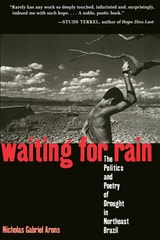
Waiting for Rain
The Politics and Poetry of Drought in Northeast BrazilNicholas Gabriel Arons
University of Arizona Press, 2004
In order to understand the impact of drought and the phenomenon of drought politics, Nicholas Gabriel Arons goes beyond traditional social-science scholarship to sources such as novels, poetry, popular art, and oral history. For many people in the region, these artistic renditions of life are, ironically, a better reflection of reality than political rhetoric, government archives, and newspaper accounts—even though they are infused with myth or hyperbole.
Drawing on interviews with artists and poets and on his own experiences in the Brazilian Northeast, Arons has written a poignant account of how drought has impacted the region’s culture. He intertwines ecological, social, and political issues with the words of some of Brazil’s most prominent authors and folk poets to show how themes surrounding drought—hunger, migration, endurance, nostalgia for the land—have become deeply embedded in Nordeste identity. Through this tapestry of sources, Arons shows that what is often thought of as a natural phenomenon is actually the result of centuries of social inequality, political corruption, and unsustainable land use.
Waiting for Rain dramatically depicts a region still suffering from austere social and political realities, where drought—even during rainy seasons—is ubiquitous in the hearts and minds of its residents. A book of hope and resistance, myth and reality, and suffering and salvation, it is also a personal narrative of self-discovery, tracing a young man’s struggle to understand how human tragedy on a grand scale can exist alongside natural beauty.
Walker Evans
No PoliticsBy Stephanie Schwartz
University of Texas Press, 2020
“NO POLITICS whatever.” Walker Evans made this emphatic declaration in 1935, the year he began work for FDR’s Resettlement Administration. Evans insisted that his photographs of tenant farmers and their homes, breadlines, and the unemployed should be treated as “pure record.” The American photographer’s statements have often been dismissed. In Walker Evans: No Politics, Stephanie Schwartz challenges us to engage with what it might mean, in the 1930s and at the height of the Great Depression, to refuse to work politically.
Offering close readings of Evans’s numerous commissions, including his contribution to Carleton Beals’s anti-imperialist tract, The Crime of Cuba (1933), this book is a major departure from the standard accounts of Evans’s work and American documentary. Documentary, Schwartz reveals, is not a means of being present—or being “political.” It is a practice of record making designed to distance its maker from the “scene of the crime.” That crime, Schwartz argues, is not just the Depression; it is the processes of Americanization reshaping both photography and politics in the 1930s. Historicizing documentary, this book reimagines Evans and his legacy—the complexities of claiming “no politics.”
War on Crime
Bandits, G-Men, and the Politics of Mass CulturePotter, Claire Bond
Rutgers University Press, 1998
Anxieties about crime today have become a familiar route for the creation of new government agencies and the extension of state authority. It is important to remember the original "war on crime" in the 1930s-and the opportunities it afforded to New Dealers and established bureaucrats like J. Edgar Hoover-as scholars grapple with the ways states assert influence over populations, local authority, and party politics while they pursue goals such as reducing popular violence and protecting private property.
Water and Politics
Clientelism and Reform in Urban MexicoVeronica Herrera
University of Michigan Press, 2017
Most of the world’s population lives in cities in developing countries, where access to basic public services, such as water, electricity, and health clinics, is either inadequate or sorely missing. Water and Politics shows how politicians benefit politically from manipulating public service provision for electoral gain. In many young democracies, politicians exchange water service for votes or political support, rewarding allies or punishing political enemies. Surprisingly, the political problem of water provision has become more pronounced, as water service represents a valuable political currency in resource-scarce environments.
Water and Politics finds that middle-class and industrial elites play an important role in generating pressure for public service reforms.
We Fight To Win
Inequality and the Politics of Youth ActivismHava Rachel Gordon
Rutgers University Press, 2009
Hava Rachel Gordon compares the struggles and successes of two very different youth movements: a mostly white, middle-class youth activist network in Portland, Oregon, and a working-class network of minority youth in Oakland, California. She examines how these young activists navigate schools, families, community organizations, and the mainstream media, and employ a variety of strategies to make their voices heard on some of today's most pressing issuesùwar, school funding, the environmental crisis, the prison industrial complex, standardized testing, corporate accountability, and educational reform. We Fight to Win is one of the first books to focus on adolescence and political action and deftly explore the ways that the politics of youth activism are structured by age inequality as well as race, class, and gender.

We Take Care of Our Own
Faith, Class, and Politics in the Art of Bruce SpringsteenJune Skinner Sawyers
Rutgers University Press, 2024
We, the People
Politics of National Peculiarity in Southeastern EuropeDiana Mishkova
Central European University Press, 2009
West Germany under Construction
Politics, Society, and Culture in the Adenauer EraRobert G. Moeller, Editor
University of Michigan Press, 1997

What Are Stem Cells?
Definitions at the Intersection of Science and PoliticsJohn Lynch
University of Alabama Press, 2011

What Is Nietzsche's Zarathustra?
A Philosophical ConfrontationHeinrich Meier
University of Chicago Press, 2021
A masterful, nuanced, and novel examination of Nietzsche’s Zarathustra.
Thus Spoke Zarathustra is Nietzsche’s most famous and most puzzling work, one in which he makes the greatest use of poetry to explore the questions posed by philosophy. But in order to understand the movement of this drama, we must first understand the character of its protagonist: we must ask, What Is Nietzsche’s Zarathustra?
Heinrich Meier attempts to penetrate the core of the drama, following as a guiding thread the question of whether Zarathustra is a philosopher or a prophet, or, if he is meant to be both, whether Zarathustra is able to unite philosopher and prophet in himself. Via a close reading that uncovers the book’s hidden structure, Meier develops a highly stimulating and original interpretation of this much-discussed but still ill-understood masterwork of German poetic prose. In the process, he carefully overturns long-established canons in the academic discourse of Nietzsche interpretation. The result is a fresh and surprising grasp of Nietzsche’s well-known teachings of the overman, the will to power, and the eternal return.
When Protest Becomes Crime
Politics and Law in Liberal DemocraciesCarolijn Terwindt
Pluto Press, 2019
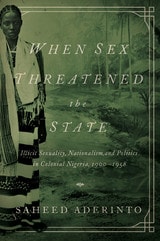
When Sex Threatened the State
Illicit Sexuality, Nationalism, and Politics in Colonial Nigeria, 1900-1958Saheed Aderinto
University of Illinois Press, 2015
As Saheed Aderinto shows, British colonizers saw prostitution as an African form of sexual primitivity and a problem to be solved as part of imperialism's "civilizing mission". He details the Nigerian response to imported sexuality laws and the contradictory ways both African and British reformers advocated for prohibition or regulation of prostitution. Tracing the tensions within diverse groups of colonizers and the colonized, he reveals how wrangling over prostitution camouflaged the negotiating of separate issues that threatened the social, political, and sexual ideologies of Africans and Europeans alike.
The first book-length project on sexuality in early twentieth century Nigeria, When Sex Threatened the State combines the study of a colonial demimonde with an urban history of Lagos and a look at government policy to reappraise the history of Nigerian public life.
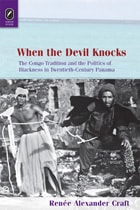
When the Devil Knocks
The Congo Tradition and the Politics of Blackness in Twentieth-Century PanamaRenée Alexander Craft
The Ohio State University Press, 2015
When the Devil Knocks analyzes the Congo tradition as a dynamic cultural, ritual, and identity performance that tells an important story about a Black cultural past while continuing to create itself in a Black cultural present. This book examines “Congo” within the history of twentieth century Panamanian etnia negra culture, politics, and representation, including its circulation within the political economy of contemporary tourism.
Where FDI Goes in Decentralized Authoritarian Countries
The Politics of Taiwanese Site Selection for Investment in Mainland ChinaKelan Lu
University of Michigan Press, 2023
Among all the decentralized authoritarian countries, China is distinctive not only because of its emergence as one of the largest foreign direct investment (FDI) recipient countries with one of the highest levels of fiscal decentralization, but also because of the combination of its fiscal decentralization and the cadre promotion system as incentive institutions for attracting FDI inflows. China is an important case to empirically investigate the impact of fiscal autonomy on adversarial investment because it has become the largest investment destination of its long-term adversary, Taiwan, with Taiwanese FDI being among the largest FDI in mainland China. Given the special role played by local Chinese governments in attracting and hosting Taiwanese FDI, it is important to study the differences between where Taiwanese FDI and other FDI goes.
Given the uniqueness of the China case and that of Taiwanese investment in mainland China, this book explores the following questions. What determines where FDI goes in authoritarian countries like China? Fiscal decentralization has been argued to be a driving force of skyrocketing FDI inflows in China due to its impact on local governments’ incentives. However, is the impact of fiscal autonomy on FDI monolithic with the dynamically changing levels of FDI inflows at the lower administrative levels in China, especially with its special cadre management system? Does the impact of fiscal decentralization on FDI strengthen or weaken or stay the same when attracting FDI inflows from adversarial states? And what are the implications of such adversarial investment—especially as it diffuses from coastal cities to the interior regions, or from key cities to peripheral regions—of decentralized authoritarian countries targeted by this investment?
White Man's Water
The Politics of Sobriety in a Native American CommunityErica Prussing
University of Arizona Press, 2011
Erica Prussing provides the first in-depth assessment of the politics of Native sobriety by focusing on the Northern Cheyenne community in southeastern Montana, where for many decades the federally funded health care system has relied on the Twelve Step program of Alcoholics Anonymous. White Man’s Water provides a thoughtful and careful analysis of Cheyenne views of sobriety and the politics that surround the selective appeal of Twelve Step approaches despite wide-ranging local critiques. Narratives from participants in these programs debunk long-standing stereotypes about ”Indian drinking” and offer insight into the diversity of experiences with alcohol that actually occur among Native North Americans.
This critical ethnography employs vivid accounts of the Northern Cheyenne people to depict how problems with alcohol are culturally constructed, showing how differences in age, gender, and other social features can affect involvement with both drinking and sobriety. These testimonies reveal the key role that gender plays in how Twelve Step program participants engage in a selective and creative process of appropriation at Northern Cheyenne, adapting the program to accommodate local cultural priorities and spiritual resources. The testimonies also illuminate community reactions to these adaptations, inspiring deeper inquiry into how federally funded health services are provided on the reservation.
This book will appeal to readers with an interest in Native studies, ethnography, women’s studies, and medical anthropology. With its critical consideration of how cultural context shapes drinking and sobriety, White Man’s Water offers a multivocal perspective on alcohol’s impact on health and the cultural complexities of sobriety.
Who Counts?
The Politics of Census-Taking in Contemporary AmericaMargo Anderson
Russell Sage Foundation, 2001

Who Is Antiracist?
Beliefs, Motivations, and PoliticsGeorge Yancey and Hayoung Oh
Temple University Press, 2025
Who Is Antiracist? provides a systematic approach to understanding the motivations and intentions of racial progressives as well as the impact of political ideology on antiracism. The authors discuss the theoretical origins of contemporary antiracism and review key works of antiracism to piece together the characteristics that define it. They also create the Antiracism Attitude Scale to explore the demographic makeup and social views of those who support the type of antiracism popularized in the United States.
Acknowledging that antiracism faces powerful challenges in fully obtaining the goals articulated by its proponents, Who Is Antiracist? enlightens us about the continuing racial conflict in our society and warns against the risk of antiracism becoming just a proxy for ordinary party politics.

Who's a Good Dog?
And How to Be a Better HumanJessica Pierce
University of Chicago Press, 2023
A guide to cultivating a shared life of joy and respect with our dogs.
Who’s a Good Dog? is an invitation to nurture more thoughtful and balanced relationships with our canine companions. By deepening our curiosity about what our dogs are experiencing, and by working together with them in a spirit of collaboration, we can become more effective and compassionate caregivers.
With sympathy for the challenges met by both dogs and their humans, bioethicist Jessica Pierce explores common practices of caring for dogs, including how we provide exercise, what we feed, how and why we socialize and train, and how we employ tools such as collars and leashes. She helps us both to identify potential sources of fear and anxiety in our dogs’ lives and to expand practices that provide physical and emotional nourishment. Who’s a Good Dog? also encourages us to think more critically about what we expect of our dogs and how these expectations can set everyone up for success or failure. Pierce offers resources to help us cultivate attentiveness and kindness, inspiring us to practice the art of noticing, of astonishment, of looking with fresh eyes at these beings we think we know so well. And more than this, she makes her findings relatable by examining facets of her relationship with Bella, the dog in her life. As Bella shows throughout, all dogs are good dogs, and we, as humans and dog guardians, could be doing a little bit better to get along with them and give them what they need.
Whose Agency
The Politics and Practice of Kenya's HIV-Prevention NGOsMegan Hershey
University of Wisconsin Press, 2019
By focusing on one particular type of NGO—those organized to help prevent the spread and transmission of HIV in Kenya—Megan Hershey interrogates the ways these organizations achieve (or fail to achieve) their planned outcomes. Along the way, she examines the slippery slope that is often used to define “success” based on meeting donor-set goals versus locally identified needs. She also explores the complex network of bureaucratic requirements at both the national and local levels that affect the delicate relationships NGOs have with the state. Drawing on extensive, original quantitative and qualitative research, Whose Agency serves as a much-needed case study for understanding the strengths and shortcomings of participatory development and community engagement.

Why Americans Hate Welfare
Race, Media, and the Politics of Antipoverty PolicyMartin Gilens
University of Chicago Press, 1999
"With one out of five children currently living in poverty and more than 100,000 families with children now homeless, Gilens's book is must reading if you want to understand how the mainstream media have helped justify, and even produce, this state of affairs." —Susan Douglas, The Progressive
"Gilens's well-written and logically developed argument deserves to be taken seriously." —Choice
"A provocative analysis of American attitudes towards 'welfare.'. . . [Gilens] shows how racial stereotypes, not white self-interest or anti-statism, lie at the root of opposition to welfare programs." -Library Journal
Wikipedia and the Politics of Openness
Nathaniel Tkacz
University of Chicago Press, 2014
But what does openness mean, and what would a political theory of openness look like? With Wikipedia and the Politics of Openness, Nathaniel Tkacz uses Wikipedia, the most prominent product of open organization, to analyze the theory and politics of openness in practice—and to break its spell. Through discussions of edit wars, article deletion policies, user access levels, and more, Tkacz enables us to see how the key concepts of openness—including collaboration, ad-hocracy, and the splitting of contested projects through “forking”—play out in reality.
The resulting book is the richest critical analysis of openness to date, one that roots media theory in messy reality and thereby helps us move beyond the vaporware promises of digital utopians and take the first steps toward truly understanding what openness does, and does not, have to offer.

Wild Intelligence
Poets' Libraries and the Politics of Knowledge in Postwar AmericaM. C. Kinniburgh
University of Massachusetts Press, 2022
Information science was a burgeoning field in the early years of the Cold War, and while public and academic libraries acted as significant sites for the information boom, it is unsurprising that McCarthyism and censorship would shape what they granted readers access to and acquired. Wild Intelligence traces a different history of information management, examining the privately assembled collections of poets and their knowledge-building practices at midcentury.
Taking up case studies of four poets who began writing during the 1950s and 1960s, including Charles Olson (1910–1970), Diane di Prima (1934–2020), Gerrit Lansing (1928–2018), and Audre Lorde (1934–1992), M. C. Kinniburgh shows that the postwar American poet’s library should not just be understood according to individual books within their collection but rather as an archival resource that reveals how poets managed knowledge in a growing era of information overload. Exploring traditions and systems that had been overlooked, buried, occulted, or censored, these poets sought to recover a sense of history and chart a way forward.

William S. Burroughs' "The Revised Boy Scout Manual"
An Electronic RevolutionEdited by Geoffrey D. Smith & John M. Bennett with an afterword by V. Vale
The Ohio State University Press, 2018
The Revised Boy Scout Manual was a work Burroughs revisited many times, but which has never before been published in its complete form. Based primarily on recordings of a performance of the complete piece found in the archives at the OSU libraries, as well as various incomplete versions of the typescript found at Arizona State University and the New York Public Library archives, this lost masterpiece of satiric subversion is finally available in its entirety.
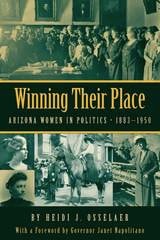
Winning Their Place
Arizona Women in Politics, 1883-1950Heidi J. Osselaer
University of Arizona Press, 2009
This landmark book chronicles for the first time the participation of Arizona women in the state’s early politics. Incorporating impressive original research, Winning Their Place traces the roots of the political participation of women from the territorial period to after World War II. Although women in Arizona first entered politics for traditional reasons—to reform society and protect women and children—they quickly realized that male politicians were uninterested in their demands. Most suffrage activists were working professional women, who understood that the work place discriminated against them. In Arizona they won the vote because they demanded rights as working women and aligned with labor unions and third parties that sympathized with their cause. After winning the vote, the victorious suffragists ran for office because they believed men could not and would not represent their interests.
Through this process, these Arizona women became excellent politicians. Unlike women in many other states, women in Arizona quickly carved out a place for themselves in local and state politics, even without the support of the reigning Democratic Party, and challenged men for county office, the state legislature, state office, Congress, and even for governor. This fascinating book reveals how they shattered traditional notions about “a woman’s place” and paved the way for future female politicians, including the “Fab Five” and countless others who have changed the course of Arizona history.

Witchcraft, Power and Politics
Exploring the Occult in the South African LowveldIsak Niehaus, Eliazaar Mohlala, and Kally Shokaneo
Pluto Press, 2001

Witches, Goddesses, and Angry Spirits
The Politics of Spiritual Liberation in African Diaspora Women's FictionMaha Marouan
The Ohio State University Press, 2013
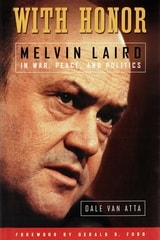
With Honor
Melvin Laird in War, Peace, and PoliticsVan Atta
University of Wisconsin Press, 2008
The first book ever to focus on Laird’s legacy, this authorized biography reveals his central and often unrecognized role in managing the crisis of national identity sparked by the Vietnam War—and the challenges, ethical and political, that confronted him along the way. Drawing on exclusive interviews with Laird, Henry Kissinger, Gerald Ford, and numerous others, author Dale Van Atta offers a sympathetic portrait of a man striving for open government in an atmosphere fraught with secrecy. Van Atta illuminates the inner workings of high politics: Laird’s behind-the-scenes sparring with Kissinger over policy, his decisions to ignore Nixon’s wilder directives, his formative impact on arms control and health care, his key role in the selection of Ford for vice president, his frustration with the country’s abandonment of Vietnamization, and, in later years, his unheeded warning to Donald Rumsfeld that “it’s a helluva lot easier to get into a war than to get out of one.”
Woman and Chinese Modernity
The Politics of Reading between West and EastRey Chow
University of Minnesota Press, 1991
Examines the relationship of “woman” to issues of non-western culture.
Examines the relationship of "woman" to issues of non-Western culture: ethnic spectatorship, popular literature, the construction of literary history, and the revolutionary production and emotional reception of national literature.
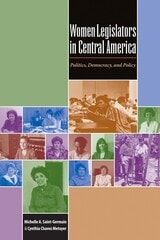
Women Legislators in Central America
Politics, Democracy, and PolicyBy Michelle A. Saint-Germain and Cynthia Chavez Metoyer
University of Texas Press, 2008
During the years between 1980 and 1999, in the midst of war and economic crisis, a record number of women were elected to national legislatures in Central American republics. Can quantitative increases in the presence of elected women in Central America produce qualitative political changes?
In this detailed study, Michelle A. Saint-Germain and Cynthia Chavez Metoyer explore the reasons for this unprecedented political rise of women, and what effect it has had on the region. Focusing on Costa Rica, El Salvador, Guatemala, Honduras, and Nicaragua, the authors analyze national and regional indicators to evaluate various hypotheses concerning the reasons for women's electoral success in the region, as well as to make comparisons with findings from other world regions. They find that the election of more women depends on three things: the presence of a crisis, a pool of politically experienced women, and a culture of gender consciousness. They also compare the characteristics of Central American women legislators to women in other national legislatures around the world.
The authors document how elected women have used their policy-making power to begin to change the lives of all Central Americans, women and men alike. In more than seventy-five in-depth, personal interviews, these women legislators reflect on their lives, political careers, and gender identities in their own words, providing deep insights into recent events in this region.

Women Who Live Evil Lives
Gender, Religion, and the Politics of Power in Colonial GuatemalaBy Martha Few
University of Texas Press, 2002
Women Who Live Evil Lives documents the lives and practices of mixed-race, Black, Spanish, and Maya women sorcerers, spell-casters, magical healers, and midwives in the social relations of power in Santiago de Guatemala, the capital of colonial Central America. Men and women from all sectors of society consulted them to intervene in sexual and familial relations and disputes between neighbors and rival shop owners; to counter abusive colonial officials, employers, or husbands; and in cases of inexplicable illness.
Applying historical, anthropological, and gender studies analysis, Martha Few argues that women's local practices of magic, curing, and religion revealed opportunities for women's cultural authority and power in colonial Guatemala. Few draws on archival research conducted in Guatemala, Mexico, and Spain to shed new light on women's critical public roles in Santiago, the cultural and social connections between the capital city and the countryside, and the gender dynamics of power in the ethnic and cultural contestation of Spanish colonial rule in daily life.
Women and Politics in Latin America
Craske, Nikki
Rutgers University Press, 1999
This book provides a comprehensive view of women's political participation in Latin America. Focusing on the latter half of the twentieth century, it examines five different arenas of action and debate: political institutions, workplaces, social movements, revolutions, and feminisms. Nikki Craske explores the ways in which women have become more effective in the public arena as the context of politics has altered.
Craske demonstrates how gender relations shape political institutions and practices while simultaneously being shaped by them. She examines the moments when women's action has challenged received ideas, and had a significant impact on the political life of Latin American nations. Women remain heavily underrepresented in political lie, despite their important role in popular movements against authoritarianism, Craske states, and posits that the economy is a substantial constraint on women's political participation. This powerful book analyzes the gains made since the 1950s while scrutinizing the challenges and difficulties which still constrain women's political participation.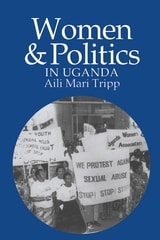
Women and Politics in Uganda
Aili Mari Tripp
University of Wisconsin Press, 2000
Tripp explores why the women’s movement grew so dramatically in such a short time after the National Resistant Movement took over in 1986. Unlike many African countries where organizations and institutions are controlled by a ruling party or regime, the Ugandan women’s movement gained its momentum by remaining autonomous.
Women and Politics in the Age of the Democratic Revolution
Harriet B. Applewhite and Darline G. Levy, Editors
University of Michigan Press, 1993

Women and Politics
An International PerspectiveVicky Randall
University of Chicago Press, 1988
Women in Politics in the American City
Myra Holman
Temple University Press, 2014
This book provides the first comprehensive evaluation of the influence of gender on the behavior of mayors and city council members in the United States. Holman considers the effects of gender in local, urban politics and analyzes how a leader's gender does-and does not-influence policy preferences, processes, behavior, and outcomes.
Holman effectively uses original survey data to evaluate policy attitudes, combined with observations of city council meetings and interviews with leaders and community members. In doing so, she demonstrates the importance of considering the gender of leaders in local office.
Women in Politics in the American City emphasizes that the involvement of women in local politics does matter and that it has significant consequences for urban policy as well as state and local democracy.
Women of the Washington Press
Politics, Prejudice, and PersistenceMaurine H. Beasley
Northwestern University Press, 2012
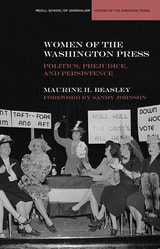
Women of the Washington Press argues that for nearly two centuries women journalists have persisted in their efforts to cover politics in the nation’s capital in spite of blatant prejudice and restrictive societal attitudes. They have been held back by the difficulties of combining two competing roles – those of women and journalists. As a group they have not agreed among themselves on feminist goals, while declaring that they aspire to be seen as professional journalists, not as advocates of a particular ideology. Still, they have brought a different perspective to the news, as they have fought hard to prove that they are capable of covering political issues just like male journalists. Over the years women have networked with each other and carved out areas of expertise – such as reporting of politically-oriented social events and coverage of first ladies – that men disdained, while they pressed to gain entrance to sex-segregated institutions like the National Press Club. Attempting to merge the personal and the political, they have raised issues like sexual harassment that men journalists left untouched. At a point today where they represent about half of accredited correspondents, women still face shifting barriers that make it difficult to combine the roles of both women and journalists in Washington, but they are continuing to broaden the definition of political journalism.
Women with Disabilities
Essays in Psychology, Culture, and Politicsedited by Michelle Fine and Adrienne Asch
Temple University Press, 1989
Women with disabilities are women first, sharing the dreams and disappointments common to women in a male-dominated society. But because society persists in viewing disability as an emblem of passivity and incompetence, disabled women occupy a devalued status in the social hierarchy. This book represents the intersection of the feminist and disability rights perspectives; it analyzes the forces that push disabled women towards the margins of social life, and it considers the resources that enable these women to resist the stereotype.
Drawing on law, social science, folklore, literature, psychoanalytic theory, and political activism, this book describes the experience of women with disabilities. The essays consider the impact of social class, race, the age at which disability occurs, and sexual orientation on the disabled woman's self esteem as well as on her life options. The contributors focus their inquiry on the self perceptions of disabled women and ask: From what sources do these women draw positive self images? How do they resist the culture's power to label them as deviant? The essays describe the ways in which disabled women face discrimination in the workplace and the failure of the mainstream women's movement to address their concerns.
In the series Health, Society, and Policy, edited by Sheryl Ruzek and Irving Kenneth Zola.
Women's Political Voice
How Women are Transforming the Practice and Study of PoliticsJanet Flammang
Temple University Press, 1997
This book accomplishes four major tasks:
*It provides a comprehensive critical history of the changing research on politics and the changing nature of the political science discipline.
*It analyzes the course of women's political activism in the United States.
*It develops a rich case study of women's politics in Northern California's Silicon Valley, an area once nicknamed "the feminist capital of the nation."
*It examines coalitions and divisions within the women's movement with sensitivity to minority politics, as in the chapter subtitled, "The Hard Work of Sisterhood."
Women's Political Voice record the transformative politics of the women's movement and, simultaneously, urges political scientists to ask new questions and to adopt new methods.
Women, International Development
And Politicsedited by Kathleen Staudt
Temple University Press, 1997
At the same time, non-governmental organizations have continued to expand a policy agenda with a concern for women, thanks to the Fourth World Congress on Women and a series of United Nations-affiliated meetings leading up to the one on population and development in Cairo in 1994 and, most important, the Beijing Conference in December 1995, attended by 50,000 people.
Two new essays and a new conclusion reflect the upsurge of interest in women and development since 1990. An introductory essay by Sally Baden and Anne Marie Goetz focuses on the conflict over the term "gender" at the Beijing Conference and the continuing divisions between conservative women and feminists and also between representatives of the North and South.
Women, Politics and Change
Louise A. Tilly
Russell Sage Foundation, 1990
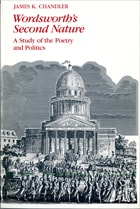
Wordsworth's Second Nature
A Study of the Poetry and PoliticsJames Chandler
University of Chicago Press, 1984
Central to the discussion, which restores Wordsworth to both the French and English contexts in which he matured, is a consideration of his relation to Rousseau and Burke. Chandler maintains that by the time Wordsworth set forth his "program for poetry" in 1798, he had turned away from the Rousseauist idea of nature that had informed his early republican writings. He had already become a poet of what Burke called "second nature"–human nature cultivated by custom, habit, and tradition–and an opponent of the quest for first principles that his friend Coleridge could not forsake. In his analysis of the poetry, Chandler suggests that even Wordsworth's most apparently private moments, the lyrical "spots of time," ideologically embodied the uncalculated habits of an oral narrative discipline and a native English mind.

World Beats
Beat Generation Writing and the Worlding of U.S. LiteratureJimmy Fazzino
Dartmouth College Press, 2016
Writing Women's Communities
The Politics and Poetics of Contemporary Multi-Genre AnthologiesCynthia G. Franklin
University of Wisconsin Press, 1997
Beginning in the 1980s, a number of popular and influential anthologies organized around themes of shared identity—Nice Jewish Girls, This Bridge Called My Back, Home Girls, and others—have brought together women’s fiction and poetry with journal entries, personal narratives, and transcribed conversations. These groundbreaking multi-genre anthologies, Cynthia G. Franklin demonstrates, have played a crucial role in shaping current literary studies, in defining cultural and political movements, and in building connections between academic and other communities.
Exploring intersections and alliances across the often competing categories of race, class, gender, and sexuality, Writing Women’s Communities contributes to current public debates about multiculturalism, feminism, identity politics, the academy as a site of political activism, and the relationship between literature and politics.
Writing for Dark Times
A Literary History of Human RightsHadji Bakara
University of Chicago Press, 2026
A history of human rights that places writers and their ideas at its center.
At Amnesty International’s headquarters in London hangs a large copy of Seamus Heaney’s “From the Republic of Conscience,” a poem that touches on neither imprisonment nor torture but instead suggests that acts of literary creation are themselves a form of human rights work, important for bringing new things into the world rather than removing evil from it. Why does a poem about the power of creation stand at the center of an organization known for publicizing atrocity? What can it tell us about human rights?
Hadji Bakara’s Writing for Dark Times tells the story of the writer’s distinct place in the history of human rights. It argues that the relationship between the creative work of writing and the pursuit of universal rights is an important but misunderstood dimension of both literary and human rights history over the past century. Following a diverse cast of writers from the First World War through the end of the Cold War, including Bertolt Brecht, Anna Seghers, Archibald MacLeish, Albert Camus, Czeslaw Milosz, Ngũgĩ wa Thiong’o, Seamus Heaney, Nadine Gordimer, and J.M. Coetzee, Bakara shows how their efforts to theorize and support human rights were bound up with changing ideas about the place of their own work in the world––the work of writing. And across the twentieth century, the book reveals, two central ideas about writing took shape around the politics of human rights. Writing creates something new and inspires the will for change.
For those who study human rights, Writing for Dark Times offers both an archive and a method for better understanding the influence of writers on the historical development of the concept. For those in literary studies, the book provides a new account of how human rights shaped the politics of twentieth-century literature. Few books have made as vivid a case for literature’s relevance to our most exalted ideals and institutions.