Results by title
2916 books match the query 'Politics and government' and 98 start with w
W Stands for Women
How the George W. Bush Presidency Shaped a New Politics of GenderMichaele L. Ferguson and Lori J. Marso, eds.
Duke University Press, 2007
In W Stands for Women ten feminist scholars analyze various aspects of Bush’s persona, language, and policy to show how his administration has shaped a new politics of gender. One contributor points out the shortcomings of “compassionate conservatism,” a political philosophy that requires a weaker class to be the subject of compassion. Another examines Lynndie England’s participation in the abuse of prisoners at Abu Ghraib in relation to the interrogation practices elaborated in the Army Field Manual, practices that often entail “feminizing” detainees by stripping them of their masculine gender identities. Whether investigating the ways that Bush himself performs masculinity or the problems with discourse that positions non-Western women as supplicants in need of saving, these essays highlight the far-reaching consequences of the Bush administration’s conflation of feminist rhetoric, conservative gender ideology, and neoconservative national security policy.
Contributors. Andrew Feffer, Michaele L. Ferguson, David S. Gutterman, Mary Hawkesworth, Timothy Kaufman-Osborn, Lori Jo Marso, Danielle Regan, R. Claire Snyder, Iris Marion Young, Karen Zivi
Michaela Ferguson and Karen Zivi appeared on KPFA’s Against the Grain on September 11, 2007. Listen to the audio.
Michaela Ferguson and Lori Jo Marso appeared on WUNC’s The State of Things on August 30, 2007. Listen to the audio.
Waccamaw Legacy
Contemporary Indians Fight for SurvivalWritten by Patricia Lerch
University of Alabama Press, 2004
An insightful and informative look into the Waccamaw Siouan's quest for identity and survival
Waccamaw Legacy: Contemporary Indians Fight for Survival sheds light on North Carolina Indians by tracing the story of the now state-recognized Waccamaw Siouan tribe from its beginnings in the Southeastern United States, through their first contacts with Europeans, and into the 21st century, detailing the struggles these Indians have endured over time. We see how the Waccamaw took hold of popular theories about Indian tribes like the Croatan of the Lost Colony and the Cherokee as they struggled to preserve their heritage and to establish their identity.
Patricia Lerch was hired by the Waccamaw in 1981 to perform the research needed to file for recognition under the Bureau of Indian Affairs Federal Acknowledgement Program of 1978. The Waccamaw began to organize powwows in 1970 to represent publicly their Indian heritage and survival and to spread awareness of their fight for cultural preservation and independence. Lerch found herself understanding that the powwows, in addition to affirming identity, revealed important truths about the history of the Waccamaw and the ways they communicate and coexist.
Waccamaw Legacy outlines Lerch’s experience as she played a vital role in the Waccamaw Siouan's continuing fight for recognition and acceptance in contemporary society and culture.
Wallis's War
A Novel of Diplomacy and IntrigueKate Auspitz
University of Chicago Press, 2015
The facts: reviled by the British as a social-climbing seductress even as Time magazine named her its 1936 Woman of the Year, Simpson was the American socialite whose affair with King Edward VIII led him to abdicate the throne on the eve of WWII. In this fanciful novel written in the form of a fictional memoir, Auspitz imagines an alternative history in which Simpson was encouraged by Allied statesmen to remove defeatist, pro-German Edward from the throne, forever altering the course of the war. A comically unreliable narrator who knows more than she realizes, and reveals more than she knows, Simpson leads us from historic treaties and military campaigns to dinner parties and cruises as she describes encounters with everyone from Duff and Diana Cooper to Charles Lindbergh, Coco Chanel, and Hitler—all the while acting as a willing but seemingly oblivious pawn of international intrigue.
A rare blend of diplomacy and dalliance, fashion and fascists, this meticulously researched satire offers witty and erudite entertainment and leaves us speculating: who really brought about the abdication and—always—what were they wearing?

Wandering Paysanos
State Order and Subaltern Experience in Buenos Aires during the Rosas EraRicardo D. Salvatore
Duke University Press, 2003
Drawing extensively on judicial and military records, Salvatore reveals the state’s files on individual prisoners and recruits to be surprisingly full of personal stories directly solicited from paysanos. While consistently attentive to the fragmented and mediated nature of these archival sources, he chronicles how peons and peasants spoke to power figures—judges, police officers, and military chiefs—about issues central to their lives and to the emerging nation. They described their families and their wanderings across the countryside in search of salaried work, memories and impressions of the civil wars, and involvement with the Federalist armies. Their lamentations about unpaid labor, disrespectful government officials, the meaning of poverty, and the dignity of work provide vital insights into the contested nature of the formation of the Argentine Confederation. Wandering Paysanos discloses a complex world until now obscured—that of rural Argentine subalterns confronting the state.
War and Collapse
World War I and the Ottoman StateEdited by M. Hakan Yavuz with Feroz Ahmad
University of Utah Press, 2015
Wari Imperialism in Middle Horizon Peru
Katharina J. Schreiber with a foreword by Jeffrey R. Parsons
University of Michigan Press, 1992
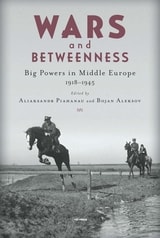
Wars and Betweenness
Big Powers and Middle Europe, 1918-1945Aliaksandr Piahanau
Central European University Press, 2020
The region between the Baltic and the Black Sea was marked by a set of crises and conflicts in the 1920s and 1930s, demonstrating the diplomatic, military, economic or cultural engagement of France, Germany, Russia, Britain, Italy and Japan in this highly volatile region, and critically damaging the fragile post-Versailles political arrangement. The editors, in naming this region as "Middle Europe" seek to revive the symbolic geography of the time and accentuate its position, situated between Big Powers and two World Wars.
The ten case studies in this book combine traditional diplomatic history with a broader emphasis on the geopolitical aspects of Big-Power rivalry to understand the interwar period. The essays claim that the European Big Powers played a key role in regional affairs by keeping the local conflicts and national movements under control and by exploiting the region's natural resources and military dependencies, while at the same time strengthening their prestige through cultural penetration and the cultivation of client networks.
The authors, however, want to avoid the simplistic view that the Big Powers fully dominated the lesser players on the European stage. The relationship was indeed hierarchical, but the essays also reveal how the "small states" manipulated Big-Power disagreements, highlighting the limits of the latters' leverage throughout the 1920s and the 1930s.
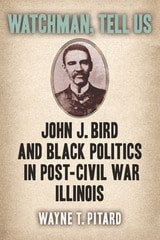
Watchman, Tell Us
John J. Bird and Black Politics in Post-Civil War IllinoisWayne T. Pitard
Southern Illinois University Press, 2024
The most influential Black leader in 19th century southern Illinois
This key biography of John J. Bird unveils the forgotten story of a remarkable Black political figure in post-Civil War Illinois. Emerging as a leader in Cairo, the city with Illinois’ second-largest Black community, Bird played a pivotal role in advancing civil rights within the state, also becoming Illinois’ first Black elected judge and first Black trustee of the University of Illinois. Watchman, Tell Us deftly examines Bird’s lifetime of service and advocacy for a vulnerable community and the ways in which he successfully advocated for and protected voting rights, educational opportunity, and public access for the Black residents of southern Illinois.
Bird arrived in Cairo at age twenty during the Civil War to aid the 2,000 Black refugees from the South living there. By 1870, he had established the city’s substantial Black Republican wing, providing the Black community with unprecedented political influence in this hostile, majority white, Democratic town. Under Bird’s leadership, the Black Republicans pressed for policies that improved the well-being of the African American population, including the early establishment of a Black public school, the rise of an integrated judicial system, and the ability to access public and private businesses. Bird became influential across Illinois as a judge and university trustee, a leader in the Black convention movement, and a significant newspaper editor in Cairo and Springfield. When Bird died in 1912, the nation he loved had once again betrayed its Black citizens, and it appeared that most of the achievements he had fought for had collapsed. But the work of Bird and the other civil rights workers of the nineteenth century created the foundation upon which the movements of the twentieth century could stand.

Water Politics in Northern Nevada
A Century of StruggleLeah J. Wilds
University of Nevada Press, 2010
Water Politics in Northern Nevada
A Century of Struggle, Second EditionLeah J. Wilds
University of Nevada Press, 2014
Water Politics in Northern Nevada examines the Newlands Project, its unintended consequences, and decades of litigation over the abatement of these problems and fair allocation of water. Negotiations and federal legislation brought about the Truckee River Operating Agreement in 2008. This revised edition brings the reader up to date on the implementation of the agreement, including ongoing efforts to preserve and enhance Pyramid Lake. The second edition now also includes a discussion of the Walker River basin, following a major project undertaken to address concerns about the health and viability of Walker Lake. The approaches taken to save these two desert treasures, Pyramid Lake and Walker Lake, are offered as models for resolving similar water-resource conflicts in the West.
Leah J. Wilds’s study is crucial reading for students and scholars of water politics and environmental issues, not just in Nevada but throughout the western United States.
Water and Power in Highland Peru
The Cultural Politics of Irrigation and DevelopmentPaul H Gelles
Rutgers University Press, 2000
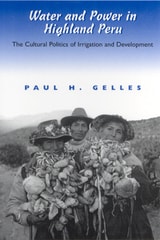
Cabanaconde, a town of 5,000 people, is located in the arid Andean highlands. It is dominated by the foreboding Hualca Hualca mountain peak that is the source of this town’s much-needed water. How the villagers obtain this water, Paul Gelles writes, is not a simple process: the politics of irrigation in this area reflect a struggle for control of vital resources, deeply rooted in the clash between local, ritualized models of water distribution and the secular model put forth by the Peruvian state. Water and Power in Highland Peru provides an insightful case study on the intense conflicts over water rights, and a framework for studying ethnic conflict and the effects of “development,” not only in Peru, but in other areas as well.
Most of the inhabitants of Cabanaconde do not identify themselves with the dominant Spanish-speaking culture found in Peru. And the Peruvian state, grounded in a racist, post-Colonial ethos, challenges the village’s long-standing, non-Western framework for organizing water management.
Gelles demonstrates that Andean culture is dynamic and adaptive, and it is a powerful source of ethnic identity, even for those who leave the village to live elsewhere. Indigenous rituals developed in this part of the world, he states, have become powerful tools of resistance against interference by local elites and the present-day Peruvian state. Most importantly, the micropolitics of Cabanaconde provide a window into a struggle that is taking place around the world.

Water and Ritual
The Rise and Fall of Classic Maya RulersBy Lisa J. Lucero
University of Texas Press, 2006
In the southern Maya lowlands, rainfall provided the primary and, in some areas, the only source of water for people and crops. Classic Maya kings sponsored elaborate public rituals that affirmed their close ties to the supernatural world and their ability to intercede with deities and ancestors to ensure an adequate amount of rain, which was then stored to provide water during the four-to-five-month dry season. As long as the rains came, Maya kings supplied their subjects with water and exacted tribute in labor and goods in return. But when the rains failed at the end of the Classic period (AD 850-950), the Maya rulers lost both their claim to supernatural power and their temporal authority. Maya commoners continued to supplicate gods and ancestors for rain in household rituals, but they stopped paying tribute to rulers whom the gods had forsaken.
In this paradigm-shifting book, Lisa Lucero investigates the central role of water and ritual in the rise, dominance, and fall of Classic Maya rulers. She documents commoner, elite, and royal ritual histories in the southern Maya lowlands from the Late Preclassic through the Terminal Classic periods to show how elites and rulers gained political power through the public replication and elaboration of household-level rituals. At the same time, Lucero demonstrates that political power rested equally on material conditions that the Maya rulers could only partially control. Offering a new, more nuanced understanding of these dual bases of power, Lucero makes a compelling case for spiritual and material factors intermingling in the development and demise of Maya political complexity.
Watergate Prosecutor
William H. Merrill
Michigan State University Press, 2008
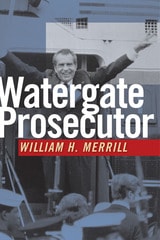
DC. Both of these crimes were eventually traced back to the "plumbers unit," which was directed by John Ehrlichman, President Nixon's top domestic aide. As he convincingly recounts, Merrill sought the job as Assistant Special Prosecutor for one reason: to bring these criminals to justice. In addition, as this revelatory account makes clear, he pursued that goal tenaciously.

Waves of Discontent
Electoral Volatility, Public Policymaking, and the Health of American DemocracyJacob F.H. Smith
University of Michigan Press, 2025
Conducting statistical analyses of a wide array of surveys, Smith found that these feelings of displeasure translate to lower turnout among voters from the president’s party and a higher percentage of independents voting for the other party. Subsequently, he conducted a content analysis of New York Times articles to look at the connection between unrest in American society and seat swings in congressional elections, even before the existence of polling. Examining the consequences of volatility in congressional elections reveals that political amateurs are more likely to win in wave years than in normal years. Based on this data, Smith presents a new theory about the policy process—the policy doom loop—in which frustration among voters at both the inability of Congress to pass policy and anger at policies that actually do pass results in even more churn in congressional elections. Waves of Discontent offers some suggestions to promote constructive policymaking efforts in Washington to reduce frustration in the electorate.

We Ain't What We Was
Civil Rights in the New SouthFrederick M. Wirt
Duke University Press, 1997
Wirt uses multiple indicators—interviews with leaders, attitude tests of children, content analysis of newspapers, school records, and voting and job data—to record what has changed in the Deep South as a result of the 60s revolution in civil rights. Although racism continues to exist in Panola, Wirt maintains that the current generation of southerners is sharply distinguished from its predecessors, and he effectively documents the transformations in individuals and institutions. In a time of increasing popular challenges to the use of law in support of civil liberties, or the place of the federal government to effect necessary social change, this book testifies to the great changes, both public and personal, that were brought about by the strong implementation of civil rights law over thirty years ago. "We Ain’t What We Was" shows that adaptation to change was not overnight, not final, but gradual and always persistent.
We Alone Will Rule
Native Andean Politics in the Age of InsurgencySinclair Thomson
University of Wisconsin Press, 2003
We Are All Zimbabweans Now
James Kilgore
Ohio University Press, 2011
We Are Left without a Father Here
Masculinity, Domesticity, and Migration in Postwar Puerto RicoEileen J. Suárez Findlay
Duke University Press, 2015
We Are Not a Vanishing People
The Society of American Indians, 1911–1923Thomas Constantine Maroukis
University of Arizona Press, 2021
Historian Thomas Constantine Maroukis discusses the goals, strategies, successes, and failures of the Indigenous intellectuals who came together to form the SAI. They engaged in lobbying, producing publications, informing the media, hundreds of speaking engagements, and annual conferences to argue for reform. Unfortunately, the forces of this era were against reforming federal policies: The group faced racism, a steady stream of negative stereotyping as a so-called vanishing race, and an indifferent federal bureaucracy. They were also beset by internal struggles, which weakened the organization.
This work sheds new light on the origins of modern protest in the twentieth century, and it shows how the intellectuals and activists associated with the SAI were able to bring Indian issues before the American public, challenging stereotypes and the “vanishing people” trope. Maroukis argues that that the SAI was not an assimilationist organization; they were political activists trying to free Indians from government wardship while maintaining their cultural heritage.
We Are the State!
Barrio Activism in Venezuela’s Bolivarian RevolutionCristobal Valencia
University of Arizona Press, 2015
The author offers an anthropological analysis of the state, social movements, and democracy as lived experiences of the poor, gendered, and racialized residents of two parishes in Caracas, Venezuela, and Afro-Venezuelan communities nearby. Ethnographic research reveals the shift in relationships of power and the evolving political practices among the Chavistas, the Chávez government, and the opposition. Examining the subjective experiences of barrio residents in everyday processes of state formation, this book provides a new perspective on the Chavistas, arguing that they are a broad-based social movement and driving force behind a revolution struggling to transfer state power to organized civil society.
Through his intense engagement with the constantly changing social, political, and economic dynamics, Valencia dramatically challenges top-down understandings of the state and power in Venezuela. He shows the unequal relationships between sectors of civil society, and he shows state formation as a process enmeshed in the struggles for social justice, demonstrating that the state is a sociopolitical entity that acts through civil society, rather than above it.
We Begin Bombing in Five Minutes
Late Cold War Culture in the Age of ReaganAndrew Hunt
University of Massachusetts Press, 2021
We Begin Bombing in Five Minutes focuses on a striking array of protest movements that took up issues such as the nuclear arms race, U.S. intervention in Central America, and American investments in South Africa. Hunt's new history of the eighties investigates how film, television, and other facets of popular culture critiqued Washington's Cold War policies and reveals that activists and cultural rebels alike posed a more meaningful challenge to the Cold War's excesses than their predecessors in the McCarthy era.

We Cannot Escape History
Lincoln and the Last Best Hope of EarthEdited by James M. McPherson
University of Illinois Press, 1995
A who's who of Lincoln scholars explores why Lincoln considered the Union the "last best hope of earth" and how his words and deeds have continued to shape the nation through modern times. Focusing on Lincoln's view of American history and his legacy for the United States and the world, this volume demonstrates the complexity of the problems Lincoln faced and the genius of his leadership in preserving the nation while purging it of slavery.
We Cannot Remain Silent
Opposition to the Brazilian Military Dictatorship in the United StatesJames N. Green
Duke University Press, 2010
Green interviewed many of the activists who educated journalists, government officials, and the public about the abuses taking place under the Brazilian dictatorship. Drawing on those interviews and archival research from Brazil and the United States, he describes the creation of a network of activists with international connections, the documentation of systematic torture and repression, and the cultivation of Congressional allies and the press. Those efforts helped to expose the terror of the dictatorship and undermine U.S. support for the regime. Against the background of the political and social changes of the 1960s and 1970s, Green tells the story of a decentralized, international grassroots movement that effectively challenged U.S. foreign policy.
We Created Chávez
A People's History of the Venezuelan RevolutionGeo Maher
Duke University Press, 2013
Based on interviews with grassroots organizers, former guerrillas, members of neighborhood militias, and government officials, Ciccariello-Maher presents a new history of Venezuelan political activism, one told from below. Led by leftist guerrillas, women, Afro-Venezuelans, indigenous people, and students, the social movements he discusses have been struggling against corruption and repression since 1958. Ciccariello-Maher pays particular attention to the dynamic interplay between the Chávez government, revolutionary social movements, and the Venezuelan people, recasting the Bolivarian Revolution as a long-term and multifaceted process of political transformation.
We Dream Together
Dominican Independence, Haiti, and the Fight for Caribbean FreedomAnne Eller
Duke University Press, 2016
We Have Not a Government
The Articles of Confederation and the Road to the ConstitutionGeorge William Van Cleve
University of Chicago Press, 2017
In George William Van Cleve’s book, we encounter a sharply divided America. The Confederation faced massive war debts with virtually no authority to compel its members to pay them. It experienced punishing trade restrictions and strong resistance to American territorial expansion from powerful European governments. Bitter sectional divisions that deadlocked the Continental Congress arose from exploding western settlement. And a deep, long-lasting recession led to sharp controversies and social unrest across the country amid roiling debates over greatly increased taxes, debt relief, and paper money. Van Cleve shows how these remarkable stresses transformed the Confederation into a stalemate government and eventually led previously conflicting states, sections, and interest groups to advocate for a union powerful enough to govern a continental empire.
Touching on the stories of a wide-ranging cast of characters—including John Adams, Patrick Henry, Daniel Shays, George Washington, and Thayendanegea—Van Cleve makes clear that it was the Confederation’s failures that created a political crisis and led to the 1787 Constitution. Clearly argued and superbly written, We Have Not a Government is a must-read history of this crucial period in our nation’s early life.
We Share Our Matters
Two Centuries of Writing and Resistance at Six Nations of the Grand RiverRick Monture
University of Manitoba Press, 2014
We Were the People
Voices from East Germany’s Revolutionary Autumn of 1989Dirk Philipsen
Duke University Press, 1993
The drama We Were the People recreates is remarkable for its richness and complexity. Here are citizens organizing despite threats of bloody crackdowns; party functionaries desperately trying to survive as time-honored political prerogatives crumble beneath their feet; an oppressed people discovering the possibilities of power and freedom, but also the sobering strangeness of new political realities. With their success, East Germans encountered the overpowering might of thie Western neighbor--and stand perplexed before the onslaught of real estate agents, glossy consumer ads, political professionalism--and the discovery that a lifetime of social experience has suddenly lost all usable context. They became, in the words of one participant, a people "without biography."
Over all the recent events and unlikely turns recounted here, one thing remains paramount: the sweep of the initial democratic conception that animated the East German revolution. We Were the People brings this movement to life in all its drama and detail, and vividly recovers a historic moment that altered forever the shape of modern Europe.
Some Voices of the People
Bärbel Bohley/ "Mother of the Revolution"
Rainer Eppelmann/ Protestant Pastor
Klaus Kaden/ Church Emissary to the Opposition
Hans Modrow/ Former Communist Prime Minister
Ludwig Mehlhorn/ Opposition Theorist
Ingrid Köppe/ Opposition Representative
Frank Eigenfeld/ New Forum
Harald Wagner/ Democracy Now
Sebastian Pflugbeil/ Democratic Strategist
East German Workers
Cornelia Matzke/ Independent Women's Alliance
André Brie/ Party Vice-Chairman
Gerhard Ruden/ Environmental Activist
Werner Bramke/ Party Academic
We Will Secure Our Future
Empowering the Navajo NationPeterson Zah and Peter Iverson
University of Arizona Press, 2012
And so began a career that took Zah to the presidency of the Navajo Nation. His life and accomplishments have exemplified the ongoing efforts by American Indian communities to gain greater control over their lives and lands. He has made important contributions in many areas, but education has always been one of his main priorities. Perhaps no one in the Southwest has done more than Peterson Zah to increase the recruitment, retention, and graduation of American Indian students from colleges and universities.
Zah's presentations to Peter Iverson's classes at Arizona State University, employed examples drawn from his own experiences. Students praised his thoughtful, honest and direct observations. He reinforced a central theme in Iverson's classesthat Indian history encompasses triumph as well as tragedy and victory as well as victimization.
This book grew out of Iverson's determination to share Zah's insights with a wider audience. The two met every few months to consider many subjects related to Zah's life. These sessions formed the foundation for this volume.
Part autobiography, part interview, and part conversation, Zah and Iverson's account touches on a wide range of overlapping topics, but two central themes prevail: education and empowerment. We Will Secure Our Future is a fascinating look into the life of a man who became a respected visionary and passionate advocate for his people.
We're Going to Run This City
Winnipeg's Political Left after the General StrikeStefan Epp-Koop
University of Manitoba Press, 2015
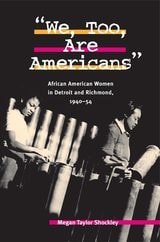
We, Too, Are Americans
African American Women in Detroit and Richmond, 1940-54Megan Taylor Shockley
University of Illinois Press, 2003
As demands on them intensified, the women working to provide American troops with clothing, medical supplies, and other services became increasingly aware of their key role in the war effort. A considerable number of the African Americans among them began to use their indispensability to leverage demands for equal employment, welfare and citizenship benefits, fair treatment, good working conditions, and other considerations previously denied them.
Shockley shows that as these women strove to redefine citizenship, backing up their claims to equality with lawsuits, sit-ins, and other forms of activism, they were forging tools that civil rights activists would continue to use in the years to come.
We, the People
Politics of National Peculiarity in Southeastern EuropeDiana Mishkova
Central European University Press, 2009
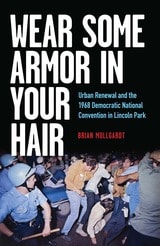
Wear Some Armor in Your Hair
Urban Renewal and the 1968 Democratic National Convention in Lincoln ParkBrian Mullgardt
Southern Illinois University Press, 2024
WINNER, 2025 Illinois State Historical Society Russell P. Strange Book of the Year Award!
Police brutality, gentrification, and grassroots activism in 1960s Chicago
In August of 1968, approximately 7,000 people protested the Vietnam War against the backdrop of the Democratic National Convention in Chicago. This highly televised event began peacefully but quickly turned into what was later termed a “police riot.” Brian Mullgardt’s investigation of this event and the preceding tensions shines a light on the ministers, Yippies, and community members who showed up and stood together against the brutality of the police. Charting a complex social history, Wear Some Armor in Your Hair brings together Chicago history, the 1960s, and urbanization, focusing not on the national leaders, but on the grassroots activists of the time.
Beginning in 1955, two competing visions of urban renewal existed, and the groups that propounded each clashed publicly, but peacefully. One group, linked to city hall, envisioned a future Lincoln Park that paid lip service to diversity but actually included very little. The other group, the North Side Cooperative Ministry, offered a different vision of Lincoln Park that was much more diverse in terms of class and race. When the Yippies announced anti-war protests for the summer of ‘68, the North Side Cooperative Ministry played an instrumental role. Ultimately, the violence of that week altered community relations and the forces of gentrification won out.
Mullgardt’s focus on the activists and community members of Lincoln Park, a neighborhood at the nexus of national trends, broadens the scope of understanding around a pivotal and monumental chapter of our history. The story of Lincoln Park, Chicago, is in many ways the story of 1960s activism writ small, and in other ways challenges us to view national trends differently.
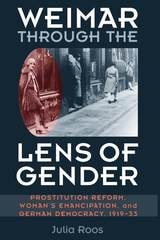
Weimar through the Lens of Gender
Prostitution Reform, Woman's Emancipation, and German Democracy, 1919-33Julia Roos
University of Michigan Press, 2010
"This book will make a valuable contribution to the field of German history, as well as the histories of gender and sexuality. The argument that Weimar feminism did bring about tangible gains for women needs to be made, and Roos has done so convincingly."
---Julia Sneeringer, Queens College
Until 1927, Germany had a system of state-regulated prostitution, under which only those prostitutes who submitted to regular health checks and numerous other restrictions on their personal freedom were tolerated by the police. Male clients of prostitutes were not subject to any controls. The decriminalization of prostitution in 1927 resulted from important postwar gains in women's rights; yet this change---while welcomed by feminists, Social Democrats, and liberals—also mobilized powerful conservative resistance. In the early 1930s, the right-wing backlash against liberal gender reforms like the 1927 prostitution law played a fateful role in the downfall of the Weimar Republic and the rise of Nazism.
Weimar through the Lens of Gender combines the political history of early twentieth-century Germany with analytical perspectives derived from the fields of gender studies and the history of sexuality. The book's argument will be of interest to a broad readership: specialists in the fields of gender studies and the history of sexuality, as well as historians and general readers interested in Weimar and Nazi Germany.
Julia Roos is Assistant Professor of History at Indiana University, Bloomington.
Jacket art: "Hamburg, vermutlich St. Pauli, 1920er–30er Jahre," photographer unknown, s/w-Fotografie. (Courtesy of the Museum für Hamburgische Geschichte.)
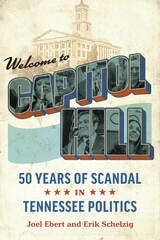
Welcome to Capitol Hill
Fifty Years of Scandal in Tennessee PoliticsJoel Ebert and Erik Schelzig
Vanderbilt University Press, 2023
Veteran political reporters Joel Ebert and Erik Schelzig draw from interviews, archival documents, and never-before-seen federal investigative files to provide readers with a handy resource about the wrongdoings of our elected officials.
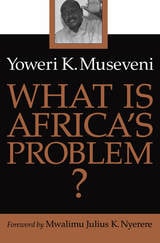
What Is Africa’s Problem
Yoweri K. Museveni
University of Minnesota Press, 2000
The president of Uganda addresses key questions about Africa’s future.
Recent seismic shifts in Congo and Rwanda have exposed the continued volatility of the state of affairs in central Africa. As African states have shaken off their postcolonial despots, new leaders with sweeping ideas about a pan-African alliance have emerged-and yet the internecine struggles go on. What is Africa’s problem? As one of the leaders expressing a broad and forceful vision for Africa’s future, Uganda’s Yoweri K. Museveni is perhaps better placed than anyone in the world to address the very question his book poses.
In 1986, after more than a decade of armed struggle, a rebellion led by Museveni toppled the dictatorship of Idi Amin, and Museveni, at 42, became president of Uganda, a country at that time in near total disarray. Since then, Uganda has made remarkable strides in political, civic, and economic arenas, and Museveni has assumed the role of "the éminence grise of the new leadership in central Africa" (Philip Gourevitch, New Yorker). As such, he has proven a powerful force for change, not just in Uganda but across the turbulent span of African states.This collection of Museveni’s writings and speeches lays out the possibilities for social change in Africa. Working with a broad historical understanding and an intimate knowledge of the problems at hand, Museveni describes how movements can be formed to foster democracy, how class consciousness can transcend tribal differences in the development of democratic institutions, and how the politics of identity operate in postcolonial Africa. Museveni’s own contributions to the overthrow of Zaire’s Mobutu Sese Seko and to the political transformation of Uganda suggest the kind of change that may sweep Africa in decades to come. What Is Africa’s Problem? gives a firsthand look at what those changes might be, how they might come about, and what they might mean.
What Is Taoism?
and Other Studies in Chinese Cultural HistoryHerrlee Glessner Creel
University of Chicago Press, 1982
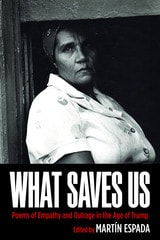
What Saves Us
Poems of Empathy and Outrage in the Age of TrumpEdited by Martín Espada
Northwestern University Press, 2019
This is an anthology of poems in the Age of Trump—and much more than Trump. These are poems that either embody or express a sense of empathy or outrage, both prior to and following his election, since it is empathy the president lacks and outrage he provokes.
There is an extraordinary diversity of voices here. The ninety-three poets featured include Elizabeth Alexander, Julia Alvarez, Richard Blanco, Carolyn Forché, Aracelis Girmay, Donald Hall, Juan Felipe Herrera, Yusef Komunyakaa, Naomi Shihab Nye, Marge Piercy, Robert Pinsky, Danez Smith, Patricia Smith, Brian Turner, Ocean Vuong, Bruce Weigl, and Eleanor Wilner. They speak of persecuted and scapegoated immigrants. They bear witness to violence: police brutality against African Americans, mass shootings in a school or synagogue, the rage inflicted on women everywhere. They testify to poverty: the waitress surviving on leftovers at the restaurant, the battles of a teacher in a shelter for homeless mothers, the emergency-room doctor listening to the heartbeats of his patients. There are voices of labor, in the factory and the fields. There are prophetic voices, imploring us to imagine the world we will leave behind in ruins lest we speak and act.
However, this is not merely a collection of grievances. The poets build bridges. One poet steps up to translate in Arabic at the airport; another walks through the city and sees her immigrant past in the immigrant present; another declaims a musical manifesto after the hurricane that devastated his island; another evokes a demonstration in the street, shouting in an ecstasy of defiance. The poets take back the language, resisting the demagogic corruption of words themselves. They assert our common humanity in the face of dehumanization.

What the Anti-Federalists Were For
The Political Thought of the Opponents of the ConstitutionHerbert J. Storing
University of Chicago Press, 1981
Storing here offers a brilliant introduction to the thought and principles of the Anti-Federalists as they were understood by themselves and by other men and women of their time. His comprehensive exposition restores to our understanding the Anti-Federalist share in the founding its effect on some of the enduring themes and tensions of American political life. The concern with big government and infringement of personal liberty one finds in the writings of these neglected Founders strikes a remarkably timely note.

Whatever Happened to Party Government?
Controversies in American Political ScienceMark Wickham-Jones
University of Michigan Press, 2018
In 1950, the Committee on Political Parties of the American Political Science Association (APSA) published its much-anticipated report, Toward a More Responsible Two-Party System. Highly critical of the existing state of affairs, the report became extremely controversial: before publication, scholars attacked the committee’s draft and suggested it should be suppressed. When released it received a barrage of criticisms. Most academics concluded it was an ill-conceived and mistaken initiative.
Mark Wickham-Jones provides the first full, archival-based assessment of the arguments within APSA about political parties and the 1950 report. He details the report’s failure to generate wider discussion between media, politicians, and the White House. He examines whether it was dominated by a dogmatic attachment to “party government,” and charts the relationship between behavioralists and institutionalists. He also discusses the political dimension to research during the McCarthyite years, and reflects on the nature of American political science in the years after 1945, the period in which behavioralism (which privileges the influence of individuals over institutions) became dominant.
Detailing APSA’s most direct and significant intervention in the political process, Wickham-Jones makes an important contribution to debates that remain in the forefront of discussions about American politics.
When America Turned
Reckoning with 1968David Wyatt
University of Massachusetts Press, 2013
Wyatt explores these questions as he retraces the decisive moments of 1968—the Tet Offensive, the McCarthy campaign, the assassinations of Martin Luther King Jr. and Robert Kennedy, the student revolt at Columbia, the "police riot" at the Democratic Convention in Chicago, Lyndon Johnson's capitulation, and Richard Nixon's ascendency to power. Seeking to recover the emotions surrounding these events as well as analyze their significance, Wyatt draws on the insights of what Michael Herr has called "straight" and "secret" histories. The first category consists of work by professional historians, traditional journalists, public figures, and political operatives, while the second includes the writings of novelists, poets, New Journalists, and memoirists.
The aim of this parallel approach is to uncover two kinds of truth: a "scholarly truth" grounded in the documented past and an "imaginative truth" that occupies the more ambiguous realm of meaning. Only by reckoning with both, Wyatt believes, can Americans come to understand the true legacy of the 1960s.
When Bad Things Happen to Privileged People
Race, Gender, and What Makes a Crisis in AmericaDara Z. Strolovitch
University of Chicago Press, 2023
A deep and thought-provoking examination of crisis politics and their implications for power and marginalization in the United States.
From the climate crisis to the opioid crisis to the Coronavirus crisis, the language of crisis is everywhere around us and ubiquitous in contemporary American politics and policymaking. But for every problem that political actors describe as a crisis, there are myriad other equally serious ones that are not described in this way. Why has the term crisis been associated with some problems but not others? What has crisis come to mean, and what work does it do?
In When Bad Things Happen to Privileged People, Dara Z. Strolovitch brings a critical eye to the taken-for-granted political vernacular of crisis. Using systematic analyses to trace the evolution of the use of the term crisis by both political elites and outsiders, Strolovitch unpacks the idea of “crisis” in contemporary politics and demonstrates that crisis is itself an operation of politics. She shows that racial justice activists innovated the language of crisis in an effort to transform racism from something understood as natural and intractable and to cast it instead as a policy problem that could be remedied. Dominant political actors later seized on the language of crisis to compel the use of state power, but often in ways that compounded rather than alleviated inequality and injustice. In this eye-opening and important book, Strolovitch demonstrates that understanding crisis politics is key to understanding the politics of racial, gender, and class inequalities in the early twenty-first century.
When Colombia Bled
A History of the Violencia in TolimaJames David Henderson
University of Alabama Press, 1985
A definitive account of the conflict that transformed twentieth-century Colombia.0false18 pt18 pt00falsefalsefalse
When Colombia Bled: A History of the Violencia in Tolima by James D. Henderson is a compelling and deeply researched examination of one of the most traumatic periods in modern Colombian history. Focusing on the department of Tolima, the book chronicles La Violencia, the undeclared civil war between Colombia's Liberal and Conservative parties that engulfed the nation from the late 1940s through the early 1960s. Through a richly detailed narrative, Henderson traces the political tensions, social divisions, and local rivalries that transformed regional disputes into a devastating cycle of violence affecting countless rural communities.
Drawing on extensive archival research, government records, contemporary accounts, and regional sources, Henderson reveals how national political struggles intersected with local circumstances to create a uniquely destructive conflict. The book explores the experiences of political leaders, campesinos, community activists, and ordinary citizens whose lives were shaped by insecurity, displacement, and armed confrontation. By focusing on Tolima, one of the regions most deeply affected by the conflict, Henderson offers a nuanced perspective on the broader forces that influenced Colombia's political development and social transformation.
Both an authoritative regional study and a major contribution to Latin American history, When Colombia Bled provides essential insight into the historical roots of political violence in Colombia and the enduring legacy of a conflict that helped shape the nation's modern identity.
When Lincoln Came to Egypt
George W. Smith, with a Foreword by Daniel W. Stowell
Southern Illinois University Press, 2017
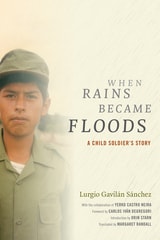
When Rains Became Floods
A Child Soldier's StoryLurgio Gavilán Sánchez
Duke University Press, 2015
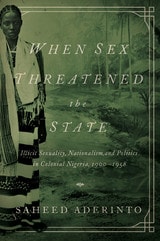
When Sex Threatened the State
Illicit Sexuality, Nationalism, and Politics in Colonial Nigeria, 1900-1958Saheed Aderinto
University of Illinois Press, 2015
As Saheed Aderinto shows, British colonizers saw prostitution as an African form of sexual primitivity and a problem to be solved as part of imperialism's "civilizing mission". He details the Nigerian response to imported sexuality laws and the contradictory ways both African and British reformers advocated for prohibition or regulation of prostitution. Tracing the tensions within diverse groups of colonizers and the colonized, he reveals how wrangling over prostitution camouflaged the negotiating of separate issues that threatened the social, political, and sexual ideologies of Africans and Europeans alike.
The first book-length project on sexuality in early twentieth century Nigeria, When Sex Threatened the State combines the study of a colonial demimonde with an urban history of Lagos and a look at government policy to reappraise the history of Nigerian public life.
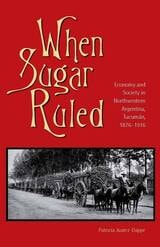
When Sugar Ruled
Economy and Society in Northwestern Argentina, Tucumán, 1876–1916Patricia Juarez-Dappe
Ohio University Press, 2010
Two tropical commodities—coffee and sugar—dominated Latin American export economies in the nineteenth and early twentieth centuries. When Sugar Ruled: Economy and Society in Northwestern Argentina, Tucumán, 1876–1916 presents a distinctive case that does not quite fit into the pattern of many Latin American sugar economies.
During the last quarter of the nineteenth century, the province of Tucumán emerged as Argentina’s main sugar producer, its industry catering almost exclusively to the needs of the national market and financed mostly by domestic capital. The expansion of the sugar industry provoked profound changes in Tucumán’s economy as sugar specialization replaced the province’s diversified productive structure. Since ingenios relied on outside growers for the supply of a large share of the sugarcane, sugar production did not produce massive land dispossession and resulted in the emergence of a heterogeneous planter group. The arrival of thousands of workers from neighboring provinces during the harvest season transformed rural society dramatically. As the most dynamic sector in Tucumán’s economy, revenues from sugar enabled the provincial government to participate in the modernizing movement sweeping turn-of-the-century Argentina.
Patricia Juarez-Dappe uncovers the unique features that characterized sugar production in Tucumán as well as the changes experienced by the province’s economy and society between 1876 and 1916, the period of most dramatic sugar expansion. When Sugar Ruled is an important addition to the literature on sugar economies in Latin America and Argentina.
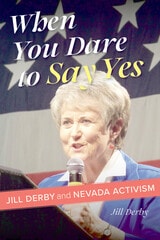
When You Dare to Say Yes
Jill Derby and Nevada ActivismJill Derby
University of Nevada Press, 2024
Derby’s account of the awakening of her post-college experience living abroad and stories of her global travels infuse this memoir with an international perspective and entertaining vignettes. Ultimately, Derby shares her personal understanding of the transformative power of living among different cultures.
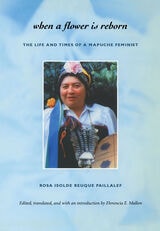
When a Flower Is Reborn
The Life and Times of a Mapuche FeministRosa Isolde Reuque Paillalef, Edited, translated, and with an introduction by Florencia E. Mallon
Duke University Press, 2002
A leading activist during the Pinochet dictatorship, Reuque—a woman, a Catholic, and a Christian Democrat—often felt like an outsider within the male-dominated, leftist Mapuche movement. This sense of herself as both participant and observer allows for Reuque’s trenchant, yet empathetic, critique of the Mapuche ethnic movement and of the policies regarding indigenous people implemented by Chile’s post-authoritarian government. After the 1990 transition to democratic rule, Reuque collaborated with the government in the creation of the Indigenous Development Corporation (CONADI) and the passage of the Indigenous Law of 1993. At the same time, her deepening critiques of sexism in Chilean society in general, and the Mapuche movement in particular, inspired her to found the first Mapuche feminist organization and participate in the 1996 International Women’s Conference in Beijing. Critical of the democratic government’s inability to effectively address indigenous demands, Reuque reflects on the history of Mapuche activism, including its disarray in the early 1990s and resurgence toward the end of the decade, and relates her hopes for the future.
An important reinvention of the testimonial genre for Latin America’s post-authoritarian, post-revolutionary era, When a Flower Is Reborn will appeal to those interested in Latin America, race and ethnicity, indigenous people’s movements, women and gender, and oral history and ethnography.
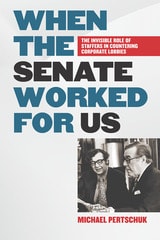
When the Senate Worked for Us
The Invisible Role of Staffers in Countering Corporate LobbiesMichael Pertschuk
Vanderbilt University Press, 2017
What has remained untold is the major behind-the-scenes contribution of entrepreneurial Congressional staff, who planted the seeds of public interest bills in their bosses' minds and maneuvered to counteract the influence of lobbyists to pass laws in consumer protection, public health, and other policy arenas crying out for effective government regulation. They infuriated Nixon's advisor, John Ehrlichman, who called them "bumblebees," a name they wore as a badge of honor.
For his insider account, Pertschuk draws on many interviews, as well as his fifteen years serving on the staff of the Senate Commerce Committee that Senator Warren Magnuson chaired and as the committee's Democratic Staff Director. That committee became, in Ralph Nader's words, "the Grand Central Station for consumer protection advocates."