Results by title
262 books match the query 'Sex role' and 17 start with w
What Gender Is, What Gender Does
Judith Roof
University of Minnesota Press, 2016
What Gender Is, What Gender Does provides a forceful new paradigm for considering genders. With depth and insight, Judith Roof argues that genders are much more than binary. And they are constantly morphing: they are conscious and unconscious, simultaneously conventional and idiosyncratic. At any moment, more than one gender dynamic is at work in any individual.
Roof’s interpretation of genders isn’t content with either biological duality or endlessly open performativity, and what results is a nuanced and surprising representation of gender—an account that captures the complexities of lived experience as well as lived ideology. For Roof, genders are interacting sets of operations that link individual desires to multiple, shifting manifestations of sociocultural positioning and self-presentation. Thus, “to gender” is to signal, mask, suggest, mislead, and simplify the uncontainable chaos of desires characteristic of subjects but roundly contained by society.
Drawing illustrative material from contemporary popular culture productions, including My Big Fat Greek Wedding, Spider-Man, Shrek, Shallow Hal, Sex and the City, Bridesmaids, Bond films, and “bromance” movies, What Gender Is, What Gender Does demonstrates how the persistent conflation of gender and sexual difference is, on the one hand, a simple taxonomic urge and, on the other, a cover that offers the security of identity in place of the frustrations and fears of the real asymmetries of personal power dynamics.
What Women Want
Gender and Voting in Britain, Japan and the United StatesGill Steel
University of Michigan Press, 2022
What Women Want analyzes decades of voting preferences, values, and policy preferences to debunk some of the media and academic myths about gender gaps in voting and policy preferences. Findings show that no single theory explains when differences in women’s and men’s voting preferences emerge, when they do not, or when changes—or the lack thereof—occur over time. Steel extends existing theories to create a broader framework for thinking about gender and voting behavior to provide more analytical purchase in understanding gender and its varying effects on individual voters’ preferences. She incorporates the long-term effects of party identification and class politics on political decision-making, particularly in how they influence preferences on social provision and on expectations of the state. She also points to the importance of symbolic politics
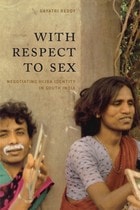
With Respect to Sex
Negotiating Hijra Identity in South IndiaGayatri Reddy
University of Chicago Press, 2005
Hijras are men who sacrifice their genitalia to a goddess in return for the power to confer fertility on newlyweds and newborn children, a ritual role they are respected for, at the same time as they are stigmatized for their ambiguous sexuality. By focusing on the hijra community, Gayatri Reddy sheds new light on Indian society and the intricate negotiations of identity across various domains of everyday life. Further, by reframing hijra identity through the local economy of respect, this ethnography highlights the complex relationships among local and global, sexual and moral, economies.
This book will be regarded as the definitive work on hijras, one that will be of enormous interest to anthropologists, students of South Asian culture, and specialists in the study of gender and sexuality.
Wives Not Slaves
Patriarchy and Modernity in the Age of RevolutionsKirsten Sword
University of Chicago Press, 2021
Kirsten Sword’s richly researched history reconstructs the stories of wives who fled their husbands between the mid-seventeenth and early nineteenth centuries, comparing their plight with that of other runaway dependents. Wives not Slaves explores the links between local justice, the emerging press, and transatlantic political debates about marriage, slavery and imperial power. Sword traces the relationship between the distress of ordinary households, domestic unrest, and political unrest, shedding new light on the social changes imagined by eighteenth-century revolutionaries, and on the politics that determined which patriarchal forms and customs the new American nation would—and would not—abolish.
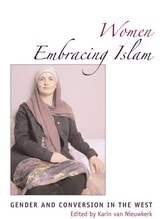
Women Embracing Islam
Gender and Conversion in the WestEdited by Karin van Nieuwkerk
University of Texas Press, 2006
Many Westerners view Islam as a religion that restricts and subordinates women in both private and public life. Yet a surprising number of women in Western Europe and America are converting to Islam. What attracts these women to a belief system that is markedly different from both Western Christianity and Western secularism? What benefits do they gain by converting, and what are the costs? How do Western women converts live their new Islamic faith, and how does their conversion affect their families and communities? How do women converts transmit Islamic values to their children? These are some of the questions that Women Embracing Islam seeks to answer.
In this vanguard study of gender and conversion to Islam, leading historians, sociologists, anthropologists, and theologians investigate why non-Muslim women in the United States, several European countries, and South Africa are converting to Islam. Drawing on extensive interviews with female converts, the authors explore the life experiences that lead Western women to adopt Islam, as well as the appeal that various forms of Islam, as well as the Nation of Islam, have for women. The authors find that while no single set of factors can explain why Western women are embracing Islamic faith traditions, some common motivations emerge. These include an attraction to Islam's high regard for family and community, its strict moral and ethical standards, and the rationality and spirituality of its theology, as well as a disillusionment with Christianity and with the unrestrained sexuality of so much of Western culture.
Women and Borderline Personality Disorder
Symptoms and StoriesWirth-Cauchon, Janet
Rutgers University Press, 2000
At the beginning of the twentieth century, “hysteria” was a medical or psychiatric diagnosis applied primarily to women. In fact, the term itself comes from the Greek, meaning “wandering womb.” We have since learned, however, that this diagnosis evolved from certain assumptions about women’s social roles and mental characteristics, and is no longer in use.
The modern equivalent of hysteria, however, may be borderline personality disorder, defined as “a pervasive pattern of instability of self-image, interpersonal relationships, and mood, beginning in early adulthood and present in a variety of contexts.” This diagnosis is applied to women so much more often than to men that feminists have begun to raise important questions about the social, cultural, and even the medical assumptions underlying this “illness.” Women are said to be “unstable” when they may be trying to reconcile often contradictory and conflicting social expectations.
In Women and Borderline Personality Disorder, Janet Wirth-Cauchon presents a feminist cultural analysis of the notions of “unstable” selfhood found in case narratives of women diagnosed with borderline personality disorder. This exploration of contemporary post-Freudian psychoanalytic notions of the self as they apply to women’s identity conflicts is an important contribution to the literature on social constructions of mental illness in women and feminist critiques of psychiatry in general.

Women and Men in Late Eighteenth-Century Egypt
By Afaf Lutfi al-Sayyid Marsot
University of Texas Press, 1995
In the late eighteenth century, decentralized and chaotic government in Egypt allowed women a freedom of action that has not been equaled until recent times. Delving extensively into archival sources, Afaf Marsot presents the first comprehensive picture of women's status and opportunities in this period.
Marsot makes important connections between forms of government, economic possibilities, and gender relations, showing how political instability allowed women to acquire property, independent of males, as a hedge against political uncertainty. She traces the linkages that women formed among themselves and with the ulama (non-Ottoman native elites) who aided and supported them. The book concludes with a comparison of women's status in the nineteenth century, when the introduction of European institutions that did not recognize their legal existence marginalized women, causing them to have to rely on men as major breadwinners. These important findings about the relationship between forms of government and the status of women will be of interest to a wide audience.
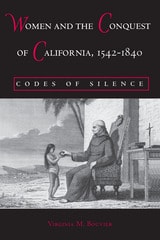
Women and the Conquest of California, 1542-1840
Codes of SilenceVirginia M. Bouvier
University of Arizona Press, 2001

Women for President
Media Bias in Eight CampaignsErika Falk
University of Illinois Press, 2007
When Hillary Clinton announced her 2008 bid for president she was the Democratic front-runner. Despite this, she received less coverage than Barack Obama, who trailed her in the polls. Such a disparity is indicative of the gender bias the media has demonstrated in covering women candidates since the first woman ran for America’s highest office in 1872. Tracing the campaigns of eight women who ran for president through 2004--Victoria Woodhull, Belva Lockwood, Margaret Chase Smith, Shirley Chisholm, Patricia Schroeder, Lenora Fulani, Elizabeth Dole, and Carol Moseley Braun--Erika Falk finds little progress in the fair treatment of women candidates. A thorough comparison of the women’s campaigns to those of their male opponents reveals a worrisome trend of sexism in press coverage--a trend that still persists today.
While women have been elected to the highest offices in countries such as England, Germany, and India, the idea that a woman could be president of the United States provokes scoffs and ridicule. The press portrays female candidates as unviable, unnatural, and incompetent, and often ignores or belittles women instead of reporting their ideas and intent. Since voters learn most details about presidential candidates through media outlets, Falk asserts that this prevailing bias calls into question the modern democratic assumption that men and women have comparable access to positions of power.
Women for President
Media Bias in Nine CampaignsErika Falk
University of Illinois Press, 2010
Newly updated to examine Hillary Clinton's formidable 2008 presidential campaign, Women for President analyzes the gender bias the media has demonstrated in covering women candidates since the first woman ran for America's highest office in 1872. Tracing the campaigns of nine women who ran for president through 2008--Victoria Woodhull, Belva Lockwood, Margaret Chase Smith, Shirley Chisholm, Patricia Schroeder, Lenora Fulani, Elizabeth Dole, Carol Moseley Braun, and Hillary Clinton--Erika Falk finds little progress in the fair treatment of women candidates. The press portrays female candidates as unviable, unnatural, and incompetent, and often ignores or belittles women instead of reporting their ideas and intent. This thorough comparison of men's and women's campaigns reveals a worrisome trend of sexism in press coverage--a trend that still persists today.
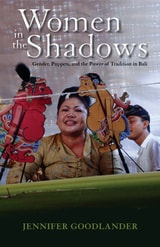
Women in the Shadows
Gender, Puppets, and the Power of Tradition in BaliJennifer Goodlander
Ohio University Press, 2016
Wayang kulit, or shadow puppetry, connects a mythic past to the present through public ritual performance and is one of most important performance traditions in Bali. The dalang, or puppeteer, is revered in Balinese society as a teacher and spiritual leader. Recently, women have begun to study and perform in this traditionally male role, an innovation that has triggered resistance and controversy.
In Women in the Shadows, Jennifer Goodlander draws on her own experience training as a dalang as well as interviews with early women dalang and leading artists to upend the usual assessments of such gender role shifts. She argues that rather than assuming that women performers are necessarily mounting a challenge to tradition, “tradition” in Bali must be understood as a system of power that is inextricably linked to gender hierarchy.
She examines the very idea of “tradition” and how it forms both an ideological and social foundation in Balinese culture. Ultimately, Goodlander offers a richer, more complicated understanding of both tradition and gender in Balinese society. Following in the footsteps of other eminent reflexive ethnographies, Women in the Shadows will be of value to anyone interested in performance studies, Southeast Asian culture, or ethnographic methods.
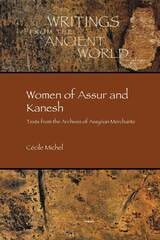
Women of Assur and Kanesh
Texts from the Archives of Assyrian MerchantsCécile Michel
SBL Press, 2020
Vivid sources for reconstructing the lives of Assyrian women
In this collection Cécile Michel translates into English texts related to wives and daughters of merchants and to their activities in nineteenth-century BCE Aššur and Kaneš. Discovered in excavations of the Old Assyrian private archives at Kültepe (ancient Kaneš) in Central Anatolia, these letters sent from Aššur reflect the preeminent role of Assyrian women within the family and in the domestic economy, as well as their contribution to long-distance trade. Contracts and other legal texts excavated at Kültepe attest to Assyrian and Anatolian women as parties in marriage and divorce contracts, last wills, loans, and purchase contracts. These unique finds paint a vivid portrait of women who aspire to be socially respected and provide a rare opportunity to reconstruct their daily lives as both businesswomen and housewives.
Features
- More than three hundred letters and documents transliterated and translated with commentary
- An overview of the study of women and gender in Assyriology
- A reconstruction of women's roles as textile producers, investors, and creditors within a long-distance commercial network
Cécile Michel is Senior Researcher at the National Center for Scientific Research (CNRS, France) and Professor at Hamburg University (Germany). She is a member of the international group of scholars in charge of the decipherment of the 23,000 tablets found at Kültepe (ancient Kaneš) and of the Kültepe archaeological team. She is the coeditor of and contributor to The Role of Women in Work and Society in the Ancient Near East (2016), Textile Terminologies from the Orient to the Mediterranean and Europe, 1000 BC to 1000 AD (2017), and Mathematics, Administrative and Economic Activities in Ancient Worlds (2020).
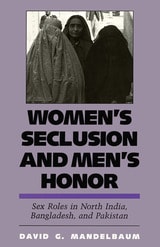
Women's Seclusion and Men's Honor
Sex Roles in North India, Bangladesh, and PakistanDavid G. Mandelbaum
University of Arizona Press, 1988
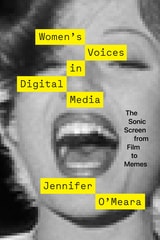
Women's Voices in Digital Media
The Sonic Screen from Film to MemesJennifer O'Meara
University of Texas Press, 2022
2023 Publication Award Honorable Mention, British Association for Film, Television and Screen Studies
An examination of the sound and silence of women in digital media.
In today’s digital era, women’s voices are heard everywhere—from smart home devices to social media platforms, virtual reality, podcasts, and even memes—but these new forms of communication are often accompanied by dated gender politics. In Women’s Voices in Digital Media, Jennifer O’Meara dives into new and well-established media formats to show how contemporary screen media and cultural practices police and fetishize women’s voices, but also provide exciting new ways to amplify and empower them.
As she travels through the digital world, O’Meara discovers newly acknowledged—or newly erased—female voice actors from classic films on YouTube, meets the AI and digital avatars in Her and The Congress, and hears women’s voices being disembodied in new ways via podcasts and VR voice-overs. She engages with dialogue that is spreading with only the memory of a voice, looking at how popular media like Clueless and The Simpsons have been mined for feminist memes, and encounters vocal ventriloquism on RuPaul’s Drag Race that queers and valorizes the female voice. Through these detailed case studies, O’Meara argues that the digital proliferation of screens alters the reception of sounds as much as that of images, with substantial implications for women’s voices.
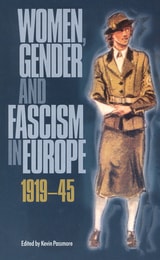
Women, Gender and Fascism in Europe, 1919-45
Passmore, Kevin
Rutgers University Press, 2003
What attracts women to far-right movements that appear to denigrate their rights?
This question has vexed feminist scholars for decades and has led to many lively debates in the academy. In this context, during the 1980s, the study of women, gender, and fascism in twentieth-century Europe took off, pioneered by historians such as Claudia Koonz and Victoria de Grazia. This volume makes an exciting contribution to the evolving body of work based upon these earlier studies, bringing emerging scholarship on Central and Eastern Europe alongside that of more established Western European historiography on the topic.
Women, Gender and Fascism in Europe, 191945 features fourteen essays covering Serbia, Croatia, Yugoslavia, Romania, Hungary, Latvia, and Poland in addition to Germany, Italy, France, Spain, and Britain, and a conclusion that pulls together a European-wide perspective. As a whole, the volume provides a compelling comparative examination of this important topic through current research, literature reviews, and dialogue with existing debates. The essays cast new light on questions such as womens responsibility for the collapse of democracy in interwar Europe, the interaction between the womens movement and the extreme right, and the relationships between conceptions of national identity and gender.

Writing the Trail
Five Women's Frontier NarrativesDeborah Lawrence
University of Iowa Press, 2006
Written by the Body
Gender Expansiveness and Indigenous Non-Cis MasculinitiesLisa Tatonetti
University of Minnesota Press, 2021
Examining the expansive nature of Indigenous gender representations in history, literature, and film
Within Native American and Indigenous studies, the rise of Indigenous masculinities has engendered both productive conversations and critiques. Lisa Tatonetti intervenes in this conversation with Written by the Body by centering how female, queer, and/or Two-Spirit Indigenous people take up or refute masculinity, and, in the process, offer more expansive understandings of gender.
Written by the Body moves from the eighteenth- and nineteenth-century archive to turn-of-the-century and late-twentieth-century fiction to documentaries, HIV/AIDS activism, and, finally, recent experimental film and literature. Across it all, Tatonetti shows how Indigenous gender expansiveness, and particularly queer and non-cis gender articulations, moves between and among Native peoples to forge kinship, offer protection, and make change. She charts how the body functions as a somatic archive of Indigenous knowledge in Native histories, literatures, and activisms—exploring representations of Idle No More in the documentary Trick or Treaty, the all-female wildland firefighting crew depicted in Apache 8, Chief Theresa Spence, activist Carole laFavor, S. Alice Callahan, Thirza Cuthand, Joshua Whitehead, Carrie House, and more.
In response to criticisms of Indigenous masculinity studies, Written by the Body de-sutures masculinity from the cis-gendered body and investigates the ways in which female, trans, and otherwise nonconforming masculinities carry the traces of Two-Spirit histories and exceed the limitations of settler colonial imaginings of gender.