Results by title
22279 books match the query 'Social Science' and 963 start with w

W Stands for Women
How the George W. Bush Presidency Shaped a New Politics of GenderMichaele L. Ferguson and Lori J. Marso, eds.
Duke University Press, 2007
In W Stands for Women ten feminist scholars analyze various aspects of Bush’s persona, language, and policy to show how his administration has shaped a new politics of gender. One contributor points out the shortcomings of “compassionate conservatism,” a political philosophy that requires a weaker class to be the subject of compassion. Another examines Lynndie England’s participation in the abuse of prisoners at Abu Ghraib in relation to the interrogation practices elaborated in the Army Field Manual, practices that often entail “feminizing” detainees by stripping them of their masculine gender identities. Whether investigating the ways that Bush himself performs masculinity or the problems with discourse that positions non-Western women as supplicants in need of saving, these essays highlight the far-reaching consequences of the Bush administration’s conflation of feminist rhetoric, conservative gender ideology, and neoconservative national security policy.
Contributors. Andrew Feffer, Michaele L. Ferguson, David S. Gutterman, Mary Hawkesworth, Timothy Kaufman-Osborn, Lori Jo Marso, Danielle Regan, R. Claire Snyder, Iris Marion Young, Karen Zivi
Michaela Ferguson and Karen Zivi appeared on KPFA’s Against the Grain on September 11, 2007. Listen to the audio.
Michaela Ferguson and Lori Jo Marso appeared on WUNC’s The State of Things on August 30, 2007. Listen to the audio.
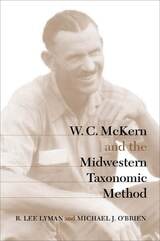
W. C. McKern and the Midwestern Taxonomic Method
Written by R. Lee Lyman and Michael J. O'Brien
University of Alabama Press, 2002
Explores W. C. McKern's use of Linnaean taxonomy as the model for development of a pottery classification system
By the early 20th century, North American archaeologists had found evidence of a plethora of prehistoric cultures displaying disparate geographic and chronological distributions. But there were no standards or algorithms for specifying when a culture was distinct or identical to another in a nearby or distant region.
Will Carleton McKern of the Milwaukee Public Museum addressed this fundamental problem of cultural classification beginning in 1929. He modeled his solution—known as the Midwestern Taxonomic Method—on the Linnaean biological taxonomy because he wanted the ability to draw historical and cultural "relationships" among cultures. McKern was assisted during development of the method by Carl E. Guthe, Thorne Deuel, James B. Griffin, and William Ritchie.
This book studies the 1930s correspondence between McKern and his contemporaries as they hashed out the method's nuances. It compares the several different versions of the method and examines the Linnaean biological taxonomy as it was understood and used at the time McKern adapted it to archaeological problems. Finally, this volume reveals how and why the method failed to provide the analytical solution envisioned by McKern and his colleagues and how it influenced the later development of Americanist archaeology.
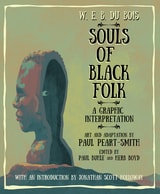
W. E. B. Du Bois Souls of Black Folk
A Graphic InterpretationW. E. B. Du Bois (1868-1963)
Rutgers University Press, 2023
“The problem of the twentieth century is the problem of the color line.” These were the prescient words of W. E. B. Du Bois’s influential 1903 book The Souls of Black Folk. The preeminent Black intellectual of his generation, Du Bois wrote about the trauma of seeing the Reconstruction era’s promise of racial equality cruelly dashed by the rise of white supremacist terror and Jim Crow laws. Yet he also argued for the value of African American cultural traditions and provided inspiration for countless civil rights leaders who followed him. Now artist Paul Peart-Smith offers the first graphic adaptation of Du Bois’s seminal work.
Peart-Smith’s graphic adaptation provides historical and cultural contexts that bring to life the world behind Du Bois’s words. Readers will get a deeper understanding of the cultural debates The Souls of Black Folk engaged in, with more background on figures like Booker T. Washington, the advocate of black economic uplift, and the Pan-Africanist minister Alexander Crummell. This beautifully illustrated book vividly conveys the continuing legacy of The Souls of Black Folk, effectively updating it for the era of the 1619 Project and Black Lives Matter.

W. E. B. Du Bois
Revolutionary Across the Color LineBill V. Mullen
Pluto Press, 2016
Du Bois was born in Massachusetts in 1868, just three years after formal emancipation of America’s slaves. In his extraordinarily long and active political life, he would emerge as the first black man to earn a PhD from Harvard; surpass Booker T. Washington as the leading advocate for African American rights; co-found the NAACP, and involve himself in anti-imperialist and anti-colonial struggles across Asia and Africa. Beyond his Civil Rights work, Mullen also examines Du Bois's attitudes towards socialism, the USSR, China’s Communist Revolution, and the intersectional relationship between capitalism, poverty and racism.
An accessible introduction to a towering figure of American Civil Rights, perfect for anyone wanting to engage with Du Bois’s life and work.

W. E. B. DuBois on Sociology and the Black Community
W. E. B. DuBois
University of Chicago Press, 1978
The editors provide an annotated bibliography, a lengthy overview of Du Bois's life and work, and detailed introductions to the selections.
"The most significant contribution of this book is its inclusive look at Du Bois as both academic and activist. . . . Individuals interested in the study of social issues and political sociology would benefit from reading and discussing this book."—Paul Kriese, Sociology: Reviews of New Books
"Green and Driver, informing this volume with a 48-page essay that summarizes Du Bois' career and places him in the context of the profession, have intelligently organized his writings. . . . A welcome contribution that should have wide use."—Elliott Rudwick, Contemporary Sociology
W. E. B. DuBois on Sociology and the Black Community
W. E. B. DuBois
University of Chicago Press, 1978
Historian, journalist, educator, and civil rights advocate W. E. B. Du Bois was perhaps most accomplished as a sociologist of race relations and of the black community in the United States. This volume collects his most important sociological writings from 1898 to 1910. The eighteen selections include five on Du Bois's conception of sociology and sociological research, especially as a tool in the struggle for racial justice; excerpts from studies of black communities in the South and the North, including The Philadelphia Negro; writings on black culture and social life, with a selection from The Negro American Family; and later works on race relations in the United States and elsewhere after World War II. This section includes a powerful fiftieth-anniversary reassessment of his classic 1901 article in the Atlantic in which he predicted that "the problem of the twentieth century is the problem of the color line."
The editors provide an annotated bibliography, a lengthy overview of Du Bois's life and work, and detailed introductions to the selections.
"The most significant contribution of this book is its inclusive look at Du Bois as both academic and activist. . . . Individuals interested in the study of social issues and political sociology would benefit from reading and discussing this book."—Paul Kriese, Sociology: Reviews of New Books
"Green and Driver, informing this volume with a 48-page essay that summarizes Du Bois' career and places him in the context of the profession, have intelligently organized his writings. . . . A welcome contribution that should have wide use."—Elliott Rudwick, Contemporary Sociology

WELFARE REFORM IN WEST VIRGINIA
ROBERT J. DILGER
West Virginia University Press, 2004
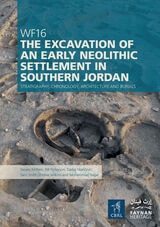
WF16
Excavations at an Early Neolithic Settlement in Southern JordanSteven Mithen
Council for British Research in the Levant, 2018

WPAing in a Pandemic and Beyond
Revision, Innovation, and AdvocacyTodd Ruecker
Utah State University Press, 2025
The chapters in this collection include a variety of voices who have been involved in writing program administration in recent years to reflect on the work done in this moment of crisis. Through both short vignettes and longer chapters, this book explores the complicated interactions between WPA work and navigating times of crisis to provide insights for moving forward. Authors explore a variety of topics including professional development, curricular change, advocating in the face of intransigent administrations and others, caring for students, and taking time for self-care. Pointing to specific actions for continued advocacy, WPAing in a Pandemic and Beyond will be of great interest to WPAs and writing studies scholars.
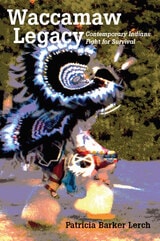
Waccamaw Legacy
Contemporary Indians Fight for SurvivalWritten by Patricia Lerch
University of Alabama Press, 2004
An insightful and informative look into the Waccamaw Siouan's quest for identity and survival
Waccamaw Legacy: Contemporary Indians Fight for Survival sheds light on North Carolina Indians by tracing the story of the now state-recognized Waccamaw Siouan tribe from its beginnings in the Southeastern United States, through their first contacts with Europeans, and into the 21st century, detailing the struggles these Indians have endured over time. We see how the Waccamaw took hold of popular theories about Indian tribes like the Croatan of the Lost Colony and the Cherokee as they struggled to preserve their heritage and to establish their identity.
Patricia Lerch was hired by the Waccamaw in 1981 to perform the research needed to file for recognition under the Bureau of Indian Affairs Federal Acknowledgement Program of 1978. The Waccamaw began to organize powwows in 1970 to represent publicly their Indian heritage and survival and to spread awareness of their fight for cultural preservation and independence. Lerch found herself understanding that the powwows, in addition to affirming identity, revealed important truths about the history of the Waccamaw and the ways they communicate and coexist.
Waccamaw Legacy outlines Lerch’s experience as she played a vital role in the Waccamaw Siouan's continuing fight for recognition and acceptance in contemporary society and culture.

Wageless Life
A Manifesto for a Future beyond CapitalismIan G. R. Shaw
University of Minnesota Press, 2019
Drawing up alternate ways to “make a living” beyond capitalism
To live in this world is to be conditioned by capital. Once paired with Western democracy, unfettered capitalism has led to a shrinking economic system that squeezes out billions of people—creating a planet of surplus populations. Wageless Life is a manifesto for building a future beyond the toxic failures of late-stage capitalism. Daring to imagine new social relations, new modes of economic existence, and new collective worlds, the authors provide skills and tools for perceiving—and living in— a post-capitalist future.
Forerunners: Ideas First
Short books of thought-in-process scholarship, where intense analysis, questioning, and speculation take the lead
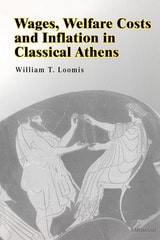
Wages, Welfare Costs and Inflation in Classical Athens
William T. Loomis
University of Michigan Press, 1999
Individual chapters critically examine each surviving wage or other payment in thirteen job categories, including public office holders; soldiers and sailors; priests, oracles, and seers; overseers, architects, and other salaried construction personnel; and prostitutes and pimps. Three additional chapters then consider whether there was a "standard wage," inflation and deflation in Athens, and the implications of these conclusions for the hotly debated question about the nature of the Athenian economy.
This is the first comprehensive study of Athenian labor and welfare costs since August Böckh's Die Staatshaushaltung der Athener (1886). An updated critical study has been much needed, to take account of the greatly expanded evidence (Aristotle's Constitution of the Athenians, more than a dozen other papyrus texts and hundreds of inscriptions), and the uneven quality of the sources. This collection allows William T. Loomis to argue--contrary to prevailing scholarly opinion--that there never was a "standard wage" at Athens.
"This volume will be a significant contribution to all studies of ancient Greek civilization." --Alan L. Boegehold, Brown University
William Loomis is Visiting Professor of Classics, University of Michigan.
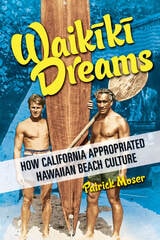
Waikiki Dreams
How California Appropriated Hawaiian Beach CulturePatrick Moser
University of Illinois Press, 2024
Despite a genuine admiration for Native Hawaiian culture, white Californians of the 1930s ignored authentic relationships with Native Hawaiians. Surfing became a central part of what emerged instead: a beach culture of dressing, dancing, and acting like an Indigenous people whites idealized.
Patrick Moser uses surfing to open a door on the cultural appropriation practiced by Depression-era Californians against a backdrop of settler colonialism and white nationalism. Recreating the imagined leisure and romance of life in Waikīkī attracted people buffeted by economic crisis and dislocation. California-manufactured objects like surfboards became a physical manifestation of a dream that, for all its charms, emerged from a white impulse to both remove and replace Indigenous peoples. Moser traces the rise of beach culture through the lives of trendsetters Tom Blake, John “Doc” Ball, Preston “Pete” Peterson, Mary Ann Hawkins, and Lorrin “Whitey” Harrison while also delving into California’s control over images of Native Hawaiians via movies, tourism, and the surfboard industry.
Compelling and innovative, Waikīkī Dreams opens up the origins of a defining California subculture.

Waiting For The Revolution To End
Syrian Displacement, Time and SubjectivityCharlotte Al-Khalili
University College London, 2023
Based on more than three years of embedded fieldwork with Syrians displaced in the border city of Gaziantep (southern Turkey), this book places the Syrian revolution and its tragic aftermath under ethnographic scrutiny. It charts the evolution from peaceful uprising (2011) to armed confrontation (2012), descent into fully fledged conflict (2013) and finally to proxy war (2015), to propose an understanding of revolution beyond success and failure.
While the Assad regime remains in place, the Syrian revolution (al-thawra) still holds a transformational power that can be located on intimate and world-making scales. Charlotte Al-Khalili traces the unintended consequences of revolution to reveal the reshaping of Syrian life-worlds and exiles’ evolving theorizations, experiences, and imaginations of al-thawra. She describes the in-between spatio-temporal realm inhabited by Syrians displaced to Turkey as they await the revolution’s outcomes and maps the revolution’s multidimensional and multi-scalar effects on their everyday life. By following the chronology of events inside Syria and Syrians’ geography of displacement, Waiting for the Revolution to End makes the relation between revolution and displacement its centerpiece, both as an ethnographic object and an analytical device.
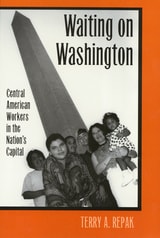
Waiting On Washington
Central American Workers in the Nation's CapitalTerry A. Repak
Temple University Press, 1995
In an analysis of recent immigration patterns in Washington, D.C., Terry A. Repak documents the unusual predominance of women among Central American immigrants. Two thirds of the arriving immigrants in earlier decades have been women, many of them recruited by international diplomats and U.S. government employees to work as housekeepers and nannies. Repak considers the labor force participation patterns for women compared to men, the effect of immigration laws—particularly the IRCA's uneven impact on women versus men—and the profound adjustments in gender roles and identities that accompany migration.
Showing an extraordinary amount of autonomy, most of these immigrant women decided to migrate without consulting either fathers or partners, and they gained even greater independence once settled. Repak plots the career trajectories of numerous Central American immigrant women and men to illustrate the array of the women's responses, gender differences in the migration and assimilation experience, the availability of work, and the possibility for upward mobility and higher wages. Providing social, economic and political context, she looks at the conditions that set the stage for this migration, including the rapid expansion of service jobs in the 1960s and 1970s in Washington, D. C. and the political strife in such Central American countries as war-torn El Salvador, Nicaragua, and Guatemala.

Waiting for Cancer to Come
Women’s Experiences with Genetic Testing and Medical Decision Making for Breast and Ovarian CancerSharlene Hesse-Biber
University of Michigan Press, 2014
Waiting for Cancer to Come tells the stories of women who are struggling with their high risk for cancer. Based on interviews and surveys of dozens of women, this book pieces together the diverse yet interlocking experiences of women who have tested positive for the BRCA 1/2 gene mutations, which indicate a higher risk of developing breast and ovarian cancer. Sharlene Hesse-Biber brings these narratives to light and follows women’s journeys from deciding to get screened for BRCA, to learning the test has come back positive, to dealing with their risk. Many women already know the challenges of a family history riddled with cancer and now find themselves with the devastating knowledge of their own genetic risk. Using the voices of the women themselves to describe the under-explored BRCA experience, Waiting for Cancer to Come looks at the varied emotional, social, economic, and psychological factors at play in women’s decisions about testing and cancer prevention.
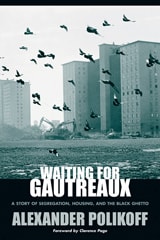
Waiting for Gautreaux
A Story of Segregation, Housing, and the Black GhettoAlexander Polikoff
Northwestern University Press, 2007
On his thirty-ninth birthday in 1966, Alexander Polikoff, a volunteer ACLU attorney and partner in a Chicago law firm, met some friends to discuss a pro bono case. Over lunch, the four talked about the Chicago Housing Authority construction program. All the new public housing, it seemed, was going into black neighborhoods. If discrimination was prohibited in public schools, wasn't it also prohibited in public housing?
And so began Gautreaux v. CHA and HUD, a case that from its rocky beginnings would roll on year after year, decade after decade, carrying Polikoff and his colleagues to the nation's Supreme Court (to face then-solicitor general Robert Bork); establishing precedents for suits against the discriminatory policies of local housing authorities, often abetted by HUD; and setting the stage for a nationwide experiment aimed at ending the concentration--and racialization--of poverty through public housing. Sometimes Kafkaesque, sometimes simply inspiring, and never less than absorbing, the story of Gautreaux, told by its principal lawyer, moves with ease through local and national civil rights history, legal details, political matters, and the personal costs--and rewards--of a commitment to fairness, equality, and justice. Both the memoir of a dedicated lawyer, and the narrative of a tenacious pursuit of equality, this story--itself a critical, still-unfolding chapter in recent American history--urges us to take an essential step in ending the racial inequality that Alexis de Toqueville prophetically named America's "most formidable evil."
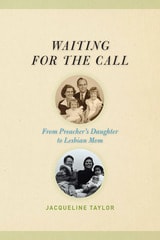
Waiting for the Call
From Preacher's Daughter to Lesbian MomJacqueline Taylor
University of Michigan Press, 2007
“Well-written, absorbing, and a great pleasure to read . . . will appeal to Christians struggling to square their traditional beliefs with acceptance of homosexuality as well as to all those interested in adoption, lesbian marriage, and the changing shape of America’s families.”
—Elizabeth C. Fine, Virginia Tech University
Waiting for the Call takes readers from the foothills of the Appalachians—where Jacqueline Taylor was brought up in a strict evangelical household—to contemporary Chicago, where she and her lesbian partner are raising a family. In a voice by turns comic and loving, Taylor recounts the amazing journey that took her in profoundly different directions from those she or her parents could have ever envisioned.
Taylor’s father was a Southern Baptist preacher, and she struggled to deal with his strictures as well as her mother’s manic-depressive episodes. After leaving for college, Taylor finds herself questioning her faith and identity, questions that continue to mount when—after two divorces, a doctoral degree, and her first kiss with a woman—she discovers her own lesbianism and begins a most untraditional family that grows to include two adopted children from Peru.
Even as she celebrates and cherishes this new family, Taylor insists on the possibility of maintaining a loving connection to her religious roots. While she and her partner search for the best way to explain adoption to their children and answer the inevitable question, “Which one is your mom?” they also seek out a church that will unite their love of family and their faith. Told in the great storytelling tradition of the American South, full of deep feeling and wry humor, Waiting for the Call engagingly demonstrates how one woman bridged the gulf between faith and sexual identity without abandoning her principles.

Waiting for the Cool Moon
Anti-imperialist Struggles in the Heart of Japan's EmpireWendy Matsumura
Duke University Press, 2024
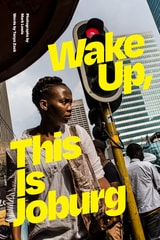
Wake Up, This Is Joburg
Words by Tanya Zack, Photographs by Mark Lewis
Duke University Press, 2022
Wake the Town and Tell the People
Dancehall Culture in JamaicaNorman C. Stolzoff
Duke University Press, 2000
Norman C. Stolzoff brings a fan’s enthusiasm to his broad perspective on dancehall, providing extensive interviews, original photographs, and anthropological analysis from eighteen months of fieldwork in Kingston. Stolzoff argues that this enormously popular musical genre expresses deep conflicts within Jamaican society, not only along lines of class, race, gender, sexuality, and religion but also between different factions struggling to gain control of the island nation’s political culture. Dancehall culture thus remains a key arena where the future of this volatile nation is shaped. As his argument unfolds, Stolzoff traces the history of Jamaican music from its roots in the late eighteenth century to 1945, from the addition of sound systems and technology during the mid-forties to early sixties, and finally through the post-independence years from the early sixties to the present.
Wake the Town and Tell the People offers a general introduction for those interested in dancehall music and culture. For the fan or musicologist, it will serve as a comprehensive reference book.

Wake
Why the Battle over Diverse Public Schools Still MattersKarey Alison Harwood
Rutgers University Press, 2024
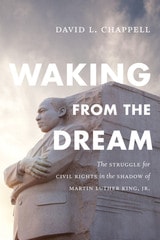
Waking from the Dream
The Struggle for Civil Rights in the Shadow of Martin Luther King, Jr.David L. Chappell
Duke University Press, 2016
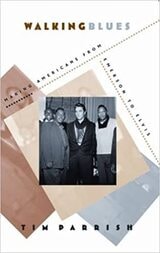
Walking Blues
Making Americans from Emerson to ElvisTimothy Parrish
University of Massachusetts Press, 2009
This is the central question addressed by Tim Parrish in this imaginative interdisciplinary study. Working in the tradition of the blues, an art form based on the adaptation of cultural past to present, Parrish seeks to show what happens when we think of American identity not as some transcendental entity or essence, but as an ongoing process. At the core of his analysis is an appreciation of the rich legacy of pragmatism, a distinctly American frame of mind that sees truth as an act rather than an object, as a matter of doing rather than being. While the philosophical roots of pragmatism can be found in the writings of Ralph Waldo Emerson, William and Henry James, and Horace Kallen, the same intellectual approach informs the work of writers such as Ralph Ellison, Mary Antin, and Philip Roth as well as creative artists such as Son House, Elvis Presley, and James Brown. What all of these figures share, according to Parrish, is a recognition of the intrinsic connection between thought and action that has allowed Americans to define who they are through what they do.
Walking Blues accounts for our cultural diversity without either insisting that we are all the same or denying that we have anything in common. Far from glossing over difference, Parrish shows how our American social, racial, and ethnic conflicts often mark the starting point for the various acts of creation through which we make—and remake—ourselves as Americans.
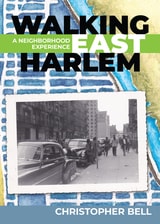
Walking East Harlem
A Neighborhood ExperienceChristopher Bell
Rutgers University Press, 2025
Now East Harlem native Christopher Bell takes you on a tour of his beloved neighborhood. He takes you on three separate walking tours, each visiting a different part of East Harlem and each full of stories about its theaters, museums, art spaces, schools, community centers, churches, mosques, and synagogues. You’ll also learn about the famous people who lived in El Barrio, such as actress Cecily Tyson, opera singer Marian Anderson, portrait artist Alice Neel, incomparable poet Julia De Burgos, and King of Latin Music Tito Puente.
Lavishly illustrated with over fifty photos, Walking East Harlem points out not only the many architectural and cultural landmarks in the neighborhood but also the historical buildings that have since been demolished. Whether you are a tourist or a resident, this guide will give you a new appreciation for El Barrio’s exciting history, cultural diversity, and continued artistic vibrancy.
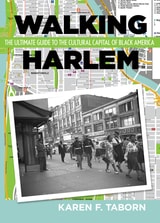
Walking Harlem
The Ultimate Guide to the Cultural Capital of Black AmericaTaborn, Karen
Rutgers University Press, 2018
This illustrated guide takes readers on five separate walking tours of Harlem, covering ninety-one different historical sites. Alongside major tourist destinations like the Apollo Theater and the Abyssinian Baptist Church, longtime Harlem resident Karen Taborn includes little-known local secrets like Jazz Age speakeasies, literati, political and arts community locales. Drawing from rare historical archives, she also provides plenty of interesting background information on each location.
This guide was designed with the needs of walkers in mind. Each tour consists of eight to twenty-nine nearby sites, and at the start of each section, readers will find detailed maps of the tour sites, as well as an estimated time for each walk. In case individuals would like to take a more leisurely tour, it provides recommendations for restaurants and cafes where they can stop along the way.
Walking Harlem gives readers all the tools they need to thoroughly explore over a century’s worth of this vital neighborhood’s cultural, political, religious, and artistic heritage. With its informative text and nearly seventy stunning photographs, this is the most comprehensive, engaging, and educational walking tour guidebook on one of New York’s historic neighborhoods.
Walking Shadows
Orson Welles, William Randolph Hearst, and Citizen KaneJohn Evangelist Walsh
University of Wisconsin Press, 2004
Citizen Kane portrayed the ruthless career of an all-powerful magnate bearing (not accidentally) a striking resemblance to Hearst, who immediately tried to kill the picture. John Evangelist Walsh here illuminates the conflict between these two outsize personalities and for the first time brings Hearst’s vengeful anti-Kane campaign to the fore. Walsh provides thorough documentation, supplemental notes, and an extended bibliography.
Walking Together
Central Americans and Transit Migration Through MexicoAlejandra Díaz de León
University of Arizona Press, 2023
Migrants in transit form several types of social networks, develop trust, and engage in acts of solidarity. The need to be recognized and grieved, compounded by the practical use of pooling information and resources, leads migrants to form small, strong groups called road families. Through the generalized sharing of information and small items such as food and blankets, migrants also form a transient community that includes everyone on the road at the same time. Sociologist Alejandra Díaz de León shows the trajectories of families that left together, showing, surprisingly, that families might not be the best social arrangement in transit.
Drawing on multisited research, this work contributes to debates on the role of social networks in clandestine migration processes and to discussions on how people create social networks and trust under violent and stressful situations. The detailed ethnographic narratives and accessible writing weave together theory with empirical observations to highlight and humanize the migrant experience.
Sitting at the intersection of border studies, immigration studies, and Latinx studies, this concise volume shows how Central American migrants in transit through Mexico survive the precarious and unpredictable road by forming different types of social ties.
Walking a City's History
Mexico City from the Sixteenth Century to the PresentMauricio Tenorio-Trillo
University of Chicago Press, 2026
Walking a City’sHistory is both a richly documented panoramic view of Mexico City’s long history and an intimate essay on its social and cultural fabric. In this book, Mauricio Tenorio-Trillo uses his expertise as a historian and his talents as a storyteller to bring the city to life.
Using influential moments in Mexico City’s history from the Battle of Tenochtitlán in 1521 to the present, Tenorio-Trillo illustrates the capital’s transformations against a national and global background. Walking a City’s History offers an original, unique perspective on the social, architectural, artistic, and political dimensions of Mexico City, guided by chronicles, literary works, historical accounts, and the author’s own lifetime of walks through the city.
Walking in Cities
Quotidian Mobility as Urban Theory, Method, and PracticeEvrick Brown
Temple University Press, 2015
Walking connects the rhythms of urban life to the configuration of urban spaces. As the contributors and editors show in Walking in Cities, walking also reflects the systematic inequalities that order contemporary urban life. Walking has different meanings because it can be a way of temporarily “taking possession” of urban space, or it can make the relatively powerless more vulnerable to crime. The essays in Walking in Cities explore how walking intersects with sociological dimensions such as gender, race and ethnicity, social class, and power.
Various chapters explorethe flâneuse, or female urban drifter, in Tehran’s shopping malls; Hispanic neighborhoods in New York, San Diego, and El Paso; and the intra-neighborhood and inter-class dynamics of gentrification in Greenpoint, Brooklyn.The essays in Walking in Cities provide important lessons about urban life.

Walking on the Wild Side
Long-Distance Hiking on the Appalachian TrailFondren, Kristi M
Rutgers University Press, 2015
The most famous long-distance hiking trail in North America, the 2,181-mile Appalachian Trail—the longest hiking-only footpath in the world—runs along the Appalachian mountain range from Georgia to Maine. Every year about 2,000 individuals attempt to “thru-hike” the entire trail, a feat equivalent to hiking Mount Everest sixteen times. In Walking on the Wild Side, sociologist Kristi M. Fondren traces the stories of forty-six men and women who, for their own personal reasons, set out to conquer America’s most well known, and arguably most social, long-distance hiking trail.
In this fascinating in-depth study, Fondren shows how, once out on the trail, this unique subculture of hikers lives mostly in isolation, with their own way of acting, talking, and thinking; their own vocabulary; their own activities and interests; and their own conception of what is significant in life. They tend to be self-disciplined, have an unwavering trust in complete strangers, embrace a life of poverty, and reject modern-day institutions. The volume illuminates the intense social intimacy and bonding that forms among long-distance hikers as they collectively construct a long-distance hiker identity. Fondren describes how long-distance hikers develop a trail persona, underscoring how important a sense of place can be to our identity, and to our sense of who we are. Indeed, the author adds a new dimension to our understanding of the nature of identity in general.
Anyone who has hiked—or has ever dreamed of hiking—the Appalachian Trail will find this volume fascinating. Walking on the Wild Side captures a community for whom the trail is a sacred place, a place to which they have become attached, socially, emotionally, and spiritually.
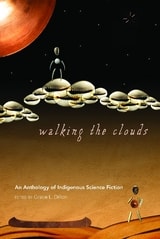
Walking the Clouds
An Anthology of Indigenous Science FictionEdited by Grace L. Dillon
University of Arizona Press, 2012
In this first-ever anthology of Indigenous science fiction Grace Dillon collects some of the finest examples of the craft with contributions by Native American, First Nations, Aboriginal Australian, and New Zealand Maori authors. The collection includes seminal authors such as Gerald Vizenor, historically important contributions often categorized as "magical realism" by authors like Leslie Marmon Silko and Sherman Alexie, and authors more recognizable to science fiction fans like William Sanders and Stephen Graham Jones. Dillon's engaging introduction situates the pieces in the larger context of science fiction and its conventions.
Organized by sub-genre, the book starts with Native slipstream, stories infused with time travel, alternate realities and alternative history like Vizenor's "Custer on the Slipstream." Next up are stories about contact with other beings featuring, among others, an excerpt from Gerry William's The Black Ship. Dillon includes stories that highlight Indigenous science like a piece from Archie Weller's Land of the Golden Clouds, asserting that one of the roles of Native science fiction is to disentangle that science from notions of "primitive" knowledge and myth. The fourth section calls out stories of apocalypse like William Sanders' "When This World Is All on Fire" and a piece from Zainab Amadahy's The Moons of Palmares. The anthology closes with examples of biskaabiiyang, or "returning to ourselves," bringing together stories like Eden Robinson's "Terminal Avenue" and a piece from Robert Sullivan's Star Waka.
An essential book for readers and students of both Native literature and science fiction, Walking the Clouds is an invaluable collection. It brings together not only great examples of Native science fiction from an internationally-known cast of authors, but Dillon's insightful scholarship sheds new light on the traditions of imagining an Indigenous future.
Walking the Gendered Tightrope
Theresa May and Nancy Pelosi as Legislative LeadersMelissa Haussman and Karen M. Kedrowski
University of Michigan Press, 2023
Walking the Land, Feeding the Fire
Knowledge and Stewardship Among the Tlicho DeneBy Allice Legat; Foreword by Joanne Barnaby
University of Arizona Press, 2012
In the Dene worldview, relationships form the foundation of a distinct way of knowing. For the Tlicho Dene, indigenous peoples of Canada's Northwest Territories, as stories from the past unfold as experiences in the present, so unfolds a philosophy for the future. Walking the Land, Feeding the Fire vividly shows how—through stories and relationships with all beings—Tlicho knowledge is produced and rooted in the land.
Tlicho-speaking people are part of the more widespread Athapaskan-speaking community, which spans the western sub-arctic and includes pockets in British Columbia, Alberta, California, and Arizona. Anthropologist Allice Legat undertook this work at the request of Tlicho Dene community elders, who wanted to provide younger Tlicho with narratives that originated in the past but provide a way of thinking through current critical land-use issues. Legat illustrates that, for the Tlicho Dene, being knowledgeable and being of the land are one and the same.
Walking the Land, Feeding the Fire marks the beginning of a new era of understanding, drawing both connections to and unique aspects of ways of knowing among other Dene peoples, such as the Western Apache. As Keith Basso did with his studies among the Western Apache in earlier decades, Legat sets a new standard for research by presenting Dene perceptions of the environment and the personal truths of the storytellers without forcing them into scientific or public-policy frameworks. Legat approaches her work as a community partner—providing a powerful methodology that will impact the way research is conducted for decades to come—and provides unique insights and understandings available only through traditional knowledge.
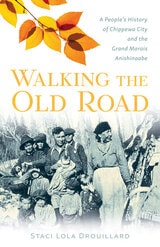
Walking the Old Road
A People's History of Chippewa City and the Grand Marais AnishinaabeStaci Lola Drouillard
University of Minnesota Press, 2019
The story of a once vibrant, now vanished off-reservation Ojibwe village—and a vital chapter of the history of the North Shore
“We do this because telling where you are from is just as important as your name. It helps tie us together and gives us a strong and solid place to speak from. It is my hope that the stories of Chippewa City will be heard, shared, and remembered, and that the story of Chippewa City and the Grand Marais Chippewa will continue to grow. By being a part of the living narrative, Bimaadizi Aadizookaan, together we can create a new story about what was, what is, and, ultimately, what will be.” —from the Prologue
At the turn of the nineteenth century, one mile east of Grand Marais, Minnesota, you would have found Chippewa City, a village that as many as 200 Anishinaabe families called home. Today you will find only Highway 61, private lakeshore property, and the one remaining village building: St. Francis Xavier Church. In Walking the Old Road, Staci Lola Drouillard guides readers through the story of that lost community, reclaiming for history the Ojibwe voices that have for so long, and so unceremoniously, been silenced.
Blending memoir, oral history, and narrative, Walking the Old Road reaches back to a time when Chippewa City, then called Nishkwakwansing (at the edge of the forest), was home to generations of Ojibwe ancestors. Drouillard, whose own family once lived in Chippewa City, draws on memories, family history, historical analysis, and testimony passed from one generation to the next to conduct us through the ages of early European contact, government land allotment, family relocation, and assimilation.
Documenting a story too often told by non-Natives, whether historians or travelers, archaeologists or settlers, Walking the Old Road gives an authentic voice to the Native American history of the North Shore. This history, infused with a powerful sense of place, connects the Ojibwe of today with the traditions of their ancestors and their descendants, recreating the narrative of Chippewa City as it was—and is and forever will be—lived.

Wall Street Women
Melissa S. Fisher
Duke University Press, 2012
Fisher charts the evolution of the women's careers, the growth of their political and economic clout, changes in their perspectives and the cultural climate on Wall Street, and their experiences of the 2008 financial collapse. While most of the pioneering subjects of Wall Street Women did not participate in the women's movement as it was happening in the 1960s and 1970s, Fisher argues that they did produce a "market feminism" which aligned liberal feminist ideals about meritocracy and gender equity with the logic of the market.

Wallbangin'
Graffiti and Gangs in L.A.Susan A. Phillips
University of Chicago Press, 1999
Anthropologist Susan Phillips enters the lives of the African-American and Chicano gang members to write a comprehensive guide to their symbolic and visual expression. She not only decodes the graffiti—explaining how, for instance, gang boundaries are visually delimited and how "memorial" graffiti functions—but she also places it in the context of the changing urban landscapes within the city. Graffiti, she argues, is inextricably linked to political change, to race, and to art, and she demonstrates how those connections are played out in contemporary L.A. Wallbangin' is, on this level, an iconography of street imagery. But it is also a very personal narrative about entering the world of L.A. street gangs—a world of pride, enemies, affirmation, and humanity where gang members use graffiti to redefine their social and political position in society.
To many outsiders, graffiti is cryptic, senseless scribbling. But Phillips explains it as an ingenious and creative solution to the disenfranchisement felt by those who produce it. With personal narratives, provocative photography, and contemporary voices, Wallbangin' unlocks the mysteries behind street-level ideologies and their visual manifestations.
Walled-Up Wife
A CasebookAlan Dundes
University of Wisconsin Press, 1996
For centuries, many Indo-European peoples have sung a poignant ballad about the tragic sacrifice of a female victim to ensure the successful completion of an important undertaking, such as the construction of a building, bridge, or well. The legend, and its many regional and stylistic variations throughout Eastern Europe and India, provides material for an original and engaging casebook of interpretations by folklorists, anthropologists, scholars of comparative religion, and literary critics.
Alan Dundes brings together eighteen essays on this classic ballad, each introduced by his headnotes. Some contributors offer competing nationalistic claims concerning the ballad’s origin, claims now in dispute because of previously overlooked South Asian versions; Ruth Mandel examines gender and power issues in the ballad; Lyubomira Parpulova-Gribble presents a structuralist reading; Krstivoj Kotur proposes a Christian interpretation; Mircea Eliade advocates a myth-ritual reading of blood sacrifices with cosmogonic connections in the Romanian text; and other readings explore female victimization and heroism by seeing the ballad’s theme as a metaphor for marriage, a male-constructed trap seriously restricting women’s freedom and mobility. Dundes concludes the collection with his own feminist and psychoanalytic interpretations of the ballad, followed by suggestions for further reading.
By emphasizing the ballad’s variant forms in diverse cultural contexts, analyzed from different disciplinary perspectives, this volume asks students of folklore to be aware of the multiplicity of approaches available to them in researching folk narrative.
Walled
Barriers, Migration, and Resistance in the U.S.-Mexico BorderlandsEdited by Andréanne Bissonnette and Élisabeth Vallet
University of Arizona Press, 2025
From the bustling San Diego–Tijuana region to the borderlands of Brownsville-Matamoros, the U.S.-Mexico border is marked by extensive stretches of walls. Over the past thirty years, these walls have evolved from purely physical barriers into multifaceted systems encompassing administrative, legal, legislative, and biometric components. This volume invites readers to reflect on the transformations of the border since the construction of the initial fourteen miles of wall, and the subsequent addition of 1,940 miles. It provides a comprehensive exploration of the border’s evolution, and its profound and lasting impacts.
Bringing together recognized scholars in border studies, Walled delves into the varied manifestations and lived experiences associated with U.S.-Mexico border walls. The introduction by Andréanne Bissonnette and Élisabeth Vallet offers a thorough review of the border walls’ thirty-year history, placing it within a global context. Contributions offer diverse perspectives of the border experience, from state policies and migrant experiences to the daily lives of border residents. Topics such as militarization, migration, artistic resistance, and humanitarian aid are carefully examined. This volume is an essential resource for policymakers, activists, scholars, and anyone seeking to understand the intricate realities of border communities and the far-reaching consequences of border policies.
Contributors
Susana Báez-Ayala
Andréanne Bissonnette
Mathilde Bourgeon
Silvia M. Chávez-Baray
Irasema Coronado
Thalia D’Aragon-Giguère
Erin Hoekstra
Anthony Jimenez
T. Mark Montoya
Eva M. Moya
Scott Nicol
Héctor Antonio Padilla Delgado
Lisa Sun-Hee Park
Tony Payan
Patricia Ravelo-Blancas
David A. Shirk
Allyson Teague
Élisabeth Vallet
Wallowing in Sex
The New Sexual Culture of 1970s American TelevisionElana Levine
Duke University Press, 2007
Wallowing in Sex is a lively analysis of the key role of commercial television in the new sexual culture of the 1970s. Elana Levine explores sex-themed made-for-TV movies; female sex symbols such as the stars of Charlie’s Angels and Wonder Woman; the innuendo-driven humor of variety shows (The Sonny and Cher Comedy Hour, Laugh-In), sitcoms (M*A*S*H, Three’s Company), and game shows (Match Game); and the proliferation of rape plots in daytime soap operas. She also uncovers those sexual topics that were barred from the airwaves. Along with program content, Levine examines the economic motivations of the television industry, the television production process, regulation by the government and the tv industry, and audience responses. She demonstrates that the new sexual culture of 1970s television was a product of negotiation between producers, executives, advertisers, censors, audiences, performers, activists, and many others. Ultimately, 1970s television legitimized some of the sexual revolution’s most significant gains while minimizing its more radical impulses.
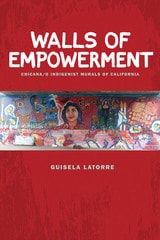
Walls of Empowerment
Chicana/o Indigenist Murals of CaliforniaBy Guisela Latorre
University of Texas Press, 2008
Exploring three major hubs of muralist activity in California, where indigenist imagery is prevalent, Walls of Empowerment celebrates an aesthetic that seeks to firmly establish Chicana/o sociopolitical identity in U.S. territory. Providing readers with a history and genealogy of key muralists' productions, Guisela Latorre also showcases new material and original research on works and artists never before examined in print.
An art form often associated with male creative endeavors, muralism in fact reflects significant contributions by Chicana artists. Encompassing these and other aspects of contemporary dialogues, including the often tense relationship between graffiti and muralism, Walls of Empowerment is a comprehensive study that, unlike many previous endeavors, does not privilege non-public Latina/o art. In addition, Latorre introduces readers to the role of new media, including performance, sculpture, and digital technology, in shaping the muralist's "canvas."
Drawing on nearly a decade of fieldwork, this timely endeavor highlights the ways in which California's Mexican American communities have used images of indigenous peoples to raise awareness of the region's original citizens. Latorre also casts murals as a radical force for decolonization and liberation, and she provides a stirring description of the decades, particularly the late 1960s through 1980s, that saw California's rise as the epicenter of mural production. Blending the perspectives of art history and sociology with firsthand accounts drawn from artists' interviews, Walls of Empowerment represents a crucial turning point in the study of these iconographic artifacts.
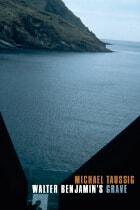
Walter Benjamin's Grave
Michael Taussig
University of Chicago Press, 2006
“Looking over these essays written over the past decade,” writes Taussig, “I think what they share is a love of muted and defective storytelling as a form of analysis. Strange love indeed; love of the wound, love of the last gasp.” Although thematically these essays run the gamut—covering the monument and graveyard at Port Bou, discussions of peasant poetry in Colombia, a pact with the devil, the peculiarities of a shaman’s body, transgression, the disappearance of the sea, New York City cops, and the relationship between flowers and violence—each shares Taussig’s highly individual brand of storytelling, one that depends on a deep appreciation of objects and things as a way to retrieve even deeper philosophical and anthropological meanings. Whether he finds himself in Australia, Colombia, Manhattan, or Spain, in the midst of a book or a beach, whether talking to friends or staring at a monument, Taussig makes clear through these marvelous essays that materialist knowledge offers a crucial alternative to the increasingly abstract, globalized, homogenized, and digitized world we inhabit.
Pursuing an adventure that is part ethnography, part autobiography, and part cultural criticism refracted through the object that is Walter Benjamin’s grave, Taussig, with this collection, provides his own literary memorial to the twentieth century’s greatest cultural critic.
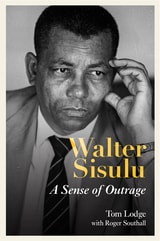
Walter Sisulu
A Sense of OutrageTom Lodge with Roger Southall
Ohio University Press, 0
Although hailed, alongside Nelson Mandela and Oliver Tambo, as one of the African National Congress’s holy trinity, Walter Sisulu has remained a relatively neglected figure in the historiography of the struggle for liberation in South Africa. Modest and unassuming, Sisulu was always content to stay in the background in a way that has long belied his importance. This nuanced and highly original biography, drafted by political historian Tom Lodge before his untimely death, provides a powerful corrective. Lodge describes Sisulu as an exceptional organizer, the most influential planner of the ANC’s mass campaigning during the 1950s, a principled but undoctrinaire communist, and like Mandela, an advocate of the necessity of armed struggle. He also served as the careful navigator of the ambiguous relationship between the ANC and Umkhonto we Sizwe, and Lodge details how Sisulu, with his exceptional grasp of the subtleties of fact and law, confounded the prosecution as he sat in the dock in the Rivonia trial. Sentenced to life imprisonment with his fellow defendants, Sisulu became a calming influence amid the divisive ideological debates that took place on Robben Island, as well as a constant source of strength and support to Mandela. After his 1989 release from jail—ahead of Mandela—he again demonstrated his prowess as the chief organizer of the ANC as it reestablished itself ahead of the 1994 elections. Sociologist Roger Southall stepped in to complete Lodge’s detailed analysis of Sisulu’s commitment and contribution to South African freedom, an encomium that Walter Sisulu richly deserves.
Wanasema
Conversations with African WritersDon Burness
Ohio University Press, 1985
Wandering Peoples
Colonialism, Ethnic Spaces, and Ecological Frontiers in Northwestern Mexico, 1700–1850Cynthia Radding
Duke University Press, 1997
Radding describes this colonial mission not merely as an instance of Iberian expansion but as a site of cultural and political confrontation. This alternative vision of colonialism emphasizes the economic links between mission communities and Spanish mercantilist policies, the biological consequences of the Spanish policy of forced congregación, and the cultural and ecological displacements set in motion by the practices of discipline and surveillance established by the religious orders. Addressing wider issues pertaining to ethnic identities and to ecological and cultural borders, Radding’s analysis also underscores the parallel production of colonial and subaltern texts during the course of a 150-year struggle for power and survival.

Wandering Spirits
Loneliness and Longing in GreenlandJanne Flora
University of Chicago Press, 2019
In this innovative study, Flora focuses on Inuit communities in Greenland and addresses a central puzzle: their alarmingly high suicide rate. She explores the deep connections between loneliness and modernity in the Arctic, tracing the history of Greenland and analyzing the social dynamics that shaped it. Flora’s thorough, sensitive engagement with the families that make up these communities uncovers the complex interplay between loneliness and a host of economic and environmental practices, including the widespread local tradition of hunting. Wandering Spirits offers a vivid portrait of a largely overlooked world, in all its fragility and nuance, while engaging with core anthropological concerns of kinship and the structure of social relations.
Wandering
Philosophical Performances of Racial and Sexual FreedomSarah Jane Cervenak
Duke University Press, 2014

Wanderlust
The Amazing Ida Pfeiffer, the First Female TouristJohn van Wyhe
National University of Singapore Press, 2019
In 1797 in Vienna, Ida Pfeiffer was born into a world that should have been too small for her dreams. The daughter of an Austrian merchant, she made clear from an early age that she would not be bound by convention, dressing in boys’ clothing and playing sports. After her tutor introduced her to stories of faraway lands, she became determined to see the world first-hand. This determination led to a lifetime of travel—much of it alone—and made her one of the most famous women of the nineteenth century.
Pfeiffer faced many obstacles, not least expectations of her gender. She was a typical nineteenth century housewife with a husband and two sons. She was not wealthy nor well connected. Yet after the death of her husband, and once her sons were grown and settled, at the age of forty-one she set off on her first journey, not telling anyone the true extent of her travel plans. Between that trip and her death in 1858, she would barely pause for breath, circling the globe twice—the first woman to do so—and publishing numerous popular books about her travels. Usually traveling solo, Pfeiffer faced storms at sea, trackless deserts, plague, malaria, earthquakes, robbers, murderers, and other risks.
In Wanderlust, John Van Wyhe tells Pfeiffer’s story, with generous excerpts from her published accounts, tell of her involvement with spies, international intrigue, and more. The result is a compelling portrait of the remarkable life of a pioneer unjustly forgotten.

Wangari Maathai
Tabitha Kanogo
Ohio University Press, 2020
Wangari Muta Maathai is one of Africa’s most celebrated female activists. Originally trained as a scientist in Kenya and abroad, Professor Maathai returned to her home country of Kenya with a renewed political consciousness. There, she began her long career as an activist, campaigning for environmental and social justice while speaking out against government corruption. In 2004, Maathai was awarded the Nobel Peace Prize for her leadership of the Green Belt Movement, a conservation effort that resulted in the restoration of African forests decimated during the colonial era.
In this biography, Tabitha Kanogo follows Wangari Maathai from her modest, rural Kenyan upbringing to her rise as a national figure campaigning for environmental and ecological conservation, sustainable development, democracy, human rights, gender equality, and the eradication of poverty until her death in 2011.

Wannabe U
Inside the Corporate UniversityGaye Tuchman
University of Chicago Press, 2009
Based on years of observation at a large state university, Wannabe U tracks the dispiriting consequences of trading in traditional educational values for loyalty to the market. Aping their boardroom idols, the new corporate administrators at such universities wander from job to job and reductively view the students there as future workers in need of training. Obsessed with measurable successes, they stress auditing and accountability, which leads to policies of surveillance and control dubiously cloaked in the guise of scientific administration. In this eye-opening exposé of the modern university, Tuchman paints a candid portrait of the corporatization of higher education and its impact on students and faculty.
Like the best campus novelists, Tuchman entertains with her acidly witty observations of backstage power dynamics and faculty politics, but ultimately Wannabe U is a hard-hitting account of how higher education’s misguided pursuit of success fails us all.