Results by title
828 books match the query 'Study and teaching' and 52 start with w
Wages Against Artwork
Decommodified Labor and the Claims of Socially Engaged ArtLeigh Claire La Berge
Duke University Press, 2019
We Shall Bear Witness
Life Narratives and Human RightsEdited by Meg Jensen and Margaretta Jolly, Foreword by Mary Robinson
University of Wisconsin Press, 2014
In We Shall Bear Witness, editors Meg Jensen and Margaretta Jolly assemble moving personal accounts from those who have endured persecution, imprisonment, and torture; meditations on experiences of injustice and protest by creative writers and filmmakers; and innovative research on ways that digital media, commodification, and geopolitics are shaping what is possible to hear and say. The book’s primary sections—testimony, recognition, representation, and justice—evoke the key stages in turning experience into a human rights life story and attend to such diverse and varied arts as autobiography, documentary film, report, oral history, blog, and verbatim theater. The result is a groundbreaking book that sensitively examines how life and rights narratives have become so powerfully entwined. Also included is an innovative guide to teaching human rights and life narrative in the classroom.
Web Writing
Why and How for Liberal Arts Teaching and LearningJack Dougherty and Tennyson O'Donnell, editors
University of Michigan Press, 2015
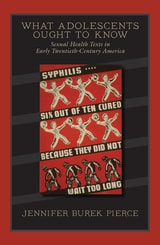
What Adolescents Ought to Know
Sexual Health Texts in Early Twentieth-Century AmericaJennifer Burek Pierce
University of Massachusetts Press, 2011
In 1901, Dr. Alfred Fournier committed an act both simple and revolutionary: he wrote ForOur Sons, When They Turn 18, a sexual and reproductive health treatise based on his clinical work at a leading Paris hospital. If this booklet aided adolescent understanding of health, it also encouraged reformers around the world to publish. By 1913, countless works on venereal disease prevention were available to adolescents.
During this period, authors wrestled with how to make still-developing scientific information available to a reader also in the process of maturing. What would convince a young person to avoid acting on desire? What norms should be employed in these arguments, when social and legal precedents warned against committing ideas about sex to print? How, in other words, could information about sex be made both decent and compelling? Health reformers struggled with these challenges as doctors' ability to diagnose diseases such as syphilis outpaced the production of medicines that could restore health. In this context, information represented the best and truest prophylactic. When publications were successful, from the perspective of information dissemination, they were translated and distributed worldwide.
What Adolescents Ought to Know explores the evolution of these printed materials—from a single tract, written by a medical researcher and given free to anyone, to a thriving commercial enterprise. It tells the story of how sex education moved from private conversation to purchased text in early twentieth-century America.
What Every ESL Student Should Know
A Guide to College and University Academic SuccessKathy Ochoa Flores
University of Michigan Press, 2008
This book teaches English language learners about language learning and classroom expectations. It is a compilation of advice, experiences, suggestions, strategies, and learning theories collected over many years of teaching this population.
What Every ESL Student Should Know was written to help English language learners be successful in community college and college classrooms—specifically, how to prepare students for expectations and behavior within the classroom and how to help them to be good students, how to participate in class, what to expect from the class, and what to do to learn English. Learning strategies and language theories are presented in brief.
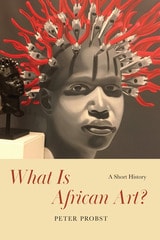
What Is African Art?
A Short HistoryPeter Probst
University of Chicago Press, 2022
This book examines the invention and development of African art as an art historical category. It starts with a simple question: What do we mean when we talk about African art? By confronting the historically shifting answers to this question, Peter Probst identifies “African art” as a conceptual vessel that manifests wider societal transformations.
What Is African Art? covers three key stages in the field’s history. Starting with the late nineteenth through the mid-twentieth centuries, the book first discusses the colonial formation of the field by focusing on the role of museums, collectors, and photography in disseminating visual cultures as relations of power. It then explores the remaking of the field at the dawn of African independence with the shift toward contemporary art and the rise of Black Atlantic studies in the 1970s and 1980s. Finally, it examines the post- and decolonial reconfiguration of the field driven by questions of representation, repair, and restitution.
What Philosophy Is For
Michael Hampe
University of Chicago Press, 2018
Philosophers generally develop systematic theories that lay out the basic structures of human experience, in order to teach the rest of humanity how to rightly understand our place in the world. This “scientific” approach to philosophy, Hampe argues, is too one-sided. In this magnum opus of an essay, Hampe aims to rescue philosophy from its current narrow claims of doctrine and to remind us what it is really for—to productively disillusion us into clearer thinking. Hampe takes us through twenty-five hundred years of intellectual history, starting with Socrates. That archetype of the philosophical teacher did not develop strict doctrines and rules, but rather criticized and refuted doctrines. With the Socratic method, we see the power of narration at work. Narrative and analytical disillusionment, Hampe argues, are the most helpful long-term enterprises of thought, the ones most worth preserving and developing again.
What Philosophy Is For is simultaneously an introduction, a critique, and a call to action. Hampe shows how and why philosophy became what it is today, and, crucially, shows what it could be once more, if it would only turn its back on its pretensions to dogma: a privileged space for reflecting on the human condition.
What We Really Value
Beyond Rubrics in Teaching and Assessing WritingBob Broad
Utah State University Press, 2003
What We Really Value traces the origins of traditional rubrics within the theoretical and historical circumstances out of which they emerged, then holds rubrics up for critical scrutiny in the context of contemporary developments in the field. As an alternative to the generic character and decontextualized function of scoring guides, he offers dynamic criteria mapping, a form of qualitative inquiry by which writing programs (as well as individual instructors) can portray their rhetorical values with more ethical integrity and more pedagogical utility than rubrics allow.
To illustrate the complex and indispensable insights this method can provide, Broad details findings from his study of eighty-nine distinct and substantial criteria for evaluation at work in the introductory composition program at "City University." These chapters are filled with the voices of composition instructors debating and reflecting on the nature, interplay, and relative importance of the many criteria by which they judged students' texts. Broad concludes his book with specific strategies that can help writing instructors and programs to discover, negotiate, map, and express a more robust truth about what they value in their students' rhetorical performances.

What We Teach When We Teach DH
Digital Humanities in the ClassroomBrian Croxall
University of Minnesota Press, 2023
Exploring how DH shapes and is in turn shaped by the classroom
How has the field of digital humanities (DH) changed as it has moved from the corners of academic research into the classroom? And how has our DH praxis evolved through interactions with our students? This timely volume explores how DH is taught and what that reveals about the field of DH. While institutions are formally integrating DH into the curriculum and granting degrees, many instructors are still almost as new to DH as their students. As colleagues continue to ask what digital humanities is, we have the opportunity to answer them in terms of how we teach DH.
The contributors to What We Teach When We Teach DH represent a wide range of disciplines, including literary and cultural studies, history, art history, philosophy, and library science. Their essays are organized around four critical topics at the heart of DH pedagogy: teachers, students, classrooms, and collaborations. This book highlights how DH can transform learning across a vast array of curricular structures, institutions, and education levels, from high schools and small liberal arts colleges to research-intensive institutions and postgraduate professional development programs.
Contributors: Kathi Inman Berens, Portland State U; Jing Chen, Nanjing U; Lauren Coats, Louisiana State U; Scott Cohen, Stonehill College; Laquana Cooke, West Chester U; Rebecca Frost Davis, St. Edward’s U; Catherine DeRose; Quinn Dombrowski, Stanford U; Andrew Famiglietti, West Chester U; Jonathan D. Fitzgerald, Regis College; Emily Gilliland Grover, Notre Dame de Sion High School; Gabriel Hankins, Clemson U; Katherine D. Harris, San José State U; Jacob Heil, Davidson College; Elizabeth Hopwood, Loyola U Chicago; Hannah L. Jacobs, Duke U; Alix Keener, Stanford U; Alison Langmead, U of Pittsburgh; Sheila Liming, Champlain College; Emily McGinn, Princeton U; Nirmala Menon, Indian Institute of Technology; James O’Sullivan, U College Cork; Harvey Quamen, U of Alberta; Lisa Marie Rhody, CUNY Graduate Center; Kyle Roberts, Congregational Library and Archives; W. Russell Robinson, Alabama State U; Chelcie Juliet Rowell, Tufts U; Dibyadyuti Roy, U of Leeds; Asiel Sepúlveda, Simmons U; Andie Silva, York College, CUNY; Victoria Szabo, Duke U; Lik Hang Tsui, City U of Hong Kong; Annette Vee, U of Pittsburgh; Brandon Walsh, U of Virginia; Kalle Westerling, The British Library; Kathryn Wymer, North Carolina Central U; Claudia E. Zapata, UCLA; Benjun Zhu, Peking U.
Retail e-book files for this title are screen-reader friendly.
What Would It Take to Make an Ed School Great?
Voices from an Unfinished RevolutionJohn Schwille
Michigan State University Press, 2023
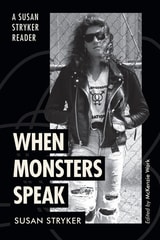
When Monsters Speak
A Susan Stryker ReaderSusan Stryker. Edited by McKenzie Wark
Duke University Press, 2024
When Tutor Meets Student
Martha Maxwell, Editor
University of Michigan Press, 1994
Where Writing Begins
A Postmodern ReconstructionMichael Carter
Southern Illinois University Press, 2003
Where Writing Begins: A Postmodern Reconstruction is an innovative approach to the postmodern dilemma in rhetoric and composition thatoffers a positive and postmodern pedagogy that redefines and revalues writing and the teaching of writing through reconstructive, postmodern thought. The result is a fresh understanding of both the field of composition and writing instruction.
Drawing on the rich potential of “beginning” as a philosophical concept, Michael Carter asks the simple question: Where does writing begin? His findings take readers first to a new view of what it means to begin, and then to a new understanding of writing and teaching writing based on the redefined beginning. Challenging conventional notions that posit “beginning” as a chronological and temporal concept, he instead advocates an ontological and philosophical approach, in which “beginning” embodies both deconstruction and reconstruction—and the very possibility of newness.
Adding to a growing body of rhetorical scholarship in postmodern reconstruction, Where Writing Begins illustrates that writing must be understood within the framework of deconstruction and reconstruction. Writing, then, may be newly defined and valued as beginning. Weaving together conceptual, structural, and methodological patterns, Carter’s study is also a journey through the history of philosophy and rhetoric that will leave readers feeling refreshed and teachers eager to return to their classes.
White Scholars/African American Texts
Edited by Lisa A. Long
Rutgers University Press, 2005
What makes someone an authority? What makes one person's knowledge more credible than another's? In the ongoing debates over racial authenticity, some attest that we can know each other's experiences simply because we are all "human," while others assume a more skeptical stance, insisting that racial differences create unbridgeable gaps in knowledge.
Bringing new perspectives to these perennial debates, the essays in this collection explore the many difficulties created by the fact that white scholars greatly outnumber black scholars in the study and teaching of African American literature. Contributors, including some of the most prominent theorists in the field as well as younger scholars, examine who is speaking, what is being spoken and what is not, and why framing African American literature in terms of an exclusive black/white racial divide is problematic and limiting.
In highlighting the "whiteness" of some African Americanists, the collection does not imply that the teaching or understanding of black literature by white scholars is definitively impossible. Indeed such work is not only possible, but imperative. Instead, the essays aim to open a much needed public conversation about the real and pressing challenges that white scholars face in this type of work, as well as the implications of how these challenges are met.
Who Owns Religion?
Scholars and Their Publics in the Late Twentieth CenturyLaurie L. Patton
University of Chicago Press, 2019
Taking the reader through several compelling case studies, Patton identifies two trends of the ’80s and ’90s that fueled that rise: the growth of multicultural identity politics, which enabled a form of volatile public debate she terms “eruptive public space,” and the advent of the internet, which offered new ways for religious groups to read scholarship and respond publicly. These controversies, she shows, were also fundamentally about something new: the very rights of secular, Western scholarship to interpret religions at all.
Patton’s book holds out hope that scholars can find a space for their work between the university and the communities they study. Scholars of religion, she argues, have multiple masters and must move between them while writing histories and speaking about realities that not everyone may be interested in hearing.
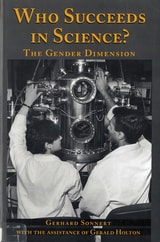
Who Succeeds in Science?
The Gender DilemmaGerald Holton and Gerhard Sonnert
Rutgers University Press, 1995
Why don’t more women become scientists? And why do those who do become scientists often face more difficulties than their male counterparts? Every year, about a quarter of a million young men and women in the United States receive their first academic degree in science, mathematics, or engineering. A small fraction will eventually become research scientists. But many who start out with that goal fail to reach it––for reasons that may have less to do with their scientific ability than with their gender.
Drawing on a wealth of information (699 questionnaires and 200 interviews) from men and women who gave every promise of scientific achievement, Gerhard Sonnert and Gerald Holton illuminate the partly gender-driven dynamics of “the leaky scientific pipeline.” At the heart of this book are gripping personal life stories of ten women and ten men: half became highly successful scientists, the rest left research science. In their own voices, they talk candidly about their career paths, the obstacles and assists they encountered, the difficulties and rewards of attempting to combine a family life with a science career.
This highly readable analysis of the gender dimension in scientific careers––and its clear-headed advice––will be of great interest to everyone considering a career in science as well as to teachers, parents, and active scientists. Academics in sociology of science and gender studies as well as decision-makers in the areas of human resources and science policy will also welcome its discussions of general issues and policy recommendations.
Whose America?
Culture Wars in the Public SchoolsJonathan Zimmerman
University of Chicago Press, 2022
Critical Race Theory. The 1619 Project. Mask mandates. As the headlines remind us, American public education is still wracked by culture wars. But these conflicts have shifted sharply over the past two decades, marking larger changes in the ways that Americans imagine themselves. In his 2002 book, Whose America?, Zimmerman predicted that religious differences would continue to dominate the culture wars. Twenty years after that seminal work, Zimmerman has reconsidered: arguments over what American history is, what it means, and how it is taught have exploded with special force in recent years. In this substantially expanded new edition, Zimmerman meditates on the history of the culture wars in the classroom—and on what our inability to find common ground might mean for our future.
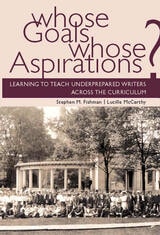
Whose Goals Whose Aspirations
Learning to Teach Underprepared Writers across the CurriculumStephen M. Fishman and Lucille McCarthy
Utah State University Press, 2002
Ever since Horace Mann promoted state supported schooling in the 1850s, the aims of U.S. public education have been the subject of heated national debate. Whose Goals? Whose Aspirations? joins this debate by exploring clashing educational aims in a discipline-based university classroom and the consequences of these clashes for "underprepared" writers.
In this close-up look at a White middle-class teacher and his ethnically diverse students, Fishman and McCarthy examine not only the role of Standard English in college writing instruction but also the underlying and highly charged issues of multiculturalism, race cognizance, and social class.
Why Are You Here and Not Somewhere Else
Selected EssaysHarry L. Davis
University of Chicago Press, 2013
On the occasion of the fiftieth anniversary of Davis’s arrival at the Booth School, Why Are You Here and Not Somewhere Else offers seven essays by Davis that offer new perspectives and contribute to a more well-rounded understanding of business education. Adapted from convocation addresses given by Davis at different points during his five-decade career, the essays encapsulate the spirit of business education at the Booth School, while at the same time providing encouraging, invaluable wisdom for those about to embark on business careers or take on leadership positions. Topics addressed range from the role of the university in the business world to the crucial role of intangible values in shaping one’s career.
Davis has been a formative influence on more executives and leaders than perhaps any other business educator living today, and Why Are You Here and Not Somewhere Else provides a unique and valuable perspective on how leaders in business and elsewhere can shape and define their careers in new ways.
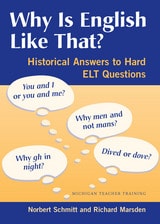
Why Is English Like That?
Historical Answers to Hard ELT QuestionsNorbert Schmitt and Richard Marsden
University of Michigan Press, 2006
The book outlines the historical events that shaped English; describes how its grammar, vocabulary, spelling, and pronunciation developed over time; and highlights the "quirks" and "exceptions" in English that can be explained on a historical basis. By understanding how the English of today evolved from the English of past times, both teachers and students will be more comfortable with the many conventions of the English language.
Why Is English Like That? also contains reproducible grammar and vocabulary exercises that will help teachers incorporate some of this historical knowledge into classroom activities. This book was written with English language teachers in mind, and the exercises are designed for ESL/EFL students, but it may also be used by teachers in training (L1 and L2).
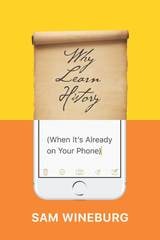
Why Learn History (When It’s Already on Your Phone)
Sam Wineburg
University of Chicago Press, 2018
With the internet always at our fingertips, what’s a teacher of history to do? Sam Wineburg has answers, beginning with this: We definitely can’t stick to the same old read-the-chapter-answer-the-questions-at-the-back snoozefest we’ve subjected students to for decades. If we want to educate citizens who can sift through the mass of information around them and separate fact from fake, we have to explicitly work to give them the necessary critical thinking tools. Historical thinking, Wineburg shows us in Why Learn History (When It’s Already on Your Phone), has nothing to do with test prep–style ability to memorize facts. Instead, it’s an orientation to the world that we can cultivate, one that encourages reasoned skepticism, discourages haste, and counters our tendency to confirm our biases. Wineburg draws on surprising discoveries from an array of research and experiments—including surveys of students, recent attempts to update history curricula, and analyses of how historians, students, and even fact checkers approach online sources—to paint a picture of a dangerously mine-filled landscape, but one that, with care, attention, and awareness, we can all learn to navigate.
It’s easy to look around at the public consequences of historical ignorance and despair. Wineburg is here to tell us it doesn’t have to be that way. The future of the past may rest on our screens. But its fate rests in our hands.
Why Stories Matter
The Political Grammar of Feminist TheoryClare Hemmings
Duke University Press, 2011
Wings of Gold
An Account of Naval Aviation Training in World War II, The Correspondence of Aviation Cadet/Ensign Robert R. ReaWesley Phillips Newton
University of Alabama Press, 1987
Millions of Americans underwent military training during World War II, and contemporary historians and readers have begun to recognize the significance and value of primary sources related not only to combat but also to training and preparedness.
Wiring The Writing Center
Eric Hobson
Utah State University Press, 1998
Witnessing the Disaster
Essays on Representation and the HolocaustEdited by Michael Bernard-Donals and Richard Glejzer
University of Wisconsin Press, 2003
These essayists aim to move past the notion that the Holocaust as an event defies representation. They look at specific cases of Holocaust representation and consider their effect, their structure, their authenticity, and the kind of knowledge they produce. Taken together they consider the tension between history and memory, the vexed problem of eyewitness testimony and its status as evidence, and the ethical imperatives of Holocaust representation.
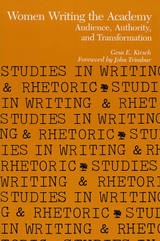
Women Writing the Academy
Audience, Authority, and TransformationGesa E. Kirsch. Foreword by John Trimbur
Southern Illinois University Press, 1993
Women Writing the Academy is based on an extensive interview study by Gesa E. Kirsch that investigates how women in different academic disciplines perceive and describe their experiences as writers in the university.
Kirsch’s study focuses on the writing strategies of successful women writers, their ways of establishing authority, and the kinds of audiences they address in different disciplinary settings. Based on multiple interviews with thirty-five women from five different disciplines (anthropology, education, history, nursing, and psychology) and four academic ranks (seniors, graduate students, and faculty before and after tenure), this is the first book to systematically explore the academic context in which women write and publish.
While there are many studies in literary criticism on women as writers of fiction, there has not been parallel scholarship on women as writers of professional discourse, be it inside or outside the academy. Through her research, for example, Kirsch found that women were less likely than their male counterparts to think of their work as sufficiently significant to write up and submit for publication, tended to hold on to their work longer than men before sending it out, and were less likely than men to revise and resubmit manuscripts that had been initially rejected.
This book is significant in that it investigates a new area of research— gender and writing—and in doing so brings together findings on audience, authority, and gender.
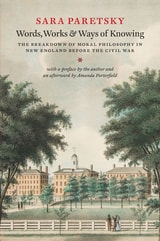
Words, Works, and Ways of Knowing
The Breakdown of Moral Philosophy in New England before the Civil WarSara Paretsky
University of Chicago Press, 2016
What’s less well-known is that before Paretsky began her writing career, she earned a PhD in history from the University of Chicago with a dissertation on moral philosophy and religion in New England in the early and mid-nineteenth century. Now, for the first time, fans of Paretsky can read that earliest work, Words, Works, and Ways of Knowing.
Paretsky here analyzes attempts by theologians at Andover Seminary, near Boston, to square and secure Calvinist religious beliefs with emerging knowledge from history and the sciences. She carefully shows how the open-minded scholasticism of these theologians paradoxically led to the weakening of their intellectual credibility as conventional religious belief structures became discredited, and how this failure then incited reactionary forces within Calvinism. That conflict between science and religion in the American past is of interest on its face, but it also sheds light on contemporary intellectual battles.
Rounding out the book, leading religious scholar Amanda Porterfield provides an afterword discussing where Paretsky’s work fits into the contemporary study of religion. And in a sobering—sometimes shocking—preface, Paretsky paints a picture of what it was like to be a female graduate student at the University of Chicago in the 1970s. A treat for Paretsky’s many fans, this book offers a glimpse of the development of the mind behind the mysteries.
Working in the Archives
Practical Research Methods for Rhetoric and CompositionEdited by Alexis E. Ramsey, Wendy B. Sharer, Barbara L'Eplattenier, Lisa S. Mastrangelo
Southern Illinois University Press, 2010
Archival research of any magnitude can be daunting. With this in mind, Alexis E. Ramsey, Wendy B. Sharer, Barbara L’Eplattenier, and Lisa Mastrangelo have developed an indispensable volume for the first-time researcher as well as the seasoned scholar. Working in the Archives is a guide to the world of rhetoric and composition archives, from locating an archival source and its materials to establishing one’s own collection of archival materials. This practical volume provides insightful information on a variety of helpful topics, such as basic archival theory, processes, and principles; the use of hidden or digital archives; the intricacies of searching for and using letters and photographs; strategies for addressing the dilemmas of archival organization without damaging the provenance of materials; the benefits of seeking sources outside academia; and the difficult (yet often rewarding) aspects of research on the Internet.
Working in the Archives moves beyond the basics to discuss the more personal and emotional aspects of archival work through the inclusion of interviews with experienced researchers such as Lynée Lewis Gaillet, Peter Mortensen, Kathryn Fitzgerald, Kenneth Lindblom, and David Gold. Each shares his or her personal stories of the joys and challenges that face today’s researchers.
Packed with useful recommendations, this volume draws on the knowledge and experiences of experts to present a well-rounded guidebook to the often winding paths of academic archival investigation. These in-depth yet user-friendly essays provide crucial answers to the myriad questions facing both fledgling and practiced researchers, making Working in the Archives an essential resource.
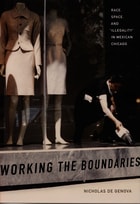
Working the Boundaries
Race, Space, and "Illegality" in Mexican ChicagoNicholas De Genova
Duke University Press, 2005
De Genova worked for two and a half years as a teacher of English in ten industrial workplaces (primarily metal-fabricating factories) throughout Chicago and its suburbs. In Working the Boundaries he draws on fieldwork conducted in these factories, in community centers, and in the homes and neighborhoods of Mexican migrants. He describes how the meaning of “Mexican” is refigured and racialized in relation to a U.S. social order dominated by a black-white binary. Delving into immigration law, he contends that immigration policies have worked over time to produce Mexicans as the U.S. nation-state’s iconic “illegal aliens.” He explains how the constant threat of deportation is used to keep Mexican workers in line. Working the Boundaries is a major contribution to theories of race and transnationalism and a scathing indictment of U.S. labor and citizenship policies.
World Politics Simulations in a Global Information Age
Hemda Ben-Yehuda, Luba Levin-Banchik, and Chanan Naveh
University of Michigan Press, 2015
Writers in the Schools
A Guide to Teaching Creative Writing in the ClassroomSusan Perabo
University of Arkansas Press, 1997
The lesson in this valuable text is that the imagination is the greatest tool a student possesses. Instead of lectures, the book relies on hands-on exercises and time tested activity plans that start students writing within minutes of discussing the basics of the writing process. Included are dozens of ideas to spark student creativity and hone rough drafts into finished poems and short stories.
The chapters proceed from a beginning level through intermediate and advanced levels and are useful to students in any grade from elementary through high school. Written and compiled by Susan Perabo, a former Writers in the Schools director, this volume is both a wonderful aid to teachers wishing to expand their classroom strategies in language arts and a perfect guide for writing program participants as they work with children to encourage powerful written expression in every discipline.
Writing Across Cultures
Robert Eddy
Utah State University Press, 2019
Robert Eddy and Amanda Espinosa-Aguilar offer a new framework for teaching that acknowledges the changing demographics of US college classrooms as the field of writing studies moves toward real equity and expanding diversity. Writing Across Cultures utilizes a streamlined cross-racial and interculturally tested method of introducing students to academic writing via sequenced assignments that are not confined by traditional and static approaches. They focus on helping students become engaged members of a new culture—namely, the rapidly changing collegiate discourse community. The book is based on a multi-racial rhetoric that assumes that writing is inherently a social activity. Students benefit most from seeing composing as an act of engaged communication, and this text uses student samples, not professionally authored ones, to demonstrate this framework in action.
Writing Across Cultures will be a significant contribution to the field, aiding teachers, students, and administrators in navigating the real challenges and wonderful opportunities of multi-racial learning spaces.
Writing Genres
Amy J. Devitt
Southern Illinois University Press, 2008
In Writing Genres, Amy J. Devitt examines genre from rhetorical, social, linguistic, professional, and historical perspectives and explores genre's educational uses, making this volume the most comprehensive view of genre theory today.
Writing Genres does not limit itself to literary genres or to ideas of genres as formal conventions but additionally provides a theoretical definition of genre as rhetorical, dynamic, and flexible, which allows scholars to examine the role of genres in academic, professional, and social communities.
Writing Genres demonstrates how genres function within their communities rhetorically and socially, how they develop out of their contexts historically, how genres relate to other types of norms and standards in language, and how genres nonetheless enable creativity. Devitt also advocates a critical genre pedagogy based on these ideas and provides a rationale for first-year writing classes grounded in teaching antecedent genres.
Writing Groups
History, Theory, and ImplicationsAnne Ruggles Gere
Southern Illinois University Press, 1987
Drawing upon previously unpublished archival materials as well as historical accounts, Gere traces the history of writing groups in America, from their origins over a century ago to their recent reappearance in the works of Macrorie, Elbow, Murray, and others.
From this historical perspective Gere examines the theoretical foundations of writing groups, challenging the traditional concept of writing as an individual performance. She offers instead a broader view of authorship that includes both individual and social dimensions, with implications not only for the teaching of composition but also for theories of rhetoric and literacy.
Writing Instruction in Nineteenth-Century American Colleges
James A. Berlin. Foreword by Donald C. Stuart
Southern Illinois University Press, 1984
Defining a rhetoric as a social invention arising out of a particular time, place, and set of circumstances, Berlin notes that “no rhetoric—not Plato’s or Aristotle’s or Quintilian’s or Perelman’s—is permanent.” At any given time several rhetorics vie for supremacy, with each attracting adherents representing various views of reality expressed through a rhetoric.
Traditionally rhetoric has been seen as based on four interacting elements: “reality, writer or speaker, audience, and language.” As emphasis shifts from one element to another, or as the interaction between elements changes, or as the definitions of the elements change, rhetoric changes. This alters prevailing views on such important questions as what is appearance, what is reality.
In this interpretive study Berlin classifies the three 19th-century rhetorics as classical, psychological-epistemological, and romantic, a uniquely American development growing out of the transcendental movement. In each case studying the rhetoric provides insight into society and the beliefs of the people.
Writing Majors
Eighteen Program ProfilesGreg Giberson
Utah State University Press, 2015
The writing major is among the most exciting scenes in the evolving American university. Writing Majors is a collection of firsthand descriptions of the origins, growth, and transformations of eighteen different programs. The chapters provide useful administrative insight, benchmark information, and even inspiration for new curricular configurations from a range of institutions.
A practical sourcebook for those who are building, revising, or administering their own writing majors , this volume also serves as a historical archive of a particular instance of growth and transformation in American higher education. Revealing bureaucratic, practical, and institutional matters as well as academic ideals and ideologies, each profile includes sections providing a detailed program review and rationale, an implementation narrative, and reflection and prospection about the program.
Documenting eighteen stories of writing major programs in various stages of formation, preservation, and reform and exposing the contingencies of their local and material constitution, Writing Majors speaks as much to the “how to” of building writing major programs as to the larger “what,” “why,” and “how” of institutional growth and change.
Writing Mormon History 2
Authors' Stories Behind Their WorksGeisner, Joseph W.
Signature Books, 2024
Like its predecessor, Writing Mormon History, this book delves into the captivating narratives of multiple historians as they unfold the backstories of their various publishing endeavors. The authors detail their journeys in crafting influential books, articles, newspaper pieces, and anthologies that have significantly shaped our comprehension of Mormon history. Beyond the polished final products that readers typically encounter, the book explores the driving forces compelling authors to explore their topics and the sacrifices they make along the way.
The volume invites readers to ponder the motivations that fuel an author’s commitment to rigorous research and writing, and sheds light on the substantial time, ranging from minutes to long hours, invested in the sources they cite. Through these narratives, readers gain an appreciation for the dedication and passion that goes into the making of historical scholarship.
Whether you're an avid historian, a student of history, a scholar, or an aspiring author, Writing Mormon History 2 offers an important glimpse into the minds of these writers. This anthology provides a unique opportunity to connect with the human stories behind the academic works that have left an indelible mark on our understanding of Mormon history.
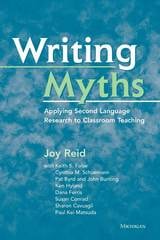
Writing Myths
Applying Second Language Research to Classroom TeachingJoy Reid with Keith S. Folse, Cynthia M. Schuemann, Pat Byrd and John Bunting, Ken Hyland, Dana Ferris, Susan Conrad, Sharon Cavusgil, Paul Kei Matsuda
University of Michigan Press, 2008
This volume was conceived as a "best practices" resource for writing teachers in the way that Vocabulary Myths by Keith S. Folse is one for reading and vocabulary teachers. It was written to help ensure that writing teachers are not perpetuating the myths of teaching writing.
Each author is a practicing teacher who selected his or her "myth" based on classroom experience and expertise. Both the research and pedagogy in this book are based on the newest research in, for example, teacher preparation, EAP and ESP, and corpus linguistics. The myths discussed in this book are:
§ Teaching vocabulary is not the writing teacher's job. (Keith S. Folse)
§ Teaching citation is someone else's job. (Cynthia M. Schuemann)
§ Where grammar is concerned, one size fits all. (Pat Byrd and John Bunting)
§ Academic writing should be assertive and certain. (Ken Hyland)
§ Students must learn to correct all their writing errors. (Dana Ferris)
§ Corpus-based research is too complicated to be useful for writing teachers. (Susan Conrad)
§ Academic writing courses should focus on paragraph and essay development. (Sharon Cavausgil)
§ International and U.S. resident ESL writers cannot be taught in the same class. (Paul Kei Matsuda)
The book concludes with a discussion of students' myths about academic writing and teaching written by Joy Reid.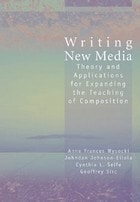
Writing New Media
Theory and Applications for Expanding the Teaching of CompositionAnne Frances Wysocki, Johndan Johnson-Eilola, Cynthia L. Selfe, & Geoffrey Sirc
Utah State University Press, 2004
As new media mature, the changes they bring to writing in college are many and suggest implications not only for the tools of writing, but also for the contexts, personae, and conventions of writing. An especially visible change has been the increase of visual elements-from typographic flexibility to the easy use and manipulation of color and images. Another would be in the scenes of writing-web sites, presentation "slides," email, online conferencing and coursework, even help files, all reflect non-traditional venues that new media have brought to writing. By one logic, we must reconsider traditional views even of what counts as writing; a database, for example, could be a new form of written work.
The authors of Writing New Media bring these ideas and the changes they imply for writing instruction to the audience of rhetoric/composition scholars. Their aim is to expand the college writing teacher's understanding of new media and to help teachers prepare students to write effectively with new media beyond the classroom. Each chapter in the volume includes a lengthy discussion of rhetorical and technological background, and then follows with classroom-tested assignments from the authors' own teaching.
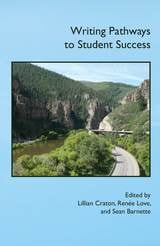
Writing Pathways to Student Success
Lillian Craton
University Press of Colorado, 2017
Teachers of first-year composition courses do essential work. Teaching argumentation and conventions of university-level writing; demystifying citation and punctuation; promoting reading comprehension and analysis. Yet such skills, as important as they are, do not reflect the full scope of our discipline. Some of the best learning in composition coursework relates to students' growth as successful individuals able to live and write in a complex world. Composition instructors demand civil discourse and respect for diversity. They coach students in time management and the creative process. They build up confidence, break down learning obstacles, and promote self-examination. The essays found in Writing Pathways for Student Success, written by and for instructors of college writing, examine life lessons that both students and instructors learn from first-year composition courses.
Contributors: Lori Brown, Kathryn Crowther, Casie Fedukovich, Rachel Anya Fomalhaut, Lynée Lewis Gaillet, Christopher Garland, Ruth A. Goldfine, Pamela Henney, Rachel McCoppin, Deborah Mixson-Brookshire, Karen Bishop Morris, Sarah O’Connor, Abigail G. Scheg, Lisa Whalen
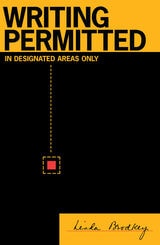
Writing Permitted in Designated Areas Only
Linda Brodkey
University of Minnesota Press, 1996
One teacher's dispatches from the front lines of the culture wars.
In the early 1990s, Linda Brodkey ended up on the front page of the New York Times and in the columns of George Will and other conservative pundits. The furor was over the “Writing about Difference” syllabus she helped create at the University of Texas, an effort that came to be one more casualty in the debate over multiculturalism in the academy. Writing Permitted in Designated Areas Only is made up of Brodkey’s dispatches from the front lines of the culture wars.
The essays in this book raise provocative questions about the way writing is taught in the United States. Brodkey lambastes conventional composition courses, which since their inception in the mid-nineteenth century have been the site of conflict over what “literacy” really means. She argues that such courses have institutionalized the practice of separating form and content, relegating teachers to the tasks of policing grammar and patrolling the borders of style and literature. Ultimately, this separation of structure and meaning depoliticizes the act of writing, creating an artificial distinction between what is being said and how it is expressed. Comprising specific examples of student work in addition to Brodkey’s own essays, Writing Permitted in Designated Areas Only works against this dynamic. Ranging from personal essay (“Writing on the Bias”) to hard-hitting polemic (“Writing Permitted in Designated Areas Only”) and touching on many of the major issues in the teaching of writing today, this volume explores alternatives to the standard methods for teaching composition. The result is a passionate plea for the loosing of writing to achieve its full power and potential; to unharness writing—and its teachers—from the institutional strictures that stifle both creativity and independent thought.
Writing Placement in Two-Year Colleges
The Pursuit of Equity in Postsecondary EducationJessica Nastal
University Press of Colorado, 2023
Writing Studies Research in Practice
Methods and MethodologiesEdited by Lee Nickoson and Mary P. Sheridan, Foreword by Gesa E. Kirsch
Southern Illinois University Press, 2012
An essential reference for students and scholars exploring the methods and methodologies of writing research.
What does it mean to research writing today? What are the practical and theoretical issues researchers face when approaching writing as they do? What are the gains or limitations of applying particular methods, and what might researchers be overlooking? These questions and more are answered by the writing research field’s leading scholars in Writing Studies Research in Practice: Methods and Methodologies.
Editors Nickoson and Sheridan gather twenty chapters from leaders in writing research, spanning topics from ethical considerations for researchers, quantitative methods, and activity analysis to interviewing and communitybased and Internet research. While each chapter addresses a different subject, the volume as a whole covers the range of methodologies, technologies, and approaches—both old and new—that writing researchers use, and examines the ways in which contemporary writing research is understood, practiced, and represented.
An essential reference for experienced researchers and an invaluable tool to help novices understand research methods and methodologies, Writing Studies Research in Practice includes established methods and knowledge while addressing the contemporary issues, interests, and concerns faced by writing researchers today.
Writing Studies in Latin America
Seminal WorksFederico Navarro
University Press of Colorado, 2026
This edited collection arises from the belief that the field of writing studies, with its deep engagement in the power of language, is uniquely positioned to open new pathways for international scholarly dialogue in writing studies and beyond. Integrating diverse theoretical traditions—including discourse studies, language pedagogy, educational psychology, educational management, and critical sociolinguistics—the editors have brought together work from key Latin American scholars published over the past two decades. The result is a book that points to future directions for the increasingly global field of writing studies. The collection includes work by Natalia Ávila Reyes, Charles Bazerman, Paula Carlino, Valentina Fahler, Ivone Inés Jakob, Judith Kalman, Angela B. Kleiman, Vera Lúcia Lopes Cristovão, Anna Rachel Machado, Jonathan Marine, Juan David Martínez Hincapié, Paulina Meza, Violate Molina Natera, Désirée Motta-Roth, Estela I. Moyano, Elvira Narvaja de Arnoux, Lucía Natale, Federico Navarro, Giovanni Parodi, Luisa Pelizza, María Cecilia Pereira, Pablo Rosales, Daniela Paula Stagnaro, Alicia Vázquez, René Venegas, and Virginia Zavala.
Writing Their Bodies
Restoring Rhetorical Relations at the Carlisle Indian SchoolSarah Klotz
Utah State University Press, 2020
This approach tracks the relationship between curriculum and resistance and enumerates an anti-assimilationist methodology for teachers and scholars of writing in contemporary classrooms. From the Carlisle archive emerges the concept of a rhetoric of relations, a set of Native American communicative practices that circulates in processes of intercultural interpretation and world-making. Klotz explores how embodied and material practices allowed Indigenous rhetors to maintain their cultural identities in the off-reservation boarding school system and critiques the settler fantasy of benevolence that propels assimilationist models of English education.
Writing Their Bodies moves beyond language and literacy education where educators standardize and limit their students’ means of communication and describes the extraordinary expressive repositories that Indigenous rhetors draw upon to survive, persist, and build futures in colonial institutions of education.
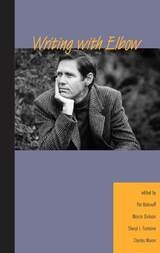
Writing With Elbow
edited by Pat Belanoff, Marcia Dickson, Sheryl I. Fontaine, & Charles Moran
Utah State University Press, 2002
Writing with Elbow is a must-read collection for composition scholars, teachers, English educationists, and graduate students.
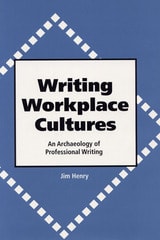
Writing Workplace Cultures
An Archaeology of Professional WritingJim Henry
Southern Illinois University Press, 2000
In Writing Workplace Cultures: An Archaeology of Professional Writing, Jim Henry analyzes eighty-three workplace writing ethnographies composed over seven years in a variety of organizations. He views the findings as so many shards in an archaeology on professional writing at the beginning of the twenty-first century.
These ethnographies were composed by either practicing or aspiring writers participating in a Master’s program in professional writing and editing. Henry solicited the writers' participation in "informed intersubjective research" focused on issues and questions of their own determination. Most writers studied their own workplace, composing "auto-ethnographies" that problematize these workplaces' local cultures even as they depict writing practices within them.
Henry establishes links between current professional writing practices and composition instruction as both were shaped by national economic development and local postsecondary reorganization throughout the twentieth century. He insists that if we accept basic principles of social constructionism, the text demonstrates ways in which writers "write" workplace cultures to produce goods and services whose effects go far beyond the immediate needs of its clients.
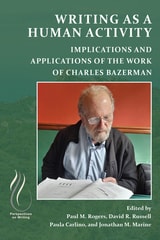
Writing as a Human Activity
Implications and Applications of the Work of Charles BazermanPaul M. Rogers
University Press of Colorado, 2023
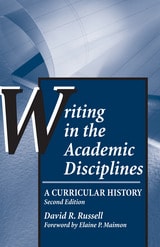
Writing in the Academic Disciplines, Second Edition
A Curricular HistoryDavid R. Russell. Foreword by Elaine P. Maimon
Southern Illinois University Press, 2002
“To understand the ways students learn to write, we must go beyond the small and all too often marginalized component of the curriculum that treats writing explicitly and look at the broader, though largely tacit traditions students encounter in the whole curriculum,” explains David R. Russell, in the introduction to this singular study. The updated edition provides a comprehensive history of writing instruction outside general composition courses in American secondary and higher education, from the founding public secondary schools and research universities in the 1870s, through the spread of the writing-across-the-curriculum movement in the 1980s, through the WAC efforts in contemporary curriculums.
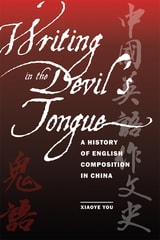
Writing in the Devil's Tongue
A History of English Composition in ChinaXiaoye You
Southern Illinois University Press, 2010
Winner, CCCC Outstanding Book Award
Until recently, American composition scholars have studied writing instruction mainly within the borders of their own nation, rarely considering English composition in the global context in which writing in English is increasingly taught. Writing in the Devil’s Tongue challenges this anachronistic approach by examining the history of English composition instruction in an East Asian country. Author Xiaoye You offers scholars a chance to observe how a nation changed from monolingual writing practices to bilingual writing instruction in a school setting.
You makes extensive use of archival sources to help trace bilingual writing instruction in China back to 1862, when English was first taught in government schools. Treating the Chinese pursuit of modernity as the overarching theme, he explores how the entry of Anglo-American rhetoric and composition challenged and altered the traditional monolithic practice of teaching Chinese writing in the Confucian spirit. The author focuses on four aspects of this history: the Chinese negotiation with Anglo-American rhetoric, their search for innovative approaches to instruction, students’ situated use of English writing, and local scholarship in English composition.
Unlike previous composition histories, which have tended to focus on institutional, disciplinary, and pedagogical issues, Writing in the Devil’s Tongue brings students back to center stage by featuring several passages written by them in each chapter. These passages not only showcase rhetorical and linguistic features of their writings but also serve as representative anecdotes that reveal the complex ways in which students, responding to their situations, performed multivalent, intercultural discourses. In addition, You moves out of the classroom and into the historical, cultural, and political contexts that shaped both Chinese writing and composing practices and the pedagogies that were adopted to teach English to Chinese in China. Teachers, students, and scholars reading this book will learn a great deal about the political and cultural impact that teaching English composition has had in China and about the ways in which Chinese writing and composition continues to be shaped by rich and diverse cultural traditions and political discourses.
In showcasing the Chinese struggle with teaching and practicing bilingual composition, Writing in the Devil’s Tongue alerts American writing scholars and teachers to an outdated English monolingual mentality and urges them to modify their rhetorical assumptions, pedagogical approaches, and writing practices in the age of globalization.