Results by title
453 books match the query 'Wisconsin' and 73 start with w
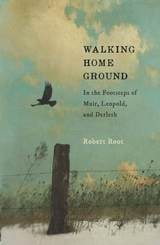
Walking Home Ground
In the Footsteps of Muir, Leopold, and DerlethRobert Root
Wisconsin Historical Society Press, 2017
When longtime author Robert Root moves to a small town in southeast Wisconsin, he gets to know his new home by walking the same terrain traveled by three Wisconsin luminaries who were deeply rooted in place—John Muir, Aldo Leopold, and August Derleth. Root walks with Muir at John Muir State Natural Area, with Leopold at the Shack, and with Derleth in Sac Prairie; closer to home, he traverses the Ice Age Trail, often guided by such figures as pioneering scientist Increase Lapham. Along the way, Root investigates the changes to the natural landscape over nearly two centuries, and he chronicles his own transition from someone on unfamiliar terrain to someone secure on his home ground.In prose that is at turns introspective and haunting, Walking Home Ground inspires us to see history’s echo all around us: the parking lot that once was forest; the city that once was glacier. "Perhaps this book is an invitation to walk home ground," Root tells us. "Perhaps, too, it’s a time capsule, a message in a bottle from someone given to looking over his shoulder even as he tries to examine the ground beneath his feet."
Walking Trails of Eastern and Central Wisconsin
Bob Crawford
University of Wisconsin Press, 1997
A companion to the popular Walking Trails of Southern Wisconsin, this book describes more than 200 trails in 72 locations throughout five of the state's major regions. Bob Crawford provides maps and detailed instructions to make the trails easy to locate.
With each trail description you'll find:
* details about the route and terrain, as well as geographical, biological, or historical features of interest;
* regulations including open days and hours, and rules regarding dogs, trail bikes, cross-country skiing, and other activities;
* information about available restrooms, drinking water, nature centers, and other facilities at the site;
* a description assessing degree of difficulty—slope, width, maintenance, and other such factors—and a helpful rating of "walkability" on a scale from 1 to 5.
The only comprehensive guide to hiking locations in the eastern part of the state, this book also provides lists of trail locations that include playground equipment for kids and picnic facilities for those who want to make a day trip of their hiking outing. Appendices spotlight trails that boast historical significance, ice age features, picnic areas, and cross-country skiing opportunities.
Walking Trails of Southern Wisconsin
Bob Crawford
University of Wisconsin Press, 2000
Take a walk on the wild side with the completely updated version of this popular guide.
This edition now includes coverage of Lafayette and Vernon counties, plus new information on more trails, including ones at Avoca Prairie Savanna State Natural Area, Wildcat Mountain State Park, and Blackhawk Lake Recreational Area. Author Bob Crawford has also revised eleven trail maps in nine counties and updated material throughout the book, which now describes more than 150 trails at more than sixty locations.
These trails wind across southern Wisconsin—into forests and along shores, over glacial formations and around Native American earthworks—and showcase some of the most beautiful and interesting walking trails in the nation. Walking Trails of Southern Wisconsin retains its handy, pocket-sized format plus all the other features that made the first edition so successful:
• details about routes and terrain plus geographical, biological, or historical features of interest
• regulations including open days and hours, and rules regarding dogs, trail bikes, cross-country skiing, and other activities
• information about available restrooms, drinking water, nature centers, and other facilities at the site
• a description assessing degree of difficulty—slope, width, maintenance, and other such factors—and a helpful rating of “walkability” on a scale from 1 to 5
Crawford also provides information about nearby parks, preserves, glacial formations, historical sites, tourist attractions, and other points of interest for those who want to turn a hike into a day trip or weekend outing. Staying fit was never so easy nor so much fun.

Warmed by Windchill
A Tiny Colt’s Fight for LifeJeffrey L. Tucker; Foreword by Carolyn L. Stull, PhD
University of Wisconsin Press, 2013
One bitterly cold winter afternoon, a nine-month-old colt—extremely weak, starving, left to die—was frozen to the rock-hard white landscape of a northern Wisconsin pasture. His whinny for help barely carried through thirty-mile-an-hour winds lashing snow and ice against his thin coat. But somewhere inside him a light refused to go out.
The colt's call for help was answered, and that light inspired a worldwide response to his story. The struggle of the little colt, called Windchill by his rescuers, was reported widely, and soon 1.2 million people were following Windchill's progress on a blog and webcam.
Warmed by Windchill tells how Jeffrey L. Tucker, owner of nearby Raindance Farms, and Kathi Davis, owner of a horse training operation co-located at Raindance, rescued and cared for the colt, aided by an outpouring of assistance. Donations of money, feed, blankets, and other supplies streamed in as round-the-clock volunteers tried to save Windchill. Warmed by Windchill is both heartening and heartbreaking.
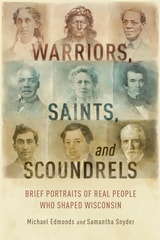
Warriors, Saints, and Scoundrels
Brief Portraits of Real People Who Shaped WisconsinMichael Edmonds
Wisconsin Historical Society Press, 2017

Water Panthers, Bears, and Thunderbirds
Exploring Wisconsin's Effigy MoundsBobbie Malone and Amy Rosebrough
Wisconsin Historical Society Press, 2003
Based on recent archaeological interpretation, this standards-based resource enriches material covered in Native People of Wisconsin. Water Panthers, Bears, and Thunderbirds introduces young readers to effigy mound sites in five southern Wisconsin counties. Suggested activities encourage students to graph, compare, contrast, and analyze the ways these mound groups vary from county to county.

We Had Fun and Nobody Died
Adventures of a Milwaukee Music PromoterAmy T. Waldman
Wisconsin Historical Society Press, 2024
The entertaining and inspiring story of a stubbornly independent promoter and club owner
This irreverent biography provides a rare window into the music industry from a promoter’s perspective. From a young age, Peter Jest was determined to make a career in live music, and despite naysayers and obstacles, he did just that, bringing national acts to his college campus at UW–Milwaukee, booking thousands of concerts across Wisconsin and the Midwest, and opening Shank Hall, the beloved Milwaukee venue named after a club in the cult film This Is Spinal Tap.
This funny, nostalgia-inducing book details the lasting friendships Jest established over the years with John Prine, Arlo Guthrie, and Milwaukee’s own Violent Femmes, among others. It also shines a light into the seldom-seen world of music promotion, as Jest attempts to manage a turbulent band on the road, negotiates with agents, deals with fires (both real and metaphorical), struggles through a pandemic, and takes pleasure in presenting music of all kinds—from world-famous acts to up-and-coming local bands. In addition to photos of celebrated musicians, the book includes concert posters, tickets, and backstage passes documenting decades of rock, folk, and alternative shows that helped put Milwaukee on the live music map.
As the music industry has become dominated by profit-driven corporations, We Had Fun and Nobody Died chronicles the career of a one-of-a-kind independent promoter whose hardheadedness and love of music have helped him keep it real and make it in the music business for more than forty years.
"[An] adventure-filled biography of music promoter Peter Jest. . . . Reflecting decades of changes to the music business, We Had Fun and Nobody Died is a fascinating biography of a passionate promoter’s work to transform Milwaukee’s music scene."
—Foreword Reviews
“Amy Waldman and Peter Jest weave a thrilling tale of fanhood gone pro. Dreams followed, dragons slain, and the roof of a venerable venue repeatedly blown sky-high. We’re proud to have provided the name [for Shank Hall]; it took men and women of sterner stuff to do the heavy lifting.”
—Michael McKean, actor and comedian, This Is Spinal Tap
“We Had Fun and Nobody Died is a fantastic journey of a Midwest boy, his love of music, and his excitement to be part of it all.”
—Kevn Kinney, lead singer and guitarist of Drivin N Cryin
“Peter Jest’s story is one that conveys a winning combination of friendship, determination, and entrepreneurial insights that led him to a lifelong career in support of the live music industry and the community that comes together in common appreciation of it.”
—Shana Morrison, singer-songwriter
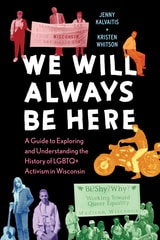
We Will Always Be Here
A Guide to Exploring and Understanding the History of LGBTQ+ Activism in WisconsinJenny Kalvaitis
Wisconsin Historical Society Press, 2021
We Will Always Be Here shines a light on powerful and often untold stories from Wisconsin’s history, featuring individuals across a wide spectrum of identities and from all corners of the state. The LGBTQ+ people, allies, and activists in this guide changed the world by taking steps that young people can take today—by educating themselves, telling their own stories, being true to themselves, building communities, and getting active. The aim of this celebratory book is not only to engage young people in Wisconsin’s LGBTQ+ history, but also to empower them to make positive change in the world.
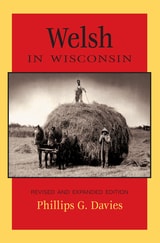
Welsh in Wisconsin
Phillips G. Davies
Wisconsin Historical Society Press, 2006
Between 1840 and 1890, many Welsh looked to Wisconsin for relief where they could purchase inexpensive, productive land. With large Welsh landowners controlling most of the arable land in Wales and Corn Laws, which prohibited importation of cheap food, domestic food prices increased dramatically and left the typical tenant-farming family with fields full of grain but empty cupboards. Once in Wisconsin, the newcomers kept to themselves, maintained their native language and national traditions and worshipped together in close-knit communities.
This addition to the People of Wisconsin series weaves period letters from the Owen family and Private John Jones, who served in the Union army in the Civil War, into the narration. Welsh in Wisconsin also contains anecdotes from early immigrant life and photographs depicting Welsh churches in Wisconsin.
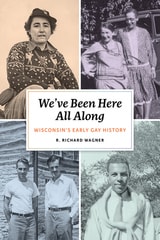
We’ve Been Here All Along
Wisconsin’s Early Gay HistoryR. Richard Wagner
Wisconsin Historical Society Press, 2019
In We’ve Been Here All Along, R. Richard Wagner draws on historical research and materials from his own extensive archive to uncover previously hidden stories of gay Wisconsinites. This book honors their legacy and confirms that they have been foundational to the development and evolution of the state since its earliest days
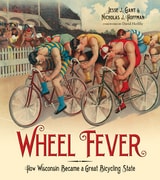
Wheel Fever
How Wisconsin Became a Great Bicycling StateJesse J. Gant
Wisconsin Historical Society Press, 2013
Many early riders embraced the bicycle as a solution to the age-old problem of how to get from here to there in the quickest and easiest way possible. Yet for every supporter of the “poor man’s horse,” there were others who wanted to keep the rights and privileges of riding to an elite set. Women, the working class, and people of color were often left behind as middle- and upper-class white men benefitted from the “masculine” sport and all-male clubs and racing events began to shape the scene. Even as bikes became more affordable and accessible, a culture defined by inequality helped create bicycling in its own image, and these limitations continue to haunt the sport today.
Wheel Fever is about the origins of bicycling in Wisconsin and why those origins still matter, but it is also about our continuing fascination with all things bicycle. From “boneshakers” to high-wheels, standard models to racing bikes, tandems to tricycles, the book is lushly illustrated with never-before-seen images of early cycling, and the people who rode them: bloomer girls, bicycle jockeys, young urbanites, and unionized workers.
Laying the foundations for a much-beloved recreation, Wheel Fever challenges us to imagine anew the democratic possibilities that animated cycling’s early debates.
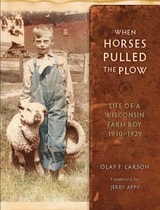
When Horses Pulled the Plow
Life of a Wisconsin Farm Boy, 1910–1929Olaf F. Larson
University of Wisconsin Press, 2011

When the Hills Are Gone
Frac Sand Mining and the Struggle for CommunityThomas W. Pearson
University of Minnesota Press, 2017
Fracking is one of the most controversial methods of fossil fuel extraction in the United States, but a great deal about it remains out of the public eye. In Wisconsin it has ignited an unprecedented explosion in the state’s sand mining operations, an essential ingredient in hydraulic fracturing that has shaken local communities to the core.
In When the Hills Are Gone, Thomas W. Pearson reveals the jolting impact of sand mining on Wisconsin’s environment and politics. A source of extraordinary wealth for a lucky few, and the cause of despoiled land for many others, sand mining has raised alarm over air quality, water purity, noise, blasting, depressed tourism, and damage to the local way of life. It has also spurred a backlash in a grassroots effort that has grown into a mature political movement battling a powerful mining industry.
When the Hills Are Gone tells the story of Wisconsin’s sand mining wars. Providing on-the-ground accounts from both the mining industry and the concerned citizens who fought back, Pearson blends social theory, ethnography, stirring journalism, and his own passionate point of view to offer an essential chapter of Wisconsin’s history and an important episode in the national environmental movement. Digging deep into the struggles over place, community, and local democracy that are occurring across the United States, When the Hills Are Gone gives vital insight into America’s environmental battles along the unexpected frontlines of energy development.
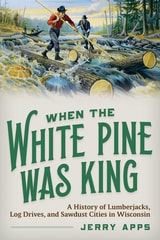
When the White Pine Was King
A History of Lumberjacks, Log Drives, and Sawdust Cities in WisconsinJerry Apps
Wisconsin Historical Society Press, 2020
For more than half a century, logging, lumber production, and affiliated enterprises in Wisconsin’s Northwoods provided jobs for tens of thousands of Wisconsinites and wealth for many individuals. The industry cut through the lives of nearly every Wisconsin citizen, from an immigrant lumberjack or camp cook in the Chippewa Valley to a Suamico sawmill operator, an Oshkosh factory worker to a Milwaukee banker.
When the White Pine Was King tells the stories of the heyday of logging: of lumberjacks and camp cooks, of river drives and deadly log jams, of sawmills and lumber towns and the echo of the ax ringing through the Northwoods as yet another white pine crashed to the ground. He explores the aftermath of the logging era, including efforts to farm the cutover (most of them doomed to fail), successful reforestation work, and the legacy of the lumber and wood products industries, which continue to fuel the state’s economy.
Enhanced with dozens of historic photos, When the White Pine Was King transports readers to the lumber boom era and reveals how the lessons learned in the vast northern forestlands continue to shape the region today.

Whispers and Shadows
A Naturalist’s MemoirJerry Apps
Wisconsin Historical Society Press, 2015
Combining his signature lively storytelling and careful observations of nature, Apps draws on a lifetime of experiences, from his earliest years growing up on a central Wisconsin farm to his current ventures as gardener, tree farmer, and steward of wetlands, prairies, and endangered Karner blue butterflies. He also takes inspiration from the writings of Aldo Leopold, Annie Dillard, Henry David Thoreau, Sigurd Olson, Ralph Waldo Emerson, John Muir, Barbara Kingsolver, Wendell Berry, Richard Louv, and Rachel Carson. With these eloquent essays, Jerry Apps reminds us to slow down, turn off technology, and allow our senses to reconnect us to the natural world. For it is there, he writes, that “I am able to return to a feeling I had when I was a child, a feeling of having room to stretch my arms without interfering with another person, a feeling of being a small part of something much larger than I was, and I marvel at the idea.”
Wiijiwaaganag
More Than BrothersPeter Razor
Michigan State University Press, 2022

Wildflowers of Wisconsin and the Great Lakes Region
A Comprehensive Field GuideMerel R. Black and Emmet J. Judziewicz
University of Wisconsin Press, 2009
• more than 1,100 species from 459 genera in 100 families
• many rare and previously overlooked species
• 2,100 color photographs and 300 drawings
• Wisconsin distribution maps for almost all plants
• brief descriptions including distinguishing characteristics of the species
• Wisconsin status levels for each species of wildflower (native, invasive, endangered, etc.)
• derivation of Latin names.
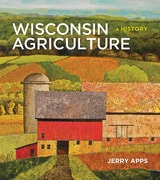
Wisconsin Agriculture
A HistoryJerry Apps
Wisconsin Historical Society Press, 2015
"I'm embarrassed to say I thought I knew anything substantial about Wisconsin agriculture or its history before I read this book. 'Wisconsin Agriculture' should be required reading in history classes from high school to the collegiate level. It makes me thankful that Jerry Apps has such a sense of commitment to Wisconsin's agricultural heritage--and to getting the story right." --Pam Jahnke, Farm Director, Wisconsin Farm Report Radio
Wisconsin has been a farming state from its very beginnings. And though it's long been known as "the Dairy State," it produces much more than cows, milk, and cheese. In fact, Wisconsin is one of the most diverse agricultural states in the nation.
The story of farming in Wisconsin is rich and diverse as well, and the threads of that story are related and intertwined. In this long-awaited volume, celebrated rural historian Jerry Apps examines everything from the fundamental influences of landscape and weather to complex matters of ethnic and pioneer settlement patterns, changing technology, agricultural research and education, and government regulations and policies. Along with expected topics, such as the cranberry industry and artisan cheesemaking, "Wisconsin Agriculture" delves into beef cattle and dairy goats, fur farming and Christmas trees, maple syrup and honey, and other specialty crops, including ginseng, hemp, cherries, sugar beets, mint, sphagnum moss, flax, and hops. Apps also explores new and rediscovered farming endeavors, from aquaculture to urban farming to beekeeping, and discusses recent political developments, such as the 2014 Farm Bill and its ramifications. And he looks to the future of farming, contemplating questions of ethical growing practices, food safety, sustainability, and the potential effects of climate change.
Featuring first-person accounts from the settlement era to today, along with more than 200 captivating photographs, "Wisconsin Agriculture" breathes life into the facts and figures of 150 years of farming history and provides compelling insights into the state's agricultural past, present, and future.

Wisconsin Cocktails
Jeanette Hurt
University of Wisconsin Press, 2020
Beyond delving into mythic origins of several classic creations, Jeanette Hurt introduces a new generation of cocktails that offer a spin on standard concoctions. She explores the state’s unique farm-to-table ethos influenced by an abundance of locally sourced ingredients. Also included are a wealth of interviews with notable mixologists, sharing numerous favorite recipes for specialty pick-me-ups that connoisseurs and home bartenders alike will be clamoring to try. A definitive account of the beverages we love, Wisconsin Cocktails insists we order our Old Fashioneds the right way—with brandy.
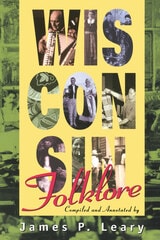
Wisconsin Folklore
Edited by James P. Leary
University of Wisconsin Press, 1999
Highly entertaining and richly informative, Wisconsin Folklore offers the first comprehensive collection of writings about the surprisingly varied folklore of Wisconsin. Beginning with a historical introduction to Wisconsin's folklore and concluding with an up-to-date bibliography, this anthology offers more than fifty annotated and illustrated entries in five sections: "Terms and Talk," "Storytelling," "Music, Song, and Dance," "Beliefs and Customs," and "Material Traditions and Folklife."
The various contributors, from 1884 to 1997, are anthropologists, ethnomusicologists, historians, journalists, museologists, ordinary citizens reminiscing, sociologists, students, writers of fiction, practitioners of folklore, and folklorists. Their interests cover an enormous range of topics: from Woodland Indian place names and German dialect expressions to Welsh nicknames and the jargon of apple-pickers, brewers, and farmers; from Ho-Chunk and Ojibwa mythological tricksters and Paul Bunyan legends to stories of Polish strongmen and Ole and Lena jokes; from Menominee dances and Norwegian fiddling and polka music to African-American gospel groups and Hmong musicians; from faith healers and wedding and funeral customs to seasonal ethnic festivities and tavern amusements; and from spearing decoys and needlework to church dinners, sacred shrines, and the traditional work practices of commercial fishers, tobacco growers, and pickle packers.
For general readers, teachers, librarians, and scholars alike, Wisconsin Folklore exemplifies and illuminates Wisconsin's cultural traditions, and establishes the state's significant but long neglected contributions to American folklore.
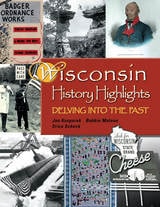
Wisconsin History Highlights
Delving into the PastJon Kasparek, Bobbie Malone, and Erica Schock
Wisconsin Historical Society Press, 2004
Wisconsin History Highlights encourages middle and high school students, including National History Day participants, to use Wisconsin topics and resources as they research American history. The book guides students on their way, drawing them in with the topics most likely to spur their curiosity and enthusiasm. Wisconsin History Highlights introduces students to essential skills for historical research, including locating primary and secondary materials, choosing and narrowing a topic, and avoiding plagiarism.
The text includes nine chapters: Discovering the Past; Immigration; Agriculture; Industry; Environment; Social Issues; Government; Tourism; and Arts, Entertainment, and Sports. Each chapter has a variety of concise historical vignettes about specific events, people, or places in Wisconsin history, and within each vignette, students will find hints to get started with research on that or a related topic. The chapters contain many illustrations of sample source materials, and each closes with a detailed bibliography of available primary and secondary resources.
Students will find ample guidance in many places, from the helpful introductory material, the table of contents, and the topical chapters to the thorough index, which together make Wisconsin History Highlights an essential tool for expanding students' conceptions of history and refining their research skills.

Wisconsin Idols
100 Heroes Who Changed the State, the World, and MeDean Robbins
Wisconsin Historical Society Press, 2025
Discover intriguing true tales of legends and trailblazers with Wisconsin connections who left their mark on the world, including the Beatles, Georgia O’Keeffe, Kareem Abdul-Jabbar, Harrison Ford, Joni Mitchell, Abraham Lincoln, Oprah Winfrey, Bob Dylan, Jackie Robinson, Orson Welles, and many more. Marvel at Elvis Presley’s miracle on the streets of Madison, applaud the award-winning acting of Reedsburg’s Agnes Moorehead, follow fearless quarterback Bart Starr to the gates of hell in Green Bay, and join Joshua Glover in Racine on his daring escape from enslavers. These brief narratives—whether poignant or humorous—also offer personal reflections on the impact of each featured idol.
Author Dean Robbins has spent a lifetime researching and revering these prominent figures and visiting exhibits, shrines, historic homes, and other sites dedicated to their achievements. Wisconsin Idols gathers all of Robbins’s obsessions into one collection, enhanced by dozens of photographs. Taken together, these stories of musicians, activists, artists, athletes, actors, and great thinkers irrefutably establish Wisconsin as a crossroads for extraordinary people who changed the world.
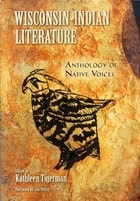
Wisconsin Indian Literature
Anthology of Native VoicesEdited by Kathleen Tigerman; Foreward by Jim Ottery
University of Wisconsin Press, 2006
Literature of the Indian Nations of Wisconsin is a unique anthology that presents the oral traditions, legends, speeches, myths, histories, literature, and historically significant documents of the current twelve independent bands and Indian Nations of Wisconsin. Kathleen Tigerman sought input from tribe elders and educators to provide an accurate chronological portrait of each nation, including the Siouan Ho-Chunk; the Algonquian Menominee, Ojibwe, and Potawatomi; and three groups originally from what is now New York State: the Iroquoian Oneida, the Stockbridge-Munsee band of the Mohican Nations, and the Brothertown Nation.
Some of these works feature a cultural hero or refer to very ancient times—more than six thousand years ago—and others are contemporary. These pieces focus on issues of Wisconsin Native communities by sharing Native knowledge and dialogue about sovereignty, decolonization, cultural genocide, forced removals, assimilation, and other concerns.
This anthology introduces us to a vivid and unforgettable group of voices, enhanced by many maps, photographs, and chronologies. Literature of the Indian Nations of Wisconsin fosters cross-cultural understanding among non-Native readers and the people of the First Nations.
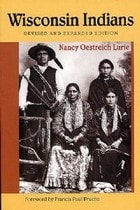
Wisconsin Indians
Nancy Oestreich Lurie
Wisconsin Historical Society Press, 2002
This best-selling short history of Wisconsin's native peoples is now updated and expanded to include events through the end of the twentieth century. From the treaty-making era to the reawakening of tribal consciousness in the 1960s to the profound changes brought about by Indian gaming, Lurie’s classic account remains the best concise treatment of the subject.

Wisconsin Korean War Stories
Veterans Tell Their Stories from the Forgotten WarSarah Larsen
Wisconsin Historical Society Press, 2008
Wisconsin Land and Life
A Portrait of the StateRobert C. Ostergren
University of Wisconsin Press, 1997
These are images of Wisconsin's land and life, images that evoke a strong sense of place. This book, Wisconsin Land and Life, is an exploration of place, a series of original essays by Wisconsin geographers that offers an introduction to the state's natural environment, the historical processes of its human habitation, and the ways that nature and people interact to create distinct regional landscapes. To read it is to come away with a sweeping view of Wisconsin's geography and history: the glaciers that carved lakes and moraines; the soils and climate that fostered the prairies and great northern pine forests; the early Native Americans who began to shape the landscape and who established forest trails and river portages; the successive waves of Europeans who came to trade in furs, mine for lead and iron, cut the white pines, establish farms, work in the lumber and paper mills, and transform spent wheatfields into pasture for dairy cattle.
Readers will learn, too, about the platting and naming of Wisconsin's towns, the establishment of county and township governments, the growth of urban neighborhoods and parishes, the role of rivers, railroads, and religion in shaping the state's growth, and the controversial reforestation of the cutover lands that eventually transformed hardscrabble farms and swamps into a sportsman's paradise.
Abundantly illustrated with photos and maps, this book will richly reward anyone who wishes to learn more about the land and life of the place we know as Wisconsin.
Wisconsin Lighthouses
A Photographic and Historical Guide, Revised EditionKen Wardius
Wisconsin Historical Society Press, 2013
“Lighthouses are a reflection of the human spirit and a mirror to our past.”—from the Introduction
No symbol is more synonymous with Wisconsin’s rich maritime traditions than the lighthouse. These historic beacons conjure myriad notions of a bygone era: romance, loneliness, and dependability; dedicated keepers manning the lights; eerie tales of haunted structures and ghosts of past keepers; mariners of yesteryear anxiously hoping to make safe haven around rocky shorelines. If these sentinels could talk, imagine the tales they would tell of ferocious Great Lakes storms taking their toll on vessels and people alike.
In this fully updated edition of Wisconsin Lighthouses, Ken and Barb Wardius tell those tales, taking readers on an intimate tour of lighthouses on Lake Superior, Lake Michigan, and Lake Winnebago. Both delightful storytellers and accomplished photographers, the couple complement their engaging text with more than 100 stunning color photographs, along with dozens of archival photos, maps, documents, and artifacts. Detailed “how to get there” directions, up-to-the-minute status reports on each light, and sidebars on everything from lighthouse vocabulary to the often lonely lives of lightkeepers make this the definitive book on Wisconsin’s lighthouses.
Wisconsin My Home
Thurine Oleson; As told to her daughter Erna Oleson Xan; Introduction by Odd Lovoll
University of Wisconsin Press, 2012

Wisconsin Riffs
Jazz Profiles from the HeartlandKurt Dietrich
Wisconsin Historical Society Press, 2018
Although New York City, Los Angeles, and Chicago are often considered the epicenters of American jazz, this extensive, upbeat compilation of jazz musician biographies details Wisconsin’s rich association the genre since its the inception of the genre in the early 1900s. Iconic musicians Bunny Berigan, Woody Herman, Les Paul, and Al Jarreau all hailed from Wisconsin, as have many other influential players, composers, and teachers. Wisconsin Riffs features these musicians side-by-side—from the world-renowned to obscure regional artists—to portray a comprehensive history of jazz in Wisconsin.
Through meticulous research and more than a hundred interviews, author Kurt Dietrich has assembled a group of musicians who represent a wide range of backgrounds, ages, stylistic schools, and experiences—from leaders of swing-era big bands to legendary Wisconsin Conservatory instructors to today’s up-and-coming practitioners of contemporary jazz and jazz rock. For aspiring musicians, jazz enthusiasts, and fans of Wisconsin culture alike, Wisconsin Riffs presents a compelling, complex, and multi-layered concoction—just like jazz itself.

Wisconsin Sentencing in the Tough-on-Crime Era
How Judges Retained Power and Why Mass Incarceration Happened AnywayMichael O'Hear
University of Wisconsin Press, 2021
O'Hear tracks the effects of sentencing laws and politics in Wisconsin from the eve of the imprisonment boom in 1970 up to the 2010s. Drawing on archival research, original public-opinion polling, and interviews with dozens of key policymakers, he reveals important dimensions that have been missed by others. He draws out lessons from the Wisconsin experience for the United States as a whole, where mass incarceration has cost taxpayers billions of dollars and caused untold misery to millions of inmates and their families.
Wisconsin State Parks
Extraordinary Stories of Geology and Natural HistoryScott Spoolman
Wisconsin Historical Society Press, 2018
The impressive bluffs, valleys, waterfalls, and lakes of Wisconsin’s state parks provide more than beautiful scenery and recreational opportunities. They are windows into the distant past, offering clues to the dramatic events that have shaped the land over billions of years.
Author and former DNR journalist Scott Spoolman takes readers with him to twenty-eight parks, forests, and natural areas where evidence of the state’s striking geologic and natural history are on display. In an accessible storytelling style, Spoolman sheds light on the volcanoes that poured deep layers of lava rock over a vast area in the northwest, the glacial masses that flattened and molded the landscape of northern and eastern Wisconsin, mountain ranges that rose up and wore away over hundreds of millions of years, and many other bedrock-shaping phenomena. These stories connect geologic processes to the current landscape, as well as to the evolution of flora and fauna and development of human settlement and activities, for a deeper understanding of our state’s natural history.
The book includes a selection of detailed trail guides for each park, which hikers can take with them on the trail to view evidence of Wisconsin’s geologic and natural history for themselves.

Wisconsin Talk
Linguistic Diversity in the Badger StateEdited by Thomas Purnell, Eric Raimy, and Joseph Salmons
University of Wisconsin Press, 2013
An engaging survey for both general readers and language scholars, Wisconsin Talk brings together perspectives from linguistics, history, cultural studies, and geography to illuminate why language matters in our everyday lives. The authors highlight such topics as:
• words distinctive to the state
• how recent and earlier immigrants have negotiated cultural and linguistic challenges
• the diversity of bilingual speakers that enriches our communities
• how maps can convey the stories of language
• the relation of Wisconsin's Indian languages to language loss worldwide.

Wisconsin Vietnam War Stories
Our Veterans RememberSarah Larsen
Wisconsin Historical Society Press, 2010

Wisconsin Votes
An Electoral HistoryRobert Booth Fowler
University of Wisconsin Press, 2008

Wisconsin Waters
The Ancient History of Lakes, Rivers, and WaterfallsScott Spoolman
Wisconsin Historical Society Press, 2022

Wisconsin Women in the War between the States
Ethel Hurn
Wisconsin Historical Society Press, 2013
“There was too much to be done by the most of us, to keep the wolf from the door, to give way to our feelings, and it was better so. It gave us the feeling that we, too, although not enlisted in the ranks South, had a battle to fight at home on more than one line, and the worst of all was to keep up hope against hope, that our loved ones would be spared to come back to us…”
As the fiftieth anniversary of the American Civil War neared, the Wisconsin History Commission was established to develop and publish a series of “original papers” on Wisconsin’s role in what was officially called the War of Rebellion. Picked as the sixth selection and published in May 1911 was Wisconsin Women in the War between the States by Ethel Alice Hurn. In many ways it was a landmark effort. It was one of the first formal recognitions—not only in Wisconsin but nationally—of the overlooked and almost forgotten role Northern women played in 1861–1865.
The author of the study was Ethel Hurn of Oshkosh, then a student at the University of Wisconsin. Gathering the material for the book proved a daunting task. During the Civil War era women could not vote, hold bank accounts, or take a direct role in business. Nevertheless, in the time of national crisis, women took over farms and shops and other endeavors, and some left quiet family hearths to move onto the public stage. They prepared food, sewed and laundered, knitted socks and gloves, and organized campaigns and fairs as relief efforts that raised millions of dollars to aid wounded soldiers and assist war widows and orphans. However, these women’s work was generally undertaken without thought of keeping a formal record. It could be found only in scattered collections of letters, newspaper files, several interviews, and the brief reports and pamphlets of soldier fairs and soldiers’ aid societies.
Wisconsin Women in the War between the States is just as significant today as it was a century ago because it documented an important turning point in the changing role of women in American society. Other scholars have added to the record in the passing years, but Hurn’s groundbreaking book is welcomed back in print during this 150th anniversary of the American Civil War to be discovered and enjoyed as well as to enlighten a new generation of readers.

Wisconsin and the Shaping of American Law
Joseph A. Ranney
University of Wisconsin Press, 2017
Organized around periods of social need and turmoil, the book considers the role of states as legal laboratories in establishing American authority west of the Appalachians, in both implementing and limiting Jacksonian reforms and in navigating legal crises before and during the Civil War—including Wisconsin's invocation of sovereignty to defy federal fugitive slave laws. Ranney also surveys judicial revolts, the reforms of the Progressive era, and legislative responses to struggles for civil rights by immigrants, women, Native Americans, and minorities in the nineteenth and twentieth centuries. Since the 1960s, battles have been fought at the state level over such issues as school vouchers, voting, and abortion rights.

Wisconsin for Kennedy
The Primary That Launched a President and Changed the Course of HistoryB. J. Hollars
Wisconsin Historical Society Press, 2024
When John F. Kennedy ran for president in 1960, he did something no candidate had done before: he leveraged the power of state primaries to win his party’s nomination. Kennedy’s first battleground state? Wisconsin—a state that would prove more arduous, more exhausting, and more crucial to winning the presidency than any other.
Wisconsin for Kennedy brings to life the stories behind JFK’s history-making 1960 Wisconsin primary campaign, and how Kennedy’s team managed to outmaneuver his politically seasoned opponent, Hubert Humphrey. From Jackie Kennedy commandeering a supermarket loudspeaker in Kenosha, to the Wisconsin forklift driver who planned President Kennedy’s final trip to Dallas, this captivating book places readers at the heart of the action.
Author B.J. Hollars chronicles JFK’s nail-biting Wisconsin win by drawing on rarely cited oral histories from the eclectic team of people who worked together to make it happen: a cranberry farmer, a union leader, a mayor, an architect, and others. Wisconsin for Kennedy explores how Wisconsin helped propel JFK all the way to the White House in a riveting historical account that reads like a work of rollicking, page-turning fiction.
“In the spirit of Theodore H. White’s The Making of The President: 1960, B.J. Hollars offers a vivid account of the Wisconsin primary that launched JFK’s successful presidential campaign, inspiring voters to pass the torch to a new generation of leadership for our country. Anyone mesmerized by JFK’s legacy will enjoy this great read.”
—Former US Representative Ron Kind
“For generations, my family has had the great privilege of serving the people of Wisconsin. In Wisconsin for Kennedy, B.J. Hollars performs his own act of service, recounting the riveting and untold story of Wisconsin’s politically perilous 1960 primary. A poignant contribution to political history that reads like a page-turner.”
—Former Wisconsin Governor James Doyle Jr.
"A hopeful quality . . . pervades Wisconsin for Kennedy, written about a time and place when politics was conducted in a less severe and divisive way than it is now. Hollars further succeeds in showing how political history is made by a wide range of citizens. Wisconsinites, Midwesterners, and indeed Americans of all political persuasions can be grateful to B.J. Hollars for these important reminders."
— Middle West Review
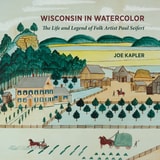
Wisconsin in Watercolor
The Life and Legend of Folk Artist Paul SeifertJoe Kapler
Wisconsin Historical Society Press, 2018
In 1867, German immigrant Paul Seifert settled in the Driftless Area of southwestern Wisconsin and began capturing the distinctive farms and landscapes of his new home in vivid, detailed watercolors. Today, these paintings are coveted by American folk art collectors across the country, but Seifert’s life remains shrouded in mystery.
In this first book written about Paul Seifert, author Joe Kapler examines the life of this enigmatic artist and provides context for his extraordinary art. The book features high-quality reproductions of twenty-two Seifert watercolors (more than half of which have never been published) and many close-ups of his characteristic details, from horses and hay wagons to dogs and dinner bells. Part art history treatment, part coffee table book, part research memoir, and part love letter to the Driftless Area, Wisconsin in Watercolor shines a long-awaited light on Seifert and the land he so carefully rendered over a hundred years ago.
Wisconsin in the Civil War
The Home Front and the Battle Front, 1861-1865Frank Klement
Wisconsin Historical Society Press, 1997
Wisconsin on the Air
100 Years of Public Broadcasting in the State That Invented ItJack Mitchell
Wisconsin Historical Society Press, 2016
On a wintry evening in 1917, university professor Earle Terry listened with guests as the popular music of the day filtered from a physics laboratory in Science Hall into a receiving set in his living room. Little did they know that one hundred years of public service broadcasting had just begun. Terry’s radio experiment blossomed into a pioneering endeavor to carry out the "Wisconsin Idea," a promise to make the university’s knowledge accessible to all Wisconsinites, in their homes, statewide, a Progressive-era principle that still guides public broadcasting in Wisconsin and throughout the nation. In 1947, television was added to this public service model with Channel 21 in Madison, produced, like radio, from the University of Wisconsin campus. By 1967, when the Public Broadcasting Act created the Public Broadcasting System (PBS) and National Public Radio (NPR), the Wisconsin stations had been broadcasting for fifty years. A history one hundred years in the making, Wisconsin on the Air introduces readers to the personalities and philosophies, the funding challenges and legislation, the original Wisconsin programming and pioneering technology that gave us public radio and television. Author Jack Mitchell, who developed All Things Considered for NPR before becoming the head of Wisconsin Public Radio, deftly maps public broadcasting’s hundred-year journey by charting Wisconsin’s transition from the early days of radio and television to educational broadcasting to the news, information, and music of Wisconsin Public Radio and Wisconsin Public Television.

Wisconsin's Best Breweries and Brewpubs
Searching for the Perfect PintRobin Shepard
University of Wisconsin Press, 2001
This information-packed guidebook introduces you to more than sixty breweries and brewpubs—from the Shipwrecked Brew Pub in Egg Harbor, to smaller craft breweries like Capital Brewery west of Madison, to the world-famous Miller Brewing Company of Milwaukee. Robin Shepard includes descriptions and his personal ratings of some 600 local beers, plus a taster’s chart you can use to record your own preferences.
For each brewpub and brewery site you’ll find:
• a description and brief history, plus any "Don’t miss" features
• names, comments, and ratings for all their specialty beers
• notes on the pub food, with recommendations
• suggestions of other sites to see and activities in the local area
• information about bottling and distribution
• availability of tours, tastings, gift shops, mug clubs, and "growlers"
• address and contact data, including Web sites and GPS coordinates!
Shepard also introduces novices to the brewing process and a wide variety of beer styles. And, you’ll find a list of helpful books and Web sites, as well as information on Wisconsin beer tastings and festivals. As we say in Wisconsin, "So, have a couple a two, three beers, hey?"
Wisconsin's Foundations
A Review of the State's Geology and Its Influence on Geography and Human ActivityGwen Schultz
University of Wisconsin Press, 2004
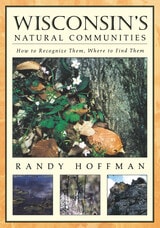
Wisconsin's Natural Communities
How to Recognize Them, Where to Find ThemRandy Hoffman
University of Wisconsin Press, 2002
Cattails grow in a marsh, pitcher plants grow in a bog, jewelweed grows in a swamp, right? Do sandhill cranes live among sandy hills? Frogs live near lakes and ponds, but can they live on prairies, too? What is a pine barrens, an oak opening, a calcareous fen?
Wisconsin’s Natural Communities is an invitation to discover, explore, and understand Wisconsin’s richly varied natural environment, from your backyard or neighborhood park to stunning public preserves.Part 1 of the book explains thirty-three distinct types of natural communities in Wisconsin—their characteristic trees, beetles, fish, lichens, butterflies, reptiles, mammals, wildflowers—and the effects of geology, climate, and historical events on these habitats. Part 2 describes and maps fifty natural areas on public lands that are outstanding examples of these many different natural communities: Crex Meadows, Horicon Marsh, Black River Forest, Maribel Caves, Whitefish Dunes, the Blue Hills, Avoca Prairie, the Moquah Barrens and Chequamegon Bay, the Ridges Sanctuary, Cadiz Springs, Devil’s Lake, and many others.
Intended for anyone who has a love for the natural world, this book is also an excellent introduction for students. And, it provides landowners, public officials, and other stewards of our environment with the knowledge to recognize natural communities and manage them for future generations.
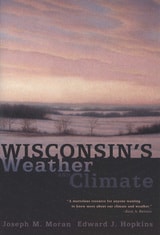
Wisconsin's Weather and Climate
Joseph M. Moran
University of Wisconsin Press, 2003
Wisconsin's Weather and Climate is written for weather buffs, teachers, students, outdoor enthusiasts, and those working in fields, lakes, and forests for whom the weather is a daily force to be reckoned with. It examines the physical features of Wisconsin that shape the state’s climate—topography, mid-latitude location, and proximity to Lakes Superior and Michigan—and meteorological phenomena that affect climate, such as atmospheric circulation and air mass frequency. Authors Joseph M. Moran and Edward J. Hopkins trace the evolution of methods of weather observation and forecasting that are so important for agriculture and Great Lakes commerce, and they explain how Wisconsin scientists use weather balloons, radar, and satellites to improve forecasting and track climate changes. They take readers through the seasonal changes in weather in Wisconsin and give an overview of what past climate changes might tell us about the future.
Appendices provide climatic data for Wisconsin, including extremes of temperature, snowfall, and precipitation at selected stations in the state. The authors also list sources for further information.
Vignettes throughout the book provide fascinating weather lore:
o Why there are cacti in Wisconsin
o The famous Green Bay Packers–Dallas Cowboys "Ice Bowl" game of 1967
o The Army Signal Corps’ ban on the word tornado
o Advances in snow-making technology
o The decline of the Great Lakes ice industry
Wisconsin, My Home
The Story of Thurine Oleson as Told to Her DaughterErna Oleson Xan
University of Wisconsin Press, 1975
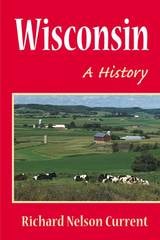
Wisconsin
A HISTORYRichard Nelson Current
University of Illinois Press, 1977
Both the Ringling Brothers' "World's Greatest Shows" and Barnum & Bailey's "Greatest Show on Earth" originated in Wisconsin, along with the typewriter, Johnson's Wax, and the first automatic assembly line (for manufacturing automobile frames). Wisconsin inventors contributed to the mechanization of American farms by developing harvesters, reapers, cultivators, threshers, and other machinery. Sen. Robert M. ("Fighting Bob") La Follette brought progressive reform to the state; a few decades later another Wisconsin native, Joseph McCarthy, revealed his agenda as a U.S. senator.
The Gideons, who place Bibles in hotel room nightstands, got their start in Wisconsin, and the state's factories produced most of the 107 steam shovels that dug the Panama Canal. Even before American Motors in Kenosha became Wisconsin's largest employer, Wisconsinites were responsible for such car-related developments as the first four-wheel-drive vehicle and an early tire-patching kit.
To football fans, the capital of Wisconsin is Green Bay, where in 1919 Earl Louis Lambeau organized the Packers. Even during the team's fifteen-year losing streak, Green Bay consisted, as one reporter observed, of "nearly 50,000 wild-eyed maniacs [who] know more about football than any other 50,000 people on the face of the earth."
Fast-paced and entertaining, Current's history chronicles how Wisconsin's homegrown ideas, from the "Wisconsin Idea" of efficient state government to ski-tows and speedometers, made their way into the broader marketplace of American culture.
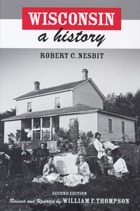
Wisconsin
A HistoryRobert C. Nesbit; Revised and updated by William F. Thompson
University of Wisconsin Press, 2004
First paperback edition.

Wisconsin
Our State 2E DIGITAL SAMPLE CH6Bobbie Malone
Wisconsin Historical Society Press, 2022
Wisconsin
Our State CLASSROOM SET 1E eng w/SAG CDBobbie Malone
Wisconsin Historical Society Press, 2010