Results by title
1296 books match the query 'Women authors' and 91 start with w

WORLDS OF MEDIEVAL WOMEN
"CREATIVITY, INFLUENCE, AND IMAGINATION"CONSTANCE H. BERMAN
West Virginia University Press, 1985
Waiting for Cancer to Come
Women’s Experiences with Genetic Testing and Medical Decision Making for Breast and Ovarian CancerSharlene Hesse-Biber
University of Michigan Press, 2014
Waiting for Cancer to Come tells the stories of women who are struggling with their high risk for cancer. Based on interviews and surveys of dozens of women, this book pieces together the diverse yet interlocking experiences of women who have tested positive for the BRCA 1/2 gene mutations, which indicate a higher risk of developing breast and ovarian cancer. Sharlene Hesse-Biber brings these narratives to light and follows women’s journeys from deciding to get screened for BRCA, to learning the test has come back positive, to dealing with their risk. Many women already know the challenges of a family history riddled with cancer and now find themselves with the devastating knowledge of their own genetic risk. Using the voices of the women themselves to describe the under-explored BRCA experience, Waiting for Cancer to Come looks at the varied emotional, social, economic, and psychological factors at play in women’s decisions about testing and cancer prevention.
Waste of Timelessness and Other Early Stories
Anaïs Nin
Ohio University Press, 2017
Written when Anaïs Nin was in her twenties and living in France, the stories collected in Waste of Timelessness contain many elements familiar to those who know her later work as well as revelatory, early clues to themes developed in those more mature stories and novels. Seeded with details remembered from childhood and from life in Paris, the wistful tales portray artists, writers, strangers who meet in the night, and above all, women and their desires.
These experimental and deeply introspective missives lay out a central theme of Nin’s writing: the contrast between the public and private self. The stories are taut with unrealized sexual tension and articulate the ways that language and art can shape reality. Nin’s deft humor, ironic wit, and ecstatic prose display not only superb craftsmanship but also the author’s own constant balancing act between feeling and rationality, vulnerability and strength. Perhaps more than any other writer of the twentieth century, she mastered that act and wrote about it on her own terms, defying the literary and social norms of the time.
Water Drops from Women Writers
A Temperance ReaderEdited by Carol Mattingly
Southern Illinois University Press, 2001
The temperance movement was the largest single organizing force for women in American history, uniting and empowering women seeking to enact social change. By the end of the century, more than two hundred thousand women had become members of the Woman’s Christian Temperance Union (WCTU), and numerous others belonged to smaller temperance organizations. Despite the impact of the movement, its literature has been largely neglected.
In this collection of nineteen temperance tales, Carol Mattingly has recovered and revalued previously unavailable writing by women. Mattingly’s introduction provides a context for these stories, locating the pieces within the temperance movement as well as within larger issues in women’s studies.
The temperance movement was essential to women’s awareness of and efforts to change gender inequalities in the United States during the nineteenth and early twentieth centuries. In their fiction, temperance writers protested physical and emotional abuse at the hands of men, argued for women’s rights, addressed legal concerns, such as divorce and child custody, and denounced gender-biased decisions affecting the care and rights of children. Temperance fiction by women broadens our understanding of the connections between women’s rights and temperance, while shedding light on women’s thinking and behavior in the nineteenth century.
Water Drops from Women Writers features biographical sketches of each writer as well as thirteen illustrations.
Water Lilies
An Anthology of Spanish Women Writers from the Fifteenth through the Nineteenth CenturyAmy Kaminsky
University of Minnesota Press, 1995
Poetry and prose by Spanish women presented here in both English and Spanish.
A dazzling sampler, Water Lilies brings to light a rich and until now largely invisible version of Spanish literary history. These hard-to-find works, most translated for the first time, are printed on facing pages in Spanish and English and located within a critical, biographical, and historical overview.
Here are five centuries of writing by Spanish women, the unknown recovered from obscurity, the well-known seen as they rarely have been-in the context of a women’s literary history. Some of these writers, like Rosalía de Castro in “The Bluestockings” and Teresa de Cartagena in Wonder at the Work of God, question the relationship between the woman writer and the act of writing. Some, like the poet Carolina Coronado in “The Twin Geniuses: Sappho and Saint Teresa of Jesus,” overtly seek a literary tradition. Others, like Saint Teresa in her Life and Luisa Sigea in her poetry, provide touchstones for women in search of such a tradition.Legends and stories of women’s friendships, the inconstancy of men, and the love of God; Spain’s first autobiographical text; secular and religious poetry from medieval through recent times; an excerpt from one of the few chivalresque novels written by a woman; a full-length Golden Age comedia: this is the wide range of works Water Lilies comprises. Brought together for the first time, the writers articulate their resistance to, and their complicity in, a literary history that, until now, has tried to exclude them.
Way of All the Earth
Anna Akhmatova
Ohio University Press, 2001
We Are Coming
The Persuasive Discourse of Nineteenth-Century Black WomenShirley Wilson Logan
Southern Illinois University Press, 1999
Shirley Wilson Logan analyzes the distinctive rhetorical features in the persuasive discourse of nineteenth-century black women, concentrating on the public discourse of club and church women from 1880 until 1900.
Logan develops each chapter in this illustrated study around a feature of public address as best exemplified in the oratory of a particular woman speaker of the era. She analyzes not only speeches but also editorials, essays, and letters.
Logan first focuses on the prophetic oratory of Maria Stewart, the first American-born black woman to speak publicly. Turning to Frances Harper, she considers speeches that argue for common interests between divergent communities. And she demonstrates that central to the antilynching rhetoric of Ida Wells is the concept of "presence," or the tactic of enhancing certain selected elements of the presentation.
In her discussion of Fannie Barrier Williams and Anna Cooper, Logan shows that when speaking to white club women and black clergymen, both Williams and Cooper employ what Kenneth Burke called identification. To analyze the rhetoric of Victoria Matthews, she applies Carolyn Miller's modification of Lloyd Bitzer's concept of the rhetorical situation.
Logan also examines the discourse of women associated with the black Baptist women's movement and those participating in college-affiliated conferences.
The book includes an appendix with little-known speeches and essays by Anna Julia Cooper, Selena Sloan Butler, Lucy Wilmot Smith, Mary V. Cook, Adella Hunt Logan, Victoria Earle Matthews, Lucy C. Laney, and Georgia Swift King.
We Who Love to Be Astonished
Experimental Women's Writing and Performance PoeticsLaura Hinton
University of Alabama Press, 2001
The first critical volume devoted to the full range of women's postmodern works
We Who Love to Be Astonished collects a powerful group of previously unpublished essays to fill a gap in the critical evaluation of women's contributions to postmodern experimental writing. Contributors include Alan Golding, Aldon Nielsen, and Rachel Blau DuPlessis; discussions include analyses of the work of Kathleen Fraser, Harryette Mullen, and Kathy Acker, among others. The editors take as their title a line from the work of Lyn Hejinian, one of the most respected of innovative women poets writing today.
The volume is organized into four sections: the first two seek to identify, from two different angles, the ways women of different sociocultural backgrounds are exploring their relationships to their cultures' inherited traditions; the third section investigates the issue of visuality and the problems and challenges it creates; and the fourth section expands on the role of the body as material and performance.
The collection will breach a once irreconcilable divide between those who theorize about women's writing and those who focus on formalist practice. By embracing "astonishment" as the site of formalist-feminist investigation, the editors seek to show how form configures feminist thought, and, likewise, how feminist thought informs words and letters on a page. Students and scholars of avant-garde poetry, women's writing, and late-20th-century American literature will welcome this lively discussion.
Weave
New and Selected PoemsWendy Barker
BkMk Press, 2022
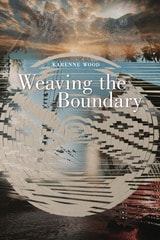
Weaving the Boundary
Karenne Wood
University of Arizona Press, 2016
This focused, accessible collection carries readers into a deep and intimate understanding of the natural world, the power of language, and the interconnectedness of life. Untold stories are revealed through documented events in various tribal histories, and indictments of destructive encounters between Western colonialism and Native peoples are juxtaposed with a lyric voice that gently insists on reweaving the past, honoring women and all life, creating a sovereign space for indigenous experience. Wood writes, “Nothing was discovered. Everything was already loved.”
Political yet universal, Weaving the Boundary tells of love and betrayal, loss and forgiveness. Wood intertwines important and otherwise untold stories and histories with a heightened sense of awareness of Native peoples’ issues and present realities.
Moving from elegy to evocations of hope and desire, the poems call for respect toward Mother Earth and feminine sensibility. One hears in this collection a longing to be carried deeper into the world, to return to tradition, to nature, to truth, to an innate belonging in the “weaving” of all life.

Weird Girl
PoemsAmy Thatcher
The Ohio State University Press, 2027
Poems that confront faith, sexuality, mother-daughter relationships, and the patriarchy to celebrate weird girls everywhere.
Amy Thatcher’s Weird Girl recasts female saints as quirky, transgressive characters, examines the sometimes-bizarre landscape of American girlhood, and reckons with classism and self-definition on the fringes of acceptability. With gusto and humor, Thatcher confronts the taboo—the intrusive, macabre, violent, obsessive, and lonely. Rooted in a working-class Philadelphia Catholic upbringing and embracing the unconventional and the unrefined, this collection captures the experiences of a first-generation college student, the grief of losing a difficult mother, the grandeur and swoon of religious ecstasy, and a girl’s struggle against systems of male power. Weird Girl is a collection for the dreamers, the oddballs, and the resilient ones who have learned to thrive in their own offbeat light: where vulnerability is strength and the most authentic stories are often the most peculiar.
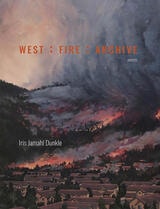
West
Fire : ArchiveIris Jamahl Dunkle
University Press of Colorado, 2021
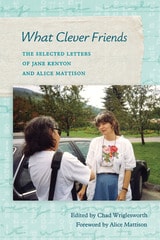
What Clever Friends
The Selected Letters of Jane Kenyon and Alice MattisonEdited by Chad Wriglesworth
University of Michigan Press, 2026
Witty, tender, and aware; tempestuous and lyrical, these letters trace the evolution of a deep and largely unknown friendship that situates Kenyon’s work within a collaborative environment of other poets and novelists who were committed to the flourishing of contemporary women’s writing. With more than 500 edited and annotated letters, a retrospective foreword written by Alice Mattison, and a scholarly introduction written by Chad Wriglesworth, What Clever Friends conveys a compelling story that will interest readers and writers.
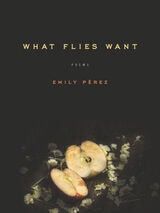
What Flies Want
PoemsEmily Pérez
University of Iowa Press, 2022
In What Flies Want, disaster looms in domesticity: a family grapples with its members’ mental health, a marriage falters, and a child experiments with self-harm. With its backdrop of school lockdown drills, #MeToo, and increasing political polarization, the collection asks how these private and public tensions are interconnected.
The speaker, who grew up in a bicultural family on the U.S./Mexico border, learns she must play a role in a culture that prizes whiteness, patriarchy, and chauvinism. As an adult she oscillates between performed confidence and obedience. As a wife, she bristles against the expectations of emotional labor. As a mother, she attempts to direct her white male children away from the toxic power they are positioned to inherit, only to find how deeply she is also implicated in these systems. Tangled in a family history of depression, a society fixated on guns, a rocky relationship, and her own desire to ignore and deny the problems she must face, this is a speaker who is by turns defiant, defeated, self-implicating, and hopeful.
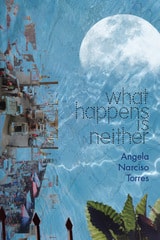
What Happens Is Neither
Angela Narciso Torres
Four Way Books, 2021
“What Happens Is Neither / the end nor the beginning. / Yet we’re wired to look for signs,” offers the speaker of Angela Narciso Torres’s latest collection, which approaches motherhood, aging, and mourning through a series of careful meditations. In music, mantra, and prayer, Torres explores the spaces in and around grief—in varying proximity to it and from different vantage points. She writes both structurally formal poems that enfold the emotionality of loss and free verse that loosens the latch on memory and lets us into the sensory worlds of the speaker’s childhood and present. In poems set in two countries and homes, Torres considers what it means to leave a mark, vanish, and stay in one place. In a profound act of recollection and preservation, Torres shows us how to release part of ourselves but remain whole
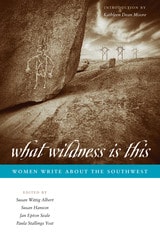
What Wildness Is This
Women Write about the SouthwestEdited by Susan Wittig Albert, Susan Hanson, Jan Epton Seale, and Paula Stallings Yost
University of Texas Press, 2007
Winner, WILLA Literary Award for Creative Nonfiction, 2008
How do women experience the vast, arid, rugged land of the American Southwest? The Story Circle Network, a national organization dedicated to helping women write about their lives, posed this question, and nearly three hundred women responded with original pieces of writing that told true and meaningful stories of their personal experiences of the land. From this deep reservoir of writing—as well as from previously published work by writers including Joy Harjo, Denise Chávez, Diane Ackerman, Naomi Shihab Nye, Leslie Marmon Silko, Gloria Anzaldua, Terry Tempest Williams, and Barbara Kingsolver—the editors of this book have drawn nearly a hundred pieces that witness both to the ever-changing, ever-mysterious life of the natural world and to the vivid, creative, evolving lives of women interacting with it.
Through prose, poetry, creative nonfiction, and memoir, the women in this anthology explore both the outer landscape of the Southwest and their own inner landscapes as women living on the land—the congruence of where they are and who they are. The editors have grouped the writings around eight evocative themes:
- The way we live on the land
- Our journeys through the land
- Nature in cities
- Nature at risk
- Nature that sustains us
- Our memories of the land
- Our kinship with the animal world
- What we leave on the land when we are gone
From the Gulf Coast of Texas to the Pacific Coast of California, and from the southern borderlands to the Great Plains and the Rocky Mountains, these intimate portraits of women's lives on the land powerfully demonstrate that nature writing is no longer the exclusive domain of men, that women bring unique and transformative perspectives to this genre.
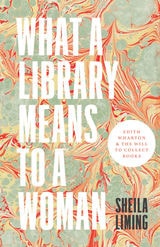
What a Library Means to a Woman
Edith Wharton and the Will to Collect BooksSheila Liming
University of Minnesota Press, 2020
Examining the personal library and the making of self
When writer Edith Wharton died in 1937, without any children, her library of more than five thousand volumes was divided and subsequently sold. Decades later, it was reassembled and returned to The Mount, her historic Massachusetts estate. What a Library Means to a Woman examines personal libraries as technologies of self-creation in modern America, focusing on Wharton and her remarkable collection of books.
Sheila Liming explores the connection between libraries and self-making in late nineteenth- and early twentieth-century American culture, from the 1860s to the 1930s. She tells the story of Wharton’s library in concert with Wharton scholarship and treatises from this era concerning the wider fields of book history, material and print culture, and the histories (and pathologies) of collecting. Liming’s study blends literary and historical analysis while engaging with modern discussions about gender, inheritance, and hoarding. It offers a review of the many meanings of a library collection, while reading one specific collection in light of its owner’s literary celebrity.
What a Library Means to a Woman was born from Liming’s ongoing work digitizing the Wharton library collection. It ultimately argues for a multifaceted understanding of authorship by linking Wharton’s literary persona to her library, which was, as she saw it, the site of her self-making.

What if the Invader Is Beautiful?
Louise Mathias
Four Way Books, 2024
What if the Invader is Beautiful explores the ineffable yet primal connections between outer and inner landscapes — the impact that the natural world has on the psychological terrain of our interior lives. Through compressed, musical, and often deeply mysterious language, the poems enact the extreme outer limits of emotional experience. Often set in equally extreme natural settings, the poems ride the knife edge between beauty and terror — exploring concepts of the sublime, the spiritual power of the elements, the redemptive beauty of flora and fauna, and the psychological freedom of wide-open spaces — and illuminate how deepening our connection to these elements is ultimately what will save us from our human afflictions of separation, isolation, and fear.
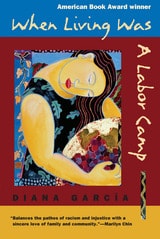
When Living Was a Labor Camp
Diana García
University of Arizona Press, 2000
"I write what I eat and smell," says Diana García, and her words are a bountiful harvest. Her poems color the page with the vibrancy and sweetness of figs, the freshness of tortillas, and the sensuality of language.
In this, García's first collection of poems, she takes a bittersweet look back at the migrant labor camps of California and offers a tribute to the people who toiled there. Writing from the heart of California's San Joaquin Valley, she catapults the reader into the lives of the campesinos with their daily joys and sorrows.
Bold, political, and familial, García's poems gift the reader with a sense of earth, struggle, and pride—each line filled with the sounds of agrarian music, from mariachi melodies to repatriation revolts. Embodied with such spirit, her poems rise with the convictions of power and equality
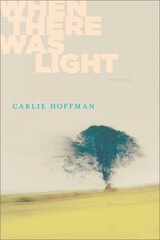
When There Was Light
Carlie Hoffman
Four Way Books, 2023
While Hoffman’s debut collection interrogated the mythos built around grief, inhabiting an Alaska of the mind, her stunning sophomore collection When There Was Light looks at the past for what it was.These poems map out a topography where global movements of diaspora and war live alongside personal reckonings: a house’s foreclosure, parents’ divorce, the indelible night spent drunk with a best friend “[lying] down inside a chronic row of corn.” Here, her father’s voice “is the stray dog barking / at the snow, believing the little strawberries grow wilder / against a field.” In these pages, she points to Russia and Poland and Germany, saying, “It was / another time. My people / another time. The synagogues burn decades / of new snow.” The brilliance of this collection illuminates the relationship between memory and language; “another time” means different, back then, gone and lost to us, and it means over and over, always, again. With this linguistic dexterity and lyrical tenderness, Hoffman’s work bridges private and public histories, reminding us of the years cloaked in shadows and the years when there was light.
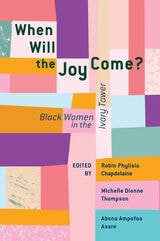
When Will the Joy Come?
Black Women in the Ivory TowerEdited by Robin Phylisia Chapdelaine, Michelle Dionne Thompson, and Abena Ampofoa Asare
University of Massachusetts Press, 2023
How do Black women in higher education create, experience, and understand joy? What sustains them? While scholars have long documented sexism, racism, and classism in the academy, one topic has been conspicuously absent from the literature—how Black women academics have found joy in the midst of adversity. Moving beyond questions of resilience, labor for others, and coping, When Will the Joy Come? focuses on the journeys of over thirty Black women at various stages of their careers.
Joy is a mixture of well-being, pleasure, alignment, and purpose that can be elusive for Black women scholars. With racial reckoning and a global pandemic as context, this volume brings together honest and vital essays that ponder how Black women balance fatigue and frustrations in the halls of the ivory tower, and explore where, when, and if joy enters their lives. By carefully contemplating the emotional, physical, and material consequences of their labor, this collection demonstrates that joy is a tactical and strategic component of Black women’s struggle.
When “I” Was Born
Women’s Autobiography in Modern ChinaJing M. Wang
University of Wisconsin Press, 2008
When “I” Was Born: Women’s Autobiography in Modern China reclaims the voices of these particular writers, voices that have been misinterpreted and overlooked for decades. Tracing women writers as they move from autobiographical fiction, often self-revelatory and personal, to explicit autobiographies that focused on women’s roles in public life, Jing M. Wang reveals the factors that propelled this literary movement, the roles that liberal translators and their renditions of Western life stories played, and the way in which these women writers redefined writing and gender in the stories they told. But Wang reveals another story as well: the evolving history and identity of women in modern Chinese society. When “I” Was Born adds to a growing body of important work in Chinese history and culture, women’s studies, and autobiography in a global context.
Writers discussed include Xie Bingying, Zhang Ailing, Yu Yinzi, Fei Pu, Lu Meiyen, Feng Heyi, Ye Qian, Bai Wei, Shi Wen, Fan Xiulin, Su Xuelin, and Lu Yin.
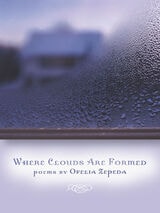
Where Clouds Are Formed
Ofelia Zepeda
University of Arizona Press, 2008
Zepeda is as clear-eyed about the past as she is about the present. She recalls waiting for the school bus on a cold morning inside her father’s truck, listening to the sounds of the engine, the windshield wipers, and the “soft rain on the hood.” She remembers celebrating Mass on the “cold dirt floor of the Winter Solstice.” In the present, she sees both the frustration and the humor in a woman she observes trying to eat pancakes with one hand while her other resides in a cast: “Watching her, I realize eating pancakes is a two-handed job.”
Whatever she sees, she filters through her second set of eyes, which keep the past always present. She tells of traveling to Waw Giwulig, the most sacred mountain of the Tohono O’odham, to ask for blessings—and forgiveness. She writes that one should always bring music to the mountains, “so they are generous with the summer rains.” And, still, “the scent of burning wood / holds the strongest memory. / Mesquite, cedar, piñon, juniper, . . . / we catch the scent of burning wood; / we are brought home.” It is a joy to see the world afresh through her eyes.
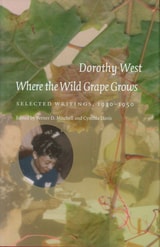
Where the Wild Grape Grows
Selected Writings, 1930–1950Dorothy West. Edited by Cynthia Davis and Verner D. Mitchell
University of Massachusetts Press, 2026
When Where the Wild Grape Grows was published in 2005 by the University of Massachusetts Press, it was the first book-length critical study of Dorothy West. Since then, the publication of more volumes on West and her circle testify to popular and academic interest in under-represented artists of the Harlem Renaissance, many of whom appeared first in West’s literary magazine, Challenge (1934-1937). Challenge included poems by West’s cousin Helene Johnson as well as by her friends Lucia Mae Pitts, Waring Cuney, Pauli Murray, Grace Walker, Mae Cowdery, Marcia Prendergast, and Bessie Calhoun Bird. West also published work by her romantic partner Marian Minus and by Juanita DeShields (the first Black Canadian graduate of McGill University) and the Trinidadian author Alfred Mendes. She included artwork by Mildred Jones and journalism by Eslanda Robeson and Dorothy Peterson. In addition to her editorial activities, West corresponded with important African American musicians including Maud Cuney Hare, Alberta Hunter, and Henry T. Burleigh, and with sculptors Augusta Savage and Richmond Barthé. Just as West mentored others, she was encouraged by such academic luminaries as Columbia Professors Blanche Colton Williams and Dorothy Scarborough, and by the controversial novelist Erskine Caldwell.
The new Introduction to Wild Grape will include fresh research on these individuals, many of whom formed part of West’s social and artistic circle. Lucia Pitts, for example, was a poet who served in the famous WAC (Women’s Army Corps) 6888th Battalion. The work of Marian Minus and Mae Cowdery has received critical attention recently and they also merit closer investigation. The Boston writer and musicologist Maud Cuney Hare was an artistic mentor to West; her cousin Waring Cuney was a close friend: both will receive more attention in the paperback edition. The artist Mildred Jones accompanied West and twenty other young African Americans to Russia in 1932 as participants in an ultimately aborted propaganda film on race relations in America; Jones studied with the important Russian Modernist painter Aleksandr Deyneka.
The original edition of Wild Grape cites two stories about West’s Russian experiences (penned under the pseudonym Mary Christopher in 1934), “Room in Red Square” and “Russian Correspondence,” but the volume does not include the actual stories. The stories are interesting because they shed light on West’s unrequited romance with Langston Hughes and her relationships with other members of the group, and they offer a unique perspective on daily life in the U.S.S.R. Both stories will be published in the new edition, along with a detailed discussion of new research about West’s visit to Russia.
A third uncollected story, “Cook” (1934), written by West under the pseudonym Jane Isaac will also be included. This story is extremely important to West’s oeuvre and her artistic development; it includes characters, themes, tropes, and plot lines that she expanded and developed in her two novels, The Living Is Easy (1948) and The Wedding (1995).
Since 2005, new material has been added to the West archive in Harvard’s Schlesinger Library. The section of Wild Grape devoted to West’s correspondence will include additional unpublished letters which underscore West’s dedication to African American art and culture.
The book includes the Benson-West family tree in Appendix II. Several scholars have expressed appreciation for this information which has not been published elsewhere; the chart will be updated to include the birth of several of West’s descendants.

Where the Wild Grape Grows
Selected Writings, 1930–1950Dorothy West
University of Massachusetts Press, 0
When Where the Wild Grape Grows was published in 2005 by the University of Massachusetts Press, it was the first book-length critical study of Dorothy West. Since then, the publication of more volumes on West and her circle testify to popular and academic interest in under-represented artists of the Harlem Renaissance, many of whom appeared first in West’s literary magazine, Challenge (1934-1937). Challenge included poems by West’s cousin Helene Johnson as well as by her friends Lucia Mae Pitts, Waring Cuney, Pauli Murray, Grace Walker, Mae Cowdery, Marcia Prendergast, and Bessie Calhoun Bird. West also published work by her romantic partner Marian Minus and by Juanita DeShields (the first Black Canadian graduate of McGill University) and the Trinidadian author Alfred Mendes. She included artwork by Mildred Jones and journalism by Eslanda Robeson and Dorothy Peterson. In addition to her editorial activities, West corresponded with important African American musicians including Maud Cuney Hare, Alberta Hunter, and Henry T. Burleigh, and with sculptors Augusta Savage and Richmond Barthé. Just as West mentored others, she was encouraged by such academic luminaries as Columbia Professors Blanche Colton Williams and Dorothy Scarborough, and by the controversial novelist Erskine Caldwell.
The new Introduction to Wild Grape will include fresh research on these individuals, many of whom formed part of West’s social and artistic circle. Lucia Pitts, for example, was a poet who served in the famous WAC (Women’s Army Corps) 6888th Battalion. The work of Marian Minus and Mae Cowdery has received critical attention recently and they also merit closer investigation. The Boston writer and musicologist Maud Cuney Hare was an artistic mentor to West; her cousin Waring Cuney was a close friend: both will receive more attention in the paperback edition. The artist Mildred Jones accompanied West and twenty other young African Americans to Russia in 1932 as participants in an ultimately aborted propaganda film on race relations in America; Jones studied with the important Russian Modernist painter Aleksandr Deyneka.
The original edition of Wild Grape cites two stories about West’s Russian experiences (penned under the pseudonym Mary Christopher in 1934), “Room in Red Square” and “Russian Correspondence,” but the volume does not include the actual stories. The stories are interesting because they shed light on West’s unrequited romance with Langston Hughes and her relationships with other members of the group, and they offer a unique perspective on daily life in the U.S.S.R. Both stories will be published in the new edition, along with a detailed discussion of new research about West’s visit to Russia.
A third uncollected story, “Cook” (1934), written by West under the pseudonym Jane Isaac will also be included. This story is extremely important to West’s oeuvre and her artistic development; it includes characters, themes, tropes, and plot lines that she expanded and developed in her two novels, The Living Is Easy (1948) and The Wedding (1995).
Since 2005, new material has been added to the West archive in Harvard’s Schlesinger Library. The section of Wild Grape devoted to West’s correspondence will include additional unpublished letters which underscore West’s dedication to African American art and culture.
The book includes the Benson-West family tree in Appendix II. Several scholars have expressed appreciation for this information which has not been published elsewhere; the chart will be updated to include the birth of several of West’s descendants.
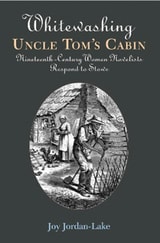
Whitewashing Uncle Tom's Cabin
Nineteenth-Century Women Novelists Respond to StoweJoy Jordan-Lake
Vanderbilt University Press, 2005

Whosoever Whole
Elizabeth Scanlon
Omnidawn, 2024
The poetry in Elizabeth Scanlon’s Whosoever Whole asks how we arrive at and nurture a sense of self amid a culture that wants us only to consume. Navigating the fractal and often fractured experiences of a citizen, a parent in the time of climate change, and a woman in an embattled era, Scanlon invites the reader into an interior space filled with anger, joy, wonder, and hope. Employing metaphor and metonymy, these poems portray a series of courageous portraits of the many faces a woman must wear to survive in today’s culture. Whosoever Whole is an anti-capitalist love song to all who refuse to be torn apart by the market valuation of their lives.
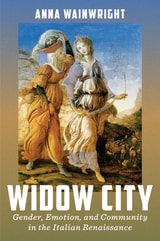
Widow City
Gender, Emotion, and Community in the Italian RenaissanceAnna Wainwright
University of Delaware Press, 2025

Wild Mother Dancing
Maternal Narrative in Canadian LiteratureDi Brandt
University of Manitoba Press, 1993
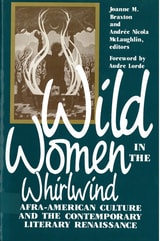
Wild Women in the Whirlwind
Afra-American Culture and the Contemporary Literary RenaissanceEdited by Joanne M. Braxton and Andree Nicola McLaughlin
Rutgers University Press, 1989
--New York Times Book Review
"The cultural and literary achievements of black American women are examined and celebrated in some 20 enjoyable, erudite essays by prominent scholars, critics, and activists."
--Publishers Weekly
This book is the first comprehensive collection of critical and theoretical essays to explore the literary and multi-cultural traditions of Black American women in many genres over a broad span of time. The essays explore cultural and literary experience in a wide context and offer a variety of critical theoretical constructs in which to view that experience. The editors have written excellent introductions providing both historical and comparative discussions of the contemporary literary renaissance. The book also includes a valuable bibliography of selected English-language works by Black women in the Americas from the 1970s to the present.
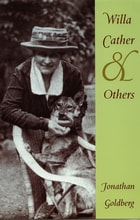
Willa Cather and Others
Jonathan Goldberg
Duke University Press, 2001
The “others” referred to in the title are women, for the most part Cather’s contemporaries, whose artistic projects allow for points of comparison with Cather. They include the Wagnerian diva Olive Fremstad, renowned for her category-defying voice; Blair Niles, an ethnographer and novelist of jazz-age Harlem and the prisons of New Guinea; Laura Gilpin, photographer of the American Southwest; and Pat Barker, whose Regeneration trilogy places World War I writers—and questions of sexuality and gender—at its center. In the process of studying these women and their work, Goldberg forms innovative new insights into a wide range of Cather’s celebrated works, from O Pioneers! and My Ántonia to her later books The Song of the Lark, One of Ours, The Professor’s House, Death Comes for the Archbishop, and Sapphira and the Slave Girl.
By applying his unique talent to the study of Cather’s literary genius, Jonathan Goldberg makes a significant and new contribution to the study of American literature and queer studies.
Win These Posters and Other Unrelated Prizes Inside
Norma Cole
Omnidawn, 2012
Winter of Artifice
Three NovelettesAnaïs Nin
Ohio University Press, 2016
Swallow Press first published Winter of Artifice in 1945, following two vastly different versions from other presses. The book opens with a film star, Stella, studying her own, but alien, image on the screen. It ends in the Manhattan office of a psychoanalyst—the Voice—who, as he counsels patients suffering from the maladies of modern life, reveals himself as equally susceptible to them. The middle, title story explores one of Nin’s most controversial themes, that of a woman’s sexual relationship with her father. Elliptical, fragmented prose; unconventional structure; surrealistic psychic landscapes—Nin forged these elements into a style that engaged with the artistic concerns of her time but still registers as strikingly contemporary.
This reissue, accompanied by a new introduction by Laura Frost and the original engravings by Nin’s husband Ian Hugo, presents an important opportunity to consider anew the work of an author who laid the groundwork for later writers. Swallow Press’s Winter of Artifice represents a literary artist coming into her own, with the formal experimentation, thematic daring, and psychological intrigue that became her hallmarks.
Witches, Goddesses, and Angry Spirits
The Politics of Spiritual Liberation in African Diaspora Women's FictionMaha Marouan
The Ohio State University Press, 2013
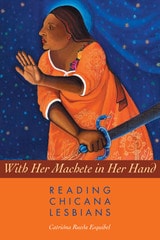
With Her Machete in Her Hand
Reading Chicana LesbiansBy Catrióna Rueda Esquibel
University of Texas Press, 2006
With the 1981 publication of the groundbreaking anthology This Bridge Called My Back: Writings by Radical Women of Color, Cherríe Moraga and Gloria Anzaldúa ushered in an era of Chicana lesbian writing. But while these two writers have achieved iconic status, observers of the Chicana/o experience have been slow to perceive the existence of a whole community—lesbian and straight, male as well as female—who write about the Chicana lesbian experience. To create a first full map of that community, this book explores a wide range of plays, novels, and short stories by Chicana/o authors that depict lesbian characters or lesbian desire.
Catrióna Rueda Esquibel starts from the premise that Chicana/o communities, theories, and feminisms cannot be fully understood without taking account of the perspectives and experiences of Chicana lesbians. To open up these perspectives, she engages in close readings of works centered around the following themes: La Llorona, the Aztec Princess, Sor Juana Inés de la Cruz, girlhood friendships, rural communities and history, and Chicana activism. Her investigation broadens the community of Chicana lesbian writers well beyond Moraga and Anzaldúa, while it also demonstrates that the histories of Chicana lesbians have had to be written in works of fiction because these women have been marginalized and excluded in canonical writings on Chicano life and experience.
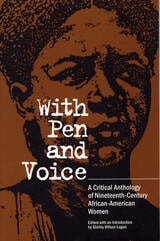
With Pen and Voice
A Critical Anthology of Nineteenth-Century African-American WomenShirley Wilson Logan
Southern Illinois University Press, 1995
"Owoman, woman! upon you I call; for upon your exertions almost entirely depends whether the rising generation shall be any thing more than we have been or not. Owoman, woman! your example is powerful, your influence great."—Maria W. Stewart, "An Address Delivered Before the Afric-American Female Intelligence Society of Boston" (1832)
Here—in the only collection of speeches by nineteenth-century African-American women—is the battle of words these brave women waged to address the social ills of their century. While there have been some scattered references to the unique roles these early "race women" played in effecting social change, until now few scholars have considered the rhetorical strategies they adopted to develop their powerful arguments.
In this chronological anthology, Shirley Wilson Logan highlights the public addresses of these women, beginning with Maria W. Stewart’s speech at Franklin Hall in 1832, believed to be the first delivered to an audience of men and women by an American-born woman. In her speech, she focused on the plight of the Northern free black. Sojourner Truth spoke in 1851 at the Akron, Ohio, Women’s Rights Convention not only for the rights of black women but also for the rights of all oppressed nineteenth-century women. Frances Ellen Watkins Harper struggled with the conflict between universal suffrage and suffrage for black men. Anna Julia Cooper chastised her unique audience of black Episcopalian clergy for their failure to continue the tradition of the elevation of womanhood initiated by Christianity and especially for their failure to support the struggling Southern black woman. Ida B. Wells’s rhetoric targeted mob violence directed at Southern black men. Her speech was delivered less than a year after her inaugural lecture on this issue—following a personal encounter with mob violence in Memphis. Fannie Barrier Williams and Victoria Earle Matthews advocated social and educational reforms to improve the plight of Southern black women. These speeches—all delivered between 1832 and 1895—are stirring proof that, despite obstacles of race and gender, these women still had the courage to mount the platform in defense of the oppressed.
Introductory essays focus on each speaker’s life and rhetoric, considering the ways in which these women selected evidence and adapted language to particular occasions, purposes, and audiences in order to persuade. This analysis of the rhetorical contexts and major rhetorical tactics in the speeches aids understanding of both the speeches and the skill of the speakers. A rhetorical timeline serves as a point of reference.
Historically grounded, this book provides a black feminist perspective on significant events of the nineteenth century and reveals how black women of that era influenced and were influenced by the social problems they addressed.
"A government which can protect and defend its citizens from wrong and outrage and does not is vicious. A government which would do itand cannot is weak; and where human life is insecure through either weakness or viciousness in the administration of law, there must be a lack of justice, and where this is wanting nothing can make up the deficiency."—Frances Ellen Watkins Harper, "Duty to Dependent Races," National Council of Women of the United States, Washington, D.C. (1891)
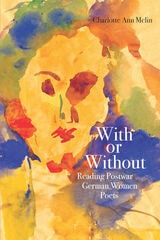
With or Without
Reading Postwar German Women PoetsCharlotte Ann Melin
Northwestern University Press, 2013
With or Without explores the role of German women’s poetry in the contemporary literary discourse of the latter half of the twentieth century. Melin highlights the significant role that women played in the shaping of postwar German poetry as a whole and also their deep engagement with the broader issues of modernism, postmodernism, and related discourses about the relationship between individual experience, communal ideals, and interpersonal expression. Melin shows that for German writers poetry became the genre that had the capacity to project subjectivity, voice, and authenticity.
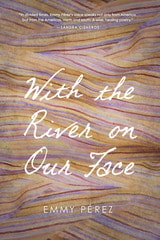
With the River on Our Face
Emmy Pérez
University of Arizona Press, 2016
Pérez reveals the strengths and nuances of a universe where no word is “foreign.” Her fast-moving, evocative words illuminate the prayers, gasps, touches, and gritos born of everyday discoveries and events. Multiple forms of reference enrich the poems in the form of mantra: ecologist’s field notes, geopolitical and ecofeminist observations, wildlife catalogs, trivia, and vigil chants.
“What is it to love / within viewing distance of night / vision goggles and guns?” is a question central to many of these poems.
The collection creates a poetic confluence of the personal, political, and global forces affecting border lives. Whether alluding to El Valle as a place where toxins now cross borders more easily than people or wildlife, or to increased militarization, immigrant seizures, and twenty-first-century wall-building, Pérez’s voice is intimate and urgent. She laments, “We cannot tattoo roses / On the wall / Can’t tattoo Gloria Anzaldúa’s roses / On the wall”; yet, she also reaffirms Anzaldúa’s notions of hope through resilience and conocimiento.
With the River on Our Face drips deep like water, turning into amistad—an inquisition into human relationships with planet and self.
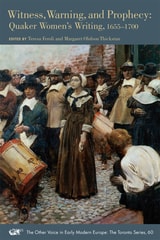
Witness, Warning, and Prophecy
Quaker Women's Writing, 1655-1700Edited by Teresa Feroli and Margaret Olofson Thickstun
Iter Press, 2018
The Other Voice in Early Modern Europe - The Toronto Series: Volume 60
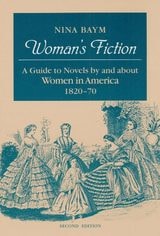
Woman's Fiction
A Guide to Novels by and about Women in America, 1820-70Nina Baym. With a New Introduction and Supplementary Bibliography
University of Illinois Press, 1993
This reissue of the pioneering and standard book on antebellum women's domestic novels contains a new introduction situating the book in the context of important recent developments in the study of women's writing. Nina Baym considers 130 novels by 48 women, focusing on the works of a dozen especially productive and successful writers.
Woman's Fiction is a major-work in nineteenth-century literature, reexamining changes in the literary canon and the meaning of sentimentalism, while responding to current critical discussions of 'the body' in literary texts.
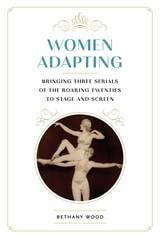
Women Adapting
Bringing Three Serials of the Roaring Twenties to Stage and ScreenBethany Wood
University of Iowa Press, 2019
Bethany Wood examines three well-known stories that debuted as women’s magazine serials—Gentlemen Prefer Blondes, Edith Wharton’s The Age of Innocence, and Edna Ferber’s Show Boat—and traces how each of these beloved narratives traveled across publishing, theatre, and film through adaptation. She documents the formation of adaptation systems and how they involved women’s voices and labor in modern entertainment in ways that have been previously underappreciated. What emerges is a picture of a unique window of time in the early decades of the twentieth century, when women in entertainment held influential positions in production and management. These days, when filmic adaptations seem endless and perhaps even unoriginal, Women Adapting challenges us to rethink the popular platitude, “The book is always better than the movie.”
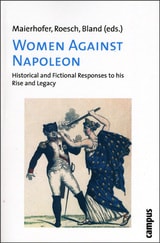
Women Against Napoleon
Historical and Fictional Responses to his Rise and LegacyEdited by Waltraud Maierhofer, Gertrud Roesch, and Caroline Bland
Campus Verlag, 2007
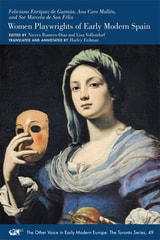
Women Playwrights of Early Modern Spain
Feliciana Enríquez de Guzmán, Ana Caro Mallén, and Sor Marcela de San Félix
Iter Press, 2016
This volume presents ten plays by three leading women playwrights of Spain’s Golden Age. Included are four bawdy and outrageous comic interludes; a full-length comedy involving sorcery, chivalry, and dramatic stage effects; and five short religious plays satirizing daily life in the convent. A critical introduction to the volume positions these women and their works in the world of seventeenth-century Spain.

Women Poets of Spain, 1860-1990
TOWARD A GYNOCENTRIC VISIONJohn C. Wilcox
University of Illinois Press, 1997
Women Poets on Mentorship
Efforts and AffectionsArielle Greenberg
University of Iowa Press, 2008
The poets in this collection describe a new kind of influence, one less hierarchical, less patriarchal, and less anxious than forms of mentorship in the past. Vivid and intelligent, these twenty-four essays explore the complicated nature of the mentoring relationship, with all its joys and difficulties, and show how this new sense of writing out of female experience and within a community of writers has fundamentally changed women’s poetry.
Includes:
Jenny Factor on Marilyn Hacker
Beth Ann Fennelly on Denise Duhamel
Miranda Field on Fanny Howe
Katie Ford on Jorie Graham
Joy Katz on Sharon Olds
Valerie Martínez on Joy Harjo
Erika Meitner on Rita Dove
Aimee Nezhukumatathil on Naomi Shihab Nye
Eleni Sikelianos on Alice Notley
Tracy K. Smith on Lucie Brock-Broido
Crystal Williams on Lucille Clifton
Rebecca Wolff on Molly Peacock

Women Reading Women Writing
Ann Louise Keating
Temple University Press, 1996

Women Rethinking Genres in Early Modern Europe
Simona Lorenzini
University of Delaware Press, 2027
Women Rethinking Genres in Early Modern Europe brings together research rooted in both gender and genre as categories of analysis to illustrate how the two frameworks are inextricably linked in how we understand the experiences of European women who wrote between the fifteenth and seventeenth centuries. Rather than considering genres as prescriptive, in this collection we emphasize that genres can take different forms and are central to the ways in which authors and readers understand and perceive the world. Together, these essays in this volume demonstrate that women authors not only experimented with genres in different ways but also contributed significantly to the development and circulation of ideas in early modern Europe. This volume includes a variety of case studies from different geographical areas within Western Europe that explore the role of gender in the dissemination of genres such as dialogue, poetry, pastoral, novellas, devotional literature, epic poems, account books, scientific treatises, and fictional romances. In doing so, the essays here contribute to scholarship on marginalized and less studied aspects of early modern female culture.

Women Times Three
Writers, Detectives, ReadersKathleen Gregory Klein
University of Wisconsin Press, 1995
The eleven essays concentrate new attention on the trio of reader, writer, and text when all three are modified by the terms “woman” and “mystery.”
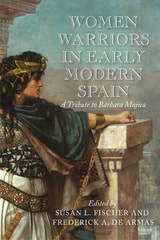
Women Warriors in Early Modern Spain
A Tribute to Barbara MujicaSusan L. Fischer
University of Delaware Press, 2019
Published by University of Delaware Press. Distributed worldwide by Rutgers University Press.
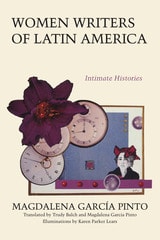
Women Writers of Latin America
Intimate HistoriesBy Magdalena García Pinto
University of Texas Press, 1991
What does it take for a woman to succeed as a writer? In these revealing interviews, first published in 1988 as Historias íntimas, ten of Latin America's most important women writers explore this question with scholar Magdalena García Pinto, discussing the personal, social, and political factors that have shaped their writing careers.
The authors interviewed are Isabel Allende, Albalucía Angel, Rosario Ferré, Margo Glantz, Sylvia Molloy, Elvira Orphée, Elena Poniatowska, Marta Traba, Luisa Valenzuela, and Ida Vitale. In intimate dialogues with each author, García Pinto draws out the formative experiences of her youth, tracing the pilgrimage that led each to a distinguished writing career.
The writers also reflect on their published writings, discussing the creative process in general and the motivating force behind individual works. They candidly discuss the problems they have faced in writing and the strategies that enabled them to reach their goals.
While obviously of interest to readers of Latin American literature, this book has important insights for students of women's literature and cultural studies, as well as for aspiring writers.