Results by title
22279 books match the query 'Social Science' and 963 start with w
Worst Cases
Terror and Catastrophe in the Popular ImaginationLee Clarke
University of Chicago Press, 2005
Al Qaeda detonates a nuclear weapon in Times Square during rush hour, wiping out half of Manhattan and killing 500,000 people. A virulent strain of bird flu jumps to humans in Thailand, sweeps across Asia, and claims more than fifty million lives. A single freight car of chlorine derails on the outskirts of Los Angeles, spilling its contents and killing seven million. An asteroid ten kilometers wide slams into the Atlantic Ocean, unleashing a tsunami that renders life on the planet as we know it extinct.
We consider the few who live in fear of such scenarios to be alarmist or even paranoid. But Worst Cases shows that such individuals—like Cassandra foreseeing the fall of Troy—are more reasonable and prescient than you might think. In this book, Lee Clarke surveys the full range of possible catastrophes that animate and dominate the popular imagination, from toxic spills and terrorism to plane crashes and pandemics. Along the way, he explores how the ubiquity of worst cases in everyday life has rendered them ordinary and mundane. Fear and dread, Clarke argues, have actually become too rare: only when the public has more substantial information and more credible warnings will it take worst cases as seriously as it should.
A timely and necessary look into how we think about the unthinkable, Worst Cases will be must reading for anyone attuned to our current climate of threat and fear.
Wounded City
The Social Impact of 9/11 on New York CityNancy Foner
Russell Sage Foundation, 2005
Wounded Lions
Joe Paterno, Jerry Sandusky, and the Crises in Penn State AthleticsRonald A. Smith
University of Illinois Press, 2016
In Wounded Lions, acclaimed sport historian and longtime Penn State professor Ronald A. Smith heavily draws from university archives to answer the How? and Why? at the heart of the scandal. The Sandusky case was far from the first example of illegal behavior related to the football program or the university's attempts to suppress news of it. As Smith shows, decades of infighting among administrators, alumni, trustees, faculty, and coaches established policies intended to protect the university, and the football team considered synonymous with its name, at all costs. If the habits predated Paterno, they also became sanctified during his tenure. Smith names names to show how abuses of power warped the "Penn State Way" even with hires like women's basketball coach Rene Portland, who allegedly practiced sexual bias against players for decades. Smith also details a system that concealed Sandusky's horrific acts just as deftly as it whitewashed years of rules violations, coaching malfeasance, and player crime while Paterno set records and raised hundreds of millions of dollars for the university.
A myth-shattering account of misplaced priorities, Wounded Lions charts the intertwined history of an elite university, its storied sports program, and the worst scandal in collegiate athletic history.
Wrangling Women
Humor and Gender in the American WestKristin M. McAndrews
University of Nevada Press, 2008
Kristin McAndrews states that she “began to suspect that the reason there was so little scholarship on women’s humor was that male researchers didn’t understand it, or perhaps they didn’t recognize it.” To examine the humor of one group of women, she conducted interviews with Winthrop’s female wranglers, collecting stories about their lives as workers and as members of their community. For all these women, professional success depends on courage, ingenuity, a sense of humor, and a facility with language—as well as on an ability to perform within the traditional gender stereotypes evoked by their town’s Wild west image.
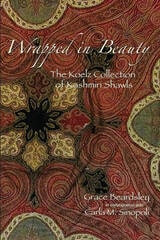
Wrapped in Beauty
The Koelz Collection of Kashmiri ShawlsGrace Beardsley in collaboration with Carla M. Sinopoli
University of Michigan Press, 2005
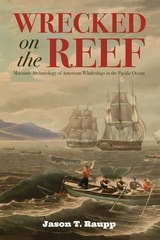
Wrecked on the Reef
Maritime Archaeology of American Whaleships in the Pacific OceanJason T. Raupp
University of Alabama Press, 2025
Take to the sea on this maritime archaeological exploration of nineteenth-century American whaling ships
American whaleships of the early nineteenth century were more than ocean-going vessels—they were complex workplaces, designed for long-term voyages, round-the-clock labor, and the large-scale extraction of marine resources. In Wrecked on the Reef, maritime archaeologist Jason T. Raupp presents a pioneering study of these ships as mobile production platforms, rooted in the logic of industrial capitalism operating far from land.
Drawing on shipwreck sites from the central Pacific region, Raupp offers a rare archaeological look at everyday life aboard nineteenth-century whaling vessels during the so-called “Golden Age” of whaling. He examines the tools used to hunt and process whales, the strict labor hierarchies onboard, and the physical evidence of diverse, often vulnerable crews who lived and worked under demanding conditions. By combining maritime and industrial archaeology, Raupp reveals how these ships functioned not just as transportation, but as full-scale factories at sea.
Chapters trace the rise of Pacific whaling, the importance of Hawaii as a supply and repair hub, the design and mechanics of whaleships, and the dangerous work crews performed in extreme isolation. Raupp shows how these ships were not only technological marvels of their time, but also part of a much larger system of labor, risk, and ocean-based resource extraction that fueled American expansion into the Pacific.
By exploring whaleships as floating work sites, Raupp offers readers a deeper understanding of maritime labor, capitalism, and imperialism in the nineteenth century. Wrecked on the Reef charts a new course in the study of labor and landscape at sea, providing significant contributions to maritime archaeology, industrial history, and environmental humanities.
Wrecked
How the American Automobile Industry Destroyed Its Capacity to CompeteJoshua Murray
Russell Sage Foundation, 2019
Today Japanese and many European automakers produce higher quality cars at lower cost than their American counterparts thanks to a flexible form of production characterized by long-term sole suppliers, assembly and supply plants located near each other, and just-in-time delivery of raw materials. While this style of production was, in fact, pioneered in the U.S. prior to World War II, in the years after the war, American automakers deliberately dismantled this system. As Murray and Schwartz show, flexible production accelerated innovation but also facilitated workers’ efforts to unionize plants and carry out work stoppages. To reduce the efficacy of strikes and combat the labor militancy that flourished between the Depression and the postwar period, the industry dispersed production across the nation, began maintaining large stockpiles of inventory, and eliminated single sourcing. While this restructuring of production did ultimately reduce workers’ leverage, it also decreased production efficiency and innovation. The U.S. auto industry has struggled ever since to compete with foreign automakers, and formerly thriving motor cities have suffered the consequences of mass deindustrialization.
Murray and Schwartz argue that new business models that reinstate flexible production and prioritize innovation rather than cheap labor could stem the outsourcing of jobs and help revive the auto industry. By clarifying the historical relationships between production processes, organized labor, and industrial innovation, Wrecked provides new insights into the inner workings and decline of the U.S. auto industry.
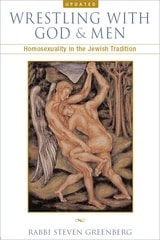
Wrestling with God and Men
Homosexuality in the Jewish TraditionRabbi Steven Greenberg
University of Wisconsin Press, 2005
For millennia, two biblical verses have been understood to condemn sex between men as an act so abhorrent that it is punishable by death. Traditionally Orthodox Jews, believing the scripture to be the word of God, have rejected homosexuality in accordance with this interpretation. In 1999, Rabbi Steven Greenberg challenged this tradition when he became the first Orthodox rabbi ever to openly declare his homosexuality.
Wrestling with God and Men is the product of Rabbi Greenberg’s ten-year struggle to reconcile his two warring identities. In this compelling and groundbreaking work, Greenberg challenges long held assumptions of scriptural interpretation and religious identity as he marks a path that is both responsible to human realities and deeply committed to God and Torah. Employing traditional rabbinic resources, Greenberg presents readers with surprising biblical interpretations of the creation story, the love of David and Jonathan, the destruction of Sodom, and the condemning verses of Leviticus. But Greenberg goes beyond the question of whether homosexuality is biblically acceptable to ask how such relationships can be sacred. In so doing, he draws on a wide array of nonscriptural texts to introduce readers to occasions of same-sex love in Talmudic narratives, medieval Jewish poetry and prose, and traditional Jewish case law literature. Ultimately, Greenberg argues that Orthodox communities must open up debate, dialogue, and discussion—precisely the foundation upon which Jewish law rests—to truly deal with the issue of homosexual love.
This book will appeal not only to members of the Orthodox faith but to all religious people struggling to resolve their belief in the scriptures with a desire to make their communities more open and accepting to gay and lesbian members.
2005 Finalist for the Lambda Literary Awards, for Religion/Spirituality

Wrigley Regulars
Finding Community in the BleachersHolly Swyers
University of Illinois Press, 2010
Writers of the Black Chicago Renaissance
Edited by Steven C. Tracy
University of Illinois Press, 2011
The volume covers a vast collection of subjects, including many important writers such as Richard Wright, Gwendolyn Brooks, and Lorraine Hansberry as well as cultural products such as black newspapers, music, and theater. The book includes individual entries by experts on each subject; a discography and filmography that highlight important writers, musicians, films, and cultural presentations; and an introduction that relates the Harlem Renaissance, the White Chicago Renaissance, the Black Chicago Renaissance, and the Black Arts Movement.
Contributors are Robert Butler, Robert H. Cataliotti, Maryemma Graham, James C. Hall, James L. Hill, Michael Hill, Lovalerie King, Lawrence Jackson, Angelene Jamison-Hall, Keith Leonard, Lisbeth Lipari, Bill V. Mullen, Patrick Naick, William R. Nash, Charlene Regester, Kimberly Ruffin, Elizabeth Schultz, Joyce Hope Scott, James Smethurst, Kimberly M. Stanley, Kathryn Waddell Takara, Steven C. Tracy, Zoe Trodd, Alan Wald, Jamal Eric Watson, Donyel Hobbs Williams, Stephen Caldwell Wright, and Richard Yarborough.
Writing A Wider War
Rethinking Gender, Race, and Identity in the South African War, 1899–1902Greg Cuthbertson
Ohio University Press, 2002
Writing a Wider War presents a dramatically new interpretation of the role of Boer women in the conflict and profoundly changes how we look at the making of Afrikaner nationalism. African experiences of the war are also examined, highlighting racial subjugation in the context of colonial war and black participation, and showcasing important new research by African historians.
The collection includes a reassessment of British imperialism and probing essays on J. A. Hobson; the masculinist nature of life on commando among Boer soldiers; Anglo-Jewry; secularism; health and medicine; nursing, women, and disease in the concentration camps; and the rivalry between British politicians and generals. An examination of the importance of the South African War in contemporary British political economy, and the part played by imperial propaganda, rounds off a thoroughly groundbreaking reinterpretation of this formative event in South Africa's history.
Writing Abroad
A Guide for TravelersPeter Chilson and Joanne B. Mulcahy
University of Chicago Press, 2017
Writing Abroad is meant for travelers of all backgrounds and writing levels: a student embarking on overseas study; a retiree realizing a dream of seeing China; a Peace Corps worker in Kenya. All can benefit from documenting their adventures, whether on paper or online. Through practical advice and adaptable exercises, this guide will help travelers hone their observational skills, conduct research and interviews, choose an appropriate literary form, and incorporate photos and videos into their writing.
Writing about travel is more than just safeguarding memories—it can transform experiences and tease out new realizations. With Writing Abroad, travelers will be able to deepen their understanding of other cultures and write about that new awareness in clear and vivid prose.
Writing Anthropology
Essays on Craft and CommitmentCarole McGranahan, editor
Duke University Press, 2020
Contributors. Whitney Battle-Baptiste, Jane Eva Baxter, Ruth Behar, Adia Benton, Lauren Berlant, Robin M. Bernstein, Sarah Besky, Catherine Besteman, Yarimar Bonilla, Kevin Carrico, C. Anne Claus, Sienna R. Craig, Zoë Crossland, Lara Deeb, K. Drybread, Jessica Marie Falcone, Kim Fortun, Kristen R. Ghodsee, Daniel M. Goldstein, Donna M. Goldstein, Sara L. Gonzalez, Ghassan Hage, Carla Jones, Ieva Jusionyte, Alan Kaiser, Barak Kalir, Michael Lambek, Carole McGranahan, Stuart McLean, Lisa Sang Mi Min, Mary Murrell, Kirin Narayan, Chelsi West Ohueri, Anand Pandian, Uzma Z. Rizvi, Noel B. Salazar, Bhrigupati Singh, Matt Sponheimer, Kathleen Stewart, Ann Laura Stoler, Paul Stoller, Nomi Stone, Paul Tapsell, Katerina Teaiwa, Marnie Jane Thomson, Gina Athena Ulysse, Roxanne Varzi, Sita Venkateswar, Maria D. Vesperi, Sasha Su-Ling Welland, Bianca C. Williams, Jessica Winegar
Writing Centers and Racial Justice
A Guidebook for Critical PraxisTalisha Haltiwanger Morrison
Utah State University Press, 2023
In five thematically organized sections—Countering Racism and Colonialism in Higher Education; Recruitment, Hiring, and Retention; Tutor Education and Professional Development; Engaging with Campus and Community; and Holding Our Professional Organizations Accountable—scholars from a variety of institutions, both large and small, public and private, present critical reflection and concrete guidance on anti-racist writing center administrative policies and practices. Several chapters include sample materials, such as course syllabi, consultant education activities, and recruitment materials, to help current and aspiring writing center administrators implement changes in their own contexts.
Writing Centers and Racial Justice is the first book to offer clear and actionable advice on how writing centers and their staff can take up racial or social justice work that will result in real sustainable change. Writing center directors, professionals, and tutors, as well as administrators and decision makers at the institutional level, will benefit from this thoughtful and effective text.
Writing Childbirth
Women’s Rhetorical Agency in Labor and OnlineKim Hensley Owens
Southern Illinois University Press, 2015
Women seeking to express concerns about childbirth or to challenge institutionalized medicine by writing online birth plans or birth stories exercise rhetorical agency in undeniably feminist ways. In Writing Childbirth: Women’s Rhetorical Agency in Labor and Online, author Kim Hensley Owens explores how women create and use everyday rhetorics in planning for, experiencing, and writing about childbirth.
Drawing on medical texts, popular advice books, and online birth plans and birth stories, as well as the results of a childbirth writing survey, Owens considers how women’s agency in childbirth is sanctioned, and how it is not. She examines how women’s rhetorical choices in writing interact with institutionalized medicine and societal norms. Writing Childbirth reveals the contradictory messages women receive about childbirth, their conflicting expectations about it, and how writing and technology contribute to and reconcile these messages and expectations.
Demonstrating the value of extending rhetorical investigations of health and medicine beyond patient-physician interactions and the discourse of physicians, Writing Childbirth offers fresh insight into feminist rhetorical agency and technology and expands our understanding of the rhetorics of health and medicine.
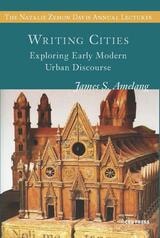
Writing Cities
Exploring Early Modern Urban DiscourseJames S. Amelang
Central European University Press, 2020
Writing Culture and the Life of Anthropology
Orin Starn
Duke University Press, 2015
Contributors. Anne Allison, James Clifford, Michael M.J. Fischer, Kim Fortun, Richard Handler, John L. Jackson, Jr., George E. Marcus, Charles Piot, Hugh Raffles, Danilyn Rutherford, Orin Starn, Kathleen Stewart, Michael Taussig, Kamala Visweswaran
Writing Desire
Sixty Years of Gay AutobiographyBertram J. Cohler
University of Wisconsin Press, 2007
By contrasting the personal experience of these disparate writers, Cohler illustrates the social transformations that these men helped shape. Among Cohler's diverse subjects is Alan Helms, whose journey from Indiana to New York's gay society represents the passage of men who came of age in the 1950s and 1960s, when homosexuality was considered a hidden "disease." The liberating effects of Stonewall's aftermath are chronicled in the life of Arnie Kantrowitz, the prototypical activist for gay rights in the 1970s and the founder the Gay and Lesbian Alliance against Defamation. The artistic works of Tim Miller and Mark Doty evoke loss and shock during of the early stages of the AIDS epidemic in the 1980s. Cohler rounds out this collective group portrait by looking at the newest generation of writers in the Internet age via the blog of BrYaN, who did the previously unthinkable: he "outed" himself to millions of people.
A compelling mix of social history and personal biography, Writing Desire distills the experience of three generations of gay America.
Writing Ethnographic Fieldnotes
Robert M. Emerson, Rachel I. Fretz, and Linda L. Shaw
University of Chicago Press, 1995
Drawing on years of teaching and field research experience, the authors develop a series of guidelines, suggestions, and practical advice about how to write useful fieldnotes in a variety of settings, both cultural and institutional. Using actual unfinished, "working" notes as examples, they illustrate options for composing, reviewing, and working fieldnotes into finished texts. They discuss different organizational and descriptive strategies, including evocation of sensory detail, synthesis of complete scenes, the value of partial versus omniscient perspectives, and of first person versus third person accounts. Of particular interest is the author's discussion of notetaking as a mindset. They show how transforming direct observations into vivid descriptions results not simply from good memory but more crucially from learning to envision scenes as written. A good ethnographer, they demonstrate, must learn to remember dialogue and movement like an actor, to see colors and shapes like a painter, and to sense moods and rhythms like a poet.
The authors also emphasize the ethnographer's core interest in presenting the perceptions and meanings which the people studied attach to their own actions. They demonstrate the subtle ways that writers can make the voices of people heard in the texts they produce. Finally, they analyze the "processing" of fieldnotes—the practice of coding notes to identify themes and methods for selecting and weaving together fieldnote excerpts to write a polished ethnography.
This book, however, is more than a "how-to" manual. The authors examine writing fieldnotes as an interactive and interpretive process in which the researcher's own commitments and relationships with those in the field inevitably shape the character and content of those fieldnotes. They explore the conscious and unconscious writing choices that produce fieldnote accounts. And they show how the character and content of these fieldnotes inevitably influence the arguments and analyses the ethnographer can make in the final ethnographic tale.
This book shows that note-taking is a craft that can be taught. Along with Tales of the Field and George Marcus and Michael Fisher's Anthropology as Cultural Criticism, Writing Ethnographic Fieldnotes is an essential tool for students and social scientists alike.
Writing Ethnographic Fieldnotes, Second Edition
Robert M. Emerson, Rachel I. Fretz, and Linda L. Shaw
University of Chicago Press, 2011
Writing Europe
What is European about the Literatures of Europe? Essays from 33 European CountriesUrsula Keller
Central European University Press, 2004
What do we mean by Europe? Thirty-three renowned authors from 33 European countries attempt an answer-in serious, ironic, skeptical, or optimistic tones. Their essays, written for the symposium held at the Literaturhaus Hamburg in 2003, reflect the astonishing diversity of European cultures. Not only are the style and experience of the individual authors remarkable for their distinctiveness, but their perspectives and views also appear to have little in common-at first glance.
The editors have created a unique literary project, a milestone in the vitally necessary cultural discourse about Europe.
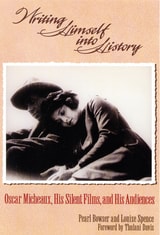
Writing Himself Into History
Oscar Micheaux, His Silent Films, and His AudiencesBowser, Pearl
Rutgers University Press, 2000
Winner of the 2001 Kraszna-Krausz Moving Image Book Awards | Winner of the Theatre Library Association Award
Writing Himself Into History is an eagerly anticipated analysis of the career and artistry surrounding the legendary Black filmmaker Oscar Micheaux. With the exception of Spike Lee, Micheaux is the most famous—and prolific—African American film director. Between 1918 and 1948 he made more than 40 “race pictures,” movies made for and about African Americans. A man of immense creativity, he also wrote seven novels.
Pearl Bowser and Louise Spence concentrate here on the first decade of Micheaux’s career, when Micheaux produced and directed more than twenty silent features and built a reputation as a controversial and maverick entrepreneur. Placing his work firmly within his social and cultural milieu, they also examine Micheaeux’s family and life. The authors provide a close textual analysis of his surviving films (including The Symbol of the Unconquered, Within Our Gates, and Body and Soul), and highlight the rivalry between studios, dilemmas of assimilation versus separatism, gender issues, and class. In Search of Oscar Micheaux also analyzes Micheaux’s career as a novelist in relation to his work as a filmmaker.
This is a much-awaited book that is especially timely as interest in Micheaux’s work increases.
Writing History in the Digital Age
Jack Dougherty and Kristen Nawrotzki, editors
University of Michigan Press, 2013
Writing History in the Digital Age began as a “what-if” experiment by posing a question: How have Internet technologies influenced how historians think, teach, author, and publish? To illustrate their answer, the contributors agreed to share the stages of their book-in-progress as it was constructed on the public web.
To facilitate this innovative volume, editors Jack Dougherty and Kristen Nawrotzki designed a born-digital, open-access, and open peer review process to capture commentary from appointed experts and general readers. A customized WordPress plug-in allowed audiences to add page- and paragraph-level comments to the manuscript, transforming it into a socially networked text. The initial six-week proposal phase generated over 250 comments, and the subsequent eight-week public review of full drafts drew 942 additional comments from readers across different parts of the globe.
The finished product now presents 20 essays from a wide array of notable scholars, each examining (and then breaking apart and reexamining) if and how digital and emergent technologies have changed the historical profession.
Writing Human Rights
The Political Imaginaries of Writers of ColorCrystal Parikh
University of Minnesota Press, 2017
The legal texts and aspirational ideals of human rights are usually understood and applied in a global context with little bearing on the legal discourse, domestic political struggles, or social justice concerns within the United States. In Writing Human Rights, Crystal Parikh uses the international human rights regime to read works by contemporary American writers of color—Toni Morrison, Chang-rae Lee, Ana Castillo, Aimee Phan, and others—to explore the conditions under which new norms, more capacious formulations of rights, and alternative kinds of political communities emerge.
Parikh contends that unlike humanitarianism, which views its objects as victims, human rights provide avenues for the creation of political subjects. Pairing the ethical deliberations in such works as Beloved and A Gesture Life with human rights texts like the United Nations Convention Against Torture, she considers why principles articulated as rights in international conventions and treaties—such as the right to self-determination or the right to family—are too often disregarded at home. Human rights concepts instead provide writers of color with a deeply meaningful method for political and moral imagining in their literature.
Affiliating transnational works of American literature with decolonization, socialist, and other political struggles in the global south, this book illuminates a human rights critique of idealized American rights and freedoms that have been globalized in the twenty-first century. In the absence of domestic human rights enforcement, these literatures provide a considerable repository for those ways of life and subjects of rights made otherwise impossible in the present antidemocratic moment.
Writing Indians
Literacy, Christianity, and Native Community in Early AmericaHilary E. Wyss
University of Massachusetts Press, 2000
A study of cultural encounter, this book takes a fresh look at the much ignored and often misunderstood experience of Christian Indians in early America. Focusing on New England missionary settlements from the mid-seventeenth to the early nineteenth centuries, Hilary E. Wyss examines the ways in which Native American converts to Christianity developed their own distinct identity within the context of a colonial culture.
With an approach that weaves together literature, religious studies, and ethno-history, Wyss grounds her work in the analysis of a rarely read body of “autobiographical” writings by Christian Indians, including letters, journal entries, and religious confessions. She then juxtaposes these documents to the writings of better known Native Americans like Samson Occom as well as to the published works of Anglo-Americans, such as Mary Rowlandson's famous captivity narrative and Eleazor Wheelock's accounts of his charity schools.
In their search for ostensibly “authentic” Native voices, scholars have tended to overlook the writings of Christian Indians. Yet, Wyss argues, these texts reveal the emergence of a dynamic Native American identity through Christianity. More specifically, they show how the active appropriation of New England Protestantism contributed to the formation of a particular Indian identity that resisted colonialism by using its language against itself.
Writing Like a Woman
Alicia Ostriker
University of Michigan Press, 1983
Writing National Cinema
Film Journals and Film Culture in PeruJeffrey Middents
Dartmouth College Press, 2009
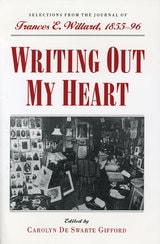
Writing Out My Heart
Selections from the Journal of Frances E. Willard, 1855-96Edited by Carolyn De Swarte Gifford
University of Illinois Press, 1995
Frances E. Willard's powerful leadership of the Woman's Christian Temperance Union (WCTU) made her one of the most commanding figures in the reform movements of the nineteenth century. World renowned and a force to be reckoned with, Willard grappled publicly and private with difficult issues, including temperance, slavery, women's rights, and her own sexuality. These selections from her forty-nine-volume journal reveal the private and confidential side of Willard for the first time. She comes to life in these pages--a person of character, passion, and self-determination who came to represent the woman of the dawning era.
Supplemented by an in-depth introduction and generous annotations, Writing Out My Heart sheds new light on an extraordinary individual and the lives of women in nineteenth-century America.
Writing Permitted in Designated Areas Only
Linda Brodkey
University of Minnesota Press, 1996
One teacher's dispatches from the front lines of the culture wars.
In the early 1990s, Linda Brodkey ended up on the front page of the New York Times and in the columns of George Will and other conservative pundits. The furor was over the “Writing about Difference” syllabus she helped create at the University of Texas, an effort that came to be one more casualty in the debate over multiculturalism in the academy. Writing Permitted in Designated Areas Only is made up of Brodkey’s dispatches from the front lines of the culture wars.
The essays in this book raise provocative questions about the way writing is taught in the United States. Brodkey lambastes conventional composition courses, which since their inception in the mid-nineteenth century have been the site of conflict over what “literacy” really means. She argues that such courses have institutionalized the practice of separating form and content, relegating teachers to the tasks of policing grammar and patrolling the borders of style and literature. Ultimately, this separation of structure and meaning depoliticizes the act of writing, creating an artificial distinction between what is being said and how it is expressed. Comprising specific examples of student work in addition to Brodkey’s own essays, Writing Permitted in Designated Areas Only works against this dynamic. Ranging from personal essay (“Writing on the Bias”) to hard-hitting polemic (“Writing Permitted in Designated Areas Only”) and touching on many of the major issues in the teaching of writing today, this volume explores alternatives to the standard methods for teaching composition. The result is a passionate plea for the loosing of writing to achieve its full power and potential; to unharness writing—and its teachers—from the institutional strictures that stifle both creativity and independent thought.
Writing Revolution
Hispanic Anarchism in the United StatesEdited by Christopher J. Castañeda and Montse Feu
University of Illinois Press, 2019
Writing Taiwan
A New Literary HistoryDavid Der-wei Wang and Carlos Rojas, eds.
Duke University Press, 2007
Because the island of Taiwan spent the first half of the century as a colony of Japan and the second half in an umbilical relationship to China, its literature challenges basic assumptions about what constitutes a “national literature.” Several contributors directly address the methodological and epistemological issues involved in writing about “Taiwan literature.” Other contributors investigate the cultural and political grounds from which specific genres and literary movements emerged. Still others explore themes of history and memory in Taiwan literature and tropes of space and geography, looking at representations of boundaries as well as the boundary-crossing global flows of commodities and capital. Like Taiwan’s history, modern Taiwan literature is rife with conflicting legacies and impulses. Writing Taiwan reveals a sense of its richness and diversity to English-language readers.
Contributors. Yomi Braester, Sung-sheng Yvonne Chang, Fangming Chen, Lingchei Letty Chen, Chaoyang Liao, Ping-hui Liao, Joyce C. H. Liu, Kim-chu Ng, Carlos Rojas, Xiaobing Tang, Ban Wang, David Der-wei Wang, Gang Gary Xu, Michelle Yeh, Fenghuang Ying
Writing Their Bodies
Restoring Rhetorical Relations at the Carlisle Indian SchoolSarah Klotz
Utah State University Press, 2020
This approach tracks the relationship between curriculum and resistance and enumerates an anti-assimilationist methodology for teachers and scholars of writing in contemporary classrooms. From the Carlisle archive emerges the concept of a rhetoric of relations, a set of Native American communicative practices that circulates in processes of intercultural interpretation and world-making. Klotz explores how embodied and material practices allowed Indigenous rhetors to maintain their cultural identities in the off-reservation boarding school system and critiques the settler fantasy of benevolence that propels assimilationist models of English education.
Writing Their Bodies moves beyond language and literacy education where educators standardize and limit their students’ means of communication and describes the extraordinary expressive repositories that Indigenous rhetors draw upon to survive, persist, and build futures in colonial institutions of education.
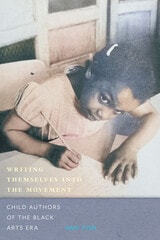
Writing Themselves into the Movement
Child Authors of the Black Arts EraAmy Fish
University of Massachusetts Press, 2024
Between 1967 and 1972, a previously obscure group of authors entered the US cultural spotlight. During this five-year period, at least thirty anthologies of poetry and prose by African American, Latinx, Asian American, and Native American children came out of adult-led workshops, classrooms, and sites of juvenile incarceration. Mass-market publishers, independent imprinters, and local mimeograph machines produced volumes with titles such as I Am Somebody! and The Me Nobody Knows: Children’s Voices from the Ghetto. These young writers actively participated in the Black Arts Movement, and some collaborated with well-known adult authors, most prominently June Jordan. Their anthologies gained national media coverage, occasionally became bestsellers, were quoted by James Baldwin, and even inspired a hit Broadway musical. While writings by children had long attracted adult attention, this flurry of youth writing and publishing was distinguished by the widespread belief that children of color from poor and working-class neighborhoods were uniquely able to speak truth about American racism and inequality.
Focusing on Black and Latinx youth authorship within New York City, and using deep archival research and elegant close readings, Amy Fish examines child-authored texts of this era within the context of their literary production and reception. These young writers were often supervised and edited by white adults, raising concerns about the authenticity and agency of their voices. Fish contends that young authors themselves shared these concerns and that they employed savvy rhetorical strategies of address, temporality, and trope to self-consciously interrogate the perils and possibilities of their adult-influenced work. Young writers thus contributed to the era’s important debates about the nature of authorship and readership within a racist society, while also using their writing as an intimate occasion of self-discovery.
Writing Women's Communities
The Politics and Poetics of Contemporary Multi-Genre AnthologiesCynthia G. Franklin
University of Wisconsin Press, 1997
Beginning in the 1980s, a number of popular and influential anthologies organized around themes of shared identity—Nice Jewish Girls, This Bridge Called My Back, Home Girls, and others—have brought together women’s fiction and poetry with journal entries, personal narratives, and transcribed conversations. These groundbreaking multi-genre anthologies, Cynthia G. Franklin demonstrates, have played a crucial role in shaping current literary studies, in defining cultural and political movements, and in building connections between academic and other communities.
Exploring intersections and alliances across the often competing categories of race, class, gender, and sexuality, Writing Women’s Communities contributes to current public debates about multiculturalism, feminism, identity politics, the academy as a site of political activism, and the relationship between literature and politics.
Writing against Hitler
Hermann Budzislawski and the Making of Twentieth-Century SocialismDaniel Siemens, Translated by Ben Fowkes
University of Wisconsin Press, 2025
Through the twin stories of a highly ambitious figure and the legendary publication he headed, Siemens charts the course of the intellectual Left’s rise and decline in power during the decades that shaped the political divides of the mid-twentieth century. Crucially, his account challenges the widely held belief that post-1989 German unification has represented a victory over the traumas of the past. Instead, Siemens shows the complexity of different strains of socialist thought and activity and reveals the contested place of Nazi Germany’s exiles at the center of Cold War Germany’s cultural history.
Writing an Icon
Celebrity Culture and the Invention of Anaïs NinAnita Jarczok
Ohio University Press, 2017
Anaïs Nin, the diarist, novelist, and provocateur, occupied a singular space in twentieth-century culture, not only as a literary figure and voice of female sexual liberation but as a celebrity and symbol of shifting social mores in postwar America. Before Madonna and her many imitators, there was Nin; yet, until now, there has been no major study of Nin as a celebrity figure.
In Writing an Icon, Anita Jarczok reveals how Nin carefully crafted her literary and public personae, which she rewrote and restyled to suit her needs and desires. When the first volume of her diary was published in 1966, Nin became a celebrity, notorious beyond the artistic and literary circles in which she previously had operated. Jarczok examines the ways in which the American media appropriated and deconstructed Nin and analyzes the influence of Nin’s guiding hand in their construction of her public persona.
The key to understanding Nin’s celebrity in its shifting forms, Jarczok contends, is the Diary itself, the principal vehicle through which her image has been mediated. Combining the perspectives of narrative and cultural studies, Jarczok traces the trajectory of Nin’s celebrity, the reception of her writings. The result is an innovative investigation of the dynamic relationships of Nin’s writing, identity, public image, and consumer culture.
Writing and Renunciation in Medieval Japan
The Works of the Poet-Priest Kamo no ChomeiRajyashree Pandey
University of Michigan Press, 1998
Writing and Rewriting National Theatre Histories
S.E. Wilmer
University of Iowa Press, 2004
Writing as Punishment in Schools, Courts, and Everyday Life
Spencer Schaffner
University of Alabama Press, 2019
Writing tends to be characterized as a positive aspect of literacy that helps us to express our thoughts, to foster interpersonal communication, and to archive ideas. However, there is a vast array of evidence that emphasizes the counterbelief that writing has the power to punish, shame, humiliate, control, dehumanize, fetishize, and transform those who are subjected to it. In Writing as Punishment in Schools, Courts, and Everyday Life, Spencer Schaffner looks at many instances of writing as punishment, including forced tattooing, drunk shaming, court-ordered letters of apology, and social media shaming, with the aim of bringing understanding and recognition to the coupling of literacy and subjection.
Writing as Punishment in Schools, Courts, and Everyday Life is a fascinating inquiry into how sinister writing can truly be and directly questions the educational ideal that powerful writing is invariably a public good. While Schaffner does look at the darker side of writing, he neither vilifies nor supports the practice of writing as punishment. Rather, he investigates the question with humanistic inquiry and focuses on what can be learned from understanding the many strange ways that writing as punishment is used to accomplish fundamental objectives in everyday life.
Through five succinct case studies, we meet teachers, judges, parents, sex traffickers, and drunken partiers who have turned to writing because of its presumed power over writers and readers. Schaffner provides careful analysis of familiar punishments, such as schoolchildren copying lines, and more bizarre public rituals that result in ink-covered bodies and individuals forced to hold signs in public.
Schaffner argues that writing-based punishment should not be dismissed as benign or condemned as a misguided perversion of writing, but instead should be understood as an instrument capable of furthering both the aims of justice and degradation.
Writing for Social Scientists, Third Edition
How to Start and Finish Your Thesis, Book, or ArticleHoward S. Becker
University of Chicago Press, 2020
This is not a book about sociological writing. Instead, Becker applies his sociologist’s eye to some of the common problems all academic writers face, including trying to get it right the first time, failing, and therefore not writing at all; getting caught up in the trappings of “proper” academic writing; writing to impress rather than communicate with readers; and struggling with the when and how of citations. He then offers concrete advice, based on his own experiences and those of his students and colleagues, for overcoming these obstacles and gaining confidence as a writer.
While the underlying challenges of writing have remained the same since the book first appeared, the context in which academic writers work has changed dramatically, thanks to rapid changes in technology and ever greater institutional pressures. This new edition has been updated throughout to reflect these changes, offering a new generation of scholars and students encouragement to write about society or any other scholarly topic clearly and persuasively.
As Becker writes in the new preface, “Nothing prepared me for the steady stream of mail from readers who found the book helpful. Not just helpful. Several told me the book had saved their lives; less a testimony to the book as therapy than a reflection of the seriousness of the trouble writing failure could get people into.” As academics are being called on to write more often, in more formats, the experienced, rational advice in Writing for Social Scientists will be an important resource for any writer’s shelf.
Writing for Social Scientists
How to Start and Finish Your Thesis, Book, or ArticleHoward S. Becker
University of Chicago Press, 1986
Both the means and the reasons for writing a thesis or article or book are socially structured by the organization of graduate study, the requirements for publication, and the conditions for promotion, and the pressures arising from these situations create the writing style so often lampooned and lamented. Drawing on his thirty-five years' experience as a researcher, writer, and teacher, Becker exposes the foibles of the academic profession to the light of sociological analysis and gentle humor. He also offers eminently useful suggestions for ways to make social scientists better and more productive writers. Among the topics discussed are how to overcome the paralyzing fears of chaos and ridicule that lead to writer's block; how to rewrite and revise, again and again; how to adopt a persona compatible with lucid prose; how to deal with that academic bugaboo, "the literature." There is also a chapter by Pamela Richards on the personal and professional risks involved in scholarly writing.
In recounting his own trials and errors Becker offers his readers not a model to be slavishly imitated but an example to inspire. Throughout, his focus is on the elusive work habits that contribute to good writing, not the more easily learned rules of grammar and punctuation. Although his examples are drawn from sociological literature, his conclusions apply to all fields of social science, and indeed to all areas of scholarly endeavor. The message is clear: you don't have to write like a social scientist to be one.
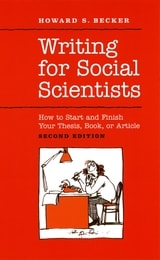
Writing for Social Scientists
How to Start and Finish Your Thesis, Book, or Article: Second EditionHoward S. Becker
University of Chicago Press, 2007
Sociologist Howard S. Becker has written the classic book on how to conquer these pressures and simply write. First published nearly twenty years ago, Writing for Social Scientists has become a lifesaver for writers in all fields, from beginning students to published authors. Becker’s message is clear: in order to learn how to write, take a deep breath and then begin writing. Revise. Repeat.
It is not always an easy process, as Becker wryly relates. Decades of teaching, researching, and writing have given him plenty of material, and Becker neatly exposes the foibles of academia and its “publish or perish” atmosphere. Wordiness, the passive voice, inserting a “the way in which” when a simple “how” will do—all these mechanisms are a part of the social structure of academic writing. By shrugging off such impediments—or at the very least, putting them aside for a few hours—we can reform our work habits and start writing lucidly without worrying about grades, peer approval, or the “literature.”
In this new edition, Becker takes account of major changes in the computer tools available to writers today, and also substantially expands his analysis of how academic institutions create problems for them. As competition in academia grows increasingly heated, Writing for Social Scientists will provide solace to a new generation of frazzled, would-be writers.
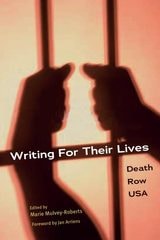
Writing for Their Lives
Death Row USAEdited by Marie Mulvey-Roberts. Foreword by Jan Arriens
University of Illinois Press, 2007
Exposing little-known facts about the five modes of execution practiced in the United States today, Writing for Their Lives documents the progress of life on death row from a capital trial to execution and beyond, through the testimony of the prisoners themselves as well as those who watch, listen, and write to them. What emerges are stories of the survival of the human spirit under even the most unimaginable circumstances, and the ways in which some prisoners find penitence and peace in the most unlikely surroundings. In spite of the uniformity of their prison life and its nearly inevitable conclusion, prisoners able to read and write letters are shown to retain and develop their individuality and humanity as their letters become poems and stories.
Writing for Their Lives serves ultimately as an affirmation of the value of life and provides bountiful evidence that when a state executes a prisoner, it takes a life that still had something to give.
This edition features an introduction by the editor as well as a foreword by Jan Arriens. Dr. Mulvey-Roberts will be donating her profits from the sale of this volume to the legal charity Amicus, which assists in capital defense in the United States."

Writing in the Feminine
Feminism and Experimental Writing in QuebecKaren Gould
Southern Illinois University Press, 1990
Here is a celebration and an analysis of four Québécois feminist rebels whose self-conscious revolt against language has put them at the forefront of experimental writing in Quebec. These women—Nicole Brossard, Madeleine Gagnon, Louky Bersianik, and France Theoret—are attempting to explode male-dominated language and to construct a new language and literature of women.
In this first major study of their work in English, Karen Gould examines in depth these women’s literary visions and the new ways in which they communicate those visions. Gould broadens her book’s appeal by showing how these four women’s works, in modern forms of experimental literature, are shaped not only by Quebec feminism, politics, and culture but by American and French influences as well.
Writing in the Workplace
New Research PerspectivesEdited by Rachel Spilka
Southern Illinois University Press, 1998
Rachel Spilka brings together nineteen previously unpublished essays concerned with ways in which recent research on workplace writing can contribute to the future direction of the discipline of technical and professional writing. Hers is the first anthology on the social perspective in professional writing to feature focused discussions of research advances and future research directions.
The workplace as defined by this volume is a widely diverse area that encompasses small companies and large corporations, public agencies and private firms, and a varied population of writers—engineers, managers, nurses, social workers, government employees, and others. Because much research has been conducted on the relationship between workplace writing and social contexts since the ground~breaking 1985 publication of Odell and Goswami’s Writing in Nonacademic Settings, Spilka contends that this is an appropriate time for the professional writing community to consider what it has learned to date and where it should be heading next in light of these recent discoveries. She argues that now professional writers should try to ask better questions and to define new directions.
Spilka breaks the anthology into two parts. Part 1 is a collection of ten essays presenting textual and qualitative studies conducted by the authors in the late l980s on workplace writing. Spilka has chosen these studies as representative of the finest research being conducted in professional writing that can serve as models for current and future researchers in the field. Barbara Couture, Jone Rymer, and Barbara Mirel report on surveys they conducted relying on the social perspective both to design survey instruments and to analyze survey data. Jamie MacKinnon assesses a qualitative study describing what workplace professionals might need to learn about social contexts and workplace writing. Susan Kleimann and editor Rachel Spilka discuss multiple case studies they conducted that help explain the value during the composing process of social interaction among the participants of a rhetorical situation. Judy Z. Segal explores the negotiation between the character of Western medicine and the nature of its professional discourse. Jennie Dautermann describes a qualitative study in which a group of nurses "claimed the authority to restructure their own procedural information system." Anthony Paré finds in a case study of social workers that writing can be constrained heavily by socially imposed limitations and restrictions. Graham Smart describes a study of discourse conventions in a financial institution. Geoffrey A. Cross reports on a case study of the interrelation of genre, context, and process in the group production of an executive letter and report.
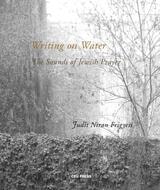
Writing on Water
The Sounds of Jewish PrayerJudit Niran Frigyesi
Central European University Press, 2018
Writing on Water grasps the phenomenon of sound in prayer, that is, a meaning in sounds and soundscapes, and a musical essence in the act of praying.
The impetus for the book arose from the author’s fieldwork among traditional Jews during the era of communism in Budapest and Prague. In that period the Jewish religion and Jewishness in general were supressed and rituals became semi-secret and turned inward. The book is a witness to these communities and their rituals, but it goes beyond documentation. The uniqueness of the sounds of the rituals compelled the author to try to comprehend how melodies and soundscapes became the sustaining/protective environment, as well as the vehicle, for the expression of a world-orientation—in a situation where open discourse was inconceivable.
The book is based on extensive interviews, musical recordings, photographs and scholarly analyses. It is unique in its choice of communities, its wealth of original documents, and its novel interpretation of sound.
Writing on Water is creative non-fiction. The presentation is evocative and poetic, but at the same time it transmits knowledge. The book can aid research and serve in courses in philosophy, religion, music, ethnomusicology, anthropology, aesthetics, Jewish studies, folklore, oral history, and performance studies. It is also a work of art and literature.
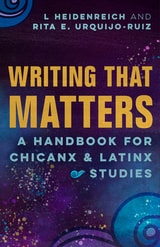
Writing that Matters
A Handbook for Chicanx and Latinx StudiesL Heidenreich and Rita E. Urquijo-Ruiz
University of Arizona Press, 2024
While it includes a brief history of the roots of the fields of Chicanx literature and history, Writing that Matters emphasizes practice: how to research and write a Chicanx or Latinx history paper; how to research and write a Chicanx or Latinx literature or cultural studies essay; and how to conduct interviews, frame pláticas, and conduct oral histories. It also includes a brief chapter on nomenclature and a grammar guide. Each chapter includes questions for discussion, and all examples from across the subfields are from noted Chicanx and Latinx scholars. Women’s and queer scholarship and methods are not addressed in a separate chapter but are instead integral to the work.
For years Professors Heidenreich and Urquijo-Ruiz waited for a writing and research manual that was rooted in critical Chicanx and Latinx studies. Now, they have crafted one.
Writing the Black Diasporic City in the Age of Globalization
Carol Bailey
Rutgers University Press, 2023
Writing the Caribbean in Magazine Time
Katerina Gonzalez Seligmann
Rutgers University Press, 2021
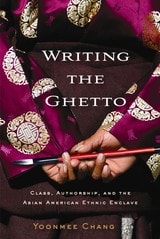
Writing the Ghetto
Class, Authorship, and the Asian American Ethnic EnclaveChang, Yoonmee
Rutgers University Press, 2010
Yoonmee Chang examines the class structure of Chinatowns, Koreatowns, Little Tokyos, and Little Indias, arguing that ghettoization in these spaces is disguised. She maintains that Asian American literature both contributes to and challenges this masking through its marginalization by what she calls the "ethnographic imperative." Chang discusses texts from the late nineteenth century to the present, including those of Sui Sin Far, Winnifred Eaton, Monica Sone, Fae Myenne Ng, Chang-rae Lee, S. Mitra Kalita, and Nam Le. These texts are situated in the contexts of the Chinese Exclusion Era, Japanese American internment during World War II, the globalization of Chinatown in the late twentieth century, the Vietnam War, the 1992 Los Angeles riots, and the contemporary emergence of the "ethnoburb."