Results by title
3071 books match the query 'Business & Economics' and 101 start with w

White Market Drugs
Big Pharma and the Hidden History of Addiction in AmericaDavid Herzberg
University of Chicago Press, 2020
These markets are widely acknowledged but no one has explained how they became so central to the medical system in a nation famous for its “drug wars”—until now. Drawing from federal, state, industry, and medical archives alongside a wealth of published sources, Herzberg re-connects America’s divided drug history, telling the whole story for the first time. He reveals that the driving question for policymakers has never been how to prohibit the use of addictive drugs, but how to ensure their availability in medical contexts, where profitability often outweighs public safety. Access to white markets was thus a double-edged sword for socially privileged consumers, even as communities of color faced exclusion and punitive drug prohibition. To counter this no-win setup, Herzberg advocates for a consumer protection approach that robustly regulates all drug markets to minimize risks while maintaining safe, reliable access (and treatment) for people with addiction.
Accomplishing this requires rethinking a drug/medicine divide born a century ago that, unlike most policies of that racially segregated era, has somehow survived relatively unscathed into the twenty-first century.
By showing how the twenty-first-century opioid crisis is only the most recent in a long history of similar crises of addiction to pharmaceuticals, Herzberg forces us to rethink our most basic ideas about drug policy and addiction itself—ideas that have been failing us catastrophically for over a century.

Who Benefits from the Nonprofit Sector?
Edited by Charles T. Clotfelter
University of Chicago Press, 1992

Who Should Pay for Medicare?
Daniel Shaviro
University of Chicago Press, 2004
Daniel N. Shaviro sees the future of our national healthcare system as hinging on the issue of funding. The author of books on the economic issues surrounding Social Security and budget deficits, Shaviro is a skilled guide for anyone seeking to understand the financial aspects of government programs. Who Should Pay for Medicare? offers an accessible overview of how Medicare operates as a fiscal system. Discussions of Medicare reform often focus on the expansion of program treatment choices but not on the question of who should pay for Medicare's services. Shaviro's book addresses this critical issue, examining the underanalyzed dynamics of the significant funding gap facing Medicare. He gives a balanced, nonpartisan evaluation of various reform alternatives—considering everything from the creation of new benefits in this fiscal crunch to tax cuts to the demographic pressures we face and the issues this will raise when future generations have to pay for the care of today's seniors.
Who Should Pay for Medicare? speaks to seniors who feel entitled to expanded coverage, younger people who wonder what to expect from the government when they retire, and Washington policy makers who need an indispensable guidebook to Medicare's future.
Who Will Care For Us?
Long-Term Care and the Long-Term WorkforcePaul Osterman
Russell Sage Foundation, 2017
Using national surveys, administrative data, and nearly 120 original interviews with workers, employers, advocates, and policymakers, Osterman finds that direct care workers are marginalized and often invisible in the health care system. While doctors and families alike agree that good home care aides and CNAs are crucial to the well-being of their patients, the workers report poverty-level wages, erratic schedules, exclusion from care teams, and frequent incidences of physical injury on the job. Direct care workers are also highly constrained by policies that specify what they are allowed to do on the job, and in some states are even prevented from simple tasks such as administering eye drops.
Osterman concludes that broadening the scope of care workers’ duties will simultaneously boost the quality of care for patients and lead to better jobs and higher wages. He proposes integrating home care aides and CNAs into larger medical teams and training them as “health coaches” who educate patients on concerns such as managing chronic conditions and transitioning out of hospitals. Osterman shows that restructuring direct care workers’ jobs, and providing the appropriate training, could lower health spending in the long term by reducing unnecessary emergency room and hospital visits, limiting the use of nursing homes, and lowering the rate of turnover among care workers.
As the Baby Boom generation ages, Who Will Care for Us? demonstrates the importance of restructuring the long-term care industry and establishing a new relationship between direct care workers, patients, and the medical system.

Whoosh Goes the Market
Algorithms, Automation, and AlienationDaniel Scott Souleles
University of Chicago Press, 2024
Markets are messy, and no one knows this better than traders who work tirelessly to predict what they will do next. In Whoosh Goes the Market, Daniel Scott Souleles takes us into the day-to-day experiences of a team at a large trading firm, revealing what it’s actually like to make and lose money on contemporary capital markets.
The traders Souleles shadows have mostly moved out of the pits and now work with automated, glitch-prone computer systems. They remember the days of trading manually, and they are suspicious of algorithmically driven machine-learning systems. Openly musing about their own potential extinction, they spend their time expressing fear and frustration in profanity-laced language. With Souleles as our guide, we learn about everything from betting strategies to inflated valuations, trading swings, and market manipulation. This crash course in contemporary finance vividly reveals the existential anxiety at the evolving front lines of American capitalism.

Why Are You Here and Not Somewhere Else
Selected EssaysHarry L. Davis
University of Chicago Press, 2013
On the occasion of the fiftieth anniversary of Davis’s arrival at the Booth School, Why Are You Here and Not Somewhere Else offers seven essays by Davis that offer new perspectives and contribute to a more well-rounded understanding of business education. Adapted from convocation addresses given by Davis at different points during his five-decade career, the essays encapsulate the spirit of business education at the Booth School, while at the same time providing encouraging, invaluable wisdom for those about to embark on business careers or take on leadership positions. Topics addressed range from the role of the university in the business world to the crucial role of intangible values in shaping one’s career.
Davis has been a formative influence on more executives and leaders than perhaps any other business educator living today, and Why Are You Here and Not Somewhere Else provides a unique and valuable perspective on how leaders in business and elsewhere can shape and define their careers in new ways.
Why You, Why Me, Why Now
The Mindset and Moves to Land That First Job, from Networking to Cover Letters, Resumes, and InterviewsRachel Toor
University of Chicago Press, 2024
Searching for a job can be hard and demoralizing work. In Why You, Why Me, Why Now, Rachel Toor delivers some good news. The most important thing is within your control—a mindset that shows you know the goals of the organization you want to work for and that you’re ready and eager to contribute. Toor provides, with compassion and enthusiasm, strategies to make it easy for hiring managers to say “yes.” Through useful and funny anecdotes, she offers advice from professionals across industries and focuses on the attitude applicants can adopt to find success. Revealing traits employers seek, Toor shows how to craft winning cover letters, ways to tailor resumes for each job, and practical tips to get past AI screening. She also explains how to use LinkedIn and gives tips on preparing for interviews. Throughout, the book features Toor’s notes on writing well to help in landing a first job and beyond. Encouraging, entertaining, and blunt, this is a job-search guide like no other.
Why the Poor Get Richer and the Rich Slow Down
Essays in the Marshallian Long PeriodBy W. W. Rostow
University of Texas Press, 1980
Bearing on fundamental issues of economic theory, history, and public policy, this volume elaborates and goes beyond themes enunciated in W. W. Rostow's previous works. The eight essays presented here are unified by the author's insistence that neo-Keynesian and neoclassical theory are an inadequate basis for economic analysis and policy prescription. Changes in technology and in the supply of energy, food, and raw materials, he contends, must be taken into account. The scale and character of the investments required to respond to these changes link his analysis back to conventional income analysis. Rostow outlines in several contexts the framework for a general, disaggregated theory of production and prices that meets this criterion.
The theoretical and historical essays include a review and unification of various long-cycle theories; a formal mathematical model of the Kondratieff cycle; a review of theories relating technology and the price system, including Rostow's own formulation of the appropriate linkage; a lengthy analysis of the pre-1914 relation between money and prices, including a detailed critique of modern monetarist interpretations; and an analysis of the proposition that economic growth assumes an S-shaped path of acceleration and deceleration.
The policy essays include an examination of the links between energy-related investment, full employment, and patterns of regional development in the United States; the discussion of an appropriate framework and procedure for North-South international economic negotiations; and the text of a 1965 talk on inflation that touches on the relations among economics, economists, and the performance of societies as a whole.

Wild Mammals in Captivity
Principles and Techniques for Zoo Management, Second EditionEdited by Devra G. Kleiman, Katerina V. Thompson, and Charlotte Kirk Baer
University of Chicago Press, 2010
Zoos, aquaria, and wildlife parks are vital centers of animal conservation and management. For nearly fifteen years, these institutions have relied on Wild Mammals in Captivity as the essential reference for their work. Now the book reemerges in a completely updated second edition. Wild Mammals in Captivity presents the most current thinking and practice in the care and management of wild mammals in zoos and other institutions. In one comprehensive volume, the editors have gathered the most current information from studies of animal behavior; advances in captive breeding; research in physiology, genetics, and nutrition; and new thinking in animal management and welfare.
In this edition, more than three-quarters of the text is new, and information from more than seventy-five contributors is thoroughly updated. The standard text for all courses in zoo biology, Wild Mammals in Captivity will, in its new incarnation, continue to be used by zoo managers, animal caretakers, researchers, and anyone with an interest in how to manage animals in captive conditions.

Will We Be Smart Enough?
A Cognitive Analysis of the Coming WorkforceEarl Hunt
Russell Sage Foundation, 1995

Wine By Design
Santa Barbara's Quest for TerroirVictor W. Geraci
University of Nevada Press, 2020
As the American demand for premium wine grapes intensified in the late twentieth century, the Northern California wine industry rapidly grew its boutique and innovative local designer winemaking to increase profit to meet demand and compete on a global scale. Set in the context of the regional, national, and global wine community, this story illuminates a regional story of how the Santa Barbara wine industry found solutions to current market conditions while utilizing local traditions to develop a new version of local wine terroir. An accomplishment that allowed them to compete in the global marketplace yet develop highly specialized wine that is unique to the region.
By employing leading-edge technology and entrepreneurship, the California Central Coast region of Santa Barbara became a model for the American vision of agricultural innovation and an integral part of the international wine trade, developing a personalized version of local wine terroir.

Winning Strategies for the Indian Market
Anuradha Dayal-Gulati
Northwestern University Press, 2010
The authors describe how the sector might evolve during the next five to ten years, within the broad canvas of the deeper economic and demographic transitions that are taking place in India, and in turn, what this evolution implies for the challenges and opportunities that companies, both domestic and multinational, may face in India. Essays on the emergence of the Indian consumer, the effect of credit cards on India’s consumer culture, and entrepreneurship and India’s poor the emergence of the Indian Consumer round out this profile of India’s market.

Wired into Nature
The Telegraph and the North American FrontierJames Schwoch
University of Illinois Press, 2018
Merging new research with bold interpretation, James Schwoch details the unexplored dimensions of the frontier telegraph and its impact. The westward spread of telegraphy entailed encounters with environments that challenged Americans to acquire knowledge of natural history, climate, and a host of other fields. Telegraph codes and ciphers, meanwhile, became important political, military, and economic secrets. Schwoch shows how the government's use of commercial networks drove a relationship between the two sectors that served increasingly expansionist aims. He also reveals the telegraph's role in securing high ground and encouraging surveillance. Both became vital aspects of the American effort to contain, and conquer, the West's indigenous peoples—and part of a historical arc of concerns about privacy, data gathering, and surveillance that remains pertinent today.
Entertaining and enlightening, Wired into Nature explores an unknown history of the West.
Wise Leadership
Linda A. McLyman
Michigan State University Press, 2005
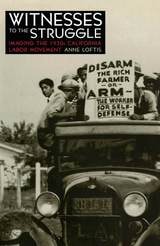
Witnesses to the Struggle
Imaging the 1930s California Labor MovementAnne Loftis
University of Nevada Press, 2014
In this groundbreaking interdisciplinary study, Loftis examines the artists who put a human face on the farmworkers’ plight in California during the Great Depression, focusing on writer John Steinbeck, photographer Dorothea Lange, sociologist and author Paul Taylor, and journalist Carey McWilliams. Loftis probes the interplay between journalism and art in the 1930s, when both academics and artists felt an urgent need to be relevant in the face of enormous misery. The power of their work grew out of their personal involvement in both the labor struggles and the hardships endured by workers and their families. Steinbeck, Lange, and the other artists and intellectuals in their circles created the public images of their times. Works such as The Grapes of Wrath or Lange’s Migrant Mother actually helped mold public opinion and form government policies. Even today these works remain icons in our shared perception of that era. Loftis helps us understand why this art still seems the truest representation of those desperate times, three-quarters of a century later.

Wobblies of the World
A Global History of the IWWEdited by Peter Cole, David Struthers, and Kenyon Zimmer
Pluto Press, 2017
Founded in 1905, Chicago's Industrial Workers of the World (IWW) is a union unlike any other. With members affectionately called "Wobblies" and an evolutionary and internationalist philosophy and tactics, it rapidly grew across the world. Considering the history of the IWW from an international perspective for the first time, Wobblies of the World brings together a group of leading scholars to present a lively collection of accounts from thirteen diverse countries, revealing a fascinating story of anarchism, syndicalism, and socialism. Chapters include:
*”A Cosmopolitan Crowd”: Transnational Anarchists, the IWW and the American Radical Press by Kenyon Zimmer
*Living Social Dynamite: Early Twentieth-Century IWW-South Asia Connections by Tariq Khan
*IWW Internationalism and Interracial Organizing in the Southwestern United States by David M. Struthers
*Spanish Anarchists and Maritime Workers in the IWW by Bieito Alonso
*The IWW and the Dilemmas of Labor Internationalism by Wayne Thorpe
*Wobblies Down Under: The IWW in Australia by Verity Burgmann
*Ki Nga Kaimahi Maori ('To All Maori Workers'): The New Zealand IWW and the Maori by Mark Derby
*Patrick Hodgens Hickey and the IWW: A Transnational Relationship by Peter Clayworth
*Edith Frenette: A Transnational Radical Life by Heather Mayer
*Tom Barker and Revolutionary Europe by Paula de Angelis
*P. J. Welinder and “American Syndicalism” in Interwar Sweden by Johan Pries
*Tramp, Tramp, Tramp: The Songs of Joe Hill Around the World by Bucky Halker
*And much, much more!
Drawing on many important figures of the movement—Har Dayal, James Larkin, William D. "Big Bill" Haywood, Enrique Flores Magón, and more—the contributors describe how the IWW and its ideals spread, exploring the crucial role the IWW played in industries such as shipping, mining, and agriculture.
Ultimately, the book illuminates Wobblie methods of organizing, forms of expression, practices, and transnational issues, offering a fascinating alternative history of the group

Women Adrift
Independent Wage Earners in Chicago, 1880-1930Joanne J. Meyerowitz
University of Chicago Press, 1988
"Brilliant. . . . Gracefully written, and mercifully free from the jargon that often plagues social history, this book is a welcome addition to literature in women's, urban, and black history."—Ann Schofield, American Historical Review
"Meyerowitz provides a splendid portrait of her subjects. . . . She deserves praise for her demographic spadework, sensitive analysis, and engaging style. This is a valuable and rewarding book."—Nancy Woloch, Journal of American History
"A state-of-the-art product of the new women's history. . . . Meyerowitz's work is an extremely useful contribution, a corrective to over-concentration on women in family, an opening to new ways of looking at single women."—Linda Gordon, Women's Review of Books
"Women Adrift not only brings together many of the most exciting insights of women's history in recent years, but Meyerowitz's particular angle on issues of work, family, sexuality, mass culture and relationships among women also encourages us to rethink these insights."—Ileen A. DeVault, Historian

Women Have Always Worked
A Concise HistoryAlice Kessler-Harris
University of Illinois Press, 2018

Women Working Longer
Increased Employment at Older AgesEdited by Claudia Goldin and Lawrence F. Katz
University of Chicago Press, 2018
In Women Working Longer, editors Claudia Goldin and Lawrence F. Katz assemble new research that presents fresh insights on the phenomenon of working longer. Their findings suggest that education and work experience earlier in life are connected to women’s later-in-life work. Other contributors to the volume investigate additional factors that may play a role in late-life labor supply, such as marital disruption, household finances, and access to retirement benefits. A pioneering study of recent trends in older women’s labor force participation, this collection offers insights valuable to a wide array of social scientists, employers, and policy makers.
Women and Work
Feminism, Labour, and Social ReproductionSusan Ferguson
Pluto Press, 2019
Feminism is once again on the political agenda. Across the world women are taking to the streets to protest unfair working conditions, abortion laws, and sexual violence. They are demanding decent wages, better schools and free childcare.
But why do some feminists choose to fight for more women CEOs, while others fight for a world without CEOs?
To understand these divergent approaches, Susan Ferguson looks at the ideas that have inspired women to protest, exploring the ways in which feminists have placed work at the center of their struggle for emancipation. Two distinct trajectories emerge: “equality feminism” and “social reproduction feminism.” Ferguson argues that socialists have too often embraced the “liberal” tendencies of equality feminism, while neglecting the insights of social reproduction feminism. Engaging with feminist anti-work critiques, She proposes that women's emancipation depends upon a radical reimagining of all labor and advocates for a renewed social reproduction framework as a powerful basis for an inclusive feminist politics. Chapters here include;
*The Rational-Humanist Roots of Equality Feminism
*Socialist Feminism: Two Approaches to Understanding Women's Work
*Equal Work for and against Capital
*Anti-Racist Feminism and Women's Work
*A Political Economy of 'Women's Work': Producing Patriarchal Capitalism
*Renewing Social Reproduction Feminism
*The Social Reproduction Strike: Life-Making Beyond Capitalism
Women and Work offers a timely and important look at the intersectionality of feminism and workers rights. Scholars and students will both find valuable insights into the history of feminist theory and social movement.

Women in a Man's World, Crying
EssaysVicki Covington
University of Alabama Press, 2002
This thoughtful, engaging collection examines resilience, identity, and inequality in the modern workplace produced by one of the nation's most observant and incisive writers.
This collection of warm, heartfelt essays from award-winning novelist Vicki Covington chronicles the multitude of "in between" moments in the writer's life. These are her stolen moments in between the writing of four novels-Gathering Home, Bird of Paradise, Night Ride Home, and The Last Hotel for Women; in between coauthoring the edgy memoir Cleaving: The Story of a Marriage with her husband Dennis Covington; in between raising two daughters; in between her husband's struggle with cancer and the author's own heart attack; in between a life full of trials and triumphs, disappointments and celebrations - moments that, as Covington demonstrates here, are always rich and revealing.
In the title essay, the author questions why all seven middle-class women who live on her street confess at a neighborhood cookout that in the past 48 hours each of them has cried. In "A Southern Thanksgiving," Covington reflects on the "family dance" that is Thanksgiving in the South: "In the North they put their crazy family members in institutions, but in the South we put them in the living room for everyone to enjoy." In "My Mother's Brain," the author recounts the onset of Alzheimer's in her mother and how, with the spread of the disease, an untapped vein of love is revealed.
Some of these essays were written as weekly newspaper columns for the Birmingham News. Others were written for specific literary occasions, such as the First Annual Eudora Welty Symposium. They are divided into six thematic sections: "Girls and Women," "Neighborhood," "Death," "The South," "Spiritual Matters," and “Writing.”
Throughout, as Covington casts her candid, attentive eye on a situation, confusion yields to comprehension, fear flourishes into faith, and anger flows into understanding. In memorializing the small moments of her life, she finds that they are far from peripheral; indeed, they are central to a life full of value and meaning.
Women on the Polish Labor Market
Henryk Domanski
Central European University Press, 2001
Work Without End
Abandoning Shorter Hours for the Right to WorkBenjamin Kline Hunnicutt
Temple University Press, 1990
Work and Family in the United States
A Critical Review and Agenda for Research and PolicyRosabeth Moss Kanter
Russell Sage Foundation, 1977
Work and the Carceral State
Jon Burnett
Pluto Press, 2022
During 2019-20 in England and Wales, over 17 million hours of labor were carried out by more than 12,500 people incarcerated in prisons, while many people in immigration detention centers were also put to work. These people constitute a sub-waged, captive workforce who are frequently discarded by the state when done with.
Work and the Carceral State examines these forms of work as part of a broader exploration of the relationship between criminalization, criminal justice, immigration policy and labor, tracing their lineage through the histories of transportation and banishment, of houses of correction and prisons, to the contemporary production of work.
Criminalization has been used to enforce work and to discipline labor throughout the history of England and Wales. This book demands that we recognise the carceral state as operating at the frontier of labor control in the 21st century.
Work, Inc.
A Philosophical InquiryEdmund F. Byrne
Temple University Press, 1992
Many workers today feel that the longstanding social contract between government, business, and labor has been broken. This book examines legal and philosophical problems that must be addressed if there is to be a new social contract that is fair to workers. Drawing on a wide variety of sources, from the popular press to technical philosophy, Edmund F. Byrne brings into focus ethical issues involved in corporate decisions to reorganize, relocate, or automate. In assessing the human costs of these decisions, he shows why, to a worker, "corporations are not reducible to their assets and liabilities any more than a government is merely its annual budget. That they are organizations, that these organizations do things, and that they are socially responsible for what they do."
In support of this assignment of responsibility, Byrne seeks to demythologize corporate hegemony by confronting a variety of intellectual "dragons" that guard the gates of the status quo. These include legal assumptions about corporate personhood and commodification, private property and eminent domain; management ideas about the autonomous employee and profit without payrolls; technocratic dreams of a dehumanized workplace: ideological belief in progress and competition; and philosophical arguments for libertarian freedom, liberal welfare, and global justice.
Because of these and other mainstream perspectives, workers today are widely perceived, in law and in common parlance, to be isolated atoms. But, Byrne emphasizes, work. including work done for a transnational corporation, is done in a community. Since corporate leaders make decisions that have an impact on people’s lives and on communities, involvement in such decisions must be not only corporate or governmental but community-based as well.
Work, Retire, Repeat
The Uncertainty of Retirement in the New EconomyTeresa Ghilarducci
University of Chicago Press, 2024
A damning portrait of the dire realities of retirement in the United States—and how we can fix it.
While the French went on strike in 2023 to protest the increase in the national retirement age, workers in the United States have all but given up on the notion of dignified retirement for all. Instead, Americans—whose elders face the highest risk of poverty compared to workers in peer nations—are fed feel-good stories about Walmart clerks who can finally retire because a customer raised the necessary funds through a GoFundMe campaign.
Many argue that the solution to the financial straits of American retirement is simple: people need to just work longer. Yet this call to work longer is misleading in a multitude of ways, including its endangering of the health of workers and its discrimination against people who work in lower-wage occupations. In Work, Retire, Repeat, Teresa Ghilarducci tells the stories of elders locked into jobs—not because they love to work but because they must.
But this doesn’t need to be the reality. Work, Retire, Repeat shows how relatively low-cost changes to how we finance and manage retirement will allow people to truly choose how they spend their golden years.
Work, Retire, Repeat
The Uncertainty of Retirement in the New EconomyTeresa Ghilarducci
University of Chicago Press, 2024
A damning portrait of the dire realities of retirement in the United States—and how we can fix it.
While the French went on strike in 2023 to protest the increase in the national retirement age, workers in the United States have all but given up on the notion of dignified retirement for all. Instead, Americans—whose elders face the highest risk of poverty compared to workers in peer nations—are fed feel-good stories about Walmart clerks who can finally retire because a customer raised the necessary funds through a GoFundMe campaign.
Many argue that the solution to the financial straits of American retirement is simple: people need to just work longer. Yet this call to work longer is misleading in a multitude of ways, including its endangering of the health of workers and its discrimination against people who work in lower-wage occupations. In Work, Retire, Repeat, Teresa Ghilarducci tells the stories of elders locked into jobs—not because they love to work but because they must.
But this doesn’t need to be the reality. Work, Retire, Repeat shows how relatively low-cost changes to how we finance and manage retirement will allow people to truly choose how they spend their golden years.
Worker Participation
Lessons from Worker Co-ops of the Pacific NorthwestJohn Pencavel
Russell Sage Foundation, 2001
Workers Can Win
A Guide to Organising at WorkIan Allinson
Pluto Press, 2022
Drawing on more than 20 years of organizing experience, Allinson combines practical techniques with an analysis of the theory and politics of organizing and unions.
The Covid, climate, and cost of living crises all hang heavy in the air. It's more obvious than ever that we need radical social and political change. But in the vacuum left by defeated labor movements, where should we begin? For longtime workplace activist Ian Allinson, the answer is clear: organizing at work is essential to rebuild working-class power.
The premise is simple: organizing builds confidence, capacity, and collective power - and with power, we can win change. Workers Can Win is an essential, practical guide for rank-and-file workers and union activists.
The book offers insight into tried and tested methods for effective organizing. It deals with tactics and strategies and addresses some of the roots of conflict, common problems with unions, and the resistance of management to worker organizing. As a 101 guide to workplace organizing with politically radical horizons, Workers Can Win is destined to become an essential tool for workplace struggles in the years to come.
Workers' Inquiry and Global Class Struggle
Strategies, Tactics, ObjectivesRobert Ovetz
Pluto Press, 2020
By engaging in what Karl Marx called a workers' inquiry, workers and militant co-researchers are studying their working conditions, the technical composition of capital, and how to recompose their own power in order to devise new tactics, strategies, organisational forms and objectives. These workers' inquiries, from call centre workers to teachers, and adjunct professors, are re-energising unions, bypassing unions altogether or innovating new forms of workers' organisations.
In one of the first major studies to critically assess this new cycle of global working class struggle, Robert Ovetz collects together case studies from over a dozen contributors, looking at workers' movements in China, Mexico, the US, South Africa, Turkey, Argentina, Italy, India and the UK. The book reveals how these new forms of struggle are no longer limited to single sectors of the economy or contained by state borders, but are circulating internationally and disrupting the global capitalist system as they do.

Working Communally
Patterns and PossibilitiesDavid G. French
Russell Sage Foundation, 1975

Working In Service Society
Cameron Macdonald
Temple University Press, 1996

Working Knowledge
A Simon Schaffer ReaderSimon Schaffer
University of Chicago Press, 2026
Working Knowledge is the first English-language collection of essays by Simon Schaffer, coauthor of Leviathan and the Air-Pump, a landmark text in the history of science. Though the latter may be his most famous book, Schaffer is also renowned for seminal articles on Isaac Newton and the cultures of popular spectacle, nineteenth-century physics and its practices of labor discipline and standardization, the history of anthropology and collecting, and the globe-spanning cultural interactions that have shaped modern science. Working Knowledge compiles these well-known pieces alongside newer selections, making them accessible in a single place and representing the huge scope and impact of Schaffer’s oeuvre.
The Reader divides sixteen of Schaffer’s articles across five thematic sections, which take up timely issues like the turn toward global histories of science; the intersection of science and capitalism; the interaction between bodies and machines; and the connection between science, politics, and the environment. Eight new essays by notable historians such as Adrian Johns, Lissa Roberts, and Steven Shapin bring Schaffer’s pieces into discussion with current scholarship. Illustrations and brief commentaries by Schaffer and the artist Adam Lowe, a longtime collaborator, are included throughout the volume.
Bringing together essential articles that were previously scattered across several publications, Working Knowledge is an insightful introduction to Schaffer and his ever-relevant writing.
Working Under Different Rules
Richard B. Freeman
Russell Sage Foundation, 1994
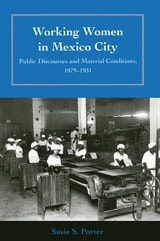
Working Women in Mexico City
Public Discourses and Material Conditions, 1879-1931Susie S. Porter
University of Arizona Press, 2003
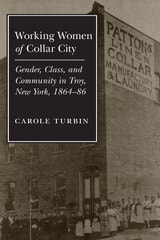
Working Women of Collar City
Gender, Class, and Community in Troy, 1864-86Carole Turbin
University of Illinois Press, 1992
Why have some working women succeeded at organizing in spite of obstacles to labor activity? Under what circumstances were they able to form alliances with male workers?
Carole Turbin explores these and other questions by examining the case of Troy, New York. In the 1860s, Troy produced nearly all the nation's detachable shirt collars and cuffs. The city's collar laundresses were largely Irish immigrants. Their union was officially the nation's first women's labor organization, and one of the best organized. Turbin provides a new perspective on gender and shows that women's family ties are not necessarily a conservative influence but may encourage women's and men's collective action.
Working and Poor
How Economic and Policy Changes Are Affecting Low-Wage WorkersRebecca M. Blank
Russell Sage Foundation, 2006

Working for Democracy
American Workers from the Revolution to the PresentEdited by Paul Buhle and Alan Dawley
University of Illinois Press, 1985
Working in a 24/7 Economy
Challenges for American FamiliesHarriet B. Presser
Russell Sage Foundation, 2003
Working-Class America
Essays on Labor, Community, and American SocietyEdited by Michael H. Frisch and Daniel J. Walkowitz
University of Illinois Press, 1983
Workingmen's Democracy
The Knights of Labor and American PoliticsLeon Fink
University of Illinois Press, 1983
Runner-up in both the John H. Dunning Prize and Albert J. Beveridge Award competitions
Workplace Justice
Organizing Multi-Identity MovementsSharon Kurtz
University of Minnesota Press, 2002
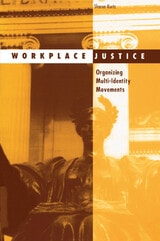
An unheralded union battle offers new insight into identity politics.
In 1991, Columbia University’s one thousand clerical workers launched a successful campaign for justice in their workplace. This diverse union-two-thirds black and Latina, three-fourths women-was committed to creating an inclusive movement organization and to fighting for all kinds of justice. How could they address the many race and gender injustices members faced, avoid schism, and maintain the unity needed to win? Sharon Kurtz, an experienced union activist and former clerical worker herself, was welcomed into the union and pursued these questions. Using this case study and secondary studies of sister clerical unions at Yale and Harvard, she examines the challenges and potential of identity politics in labor movements.
With the Columbia strike as a point of departure, Kurtz argues that identity politics are valuable for mobilizing groups, but often exclude members and their experiences of oppression. However, Kurtz believes that identity politics should not be abandoned as a component in building movements, but should be reframed-as multi-identity politics. In the end she shows an approach to organizing with great potential impact not only for labor unions but for any social movement.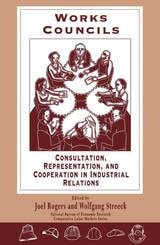
Works Councils
Consultation, Representation, and Cooperation in Industrial RelationsEdited by Joel Rogers and Wolfgang Streeck
University of Chicago Press, 1995
Works councils—institutionalized bodies for representative communication between an employer and employees in a single workplace—are rare in the Anglo-American world, but are well-established in other industrialized countries. The contributors to this volume survey the history, structure, and functions of works councils in the Netherlands, Germany, France, Spain, Sweden, Italy, Poland, Canada, and the United States. Special attention is paid to the relations between works councils and unions and collective bargaining, works councils and management, and the role and interest of governments in works councils. On the basis of extensive comparative data from other Western countries, the book demonstrates powerfully that well-designed works councils may be more effective than labor unions at solving management-labor problems.

World Bank Literature
Amitava Kumar
University of Minnesota Press, 2002
A trailblazing interrogation of the cultural, political, and economic implications of World Bank hegemony.
World Bank literature is more than a concept-it is a provocation, a call to arms. It is intended to prompt questions about each word, to probe globalization, political economy, and the role of literary and cultural studies. As asserted in this major work, it signals a radical rewriting of academic debates, a rigorous analysis of the World Bank and the International Monetary Fund (IMF), and a consideration of literature that deals with new global realities.
Made more relevant than ever by momentous antiglobalization demonstrations in Seattle and Genoa, World Bank Literature brings together essays by a distinguished group of economists, cultural and literary critics, social scientists, and public policy analysts to ask how to understand the influence of the World Bank/IMF on global economic power relations and cultural production. The authors attack this question in myriad ways, examining World Bank/IMF documents as literature, their impact on developing nations, the relationship between literature and globalization, the connection between the academy and the global economy, and the emergence of coalitions confronting the new power. World Bank Literature shows, above all, the multifarious and sometimes nefarious ways that abstract academic debates play themselves out concretely in social policy and cultural mores that reinforce traditional power structures. Contributors: Anthony C. Alessandrini, Kent State U; Bret Benjamin, SUNY, Albany; John Berger; Suzanne Bergeron, U of Michigan, Dearborn; Lorrayne Carroll, U of Southern Maine; Manthia Diawara, NYU; Grant Farred, Duke; Barbara Foley, Rutgers; Claire F. Fox, U of Iowa; Rosemary Hennessy, SUNY, Albany; Doug Henwood, Left Business Observer; Caren Irr, Brandeis; Joseph Medley, U of Southern Maine; Cary Nelson, U of Illinois; Gautam Premnath, U of Massachusetts, Boston; Bruce Robbins, Columbia; Andrew Ross, NYU; Subir Sinha, U of London; Kenneth Surin, Duke; Rashmi Varma, U of North Carolina; Evan Watkins, U of California, Davis; Phillip E. Wegner, U of Florida; Richard Wolff, U of Massachusetts.
World Economy and National Finance in Historical Perspective
Charles P. Kindleberger
University of Michigan Press, 1995

World Small-Scale Fisheries
Contemporary VisionsEdited by Ratana Chuenpagdee
Eburon Academic Publishers, 2011
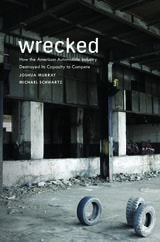
Wrecked
How the American Automobile Industry Destroyed Its Capacity to CompeteJoshua Murray
Russell Sage Foundation, 2019
Today Japanese and many European automakers produce higher quality cars at lower cost than their American counterparts thanks to a flexible form of production characterized by long-term sole suppliers, assembly and supply plants located near each other, and just-in-time delivery of raw materials. While this style of production was, in fact, pioneered in the U.S. prior to World War II, in the years after the war, American automakers deliberately dismantled this system. As Murray and Schwartz show, flexible production accelerated innovation but also facilitated workers’ efforts to unionize plants and carry out work stoppages. To reduce the efficacy of strikes and combat the labor militancy that flourished between the Depression and the postwar period, the industry dispersed production across the nation, began maintaining large stockpiles of inventory, and eliminated single sourcing. While this restructuring of production did ultimately reduce workers’ leverage, it also decreased production efficiency and innovation. The U.S. auto industry has struggled ever since to compete with foreign automakers, and formerly thriving motor cities have suffered the consequences of mass deindustrialization.
Murray and Schwartz argue that new business models that reinstate flexible production and prioritize innovation rather than cheap labor could stem the outsourcing of jobs and help revive the auto industry. By clarifying the historical relationships between production processes, organized labor, and industrial innovation, Wrecked provides new insights into the inner workings and decline of the U.S. auto industry.

Wrecked
The Edmund Fitzgerald and the Sinking of the American EconomyThomas M Nelson
Michigan State University Press, 2025
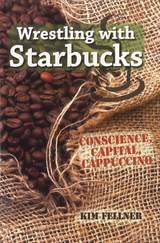
Wrestling with Starbucks
Conscience, Capital, CappuccinoFellner, Kim
Rutgers University Press, 2008
Armed with an open mind and a sense of humor, Fellner takes readers on an expedition into the muscle and soul of the coffee company. She finds a corporation filled with contradictions: between employee-friendly processes and anti-union practices; between an internationalist vision and a longing for global dominance; between community individuality and cultural hegemony. On a daily basis Starbucks walks a fine line. It must be profitable enough to please Wall Street and principled enough to please social justice advocates. Although observers might argue that the company has done well at achieving a balance, Starbucks's leaders run the risk of satisfying neither constituency and must constantly justify themselves to both.
Through the voices of Central American coffee farmers, officers at corporate headquarters, independent café owners, unionists, baristas, traders, global justice activists, and consumers, Fellner explores the forces that affect Starbucks's worth and worthiness. Along the way, she subjects her own unabashedly progressive perspective to scrutiny and emerges with a compelling and unexpected look at Starbucks, the global economy, our economic convictions, and the values behind our morning cup of joe.