Results by title
3785 books match the query 'Poetry' and 184 start with w
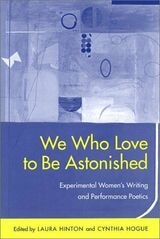
We Who Love to Be Astonished
Experimental Women's Writing and Performance PoeticsLaura Hinton
University of Alabama Press, 2001
The first critical volume devoted to the full range of women's postmodern works
We Who Love to Be Astonished collects a powerful group of previously unpublished essays to fill a gap in the critical evaluation of women's contributions to postmodern experimental writing. Contributors include Alan Golding, Aldon Nielsen, and Rachel Blau DuPlessis; discussions include analyses of the work of Kathleen Fraser, Harryette Mullen, and Kathy Acker, among others. The editors take as their title a line from the work of Lyn Hejinian, one of the most respected of innovative women poets writing today.
The volume is organized into four sections: the first two seek to identify, from two different angles, the ways women of different sociocultural backgrounds are exploring their relationships to their cultures' inherited traditions; the third section investigates the issue of visuality and the problems and challenges it creates; and the fourth section expands on the role of the body as material and performance.
The collection will breach a once irreconcilable divide between those who theorize about women's writing and those who focus on formalist practice. By embracing "astonishment" as the site of formalist-feminist investigation, the editors seek to show how form configures feminist thought, and, likewise, how feminist thought informs words and letters on a page. Students and scholars of avant-garde poetry, women's writing, and late-20th-century American literature will welcome this lively discussion.
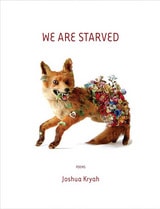
We are Starved
Joshua Kryah
University Press of Colorado, 2011
-Mary Szybist, author of Granted
Mountain West Poetry Series
Published by the Center for Literary Publishing at Colorado State University
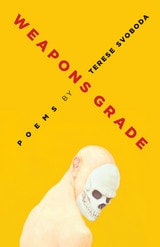
Weapons Grade
PoemsTerese Svoboda
University of Arkansas Press, 2009
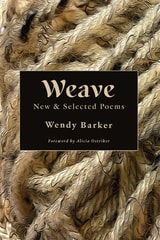
Weave
New and Selected PoemsWendy Barker
BkMk Press, 2022
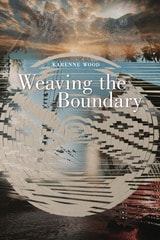
Weaving the Boundary
Karenne Wood
University of Arizona Press, 2016
This focused, accessible collection carries readers into a deep and intimate understanding of the natural world, the power of language, and the interconnectedness of life. Untold stories are revealed through documented events in various tribal histories, and indictments of destructive encounters between Western colonialism and Native peoples are juxtaposed with a lyric voice that gently insists on reweaving the past, honoring women and all life, creating a sovereign space for indigenous experience. Wood writes, “Nothing was discovered. Everything was already loved.”
Political yet universal, Weaving the Boundary tells of love and betrayal, loss and forgiveness. Wood intertwines important and otherwise untold stories and histories with a heightened sense of awareness of Native peoples’ issues and present realities.
Moving from elegy to evocations of hope and desire, the poems call for respect toward Mother Earth and feminine sensibility. One hears in this collection a longing to be carried deeper into the world, to return to tradition, to nature, to truth, to an innate belonging in the “weaving” of all life.
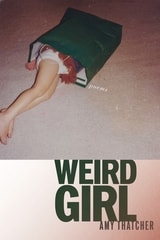
Weird Girl
PoemsAmy Thatcher
The Ohio State University Press, 2027
Poems that confront faith, sexuality, mother-daughter relationships, and the patriarchy to celebrate weird girls everywhere.
Amy Thatcher’s Weird Girl recasts female saints as quirky, transgressive characters, examines the sometimes-bizarre landscape of American girlhood, and reckons with classism and self-definition on the fringes of acceptability. With gusto and humor, Thatcher confronts the taboo—the intrusive, macabre, violent, obsessive, and lonely. Rooted in a working-class Philadelphia Catholic upbringing and embracing the unconventional and the unrefined, this collection captures the experiences of a first-generation college student, the grief of losing a difficult mother, the grandeur and swoon of religious ecstasy, and a girl’s struggle against systems of male power. Weird Girl is a collection for the dreamers, the oddballs, and the resilient ones who have learned to thrive in their own offbeat light: where vulnerability is strength and the most authentic stories are often the most peculiar.
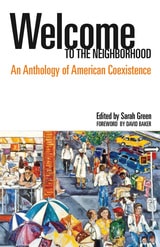
Welcome to the Neighborhood
An Anthology of American CoexistenceSarah Green
Ohio University Press, 2019
How to live with difference—not necessarily in peace, but with resilience, engagement, and a lack of vitriol—is a defining worry in America at this moment. The poets, fiction writers, and essayists (plus one graphic novelist) who contributed to Welcome to the Neighborhood don’t necessarily offer roadmaps to harmonious neighboring. Some of their narrators don’t even want to be neighbors. Maybe they grieve, or rage. Maybe they briefly find resolution or community. But they do approach the question of what it means to be neighbors, and how we should do it, with open minds and nuance.
The many diverse contributors give this collection a depth beyond easy answers. Their attentions to the theme of neighborliness as an ongoing evolution offer hope to readers: possible pathways for rediscovering community, even just by way of a shared wish for it. The result is an enormously rich resource for the classroom and for anyone interested in reflecting on what it means to be American today, and how place and community play a part.
Contributors include Leila Chatti, Rita Dove, Jonathan Escoffery, Rebecca Morgan Frank, Amina Gautier, Ross Gay, Mark Halliday, Joy Harjo, Edward Hirsch, Marie Howe, Sonya Larson, Dinty W. Moore, Robert Pinsky, Christine Schutt, and many more.
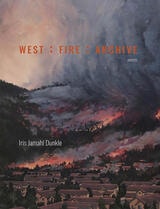
West
Fire : ArchiveIris Jamahl Dunkle
University Press of Colorado, 2021
West Portal
Benjamin Gucciardi
University of Utah Press, 2021
West Portal is the name of the neighborhood in San Francisco, California, where poet Benjamin Gucciardi grew up. It is also one of the names of the Pillars of Heracles—the entryway to the afterworld. Drawing on William Carlos Williams’s assertion that “the local is the only thing that is universal,” West Portal investigates the Bay Area’s urban and rural landscapes along with the memories and people that reside there. Interweaving the narrative of the death of the poet's sister with the environmental and socioeconomic realities of the current moment, the poems in West Portal illuminate the experience of loss, and the attempt to create meaning in the wake of devastation. Through poems that are prayerful, observant, elegiac, pained, dreamlike, philosophical, and compassionate, the book asks: What do we consider holy? What is virtue? What should any of us value about our relationship to place or our relationship with each other?
West-Eastern Divan
Complete, annotated new translation (bilingual edition)Johann Wolfgang von Goethe
Gingko, 2019
The West-Eastern Divan is one of the world’s great works of literature, an inspired masterpiece, and a poetic linking of European and Persian traditions. This new bilingual edition expertly presents the wit, intelligence, humor, and technical mastery of the poetry in Goethe’s Divan. In order to preserve the work’s original power, Eric Ormsby has created this translation in clear contemporary prose rather than in rhymed verse, which tends to obscure the works sharpness. This edition is also accompanied by explanatory notes of the verse in German and in English and a translation of Goethe’s own commentary, the “Notes and Essays for a Better Understanding of the West-Eastern Divan.” This edition not only bring this classic collection to English-language readers, but also, at a time of renewed Western unease about the other, to open up the rich cultural world of Islam.
Westminster West
Chard deNiord
Tupelo Press, 2025
Westminster West traverses the worlds of here and beyond. Chard deNiord divines “the everydayness of the mystery . . . in which being and making poetry are the same.” From posthumous correspondence between Abelard and Heloise to such poems as “Skywriting Over The Rockies,” “With A Bone In My Heart,” and “I Call Out To You,” this collection betrays a mortal charge, bearing witness to what Emily Dickinson called “each ecstatic moment/ to which we must an anguish pay” and which Aridjis in his defiance of death calls “dust in love.”
Ambitious and masterful, deNiord renders such ancient subject matter as love, betrayal, landscape, loss, grief, aging, and ecstasy new throughout Westminster West. He transforms the echo chamber of futility, silence, and failure by aspiring to cross over to “the other,” whatever it may be, a stone or cloud or lover or garment, or cancerous lung, with a “negative capability” that allows it, no matter its identity, to speak memorably in a way that transcends simple definition and ultimately any personal connection to it.
Westminster West is divided into three sections that complement each other in their archetypal themes which range historically, mythologically, and cathectically. The poems in the first section imagine correspondences and dialogues between couples, including Heloise and Abelard, Adam and Eve, Gilgamesh and Enkidu, Odysseus and Calypso, a widower and his deceased wife in the time of Covid, and a lovesick husband in the air above the Rocky Mountains and his beloved on the ground. The second section also features love poems but focuses on more instructional and metaphysical themes that vary from metaphorical pedagogy on the topic of sex to “the harsh advice of loss” to the memory of a young couple’s transcendent, romantic walk by a river. Section three moves away from love poems to mortal and environmental themes, including elegies, pastorals, and a concluding confessional credo on the bittersweet reality of poetry’s irony and blessing.

Weston's Unsent Letters to Modotti
Chad Parmenter
Tupelo Press, 2015
"Weston's Unsent Letters to Modotti inhabits the fluid space between history and imagination," says Kathleen Jesme. "Parmenter's extended persona poem deftly investigates the named but uncommunicated, that which is unfinished, unsent, unlived. Weston exists only as an eye behind the photographic lens, and is unable to fully inhabit the rest of the world, or to send the letters he writes to his sometime model and lover."
Whale Aria
Rajiv Mohabir
Four Way Books, 0
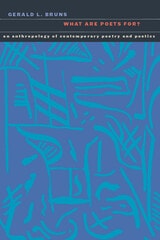
What Are Poets For?
An Anthropology of Contemporary Poetry and PoeticsGerald L. Bruns
University of Iowa Press, 2012
Conceptions and practices of poetry change not only from time to time and from place to place but also from poet to poet. This has never been more the case than in recent years. Gerald Bruns’s magisterial What Are Poets For? explores typographical experiments that distribute letters randomly across a printed page, sound tracks made of vocal and buccal noises, and holographic poems that recompose themselves as one travels through their digital space. Bruns surveys one-word poems, found texts, and book-length assemblies of disconnected phrases; he even includes descriptions of poems that no one could possibly write, but which are no less interesting (or no less poetic) for all of that. The purpose of the book is to illuminate this strange poetic landscape, spotlighting and describing such oddities as they appear, anomalies that most contemporary poetry criticism ignores.
What Became of Wystan?
Change and Continuity in Auden's PoetryAlan Jacobs
University of Arkansas Press, 1998
What Came Before
Matthew Schultz
Tupelo Press, 2020
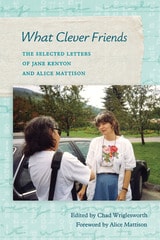
What Clever Friends
The Selected Letters of Jane Kenyon and Alice MattisonEdited by Chad Wriglesworth
University of Michigan Press, 2026
Witty, tender, and aware; tempestuous and lyrical, these letters trace the evolution of a deep and largely unknown friendship that situates Kenyon’s work within a collaborative environment of other poets and novelists who were committed to the flourishing of contemporary women’s writing. With more than 500 edited and annotated letters, a retrospective foreword written by Alice Mattison, and a scholarly introduction written by Chad Wriglesworth, What Clever Friends conveys a compelling story that will interest readers and writers.
What Could Be Saved
Bookmatched Novellas & StoriesGregory Spatz
Tupelo Press, 2019
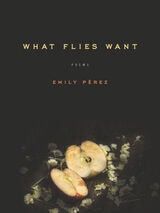
What Flies Want
PoemsEmily Pérez
University of Iowa Press, 2022
In What Flies Want, disaster looms in domesticity: a family grapples with its members’ mental health, a marriage falters, and a child experiments with self-harm. With its backdrop of school lockdown drills, #MeToo, and increasing political polarization, the collection asks how these private and public tensions are interconnected.
The speaker, who grew up in a bicultural family on the U.S./Mexico border, learns she must play a role in a culture that prizes whiteness, patriarchy, and chauvinism. As an adult she oscillates between performed confidence and obedience. As a wife, she bristles against the expectations of emotional labor. As a mother, she attempts to direct her white male children away from the toxic power they are positioned to inherit, only to find how deeply she is also implicated in these systems. Tangled in a family history of depression, a society fixated on guns, a rocky relationship, and her own desire to ignore and deny the problems she must face, this is a speaker who is by turns defiant, defeated, self-implicating, and hopeful.
What Had Happened Was
Therí Alyce Pickens
Duke University Press, 2025
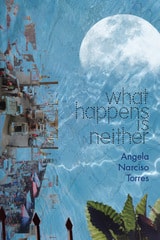
What Happens Is Neither
Angela Narciso Torres
Four Way Books, 2021
“What Happens Is Neither / the end nor the beginning. / Yet we’re wired to look for signs,” offers the speaker of Angela Narciso Torres’s latest collection, which approaches motherhood, aging, and mourning through a series of careful meditations. In music, mantra, and prayer, Torres explores the spaces in and around grief—in varying proximity to it and from different vantage points. She writes both structurally formal poems that enfold the emotionality of loss and free verse that loosens the latch on memory and lets us into the sensory worlds of the speaker’s childhood and present. In poems set in two countries and homes, Torres considers what it means to leave a mark, vanish, and stay in one place. In a profound act of recollection and preservation, Torres shows us how to release part of ourselves but remain whole
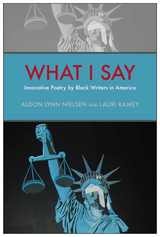
What I Say
Innovative Poetry by Black Writers in AmericaAldon Lynn Nielsen
University of Alabama Press, 2015
The elder poets in this collection, such as Nathaniel Mackey, C. S. Giscombe, Will Alexander, and Ron Allen, came of age during and were powerfully influenced by the Black Arts Movement, and What I Say grounds the collection in its black modernist roots. In tracing the fascinating and unexpected paths of experimentation these poets explored, however, Nielsen and Ramey reveal the tight delineations of African American poetry that omitted noncanonical forms. This invigorating panoply of work, when restored, brings into focus the creatively elastic frontiers and multifaceted expressions of contemporary black poetry.
Several of the poets discussed in What I Say forged relationships with members of the L=A=N=G=U=A=G=E poetry movement and participated in the broader community of innovative poetry that emerged in the late 1970s and early 1980s and continues to exert a powerful influence today.
Each volume can stand on its own, and reading them in tandem will provide a clear vision of how innovative African American poetries have evolved across the twentieth century and into the twenty-first. What I Say is infinitely teachable, compelling, and rewarding. It will appeal to a broad readership of poets, poetics teachers, poetics scholars, students of African American literature in nonnarrative forms, Afro-futurism, and what lies between the modern and the contemporary in global and localized writing practices.
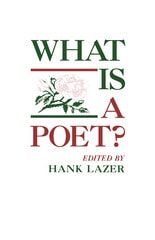
What Is A Poet?
Hank Lazer
University of Alabama Press, 1987
This book discusses the extent of distrust and the extent of the misunderstandings that exist in the poetry world.
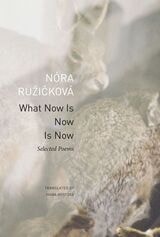
What Now Is Now Is Now
Selected PoemsNóra Ružicková
Seagull Books, 2025
A selection of poems that blend raw imagery with experimental forms, offering a vivid exploration of the body, language and shifting identities.
Nóra Ružičková’s poetry merges bodily experience with linguistic experimentation, evolving from self-reflection to an exploration of the complexities of gender and Central European identity. Her work deftly weaves personal narratives with political and social commentary, forging poems that are both intellectually provocative and deeply embodied.
This selection spans nearly 25 years, tracing her work from a late-millennium debut to her latest, most socially engaged collection, which explores novelty within the grand narratives of modern history and critiques humanity's obsession with progress. Through her poems, she challenges the boundaries of language, blending physicality with abstraction through a combination of potent imagery and philosophical reflection. Her poetry treats the body as a space where meaning is simultaneously created and dismantled, probing themes of identity, existence and the instability of interpretation. By experimenting with materiality, bodily experience and the ever-changing mediascape, Ružičková captures the complexities of contemporary human life and dissolves the divide between language and physical reality. In its concluding section, the selection confronts pivotal historical moments and humanity’s relentless pursuit of progress, making for a powerful, thought-provoking engagement with the present.
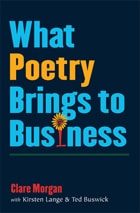
What Poetry Brings to Business
Morgan Clare, Kristen Lange, Ted Buswick
University of Michigan Press, 2010
"Creativity is a means of controlling chaos, finding order. Business and poetry draw their waters out of the same well."
---John Barr, President, Poetry Foundation
"At last there is a book that explores the deep but unexpected connections between business and poetry. Clare Morgan and her colleagues demonstrate how the creative energy, emotional power, and communicative complexity of poetry relate directly to the practical needs for innovation and problem solving that face business managers. There has never been a book on developing managerial potential quite like this one."
---Dana Gioia, former chairman of the National Endowment for the Arts and a former corporate executive at General Foods
What does poetry bring to business? According to Clare Morgan and her coauthors, it brings complexity and flexibility of thinking, along with the ability to empathize with and better understand the thoughts and feelings of others. Through her own experiences and many examples, Morgan demonstrates that the skills necessary to talk and think about poetry can be of significant benefit to leaders and strategists, to executives who are facing infinite complexity and who are armed with finite resources in a changing world.
What Poetry Brings to Business presents ways in which reading and thinking about poetry offer businesspeople new strategies for reflection on their companies, their daily tasks, and their work environments. The goal is both to increase and broaden readers' understanding of poems and how they convey meaning, and also to help readers develop analytical and cognitive skills that will be beneficial in a business context. The unique combinations and connections made in this book will open new avenues of thinking about poetry and business alike.
Clare Morgan is Director of the graduate creative writing programme at the University of Oxford. She has run workshops and given presentations on this topic in the United States, the United Kingdom, continental Europe, and Japan. Dr. Morgan is a fiction writer and critic, and a Fellow of the Royal Society of Arts.
Kirsten Lange and Ted Buswick are employed by The Boston Consulting Group, an international management consulting firm, she as Managing Director of the Munich office, he as head of Oral History and Archiving.
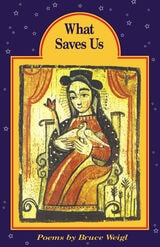
What Saves Us
Bruce Weigl
Northwestern University Press, 1994
In these wrenching, elegant poems, Bruce Weigl writes out of uncompromising memory and vision. His subject is both the transport and anguish of being open to the lived and living moment. From bars and bedrooms, in Ohio and Nicaragua and Vietnam, his voice rises through the noise of history and habit to reach us with impeccable grace and remarkable invention.
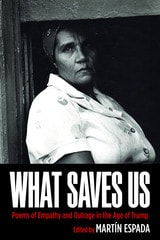
What Saves Us
Poems of Empathy and Outrage in the Age of TrumpEdited by Martín Espada
Northwestern University Press, 2019
This is an anthology of poems in the Age of Trump—and much more than Trump. These are poems that either embody or express a sense of empathy or outrage, both prior to and following his election, since it is empathy the president lacks and outrage he provokes.
There is an extraordinary diversity of voices here. The ninety-three poets featured include Elizabeth Alexander, Julia Alvarez, Richard Blanco, Carolyn Forché, Aracelis Girmay, Donald Hall, Juan Felipe Herrera, Yusef Komunyakaa, Naomi Shihab Nye, Marge Piercy, Robert Pinsky, Danez Smith, Patricia Smith, Brian Turner, Ocean Vuong, Bruce Weigl, and Eleanor Wilner. They speak of persecuted and scapegoated immigrants. They bear witness to violence: police brutality against African Americans, mass shootings in a school or synagogue, the rage inflicted on women everywhere. They testify to poverty: the waitress surviving on leftovers at the restaurant, the battles of a teacher in a shelter for homeless mothers, the emergency-room doctor listening to the heartbeats of his patients. There are voices of labor, in the factory and the fields. There are prophetic voices, imploring us to imagine the world we will leave behind in ruins lest we speak and act.
However, this is not merely a collection of grievances. The poets build bridges. One poet steps up to translate in Arabic at the airport; another walks through the city and sees her immigrant past in the immigrant present; another declaims a musical manifesto after the hurricane that devastated his island; another evokes a demonstration in the street, shouting in an ecstasy of defiance. The poets take back the language, resisting the demagogic corruption of words themselves. They assert our common humanity in the face of dehumanization.
What Sex Is Death?
Dario Bellezza, Selected and Translated by Peter Covino
University of Wisconsin Press, 2025
What Shines
Sydney Lea
Four Way Books, 0
What Water Knows
PoemsJacqueline Jones LaMon
Northwestern University Press, 2021
LaMon’s skillful embodiment of character and her signature use of personae invite the reader to experience the unfathomable. Prepare to go over Niagara Falls in a barrel. Prepare to feel the force of a fire hose on your bare legs. Prepare to experience what happens when greed gets in the way of reason. What Water Knows is a canonical poetic achievement that will remind us of what it means to be human in a world that often forgets.
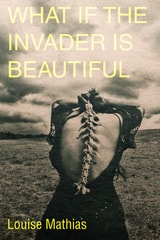
What if the Invader Is Beautiful?
Louise Mathias
Four Way Books, 2024
What if the Invader is Beautiful explores the ineffable yet primal connections between outer and inner landscapes — the impact that the natural world has on the psychological terrain of our interior lives. Through compressed, musical, and often deeply mysterious language, the poems enact the extreme outer limits of emotional experience. Often set in equally extreme natural settings, the poems ride the knife edge between beauty and terror — exploring concepts of the sublime, the spiritual power of the elements, the redemptive beauty of flora and fauna, and the psychological freedom of wide-open spaces — and illuminate how deepening our connection to these elements is ultimately what will save us from our human afflictions of separation, isolation, and fear.
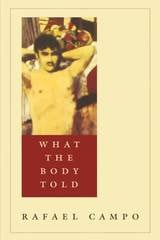
What the Body Told
Rafael Campo
Duke University Press, 1996
Lost in the Hospital
It’s not that I don’t like the hospital.
Those small bouquets of flowers, pert and brave.
The smell of antiseptic cleansers.
The ill, so wistful in their rooms, so true.
My friend, the one who’s dying, took me out
To where the patients go to smoke, IV’s
And oxygen tanks attached to them—
A tiny patio for skeletons. We shared
A cigaratte, which was delicious but
Too brief. I held his hand; it felt
Like someone’s keys. How beautiful it was,
The sunlight pointing down at us, as if
We were important, full of life, unbound.
I wandered for a moment where his ribs
Had made a space for me, and there, beside
The thundering waterfall of is heart,
I rubbed my eyes and thought “I’m lost.”
What the Mirror Said
The Necessity of Black Women in PoetryAshley M. Jones
University of Michigan Press, 2026
Part critical essay, part personal essay collection, What the Mirror Said traces the influence of nine Black women poets in Jones’s writing and life. She brings together historical biographical information, personal reflection, and close readings as she explores personal connections to poets from Phillis Wheatley to Patricia Smith. This book is expansive in its study, from classical metrical scansion to metaphorical explication. In offering new ways to interpret poems by important contemporary poets, What the Mirror Said makes the case for the need to study and celebrate Black women poets.
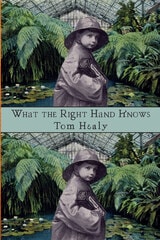
What the Right Hand Knows
Tom Healy
Four Way Books, 2009
When I Reach for Your Pulse
Rushi Vyas
Four Way Books, 2023
In this electrifying debut, lyric works to untangle slippery personal and political histories in the wake of a parent’s suicide. “When my father finally / died,” Vyas writes, “we [...] burned, / like an effigy, the voiceless body.” Grief returns us to elemental silence, where “the wind is a muted vowel in the brush of pine / branches” across American landscapes. These poems extend formal experimentation, caesurae, and enjambment to reach into the emptiness and fractures that remain. This language listens as much as it sings, asking: can we recover from the muting effects of British colonialism, American imperialism, patriarchy, and caste hierarchies? Which cultural legacies do we release in order to heal? Which do we keep alive, and which keep us alive? A monument to yesterday and a missive to tomorrow, When I Reach for Your Pulse reminds us of both the burden and the promise of inheritance. “[T]he wail outlasts / the dream,” but time falls like water and so “the stream survives its source.”
When It Rains
Tohono O'odham and Pima PoetryEdited by Ofelia Zepeda
University of Arizona Press, 1982
The poems capture brief moments of beauty, the loving bond between family members, and a deep appreciation of Tohono O’odham culture and traditions, as well as reverent feelings about the landscape and wildlife native to the Southwest. A motif of rain and water is woven throughout the poetry in When It Rains, tying in the collection’s title to the importance of this life-giving and sustaining resource to the Tohono O’odham people. With the poems in both O’odham and English, the volume serves as an important reminder of the beauty and changeability of the O’odham language.
The themes and experiences expressed by the language educators in this volume capture still-rural community life: children are still bussed for miles to school, and parents still have hours-long daily commutes to work. The Sonoran Desert also remains an important part of daily life—seasons, rain on desert plants, and sacred mountains serve as important markers.
In a new foreword to the volume, Sun Tracks editor Ofelia Zepeda reflects on how meaningful this volume was when it was first published and its continued importance. “Things have changed but many things remain the same,” writes Zepeda. “The pieces in this collection will be meaningful to many still.”
When Living Was a Labor Camp
Diana García
University of Arizona Press, 2000
"I write what I eat and smell," says Diana García, and her words are a bountiful harvest. Her poems color the page with the vibrancy and sweetness of figs, the freshness of tortillas, and the sensuality of language.
In this, García's first collection of poems, she takes a bittersweet look back at the migrant labor camps of California and offers a tribute to the people who toiled there. Writing from the heart of California's San Joaquin Valley, she catapults the reader into the lives of the campesinos with their daily joys and sorrows.
Bold, political, and familial, García's poems gift the reader with a sense of earth, struggle, and pride—each line filled with the sounds of agrarian music, from mariachi melodies to repatriation revolts. Embodied with such spirit, her poems rise with the convictions of power and equality
When There Was Light
Carlie Hoffman
Four Way Books, 2023
While Hoffman’s debut collection interrogated the mythos built around grief, inhabiting an Alaska of the mind, her stunning sophomore collection When There Was Light looks at the past for what it was.These poems map out a topography where global movements of diaspora and war live alongside personal reckonings: a house’s foreclosure, parents’ divorce, the indelible night spent drunk with a best friend “[lying] down inside a chronic row of corn.” Here, her father’s voice “is the stray dog barking / at the snow, believing the little strawberries grow wilder / against a field.” In these pages, she points to Russia and Poland and Germany, saying, “It was / another time. My people / another time. The synagogues burn decades / of new snow.” The brilliance of this collection illuminates the relationship between memory and language; “another time” means different, back then, gone and lost to us, and it means over and over, always, again. With this linguistic dexterity and lyrical tenderness, Hoffman’s work bridges private and public histories, reminding us of the years cloaked in shadows and the years when there was light.
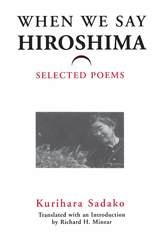
When We Say “Hiroshima”
Selected PoemsKurihara Sadako; Translated with an Introduction by Richard H. Minear
University of Michigan Press, 1999
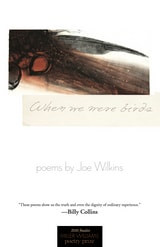
When We Were Birds
PoemsJoe Wilkins
University of Arkansas Press, 2016
Finalist, 2016 Miller Williams Poetry Prize, edited by Billy Collins
In When We Were Birds, Joe Wilkins wrests his attention away from the griefs, deprivations, and high prairies of his Montana childhood and turns toward “the bean-rusted fields & gutted factories of the Midwest,” toward ordinary injustice and everyday sadness, toward the imminent birth of his son and his own confusions in taking up the mantle of fatherhood, toward faith and grace, legacy and luck.
A panoply of voices are at play—the escaped convict, the late-night convenience store clerk, and the drowned child all have their say—and as this motley chorus rises and crests, we begin to understand something of what binds us and makes us human: while the world invariably breaks all our hearts, Wilkins insists that is the very “place / hope lives, in the breaking.”
Within a notable range of form, concern, and voice, the poems here never fail to sing. Whether praiseful or interrogating, When We Were Birds is a book of flight, light, and song. “When we were birds,” Wilkins begins, “we veered & wheeled, we flapped & looped— / it’s true, we flew.”
Winner, 2017 Stafford/Hall Award for Poetry, Oregon Book Awards
When You’re Deep in a Thing
Anthony Cappo
Four Way Books, 2022
When the Lamp is Shattered
Desire and Narrative in CatullusMichaela Janan
Southern Illinois University Press, 1993
The poetry of the Late Roman Republican poet Gaius Valerius Catullus, a rich document of the human heart, is the earliest-known reasonably complete body of erotic verse in the West.
Though approximately 116 poems survive, uncertainties about the condition of the fragmented manuscript and the narrative order of the poems make the Catullan text unusually problematic for the modern critic. Indeed, the poems can be arranged in a number of ways, making a multitude of different plots possible and frustrating the reader’s desire for narrative closure.
Micaela Janan contends that since unsatisfied desire structures both the experience of reading Catullus and its subject matter, critical interpretation of the text demands a "poetics of desire." Furthermore, postmodern critical theory, narratology, and psychoanalysis suggest a flexible concept of the "subject" as a site through which a multitude of social, cultural, and unconscious forces move. Human consciousness, Janan contends, is inherently incomplete and in a continuous process of transformation. She therefore proposes an original and provocative feminist reading of Catullus, a reading informed by theories of consciousness and desire as ancient as Plato and as contemporary as Freud and Lacan.
The Late Roman Republic in which Catullus lived, Janan reminds us, was a time of profound social upheaval when political and cultural institutions that had persisted for centuries were rapidly breaking down—a time not unlike our own. Catullus’ poetry provides an unusually honest look at his culture and its contradictory representations of class, gender, and power. By bringing to the study of this major work of classical literature the themes of consciousness and desire dealt with in postmodern scholarship, Janan’s book invites a new conversation among literary disciplines.
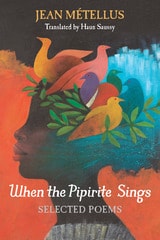
When the Pipirite Sings
Selected PoemsJean Métellus, Translated by Haun Saussy
Northwestern University Press, 2019
Translated by formidable comparative literature scholar Haun Saussy, When the Pipirite Sings expresses an acute historical consciousness and engages recurrent Haitian themes—the wrenching impact of colonialism and underdevelopment, the purposes of education, and the merging of spiritual and temporal power. And, as always with Métellus’s poetry, the range of voices and points of view evokes other genres, including fiction and cinema. This eminently readable book has formal and thematic ties to Aimé Césaire’s Notebook of a Return to the Native Land, central to the canon of French-language postcolonial writings.
In addition to many books of poetry, Métellus published novels, chiefly about the remembered Haiti of his youth, and plays about the conquest of the Caribbean. His nonfiction included reflections on Haitian history and politics, on the iconography of slave emancipation, and studies of aphasia and dyslexia.
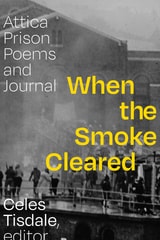
When the Smoke Cleared
Attica Prison Poems and JournalCeles Tisdale, editor
Duke University Press, 2022
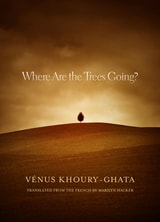
Where Are the Trees Going?
Vénus Khoury-Ghata Translated from the French by Marilyn Hacker
Northwestern University Press, 2014
Longlist finalist, 2015 PEN Award for Poetry in Translation
Bringing the work of acclaimed poet Venus Khoury-Ghata to a new generation of anglophone readers, renowned award-winning poet and translator Marilyn Hacker has rendered Khoury-Gata's highly praised collection Où vont les arbres? into unforgettable English verse. In it, Khoury-Ghata takes on perennial themes of womanhood, immigration, and cultural conflict. Characters take root in her memory as weathered trees and garden plants, lending grit and body to the imaginative collection. As bracing as the turn of seasons, Where Are the Trees Going? highlights a poet writing with renewed urgency and maturity.
Khoury-Ghata's collection has been translated into fifteen languages. In this special edition, Paris-resident Hacker has also included selections from Khoury-Ghata's short fiction collection La maison aux orties (The House of Nettles). The resulting interplay illuminates the poet’s contrasting and complementary drives toward surreal lyricism and stark narrative exposition.
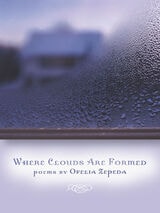
Where Clouds Are Formed
Ofelia Zepeda
University of Arizona Press, 2008
Zepeda is as clear-eyed about the past as she is about the present. She recalls waiting for the school bus on a cold morning inside her father’s truck, listening to the sounds of the engine, the windshield wipers, and the “soft rain on the hood.” She remembers celebrating Mass on the “cold dirt floor of the Winter Solstice.” In the present, she sees both the frustration and the humor in a woman she observes trying to eat pancakes with one hand while her other resides in a cast: “Watching her, I realize eating pancakes is a two-handed job.”
Whatever she sees, she filters through her second set of eyes, which keep the past always present. She tells of traveling to Waw Giwulig, the most sacred mountain of the Tohono O’odham, to ask for blessings—and forgiveness. She writes that one should always bring music to the mountains, “so they are generous with the summer rains.” And, still, “the scent of burning wood / holds the strongest memory. / Mesquite, cedar, piñon, juniper, . . . / we catch the scent of burning wood; / we are brought home.” It is a joy to see the world afresh through her eyes.
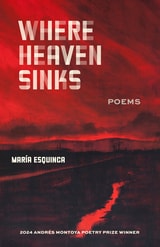
Where Heaven Sinks
PoemsMaría Esquinca
University of Nevada Press, 2025
María Esquinca delivers a searing collection of poems that traverse borders—both physical and emotional. Set against the backdrop of El Paso and Ciudad Juárez, these experimental works weave fragmented verses, striking imagery, and bold typography to confront the brutal realities of immigration and identity. With the precision of a journalist and the heart of a storyteller, Esquinca exposes injustice while celebrating resilience and hope. Her work is shaped by the intersection of cultures, histories, and experiences found in the US-Mexico borderlands. Each poem is a tribute to those who have endured and a call to challenge the systems that oppress. Where Heaven Sinks is a love letter, a memorial for those lost, and a testament to the transformative power of language.
Where She Always Was
Frannie Lindsay
Utah State University Press, 2005
White Decimal
Jean Daive
Omnidawn, 2017
White Light
The Poetry of Alberto BlancoRonald J. Friis
Bucknell University Press, 2022