Results by title
8812 books match the query 'Political Science' and 354 start with w
Way Down in the Hole
Race, Intimacy, and the Reproduction of Racial Ideologies in Solitary ConfinementAngela J. Hattery
Rutgers University Press, 2023
Way Down the Hole Video 1 (https://youtu.be/UuAB63fhge0)
Way Down the Hole Video 2 (https://youtu.be/TwEuw1cTrcQ)
Way Down the Hole Video 3 (https://youtu.be/bOcBv_UnHIs)
Way Down the Hole Video 4 (https://youtu.be/cx_l1S8D77c)
Wayne Aspinall and the Shaping of the American West
Steven C. Schulte
University Press of Colorado, 2002
In Wayne Aspinall and the Shaping of the American West, Steven C. Schulte details a political career that encompassed some of the most crucial years in the development of the twentieth-century West. As chairman of the House Interior and Insular Affairs Committee from 1959 to 1973, Aspinall shaped the nation's reclamation, land, wilderness, and natural resource policies. His crusty and dtermined personality was at the enter of some of the key environmental battles of the twentieth century, including the Echo Park Dam fight, the struggle for the Wilderness Act, and the long controversy over the Central Arizona Project.
We Alone Will Rule
Native Andean Politics in the Age of InsurgencySinclair Thomson
University of Wisconsin Press, 2003
We Always Had a Union
The New York Hotel Workers' Union, 1912-1953Shaun Richman
University of Illinois Press, 2025
From the start, New York’s organized hotel workers experimented with and adapted how they organized and governed members and related to other labor unions. Richman follows union fortunes from early IWW activity through the Communist-led affiliates of the American Federation of Labor in the 1920s and 1930s, the shaping of breakthrough negotiating strategies, and the postwar era. As Richman shows, workers adopted a radicalism and militancy seldom associated with an AFL organization while openly negotiating the Communist Party’s power and influence within the union, until the Party’s eclipse in the 1950s.
An inspiring story of action and perseverance, We Always Had a Union profiles a foundational American labor union and offers lessons for today’s workers and organizers.
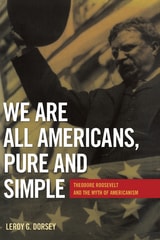
We Are All Americans, Pure and Simple
Theodore Roosevelt and the Myth of AmericanismLeroy G. Dorsey
University of Alabama Press, 2008
Redefining American identity through Roosevelt’s words.
The turn of the 20th century represented one of the most chaotic periods in the nation's history, as immigrants, Native Americans, and African Americans struggled with their roles as Americans while white America feared their encroachments on national identity. This book examines Theodore Roosevelt’s public rhetoric—speeches, essays, and narrative histories—as he attempted to craft one people out of many. Leroy G. Dorsey observes that Roosevelt's solution to the problem appeared straightforward: everyone could become "Americans, pure and simple" if they embraced his notion of "Americanism." Roosevelt grounded his idea of Americanism in myth, particularly the frontier myth—a heroic combination of individual strength and character. When nonwhites and immigrants demonstrated these traits, they would become true Americans, earning an exalted status that they had heretofore been denied.
Dorsey’s analysis illuminates how Roosevelt's rhetoric achieved a number of delicate, if problematic, balancing acts. Roosevelt gave his audiences the opportunity to accept a national identity that allowed "some" room for immigrants and nonwhites, while reinforcing their status as others, thereby reassuring white Americans of their superior place in the nation. Roosevelt’s belief in an ordered and unified nation did not overwhelm his private racist attitudes, Dorsey argues, but certainly competed with them. Despite his private sentiments, he recognized that racist beliefs and rhetoric were divisive and bad for the nation’s progress. The resulting message he chose to propagate was thus one of a rhetorical, if not literal, melting pot.
By focusing on Roosevelt’s rhetorical constructions of national identity, as opposed to his personal exploits or his role as a policy maker, We Are All Americans offers new insights into Roosevelt’s use of public discourse to bind the nation together during one of the most polarized periods in its history.
We Are Civic Media
Sangita Shresthova, Dan Sinker, Pratik Nyaupane, Sophie Madej, and Colin Maclay
Northwestern University Press, 2025
“Civic media” is the use of contemporary technologies to connect communities, inspire action, build civic capacity, and sustain social change efforts. Written by artists, creators, storytellers, organizers, and others working at the intersections of technology, social justice, and culture, this book summons civic media through the lived experiences of its contributors.
Latoya Peterson delves into the therapeutic power of gaming; Akilah Hughes discusses identity and community through the lens of her campaign to change her high school's racist mascot; and Tyree Boyd-Pates emphasizes the potential power of museum curation to challenge power dynamics and bridge digital and physical realms. Through the experiences of these grassroots practitioners and many others, We Are Civic Media offers accessible insights for those interested in understanding, respecting, and practicing civic media.

We Are Danny
Targeted Inside the WireElizabeth R. OuYang
Temple University Press, 2027
Private Danny Chen was only nineteen years old when he was found dead on a U.S. Army base in Afghanistan. His non-combat death took place under “suspicious circumstances inside the wire.” The court martials revealed that Chen faced weeks of unrelenting hazing and racial harassment by his superiors. We Are Danny is both Elizabeth OuYang’s troubling and critical account of what transpired and her memoir of Chen’s death and life, starting with his funeral.
OuYang, who led the fight for justice, narrates Chen’s story in a personal style that speaks directly to him. We Are Danny chronicles the community-based efforts to stand up to injustice where young enlistees like Chen, who fight for their country, are met with bigotry. OuYang details organizing local and national campaigns to petition the Army for a timely and thorough investigation of Chen’s death. She describes an unprecedented group meeting with high-ranking officials from the Pentagon, and recounts candlelight vigils, community protests, and the naming of Pvt. Danny Chen Way in Manhattan’s Chinatown to honor him.
There are, sadly, many Private Danny Chens. We Are Danny offers a valuable lesson on how community advocacy and demanding accountability can focus attention on needed military reforms.
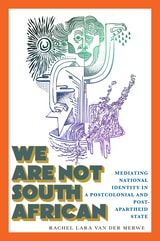
We Are Not South African
Mediating National Identity in a Postcolonial and Postapartheid StateRachel Lara van der Merwe
Rutgers University Press, 2026
We Are Not South African explores how national identity functions as a colonial tool of communication, control, and power. Author Rachel Lara van der Merwe examines how humans and the planet are integrally shaped by the idea of the nation and speculates on how different sociopolitical imaginaries, instead of the nation, could inform ways of being-together in the world.
Linking national identity to colonialism, the book broadens the idea of the nation to include its impact on all forms of life, human and more-than-human. Van der Merwe builds her argument on three central observations: that nations are made up of conflicting and fractured imaginaries, not unified, cohesive ones; the nation is divisive by nature, tracing back to its colonial origins; and the nation, along with the state, exploits both humans and more-than-humans. In order to build a more just and sustainable planetary society, she argues, liberation from such colonial formations is vital. In response, the book asks, How could we reimagine how we organize our societies through values of relationality and mutual care rather than rigid borders? What sociopolitical imaginaries do we need, or already possess, that might inform new configurations of community?
We Are Not Starving
The Struggle for Food Sovereignty in GhanaJoeva Sean Rock
Michigan State University Press, 2022
We Are the Union
Democratic Unionism and Dissent at BoeingDana L. Cloud
University of Illinois Press, 2011
We Are the Union is grounded in on-site research and interviews and focuses on the efforts by Unionists for Democratic Change to reform unions from within. Incorporating theory and methods from the fields of organizational communication as well as labor studies, Cloud methodically uncovers and analyzes the goals, strategies, and dilemmas of the dissidents who, while wanting to uphold the ideas and ideals of the union, took up the gauntlet to make it more responsive to workers and less conciliatory toward management, especially in times of economic stress or crisis. Cloud calls for a revival of militant unionism as a response to union leaders' embracing of management and training programs that put workers in the same camp as management, arguing that reform groups should look to the emergence of powerful industrial unions in the United States for guidance on revolutionizing existing institutions and building new ones that truly accommodate workers' needs.
We Begin Bombing in Five Minutes
Late Cold War Culture in the Age of ReaganAndrew Hunt
University of Massachusetts Press, 2021
We Begin Bombing in Five Minutes focuses on a striking array of protest movements that took up issues such as the nuclear arms race, U.S. intervention in Central America, and American investments in South Africa. Hunt's new history of the eighties investigates how film, television, and other facets of popular culture critiqued Washington's Cold War policies and reveals that activists and cultural rebels alike posed a more meaningful challenge to the Cold War's excesses than their predecessors in the McCarthy era.

We Cannot Escape History
Lincoln and the Last Best Hope of EarthEdited by James M. McPherson
University of Illinois Press, 1995
A who's who of Lincoln scholars explores why Lincoln considered the Union the "last best hope of earth" and how his words and deeds have continued to shape the nation through modern times. Focusing on Lincoln's view of American history and his legacy for the United States and the world, this volume demonstrates the complexity of the problems Lincoln faced and the genius of his leadership in preserving the nation while purging it of slavery.
We Cannot Forget
Interviews with Survivors of the 1994 Genocide in RwandaTotten, Samuel
Rutgers University Press, 2011
During a one-hundred-day period in 1994, Hutus murdered between half a million and a million Tutsi in Rwanda. The numbers are staggering; the methods of killing were unspeakable. Utilizing personal interviews with trauma survivors living in Rwandan cities, towns, and dusty villages, We Cannot Forget relates what happened during this period and what their lives were like both prior to and following the genocide.
Through powerful stories that are at once memorable, disturbing, and informative, readers gain a critical sense of the tensions and violence that preceded the genocide, how it erupted and was carried out, and what these people faced in the first sixteen years following the genocide.
We Cannot Remain Silent
Opposition to the Brazilian Military Dictatorship in the United StatesJames N. Green
Duke University Press, 2010
Green interviewed many of the activists who educated journalists, government officials, and the public about the abuses taking place under the Brazilian dictatorship. Drawing on those interviews and archival research from Brazil and the United States, he describes the creation of a network of activists with international connections, the documentation of systematic torture and repression, and the cultivation of Congressional allies and the press. Those efforts helped to expose the terror of the dictatorship and undermine U.S. support for the regime. Against the background of the political and social changes of the 1960s and 1970s, Green tells the story of a decentralized, international grassroots movement that effectively challenged U.S. foreign policy.
We Created Chávez
A People's History of the Venezuelan RevolutionGeo Maher
Duke University Press, 2013
Based on interviews with grassroots organizers, former guerrillas, members of neighborhood militias, and government officials, Ciccariello-Maher presents a new history of Venezuelan political activism, one told from below. Led by leftist guerrillas, women, Afro-Venezuelans, indigenous people, and students, the social movements he discusses have been struggling against corruption and repression since 1958. Ciccariello-Maher pays particular attention to the dynamic interplay between the Chávez government, revolutionary social movements, and the Venezuelan people, recasting the Bolivarian Revolution as a long-term and multifaceted process of political transformation.
We Decide!
Theories and Cases in Participatory DemocracyMichael Menser
Temple University Press, 2017
Participatory democracy calls for the creation and proliferation of practices and institutions that enable individuals and groups to better determine the conditions in which they act and relate to others. Michael Menser’s timely book We Decide! is arguably the most comprehensive treatment of participatory democracy. He explains the three waves of participatory democracy theory to show that this movement is attentive to the mechanics of contemporary political practices. Menser also outlines “maximal democracy,” his own view of participatory democracy that expands people’s abilities to shape their own lives, reduce inequality, and promote solidarity.
We Decide! draws on liberal, feminist, anarchist, and environmental justice philosophies as well as in-depth case studies of Spanish factory workers, Japanese housewives, and Brazilian socialists to show that participatory democracy actually works. Menser concludes his study by presenting a reconstructed version of the state that is shaped not by corporations but by inclusive communities driven by municipal workers, elected officials, and ordinary citizens working together. In this era of Bernie Sanders and Donald Trump, the participatory democracy proposed in We Decide! is more significant than ever.
We Do Not Have Borders
Greater Somalia and the Predicaments of Belonging in KenyaKeren Weitzberg
Ohio University Press, 2017
Though often associated with foreigners and refugees, many Somalis have lived in Kenya for generations, in many cases since long before the founding of the country. Despite their long residency, foreign and state officials and Kenyan citizens often perceive the Somali population to be a dangerous and alien presence in the country, and charges of civil and human rights abuses have mounted against them in recent years.
In We Do Not Have Borders, Keren Weitzberg examines the historical factors that led to this state of affairs. In the process, she challenges many of the most fundamental analytical categories, such as “tribe,” “race,” and “nation,” that have traditionally shaped African historiography. Her interest in the ways in which Somali representations of the past and the present inform one another places her research at the intersection of the disciplines of history, political science, and anthropology.
Given tragic events in Kenya and the controversy surrounding al-Shabaab, We Do Not Have Borders has enormous historical and contemporary significance, and provides unique inroads into debates over globalization, African sovereignty, the resurgence of religion, and the multiple meanings of being African.
We Fight To Win
Inequality and the Politics of Youth ActivismHava Rachel Gordon
Rutgers University Press, 2009
Hava Rachel Gordon compares the struggles and successes of two very different youth movements: a mostly white, middle-class youth activist network in Portland, Oregon, and a working-class network of minority youth in Oakland, California. She examines how these young activists navigate schools, families, community organizations, and the mainstream media, and employ a variety of strategies to make their voices heard on some of today's most pressing issuesùwar, school funding, the environmental crisis, the prison industrial complex, standardized testing, corporate accountability, and educational reform. We Fight to Win is one of the first books to focus on adolescence and political action and deftly explore the ways that the politics of youth activism are structured by age inequality as well as race, class, and gender.
We Have Not a Government
The Articles of Confederation and the Road to the ConstitutionGeorge William Van Cleve
University of Chicago Press, 2017
In George William Van Cleve’s book, we encounter a sharply divided America. The Confederation faced massive war debts with virtually no authority to compel its members to pay them. It experienced punishing trade restrictions and strong resistance to American territorial expansion from powerful European governments. Bitter sectional divisions that deadlocked the Continental Congress arose from exploding western settlement. And a deep, long-lasting recession led to sharp controversies and social unrest across the country amid roiling debates over greatly increased taxes, debt relief, and paper money. Van Cleve shows how these remarkable stresses transformed the Confederation into a stalemate government and eventually led previously conflicting states, sections, and interest groups to advocate for a union powerful enough to govern a continental empire.
Touching on the stories of a wide-ranging cast of characters—including John Adams, Patrick Henry, Daniel Shays, George Washington, and Thayendanegea—Van Cleve makes clear that it was the Confederation’s failures that created a political crisis and led to the 1787 Constitution. Clearly argued and superbly written, We Have Not a Government is a must-read history of this crucial period in our nation’s early life.
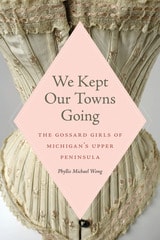
We Kept Our Towns Going
The Gossard Girls of Michigan's Upper PeninsulaPhyllis Michael Wong
Michigan State University Press, 2022
We Make Change
Community Organizers Talk About What They Do--and WhyKristin Layng Szakos
Vanderbilt University Press, 2007
We Need To Talk About Climate
How Citizens' Assemblies Can Help Us Solve The Climate CrisisGraham Smith
University of Westminster Press, 2024
Citizens’ assemblies bring the shared wisdom of ordinary people into political decision making on the climate and ecological crisis. They are increasingly being used at local, national and even global levels. But with what impact? Can they take us beyond the shortcomings of electoral and partisan politics? Can they make a real difference? This book explains why climate assemblies have captured the imagination of governments and activists alike, exploring the ways they can have a meaningful impact on climate politics.
This book charts the development of climate assemblies across Europe and beyond. It explores what ordinary people want, highlighting the ways in which assembly recommendations take us beyond current government policies and offer new visions and directions for change. It shows that not all assemblies are the same and that the context and design of climate assemblies have differed quite profoundly – as have their impacts on policy and public discourse. The book also lays out the key elements needed for climate assemblies to have sustained impact, providing essential insights for anyone wanting to run or advocate for them, and concludes with reflections on what we can expect from assemblies as they evolve.
The transition to net zero and climate resilient societies requires deep social and economic transformations that will have significant impacts on citizens’ choices and behaviours. Such a transition needs to engage the public directly and this book shows how climate assemblies can achieve this, allowing us to address the issues we all face together.
We Need To Talk About Climate
How Citizens' Assemblies Can Help Us Solve The Climate CrisisGraham Smith
University of Westminster Press, 2024
Citizens’ assemblies bring the shared wisdom of ordinary people into political decision making on the climate and ecological crisis. They are increasingly being used at local, national and even global levels. But with what impact? Can they take us beyond the shortcomings of electoral and partisan politics? Can they make a real difference? This book explains why climate assemblies have captured the imagination of governments and activists alike, exploring the ways they can have a meaningful impact on climate politics.
This book charts the development of climate assemblies across Europe and beyond. It explores what ordinary people want, highlighting the ways in which assembly recommendations take us beyond current government policies and offer new visions and directions for change. It shows that not all assemblies are the same and that the context and design of climate assemblies have differed quite profoundly – as have their impacts on policy and public discourse. The book also lays out the key elements needed for climate assemblies to have sustained impact, providing essential insights for anyone wanting to run or advocate for them, and concludes with reflections on what we can expect from assemblies as they evolve.
The transition to net zero and climate resilient societies requires deep social and economic transformations that will have significant impacts on citizens’ choices and behaviours. Such a transition needs to engage the public directly and this book shows how climate assemblies can achieve this, allowing us to address the issues we all face together.
We Shall Be Free!
Black Communist Protests in Seven VoicesWalter T. Howard
Temple University Press, 2013
Howard draws on FBI files, Moscow documents, and the records of the U.S. Communist Party. He surveys these black Communists addressing a wide range of vital issues such as the Great Depression, World War II, genocide and the Cold War.
We Shall Be Free! presents an important section of the African American community whose thought has been minimized, discounted, or overlooked altogether by the historical profession in general.
We Shall Bear Witness
Life Narratives and Human RightsEdited by Meg Jensen and Margaretta Jolly, Foreword by Mary Robinson
University of Wisconsin Press, 2014
In We Shall Bear Witness, editors Meg Jensen and Margaretta Jolly assemble moving personal accounts from those who have endured persecution, imprisonment, and torture; meditations on experiences of injustice and protest by creative writers and filmmakers; and innovative research on ways that digital media, commodification, and geopolitics are shaping what is possible to hear and say. The book’s primary sections—testimony, recognition, representation, and justice—evoke the key stages in turning experience into a human rights life story and attend to such diverse and varied arts as autobiography, documentary film, report, oral history, blog, and verbatim theater. The result is a groundbreaking book that sensitively examines how life and rights narratives have become so powerfully entwined. Also included is an innovative guide to teaching human rights and life narrative in the classroom.
We Take Care of Our Own
Faith, Class, and Politics in the Art of Bruce SpringsteenJune Skinner Sawyers
Rutgers University Press, 2024
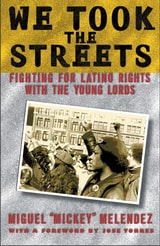
We Took the Streets
Fighting for Latino Rights with the Young LordsMiguel "Mickey" Melendez
Rutgers University Press, 0
In this memoir, Melendez describes with the unsparing eye of an insider the idealism, anger, and vitality of the Lords as they rose to become the most respected and powerful voice of Puerto Rican empowerment in the country. He also traces the internal ideological disputes that led the group, but not the mission, to fracture in 1972. Written with passion and compelling detail, We Took the Streets tells the story of how one group took on the establishment—and won.
In 1968 Miguel “Mickey” Melendez was a college student, developing pride in his Cuban and Puerto Rican cultural identity and becoming increasingly aware of the effects of social inequality on Latino Americans. Joining with other like-minded student activists, Melendez helped form the central committee of the New York branch of the Young Lords, one of the most provocative and misunderstood radical groups to emerge during the 1960s. Incorporating techniques of direct action and community empowerment, the Young Lords became a prominent force in the urban northeast. From their storefront offices in East Harlem, they defiantly took back the streets of El Barrio. In addition to running clothing drives, day-care centers, and food and health programs, they became known for their media-savvy tactics and bold actions, like the takeovers of the First People’s Church and Lincoln Hospital.
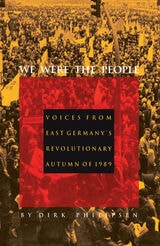
We Were the People
Voices from East Germany’s Revolutionary Autumn of 1989Dirk Philipsen
Duke University Press, 1993
The drama We Were the People recreates is remarkable for its richness and complexity. Here are citizens organizing despite threats of bloody crackdowns; party functionaries desperately trying to survive as time-honored political prerogatives crumble beneath their feet; an oppressed people discovering the possibilities of power and freedom, but also the sobering strangeness of new political realities. With their success, East Germans encountered the overpowering might of thie Western neighbor--and stand perplexed before the onslaught of real estate agents, glossy consumer ads, political professionalism--and the discovery that a lifetime of social experience has suddenly lost all usable context. They became, in the words of one participant, a people "without biography."
Over all the recent events and unlikely turns recounted here, one thing remains paramount: the sweep of the initial democratic conception that animated the East German revolution. We Were the People brings this movement to life in all its drama and detail, and vividly recovers a historic moment that altered forever the shape of modern Europe.
Some Voices of the People
Bärbel Bohley/ "Mother of the Revolution"
Rainer Eppelmann/ Protestant Pastor
Klaus Kaden/ Church Emissary to the Opposition
Hans Modrow/ Former Communist Prime Minister
Ludwig Mehlhorn/ Opposition Theorist
Ingrid Köppe/ Opposition Representative
Frank Eigenfeld/ New Forum
Harald Wagner/ Democracy Now
Sebastian Pflugbeil/ Democratic Strategist
East German Workers
Cornelia Matzke/ Independent Women's Alliance
André Brie/ Party Vice-Chairman
Gerhard Ruden/ Environmental Activist
Werner Bramke/ Party Academic
We are the People
The Rise of the AfD in GermanyPenny Bochum
Haus Publishing, 2020
We are the People analyzes the sudden growth and radicalization of the AfD, from its Euroskeptic beginnings in 2013 to its increasing extremism. Penny Bochum shows us how the leaders’ use of inflammatory, xenophobic, and even Nazi-era language mirrors that of emerging far-right forces across much of the Western world. At the same time, through a lucid examination of the group’s ideology, Bochum shows how their brand of populism is distinct and based on German experiences and history.
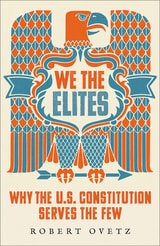
We the Elites
Why the US Constitution Serves the FewRobert
Pluto Press, 2022
An adroit collection of essays exposing the constitution for what it really is – a rulebook to protect capitalism for the elites.
Written by 55 of the richest white men of early America, and signed by only 39 of them, the constitution is the sacred text of American nationalism. Popular perceptions of it are mired in idolatry, myth, and misinformation - many Americans have opinions on the constitution but have no idea what’s in it.
The misplaced faith of social movements in the constitution as a framework for achieving justice actually obstructs social change - incessant lengthy election cycles, staggered terms, and legislative sessions have kept social movements trapped in a redundant loop. This stymies progress on issues like labor rights, public health, and climate change, projecting the American people and the rest of the world towards destruction.
Robert Ovetz’s reading of the constitution shows that the system isn’t broken. Far from it. It works as it was designed.
We're Here to Help
When Guardianship Goes WrongDiane Dimond
Brandeis University Press, 2023
The state-run guardianship system, called conservatorship in some states, is largely unregulated, ill-understood, and increasingly populated by financially motivated predators. Just how the secretive world of guardianship works and its real-life effects remained a mystery to most until the very public case of pop star Britney Spears. It suddenly became clear that those conscripted into the system lose all their civil rights in the process. Currently, there are an estimated 1.5 to 2 million Americans under court control, but precise figures are not known as no government entity keeps track of citizens who have lost the right to determine their own fate.
Established in the late 1800s, the guardianship system was designed to assist the most vulnerable citizens: the elderly and the physically or intellectually disabled. While guardianship has been beneficial to many “wards of the court,” this little-understood process can be a judicial rollercoaster from which there is seldom an escape, and which often leads to financial devastation for the ward and their families. Each year, fifty billion dollars belonging to wards are placed under the control of court appointees, an obvious temptation to bad actors who are in a position to control these funds. As investigative journalist Diane Dimond discovers, the number of exploitive and abusive guardianship cases nationwide demands our urgent attention. This book also provides concrete steps that families can take to protect themselves, as guardianship can happen to any one of us at any time.
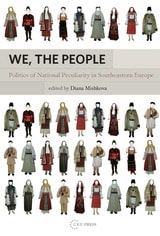
We, the People
Politics of National Peculiarity in Southeastern EuropeDiana Mishkova
Central European University Press, 2009
We
Reviving Social HopeRonald Aronson
University of Chicago Press, 2017
Beneath today’s crisis Aronson examines our heartbreaking story: a century of catastrophic violence and the bewildering ambiguity of progress—all of which have contributed to the evaporation of social hope. As he shows, we are now in a time when hope is increasingly privatized, when—despite all the ways we are connected to each other—we are desperately alone, struggling to weather the maelstrom around us, demoralized by the cynicism that permeates our culture and politics, and burdened with finding personal solutions to social problems.
Yet, Aronson argues, even at a time when false hopes are rife, social hope still persists. Carefully exploring what we mean when we say we “hope” and teasing hope apart from its dangerously misconstrued sibling, “progress,” he locates seeds of real change. He argues that always underlying our experience—even if we completely ignore it—is the fact of our social belonging, and that this can be reactivated into a powerful collective force, an active we. He looks to various political movements, from the massive collective force of environmentalists to the movements around Sanders and Jeremy Corbyn, as powerful examples of socially energized, politically determined, and actionably engaged forms of hope. Even in this age of Donald Trump, the result is an illuminating and inspiring call that anyone can clearly hear: we can still create a better future for everyone, but only if we resist false hopes and act together.
WeChat and the New Chinese American
Jingsi Christina Wu
Temple University Press, 2027
The social media platform WeChat has had a subtle but meaningful influence within the Chinese immigrant community in America. It serves as a channel for dispensing political information and keeping this minority racial group connected.
WeChat and the New Chinese American examines how and why the platform, which originated in China and followed many recent immigrants to their new life in America, has become an indispensable source of communication, community access, and interconnection not just between immigrants, but also with China and the rest of the Chinese diaspora.
Jingsi Christina Wu conducts interviews with upper-middle-class Chinese immigrants who settled in America after 2000 to track general trends in the larger WeChat information and opinion environment, including its rise as a source of political discourse during the 2016 election and beyond and its impact on U.S.-China relations. In doing so, she tells a complicated, evolving story about Chinese and Chinese American populations, the changing media landscape, and the ongoing social division in the Chinese immigrant community as well as in the larger American society.

Weapon of the Strong
Conversations on US State TerrorismJon Bailes and Cihan Aksan
Pluto Press, 2012
Weapon of the Strong analyses the forms of US state terrorism through exclusive, never before published interviews with leading commentators and theorists, including Noam Chomsky, Edward S. Herman, Richard A. Falk, Judith Butler, Ted Honderich, Norman Finkelstein and Gilbert Achcar. The interviews explore the different aspects of state terrorism: its functions, institutional supports and the legal and moral arguments surrounding it, and consider specific case studies in Europe, Latin America and the Middle East.
Weapon of the Strong makes an indispensable contribution to contemporary debates on terrorism and constructs a damning critique of US foreign policy from World War Two to the present day.

Weapons of Choice
The Development of Precision Guided MunitionsPaul G. Gillespie
University of Alabama Press, 2006
A military history study that traces the development of precision‑guided munitions from World War I through the Gulf War, examining how advances in weapons technology reshaped air power, military strategy, and U.S. national security policy.
In the United States, efforts to develop precision guided munitions—PGMs—began during the First World War and resulted in an 'aerial torpedo' by the 1920s. While World War II was dominated by large-scale strategic bombing—essentially throwing out tons of free-falling munitions in the hope they hit something important—both sides in the war worked to develop airborne munitions that could be steered toward a target. However after that war, U.S. national security policy focused on the atomic bomb, hardly a weapon that needed to be directed with accuracy.
The cost of emphasis on atomic weapons was revealed in the general unsuitability of American tactics and weapons deployment systems during the Vietnam War. Lessons learned in that conflict, coupled with rapid technological developments in aerodynamics, lasers, and solid-state electronics, brought air power dramatically closer to the "surgical strike" now seen as crucial to modern warfare. New technology created attractive choices and options for American policymakers as well as field commanders, and events in the Arab-Israeli wars, the U.S. raid on Libya, and most dramatically in the first Gulf War created an ever-increasing demand for the precision weapons.
The prospect of pinpoint delivery of weapons right to the enemy's door by speeding aircraft seems to presage war in which the messy and politically risky deployment of ground troops is unnecessary. The potential of such weapons, and their strategic limitations, made the Gulf War and Iraqi War living theater for assessing what such weapons can and cannot do and have important implications for planning for future warfare.

Weapons of the People
The Culture and Politics of Guns in Modern ChinaLei Duan
University of Michigan Press, 2027
Why did a country that once mobilized millions of armed civilians become one of the most tightly regulated gun societies in the world? Weapons of the People traces the history of private gun ownership in modern China, from the late Qing dynasty to the early People’s Republic of China. Far from being rare, firearms were once embedded in everyday life, used for self-defense, social status, and political struggle. At the same time, government policies toward civilian arms were often inconsistent. These inconsistencies extended beyond uneven enforcement to include shifting official attitudes toward unsanctioned armed groups. The Chinese Communist Party’s treatment of armed individuals and groups repeatedly adapted to changing political conditions and strategic needs.
Drawing on extensive archival research, as well as published documents, legal cases, and personal accounts, Lei Duan reconstructs the social life of firearms and their shifting political meanings across different regimes. By uncovering these patterns of diversity in firearm ownership and inconsistency in government policy, this book highlights the complex interplay between firearms, society, and the state in modern Chinese history. This study invites readers to reconsider the role of firearms in shaping China’s modern trajectory and to challenge conventional understandings of the nation’s sociopolitical landscape. Duan offers a new prism through which to examine state-society relations in modern China.
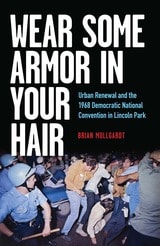
Wear Some Armor in Your Hair
Urban Renewal and the 1968 Democratic National Convention in Lincoln ParkBrian Mullgardt
Southern Illinois University Press, 2024
WINNER, 2025 Illinois State Historical Society Russell P. Strange Book of the Year Award!
Police brutality, gentrification, and grassroots activism in 1960s Chicago
In August of 1968, approximately 7,000 people protested the Vietnam War against the backdrop of the Democratic National Convention in Chicago. This highly televised event began peacefully but quickly turned into what was later termed a “police riot.” Brian Mullgardt’s investigation of this event and the preceding tensions shines a light on the ministers, Yippies, and community members who showed up and stood together against the brutality of the police. Charting a complex social history, Wear Some Armor in Your Hair brings together Chicago history, the 1960s, and urbanization, focusing not on the national leaders, but on the grassroots activists of the time.
Beginning in 1955, two competing visions of urban renewal existed, and the groups that propounded each clashed publicly, but peacefully. One group, linked to city hall, envisioned a future Lincoln Park that paid lip service to diversity but actually included very little. The other group, the North Side Cooperative Ministry, offered a different vision of Lincoln Park that was much more diverse in terms of class and race. When the Yippies announced anti-war protests for the summer of ‘68, the North Side Cooperative Ministry played an instrumental role. Ultimately, the violence of that week altered community relations and the forces of gentrification won out.
Mullgardt’s focus on the activists and community members of Lincoln Park, a neighborhood at the nexus of national trends, broadens the scope of understanding around a pivotal and monumental chapter of our history. The story of Lincoln Park, Chicago, is in many ways the story of 1960s activism writ small, and in other ways challenges us to view national trends differently.
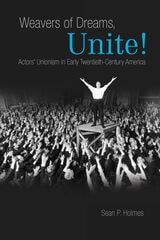
Weavers of Dreams, Unite!
Actors' Unionism in Early Twentieth-Century AmericaSean P. Holmes
University of Illinois Press, 2013
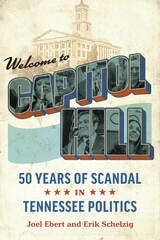
Welcome to Capitol Hill
Fifty Years of Scandal in Tennessee PoliticsJoel Ebert and Erik Schelzig
Vanderbilt University Press, 2023
Veteran political reporters Joel Ebert and Erik Schelzig draw from interviews, archival documents, and never-before-seen federal investigative files to provide readers with a handy resource about the wrongdoings of our elected officials.

Welcome to Capitol Hill
Fifty Years of Scandal in Tennessee PoliticsJoel Ebert and Erik Schelzig
Vanderbilt University Press, 2024
Veteran political reporters Joel Ebert and Erik Schelzig draw from interviews, archival documents, and never-before-seen federal investigative files to provide readers with a handy resource about the wrongdoings of our elected officials.
Welcoming New Americans?
Local Governments and Immigrant IncorporationAbigail Fisher Williamson
University of Chicago Press, 2018
Abigail Fisher Williamson explores why and how local governments across the country are taking steps to accommodate immigrants, sometimes despite serious political opposition. Drawing on case studies of four new immigrant destinations—Lewiston, Maine; Wausau, Wisconsin; Elgin, Illinois; and Yakima, Washington—as well as a national survey of local government officials, she finds that local capacity and immigrant visibility influence whether local governments take action to respond to immigrants. State and federal policies and national political rhetoric shape officials’ framing of immigrants, thereby influencing how municipalities respond. Despite the devolution of federal immigration enforcement and the increasingly polarized national debate, local officials face on balance distinct legal and economic incentives to welcome immigrants that the public does not necessarily share. Officials’ efforts to promote incorporation can therefore result in backlash unless they carefully attend to both aiding immigrants and increasing public acceptance. Bringing her findings into the present, Williamson takes up the question of whether the current trend toward accommodation will continue given Trump’s anti-immigrant rhetoric and changes in federal immigration policy.
Welfare Discipline
Discourse, Governance and GlobalizationSanford F. Schram
Temple University Press, 2005
In Welfare Discipline, Schram argues that it is time to take stock of the new forms of welfare and to develop even better methods to understand them. He argues for a more contextualized approach to examining welfare policy, from the use of the idea of globalization to justify cutbacks, to the increasing employment of U.S. policy discourse overseas, to the development of asset-based approaches to helping the poor.
Stressing the importance of understanding the ways we talk about welfare, how we study it, and, critically, what we do not discuss and why, Schram offers recommendations for making welfare policy both just and effective.
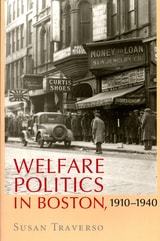
Welfare Politics in Boston, 1910-1940
Susan Traverso
University of Massachusetts Press, 2009
Between 1910 and 1940, Boston's growing immigrant population repeatedly clashed with the city's traditional elite over how to provide assistance to the needy. While Yankee politicians and the leaders of Protestant charities argued that relief should be delivered by private organizations, Irish politicians and officials at Catholic and Jewish charities advocated extensive public welfare programs. Competing views of gender roles further complicated these disagreements. The campaign for widows' pensions, for example, won wide popular support even as public welfare programs that would primarily benefit men-such as unemployment insurance and old age assistance-failed to gain acceptance.
In the 1920s, the debate over welfare shifted focus as prolonged periods of unemployment brought demands for aid to men who had lost their jobs, particularly those with families to support. Using the rhetoric of the Mothers' Aid campaign, Irish politicians broadened the idea of "acceptable dependency" to include men who needed jobs to provide for their own dependents. By lessening the stigma of male dependency on public welfare, these gendered arguments encouraged the expansion of public aid and set the stage for New Deal welfare programs of the 1930s. During that decade, Traverso contends, the idealized family headed by a male breadwinner became the basis for a shared vision of gender relations that mediated the political and ethnic debate over welfare policy.
Welfare Reform and Political Theory
Lawrence M. Mead
Russell Sage Foundation, 2005
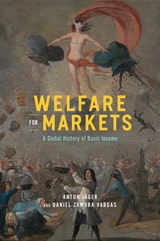
Welfare for Markets
A Global History of Basic IncomeAnton Jäger and Daniel Zamora Vargas
University of Chicago Press, 2023
A sweeping intellectual history of the welfare state’s policy-in-waiting.
The idea of a government paying its citizens to keep them out of poverty—now known as basic income—is hardly new. Often dated as far back as ancient Rome, basic income’s modern conception truly emerged in the late nineteenth century. Yet as one of today’s most controversial proposals, it draws supporters from across the political spectrum.
In this eye-opening work, Anton Jäger and Daniel Zamora Vargas trace basic income from its rise in American and British policy debates following periods of economic tumult to its modern relationship with technopopulist figures in Silicon Valley. They chronicle how the idea first arose in the United States and Europe as a market-friendly alternative to the postwar welfare state and how interest in the policy has grown in the wake of the 2008 credit crisis and COVID-19 crash.
An incisive, comprehensive history, Welfare for Markets tells the story of how a fringe idea conceived in economics seminars went global, revealing the most significant shift in political culture since the end of the Cold War.
Welfare in America
How Social Science Fails the PoorWilliam M. Epstein
University of Wisconsin Press, 1997
William M. Epstein charges that most current social welfare programs are not held to credible standards in their design or their results. Rather than spending less on such research and programs, however, Epstein suggests we should spend much more, and do the job right.
The American public and policymakers need to rely on social science research for objective, credible information when trying to solve problems of employment, affordable housing, effective health care, and family integrity. But, Epstein contends, politicians treat welfare issues as ideological battlegrounds; they demand immediate results from questionable data and implement policies long before social researchers can complete their analyses. Social scientists often play into the political agenda, supporting poorly conceived programs and doing little to test and revise them. Analyzing Aid to Families with Dependent Children (AFDC) and the recent welfare reform act, Food Stamps, Medicaid, job training, social services, and other programs, Epstein systematically challenges the conservative’s vain hope that neglect is therapeutic for the poor, as well as the liberal’s conceit that a little bit of assistance is sufficient.
West African Challenge To Empire
Culture and History in the Volta-Bani Anticolonial WarMahir Saul
Ohio University Press, 2002
West African Challenge to Empire examines the anticolonial war in the Volta and Bani region in 1915–16. It was the largest challenge that the French ever faced in their West African colonial empire, and one of the largest armed oppositions to colonialism anywhere in Africa. How such a movement could be organized in the face of European technological superiority despite the fact that this region is generally described as having consisted of rival villages and descent groups is a puzzle. In this jointly written book the two authors provide a detailed political and military history of this event based on archival research and ethnographic fieldwork. Using cultural and sociological analysis, it probes the origins of the movement, its internal organization, its strategy, and the reasons for its initial success and why it spread.
In 2001 the authors of West African Challenge to Empire were awarded the Amaury Talbot Prize for African Anthropology by the Royal Anthropological Institute.

Western Window in the Arab World
By Leon Borden Blair
University of Texas Press, 1970
Since November 8, 1942, when American troops in Operation Torch first landed on the beaches of North Africa, almost a million Americans—military personnel and their dependents—have lived in Morocco. Their impact on the political and social evolution of Morocco has been significant, but historians and political scientists before this book had made little effort to chart its course or to assess its outcome.
The naval base at Port Lyautey in Morocco was the first foreign base captured by American troops in World War II, and United States objectives in Morocco continued to be primarily military. In 1942, as the price for French support against the Axis, the United States pledged its support for the restoration of the prewar French colonial empire. In 1950, faced with the threat of Soviet aggression, the United States negotiated an agreement with France and built four United States Air Force bases in Morocco without consultation with or notification of the Moroccan government.
In spite of its sterile diplomatic policy and both Communist and Moroccan nationalist demands for evacuation of United States military bases, the United States retained essential military facilities in Morocco for many years. Leon Blair concludes that American military personnel and their dependents favorably conditioned Moroccan public opinion. By their egalitarianism, humanitarianism, and evident interest, they reinforced the idealistic image of the United States that was held by the majority of Moroccans.
These Americans were neither individually nor collectively conscious agents in a campaign to modify Moroccan public opinion; they were simply a Western window in the Arab world, through which two civilizations might view one another. In the long run, they made a greater contribution in peace than in war.
What Animals Teach Us about Politics
Brian Massumi
Duke University Press, 2014