Results by title
3064 books match the query 'Social conditions' and 133 start with w
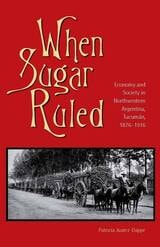
When Sugar Ruled
Economy and Society in Northwestern Argentina, Tucumán, 1876–1916Patricia Juarez-Dappe
Ohio University Press, 2010
Two tropical commodities—coffee and sugar—dominated Latin American export economies in the nineteenth and early twentieth centuries. When Sugar Ruled: Economy and Society in Northwestern Argentina, Tucumán, 1876–1916 presents a distinctive case that does not quite fit into the pattern of many Latin American sugar economies.
During the last quarter of the nineteenth century, the province of Tucumán emerged as Argentina’s main sugar producer, its industry catering almost exclusively to the needs of the national market and financed mostly by domestic capital. The expansion of the sugar industry provoked profound changes in Tucumán’s economy as sugar specialization replaced the province’s diversified productive structure. Since ingenios relied on outside growers for the supply of a large share of the sugarcane, sugar production did not produce massive land dispossession and resulted in the emergence of a heterogeneous planter group. The arrival of thousands of workers from neighboring provinces during the harvest season transformed rural society dramatically. As the most dynamic sector in Tucumán’s economy, revenues from sugar enabled the provincial government to participate in the modernizing movement sweeping turn-of-the-century Argentina.
Patricia Juarez-Dappe uncovers the unique features that characterized sugar production in Tucumán as well as the changes experienced by the province’s economy and society between 1876 and 1916, the period of most dramatic sugar expansion. When Sugar Ruled is an important addition to the literature on sugar economies in Latin America and Argentina.
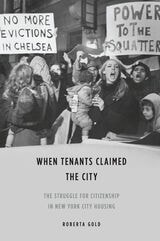
When Tenants Claimed the City
The Struggle for Citizenship in New York City HousingRoberta Gold
University of Illinois Press, 2014
In postwar America, not everyone wanted to move out of the city and into the suburbs. For decades before World War II, New York's tenants had organized to secure renters' rights. After the war, tenant activists raised the stakes by challenging the newly-dominant ideal of homeownership in racially segregated suburbs. They insisted that renters as well as owners had rights to stable, well-maintained homes, and they proposed that racially diverse urban communities held a right to remain in place--a right that outweighed owners' rights to raise rents, redevelop properties, or exclude tenants of color. Further, the activists asserted that women could participate fully in the political arenas where these matters were decided.
Grounded in archival research and oral history, When Tenants Claimed the City: The Struggle for Citizenship in New York City Housing shows that New York City's tenant movement made a significant claim to citizenship rights that came to accrue, both ideologically and legally, to homeownership in postwar America. Roberta Gold emphasizes the centrality of housing to the racial and class reorganization of the city after the war; the prominent role of women within the tenant movement; and their fostering of a concept of "community rights" grounded in their experience of living together in heterogeneous urban neighborhoods.

When This Evil War is Over
The Correspondence of the Francis FamilyJames P. Pate
University of Alabama Press, 2006
Six of the seven Francis brothers served in the Confederate army, as did their uncle, four servants, and other kinsmen, and all twelve members of the immediate family of Dr. James Carrington Francis and Amy Ingram Francis—as well as several members of their extended family—are represented in this volume. While the letters refer to the war and the brothers’ military service, they also shed light on this family’s struggle to survive the profound cultural, economic, and political upheaval that ensued.

When We Imagine Grace
Black Men and Subject MakingSimone C. Drake
University of Chicago Press, 2016
In When We Imagine Grace, Drake borrows from Toni Morrison’s Beloved to bring imagination to the center of black masculinity studies—allowing individual black men to exempt themselves and their fates from a hateful, ignorant society and open themselves up as active agents at the center of their own stories. Against a backdrop of crisis, Drake brings forth the narratives of black men who have imagined grace for themselves. We meet African American cowboy, Nat Love, and Drake’s own grandfather, who served in the first black military unit to fight in World War II. Synthesizing black feminist and black masculinity studies, Drake analyzes black fathers and daughters, the valorization of black criminals, the black entrepreneurial pursuits of Marcus Garvey, Berry Gordy, and Jay-Z, and the denigration and celebration of gay black men: Cornelius Eady, Antoine Dodson, and Kehinde Wiley. With a powerful command of its subjects and a passionate dedication to hope, When We Imagine Grace gives us a new way of seeing and knowing black masculinity—sophisticated in concept and bracingly vivid in telling.
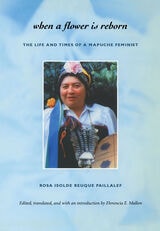
When a Flower Is Reborn
The Life and Times of a Mapuche FeministRosa Isolde Reuque Paillalef, Edited, translated, and with an introduction by Florencia E. Mallon
Duke University Press, 2002
A leading activist during the Pinochet dictatorship, Reuque—a woman, a Catholic, and a Christian Democrat—often felt like an outsider within the male-dominated, leftist Mapuche movement. This sense of herself as both participant and observer allows for Reuque’s trenchant, yet empathetic, critique of the Mapuche ethnic movement and of the policies regarding indigenous people implemented by Chile’s post-authoritarian government. After the 1990 transition to democratic rule, Reuque collaborated with the government in the creation of the Indigenous Development Corporation (CONADI) and the passage of the Indigenous Law of 1993. At the same time, her deepening critiques of sexism in Chilean society in general, and the Mapuche movement in particular, inspired her to found the first Mapuche feminist organization and participate in the 1996 International Women’s Conference in Beijing. Critical of the democratic government’s inability to effectively address indigenous demands, Reuque reflects on the history of Mapuche activism, including its disarray in the early 1990s and resurgence toward the end of the decade, and relates her hopes for the future.
An important reinvention of the testimonial genre for Latin America’s post-authoritarian, post-revolutionary era, When a Flower Is Reborn will appeal to those interested in Latin America, race and ethnicity, indigenous people’s movements, women and gender, and oral history and ethnography.
When the Light Is Fire
Maasai Schoolgirls in Contemporary KenyaHeather D. Switzer
University of Illinois Press, 2018
Heather D. Switzer's interviews with over one hundred Kenyan Maasai schoolgirls challenge the widespread view of education as a silver bullet solution to global poverty. In their own voices, the girls offer incisive insights into their commitments, aspirations, and desires. Switzer weaves this ethnographic material into an astute analysis of historical literature, education and development documents, and theoretical literature. Maasai schoolgirls express a particular knowledge about themselves and provocative hopes for their futures. Yet, as Switzer shows, new opportunities force them to face, and navigate, new vulnerabilities and insecurities within a society that is itself in flux.
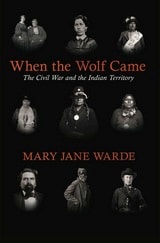
When the Wolf Came
The Civil War and the Indian TerritoryMary Jane Warde
University of Arkansas Press, 2013
Winner of the 2014 Pate Award from the Fort Worth Civil War Round Table.
When the peoples of the Indian Territory found themselves in the midst of the American Civil War, squeezed between Union Kansas and Confederate Texas and Arkansas, they had no way to escape a conflict not of their choosing--and no alternative but to suffer its consequences. When the Wolf Came explores how the war in the Indian Territory involved almost every resident, killed many civilians as well as soldiers, left the country stripped and devastated, and cost Indian nations millions of acres of land. Using a solid foundation of both published and unpublished sources, including the records of Cherokee, Choctaw, and Creek nations, Mary Jane Warde details how the coming of the war set off a wave of migration into neighboring Kansas, the Red River Valley, and Texas. She describes how Indian Territory troops in Unionist regiments or as Confederate allies battled enemies--some from their own nations--in the territory and in neighboring Kansas, Missouri, and Arkansas. And she shows how post-war land cessions forced by the federal government on Indian nations formerly allied with the Confederacy allowed the removal of still more tribes to the Indian Territory, leaving millions of acres open for homesteads, railroads, and development in at least ten states. Enhanced by maps and photographs from the Oklahoma Historical Society's photographic archives, When the Wolf Came will be welcomed by both general readers and scholars interested in the signal public events that marked that tumultuous era and the consequences for the territory's tens of thousands of native peoples.
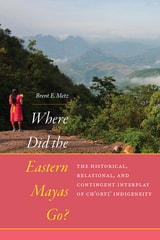
Where Did the Eastern Mayas Go?
The Historical, Relational, and Contingent Interplay of Ch’orti’ Indigeneityby Brent E. Metz
University Press of Colorado, 2022
Copublished with the Institute for Mesoamerican Studies, University of Albany
In Where Did the Eastern Mayas Go? Brent E. Metz explores the complicated issue of who is Indigenous by focusing on the sociohistorical transformations over the past two millennia of the population currently known as the Ch’orti’ Maya. Epigraphers agree that the language of elite writers in Classic Maya civilization was Proto-Ch’olan, the precursor of the Maya languages Ch’orti’, Ch’olti’, Ch’ol, and Chontal. When the Spanish invaded in the early 1500s, the eastern half of this area was dominated by people speaking various dialects of Ch’olti’ and closely related Apay (Ch’orti’), but by the end of the colonial period (1524–1821) only a few pockets of Ch’orti’ speakers remained.
From 2003 to 2018 Metz partnered with Indigenous leaders to conduct a historical and ethnographic survey of Ch’orti’ Maya identity in what was once the eastern side of the Classic period lowland Maya region and colonial period Ch’orti’-speaking region of eastern Guatemala, western Honduras, and northwestern El Salvador. Today only 15,000 Ch’orti’ speakers remain, concentrated in two municipalities in eastern Guatemala, but since the 1990s nearly 100,000 impoverished farmers have identified as Ch’orti’ in thirteen Guatemalan and Honduran municipalities, with signs of Indigenous revitalization in several Salvadoran municipalities as well. Indigenous movements have raised the ethnic consciousness of many non-Ch’orti’-speaking semi-subsistence farmers, or campesinos. The region’s inhabitants employ diverse measures to assess identity, referencing language, history, traditions, rurality, “blood,” lineage, discrimination, and more.
Where Did the Eastern Mayas Go? approaches Indigenous identity as being grounded in historical processes, contemporary politics, and distinctive senses of place. The book is an engaged, activist ethnography not on but, rather, in collaboration with a marginalized population that will be of interest to scholars of the eastern lowland Maya region, indigeneity generally, and ethnographic experimentation.

Where I Must Go
A NovelAngela Jackson
Northwestern University Press, 2009
Lyrical, penetrating, and highly charged, this novel displays a delicately tuned sense of difference and belonging. Poet Angela Jackson brings her superb sense of language and of human possibility to the story of young Magdalena Grace, whose narration takes readers through both privilege and privation at the time of the American civil rights movement.
The novel moves from the privileged yet racially exclusive atmosphere of the fictional Eden University to the black neighborhoods of a Midwestern city and to ancestral Mississippi. Magdalena’s story includes a wide range of characters—black and white, male and female, favored with opportunity or denied it, the young in love and elders wise with hope. With and through each other, they struggle to understand the history they are living and making. With dazzling perceptiveness, Jackson’s narrator Magdalena tells of the complex interactions of people around her who embody the personal and the political at a crucial moment in their own lives and in the making of America.

Where the Hood At?
Fifty Years of Change in Black NeighborhoodsMichael C. Lens
Russell Sage Foundation, 2024
Hip hop music was born out of Black neighborhoods in the 1970s and has evolved alongside them. In Where the Hood At? Lens uses rap’s growth and influence across the country to frame discussions about the development and conditions of Black neighborhoods. Lens finds that social and economic improvement in Black neighborhoods since the 1970s has been slow. However, how well Black neighborhoods are doing varies substantially by region. Overall, Black neighborhoods in the South are doing well and growing quickly. Washington D.C. and Atlanta, in particular, stand out as centers of Black affluence. Black neighborhoods in the Midwest and the Rust Belt, on the other hand, are particularly disadvantaged. The welfare of Black neighborhoods is related not only to factors within neighborhoods, such as the unemployment rate, but also to characteristics of the larger metropolitan area, such as overall income inequality. Lens finds that while gentrification is increasingly prevalent, it is growing slowly, and is not as pressing an issue as public discourse would make it seem. Instead, concentrated disadvantage is by far the most common and pressing problem in Black neighborhoods.
Lens argues that Black neighborhoods represent urban America’s greatest policy failures, and that recent housing policies have only had mild success. He provides several suggestions for policies with the goal of uplifting Black neighborhoods. One radical proposal is enacting policies and programs, such as tax breaks for entrepreneurs or other small business owners, that would encourage Black Americans to move back to the South. Black Americans migrating South would have a better chance at moving to an advantaged Black neighborhood as improving neighborhood location is higher when moving across regions. It would also help Black Americans expand their political and economic power. He also suggests a regional focus for economic development policies, particularly in the Midwest where Black neighborhoods are struggling the most. One way to boost economic development would be to move federal agencies to the area. He also calls for building more affordable housing in Black suburbs. Black poverty is lower in suburbs than in central cities, so increasing housing in Black suburbs would allow Black households to relocate to more advantaged neighborhoods, which research has shown leads to improved life outcomes.
Where the Hood At? is a remarkable and comprehensive account of Black neighborhoods that helps us to better understand the places and conditions that allow them flourish or impedes their advancement.
Whispering Truth to Power
Everyday Resistance to Reconciliation in Postgenocide RwandaSusan Thomson
University of Wisconsin Press, 2013
“Reveals the lengths [to which] the current government has gone to restructure all spaces of Rwandan society, and how Rwandans continue to resist this state interference in their everyday lives.”—Ethnic and Racial Studies
“Thomson’s elegant research is praiseworthy and her arguments are forthright. . . . This important publication will be of great value to scholars of Rwanda and genocide as well as students of reconciliation politics and transitional justice.”—Human Rights Quarterly
“Sobering and disturbing. . . . The peasant peoples’ resistance to official policies of national unity and reconciliation emerged because these national schemes do not reflect the peasants’ own lived realities and experiences of state power, genocide, and day-to-day living within their communities. Instead, these official policies disrupt everyday life and endanger existing networks of mutual support and dependence.”—Canadian Journal of Development Studies
Outstanding Academic Title, Choice Magazine

White Burgers, Black Cash
Fast Food from Black Exclusion to ExploitationNaa Oyo A. Kwate
University of Minnesota Press, 2023
The long and pernicious relationship between fast food restaurants and the African American community
- James Beard Foundation: James Beard Media Award for Reference, History, and Scholarship — Winner
- Urban Affairs Association Best Book in Urban Affairs — Winner
- Association for Humanist Sociology Betty and McClung Lee Book Award — Winner
- Black Caucus of the American Library Association — Honor, Nonfiction category
- Museum of African American History Stone Book Award — Shortlist
- Business History Conference: Hagley Prize — Finalist
- Association for the Study of Food and Society: ASFS Book Award — Winner
- Society for the Study of Social Problems: Eduardo Bonilla-Silva Outstanding Book Award — Winner
- Foreword: INDIES — Silver winner, History category
Today, fast food is disproportionately located in Black neighborhoods and marketed to Black Americans through trgeted advertising. But throughout much of the twentieth century, fast food was developed specifically for White urban and suburban customers, purposefully avoiding Black spaces. In White Burgers, Black Cash, Naa Oyo A. Kwate traces the evolution in fast food from the early 1900s to the present, from its long history of racist exclusion to its current damaging embrace of urban Black communities.
Fast food has historically been tied to the country’s self-image as the land of opportunity and is marketed as one of life’s simple pleasures, but a more insidious history lies at the industry’s core. White Burgers, Black Cash investigates the complex trajectory of restaurant locations from a decided commitment to Whiteness to the disproportionate densities that characterize Black communities today. Kwate expansively charts fast food’s racial and spatial transformation and centers the cities of Chicago, New York City, and Washington, D.C., in a national examination of the biggest brands of today, including White Castle, KFC, Burger King, McDonald’s, and more.
Deeply researched, compellingly told, and brimming with surprising details, White Burgers, Black Cash reveals the inequalities embedded in America’s popular national food tradition.
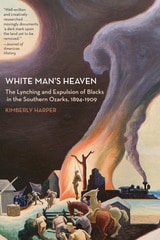
White Man's Heaven
The Lynching and Expulsion of Blacks in the Southern Ozarks, 1894-1909Kimberly Harper
University of Arkansas Press, 2010

White Man's Water
The Politics of Sobriety in a Native American CommunityErica Prussing
University of Arizona Press, 2011
Erica Prussing provides the first in-depth assessment of the politics of Native sobriety by focusing on the Northern Cheyenne community in southeastern Montana, where for many decades the federally funded health care system has relied on the Twelve Step program of Alcoholics Anonymous. White Man’s Water provides a thoughtful and careful analysis of Cheyenne views of sobriety and the politics that surround the selective appeal of Twelve Step approaches despite wide-ranging local critiques. Narratives from participants in these programs debunk long-standing stereotypes about ”Indian drinking” and offer insight into the diversity of experiences with alcohol that actually occur among Native North Americans.
This critical ethnography employs vivid accounts of the Northern Cheyenne people to depict how problems with alcohol are culturally constructed, showing how differences in age, gender, and other social features can affect involvement with both drinking and sobriety. These testimonies reveal the key role that gender plays in how Twelve Step program participants engage in a selective and creative process of appropriation at Northern Cheyenne, adapting the program to accommodate local cultural priorities and spiritual resources. The testimonies also illuminate community reactions to these adaptations, inspiring deeper inquiry into how federally funded health services are provided on the reservation.
This book will appeal to readers with an interest in Native studies, ethnography, women’s studies, and medical anthropology. With its critical consideration of how cultural context shapes drinking and sobriety, White Man’s Water offers a multivocal perspective on alcohol’s impact on health and the cultural complexities of sobriety.

White Poplar, Black Locust
Louise Wagenknecht
Oregon State University Press, 2021
Originally published by the University of Nebraska Press in 2003, this first book in Louise Wagenknecht’s trilogy about life in the Klamath Mountains is now available through Oregon State University Press, together with Light on the Devils (2011) and Shadows on the Klamath (2021).
White Women, Race Matters
The Social Construction of WhitenessRuth Frankenberg
University of Minnesota Press, 1993
American Sociological Association’s Jessie Bernard Book Award winner
Gustavus Myers Center for the Study of Human Rights’s Outstanding Book Award winner
Who Defines Indigenous?
Identities, Development, Intellectuals, and the State in Northern MexicoMartinez Novo, Carmen
Rutgers University Press, 2006
For years, conventional scholarship has argued that minority groups are better served when the majority groups that absorb them are willing to recognize and allow for the preservation of indigenous identities. But is the reinforcement of ethnic identity among migrant groups always a process of self-liberation? In this surprising study, Carmen Martínez Novo draws on her ethnographic research of the Mixtec Indians’ migration from the southwest of Mexico to Baja California to show that sometimes the push for indigenous labels is more a process of external oppression than it is of minority empowerment.
In Baja California, many Mixtec Indians have not made efforts to align themselves as a coherent demographic. Instead, Martínez Novo finds that the push for indigenous identity in this region has come from local government agencies, economic elites, intellectuals, and other external agents. Their concern has not only been over the loss of rich culture. Rather, the pressure to maintain an indigenous identity has stemmed from the desire to secure a reproducible abundance of cheap “Indian” labor. Meanwhile, many Mixtecs reject their ethnic label precisely because being “Indian” means being a commercial agriculture low-wage worker or an urban informal street vendor—an identity that interferes with their goals of social mobility and economic integration.
Bringing a critical new perspective to the complex intersection among government and scholarly agendas, economic development, global identity politics, and the aspirations of local migrants, this provocative book is essential reading for scholars working in the fields of sociology, anthropology, and ethnic studies.
Who Owns the Problem?
Africa and the Struggle for AgencyPius Adesanmi
Michigan State University Press, 2020
committed and passionate voice of an African writer lost far too soon. Adesanmi urges his readers to commit themselves to Africa’s cultural agency.

Who's Afraid of Meryl Streep?
By Rashid al-Daif Translated by Paula Haydar and Nadine Sinno
University of Texas Press, 2014
Rashid al-Daif’s provocative novel Who’s Afraid of Meryl Streep? takes an intimate look at the life of a recently married Lebanese man. Rashoud and his wife struggle as they work to negotiate not only their personal differences but also rapidly changing attitudes toward sex and marriage in Lebanese culture. As their fragile bond disintegrates, Rashoud finds television playing a more prominent role in his life; his wife uses the presence of a television at her parents’ house as an excuse to spend time away from her new home. Rashoud purchases a television in the hopes of luring his wife back home, but in a pivotal scene, he instead finds himself alone watching Kramer vs. Kramer. Without the aid of subtitles, he struggles to make sense of the film, projecting his wife’s behavior onto the character played by Meryl Streep, who captivates him but also frightens him in what he sees as an effort to take women’s liberation too far.
Who’s Afraid of Meryl Streep? offers a glimpse at evolving attitudes toward virginity, premarital sex, and abortion in Lebanon and addresses more universal concerns such as the role of love and lust in marriage. The novel has found wide success in Arabic and several European languages and has also been dramatized in both Arabic and French.

Whose America?
U.S. Immigration Policy since 1980Edited by Maria Cristina Garcia and Maddalena Marinari
University of Illinois Press, 2023
Up-to-date yet rooted in history, Whose America? provides a sophisticated account of recent immigration policy while mapping the ideological struggle to answer an essential question: which people have the right to make America their home or refuge?
Contributors: Leisy Abrego, Carl Bon Tempo, Julio Capó, Jr., Carly Goodman, Julia Rose Kraut, Monique Laney, Carl Lindskoog, Yael Schacher, and Elliott Young
Wife and Widow in Medieval England
Sue Sheridan Walker, Editor
University of Michigan Press, 1993

Winning Strategies for the Indian Market
Anuradha Dayal-Gulati
Northwestern University Press, 2010
The authors describe how the sector might evolve during the next five to ten years, within the broad canvas of the deeper economic and demographic transitions that are taking place in India, and in turn, what this evolution implies for the challenges and opportunities that companies, both domestic and multinational, may face in India. Essays on the emergence of the Indian consumer, the effect of credit cards on India’s consumer culture, and entrepreneurship and India’s poor the emergence of the Indian Consumer round out this profile of India’s market.

Wit, Virtue, and Emotion
British Women's Enlightenment RhetoricElizabeth Tasker Davis
Southern Illinois University Press, 2022
Women’s persuasion and performance in the Age of Enlightenment
Over a century before first-wave feminism, British women’s Enlightenment rhetoric prefigured nineteenth-century feminist arguments for gender equality, women’s civil rights, professional opportunities, and standardized education. Author Elizabeth Tasker Davis rereads accepted histories of seventeenth- and eighteenth-century British rhetoric, claiming a greater variety and power of women’s rhetoric. This recovery of British women’s performative and written roles as speakers, spectators, authors, and readers in diverse venues counters the traditional masculine model of European Enlightenment rhetoric. Davis broadens women’s Enlightenment rhetorics to include highly public venues such as theaters, clubs, salons, and debating societies, as well as the mediated sites of the periodical essay, the treatise on rhetorical theory, and women’s written proposals, plans, defenses and arguments for education. Through these sites, women’s rhetorical postures diverged from patriarchal prescriptions rather to deliver protofeminist persuasive performances of wit, virtue, and emotion.
Davis examines context, the effects of memory and gendering, and the cultural sites and media of women’s rhetoric to reveal a fuller ecology of British Enlightenment rhetoric. Each chapter covers a cultural site of women’s rhetorical practice—the court, the stage, the salon, and the printed page. Applying feminist rhetorical theory, Davis documents how women grasped their rhetorical ability in this historical moment and staged a large-scale transformation of British women from subalterns to a vocal counterpublic in British society.

Woman House
Essays and AssemblagesLauren W. Westerfield
University of Massachusetts Press, 2026
Winner of the National Indie Excellence Award in Memoir and the National Indie Excellence Awards Juror's Choice Prize
A compelling and inventive memoir exploring how pain and pleasure are passed down through generations of women
For years, Lauren W. Westerfield looked back at her childhood as an imaginative playscape lovingly crafted by her artist mother. But in truth, theirs was always a fraught relationship, close yet turbulent. It wouldn’t be until her mid-twenties that Westerfield would learn that her mother was assaulted while living as a single woman in 1970s Los Angeles, or until her mid-thirties when caretaking for her now chronically ill mother during pandemic lockdown would reveal how that earlier incident and its ripple effects had shaped both their lives.
The essays and assemblages in this book plumb the depths of two women’s experiences, exploring the pain and pleasure they find in their bodies, in culture, and in their own art. Violence, beauty, and love reverberate and dissipate and shape the forms and psyches of these two profoundly connected family members. At once raw and refined, narrative and lyrical, nostalgic and blunt, the stories and images presented here explore Westerfield’s life—from childhood to adulthood—passing through innocence, self-discovery and familial tethers. In unpacking her mother’s history and the complexities of their relationship, Westerfield finds herself confronted with her own story: one grounded in a yearning for agency and individuation, of a body and mind groomed to be at odds with one another, of a feminist politics examining deeply rooted patriarchal understandings of beauty, control, and power.
Part memoir, part critical sense-making, part reckoning with family, identity, illness, addiction, art, and inheritance, Woman House draws on diverse inspirations in an attempt to recontextualize the female body—in danger, in pleasure, in portraiture, in proximity, in resistance—and challenge the structures that silence and restrict female expression.

Women Adrift
Independent Wage Earners in Chicago, 1880-1930Joanne J. Meyerowitz
University of Chicago Press, 1988
"Brilliant. . . . Gracefully written, and mercifully free from the jargon that often plagues social history, this book is a welcome addition to literature in women's, urban, and black history."—Ann Schofield, American Historical Review
"Meyerowitz provides a splendid portrait of her subjects. . . . She deserves praise for her demographic spadework, sensitive analysis, and engaging style. This is a valuable and rewarding book."—Nancy Woloch, Journal of American History
"A state-of-the-art product of the new women's history. . . . Meyerowitz's work is an extremely useful contribution, a corrective to over-concentration on women in family, an opening to new ways of looking at single women."—Linda Gordon, Women's Review of Books
"Women Adrift not only brings together many of the most exciting insights of women's history in recent years, but Meyerowitz's particular angle on issues of work, family, sexuality, mass culture and relationships among women also encourages us to rethink these insights."—Ileen A. DeVault, Historian

Women In Utah History
Paradigm Or Paradox?Patricia Lyn Scott & Linda Thatcher
Utah State University Press, 2005
A Comparison of Utah Mormon Polygamous and Monogamous Women Jessie L. Embry and Lois Kelley
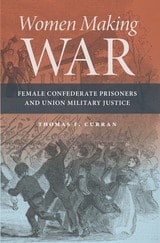
Women Making War
Female Confederate Prisoners and Union Military JusticeThomas F. Curran
Southern Illinois University Press, 2020
During the American Civil War, more than four hundred women were arrested and imprisoned by the Union Army in the St. Louis area. The majority of these women were fully aware of the political nature of their actions and had made conscious decisions to assist Confederate soldiers in armed rebellion against the U.S. government. Their crimes included offering aid to Confederate soldiers, smuggling, spying, sabotaging, and, rarely, serving in the Confederate army. Historian Thomas F. Curran’s extensive research highlights for the first time the female Confederate prisoners in the St. Louis area, and his thoughtful analysis shows how their activities affected Federal military policy.
Early in the war, Union officials felt reluctant to arrest women and waited to do so until their conduct could no longer be tolerated. The war progressed, the women’s disloyal activities escalated, and Federal response grew stronger. Some Confederate partisan women were banished to the South, while others were held at Alton Military Prison and other sites. The guerilla war in Missouri resulted in more arrests of women, and the task of incarcerating them became more complicated.
The women’s offenses were seen as treasonous by the Federal government. By determining that women—who were excluded from the politics of the male public sphere—were capable of treason, Federal authorities implicitly acknowledged that women acted in ways that had serious political meaning. Nearly six decades before U.S. women had the right to vote, Federal officials who dealt with Confederate partisan women routinely referred to them as citizens. Federal officials created a policy that conferred on female citizens the same obligations male citizens had during time of war and rebellion, and they prosecuted disloyal women in the same way they did disloyal men.
The women arrested in the St. Louis area are only a fraction of the total number of female southern partisans who found ways to advance the Confederate military cause. More significant than their numbers, however, is what the fragmentary records of these women reveal about the activities that led to their arrests, the reactions women partisans evoked from the Federal authorities who confronted them, the impact that women’s partisan activities had on Federal military policy and military prisons, and how these women’s experiences were subsumed to comport with a Lost Cause myth—the need for valorous men to safeguard the homes of defenseless women.
Women Of Japan & Korea
Continuity and Changeedited by Joyce Gelb and Marian Lief Palley
Temple University Press, 1994
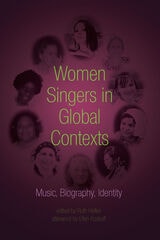
Women Singers in Global Contexts
Music, Biography, IdentityEdited by Ruth Hellier: Afterword by Ellen Koskoff
University of Illinois Press, 2016

Women Who Live Evil Lives
Gender, Religion, and the Politics of Power in Colonial GuatemalaBy Martha Few
University of Texas Press, 2002
Women Who Live Evil Lives documents the lives and practices of mixed-race, Black, Spanish, and Maya women sorcerers, spell-casters, magical healers, and midwives in the social relations of power in Santiago de Guatemala, the capital of colonial Central America. Men and women from all sectors of society consulted them to intervene in sexual and familial relations and disputes between neighbors and rival shop owners; to counter abusive colonial officials, employers, or husbands; and in cases of inexplicable illness.
Applying historical, anthropological, and gender studies analysis, Martha Few argues that women's local practices of magic, curing, and religion revealed opportunities for women's cultural authority and power in colonial Guatemala. Few draws on archival research conducted in Guatemala, Mexico, and Spain to shed new light on women's critical public roles in Santiago, the cultural and social connections between the capital city and the countryside, and the gender dynamics of power in the ethnic and cultural contestation of Spanish colonial rule in daily life.
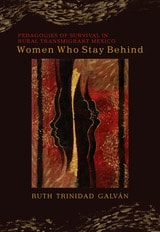
Women Who Stay Behind
Pedagogies of Survival in Rural Transmigrant MexicoRuth Trinidad Galván
University of Arizona Press, 2015
The book studies women’s and families’ use of cultural knowledge, community activism, and teaching and learning spaces. Throughout, Trinidad Galván provides answers to these questions: How does the migration of loved ones alter community, familial, and gender dynamics? And what social relations (convivencia), cultural knowledge, and women-centered pedagogies sustain women’s survival (supervivencia)?
Researchers, educators, and students interested in migration studies, gender studies, education, Latin American studies, and Mexican American studies will benefit from the ethnographic approach and theoretical insight of this groundbreaking work.

Women among Women
Anthropological Perspectives on Female Age HierarchiesEdited by Jeanette Dickerson-Putman and Judith K. Brown: Foreword by Nancy Foner
University of Illinois Press, 1994
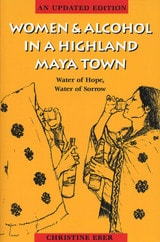
Women and Alcohol in a Highland Maya Town
Water of Hope, Water of SorrowBy Christine Eber
University of Texas Press, 1995
Healing roles and rituals involving alcohol are a major source of power and identity for women and men in Highland Chiapas, Mexico, where abstention from alcohol can bring a loss of meaningful roles and of a sense of community. Yet, as in other parts of the world, alcohol use sometimes leads to abuse, whose effects must then be combated by individuals and the community.
In this pioneering ethnography, Christine Eber looks at women and drinking in the community of San Pedro Chenalhó to address the issues of women’s identities, roles, relationships, and sources of power. She explores various personal and social strategies women use to avoid problem drinking, including conversion to Protestant religions, membership in cooperatives or Catholic Action, and modification of ritual forms with substitute beverages.
The book’s women-centered perspective reveals important data on women and drinking not reported in earlier ethnographies of Highland Chiapas communities. Eber’s reflexive approach, blending the women’s stories, analyses, songs, and prayers with her own and other ethnographers’ views, shows how Western, individualistic approaches to the problems of alcohol abuse are inadequate for understanding women’s experiences with problem and ritual drinking in a non-Western culture.
In a new epilogue, Christine Eber describes how events of the last decade, including the Zapatista uprising, have strengthened women's resolve to gain greater control over their lives by controlling the effects of alcohol in the community.
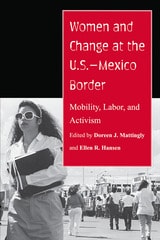
Women and Change at the U.S.–Mexico Border
Mobility, Labor, and ActivismEdited by Doreen J. Mattingly and Ellen R. Hansen
University of Arizona Press, 2006
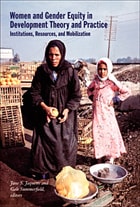
Women and Gender Equity in Development Theory and Practice
Institutions, Resources, and MobilizationJane S. Jaquette and Gale Summerfield, eds.
Duke University Press, 2006
Highlighting key institutional issues, contributors analyze the two approaches that dominate the field: women in development (WID) and gender and development (GAD). They assess the results of gender mainstreaming, the difficulties that development agencies have translating gender rhetoric into equity in practice, and the conflicts between gender and the reassertion of indigenous cultural identities. Focusing on resource allocation, contributors explore the gendered effects of land privatization, the need to challenge cultural traditions that impede women’s ability to assert their legal rights, and women’s access to bureaucratic levers of power. Several essays consider women’s mobilizations, including a project to provide Internet access and communications strategies to African NGOs run by women. In the final essay, Irene Tinker, one of the field’s founders, reflects on the interactions between policy innovation and women’s organizing over the three decades since women became a focus of development work. Together the contributors bridge theory and practice to point toward productive new strategies for women and gender in development.
Contributors. Maruja Barrig, Sylvia Chant, Louise Fortmann, David Hirschmann, Jane S. Jaquette, Diana Lee-Smith, Audrey Lustgarten, Doe Mayer, Faranak Miraftab, Muadi Mukenge, Barbara Pillsbury, Amara Pongsapich, Elisabeth Prügl, Kirk R. Smith, Kathleen Staudt, Gale Summerfield, Irene Tinker, Catalina Hinchey Trujillo
Women and Knowledge in Mesoamerica
From East L.A. to AnahuacPaloma Martinez-Cruz
University of Arizona Press, 2011
The few works looking at the knowledge of women in Mesoamerica generally examine only the written—even academic—world, accessible only to the most elite segments of (customarily male) society. These works have consistently excluded the essential repertoire and performed knowledge of women who think and work in ways other than the textual. And while two of the book’s chapters critique contemporary novels, Martinez-Cruz also calls for the exploration of non-textual knowledge transmission. In this regard, the book's goals and methods are close to those of performance scholarship and anthropology, and these methods reveal Mesoamerican women to be public intellectuals. In Women and Knowledge in Mesoamerica, fieldwork and ethnography combine to reveal women healers as models of agency.
Her multidisciplinary approach allows Martinez-Cruz to disrupt Euro-based intellectual hegemony and to make a case for the epistemic authority of Native women. Written from a Chicana perspective, this study is learned, personal, and engaging for anyone who is interested in the wisdom that prevailing analytical cultures have deemed “unintelligible.” As it turns out, those who are unacquainted with the sometimes surprising extent and depth of wisdom of indigenous women healers simply haven’t been looking in the right places—outside the texts from which they have been consistently excluded.
Women and Migration in the U.S.-Mexico Borderlands
A ReaderDenise A. Segura and Patricia Zavella, eds.
Duke University Press, 2007
This reader includes twenty-three essays—two of which are translated from the Spanish—that illuminate women’s engagement with diverse social and cultural challenges. One contributor critiques the statistical fallacy of nativist discourses within the United States that portray Chicana and Mexican women’s fertility rates as “out of control.” Other contributors explore the relation between sexual violence and women’s migration from rural areas to urban centers within Mexico, the ways that undocumented migrant communities challenge conventional notions of citizenship, and young Latinas’ commemorations of the late, internationally renowned singer Selena. Several essays address workplace intimidation and violence, harassment and rape by U.S. border patrol agents and maquiladora managers, sexual violence, and the brutal murders of nearly two hundred young women near Ciudad Juárez. This rich collection highlights both the structural inequities faced by Mexican women in the borderlands and the creative ways they have responded to them.
Contributors. Ernestine Avila, Xóchitl Castañeda, Sylvia Chant, Leo R. Chavez, Cynthia Cranford, Adelaida R. Del Castillo, Sylvanna M. Falcón, Gloria González-López, Maria de la Luz Ibarra, Jonathan Xavier Inda, Rosa Linda Fregoso, Jennifer S. Hirsch, Pierrette Hondagneu-Sotelo, Eithne Luibheid, Victoria Malkin, Faranak Miraftab, Olga Nájera-Ramírez, Norma Ojeda de la Peña, Deborah Paredez, Leslie Salzinger, Felicity Schaeffer-Grabiel, Denise A. Segura, Laura Velasco Ortiz, Melissa W. Wright, Patricia Zavella

Women and Networks in Nineteenth-Century Japan
Edited by Bettina GRAMLICH-OKA, Anne WALTHALL, MIYAZAKI Fumiko, and SUGANO Noriko
University of Michigan Press, 2020
Most of the essays in this volume are by Japanese scholars; their inclusion here provides either an introduction to their work or the opportunity to explore their scholarship further. Because women are often invisible in historical documentation, the authors use a range of sources (such as diaries, letters, and legal documents) to reconstruct the familial, neighborhood, religious, political, work, and travel networks that women maintained, constructed, or found themselves in, sometimes against their will. In so doing, most but not all of the authors try to decenter historical narratives built on men’s activities and men’s occupational and status-based networks, and instead recover women’s activities in more localized groupings and personal associations.
Women and Work
Feminism, Labour, and Social ReproductionSusan Ferguson
Pluto Press, 2019
Feminism is once again on the political agenda. Across the world women are taking to the streets to protest unfair working conditions, abortion laws, and sexual violence. They are demanding decent wages, better schools and free childcare.
But why do some feminists choose to fight for more women CEOs, while others fight for a world without CEOs?
To understand these divergent approaches, Susan Ferguson looks at the ideas that have inspired women to protest, exploring the ways in which feminists have placed work at the center of their struggle for emancipation. Two distinct trajectories emerge: “equality feminism” and “social reproduction feminism.” Ferguson argues that socialists have too often embraced the “liberal” tendencies of equality feminism, while neglecting the insights of social reproduction feminism. Engaging with feminist anti-work critiques, She proposes that women's emancipation depends upon a radical reimagining of all labor and advocates for a renewed social reproduction framework as a powerful basis for an inclusive feminist politics. Chapters here include;
*The Rational-Humanist Roots of Equality Feminism
*Socialist Feminism: Two Approaches to Understanding Women's Work
*Equal Work for and against Capital
*Anti-Racist Feminism and Women's Work
*A Political Economy of 'Women's Work': Producing Patriarchal Capitalism
*Renewing Social Reproduction Feminism
*The Social Reproduction Strike: Life-Making Beyond Capitalism
Women and Work offers a timely and important look at the intersectionality of feminism and workers rights. Scholars and students will both find valuable insights into the history of feminist theory and social movement.

Women and the Conquest of California, 1542-1840
Codes of SilenceVirginia M. Bouvier
University of Arizona Press, 2001

Women and the Everyday City
Public Space in San Francisco, 1890–1915Jessica Ellen Sewell
University of Minnesota Press, 2011
Focusing on women's everyday use of streetcars, shops, restaurants, and theaters, Sewell reveals the impact of women on these public places-what women did there, which women went there, and how these places were changed in response to women's presence. Using the diaries of three women in San Francisco-Annie Haskell, Ella Lees Leigh, and Mary Eugenia Pierce, who wrote extensively on their everyday experiences-Sewell studies their accounts of day trips to the city and combines them with memoirs, newspapers, maps, photographs, and her own observations of the buildings that exist today to build a sense of life in San Francisco at this pivotal point in history.

Women at Odds
Indifference, Antagonism, and Progress in Late Victorian LiteratureRiya Das
The Ohio State University Press, 2024
In Women at Odds, Riya Das demonstrates the limitations of female solidarity for the New Woman in Victorian society. On the one hand, feminist antagonism disrupts the status quo in unanticipated ways, and it helps open new domestic and professional pathways for women. On the other hand, the urban professional New Woman’s rhetoric recycles distinctly sexist, racist, and classist conventions, thereby bringing middle-class Englishwomen dialectically—what Das terms “retro-progressively”—into the labor pool of the British empire.
While foregrounding the figure of the New Woman as a white imperialist reformer, Das illustrates how the New Woman movement detaches itself from the domestic politics of female friendship. In works by George Eliot, George Gissing, Olive Schreiner, Bram Stoker, and others, antagonism and indifference enable the fin de siècle New Woman to transcend traditionally defined roles and fashion social progress for herself at the expense of femininities she excludes as “other.” By contesting the critical notion of solidarity as the only force that brings Victorian women’s narratives to fruition, Women at Odds reveals the troubled but effective role of antagonistic and indifferent reformist politics in loosening rigid social structures for privileged populations.

Women in Contemporary Culture
Roles and identities in France and SpainEdited by Lesley Twomey
Intellect Books, 2000

Women in Hollywood's Dream Factory
Tales of Inequality, Abuse, and ResistanceEdited by Karen McNally
University of Illinois Press, 2026
The #MeToo revelations put a twenty-first-century stamp on the age-old story of women’s mistreatment in Hollywood. Karen McNally edits a collection focused on examining and revising film history in the aftermath of the women’s stories, past and present, that have come to light.
The collection begins with essays on the interplay between reality and imagination in narratives and representations of women’s experiences of unequal treatment. In Part 2, contributors discuss how the gendered attitudes of the media’s stories enable inequality in Hollywood and look at the forces that arise whenever women resist these media assaults. The next section addresses the structures that built the inequalities and mistreatment while Part 4 revisits established narratives to challenge, renew, and expand upon our understanding of film history through women’s stories. Essays in the final section address the combination of inequality and resistance that defines women’s experiences in Hollywood.
Piercing and astute, Women in Hollywood’s Dream Factory confronts our perception of Hollywood as a mythological land of dreams.
Contributors: Alicia Byrnes, Anna M. Dempsey, Harriet Fletcher, Amanda Konkle, Tamar Jeffers McDonald, Kerry McElroy, Adrienne L. McLean, Karen McNally, Donna Peberdy, Melanie Piper, Victoria K. Pistivsek, Sarah Polley, Ina C. Seethaler, Gabrielle Stecher, and Jennifer Voss
Women in Iran from the Rise of Islam to 1800
Edited by Guity Nashat and Lois Beck
University of Illinois Press, 2003
Focusing on a region wider than today's nation-state of Iran, this book explores developments in the spheres that most affect women: gender constructs, family structure, community roles, education, economic participation, Islamic practices and institutions, politics, and artistic representations.
The contributors to this volume are prominent international scholars working in this field, and each draws on decades of research to address the history of Iranian women within the context of his or her area of expertise. This broad framework allows for a thorough and nuanced examination of the history of a complex society.
Women in Missouri History
In Search of Power and InfluenceEdited by LeeAnn Whites, Mary C. Neth, & Gary R. Kremer
University of Missouri Press, 2004
Women in Missouri History is an exceptional collection of essays surveying the history of women in the state of Missouri from the period of colonial settlement through the mid-twentieth century. The women featured in these essays come from various ethnic, economic, and racial groups, from both urban and rural areas, and from all over the state. The authors effectively tell these women’s stories through biographies and through techniques of social history, allowing the reader to learn not only about the women’s lives individually, but also about how groups of “ordinary” women shaped the history of the state.
The essays in this collection address questions that are at the center of current developments in the field of women’s history but are written in a manner that makes them accessible to general readers. Providing an excellent general overview of the history of women in Missouri, this collection makes a valuable contribution to a better understanding of the state’s past.
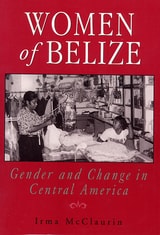
Women of Belize
Gender and Change in Central AmericaMcClaurin, Irma
Rutgers University Press, 1996
This engaging ethnography is set in the remote district of Toledo in Belize, Central America, where three women weave personal stories about the events in their lives. Each describes her experiences of motherhood, marriage, family illness, emigration, separation, work, or domestic violence that led her to recognize gender inequality and then to do something about it. All three challenge the culture of gender at home and in the larger community.
Zola, an East Indian woman without primary school education, invents her own escape from a life of subordination by securing land, then marries the man she's lived with since the age of fourteen--but on her terms. Once she needed permission to buy a dress, now she advocates against domestic violence. Evelyn, a thirty-nine-year old Creole woman, has raised eight children virtually alone, yet she remains married "out of habit." A keen entrepreneur, she has run a restaurant, a store, and a sewing business, and she now owns a mini-mart attached to her home. Rose, a Garifuna woman, is a mother of two whose husband left when she would not accept his extra-marital affairs. While she ekes out a survival in the informal economy by making tamales, she gets spiritual comfort from her religious beliefs, love of music, and two children.
The voices of these ordinary Belizean women fill the pages of this book. Irma McClaurin reveals the historical circumstances, cultural beliefs, and institutional structures that have rendered women in Belize politically and socially disenfranchised and economically dependent upon men. She shows how some ordinary women, through their participation in women's grassroots groups, have found the courage to change their lives. Drawing upon her own experiences as a black woman in the United States, and relying upon cross-cultural data about the Caribbean and Latin America, she explains the specific way gender is constructed in Belize.
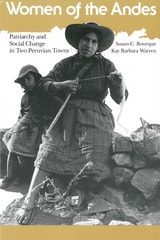
Women of the Andes
Patriarchy and Social Change in Two Peruvian TownsSusan C. Bourque and Kay Barbara Warren
University of Michigan Press, 1981
Pilar is a capable, energetic merchant in the small, Peruvian highland settlement of Chiuchin. Genovena, an unmarried day laborer in the same town, faces an impoverished old age without children to support her. Carmen is the wife of a prosperous farmer in the agricultural community of Mayobamba, eleven thousand feet above Chiuchin in the Andean sierra. Mariana, a madre soltera—single mother—without a husband or communal land of her own, also resides in Mayobamba.
These lives form part of an interlocking network that the authors carefully examine in Women of the Andes. In doing so, they explore the riddle of women’s structural subordination by analyzing the social, political, and economic realities of life in Peru. They examine theoretical explanations of sexual hierarchies against the backdrop of life histories. The result is a study that pinpoints the mechanisms perpetuating sexual repression and traces the impact of social change and national policy on women’s lives.
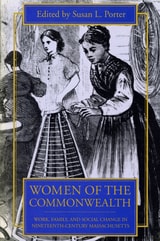
Women of the Commonwealth
Work, Family, and Social Change in Ninteenth-Century MassachusettsSusan L. Porter
University of Massachusetts Press, 1996
These essays reflect the complexity and richness of current scholarship in women's history. Informed by a variety of source materials and methodologies, the ten chapters break down a generalized construct of “womanhood” to explore the dynamics between gender, race, ethnicity, and class.
The first section of the book focuses on women's work, paid and unpaid, and the effects of class, ethnicity, and gender on the structure of the job market and on power relations within the family. The second section revisits the concept of “sisterhood” by looking at women in relation to their families, social and cultural networks, and civic and private institutions. The editor's introduction sets the essays in the current historiographical context of women's studies and provides a bibliographical essay for the nonspecialist reader.
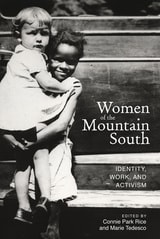
Women of the Mountain South
Identity, Work, and ActivismConnie Park Rice
Ohio University Press, 2015
Scholars of southern Appalachia have largely focused their research on men, particularly white men. While there have been a few important studies of Appalachian women, no one book has offered a broad overview across time and place. With this collection, editors Connie Park Rice and Marie Tedesco redress this imbalance, telling the stories of these women and calling attention to the varied backgrounds of those who call the mountains home.
The essays of Women of the Mountain South debunk the entrenched stereotype of Appalachian women as poor and white, and shine a long-overdue spotlight on women too often neglected in the history of the region. Each author focuses on a particular individual or group, but together they illustrate the diversity of women who live in the region and the depth of their life experiences. The Mountain South has been home to Native American, African American, Latina, and white women, both rich and poor. Civil rights and gay rights advocates, environmental and labor activists, prostitutes, and coal miners—all have lived in the place called the Mountain South and enriched its history and culture.