Results by title
5448 books match the query 'History and criticism' and 250 start with w

Wild Mother Dancing
Maternal Narrative in Canadian LiteratureDi Brandt
University of Manitoba Press, 1993
Wild Theater
Staging the Margins of Baroque Ideology in the Spanish ComediaHarrison Meadows
Vanderbilt University Press, 2025
In five compelling chapters, Meadows argues that a major shift occurred during the Baroque period, whereby the largely positive quality of previous iterations in the genealogy of wildness take on a negative character in the cultural ethos—and that this fundamental shift was representative of the influence of Spanish colonialism on racial thinking and a larger set of changes in how early modern people viewed gender and class. In this way, the book identifies the wild figure’s dramatic roots in the carnivalesque as an indispensable point of departure to plot the trajectory of wild representation in the theater of the Hispanic Baroque. From this guiding premise, Meadows traces the carryovers, transformations, and negations of the carnivalesque into early modern dramaturgy, specifically the Spanish comedia, which are emblematic of the poetic and ideological features of the emerging commercial theater in Iberia.
Wild Tongues
Transnational Mexican Popular CultureBy Rita E. Urquijo-Ruiz
University of Texas Press, 2012
Tracing the configuration of the slapstick, destitute Peladita/Peladito and the Pachuca/Pachuco (depicted in flashy zoot suits) from 1928 to 2004, Wild Tongues is an ambitious, extensive examination of social order in Mexican and Chicana/o cultural productions in literature, theater, film, music, and performance art.
From the use of the Peladita and the Peladito as stock characters who criticized various aspects of the Mexican government in the 1920s and 1930s to contemporary performance art by María Elena Gaitán and Dan Guerrero, which yields a feminist and queer-studies interpretation, Rita Urquijo-Ruiz emphasizes the transnational capitalism at play in these comic voices. Her study encompasses both sides of the border, including the use of the Pachuca and the Pachuco as anti-establishment, marginal figures in the United States. The result is a historically grounded, interdisciplinary approach that reimagines the limitations of nation-centered thinking and reading.
Beginning with Daniel Venegas’s 1928 novel, Las aventuras de don Chipote o Cuando los pericos mamen, Rita Urquijo-Ruiz’s Wild Tongues demonstrates early uses of the Peladito to call attention to the brutal physical demands placed on the undocumented Mexican laborer. It explores Teatro de Carpa (tent theater) in-depth as well, bringing to light the experience of Mexican Peladita Amelia Wilhelmy, whose “La Willy” was famous for portraying a cross-dressing male soldier who criticizes the failed Revolution. In numerous other explorations such as these, the political, economic, and social power of creativity continually takes center stage.
Wild Women in the Whirlwind
Afra-American Culture and the Contemporary Literary RenaissanceEdited by Joanne M. Braxton and Andree Nicola McLaughlin
Rutgers University Press, 1989
--New York Times Book Review
"The cultural and literary achievements of black American women are examined and celebrated in some 20 enjoyable, erudite essays by prominent scholars, critics, and activists."
--Publishers Weekly
This book is the first comprehensive collection of critical and theoretical essays to explore the literary and multi-cultural traditions of Black American women in many genres over a broad span of time. The essays explore cultural and literary experience in a wide context and offer a variety of critical theoretical constructs in which to view that experience. The editors have written excellent introductions providing both historical and comparative discussions of the contemporary literary renaissance. The book also includes a valuable bibliography of selected English-language works by Black women in the Americas from the 1970s to the present.
William Blake and the Impossible History of the 1790s
Saree Makdisi
University of Chicago Press, 2003
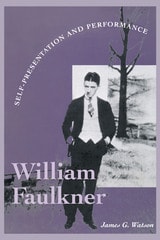
William Faulkner
Self-Presentation and PerformanceBy James G. Watson
University of Texas Press, 2000
In his life and writings, William Faulkner continually created and "performed" selves. Even in letters, he often played a part—gentleman dandy, soldier, farmer—while in his fictions these and other personae are counterpoised against one another to create a world of controlled chaos, made in Faulkner's own protean image and reflective of his own multiple sense of self.
In this groundbreaking book, James Watson draws on the entire Faulkner canon, including letters and photographs, to decipher the complicated ways in which Faulkner put himself forth as the artist he felt himself to be through written performances and displays based on the life he actually lived and the ones he imagined living. The topics Watson treats include the overtly performative aspects of The Sound and the Fury, self-presentation and performance in private records of Faulkner's life, the ways in which his complicated marriage and his relationships to male mentors underlie his fictions' recurring motifs of marriages and fatherhood, Faulkner's readings of Melville, Hawthorne, and Thoreau and the problematics of authorial sovereignty, his artist-as-God creation of a fictional cosmos, and the epistolary relationships with women that lie in the correspondence behind Requiem for a Nun.
William Gibson
Gary Westfahl
University of Illinois Press, 2013
Willing to Know God
Dreamers and Visionaries in the Later Middle AgesJessica Barr
The Ohio State University Press, 2010
Although authors of mystical treatises and dream visions shared a core set of assumptions about how visions are able to impart transcendent truths to their recipients, the modern divide between “religious” and “secular” has led scholars to study these genres in isolation. Willing to Know God addresses the simultaneous flowering of mystical and literary vision texts in the Middle Ages by questioning how the vision was thought to work. What preconditions must be met in these texts for the vision to transform the visionary? And when, as in poems such as Pearl, this change does not occur, what exactly has gone wrong?
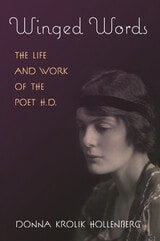
Winged Words
The Life and Work of the Poet H.D.Donna Krolik Hollenberg
University of Michigan Press, 2022
H.D.’s friends and lovers were a veritable Who’s Who of Modernism, and Hollenberg gives us a glimpse into H.D.’s relationships with them. With rich detail, the biography follows H.D. from her early years in America with her family, to her later years in England during both world wars, to Switzerland, which would eventually become H.D.’s home base. It explores her love affairs with both men and women; her long friendship with Bryher; the birth of her daughter, Perdita, and her imaginative bond with her; and her marriage to (and later divorce from) fellow poet Richard Aldington. Additionally, the book includes scenes from her relationships with Ezra Pound, Marianne Moore, William Carlos Williams, and D.H. Lawrence; H.D.’s fascination with spiritualism and the occult; and H.D.’s psychoanalysis with Sigmund Freud. The first new biography of H.D. to be published in over four decades, Winged Words is a must-read resource for anyone conducting research on H.D.

Wingless Flights
Appalachian Women in FictionDanny L. Miller
University of Wisconsin Press, 1996
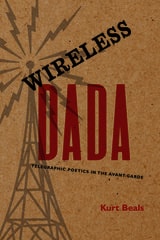
Wireless Dada
Telegraphic Poetics in the Avant-GardeKurt Beals
Northwestern University Press, 2020
Wireless Dada: Telegraphic Poetics in the Avant-Garde demonstrates that the poetics of the Dada movement was profoundly influenced by the telegraph and the technological and social transformations that it brought about in the nineteenth and early twentieth centuries. While telegraphy’s impact on Italian Futurism and German Expressionism is widely acknowledged, its formative role in Dada poetics has been largely neglected. Drawing on media history and theory, avant-garde studies, and German literary studies, Kurt Beals shows how the telegraph and the cultural discourses that surrounded it shaped the radical works of this seminal avant-garde movement. The “nonsense” strain in Dada is frequently seen as a response to the senseless violence of the First World War. Beals argues that it was not just the war that turned Dada poetry into a jumble of senseless signals—it was also the wireless.
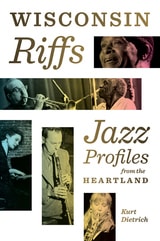
Wisconsin Riffs
Jazz Profiles from the HeartlandKurt Dietrich
Wisconsin Historical Society Press, 2018
Although New York City, Los Angeles, and Chicago are often considered the epicenters of American jazz, this extensive, upbeat compilation of jazz musician biographies details Wisconsin’s rich association the genre since its the inception of the genre in the early 1900s. Iconic musicians Bunny Berigan, Woody Herman, Les Paul, and Al Jarreau all hailed from Wisconsin, as have many other influential players, composers, and teachers. Wisconsin Riffs features these musicians side-by-side—from the world-renowned to obscure regional artists—to portray a comprehensive history of jazz in Wisconsin.
Through meticulous research and more than a hundred interviews, author Kurt Dietrich has assembled a group of musicians who represent a wide range of backgrounds, ages, stylistic schools, and experiences—from leaders of swing-era big bands to legendary Wisconsin Conservatory instructors to today’s up-and-coming practitioners of contemporary jazz and jazz rock. For aspiring musicians, jazz enthusiasts, and fans of Wisconsin culture alike, Wisconsin Riffs presents a compelling, complex, and multi-layered concoction—just like jazz itself.
Witches, Goddesses, and Angry Spirits
The Politics of Spiritual Liberation in African Diaspora Women's FictionMaha Marouan
The Ohio State University Press, 2013
With Bodies
Narrative Theory and Embodied CognitionMarco Caracciolo and Karin Kukkonen
The Ohio State University Press, 2021
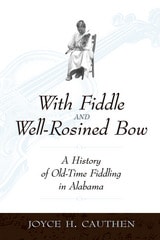
With Fiddle and Well-Rosined Bow
A History of Old-Time Fiddling In AlabamaJoyce H. Cauthen
University of Alabama Press, 2001
Relying on extensive archival research and on sixty interviews with fiddlers and their families and friends, Cauthen tells the rich, full story of old-time fiddling in Alabama.
Writing of life in the Alabama Territory in the late 1700s, A. J. Pickett, the state's first historian, noted that the country abounded in fiddlers, of high and low degree. After the defeat of the Creek Indians at the Battle of Horseshoe Bend in 1813, the number of fiddlers swelled as settlers from the southern states surrounding Alabama claimed the land. The music they played was based on tunes brought from Ireland, Scotland, and England, but in Alabama they developed their own southern accent as their songs became the music of celebration and relaxation for the state's pioneers. Early in the 20th century such music began to be called "old-time fiddling," to distinguish it from the popular music of the day, and the term is still used to distinguish that style from more modern bluegrass and country fiddle styles.
In With Fiddle and Well-Rosined Bow, Cauthen focuses on old-time fiddling in Alabama from the settlement of the state through World War II. Cauthen shows the effects of events, inventions, ethnic groups, and individuals upon fiddlers' styles and what they played. Cauthen gives due weight to the "modest masters of fiddle and bow" who were stars only to their families and communities. The fiddlers themselves tell why they play, how they learned without formal instruction and written music, and how they acquired their instruments and repertoires. Cauthen also tells the stories of "brag" fiddlers such as D.Dix Hollis, Y. Z. Hamilton, Charlie Stripling, "Fiddling" Tom Freeman,"Monkey" Brown, and the Johnson Brothers whose reputations spread beyond their communities through commercial recordings and fiddling contests. Described in vivid detail are the old-style square dances, Fourth of July barbeques and other celebrations, and fiddlers' conventions that fiddler shave reigned over throughout the state's history.
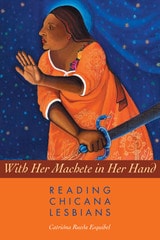
With Her Machete in Her Hand
Reading Chicana LesbiansBy Catrióna Rueda Esquibel
University of Texas Press, 2006
With the 1981 publication of the groundbreaking anthology This Bridge Called My Back: Writings by Radical Women of Color, Cherríe Moraga and Gloria Anzaldúa ushered in an era of Chicana lesbian writing. But while these two writers have achieved iconic status, observers of the Chicana/o experience have been slow to perceive the existence of a whole community—lesbian and straight, male as well as female—who write about the Chicana lesbian experience. To create a first full map of that community, this book explores a wide range of plays, novels, and short stories by Chicana/o authors that depict lesbian characters or lesbian desire.
Catrióna Rueda Esquibel starts from the premise that Chicana/o communities, theories, and feminisms cannot be fully understood without taking account of the perspectives and experiences of Chicana lesbians. To open up these perspectives, she engages in close readings of works centered around the following themes: La Llorona, the Aztec Princess, Sor Juana Inés de la Cruz, girlhood friendships, rural communities and history, and Chicana activism. Her investigation broadens the community of Chicana lesbian writers well beyond Moraga and Anzaldúa, while it also demonstrates that the histories of Chicana lesbians have had to be written in works of fiction because these women have been marginalized and excluded in canonical writings on Chicano life and experience.
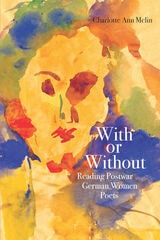
With or Without
Reading Postwar German Women PoetsCharlotte Ann Melin
Northwestern University Press, 2013
With or Without explores the role of German women’s poetry in the contemporary literary discourse of the latter half of the twentieth century. Melin highlights the significant role that women played in the shaping of postwar German poetry as a whole and also their deep engagement with the broader issues of modernism, postmodernism, and related discourses about the relationship between individual experience, communal ideals, and interpersonal expression. Melin shows that for German writers poetry became the genre that had the capacity to project subjectivity, voice, and authenticity.
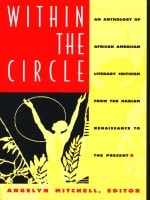
Within the Circle
An Anthology of African American Literary Criticism from the Harlem Renaissance to the PresentAngelyn Mitchell
Duke University Press, 1994
The essays in this collection—many of which are not widely available today—either initiated or gave critical definition to specific periods or movements of African American literature. They address issues such as integration, separatism, political action, black nationalism, Afrocentricity, black feminism, as well as the role of art, the artist, the critic, and the audience. With selections from Langston Hughes, Sterling Brown, W. E. B. DuBois, Zora Neale Hurston, Richard Wright, James Baldwin, Toni Morrison, Barbara Smith, Alice Walker, Henry Louis Gates, Jr., and many others, this definitive collection provides a dynamic model of the cultural, ideological, historical, and aesthetic considerations in African American literature and literary criticism.
A major contribution to the study of African American literature, this volume will serve as a foundation for future work by students and scholars. Its importance will be recognized by all those interested in modern literary theory as well as general readers concerned with the African American experience.
Selections by (partial list): Houston A. Baker, Jr., James Baldwin, Sterling Brown, Barbara Christian, W. E. B. DuBois, Ralph Ellison, LeRoi Jones, Sarah Webster Fabio, Henry Louis Gates, Jr., W. Lawrence Hogue, Langston Hughes, Zora Neale Hurston, Alain Locke, Deborah E. McDowell, Toni Morrison, J. Saunders Redding, George Schuyler, Barbara Smith, Valerie Smith, Hortense J. Spillers, Robert B. Stepto, Alice Walker, Margaret Walker, Mary Helen Washington, Richard Wright
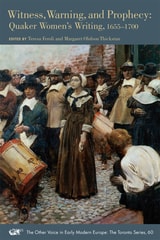
Witness, Warning, and Prophecy
Quaker Women's Writing, 1655-1700Edited by Teresa Feroli and Margaret Olofson Thickstun
Iter Press, 2018
The Other Voice in Early Modern Europe - The Toronto Series: Volume 60
Witnessing Slavery
The Development Of Ante-Bellum Slave NarrativesFrances Smith Foster
University of Wisconsin Press, 1994

Wittgenstein & Critical Theory
Beyond Postmodern Criticism and Toward Descriptive InvestigationsSusan B. Brill
Ohio University Press, 1994
Brill’s work discusses at length the implications of Wittgenstein for literary criticism and theory. The volume specifically investigates the implications of Wittgenstein’s work for a number of contemporary critical orientations (notably poststructualism, feminism, and psychology). In addition, the research includes actual applications of Wittgenstein for literary criticism: diverse literary texts (including a number of poems and stories by Native American authors) are approached via a Wittgensteinian method as a means of discerning which critical approaches might be more or less efficacious. Not only does the book provide a solid introduction to Wittgensteinian philosophy for the critical scholars, but it also provides a clear methodology useful to critics seeking a means to navigate through the entanglement of contemporary criticism and theory.
Brill argues that a reliance upon the philosophy of Ludwig Wittgenstein can enable literary critics to escape the seemingly endless dialectic between modern and postmodern theory. Instead of debating which theory is theoretically best, we need to describe when theories work—and when they do not.
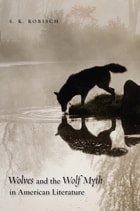
Wolves and the Wolf Myth in American Literature
S.K. Robisch
University of Nevada Press, 2009
The wolf is one of the most widely distributed canid species, historically ranging throughout most of the Northern Hemisphere. For millennia, it has also been one of the most pervasive images in human mythology, art, and psychology. Wolves and the Wolf Myth in American Literature examines the wolf’s importance as a figure in literature from the perspectives of both the animal’s physical reality and the ways in which writers imagine and portray it. Author S. K. Robisch examines more than two hundred texts written in North America about wolves or including them as central figures. From this foundation, he demonstrates the wolf’s role as an archetype in the collective unconscious, its importance in our national culture, and its ecological value. Robisch takes a multidisciplinary approach to his study, employing a broad range of sources: myths and legends from around the world; symbology; classic and popular literature; films; the work of scientists in a number of disciplines; human psychology; and field work conducted by himself and others. By combining the fundamentals of scientific study with close readings of wide-ranging literary texts, Robisch astutely analyzes the correlation between actual, living wolves and their representation on the page and in the human mind. He also considers the relationship between literary art and the natural world, and argues for a new approach to literary study, an ecocriticism that moves beyond anthropocentrism to examine the complicated relationship between humans and nature.
Woman and Chinese Modernity
The Politics of Reading between West and EastRey Chow
University of Minnesota Press, 1991
Examines the relationship of “woman” to issues of non-western culture.
Examines the relationship of "woman" to issues of non-Western culture: ethnic spectatorship, popular literature, the construction of literary history, and the revolutionary production and emotional reception of national literature.
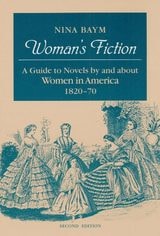
Woman's Fiction
A Guide to Novels by and about Women in America, 1820-70Nina Baym. With a New Introduction and Supplementary Bibliography
University of Illinois Press, 1993
This reissue of the pioneering and standard book on antebellum women's domestic novels contains a new introduction situating the book in the context of important recent developments in the study of women's writing. Nina Baym considers 130 novels by 48 women, focusing on the works of a dozen especially productive and successful writers.
Woman's Fiction is a major-work in nineteenth-century literature, reexamining changes in the literary canon and the meaning of sentimentalism, while responding to current critical discussions of 'the body' in literary texts.
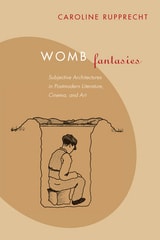
Womb Fantasies
Subjective Architectures in Postmodern Literature, Cinema, and ArtCaroline Rupprecht
Northwestern University Press, 2013
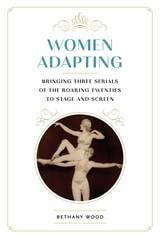
Women Adapting
Bringing Three Serials of the Roaring Twenties to Stage and ScreenBethany Wood
University of Iowa Press, 2019
Bethany Wood examines three well-known stories that debuted as women’s magazine serials—Gentlemen Prefer Blondes, Edith Wharton’s The Age of Innocence, and Edna Ferber’s Show Boat—and traces how each of these beloved narratives traveled across publishing, theatre, and film through adaptation. She documents the formation of adaptation systems and how they involved women’s voices and labor in modern entertainment in ways that have been previously underappreciated. What emerges is a picture of a unique window of time in the early decades of the twentieth century, when women in entertainment held influential positions in production and management. These days, when filmic adaptations seem endless and perhaps even unoriginal, Women Adapting challenges us to rethink the popular platitude, “The book is always better than the movie.”
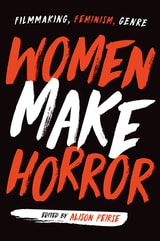
Women Make Horror
Filmmaking, Feminism, GenreAlison Peirse
Rutgers University Press, 2020
Winner of the the 2021 Best Edited Collection Award from BAFTSS
Winner of the 2021 British Fantasy Award in Best Non-Fiction
Finalist for the 2020 Bram Stoker Award® for Superior Achievement in Non-Fiction
Runner-Up for Book of the Year in the 19th Annual Rondo Halton Classic Horror Awards
“But women were never out there making horror films, that’s why they are not written about – you can’t include what doesn’t exist.”
“Women are just not that interested in making horror films.”
This is what you get when you are a woman working in horror, whether as a writer, academic, festival programmer, or filmmaker. These assumptions are based on decades of flawed scholarly, critical, and industrial thinking about the genre. Women Make Horror sets right these misconceptions. Women have always made horror. They have always been an audience for the genre, and today, as this book reveals, women academics, critics, and filmmakers alike remain committed to a film genre that offers almost unlimited opportunities for exploring and deconstructing social and cultural constructions of gender, femininity, sexuality, and the body.
Women Make Horror explores narrative and experimental cinema; short, anthology, and feature filmmaking; and offers case studies of North American, Latin American, European, East Asian, and Australian filmmakers, films, and festivals. With this book we can transform how we think about women filmmakers and genre.
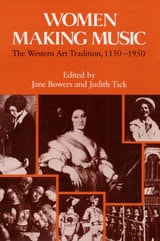
Women Making Music
The Western Art Tradition, 1150-1950Edited by Jane Bowers and Judith Tick
University of Illinois Press, 1986
The first work of its kind, Women Making Music presents biographies of outstanding performers and composers, as well as analyses of women musicians as a class, and provides examples of music from all periods including medieval chant, Renaissance song, Baroque opera, German lieder, and twentieth-century composition. Unlike most standard historical surveys, the book not only sheds light upon the musical achievements of women, it also illuminates the historical contexts that shaped and defined those achievements.
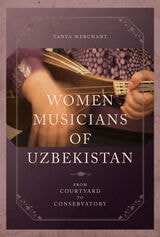
Women Musicians of Uzbekistan
From Courtyard to ConservatoryTanya Merchant
University of Illinois Press, 2015
Drawing on fieldwork and music study carried out between 2001 and 2014, Merchant challenges the Western idea of Central Asian women as sequestered and oppressed. Instead, she notes, Uzbekistan's women stand at the forefront of four prominent genres: maqom, folk music, Western art music, and popular music. Merchant's recounting of the women's experiences, stories, and memories underscores the complex role that these musicians and vocalists play in educational institutions and concert halls, street kiosks and the culturally essential sphere of wedding music. Throughout the book, Merchant ties nationalism and femininity to performances and reveals how the music of these women is linked to a burgeoning national identity.
Important and revelatory, Women Musicians of Uzbekistan looks into music's part in constructing gendered national identity and the complicated role of femininity in a former Soviet republic's national project.

Women Poets of Spain, 1860-1990
TOWARD A GYNOCENTRIC VISIONJohn C. Wilcox
University of Illinois Press, 1997
Women Poets on Mentorship
Efforts and AffectionsArielle Greenberg
University of Iowa Press, 2008
The poets in this collection describe a new kind of influence, one less hierarchical, less patriarchal, and less anxious than forms of mentorship in the past. Vivid and intelligent, these twenty-four essays explore the complicated nature of the mentoring relationship, with all its joys and difficulties, and show how this new sense of writing out of female experience and within a community of writers has fundamentally changed women’s poetry.
Includes:
Jenny Factor on Marilyn Hacker
Beth Ann Fennelly on Denise Duhamel
Miranda Field on Fanny Howe
Katie Ford on Jorie Graham
Joy Katz on Sharon Olds
Valerie Martínez on Joy Harjo
Erika Meitner on Rita Dove
Aimee Nezhukumatathil on Naomi Shihab Nye
Eleni Sikelianos on Alice Notley
Tracy K. Smith on Lucie Brock-Broido
Crystal Williams on Lucille Clifton
Rebecca Wolff on Molly Peacock

Women Reading Women Writing
Ann Louise Keating
Temple University Press, 1996
Women Times Three
Writers, Detectives, ReadersKathleen Gregory Klein
University of Wisconsin Press, 1995
The eleven essays concentrate new attention on the trio of reader, writer, and text when all three are modified by the terms “woman” and “mystery.”
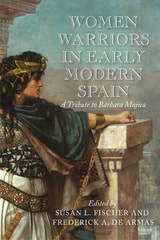
Women Warriors in Early Modern Spain
A Tribute to Barbara MujicaSusan L. Fischer
University of Delaware Press, 2019
Published by University of Delaware Press. Distributed worldwide by Rutgers University Press.
Women Writers of Latin America
Intimate HistoriesBy Magdalena García Pinto
University of Texas Press, 1991
What does it take for a woman to succeed as a writer? In these revealing interviews, first published in 1988 as Historias íntimas, ten of Latin America's most important women writers explore this question with scholar Magdalena García Pinto, discussing the personal, social, and political factors that have shaped their writing careers.
The authors interviewed are Isabel Allende, Albalucía Angel, Rosario Ferré, Margo Glantz, Sylvia Molloy, Elvira Orphée, Elena Poniatowska, Marta Traba, Luisa Valenzuela, and Ida Vitale. In intimate dialogues with each author, García Pinto draws out the formative experiences of her youth, tracing the pilgrimage that led each to a distinguished writing career.
The writers also reflect on their published writings, discussing the creative process in general and the motivating force behind individual works. They candidly discuss the problems they have faced in writing and the strategies that enabled them to reach their goals.
While obviously of interest to readers of Latin American literature, this book has important insights for students of women's literature and cultural studies, as well as for aspiring writers.

Women Writers of the American West, 1833-1927
Nina Baym
University of Illinois Press, 2012
Women Writing Jewish Modernity, 1919–1939
Allison Schachter
Northwestern University Press, 2022
In Women Writing Jewish Modernity, 1919–1939, Allison Schachter rewrites Jewish literary modernity from the point of view of women. Focusing on works by interwar Hebrew and Yiddish writers, Schachter illuminates how women writers embraced the transgressive potential of prose fiction to challenge the patriarchal norms of Jewish textual authority and reconceptualize Jewish cultural belonging.
Born in the former Russian and Austro‑Hungarian Empires and writing from their homes in New York, Poland, and Mandatory Palestine, the authors central to this book—Fradl Shtok, Dvora Baron, Elisheva Bikhovsky, Leah Goldberg, and Debora Vogel—seized on the freedoms of social revolution to reimagine Jewish culture beyond the traditionally male world of Jewish letters. The societies they lived in devalued women’s labor and denied them support for their work. In response, their writing challenged the social hierarchies that excluded them as women and as Jews. As she reads these women, Schachter upends the idea that literary modernity was a conversation among men about women, with a few women writers listening in. Women writers revolutionized the very terms of Jewish fiction at a pivotal moment in Jewish history, transcending the boundaries of Jewish minority identities. Schachter tells their story and in so doing calls for a new way of thinking about Jewish cultural modernity.
Women Writing Plays
Three Decades of the Susan Smith Blackburn PrizeEdited by Alexis Greene
University of Texas Press, 2006
Women's playwriting burgeoned in the United States and the United Kingdom as part of the feminist movement of the 1970s. Ever since, playwriting women have been embracing new subjects, experimenting with form, and devising new ways of looking at the world. To honor their achievements and inspire future endeavors, the Susan Smith Blackburn Prize was established in memory of an American actor, journalist, and feminist who died of breast cancer. In the nearly three decades of the award's existence, more than three hundred English-speaking women playwrights have been finalists for the Blackburn Prize in recognition of their work, including such prominent writers as Marsha Norman, Cheryl L. West, Wendy Wasserstein, Caryl Churchill, Paula Vogel, and Suzan-Lori Parks.
This volume offers a comprehensive overview of women's playwriting, as well as a celebration of the Susan Smith Blackburn Prize. It combines critical essays, playwrights' memoirs, and conversations and interviews with playwrights to explore how women's playwriting evolved in relation to the women's movement and how it continues to map new territory and find fresh modes of expression. The majority of contributors to this volume—playwrights, arts journalists, and theater critics—have had some connection to the Blackburn Prize, either as award recipients, play readers, or judges. The memoirs, conversations, and interviews come from some of the finest women playwrights of the last three decades. These dramatists offer fascinating insight into the playwriting art, theatrical careers, and women's goals in writing for the theater.
Women and Comedy
Rewriting the British Theatrical TraditionSusan Carlson
University of Michigan Press, 1991
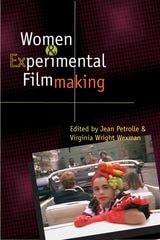
Women and Experimental Filmmaking
Edited by Jean Petrolle and Virginia Wright Wexman
University of Illinois Press, 2005
The introduction sets out by addressing the basic difficulties of both historiography and definition before providing a historical overview of how these particular filmmakers have helped shape moviemaking traditions. The essays explore the major theoretical controversies that have arisen around the work of groundbreaking women such as Leslie Thornton, Su Friedrich, Nina Menkes, and Faith Hubley. With the filmmakers re-presentations of women's subjectivity ranging across film, video, digital media, ethnography, animation, and collage, Women and Experimental Filmmaking represents the full spectrum of genres, techniques, and modes. Taken together, these essays comprise a sustained analysis of the conjunction of aesthetics and politics in the work of both pioneer and contemporary experimental women filmmakers.
Women and Laughter in Medieval Comic Literature
Lisa Perfetti
University of Michigan Press, 2003
This study is the first to investigate women's laughter as a particular kind of "talking back" to medieval discourse on women, the subject of recent feminist medievalist studies. Female characters openly embrace women's laughter, associated with the body and castigated for its unruliness in conduct literature. Acknowledging that comic works were grounded in antifeminist traditions and that their female characters were in fact targets of laughter for male authors, this study argues that female characters who laugh and tell jokes also offer traces of how women might have used their laughter to respond to negative pronouncements about women in medieval culture. Both laughable and laughing, the female protagonists studied in this book will engage modern readers with their witty, sometimes bawdy jokes, allowing us to imagine the pleasures that medieval comic literature, so often labeled misogynous, offered to women as well as to men.
Lisa Perfetti is Assistant Professor of French, Muhlenberg College.
Women and Music in Cross-Cultural Perspective
Edited by Ellen Koskoff
University of Illinois Press, 1989
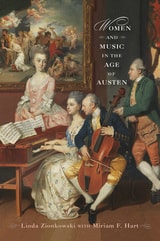
Women and Music in the Age of Austen
Linda Zionkowski
Bucknell University Press, 2024
Published by Bucknell University Press. Distributed worldwide by Rutgers University Press.
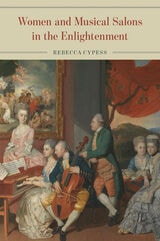
Women and Musical Salons in the Enlightenment
Rebecca Cypess
University of Chicago Press, 2022
In eighteenth-century Europe and America, musical salons—and the women who hosted and made music in them—played a crucial role in shaping their cultural environments. Musical salons served as a testing ground for new styles, genres, and aesthetic ideals, and they acted as a mediating force, bringing together professional musicians and their audiences of patrons, listeners, and performers. For the salonnière, the musical salon offered a space between the public and private spheres that allowed her to exercise cultural agency.
In this book, musicologist and historical keyboardist Rebecca Cypess offers a broad overview of musical salons between 1760 and 1800, placing the figure of the salonnière at its center. Cypess then presents a series of in-depth case studies that meet the salonnière on her own terms. Women such as Anne-Louise Brillon de Jouy in Paris, Marianna Martines in Vienna, Sara Levy in Berlin, Angelica Kauffman in Rome, and Elizabeth Graeme in Philadelphia come to life in multidimensional ways. Crucially, Cypess uses performance as a tool for research, and her interpretations draw on her experience with the instruments and performance practices used in eighteenth-century salons. In this accessible, interdisciplinary book, Cypess explores women’s agency and authorship, reason and sentiment, and the roles of performing, collecting, listening, and conversing in the formation of eighteenth-century musical life.
Women and Power in Argentine Literature
Stories, Interviews, and Critical EssaysBy Gwendolyn Díaz
University of Texas Press, 2007
The astonishing talent of Argentine women writers belies the struggles they have faced—not merely as overlooked authors, but as women of conviction facing oppression. The patriarchal pressures of the Perón years, the terror of the Dirty War, and, more recently, the economic collapse that gripped the nation in 2001 created such repressive conditions that some writers, such as Luisa Valenzuela, left the country for long periods. Not surprisingly, power has become an inescapable theme in Argentine women's fiction, and this collection shows how the dynamics of power capture not only the political world but also the personal one. Whether their characters are politicians and peasants, torturers and victims, parents and children, or lovers male and female, each writer explores the effects of power as it is exercised by or against women.
The fifteen writers chosen for Women and Power in Argentine Literature include famous names such as Valenzuela, as well as authors anthologized for the first time, most notably María Kodama, widow of Jorge Luis Borges. Each chapter begins with a "verbal portrait," editor Gwendolyn Díaz's personal impression of the author at ease, formed through hours of conversation and interviews. A biographical essay and critical commentary follow, with emphasis on the work included in this anthology. Díaz's interviews, translated from Spanish, and finally the stories themselves—only three of which have been previously published in English—complete the chapters. The extraordinary depth of these chapters reflects the nuanced, often controversial portrayals of power observed by Argentine women writers. Inspiring as well as insightful, Women and Power in Argentine Literature is ultimately about women who, in Díaz's words, "choose to speak their truth regardless of the consequences."
Women at Odds
Indifference, Antagonism, and Progress in Late Victorian LiteratureRiya Das
The Ohio State University Press, 2024
In Women at Odds, Riya Das demonstrates the limitations of female solidarity for the New Woman in Victorian society. On the one hand, feminist antagonism disrupts the status quo in unanticipated ways, and it helps open new domestic and professional pathways for women. On the other hand, the urban professional New Woman’s rhetoric recycles distinctly sexist, racist, and classist conventions, thereby bringing middle-class Englishwomen dialectically—what Das terms “retro-progressively”—into the labor pool of the British empire.
While foregrounding the figure of the New Woman as a white imperialist reformer, Das illustrates how the New Woman movement detaches itself from the domestic politics of female friendship. In works by George Eliot, George Gissing, Olive Schreiner, Bram Stoker, and others, antagonism and indifference enable the fin de siècle New Woman to transcend traditionally defined roles and fashion social progress for herself at the expense of femininities she excludes as “other.” By contesting the critical notion of solidarity as the only force that brings Victorian women’s narratives to fruition, Women at Odds reveals the troubled but effective role of antagonistic and indifferent reformist politics in loosening rigid social structures for privileged populations.
Women in Roman Republican Drama
Edited by Dorota Dutsch, Sharon L. James, and David Konstan
University of Wisconsin Press, 2015
Women in Texas Music
Stories and SongsBy Kathleen Hudson
University of Texas Press, 2007
Across the state and across a wide variety of musical genres, women are making their mark on Texas music. Some have become international superstars, while others are just starting to make their voices heard. But every woman who goes out and plays her music proves that "baring one's heart and soul takes courage, and Texas women artists have a lot of courage," as Lloyd Maines observes in the opening interview of this book. To pay tribute to these dedicated musicians and to capture their unique perspectives on what it means to be a woman in the music business, Kathleen Hudson has spent many years interviewing Texas women musicians for the Texas Heritage Music Foundation.
In Women in Texas Music, Hudson lets us listen in on conversations with thirty-nine musical artists, including Emily Robison, Terri Hendrix, Lee Ann Womack, Rosie Flores, Betty Buckley, Marcia Ball, Lavelle White, and Bobbie Nelson. Hudson encourages and allows the women to tell their own stories as she delves into their life journeys, creative processes, and the importance of writing and performing music, be it blues, rock, country, folk, jazz, or pop. The interviews are warm and open, like good friends sharing the lessons that a life of playing music has taught them.
What emerges from this collection is a solid sense of the strength and integrity that women bring to and gain from Texas music. Everyone who cares about music and culture in Texas will want to join the conversation.
Women of Color
Mother-Daughter Relationships in 20th-Century LiteratureEdited by Elizabeth Brown-Guillory
University of Texas Press, 1996
Interest in the mother-daughter relationship has never been greater, yet there are few books specifically devoted to the relationships between daughters and mothers of color. To fill that gap, this collection of original essays explores the mother-daughter relationship as it appears in the works of African, African American, Asian American, Mexican American, Native American, Indian, and Australian Aboriginal women writers.
Prominent among the writers considered here are Toni Morrison, Alice Walker, Maxine Hong Kingston, Cherrie Moraga, Leslie Marmon Silko, and Amy Tan. Elizabeth Brown-Guillory and the other essayists examine the myths and reality surrounding the mother-daughter relationship in these writers' works. They show how women writers of color often portray the mother-daughter dyad as a love/hate relationship, in which the mother painstakingly tries to convey knowledge of how to survive in a racist, sexist, and classist world while the daughter rejects her mother's experiences as invalid in changing social times.
This book represents a further opening of the literary canon to twentieth-century women of color. Like the writings it surveys, it celebrates the joys of breaking silence and moving toward reconciliation and growth.
Women of the Left Bank
Paris, 1900-1940By Shari Benstock
University of Texas Press, 1986
Now available in a durable paperback edition, Shari Benstock's critically acclaimed, best-selling Women of the Left Bank is a fascinating exploration of the lives and works of some two dozen American, English, and French women whose talent shaped the Paris expatriate experience in the century's early years.
This ambitious historical, biographical, and critical study has taken its place among the foremost works of literary criticism. Maurice Beebe calls it "a distinguished contribution to modern literary history." Jane Marcus hails it as "the first serious literary history of the period and its women writers, making along the way no small contribution to our understanding of the relationships between women artists and their male counterparts, from Henry James to Hemingway, Joyce, Picasso, and Pound."