Results by title
8113 books match the query 'Literary Criticism' and 363 start with w
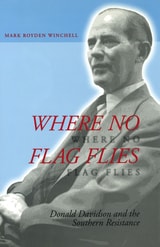
Where No Flag Flies
Donald Davidson and the Southern ResistanceMark Royden Winchell
University of Missouri Press, 2000
Donald Davidson (1893-1968) may well be the most unjustifiably neglected figure in twentieth-century southern literature. One of the most important poets of the Fugitive movement, he also produced a substantial body of literary criticism, the libretto for an American folk opera, a widely used composition textbook, and the recently discovered novel The Big Ballad Jamboree. As a social and political activist, Davidson had significant impact on conservative thought in this century, imfluencing important scholars from Cleanth Brooks to M. E. Bradford.
Despite these accomplishments, Donald Davidson has received little critical attention from either the literary or the southern scholarly community. Where No Flag Flies is Mark Royden Winchell's redress of this critical disservice. A comprehensive intellectual biography of Davidson, this seminal work offers a complete narrative of Davidson's life with all of its triumphs and losses, frustrations and fulfillments.
Winchell provides the reader with more than a simple study of a man and his achievements; he paints a complete portrait of the times in which Davidson published, from the 1930s to the early 1960s. Davidson was more directly involved in political and social activities than most writers of his generation, and Winchell provides the context, both literary and historical, in which Davidson's opinions and works developed. At the same time, Winchell offers detailed evaluations of Davidson's poetry, fiction, historical writings, and essays.
Drawing upon a wealth of previously unpublished archival material, including Davidson's letters and diary, Where No Flag Flies provides unique access to one of the most original minds of the twentieth-century South. Donald Davidson may not have achieved the recognition he deserved, but this remarkable biography finally makes it possible for a considerable literary audience to discover his true achievement.
Where the Muses Still Haunt
The Second ReadingAnne Drury Hall
St. Augustine's Press, 2022
After leaving school and becoming lost in adulthood, can one return to these books and revive the quest to be great? For this is why we call such books "great". Yet as Hall says, "few people use the phrase 'great books' any more except ironically, because there is an odd view in the current intellectual fog that there is no such thing as 'greatness'". She is compelled, then, to reexamine the so-called great books and make the case for their eternal importance. It is a task that requires not only swimming against the disenchanted march of the post-modern reader into adulthood, but also asserting the unthinkable––namely, that great books were written by great men who achieved this status through their own labor and endurance.
Hall reintroduces the reader to Plato, Homer, Chaucer, Shakespeare, Milton and Melville and hopes this will expose the fraud of most of contemporary literature, and encourage taste and stamina for the works that promise to exhilarate. And Hall argues well that the thrill of these books draws from one shared feature: "The heart of these books is the drama of choice." If Roger Scruton is famous for showing us that ideas have consequences, Hall provides the reader the vision of himself as standing on the brink and the urgency of taking life seriously again. For many this means taking books seriously again.
This book is an important companion to the works treated therein, for teachers and students alike. Both need encouragement in the laboring of instruction or reading the impressive classics. Particularly apt is Hall's treatment of the difficulty of teaching Shakespeare. For the not-so-recent university graduate, perhaps this book will bring him once again to wander where the Muses still haunt. Indeed, even the well-read will enjoy Hall's keen interpretation of the glory of these stories. This is a book written by a true teacher.
Where the Southern Cross the Yellow Dog
On Writers and WritingLouis D. Rubin, Jr.
University of Missouri Press, 2005
Where the Wild Books Are
A Field Guide to EcofictionJim Dwyer
University of Nevada Press, 2010
As interest in environmental issues grows, many writers of fiction have embraced themes that explore the connections between humans and the natural world. Ecologically themed fiction ranges from profound philosophical meditations to action-packed entertainments. Where the Wild Books Are offers an overview of nearly 2,000 works of nature-oriented fiction. The author includes a discussion of the precursors and history of the genre, and of its expansion since the 1970s. He also considers its forms and themes, as well as the subgenres into which it has evolved, such as speculative fiction, ecodefense, animal stories, mysteries, ecofeminist novels, cautionary tales, and others. A brief summary and critical commentary of each title is included. Dwyer’s scope is broad and covers fiction by Native American writers as well as ecofiction from writers around the world. Far more than a mere listing of books, Where the Wild Books Are is a lively introduction to a vast universe of engaging, provocative writing. It can be used to develop book collections or curricula. It also serves as an introduction to one of the most fertile areas of contemporary fiction, presenting books that will offer enjoyable reading and new insights into the vexing environmental questions of our time.
Where the Wild Grape Grows
Selected Writings, 1930–1950Dorothy West. Edited by Cynthia Davis and Verner D. Mitchell
University of Massachusetts Press, 2026
When Where the Wild Grape Grows was published in 2005 by the University of Massachusetts Press, it was the first book-length critical study of Dorothy West. Since then, the publication of more volumes on West and her circle testify to popular and academic interest in under-represented artists of the Harlem Renaissance, many of whom appeared first in West’s literary magazine, Challenge (1934-1937). Challenge included poems by West’s cousin Helene Johnson as well as by her friends Lucia Mae Pitts, Waring Cuney, Pauli Murray, Grace Walker, Mae Cowdery, Marcia Prendergast, and Bessie Calhoun Bird. West also published work by her romantic partner Marian Minus and by Juanita DeShields (the first Black Canadian graduate of McGill University) and the Trinidadian author Alfred Mendes. She included artwork by Mildred Jones and journalism by Eslanda Robeson and Dorothy Peterson. In addition to her editorial activities, West corresponded with important African American musicians including Maud Cuney Hare, Alberta Hunter, and Henry T. Burleigh, and with sculptors Augusta Savage and Richmond Barthé. Just as West mentored others, she was encouraged by such academic luminaries as Columbia Professors Blanche Colton Williams and Dorothy Scarborough, and by the controversial novelist Erskine Caldwell.
The new Introduction to Wild Grape will include fresh research on these individuals, many of whom formed part of West’s social and artistic circle. Lucia Pitts, for example, was a poet who served in the famous WAC (Women’s Army Corps) 6888th Battalion. The work of Marian Minus and Mae Cowdery has received critical attention recently and they also merit closer investigation. The Boston writer and musicologist Maud Cuney Hare was an artistic mentor to West; her cousin Waring Cuney was a close friend: both will receive more attention in the paperback edition. The artist Mildred Jones accompanied West and twenty other young African Americans to Russia in 1932 as participants in an ultimately aborted propaganda film on race relations in America; Jones studied with the important Russian Modernist painter Aleksandr Deyneka.
The original edition of Wild Grape cites two stories about West’s Russian experiences (penned under the pseudonym Mary Christopher in 1934), “Room in Red Square” and “Russian Correspondence,” but the volume does not include the actual stories. The stories are interesting because they shed light on West’s unrequited romance with Langston Hughes and her relationships with other members of the group, and they offer a unique perspective on daily life in the U.S.S.R. Both stories will be published in the new edition, along with a detailed discussion of new research about West’s visit to Russia.
A third uncollected story, “Cook” (1934), written by West under the pseudonym Jane Isaac will also be included. This story is extremely important to West’s oeuvre and her artistic development; it includes characters, themes, tropes, and plot lines that she expanded and developed in her two novels, The Living Is Easy (1948) and The Wedding (1995).
Since 2005, new material has been added to the West archive in Harvard’s Schlesinger Library. The section of Wild Grape devoted to West’s correspondence will include additional unpublished letters which underscore West’s dedication to African American art and culture.
The book includes the Benson-West family tree in Appendix II. Several scholars have expressed appreciation for this information which has not been published elsewhere; the chart will be updated to include the birth of several of West’s descendants.

Where the Wild Grape Grows
Selected Writings, 1930–1950Dorothy West
University of Massachusetts Press, 0
When Where the Wild Grape Grows was published in 2005 by the University of Massachusetts Press, it was the first book-length critical study of Dorothy West. Since then, the publication of more volumes on West and her circle testify to popular and academic interest in under-represented artists of the Harlem Renaissance, many of whom appeared first in West’s literary magazine, Challenge (1934-1937). Challenge included poems by West’s cousin Helene Johnson as well as by her friends Lucia Mae Pitts, Waring Cuney, Pauli Murray, Grace Walker, Mae Cowdery, Marcia Prendergast, and Bessie Calhoun Bird. West also published work by her romantic partner Marian Minus and by Juanita DeShields (the first Black Canadian graduate of McGill University) and the Trinidadian author Alfred Mendes. She included artwork by Mildred Jones and journalism by Eslanda Robeson and Dorothy Peterson. In addition to her editorial activities, West corresponded with important African American musicians including Maud Cuney Hare, Alberta Hunter, and Henry T. Burleigh, and with sculptors Augusta Savage and Richmond Barthé. Just as West mentored others, she was encouraged by such academic luminaries as Columbia Professors Blanche Colton Williams and Dorothy Scarborough, and by the controversial novelist Erskine Caldwell.
The new Introduction to Wild Grape will include fresh research on these individuals, many of whom formed part of West’s social and artistic circle. Lucia Pitts, for example, was a poet who served in the famous WAC (Women’s Army Corps) 6888th Battalion. The work of Marian Minus and Mae Cowdery has received critical attention recently and they also merit closer investigation. The Boston writer and musicologist Maud Cuney Hare was an artistic mentor to West; her cousin Waring Cuney was a close friend: both will receive more attention in the paperback edition. The artist Mildred Jones accompanied West and twenty other young African Americans to Russia in 1932 as participants in an ultimately aborted propaganda film on race relations in America; Jones studied with the important Russian Modernist painter Aleksandr Deyneka.
The original edition of Wild Grape cites two stories about West’s Russian experiences (penned under the pseudonym Mary Christopher in 1934), “Room in Red Square” and “Russian Correspondence,” but the volume does not include the actual stories. The stories are interesting because they shed light on West’s unrequited romance with Langston Hughes and her relationships with other members of the group, and they offer a unique perspective on daily life in the U.S.S.R. Both stories will be published in the new edition, along with a detailed discussion of new research about West’s visit to Russia.
A third uncollected story, “Cook” (1934), written by West under the pseudonym Jane Isaac will also be included. This story is extremely important to West’s oeuvre and her artistic development; it includes characters, themes, tropes, and plot lines that she expanded and developed in her two novels, The Living Is Easy (1948) and The Wedding (1995).
Since 2005, new material has been added to the West archive in Harvard’s Schlesinger Library. The section of Wild Grape devoted to West’s correspondence will include additional unpublished letters which underscore West’s dedication to African American art and culture.
The book includes the Benson-West family tree in Appendix II. Several scholars have expressed appreciation for this information which has not been published elsewhere; the chart will be updated to include the birth of several of West’s descendants.
Where the World Is Not
Cultural Authority and Democratic Desire in Modern American LiteratureKim Savelson
The Ohio State University Press, 2009
Whispered Consolations
Law and Narrative in African American LifeJon-Christian Suggs
University of Michigan Press, 2000
White Light
The Poetry of Alberto BlancoRonald J. Friis
Bucknell University Press, 2022
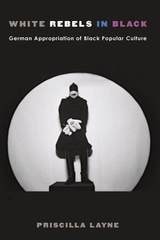
White Rebels in Black
German Appropriation of Black Popular CulturePriscilla Layne
University of Michigan Press, 2018
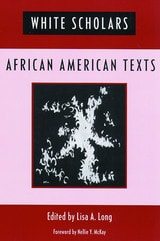
White Scholars/African American Texts
Edited by Lisa A. Long
Rutgers University Press, 2005
What makes someone an authority? What makes one person's knowledge more credible than another's? In the ongoing debates over racial authenticity, some attest that we can know each other's experiences simply because we are all "human," while others assume a more skeptical stance, insisting that racial differences create unbridgeable gaps in knowledge.
Bringing new perspectives to these perennial debates, the essays in this collection explore the many difficulties created by the fact that white scholars greatly outnumber black scholars in the study and teaching of African American literature. Contributors, including some of the most prominent theorists in the field as well as younger scholars, examine who is speaking, what is being spoken and what is not, and why framing African American literature in terms of an exclusive black/white racial divide is problematic and limiting.
In highlighting the "whiteness" of some African Americanists, the collection does not imply that the teaching or understanding of black literature by white scholars is definitively impossible. Indeed such work is not only possible, but imperative. Instead, the essays aim to open a much needed public conversation about the real and pressing challenges that white scholars face in this type of work, as well as the implications of how these challenges are met.
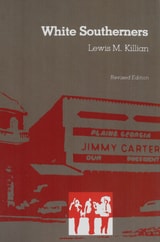
White Southerners
Lewis M. Killian
University of Massachusetts Press, 1985
Originally published in 1970 as part of the series Ethnic Groups in Comparative Perspective, White Southerners is widely regarded as a classic in the sociology and history of the American South. In it, Lewis M. Killian, himself a white Southerner and a distinguished sociologist of race relations, advances the provocative and influential argument that white Southerners can be understood as a distinct American ethnic group, shaped by a shared regional identity, history, and culture that sets them apart from other white Americans. Drawing on decades of research into race relations and Southern society, Killian examines the formation and persistence of Southern white identity, its relationship to the broader struggles over race and civil rights, and the tensions between regional loyalty and national belonging. This revised edition includes a new preface and a substantial new concluding chapter that extends the analysis through the period from 1970 to 1984, bringing the study up to date with the transformed landscape of the post-civil rights South. Essential reading for students and scholars of American race relations, regional identity, and the sociology of ethnicity, White Southerners remains a foundational text in Southern studies.
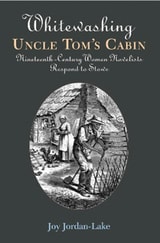
Whitewashing Uncle Tom's Cabin
Nineteenth-Century Women Novelists Respond to StoweJoy Jordan-Lake
Vanderbilt University Press, 2005
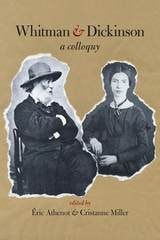
Whitman & Dickinson
A ColloquyEric Athenot and Cristanne Miller
University of Iowa Press, 2018
Essays included in this book cover the topics of mentoring influence on each poet, religion, the Civil War, phenomenology, the environment, humor, poetic structures of language, and Whitman’s and Dickinson’s twentieth- and twenty-first–century reception—including prolonged engagement with Adrienne Rich’s response to this “strange uncoupled couple” of poets who stand at the beginning of an American national poetic.
Contributors Include:
Marina Camboni
Andrew Dorkin
Vincent Dussol
Betsy Erkkilä
Ed Folsom
Christine Gerhardt
Jay Grossman
Jennifer Leader
Marianne Noble
Cécile Roudeau
Shira Wolosky
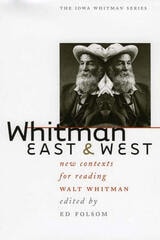
Whitman East and West
New Contexts for Reading Walt WhitmanEd Folsom
University of Iowa Press, 2002
Confirming the growing international spirit of American studies, the essays in Whitman East and West developed out of a landmark conference in Beijing, the first major conference in China to focus on an American poet. Scholars from Asia, Europe, and North America set out to track the ways in which Whitman's poetry has become part of China's cultural landscape as well as the literary landscapes of other countries. By describing his assimilation into other cultures and his resulting transformation into a hybrid poet, these essayists celebrate Whitman's multiple manifestations in other languages and contexts.
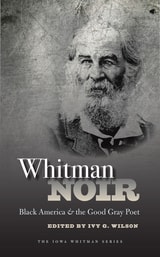
Whitman Noir
Black America and the Good Gray PoetIvy Wilson
University of Iowa Press, 2014
Whitman Noir: Black America and the Good Gray Poet explores the meaning of blacks and blackness in Whitman’s imagination and, equally significant, also illuminates the aura of Whitman in African American letters from Langston Hughes to June Jordan, Margaret Walker to Yusef Komunyakaa. The essays, which feature academic scholars and poets alike, address questions of literary history, the textual interplay between author and narrator, and race and poetic influence. The volume as a whole reveals the mutual engagement with a matrix of shared ideas, contradictions, and languages to expose how Whitman influenced African American literary production as well as how African American Studies brings to bear new questions and concerns for evaluating Whitman.
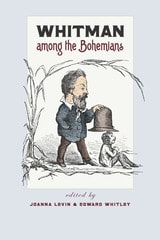
Whitman among the Bohemians
Joanna Levin and Edward Whitley
University of Iowa Press, 2014
In this milieu, Whitman found sympathetic supporters of his poetic vision, professional connections, rivals, romantic partners, and close friends, and left a lasting impression on poet and critic Edmund Clarence Stedman, an erstwhile bohemian who later in the century emerged as a tastemaker of American poetry. Yet for many years, the bohemians associated with Pfaff’s have served merely as minor background characters in Whitman scholarship. Whitman among the Bohemians corrects that by exploring in depth the connections Whitman made at Pfaff’s and the impact they had on him, his poetry, and his career. In telling the story of these intersecting social and professional links that converged at Pfaff’s in the late 1850s and early 1860s, the essays in this volume powerfully demonstrate just how much we can learn about Whitman and his work by viewing him within the context of American bohemia.
CONTRIBUTORS: Stephanie Blalock, Ruth Bohan, Leif Eckstrom, Logan Esdale, Amanda Gailey, Karen Karbiener, Joanna Levin, Mary Loeffelholz, Eliza Richards, Ingrid Satelmajer, Robert J. Scholnick, Edward Whitley
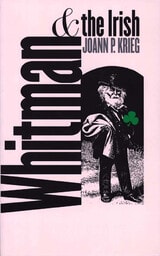
Whitman and the Irish
Joann P. Krieg
University of Iowa Press, 2000
Though Walt Whitman created no Irish characters in his early works of fiction, he did include the Irish as part of the democratic portrait of America that he drew in Leaves of Grass. He could hardly have done otherwise. In 1855, when the first edition of Leaves of Grass was published, the Irish made up one of the largest immigrant populations in New York City and, as such, maintained a cultural identity of their own. All of this “Irishness” swirled about Whitman as he trod the streets of his Mannahatta, ultimately becoming part of him and his poetry. As members of the working class, famous authors, or close friends, the Irish left their mark on Whitman the man and poet. In Whitman and the Irish, Joann Krieg convincingly establishes their importance within the larger framework of Whitman studies.
Focusing on geography rather than biography, Krieg traces Whitman's encounters with cities where the Irish formed a large portion of the population—New York City, Boston, Camden, and Dublin—or where, as in the case of Washington, D.C., he had exceptionally close Irish friends. She also provides a brief yet important historical summary of Ireland and its relationship with America.
Whitman and the Irish does more than examine Whitman's Irish friends and acquaintances: it adds a valuable dimension to our understanding of his personal world and explores a number of vital questions in social and cultural history. Krieg places Whitman in relation to the emerging labor culture of ante-bellum New York, reveals the relationship between Whitman's cultural nationalism and the Irish nationalism of the late nineteenth century, and reflects upon Whitman's involvement with the Union cause and that of Irish American soldiers.
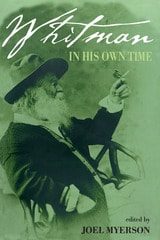
Whitman in His Own Time
A Biographical Chronicle of His Own Life, Drawn from Recollections, Memoirs, and Interviews by Friends and AssociatesJoel Myerson
University of Iowa Press, 2000
Few American writers were as concerned with their public image as was Walt Whitman. He praised his own work in unsigned reviews; he included engravings or photographs of himself in numerous editions of his work; and he assisted in the writing of two biographies of himself. Whitman was also written about extensively by others throughout his lifetime. Whitman in His Own Time is a collection of these contemporary accounts of the "good gray poet."
The interviews with and recollections of Whitman collected by Joel Myerson represent a wide spectrum of accounts—visitors from America and abroad; newspaper interviewers; Whitman's doctor and nurse during his final illness; his literary executors; a student from his early schoolteaching days; and such well-known authors as Bronson Alcott, John Burroughs, and Henry David Thoreau. The selections also paint a well-rounded picture of Whitman, from his early days as a schoolteacher to the moment of his death, and demonstrate a varying range of attitudes toward the poet. Yet throughout the entire collection, Whitman himself holds center stage, and he is seen as vividly today as he was over one hundred years ago. Myerson's introduction to this expanded edition places these accounts of Whitman within the context of the time and discusses new scholarship on Whitman's life.

Whitman in Poland
The Reception and Role of the American Poet in Polish National CultureMarta A. Skwara
University of Iowa Press, 2020
Poland; how and why the mid-1950s saw the greatest flourish of interest in Whitman as he was read in terms of “socialist realism” in accordance with the political indoctrination of the era; how Whitman’s image in Poland evolved from his first Polish translators and enthusiasts on through modernist poets’ responses; and how reading multiple Polish translations of the same Whitman poem by different translators allows us to see changing cultural and comparative contexts. Readers will get a full picture of how Whitman has functioned as a presence in Polish prose and poetry, and even in cinema and television.

Whitman's Drama of Consensus
Kerry C. Larson
University of Chicago Press, 1988
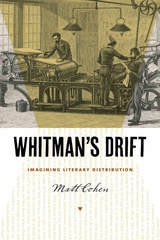
Whitman's Drift
Imagining Literary DistributionMatt Cohen
University of Iowa Press, 2017
Still, as the budding poet learned, books neither sell themselves nor move themselves: without an efficient set of connections to get books to readers, the democratic media-saturated future Whitman imagined would have remained warehoused. Whitman’s works sometimes ran through the “many-cylinder’d steam printing press” and were carried in bulk on “the strong and quick locomotive.” Yet during his career, his publications did not follow a progressive path toward mass production and distribution. Even at the end of his life, in the 1890s as his fame was growing, the poet was selling copies of his latest works by hand to visitors at his small house in Camden, New Jersey. Mass media and centralization were only one part of the rich media world that Whitman embraced.
Whitman’s Drift asks how the many options for distributing books and newspapers shaped the way writers wrote and readers read. Writers like Whitman spoke to the imagination inspired by media transformations by calling attention to connectedness, to how literature not only moves us emotionally, but moves around in the world among people and places. Studying that literature and how it circulated can help us understand not just how to read Whitman’s works and times, but how to understand what is happening to our imaginations now, in the midst of the twenty-first century media explosion.

Who Can Speak?
AUTHORITY AND CRITICAL IDENTITYEdited by Judith Roof and Robyn Wiegman
University of Illinois Press, 1995
This collection examines how theory and criticism are complicated by
multiple perspectives in an increasingly multicultural society and
faces head on the difficult question of what qualifies a critic to speak from or about a particular position. In different formats and from different perspectives from various disciplines, the contributors to this volume analytically and innovatively work together to define the problems and capture the contradictions and tensions inherent in the issues of authority, epistemology, and discourse.
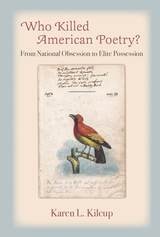
Who Killed American Poetry?
From National Obsession to Elite PossessionKaren L. Kilcup
University of Michigan Press, 2019
Conceptually and methodologically unique among studies of 19th-century American poetry, Who Killed American Poetry? not only charts changing attitudes toward American poetry, but also applies these ideas to the work of representative individual poets. Closely analyzing hundreds of reviews and critical essays, Karen L. Kilcup tracks the century’s developing aesthetic standards and highlights the different criteria reviewers used to assess poetry based on poets’ class, gender, ethnicity, and location. She shows that, as early as the 1820s, critics began to marginalize some kinds of emotional American poetry, a shift many scholars have attributed primarily to the late-century emergence of affectively restrained modernist ideals. Mapping this literary critical history enables us to more readily apprehend poetry’s status in American culture—both in the past and present—and encourages us to scrutinize the standards of academic criticism that underwrite contemporary aesthetics and continue to constrain poetry’s appeal.
Who American Killed Poetry? enlarges our understanding of American culture over the past two hundred years and will interest scholars in literary studies, historical poetics, American studies, gender studies, canon criticism, genre studies, the history of criticism, and affect studies. It will also appeal to poetry readers and those who enjoy reading about American cultural history.
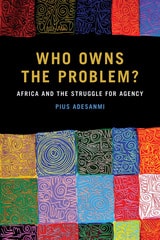
Who Owns the Problem?
Africa and the Struggle for AgencyPius Adesanmi
Michigan State University Press, 2020
committed and passionate voice of an African writer lost far too soon. Adesanmi urges his readers to commit themselves to Africa’s cultural agency.
Who Paid for Modernism?
Art, Money, and the Fiction of Conrad, Joyce and LawrenceJoyce Piell Wexler
University of Arkansas Press, 1997
Who Reads Poetry
50 Views from “Poetry” MagazineEdited by Fred Sasaki and Don Share
University of Chicago Press, 2017
In one essay, musician Neko Case calls poetry “a delicate, pretty lady with a candy exoskeleton on the outside of her crepe-paper dress.” In another, anthropologist Helen Fisher turns to poetry while researching the effects of love on the brain, “As other anthropologists have studied fossils, arrowheads, or pot shards to understand human thought, I studied poetry. . . . I wasn’t disappointed: everywhere poets have described the emotional fallout produced by the brain’s eruptions.” Even film critic Roger Ebert memorized the poetry of e. e. cummings, and the rapper Rhymefest attests here to the self-actualizing power of poems: “Words can create worlds, and I’ve discovered that poetry can not only be read but also lived out. My life is a poem.” Music critic Alex Ross tells us that he keeps a paperback of The Palm at the End of the Mind by Wallace Stevens on his desk next to other, more utilitarian books like a German dictionary, a King James Bible, and a Macintosh troubleshooting manual.
Who Reads Poetry offers a truly unique and broad selection of perspectives and reflections, proving that poetry can be read by everyone. No matter what you’re seeking, you can find it within the lines of a poem.
Who is Buried in Chaucer's Tomb?
Studies in the Reception of Chaucer's BookJoseph A. Dane
Michigan State University Press, 1998
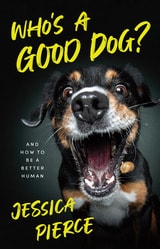
Who's a Good Dog?
And How to Be a Better HumanJessica Pierce
University of Chicago Press, 2023
A guide to cultivating a shared life of joy and respect with our dogs.
Who’s a Good Dog? is an invitation to nurture more thoughtful and balanced relationships with our canine companions. By deepening our curiosity about what our dogs are experiencing, and by working together with them in a spirit of collaboration, we can become more effective and compassionate caregivers.
With sympathy for the challenges met by both dogs and their humans, bioethicist Jessica Pierce explores common practices of caring for dogs, including how we provide exercise, what we feed, how and why we socialize and train, and how we employ tools such as collars and leashes. She helps us both to identify potential sources of fear and anxiety in our dogs’ lives and to expand practices that provide physical and emotional nourishment. Who’s a Good Dog? also encourages us to think more critically about what we expect of our dogs and how these expectations can set everyone up for success or failure. Pierce offers resources to help us cultivate attentiveness and kindness, inspiring us to practice the art of noticing, of astonishment, of looking with fresh eyes at these beings we think we know so well. And more than this, she makes her findings relatable by examining facets of her relationship with Bella, the dog in her life. As Bella shows throughout, all dogs are good dogs, and we, as humans and dog guardians, could be doing a little bit better to get along with them and give them what they need.
Whose India?
The Independence Struggle in British and Indian Fiction and HistoryTeresa Hubel
Duke University Press, 1996
Hubel collapses the boundary between literature and history by emphasizing the selected nature of the “facts” that comprise historical texts, and by demonstrating the historicity of fiction. In analyzing the orthodox construction of the British/Indian encounter, Hubel calls into question assumptions about the end of nationalism implicit in mainstream histories and fiction, which generally describe a battleground on which only ruling-class Indians and British meet. Marginalized texts by women, untouchables, and overt imperialists alike are, therefore, examined alongside the well-known work of figures such as Rudyard Kipling, Jawaharlal Nehru, E. M. Forster, and Mahatma Gandhi.
In Whose India? discursive ownership and resistance to ownership are mutually constructing categories. As a result, the account of Indian nationalism and British imperialism that emerges is much more complicated, multivocal, and even more contradictory than previous studies have imagined. Of interest to students and scholars engaged in literary, historical, colonial/postcolonial, subaltern, and Indian studies, Whose India? will also attract readers concerned with gender issues and the canonization of texts.
Why Fiction Matters in Contemporary China
David Der-wei Wang
Brandeis University Press, 2020
Contemporary discussions of China tend to focus on politics and economics, giving Chinese culture little if any attention. Why Fiction Matters in Contemporary China offers a corrective, revealing the crucial role that fiction plays in helping contemporary Chinese citizens understand themselves and their nation. Where history fails to address the consequences of man-made and natural atrocities, David Der-Wei Wang argues, fiction arises to bear witness to the immemorial and unforeseeable.
Beginning by examining President Xi Jinping’s call in 2013 to “tell the good China story,” Wang illuminates how contemporary Chinese cultural politics have taken a “fictional turn,” which can trace its genealogy to early modern times. He does so by addressing a series of discourses by critics within China, including Liang Qichao, Lu Xun, and Shen Congwen, as well as critics from the West such as Arendt, Benjamin, and Deleuze. Wang highlights the variety and vitality of fictional works from China as well as the larger Sinophone world, ranging from science fiction to political allegory, erotic escapade to utopia and dystopia. The result is an insightful account of contemporary China, one that affords countless new insights and avenues for understanding.
Why the Humanities Matter
A Commonsense ApproachBy Frederick Luis Aldama
University of Texas Press, 2008
Is there life after postmodernism? Many claim that it sounded the death knell for history, art, ideology, science, possibly all of Western philosophy, and certainly for the concept of reality itself. Responding to essential questions regarding whether the humanities can remain politically and academically relevant amid this twenty-first-century uncertainty, Why the Humanities Matter offers a guided tour of the modern condition, calling upon thinkers in a variety of disciplines to affirm essential concepts such as truth, goodness, and beauty.
Offering a lens of "new humanism," Frederick Aldama also provides a liberating examination of the current cultural repercussions of assertions by such revolutionary theorists as Said, Foucault, Lacan, and Derrida, as well as Latin Americanists such as Sommer and Mignolo. Emphasizing pedagogy and popular culture with equal verve, and writing in colloquial yet multifaceted prose, Aldama presents an enlightening way to explore what "culture" actually does—who generates it and how it shapes our identities—and the role of academia in sustaining it.
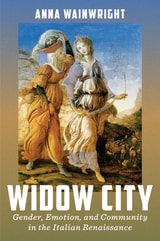
Widow City
Gender, Emotion, and Community in the Italian RenaissanceAnna Wainwright
University of Delaware Press, 2025
Wikipedia and the Politics of Openness
Nathaniel Tkacz
University of Chicago Press, 2014
But what does openness mean, and what would a political theory of openness look like? With Wikipedia and the Politics of Openness, Nathaniel Tkacz uses Wikipedia, the most prominent product of open organization, to analyze the theory and politics of openness in practice—and to break its spell. Through discussions of edit wars, article deletion policies, user access levels, and more, Tkacz enables us to see how the key concepts of openness—including collaboration, ad-hocracy, and the splitting of contested projects through “forking”—play out in reality.
The resulting book is the richest critical analysis of openness to date, one that roots media theory in messy reality and thereby helps us move beyond the vaporware promises of digital utopians and take the first steps toward truly understanding what openness does, and does not, have to offer.
Wilbur's Poetry
Music in a Scattering TimeBruce Michelson
University of Massachusetts Press, 2009
The first extended study of Wilbur's work in twenty-five years, Wilbur's Poetry explores the light poems, the darker mediations, the brilliant translations of Moliere and Racine, as well as the risks Wilbur has taken as an artist. There are chapters on Wilbur's unique use of language and his response to a vast poetic heritage, on form and closure and their thematic implications, and of Wilbur's place as a poet in a complex and "scattering" time.
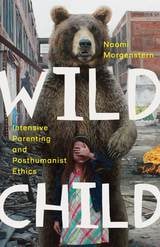
Wild Child
Intensive Parenting and Posthumanist EthicsNaomi Morgenstern
University of Minnesota Press, 2018
Exploring how the figure of the “wild child” in contemporary fiction grapples with contemporary cultural anxieties about reproductive ethics and the future of humanity
In the eighteenth century, Western philosophy positioned the figure of “the child” at the border between untamed nature and rational adulthood. Contemporary cultural anxieties about the ethics and politics of reproductive choice and the crisis of parental responsibility have freighted this liminal figure with new meaning in twenty-first-century narratives.
In Wild Child, Naomi Morgenstern explores depictions of children and their adult caregivers in extreme situations—ranging from the violence of slavery and sexual captivity to accidental death, mass murder, torture, and global apocalypse—in such works as Toni Morrison’s A Mercy, Cormac McCarthy’s The Road, Lionel Shriver’s We Need to Talk about Kevin, Emma Donoghue’s Room, and Denis Villeneuve’s film Prisoners. Morgenstern shows how, in such narratives, “wild” children function as symptoms of new ethical crises and existential fears raised by transformations in the technology and politics of reproduction and by increased ethical questions about the very decision to reproduce. In the face of an uncertain future that no longer confirms the confidence of patriarchal humanism, such narratives displace or project present-day apprehensions about maternal sacrifice and paternal protection onto the wildness of children in a series of hyperbolically violent scenes.
Urgent and engaging, Wild Child offers the only extended consideration of how twenty-first-century fiction has begun to imagine the decision to reproduce and the ethical challenges of posthumanist parenting.
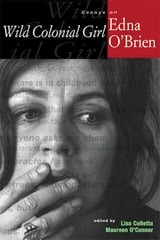
Wild Colonial Girl
Essays on Edna O'BrienEdited by Lisa Colletta and Maureen O'Connor
University of Wisconsin Press, 2006
Wild Colonial Girl situates O'Brien in Irish contexts that allow for an appraisal of her significant contribution to a specifically Irish women's literary tradition while attesting to the potency of writing against patriarchal conventions. Each chapter's clear and detailed readings of O'Brien's fiction build a convincing case for her literary, political, and cultural importance, providing an invaluable critical guide for an enriched appreciation of O'Brien and her work.
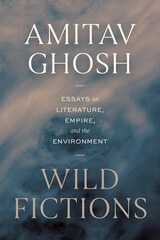
Wild Fictions
Essays on Literature, Empire, and the EnvironmentAmitav Ghosh
University of Chicago Press, 2025
A collection of essays on themes central to Ghosh’s work: imperialism and decolonization, climate change, and the stories of ordinary people making lives amid these historical forces.
Wild Fictions brings together Amitav Ghosh’s extraordinary writings on subjects that have obsessed him over the last twenty-five years: literature and language; climate change and the environment; and human lives, travel, and discoveries. Threaded throughout the collection are his reflections on the spaces that we inhabit and how we occupy them. From the significance of the commodification of the clove to the diversity of the mangrove forests in Bengal and the radical fluidity of multilingualism, Wild Fictions is a powerful refutation of imperial violence, a fascinating exploration of the fictions we weave to absorb history, and a reminder of the importance of sensitivity and empathy.
With the combination of moral passion, intellectual curiosity, and literary elegance that defines his writing, Ghosh makes readers understand the world in new and urgent ways. Together, the pieces in Wild Fictions chart a course that allows us to heal our relationships and restore the delicate balance with the volatile landscapes to which we all belong.
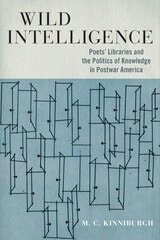
Wild Intelligence
Poets' Libraries and the Politics of Knowledge in Postwar AmericaM. C. Kinniburgh
University of Massachusetts Press, 2022
Information science was a burgeoning field in the early years of the Cold War, and while public and academic libraries acted as significant sites for the information boom, it is unsurprising that McCarthyism and censorship would shape what they granted readers access to and acquired. Wild Intelligence traces a different history of information management, examining the privately assembled collections of poets and their knowledge-building practices at midcentury.
Taking up case studies of four poets who began writing during the 1950s and 1960s, including Charles Olson (1910–1970), Diane di Prima (1934–2020), Gerrit Lansing (1928–2018), and Audre Lorde (1934–1992), M. C. Kinniburgh shows that the postwar American poet’s library should not just be understood according to individual books within their collection but rather as an archival resource that reveals how poets managed knowledge in a growing era of information overload. Exploring traditions and systems that had been overlooked, buried, occulted, or censored, these poets sought to recover a sense of history and chart a way forward.

Wild Mother Dancing
Maternal Narrative in Canadian LiteratureDi Brandt
University of Manitoba Press, 1993
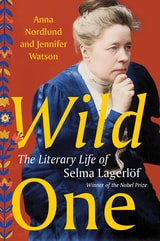
Wild One
The Literary Life of Selma LagerlöfAnna Nordlund
University of Minnesota Press, 2027
The definitive English-language biography of Sweden’s most celebrated novelist
Wild One details the captivating life of Selma Lagerlöf (1858–1940), the most celebrated Swedish novelist of her time and the first woman to win the Nobel Prize for Literature. Best known for her classic books The Saga of Gösta Berling and The Wonderful Adventures of Nils, Lagerlöf wrote dozens of acclaimed works and used her fame to advocate for women’s rights, humanitarian causes, and international peace. During her lifetime, however, even though she introduced Neo-Romanticism to Scandinavian literature, the male-dominated literary establishment strategically tried to downplay her as a modest spinster who reworked old stories and folktales from her rural Swedish province of Värmland.
Anna Nordlund and Jennifer Watson describe how, behind the old-fashioned public image placed on her, Lagerlöf was always on the front line, a forward-looking innovator whose writing is distinguished by inventive structures and a deep understanding of modern psychology. A savvy promoter of her own career, she utilized the new medium of radio, invested in the nascent Swedish film industry as adaptations of her novels became international sensations, and closely tracked translations of her work. After winning the Nobel Prize in 1909, Lagerlöf became even more vocal in her support for women’s rights and suffrage.
Drawing on a wide range of sources, including private letters, Nordlund and Watson offer new insights into Lagerlöf’s remarkable personal life, including her passionate love for her frequent traveling companion, Sophie Elkan, and for fellow suffragette Valborg Olander. As Wild One makes clear, through her written works and social activism Lagerlöf embodied her own famous quotation: “I want to set the world in motion.”
Retail e-book files for this title are screen-reader friendly with images accompanied by short alt text and/or extended descriptions.
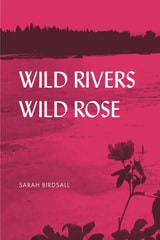
Wild Rivers, Wild Rose
Sarah Birdsall
University of Alaska Press, 2020
Anna’s lover, Wade Daniels, learns of the deaths of Anna’s husband and their worker, and he rushes to the hills to look for Anna and hunt the murderer. As she lies dying on the tundra, Anna relives the major events of her Alaska life while searching her memories for what could have led to the violence. And, decades later, an outsider named Billie Sutherland steps into a community still haunted by the murders. Plagued by her own ghosts, Billie delves into the past, opening old wounds.
In this gripping novel by Sarah Birdsall, lives are laid bare and secrets ring out in the resonant Alaska Range foothills.
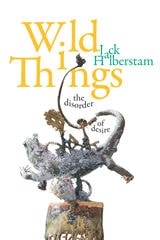
Wild Things
The Disorder of DesireJack Halberstam
Duke University Press, 2020
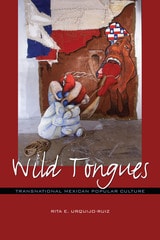
Wild Tongues
Transnational Mexican Popular CultureBy Rita E. Urquijo-Ruiz
University of Texas Press, 2012
Tracing the configuration of the slapstick, destitute Peladita/Peladito and the Pachuca/Pachuco (depicted in flashy zoot suits) from 1928 to 2004, Wild Tongues is an ambitious, extensive examination of social order in Mexican and Chicana/o cultural productions in literature, theater, film, music, and performance art.
From the use of the Peladita and the Peladito as stock characters who criticized various aspects of the Mexican government in the 1920s and 1930s to contemporary performance art by María Elena Gaitán and Dan Guerrero, which yields a feminist and queer-studies interpretation, Rita Urquijo-Ruiz emphasizes the transnational capitalism at play in these comic voices. Her study encompasses both sides of the border, including the use of the Pachuca and the Pachuco as anti-establishment, marginal figures in the United States. The result is a historically grounded, interdisciplinary approach that reimagines the limitations of nation-centered thinking and reading.
Beginning with Daniel Venegas’s 1928 novel, Las aventuras de don Chipote o Cuando los pericos mamen, Rita Urquijo-Ruiz’s Wild Tongues demonstrates early uses of the Peladito to call attention to the brutal physical demands placed on the undocumented Mexican laborer. It explores Teatro de Carpa (tent theater) in-depth as well, bringing to light the experience of Mexican Peladita Amelia Wilhelmy, whose “La Willy” was famous for portraying a cross-dressing male soldier who criticizes the failed Revolution. In numerous other explorations such as these, the political, economic, and social power of creativity continually takes center stage.
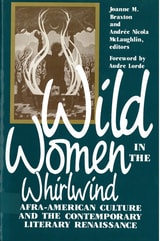
Wild Women in the Whirlwind
Afra-American Culture and the Contemporary Literary RenaissanceEdited by Joanne M. Braxton and Andree Nicola McLaughlin
Rutgers University Press, 1989
--New York Times Book Review
"The cultural and literary achievements of black American women are examined and celebrated in some 20 enjoyable, erudite essays by prominent scholars, critics, and activists."
--Publishers Weekly
This book is the first comprehensive collection of critical and theoretical essays to explore the literary and multi-cultural traditions of Black American women in many genres over a broad span of time. The essays explore cultural and literary experience in a wide context and offer a variety of critical theoretical constructs in which to view that experience. The editors have written excellent introductions providing both historical and comparative discussions of the contemporary literary renaissance. The book also includes a valuable bibliography of selected English-language works by Black women in the Americas from the 1970s to the present.
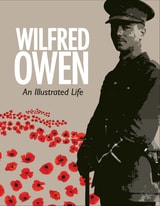
Wilfred Owen
An Illustrated LifeJane Potter
Bodleian Library Publishing, 2014
This generously illustrated book tells the story of Owen’s life and work, from his birth in 1893 to his tragic death just one week before the signing of the armistice that would end the war. The shocking realism of poems such as “Strange Meeting” and the angry disillusionment of “Anthem for Doomed Youth” reveal Owen’s transformation from a romantic youth steeped in the poetry of Keats to a mature soldier awakened to the horrors of the Western Front.
Drawing on numerous manuscripts, artifacts, and family photographs, this book gives a comprehensive view of the relationship between the poet’s lived experience and his writing that will appeal equally to both those well-versed in Owen’s work and those seeking a well-researched, accessible introduction.
Wilkie Collins and Copyright
Sundeep Bisla
The Ohio State University Press, 2013
Willa Cather and Material Culture
Real-World Writing, Writing the Real WorldEdited by Janis P. Stout
University of Alabama Press, 2004
Willa Cather and Material Culture is a collection of 11 new essays that tap into a recent and resurgent interest among Cather scholars in addressing her work and her career through the lens of cultural studies. One of the volume's primary purposes is to demonstrate the extent to which Cather did participate in her culture and to correct the commonplace view of her as a literary connoisseur set apart from her times.
The contributors explore both the objects among which Cather lived and the objects that appear in her writings, as well as the commercial constraints of the publishing industry in which her art was made and marketed. Essays address her relationship to quilts both personally and as symbols in her work; her contributions to domestic magazines such as Home Monthly and Woman's Home Companion; the problematic nature of Hollywood productions of her work; and her efforts and successes as a businesswoman. By establishing the centrality of material matters to her writing, these essays contribute to the reclaiming of Cather as a modernist and highlight the significance of material culture, in general, to the study of American literature.
Willa Cather and Others
Jonathan Goldberg
Duke University Press, 2001
The “others” referred to in the title are women, for the most part Cather’s contemporaries, whose artistic projects allow for points of comparison with Cather. They include the Wagnerian diva Olive Fremstad, renowned for her category-defying voice; Blair Niles, an ethnographer and novelist of jazz-age Harlem and the prisons of New Guinea; Laura Gilpin, photographer of the American Southwest; and Pat Barker, whose Regeneration trilogy places World War I writers—and questions of sexuality and gender—at its center. In the process of studying these women and their work, Goldberg forms innovative new insights into a wide range of Cather’s celebrated works, from O Pioneers! and My Ántonia to her later books The Song of the Lark, One of Ours, The Professor’s House, Death Comes for the Archbishop, and Sapphira and the Slave Girl.
By applying his unique talent to the study of Cather’s literary genius, Jonathan Goldberg makes a significant and new contribution to the study of American literature and queer studies.
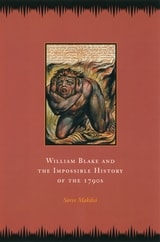
William Blake and the Impossible History of the 1790s
Saree Makdisi
University of Chicago Press, 2003